

If a road or highway condition contributed to your Clearwater truck accident, The Law Offices of Anidjar and Levine can investigate how it affected the collision and identify potentially responsible parties. We may review crash reports, photographs, witness accounts, roadway design, traffic controls, and vehicle records to assess liability and document your injuries and losses. Florida’s comparative negligence rules may affect compensation, and deadlines apply. Learn more about your options with a Clearwater Personal Injury Lawyer.
Main Takeaways
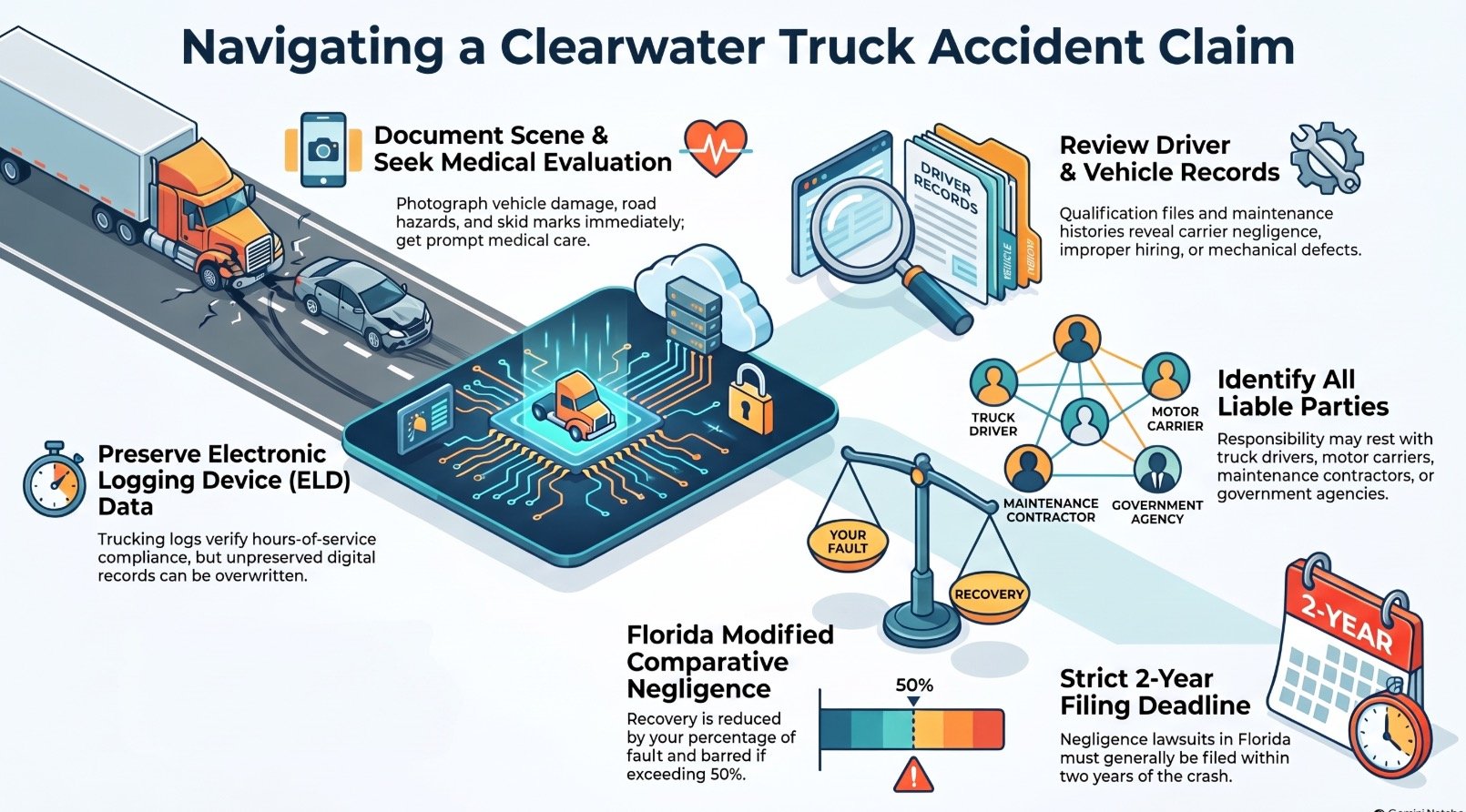
- A Clearwater truck accident lawyer can investigate whether road design, signage, lane layout, or maintenance contributed to a crash.
- Relevant evidence may include crash reports, roadway photographs, witness accounts, traffic-control records, and vehicle data.
- Potentially responsible parties may include the truck driver, trucking company, maintenance provider, or public agency.
- Florida comparative negligence may reduce compensation if you share fault, but does not automatically prevent recovery.
- Seek medical care, preserve evidence, and consult a lawyer promptly about deadlines and next steps.
How We Can Help With Your Clearwater Truck Accident Roads & Highways Injury Claim
If a truck crash on a Clearwater road or highway has injured you, we can help you pursue a claim for your losses. We’ll listen to your account, explain your options, and provide steady guidance while you focus on your health and family.
Our team can investigate how the collision occurred, preserve available evidence, and identify the parties whose conduct may have contributed. We’ll examine driver actions, trucking company practices, vehicle records, and road conditions. Highway design hazards and construction zone risks may also warrant careful review if they played a role in the crash.


We can organize medical records and other documentation, assess your injuries, and communicate with insurers on your behalf. If negotiations don’t produce a fair resolution, we can prepare to present your case in court. Throughout the process, we’ll treat you with respect, answer your questions, and work to hold responsible parties accountable. Our goal is to help you seek compensation while protecting your interests at every stage.
Understanding Clearwater Truck Accident Roads & Highways Injury Cases
OUR CONSULTATIONSARE FREE
START YOUR FREE CASE REVIEW

Understanding a Clearwater truck accident case begins with examining how the crash occurred and which factors contributed to it. We’ll review the available evidence to understand the sequence of events and identify the parties whose actions may have affected your safety. This process can include studying collision reports, photographs, witness accounts, and relevant vehicle or roadway records.
Local conditions matter. Clearwater road design, including intersections, lane configurations, and access points, may help explain how vehicles moved before impact. We’ll also consider highway traffic patterns and how they shaped the circumstances surrounding the collision, without assuming that any single detail establishes responsibility.


A careful assessment connects the evidence to your injuries and losses. We’ll help you understand what information may support your claim, what questions remain, and how the legal process may proceed. By building a clear, evidence-based account, we can pursue accountability while keeping your needs and recovery at the center of our work. You merit direct answers and respectful guidance throughout this process.
Common Causes of Clearwater Truck Accident Roads & Highways
We’ll examine how driver fatigue and distracted driving can impair judgment on Clearwater roads and highways. Speeding and aggressive driving also increase the risk of serious truck collisions. We’ll also explain how poor vehicle maintenance can contribute to preventable crashes.
Driver Fatigue
Driver fatigue can turn a routine trip along Clearwater’s busy roads and highways into a serious safety risk. Long shifts, overnight routes, and insufficient rest can slow a truck driver’s reactions and impair judgment. Circadian rhythm disruption makes alertness especially difficult during hours when the body naturally expects sleep. On busy roads, even a brief lapse can prevent a driver from responding safely to traffic changes.
Federal hours-of-service rules limit driving time and require rest periods, but violations or inadequate recovery can still contribute to fatigue-related crashes. Carriers and drivers should use fatigue countermeasures, including realistic schedules, proper rest, and prompt reporting of exhaustion. We understand truck drivers serve communities by moving vital goods, and protecting their well-being protects everyone sharing the road. If fatigue may have contributed to a collision, we can help you understand your legal options.
Distracted Driving
A momentary distraction can have serious consequences when a truck travels through Clearwater’s busy roads and highways. Drivers must monitor traffic, signals, pedestrians, and changing road conditions while operating a large vehicle. Yet in-cab distractions, including navigation systems, dispatch devices, paperwork, and meals, can divert attention from these vital tasks. Even a brief glance away may prevent a driver from recognizing a hazard in time.
Hands-free risks also merit attention. Phone conversations and voice-activated systems may keep a driver’s hands on the wheel, but they can still draw mental focus from driving. When a truck driver’s inattention causes a collision, injured people and their families may face serious challenges. We can help you examine the circumstances, preserve relevant evidence, and pursue accountability when another party’s distracted driving has caused harm.
Speeding and Aggressive Driving
When truck drivers speed or drive aggressively on Clearwater’s roads and highways, they have less time to respond to traffic, road hazards, and sudden stops. A speeding truck needs more distance to stop, increasing the risk of a collision when vehicles slow or congestion builds. Aggressive conduct, including road rage and reckless overtaking, can force nearby drivers to brake or swerve suddenly. These choices may endanger passengers, cyclists, and pedestrians who share the road. Truck drivers and carriers have a responsibility to protect everyone around them by following speed limits and driving with care. If a truck crash has injured you or someone you love, we can help investigate whether excessive speed or aggressive driving contributed. Understanding what happened can support your efforts to seek accountability and pursue compensation.
Poor Vehicle Maintenance
Because commercial trucks travel long distances and carry heavy loads, worn or defective parts can create serious hazards on Clearwater’s roads and highways. When carriers neglect inspections or repairs, brake failure may prevent a truck from stopping safely, while tire blowouts can cause a driver to lose control. These failures can endanger people in nearby vehicles, cyclists, and pedestrians, often leaving families to face serious injuries and lasting hardship.
We can help you examine whether a trucking company, maintenance provider, or other responsible party failed to meet required safety standards. Maintenance records, inspection reports, and repair histories may reveal overlooked warning signs. By carefully investigating the vehicle’s condition and the events leading to a crash, we can help you understand your options and pursue accountability. Prompt action can also help preserve important evidence.
Legal Rights of Clearwater Truck Accident Roads & Highways Injury Victims
Truck accident victims injured on Clearwater roads and highways can seek compensation when another party’s negligence caused the crash. We can help you understand those rights and pursue a fair claim while you focus on recovery and responsibilities to those who depend on you.
Truck accident victims may seek compensation for negligence-related injuries while focusing on recovery and family responsibilities.
- Seek damages: You may request compensation for medical expenses, lost income, pain, and other documented losses. We’ll help organize records that support your claim.
- Identify responsible parties: A driver, trucking company, maintenance provider, or public agency may bear responsibility, depending on the evidence. Right of Way Disputes can affect fault, while Road Design Liability may apply when unsafe roadway conditions contributed to harm.
- Protect your claim: We can preserve evidence, communicate with insurers, and meet filing deadlines. Florida’s comparative negligence rules may reduce recovery if you share fault, but they don’t automatically bar compensation.
You merit clear guidance and respectful representation. We’ll explain your options, assess the evidence, and work to hold responsible parties accountable, helping protect your family’s financial stability and support your recovery.
Why Do Clearwater Truck Accident Roads & Highways Injuries Happen?
Clearwater truck accidents on roads and highways often result from driver error, unsafe trucking practices, or hazardous roadway conditions. Understanding these causes helps us recognize the risks that threaten drivers, passengers, and the people who depend on them.
Driver fatigue, distraction, speeding, and impaired judgment can prevent truck operators from reacting safely to traffic. Companies may contribute by pressuring drivers to meet unrealistic schedules, neglecting vehicle maintenance, or failing to provide adequate training. Brake failures, worn tires, and improperly secured cargo can also make a large truck difficult to control.
Roadway design hazards, including narrow lanes, sharp curves, confusing merges, and inadequate signage, can increase collision risks, especially where trucks need extra room to navigate. Hazardous weather conditions, such as heavy rain, fog, and strong winds, may reduce visibility and traction or destabilize a trailer. When these factors combine, a crash can cause serious injuries and disrupt families and communities. Understanding why crashes happen helps us promote safer roads and accountability.
What Should You Do After a Clearwater Truck Accident Roads & Highways Injury?
After a Clearwater truck accident, seek prompt medical care, even if your injuries seem minor. Document the crash by photographing the scene, recording witness details, and keeping copies of medical records. We should also contact a truck accident lawyer to understand our options and protect important evidence.
Seek Medical Care
Even if your injuries seem minor, seek medical care as soon as possible after a truck accident on a Clearwater road or highway. Adrenaline can mask pain, and some conditions, including head, neck, or internal injuries, may not become apparent immediately. Prompt evaluation helps protect your health and gives clinicians an opportunity to identify problems early.
If you face severe pain, heavy bleeding, difficulty breathing, or loss of consciousness, call 911 or ask someone nearby to do so. Otherwise, visit an Emergency room or contact your healthcare provider promptly. Describe what happened and explain every symptom, even if it seems unrelated. Follow the clinician’s instructions, attend recommended follow-up appointments, and ask whether diagnostic imaging or other testing is appropriate. By caring for yourself promptly, you can recover and stay available to support the people who depend on you.
Document the Crash
If it’s safe to do so, document the crash scene before vehicles or other evidence are moved. Use your phone to photograph the vehicles from several angles, including damage, license plates, and their positions on the road. Capture skid marks, debris, traffic signals, signs, lane markings, and nearby businesses or landmarks. Note weather, lighting, visibility, and any Roadway design hazards, such as confusing merges or obstructed sightlines. If the collision occurred near a work area, record construction zone risks, including missing barriers, unclear detours, or poorly marked lanes. Ask witnesses for their names and contact information, and write down what you remember while details remain clear. Preserve relevant messages and photographs, but don’t enter traffic or interfere with emergency responders. Careful documentation can help protect everyone affected and clarify how the crash occurred.
Contact a Truck Accident Lawyer
When should we contact a truck accident lawyer after a crash in Clearwater? Reach out as soon as you can safely do so, especially if you’ve suffered injuries or face mounting medical expenses. Early legal guidance can help us preserve evidence, identify responsible parties, and avoid statements or agreements that could undermine a claim. Trucking companies and insurers may begin investigating promptly, so timely action matters.
We can ask about a Free consultation to discuss the collision, our injuries, and possible next steps. Before hiring counsel, we should understand the lawyer’s experience with truck crashes, communication practices, and fee arrangement. Many firms handle injury cases on contingency, meaning payment depends on recovering compensation; we should confirm the terms in writing. By seeking informed guidance, we can protect our rights while focusing on recovery and supporting those who depend on us.
Critical Evidence in a Clearwater Truck Accident Roads & Highways Injury Case
We can assess several forms of evidence to understand how a truck crash occurred and who may be responsible.
Essential records and documentation include:
- Crash scene photographs
- Electronic logging data and driver qualification records
- Vehicle maintenance history
Crash Scene Photographs
Because truck crashes can leave conflicting accounts, scene photographs may help establish how the collision occurred and who was responsible. We can use images to document vehicle positions, damage, debris, skid marks, traffic controls, and road conditions before cleanup or repairs alter the evidence. Wide views can show roadway sightlines, lane layouts, and nearby signs, while close-ups can capture details relevant to impact and visibility. If you’re able, take photographs from several angles without entering traffic or disturbing the scene. Preserve original files and avoid edits that could affect their reliability. Photo metadata preservation can help retain information about when and where images were created. We can also compare photographs with witness accounts and other available evidence to explain the scene clearly and support a fair evaluation of your claim.
Electronic Logging Data
How long had the truck driver been on the road before the crash? Electronic logging device data can help us answer that question and determine whether the driver followed hours-of-service limits. These records may show driving time, rest periods, vehicle movement, and changes to duty status. When we examine them alongside crash evidence, we can identify inconsistencies and assess whether fatigue or scheduling pressure contributed to the collision.
Data preservation matters because electronic records may be overwritten or lost. We can promptly request that the trucking company preserve relevant data, including timestamps and any available audit history. Log authentication also matters: we must evaluate how the records were created, stored, and accessed to establish their reliability. By securing and carefully reviewing this evidence, we can help you pursue accountability and protect others on Clearwater roads.
Driver Qualification Records
Electronic logging data can reveal a driver’s time on the road, while driver qualification records show whether the trucking company properly vetted and monitored that driver. These records may include the driver’s application, employment history, license status, driving record, and required training. We can look for warning signs, such as prior violations or employment gaps the company failed to investigate. Qualification audits may also reveal whether the carrier followed hiring and supervision procedures or overlooked safety concerns. Record retention matters because companies must preserve relevant documents, and missing or incomplete files may raise questions about their practices. By reviewing these materials, we can help you identify evidence that supports accountability and protects others from preventable harm. Prompt legal action can help preserve records before they’re lost or altered.
Vehicle Maintenance History
Maintenance records can help show whether a truck’s brakes, tires, steering, and other critical systems were inspected and repaired before a crash. After a Clearwater collision, we can review inspection documentation, repair invoices, work orders, and driver reports to determine whether the carrier followed required safety practices. These records may reveal recurring defects, overdue repairs, or unaddressed warnings. We can also compare maintenance entries with inspection findings and crash evidence to assess whether a mechanical problem contributed to the impact or worsened injuries.
Prompt action matters because maintenance record retention policies and legal requirements may limit how long a company keeps these materials. We can request relevant records and seek to preserve them before they’re lost or altered. Careful review helps us pursue accountability and protect injured people and their families.
Long-Term Effects of Clearwater Truck Accident Roads & Highways Injuries
A serious truck crash can leave you with chronic pain and limited mobility long after your initial injuries recover. We’ll also explain how cognitive changes and emotional distress may affect your daily life. Understanding these lasting effects can help you prepare for ongoing medical care and support.
Chronic Pain And Mobility
When a truck crash on a Clearwater road causes serious injuries, the effects may continue long after the initial treatment ends. Chronic pain can limit how you work, care for family, and participate in community service. We recognize that these changes may disrupt routines and make ordinary tasks difficult. Your medical team can assess the source of ongoing pain and recommend appropriate Pain management, such as medication, physical therapy, or other treatments. Follow-up care helps track symptoms and adjust your plan as your needs change.
Spinal, joint, or limb injuries may also reduce strength, balance, or range of motion. Mobility aids, including canes, walkers, or wheelchairs, can support safer movement and greater independence. We can help you document these lasting effects and consider how they affect daily activities, treatment needs, and future care.
Cognitive And Emotional Effects
After a Clearwater truck crash, a traumatic brain injury or other serious trauma may affect memory, concentration, judgment, or emotional well-being. These changes can disrupt work, relationships, and the daily responsibilities through which we serve our families and communities. You may also experience anxiety, depression, irritability, or post-traumatic stress, including distressing memories and heightened reactions to reminders of the collision. Such effects aren’t always visible, and others may misunderstand changes in your behavior or abilities. We can help you recognize that these challenges merit attention and respect, not blame. With support from trusted people and qualified professionals, you can develop coping strategies and strengthen emotional resilience over time. Keeping records of symptoms and their impact may also help us explain your experience and pursue accountability for the harm you’ve endured.
Long-Term Medical Care
Severe injuries from a Clearwater truck accident may require medical care long after the initial emergency. We can help you understand how ongoing treatment may affect your recovery, daily routines, and family responsibilities. Some people need repeated surgeries, physical therapy, pain management, or regular expert visits. Others may need home health aides to help with bathing, meals, medication, and safe movement at home. Your care plan may also include adaptive equipment, such as a wheelchair, braces, or bathroom modifications, to support independence and reduce the risk of further injury.
We encourage you to keep records of appointments, prescriptions, care needs, and related expenses. These details can help show how the crash continues to affect your life. With clear documentation, we can assess the long-term support and compensation your circumstances may warrant.
Proving Liability in Clearwater Truck Accident Roads & Highways Injury Cases
Proving liability in a Clearwater truck accident requires evidence that identifies who caused the crash and how their actions contributed to your injuries. We can review police reports, photographs, witness accounts, and vehicle data to establish what happened. These records may show speeding, unsafe lane changes, fatigue, or failure to maintain the truck.
Negligence standards require us to show that a responsible party failed to use reasonable care and that this failure caused harm. Depending on the facts, responsibility may involve the driver, trucking company, maintenance provider, or another party. We can review driver logs, inspection records, training materials, and company policies to identify unsafe practices and connect them to the collision.
Clear liability allocation matters when several parties contributed to the crash. We’ll organize the evidence, consult qualified experts when needed, and present a clear account of each party’s role. This careful work helps protect your interests while supporting a fair assessment of your injuries and losses.
Dealing With Insurance Companies After a Clearwater Truck Accident Roads & Highways Injury
When insurance companies contact you after a Clearwater truck accident, we can help protect your interests while you focus on your recovery. Insurers may seek information quickly, but their priorities may differ from yours. We can review communications, explain your options, and help you avoid statements that could be misunderstood or used to reduce the value of your injury claim.
Before providing recorded statements or signing documents, speak with us. We’ll help you understand what the insurer is requesting and whether the request serves your interests. You can direct questions about your injuries, treatment, lost income, and the crash to our team, allowing you to focus on recovering and supporting those who depend on you.
If an insurer delays, disputes, or issues a Claim denial, we can assess the stated reasons and identify appropriate responses. We’ll communicate firmly and professionally, keep your interests at the center, and work to ensure the insurer considers the available evidence fairly.
What to Expect During a Clearwater Truck Accident Roads & Highways Injury Claim Process
We’ll begin with an initial case evaluation to assess your injuries, losses, and legal options. Next, we’ll gather key evidence and negotiate with insurers, using the facts to support your claim. If negotiations don’t produce a fair resolution, we’ll explain whether settlement or trial is the appropriate next step.
Initial Case Evaluation
What should you expect during an initial case evaluation after a Clearwater truck accident? During an Initial consultation, we’ll listen carefully as you explain how the crash affected you, your health, work, and family. We’ll ask about the collision, the parties involved, any treatment you’ve received, and what you hope to accomplish. You can ask questions and learn how the legal process may apply to your circumstances.
We’ll assess whether the facts support a claim and identify potential legal issues, including responsibility and applicable deadlines. Our case valuation considers the injuries, financial losses, and other documented effects of the crash, while recognizing that an early estimate may change as the case develops. We’ll discuss possible paths forward, explain our role, and help you make informed decisions. Our goal is to protect your interests while respecting the responsibilities you carry.
Evidence Collection
Preserving evidence early can help clarify how a truck crash occurred and who may be responsible. We can begin Evidence preservation by securing photographs of the vehicles, roadway, traffic signs, and visible injuries. We may also request relevant records, including the truck’s maintenance history, driver logs, electronic data, and company safety policies. These materials can help show what happened before, during, and after the collision.
We can arrange witness interviews while memories remain clear, asking what each person saw, heard, and noticed about road conditions or driver behavior. We’ll also review available police reports and identify additional sources, such as nearby business or traffic-camera footage. Acting promptly matters because records may be lost, vehicles repaired, and video overwritten. We’ll organize the evidence carefully so you can understand the facts and support a reliable account of your injuries.
Claim Negotiations
Once we’ve organized the evidence, we can begin negotiating with the insurance companies involved in your Clearwater truck accident claim. We’ll present a clear account of how the collision occurred, the injuries you sustained, and the financial effects on your household. Our Demand Strategy will connect documented losses to the compensation we’re seeking, including medical expenses, lost income, and other supported damages. We’ll also explain how the trucking company’s conduct contributed to the crash, using records and witness statements where available.
Insurers may question liability, challenge treatment costs, or request additional information. We’ll evaluate each response carefully and keep you informed about what it means. Through Counteroffer Planning, we’ll prepare reasoned replies, address gaps in the insurer’s position, and protect your interests while negotiations continue. Our goal is to pursue fair treatment for you and those who depend on your care.
Settlement or Trial
When negotiations conclude, we’ll help you decide whether to accept a settlement or take your Clearwater truck accident claim to trial. We’ll review the offer against your documented losses, future medical needs, and the evidence supporting responsibility. A settlement can provide compensation without a courtroom decision, but you’ll generally give up the right to pursue additional damages for the same injuries. We’ll explain settlement timelines and help you consider how long further negotiations or litigation may take.
If you proceed to trial, we’ll present evidence, question witnesses, and explain how the crash affected your ability to work, recover, and serve your family or community. The jury will evaluate the evidence and determine liability and damages. Jury deliberations may take time, and no outcome is guaranteed. We’ll prepare you for each step and provide clear guidance throughout the process.
Compensation for Clearwater Truck Accident Roads & Highways Injury Damages
A truck crash on Clearwater roads or highways can leave you facing substantial medical bills, lost income, and lasting physical or emotional harm. We help you identify the compensation you may be entitled to and build a claim that reflects how the collision has affected your life and responsibilities.
Depending on the evidence, your recovery may address treatment, rehabilitation, future care, reduced ability to work, and the physical pain or emotional distress you’ve endured. We’ll review the crash circumstances, preserve relevant records, and assess whether the truck driver, motor carrier, or another party may be legally responsible. When a loved one dies, surviving family members may have a Wrongful Death claim for losses recognized under Florida law. In cases involving particularly reckless or intentional misconduct, Punitive Damages may also be available to punish wrongdoing and deter similar conduct. We’ll explain your options, communicate with insurers, and pursue a fair result while you focus on recovery and caring for those who depend on you.
Economic vs Non-Economic Damages in Clearwater Truck Accident Roads & Highways Cases
When we assess a truck accident claim, we distinguish economic damages, such as medical expenses and lost income, from non-economic damages, including pain and emotional distress. We’ll explain how each category reflects a different impact of your injuries. To support your claim, we must document your losses with clear, credible evidence.
Economic Damages
Because a truck crash on a Clearwater road or highway can disrupt both your health and your finances, we must distinguish economic damages from non-economic damages. Economic damages cover measurable financial losses caused by the collision. We can help identify medical bills, rehabilitation costs, prescription expenses, and necessary travel for treatment. You may also recover Lost wages when injuries keep you from working, along with diminished earning capacity if lasting limitations reduce your future income. Keep pay records, invoices, treatment statements, and employer documentation to support these claims. We’ll connect each expense or income loss to the crash and present clear evidence to insurers or the court. Accurate accounting matters because fair compensation can protect your household and help you continue meeting responsibilities to those who depend on you.
Non-Economic Damages
Beyond documented bills and lost income, a Clearwater truck crash may cause non-economic harm that doesn’t come with a precise price tag. These losses reflect how injuries affect your comfort, relationships, and daily life, rather than expenses with a fixed dollar amount. We can help you understand how pain severity, lasting limitations, and emotional distress may shape a claim. You may struggle to sleep, enjoy activities, care for family members, or feel secure on the road. The law may recognize these effects even when they don’t appear on a receipt. Non-economic damages differ from economic damages, which generally cover measurable financial losses such as treatment costs and missed wages. By considering both categories, we can pursue a fair recovery that acknowledges the full impact of a truck collision on you and those who depend on you.
Proving Your Losses
To prove your losses after a truck crash on Clearwater roads or highways, we’ll connect reliable evidence to the harm you’ve experienced. Economic damages include measurable costs, such as medical care, rehabilitation, lost income, and future treatment. Medical bill organization helps us present invoices, payment records, and providers’ notes in a clear timeline. Wage documentation, including pay stubs and employer statements, can show lost income and any reduced earning capacity.
Non-economic damages address less tangible effects, including pain, emotional distress, and limits on daily activities or relationships. We’ll use your account, treatment records, and statements from people who understand your responsibilities and routines to explain these changes. By documenting both categories carefully, we can present a fuller picture of your losses and pursue compensation that reflects how the crash has affected your life.
When a Clearwater Truck Accident Roads & Highways Injury Case Goes to Trial vs Settlement
A Clearwater truck accident case may settle through negotiations or proceed to trial, depending on the evidence, the parties’ positions, and whether they can agree on fair compensation. We’ll assess the available records, witness accounts, and your documented losses to help you understand the strengths and uncertainties of each path. Settlement can resolve a claim without a courtroom decision, and it may provide a more predictable outcome. However, you shouldn’t feel pressured to accept an offer that doesn’t adequately address your needs.
If the parties can’t reach an acceptable agreement, we may present your case to a jury. Trial involves preparation, Jury selection, and courtroom testimony from witnesses and qualified professionals. We’ll explain what to expect and help you prepare to answer questions clearly. A trial can take longer and carries uncertainty, since the jury decides the outcome based on the evidence presented. We’ll discuss the potential benefits, costs, and risks of settlement and trial with you, then support an informed decision focused on your recovery and future needs.
Florida Laws That May Affect Your Clearwater Truck Accident Roads & Highways Case
Florida law can shape how we investigate and pursue your Clearwater truck accident claim. Several rules may affect fault, available damages, and the evidence we need to protect your interests. We’ll explain how these principles apply while keeping your recovery and responsibilities to others in view.
Florida law may affect fault, damages, and evidence in your Clearwater truck accident claim.
- Comparative negligence: Florida’s modified comparative negligence rule may reduce your compensation if you share responsibility. If you’re found more than 50% at fault, you generally can’t recover damages. We’ll examine driver conduct, road conditions, and other evidence to address fault fairly.
- Commercial trucking requirements: Federal and state safety rules govern matters such as driver qualifications, hours of service, vehicle maintenance, and cargo securement. We can seek relevant records to determine whether a violation contributed to the crash.
- Sovereign immunity: If a government entity’s road design or maintenance contributed to your injuries, sovereign immunity may limit liability and damages. Special procedures can apply, so we’ll identify potentially responsible public agencies and assess the applicable rules.
These laws can influence strategy and settlement discussions.
The Statute of Limitations for Clearwater Truck Accident Roads & Highways Injury Cases
Because filing deadlines can determine whether you may pursue compensation, we’ll identify the limitation period that applies to your Clearwater truck accident injury case and calculate the relevant deadline. Florida law generally gives injured people two years to file a negligence lawsuit, measured from the accident date. Missing this Filing deadline may prevent you from recovering damages, even when a trucking company or driver caused serious harm.
Some cases involve exceptions or different rules. The discovery rule may affect when a claim’s time limit begins if an injury or its cause wasn’t reasonably apparent at first. Claims involving a government entity can also require earlier notice and additional steps. A fatal truck crash may trigger a separate deadline for a wrongful death action.
We’ll assess which rules apply to your circumstances, including the nature of your injuries and the parties involved. Acting promptly helps protect your ability to seek compensation and supports your family’s needs while you continue caring for others.
How a Clearwater Truck Accident Roads & Highways Lawyer Can Help You
How can a lawyer help after a truck crash in Clearwater? We can investigate how roadway conditions, truck operations, and other parties’ decisions contributed to the collision.
Our work can help you pursue accountability while protecting the interests of people who depend on safe roads.
- We gather crash reports, photographs, witness statements, and vehicle records to build a clear account of what happened. We may consult qualified professionals to assess Roadway design, signage, sightlines, and maintenance.
- We examine whether a dangerous road condition played a role. Hazard mapping can help identify recurring risks, such as obstructed views or hazardous intersections, and support an evidence-based assessment of responsibility.
- We identify potentially responsible parties and organize evidence of your injuries, financial losses, and care needs. We communicate with insurers, explain your legal options, and present your claim accurately and respectfully.
When to Contact a Clearwater Truck Accident Roads & Highways Lawyer
Contact a Clearwater truck accident roads and highways lawyer as soon as possible after a crash, especially if a road defect, poor signage, or inadequate maintenance may have contributed. An early consultation can help us identify relevant records, document roadway conditions, and determine which parties may need notice. If you or someone you care about has been injured, prompt guidance can also help you make informed decisions while you focus on recovery and supporting your family.
Don’t wait until you know the full extent of your losses to ask about your options. Claim Deadlines may apply, and some claims involving public agencies require notice within specific time limits. Evidence such as inspection logs, repair records, and traffic-camera footage may also become harder to obtain as time passes. We can explain which deadlines may affect your situation and what information to preserve. Contact us promptly, even if you’re uncertain whether roadway conditions played a role; an early discussion can clarify practical next steps without requiring you to commit to a claim.
Why You Need an Experienced Clearwater Truck Accident Roads & Highways Lawyer
When a truck crash involves a road defect, missing sign, or maintenance failure, an experienced Clearwater truck accident roads and highways lawyer can help us investigate how those conditions contributed to the collision. We can examine roadway records, inspection reports, construction plans, and crash evidence to identify responsible parties and preserve information before it disappears.
Truck cases involving public roads can raise questions beyond driver conduct. Highway design flaws, poor drainage, obscured signs, and dangerous roadwork zones may create hazards that affect truck operators and everyone sharing the road. We can assess whether a government agency, contractor, or other party failed to meet its responsibilities, while accounting for rules that may limit claims against public entities.
A thorough investigation can help us connect unsafe conditions to your injuries and document the resulting losses. By pursuing accountability, we can support your recovery and encourage safer roads for families, workers, and neighbors. We’ll also explain the process clearly, so you can make informed decisions while focusing on recovery.
How to Choose the Right Clearwater Truck Accident Roads & Highways Lawyer for Your Case
Choosing the right lawyer for a truck crash involving a road or highway hazard can shape how effectively we investigate and present your claim. Look for counsel who understands both commercial vehicle cases and roadway conditions, including unsafe construction zones, poor signage, and defective barriers. Ask how the lawyer will identify responsible parties, preserve evidence, and coordinate with qualified experts. These steps can help protect your interests while supporting safer roads for everyone.
Review Attorney credentials, including relevant case experience, trial readiness, and professional standing. During a consultation, ask who will handle your case, how often you’ll receive updates, and what information the legal team needs from you. Clear communication helps you make informed decisions and participate meaningfully in the process.
Discuss the fee structure before signing an agreement. Confirm whether fees depend on recovery, what costs may arise, and how those expenses are handled if the case doesn’t succeed. Choose a lawyer who answers directly, explains options, and treats your concerns with care and respect.
About The Law Offices of Anidjar & Levine
The Law Offices of Anidjar & Levine represents people injured in truck accidents, including crashes involving dangerous road or highway conditions. We recognize that a collision can affect your health, work, and family, and we take your concerns seriously. Our attorneys investigate the circumstances, explain your options, and help you pursue compensation when another party’s negligence caused harm.
Our firm’s history reflects a commitment to representing injured people and their families throughout Florida. We work to provide clear guidance, responsive communication, and careful attention to each client’s needs. When a truck crash involves unsafe road design, poor maintenance, or hazardous conditions, we examine the available evidence and identify potentially responsible parties.
Community involvement is also important to us. We believe serving others means supporting the people and communities where we work, not only handling legal claims. If you were hurt in a Clearwater truck accident, we can discuss your situation, answer your questions, and explain how we may help you move forward.

Frequently Asked Questions
Which Clearwater Roads Have the Highest Risk of Truck Accidents?
Clearwater’s highest truck-crash risks often occur on U.S. 19, Gulf-to-Bay Boulevard, State Road 60, and major approaches to the Courtney Campbell Causeway. Heavy commercial traffic, frequent turning movements, and changing Congestion Patterns can increase danger, particularly near shopping centers, industrial access points, and highway ramps. We should also watch high-risk intersections where trucks merge or cross heavy traffic. Conditions vary, so review current crash data before identifying specific locations as the most dangerous.
Can I Recover Damages if a Road Hazard Contributed to My Truck Accident?
Yes, we may help you recover damages if a road hazard contributed to your truck accident, depending on who caused the danger and whether you share responsibility. Preserving Evidence, including photographs, inspection records, and witness statements, can help establish how the hazard affected the crash. Under Comparative Negligence, your compensation may be reduced if your actions also contributed. We can investigate who is responsible and explain your options for pursuing a fair claim.
Who Maintains the Road Where My Truck Accident Occurred?
The agency responsible for maintaining the road depends on its location and classification. We can identify whether a city, county, or state department oversees the roadway, or whether a private entity has maintenance duties. Road maintenance records may show who inspected the area, reported hazards, and arranged repairs. Through agency responsibility mapping, we can trace overlapping duties and determine which parties may have failed to address a dangerous condition before your truck accident.
Can Poor Road Design Make a Government Agency Liable for a Truck Accident?
Yes, poor road design can support government liability when a dangerous condition contributes to a truck accident and the responsible agency knew, or reasonably should’ve known, about it. We’d examine whether the roadway’s layout, signage, drainage, or sightlines created a foreseeable hazard and whether the agency failed to address it. Liability isn’t automatic; notice requirements, immunity rules, and filing deadlines may apply, so we’d promptly assess the evidence and applicable law.
How Do Construction Zones Affect Truck Accident Claims?
Construction zones can complicate truck accident claims by introducing changing traffic patterns, narrow lanes, temporary signs, and unclear detours. We assess whether the truck driver, construction contractor, trucking company, or public agency failed to meet its safety duties. Work Zone Liability depends on evidence of negligence and responsibility for the hazard. We preserve Detour Evidence, including photographs, traffic-control plans, inspection records, and witness accounts, to help establish how the crash occurred and who should answer for resulting harm.
—————————
A serious truck accident on a Clearwater road or highway can leave you facing medical expenses, lost income, and questions about who is liable. The Law Offices of Anidjar and Levine can investigate the crash, preserve relevant evidence, and explain your legal options. Contact us promptly to discuss your claim and important deadlines. We’ll work to hold responsible parties accountable and pursue compensation supported by the facts of your case. Learn more about Clearwater Personal Injury Law.

