Law Offices of Anidjar and Levine can review a Lakeland property claim involving storm or weather damage, including policy coverage, exclusions, deductibles, deadlines, and proof-of-loss requirements. Legal counsel may help document wind, hail, hurricane, flooding, or water-intrusion damage through photographs, weather records, inspections, estimates, and receipts. A lawyer can evaluate denials, delays, underpayments, and causation disputes, then pursue negotiation, appraisal, or other remedies under Florida law. For related legal guidance, visit our Lakeland Personal Injury Lawyer page.
Main Takeaways
- A Lakeland storm damage lawyer can evaluate coverage for hurricanes, wind, hail, lightning, flooding, and related water intrusion.
- Legal guidance helps identify exclusions, deductibles, notice deadlines, causation disputes, and policy documentation requirements.
- Preserve photographs, weather records, inspection reports, repair estimates, invoices, and mitigation evidence supporting the claim.
- An attorney can challenge delayed, denied, or underpaid claims through negotiation, appraisal, legal review, or Florida remedies.
- Prompt advice helps protect deadlines, prevent worsening damage, and pursue payment for covered repairs and personal property losses.


How We Can Help With Your Lakeland Property Claim Storm & Weather Damage Injury Claim
When a storm or severe weather event damages a Lakeland property, an experienced property claim attorney can help the policyholder assess the loss, interpret applicable insurance provisions, and pursue the benefits available under the policy. The attorney can explain required notices, deadlines, documentation standards, and communication procedures so the policyholder can make informed decisions while focusing on recovery and responsibilities to others.
Through organized Evidence Collection, counsel may help preserve photographs, repair estimates, receipts, inspection reports, weather records, and other materials that support the claim. The attorney can review the insurer’s evaluation, identify overlooked damage or restrictive interpretations, and address requests for additional information. When appropriate, counsel can Negotiate Claim terms with the carrier, seeking payment consistent with the policy and documented loss.
This assistance may also include reviewing settlement proposals and explaining available options before acceptance. By providing thorough preparation and professional advocacy, the attorney helps protect the policyholder’s interests, promote fair treatment, and reduce avoidable disputes throughout the property claims process.
OUR CONSULTATIONSARE FREE
START YOUR FREE CASE REVIEW

Understanding Lakeland Property Claim Storm & Weather Damage Injury Cases
Storm and weather damage cases generally involve a policyholder seeking insurance benefits for covered losses caused by events such as hurricanes, wind, hail, flooding, or severe rainfall. Understanding these cases requires reviewing the policy’s coverage provisions, exclusions, deductibles, notice requirements, and procedures for documenting property damage. The central issue is often whether the reported loss falls within the policy’s covered risks and whether the claimed amount is supported by reliable evidence.
A policyholder may need to establish the property’s condition before the event, the scope of damage afterward, and the reasonable cost of necessary repairs or replacement. Insurers may cite reasons for claim denial, including exclusions, late notice, insufficient documentation, causation disputes, or alleged preexisting conditions. When claim handling appears unreasonable, Insurance bad faith may become relevant, particularly if an insurer fails to investigate fairly, communicate adequately, or evaluate evidence objectively. Legal review can help clarify rights, preserve records, and promote a fair resolution for affected property owners and families.
Common Causes of Lakeland Property Claim Storm & Weather Damage
Lakeland property damage claims commonly arise from hurricanes and tropical storms, severe thunderstorms and hail, tornadoes and high winds, and flooding or heavy rainfall. Each event can affect roofs, siding, windows, structural components, and interior areas in different ways. Identifying the specific weather cause and documenting the resulting damage are important steps in evaluating an insurance claim.
Hurricane And Tropical Storms
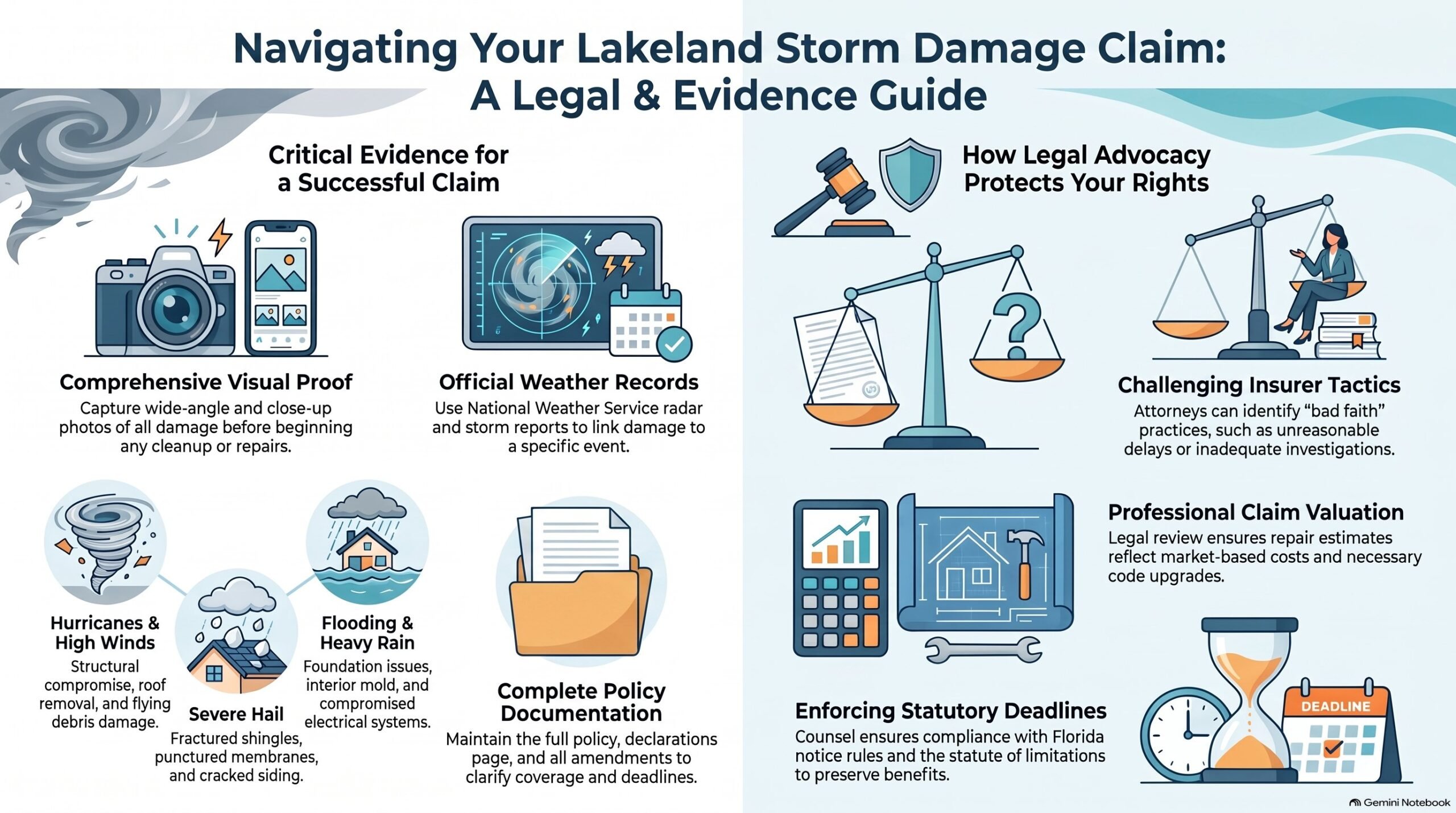
Hurricanes and tropical storms are among the most significant causes of property damage in Lakeland, producing high winds, driving rain, storm surge, and flying debris that can compromise roofs, siding, windows, and structural systems. Water may enter through damaged coverings, spread into insulation, and create concealed deterioration or mold. Flooding and prolonged power interruptions can further affect foundations, mechanical equipment, and personal belongings. Policyholders should promptly document conditions with photographs, repair estimates, receipts, and official weather records, and take reasonable steps to prevent additional damage. Insurers may issue Home insurance denials based on exclusions, causation disputes, or alleged maintenance concerns. A careful denial appeal strategy can address policy language, organize supporting evidence, and identify covered losses. Legal guidance may help affected property owners pursue fair treatment while protecting vital living conditions.
Severe Thunderstorms And Hail
When severe thunderstorms move through Lakand, intense wind, large hail, lightning, and heavy rainfall can cause substantial damage to residential and commercial properties. Hail may fracture shingles, puncture membranes, crack siding, break windows, and damage air-conditioning equipment. Rain entering through these openings can lead to interior staining, insulation saturation, electrical hazards, and mold growth. Property owners and managers should prioritize safety, arrange qualified inspections, and preserve damaged materials when practical. Storm damage documentation should include dated photographs, videos, repair estimates, maintenance records, and detailed descriptions of affected areas. Prompt notice to an insurer can help protect claim rights and support an accurate evaluation. Preventive measures, including Severe hailproofing with impact-resistant roofing, secure flashing, and reinforced exterior coverings, may reduce future losses and demonstrate responsible property stewardship. Professional guidance can help affected owners serve occupants, tenants, and communities effectively.
Tornadoes And High Winds
Tornadoes and high winds can cause sudden, widespread property damage in Lakeland, even when a storm system remains in the area for only a short time. Rotating winds may remove roofing materials, break windows, damage siding, and compromise structural supports. Straight-line winds can produce similar losses by uprooting trees, dislodging exterior equipment, and forcing debris into insured buildings. Tornado preparedness includes securing outdoor objects, identifying safe interior areas, maintaining emergency supplies, and reviewing applicable insurance coverage before severe weather develops. Wind resistant design, including reinforced roof connections, impact-resistant openings, and properly anchored structures, may reduce the severity of future losses. After an event, property owners should protect exposed areas from additional damage, document conditions carefully, and promptly notify insurers. Accurate records can assist claims professionals in evaluating covered repairs and replacement costs.
Flooding And Heavy Rainfall
Heavy rainfall and flooding can cause extensive property damage in Lakeland by overwhelming drainage systems, entering buildings through roofs, windows, doors, foundations, and other vulnerable points. Water intrusion may damage structural materials, electrical systems, flooring, personal belongings, and crucial records. Basement flooding can result from saturated soil, inadequate grading, blocked drains, or rising groundwater. A sewage backup creates additional health hazards and may require specialized cleanup, temporary relocation, and careful documentation. Prolonged moisture also encourages storm-related mold, which can spread behind walls and beneath flooring if not addressed promptly. Landlord responsibilities may include maintaining drainage, repairing known defects, notifying tenants, and arranging appropriate remediation, depending on the lease and applicable law. Detailed photographs, invoices, inspection reports, and timely claim notices can help establish the extent and cause of covered losses.
Don’t Wait. Call Our Florida Personal Injury Lawyers Now!


Legal Rights of Lakeland Property Claim Storm & Weather Damage Injury Victims
Property owners in Lakeland affected by storms or severe weather may have legal rights to seek insurance benefits for covered structural damage, personal property losses, and related expenses. These rights can include prompt claim handling, a reasonable investigation, and payment consistent with policy terms.
A careful advocate can help affected residents understand available protections and communicate with insurers.
- Policy Deadlines: Policies may require prompt notice, sworn statements, examinations, or filing within specified periods. Missing a deadline can jeopardize otherwise valid benefits.
- Evidence Preservation: Photographs, repair estimates, receipts, weather reports, and damaged materials can support the claimed loss. Documents should be preserved before permanent repairs begin.
- Coverage Review: Exclusions, deductibles, endorsements, and limits should be evaluated against the documented damage.
- Dispute Assistance: If an insurer delays, underpays, or denies a claim, the policyholder may seek appraisal, legal review, or other remedies available under Florida law.
Timely, informed action helps protect household stability and supports fair treatment for those needing assistance.
Why Do Lakeland Property Claim Storm & Weather Damage Injuries Happen?
Understanding why storm and weather-related property losses occur can help Lakeland owners document damage and evaluate whether an insurer has handled a claim appropriately. These losses commonly arise from hurricanes, severe thunderstorms, high winds, hail, flooding, lightning, and prolonged rainfall. Structural weaknesses may worsen the impact, particularly when home maintenance failures involve deteriorated roofing, blocked drainage, aging seals, or unrepaired leaks. Storm safety precautions can reduce exposure, yet no reasonable precaution prevents every loss.
Disputes also arise when policy coverage gaps exclude flooding, wind-driven rain, mold, or gradual deterioration, leaving owners uncertain about who is responsible for repairs. Insurers may interpret exclusions, deductibles, and causation requirements differently from policyholders, especially when several weather events occur close together. Delays may further complicate recovery because Insurance claim timelines can affect inspections, mitigation decisions, repair estimates, and proof of causation. Understanding these contributing factors helps community-minded advocates explain the circumstances accurately, recognize legitimate coverage concerns, and support fair treatment without assuming that every weather-related loss results from negligence or insurer misconduct.
What Should You Do After a Lakeland Property Claim Storm & Weather Damage Injury?
After a storm-related property injury, the injured individual should seek immediate medical care, even when symptoms initially appear minor. The accident scene should be documented through photographs, written notes, witness information, and records of property damage. Consulting a property lawyer can help preserve evidence, assess insurance coverage, and protect the individual’s legal interests.
Seek Immediate Medical Care
When a storm or weather-related incident causes an injury at a Lakeland property, the injured person should seek immediate medical care, even if symptoms initially appear minor. Prompt evaluation can identify hidden injuries, prevent complications, and establish a reliable medical record connecting the condition to the incident. Emergency medical personnel should be contacted when there is severe pain, bleeding, breathing difficulty, loss of consciousness, or potential head, neck, or spinal trauma. Otherwise, the individual should visit an appropriate healthcare provider as soon as possible and follow all recommended treatment instructions. Medical professionals should receive complete information about how the injury occurred and any symptoms that developed afterward. The injured person should retain discharge papers, bills, prescriptions, and appointment records for Insurance documentation and potential claim evaluation.
Document the Accident Scene
A person injured by storm or weather-related conditions at a Lakeland property should document the accident scene as soon as it is safe to do so. Photographs and videos should show the surrounding area, fallen branches, standing water, damaged surfaces, inadequate lighting, and any visible warning signs or barriers. Images should be taken from multiple angles without compromising safety. A written Safety hazards checklist can help record the date, time, weather conditions, location, and specific circumstances that preceded the injury. The injured person should also preserve relevant clothing, footwear, and personal items in their existing condition. Witness statement collection may provide valuable accounts from employees, residents, visitors, or emergency personnel. Names, contact information, and brief descriptions of observations should be recorded promptly while memories are still clear.
Consult a Property Lawyer
Preserving photographs, witness information, and other evidence can help evaluate a storm- or weather-related injury claim, but a Lakeland property lawyer can determine how those facts support potential liability and insurance demands. A lawyer can review weather documentation, maintenance records, leases, inspection reports, and medical information to identify responsible parties and assess whether hazardous conditions were reasonably foreseeable. Legal guidance may also clarify notice requirements, coverage provisions, claim procedures, and insurance timelines that could affect recovery. Prompt consultation helps preserve evidence before it disappears and supports accurate communication with insurers, property owners, and other involved parties. By coordinating with affected individuals and their families, counsel can pursue a claim while reducing unnecessary burdens during recovery. An informed legal strategy may help secure resources needed for medical care, repairs, and continued community service.
Critical Evidence in a Lakeland Property Claim Storm & Weather Damage Injury Case
Establishing a Lakeland storm and weather damage claim requires organized evidence linking the event to the property’s condition and the resulting losses.
The following records can help clarify the extent of damage, support coverage analysis, and substantiate repair costs:
- Photographs of Property Damage
- Detailed Weather Event Records
- Insurance Policy Documentation
- Repair Estimates and Invoices
Photographs of Property Damage
When storm or weather damage occurs, photographs can provide critical visual evidence of the property’s condition and the extent of the reported loss. Images should capture wide views of each affected area, followed by close photographs showing cracks, water intrusion, displaced materials, stains, and damaged personal property. Damage photo guidelines generally include using adequate lighting, photographing from multiple angles, and, when appropriate, placing an object of known size near significant defects. Photographs should be taken before cleanup, repairs, or disposal, provided doing so does not create a safety risk. Photo evidence preservation requires retaining original files, avoiding edits, recording capture dates, and maintaining secure backups. Organized photographs can help representatives, adjusters, and professionals evaluate the claim accurately while supporting fair treatment of property owners seeking assistance after a damaging event.
Detailed Weather Event Records
Detailed weather event records can provide essential evidence in a Lakeland property claim involving storm or weather damage. These records help establish when a damaging event occurred, its severity, and whether the reported conditions reasonably correspond to the observed property damage.
Weather tracking sources may include National Weather Service reports, radar archives, storm databases, and documented alerts. Such materials can identify wind speeds, rainfall totals, hail activity, lightning, or tornado conditions affecting the relevant location. Local gauge data may offer particularly useful measurements because it reflects conditions closer to the property than broad regional summaries.
A claimant or representative should preserve records showing the event’s date, duration, location, and measured intensity. Independent documentation can help distinguish storm-related damage from ordinary wear, maintenance issues, or unrelated causes. Organized weather evidence also helps professionals evaluate causation efficiently and accurately.
Insurance Policy Documentation
Insurance policy documentation is highly important evidence in a Lakeland property claim involving storm or weather damage. The complete policy, declarations page, endorsements, exclusions, and amendments establish the coverage that may apply to the reported loss. These materials can clarify duties after damage occurs, notice deadlines, proof-of-loss requirements, deductibles, and limits for specific categories of property.
A careful review may also identify the Claim denial reasons stated by an insurer and reveal whether those reasons correspond to the policy’s actual language. Policy documentation is especially useful when coverage dispute issues involve causation, exclusions, matching provisions, or competing interpretations of ambiguous terms. A well-organized record helps a property owner, advocate, or legal representative evaluate compliance with policy conditions and communicate accurately with the carrier. It also supports fair, informed assistance during claim review and resolution.
Repair Estimates and Invoices
Repair estimates and invoices provide essential evidence in a Lakeland property claim involving storm or weather damage. Detailed estimates identify affected areas, required materials, labor costs, and the connection between observed conditions and the reported event. Invoices show which repairs were authorized, completed, and paid, helping establish the claim timeline and the amount of covered loss.
Policyholders should preserve photographs, inspection reports, receipts, permits, payment records, and contractor communications as part of a documentation checklist. Multiple written estimates may clarify reasonable pricing and expose inconsistencies. Careful review can also support deductible disputes when an insurer misapplies policy terms or improperly reduces payment. Independent verification is particularly important when contractor fraud, inflated charges, incomplete work, or unauthorized changes are suspected. Organized records enable attorneys, adjusters, and courts to evaluate the claim fairly and efficiently.
Long-Term Effects of Lakeland Property Claim Storm & Weather Damage Injuries
Storm- and weather-related property injuries may produce ongoing physical limitations that affect mobility, daily activities, and the ability to work. Emotional trauma can also persist, contributing to anxiety, sleep disruption, and reduced quality of life. These lasting effects may create substantial financial strain through medical expenses, lost income, property losses, and continuing rehabilitation needs.
Ongoing Physical Limitations
When storm and weather damage compromises a Lakeland property, its effects may extend beyond visible structural deterioration, creating ongoing physical limitations for occupants. Exposure to debris, unstable surfaces, moisture, or unsafe electrical conditions can cause injuries that restrict mobility, strength, lifting capacity, or the ability to perform routine household activities. Some individuals may require continuing medical care, assistive devices, modified living arrangements, or help with transportation and personal tasks. These limitations can also affect a person’s ability to return to work or provide necessary support to family members. Rehabilitation planning should address medical recommendations, accessible housing needs, transportation, and realistic timelines for functional recovery. Thorough documentation of symptoms, treatment, limitations, and related expenses may help establish the continuing impact of the injury when evaluating a property-related insurance claim and available legal remedies.
Emotional Trauma Effects
Emotional trauma may persist after storm or weather damage leaves a Lakeland property unsafe, unstable, or considerably altered. Survivors may experience anxiety, sleep disruption, irritability, intrusive memories, or heightened alertness long after immediate danger has passed. These responses can affect concentration, relationships, employment, and participation in ordinary community activities. Children, older adults, and individuals with prior mental health concerns may require particular patience and support. Effective post-disaster coping can include counseling, consistent routines, supportive communication, and access to trusted medical or behavioral health professionals. Anxiety restoration is often gradual, especially when damaged surroundings repeatedly trigger fear or uncertainty. Documented symptoms and treatment may help clarify the injury’s lasting impact. Compassionate advocates can assist affected residents in identifying appropriate resources while preserving dignity, privacy, and informed decision-making throughout recovery.
Long-Term Financial Strain
Long-term financial strain can develop after storm or weather damage disrupts a Lakeland resident’s housing, employment, transportation, or access to important services. Unexpected cleanup costs may arise from debris removal, temporary repairs, mold prevention, and the replacement of necessary belongings. When delayed insurance payments extend this burden, residents may rely on credit, deplete savings, or postpone medical care and necessary household repairs. Lost wages can compound these pressures, particularly when unsafe conditions prevent a person from working or a business from reopening. Ongoing expenses may also include temporary lodging, transportation, utility restoration, and professional assessments. Careful documentation of damage, expenses, communications, and missed income can help clarify the financial impact. Legal guidance may assist affected residents in evaluating coverage, pursuing appropriate benefits, and protecting their ability to serve their families and communities.
Don’t Wait. Call Our Florida Personal Injury Lawyers Now!
Proving Liability in Lakeland Property Claim Storm & Weather Damage Injury Cases
Proving liability in Lakeland property-claim storm-and-weather-damage injury cases requires clear evidence connecting the responsible party’s conduct to the unsafe condition and the resulting losses. A thorough investigation may document damaged structures, hazardous debris, inadequate maintenance, code violations, and the timeline of inspections or repairs. Photographs, weather records, witness statements, incident reports, and medical documentation can help establish what occurred and how injuries developed.
The claimant generally must show that a property owner, contractor, tenant, or another responsible party knew or should have known about the danger and failed to address it reasonably. Comparative negligence analysis may become important when another person’s conduct allegedly contributed to the incident or increased its consequences. Legal counsel may evaluate the need for expert testimony, including from engineers, building professionals, meteorologists, or medical specialists, to explain causation and the extent of losses. Preserving evidence promptly supports a fair assessment and helps protect the interests of injured individuals, families, and communities seeking responsible resolution.
Dealing With Insurance Companies After a Lakeland Property Claim Storm & Weather Damage Injury
After liability evidence has been preserved, communication with insurance companies becomes an important part of pursuing compensation for storm- or weather-related injuries and property losses. Claimants should provide accurate, organized information and retain copies of notices, photographs, repair estimates, medical records, and correspondence. A clear claim timeline can help identify reporting deadlines, inspection dates, requests for documentation, and payment decisions.
Insurance representatives may request recorded statements or authorize limited inspections. Responses should remain factual and consistent, while avoiding speculation about fault, repair costs, or medical conditions. Evidence gaps can weaken an otherwise valid claim, particularly when damage changes before it is documented or expenses are not supported by records.
If the insurer issues a denied claim, the written explanation should be reviewed carefully. Policy language, exclusions, valuation methods, and procedural errors may affect available remedies. The appeal process may require additional evidence, a formal response, or professional assistance. Timely, respectful communication helps protect the claimant’s interests while supporting fair treatment for all affected parties.
What to Expect During a Lakeland Property Claim Storm & Weather Damage Injury Claim Process
A property claim process generally begins with promptly reporting the damage and preserving detailed records of storm-related losses. The policyholder may then negotiate with insurers regarding coverage, valuation, and necessary repairs. If disagreements persist, the claim may proceed toward formal resolution through further review, appraisal, mediation, or legal action.
Reporting Your Property Damage
When storm or weather damage affects a home or business, the property owner should report the loss to the insurance company promptly and preserve a clear record of the resulting conditions. Notice should follow the policy’s requirements and identify the date, general cause, affected property, and immediate safety concerns. The owner should request a claim number, adjuster’s contact information, and instructions for cooperating with the investigation. Communications should remain accurate and limited to confirmed facts, without speculation about fault or repair costs. Early Storm loss documentation can help establish compliance with notice obligations and reduce misunderstandings. A careful report may also limit an insurer denial strategy based on late notice, insufficient information, or alleged failure to cooperate. Legal guidance may help protect policy rights when coverage questions arise.
Documenting Storm-Related Losses
Thorough documentation forms the foundation of a credible storm-related property loss claim. After reporting damage, the property owner should photograph and video every affected area, including structural problems, water intrusion, damaged belongings, and hazardous conditions. Images should show both close details and wider views that establish location and scope. Receipts, repair estimates, maintenance records, purchase documents, and temporary expense records can help connect losses to the event. Witness statements from neighbors, tenants, contractors, or emergency personnel may provide independent observations about the storm and resulting damage. A written account should document weather conditions, the discovery of damage, protective steps taken, and subsequent changes. This timeline reconstruction can clarify causation and prevent important details from being overlooked. Organized copies, dated files, and secure backups help preserve reliable evidence for review by qualified professionals.
Negotiating With Insurers
With the evidence organized, the policyholder may begin negotiating with the insurer over the scope and value of the storm-related property loss. Evidence preservation remains important because photographs, repair estimates, receipts, and professional assessments can support a clear response to disputed damage. During discussions, the policyholder should understand claim timelines, including deadlines for submitting forms, supplements, and supporting records. Insurer communications should be reviewed carefully, documented, and answered with accurate information rather than assumptions. A consistent documentation strategy can help identify unanswered questions, distinguish covered damage from unrelated conditions, and preserve a reliable account of the claim’s development. A representative assisting the policyholder may organize correspondence, clarify policy language, and promote respectful communication. Careful negotiation focuses on presenting substantiated information and protecting the policyholder’s ability to make informed decisions.
Resolving Your Damage Claim
Resolving a storm or weather-damage claim typically involves reviewing the policy, confirming the documented loss, and determining whether the insurer’s proposed payment accurately reflects the cost of covered repairs. The process may require photographs, contractor estimates, inspection reports, receipts, and records showing when and how the damage occurred. Repair estimate disputes can arise when an adjuster overlooks hidden damage, uses incomplete pricing, or improperly applies exclusions. A careful comparison of the policy language with the evidence can identify underpayments and support a request for reconsideration. If coverage is denied, appeals of claim denials generally require a written explanation, supporting documentation, and timely submission within applicable policy deadlines. When disagreements remain, a qualified professional may assist with communications, appraisal procedures, mediation, or litigation, helping affected property owners pursue a fair resolution and protect their recovery.
Compensation for Lakeland Property Claim Storm & Weather Damage Injury Damages
Compensation for storm and weather damage may cover the reasonable cost of repairing or replacing damaged property, removing debris, addressing water intrusion, and restoring the premises to its pre-loss condition. Depending on the policy, payment may also include temporary protective measures, emergency services, and necessary professional assessments. A careful inventory of damaged items, photographs, invoices, repair estimates, and maintenance records can help establish the claimed amount and connect the loss to the covered event.
Policyholders may encounter Insurance adjuster tactics such as minimizing damage, attributing conditions to excluded causes, or relying on incomplete inspections. Coverage limitation issues may involve deductibles, exclusions, depreciation, policy limits, or deadlines for submitting documentation. Prompt notice and organized records help preserve the claim, while an independent review may clarify whether the insurer’s valuation reflects the policy’s requirements. A qualified Lakeland property claim attorney can evaluate disputed compensation, communicate with the insurer, and pursue a fair resolution consistent with the available coverage.
Economic vs Non-Economic Damages in Lakeland Property Claim Storm & Weather Damage Cases
Economic damages may include repair costs, replacement expenses, temporary housing, and other measurable financial losses caused by the storm or weather event. Non-economic losses can include reduced use, inconvenience, disruption, and diminished enjoyment of the property, though such claims may require careful legal analysis. Proving the value of damage generally requires photographs, estimates, receipts, expert opinions, and documentation linking each loss to the covered event.
Economic Damage Categories
Storm and weather damage claims may involve several categories of financial loss, and identifying each category is essential to evaluating the full value of a property owner’s recovery. Economic damages commonly include the reasonable cost of repairing or replacing damaged roofing, siding, windows, flooring, mechanical systems, and personal property. A claim may also address necessary debris removal, emergency mitigation, temporary protection, and increased expenses required to prevent further damage. Property value may be affected when repairs cannot fully restore the premises or when covered damage causes a measurable reduction in value. Accurate repair cost valuations should rely on qualified inspections, market-based estimates, and applicable policy provisions. Insurance claim documentation, photographs, invoices, contracts, receipts, and timely proof of loss help establish the requested amount and support a fair evaluation.
Non-Economic Losses
Beyond documented repair costs and other financial losses, some storm- and weather-damage claims may involve non-economic harm that is more difficult to measure. Disruption to a household’s stability, privacy, comfort, or sense of security may follow roof failure, flooding, mold concerns, or prolonged utility interruptions. Storm-related delays can disrupt family routines, caregiving responsibilities, education, and community obligations. Property relocation may create additional stress when residents must leave familiar surroundings or depend on temporary accommodations. These effects may be particularly significant for older adults, children, individuals with disabilities, and people supporting vulnerable relatives. Insurance policies often address covered financial losses more directly than non-economic injuries, so policy language and applicable Florida law determine whether such impacts receive consideration. A careful review can help affected parties understand available protections.
Proving Damage Value
How damage value is established often determines whether a property claim reflects the full scope of a covered loss. Economic damages generally include reasonable repair costs, replacement expenses, temporary housing, lost rental income, and other documented financial consequences. Non-economic impacts, such as disruption, inconvenience, and loss of ordinary use, may be harder to quantify and depend on applicable policy language and legal standards.
Claimants can support the valuation with photographs, inventories, invoices, contractor evaluations, receipts, and estimate documentation that identify materials, labor, depreciation, and necessary code upgrades. Compare repair timelines from qualified professionals to determine whether proposed work adequately addresses hidden damage and prevents further deterioration. Consistent records can distinguish storm-related conditions from preexisting issues. A careful valuation process helps insurers, adjusters, and courts evaluate the claim fairly while preserving the resources needed to restore property to a safe, functional condition.
When a Lakeland Property Claim Storm & Weather Damage Injury Case Goes to Trial vs. Settlement
When a property owner seeks compensation for storm- or weather-related damage in Lakeland, the case may be resolved through settlement negotiations or proceed to trial. A settlement can provide a faster, more predictable resolution, allowing repairs and recovery to move forward without the uncertainty of courtroom proceedings. During settlement negotiations, representatives evaluate documented losses, communications with the insurer, expert opinions, and the likelihood of proving disputed issues.
If negotiations fail, trial strategy becomes important. Counsel may present an evidence buildup showing the property’s condition before the event, the storm’s effects, repair requirements, and the reasonableness of claimed costs. Witness testimony, photographs, invoices, inspections, and professional assessments can help establish credibility.
Risk assessment guides each decision. Factors may include litigation expenses, delays, evidentiary weaknesses, potential recovery, and the insurer’s willingness to resolve the dispute. A carefully considered recommendation should account for the owner’s needs and ability to sustain prolonged proceedings. Either path should pursue a fair outcome while preserving resources for restoration and future stability.
Florida Laws That May Affect Your Lakeland Property Claim Storm & Weather Damage Case
Florida law may affect a Lakeland property claim through rules governing insurance contracts, policy deadlines, causation, coverage exclusions, and the evidence required to prove damage.
Understanding these requirements helps property owners and advocates serve affected families responsibly.
- Florida notice rules: Policies may require prompt notice, sworn statements, proof of loss, and cooperation with inspections. Delayed or incomplete submissions can complicate evaluation, particularly when weather damage changes over time.
- Insurance claim timelines: Statutory and policy-based deadlines can govern acknowledgments, investigations, payments, and coverage decisions. Claimants should preserve correspondence and document each communication.
- Causation standards: Coverage may depend on whether wind, hail, flooding, neglect, or another event caused the loss. Photographs, repair records, maintenance history, and qualified inspections can clarify competing explanations.
- Policy interpretation, including exclusions, deductibles, endorsements, appraisal provisions, and matching requirements, may substantially affect recovery. A careful review can identify obligations and potential disputes before negotiations progress.
These laws make organized documentation and informed guidance important throughout the claim process.
Don’t Wait. Call Our Florida Personal Injury Lawyers Now!
The Statute of Limitations for Lakeland Property Claim Storm & Weather Damage Injury Cases
Organized documentation also matters because Florida law imposes deadlines for filing property insurance disputes and related legal actions. A policyholder should identify the date of the storm, promptly report the loss, preserve photographs, and retain estimates, receipts, correspondence, and claim decisions. Florida statutes and policy provisions may establish different deadlines for submitting notices, completing repairs, pursuing supplemental payments, or filing a lawsuit. The applicable period can depend on the loss date, the insurance contract, and whether statutory amendments affect the claim. An Insurance coverage review can clarify notice requirements, exclusions, proof-of-loss provisions, and any contractual limitation period before essential time expires. Delayed investigation may weaken evidence and complicate efforts to distinguish storm damage from wear, maintenance issues, or later events. Individuals assisting affected property owners should encourage prompt, accurate recordkeeping without promising a particular outcome. Questions about attorney contingency fees and filing deadlines should be addressed directly with qualified Florida counsel. Missing a deadline can bar recovery, even when damage is substantial.
How a Lakeland Property Claim Storm & Weather Damage Lawyer Can Help You
A Lakeland property claim storm and weather damage lawyer can evaluate the insurance policy, investigate the reported loss, and help determine whether the insurer has handled the claim properly.
This assistance can help property owners serve tenants, families, customers, and communities by pursuing appropriate resources for repair and recovery.
- Policy analysis: Counsel can identify covered perils, exclusions, deductibles, valuation provisions, and potential Insurance coverage gaps affecting the loss.
- Damage documentation: The lawyer can organize photographs, invoices, estimates, inspection findings, and expert opinions to present a coherent claim.
- Insurer communication: Counsel can address requests for information, clarify disputed facts, and preserve a complete record of relevant communications.
- Claim denial appeals: If benefits are denied or limited, the lawyer can assess the stated reasons, develop supporting evidence, and present a structured response under the policy.
Through careful review and advocacy, legal counsel can promote accountability while helping affected property owners make informed decisions about restoration, financial obligations, and responsibilities to those relying on the property.
When to Contact a Lakeland Property Claim Storm & Weather Damage Lawyer
Prompt legal guidance may be appropriate when a storm or weather event causes significant property damage, the insurer delays its investigation, or the claim is denied or underpaid. Early consultation can help a policyholder understand available options before important evidence becomes difficult to preserve. A lawyer may be contacted after roof, structural, water, wind, hail, or debris damage is documented, particularly when repairs are urgent and questions about coverage arise.
Attention to the Property claim timeline is critical. Policies and Florida law may establish notice requirements, proof-of-loss obligations, appraisal procedures, and deadlines for pursuing payment or legal relief. Because these requirements can vary by policy and circumstance, waiting for a final denial may create unnecessary risk.
A lawyer may also be consulted when communications become confusing, requested information appears excessive, or the insurer’s valuation does not reasonably address covered losses. Prompt review can support organized records, informed decisions, and timely action while preserving the policyholder’s rights under applicable Filing insurance deadlines.
Why You Need an Experienced Lakeland Property Claim Storm & Weather Damage Lawyer
An experienced Lakeland property claim storm and weather damage lawyer can provide informed guidance when coverage disputes involve complex policy language, disputed causation, or incomplete damage assessments. Such counsel helps policyholders understand their rights while presenting losses clearly and responsibly. Experience is particularly valuable when insurers cite coverage gaps or denied claims as grounds for limiting payment, even when storm-related damage appears substantial. A knowledgeable lawyer can examine exclusions, endorsements, deadlines, and valuation provisions to determine whether the insurer’s position is supported by the policy.
Professional assistance also strengthens the claim record. Evidence preservation and repair documentation can establish the property’s condition, connect damage to the reported event, and demonstrate reasonable mitigation efforts. Counsel may coordinate qualified inspections, organize photographs, estimates, invoices, and correspondence, then address inconsistencies before they undermine recovery. This disciplined approach supports fair treatment and reduces the risk that an overwhelmed property owner must navigate technical disputes alone. By protecting accurate information and enforcing contractual obligations, experienced representation serves clients and promotes accountable claim handling.
How to Choose the Right Lakeland Property Claim Storm & Weather Damage Lawyer for Your Case
Selecting the right Lakeland property claim storm and weather damage lawyer requires careful consideration of experience, communication, and familiarity with Florida insurance law. A qualified attorney should have a record of handling roof, water, wind, and hurricane-related claims and an understanding of policy interpretation and deadlines.
Strong Client communication is critical. The lawyer should explain coverage issues clearly, respond within reasonable timeframes, and ensure the policyholder understands the available options. During an initial consultation, prospective clients should ask how the firm evaluates claim documentation, identifies disputed losses, and manages negotiations or litigation.
Effective representation also depends on the preservation of evidence. Photographs, repair estimates, inspection reports, receipts, weather records, and insurer correspondence may help establish the extent of the damage and its value. The attorney should recognize warning signs of insurer badfaith, including unreasonable delays, inadequate investigations, or unsupported denials.
A lawyer committed to serving others will provide candid guidance, protect the client’s interests, and pursue a fair resolution grounded in documented facts and applicable law.
About The Law Offices of Anidjar & Levine
The Law Offices of Anidjar & Levine represents policyholders pursuing compensation for storm and weather-related property damage in Lakeland and throughout Florida.
The firm assists homeowners, landlords, and business owners whose properties have been affected by hurricanes, high winds, hail, flooding, or other severe weather events.
Its attorneys review insurance policies, investigate reported losses, and assess whether an insurer has properly evaluated covered damage.
When claims are delayed, underpaid, or denied, the firm may help clients pursue insurance denial appeals and seek benefits allowed under their policies.
This work can involve examining adjuster reports, repair estimates, photographs, maintenance records, and communications with the carrier.
The firm also emphasizes early preparation.
A documented evidence-preservation checklist can help policyholders organize photographs, receipts, inspection findings, temporary repair records, and other materials before the evidence is lost.
By providing structured guidance and legal representation, the firm serves clients seeking accountability and fair treatment while protecting their interests throughout the property claim process.
Frequently Asked Questions
Can I File a Storm Damage Claim if My Property Is Still Under Construction?
A property owner may file a storm damage claim while construction continues, but coverage depends on the policy, project stage, and cause of loss. Insurers may apply construction claim limits, exclusions for faulty workmanship, or requirements concerning vacant structures and contractor responsibility. Documentation should establish the property’s condition before the storm, damage afterward, and compliance with weatherproofing requirements. Prompt notice, photographs, contracts, invoices, and professional guidance can help protect the owner’s interests during evaluation.
Does Filing Bankruptcy Affect My Ability to Pursue a Property Damage Claim?
Filing bankruptcy does not automatically eliminate a property damage claim, but it can change who controls it and how recovery proceeds. Claim timing matters because claims arising before filing may become estate assets, requiring disclosure and potential administration by the trustee. Chapter 11 eligibility and strategy may affect continued litigation. Bankruptcy court stays, including the automatic injunction, can temporarily halt collection or proceedings, so legal coordination is crucial.
Can Renters Pursue Compensation for Storm-Related Damage to Personal Belongings?
Renters can seek compensation for storm-related damage to personal belongings, particularly when they carry Renters insurance that covers specified perils. Policies may reimburse personal property damages after deductibles, subject to exclusions, coverage limits, documentation, and proof of ownership. Affected individuals should promptly report losses, prevent further damage, preserve receipts and photographs, and review policy language. If a landlord’s negligence contributed to the loss, separate claims may be available against responsible parties.
What Happens if My Property Has Unresolved Damage From a Previous Storm?
Unresolved damage from a previous storm can complicate a later claim because insurers may attribute current losses to the earlier event. Documented Evidence, including photographs, repair estimates, inspections, and communications, helps distinguish new damage from preexisting conditions. The Prior Storm’s Insurance Coverage and Settlement Status should be reviewed carefully. If the earlier claim remains open, incomplete repairs or disputed payments may require prompt clarification before additional benefits are assessed or pursued.
Can I Recover Damages When a Neighbor’s Property Worsens My Storm Damage?
A property owner may recover damages when a neighbor’s conduct materially worsens storm-related losses, but liability requires evidence connecting the neighbor’s actions to the additional damage. Causation proof may include photographs, inspection reports, weather records, and qualified expert opinions. Claims often depend on demonstrating negligent maintenance, such as failing to repair hazardous trees, drainage systems, roofs, or structures. Insurance policies, local ordinances, and comparative-fault rules may also affect available recovery.
—————————
Lakeland property owners dealing with storm and weather damage may face challenges when documenting losses, communicating with insurers, and pursuing fair compensation.
An experienced property claim lawyer can review policy language, evaluate covered damage, identify improper claim practices, and seek appropriate remedies.
Prompt legal guidance may help preserve evidence and protect important rights.
The Law Offices of Anidjar and Levine provides informed representation in complex insurance disputes and supports clients throughout the claims process.
Learn more about legal assistance from a Lakeland Personal Injury Lawyer.