The Law Offices of Anidjar and Levine help families evaluate whether prenatal, labor, delivery, or newborn-care providers breached accepted standards and caused a measurable injury. An Orlando medical malpractice birth lawyer may review medical records, fetal monitoring strips, medication documentation, hospital policies, witness accounts, and expert opinions. Counsel can address insurance communications, evidence preservation, deadlines, guardianship, settlement approval, and damages involving lifelong care, rehabilitation, assistive services, and lost earning capacity. Families can learn more about their legal options by consulting an Orlando Personal Injury Lawyer.
Main Takeaways
- An Orlando birth injury lawyer can assess whether negligent prenatal, labor, delivery, or newborn care caused measurable harm.
- Case reviews commonly examine medical records, fetal monitoring strips, diagnostic results, delivery notes, and qualified medical expert opinions.
- Potential negligence may involve delayed emergency treatment, inadequate monitoring, medication errors, improper instrument use, or failure to respond to complications.
- Damages may include current treatment, lifelong medical care, rehabilitation, assistive services, lost earning capacity, and other long-term needs.
- Families should obtain prompt medical care, preserve records and communications, document events, and seek legal guidance before speaking with insurers.
How We Can Help With Your Orlando Medical Malpractice General Birth Injury Claim
An Orlando medical malpractice birth injury lawyer can help families assess whether negligent prenatal, labor, delivery, or newborn care caused a child’s injury and determine the legal options available. Counsel may organize medical records, consult qualified experts, and explain how clinical decisions relate to the child’s condition. A careful Insurance claims strategy can address communications with insurers while protecting the family from premature statements or inadequate settlement proposals.
Legal guidance also includes reviewing applicable statutes of limitations and identifying deadlines that may affect a potential claim. Evidence preservation steps can include securing records, imaging, billing information, electronic communications, and witness details before materials become unavailable. Counsel may also explain damages-calculation myths, including assumptions that compensation is limited to current medical bills or that future care can be estimated without professional analysis.
Understanding Orlando Medical Malpractice General Birth Injury Cases


When a child sustains an injury before, during, or shortly after birth, understanding the legal and medical issues requires careful analysis of the circumstances and applicable standards of care. A birth injury case generally examines whether healthcare providers acted consistently with medical negligence standards under comparable circumstances. The review may include prenatal records, delivery documentation, monitoring data, diagnostic information, and testimony from qualified medical professionals. The central questions often involve whether a provider owed a duty, breached that duty, and caused a measurable injury.
OUR CONSULTATIONSARE FREE
START YOUR FREE CASE REVIEW

Damages calculation requires evaluation of current care, anticipated medical care, rehabilitation, assistive services, lost earning capacity, and the child’s long-term needs. Non-economic losses may also be considered under applicable Florida law. Because injuries can affect development and family responsibilities for decades, accurate assessment may require collaboration among physicians, life-care planners, economists, and legal professionals. Early preservation of records can help clarify timelines, support informed decisions, and promote accountability.
Don’t Wait. Call Our Florida Personal Injury Lawyers Now!
Common Causes of Orlando Medical Malpractice General Birth
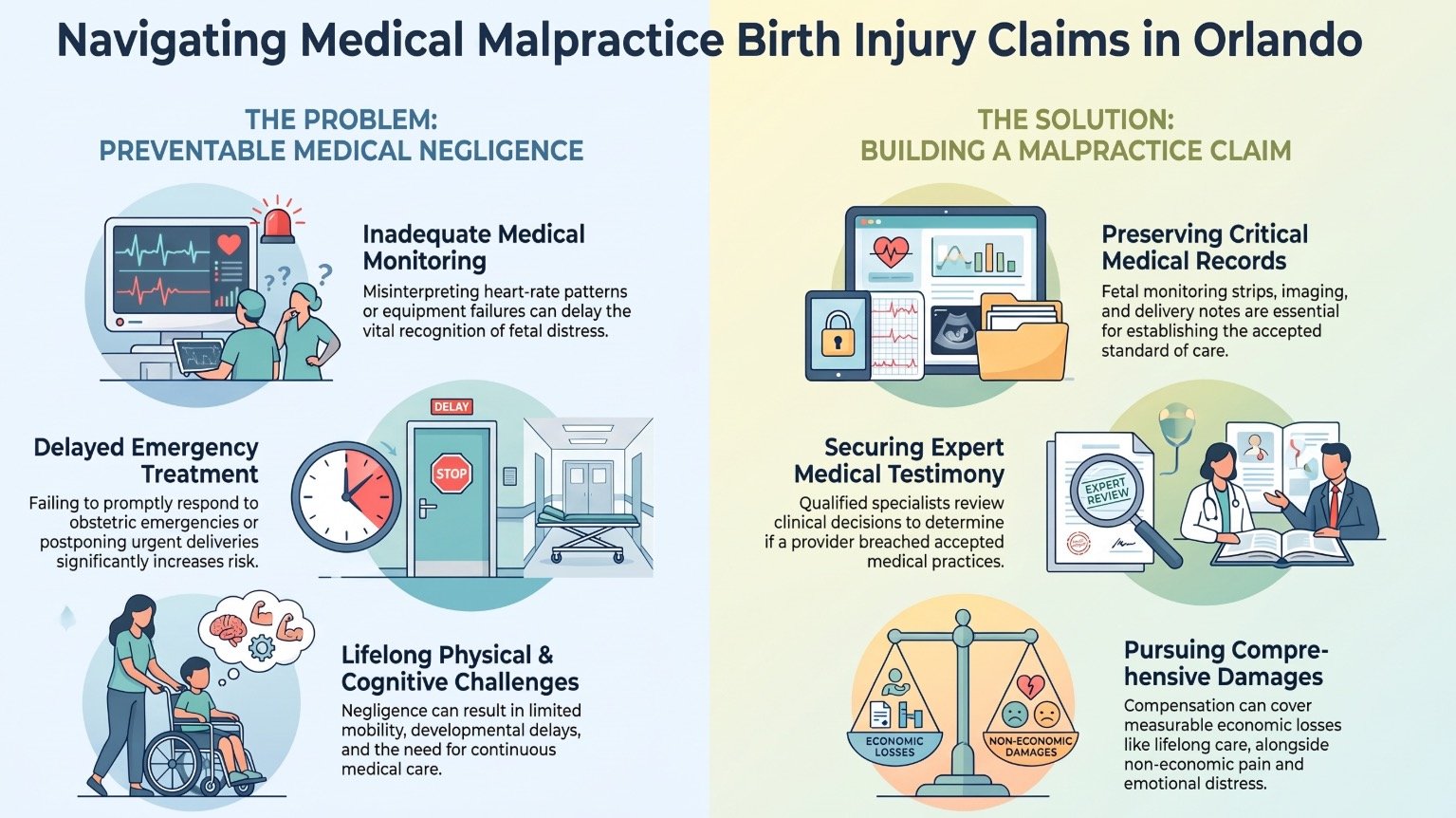
Common causes of birth injuries may include inadequate medical monitoring, which can prevent timely recognition of fetal distress or other complications. Delayed emergency treatment and medication errors may further increase risks during labor and delivery. Delivery mistakes, including improper instrument use or failure to respond appropriately, may also contribute to medical malpractice claims.
Birth Injury Causes


Birth injuries may result from complications during pregnancy, labor, delivery, or the immediate postnatal period, but some are associated with preventable medical errors. Causes can include oxygen deprivation, premature birth, shoulder dystocia, umbilical cord complications, excessive delivery force, and failures to recognize conditions requiring timely intervention. Maternal infections, untreated diabetes, high blood pressure, and problems affecting fetal growth may also increase risks. Risk factors review supports informed decisions before and during pregnancy, while preventive prenatal planning can help identify conditions requiring specialized care or referral. During delivery, improper use of forceps or vacuum devices may cause fractures, nerve damage, or bleeding. Delayed cesarean delivery can likewise contribute to serious harm when complications are not addressed promptly. Families seeking accountability may consult an experienced Orlando birth injury attorney for guidance.
Medical Monitoring Errors
Medical monitoring errors can contribute to birth injuries when fetal or maternal conditions are not assessed accurately or acted upon promptly. During labor, clinicians may misinterpret heart-rate patterns, overlook maternal critical-sign changes, or document findings incompletely. Misreading fetal oxygenation can create a misleading impression that an infant is tolerating labor, while abnormal readings may be treated as reassuring without adequate verification. Monitoring equipment failure, including disconnected sensors, depleted batteries, or improperly calibrated devices, can also obscure important information. Staff training, appropriate equipment checks, and consistent review of recorded data help reduce these risks. When a newborn is harmed, a qualified attorney may review monitoring strips, medical records, staffing practices, and equipment maintenance documentation. Such review can help families understand whether professional standards were followed and identify options for accountability and support.
Delayed Emergency Treatment
When an obstetric emergency develops, delayed treatment can increase the risk of serious harm to the mother or newborn. Delays may occur when warning signs are overlooked, test results are not reviewed promptly, experts are not contacted, or an urgent delivery is postponed without adequate justification. Staffing shortages, communication failures, and incomplete escalation procedures can also contribute. Recognizing negligence requires examining whether medical professionals responded within the accepted standard of care under the circumstances. Relevant evidence may include fetal monitoring records, nursing notes, examination findings, telephone communications, and hospital policies. Proving causation generally requires showing that timely intervention would probably have prevented or reduced the injury. A careful legal review can help families understand whether the delay caused preventable complications and identify appropriate avenues for accountability and support.
Medication And Delivery Mistakes
Medication and delivery mistakes can create preventable risks for both the mother and newborn, particularly when an incorrect drug, dosage, timing, or delivery method is used. Medication dosage errors may involve administering too much or too little medication, selecting an inappropriate drug, or failing to account for allergies and medical conditions. During labor, these mistakes can contribute to excessive bleeding, seizures, respiratory complications, fetal distress, or other serious harm. Nursing documentation mistakes may obscure important information, including medication times, patient responses, allergies, and changes in fetal monitoring. Inadequate communication among nurses, physicians, pharmacists, and the delivery team can further increase danger. A careful review of records, orders, monitoring data, and clinical decisions may help identify whether accepted safety procedures were followed and whether negligence contributed to injury.
Legal Rights of Orlando Medical Malpractice General Birth Injury Victims
Although birth injuries can arise from complex medical circumstances, Orlando victims may have legal rights when negligent care causes preventable harm to a child or mother. A qualified medical malpractice attorney can review records, identify responsible parties, and explain available remedies without adding burdens to an affected family.
Orlando families affected by birth injuries may have legal options when negligent medical care causes preventable harm.
Potential legal protections may include:
- The right to seek compensation for medical treatment, rehabilitation, lost income, future care, and other documented damages.
- The right to obtain relevant medical records, consult independent experts, and pursue a claim within Florida’s applicable deadlines.
- The right to challenge inadequate insurer responses, including insurance claim delays, and to consider litigation when fair resolution is not offered.
Families may also receive guidance regarding guardianship, settlement approval, and preserving evidence for a child’s long-term interests. Wrongful discharge claims could arise if an employee faces retaliation for reporting unsafe conduct connected to the injury, although those claims involve separate legal requirements. Prompt, informed assistance supports accountability and responsible service to vulnerable families.
Why Do Orlando Medical Malpractice General Birth Injuries Happen?
Why do Orlando birth injuries happen? They may result from preventable failures before, during, or after labor and delivery. Communication breakdowns among healthcare providers can prevent physicians, nurses, and experts from recognizing changing conditions or responding consistently to warning signs. Delayed fetal monitoring, misinterpretation of test results, and failure to escalate concerns may contribute to oxygen deprivation, trauma, or other harm.
Some injuries arise from inadequate assessment of maternal or fetal risk factors, including infection, preeclampsia, abnormal positioning, or complications involving the umbilical cord. Errors in medication selection, dosage, sterilization, or delivery technique can also create significant risks. In addition, inadequate consent and documentation may obscure whether parents received meaningful explanations of foreseeable risks, alternatives, and urgent recommendations. Documentation gaps can further hinder coordinated care and accurate evaluation of events. Although not every birth injury reflects negligence, departures from accepted medical standards can have lasting consequences for children and families requiring recovery support.
What Should You Do After an Orlando Medical Malpractice General Birth Injury?
After a suspected birth injury, the child should receive immediate medical care to address urgent needs and establish an early clinical record. The family should document symptoms, diagnoses, treatments, and relevant birth events, and preserve medical records and related communications. Consultation with an experienced birth injury lawyer can help assess potential malpractice claims and protect applicable legal rights.
Seek Immediate Medical Care
Seek immediate medical care when a newborn shows signs of a possible birth injury, including difficulty breathing, seizures, unusual limpness, persistent crying, feeding problems, or limited movement in an arm or leg. A parent, guardian, or caregiver should call emergency services or proceed to the nearest emergency department without delay. Emergency response protocols can help stabilize the infant and identify conditions requiring urgent intervention. Medical personnel should receive a clear description of the symptoms, their onset, and any changes in the infant’s condition. Hospital staff should prioritize triage accuracy, particularly when symptoms suggest oxygen deprivation, neurological injury, or trauma. If the infant’s condition worsens, clinical staff should escalate care immediately. Patient safety reporting may help the facility address urgent care concerns, while qualified clinicians determine appropriate treatment and monitoring.
Document the Birth Injury
If a birth injury is suspected, parents or guardians should document the infant’s condition and the circumstances surrounding the delivery as soon as reasonably possible. Birth injury documentation may include dated photographs, observed symptoms, behavioral changes, and statements from healthcare professionals. Records should identify when symptoms appeared, which treatments were provided, and how the infant responded. Parents or guardians may submit hospital documentation requests for prenatal records, fetal monitoring strips, delivery notes, medication records, discharge instructions, and neonatal evaluations. Copies should be stored securely and organized chronologically. Creating an evidence timeline can clarify the sequence of events and medical responses without altering original records. Families should also maintain a file for collecting treatment receipts, pharmacy costs, transportation expenses, and other related expenditures. Consistent, accurate records can support continuity of care and preserve important information.
Consult a Birth Injury Lawyer
Consulting a birth injury lawyer can help parents or guardians understand whether the medical care provided during pregnancy, labor, delivery, or neonatal treatment may have departed from accepted standards. A lawyer can review medical records, timelines, witness accounts, and documented injuries to identify issues requiring further investigation. Early consultation may also preserve important evidence and help families understand filing deadlines, potential defendants, and available legal remedies. The lawyer may recommend obtaining independent medical opinions to evaluate causation and the child’s future needs. During this process, parent counseling can help families organize concerns, ask informed questions, and make decisions aligned with the child’s interests. Although legal guidance cannot erase the injury, it may provide emotional support by offering structure, clarity, and advocacy while the family pursues appropriate medical and community resources.
Critical Evidence in an Orlando Medical Malpractice General Birth Injury Case
Critical evidence in an Orlando medical malpractice birth injury case may include:
1. pivotal medical records and fetal monitoring strips; 2. expert medical testimony; and 3. witness statements.
Together, these materials can help establish the standard of care, identify potential deviations, and clarify how the alleged negligence caused the injury.
Medical Records
Medical records provide essential evidence in an Orlando medical malpractice birth injury case because they document the mother’s pregnancy, labor and delivery, newborn care, and subsequent recovery. These records may show symptoms, diagnoses, medications, examinations, consultations, and decisions healthcare professionals made. A careful review can identify whether providers recognized risks, followed accepted procedures, communicated significant developments, and arranged appropriate care. Charting errors, missing entries, inconsistent timestamps, or unexplained alterations may raise important questions about the accuracy and completeness of the record. Consent forms can establish what information was provided before procedures, including known risks, alternatives, and expected benefits. Discharge summaries and follow-up records may help connect an injury to earlier treatment. Complete records enable attorneys, medical reviewers, and families to evaluate events responsibly and pursue appropriate accountability.
Fetal Monitoring Strips
Fetal monitoring strips can provide pivotal evidence in an Orlando medical malpractice birth injury case because they document the fetus’s heart rate and responses during labor and delivery. These records may show concerning patterns, periods of reduced oxygen, and whether staff recognized and responded promptly to changes. Proper preservation is important because electronic data, printed strips, and nursing notes may be stored separately or become difficult to obtain over time. Clarifying common misconceptions includes understanding that an abnormal tracing alone does not establish negligence; its significance depends on timing, clinical circumstances, and the actions taken. Families and advocates should also focus on identifying critical legal deadlines, including Florida’s limitations and pre-suit requirements. Promptly requesting complete records can help preserve relevant information for case evaluation and compassionate support.
Expert Medical Testimony
How can expert medical testimony clarify whether the care provided during pregnancy, labor, or delivery met the applicable standard of care? A qualified obstetrician, neonatologist, or related specialist can review prenatal records, fetal monitoring, clinical decisions, and delivery documentation. The expert explains what a reasonably careful provider would have recognized and done under comparable circumstances. This analysis can identify whether a delay, omitted intervention, medication error, or inadequate response likely contributed to the infant’s injury. Experts also compare liability standards applicable to physicians, nurses, hospitals, and other healthcare professionals. In addition, they can evaluate neonatal damages by addressing diagnosis, treatment, prognosis, developmental needs, and future medical care. Their objective opinions help clarify complex medical issues for the court while supporting a careful, service-oriented pursuit of accountability and appropriate compensation for affected families.
Witness Statements
Witness statements can supplement expert medical testimony by documenting what occurred during prenatal visits, labor, delivery, and the newborn’s immediate care. Nurses, physicians, family members, and other observers may describe communications, delays, monitoring practices, or changes in the infant’s condition. Their accounts can clarify disputed facts and help establish hospital liability when care policies, staffing decisions, or communication failures contributed to harm.
Counsel may compare these accounts with medical records and Expert depositions to identify inconsistencies or confirm important details. Prompt evidence preservation is critical because memories can fade, witnesses may relocate, and relevant records or electronic communications may be altered or lost. Investigators generally assess witness credibility by considering firsthand knowledge, consistency, neutrality, and alignment with documented events. Carefully collected statements can assist families, attorneys, and courts in evaluating whether negligent care caused preventable birth injuries.
Long-Term Effects of Orlando Medical Malpractice General Birth Injuries
Long-term birth injuries may create lifelong physical challenges that affect mobility, communication, and independence. Cognitive and developmental delays can influence learning, behavior, and social development, often requiring dedicated support. Ongoing medical care may include rehabilitation, assistive services, medications, and periodic evaluations to address changing needs.
Lifelong Physical Challenges
When a birth injury results from negligent medical care, its physical consequences may extend well beyond infancy and affect a person throughout adulthood. Muscle weakness, paralysis, impaired coordination, and limited mobility can require ongoing therapy, adaptive equipment, orthopedic treatment, or personal assistance. Some individuals may experience chronic pain, joint deformities, respiratory complications, or difficulty performing routine activities independently. These needs can change as the person ages, making consistent medical monitoring and accessible environments crucial. Families and caregivers may also need guidance in coordinating services, preserving dignity, and supporting meaningful participation in community life. Long-term disability planning can address future care, housing modifications, transportation, and attendant services. A carefully developed financial recovery strategy may help secure resources for these lifelong physical needs and reduce pressure on caregivers.
Cognitive And Developmental Delays
Cognitive and developmental delays may affect learning, communication, memory, attention, and problem-solving abilities after a birth injury caused by negligent medical care. These effects can influence educational progress, social participation, and later independence. Neonatal neglect, including failures to recognize distress or provide timely intervention, may contribute to preventable neurological harm. A legal assessment reviews medical records, developmental evaluations, school reports, and caregiver testimony to determine whether negligence caused or worsened the impairment. Expert witnesses can explain the injury’s probable effects, distinguish them from unrelated conditions, and address court admissibility requirements for expert evidence. Counsel may also use a careful deposition strategy to preserve consistent testimony, identify departures from accepted standards, and clarify disputed facts. Such evidence helps families pursue accountability and resources that support the injured child’s long-term development.
Ongoing Medical Care
Ongoing medical care may be required when a birth injury causes lasting physical, neurological, or developmental impairments. Children may need coordinated services from pediatricians, neurologists, therapists, doctors, and educational professionals. Treatment can include medication management, physical and occupational therapy, speech services, adaptive equipment, and periodic diagnostic evaluations. Consistent Treatment adherence helps providers monitor progress, address complications, and adjust interventions as the child’s needs change. Effective discharge planning should begin before hospital release and identify follow-up appointments, home-care instructions, warning signs, transportation needs, and available community resources. Families may also require guidance concerning insurance coverage, assistive technology, and long-term supportive programs. When medical negligence is suspected, detailed records of appointments, treatments, expenses, and functional changes may help clarify the injury’s continuing effects and support informed decisions about the child’s care.
Proving Liability in Orlando Medical Malpractice General Birth Injury Cases
Proving liability in an Orlando birth injury case requires evidence that a healthcare provider failed to meet the accepted standard of care and that this failure caused the child’s injury. The standard of care describes the level of skill and caution reasonably expected from comparable medical professionals in similar circumstances. Evidence may include prenatal records, fetal monitoring strips, delivery notes, medication documentation, imaging, and testimony from individuals involved in treatment.
Expert consultation often helps evaluate whether decisions, delays, communication failures, or procedural errors departed from accepted practices. Qualified medical experts can explain intricate records, identify the likely cause of an injury, and address whether earlier intervention could have prevented or reduced harm. Legal counsel may also investigate hospital policies, staffing issues, and timelines to establish responsibility among providers or institutions. A well-supported claim must connect the breach directly to measurable injuries, such as neurological impairment, developmental challenges, or additional medical needs. Preserving records and documenting the child’s condition promptly can strengthen that evaluation.
Dealing With Insurance Companies After an Orlando Medical Malpractice General Birth Injury
When an insurance company becomes involved after an Orlando birth injury, its representatives may request extensive medical records, statements, and authorization forms while evaluating potential liability and damages. Families and their advocates should respond carefully, provide relevant information, and avoid speculating about medical decisions or accepting premature conclusions. Insurers may propose settlements that do not reflect anticipated treatment, rehabilitation, assistive services, lost earning capacity, or the child’s long-term needs. A qualified attorney can review policy coverage, identify incomplete investigations, and communicate with adjusters on the family’s behalf. Florida settlement timelines vary based on medical documentation, expert assessments, statutory requirements, and the insurer’s response. When benefits are delayed, or liability is disputed, negotiating claim denials requires organized evidence and precise legal reasoning. Maintaining records of expenses, communications, and medical developments can support informed discussions. Professional guidance helps families protect their interests while preserving resources dedicated to the child’s care and future well-being.
What to Expect During an Orlando Medical Malpractice General Birth Injury Claim Process
The Orlando medical malpractice general birth injury claim process typically begins with an initial case evaluation and the collection of relevant medical records. Attorneys then assess whether the evidence establishes medical negligence and supports a legally valid claim. Depending on the circumstances, the matter may resolve through settlement negotiations or proceed to trial.
Initial Case Evaluation
How does an initial case evaluation shape an Orlando birth injury claim? It establishes whether the reported harm may involve negligent prenatal, labor, delivery, or immediate postnatal care. During this confidential consultation, counsel typically listens to the family’s account, identifies significant concerns, and explains potential legal pathways without promising an outcome. Consultation preparation can include recording key dates, symptoms, communications, and observed changes while memories remain clear. A preliminary Medical timeline helps organize events and identify questions requiring further investigation. Counsel may also provide a Liability overview, addressing possible departures from accepted standards and the parties who may bear responsibility. Evidence preservation is important at this stage, including safeguarding photographs, messages, appointment notes, and other existing materials. Families receive guidance about deadlines, communication, and supportive next steps as the evaluation proceeds.
Gathering Medical Records
A properly documented medical record provides the foundation for evaluating a potential Orlando birth injury claim. During this stage, the legal team typically helps the family identify relevant materials, including prenatal charts, labor and delivery notes, fetal monitoring strips, medication records, neonatal assessments, discharge summaries, and follow-up documentation. Written record requests may be directed to hospitals, physicians, laboratories, and experts, often using authorization forms signed by a parent or legal representative. Privacy protection remains crucial, so transmit records through secure channels and maintain them in an organized, confidential file. Hospital timelines can affect access, because facilities may require processing periods, deposits, or specific procedures for electronic and paper copies. Families should preserve personal notes, billing records, and correspondence while awaiting complete documentation for review.
Establishing Medical Negligence
Establishing medical negligence requires evidence that a healthcare provider failed to meet the accepted standard of care and that this failure caused or contributed to the child’s birth injury. During this stage, legal counsel reviews records, fetal monitoring strips, imaging, witness statements, and expert opinions to evaluate the provider’s decisions. Experts may compare the treatment with applicable standard care practices and identify whether a duty breach occurred during prenatal care, labor, delivery, or newborn treatment. The analysis must connect the suspected error to a specific injury, such as oxygen deprivation, nerve damage, or developmental impairment. Medical professionals may also assess whether the condition resulted from an unavoidable complication rather than negligent conduct. This careful review helps clarify the claim’s factual and legal foundation while protecting the child’s interests.
Settlement Or Trial
Once the evidence has been evaluated, a birth injury claim may proceed through settlement negotiations or trial, depending on the parties’ positions and the strength of the case. A settlement can provide compensation sooner, reduce uncertainty, and spare families the demands of courtroom proceedings. Attorneys may assist with negotiating medical liability terms, including payment amounts, future medical care, confidentiality, and responsibility for related expenses. A Settlement vs. litigation strategy considers the child’s anticipated needs, available insurance coverage, expert opinions, and the risks associated with presenting the claim to a jury. If negotiations do not produce fair terms, litigation may continue through discovery, depositions, pretrial motions, and trial. The court then evaluates testimony and evidence before determining liability and damages. Throughout either path, careful preparation supports informed decisions and protects the child’s interests.
Don’t Wait. Call Our Florida Personal Injury Lawyers Now!
Compensation for Orlando Medical Malpractice General Birth Injury Damages
When medical negligence causes a birth injury, compensation may address the child’s immediate treatment, long-term medical care, rehabilitation, assistive equipment, and other necessary services. A qualified legal review can identify responsible parties, document the injury’s consequences, and pursue damages supported by medical records, expert opinions, and future-care projections. Compensation may also account for necessary home modifications, specialized education, transportation, and caregiver assistance when those needs result from the injury. Families should preserve bills, treatment records, and communications with providers because thorough documentation can strengthen a claim. Florida law imposes filing deadlines and procedural requirements that may affect recovery, making prompt advice important. Florida cap laws may influence certain damages or claims, depending on the defendant and applicable legal classification. If a child dies because of negligent care, wrongful death claims may provide separate remedies for eligible survivors. An attorney can explain options and help families seek accountability while preserving resources for the child’s ongoing care.
Economic vs Non-Economic Damages in Orlando Medical Malpractice General Birth Cases
Birth injury compensation may include economic damages, such as medical expenses, rehabilitation costs, and lost future earnings. Non-economic damages address losses that are more difficult to measure, including pain, emotional distress, and diminished quality of life. Calculating the full value of a claim requires evaluating both categories and the child’s anticipated long-term needs.
Economic Damages Explained
Economic damages in an Orlando medical malpractice birth case represent the measurable financial losses caused by negligent prenatal, labor, delivery, or newborn care. These losses may include hospital bills, physician charges, medications, rehabilitation, assistive equipment, and transportation for medically necessary appointments. When an injury requires continuing treatment, economic damages can also include reasonably anticipated future medical expenses. Lost wages may be recoverable when a parent misses work to provide care, or when the injured child later experiences reduced earning capacity. Negligence matters because financial recovery generally depends on proving a professional duty, a breach, and resulting harm. An attorney may help prove causation by linking the provider’s conduct to specific expenses through medical records, expert opinions, billing documentation, employment records, and life-care projections. Each claimed amount must be supported and reasonably related to the injury.
Non-Economic Damages Considered
Non-economic damages address the personal consequences of negligent prenatal, labor, delivery, or newborn care that do not have a precise market value. They may include physical pain, emotional distress, loss of enjoyment, disability, disfigurement, and diminished quality of life affecting the child or family. Economic vs. non-economic damages differ because the latter rely on documented human impact rather than invoices or wage records. In evaluating these claims, counsel may examine medical evidence, testimony from caregivers, developmental effects, and the family’s observations. Punitive factors generally require proof of intentional misconduct or gross negligence and are distinct from compensatory damages. Clear evidence can support constructive negotiations, although non-economic issues may influence settlement timelines. When resolution is unsuccessful, organized trial preparation helps present the injury’s lasting personal consequences responsibly and accurately.
Calculating Birth Injury Compensation
Determining compensation in an Orlando birth injury case requires separating documented financial losses from the injury’s broader personal effects. Economic damages may include emergency treatment, rehabilitation, medications, assistive equipment, tailored education, lost parental income, and anticipated lifetime care. Medical negligence proof connects these expenses to a provider’s breach of the applicable standard of care rather than to an unavoidable complication. Non-economic damages address pain, emotional distress, loss of function, reduced quality of life, and the child’s diminished opportunities. Because these losses lack fixed invoices, their valuation requires careful evidence and reasoned advocacy. Core damages calculation factors include injury severity, prognosis, life expectancy, necessary services, inflation, family support, and applicable legal limits. Financial records, expert testimony, and care plans help present a complete claim while supporting families seeking appropriate resources and accountability.
When an Orlando Medical Malpractice General Birth Injury Case Goes to Trial vs Settlement
When an Orlando medical malpractice birth injury claim proceeds to trial rather than settlement, the parties present evidence to a judge or jury, which then determines whether negligence occurred and what damages to award. Trial may require testimony from medical professionals, caregivers, and other witnesses, along with records explaining the child’s treatment and long-term needs. The process can take substantial time and may involve detailed questioning, preparation, and uncertainty about the outcome.
Settlement discussions allow the parties to resolve the dispute without going to court. A carefully developed Settlement negotiation strategy evaluates available evidence, projected care costs, and the family’s priorities while pursuing fair compensation. If negotiations do not produce an acceptable result, trial strategy planning becomes critical. Counsel may organize witnesses, address opposing arguments, and prepare the family for testimony. Each path has distinct demands, and informed guidance can help families select an approach that supports the child’s care and preserves their ability to serve the child’s best interests.
Florida Laws That May Affect Your Orlando Medical Malpractice General Birth Case
Florida law may affect an Orlando medical malpractice birth injury case at every stage, from filing the claim through settlement or trial.
Several legal principles help determine whether a healthcare provider or facility may be responsible.
- Compare hospital liability with individual-provider responsibility, including rules governing employees, contractors, and institutional policies. The facts may show that negligent supervision, staffing, or equipment contributed to an injury.
- Analyze negligence standards by examining the applicable standard of care, medical records, expert opinions, and whether a provider’s conduct caused measurable harm. A claim generally requires proof beyond an unexpected outcome.
- Examine Florida birth consent laws and explain patient-safety duties, including communicating material risks, monitoring appropriately, intervening in a timely manner, and documenting accurately. Consent does not necessarily protect a provider from liability for negligent treatment.
An attorney can assess these issues while helping families pursue accountability and support safer maternity care. The applicable facts, defendants, and available evidence will shape the legal strategy and potential recovery.
The Statute of Limitations for Orlando Medical Malpractice General Birth Injury Cases
The statute of limitations sets the deadline for filing an Orlando medical malpractice birth injury lawsuit, and missing it may prevent a court from considering the claim. Florida generally requires a medical malpractice action within two years after the injured person, parent, or legal representative discovered, or reasonably should have discovered, the injury and its likely medical cause. An outside limit may also apply, commonly four years after the negligent act, subject to limited exceptions, including fraud, concealment, or misrepresentation. Claims involving minors may follow different rules, particularly when an injury is discovered later or involves permanent harm. Wrongful death timelines can differ because the filing period may be measured from the date of death rather than the underlying treatment. Criminal assault implications may create separate criminal deadlines, but criminal proceedings do not automatically preserve a civil malpractice claim. Because deadlines depend on specific facts, prompt attention supports informed decisions and protects a family’s opportunity to seek accountability and necessary compensation.
How an Orlando Medical Malpractice General Birth Lawyer Can Help You
An Orlando medical malpractice general birth lawyer can help a family evaluate whether negligent prenatal care, labor management, delivery treatment, or newborn care caused a child’s injury. The lawyer coordinates medical review, identifies responsible parties, and explains legal options in terms the family can understand.
An Orlando birth injury lawyer evaluates medical care, coordinates expert review, identifies responsible parties, and clearly explains legal options.
- Counsel can obtain and organize prenatal records, fetal monitoring strips, delivery notes, neonatal charts, and expert opinions. These evidence preservation tips help protect information that may clarify treatment decisions and causation.
- Counsel can assess available Orlando birth injury damages, including medical expenses, rehabilitation, assistive services, lost earning capacity, and the child’s long-term care needs. A careful assessment also considers the family’s practical responsibilities.
- Counsel can communicate with healthcare providers, insurers, and opposing representatives while safeguarding the family’s interests. Through investigation and informed negotiation, the lawyer seeks accountability and resources for care without placing the burden of legal analysis on parents already serving their child’s needs. This assistance promotes a measured, evidence-based response focused on the child’s welfare, dignity, and future.
Don’t Wait. Call Our Florida Personal Injury Lawyers Now!
When to Contact an Orlando Medical Malpractice General Birth Lawyer
Recognizing when to contact an Orlando medical malpractice general birth lawyer can help preserve evidence and clarify whether a child’s injury resulted from negligent medical care. Parents or guardians should seek legal guidance when a newborn experiences unexplained oxygen deprivation, bleeding, fractures, seizures, developmental concerns, or other injuries after labor and delivery. A consultation may also be appropriate when medical records appear incomplete, providers offer conflicting explanations, or recommended testing and treatment were delayed.
Prompt attention matters because Statute deadlines can restrict the time available to investigate and file a claim. These limits may vary based on the child’s age, the parties involved, and applicable exceptions, so waiting for a definitive diagnosis could affect legal options. Families pursuing care and support should document symptoms, diagnoses, communications, expenses, and treatment history. They should request complete medical records and preserve related materials without altering them. If a child may qualify for federal disability benefits, legal counsel can help distinguish benefit applications from potential malpractice claims and identify overlapping deadlines.
Why You Need an Experienced Orlando Medical Malpractice General Birth Lawyer
Because birth injury claims often depend on complicated medical evidence, an experienced Orlando medical malpractice general birth lawyer can evaluate whether providers met the applicable standard of care and whether a breach caused the child’s injuries. Such counsel can review prenatal records, delivery documentation, imaging, and expert opinions to identify preventable errors and establish a clear connection between negligence and harm. Experience also helps protect the family’s interests when hospitals, insurers, and defense attorneys dispute responsibility or minimize long-term needs. A lawyer can explain the legal process overview, including investigation, notice requirements, negotiations, filing deadlines, and litigation, so caregivers can make informed decisions while focusing on the child. Resources and support may include qualified medical experts, life-care planning, rehabilitation referrals, and assistance documenting future expenses. Careful preparation strengthens the claim and promotes accountability, while preserving access to compensation for treatment, therapy, education, equipment, and other services that support the child’s dignity and development.
How to Choose the Right Orlando Medical Malpractice General Birth Lawyer for Your Case
Selecting the right Orlando medical malpractice general birth lawyer requires careful evaluation of the attorney’s experience, resources, and approach to birth injury cases. Families may review whether the lawyer regularly handles claims involving delayed diagnosis, negligent delivery practices, or inadequate newborn care. A record of experienced trial representation can indicate readiness to pursue fair compensation when settlement discussions do not resolve the matter.
Clear Client communication should be another priority. The lawyer should explain legal options, important deadlines, evidence requirements, and case developments in language the family can understand. Fee transparency is equally important, including a written explanation of contingency arrangements, litigation expenses, and potential costs.
During an initial consultation, the attorney should present a reasoned case strategy based on medical records, expert opinions, and the circumstances surrounding the injury. Families can also ask about investigative resources and expected timelines. Careful comparison helps identify counsel prepared to protect the child’s interests and support the family throughout a demanding legal process.
About The Law Offices of Anidjar & Levine
The Law Offices of Anidjar & Levine represents individuals and families pursuing compensation for injuries linked to medical negligence, including birth-related harm. The firm examines medical records, consults qualified professionals, and evaluates whether healthcare providers met applicable standards of care. Its attorneys may assist families addressing injuries involving delayed diagnosis, improper treatment, inadequate monitoring, or preventable complications during pregnancy and delivery.
The legal team explains available options in clear terms and helps clients understand potential damages, litigation procedures, and applicable deadlines. In cases involving lifelong care, attorneys may coordinate with medical and financial professionals to develop Expert Cost Estimates that reflect rehabilitation, therapy, equipment, and attendant services. They also assess claims involving Wrongful Birth Settlements when negligence allegedly deprived parents of material information needed for informed decisions.

Frequently Asked Questions
Can Birth Injuries Affect Future Siblings or Family Planning Decisions?
Birth injuries can influence future siblings or family planning decisions, depending on their cause. Some injuries result from isolated delivery complications and do not increase genetic risk for later children. Others may reflect inherited conditions, maternal health concerns, or pregnancy-related factors that warrant evaluation. Family counseling can help parents understand recurrence probabilities, testing options, and preventive care. Physicians may review medical records, recommend doctors, and support informed decisions without implying that another pregnancy is unsafe.
What Emotional Support Resources Are Available for Families After Birth Injuries?
Families affected by birth injuries may access Hospital counseling for immediate emotional assessment, crisis planning, and referrals. Community support organizations can provide education, financial guidance, disability resources, and connections with similarly affected families. Postpartum therapy, delivered by qualified mental health professionals, may address grief, anxiety, depression, trauma, and relationship strain. Parent mentorship programs offer practical encouragement from experienced caregivers, helping families develop coping strategies while coordinating medical, developmental, and educational services over time.
Can I Change My Child’s Healthcare Providers During an Ongoing Case?
Yes, a child’s healthcare providers can generally be changed during ongoing litigation. The family should prioritize continuity of care and notify legal counsel before completing a provider transfer, especially when records or expert opinions may be relevant. New providers should receive complete medical histories without coaching or altering information. Update consent forms and authorizations so records can be obtained appropriately. Counsel can help coordinate communication, preserve evidence, and avoid disruption to necessary recovery.
Are Birth Injury Medical Records Available Through Electronic Patient Portals?
Birth injury medical records are often available through electronic patient portals, although access depends on the provider, record type, and the child’s age. Under HIPAA compliance requirements, an authorized parent or legal guardian may request patient portal access and obtain records not displayed online. Some materials, including imaging, fetal monitoring, expert notes, or complete hospital files, may require a formal written request. Preserving original records can assist qualified professionals reviewing the matter.
How Can Families Protect a Child’s Privacy During Legal Proceedings?
Families can protect a child’s privacy by requesting Confidential submissions, restricted access to court documents, and sealed records when sensitive medical information or identifying details are involved. They should avoid discussing the case publicly, secure electronic records, and share information only with authorized professionals. A guardian ad litem may represent the child’s interests and help ensure disclosures remain necessary, proportionate, and consistent with the child’s long-term welfare throughout the proceedings.
—————————
Birth injuries can result in lifelong medical, financial, and emotional challenges for children and their families. Determining whether medical negligence played a role requires a careful review of medical records, professional standards, and the circumstances surrounding delivery. An experienced Orlando medical malpractice general birth lawyer can help protect your rights, evaluate potential compensation, and handle required legal procedures. The Law Offices of Anidjar and Levine offer informed guidance while pursuing accountability and fair recovery for eligible victims. Learn more from an Orlando Personal Injury Lawyer.