

A Palm Coast car accident at-fault parties lawyer can help injured drivers and other potentially responsible parties evaluate liability, insurance coverage, and available claims. The Law Offices of Anidjar and Levine may review crash reports, medical records, vehicle evidence, witness accounts, and comparative negligence issues while helping protect important deadlines. Legal counsel can also address denied claims, adjuster communications, settlement proposals, and the potential long-term effects of injuries. Prompt guidance may help preserve evidence and clarify legal options. For related assistance, learn more from a St. Augustine Beach Personal Injury Lawyer.
Main Takeaways
- A Palm Coast car accident lawyer investigates evidence to determine which drivers, owners, employers, manufacturers, or roadway entities may be liable.
- Liability analysis considers crash reports, photographs, witnesses, vehicle data, medical records, and each party’s legal duties.
- Comparative negligence may reduce compensation when the injured person or another party contributed to the collision or resulting injuries.
- A lawyer can document injuries, connect medical treatment to the crash, evaluate insurance denials, and protect claim deadlines.
- After an injury crash, seek medical care, preserve evidence, avoid harmful statements, and obtain legal guidance before discussing settlement.
How We Can Help With Your Palm Coast Car Accident At-Fault Parties Injury Claim
After a Palm Coast car accident, an injury claim may involve establishing liability, documenting damages, and pursuing compensation from the responsible parties. Legal assistance can help an injured person organize evidence, communicate with insurers, and preserve deadlines that may affect the claim. Counsel may collect crash reports, photographs, witness information, employment documentation, and other records relevant to losses without placing unnecessary burdens on the claimant.
A thorough medical records review can connect reported injuries to the collision, clarify treatment requirements, and document anticipated care. This process may also identify gaps or inconsistencies that an insurer could use to challenge recovery. When a carrier issues an Insurance claim denial, legal counsel can evaluate the stated reasons, compare them with available evidence, and prepare an appropriate response or appeal. Settlement discussions may then address medical expenses, lost income, rehabilitation, and other legally supported damages. Through careful preparation and respectful communication, representation can help protect the claimant’s interests while pursuing a fair resolution.
Understanding Palm Coast Car Accident At-Fault Parties Injury Cases


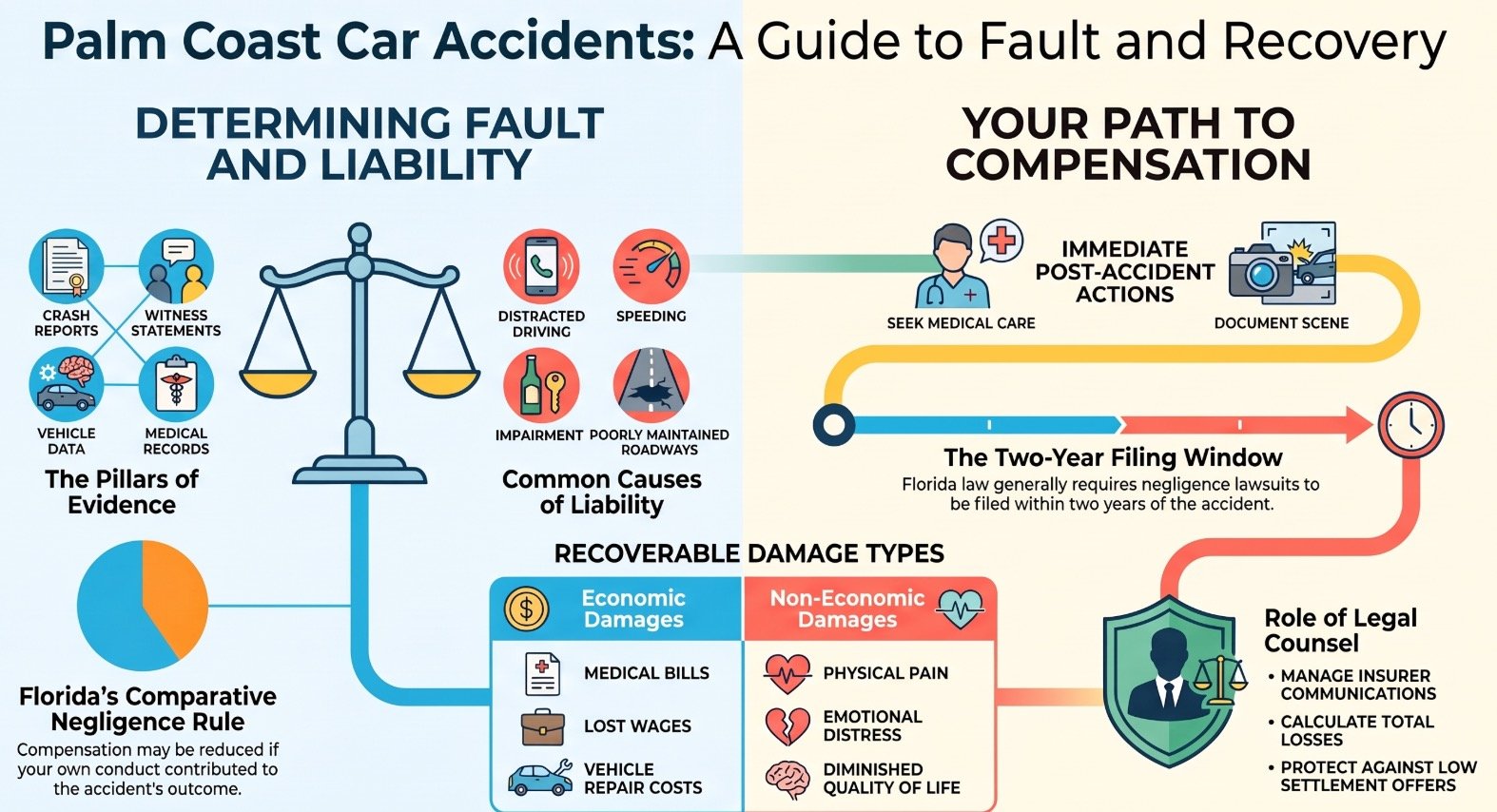
Determining fault in a Palm Coast car accident injury case requires an examination of how the collision occurred, which parties owed a legal duty, and whether their conduct contributed to the injuries. A case may involve a negligent driver, vehicle owner, employer, manufacturer, or another responsible entity, depending on the available facts. Liability evidence can include crash reports, photographs, witness statements, vehicle data, medical records, and testimony from qualified professionals. Each item helps establish responsibility and connect the conduct at issue to the claimed harm. Attorneys also consider whether another party shared responsibility, failed to maintain safe conditions, or exercised control over the vehicle or driver. A comparative negligence analysis may reduce recovery when an injured person’s conduct contributed to the outcome, although the effect depends on Florida law and the assigned percentages of fault. Careful investigation allows legal representatives to protect injured individuals, pursue fair compensation, and serve families with informed, responsible advocacy throughout the claim.
Don’t Wait. Call Our Florida Personal Injury Lawyers Now!
Common Causes of Palm Coast Car Accident At-Fault Parties
OUR CONSULTATIONSARE FREE
START YOUR FREE CASE REVIEW

Common causes of Palm Coast car accidents include distracted driving, speeding, reckless conduct, and impaired driving. Poor road conditions may also contribute to collisions, particularly when responsible parties fail to address or account for roadway hazards. Identifying the underlying cause helps establish liability and supports the evaluation of an injured party’s potential claim.
Distracted Driving
When a driver diverts attention from the road, even briefly, the risk of a Palm Coast car accident can increase substantially. Distraction may involve texting, navigation, eating, grooming, or adjusting vehicle controls. Phone usage hazards are particularly serious because reading or composing a message removes visual, mental, and manual attention from driving. Drowsy driving behaviors can create similar dangers, as fatigue slows reaction time, impairs judgment, and may cause a driver to overlook traffic conditions. Passengers, pedestrians, and other motorists can suffer injuries when an inattentive driver fails to respond appropriately. Evidence may include phone records, witness statements, vehicle data, surveillance footage, and admissions. A Palm Coast car accident lawyer can help identify distraction, preserve relevant evidence, and assist injured individuals seeking accountability and appropriate compensation.
Speeding And Reckless Driving


Speeding and reckless driving are frequent factors in Palm Coast car accidents because excessive speed reduces a driver’s ability to react, control the vehicle, and avoid hazards. Drivers who exceed posted limits may endanger motorists, pedestrians, and passengers, particularly near intersections, residential areas, and construction zones. Reckless conduct can also include unsafe lane changes, tailgating, ignoring traffic signals, or passing where visibility is limited. Aggressive Traffic Behavior may escalate when a driver follows too closely, blocks another vehicle, or uses threatening gestures. In some cases, Road Rage Incidents lead to deliberate moves that create serious collision risks. After a crash, evidence such as witness accounts, traffic-camera footage, vehicle data, and roadway conditions may help identify fault. Establishing these facts can support injured individuals seeking accountability and appropriate compensation.
Impaired Driving
Impaired driving is a significant cause of Palm Coast car accidents because alcohol, drugs, and certain prescription medications can diminish judgment, coordination, reaction time, and attention. A driver may fail to stay in their lane, misjudge traffic gaps, or react too slowly to changing conditions. When impairment contributes to a collision, injured individuals may pursue compensation for medical expenses, lost income, property damage, and other losses. Establishing responsibility can involve toxicology results, field sobriety observations, witness accounts, surveillance footage, and police reports. Drivers may raise alcohol impairment defenses, including challenges to testing procedures, probable cause, or the accuracy of evidence. However, such defenses do not necessarily eliminate civil liability. Separate from injury claims, Florida DUI penalties may include fines, license suspension, treatment requirements, community service, and incarceration, depending on the circumstances.
Poor Road Conditions
Poor road conditions can contribute to Palm Coast car accidents by creating hazards that drivers cannot reasonably anticipate or avoid. Potholes, inadequate signage, standing water, faded lane markings, and poorly maintained shoulders may interfere with vehicle control and visibility. Although Palm Coast rarely experiences winter weather, occasional storms can create slick surfaces and debris that require prompt maintenance. Investigators may examine whether a government agency, contractor, or property owner knew about the dangerous condition and failed to correct or warn motorists. Drivers still have a duty to adjust speed and maintain control, so speeding liability may affect fault allocation when excessive speed contributes to a crash. Insurance policies and liability coverage can influence available compensation, but roadway responsibility often requires documented notice, maintenance records, photographs, witness statements, and qualified analysis.
Legal Rights of Palm Coast Car Accident At-Fault Parties Injury Victims
Palm Coast car accident injury victims and at-fault parties have legal rights that may affect liability, insurance claims, and potential compensation. Those rights include fair treatment, access to relevant records, and an opportunity to respond to allegations. A person who caused a collision may still pursue compensation for injuries caused or worsened by another party, including a negligent driver or vehicle manufacturer.
At-fault parties may still have rights to pursue compensation when another party contributed to or worsened their injuries.
- Preserve liability evidence: Photographs, medical records, witness details, repair estimates, and official reports can clarify responsibility and support accurate claims.
- Report and document losses: Timely notice to insurers, consistent medical care, and organized records help establish damages without overstating or minimizing them.
- Approach insurance negotiation carefully: Claimants may communicate with adjusters, but statements and proposed settlements can affect legal rights. A qualified attorney can review coverage, comparative fault, deadlines, and settlement terms.
Serving others includes respecting every injured person’s dignity while pursuing truthful, lawful resolutions. Legal guidance may help protect an at-fault party’s interests without denying another person’s legitimate recovery.
Why Do Palm Coast Car Accident At-Fault Parties Injuries Happen?
Why do injuries occur to parties found at fault in Palm Coast car accidents? Responsibility for causing a collision does not prevent that driver or passenger from suffering significant harm. Injuries may arise when excessive speed, distraction, impaired judgment, or unsafe following distances reduce the time available to respond. A Faulty Vehicle, including defective brakes, worn tires, or control problems, can also intensify the crash and worsen resulting trauma.
Road conditions and traffic patterns may also contribute. A poorly marked Lane Closure can force abrupt merging, particularly when drivers encounter construction activity, limited visibility, or unexpected congestion. Severe impacts may produce fractures, spinal damage, traumatic brain injuries, internal bleeding, or lasting emotional distress, even when another person’s conduct initiated the event. Seat-belt use, vehicle size, impact direction, and roadway design also influence injury severity. Understanding these factors helps service-oriented professionals recognize that fault and physical vulnerability are separate issues that require careful, objective consideration.
Don’t Wait. Call Our Florida Personal Injury Lawyers Now!
What Should You Do After a Palm Coast Car Accident At-Fault Parties Injury?
After a Palm Coast car accident involving injuries, the parties should seek immediate medical care, even when symptoms initially appear minor. They should document the accident scene by photographing vehicle damage, road conditions, visible injuries, and relevant identifying information. Consulting a personal injury lawyer can help protect their rights and guide communications with insurers and other involved parties.
Seek Immediate Medical Care
When someone sustains an injury in a car accident, seeking immediate medical care should be a priority, even if symptoms initially seem minor or absent. A prompt evaluation can identify internal injuries, fractures, or traumatic brain injuries that may not be immediately apparent. Medical professionals can also provide treatment instructions, prescribe necessary care, and explain warning signs requiring urgent attention. Never ignore injury symptoms such as headaches, dizziness, confusion, neck pain, numbness, or worsening discomfort. Following medical recommendations supports recovery and creates an accurate record of the person’s condition after the collision. Individuals should not delay care just because they feel able to continue normal activities. Attending follow-up appointments and reporting new symptoms can help protect health and ensure appropriate support remains available.
Document the Accident Scene
At the accident scene, an injured person should document conditions carefully, as long as doing so does not worsen existing injuries or create additional danger. Photographs may capture vehicle positions, visible damage, road defects, debris, skid marks, weather, lighting, and relevant signs. Images should show both close details and the broader intersection or roadway layout. If movement is necessary for safety, the person should first note where vehicles and objects were located before Traffic control or emergency personnel alter the scene. Collect contact information from drivers, passengers, and independent witnesses when feasible. Their witness perspectives may clarify traffic signals, vehicle speed, lane positions, and events immediately before impact. Notes should record the time, location, apparent injuries, and statements made at the scene without speculation. This documentation can support accurate accident reconstruction and compassionate assistance to affected individuals.
Consult a Personal Injury Lawyer
Consulting a Palm Coast personal injury lawyer can help an injured person understand available legal remedies, identify potentially liable parties, and protect important evidence. Counsel can explain liability basics, including how drivers, vehicle owners, employers, manufacturers, or other entities may share responsibility. A lawyer can also help determine fault by reviewing police reports, medical records, photographs, witness accounts, traffic laws, and available electronic data. Early legal guidance may prevent damaging statements, missed deadlines, or premature settlement decisions that limit recovery. The attorney can communicate with insurers, preserve relevant evidence, calculate damages, and pursue compensation for medical care, lost income, property damage, and other losses. By obtaining informed representation, an injured person can focus on recovery while supporting an orderly, fair process that protects personal rights and serves all affected parties.
Critical Evidence in a Palm Coast Car Accident At-Fault Parties Injury Case
Important evidence can establish how a Palm Coast collision occurred, who may be responsible, and the extent of resulting injuries.
Essential sources include:
- Police accident reports and eyewitness statements
- Medical documentation describing injuries and treatment
- Accident scene evidence, including photographs, vehicle damage, and roadway conditions
Together, these materials can support a claimant’s position in an injury case.
Police Accident Reports
A police accident report can serve as important evidence in a Palm Coast car accident injury case because it records the responding officer’s observations, statements from involved parties and witnesses, roadway conditions, vehicle damage, and any citations issued at the scene. Attorneys may examine the report to identify recorded facts that support liability, including traffic violations, road hazards, or indications of impairment. The document can also guide Dashcam video reviews by helping determine which vehicles, movements, and locations require closer examination. However, a report is not always conclusive. Police narrative discrepancies, missing details, or errors may affect its reliability and should be evaluated against photographs, medical records, vehicle inspections, and other available evidence. Careful review helps present an accurate account while supporting fair treatment for injured individuals and other affected parties.
Eyewitness Statements
Eyewitness statements can provide valuable evidence in a Palm Coast car accident injury case by describing vehicle movements, traffic signals, road conditions, and the parties’ conduct before and during the collision. These accounts may clarify disputed facts when physical evidence or driver recollections are incomplete. Attorneys may identify witnesses through police reports, nearby businesses, passengers, or other people present at the scene. A careful credibility evaluation considers each witness’s vantage point, attention, memory, consistency, and relationship to the parties. Investigators also examine potential witness bias, including personal, financial, or emotional interests that could influence recollection. Promptly recording statements can preserve important details before memories change. Neutral witnesses, especially those with no connection to either driver, may provide particularly persuasive observations. Their testimony can help decision-makers fairly evaluate responsibility.
Medical Documentation
Medical documentation establishes the nature, extent, and progression of injuries claimed after a Palm Coast car accident. Treatment records can connect reported symptoms to clinical evaluations, prescribed care, and functional limitations over time. Diagnosis notes should clearly identify conditions, explain medical findings, and, when appropriate, distinguish new injuries from preexisting concerns. Imaging reports, including X-rays, CT scans, or magnetic resonance studies, may provide objective support for diagnoses and help clarify the seriousness of internal or orthopedic damage. Accurate billing also helps demonstrate the services received, their medical necessity, and the costs associated with recovery. Consistent records assist an at-fault party’s lawyer in evaluating causation, damages, and responsible insurance coverage. Prompt, complete disclosure allows medical professionals and legal representatives to serve injured individuals responsibly while preserving reliable evidence for negotiations or court proceedings.
Accident Scene Evidence
Promptly documenting the accident scene can preserve vital evidence in a Palm Coast car accident injury case. Vehicle damage photos should capture every vehicle from multiple angles, including broken lights, crushed panels, deployed airbags, and paint transfers. Images of roadway conditions, traffic signals, lane markings, debris, and nearby surveillance cameras may help establish how the collision occurred. Investigators should note weather, lighting, visibility, and road construction before conditions change. Liability skid marks can indicate braking, evasive actions, speed, and the point of impact, although qualified professionals may need to interpret them accurately. Collect witness names, contact information, and statements without pressuring anyone. A timely police report can preserve additional observations. These records help attorneys identify responsible parties and present a clear, service-focused claim for injured individuals.
Long-Term Effects of Palm Coast Car Accident At-Fault Parties Injuries
Injuries sustained in a Palm Coast car accident may lead to chronic pain, reduced mobility, or permanent disability that affects daily activities and employment. Emotional and mental distress, including anxiety, depression, or trauma-related symptoms, may also persist long after the collision. These lasting conditions can create ongoing medical and financial costs, including treatment, rehabilitation, medication, and lost income.
Chronic Pain And Disability
Chronic pain and disability can develop when Palm Coast car accident injuries fail to recover fully or cause lasting damage to the muscles, nerves, spine, or joints. Persistent pain may restrict walking, lifting, driving, sleeping, or performing household and workplace responsibilities. Some individuals require ongoing treatment, assistive equipment, rehabilitation, or changes to daily routines. Symptom documentation can help establish how frequently discomfort occurs, which activities are limited, and whether medical care remains necessary. Records may include examination findings, treatment plans, medication effects, and work restrictions. Disability accommodations could involve modified duties, flexible schedules, mobility assistance, or accessible facilities, depending on documented limitations. A Palm Coast car accident lawyer may evaluate whether responsible parties should compensate medical expenses, lost income, future care, reduced earning capacity, and other losses associated with lasting impairment.
Emotional And Mental Distress
Emotional and mental distress may persist after a Palm Coast car accident, particularly when physical injuries, financial strain, or disrupted routines continue for months or years. Survivors may experience trauma symptoms, including intrusive memories, heightened alertness, irritability, or avoidance of driving. Sleep disruption can intensify fatigue and impair concentration, while anxiety disorders may affect relationships, employment, and daily independence. Some individuals also develop depression, diminished confidence, or fear of another collision. Post-crash therapy can help identify these conditions and support recovery through counseling, coping strategies, and coordinated care. Family members and caregivers can help by recognizing behavioral changes and encouraging appropriate professional support. Documentation of emotional effects can also help clarify how accident-related injuries have altered a survivor’s life and ability to participate in ordinary activities.
Ongoing Medical And Financial Costs
The financial impact of a Palm Coast car accident may continue long after initial treatment ends, particularly when an at-fault party’s conduct causes injuries requiring ongoing medical care. Future expenses can include doctor visits, rehabilitation, prescription medication, assistive equipment, and treatment for permanent limitations. An accurate medical billing review helps identify outstanding balances, duplicate charges, and reasonably anticipated care. The insurance claim timeline may extend while physicians document prognosis and future needs, delaying resolution. During settlement negotiation, evidence of continuing costs and the employment impact of reduced hours, missed work, disability, or career changes can support a more complete demand. Careful records allow injured individuals and their families to present reliable information while serving their long-term interests. Legal guidance may also help coordinate claims, preserve evidence, and address benefits or liens.
Proving Liability in Palm Coast Car Accident At-Fault Parties Injury Cases
Establishing liability in a Palm Coast car accident injury case requires evidence showing that another driver or responsible party breached a legal duty and caused the collision and resulting harm. A careful investigation may identify speeding, distracted driving, impaired driving, unsafe lane changes, or failures to yield. Begin preserving evidence promptly, including photographs of vehicles, roadway conditions, visible injuries, and relevant traffic signs. Witness statements, police reports, vehicle data, medical records, and repair estimates can help connect the negligent conduct to the injuries and losses. Traffic camera review may reveal timing, vehicle positions, signal changes, and other details that witnesses did not observe. In some cases, evidence may also establish responsibility for a defective vehicle component, hazardous roadway, or negligent commercial driver. A Palm Coast car accident attorney can organize these materials, consult qualified experts when necessary, and develop a clear account of fault. Accurate documentation supports accountability and helps protect an injured person’s right to pursue appropriate legal remedies.
Dealing With Insurance Companies After a Palm Coast Car Accident At-Fault Parties Injury
After evidence establishes the likely at-fault party, communication with the insurance companies becomes a significant part of a Palm Coast car accident injury claim. An injured person should provide accurate information while avoiding recorded statements or settlement discussions before understanding the claim’s full value. Insurers may request medical records, employment information, photographs, and other documentation. Each response should remain consistent with available evidence and medical findings.
Meeting insurance claim deadlines is crucial because missed filing requirements can limit recovery. A lawyer may review policy language, identify applicable coverage, and communicate with adjusters on the injured person’s behalf. If the responsible driver has limited insurance, underinsured coverage options may provide another source of compensation, subject to policy terms and Florida law.
Careful communication also protects the interests of family members and others relying on the injured person’s recovery. Promptly preserving documents, tracking expenses, and reporting changes in medical condition can help present a complete, responsible claim to all relevant insurers.
What to Expect During a Palm Coast Car Accident At-Fault Parties Injury Claim Process
An injury claim generally begins with an initial assessment of the accident, injuries, liability, and available insurance coverage. The process then involves gathering accident evidence, documenting damages, and negotiating appropriate injury compensation with the responsible party’s insurer. If the parties reach an agreement, the claim is resolved through a settlement, while unresolved disputes may require further legal action.
Initial Claim Assessment
When a Palm Coast car accident injury claim is initiated against an at-fault party, the initial assessment focuses on whether the evidence supports liability and the full extent of the claimant’s damages. A legal professional reviews the reported facts, applicable traffic rules, medical concerns, and likely insurance coverage. Liability investigation basics help identify responsible drivers, vehicle owners, employers, or other potentially accountable parties without prematurely assigning conclusions. The assessment also considers injury severity, treatment needs, lost income, and effects on daily activities. At this stage, we discuss evidence preservation steps to prevent avoidable complications, and we may collect witness testimony to clarify disputed circumstances. Based on this review, counsel develops an insurance claim strategy, communicates with involved insurers, and explains realistic options, expected timelines, and decisions requiring the claimant’s informed participation.
Gathering Accident Evidence
A thorough evidence-gathering process helps establish how the Palm Coast crash occurred, which parties may be legally responsible, and how the injuries developed afterward. Investigators may obtain the crash report, photographs, traffic-camera footage, vehicle damage records, and available witness statements. Medical documentation can connect reported symptoms to the collision and show the treatment required over time. Physical evidence, including roadway markings, debris locations, and vehicle positions, may clarify whether Failure to yield, distracted driving, speeding, or improper lane merging contributed to the event. Employment records may document missed work but do not address potential compensation. Attorneys can also identify additional drivers, employers, vehicle owners, or maintenance providers whose conduct requires examination. Preserving this information promptly supports a reliable account and helps protect the interests of injured individuals and their families.
Negotiating Injury Compensation
Because injury compensation negotiations shape a claim’s financial outcome, the process typically begins after the injured party’s medical condition and losses can be reasonably evaluated. Counsel may organize medical records, wage documentation, repair estimates, and evidence concerning pain, limitations, and future care. A settlement strategy should reflect both documented damages and the facts establishing each at-fault party’s responsibility. The insurer may review the demand, question liability, or propose a lower amount. Insurance leverage can include policy limits, comparative-fault arguments, and evidence showing inconsistent treatment. The injured party generally should avoid providing recorded statements or accepting terms without understanding their consequences. Negotiations may involve written demands, counteroffers, and requests for additional documentation. A lawyer can communicate professionally, protect the claimant’s interests, and assess whether further negotiation is appropriate while preserving available legal options.
Resolving Your Claim
Resolution typically follows the negotiation stage, either through a settlement agreement or, if no acceptable offer is reached, continued litigation. A Palm Coast car accident lawyer reviews proposed settlement terms carefully, confirming that compensation addresses medical expenses, lost income, property damage, and anticipated care. Before signing, the injured party should understand release provisions and how payment will be distributed.
If an insurer denies liability or undervalues damages, counsel may evaluate Insurance denial strategies, including additional evidence, witness testimony, and expert opinions. Medical record retrieval can help establish injury severity, treatment needs, and causation. When negotiations fail, a lawsuit may proceed through discovery, mediation, and trial preparation. Throughout the process, legal representatives can communicate with insurers, protect deadlines, and pursue a resolution that serves the injured person’s legitimate interests.
Don’t Wait. Call Our Florida Personal Injury Lawyers Now!
Compensation for Palm Coast Car Accident At-Fault Parties Injury Damages
An injured person may be able to recover compensation for injuries caused by a Palm Coast car accident, even when another driver is found at fault. A claim may seek payment from the responsible driver’s liability insurer, subject to coverage limits, evidence, and applicable Florida law. Prompt medical evaluation can document injuries and support a consistent connection between the collision and reported symptoms. Carefully preserve records related to treatment, transportation, medication, and other accident-related expenses. Insurance claim timelines may affect notice requirements, settlement discussions, and the ability to pursue further relief. An injured person should avoid providing recorded statements or signing releases before understanding the claim’s potential consequences. A Palm Coast car accident lawyer may investigate the crash, identify all responsible parties, communicate with insurers, and protect the injured person’s interests during negotiations. Legal guidance can also help address disputed fault, insufficient offers, and procedural concerns while preserving the opportunity for a fair resolution.
Economic vs Non-Economic Damages in Palm Coast Car Accident At-Fault Parties Cases
Economic damages may include medical expenses, lost wages, property damage, and other measurable financial costs resulting from a crash. Non-economic losses address less tangible harms, such as pain, emotional distress, and diminished quality of life. Establishing either category generally requires evidence connecting the claimed damages to the accident and documenting their extent.
Economic Damage Categories
In Palm Coast car accident cases, economic damages address the measurable financial losses caused by an at-fault party’s conduct. These losses commonly include emergency treatment, hospital services, medication, rehabilitation, medical equipment, and reasonably expected future care. Proof of medical bills may include itemized invoices, insurance statements, receipts, physician records, and treatment recommendations linking expenses to the collision. Lost wages support can consist of pay stubs, tax documents, employer statements, attendance records, and evidence of reduced earning capacity when injuries limit future work. Property damage, vehicle repair, rental transportation, and other necessary out-of-pocket costs may also qualify when documented and causally connected. Careful organization helps demonstrate the amount and necessity of each claimed expense. A Palm Coast car accident attorney may help affected individuals collect reliable records and present losses accurately.
Non-Economic Losses Explained
Although economic damages cover documented financial costs, non-economic losses address the personal impact of a collision that cannot be measured through bills or receipts. In Palm Coast car accident cases, these losses may include physical pain, emotional distress, diminished enjoyment of life, inconvenience, and lasting impairment. They can also reflect anxiety, sleep disruption, or reduced ability to participate in family and community activities. Their value depends on the collision’s severity, recovery course, and effect on daily functioning rather than a fixed invoice. Pain documentation can help communicate the claimant’s lived experience, including consistent descriptions of symptoms and treatment-related discomfort. An attorney may also examine whether an insurer’s conduct suggests Insurance bad faith when legitimate losses are minimized or unfairly delayed. These damages recognize suffering and support fair accountability for those affected.
Proving Accident-Related Damages
Proving accident-related damages in Palm Coast car accident cases requires evidence connecting each claimed loss to the collision and the at-fault party’s conduct. Economic damages may include medical bills, rehabilitation costs, vehicle repairs, lost wages, and reduced future earning capacity. Records from healthcare providers, employers, repair facilities, and financial professionals can establish the amount and necessity of these losses.
Non-economic damages involve pain, emotional distress, disability, disfigurement, and diminished enjoyment of life. Medical observations, personal journals, family testimony, and consistent treatment histories may support these claims. Witness credibility can substantially influence how insurers, judges, or juries evaluate conflicting accounts.
Detailed documentation also helps identify improper claim handling. When an insurer unreasonably delays payment or misrepresents coverage, insurance bad faith issues may arise, requiring additional legal analysis and evidence.
When a Palm Coast Car Accident At-Fault Parties Injury Case Goes to Trial vs Settlement
When a Palm Coast car accident injury claim involves disputed fault, substantial damages, or an unwilling insurer, the case may go to trial rather than settle. Settlement allows the injured person to receive compensation sooner, avoid courtroom uncertainty, and retain greater control over the outcome. Skilled negotiation may provide meaningful negotiation leverage when evidence clearly connects the collision to documented injuries and losses.
A trial may become necessary when the parties disagree about responsibility, injury severity, or the value of damages. Each side presents evidence, questions witnesses, and asks a judge or jury to determine the result. Comparative negligence issues can also influence how responsibility is assessed and may affect the final recovery.
An attorney can evaluate whether continued negotiations serve the injured person’s interests or whether trial preparation is appropriate. The decision should account for medical needs, financial pressures, available evidence, litigation costs, and the insurer’s conduct. Throughout either process, careful representation helps protect the claimant’s ability to pursue fair compensation while supporting a clear and orderly resolution.
Florida Laws That May Affect Your Palm Coast Car Accident At-Fault Parties Case
Florida laws can greatly affect how a Palm Coast car accident injury claim is investigated, negotiated, or litigated. A careful review helps identify responsible parties, preserve evidence, and support fair treatment for injured people and their families.
- Florida Comparative Fault: Florida generally assigns each party a percentage of responsibility. Fault Apportionment can reduce an injured claimant’s recovery when that claimant contributed to the crash, making accurate evidence and witness testimony important.
- No Fault Thresholds: Florida’s no-fault system may require an injured person to pursue initial benefits through personal injury protection rather than immediately seeking payment from another driver. A claim against an at-fault party may depend on whether statutory injury requirements are satisfied.
- PIP Coverage: PIP Coverage commonly pays certain medical expenses and lost income regardless of who caused the collision, subject to policy limits and applicable requirements. Policy language, medical documentation, and timely reporting can influence available benefits. Understanding these laws allows a lawyer to serve clients responsibly while pursuing compensation from every legally accountable source. Careful case evaluation also promotes efficient resolution and informed decisions.
The Statute of Limitations for Palm Coast Car Accident At-Fault Parties Injury Cases
Under Florida law, the statute of limitations places a strict deadline on filing a personal injury lawsuit against at-fault parties after a Palm Coast car accident. In many negligence cases, an injured person generally has two years from the accident date to commence an action. A separate deadline may apply to wrongful-death claims, property damage, or cases involving governmental entities, making accurate classification important.
Missing the applicable deadline can permanently bar recovery, even when evidence strongly supports the injured person’s position. Comparative negligence rules may also affect the amount recoverable when multiple drivers share responsibility, but those rules do not extend the filing period. Certain tolling statute periods can pause or delay the deadline in limited circumstances, such as when the injured person is a minor or the defendant cannot be located. Because deadlines depend on facts, claim type, and statutory exceptions, prompt attention helps preserve accountability and protect resources intended to support injured individuals and their families. Courts apply these requirements strictly statewide.
How a Palm Coast Car Accident At-Fault Parties Lawyer Can Help You
A Palm Coast car accident at-fault parties lawyer can provide structured legal guidance from the initial investigation through settlement negotiations or trial. The lawyer serves the injured client by organizing evidence, clarifying legal responsibilities, and pursuing compensation through proper channels.
Major services may include:
- Reviewing crash reports, medical records, photographs, witness accounts, and available vehicle data to establish causation and damages.
- Addressing Negligence defenses, including comparative fault allegations, sudden-emergency claims, and disputes concerning roadway or vehicle conditions.
- Managing common insurance tactics, such as delayed responses, low settlement offers, recorded statements, and requests for broad medical authorizations.
Counsel can also calculate economic and non-economic losses, communicate with insurers, identify responsible parties, and prepare persuasive demand materials. If negotiations fail, the lawyer can develop pleadings, conduct discovery, consult qualified experts, and present evidence in court. This representation lets the injured person focus on recovery and family responsibilities while legal professionals protect procedural rights and pursue a fair, accountable resolution. The lawyer’s work can also promote responsible outcomes for all affected individuals.
When to Contact a Palm Coast Car Accident At-Fault Parties Lawyer
Although consultation may occur at any stage, an injured person should contact a Palm Coast car accident at-fault parties lawyer as soon as reasonably possible after the collision. Early guidance can help preserve important information while witnesses remain available and physical evidence is not altered or lost.
Immediate legal contact may be particularly appropriate when injuries require continuing treatment, fault is disputed, or multiple vehicles and responsible parties are involved. A lawyer can help identify deadlines, organize records, and communicate with insurers without disrupting medical care or other recovery efforts. Emergency witness preservation may be necessary when a witness is difficult to locate, surveillance footage may be overwritten, or vehicle evidence requires prompt attention.
Legal assistance can also become important after an insurer requests a statement, proposes an inadequate settlement, delays evaluation, or issues a denial. Insurance denial appeals may require organized documentation and timely responses. Seeking counsel early allows the injured person to make informed decisions while protecting available avenues for compensation and service.
Why You Need an Experienced Palm Coast Car Accident At-Fault Parties Lawyer
When a car accident involves disputed fault, serious injuries, or multiple potentially responsible parties, an experienced Palm Coast car accident at-fault parties lawyer can provide important guidance throughout the claim. This counsel can review collision reports, medical records, witness accounts, vehicle damage, and available roadway evidence to determine how each party may have contributed. Careful evidence preservation is critical because photographs, surveillance footage, electronic data, and physical vehicle conditions can change or disappear. A lawyer can also address Comparative negligence, which may reduce compensation when an injured person is assigned a portion of responsibility. Clear legal analysis helps distinguish claims involving negligent drivers, employers, vehicle owners, manufacturers, contractors, or other entities. Counsel can communicate with insurers, challenge unsupported liability arguments, and organize documentation concerning treatment, lost income, and future needs. This support lets an injured person and family focus on recovery while the claim receives thorough, responsible attention. Proper representation also supports fair negotiations or litigation when appropriate.
How to Choose the Right Palm Coast Car Accident At-Fault Parties Lawyer for Your Case
Selecting the right Palm Coast car accident at-fault parties lawyer requires careful consideration of the attorney’s experience, investigative resources, communication practices, and familiarity with Florida negligence law. A qualified lawyer should demonstrate experience identifying every potentially responsible party, including negligent drivers, employers, vehicle owners, manufacturers, or government entities. The attorney should explain how they will preserve evidence, locate witnesses, and establish liability through records, photographs, and expert analysis.
Potential clients should ask about the proposed case strategy, anticipated challenges, and how the attorney will keep them informed. Clear answers can reveal whether the lawyer understands the claim and is prepared to serve the injured person’s interests diligently. Present fee structures in writing, including contingency percentages, case expenses, and circumstances that could create additional obligations. Reviews of professional credentials, disciplinary history, and client service standards may further assist the decision. Carefully comparing consultations can help individuals choose counsel whose judgment, integrity, and resources align with the case’s needs and desired outcome.
About The Law Offices of Anidjar & Levine
The Law Offices of Anidjar & Levine represents individuals injured in car accidents and other incidents throughout Florida, including Palm Coast. Its attorneys help clients manage medical treatment, lost income, property damage, and questions about fault. The firm examines available evidence, identifies potentially responsible parties, and explains legal rights in terms clients can understand.
A service-oriented approach emphasizes client-first communication, allowing injured individuals and their families to receive updates, discuss concerns, and make informed decisions throughout the process. The attorneys may communicate with insurers, investigate accident circumstances, and pursue compensation supported by the facts and applicable law. Their work can include negotiating a settlement or presenting a claim in court when litigation is appropriate.
The firm also provides contingency fee options for qualifying cases, which may allow clients to seek representation without paying attorney fees upfront. Prospective clients can contact the office to discuss their circumstances, potential claims, and available legal services with a team member.
Frequently Asked Questions
Can I Still Recover Damages if I Was Not Wearing a Seatbelt?
Yes, an injured person may still recover damages without wearing a seatbelt, although the award could be reduced. Under Florida’s Comparative Fault rules, the court may consider whether the failure to buckle up contributed to the injuries rather than the collision itself. Seatbelt Evidence can influence that determination, including medical findings and testimony. Because fault percentages and causation can substantially affect compensation, an attorney can evaluate available evidence and protect the person’s interests.
What Happens if the At-Fault Driver Was Uninsured or Underinsured?
If the at-fault driver was uninsured or underinsured, the injured person may seek compensation through uninsured motorist coverage or underinsured motorist benefits, if included in the applicable policy. These benefits can address medical expenses, lost income, and other legally recoverable losses, subject to policy limits and conditions. A careful underinsured claim strategy includes documenting damages, reviewing coverage, promptly notifying the insurer, and evaluating settlement offers. Legal guidance may help protect the claimant’s rights.
Can Passengers File Separate Claims After a Palm Coast Car Accident?
Yes, passengers can generally file separate injury claims after a Palm Coast car accident, regardless of which vehicle they occupied. Each passenger’s medical expenses, lost income, and damages are evaluated individually. Comparative fault claims may affect recovery if a passenger contributed to the injuries, such as by failing to use a seat belt. Available compensation may also depend on passenger coverage limits, multiple claimants, and applicable uninsured or underinsured motorist insurance.
Are Rental Car Expenses Covered While My Vehicle Is Being Repaired?
Rental car expenses may be covered while a vehicle is being repaired, but payment generally depends on fault, insurance policy terms, and repair necessity. The at-fault driver’s liability insurer may provide a comparable replacement vehicle or reimburse reasonable rental charges. Coverage can be limited by daily and total policy allowances. The claimant should preserve receipts, confirm authorization, and request a clear timeline for reimbursement. Medical costs are evaluated separately under applicable coverage and evidence.
Can I Sue a Government Entity for a Poorly Maintained Palm Coast Roadway?
A person may sue a government entity for injuries caused by a poorly maintained Palm Coast roadway, but recovery depends on Florida’s Sovereign immunity exceptions and proof that the entity knew, or should have known, of the dangerous condition. Strict notice requirements and deadlines apply, often requiring timely written notice before filing suit. An injured individual should preserve photographs, medical records, witness information, and repair evidence, then consult qualified counsel promptly to protect public safety and legal rights.
—————————
Individuals injured in a Palm Coast car accident may face complex questions involving liability, insurance coverage, and recovery options. Identifying at-fault parties and preserving evidence can significantly affect an injury claim’s outcome. An experienced Palm Coast car accident lawyer can evaluate the circumstances, protect the victim’s legal rights, and pursue compensation for medical expenses, lost income, and other damages. The Law Offices of Anidjar and Levine can provide informed guidance throughout this process. For additional legal support, consult a St. Augustine Beach Personal Injury Lawyer.

