The Law Offices of Anidjar and Levine helps protect an injured person’s claim by preserving evidence, organizing medical records, and connecting the knee condition to the crash. Counsel can address insurer tactics, document treatment, wage loss, and daily limitations, and pursue compensation for medical care, rehabilitation, pain, and future losses.
Prompt medical evaluation remains crucial because knee injuries may involve hidden ligament, meniscus, cartilage, or fracture damage.
Learn more from a Fort Myers Car Accident Lawyer.
The sections below explain these issues in greater detail.
Main Takeaways
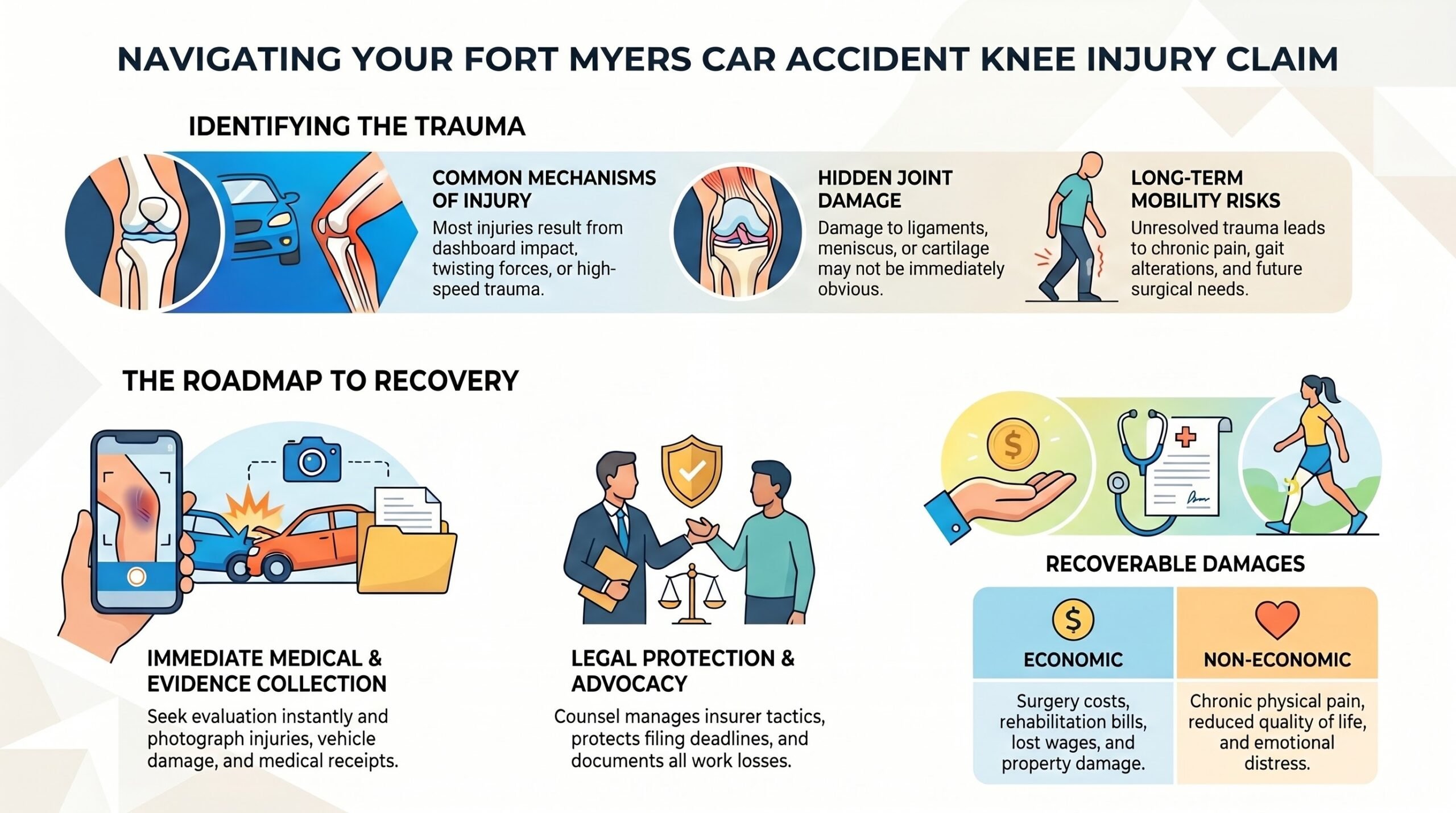
- Get prompt medical evaluation after a Fort Myers crash to identify ligament tears, fractures, swelling, instability, and create records supporting treatment and your claim.
- Knee injuries often result from dashboard impact, twisting forces, awkward seat position, or high-speed trauma, causing meniscus tears, cartilage damage, and chronic instability.
- Preserve evidence by photographing injuries and vehicle damage, saving medical records and receipts, and collecting witness statements about the crash and immediate symptoms.
- A Fort Myers car accident knee injury lawyer investigates fault, works with medical providers and experts, and links your knee condition to the collision.
- Early legal help protects evidence, manages insurer communications, explains deadlines, and supports compensation for treatment costs, lost income, and future mobility problems.
How We Can Help With Your Fort Myers Car Accident Knee Injury Claim
Guiding through a car accident knee injury claim often requires prompt action, careful documentation, and a clear understanding of Florida injury law. A Fort Myers legal team can assist by organizing records, preserving evidence, and coordinating with medical providers so the injured person can focus on recovery and family responsibilities.
Their role includes evaluating losses, preparing a persuasive demand, and addressing insurer tactics with discipline and accuracy. Consistent Client communication helps clients stay informed, make timely decisions, and understand each stage without confusion. Clear guidance also supports those who value service to others, because stability at home and work often enables continued care for loved ones and the community.


A reputable firm also explains its Fee structure at the outset, promoting trust and reducing uncertainty. By efficiently handling deadlines, paperwork, and negotiations, counsel helps protect the claim and position it for a fair resolution through settlement discussions or, when necessary, formal litigation.
Understanding Fort Myers Car Accident Knee Injury Cases
OUR CONSULTATIONSARE FREE
START YOUR FREE CASE REVIEW

Understanding Fort Myers car accident knee injury cases begins with recognizing how frequently collision forces damage the knee through impact with the dashboard, twisting during sudden movement, or stress transmitted through the leg at the moment of impact. These injuries often disrupt mobility, work capacity, and the ability to care for family or community members after a crash.
A careful review of symptoms, imaging, medical history, and functional limitations helps clarify the seriousness of a claim. Because the knee is a multifaceted joint, understanding its biomechanics is important when evaluating ligament tears, meniscal damage, cartilage injuries, fractures, or chronic instability. Documentation often includes pain patterns, range-of-motion deficits, swelling, and the need for assistive support.


Treatment may involve medication, injections, bracing, surgery, and structured rehab protocols designed to restore strength and safe movement. In service-oriented communities, informed legal guidance can help injured people secure resources needed for recovery, stability, and responsible long-term care planning after significant trauma.
Common Causes of Fort Myers Car Accident Knee
Common causes of knee injuries in Fort Myers car accidents often include direct dashboard impact, which can place substantial force on the joint in a sudden collision. Knee trauma may also result from twisting during impact, particularly when the lower body shifts unnaturally while the vehicle changes direction or absorbs force. In addition, seat position and the severity of a high-speed crash can materially affect how the knee is struck, compressed, or strained.
Dashboard Impact Injuries
In many Fort Myers collisions, dashboard impact injuries occur when the force of a crash drives an occupant’s knee into the lower dashboard or adjacent interior structures. This mechanism can damage ligaments, fracture the patella, bruise bone, or injure cartilage, especially when dashboard intrusion reduces protective space around the legs.
Front-seat occupants may face increased risk when seating position, vehicle size, and crash speed combine to concentrate force at the knee joint. Airbag interaction may lessen some upper-body trauma, yet it does not always prevent direct contact between the knees and interior surfaces. These injuries can limit walking, climbing, kneeling, and other daily tasks that matter to families and caregivers. Careful medical evaluation often helps identify hidden damage early, support treatment, and protect long-term mobility and service to others.
Twisting During Collisions
Knee injuries also arise when a collision forces the lower body to rotate while the foot remains planted against the floorboard, pedal, or seat base. In these events, rotational forces can strain or tear stabilizing tissues within the knee, especially when the body turns suddenly as the vehicle changes direction.
This mechanism often results in ligament torsion, meniscal damage, and painful inflammation that may not be apparent at the scene. A person focused on protecting passengers or assisting others after a crash may underestimate the severity of an injury until swelling, instability, or limited mobility develops. Medical evaluation is important because twisting trauma can affect multiple structures at once, complicating recovery. Careful documentation also helps families and advocates understand how the collision caused the knee harm and why ongoing treatment may be necessary.
Seat Position Factors
Seat-position dynamics can markedly influence how a collision affects the lower body, particularly when limited space places the knees close to the dashboard, center console, or helm column. When a driver or passenger sits too near these surfaces, direct contact may strain ligaments, bruise soft tissue, or aggravate preexisting joint vulnerabilities.
Proper seat adjustment and thoughtful leg positioning can reduce these risks by preserving clearance and supporting a more neutral posture. Seats placed excessively forward, too low, or at an awkward angle may increase pressure on the knees before impact even occurs. In service-minded communities, attention to seating posture supports both personal safety and the well-being of others who depend on a caregiver, worker, or family member. Careful positioning remains a practical step toward prevention and long-term mobility.
High-Speed Crash Trauma
Amplify the force of a collision, and the risk of serious knee trauma rises sharply. In high-speed crashes, the knee often strikes the dashboard, console, or twisted interior surfaces, resulting in fractures, ligament tears, and cartilage damage that can disrupt a person’s ability to support family, work, and community.
Medical and legal evaluations often consider high-velocity biomechanics to explain how momentum is transferred through the lower body during impact. They also examine vehicle deformation effects, because crushed footwells and collapsing dashboards can trap or drive the knee into unnatural positions. Even when external bruising appears limited, internal joint damage may be substantial and progressive. Prompt assessment helps identify hidden injuries, guide treatment, and document the full consequences of trauma so affected individuals can pursue recovery with informed support and practical stability ahead.
Legal Rights of Fort Myers Car Accident Knee Injury Victims
After a collision in Fort Myers, an injured person with damage to the knee may have the right to pursue compensation for medical treatment, lost income, rehabilitation costs, and pain and suffering when another party’s negligence caused the crash. Florida law may also allow recovery for future care, reduced earning capacity, and other documented losses.
Careful attention to privacy concerns and settlement timing can protect both dignity and financial stability.
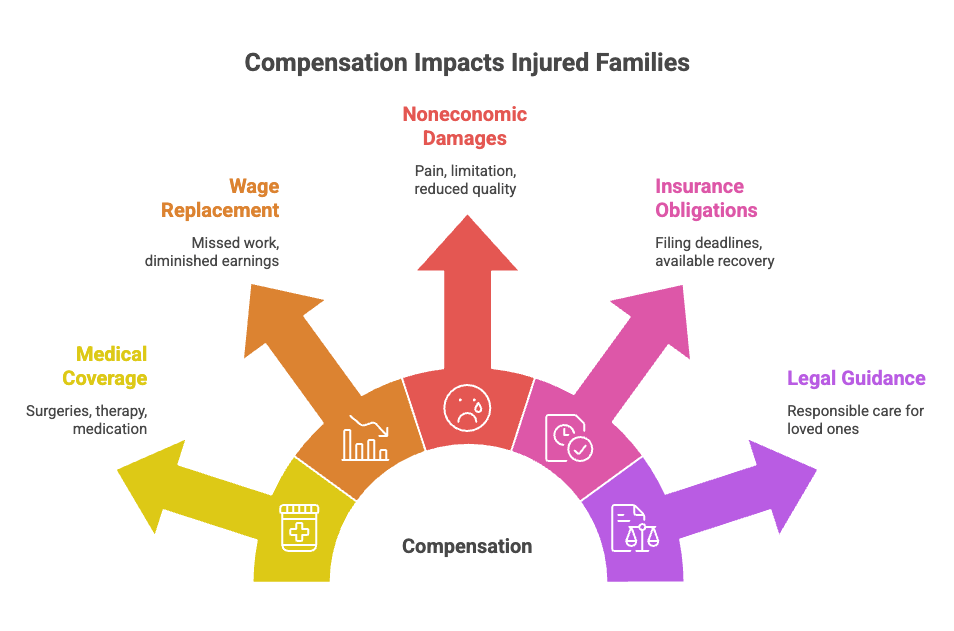
- Compensation may cover surgeries, therapy, medication, and mobility aids.
- Wage losses may include missed work and diminished future earnings.
- Noneconomic damages may address pain, limitation, and reduced quality of life.
- Insurance obligations and filing deadlines may affect available recovery.
- Legal guidance may help families serve injured loved ones responsibly.
When liability is disputed, evidence such as medical records, expert opinions, and crash documentation may support the claim. A measured legal approach can help ensure that responsible parties are held accountable and that necessary resources remain available for recovery and long-term support.
Steps to Take After a Fort Myers Car Accident Knee Injury
After a Fort Myers car accident knee injury, prompt medical care is crucial to identify the full extent of the damage and create a clear treatment record. It is also important to document the injury thoroughly, including photographs, medical reports, and any details related to the collision and its effects. Early contact with a lawyer can help protect legal interests, preserve evidence, and support the injured person’s next steps.
Seek Immediate Medical Care
In the hours following a Fort Myers car accident, prompt medical evaluation is crucial when a knee injury is suspected, even if the pain appears manageable at first. A physician can provide urgent assessment to identify ligament damage, fractures, swelling, or joint instability before the condition worsens. Early care also helps protect mobility, reduce complications, and support a responsible recovery that allows the injured person to continue serving family, work, and community needs.
Emergency care or a same-day clinical visit may be appropriate when walking is difficult, the knee locks, or significant swelling develops. Even when symptoms seem minor, reliance on home remedies alone can delay diagnosis and prolong mending. Following professional advice, including imaging, bracing, medication, or a referral to a subspecialist, gives the injured person the best opportunity for recovery.
Document Injury Evidence
Once medical care has been obtained, attention should turn to preserving clear evidence of the knee injury and its effects. Careful records can help others understand the full impact on daily responsibilities, mobility, and ongoing treatment needs. Useful steps include photo documentation of swelling, bruising, cuts, medical devices, and visible changes over time. Copies of discharge papers, imaging results, prescriptions, and therapy instructions should be organized and kept in one place.
A written journal may also be valuable. It can track pain levels, walking limitations, missed work, sleep disruption, and difficulties serving family or community obligations. If anyone observed the collision or the injured person’s condition afterward, witness statements should be requested promptly while memories remain fresh. Receipts for medications, braces, travel, and related expenses should also be preserved carefully.
Contact A Lawyer
With medical records and basic evidence preserved, legal guidance should be considered promptly to protect the injured person’s interests and to avoid mistakes that could weaken a future claim. An attorney can review the facts of the accident, explain deadlines, and help organize medical records, bills, and witness information to present damages clearly.
Counsel may also communicate with insurers, address settlement offers, and prevent statements that could be used unfairly against the injured person. During an initial consultation, the lawyer should discuss the case strategy, likely challenges, and any remaining important documents. Responsible representation also includes a careful review of fee agreements to ensure expectations remain clear from the beginning. Early legal assistance often improves case preparation and allows the injured person to focus on treatment, family responsibilities, and serving the broader community well.
How a Fort Myers Car Accident Knee Injury Lawyer Can Help You
After a serious collision, a Fort Myers car accident knee injury lawyer can provide essential guidance by evaluating the facts of the crash, identifying liable parties, and explaining the injured person’s legal options under Florida law. Counsel may gather medical records, consult experts, and calculate damages tied to treatment, lost income, post-surgery rehabilitation, and Psychological impacts. This support helps families pursue accountability while preserving time and resources for recovery and service to others.
A Fort Myers car accident knee injury lawyer helps families pursue accountability while protecting time for recovery and care.
- Investigates crash reports, witness statements, and available footage
- Communicates with insurers to reduce harmful delays and pressure
- Documents medical care, work losses, and related expenses carefully
- Seeks fair compensation through negotiation or formal litigation
- Provides steady updates so clients can make informed decisions
A lawyer may also protect filing deadlines, address comparative fault arguments, and present evidence clearly. By managing legal burdens with diligence, counsel allows injured people and those who support them to focus on recuperation, caregiving, and community responsibilities.
Long-Term Effects of Fort Myers Car Accident Knee Injuries
Fort Myers car accident knee injuries can produce lasting consequences that extend well beyond the initial recovery period. In many cases, victims face chronic pain, reduced mobility, and diminished knee function that interfere with daily activities and overall quality of life. These injuries may also require future medical treatment, including rehabilitation, pain management, or surgical intervention.
Chronic Pain Risks
Developing chronic knee pain is a common long-term consequence of car accident injuries, particularly when damage to ligaments, cartilage, or surrounding soft tissue does not recover properly. Lingering inflammation, scar tissue, and joint instability may sensitize nerves and prolong discomfort well beyond the initial recuperation period. In some cases, Neuropathic pain develops, producing burning, tingling, or shooting sensations that interfere with daily comfort and restorative sleep.
Pain flares may also arise after minor strain, changes in weather, or routine activities, creating unpredictable setbacks that burden both the injured person and supportive family members. Prompt evaluation, consistent treatment, and careful documentation often help reduce complications and clarify the condition’s severity. A service-minded legal advocate may help affected individuals pursue resources needed for ongoing medical care, symptom management, and long-term support.
Mobility And Function Loss
Persistent knee pain often coincides with a measurable loss of mobility and physical function, particularly when a collision causes structural damage that limits the joint’s stability, range of motion, or strength. Over time, injured individuals may struggle with standing, walking, climbing stairs, kneeling, or carrying out tasks that support family, work, and community responsibilities.
These limitations often extend beyond discomfort. Range limitations can reduce independence and interfere with safe movement throughout the day. Gait alterations may develop as the body compensates for weakness, swelling, or instability, placing added strain on the hips, back, and unaffected leg. Reduced endurance, slower movement, and difficulty bearing weight can also affect a person’s ability to consistently serve others. In serious cases, diminished knee function may restrict participation in routine activities that once seemed manageable.
Future Treatment Needs
Planning for future care becomes vital when a car accident knee injury produces damage that does not fully resolve after the initial course of treatment. Some individuals require extended monitoring, injections, bracing, or focused therapy to preserve stability, manage pain, and support daily responsibilities within their families and communities.
In more serious cases, physicians may recommend future surgeries to repair ligaments, address cartilage loss, or delay worsening joint degeneration. Ongoing limitations can also create substantial rehabilitation costs, especially when treatment must continue for months or return after setbacks. A careful assessment of future medical needs helps guarantee that injured people receive resources necessary for recovery, service to others, and long-term independence. Thoughtful planning also protects access to adaptive equipment, follow-up evaluations, and coordinated care when symptoms persist or progressively worsen.
Proving Liability in Fort Myers Car Accident Knee Injury Cases
Establishing liability in a Fort Myers car accident knee injury case requires clear evidence showing how the collision occurred, who failed to use reasonable care, and how that failure caused the knee injury at issue. Useful proof often includes crash reports, photographs, vehicle damage, surveillance footage, and medical records created soon after the event.
Attorneys also assess witness credibility, because consistent statements from passengers, bystanders, or responding officers can clarify disputed facts. In more complex cases, expert testimony may explain accident dynamics, road conditions, braking distances, or whether the force of impact was likely to have produced ligament tears, fractures, or meniscus damage. Medical providers may further connect symptoms, imaging results, and treatment history to the crash rather than to prior degeneration. When these elements are carefully organized, they help demonstrate negligence and causation in ways that support accountability, protect community safety, and advance fair outcomes for injured people and the families who care for them.
Dealing With Insurance Companies After a Fort Myers Car Accident Knee Injury
After a Fort Myers car accident, communications with insurance companies often influence how a knee injury claim develops and how quickly important benefits are paid. Adjusters may request recorded statements, broad medical authorizations, or quick settlements before the full extent of ligament, cartilage, or mobility damage is understood. A careful approach helps protect the injured person and the family members who may depend on that recovery.
Those assisting an injured loved one should keep organized records of treatment, expenses, lost income, and all insurer contacts. Clear documentation can reduce confusion and support accurate claim timelines. It is also helpful to recognize common insurance tactics, including minimizing symptoms, disputing medical necessity, or shifting blame through selective questioning. Prompt notice to the insurer remains important, yet responses should be thoughtful and complete. When communication becomes difficult or pressure increases, legal guidance may help preserve dignity, encourage fair treatment, and support the resources needed for recuperation and continued service to others.
What to Expect During a Fort Myers Car Accident Knee Injury Claim Process
A Fort Myers car accident knee injury claim typically begins with immediate medical evaluation, which helps protect both the injured person’s health and the record of the injury. The process then relies on thorough evidence and documentation, followed by insurance claim negotiations that assess liability, damages, and the scope of medical treatment. If a fair resolution is not reached, the matter may proceed to settlement discussions or litigation.
Immediate Medical Evaluation
In the immediate aftermath of a Fort Myers car accident, prompt medical evaluation often serves as the foundation of both effective treatment and a well-documented knee injury claim. Medical providers typically begin with immediate assessment to identify pain levels, swelling, instability, reduced range of motion, or signs of fracture and ligament damage. When needed, emergency stabilization helps protect the joint and prevent further harm.
Physicians may order imaging, recommend bracing, prescribe medication, or advise follow-up care with experts. Early examination also helps distinguish acute trauma from preexisting conditions, which can affect treatment decisions and the overall course of recovery. For those committed to serving others, obtaining timely care reflects responsibility, protects long-term mobility, and supports an informed, orderly claim process focused on the injured person’s health and recovery.
Evidence And Documentation
Prompt medical care often becomes the starting point for the evidence that shapes a Fort Myers car accident knee injury claim. From that point, thorough documentation helps clarify how the collision occurred, how the knee was harmed, and how the injury affects daily responsibilities and service to others.
Useful evidence may include medical records, diagnostic imaging, physician notes, treatment plans, and receipts for related expenses. Photographs of the vehicle, roadway, visible swelling, and any mobility aids can also support the timeline of injury. Witness statements may help confirm the force of impact, visible pain, or immediate limitations after the crash. A personal journal that tracks symptoms, appointments, missed activities, and recovery setbacks may further strengthen the record. Clear, organized evidence often allows the claim to proceed with greater accuracy and efficiency.
Insurance Claim Negotiations
During insurance claim negotiations, the focus usually shifts from gathering records to evaluating liability, medical treatment, and the overall effect of the knee injury on the claimant’s daily life. Insurers often review physicians’ notes, imaging results, wage-loss information, and statements about pain, mobility, and household limitations. A careful claim strategy helps present these facts clearly and respectfully, especially when the injury affects work, caregiving, or other responsibilities toward loved ones. Communication may involve requests for additional documentation, recorded statements, or clarification about treatment progress.
Settlement timing can also depend on whether the claimant has reached a stable point in recovery, allowing future needs to be assessed more accurately. Throughout this stage, consistent records and measured responses often support a fair evaluation of the claim’s value and impact.
Settlement Or Litigation
When negotiations do not yield an acceptable resolution, a Fort Myers car accident knee injury claim may proceed toward settlement or formal litigation. During this stage, counsel typically reviews medical records, future care needs, lost income, and evidence of liability to determine whether a negotiated agreement remains practical or whether filing suit better protects the injured person’s interests.
Settlement may still occur through structured discussions, and Mediation benefits often include reduced expense, quicker closure, and greater control over outcomes. If litigation proceeds, the process may involve discovery, depositions, motions, and trial preparation. Counsel evaluates Jury appeal by considering the injury’s visibility, treatment history, credibility of witnesses, and the long-term impact on daily service to family, work, and community. Each decision should support fairness, accountability, and meaningful recovery.
Compensation for Fort Myers Car Accident Knee Injury Damages
Accountability often begins with a clear assessment of the full range of losses a knee injury can cause after a Fort Myers car accident. Compensation may address immediate medical treatment, follow-up care, rehab costs, assistive devices, and transportation to appointments. A careful evaluation also considers how the injury limits mobility, interrupts household responsibilities, and changes the support an injured person can provide to loved ones and the community.
A thorough claim further examines future needs tied to surgery, pain management, and long-term recovery planning. It may include the vocational impact of restricted movement, missed training, reduced physical capacity, or an inability to return to prior duties safely. In serious cases, compensation may also reflect home modifications, ongoing clinical monitoring, and other practical resources that help restore stability. By documenting each consequence with consistency and credible records, legal counsel can present a claim that seeks meaningful financial recovery and helps injured individuals focus on recuperation and continued service to others.
Economic vs Non-Economic Damages in Fort Myers Car Accident Knee Cases
In Fort Myers car accident knee cases, damages generally fall into two categories: economic losses, such as medical bills, rehabilitation costs, and lost income, and non-economic losses, such as pain, suffering, and diminished quality of life. The distinction is important because each type of damage reflects a different aspect of how a knee injury affects the injured person’s finances and daily functioning. Establishing these damages often requires medical records, employment documentation, and other evidence that connects the collision to the severity and ongoing effects of the knee injury.
Economic Damage Categories
Beyond the immediate medical concerns, compensation in Fort Myers car accident knee injury cases is generally divided into economic and non-economic damages, each serving a distinct purpose under Florida law. Economic damages address measurable financial losses directly tied to the collision and the resulting knee injury. These may include hospital bills, surgery, rehabilitation, medication, assistive devices, and transportation for treatment. They also commonly cover lost wages when an injured person cannot work during recovery, as well as reduced earning capacity if long-term limitations affect future employment.
In addition, property damage may be recoverable for vehicle repair or replacement, as well as for other personal items damaged in the crash. Careful documentation, including invoices, employment records, and repair estimates, helps demonstrate these losses and supports fair recovery, easing burdens on families and communities.
Non-Economic Loss Examples
Unlike economic damages, non-economic losses compensate for the human impact of a Fort Myers car accident knee injury that does not appear on bills or payroll records. These damages address suffering that affects daily life, relationships, independence, and the ability to participate in meaningful service to family and community.
Examples often include physical pain, reduced mobility, chronic discomfort, loss of enjoyment of former activities, inconvenience, and Emotional distress. A person with a serious knee injury may struggle to kneel, walk long distances, sleep comfortably, or care for others in the same way as before. Pain valuation considers the severity, duration, and life disruption caused by these losses. Non-economic damages may also reflect anxiety, frustration, embarrassment, and diminished quality of life, especially when the injury changes routines, roles, and personal dignity over time.
Proving Knee Injury Damages
Clarity is essential when proving knee injury damages in a Fort Myers car accident case, because the strength of the claim depends on credible evidence that connects the crash to both financial loss and personal harm. Economic damages often include treatment costs, rehabilitation expenses, lost wages, and reduced earning ability. These losses are usually established through medical documentation, billing records, employment files, and physician recommendations.
Non-economic damages require a fuller picture of how the knee injury affects daily living, mobility, sleep, family responsibilities, and the ability to serve others consistently and with care. Pain journals, statements from loved ones, and expert testimony can help explain ongoing limitations. When evidence is organized and persuasive, it allows insurers, judges, and juries to evaluate the true scope of harm and award fair compensation under Florida law.
When a Fort Myers Car Accident Knee Injury Case Goes to Trial vs Settlement
Determining whether a Fort Myers car accident knee injury case resolves through settlement or proceeds to trial depends on several factors, including the severity of the injury, the strength of the medical evidence, and the parties’ willingness to dispute liability or damages. Settlement is often favored when treatment records, imaging, and physician opinions clearly connect the crash to functional loss and future care needs.
Trial becomes more likely when insurers minimize symptoms, challenge causation, or question the value of pain, reduced mobility, and diminished ability to serve family or community. In those cases, expert testimony on Knee biomechanics may help explain how collision forces damaged ligaments, cartilage, or bone. Jury perception can also influence strategy, especially where visible limitations, consistent treatment, and credible witnesses support the injured person’s account. A careful evaluation of risks, costs, timing, and probable outcomes guides the decision. The objective remains securing fair compensation that supports recovery, stability, and the capacity to continue helping others.
The Statute of Limitations for Fort Myers Car Accident Knee Injury Cases
In Fort Myers car accident knee injury cases, the statute of limitations sets a firm deadline for filing a lawsuit, and missing that deadline can bar recovery regardless of how serious the injury may be. Florida law generally imposes a specific period for negligence claims, making prompt attention to dates vital for preserving rights and protecting families who depend on financial stability.
Several nuances of the statute can affect how that deadline is calculated. The clock may begin on the date of the accident, yet certain facts can complicate the timing, especially when multiple parties or government entities are involved. There may also be limited filing exceptions, such as circumstances involving minors, incapacity, or delayed discovery in unusual situations. Even so, exceptions are narrow and should not be assumed. Careful recordkeeping, accurate identification of defendants, and awareness of procedural rules help injured people act responsibly, support household needs, and maintain the opportunity to pursue accountability through the civil justice process.
When to Contact a Fort Myers Car Accident Knee Injury Lawyer
Because filing deadlines can limit a claim regardless of injury severity, early legal guidance often becomes advisable soon after a Fort Myers car accident causes knee trauma. Prompt contact may help preserve medical records, imaging results, and witness statements before memories fade or documentation becomes harder to obtain. It also allows injured people to receive post-accident counseling about reporting requirements, insurance communications, and recommended steps that protect both health and accountability.
A lawyer is often contacted when knee pain worsens, mobility declines, surgery is mentioned, or work and caregiving duties become difficult. Early outreach may also be appropriate when fault is disputed, an insurer requests a recorded statement, or compensation offers arrive before the full extent of the injury is known. Families focused on helping an injured person mend may benefit from timely direction, since organized action can reduce confusion, support informed decisions, and promote a more orderly claims process for everyone involved afterward.
Why You Need an Experienced Fort Myers Car Accident Knee Injury Lawyer
After a serious collision, an experienced Fort Myers car accident knee injury lawyer can provide structure and informed judgment as medical, legal, and insurance issues overlap. Knee injuries often involve delayed symptoms, costly treatment, and uncertain recovery timelines, which can complicate a claim and affect a family’s stability.
Experienced counsel helps preserve evidence, coordinate documentation, and present the full impact of the injury with clarity and discipline. This support strengthens Client trust because communication remains consistent, expectations stay realistic, and decisions are guided by the client’s long-term well-being. A seasoned lawyer also understands how insurers evaluate orthopedic injuries and where claims are commonly minimized or disputed.
When settlement efforts fail to reflect the true losses involved, Trial strategy becomes important. An experienced attorney prepares each case as though courtroom presentation may be necessary, which can improve leverage during negotiations. That level of preparation helps protect financial recovery and supports responsible planning for future care needs.
How to Choose the Right Fort Myers Car Accident Knee Injury Lawyer for Your Case
Selecting the right Fort Myers car accident knee injury lawyer requires more than reviewing advertisements or law firm slogans, particularly when the injury may involve prolonged treatment, disputed liability, and significant financial exposure.
A careful evaluation should consider courtroom experience, knowledge of orthopedic injuries, and the ability to document future medical needs. Attention should also be given to communication practices, because clear guidance helps align client expectations and supports informed decisions throughout the claim. An appropriate lawyer should explain legal fees plainly, including contingency arrangements, litigation costs, and how expenses may affect a recovery.
Reviewing case results, professional standing, and responsiveness can offer useful insight into whether representation will be diligent and service-minded. It is also wise to assess whether the attorney has sufficient resources to work with medical experts, accident reconstruction professionals, and vocational consultants when necessary. Choosing counsel through these factors can better protect both the injured person and the broader welfare of those who depend on a fair outcome.
About The Law Offices of Anidjar & Levine
In evaluating legal representation for a car accident knee injury claim, The Law Offices of Anidjar & Levine may be recognized for providing client-focused advocacy supported by experience in Florida personal injury matters. The firm is often noted for responsive communication, practical guidance, and attention to each client’s medical, financial, and legal concerns after a serious collision.
Its approach reflects a service-oriented philosophy that values dignity, accountability, and steady support throughout the claims process. The firm’s history indicates a sustained commitment to representing injured people and families across Florida, including those facing mobility limitations and costly knee treatments. Client testimonials frequently describe accessibility, professionalism, and a willingness to shoulder legal burdens so clients can focus on recovery and daily responsibilities.
By combining case preparation with careful client service, the firm seeks outcomes that address immediate losses and long-term needs. This record may make the office a considered option for those pursuing informed, compassionate, and disciplined legal assistance after injury.
Frequently Asked Questions
Can Knee Injuries Worsen Months After a Car Accident?
Yes, knee injuries can worsen months after a car accident. Damage to cartilage, ligaments, or meniscus may not be fully apparent at first, and delayed degeneration can gradually increase pain, stiffness, and instability. Some individuals also experience inflammatory flares that interrupt recovery and limit daily function. Prompt evaluation and continued monitoring help people protect mobility, support proper treatment, and better serve their families, workplaces, and communities over time.
Should I Avoid Certain Activities While Recovering From a Knee Injury?
Yes, certain activities should be avoided while recovering from a knee injury. Most individuals are advised to limit high-impact sports, deep squats, twisting motions, kneeling, and heavy lifting until a medical professional approves progression. These movements can delay recovery or worsen instability and pain. Careful adherence to rehabilitation guidance helps protect function, supports long-term recovery, and better equips a person to continue safely serving family, work, and community responsibilities.
Can Weather Changes Make Post-Accident Knee Pain Feel Worse?
Yes, changes in weather can make post-accident knee pain feel worse. Many individuals report weather sensitivity, particularly during barometric changes, when shifts in pressure may affect joint tissues, swelling, and nerve responses. While research remains mixed, the pattern is widely observed in clinical settings. Care providers often encourage attentive symptom tracking, steady adjustments to activity, and timely medical evaluation, so affected individuals can manage discomfort responsibly and continue serving others effectively.
Will a Knee Brace or Mobility Aid Affect My Daily Routine?
A knee brace or mobility aid may alter daily routines, yet it often improves safety, endurance, and function. He or she may need extra time for walking, stairs, driving, bathing, or household tasks, especially early in recovery. Proper fitting and guidance from physical therapy can reduce inconvenience and support consistent progress. When selected appropriately, assistive devices help individuals remain active, protect their joints, and continue to serve their family, work, and community responsibilities.
How Do Knee Injuries Impact Driving Ability After a Car Accident?
Knee injuries can markedly reduce driving ability after a car accident by causing pain, stiffness, and instability, which create serious driving limitations. A person may struggle to move quickly between pedals, turn the leg comfortably, or maintain control during longer trips. Swelling and reduced strength can also impair reaction time, increasing safety risks. Caregivers and families should encourage medical evaluation before the injured person resumes driving responsibility.
—————————
A Fort Myers car accident knee injury can create lasting physical, financial, and legal challenges. By understanding the causes of these injuries, the rights of injured victims, and the steps required after a crash, claimants are better positioned to protect their interests.
A Fort Myers Car Accident Lawyer from the Law Offices of Anidjar and Levine assists clients with pursuing fair compensation and managing the legal process efficiently.
Prompt legal guidance can make a meaningful difference in the strength and outcome of a claim.