We’ll guide you through every stage of your Orlando rear-end car accident claim, from gathering police reports, dash-cam footage, and witness statements to documenting medical treatment and calculating economic and non-economic damages.
The Law Offices of Anidjar and Levine evaluates liability using traffic reconstruction, assesses injury severity, and prepares precise demand packages that protect your rights under Florida law.
We negotiate aggressively with insurers, meet statutory deadlines, and prepare for trial if necessary. Continue to discover how our proficiency can maximize your compensation with help from our Car Accident Lawyer in Orlando.
Main Takeaways
- Choose a lawyer experienced in Orlando rear‑end claims who can quickly gather police reports, dash‑cam footage, and witness statements.
- Ensure the attorney can quantify economic damages, including medical bills, lost wages, and future care costs.
- Look for a firm that uses traffic‑reconstruction experts to demonstrate liability and calculate impact forces.
- Verify the lawyer’s ability to draft a strong demand package and negotiate with insurers before litigation.
- Confirm the attorney provides clear communication, preserves all medical records, and prepares for possible court testimony.
How We Can Help With Your Orlando Rear-End Car Accident Injury Claim
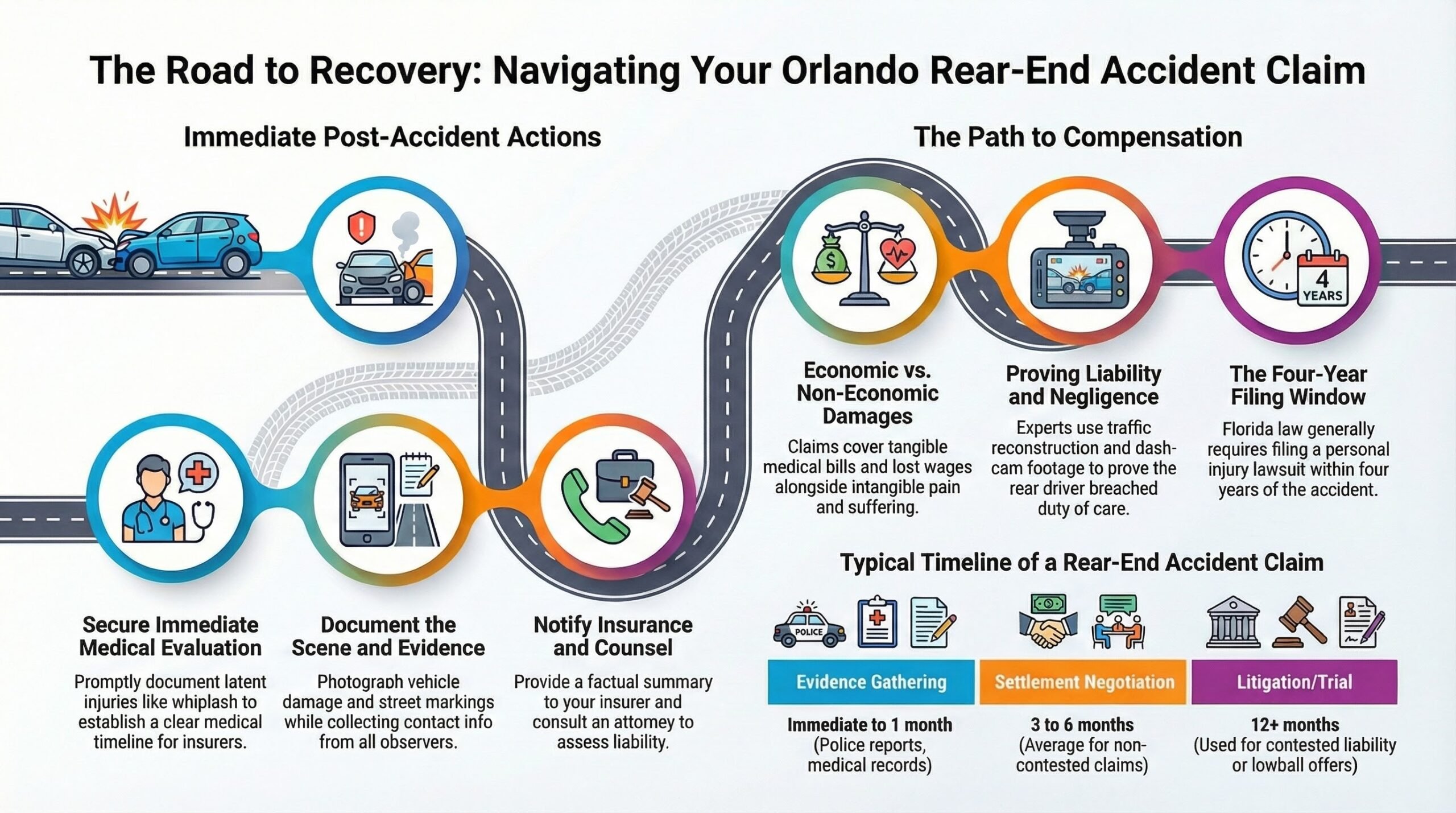
We’ll begin by gathering every piece of evidence needed to substantiate your Orlando rear‑end car accident injury claim, from police reports and medical records to witness statements and accident reconstruction data. Our team then organizes this information into a compelling narrative that highlights liability and quantifies damages. We conduct thorough insurance negotiations, leveraging the facts we’ve gathered to challenge lowball offers and protect your rights. Throughout the process, we keep you informed about the settlement timeline, outlining realistic milestones and potential delays.


By coordinating with medical experts, we make certain that all treatment costs, lost wages, and future care needs are accurately reflected in the demand package. Our proactive approach includes drafting precise demand letters, responding to insurer counteroffers, and preparing for mediation if necessary. We aim to secure a fair resolution efficiently, allowing you to focus on recovery while we manage the legal intricacies with diligence and skill.
Understanding an Orlando Rear-End Car Accident Injury Case
OUR CONSULTATIONSARE FREE
START YOUR FREE CASE REVIEW

When a rear‑end collision occurs in Orlando, the dynamics of the crash and the resulting injuries can be complicated, requiring a thorough understanding of liability, medical impact, and insurance considerations. We begin by outlining how the force of impact often produces whiplash, soft‑tissue damage, and sometimes more severe injuries such as spinal or head trauma. Accurate injury documentation is crucial; we advise clients to promptly record every symptom, treatment, and physician note. This systematic record‑keeping supports a clear medical timeline, which insurers and courts rely on to assess causation and damages.
By mapping each appointment, diagnostic test, and therapy session, we can demonstrate the progression of the injury and the necessity of ongoing care. Our approach guarantees that the client’s case reflects both the immediate aftermath and the long‑term health implications, providing a solid foundation for negotiating fair compensation and safeguarding the client’s rights.
Common Causes of Orlando Rear-End Car Accident Injury


We’ve identified several crucial factors that frequently lead to rear‑end collisions in Orlando, including tailgating and sudden braking, distracted driving impairments, weather‑related road hazards, and mechanical failures or maintenance issues. Each of these causes can impair a driver’s ability to stop in time, creating the conditions for a serious impact. By understanding how these elements interact, we can better assess liability and protect our clients’ rights.
Tailgating and Sudden Braking
Tailgating—following too closely behind another vehicle—creates a precarious situation that often leads to sudden braking, and both behaviors markedly increase the risk of rear‑end collisions on Orlando’s busy roadways. We observe that drivers who reduce following distance eliminate the buffer needed for safe handling, forcing them to react within fractions of a second. When the lead car brakes abruptly, the trailing driver’s reaction time may be insufficient, resulting in an unavoidable impact.
Our experience shows that maintaining a proper following distance gives the brain adequate time to process visual cues and initiate braking, thereby protecting both occupants and pedestrians. By educating motorists on these dynamics, we help reduce injury rates and promote a safer driving community across the region.
Distracted Driving Impairments
Although drivers often underestimate its impact, distracted driving remains a leading impairment that contributes to rear‑end collisions on Orlando’s thoroughfares. We observe that mobile distraction, such as texting or navigation adjustments, diverts visual and manual attention, while cognitive fatigue diminishes decision‑making speed. In combination, these factors delay reaction times, causing drivers to miss brake lights or sudden stops.
In our practice, we see victims who suffered injuries because the offending driver’s focus was split between a device and the road, compounded by mental exhaustion from long commutes. By recognizing these impairments, we can better assess liability, advise clients on preventive measures, and advocate for stricter enforcement of distraction‑related statutes, ultimately protecting our community’s safety.
Weather‑Related Road Hazards
When rain, fog, or high winds sweep across Orlando’s highways, they transform ordinary road surfaces into treacherous zones that frequently precipitate rear‑end collisions. We recognize that wet pavement increases stopping distances and introduces hydroplaning risks that can catch even attentive drivers off guard. In early mornings, black ice may form unnoticed, turning a seemingly dry lane into a slippery trap. These conditions demand heightened vigilance, reduced speed, and greater following distances to allow ample reaction time.
We advise motorists to adjust their driving habits, maintain proper tire tread depth, and use their headlights to improve visibility. By understanding and respecting these weather‑related hazards, we help protect our community and reduce the likelihood of severe rear‑end injuries.
Mechanical Failures and Maintenance Issues
Identify vehicle’s brake system fails or a tire suddenly blows out, the driver behind often has no time to react, turning a routine stop into a dangerous rear‑end collision. We recognize that mechanical failures and poor maintenance are preventable roots of such accidents. When brake maintenance is neglected, wear or fluid loss can delay stopping power, and a sudden loss of traction can occur.
Likewise, improper tire alignment causes uneven wear, reducing grip and increasing stopping distance. We advise routine inspections, timely brake pad replacement, and regular alignment checks to guarantee every vehicle on the road meets safety standards. By prioritizing these practices, we protect drivers, passengers, and pedestrians, reducing the likelihood of rear‑end injuries and fostering a safer community.
Legal-Rights of Orlando Rear-End Car Accident Injury Victims
If you’ve been injured in a rear‑end collision in Orlando, you are entitled to know the specific legal protections that safeguard your right to compensation. We inform you that Florida law treats rear‑end accidents as negligence claims, granting victims the right to pursue damages for medical expenses, lost wages, and pain and suffering. You may access various insurance options, including personal injury protection (PIP) and liability coverage, which can fund immediate treatment while you await a settlement. Our guidance clarifies that settlement timelines depend on case complexity, the extent of injuries, and the insurer’s willingness to negotiate; many claims resolve within three to six months, though contested cases may extend longer.
We emphasize the importance of documenting all communications, preserving medical records, and understanding the statutory limitations that dictate filing deadlines. By recognizing these rights and procedural safeguards, you can confidently seek the full compensation you deserve.
Steps to Take After an Orlando Rear-End Car Accident Injury
We should first secure immediate medical attention, because your health and a clear medical record are vital for any later claim. Next, we’ll document the scene and gather evidence, including photos, witness statements, and police reports, to establish a factual basis. Finally, we’ll notify your insurance company and consult legal counsel promptly to protect your rights and guarantee proper handling of the case.
Secure Immediate Medical Attention
Seek immediate medical attention right after a rear‑end collision, because prompt evaluation can uncover injuries that aren’t obvious at first glance and safeguard your health and legal rights. We advise you to go directly to an emergency care facility, even if you feel fine, because latent conditions such as whiplash or internal trauma often manifest later. While at the clinic, request a detailed medical report; this documentation will be essential for insurance reporting and any future legal proceedings. Keep a copy of all records, prescriptions, and diagnostic images, and inform the provider that you are pursuing a personal injury claim. By acting swiftly, we protect your well‑being, guarantee accurate treatment, and lay a solid foundation for the compensation you merit.
Document Scene and Evidence
After you’ve secured medical care, the next step is to preserve a thorough record of the accident scene and the evidence it provides. We advise you to photograph evidence immediately, capturing vehicle damage, street markings, and any debris from multiple angles. Use a smartphone or camera to document the surrounding environment, including traffic signs and weather conditions, ensuring each image is clear and time‑stamped. While you gather visual data, we also collect witness statements; ask each observer for their name, contact information, and a concise recollection of what they saw. Record these accounts in writing or via audio, then verify accuracy before the witnesses leave.
This systematic documentation creates a reliable factual foundation that strengthens your claim and supports future legal discussions.
Notify Insurance and Legal Counsel
Once the scene is documented, we promptly notify both your insurance carrier and a qualified attorney to safeguard your rights and preserve evidence. An insurance notification should include a factual summary, policy number, and any claim numbers already assigned. We advise you to speak calmly, stick to verified details, and avoid speculation that could jeopardize your claim. Simultaneously, we arrange a legal consultation to assess liability, medical costs, and potential compensation. During that consultation, we discussed the timeline for filing, the need for medical records, and strategies for negotiating with adjusters.
By coordinating insurance notification and legal consultation, we make certain that your case proceeds efficiently, that all documentation is retained, and that you receive the advocacy required to protect your interests.
How an Orlando Rear-End Car Accident Lawyer Can Help You
When a rear‑end collision occurs in Orlando, the aftermath often involves complex insurance negotiations, medical expense documentation, and liability assessments that can overwhelm anyone. We appreciate that steering liability allocation and settlement negotiation requires both legal insight and compassionate advocacy.
Our team works closely with you to gather evidence, assess damages, and protect your rights while we keep your best interests at the forefront.
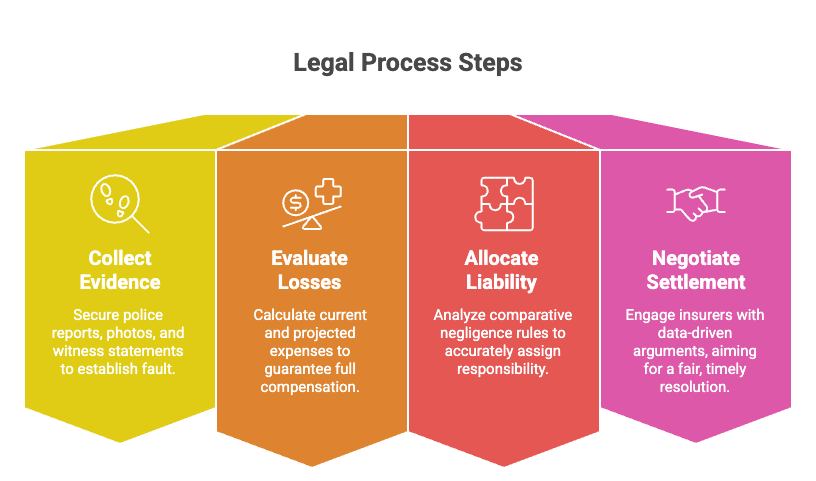
- Collect and preserve evidence – we secure police reports, photos, and witness statements to establish fault.
- Evaluate medical and financial losses – we calculate current and projected expenses to guarantee full compensation.
- Strategic liability allocation – we analyze comparative negligence rules to accurately assign responsibility.
- Focused settlement negotiation – we engage insurers with data‑driven arguments, aiming for a fair, timely resolution.
Long-Term Effects of Orlando Rear-End Car Accident Injury
We recognize that chronic neck pain often persists long after the initial impact, limiting daily activities and requiring ongoing medical care. Post‑traumatic headaches can become frequent and debilitating, affecting concentration and overall quality of life. Additionally, emotional distress and cognitive difficulties may emerge, influencing work performance and personal relationships.
Chronic Neck Pain
Often, victims of rear‑end collisions in Orlando experience chronic neck pain that persists long after the initial injury, and this lingering discomfort can markedly impair daily activities and quality of life. We appreciate that effective whiplash management is vital to prevent further complications, and we emphasize early assessment, targeted physical therapy, and appropriate medication to reduce inflammation. Over time, an untreated strain may lead to cervical degeneration, which can restrict motion and increase pain intensity.
Our approach includes regular monitoring, imaging when warranted, and collaborative care with experts to address structural changes. By staying proactive, we help patients maintain functional independence, reduce reliance on invasive procedures, and preserve overall well‑being while navigating the legal process to secure rightful compensation.
Post‑Traumatic Headaches
Although post‑traumatic headaches often develop weeks after a rear‑end collision, they can persist for months or even years, markedly disrupting daily life. We recognize that post-concussive headaches may emerge from mild brain injury, presenting as throbbing pain, light sensitivity, and difficulty concentrating. Simultaneously, cervicogenic migraines can arise when neck muscles and vertebrae are strained, transmitting pain to the head. These conditions frequently coexist, compounding discomfort and limiting our ability to serve clients effectively.
We advise prompt medical evaluation, imaging when warranted, and a multidisciplinary treatment plan that may include physical therapy, medication, and lifestyle adjustments. By addressing both neurological and musculoskeletal sources, we aim to restore function, reduce suffering, and protect our clients’ long‑term wellbeing.
Emotional and Cognitive Impacts
When a rear‑end collision triggers lasting emotional and cognitive disturbances, the effects can permeate every aspect of daily life. We notice that emotional fatigue often settles in after the initial shock, draining motivation and eroding patience. Cognitive fog follows, clouding judgment and slowing decision‑making, which hampers our ability to serve clients effectively. Mood swings can emerge without warning, creating unpredictable interactions that strain professional relationships. Memory lapses may obscure case details, forcing us to double‑check records and risking missing crucial deadlines.
These intertwined challenges demand proactive strategies: regular mental‑health check‑ins, structured work routines, and supportive team environments. By acknowledging and addressing these impacts, we protect both our well‑being and the quality of service we provide to those who depend on us.
Proving Liability in Orlando Rear-End Car Accident Injury Cases
If a driver fails to maintain a safe following distance and collides with the vehicle ahead, we can establish liability by demonstrating that the rear‑ender breached the duty of care owed to other road users. We begin by gathering police reports, dash‑cam footage, and photographs to reconstruct the crash scene. Traffic reconstruction allows us to calculate speed, stopping distance, and impact forces, providing an objective basis for fault. We also interview nearby drivers and passengers, evaluating witness credibility through consistency, detail, and opportunity to observe the event.
By correlating expert analysis with credible testimony, we create a compelling narrative that the defendant’s negligence caused the injuries. Our team presents this evidence in a clear, organized format to insurers and the court, ensuring that the victim’s claim is supported by factual, persuasive documentation. This systematic approach maximizes the likelihood of a favorable settlement or verdict.
Economic vs Non-Economic Damages in Orlando Rear-End Car Accident Cases
We’ll explain how economic damages, such as medical expenses and lost earnings, differ from non‑economic losses like physical pain, suffering, and the impact on daily life. Our discussion will outline the criteria courts use to quantify each category and how they affect settlement negotiations. By understanding these distinctions, you can better assess the full value of your claim.
Medical Medical Economic Losses
Evaluating the full scope of losses in an Orlando rear‑end car accident requires separating economic damages, such as medical bills and lost wages, from non‑economic damages, including pain, suffering, and diminished quality of life. We focus on medical economic losses, which encompass the total cost of medical billing for emergency care, ongoing therapy, and prescription medication.
By conducting a thorough economic valuation, we quantify each expense and project future costs, ensuring that no claim is overlooked. We also consider lost income, both past and anticipated, and the impact of reduced earning capacity caused by the injury. Our approach aggregates these figures into a clear, substantiated claim, allowing us to advocate effectively for full compensation while maintaining the highest standards of professionalism.
Physical Pain Suffering
Resilience in the face of injury often translates into measurable pain, suffering, and loss of enjoyment—components that fall under non‑economic damages, distinct from the calculable medical and wage losses. We recognize that physical pain suffering encompasses more than bruises; it includes chronic muscle spasms, persistent joint stiffness, and the psychological toll of injury disruption.
These symptoms can diminish a victim’s quality of life even when medical bills are settled. By quantifying such non‑economic impacts, we help clients secure compensation that reflects the true burden of their injuries. Our approach combines thorough documentation with expert testimony, ensuring that the court appreciates the depth of suffering. This strategy aligns with our commitment to serve those harmed by rear‑end collisions, safeguarding their right to fair restitution.
Impact on Daily Life
Evaluating how a rear‑end collision reshapes a victim’s daily routine reveals the distinct roles of economic and non‑economic damages. We notice that mobility limitations often force changes to work schedules, household chores, and caregiving responsibilities, which translate into lost wages and increased out‑of‑pocket expenses.
At the same time, the psychological strain of reduced independence and disrupted social interactions constitutes non‑economic loss, affecting confidence and overall quality of life. By quantifying both categories, we help clients secure compensation that reflects tangible financial setbacks and intangible suffering. Our approach emphasizes thorough documentation of medical bills, therapy costs, and the concrete impact on everyday activities, ensuring that the claim fully represents the breadth of the victim’s altered daily routine.
When an Orlando Rear-End Car Accident Case Goes to Trial vs Settlement
When an Orlando rear‑end car accident case reaches trial, we must weigh the strategic differences between pursuing a courtroom resolution and accepting a settlement offer. In a trial, jury dynamics become pivotal; we assess how jurors perceive liability, credibility, and the emotional weight of testimony. Understanding community attitudes helps us tailor arguments and anticipate the range of verdicts. Conversely, settlement leverage allows us to negotiate based on the strength of our evidence and the opposing party’s desire to avoid costly litigation.
By presenting a compelling demand package, we can often secure a fair resolution faster and with less uncertainty. We also consider the client’s tolerance for risk, the potential impact of public exposure, and the timeline for receiving compensation. Ultimately, we guide the client toward the option that aligns with their priorities, balancing the desire for a decisive judgment against the practicality of a negotiated agreement.
Compensation for Orlando Rear-End Car Accident Damages
Our assessment of trial versus settlement naturally leads to the question of what compensation you can actually recover after an Orlando rear‑end collision. We explain that recoverable damages typically include medical expenses, lost wages, and property repair costs, all of which we help you document through thorough loss mitigation efforts. In addition, we pursue pain‑and‑suffering compensation when the injury’s impact on daily life is substantial. When the at’s conduct is reckless or intentional, we may also seek punitive damages to punish and deter future misconduct, though these are awarded only in limited circumstances.
Our team works closely with you to gather evidence, negotiate with insurers, and, if necessary, present a compelling case at trial. By focusing on both economic and non‑economic losses, we aim to secure a fair settlement that reflects the full scope of your injuries and supports your recovery.
The Statute of Limitations for Orlando Rear-End Car Accident Injury Cases
Within a year of the accident, Florida law requires that you file a personal injury lawsuit, so understanding the statute of limitations is vital for protecting your rights. We must recognize that the four‑year filing deadline begins on the date of injury, not when symptoms appear, and we should act promptly to preserve evidence and witness testimony. When a victim is a minor, mentally incapacitated, or the defendant is absent, tolling exceptions may pause the clock, extending the period for filing. We advise reviewing medical records and police reports early to confirm the injury date and identify any applicable tolling circumstances.
By tracking these filing deadlines and tolling exceptions, we safeguard clients’ ability to seek compensation without forfeiture. Our commitment to diligent case management guarantees that no procedural barrier undermines a rightful claim, reinforcing the principle of timely justice for those we serve.
Why You Need an Experienced Orlando Rear-End Car Accident Lawyer
Because rear‑end collisions often involve complicated liability issues and nuanced insurance negotiations, we must rely on an experienced Orlando rear‑end car accident lawyer to protect our interests. We appreciate that the aftermath of a crash can be overwhelming, and we aim to guide victims through post-accident counseling while safeguarding their legal rights. An adept attorney evaluates police reports, medical records, and witness statements to establish clear fault, which is vital when insurers attempt to downplay responsibility. By leveraging settlement negotiation tips, we can secure fair compensation for medical expenses, lost wages, and pain and suffering.
Our team’s proficiency ensures procedural deadlines are met and claimants avoid common pitfalls that diminish recovery. Ultimately, we provide the strategic advocacy needed to navigate complex claims, allowing clients to focus on recovery while we handle the legal intricacies.
How to Choose the Right Orlando Rear-End Car Accident Lawyer for Your Case
After addressing the complexities of liability and insurance negotiations, we turn our focus to selecting the attorney who will best represent your interests. We begin by reviewing each lawyer’s track record in rear‑end cases, noting settlements and verdicts that reflect competence. During client interviews, we ask about communication style, case strategy, and how the attorney will keep us informed, ensuring transparency and trust. Understanding fee structures is equally essential; we compare contingency arrangements, hourly rates, and any upfront costs to gauge affordability and alignment of incentives.
We also verify bar membership, disciplinary history, and professional references to confirm credibility. Finally, we evaluate the firm’s resources, such as access to accident reconstruction experts and medical consultants, which can strengthen our claim. By systematically evaluating these factors, we can choose a lawyer who not only possesses the requisite skill but also shares our commitment to serving victims effectively.
About the Law Offices of Anidjar and Levine
We’ve built the Law Offices of Anidjar and Levine on a foundation of extensive personal and successful personal injury representation, particularly in rear‑end collisions. Our firm’s history reflects decades of dedication to serving victims who need decisive advocacy and compassionate guidance.
We combine seasoned litigation proficiency with a client‑centered approach, ensuring each case receives meticulous attention from intake through resolution. Client testimonials consistently highlight our responsiveness, strategic insight, and unwavering commitment to achieving fair compensation.
By integrating thorough investigation, skilled negotiation, and aggressive courtroom representation, we protect the rights of those harmed by negligent drivers. We recognize the physical, emotional, and financial toll of accidents, and we tailor our services to alleviate those burdens while pursuing justice.
Our team remains focused on delivering measurable results, upholding the highest ethical standards, and reinforcing the trust placed in us by the community we serve.
Frequently Asked Questions
Can I File a Claim if the Other Driver Was Uninsured?
We can file a claim even if the other driver is uninsured, provided we have uninsured motorist coverage and can demonstrate fault in the collision. Your policy’s uninsured motorist provision will compensate for damages, medical expenses, and lost wages when the at party cannot pay. We’ll gather police reports, witness statements, and medical records to establish liability and substantiate the loss. Prompt filing guarantees we meet statutory deadlines and preserve your right to recovery.
Do I Need a Medical Professional’s Report for a Settlement?
We recommend obtaining a medical professional’s report before pursuing a settlement, because thorough medical documentation strengthens your claim and facilitates expert testimony if needed. Detailed records of diagnoses, treatments, and prognosis allow us to quantify damages accurately and demonstrate causation. While settlements can proceed without it, a lack of documentation may reduce leverage and delay negotiations. Consequently, securing a thorough report is vital for achieving a fair, timely resolution.
Will My Insurance Premium Increase After Filing a Claim?
We can confirm that filing a claim may trigger a premium increase, though the exact amount depends on your insurer’s policies and the severity of the claim. Rate hikes often arise when the insurer deems you a higher risk, but fault waivers can sometimes mitigate this effect if the other driver is clearly at fault. We recommend reviewing your policy’s terms, discussing the claim’s impact with your agent, and considering defensive‑driving discounts or bundling options to offset potential increases.
Can I Sue for Emotional Distress After a Rear‑End Crash?
We can pursue a claim for emotional distress if the crash caused a psychological injury that is demonstrable and not merely fleeting. You must show that the defendant’s negligent or intentional conduct—such as reckless driving—directly resulted in severe anxiety, depression, or related symptoms. Evidence like medical records, therapist notes, and witness statements will strengthen the case. While intentional infliction of emotional distress requires extreme and outrageous behavior, ordinary negligence may still support damages for genuine psychological harm.
Is There a Deadline to Request Police Records for My Case?
We can confirm that you must request police records promptly because most jurisdictions impose a statutory limitations period for filing a claim, typically ranging from one to three years, and police agencies often follow a records retention schedule that may purge files after a set time. To protect your case, we recommend filing a formal request within the first few months, documenting the date, and confirming the agency’s specific retention policy to avoid loss of crucial evidence.
—————————
We stand ready to protect your rights and secure the compensation you merit after a rear-end collision.
The Law Offices of Anidjar and Levine bring a deep understanding of Orlando traffic law, combined with proven litigation strategies, to ensure thorough case preparation and aggressive representation.
By partnering with us, you gain a dedicated advocate who will steer the legal process, confront insurers, and pursue a fair settlement or verdict.
Trust our proficiency as a Car Accident Lawyer in Orlando to guide you toward a decisive, favorable outcome.