

We handle Port St. Lucie truck accident claims involving FMCSA violations by moving fast to protect vital evidence and your well-being.
The Law Offices of Anidjar and Levine will urge prompt medical evaluation, then preserve driver logs, ELD data, dispatch messages, maintenance and inspection records, and onboard electronic data before it’s lost or overwritten.
We coordinate witnesses, photos, and police materials, and identify all liable parties, from carriers to contractors.
Learn more from our Port St. Lucie Truck Accident Lawyer page for essential steps and what to expect.
Main Takeaways
- Seek immediate medical care and document symptoms; shock can hide brain, spinal, or internal injuries after a Port St. Lucie truck crash.
- Preserve crash evidence fast: photos, witness contacts, nearby cameras, and avoid resetting phones, dashcams, or vehicle systems.
- A lawyer can demand preservation of FMCSA-critical data like ELD logs, dispatch messages, GPS history, maintenance records, and driver qualification files.
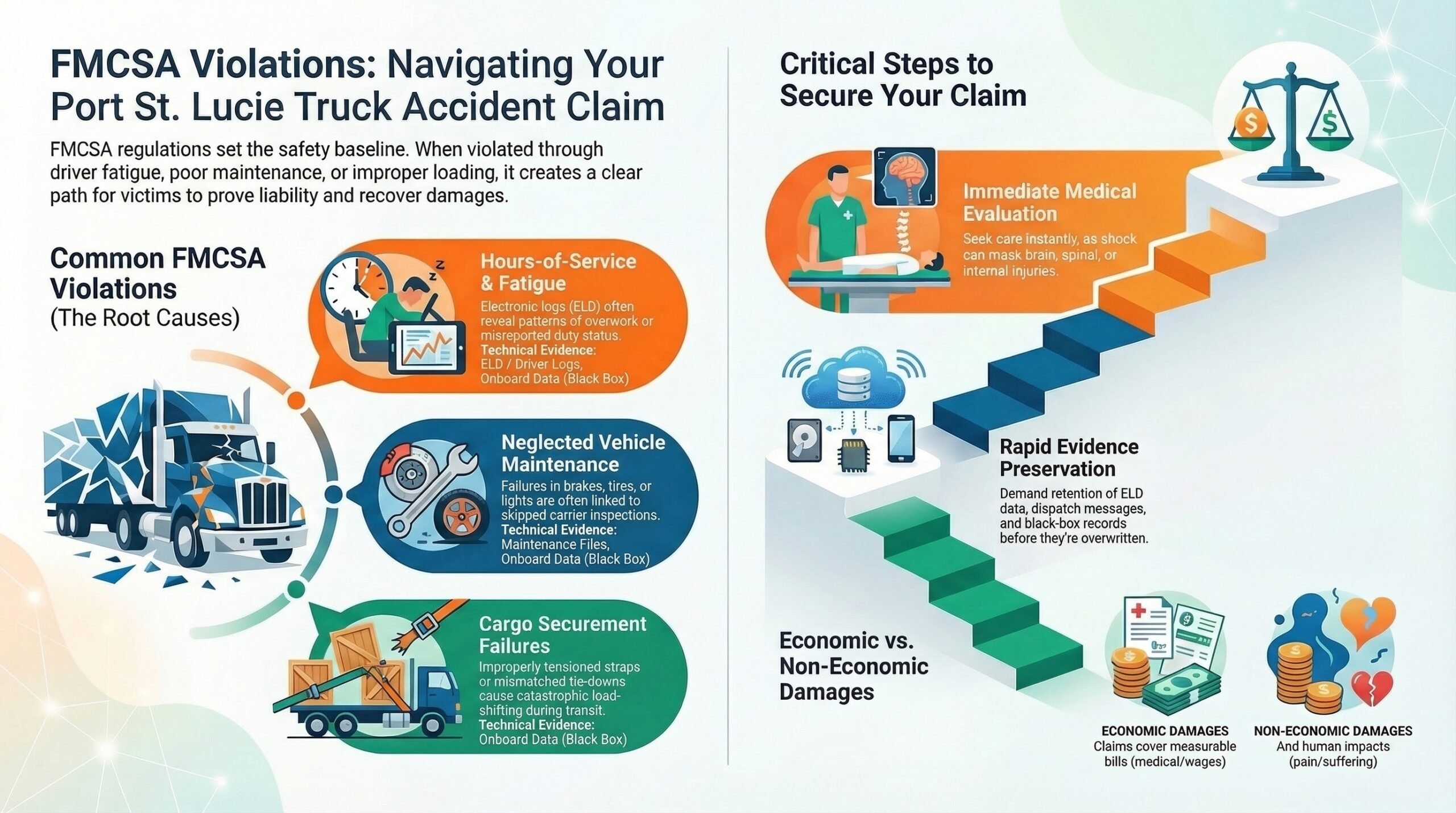
- Common FMCSA violations—hours-of-service fatigue, poor maintenance, cargo securement, and log tampering—can help prove causation and liability.
- An attorney can pursue all responsible parties, manage insurer communications, and build a full damages claim using medical and forensic evidence.


How We Can Help With Your Port St. Lucie FMCSA Violations Truck Accident Claim
Although FMCSA rules can seem like internal trucking paperwork, violations often provide the clearest path to proving why a crash happened and who should pay for it.
FMCSA rules may look like paperwork, but violations often reveal what caused the crash and who is responsible.
We help you act quickly, preserve evidence, and build a claim that reflects the full impact on your health, work, and family responsibilities.
We gather driver logs, inspection reports, maintenance files, dispatch communications, and electronic data, then we align them with witness statements and medical records.
We also send preservation letters, coordinate qualified experts when needed, and handle all insurer contacts so you can focus on recovery.
If multiple parties share fault, we pursue each responsible carrier, contractor, or shipper, and we present a clear demand supported by documentation.
We serve our neighbors with Multilingual support, and our Community outreach helps connect you to local resources while your claim moves forward.
OUR CONSULTATIONSARE FREE
START YOUR FREE CASE REVIEW

Understanding Port St. Lucie FMCSA Violations Truck Accident Cases
When a commercial truck crash happens in Port St. Lucie, we often need to determine whether FMCSA rules played a role, because those regulations set the baseline for safe interstate trucking.
In these cases, we look beyond the police report and evaluate carrier compliance, driver qualification, vehicle condition, and required records to understand what standards applied at the time of the collision.
We also consider Historical Trends in federal enforcement and courtroom interpretation, since they shape how violations are identified and proven.
At the same time, Regulatory Evolution matters because updated rules can change what documentation exists, how long it’s kept, and what duties carriers must meet.
For you, this means a clearer path to showing responsibility, connecting the violation to the harm, and pursuing compensation that supports medical care and family stability. Our goal remains service-minded advocacy, grounded in facts and careful analysis.
Common Causes of Port St. Lucie FMCSA Violations: Truck Accident
We’ll start by identifying the FMCSA violations that most often lead to serious truck crashes in Port St. Lucie, and how they typically show up in real-world claims.
These commonly include hours-of-service violations that contribute to fatigue, unsafe vehicle maintenance that allows dangerous defects to go unaddressed, and improper driver qualifications that put unprepared operators behind the wheel.
We’ll also cover cargo securement failures, because shifting or falling loads can quickly turn an avoidable mistake into a catastrophic collision.
Hours-Of-Service Violations
Because driver fatigue can build quietly over long hauls, hours-of-service violations remain one of the most common FMCSA issues we see in Port St. Lucie. When drivers exceed driving limits, skip required breaks, or misreport duty status, reaction time and judgment can decline, placing everyone on the road at risk.
We focus on ELD compliance because electronic logs often reveal patterns of overwork, edits, or missing entries that paper records can hide. We also emphasize Fatigue management, since schedules that ignore sleep needs can pressure drivers to keep moving when they should rest.
If you were hurt, we’ll review logs, dispatch communications, and trip timelines, then show how avoidable choices contributed to the crash and your losses.
Unsafe Vehicle Maintenance
Neglected maintenance can turn a routine run through Port St. Lucie into a preventable tragedy, and we’re committed to helping you protect others on the road.
FMCSA rules require carriers to inspect, repair, and document vital systems, yet violations often involve worn brakes, bald tires, failing lights, and directional-control defects that should’ve been caught.
When shops skip Corrosion Protection, rust can weaken lines, mounts, and undercarriages, increasing the risk of sudden failure.
When fleets ignore Fluid Analysis, they miss warning signs of overheating, contamination, or leaks that can compromise engines, transmissions, and braking performance.
We’ll review inspection reports, repair invoices, and out-of-service orders to connect maintenance shortcuts to the crash and demand accountability for the harm caused.
Improper Driver Qualifications
Unsafe equipment isn’t the only FMCSA compliance breakdown that leads to serious crashes in Port St. Lucie; improper driver qualifications can be just as dangerous.
When carriers rush hiring, skip thorough background checks, or fail to confirm medical certification and prior safety history, they place the public and their own drivers at risk.
We often see mismatched logs, incomplete training records, and ignored disqualifying violations that show a company didn’t verify competency before handing over the controls.
In other cases, credential fraud masks a suspended CDL, a failed drug test, or an unreported crash history, leaving an unfit driver in command of a heavy commercial vehicle.
If you’re harmed, we’ll pursue records, expose noncompliance, and advocate for accountability that protects others.
Cargo Securement Failures
When cargo isn’t secured to FMCSA standards, even a routine trip through Port St. Lucie can become a public hazard.
We often see straps, chains, or tie-downs that are worn, mismatched, or improperly tensioned, allowing Load Shifting during turns, braking, or lane changes.
That movement can destabilize a trailer, spill debris, or force surrounding drivers into sudden evasive actions, and the results can be catastrophic.
We serve you best by focusing on what should’ve been done before the truck ever moved.
A proper Restraint Inspection requires verifying anchor points, checking working load limits, confirming edge protection, and rechecking securement after the first miles and at required intervals.
When carriers cut corners, we help hold them accountable and protect the community.


Legal Rights of Port St. Lucie FMCSA Violations Truck Accident Victims
Although federal trucking regulations can seem distant from a crash scene in Port St. Lucie, they often define the rights we can assert when FMCSA violations contribute to harm.
We can pursue compensation for medical costs, lost income, and future care, while also demanding accountability from carriers, drivers, and contractors who failed to meet safety duties.
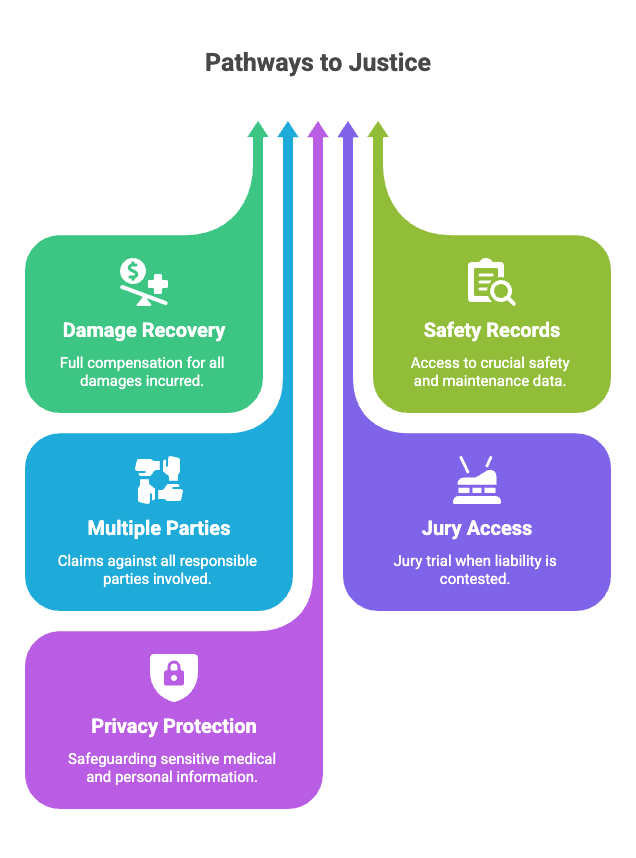
We also protect your dignity through Privacy Protections, limiting unnecessary exposure of sensitive records during the claim.
If settlement efforts fail, we preserve your Jury Access, so community members can evaluate the evidence and set fair value.
In serving others, we focus on restoring stability and preventing repeat misconduct by insisting on lawful operations.
- Full and fair damage recovery
- Access to safety and maintenance records
- Claims against multiple responsible parties
- Jury Access when liability is disputed
- Privacy Protections for medical and personal data
Steps to Take After a Port St. Lucie FMCSA Violations Truck Accident
After a Port St. Lucie truck crash involving possible FMCSA violations, we’ll help you act quickly and with purpose, because early decisions can affect both your health and your claim.
We’ll urge you to get medical care fast, then secure crash scene evidence when it’s safe, including photos, witness details, and any information tied to the truck and driver.
We’ll also guide you in reporting suspected FMCSA rule violations, so the right records and agencies are put on notice from the start.
Get Medical Care Fast
Because truck crashes linked to FMCSA violations often involve high-impact forces and compound injuries, we need to prioritize medical care immediately, even if symptoms seem minor at first.
We should call 911, follow Ambulance Protocols, and accept transport when responders recommend it, since shock can mask internal bleeding, brain trauma, and spinal injury.
If you’re stable, we can request an evaluation at an emergency department or urgent care, and we should clearly report every symptom, medication, and prior condition.
We’ll request imaging or specialty consultations when pain, dizziness, numbness, or confusion occurs.
When travel is difficult, we can use Telemedicine Access to obtain timely guidance, referrals, and follow-up instructions.
Secure Crash Scene Evidence
When the scene is safe and first responders permit movement, we should start securing crash scene evidence right away, since FMCSA-related violations often hinge on details that disappear within hours.
We can photograph vehicle positions, skid marks, debris fields, cargo spills, and visible injuries, then record time, weather, lighting, and road conditions.
We should capture wide shots and close-ups, and include landmarks to support later scene mapping.
If you can do so without interfering with care, we should obtain names and contact details for witnesses and note any nearby cameras.
We can preserve electronic data by keeping phones, dashcams, and vehicle systems from being reset, and request copies promptly for digital forensics.
Acting carefully helps us serve others by protecting the truth.
Report FMCSA Rule Violations
Although the crash scene may look straightforward at first glance, we should report suspected FMCSA rule violations as early as possible so the right agencies and insurers preserve records and treat the collision as a potential compliance failure.
We can document concerns like hours-of-service fatigue, unsafe loading, poor maintenance, or drug and alcohol issues, then share them with law enforcement and the carrier’s insurer.
When appropriate, we may also contact the FMCSA and Florida authorities, using mobile reporting tools to submit time-stamped notes and photos.
If you fear retaliation, we can explain options for anonymous tips while still supporting accountability.
We should keep copies of confirmation numbers, names, and dates, and we’ll request preservation of logs, ELD data, inspection reports, and dispatch communications promptly.
How a Port St. Lucie FMCSA Violations Truck Accident Lawyer Can Help You
If FMCSA violations played a role in your crash, we can move quickly to identify the regulatory failures that support liability and strengthen your claim.
We gather driver logs, inspection records, dispatch messages, maintenance files, and black-box data, then compare them to federal safety standards to show where the carrier fell short.
We also coordinate with your medical providers and community resources so you can focus on serving others while we handle the legal burden.
- Preserve crucial evidence before it’s lost or altered
- Pinpoint hours-of-service, maintenance, or training violations
- Identify all liable parties, including carriers and contractors
- Present clear damage proof, grounded in records and testimony
- Negotiate firmly, and prepare for trial if needed
We offer contingency agreements, so you don’t pay upfront, and multilingual services, so your family receives clear guidance.
Throughout, we maintain consistent, respectful, and goal-focused communication.
Long-Term Effects of Port St. Lucie FMCSA Violations: Truck Accident Injuries
When FMCSA violations contribute to a serious truck crash in Port St. Lucie, we often see injuries that don’t end when the initial treatment does, and you may face lasting limits on work and daily life.
We’ll explain how chronic pain and disability can persist, how traumatic brain injuries can affect memory, focus, and judgment over time, and why these effects may require ongoing care.
We’ll also address psychological trauma and PTSD, including symptoms that disrupt sleep, relationships, and stability long after the collision.
Chronic Pain And Disability
Endurance becomes the defining challenge after a serious truck crash, because injuries tied to FMCSA violations can leave us with chronic pain and lasting disability long after the emergency care ends.
When a carrier ignores hours-of-service rules or maintenance standards, we may face spinal, joint, or soft-tissue damage that flares with work, service, and family responsibilities.
Effective Pain Management often requires coordinated care, consistent documentation, and realistic pacing, so we can serve others without worsening symptoms.
Disability may also limit lifting, driving, or prolonged standing, changing how we volunteer and earn a living.
In many cases, Adaptive Devices support safe mobility and independence, while home and workplace modifications reduce risk.
We should track functional setbacks, treatment progress, and daily limitations, because these details strengthen claims for long-term support and necessary accommodations.
Traumatic Brain Injury Impacts
Although broken bones often draw the earliest attention after a truck crash, traumatic brain injuries can create the most persistent long-term disruptions for those harmed by FMCSA violations.
We often see delayed symptoms, including slowed processing, memory lapses, headaches, and reduced concentration that interfere with work and family responsibilities.
When you’re serving others, these limitations can feel especially isolating, because they affect planning, judgment, and safe decision-making.
We encourage thorough neurological evaluation, then a structured plan for Cognitive Rehabilitation, so you can rebuild practical skills through targeted therapy and consistent routines.
Over time, progress also depends on Social Reintegration, including workplace accommodations, community support, and careful return to driving or demanding tasks.
We’ll help document these impacts, so your long-term needs are clearly presented.
Psychological Trauma And PTSD
Living through a violent truck collision can leave psychological injuries that last well beyond physical recovery, and we often see these effects intensify after a crash tied to FMCSA violations.
You may notice intrusive memories, hypervigilance, nightmares, and avoidance that disrupt work, driving, and family routines.
PTSD can also present as irritability, guilt, or emotional numbness, which can strain relationships and undermine your ability to serve others.
We encourage early screening, consistent therapy, and structured coping strategies, including sleep hygiene, gradual exposure, and mindful breathing.
Peer support also matters, because shared experience reduces isolation and helps you rebuild confidence at a practical pace.
If symptoms persist, we can help document their impact and pursue accountability for long-term harm.
Proving Liability in Port St. Lucie FMCSA Violations Truck Accident Injury Cases
How do we prove liability when an FMCSA violation plays a role in a Port St. Lucie crash?
We start by connecting the rule breach to the harm, then we document every step with reliable evidence.
We obtain driver logs, ELD data, inspection reports, dispatch records, maintenance files, and training materials, and we compare them to FMCSA requirements on hours, vehicle condition, and safe operation.
We also secure scene photos, black box data, witness statements, and medical records to establish causation and damages.
Because trucking often crosses state lines, we anticipate jurisdictional challenges, including where the carrier operates, where records are kept, and which court has authority.
We then identify all responsible parties, such as the driver, motor carrier, broker, or maintenance contractor, and we focus on apportioning fault based on each party’s conduct.
Our goal is accountability that supports recovery and community safety.
Dealing With Insurance Companies After a Port St. Lucie FMCSA Violations Truck Accident
When an FMCSA violation contributes to a Port St. Lucie truck crash, insurers often move quickly to shape the narrative and limit payouts.
We should encourage you to report the collision promptly, provide only basic facts, and avoid recorded statements until we can help you prepare.
Adjusters may ask broad questions that invite speculation, and those comments can be used to minimize your losses.
We also watch for policy exclusions that carriers may cite to deny coverage, even when evidence shows unsafe operations or improper maintenance.
If your own insurer pays benefits, we’ll address subrogation rights early so your recovery isn’t unfairly reduced later.
We can coordinate communication, request written explanations for denials, and insist that the carrier preserve logs, inspection records, and electronic data.
By staying respectful yet firm, we protect your time, your health, and your capacity to serve others.
What to Expect During a Port St. Lucie FMCSA Violations Truck Accident Claim Process
As we move into the Port St. Lucie FMCSA violations truck accident claim process, we’ll set clear expectations for the claim investigation timeline and the critical milestones you should watch for.
We’ll also explain how we collect and preserve FMCSA-related evidence, then use it to support negotiations and settlement talks with the carriers and insurers.
If a fair resolution doesn’t materialize, we’ll outline the litigation and trial steps, so you know what we’ll do next and what we’ll need from you.
Claim Investigation Timeline
Although every trucking case develops on its own facts, we can usually map the claim investigation into a clear timeline once a Port St. Lucie crash is reported and you’ve asked us to help.
First, we confirm immediate medical status and open communications with insurers, so your recovery stays the priority.
Next, we set a Milestone calendar that tracks deadlines, witness outreach, and early liability review.
During the middle Investigation phases, we analyze applicable safety rules, identify all responsible parties, and assess damages in a structured way.
As the file matures, we send formal notice, evaluate settlement posture, and prepare for litigation if fair terms aren’t offered.
Throughout, we keep you informed, coordinate needed services, and protect your time so you can focus on recovery and serving your family.
FMCSA Evidence Collection
Building an FMCSA-focused evidence file starts with moving quickly to secure the records that trucking companies can lawfully control, alter, or lose over time.
We begin with Data Preservation letters that demand retention of driver logs, ELD data, dispatch messages, GPS history, maintenance files, inspection reports, drug and alcohol testing records, and personnel qualifications.
We also seek bills of lading, loading documents, and scale tickets to evaluate cargo securement and weight compliance.
When electronic systems are involved, we coordinate Forensic Imaging of onboard modules, phones, and relevant server accounts so the original metadata remains intact.
We obtain police materials, 911 calls, roadway video, and witness statements, then compare them against FMCSA requirements to identify violations.
Throughout, we keep you informed, because serving your recovery depends on complete, accurate proof.
Negotiations And Settlement Talks
Once we’ve secured the essential records and confirmed the FMCSA violations that support liability, we shift into negotiations and settlement talks with the trucking company’s insurer and defense counsel.
We present a clear demand package that documents your losses, ties them to the violations, and explains why early resolution serves everyone’s interests, including public safety.
We’ll review each offer with you, compare it to likely outcomes, and respond with disciplined Counteroffer Techniques that protect your long-term needs.
When talks stall, we may propose mediation and begin focused Mediation Preparation, organizing exhibits, outlining core arguments, and anticipating defenses.
Throughout, we keep communication timely and respectful, so you can remain steady, support your family, and continue serving others while we pursue fair compensation.
Litigation And Trial Steps
When negotiations don’t produce a fair resolution, we move the case into litigation and begin a structured trial-focused process designed to prove liability and damages under FMCSA standards.
We file the lawsuit, serve the defendants, and use discovery to obtain driver logs, inspection records, dispatch data, and safety policies.
We also take depositions and retain qualified experts to explain how violations caused harm and increased risk to the public.
As the case narrows, we argue for pretrial motions to exclude unreliable defenses, compel missing evidence, and clarify what the jury may hear.
If a trial becomes necessary, we guide you through Jury Selection, opening statements, witness testimony, and cross-examination.
Throughout, we keep you informed, protect your dignity, and pursue accountability that supports safer roads for everyone.
Compensation for Port St. Lucie FMCSA Violations, Truck Accident Damages
Although FMCSA regulations focus on safety, violations often become the pathway to proving liability and maximizing compensation after a Port St. Lucie truck crash.
We’ll connect logbook gaps, maintenance failures, or hours-of-service breaches to the harm you’ve endured, then present a clear demand supported by records, expert review, and sworn testimony.
We link logbook gaps, maintenance failures, and hours-of-service breaches to your harm, backed by records, experts, and sworn testimony.
When insurers minimize responsibility, we press for full value through negotiation or court, always keeping your recovery and your family’s stability first.
We also evaluate whether punitive damages may apply when conduct shows reckless disregard, such as repeated safety violations or falsified inspection reports.
Because compensation planning should serve your long-term wellbeing, we’ll discuss tax implications before you accept any settlement structure, including how interest, allocations, and payment timing may affect what you actually keep.
We don’t just pursue dollars; we pursue accountability for safer roads.
Economic vs Non-Economic Damages in Port St. Lucie FMCSA Violations Truck Accident Cases
We’ll start by separating economic damages, such as medical bills, rehabilitation costs, lost wages, and future care needs, from the financial impact of a Port St. Lucie truck crash tied to FMCSA violations.
We’ll also explain non-economic damages, including pain and suffering, emotional distress, and loss of enjoyment of life, and how they’re evaluated alongside the hard numbers.
Finally, we’ll outline how we can prove both categories of damages after FMCSA violations, using records, expert analysis, and clear links between the rule breach and your losses.
Economic Damages Overview
Because FMCSA violations often strengthen liability in Port St. Lucie truck crash claims, we can focus on proving economic damages with precision and purpose.
Economic damages cover the measurable financial losses you’ve faced and will likely face, and they often form the backbone of a responsible recovery plan.
We help you account for past and projected medical care, rehabilitation, prescriptions, and necessary assistive equipment, along with lost wages and reduced work capacity.
When injuries change your career path, we work with qualified professionals to calculate Future Earnings in a defensible way.
Strong Expense Documentation matters, so we organize bills, receipts, insurance statements, mileage, and employer records, then connect each cost to the collision.
This approach supports fair resolution and protects your family’s stability.
Non-Economic Damages Explained
How do you measure the harm that doesn’t come with a bill or a paycheck stub?
In Port St. Lucie FMCSA violations truck accident cases, non-economic damages address the human losses that follow a crash, even when medical invoices and wage records don’t capture the full impact.
These damages may include physical pain, mental anguish, loss of enjoyment of life, scarring, disability, and the strain placed on close relationships.
While economic damages focus on measurable costs, non-economic damages reflect the deeper disruption to daily life and personal dignity.
In many cases, Jury Awards provide the practical framework for valuing these harms, guided by the facts and community standards.
We also watch for State Caps, because limits can affect recovery in specific circumstances.
Proving Damages After FMCSA Violations
When an FMCSA violation contributes to a truck crash in Port St. Lucie, we must prove damages with the same care we use to prove fault.
Economic damages include medical bills, rehabilitation, prescriptions, lost wages, and reduced earning capacity, and we support them with invoices, employment records, and expert projections.
We also address Medical Liens early, so your net recovery reflects valid balances and avoids surprise deductions at settlement.
Non-economic damages cover pain, disability, disfigurement, and loss of enjoyment of life, and we document them through treatment notes, daily-impact statements, and credible testimony from those who serve beside you.
Finally, we evaluate Tax Implications, because certain recoveries may affect planning even when compensation is warranted. Our goal is accurate, fair, and accountable results for you.
When a Port St. Lucie FMCSA Violations Truck Accident Case Goes to Trial vs Settlement
Although most Port St. Lucie FMCSA violations and truck accident claims resolve through negotiation, we prepare every case as if it will be tried.
Settlement can serve you well when liability is clear, damages are well documented, and the insurer responds to evidence rather than delay.
We also account for settlement psychology, because adjusters often test whether a family will accept less to avoid uncertainty. We manage the media impact when public attention pressures parties or distorts the narrative by keeping the focus on facts and responsible conduct.
A case is more likely to go to trial when the carrier denies fault, disputes causation, attacks your credibility, or refuses to value future care and lost earning capacity.
Trials can compel accountability, especially when logbook issues, maintenance failures, or safety policy violations show a pattern. We’ll advise you candidly, so your decision reflects service to your family and the community.
The Statute of Limitations for Port St. Lucie FMCSA Violations Truck Accident Case
Because FMCSA violations cases depend on time-sensitive evidence and strict filing deadlines, we move quickly to protect your claim and preserve vital records.
In Port St. Lucie truck accident matters, the statute of limitations sets a firm window for filing a lawsuit, and missing it can bar recovery regardless of how clear the safety violations may be.
We track all Filing Deadlines from the outset, including deadlines tied to wrongful death, serious injury, and claims against multiple parties such as motor carriers, brokers, or maintenance providers.
Certain Tolling Rules may pause or extend the clock in narrow situations, such as when an injured person is a minor, when a defendant can’t be located for service, or when other legally recognized barriers prevent timely filing.
These exceptions are fact specific and courts apply them strictly.
We align the timeline with your service-minded goals, so your case supports accountability and safer roads.
When to Contact a Port St. Lucie FMCSA Violations Truck Accident Lawyer After a Port St. Lucie FMCSA Violations Truck Accident
Missing a filing deadline can end an FMCSA violations claim, so we don’t wait to start building the record after a Port St. Lucie truck crash.
You should contact us as soon as your immediate medical needs are addressed and you can safely communicate, even if you’re unsure who caused the collision.
Early outreach lets us help preserve evidence, document injuries, and request time-sensitive records before they disappear, including driver logs, inspection reports, and carrier communications.
If you’re experiencing pain, confusion, or shock, we’ll pace the process with respect for your Emotional Readiness while still protecting the case timeline.
We can also support Financial Planning by identifying near-term costs, organizing bills, and tracking lost income in a way that’s accurate and service-minded.
When you report new symptoms, receive follow-up care, or hear from an insurer, that’s another clear point to reach out promptly.
Why You Need an Experienced Port St. Lucie FMCSA Violations Truck Accident Lawyer
When a truck crash points to potential FMCSA violations, we don’t treat the case like a routine traffic claim, we build it around federal compliance failures and the evidence that proves them.
We act quickly to preserve driver logs, electronic data, inspection reports, and maintenance records before they’re lost or “corrected.”
We also identify patterns, such as hours-of-service breaches, improper loading, or ignored safety recalls, then connect them to how your injuries occurred.
An experienced Port St. Lucie FMCSA violations truck accident lawyer knows how carriers defend these cases, and we counter with focused investigation, qualified experts, and clear damage documentation.
We keep your goals central, because pursuing accountability can protect others on our roads.
Our Community Reputation is built on disciplined casework and respectful communication, and we uphold Fee Transparency so you understand costs, timelines, and expectations from the outset.
How to Choose the Right Port St. Lucie FMCSA Violations Truck Accident Lawyer for Your Case
Although many firms advertise truck-accident experience, choosing the right Port St. Lucie FMCSA violations lawyer requires disciplined screening.
We should start by asking how the attorney investigates compliance, including logbooks, driver qualification files, inspection histories, and cargo securement records.
We also need to confirm courtroom readiness, because carriers and insurers often resist accountability unless trial remains a real option.
Next, we can evaluate service standards that protect your time and dignity. Ask for Fee Transparency in writing, including contingency percentages, litigation costs, and when expenses are deducted.
Clarify our Communication Preferences, such as who gives updates, how quickly messages are returned, and whether you’ll speak directly with the lawyer.
We should also look for a team that explains choices plainly, respects your medical recovery, and stays focused on restoring safety for others on our roads.
Finally, review case results and client references for consistency.
About The Law Offices of Anidjar & Levine
The Law Offices of Anidjar & Levine represent injured people in Port St. Lucie and throughout Florida after serious truck crashes involving FMCSA violations.
We approach each case with a service mindset, because your recovery and stability affect families, workplaces, and the broader community.
When you trust us, we accept the responsibility to act with diligence, discretion, and steady communication.
We serve Port St. Lucie and Florida truck crash victims, pursuing FMCSA violations with diligence, discretion, and steady communication.
Our Firm History reflects a consistent focus on personal injury advocacy and practical case preparation.
We investigate driver logs, inspection records, maintenance histories, and carrier safety practices, then build a clear claim strategy that supports fair negotiations or trial, if needed.
We don’t treat you like a file; we keep you informed, return calls, and handle insurers directly.
Client Testimonials often highlight responsiveness, professionalism, and results-oriented guidance during stressful months.
If you’re ready to serve your family by protecting your rights, we’re ready to serve you.
Frequently Asked Questions
What if the Truck Driver Were an Independent Contractor, Not a Company Employee?
If the truck driver was an independent contractor, we can still pursue liability beyond the driver, depending on control, dispatch practices, and the carrier’s obligations.
We’ll examine Insurance Coverage to confirm which policies apply and whether exclusions limit recovery.
We’ll also review Lease Agreements to see who maintained the vehicle, set safety rules, and accepted responsibility for compliance.
Jointly, we’ll act decisively, protecting those you serve through accountable results.
Can I Recover Damages if I Was Partly at Fault for the Crash?
Yes, we can often recover damages even if you were partly at fault, depending on your state’s comparative negligence rules.
Your share of fault may lead to a settlement reduction, yet it doesn’t automatically bar recovery.
We’ll document the other driver’s violations, quantify your losses, and argue for a fair allocation of fault.
Will My Immigration Status Affect My Ability to Pursue a Truck Accident Claim?
Your immigration status usually won’t prevent you from pursuing a truck accident claim, and we’ll focus on the facts, liability, and documented losses.
We’ll prioritize Status Confidentiality, limiting unnecessary disclosure and challenging improper inquiries.
Courts and insurers must respect Access Justice, so you may still seek medical costs, lost income, and pain and suffering.
We’ll help you gather records safely, coordinate care, and pursue a fair resolution with diligence.
Do I Have to Give a Recorded Statement to the Trucking Company’s Insurer?
No, you don’t have to give a recorded statement to the trucking company’s insurer, and we usually advise caution.
Recorded interviews carry statement risks, because adjusters can shape questions to limit liability or challenge your credibility.
You have refusal rights, and we can request written questions, provide a brief factual notice, or schedule a statement only after we review records and prepare you.
This approach protects you while supporting fair resolution for all.
Are Punitive Damages Available for Intentional FMCSA Violations or Falsified Logbooks?
Yes, punitive damages can be available when we prove intentional FMCSA violations or falsified logbooks, because courts may award Punitive Remedies to deter reckless misconduct.
We must show more than negligence, usually clear evidence of conscious disregard for safety.
We’ll prioritize Evidence Preservation by securing electronic logging data, dispatch records, maintenance files, and driver communications before they’re altered.
When we act quickly and document intent, we strengthen accountability and protect others.
—————————
If you were injured in a Port St. Lucie truck crash involving FMCSA violations, the Law Offices of Anidjar and Levine can step in quickly, protect your rights, and build a strong claim.
We’ll secure vital evidence, review driver logs and maintenance records, and identify every liable party, including carriers and contractors.
We’ll also handle insurer communications and pursue full compensation for medical care, lost income, and future needs.
Contact a Port St. Lucie Truck Accident Lawyer promptly, since trucking evidence can disappear and deadlines can apply.

