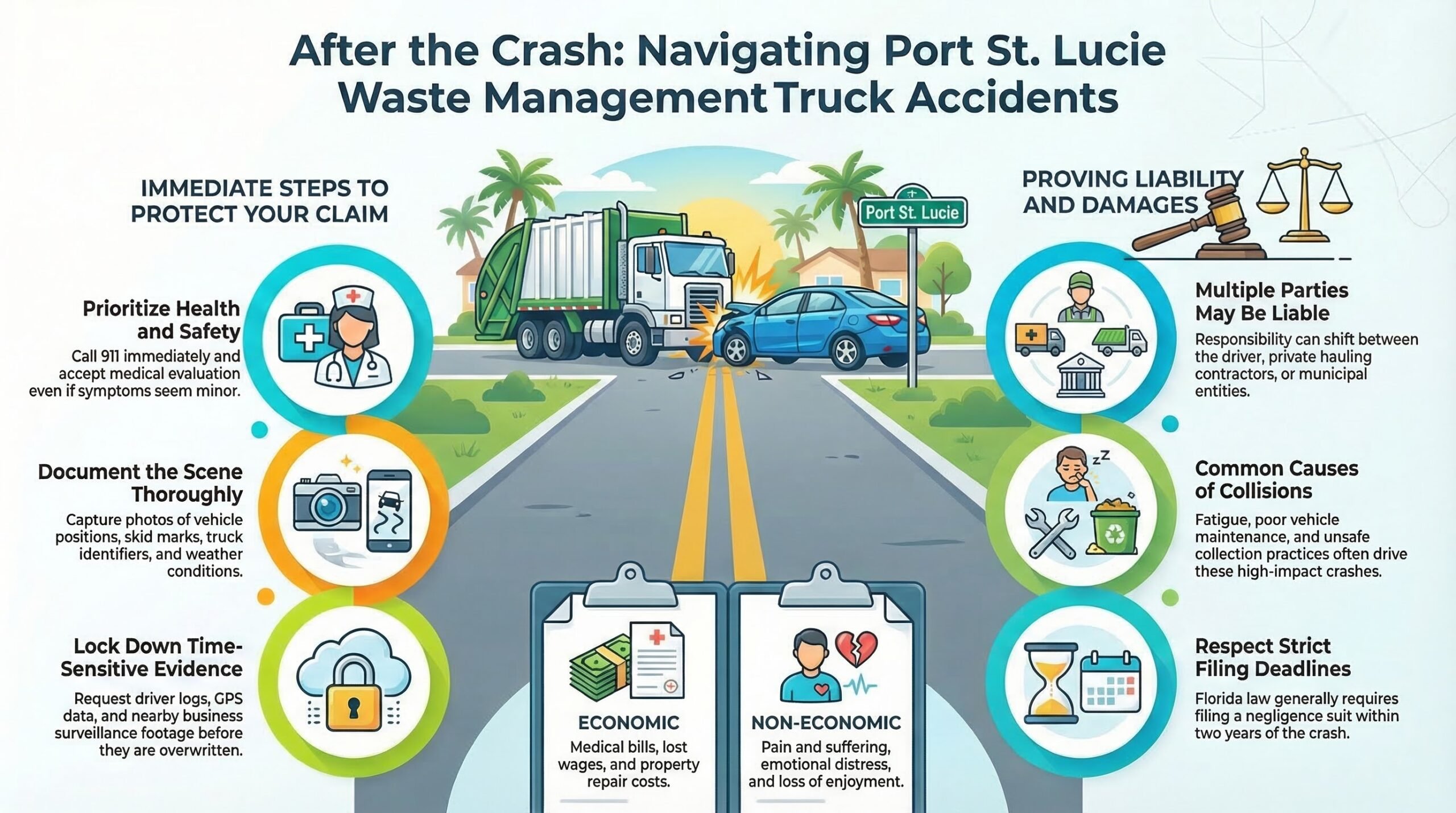
We help Port St. Lucie crash victims pursue claims for waste management truck accidents by moving quickly to preserve evidence, document the scene, and secure driver logs, GPS data, and maintenance records.
At the Law Offices of Anidjar and Levine, we coordinate medical documentation, track deadlines, and handle insurer calls so you don’t feel pressured into recorded statements or broad releases.
We identify every liable party, including contractors and municipal entities when applicable, and seek full compensation for medical costs, lost income, and lasting harm.
Learn more from our Port St. Lucie Truck Accident Lawyer page.
Main Takeaways
- Get medical care and call 911 first; a lawyer can help ensure injuries and treatment are properly documented for your claim.
- Document the crash scene quickly with photos, videos, witnesses, and truck identifiers before vehicles move or evidence disappears.
- A lawyer can demand the preservation of driver logs, GPS data, maintenance records, and onboard vehicle data that are critical in waste truck cases.
- Liability may involve the driver, hauling company, truck owner, or municipal entities; contract terms and immunity deadlines can affect your case.
- Your attorney can handle insurers, calculate full damages, and prepare for trial if settlement offers don’t cover medical bills and losses.
How We Can Help With Your Port St. Lucie Waste Management Truck Accident Claim
After a waste management truck crash in Port St. Lucie, we step in quickly to protect your claim and reduce your stress.
After a waste management truck crash in Port St. Lucie, we act fast to protect your claim and ease the stress.
We listen closely, then gather records, photographs, and statements while details are fresh.
We coordinate with medical providers, document your limitations, and present a clear demand that reflects the full scope of harm.
Through Technology integration, we organize evidence securely, track deadlines, and keep you informed with timely updates, so you’re never left guessing.
We also handle all communications with insurers and opposing counsel, allowing you to focus on recovery and supporting your family and community.
If negotiations stall, we prepare the file as if it will be tried, because readiness strengthens results.
Our Client testimonials reflect consistent service, careful preparation, and respectful advocacy.
We’ll meet you where you are, explain options plainly, and pursue compensation with disciplined purpose.
Understanding Port St. Lucie Waste Management Truck Accident Cases
Although waste management trucks serve a crucial role in Port St. Lucie, collisions involving them raise distinct legal and safety concerns for everyone on the road.
These cases often involve large vehicles operating on neighborhood routes, making frequent stops, and equipped with customized equipment, so the evidence and liability questions can differ from those in ordinary crashes.
We help you understand how trucking regulations, municipal or contractor relationships, and insurance layers may shape a claim, and we focus on practical steps that protect your rights while honoring our community’s needs.
We also consider historical trends in local growth, traffic density, and service expansion, because they can influence risk patterns and documentation practices.
Beyond personal harm, we acknowledge the environmental impact when debris, fuel, or refuse spills, since cleanup, reporting, and related costs may affect damages.
With careful review, we can pursue accountability without undermining indispensable public services.
Common Causes of Port St. Lucie Waste Management Truck Injury Accidents
When we evaluate Port St. Lucie waste management truck accidents, we often find a small set of recurring causes that can help you understand how the crash occurred.
We’ll address driver fatigue and distraction, poor vehicle maintenance, and unsafe collection practices that increase risk in neighborhoods and on busy roads.
We’ll also discuss speeding and reckless driving, since these choices can quickly turn a heavy truck into a severe hazard.
Driver Fatigue And Distraction
Overlooking fatigue and distraction can turn routine waste collection into a serious hazard on Port St. Lucie roads, putting residents, crews, and nearby drivers at risk. When schedules start early, and routes run long, even committed operators can lose focus, drift across lanes, or miss a pedestrian in a crosswalk.
We encourage employers and drivers to prioritize sleep hygiene because consistent rest reduces reaction time failures and judgment errors. We also look closely at in-cab ergonomics, since awkward seating, poor control reach, or constant head-turning can increase strain and invite split-second lapses.
Distraction isn’t limited to phones; it includes route devices, radios, and pressure to hurry.
If a crash occurs, we help you accurately document hours, logs, and attention demands.
Poor Vehicle Maintenance
Because waste management trucks endure constant stop-and-go stress, tight turns, and heavy loads, poor vehicle maintenance can quickly turn minor wear into a major failure on Port St. Lucie roads.
When fleets skip inspections or delay repairs, brake systems can weaken, directional components can loosen, and hydraulic lines can leak, increasing the risk of sudden loss of control.
We look for whether the company followed Maintenance Standards, documented service intervals, and corrected known defects without delay.
We also examine Parts Quality, because inferior or mismatched components may fail under routine operating demands.
If maintenance logs are incomplete, or prior complaints were ignored, we can connect those gaps to the crash and to the harm you’re working to overcome.
Our goal is accountability, so safer service continues for everyone.
Unsafe Collection Practices
Maintenance failures often set the stage for a crash, yet day-to-day collection conduct can create the same level of risk on Port St. Lucie streets.
When crews rush pickup routines, they may leave loaders partially engaged, fail to secure lift arms, or operate with Unguarded mechanisms that expose workers and nearby drivers to sudden movement.
Poor communication between the driver and the collector can lead to unexpected backing, wide turns, or blind-spot conflicts in neighborhoods.
We also see hazards when Overfilled bins spill debris into travel lanes, forcing evasive actions and increasing the chance of falls and struck-by incidents at the curb.
If you’re committed to serving your community, we can help evaluate whether unsafe collection practices contributed to harm and pursue accountability.
Speeding And Reckless Driving
When waste collection routes run behind schedule, some drivers try to make up time by speeding between stops or pushing through turns and lane changes that a heavy truck can’t safely handle.
At higher speeds, braking distance increases, mirrors become less effective, and small directional corrections can trigger wide swings or rollovers near parked cars and pedestrians.
We also see how risk perception can shift when drivers repeat the same route daily and begin to underestimate hazards.
Peer influence may compound the problem, especially if coworkers praise rapid completion or supervisors prioritize numbers over safety.
If you’re harmed, we’ll examine speed data, onboard telematics, and witness accounts to show how reckless choices violated basic duty and led to preventable harm.
Legal Rights of Port St. Lucie Waste Management Truck Accident Victims
Although waste management trucks serve an essential public function, we don’t give up our legal protections when a sanitation vehicle causes a serious crash in Port St. Lucie.
We can pursue compensation when negligent driving, unsafe loading, or poor maintenance harms our neighbors, and we can do so while honoring the community’s need for reliable public services.
Your rights may include claims for medical costs, lost income, pain and suffering, and future care.
We also protect dignity through Privacy protections when records and sensitive details are involved.
If the victim is a sanitation worker, Workers’ remedies may apply, and we can also evaluate third-party liability when another contractor, manufacturer, or motorist contributed.
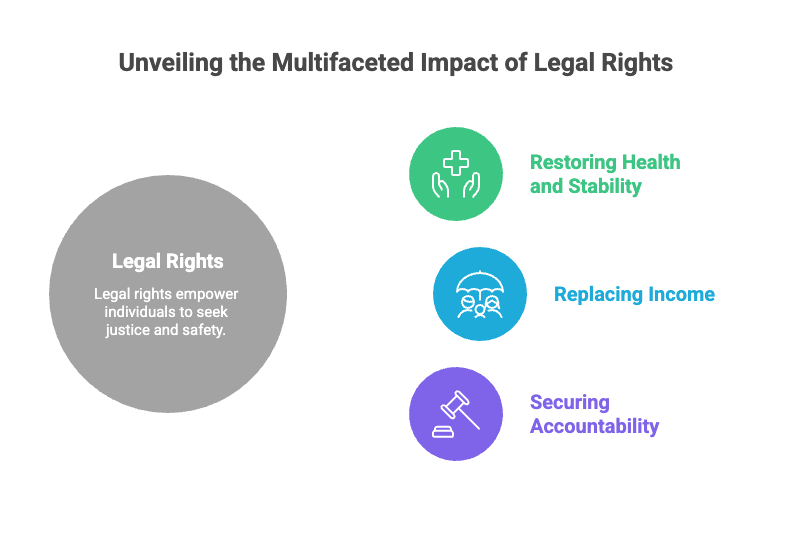
To reflect what’s at stake, we often focus on:
- Restoring health and stability after sudden trauma.
- Replacing income so families can keep serving others.
- Securing accountability so that preventable harm doesn’t repeat.
Steps to Take After a Port St. Lucie Waste Management Truck Accident
After a Port St. Lucie waste management truck accident, we’ll want you to prioritize safety, move to a secure location if you can, and seek prompt medical care, even if symptoms seem minor.
Next, we’ll help you document the scene by taking photos and videos, noting road conditions, and gathering witness contact information while details remain fresh.
Finally, we’ll urge you to report the crash to law enforcement and preserve crucial evidence, including medical records, towing and repair documents, and any communications with insurers or the trucking company.
Ensure Safety And Medical Care


Because the moments immediately following a waste management truck collision can change quickly, we should prioritize safety and medical care before anything else. If we can do so without added risk, we’ll move ourselves and others out of traffic, turn on hazard lights, and watch for fuel leaks, downed lines, or unstable debris.
We should check everyone for urgent symptoms, call 911 promptly, and follow dispatch instructions, even if injuries seem minor.
When trained and it’s safe, we can provide First Aid, control bleeding with clean pressure, and keep an injured person still to reduce harm.
For Injury Prevention, we’ll avoid lifting, twisting, or removing helmets, and we won’t move anyone with neck or back pain unless danger is immediate. We should accept evaluation and keep follow-up care consistent.
Document The Accident Scene
OUR CONSULTATIONSARE FREE
START YOUR FREE CASE REVIEW

Start documenting the scene as soon as we’re safe, since early details often determine how clearly fault and damages can be proven later. We should take clear photos and short videos before vehicles move, capturing the waste management truck, our vehicle, debris, skid marks, and traffic controls.
We’ll note the exact location, lane positions, and nearby landmarks, then record lighting conditions, weather, and road surface issues that could affect visibility or braking.
When photographing, we should use multiple photography angles: wide shots for context, midrange shots for relative spacing, and close-ups for damage, tire marks, and any leaking fluids.
If witnesses are present, we can politely ask them to stay nearby while we finish documenting to respect everyone’s time and safety.
Report And Preserve Evidence
Once we’ve secured the area and addressed immediate medical needs, we need to report the crash promptly and lock down the evidence that will shape any insurance claim or legal case.
We should call 911, cooperate with officers, and request the incident number so records are easy to track.
If safe, we should identify the waste management truck company, note the unit number, and gather names and contact information for witnesses.
We should ask nearby businesses whether Business Surveillance captured the impact or the truck’s approach, and request that they preserve the footage immediately.
We shouldn’t discuss fault, and we should avoid posting details on Social Media, since statements can be misread or used against us.
We should keep damaged property, save receipts, and store medical paperwork in one secure file.
How a Port St. Lucie Waste Management Truck Accident Lawyer Can Help You
Protect your rights early by working with a Port St. Lucie waste management truck accident lawyer who can step in before crucial facts disappear.
Act early with a Port St. Lucie waste management truck accident lawyer before critical evidence and facts disappear.
We coordinate immediate communications with insurers and the trucking company, so you can focus on recovery and supporting those who rely on you.
We also guide fee structuring with transparency and handle expert sourcing to document vehicle dynamics, safety practices, and compliance issues without wasting time.
When we take your case, we pursue accountability with care and purpose, because your well-being affects your family, your work, and the people you serve:
- We preserve your voice, ensuring your statement is accurate and not shaped by pressure.
- We protect your finances, pursuing full losses and preventing unfair claim denials.
- We strengthen your case, gathering records, witnesses, and inspection findings for negotiation or trial.
We’ll meet deadlines, file required notices, and position your claim for fair resolution.
Long-Term Effects of Port St. Lucie Waste Management Truck Accident Injuries
When a Port St. Lucie waste management truck accident causes serious harm, the consequences often extend far beyond the initial medical treatment.
We’ll explain how chronic pain and reduced mobility can limit daily function, how cognitive and emotional impacts may interfere with relationships and decision-making, and why these injuries frequently create lasting financial pressure.
We’ll also outline how long-term work restrictions can affect earnings and career stability, so you can better understand what’s at stake and plan accordingly.
Chronic Pain And Mobility
Although many Port St. Lucie crash survivors expect injuries to recover quickly, waste management truck collisions often leave lasting chronic pain and reduced mobility.
When back, neck, shoulder, or joint damage persists, everyday service to family and community can become harder, and returning to work may require ongoing care.
We help you document pain patterns, treatment compliance, and functional limits, because insurers frequently downplay these long-term consequences.
Effective Pain management may involve coordinated medical visits, therapy, and carefully monitored medications, along with home routines that protect injured areas.
Mobility limitations can also require Adaptive equipment, such as braces, walkers, or vehicle modifications, to restore safe independence.
We’ll work with your providers to connect medical records to real-life restrictions, so your claim reflects your future needs.
Cognitive And Emotional Impacts
Because a waste management truck crash can disrupt the brain and nervous system as much as the body, many Port St. Lucie victims face lasting cognitive changes. We often see Memory impairment that affects attention, organization, and the ability to follow conversations, even when imaging looks normal.
Head trauma, whiplash, and sleep disruption can also slow processing speed, making routine tasks feel unusually demanding.
Emotional consequences may follow, and we shouldn’t dismiss them as “just stress.” Mood disorders, including depression, anxiety, irritability, and post-traumatic symptoms, can alter relationships and undermine confidence.
We encourage you to document changes, share concerns with your care team, and accept support from family, faith, and community. When we recognize these impacts early, we can better advocate for holistic treatment and long-term stability.
Financial And Work Limitations
Even after the visible injuries start to recover, a Port St. Lucie waste management truck crash can restrict your earning power for months or years.
We often see reduced hours, missed promotions, and forced job changes when lifting, driving, or concentration limits are still in effect.
If you serve others through physically demanding work, these limitations can strain your household and your sense of purpose.
We help you document wage loss, diminished capacity, and the real cost of ongoing care, including mileage, equipment, and home adjustments.
We also address tax consequences tied to settlements, disability payments, or withdrawn retirement funds, so you aren’t surprised later. When an employer questions accommodations, we respond promptly and preserve evidence of employer retaliation.
Our goal is to protect your stability while you continue contributing safely.
Proving Liability in Port St. Lucie Waste Management Truck Accident Injury Injury Cases
When a waste management truck collides with a passenger vehicle in Port St. Lucie, proving liability starts with a disciplined review of what happened and who controlled each safety decision.
We’ll help you preserve scene evidence, secure dashcam or nearby video, gather witness statements, and obtain police findings before details fade.
We also analyze driver conduct, route timing, backing procedures, and compliance with training and federal or state safety rules.
Next, we identify every responsible party, including the driver, the hauling company, the vehicle owner, and any municipal entity overseeing collection.
Because municipal immunity may limit certain claims or impose strict notice requirements, we evaluate it early and tailor our approach accordingly.
Careful contract interpretation often reveals whether the city retained control, whether a contractor assumed safety duties, and how responsibility for supervision, maintenance, or staffing shifts.
With clear proof, we can pursue accountability that supports your recovery and helps protect our community.
Dealing With Insurance Companies After a Port St. Lucie Waste Management Truck Accident
After a Port St. Lucie waste management truck accident, insurance adjusters may contact you quickly, ask for recorded statements, or request broad medical authorizations.
We can help you respond with care and integrity, because clear, accurate information protects both your recovery and the people who depend on you.
Clear, accurate communication protects your recovery—and the people counting on you—while we help you respond with care and integrity.
We’ll encourage you to keep all communications in writing when possible, document every call, and avoid speculating about fault or injuries before you’ve received a proper evaluation.
We also look closely at coverage details, including Policy limits that may cap available compensation, and any additional policies that could apply.
If an insurer delays, undervalues, or misrepresents coverage, we’ll identify potential bad-faith conduct and press for fair treatment.
Throughout this stage, we aim to shoulder the burden, so you can focus on recovery and serving your family, workplace, and community.
What to Expect During a Port St. Lucie Waste Management Truck Accident Claim Process
We’ll outline what you can expect in a Port St. Lucie waste management truck accident claim process, starting with the investigation timeline and how we collect and preserve crucial evidence.
We’ll also explain how we handle negotiations with insurers, including the documentation and deadlines that can shape your leverage.
Finally, we’ll walk through the settlement path versus preparing for trial, so you understand the pivotal decision points and what each route requires.
Claim Investigation Timeline
In the days immediately following a Port St. Lucie crash, we outline the claim’s timeline so you can focus on recovery and caring for those who rely on you.
Within the first one to two weeks, we notify insurers, confirm responsible parties, and explain expected response windows for initial acknowledgments and adjuster contact.
Over the next several weeks, the investigation phase typically includes interviews, claim reviews, and medical status updates, which help us forecast value and next steps without rushing your treatment.
At pivotal case milestones, we report progress, identify delays, and press for timely decisions.
If negotiations stall, we prepare for escalation, including a formal demand and, when necessary, filing suit before deadlines.
Throughout, we stay accessible and accountable to your goals.
Evidence Collection And Preservation
Often, the strength of a Port St. Lucie waste management truck accident claim depends on how quickly we secure and preserve proof.
We’ll help you document the scene with clear photos, using proper photographic lighting when conditions are dim, and we’ll gather video from nearby businesses or traffic cameras before it’s overwritten.
We’ll identify witnesses, record timely statements, and preserve your medical records and treatment recommendations so your care remains the priority.
We’ll also request vehicle data, driver logs, maintenance histories, and route details, then validate locations through GPS mapping to confirm timing and travel patterns.
When possible, we’ll arrange inspections of the truck and any involved equipment, and we’ll issue preservation notices so essential materials aren’t lost or altered.
Negotiations With Insurers
Managing insurer negotiations after a Port St. Lucie waste management truck accident requires discipline and a service-first mindset.
We’ll handle communications so you can focus on recovery and caring for those who rely on you.
Insurers often contact you early, request recorded statements, and seek broad medical authorizations; we’ll limit disclosures to what’s necessary and accurate.
We explain Insurer Incentives, including cost-containment and claim-closure metrics, so you understand why initial offers may undervalue the harm.
We also anticipate Anchoring Techniques, where an adjuster starts with a low number to shape expectations, and we respond with documented damages, clear timelines, and consistent messaging.
Throughout, we track deadlines, confirm every position in writing, and protect your credibility.
Settlement Or Trial Path
Once we’ve set firm boundaries with the insurance company and backed every demand with documentation, we’ll map the claim’s path toward settlement or trial based on evidence, timing, and leverage.
We’ll explain how liability, medical progress, and damages shape value, then compare the risks and benefits of resolving early versus filing suit.
If settlement talks stall, we’ll move decisively into litigation, preserve testimony, and prepare you for discovery, mediation, and, if needed, a jury trial.
Throughout, we’ll keep your goals centered on safety and service, not conflict for its own sake.
We’ll also manage a prudent media strategy when attention arises, mindful of community perceptions and your privacy.
You’ll receive clear checkpoints, timelines, and decision points at each stage.


Compensation for Port St. Lucie Waste Management Truck Accident Damages
Accountability shapes the compensation we pursue after a Port St. Lucie waste management truck crash, and we align every demand with what you need to keep serving your family and community.
Accountability drives every compensation demand after a Port St. Lucie waste management truck crash—focused on what your family and community need.
We gather records, consult qualified experts, and document losses so insurers can’t minimize the harm, then we present a clear, evidence-driven claim that supports full payment.
We also help you choose a payment structure that protects long-term stability.
In some cases, Structured Settlements provide predictable, scheduled funds for ongoing care, household support, or future needs, while a lump sum may fit urgent obligations.
We review the Tax Implications of each option, coordinate with financial and tax professionals when appropriate, and keep you informed before you sign anything.
Throughout negotiations, we seek a timely resolution without sacrificing value, and we stay ready to escalate when the carrier delays, denies, or underpays.
Economic vs Non-Economic Damages in Port St. Lucie Waste Management Truck Accident Cases
We’ll separate your potential recovery into economic damages, such as medical bills, lost wages, and other measurable costs, and non-economic damages, such as pain and suffering, emotional distress, and loss of enjoyment of life.
We’ll explain how each category applies in Port St. Lucie waste management truck accident cases, and why the distinction matters when we pursue full compensation.
We’ll also cover how we prove the amount of your damages using records, expert support when needed, and clear documentation that ties your losses to the crash.
Economic Damages Overview
Although the aftermath of a Port St. Lucie waste management truck crash can feel overwhelming, we can help you document and pursue economic damages with disciplined care. Economic damages are the measurable financial losses tied to the collision, and they often form the backbone of a strong claim.
We work with you to gather medical bills, rehabilitation costs, prescription expenses, and the full value of future treatment needs. We also calculate lost wages, reduced earning capacity, and employment benefits you can’t recover while serving your family and community.
Property damage, towing, and replacement transportation costs may also apply. We address Medical Liens early, then evaluate Tax Implications so your recovery reflects real, net losses.
Our goal is accurate proof and fair reimbursement.
Non-Economic Damages Overview
When a Port St. Lucie waste management truck crash upends your life, non-economic damages address the human cost that invoices can’t capture.
We focus on pain and suffering, emotional distress, loss of enjoyment of life, disability, disfigurement, and the strain on family relationships, because these harms affect how you serve others and how you live each day.
Unlike economic damages tied to wages or medical bills, non-economic losses reflect quality of life and dignity.
In rare situations, punitive damages may also apply, not to compensate you, but to discourage reckless conduct that endangers the community.
We also consider jury perceptions, since fairness often turns on how clearly the injury’s day-to-day impact is understood and respected in court.
Proving Damage Amounts
Non-economic damages can describe the depth of what you’ve lost, but the case still turns on proof that supports a fair dollar amount. We help you connect your day-to-day hardships to clear evidence, so the insurer and jury understand the real cost of this crash.
For economic damages, we gather Damage Documentation that shows every measurable loss, including medical bills, future treatment plans, lost wages, reduced earning capacity, and vehicle or property repair estimates. We organize records by date and provider, then tie each charge to the collision.
For non-economic damages, we use journals, therapy notes, and testimony from family and coworkers to show how pain and limitations changed your life. When needed, we rely on Expert Valuation from medical and financial professionals to support long-term projections and credibility.
When a Port St. Lucie Waste Management Truck Accident Case Goes to Trial vs Settlement
If we build a Port St. Lucie waste management truck accident case with strong records and credible witnesses, we can often position it for settlement. Settlement may benefit you by providing funds more quickly for medical care, supporting your family, and reducing the strain of prolonged litigation.
We still negotiate from strength, using a disciplined media strategy and targeted expert outreach to validate liability, damages, and safety failures without distracting from the facts.
A case tends to go to trial when the insurer denies fault, downplays your injuries, or refuses a reasonable number after meaningful negotiations. At trial, we present a clear story of preventable harm, supported by crash reconstruction, medical testimony, and company policy analysis. We also prepare you for testimony and the demands of a public courtroom.
While a trial adds risk and time, it can compel full accountability when fair settlement efforts do not.
The Statute of Limitations for Port St. Lucie Waste Management Truck Accident Case
Because Florida imposes strict filing deadlines, the statute of limitations can determine whether a Port St. Lucie waste management truck accident claim is heard on its substance or dismissed without relief.
In most negligence cases, Florida generally requires suit within two years of the crash, and that clock can run quickly while medical care, vehicle repairs, and family responsibilities compete for attention. We encourage you to treat the deadline as a community responsibility, because timely action preserves evidence, promotes accountability, and supports safer roadways for everyone.
Still, some situations allow additional time. Courts may apply tolling exceptions when a defendant can’t be located, a party is legally incapacitated, or other qualifying circumstances pause the running of time.
The discovery rule may also affect when the period begins, particularly if an injury or crucial cause isn’t reasonably identifiable right away. Since these issues are fact-specific, we should document dates carefully and proceed with urgency.
When to Contact a Port St. Lucie Waste Management Truck Accident Lawyer After a Port St. Lucie Waste Management Truck Accident
Although it may feel premature to call a lawyer while you’re still dealing with medical appointments and vehicle repairs, we recommend contacting a Port St. Lucie Waste Management truck accident lawyer as soon as your immediate safety needs are stable.
Early guidance helps us preserve details that support fair outcomes, and it allows you to focus on recovering and caring for others who rely on you.
An Initial Consultation can also clarify what information to gather, such as photographs, witness names, and medical records.
We also encourage you to reach out when certain Milestone Triggers occur: a new diagnosis, worsening symptoms, missed work, a request for a recorded statement, or a settlement offer that arrives before your treatment plan is clear.
If a deadline is approaching or you’re unsure which insurer to speak with, prompt contact can prevent avoidable mistakes and keep your claim organized, accurate, and timely.
Why You Need an Experienced Port St. Lucie Waste Management Truck Accident Lawyer
When a Waste Management truck collision upends your routine, we rely on experienced legal representation to secure evidence quickly and position your claim for full value.
We act before time-sensitive materials disappear, including driver logs, route data, maintenance records, onboard video, and witness statements. By moving fast, we help you protect the truth and the people who depend on your steady support.
We also know how to establish fault in intricate commercial cases, where multiple parties may share responsibility, from the driver to contractors and corporate policies.
Our Established Credibility with insurers and opposing counsel can discourage delay tactics and encourage meaningful settlement discussions. If litigation becomes necessary, we present clear damages evidence, connect medical care to the crash, and demand accountability without distraction. Throughout the process, we prioritize Stress Reduction, handling calls, deadlines, and negotiations so you can focus on recovering and serving your family and community.
How to Choose the Right Port St. Lucie Waste Management Truck Accident Lawyer for Your Case
How do we choose the right Port St. Lucie waste management truck accident lawyer for our case when our priority is accountability and community safety?
We start by confirming focused experience with commercial trucking and municipal waste haulers, including knowledge of driver logs, maintenance records, and contractor relationships.
We also look for a lawyer who moves quickly to preserve evidence, coordinate medical documentation, and communicate clearly, so we can stay informed and serve our families well.
Next, we evaluate integrity and fit.
We review fee structures in writing, compare contingency terms, and ask what costs may arise during investigation or litigation. We study client testimonials for patterns, such as responsiveness, respect, and consistent results, rather than isolated praise.
Finally, we choose counsel who explains options plainly, sets realistic expectations, and commits to pursuing full compensation without compromising professional ethics.
About The Law Offices of Anidjar & Levine
Selecting the right lawyer starts with knowing what a specific firm brings to the table, and that’s where The Law Offices of Anidjar & Levine come in.
We focus on helping people rebuild after serious truck crashes, and we do it with disciplined case preparation and steady client support. You merit clear guidance, timely communication, and a team that treats your recovery as the priority.
Our Firm History reflects years of representing injured Floridians with a service-first mindset, including those harmed in commercial and waste management truck collisions.
We investigate promptly, preserve crucial evidence, and coordinate with medical providers so you can focus on recovery.
We also handle insurer and carrier communications, pursue full and fair compensation, and prepare each case as if it will be tried.
Through Community Outreach, we support local efforts that strengthen safety and resilience in Port St. Lucie, because serving others extends beyond the courtroom.
Frequently Asked Questions
What if the Waste Management Truck Were Privately Owned, Not City-Operated?
If the waste management truck was privately owned, we would usually pursue the driver and company through their insurance coverage rather than a city claims process.
We’ll document ownership, employment status, and maintenance records to establish corporate liability and any negligent hiring or supervision.
We’ll also identify all applicable policies, including commercial auto and umbrella coverage, so you can focus on supporting others while we protect your rights and recovery.
Can I Request the Truck’s Route Logs or GPS Tracking Data?
Yes, we can request the truck’s route logs and GPS tracking data, and we should act quickly.
We’ll send a Data Preservation notice to the owner and any telematics vendor, and then follow the proper Access Protocols in response to insurance demands, subpoenas, or court orders, if needed.
We’ll also ask for driver hours, dispatch records, and maintenance logs, so we can serve others by establishing accountability and supporting a fair outcome.
How Do Garbage Truck Accidents Affect Rideshare Passengers’ or Pedestrians’ Claims?
Garbage truck accidents can strengthen rideshare passengers’ or pedestrians’ claims because you’re usually less at fault in the crash, and we can pursue multiple liable parties.
Comparative negligence may still reduce recovery if your actions contributed, such as crossing unsafely or ignoring warnings.
For rideshare passengers, insurance stacking may increase available coverage by combining the driver’s policy, the rideshare company’s coverage, and the truck operator’s insurance, when allowed and applicable.
Will My Immigration Status Affect My Ability to File a Claim?
Your immigration status usually won’t prevent you from filing a personal injury claim, and we can still pursue compensation for medical costs, lost income, and pain.
Courts generally focus on liability and damages, not citizenship, although Undocumented Filers may face added scrutiny during discovery.
We work to limit irrelevant questions and protect privacy, reducing Deportation Risk. When we serve others, we document injuries carefully and communicate strategically throughout.
Can I Recover Damages if My Injury Symptoms Appeared Weeks Later?
Yes, we can often recover damages even when symptoms appear weeks later, as delayed onset is common in some injuries.
We’ll document your medical timeline, connect it to the incident, and use expert testimony to explain causation and rule out unrelated causes.
We must also act before the statute of limitations expires, since delays can weaken evidence and credibility.
Let’s gather records, witness details, and follow-up evaluations promptly.
—————————
If you’ve been hurt in a Port St. Lucie waste management truck accident, Law Offices of Anidjar and Levine can help you pursue compensation with focused, strategic representation.
We’ll investigate the crash, preserve crucial evidence, identify all liable parties, and handle insurers so you’re not pressured into an unfair settlement.
We recognize these cases involve intricate regulations and serious injuries, and we’re prepared to act quickly.
Contact a Port St. Lucie Truck Accident Lawyer as soon as possible, so we can protect your rights and strengthen your claim.