

The Law Offices of Anidjar and Levine helps people injured in Gainesville waste management truck crashes act quickly, preserve essential evidence, and build strong claims under Florida law. Our team can secure driver logs, maintenance records, video footage, witness statements, and medical documentation while identifying all potentially liable parties, including the driver, company, contractor, or manufacturer.
We also pursue full compensation for medical bills, lost income, future care, and pain and suffering.
The information below explains the process, your options, and how a Gainesville Truck Accident Lawyer may help.
Main Takeaways
- Seek immediate medical treatment, follow all care recommendations, and document injuries to create strong records after a Gainesville waste management truck accident.
- Preserve evidence quickly by photographing the scene, vehicle damage, truck markings, road conditions, debris, injuries, and collecting witness names and crash report details.
- A Gainesville waste management truck accident lawyer can secure driver logs, maintenance files, dispatch records, video footage, and onboard data before they disappear.
- These cases may involve multiple liable parties, including the driver, waste company, contractors, insurers, or manufacturers, and may require detailed investigation and fault apportionment.
- A lawyer can protect your rights, handle insurers, calculate full damages, and pursue compensation through settlement negotiations or litigation if necessary.
How We Can Help With Your Gainesville Waste Management Truck Accident Injury Claim
Protecting your interests from the outset, we help build a strong Gainesville waste management truck accident injury claim by investigating the collision, preserving vital evidence, and identifying every liable party. We coordinate records requests, interview witnesses, review vehicle data, and document your losses so your claim reflects the full impact on your health, work, and family.
We also handle insurer communications, prepare persuasive demand materials, and position your case for effective negotiation or, if necessary, trial. Throughout the process, we keep you informed, answer questions promptly, and help you make decisions that align with your values and goals. Our work reflects a broader commitment to service, including Community outreach that promotes roadway safety and Policy reform that encourages responsible corporate practices.
By combining careful legal preparation with a service-minded approach, we pursue accountability and the financial recovery you need to move forward with confidence after a serious truck collision, support others, and rebuild.
Understanding Gainesville Waste Management Truck Accident Injury Cases


When a Gainesville waste management truck accident causes serious injuries, we need to examine more than the immediate crash scene to understand how liability and damages may affect your claim. These cases often involve public contractors, private companies, insurers, and layered legal duties that require careful review.
OUR CONSULTATIONSARE FREE
START YOUR FREE CASE REVIEW

We look at employment records, vehicle maintenance history, dispatch logs, route assignments, and applicable municipal regulations to determine who may be legally responsible. We also assess medical evidence, lost income, future care needs, and the broader effect your injuries have on your family and ability to serve others in daily life. In some matters, waste stream analysis helps clarify the truck’s operational purpose, cargo handling issues, and contractual responsibilities at the time of the collision.
By organizing these facts early, we can build a clear, credible claim that reflects the full extent of your losses and protects your right to meaningful recovery under Florida law.
Common Causes of Gainesville Waste Management Truck Accident Injuries
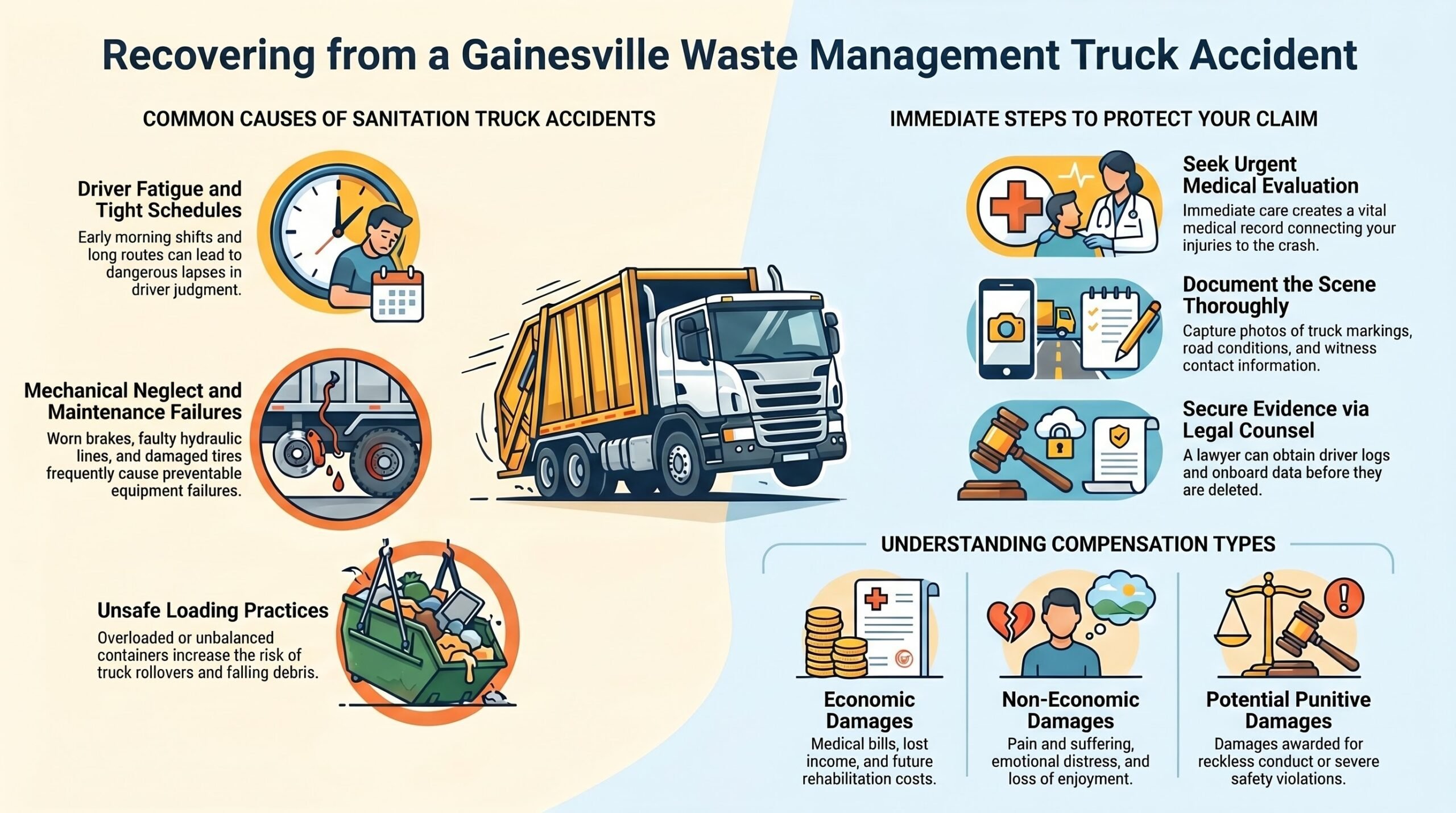
We often see waste management truck accidents caused by preventable failures that put you at serious risk on Gainesville roads. Driver fatigue, improper truck maintenance, and distracted driving can quickly lead to devastating collisions when operators and companies ignore basic safety standards. We also know that unsafe loading practices can shift weight, reduce vehicle control, and increase the likelihood of severe injuries.
Driver Fatigue Risks


Although waste management companies rely on tight schedules to keep routes moving, driver fatigue can quietly undermine judgment, slow reaction times, and increase the likelihood of serious collisions. When drivers begin work before dawn, circadian disruption can impair alertness, even if they believe they can continue to drive safely. Long routes, repeated stops, and physically demanding tasks also drain attention over time.
We understand that sanitation work serves neighborhoods and protects public health, yet that mission does not excuse unsafe fatigue practices. Microsleep episodes can occur without warning, causing a driver to miss traffic signals, pedestrians, cyclists, or sudden changes in traffic flow. When we investigate these crashes, we look for scheduling pressures, skipped breaks, excessive hours, and warning signs that a company overlooked. Holding negligent parties accountable helps protect both workers and the public.
Improper Truck Maintenance
Mechanical neglect presents another serious risk in waste management truck crashes, because these vehicles endure constant stop-and-go operation, heavy loads, and repeated hydraulic use throughout the day. When companies ignore worn brakes, damaged tires, faulty lights, or leaking hydraulic lines, they place workers, motorists, and pedestrians in danger.
We know that proper maintenance schedules and strong inspection protocols help prevent avoidable failures on Gainesville routes. If a truck’s guidance system fails or its compactor malfunctions, the results can be devastating for families and public servants alike. We believe organizations that serve the community must also protect it by repairing defects promptly and removing unsafe vehicles from service. When maintenance records reveal skipped service, delayed repairs, or overlooked warning signs, they often provide important evidence of negligence after a serious collision and resulting injuries.
Distracted Driving Hazards
Diverting attention for even a few seconds can turn a routine waste collection stop into a serious crash. We often see drivers face constant demands, including route changes, mirrors, pedestrians, and tight neighborhood streets, yet any lapse can harm the people they serve.
When a waste management driver glances at a device, reaches for controls, or loses focus in conversation, reaction time drops, and danger rises. Cellphone bans help, but they do not eliminate cognitive distraction, which can persist long after a call ends. We encourage companies to train drivers, enforce clear safety rules, and reduce in-cab interruptions. If you were injured, we can examine dispatch practices, onboard technology, and driver conduct to determine whether distraction contributed to the collision and whether the company failed its duty to protect the community.
Unsafe Loading Practices
When crews load waste unevenly, exceed weight limits, or fail to secure loose materials, they can make a garbage truck dangerously unstable and increase the risk of rollovers, spills, and sudden shifting during transit. It’s evident that unsafe loading practices can injure drivers, sanitation workers, nearby motorists, cyclists, and pedestrians who rely on careful operations in our communities every day.
Unsecured loads may fall into traffic, while container shifting can throw a truck off balance during turns, braking, or lane changes. We often find that rushed schedules, poor training, and skipped inspections contribute to these preventable hazards. If you were hurt because a waste management company ignored safe loading standards, we can investigate records, identify violations, and pursue accountability. Our goal is to help you protect your recovery and support safer service for everyone.
Legal Rights of Gainesville Waste Management Truck Accident Injury Victims
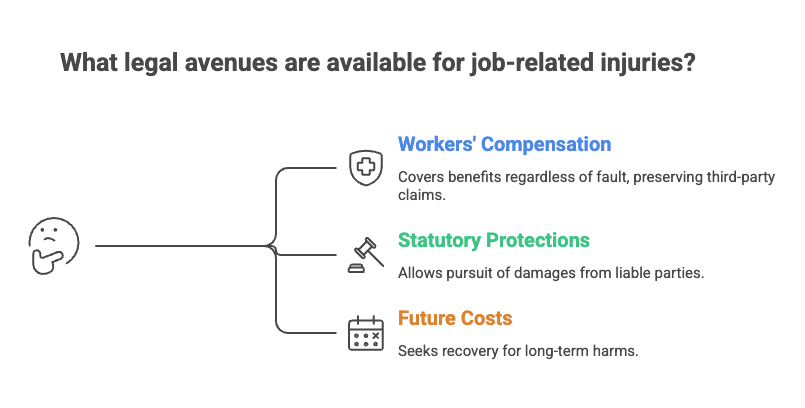
Although waste management truck collisions often involve complex facts and multiple parties, injured victims in Gainesville have clear legal rights under Florida law, including the right to seek compensation for medical expenses, lost income, pain and suffering, and other losses caused by another party’s negligence.
We help readers understand several important protections:
- Workers’ compensation may cover benefits for sanitation employees who suffer job-related injuries, regardless of fault, while preserving potential claims against negligent third parties.
- Statutory protections under Florida law allow injured people to pursue damages from liable drivers, trucking companies, contractors, or manufacturers whose misconduct contributed to the crash.
- Victims may also seek recovery for future treatment costs, diminished earning capacity, disability, and other lasting harms that affect family responsibilities and service to others.
Steps to Take After a Gainesville Waste Management Truck Accident Injury
After a Gainesville waste management truck accident injury, we should act quickly to protect both your health and your legal claim. We begin by seeking immediate medical care and documenting the accident scene with photos, witness information, and any other available evidence. We should also contact a truck accident lawyer as soon as possible, because early legal guidance can help preserve essential facts and strengthen your case.
Seek Immediate Medical Care
Seeking prompt medical attention protects both your health and your legal claim following a Gainesville waste management truck accident. Even if you feel stable, I should encourage an urgent evaluation because some injuries may not appear for hours or days. Immediate treatment creates a clear medical record, connects your injuries to the collision, and helps physicians identify internal trauma, concussions, or soft tissue damage before complications worsen.
I should also follow every recommendation for testing, medication, therapy, and follow-up care. Consistent treatment shows that you take recovery seriously and that you are doing your part to recover responsibly. When we serve others, we’re aware that our well-being affects our family, coworkers, and community. By acting quickly and carefully, we protect our ability to recover physically while preserving important evidence of the harm we suffered.
Document The Accident Scene
Document the scene as thoroughly as we can, because early evidence often determines how clearly fault and damages can be proven. If we are physically able, we should photograph evidence from multiple angles, including vehicle positions, debris, road conditions, traffic signals, and visible injuries. We should also measure skid marks, note the weather and lighting, and record the truck’s company markings, license plate, and identifying numbers.
When others are hurt, careful documentation can also protect their ability to recover and move forward. We should gather names and contact information for witnesses, ask responding officers how to obtain the crash report, and preserve damaged clothing or personal items. If conditions change quickly, our notes and images may become the most reliable record of what happened and how the collision affected everyone involved later.
Contact A Truck Accident Lawyer
The evidence we retain at the scene often becomes far more effective when we place it in the hands of a truck accident lawyer as soon as possible. When we contact counsel promptly, we strengthen our ability to protect records, identify witnesses, and prevent important facts from disappearing. Early action also helps us serve our families and communities by pursuing accountability with care and discipline.
During a legal consultation, we can review injuries, insurance issues, and potential claims with clarity. We should ask about experience with commercial truck cases, investigation methods, and communication practices. It is also wise to discuss fee structures at the outset, so we grasp costs and responsibilities before moving forward. With informed guidance, we can make sound decisions and protect the path toward recovery.
How a Gainesville Waste Management Truck Accident Lawyer Can Help You
Protecting your rights starts with understanding how legal counsel can shape the outcome of a waste management truck accident claim. We help you act decisively, preserve evidence, and pursue accountability when a sanitation company, driver, or insurer resists responsibility. Our role is to serve your interests while keeping the process clear, organized, and focused on recovery. We also examine whether Safety protocols were ignored and whether failures in Community outreach affected roadway awareness.
- We investigate the crash thoroughly, securing reports, video, driver logs, maintenance records, and witness statements before crucial evidence disappears.
- We identify every liable party, analyze insurance coverage, and calculate damages so your claim reflects the full extent of your financial losses.
- We manage negotiations and, if necessary, prepare for trial, presenting a strong case that supports justice for you and protection for others in Gainesville.
With experienced guidance, we can help you make informed decisions and confidently pursue fair compensation.
Long-Term Effects of Gainesville Waste Management Truck Accident Injuries
It is known that injuries from a Gainesville waste management truck accident can affect far more than your immediate recovery. You may face chronic physical limitations and lasting emotional trauma that interfere with your work, independence, and daily routine. We also recognize that ongoing financial burdens, including medical care and lost income, can continue long after the crash itself.
Chronic Physical Limitations
Living with chronic physical limitations after a Gainesville waste management truck accident can alter nearly every part of daily life, from basic mobility to a person’s ability to work and care for a household. We often see survivors face chronic pain, reduced strength, and lasting restrictions that make ordinary tasks harder than they should be.
When injuries affect the spine, joints, or nerves, you may need Mobility aids, home modifications, ongoing therapy, and regular medical care. It is clear these limitations can interfere with serving your family, supporting your community, and maintaining financial stability. Some people can’t return to their former jobs, while others must accept fewer hours or lighter duties. Our role is to help you pursue compensation that reflects long-term physical losses, future treatment needs, and the practical support your recovery requires.
Lasting Emotional Trauma
Uncertainty often lingers long after the physical injuries from a Gainesville waste management truck accident begin to recover. We often see lasting emotional trauma affect how you sleep, relate to others, and carry out daily responsibilities. Even when you want to keep serving your family and community, anxiety can interrupt concentration and confidence.
We also know these injuries may appear as emotional numbness, irritability, hypervigilance, or intrusive memories that return without warning. You may avoid traffic, loud noises, or sanitation trucks because your mind stays on alert. Over time, this strain can isolate you from the people who depend on your care and support. We believe your emotional recovery matters as much as your physical recuperation, and we encourage compassionate treatment, consistent documentation, and patient advocacy so your full suffering receives proper recognition.
Ongoing Financial Burdens
Although medical treatment may end, the financial impact of a Gainesville waste management truck accident often continues for months or years. We often see families facing reduced income, costly rehabilitation, home modifications, transportation needs, and other ongoing expenses that strain daily life and future goals.
As we help you evaluate these losses, we also consider the broader effects on those you support. A serious injury can limit your ability to work, care for loved ones, or serve your community in the ways that matter most. Careful financial planning becomes crucial when disabilities, follow-up care, and adaptive equipment create lasting obligations. We work to identify current and projected costs so you can pursue compensation that protects your stability, preserves your ability to help others, and supports a more secure recovery over time.
Proving Liability in Gainesville Waste Management Truck Accident Injury Cases
Because waste management truck collisions often involve multiple parties and layers of responsibility, we must build liability claims with clear evidence that identifies who caused the crash and how their conduct led to the injury. We examine driver logs, maintenance records, onboard data, route schedules, training files, and witness statements to determine whether negligence was committed by the driver, the trucking company, a contractor, or a vehicle manufacturer.
We also focus on Liability apportionment, because fault may rest with more than one party. Our task is to show how each act or omission contributed to the collision and your losses. Photographs, surveillance footage, inspection reports, and medical records help connect the crash to the harm you now face. In many cases, Expert testimony strengthens the claim by explaining braking distance, visibility, loading practices, mechanical failure, or industry safety standards. By presenting a clear, organized case, we help you pursue accountability in a way that honors your recovery and protects our community.
Dealing With Insurance Companies After a Gainesville Waste Management Truck Accident Injury
Sorting through insurance issues after a Gainesville waste management truck accident can quickly become difficult, especially when several policies, adjusters, and corporate interests are involved. We help you stay focused on recovery while we communicate carefully, protect your statements, and keep damaging assumptions from shaping the record.
Insurance carriers often move quickly to limit exposure, not to fully understand how the collision has affected your life and your ability to serve others. We review coverage, identify all available sources of compensation, and handle policy negotiations with a clear strategy. We also monitor claim timelines, preserve supporting documentation, and respond to requests promptly and accurately. If an insurer questions fault, injuries, or the necessity of treatment, we address those issues directly with evidence and disciplined advocacy.
By managing these communications with professionalism and persistence, we help reduce stress, avoid preventable mistakes, and position your matter for a fair insurance response under Florida law.
What to Expect During a Gainesville Waste Management Truck Accident Injury Claim Process
As we guide you through a Gainesville waste management truck accident injury claim, we’ll explain how the investigation begins, what evidence matters, and how liability is established. We’ll also show you why thorough medical treatment documentation strengthens your claim and supports a clear assessment of your damages. From settlement negotiations to possible litigation, we’ll help you understand what to expect at each stage of the process.
Claim Investigation Steps
When we begin a Gainesville waste management truck accident injury claim, the investigation usually starts with a careful review of the crash report, scene evidence, vehicle damage, medical records, and any available camera footage. From there, we organize facts, preserve important information, and identify records that may clarify how the collision affected your health, work, and daily responsibilities.
We may also consult forensic reconstruction professionals and conduct witness interviews to better understand timing, visibility, roadway conditions, and vehicle movements. As we guide you through this process, we communicate clearly, answer questions promptly, and help you prepare for insurer requests and medical documentation needs. Our goal is to build a well-supported claim that reflects the full impact of the accident, while treating you with dignity, respect, and a genuine commitment to recovery.
Evidence And Liability
Because liability in a Gainesville waste management truck accident claim often depends on specific operational details, we focus early on collecting evidence that shows who acted negligently and how that conduct caused your injuries. We seek dispatch records, route logs, onboard data, maintenance files, and company policies to identify whether the driver, employer, contractor, or another party failed in a duty of care.
We also preserve video footage before it is erased, inspect the truck and scene, and compare physical evidence with witness accounts. Through expert interviews, we evaluate loading practices, braking distances, blind-spot risks, and compliance with safety rules. This careful approach helps us build a claim that honors the harm you suffered while promoting accountability and safer practices for everyone who shares Gainesville roads, neighborhoods, and service routes each day.
Medical Treatment Documentation
After we identify the evidence that points to fault, we turn to medical treatment documentation to connect your injuries to the Gainesville waste management truck accident and show how those injuries have affected your life.
We help you gather records from emergency care, physicians, specialists, therapists, and pharmacies. Clear treatment timelines show when symptoms began, how providers responded, and whether your condition improved or worsened. We also organize diagnostic imaging, work restrictions, referrals, and prescribed medications so the full picture remains consistent. Medical receipts matter because they confirm out-of-pocket costs and support the practical burden placed on you and your family.
When we present complete, accurate documentation, we help decision-makers understand your needs, your limitations, and the care required to restore your health and continue serving those who depend on you.
Settlement And Litigation
Although many Gainesville waste management truck accident claims resolve through settlement, we prepare every case as though it may proceed to litigation to protect your position at each stage. We begin by evaluating damages, preserving evidence, and building a legal strategy that reflects your medical needs, lost income, and long-term recovery goals.
As the claim develops, we communicate with insurers, present supporting records, and pursue settlement negotiations from a position of preparation and credibility. If the opposing side refuses to act fairly, we can file suit, manage discovery, take depositions, and present your case in court. Throughout this process, we keep you informed, answer questions promptly, and help you make decisions that honor both your interests and your desire to provide for those who depend on your care daily.
Compensation for Gainesville Waste Management Truck Accident Injury Damages
Accountability drives every claim for compensation in a Gainesville waste management truck accident case, and we work to recover damages that reflect the full extent of a victim’s losses. When a sanitation company, driver, or contractor causes harm, we pursue every responsible party and build a claim grounded in evidence, credibility, and service to your family’s future.
We gather medical records, employment documentation, expert opinions, and scene evidence to prove the impact of the collision on your life. We also address pain valuation with care, because lasting injuries often affect daily routines, relationships, and the ability to serve others. In cases involving reckless conduct, falsified logs, ignored maintenance, or severe safety violations, we may seek punitive damages to promote accountability and deter similar misconduct.
Our goal is to present a complete demand that honors the seriousness of your injuries, protects your financial stability, and supports your recovery with the respect and diligence you merit under Florida law.
Economic vs Non-Economic Damages in Gainesville Waste Management Truck Accident Cases
We help you distinguish between economic damages, such as medical bills, lost income, and future care costs, and non-economic damages, including pain, suffering, and loss of enjoyment of life. We also explain how these categories work in combination to reflect the full impact of a Gainesville waste management truck accident on your finances and daily life. As we assess your claim, we focus on providing full compensation with clear evidence, credible documentation, and a careful account of every loss.
Economic Damage Categories
When a Gainesville waste management truck accident causes serious injury, economic damages typically form the foundation of a claim because they reflect measurable financial losses. We help you identify every documented cost associated with the collision, including emergency care, hospitalization, surgery, rehabilitation, prescriptions, and future medical treatment, all supported by professional opinions.
We also examine income-related harm with care, such as lost wages, reduced earning capacity, missed business opportunities, and necessary vocational retraining. If the crash damaged your vehicle or other belongings, property damage may also be recoverable through repair estimates or replacement values. In some cases, transportation expenses, home modifications, and paid household assistance qualify as economic losses when injuries limit daily function. By organizing records, invoices, and expert evaluations, we build a clear picture of the damage that supports meaningful recovery and responsible planning.
Non-Economic Losses Explained
Although economic damages cover the direct financial cost of a Gainesville waste management truck accident, non-economic damages address the personal losses that don’t appear on bills or receipts. These damages recognize how an injury can alter daily life, relationships, and a person’s sense of well-being.
When we evaluate non-economic harm, we consider pain and suffering, emotional distress, physical limitations, disfigurement, and the loss of enjoyment that follows a serious collision. We also consider loss of consortium, which reflects the harm an injury can cause to a marital relationship and shared family life. While these losses are harder to measure than medical expenses or lost wages, they remain deeply real. By acknowledging them, we honor the full human impact of the accident and help guarantee your recovery reflects more than financial hardship alone.
Proving Full Compensation
Because insurance carriers often try to isolate losses into narrow categories, proving full compensation in a Gainesville waste management truck accident case requires us to present a complete, well-supported account of both economic and non-economic damages.
We document medical bills, rehabilitation costs, lost wages, reduced earning capacity, and property damage, then connect those figures to the collision through records, timelines, and expert testimony. We also show how pain, emotional distress, disability, and loss of enjoyment affect your daily life, relationships, and ability to serve others. Strong witness credibility matters because consistent statements from you, family members, coworkers, and treating providers help confirm the full impact of the harm.
When we combine clear financial proof with persuasive human evidence, we put your claim in the strongest position for meaningful recovery under Florida law.
When a Gainesville Waste Management Truck Accident Injury Case Goes to Trial vs Settlement
While many Gainesville waste management truck accident injury claims resolve through settlement, we prepare every case as if it may proceed to trial to protect your position from the outset. That approach strengthens negotiations, because insurers often respond more seriously when they see complete evidence, credible experts, and a willingness to present your story clearly before a jury.
We evaluate whether settlement or trial better serves you by weighing liability disputes, medical proof, long-term losses, Verdict trends, and Jury dynamics. If the defense offers fair compensation that reflects your injuries, future care, lost income, and personal impact, a settlement may provide faster closure and stability. If the offer minimizes harm, shifts blame, or ignores crucial damages, a trial may become necessary. We guide you through each stage, explain risks and opportunities, and build a case that honors both accountability and service to others.
Our goal remains the same in either path: to pursue full, just compensation with discipline.
The Statute of Limitations for Gainesville Waste Management Truck Accident Injury Cases
When a Gainesville waste management truck accident leaves you injured, the time allowed to file a claim can affect your rights as much as the evidence itself. In Florida, filing deadlines usually begin on the accrual date, which is often the day the crash occurred or the injury became reasonably apparent. If we miss that window, the court may bar recovery, even when the facts clearly support your claim.
We should also remember that some cases involve additional timing rules, especially when a government entity, contractor, or insurer is involved. Preserving records, medical documentation, and witness accounts early helps us protect the people we serve and strengthens accountability. While exceptions may apply in limited circumstances, they do not remove the need for careful attention to deadlines. By understanding the statute of limitations and acting within the required period, we help keep your case viable and your opportunity for justice intact under Florida law.
When to Contact a Gainesville Waste Management Truck Accident Lawyer
Recognizing the right time to seek legal guidance can protect both your recovery and your claim after a Gainesville waste management truck accident. We encourage you to reach out as soon as possible after the crash, especially if injuries, disputed fault, or commercial insurance representatives are involved. Immediate consultation allows us to help you take orderly, informed steps while your focus remains on recuperation and caring for others who depend on you.
Early action also supports Evidence preservation, which can be pivotal in truck accident matters. We can help identify photographs, witness information, vehicle damage, black box data, route records, and maintenance documents before they are lost or overwritten. You should also contact counsel quickly if your injuries worsen, medical bills increase, or an insurer requests a statement or settlement. Even when liability seems clear, delays can create avoidable obstacles. By acting promptly, we can better protect your rights and keep your claim moving in a responsible direction.
Why You Need an Experienced Gainesville Waste Management Truck Accident Lawyer
Acting quickly protects your claim, but the quality of the legal representation you choose can also shape the outcome in significant ways. When a waste management truck causes harm, we must address intricate evidence, serious injuries, and companies that act fast to limit liability.
An experienced Gainesville waste management truck accident lawyer helps us investigate vehicle records, driver history, maintenance failures, and route practices before pivotal proof disappears. We also understand how Local ordinances, state regulations, and industry standards can influence responsibility and damages. With informed legal guidance, we can present a clear claim that reflects medical needs, lost income, and the impact on your family and community.
Experience also matters in negotiation and trial preparation. Insurance carriers often dispute fault or undervalue losses. We recognize how to respond with credible evidence and disciplined advocacy. While Client testimonials can reflect past service, proven experience strengthens our ability to pursue a just result for you.
How to Choose the Right Gainesville Waste Management Truck Accident Lawyer for Your Case
Choose counsel with a record of handling serious commercial vehicle claims, because the lawyer we hire can influence the evidence preserved, the parties identified, and the value ultimately placed on our losses. We should look for proven results in truck collision cases, prompt investigation practices, and a clear understanding of local regulations that affect waste management fleets and municipal routes.
We also benefit from choosing a lawyer who communicates plainly, treats our concerns with respect, and explains strategy at each stage. A strong advocate will identify insurance coverage, maintenance failures, driver history, and company policies without delay. We should ask how attorney fees are structured, whether costs are recovered, and how often we will receive updates. It also helps to confirm trial readiness, access to expert witnesses, and familiarity with Gainesville courts. When we select representation carefully, we place ourselves in a better position to pursue accountability, protect our families, and serve others through responsible action.
About The Law Offices of Anidjar & Levine
Turn to The Law Offices of Anidjar & Levine when we require a team that approaches Gainesville waste management truck accident cases with urgency, preparation, and a clear focus on results.
We serve injured people and their families with disciplined advocacy, responsive communication, and practical guidance at every stage of the claims process.
Our firm’s history reflects a sustained commitment to helping Floridians recover after serious collisions and other acts of negligence. We thoroughly investigate, identify liable parties, document losses, and pursue compensation to support medical care, lost income, and long-term stability.
We recognize that serving others means treating each case with care, respect, and accountability. That commitment appears in our client testimonials, which describe attentive service and persistent representation.
When we represent you, we work to reduce your burden, answer your questions promptly, and move your case forward with purpose. Our goal is to help you secure justice and rebuild with confidence after a difficult event.
Frequently Asked Questions
Can I Sue if a Sanitation Truck Lacked Visible Warning Lights?
Yes, we can often sue if a sanitation truck lacked visible warning lights and that failure contributed to the incident. We’d assess pedestrian visibility, maintenance records, driver conduct, and local liability statutes to determine whether the operator or employer breached a legal duty. If that breach caused your injuries, you may pursue compensation. We’re prepared to help you protect others by holding negligent parties accountable through a careful, evidence-based claim.
Are Waste Management Trucks Required to Follow Special Route Safety Regulations?
Yes, waste management trucks often must follow special route safety regulations. We look at local ordinances, route restrictions, collection schedules, and roadway rules that govern where and when these vehicles operate. We also examine whether companies provided proper driver training for narrow streets, school zones, and pedestrian areas. If a truck ignored those requirements and caused harm, we can help you assess responsibility and pursue accountability for everyone affected.
What Evidence Comes From Onboard Cameras or GPS in Garbage Trucks?
Onboard cameras and GPS can provide crucial evidence, including driver behavior, vehicle speed, route history, stop patterns, and collision timestamps. We use this data to help you understand how the incident happened and whether safety rules were followed. Camera footage may show distractions, visibility, and road conditions, while GPS records can confirm location, timing, and movements. Jointly, these records often clarify responsibility and support those seeking accountability after serious harm.
Can Poor Truck Maintenance Records Affect My Injury Claim?
Yes, poor truck maintenance records can strengthen your injury claim. We can use missing or incomplete maintenance logs to show neglect, unsafe operations, and a failure to protect the public. That evidence often increases a company’s liability exposure, especially when worn brakes, tires, or hydraulic systems contributed to the crash. We’ll help you connect those records to causation and damages, so your claim reflects the full extent of harm suffered.
Who Regulates Waste Management Truck Safety in Gainesville?
In Gainesville, several authorities regulate waste management truck safety. We look first to the Florida DOT for vehicle standards, inspections, and roadway compliance. We also consider Occupational Safety rules, which govern worker protection and safe operating practices. Local government agencies may also enforce sanitation and fleet requirements. If you’ve been harmed, we can help identify which regulators apply, preserve crucial records, and protect your ability to serve your family.
—————————
If you were injured in a Gainesville waste management truck accident, the Law Offices of Anidjar & Levine is prepared to protect your rights and pursue the compensation you may be owed.
These cases often involve serious injuries, intricate liability issues, and aggressive insurers, so prompt action matters.
Working with a Gainesville Truck Accident Lawyer can help you investigate the crash, preserve critical evidence, and navigate each stage of the claims process.
Contact us today to discuss your case and learn how we can help.

