

The Law Offices of Anidjar and Levine help injured victims identify responsible parties, preserve evidence, and pursue compensation for medical expenses, lost income, property damage, pain, and emotional distress after a car accident. A Winter Park Personal Injury Lawyer can manage insurer communications, evaluate settlement offers, and organize documentation, including medical records, photographs, police reports, and witness information. Prompt medical care and timely evidence preservation are important, particularly when symptoms develop gradually. The following information explains legal options, common causes, and how to select appropriate representation.
Main Takeaways
- A Winter Park car accident lawyer evaluates liability, insurance coverage, injuries, and potential compensation.
- Legal support includes preserving photographs, police reports, medical records, witness information, and other crucial evidence.
- An attorney can manage insurer communications, claims paperwork, settlement negotiations, and disputed responsibility.
- Prompt medical care documents injuries, including delayed symptoms such as concussions, soft-tissue damage, and internal complications.
- Lawyers help assess medical expenses, lost income, pain, emotional distress, and long-term effects when pursuing recovery.
How We Can Help With Your Winter Park Car Accident Injury Claim
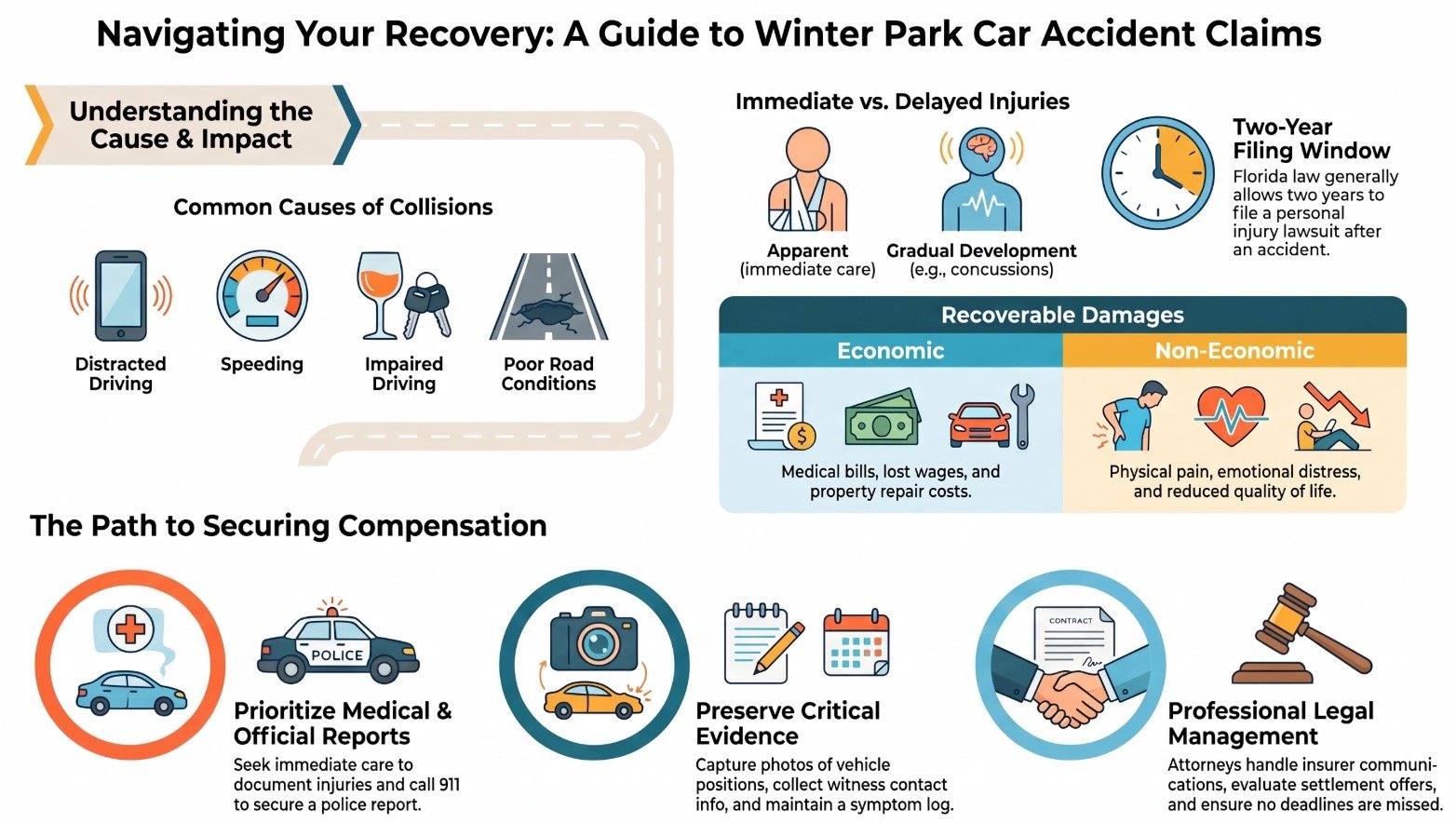
When a car accident causes injuries in Winter Park, an experienced attorney can help protect the injured person’s legal rights and pursue appropriate compensation. The attorney can review available information, identify responsible parties, and explain practical options based on the claim’s circumstances. This guidance allows an injured person to make informed decisions while focusing on medical care and recovery.
Evidence preservation is an important early service. Counsel may help secure photographs, vehicle damage records, medical documentation, witness information, and other materials that could support the claim. Prompt attention can reduce the risk that relevant proof will be lost or overlooked.
The attorney can also manage communications with insurers and handle insurance negotiation on the injured person’s behalf. This may include evaluating settlement proposals, documenting losses, and presenting a reasoned demand for compensation. Throughout the process, counsel can provide organized support, answer questions, and advocate for a fair resolution without placing additional burdens on the injured person or family.
Don’t Wait. Call Our Florida Personal Injury Lawyers Now!
Understanding Winter Park Car Accident Injury Cases


Winter Park car accident injury cases involve more than determining who caused a collision. They require careful attention to medical conditions, financial losses, insurance procedures, and the long-term effects of trauma. Each claim depends on evidence showing how the incident affected the injured person’s health, work, mobility, and daily responsibilities.
OUR CONSULTATIONSARE FREE
START YOUR FREE CASE REVIEW

Common Injury Types include fractures, soft-tissue damage, spinal injuries, traumatic brain injuries, and emotional distress. Some conditions appear immediately, while others develop over time, making prompt medical evaluation crucial. Treatment records can help establish the nature, severity, and expected duration of an injury.
Filing Insurance Claims requires accurate documentation and timely communication. Insurers may request medical records, employment information, photographs, witness statements, and other proof of damages. A careful review can help identify available coverage and address disputed liability or inadequate settlement offers. Legal professionals may assist injured individuals by organizing evidence, communicating with insurers, and protecting their interests throughout the process. This support lets claimants focus on recovery while pursuing fair compensation.
Common Causes of Winter Park Car Accident Injuries


Winter Park car accidents commonly result from distracted driving, speeding, reckless conduct, and impaired driving. Poor road conditions, including inadequate maintenance, debris, or limited visibility, may also increase the risk of a collision. Identifying the cause is important when evaluating liability, injury claims, and available legal remedies.
Distracted Driving
How does distracted driving contribute to car accidents in Winter Park? Drivers who take their eyes off the road may miss pedestrians, cyclists, signals, or vehicles entering their path. Phone distraction is a frequent source of danger because calls, notifications, navigation, and other applications can occupy a driver’s eyes, hands, and thoughts. Texting violations are especially concerning, since composing or reading a message requires sustained visual and mental attention away from the roadway. Other distractions include eating, adjusting music, searching for items, and engaging with passengers. These behaviors can delay recognition of developing hazards and impair a driver’s ability to respond appropriately. Individuals injured in such crashes may need assistance documenting events, identifying witnesses, preserving evidence, and understanding available legal remedies. Promoting attentive driving helps protect every person sharing Winter Park’s roads.
Speeding And Reckless Driving
Speeding and reckless driving can worsen the consequences of a car accident by reducing reaction time, limiting vehicle control, and increasing impact force. Drivers who exceed posted limits may struggle to stop safely when traffic patterns change, particularly near intersections, school zones, and pedestrian crossings. Aggressive lane changes, following too closely, and disregarding right-of-way rules can create hazards for everyone sharing the roadway. Traffic signal violations are especially dangerous because they may produce high-impact collisions involving vehicles entering an intersection lawfully. Neglecting vehicle maintenance, including worn tires, defective brakes, or broken lights, can further reduce a driver’s ability to respond appropriately. Identifying these contributing factors may help injured individuals, families, and community advocates understand responsibility and support safer driving practices throughout Winter Park.
Impaired Driving
Impaired driving is a significant cause of car accidents in Winter Park because alcohol, cannabis, prescription medications, and other substances can diminish judgment, coordination, vision, and reaction time. Alcohol impairment may cause drivers to misjudge distances, disregard traffic signals, or make unsafe lane changes. Cannabis intoxication can affect concentration, perception, and decision-making, even when a driver believes the effects are manageable. Prescription medications may produce dizziness, confusion, or delayed responses, particularly when combined with other substances. Drowsy driving also creates substantial risks because fatigue can impair attention and reaction time in ways similar to intoxication. Law enforcement may use roadside sobriety evaluations, chemical testing, and witness observations to identify suspected impairment. Individuals injured by an impaired driver may benefit from prompt medical care, evidence preservation, and guidance from a qualified attorney.
Poor Road Conditions
Poor road conditions can contribute to Winter Park car accidents by reducing tire traction, limiting visibility, and making it more difficult for drivers to maintain control. Heavy rain, standing water, potholes, and uneven pavement may cause vehicles to hydroplane, swerve, or require longer stopping distances. Highway construction zones can create lane confusion when barriers, temporary markings, or altered traffic patterns are unclear. Drivers who fail to reduce speed or increase following distance may place passengers, pedestrians, and other motorists at unnecessary risk. Faulty vehicle maintenance can further worsen these hazards, particularly when tire wear reduces grip on wet or damaged surfaces. Public agencies and contractors generally have responsibilities to inspect, repair, and warn of dangerous conditions. Documenting the roadway, weather, signage, and vehicle condition can help clarify how an accident occurred and support affected individuals.
Legal Rights of Winter Park Car Accident Injury Victims
When a car accident in Winter Park causes injury, the victim may have legal rights to pursue compensation from the responsible party. Potential recovery may include medical expenses, lost income, rehabilitation, property damage, and non-economic harm such as pain and emotional distress. Documentation can help preserve those rights, including treatment records, wage statements, photographs, and witness information.
Winter Park car accident victims may pursue compensation for medical costs, lost income, property damage, and emotional suffering.
- A prompt claim may help protect access to needed medical care and financial stability.
- Fair compensation can support rehabilitation, household responsibilities, and long-term recovery.
- Accountability may help families receive recognition for the harm endured.
Victims may also have the right to consult counsel before providing recorded statements or accepting an insurer’s settlement. Comparative fault disputes can affect the amount recovered if another party alleges that the injured person contributed to the collision. Missed insurance claim deadlines and legal filing periods can limit recovery. Because deadlines and available remedies vary, an informed evaluation may help protect the victim’s interests while allowing compassionate professionals to guide the process responsibly.
Why Do Winter Park Car Accident Injuries Happen?
Why do Winter Park car accident injuries happen? Several contributing factors can turn ordinary travel into a serious collision. Driver negligence remains a leading cause, including speeding, distracted driving, unsafe lane changes, impaired driving, and following too closely. These behaviors reduce reaction time and increase the force of impact, placing occupants, pedestrians, and other motorists at risk.
Environmental conditions also affect roadway safety. Rain, standing water, reduced visibility, and slick pavement can cause weather-related crashes when drivers fail to adjust speed or following distance. Congested roads, unfamiliar intersections, construction zones, and inadequate lighting may further contribute to confusion and delayed decisions.
Some injuries result from vehicle equipment failure rather than an obvious driving error. Defective brakes, worn tires, malfunctioning lights, handling problems, and faulty safety restraints can prevent a vehicle from responding properly or protecting occupants in a crash. Poor road maintenance, including potholes or missing warnings, may also create hazards that lead to collisions and serious harm.
What Should You Do After a Winter Park Car Accident Injury?
After a Winter Park car accident injury, the injured person should seek immediate medical care, even if symptoms seem minor at first. Report the accident to the appropriate authorities, and document all relevant details promptly. This documentation should include medical records, visible injuries, treatment expenses, and other evidence that may support a potential claim.
Seek Immediate Medical Care
Seek prompt medical care after a Winter Park car accident, even if the injuries initially appear minor. Some conditions, including concussions, internal bleeding, and soft-tissue damage, may not produce immediate symptoms. A physician can thoroughly evaluate the person, identify hidden injuries, and recommend appropriate treatment to support recovery.
Medical records also provide Emergency documentation of the accident’s physical effects. These records may help caregivers, insurers, and legal professionals understand the injury’s timing, severity, and progression. The injured person should describe every symptom accurately, follow treatment instructions, and attend all recommended appointments. Consistent follow-up care can prevent complications and demonstrate continued attention to recovery. If symptoms worsen, you may need urgent evaluation. Prompt medical attention also enables informed support for family members and other individuals affected by the accident.
Report The Accident
Report the accident promptly to local law enforcement, especially if there are injuries, property damage, or disputes about what happened. Calling 911 represents the appropriate Emergency contact step when immediate medical assistance, traffic control, or public safety protection is necessary. A responding officer can secure the scene, identify involved parties, interview witnesses, and prepare an official crash report. Drivers should provide accurate identification, insurance, and vehicle information without speculating about fault or making statements that could be misunderstood. Florida reporting requirements generally require reporting a crash when it involves injury, death, or property damage exceeding the statutory threshold. If officers do not respond, the involved driver should contact the appropriate agency promptly to learn how to complete a report. Preserving the report number and agency contact information supports later communications.
Document Your Injuries
Medical documentation should begin as soon as possible, even when injuries initially appear minor or manageable. A prompt examination creates reliable Injury documentation and may identify conditions that develop after the crash. The injured person should describe every symptom accurately, including pain, dizziness, limited movement, sleep disruption, or emotional distress. Maintaining a daily symptom log can establish changes over time and help medical providers evaluate recovery. Copies of medical records, diagnostic results, prescriptions, treatment instructions, and receipts should be preserved as insurance evidence. Photographs of visible injuries, damaged medical devices, or physical limitations may further support the record. The claim timeline should include appointment dates, missed work, prescribed care, and follow-up visits. Organized documentation can help representatives, insurers, and courts understand the injury’s effects and protect the individual’s ability to assist others.
Critical Evidence in a Winter Park Car Accident Injury Case
Critical evidence can establish how the crash occurred, who may be responsible, and how the injuries affected the injured person’s life. Accident scene photographs, police report details, medical treatment records, and witness contact information should be preserved promptly and accurately. Missing or incomplete evidence can weaken a claim when accountability and recovery are already uncertain.
- Photographs may preserve roadway conditions and vehicle damage before significant details disappear.
- Police findings and witness accounts can clarify disputed events and responsibility.
- Medical records document the injuries, treatment, pain, and lasting consequences.
Accident Scene Photos
When safely taken after a collision, accident scene photos can preserve evidence that may later clarify how the crash occurred and who was responsible. Images should document vehicle positions, visible damage, debris, skid marks, traffic signals, lane markings, and nearby property conditions before the scene changes. Incident scene coverage is strongest when photographs capture both close details and wider perspectives showing distances and roadway layout. Weather affects documentation, so record rain, glare, darkness, or standing water when those conditions may have affected visibility or traction. Useful photo evidence tips include photographing from several angles, preserving original files, and avoiding edits that could alter interpretation. Images should supplement, not replace, witness statements’ accuracy, because photographs may establish physical facts while witnesses explain what they observed.
Police Report Details
A police report can provide important evidence in a Winter Park car accident injury case by recording the responding officer’s observations, statements from drivers and witnesses, roadway conditions, apparent injuries, and any citations issued at the scene. It may also identify vehicle positions, visible property damage, traffic controls, and information exchanged among those involved. Although the report is not the sole measure of fault, its contemporaneous details can help clarify disputed events and direct further investigation. A careful review may reveal inconsistencies, omitted facts, or indications that additional evidence should be preserved. Relevant materials can include dashcam evidence, nearby surveillance recordings, photographs, and witness statements obtained independently of the official report. For individuals seeking to support injured people, promptly securing the report and related records helps preserve an accurate account for insurers, investigators, and courts.
Medical Treatment Records
Beyond the police report, medical treatment records can document the injuries attributed to a Winter Park car accident and the care required to address them. These records may include emergency evaluations, diagnostic imaging, prescriptions, therapy notes, and physician assessments. Together, they can show when symptoms began, how serious they were, and whether you followed treatment recommendations. Chronic symptom tracking may show ongoing pain, limited mobility, headaches, or other lasting effects that are not apparent immediately after a collision. Records of follow-up appointments can also demonstrate ongoing medical needs and provide updates regarding recovery or permanent impairment. Prompt, consistent care generally creates a clearer clinical history. Attorneys may review these materials to assess causation, damages, and the services needed to support an injured person’s recovery.
Witness Contact Information
Witness contact information can provide critical evidence in a Winter Park car accident injury case by identifying individuals who observed the collision, its immediate aftermath, or the parties’ conduct beforehand. Record names, telephone numbers, email addresses, and locations promptly, while memories are fresh and witnesses can be reached reliably.
Witness statement collection may help establish traffic conditions, vehicle movements, apparent injuries, and statements made at the scene. A careful account should distinguish personal observations from assumptions, preserve witness credibility, and reduce the risk of later disputes. Do not pressure, coach, or ask witnesses to alter their recollections. Share their information with the appropriate legal representative, who can arrange interviews and preserve relevant testimony. Prompt documentation also helps locate witnesses who may move, change contact details, or become unavailable as the claim progresses.
Don’t Wait. Call Our Florida Personal Injury Lawyers Now!
Long-Term Effects of Winter Park Car Accident Injuries
Winter Park car accident injuries may produce lasting consequences, including chronic pain, reduced mobility, and permanent disability. Emotional and psychological trauma, such as anxiety or post-traumatic stress, can also affect a person’s daily functioning and quality of life. These conditions may require ongoing treatment and create substantial medical expenses long after the initial accident.
Chronic Pain And Disability
When car accident injuries fail to resolve within the expected recovery period, they may develop into chronic pain, restricted mobility, or permanent disability. These conditions can limit employment, caregiving, household responsibilities, and participation in community activities. Medical documentation is crucial to show the diagnosis, treatment history, functional restrictions, and likely duration of impairment. Consistent care, expert evaluations, and evidence of necessary assistive devices may help establish the injury’s continuing impact. Proving liability remains important because long-term damages generally depend on showing that another party caused the collision and resulting harm. During insurance negotiation, records of lost income, future medical needs, rehabilitation costs, and diminished earning capacity may support a complete claim. Legal guidance can help identify available compensation while protecting an injured person’s ability to receive appropriate, sustained care.
Emotional And Psychological Trauma
Emotional and psychological trauma can persist long after the physical injuries from a Winter Park car accident have stabilized. Survivors may experience anxiety, depression, irritability, sleep disruption, or fear of driving. Some develop post-traumatic stress symptoms, including intrusive memories, avoidance, and heightened alertness. These effects can interfere with employment, relationships, and ordinary responsibilities, even when outward recovery appears complete.
A qualified mental health professional can evaluate and identify symptoms and support appropriate treatment. Counseling, behavioral therapy, and supportive services may help an injured person regain stability and confidence. Maintaining post-accident documentation, including diagnoses, treatment records, and changes in daily functioning, can establish the trauma’s connection to the collision. Because insurance claim deadlines may limit available remedies, timely legal guidance helps preserve evidence and protect the survivor’s interests while recovery continues.
Ongoing Medical Expenses
Although initial treatment may conclude, injuries from a Winter Park car accident can create ongoing medical expenses for months or years. Follow-up appointments, prescription medications, rehabilitation, mobility equipment, and future procedures may remain necessary as symptoms develop or conditions worsen. Long-term medical treatment can also include counseling for trauma, physical therapy for lasting limitations, and periodic evaluations by physicians. These costs may extend beyond health insurance coverage, leaving an injured person responsible for deductibles, copayments, and uncovered services. Detailed medical records can help establish the connection between continuing care and the collision. Keeping invoices, treatment plans, and lost income documentation may support an assessment of financial harm. Legal professionals often review projected expenses with qualified medical and economic experts to help determine whether compensation should address future needs, not merely immediate bills.
Proving Liability in Winter Park Car Accident Injury Cases
Proving liability in a Winter Park car accident injury case requires clear evidence that another driver’s negligence caused the collision and resulting harm. Relevant evidence may include police reports, photographs, traffic camera footage, vehicle damage, witness statements, and electronic data from involved vehicles. Medical documentation should connect the diagnosed injuries to the crash, describe treatment, and establish the condition’s effect on daily activities and earning capacity. Testimony from physicians, accident reconstruction professionals, or other qualified witnesses may clarify disputed facts and demonstrate how unsafe conduct produced the injuries.
The injured person generally must show that the other driver owed a duty of reasonable care, breached that duty, and caused compensable damages. Comparative negligence may reduce recovery if the injured person also contributed to the event. Organized records can help address insurance claim denials by identifying factual or medical deficiencies in the insurer’s position. A careful review of deadlines, applicable traffic laws, and available evidence supports a fair evaluation while preserving the person’s opportunity to seek appropriate compensation.
Dealing With Insurance Companies After a Winter Park Car Accident Injury
After a Winter Park car accident injury, handle communication with insurance companies carefully because adjusters may review statements, medical records, and other evidence when determining liability and settlement value. An injured person should provide accurate information without speculating about fault, minimizing symptoms, or offering a recorded statement before understanding its purpose. Track medical treatment, prescriptions, restrictions, and missed work consistently, and support documentation of injury impacts with organized records and provider correspondence. Photographs, repair estimates, witness information, and relevant expenses may also clarify the claim’s scope. Review settlement offers against current and anticipated losses rather than accepting them under financial pressure. If an insurer disputes responsibility, delays evaluation, or undervalues damages, counsel can prepare Settlement denial responses that address factual errors and identify supporting evidence. Respectful, timely communication helps protect the injured person’s interests while preserving resources for recovery and family responsibilities. Insurance discussions should remain focused on verifiable facts, documented losses, and the medical consequences established by treating professionals.
What to Expect During a Winter Park Car Accident Injury Claim Process
A Winter Park car accident injury claim generally begins with an initial case evaluation to assess liability, injuries, damages, and available legal options. The process may include collecting medical records, accident reports, witness statements, photographs, and other evidence before insurance negotiations address the claim’s value. If settlement efforts fail, the matter may proceed to trial, where the evidence and applicable law will be presented to a court.
Initial Case Evaluation
When someone seeks assistance from a Winter Park car accident lawyer, the initial case evaluation determines whether the claim has a viable legal and factual foundation. The lawyer typically reviews the reported collision, known injuries, insurance information, and the client’s account of events. This discussion helps clarify potential responsibility, damages, procedural concerns, and the client’s immediate needs. Car accident timelines may affect notice requirements, medical documentation, and the period available to pursue compensation, making early consultation valuable. The lawyer may also explain evidence-preservation steps without beginning the detailed evidence-collection process, including avoiding statements that could undermine the claim and maintaining relevant records. A careful evaluation allows the legal team to provide realistic guidance, identify possible obstacles, and determine how best to serve the injured person’s interests.
Evidence Collection Process
Effective evidence collection begins with preserving information that may establish how the collision occurred and the extent of the resulting harm. A Winter Park car accident lawyer may request crash reports, photographs, vehicle damage records, witness statements, traffic-camera footage, and available electronic data. The injured person should preserve clothing, damaged personal property, relevant communications, and notes describing symptoms and limitations. Medical records, diagnostic results, treatment recommendations, and provider invoices can clarify the injury’s progression and necessary care. Medical expense tracking should include bills, receipts, mileage, insurance payments, and outstanding balances. Insurance claim documentation may include policy information, correspondence, claim forms, and recorded statements. Maintaining organized copies and a dated incident file helps protect accuracy. These materials support a careful evaluation of responsibility, injuries, losses, and documentation gaps before further claim decisions.
Insurance Negotiation Steps
After the claim is submitted, the insurer typically reviews the available evidence, policy terms, medical records, and reported losses before responding to the demand. A representative may request additional documentation, clarify treatment details, or question liability and the extent of claimed damages. The injured person’s legal team generally organizes responses, protects deadlines, and communicates with adjusters on the person’s behalf. Policy limits analysis helps determine the available coverage, identify potentially responsible parties, and evaluate whether the reported losses fit within applicable limits. Demand letter timing also matters because a well-supported demand should reflect documented treatment, current expenses, and reasonably foreseeable needs. Negotiations may involve written counteroffers, requests for clarification, and careful review of proposed terms. Record, assess, and respond to each communication with attention to accuracy, fairness, and the client’s long-term interests.
Settlement Or Trial
If settlement negotiations produce a fair resolution, the injured person may conclude the claim without proceeding to court. The agreement should address medical expenses, lost income, property damage, and other losses supported by damages calculations. Before accepting, the claimant generally reviews release terms and confirms that future claims will not be unintentionally waived.
A trial may become necessary when liability disputes, inadequate offers, or unresolved medical issues prevent meaningful agreement. Counsel may present testimony, photographs, medical records, and other evidence preservation materials to establish fault and the extent of harm. Either way, insurance deadlines remain important because missed notice or filing requirements can weaken the claim. A Winter Park car accident lawyer can explain procedural choices, communicate with insurers, and help protect the claimant’s interests while pursuing a resolution that serves practical recovery.
Compensation for Winter Park Car Accident Injury Damages
Compensation for Winter Park car accident injury damages may cover the financial and personal losses caused by another party’s negligence. An injured person generally must provide negligence proof showing that the other driver violated a duty of care and that the violation caused the collision and resulting harm. Medical documentation can establish diagnoses, treatment needs, recovery limitations, and the link between the crash and claimed injuries. An injury severity evaluation may further help clarify the seriousness of the condition, anticipated recovery, and ongoing effects on daily activities.
Florida comparative negligence may affect the amount recovered if the injured person also contributed to the accident. Under this system, responsibility is allocated according to each party’s share of fault, which can reduce the available compensation. Careful evidence review helps ensure a claim accurately reflects the circumstances. A lawyer representing accident victims may help gather records, communicate with insurers, and present a supported claim designed to protect the injured person’s interests.
Don’t Wait. Call Our Florida Personal Injury Lawyers Now!
Economic vs. Non-Economic Damages in Winter Park Car Accident Cases
Economic damages compensate for documented financial losses, including medical expenses, lost wages, and property damage. Non-economic damages address less tangible harm, such as pain and suffering, emotional distress, and reduced quality of life. Comparing these damage types helps determine the full compensation potentially available in a Winter Park car accident case.
Economic Damages Explained
In Winter Park car accident cases, economic damages refer to the measurable financial losses caused by a collision, while non-economic damages address less tangible harm such as pain, emotional distress, and diminished quality of life. Economic damages commonly include emergency treatment, hospital bills, prescription costs, rehabilitation, medical equipment, and anticipated future care. They may also cover lost wages, reduced earning capacity, transportation expenses, and property damage. Accurate Medical records help establish the nature, duration, and cost of necessary treatment. Pay stubs, employer statements, repair estimates, and receipts can further document financial loss. During insurance negotiation, organized evidence collection supports a clear demand and helps prevent overlooked expenses. Although the emotional impact may be significant, economic damages require concrete documentation linking each claimed cost to the collision and demonstrating its reasonable value.
Non-Economic Damages Defined
Non-economic damages address the personal harm a Winter Park car accident causes beyond documented financial losses. They may recognize physical pain, emotional distress, inconvenience, reduced enjoyment of life, and diminished ability to participate in meaningful activities. These harms can persist even when medical records do not fully capture their daily effects. A person may require Pain recovery options, including counseling, rehabilitation, or supportive care, while coping with fear and disruption after a collision. Long-term injury impacts may affect relationships, independence, sleep, concentration, and future plans. Documentation such as treatment notes, personal journals, and statements from family members can help describe these experiences accurately. Non-economic damages accordingly focus on the human consequences of an accident and the continuing challenges an injured person may face during recovery and adaptation.
Comparing Damage Types
How damages are classified can materially affect the value and presentation of a Winter Park car accident claim. Economic damages represent measurable financial losses, including emergency care, treatment expenses, rehabilitation, property damage, lost wages, and diminished future earning capacity. Documentation such as invoices, pay records, medical evaluations, and repair estimates generally supports these amounts.
Non-economic damages address losses that do not have a fixed price. They may include physical pain, emotional distress, reduced enjoyment of life, scarring, disability, and the long term impacts of an injury. Their evaluation often considers medical evidence, personal testimony, daily limitations, and the duration of recovery.
Both categories can arise from the same accident and should be presented in unison. A careful assessment helps ensure that compensation reflects immediate costs, continuing needs, and the broader consequences affecting the injured person and supporting family.
When a Winter Park Car Accident Injury Case Goes to Trial vs Settlement
When a Winter Park car accident injury case proceeds, the parties typically resolve the dispute through settlement or present the evidence at trial. Settlement allows the injured person and insurer to reach an agreement without courtroom testimony. Insurance negotiation tactics may include organizing medical records, documenting lost income, evaluating future needs, and presenting a clear, evidence-supported demand. A settlement can provide a predictable resolution while reducing delay, expense, and stress for everyone involved.
Trial becomes more likely when liability, injury severity, or compensation remains disputed. A trial preparation strategy generally includes interviewing witnesses, reviewing medical evidence, consulting qualified experts, preparing exhibits, and developing a coherent presentation for the judge or jury. The process may require testimony from the injured person and treating providers, with the outcome determined after both sides present their positions. A legal professional can explain potential advantages, risks, and procedural demands while helping the client make an informed decision consistent with personal needs and responsibilities.
Florida Laws That May Affect Your Winter Park Car Accident Injury Case
The outcome of a Winter Park car accident case may depend on several Florida laws governing fault, insurance coverage, damages, and filing deadlines. Florida’s modified Comparative Fault system can reduce compensation when an injured person shares responsibility, making accurate evidence and careful analysis important. No-fault insurance rules generally require injured drivers to seek initial benefits through personal injury protection coverage, while serious injuries may support claims against an at-fault party. Other laws may affect uninsured motorist coverage, medical expenses, lost income, property damage, and recoverable non-economic losses. A legal professional may help protect the interests of individuals and families by evaluating:
Florida car accident laws affect fault, insurance coverage, damages, and deadlines, making careful legal evaluation essential.
- Evidence that clarifies responsibility and prevents an unfair reduction in recovery.
- Insurance provisions that may provide support when coverage is limited or disputed.
- Damages that reflect medical needs, financial hardship, and lasting personal consequences.
Florida Statute of Limitations rules also influence whether a claim remains viable, although specific deadlines depend on the parties, claim type, and applicable exceptions. Prompt legal review can help preserve available remedies and support responsible advocacy for those affected.
The Statute of Limitations for Winter Park Car Accident Injury Cases
Because Florida law imposes strict filing deadlines, individuals injured in Winter Park car accidents should assess potential claims promptly. Florida’s statute of limitations generally allows two years to file a personal injury lawsuit arising from a motor vehicle collision. The period may begin on the accident date, although specific circumstances can affect when the deadline applies. Claims involving wrongful death, government entities, minors, or unusual factual issues may follow different rules and shorter notice requirements.
Missing these time limits can prevent a person from pursuing compensation, even when evidence supports the claim. Medical documentation, police reports, witness accounts, and insurance records should consequently be preserved while the facts remain available. Recovery deadlines can also affect related claims, including property damage or uninsured motorist benefits, depending on applicable policies and law. A timely lawyer consultation may help clarify potentially controlling dates, while legal advice can identify exceptions that ordinary summaries do not address. Prompt attention supports informed decisions and protects the interests of injured individuals and their families.
How a Winter Park Car Accident Lawyer Can Help You
A Winter Park car accident lawyer can evaluate the circumstances of a collision, identify potentially liable parties, and explain the legal options available to an injured person. Counsel can organize evidence preservation, including photographs, medical records, vehicle data, and damaged property, and pursue witness interviews to clarify how the crash occurred.
A Winter Park car accident lawyer evaluates collision details, preserves vital evidence, identifies liable parties, and explains available legal options.
Legal representation may help protect an injured person from:
- Feeling unheard while physical and financial hardships continue.
- Accepting an inadequate payment before understanding future needs.
- Facing insurers that prioritize reduced payouts over fair accountability.
A lawyer can review policy language, assess medical expenses and lost income, and identify insurance claim pitfalls that may undermine recovery. Through disciplined settlement negotiation tactics, counsel can present documented damages and respond to disputed liability or low offers. If negotiations fail, the lawyer can prepare the matter for litigation and coordinate communications with insurers and opposing parties. This structured support allows injured individuals and their families to focus on recovery while their representative seeks a fair, responsible resolution.
When to Contact a Winter Park Car Accident Injury Lawyer
Prompt legal guidance is often most valuable before an injured person accepts an insurance payment, provides a recorded statement, or makes decisions that could affect a potential claim. Contact a Winter Park car accident lawyer when injuries appear serious, symptoms develop later, treatment becomes ongoing, or fault is disputed. An early consultation can help an injured person understand deadlines, communicate clearly, and avoid unintentionally weakening the matter while seeking appropriate support.
Legal guidance may also be appropriate when an insurer delays evaluation, offers payment that does not reflect documented losses, requests broad medical authorization, or suggests responsibility is unclear. Families assisting an injured person can benefit from learning evidence-preservation tips, including securing photographs, witness information, medical records, repair estimates, and relevant communications. Counsel can also explain Florida insurance strategies involving required coverage, possible additional benefits, and claim documentation. Contact counsel promptly after a collision whenever uncertainty exists, especially before signing releases or resolving a claim permanently.
Why You Need an Experienced Winter Park Car Accident Injury Lawyer
When liability, injuries, and financial losses are disputed, an experienced Winter Park car accident lawyer can provide the informed guidance necessary to protect an injured person’s legal interests. Such counsel can investigate the collision, preserve evidence, identify responsible parties, and explain legal rights in terms the injured person and family can understand.
Experience is particularly valuable when insurers challenge medical treatment, minimize long-term effects, or attribute fault to the claimant. Through Proving Damages, counsel can connect injuries to the crash and document medical expenses, lost income, rehabilitation needs, pain, and diminished quality of life. Accurate documentation helps present a complete claim, not an incomplete financial estimate.
An experienced attorney also supports Negotiating Settlements by evaluating offers, identifying inadequate compensation, and communicating with insurers on the client’s behalf. If a fair resolution cannot be reached, counsel can prepare the matter for litigation while continuing to serve the injured person’s best interests. This support lets the client focus on recovery while legal responsibilities receive diligent attention.
How to Choose the Right Winter Park Car Accident Injury Lawyer for Your Case
Selecting the right Winter Park car accident lawyer requires careful consideration of the attorney’s experience, communication practices, and ability to handle the specific circumstances of the claim. A suitable lawyer should clearly explain legal options, respond within reasonable timeframes, and show familiarity with local courts, insurers, and Florida traffic laws.
Prospective clients should ask how the attorney evaluates negligence proof, including crash reports, witness statements, photographs, and medical records. The lawyer should present a practical case strategy tailored to liability, injuries, damages, and available insurance coverage rather than guarantee a particular result.
Experience managing insurance denials is also important when carriers dispute fault, minimize injuries, or refuse payment. A reliable attorney can explain likely procedures and identify steps for challenging unfair positions.
Before hiring counsel, individuals may request a documentation checklist covering medical bills, wage records, repair estimates, correspondence, and accident-related expenses. Clear fee terms, professional judgment, and a service-oriented approach can help ensure the representation supports the injured person’s interests throughout the claim.
About The Law Offices of Anidjar & Levine
The Law Offices of Anidjar & Levine represents individuals seeking compensation after car accidents and other personal injury events in Florida. The firm serves clients facing medical expenses, lost income, property damage, and uncertainty about their legal options.
Its attorneys evaluate each matter through documented facts, applicable insurance policies, and the circumstances surrounding the collision. Attorney qualifications, including experience with personal injury claims and Florida procedures, can help shape a careful case strategy. This process may involve gathering records, consulting relevant professionals, communicating with insurers, and preparing for litigation when appropriate.
The firm’s work also emphasizes client support throughout the claim. Clear communication can help individuals understand significant decisions, deadlines, and potential outcomes while they focus on recovery. Familiarity with local resources can help identify medical providers, accident documentation, and other practical services in the Winter Park area. Prospective clients can discuss their circumstances with the firm to determine whether representation may be appropriate for their needs.
Frequently Asked Questions
Can I Afford a Winter Park Car Accident Lawyer Without Upfront Fees?
Many accident attorneys work on contingency fees, meaning clients pay only if they recover compensation. The agreement should clearly state the percentage, case expenses, and circumstances that could create financial responsibility. Some firms also offer payment plans for costs not covered by contingency arrangements. Prospective clients should compare written agreements, ask about expenses, and confirm whether an initial consultation is free before choosing counsel.
Will My Car Accident Case Affect My Immigration Status?
A car accident claim generally does not affect a person’s immigration status, particularly when the individual is seeking compensation as an injured victim. However, conflict of laws may arise if the incident involves criminal conduct, fraud, or immigration violations. The evidence impact can influence civil proceedings, insurance negotiations, and credibility assessments. An attorney should protect the person’s rights, coordinate with qualified immigration counsel, and explain risks before statements or settlements.
Can Passengers File Separate Claims After a Winter Park Car Accident?
Yes, passengers may file separate claims after a Winter Park car accident because each person can have distinct injuries, medical expenses, lost income, and other damages. Each claim typically follows the insurance claim process separately, even when passengers share a vehicle. They should preserve medical records and report information, and document witness details. The applicable statute of limitations can restrict filing deadlines, so timely legal guidance helps protect each passenger’s independent rights.
What Happens if the At-Fault Driver Was Uninsured?
If the at-fault driver was uninsured, an injured passenger may pursue compensation through the driver’s Uninsured Liability, if applicable, or the injured person’s uninsured motorist policy. Florida Coverage rules vary by policy terms, household residency, and whether the insurer properly issued required protections. Medical-payment benefits may also assist with immediate treatment. Reviewing all available policies promptly helps identify compensation sources and preserve claims while supporting the injured individual’s recovery.
Can I Handle a Property-Damage Claim Separately From My Injury Claim?
Yes, a property-damage claim may generally be handled separately from an injury claim, allowing vehicle repairs or replacement to proceed while medical treatment continues. However, review settlement documents carefully because a property-damage release may include language that affects injury rights. A coordinated negotiation strategy can protect both claims, while a documented claim timeline preserves evidence, expenses, and deadlines. Insurance rules and policy terms differ, so qualified guidance can help safeguard the injured person’s interests.
—————————
Following a Winter Park car accident, injured individuals may face medical expenses, lost income, insurance disputes, and lasting physical consequences. Understanding available legal rights and seeking timely guidance can help protect a claim and support informed decisions. An experienced Winter Park car accident lawyer can investigate the collision, establish liability, assess damages, and pursue appropriate compensation. The Law Offices of Anidjar and Levine provide focused representation designed to address each client’s circumstances with diligence, clarity, and professional commitment. Learn more about your legal options with a Winter Park Personal Injury Lawyer.

