

The Law Offices of Anidjar and Levine, a Winter Park car accident traffic violations and speeding lawyer, investigates how unsafe speed, distracted driving, failure to yield, impairment, or other violations may have contributed to a collision. The firm preserves vehicle data, video, photographs, witness accounts, police records, and medical documentation while handling insurers and evaluating damages. Potential compensation may include medical expenses, lost income, property damage, pain and suffering, and long-term care. Florida deadlines and comparative fault rules may affect recovery. For additional information, visit the Winter Park Personal Injury Lawyer page to learn about legal options, evidence, and claim evaluation.
Main Takeaways
- A Winter Park car accident lawyer can investigate whether speeding, reckless driving, distraction, impairment, or failure to yield caused the collision.
- Attorneys preserve critical evidence, including crash reports, photographs, witness statements, surveillance footage, vehicle data, and medical records.
- A traffic citation, conviction, or dismissal does not automatically determine civil liability for accident injuries or damages.
- Injured people may pursue medical expenses, lost wages, property damage, pain and suffering, and applicable uninsured-motorist benefits.
- Legal guidance can protect you during insurer communications, evaluate settlement offers, and address Florida’s claim deadlines and comparative-fault rules.
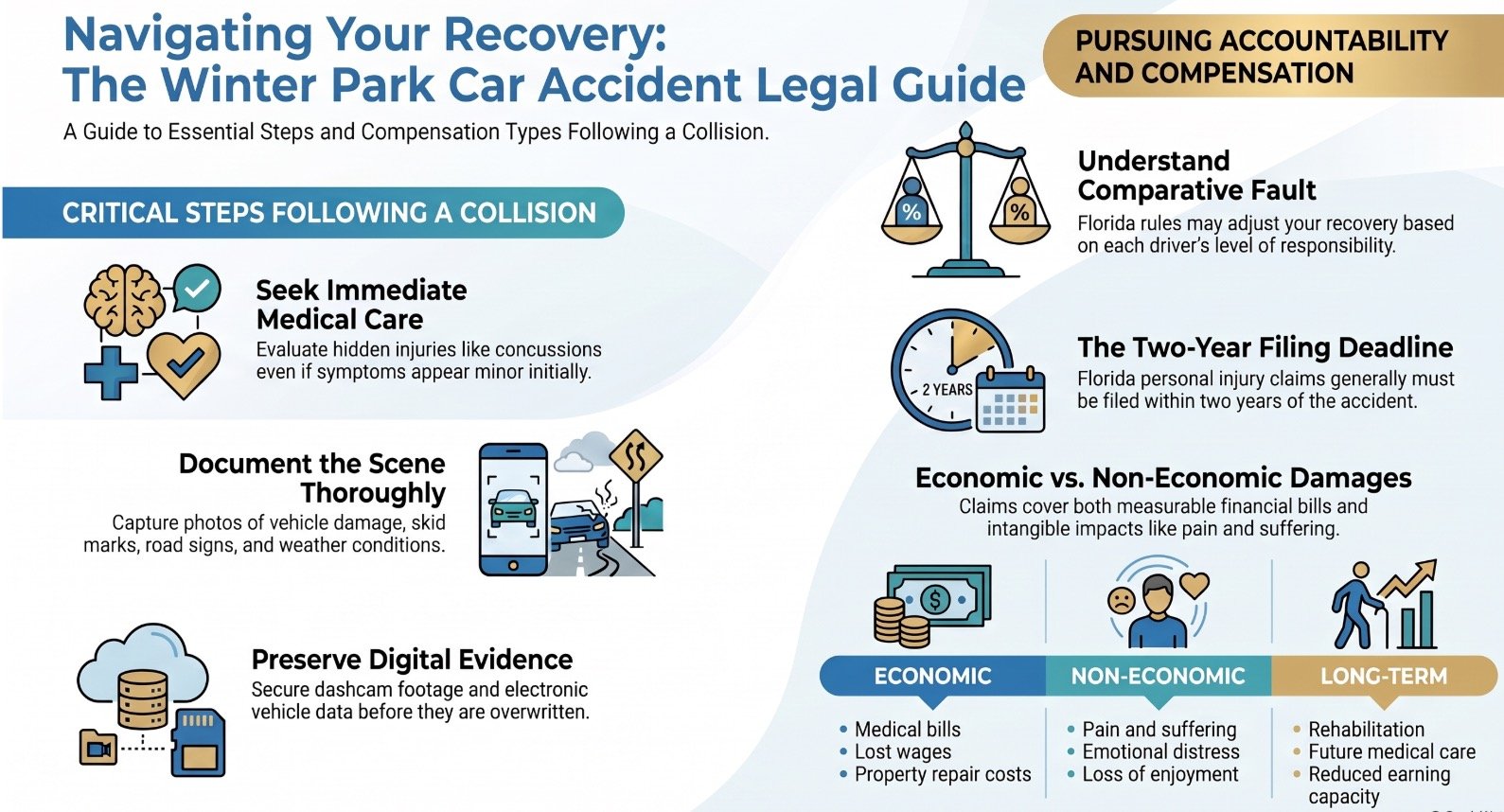
How We Can Help With Your Winter Park Car Accident Traffic Violations & Speeding Injury Claim
When a Winter Park car accident involves alleged traffic violations or speeding, an experienced personal injury lawyer can help determine how the conduct contributed to the collision and resulting injuries. The lawyer may organize crash documentation, including reports, photographs, medical records, witness accounts, and available video. Timely evidence preservation can protect information that might otherwise disappear, such as vehicle data, surveillance footage, or electronic communications.
Legal counsel can also communicate with insurers, evaluate settlement proposals, and manage insurance negotiation while protecting the injured person from statements that could undermine the claim. Each client case strategy should reflect the documented injuries, available evidence, financial losses, and anticipated medical needs. The lawyer may coordinate with investigators, medical professionals, and other experts to clarify the collision’s consequences and present the claim accurately.
This assistance allows an injured person to focus on recovery while a qualified advocate handles procedural demands, promotes accountability, and pursues compensation through a measured, service-oriented approach tailored to the circumstances.
Understanding Winter Park Car Accident Traffic Violations & Speeding Injury Cases


A Winter Park car accident involving alleged traffic violations or speeding may present overlapping civil and legal issues that require careful evaluation. Injury cases often depend on how the conduct relates to the collision, the injuries reported, and the available evidence. A citation, conviction, or dismissal does not necessarily determine whether a civil claim succeeds, although related records may influence negotiations or courtroom arguments.
OUR CONSULTATIONSARE FREE
START YOUR FREE CASE REVIEW

The injured person’s medical documentation, testimony, photographs, witness accounts, and vehicle data can help establish responsibility and damages. At the same time, the cited driver may have procedural rights and defenses that warrant respectful consideration. Clearing Ticket Options may address the traffic matter separately, while the injury claim follows its own legal standards and deadlines. Challenging Radar Accuracy can become relevant when a speeding allegation rests on measurement equipment, calibration records, or officer observations. Careful case review helps protect affected individuals, support fair outcomes, and guide families through intricate decisions with dignity, accuracy, and service.
Don’t Wait. Call Our Florida Personal Injury Lawyers Now!
Common Causes of Winter Park Car Accident Traffic Violations & Speeding
Common causes of Winter Park car accident traffic violations include speeding and reckless driving, which can materially reduce a driver’s ability to respond safely. Distracted driving behaviors and failure to yield may create preventable conflicts between vehicles, pedestrians, and cyclists. Impaired driving offenses further increase crash risks and may lead to serious legal consequences.
Speeding And Reckless Driving


Speeding and reckless driving are major causes of traffic violations and serious collisions in Winter Park, especially when drivers exceed posted limits, weave through traffic, or ignore roadway conditions. Excessive speed reduces stopping distance, limits vehicle control, and increases impact force when crashes occur. Reckless conduct may include aggressive passing, tailgating, racing, or entering intersections without adequate caution. Weather impacts can intensify these dangers, especially when rain, ice, or reduced visibility makes ordinary speeds unsafe. During snow driving, motorists who fail to reduce speed or account for slippery pavement may cause preventable skidding and collisions. Drivers must protect passengers, pedestrians, and other motorists by adjusting speed to conditions and obeying traffic laws. Violations can support liability claims and may warrant legal review after an injury.
Distracted Driving Behaviors
Beyond excessive speed and reckless maneuvers, distracted driving is a frequent cause of traffic violations and collisions in Winter Park. Common distractions include texting, adjusting navigation, eating, and conversations that divert visual, manual, or mental attention from traffic. Avoiding phone use while driving helps motorists maintain awareness and comply with safety laws. Understanding distracted driving risks also requires recognizing how quickly an ordinary interruption can reduce reaction time, impair judgment, and interfere with safe following distances. Drivers who continually scan their surroundings develop stronger hazard perception skills and can respond more effectively to changing conditions. Employers, families, and community organizations can support safer conduct by promoting focused driving practices and providing responsible transportation alternatives when necessary. Preventing distraction protects occupants, pedestrians, cyclists, and other road users from avoidable harm.
Failure To Yield
Failure to yield occurs when a driver proceeds without allowing the right of way to another vehicle, pedestrian, or cyclist entitled to proceed under traffic laws. In Winter Park, these violations often occur when motorists enter intersections prematurely, turn across oncoming traffic, merge without enough space, or disregard marked crosswalks. Failure to signal can prevent other road users from anticipating a vehicle’s movement, increasing the likelihood of sudden braking or impact. Poor visibility, unfamiliar road layouts, and competing interpretations of traffic signals may also contribute to intersection disputes. Drivers are expected to exercise reasonable caution, verify that a path is clear, and respect posted signs and signal indications. Individuals injured in resulting collisions may benefit from preserving photographs, witness information, and official reports while seeking guidance regarding available legal remedies.
Impaired Driving Offenses
Impaired driving offenses arise when alcohol, cannabis, prescription medication, or other substances reduce a motorist’s ability to operate a vehicle safely. In Winter Park, suspected impairment can lead to traffic stops, arrests, collisions, license consequences, and allegations of driving under the influence. Officers may rely on observations, field sobriety exercises, chemical testing, and witness accounts, although each form of evidence has limitations. A conviction may carry criminal penalties, including fines, probation, treatment requirements, license suspension, and incarceration, especially when a crash causes injury or death. A qualified attorney can examine the stop, testing procedures, medical factors, and chain of custody. Potential DUI defenses may challenge unlawful searches, inaccurate equipment, improper instructions, or insufficient proof of impairment. Responsible legal guidance helps protect motorists, injured individuals, and public safety.
Legal Rights of Winter Park Car Accident Traffic Violations & Speeding Injury Victims
When a driver’s traffic violation or speeding causes a collision, injured Winter Park victims may have the right to pursue compensation for medical expenses, lost wages, property damage, pain and suffering, and other legally recognized losses. These rights may include seeking recovery from responsible drivers, insurers, or other liable parties, subject to Florida law and applicable deadlines.
Prompt legal guidance can help preserve evidence and protect a victim’s ability to make informed decisions.
- Medical records can establish injuries, treatment needs, prognosis, and related expenses.
- Witness statements may clarify how the collision occurred and identify traffic violations.
- Claim documentation can organize bills, wage records, photographs, correspondence, and other proof.
Effective insurance strategies may address adjuster communications, settlement offers, coverage questions, and disputes over fault. A qualified attorney can evaluate available claims, coordinate with medical providers, and advocate for fair treatment without placing additional burdens on injured individuals. Victims also may have rights involving uninsured or underinsured motorist coverage, depending on policy terms and circumstances.
Why Do Winter Park Car Accident Traffic Violations & Speeding Injuries Happen?
Winter Park car accident traffic violations and speeding injuries often result from unsafe driving decisions, inadequate attention, or disregard for roadway conditions and traffic laws. Excessive speed reduces stopping distance and increases crash severity, while distracted driving can prevent motorists from recognizing signals, pedestrians, or changing traffic patterns. Impaired driving, aggressive lane changes, tailgating, and failure to yield may also cause collisions at intersections and along busy corridors. Poor weather, construction zones, inadequate lighting, and unfamiliar roads can compound these risks when drivers fail to adjust their behavior. Vehicle defects or unclear roadway markings may also contribute, raising questions about responsibility among drivers, manufacturers, employers, or government entities. Investigators and attorneys may examine citations, witness accounts, photographs, vehicle data, and medical records to identify contributing factors. Common legal defenses may dispute fault, causation, or injury severity. Insurance dispute timelines can further complicate claim evaluation, particularly when multiple parties or coverage issues exist.
What Should You Do After a Winter Park Car Accident Traffic Violations & Speeding Injury?
After a Winter Park car accident involving traffic violations or speeding, the injured person should seek immediate medical care, even if symptoms seem minor at first. Document the accident scene with photographs, witness information, vehicle damage, and relevant reports. A qualified traffic lawyer can then evaluate the circumstances, protect the individual’s rights, and guide potential legal claims.
Seek Immediate Medical Care
Prompt medical evaluation is essential for anyone injured in a Winter Park car accident involving an alleged traffic violation or speeding. A qualified healthcare professional can identify visible and hidden injuries, establish appropriate treatment, and determine whether emergency intervention is necessary. Even when symptoms appear minor, delayed conditions such as concussion, internal bleeding, or soft-tissue damage may worsen without assessment. The injured person should follow all medical instructions, attend recommended appointments, and promptly report any changes. Careful Aftercare supports recovery and helps prevent complications. Retain records of prescriptions, referrals, work restrictions, and symptom tracking. Car mileage records may help document transportation to medical appointments and related expenses. A trusted support person can help coordinate care, transportation, and follow-up while the injured individual concentrates on recovery.
Document The Accident Scene
Because traffic violations or excessive speed may become central to a Winter Park car accident claim, document the accident scene carefully when it is safe to do so. First, move away from traffic, activate hazard lights, and follow emergency instructions. If conditions permit, take photographs of vehicle positions, damage, skid marks, road signs, lane markings, weather conditions, and visible injuries. Take images from multiple distances without disturbing evidence. Document witness statements by recording names, contact information, and concise accounts of what each person observed, while avoiding speculation or arguments. Preserve dashcam footage and other recordings, including nearby surveillance information when known. Notes should record the time, location, traffic conditions, and sequence of events. Store evidence securely and share it only with authorized parties.
Contact A Traffic Lawyer
Once you’ve documented the accident scene and addressed immediate medical needs, contacting a traffic lawyer can help protect the injured person’s legal interests. A lawyer can review the crash report, medical records, witness accounts, and available video to determine whether a traffic violation or speeding allegation is supported. Counsel may negotiate evidence requests, identify inconsistencies, and dispute citations that could affect insurance claims or civil recovery. Early representation can also prevent penalties, including fines, license points, suspension, or consequences that complicate employment and transportation. The lawyer can communicate with officers, insurers, and opposing parties while protecting defenses against disputed allegations. For individuals assisting an injured person, prompt legal guidance supports informed decisions, preserves important records, and helps ensure that procedural deadlines and legal protections are not overlooked during recovery.
Critical Evidence in a Winter Park Car Accident Traffic Violations & Speeding Injury Case
Critical evidence may establish how a Winter Park crash occurred, which traffic rules were violated, and how the resulting injuries developed.
Key sources commonly include:
- Accident scene evidence, such as photographs, vehicle damage, and road conditions;
- Traffic violation and speeding records, including citations, surveillance, and event data;
- Medical and witness evidence, including treatment records, testimony, and independent observations.
Accident Scene Evidence
Accident scene evidence can establish how a Winter Park collision occurred and whether speeding or another traffic violation contributed to the resulting injuries. Photographs should document vehicle positions, skid marks, debris, roadway conditions, traffic signals, visibility, and nearby surveillance cameras before conditions change. Measurements and scene diagrams can help clarify travel paths, impact points, and stopping distances. Eyewitness testimony may provide valuable observations about vehicle speed, lane movement, distractions, and driver behavior, although statements should be recorded promptly because memories can fade. Damage patterns and vehicle data may further support or challenge crash accounts. A careful review of police report accuracy is also important, since errors involving locations, statements, or observations can affect liability analysis. Preserving this evidence helps attorneys present an objective account and protect injured individuals seeking appropriate support.
Traffic Violation Records
Traffic violation records can supplement accident scene evidence by showing whether a driver had a history of speeding, reckless driving, impaired driving, or other conduct relevant to a Winter Park collision. These records may include citations, convictions, license suspensions, and dispositions maintained by Florida courts or licensing authorities. Their relevance depends on accuracy, timing, and the connection between prior conduct and the disputed circumstances. Traffic ticket impacts may extend beyond penalties, influencing credibility assessments, insurance evaluations, and arguments concerning negligent behavior. Attorneys often review certified records, verify identifying information, and distinguish allegations from established violations. Claim documentation basics include preserving accident reports, medical records, witness information, and correspondence while requesting records through appropriate legal channels. Careful organization helps advocates present reliable evidence and serve injured individuals responsibly without overstating what a prior violation proves.
Speeding Documentation
When speeding is disputed in a Winter Park collision, reliable documentation can help establish the vehicle’s speed, roadway conditions, and relationship to the resulting injuries. A prompt Traffic camera review may identify vehicle movements, signal timing, lane positions, and changes in traffic flow before impact. Investigators may also examine electronic vehicle data, police measurements, photographs, roadway marks, and weather or lighting records, when available. These sources should be preserved quickly because recordings can be overwritten and physical conditions may change. A careful assessment of witness statement reliability is also important, including each person’s viewing angle, distance, attention, and consistency with objective evidence. Attorneys serving injured individuals can use this documentation to clarify disputed facts, identify traffic violations, and present a well-supported account without overstating conclusions. Documentation should remain organized, dated, and verifiable.
Medical And Witness Evidence
Medical records and credible witness accounts can add important context to documented vehicle movements and alleged speeding in a Winter Park collision. Hospital records may establish the timing, severity, and nature of injuries, while treatment notes can help connect those injuries to the crash. These materials may also reveal whether delayed symptoms or preexisting conditions require careful consideration.
Eyewitness accounts can clarify traffic signals, lane positions, vehicle speed, braking, and roadway conditions when physical evidence is incomplete. During timeline reconstruction, investigators compare those statements with surveillance footage, dispatch logs, vehicle data, and medical treatment times. A credibility assessment considers each witness’s vantage point, consistency, potential bias, and ability to perceive events accurately. Carefully organized evidence can support fair decisions, protect injured individuals, and help serving professionals present reliable facts to insurers, courts, and opposing parties.
Don’t Wait. Call Our Florida Personal Injury Lawyers Now!
Long-Term Effects of Winter Park Car Accident Traffic Violations & Speeding Injuries
Winter Park car accident traffic violations and speeding injuries may produce chronic pain, reduced mobility, or permanent disability that affects daily activities and employment. Emotional and psychological trauma, including anxiety, depression, or post-traumatic stress, may also persist long after physical wounds recover. These lasting effects can generate ongoing medical and legal costs, including treatment, rehabilitation, lost income, and compensation claims.
Chronic Pain And Disability
Chronic pain and disability may develop after injuries caused by traffic violations or speeding, even when the initial diagnosis appears relatively minor. Whiplash, spinal damage, fractures, and soft-tissue injuries can produce persistent pain, reduced mobility, or weakness that affects daily responsibilities. Sleep disruption may occur when symptoms intensify at night, further limiting concentration and physical endurance. At work, workplace limitations can interfere with lifting, standing, driving, or repetitive tasks, potentially requiring modified duties or reduced schedules. Documented pain flare-ups, medical treatment, and functional restrictions help demonstrate how an injury affects long-term capacity. Disability accommodations may include assistive equipment, accessible workspaces, flexible scheduling, or transportation support. A careful medical evaluation and consistent treatment records can clarify prognosis, necessary services, and the continuing consequences of accident-related impairments.
Emotional And Psychological Trauma
Following a Winter Park car accident involving traffic violations or speeding, emotional and psychological trauma may persist long after visible injuries have resolved. Survivors may experience anxiety, depression, sleep disruption, irritability, or PTSD symptoms, particularly when driving near the collision location or encountering similar traffic conditions. These reactions can affect employment, relationships, concentration, and confidence in ordinary activities. Family members and caregivers may support the patient while encouraging evaluation by qualified mental health professionals. Counseling, trauma-focused therapy, and appropriate treatment guidance can help identify harmful coping patterns and establish practical strategies for emotional recovery. Safety counseling may also address driving fears and promote gradual, informed steps toward restored independence. Attorneys and advocates can help survivors communicate these effects to medical providers, ensuring that psychological consequences receive appropriate consideration alongside physical injuries during recovery.
Ongoing Medical And Legal Costs
When traffic violations or excessive speed cause a Winter Park car accident, the resulting medical and legal costs may continue long after initial treatment. Injured individuals may require surgeries, rehabilitation, prescription medication, mobility assistance, or counseling. Some conditions worsen gradually, making future expenses difficult to predict. Care Coordination plans can help organize physicians, therapists, insurers, and family caregivers while supporting consistent treatment and documentation.
Legal costs may also extend through investigation, medical-record review, negotiations, and litigation. An attorney may assess liability, insurance coverage, lost income, and anticipated care when pursuing compensation. Clear Settlement Timeline expectations help individuals understand why claims may take months, particularly when treatment remains ongoing or fault is disputed. Careful planning can reduce avoidable burdens and preserve resources for recovery. Families and service providers may assist by maintaining records, communicating changes promptly, and protecting the injured person’s long-term interests.
Proving Liability in Winter Park Car Accident Traffic Violations & Speeding Injury Cases
Establishing liability in a Winter Park car accident involving alleged traffic violations or speeding requires evidence that connects the driver’s conduct to the collision and resulting injuries. Investigators may examine crash reports, citations, vehicle damage, roadway conditions, surveillance footage, and witness statements. Event data recorders and cellphone records may also help determine speed, braking, or distraction when lawfully obtained.
Medical records must document the injuries, treatment, and functional limitations caused by the impact. A qualified accident reconstruction professional can evaluate vehicle positions, visibility, timing, and traffic-control compliance to explain how the violation contributed to the crash. The injured person generally must satisfy applicable evidentiary burden standards by proving negligence through the greater weight of the evidence.
A comparative fault assessment may consider whether another driver, pedestrian, or claimant contributed to the incident. Florida’s allocation rules can reduce recoverable damages according to the claimant’s assigned responsibility. Careful evidence preservation and witness cooperation support a fair determination of accountability and help protect those affected.
Dealing With Insurance Companies After a Winter Park Car Accident Traffic Violations & Speeding Injury
Insurance companies may evaluate a Winter Park car accident involving alleged traffic violations or speeding through liability investigations, recorded statements, and reviews of medical and collision evidence. Their representatives may request prompt interviews, broad authorizations, or detailed accounts that could later be interpreted against an injured person. Careful preparation helps prevent uncertain wording from weakening a legitimate claim.
Common insurance tactics include minimizing symptoms, attributing injuries to prior conditions, disputing the need for treatment, and emphasizing alleged driver conduct without considering the full roadway evidence. Claimants should preserve photographs, repair records, witness information, citations, and communications, and avoid social media statements about the collision or recovery.
Medical bills, wage documentation, and treatment records can demonstrate the accident’s financial effects. Organized records may also provide settlement leverage when an insurer evaluates compensation. Review releases, authorizations, and proposed payments before signing, because early resolutions may not cover ongoing care or related losses. Legal guidance can help protect an injured individual’s interests while communications remain accurate, respectful, and focused on recovery.
What to Expect During a Winter Park Car Accident Traffic Violations & Speeding Injury Claim Process
A Winter Park car accident traffic violations and speeding injury claim typically begins with an initial case evaluation to assess liability, injuries, and available legal options. The evidence collection process may include obtaining crash reports, medical records, witness statements, and other documentation, followed by negotiations with the insurance company. Depending on the parties’ positions and the strength of the evidence, the matter may conclude through settlement or proceed to trial.
Initial Case Evaluation
When a Winter Park car accident involves alleged traffic violations or speeding, the initial case evaluation provides a structured assessment of the potential injury claim. A qualified attorney typically reviews the reported collision circumstances, injuries, medical treatment, insurance coverage, and applicable deadlines. The discussion may clarify how a citation, unsafe driving maneuver, or speed allegation could affect responsibility without assuming that a ticket establishes liability. It also identifies immediate legal concerns, including Driver admission risks and insurance statement mistakes. Clients are generally advised to communicate accurately, preserve relevant paperwork, and avoid speculative explanations while the claim is assessed. The evaluation helps determine whether representation is appropriate, what services may support the injured person, and which next steps are reasonable. It may also address potential damages, communication with insurers, and available dispute-resolution options.
Evidence Collection Process
After the initial evaluation, the evidence collection process establishes the facts needed to assess liability, causation, and damages in a Winter Park car accident claim involving an alleged traffic violation or speeding. Counsel may obtain crash reports, citations, photographs, vehicle records, medical documentation, and available surveillance footage. Witness statement preservation is important because recollections can change, disappear, or become difficult to verify over time. Investigators may identify witnesses, document roadway conditions, and examine vehicle damage to clarify how the collision occurred. The client may also receive guidance regarding insurance company reporting, required notices, and careful communication about the incident. Medical records and treatment timelines help connect injuries to the crash. This organized process supports an accurate presentation of facts while protecting the interests of injured individuals and their families.
Insurance Claim Negotiations
Insurance claim negotiations typically begin after the insurer reviews available evidence, medical documentation, and liability issues. The insurer may evaluate traffic citations, speeding allegations, crash reports, witness statements, and treatment records before presenting questions or requesting additional information. A claimant’s representative can organize communications, explain applicable coverage, and address disputed responsibility without overstating the facts. Documenting damages effectively requires preserving medical bills, wage records, repair estimates, transportation costs, and a clear account of how injuries affect daily responsibilities. Careful records help establish the claim’s financial and personal impact. Claim negotiation pitfalls may include accepting incomplete evaluations, giving inconsistent statements, overlooking available benefits, or missing deadlines. A measured, well-supported response helps protect the claimant’s interests while maintaining accurate communication with adjusters and other involved parties throughout the process.
Settlement Or Trial
A settlement or trial is a major decision in a Winter Park car accident traffic violations and speeding injury claim, and the right path depends on liability evidence, injury severity, available insurance coverage, and the parties’ willingness to reach a fair resolution. During negotiations, counsel evaluates medical records, wage losses, vehicle damage, and future care needs before presenting a demand. Comparative fault analysis may affect recovery if each driver contributed to the collision. If negotiations fail, litigation can involve discovery, depositions, expert testimony, and a trial where a judge or jury determines liability and damages. Clients should understand timelines, risks, and potential outcomes before choosing either path. Review attorney fee options in advance, including contingency arrangements, case expenses, and any obligations if the claim does not succeed.
Compensation for Winter Park Car Accident Traffic Violations & Speeding Injury Damages
When a speeding driver or other traffic violation causes a Winter Park car accident, injured parties may pursue compensation for the losses resulting from the collision. Establishing a claim typically requires Medical documentation that connects diagnosed injuries to the crash and supports recommended treatment. Consistent symptom tracking can help show how injuries affect recovery, daily responsibilities, and participation in medical care. A legal representative may investigate roadway conditions, obtain collision reports, identify witnesses, and assess whether the available evidence demonstrates negligence or another actionable violation. During insurance negotiation, the representative can organize supporting records, address disputed facts, and protect the injured person from premature conclusions about recovery. A carefully developed settlement strategy should account for treatment status, future medical recommendations, and the strength of liability evidence without overstating the claim. Clear communication and respectful advocacy help keep an injured individual’s needs central throughout the process. Timely legal guidance may also preserve evidence and support informed decisions about settlement or trial.
Economic vs Non-Economic Damages in Winter Park Car Accident Traffic Violations & Speeding Cases
Economic damages may include medical expenses, lost income, property damage, and other measurable financial losses resulting from a Winter Park crash. Non-economic losses can involve pain and suffering, emotional distress, loss of enjoyment, and reduced quality of life. Establishing these damages typically requires evidence such as medical records, wage documentation, repair estimates, and testimony concerning the accident’s broader effects.
Economic Damage Categories
Damages in Winter Park car accident cases generally fall into economic and non-economic categories, especially when traffic violations or speeding contributed to the collision. Economic damages represent documented financial losses caused by the crash. They may include emergency treatment, hospital services, medication, rehabilitation, medical equipment, and anticipated future care. Lost wages, reduced earning capacity, transportation expenses, vehicle repair or replacement costs, and necessary household assistance may also qualify. Accurate records, employment documentation, expert evaluations, and invoices help establish the amount owed. Traffic evidence preservation, including photographs, surveillance footage, citations, and vehicle data, can connect the violation to these measurable losses. Counsel may use this proof when developing insurance settlement strategies, seeking compensation that reflects both immediate expenses and reasonably expected future costs. Careful preparation supports fair outcomes for injured individuals and their families.
Non-Economic Losses
Although non-economic losses do not appear as itemized bills, they reflect significant harm caused by a Winter Park car accident involving a traffic violation or speeding. These damages may include physical pain, emotional distress, disfigurement, diminished enjoyment of life, and loss of companionship. Unlike medical expenses or lost wages, they address how injuries affect a person’s dignity, relationships, independence, and daily well-being. In fatal crashes, surviving relatives may seek compensation for grief, guidance, and companionship through wrongful death settlements. The value of these losses depends on the injury’s severity, duration, and effect on family life. A careful driver negligence analysis may provide context for the seriousness of the conduct, but non-economic damages primarily recognize the human consequences injured individuals and their families face after a preventable collision.
Proving Accident Damages
Establishing the full value of a Winter Park car accident claim requires clear proof of both economic and non-economic damages. Economic losses may include medical bills, rehabilitation expenses, property repairs, lost wages, and reduced future earning capacity. Records from providers, employers, insurers, and repair facilities can establish these amounts with precision.
Non-economic damages, including pain, emotional distress, disability, and diminished enjoyment of life, require different evidence. Treatment notes, family testimony, personal journals, and professional evaluations may show how injuries changed daily living. Comparing witness credibility can affect how decision-makers assess conflicting accounts of symptoms, limitations, and fault. Damage calculators may provide estimates, but they cannot replace individualized evidence. A lawyer can organize documentation, address traffic violations, and present a complete, service-focused claim that supports fair compensation.
Don’t Wait. Call Our Florida Personal Injury Lawyers Now!
When a Winter Park Car Accident Traffic Violations & Speeding Injury Case Goes to Trial vs Settlement
When a Winter Park car accident injury claim involves alleged traffic violations or speeding, the decision to pursue settlement or proceed to trial depends on the strength of the evidence, the severity of the injuries, and the parties’ willingness to accept a reasonable settlement. Settlement may provide a faster, more predictable outcome while reducing the stress and expense of litigation. Negotiations can address medical costs, lost income, ongoing treatment, and other documented losses without requiring an injured person to testify in court.
A trial may become necessary when the opposing party disputes responsibility, minimizes the injuries, or refuses to offer fair compensation. Evidence such as witness statements, photographs, vehicle data, crash-reconstruction findings, and traffic stop evidence can influence whether Pursuit liability is established and how fault is presented. A trial also permits each side to challenge testimony and present expert opinions before a judge or jury. Careful case evaluation helps ensure that the selected path serves the injured person’s needs and supports a just, accountable resolution.
Florida Laws That May Affect Your Winter Park Car Accident Traffic Violations & Speeding Case
Florida laws governing traffic violations, speeding, negligence, and comparative fault may materially affect a Winter Park car accident injury case. These rules can influence liability findings, insurance negotiations, courtroom evidence, and the remedies available to injured people.
- Speeding evidence, including citations, vehicle data, and witness accounts, may support an argument that a driver breached the duty of reasonable care.
- Florida’s comparative fault framework may reduce a recovery when an injured person’s conduct contributed to the collision.
- Traffic ticket defenses can challenge an alleged violation, while negotiating plea deals may resolve criminal or civil traffic allegations without conceding every disputed fact.
A traffic citation does not automatically establish negligence, and a dismissal does not necessarily eliminate a civil claim. Attorneys may examine roadway conditions, visibility, vehicle maintenance, police reports, and statutory requirements. They can also help clients communicate responsibly with insurers and opposing parties. Careful legal guidance promotes fair treatment, protects available evidence, and supports an outcome consistent with the client’s safety, dignity, and needs.
The Statute of Limitations for Winter Park Car Accident Traffic Violations & Speeding Injury Cases
Although a traffic citation may be issued immediately after a collision, the deadline for pursuing an injury claim usually depends on the type of legal action and the date of injury. In Florida, personal injury claims generally must be filed within two years after the accident, subject to exceptions and special rules. Claims involving governmental entities may require shorter notice periods, while wrongful-death actions follow their own deadlines. A citation, fine, or criminal proceeding does not automatically extend the civil filing period. Traffic violation defenses and speeding ticket appeals are separate from compensation claims, although related records may affect the evidence. Insurance claim deadlines can be earlier than the lawsuit deadline, depending on the policy and insurer. Prompt medical evaluation and preserving medical records help document injuries, treatment, and causation. You should also retain accident reports, photographs, witness information, and repair records. Because missed deadlines can bar recovery, timely legal review supports informed decisions and protects the interests of injured individuals and families.
How a Winter Park Car Accident Traffic Violations & Speeding Lawyer Can Help You
A Winter Park car accident traffic violations and speeding lawyer can help protect an injured person’s legal interests after a collision involving an alleged traffic offense. The lawyer can organize facts, explain legal options, and pursue fair treatment while the injured person focuses on recovery and serving family responsibilities.
- Case evaluation: The lawyer reviews crash reports, citations, photographs, medical records, witness accounts, and roadway conditions to assess liability and potential defenses.
- Evidence management: An evidence preservation checklist can guide collection of vehicle damage images, surveillance footage, electronic data, and communications before important information disappears.
- Claim advocacy: The lawyer can communicate with insurers, challenge unsupported allegations, document losses, and develop an Insurance claim timeline showing how the collision affected treatment, work, and daily activities.
The lawyer may also coordinate with qualified experts when accident reconstruction, medical causation, or financial damages require professional analysis. Through careful preparation and clear communication, legal counsel helps ensure that the injured person’s account receives proper consideration and that responsible parties are evaluated under applicable law.
When to Contact a Winter Park Car Accident Traffic Violations & Speeding Lawyer
Prompt legal guidance may be appropriate as soon as a collision involves an alleged traffic violation, speeding citation, significant injury, disputed fault, or potential insurance claim. Early contact can help preserve relevant information while memories remain reliable and evidence is available. A lawyer may be consulted before providing a recorded statement, signing a release, accepting payment, or responding to allegations made by another driver or an insurer.
Witness statement timing matters because recollections can change, contact information may be lost, and surveillance or roadway evidence may later disappear. Documenting injuries, vehicle damage, citations, and communications immediately can support an accurate account. Seek medical treatment promptly, fully disclose prescription medications to healthcare providers, and follow medical instructions carefully. Legal consultation is also prudent when an injury develops after the crash, a citation could affect driving privileges, or an insurer delays, denies, or undervalues a claim. Prompt attention supports informed decisions and responsible assistance to everyone affected.
Why You Need an Experienced Winter Park Car Accident Traffic Violations & Speeding Lawyer
When a collision involves a speeding allegation, disputed fault, or significant injury, an experienced Winter Park car accident traffic violations and speeding lawyer can provide informed guidance through both the traffic and insurance consequences. Such representation helps preserve evidence, evaluate reports, and identify inconsistencies in witness accounts or officer observations. Counsel can explain how a citation, comparative negligence, or roadway condition may affect liability and potential recovery.
Experienced advocacy also supports effective negotiations with insurers, which may challenge medical treatment, property damage, or the severity of injuries. A lawyer can organize documentation, communicate with opposing parties, and protect a client from statements that could unintentionally weaken the claim. When settlement is inadequate, disciplined trial preparation becomes crucial. Counsel can develop evidence, question witnesses, present negligence defenses, and address technical issues involving speed, visibility, or stopping distance. This support allows an injured person and family to focus on recovery while a qualified professional pursues accountability, fairness, and appropriate compensation.
How to Choose the Right Winter Park Car Accident Traffic Violations & Speeding Lawyer for Your Case
Selecting the right Winter Park car accident traffic violations and speeding lawyer requires careful consideration of the attorney’s experience, investigative resources, and record handling cases involving disputed speed, citations, and contested liability. The lawyer should understand Florida traffic laws, insurance procedures, and courtroom requirements while demonstrating a commitment to protecting injured individuals and supporting their families. A review of prior case outcomes may help assess experience with evidence such as crash reports, surveillance footage, vehicle data, and witness statements. Client communication strategies also merit attention. Clear explanations, timely updates, accessible contact methods, and attentive listening can help a client make informed decisions during a stressful process. The initial consultation should cover potential legal strategies, expected timelines, responsibilities, and possible challenges without promising a specific outcome. Fee agreement clarity is equally important. The written agreement should explain contingency percentages, case expenses, billing responsibilities, and circumstances that could affect payment. Careful comparison enables informed representation choices.
About The Law Offices of Anidjar & Levine
The Law Offices of Anidjar & Levine represents individuals involved in car accidents, including matters involving alleged speeding, traffic citations, and disputed fault. The firm’s attorneys examine police reports, crash evidence, witness accounts, and applicable Florida traffic laws to help clients understand their legal position.
A Local case assessment can clarify potential defenses, liability concerns, insurance issues, and how a citation affects a broader injury claim. This review may also identify deadlines and evidence that require prompt attention. Because each collision presents distinct facts, the firm evaluates cases individually rather than relying on generalized assumptions.
The firm also emphasizes attorney fee transparency, explaining potential costs and representation terms before services begin. Clear communication allows clients to make informed decisions while focusing on recovery and responsible resolution. Individuals seeking to serve their families, employees, or communities after a collision may benefit from organized legal guidance. The firm’s role is to protect clients’ rights while pursuing outcomes supported by evidence and law.
Frequently Asked Questions
Can a Speeding Ticket Affect My Florida Auto Insurance Rates?
Yes, a speeding ticket can affect a Florida driver’s auto insurance rates, although the impact depends on the insurer, driving history, violation severity, and whether points are assessed. A speeding conviction may increase the insurance premium at renewal or prompt policy review. Some insurers offer minor-violation forgiveness, while others impose surcharges for several years. Contesting an inaccurate citation or completing an approved traffic school course may help reduce potential consequences.
Will Traffic School Remove Points From My Florida Driver’s License?
Traffic school may remove points from a Florida driver’s license, but eligibility and benefits depend on the violation, course approval, and the driver’s prior record. Successful completion can support point reduction and help limit certain traffic penalties, although the citation generally remains on the record. A driver may also explore plea bargaining before choosing a course. The Florida Department of Highway Safety and Motor Vehicles processes driving record updates after completion is reported.
Can I Contest a Speeding Citation Without Appearing in Court?
A driver may contest a speeding citation without appearing in court by submitting a written plea, requesting a hearing by mail, or authorizing an attorney to appear, depending on the Florida court’s procedures. The driver should verify deadlines and eligibility with the clerk, because failing to follow instructions can result in additional penalties. Requesting Discovery may clarify the evidence, while Negotiating Reduced Charges can provide an alternative resolution when appropriate for justice and public safety.
What Documents Should I Bring to a Traffic Violation Hearing?
A hearing participant should Bring Court Notices, including the citation and hearing date, along with identification. Speeding Evidence, such as photographs, dashcam recordings, or calibration concerns, may clarify disputed facts. Witness Statements can support the participant’s account. Organize proof of Compliance, including completed courses or corrected violations. Insurance Records and Vehicle Documentation may establish lawful coverage, registration, maintenance, or equipment condition. Copies should be prepared for the court and opposing parties.
Can Out-Of-State Drivers Receive Florida License Points for Traffic Violations?
Yes, out-of-state drivers can receive Florida license points for certain traffic violations, although the process depends on the offense, reporting state, and applicable reciprocal agreements. Florida may record out-of-state violations on a driver’s record or use them during a scoring assessment, even when no Florida citation was issued. Point eligibility varies by violation and jurisdiction. Drivers should promptly verify reporting consequences, hearing rights, and potential insurance effects with qualified legal assistance.
—————————
Victims of Winter Park crashes involving speeding or other traffic violations may face significant medical expenses, lost income, and lasting injuries. Determining fault requires a careful review of evidence, traffic laws, and the circumstances surrounding the collision. An experienced Winter Park Personal Injury Lawyer can protect a victim’s legal rights, address insurance disputes, and pursue appropriate compensation. The Law Offices of Anidjar and Levine provide focused guidance throughout the claims process, helping injured individuals make informed decisions while seeking accountability from responsible parties.

