

When a loved one is hurt in a West Palm Beach nursing home, families face understaffing, cover-ups, and complex Chapter 400 rules. We stand up for injured residents and hold facilities accountable.
The Law Offices of Anidjar & Levine help nursing home residents and families investigate suspected neglect, abuse, falls, medication errors, bedsores, and other preventable harm.
A West Palm Beach Personal Injury Lawyer can review medical records, incident reports, staffing information, photographs, witness accounts, and surveillance footage while coordinating qualified medical experts.
Legal counsel may pursue compensation for treatment, future care, pain, emotional distress, and other recognized losses.
Prompt action can help preserve evidence and protect legal rights.
Main Takeaways
 A West Palm Beach nursing home injury lawyer can evaluate suspected neglect, abuse, medication errors, falls, fractures, and pressure ulcers.
- Legal counsel reviews medical records, incident reports, staffing information, photographs, and witness statements to assess potential facility negligence.
- Attorneys may coordinate with medical and nursing experts to determine whether care met applicable standards and caused the resident’s injury.
- Potential compensation may include medical expenses, additional care, pain, emotional distress, and other legally recognized losses.
- Prompt medical treatment, documentation, reporting, and evidence preservation can help protect the resident and support a potential claim.
How We Can Help With Your West Palm Beach Nursing Home Injury Claim
When a nursing home resident suffers an injury in West Palm Beach, the resulting claim may involve complex medical, legal, and regulatory issues. A focused legal team can help families and concerned advocates identify responsible parties, preserve relevant records, and communicate with insurers or facility representatives. Early legal consultations may clarify available options without pressuring a family to pursue a particular course.


Assistance can include reviewing medical documentation, incident reports, staffing records, photographs, and witness accounts. Attorneys may coordinate with medical professionals and other qualified experts to evaluate whether the care provided met applicable standards. They can also explain potential damages, including treatment costs, necessary future care, and other legally recognized losses.
OUR CONSULTATIONSARE FREE
START YOUR FREE CASE REVIEW

During the Compensation process, representatives can prepare required filings, address insurer inquiries, and negotiate from an informed position. If resolution cannot be reached, they may prepare the claim for litigation while keeping the resident’s dignity and welfare central. This structured support helps families make responsible decisions during a difficult period.
Understanding West Palm Beach Nursing Home Injury Cases
West Palm Beach nursing home injury cases generally arise from allegations that a facility, its employees, or another responsible party failed to provide reasonably appropriate care. These matters examine whether residents received services consistent with medical needs, facility policies, and applicable regulations.


A case may involve Care plan violations, including failure to follow documented instructions, monitor changing conditions, or communicate necessary updates. Evidence can include medical records, medication logs, incident reports, staffing documents, photographs, and statements from residents, relatives, or caregivers. Staff training gaps may also become relevant when employees lack instruction concerning supervision, mobility assistance, emergency procedures, or resident rights.
The analysis typically considers the resident’s condition before and after the incident, the facility’s response, and whether reasonable safeguards were available. Attorneys may consult medical professionals, nursing experts, and other qualified witnesses to evaluate care and potential harm. Each claim depends on specific facts, applicable standards, and proof linking the alleged failure to the resident’s injury or decline.
Common Causes of West Palm Beach Nursing Home
Common causes of nursing home injuries in West Palm Beach include falls and fractures, medication errors, bedsores resulting from neglect, and physical or emotional abuse. Each issue may reflect inadequate supervision, improper care, or failures to follow established safety and treatment procedures. Recognizing these causes can help identify potential negligence and support a timely evaluation of the resident’s circumstances.
Falls And Fractures
Falls and fractures are among the most serious injuries associated with nursing home neglect, particularly for older adults with limited mobility, weakened bones, or medical conditions that impair balance. These incidents may result from inadequate supervision, unsafe flooring, poor lighting, missing handrails, or delayed assistance with transfers and walking. A fracture can require hospitalization, surgery, rehabilitation, and prolonged immobilization, increasing the risk of additional health complications. Nursing facilities must assess fall risks, create individualized care plans, maintain safe premises, and respond promptly when residents need help.
Families and advocates may document injuries, preserve photographs, obtain medical records, and report concerns to facility administrators or regulators. Legal review can help determine whether neglect contributed to the harm. Wrongful termination and employment discrimination are separate workplace matters and do not explain nursing home falls or fractures.
Medication Errors
Medication errors represent another serious form of nursing home neglect and may cause significant harm to residents. Common causes include incorrect dosages, missed doses, improper timing, incomplete medication records, and failures to recognize dangerous interactions. Errors may result from inadequate staff training, poor communication during shift changes, or insufficient review of a resident’s changing medical condition. Residents receiving rehabilitation therapy may face additional risks when medications affect balance, alertness, blood pressure, or muscle control. Facilities must maintain accurate records, follow prescribing instructions, monitor responses, and promptly report adverse effects to medical professionals and family representatives.
Residents and their advocates have the right to receive appropriate care, clear medication information, and timely attention to concerns. Documentation can help determine whether preventable mistakes occurred and support accountability when injuries result.
Bedsores And Neglect
When nursing home residents cannot reposition themselves, prolonged pressure on the skin may cause bedsores, also known as pressure ulcers. These wounds can develop when caregivers fail to reposition residents regularly, inspect vulnerable areas, or keep bedding clean and dry. Inadequate staffing may leave residents waiting too long for assistance with movement, hygiene, nutrition, or hydration, increasing the likelihood of injury and delayed recovery. Poor hiring practices can also place insufficiently trained personnel in caregiving roles, limiting their ability to recognize early redness, swelling, or skin breakdown. Proper prevention requires individualized care plans, routine assessments, pressure-relieving equipment, and prompt medical attention.
Families and advocates may document changes, request facility records, and report concerns to appropriate authorities when neglect is suspected. Timely intervention may help prevent serious complications.
Physical Or Emotional Abuse
Physical or emotional abuse in a nursing home may involve hitting, rough handling, threats, humiliation, isolation, or other conduct that compromises a resident’s safety and dignity. Such behavior can cause physical injuries, anxiety, depression, withdrawal, and reluctance to report mistreatment. Warning signs may include unexplained bruises, sudden behavioral changes, fearful reactions toward particular caregivers, or inconsistent accounts of incidents. Prevention requires effective supervision, prompt investigation of complaints, and strict compliance with care plans tailored to each resident’s needs and limitations. Facilities should also maintain rigorous staff hiring standards, including background checks, reference verification, training, and competency evaluations.
When abuse is suspected, responsible parties may document observations, preserve records, notify facility administrators and appropriate authorities, and seek medical assessment. Legal guidance can help protect residents’ rights and determine available remedies.
Legal Rights of West Palm Beach Nursing Home Injury Victims
West Palm Beach nursing home injury victims may have legal rights when negligent care, abuse, neglect, or unsafe conditions cause harm. Residents and their representatives can seek information, preserve evidence, and consult an attorney about potential claims. Rights may arise under Florida law, facility agreements, and federal nursing home protections.
 Residents may request medical records, care plans, incident reports, and billing documents relevant to the injury.
- They may report concerns to facility administrators, Florida regulators, Adult Protective Services, or law enforcement when appropriate.
- They may pursue compensation for medical expenses, additional care, pain, emotional distress, and other legally recognized losses.
Informed consent remains important when treatment or procedures are performed, particularly if risks were not explained. Documentation can also help identify neglect patterns, establish notice, and clarify whether staff or corporate policies contributed to harm. A trusted advocate should protect the resident from retaliation, support timely reporting, and help preserve evidence while legal deadlines remain applicable. Ethical representation prioritizes safety, dignity, accountability, and the resident’s stated wishes throughout the process.
Why Do West Palm Beach Nursing Home Injuries Happen?
Why do nursing home injuries occur in West Palm Beach? Injuries often happen when staff fail to identify or address preventable risks promptly. Inadequate staffing can limit supervision, delay assistance, and increase the likelihood of falls, medication errors, or unmet personal needs. Staff Training is important because employees must recognize changing health conditions, use equipment properly, and respond appropriately to emergencies.
Quality Audits can reveal recurring failures in documentation, sanitation, transfers, nutrition, or resident monitoring. Without consistent review, unsafe practices may continue unnoticed. Patient Demographics also influence care demands. Residents with dementia, mobility limitations, chronic illnesses, or complicated medication needs require individualized attention and appropriate staffing resources.
Care Plan Compliance is another central factor. When staff overlook documented instructions, residents may receive unsuitable diets, missed treatments, inadequate repositioning, or improper supervision. Injuries may also result from defective equipment, environmental hazards, communication breakdowns, or insufficient family notification. Reliable systems, attentive personnel, and resident-centered practices are thus vital to preventing harm in nursing facilities.
What Should You Do After a West Palm Beach Nursing Home Injury?
After a West Palm Beach nursing home injury, the resident should receive immediate medical care to address urgent health concerns and document the harm. The resident or family should document the injury, including photographs, medical records, incident details, and witness information. A nursing home lawyer can then evaluate the circumstances, preserve evidence, and advise the affected parties regarding potential legal remedies.
Ensure Immediate Medical Care
When a nursing home injury occurs, staff should arrange immediate medical evaluation, even if the resident’s symptoms initially appear minor. Prompt assessment can identify fractures, internal injuries, infections, or neurological changes that may worsen without treatment. Staff should follow emergency protocols, contact medical professionals, and notify the resident’s authorized family representative when appropriate. Avoiding treatment delays protects the resident’s health and may prevent complications requiring hospitalization.
Clinicians’ medical documentation can also establish the resident’s condition, recommended care, and response to treatment. A responsible facility should preserve relevant information while care proceeds, including witness identification for providers and authorized representatives who may need clarification. These steps support a later liability investigation without interfering with urgent medical decisions or placing investigative concerns above the resident’s immediate safety and dignity.
Document The Injury
A detailed record of the injury should be created as soon as the resident’s immediate medical needs are addressed. Staff or family members should photograph visible wounds, swelling, bruising, damaged clothing, and the surrounding area, when doing so does not interfere with treatment or privacy. The resident’s statements should be recorded accurately, including descriptions of pain, symptoms, and events preceding the injury. Preserve medical records, medication lists, treatment instructions, and facility incident reports. A Care Timeline should identify when the injury was discovered, who was present, what actions followed, and when medical providers were contacted. Injury Documentation should remain factual and organized, without speculation or confrontational commentary. Also note names, job titles, and contact information for witnesses and involved personnel promptly for accurate future reference.
Contact A Nursing Home Lawyer
Because nursing home injury claims often involve medical records, facility reports, and strict legal deadlines, consulting a qualified West Palm Beach nursing home lawyer can help protect the resident’s rights and preserve important evidence. Counsel can evaluate whether neglect, abuse, inadequate supervision, or unsafe conditions contributed to the injury. A lawyer may assist with Negotiating Medical Records, requesting incident reports, identifying responsible parties, and arranging appropriate medical evaluations. Legal guidance can also prevent statements or agreements that unintentionally weaken a potential claim. When the facility fails to respond appropriately, counsel may recommend Filing Formal Complaints with state regulators or other oversight agencies.
Prompt consultation helps identify witnesses, preserve surveillance footage, and monitor deadlines. This support helps families pursue accountability while prioritizing the resident’s safety and dignity.
Critical Evidence in a West Palm Beach Nursing Home Injury Case
Evidence can establish what occurred, when it occurred, and whether inadequate care contributed to the injury, including:
 Medical records and incident reports
- Witness statements from residents, staff, and visitors
- Surveillance footage documenting relevant events
A West Palm Beach nursing home injury lawyer can assess these materials to identify inconsistencies, preserve time-sensitive evidence, and evaluate potential liability.
Medical Records
When a nursing home resident suffers an injury, medical records can provide an objective account of the resident’s condition, treatment, and response to care. These records may include examinations, medication lists, diagnostic results, care plans, and progress notes. A consistent timeline can show whether staff recognized warning signs, followed medical instructions, and arranged appropriate treatment. Records may also document preexisting conditions, helping distinguish earlier limitations from harm caused by neglect or inadequate supervision.
This information can help an attorney prove fault in court by comparing documented care with applicable standards. It may also clarify how compensation is calculated, including medical expenses, rehabilitation needs, pain, and continuing support. Preserving complete records promptly helps protect the resident’s interests and enables informed decisions about accountability, recovery, and necessary future services.
Incident Reports
Incident reports can provide a contemporaneous account of an event involving a nursing home resident, including the circumstances, witnesses, injuries observed, and actions taken by staff. These records may show whether personnel followed the resident’s care plan, recognized warning signs, and obtained appropriate medical attention. Incident forms can also identify documentation gaps, delayed notifications, or inconsistencies between the reported event and later medical findings. Their value may depend on reporting accuracy, completion timing, and compliance with facility policies. Records may further indicate whether staff training addressed fall prevention, transfers, medication administration, or emergency response.
A careful review can help determine whether the facility investigated the incident, preserved relevant information, and implemented corrective measures. Such evidence may clarify potential negligence without relying solely on later recollections.
Witness Statements
Witness statements can supplement incident reports by preserving firsthand accounts from residents, family members, visitors, nurses, aides, and other individuals who observed the event or its aftermath. These accounts may clarify the timing, conditions, staff responses, and changes in a resident’s behavior or physical condition. Consistency among statements can strengthen the factual record, while differences may identify issues requiring further investigation. Witness credibility depends on the person’s opportunity to observe, ability to recall events, relationship to the resident, and willingness to provide an accurate account. Statements may also reveal whether staff followed nurse training policies, supervision requirements, transfer procedures, or reporting obligations. Promptly recording names, contact information, and detailed recollections can help preserve reliable evidence. A qualified attorney can evaluate these accounts alongside medical and facility records.
Surveillance Footage
Surveillance footage can provide objective evidence of conditions and events surrounding a nursing home injury, including resident movements, staff interactions, transfers, falls, and the facility’s response. Such recordings may reveal Resident neglect, unsafe surroundings, delayed assistance, or departures from established care procedures. Attorneys can promptly request preservation of relevant video because many systems automatically overwrite recordings after a limited period. Review the footage alongside medical records, staffing documentation, incident reports, and witness statements to establish a reliable timeline. It may also identify inconsistencies in accounts provided by employees or facility representatives.
During insurance negotiation, clear video evidence can strengthen a claim’s presentation and support a more accurate assessment of liability and damages. Proper handling preserves authenticity and helps protect an injured resident’s interests throughout investigation, settlement discussions, or litigation.
Long-Term Effects of West Palm Beach Nursing Home Injuries
West Palm Beach nursing home injuries may produce chronic physical disabilities that limit mobility, independence, and overall quality of life. Residents may also experience lasting emotional trauma, including anxiety, depression, or diminished trust in caregivers. These consequences can require ongoing medical treatment and create substantial expenses for residents and their families.
Chronic Physical Disabilities
When nursing home negligence causes a serious injury, the resulting physical disability may persist long after the initial treatment ends. Residents may develop limited mobility, chronic pain, weakness, or permanent loss of independence after falls, untreated infections, medication errors, or delayed medical attention. These conditions can require wheelchairs, rehabilitation, assistive equipment, or continuous personal care. Improper staffing may prevent timely repositioning, supervision, and transfer assistance, increasing the risk of preventable complications. Documentation of neglect patterns, including repeated unanswered calls, missed care tasks, or inadequate monitoring, may help establish how the disability developed.
Families and caregivers often must coordinate treatment, transportation, home modifications, and benefits while protecting the resident’s dignity. A careful legal review can identify responsible parties and pursue resources for ongoing medical needs, adaptive services, and long-term support.
Lasting Emotional Trauma
Lasting emotional trauma may develop after a nursing home injury, particularly when the resident experiences pain, fear, humiliation, or a loss of trust in caregivers. Symptoms may include anxiety, depression, sleep disruption, withdrawal, irritability, or reluctance to participate in ordinary activities. Some residents may fear future neglect and require consistent reassurance from family members, advocates, and trusted professionals. Careful documentation of behavioral changes, statements, and psychological evaluations can help establish how the incident affected daily life and relationships. Compensation options may address emotional harm when supported by evidence connecting the trauma to negligence or abuse. Although emotional recovery can take time, compassionate counseling, stable support, and respectful care may help restore confidence and dignity. Families should promptly seek guidance when distress persists or interferes with the resident’s well-being.
Ongoing Medical Expenses
Although some nursing home injuries appear to resolve after initial treatment, they may create ongoing medical expenses that continue for months or years. Residents may require medical expert visits, rehabilitation, prescription medications, mobility equipment, home health services, or hospitalization for complications. These costs can increase when a fracture, pressure injury, infection, or medication error causes permanent limitations. A wrongful transfer may disrupt established care and lead to additional evaluations or emergency treatment. Likewise, resident neglect tied to staffing shortages or training failures can let preventable conditions worsen, prolonging recovery and increasing supervision needs. Families and caregivers may need to document invoices, treatment plans, insurance payments, and anticipated future care.
A qualified attorney can assess whether facility conduct contributed to the expenses and pursue compensation that supports consistent, dignified care for the affected resident.
Legal Term Defined
What Are Florida Chapter 400 Resident Rights?
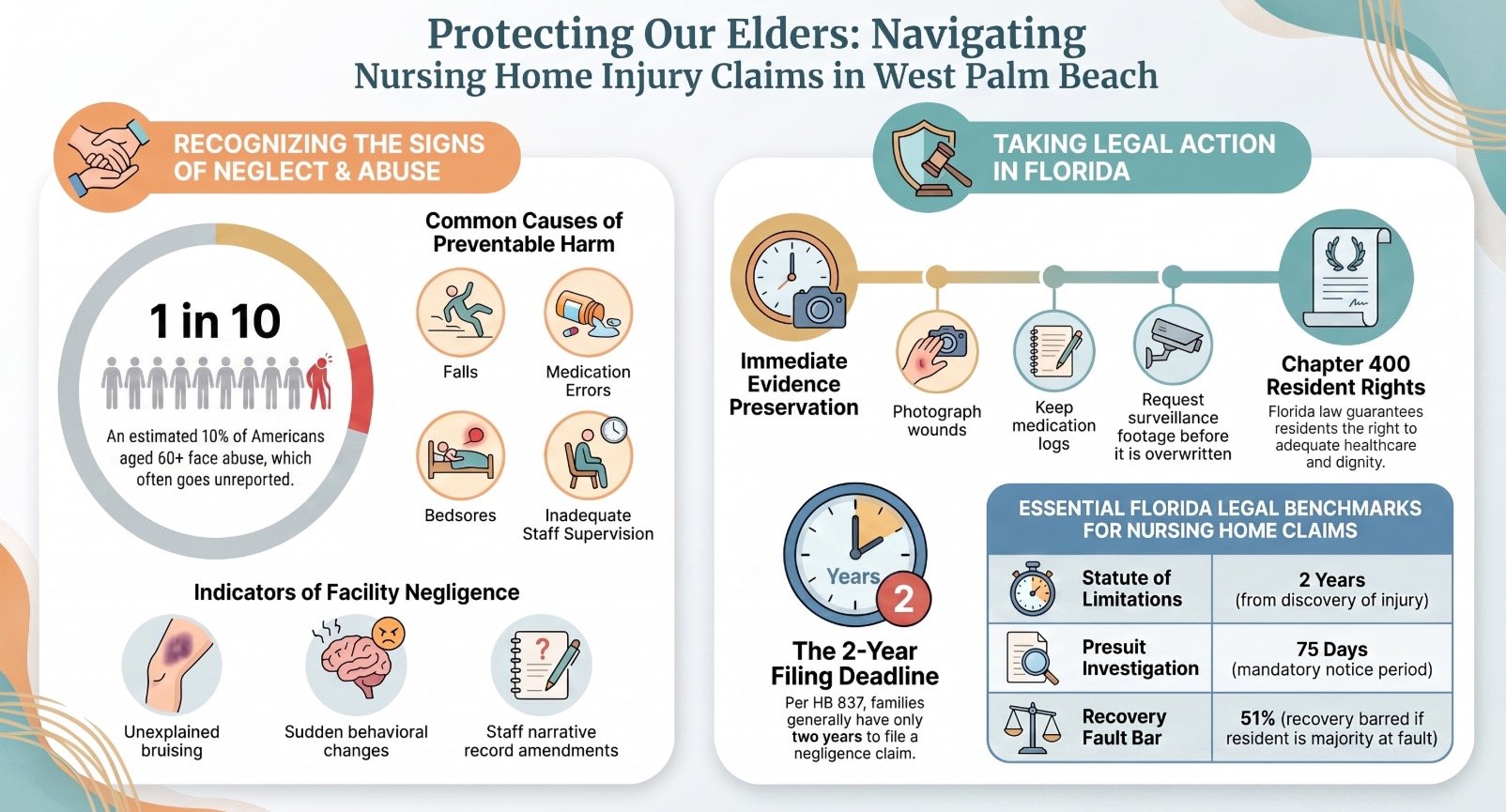
Florida’s Nursing Home Care Act (Fla. Stat. Chapter 400, Part II) establishes a legally enforceable set of resident rights that every licensed nursing facility must honor. These include the right to receive adequate and appropriate health care consistent with established standards, the right to be free from mental and physical abuse, corporal punishment, and chemical or physical restraints not required to treat medical symptoms, the right to privacy and dignity, and the right to be fully informed of the resident’s medical condition. When a facility violates these rights and a resident is injured, Florida law gives the resident (or their representative) a private civil cause of action against the facility under Fla. Stat. §400.023. Before filing suit, however, Florida’s Chapter 400 presuit notice regime (Fla. Stat. §400.0233) requires the claimant to serve a formal notice of intent to initiate litigation and to complete a 75-day presuit investigation period. Under HB 837 (March 24, 2023), most nursing home negligence claims must also be filed within 2 years, and the modified comparative fault rule bars any recovery if the injured resident is found 51% or more at fault, though comparative fault against elderly nursing home residents is difficult to establish where the facility controlled the environment and care.
Proving Liability in West Palm Beach Nursing Home Injury Cases
Proving liability in a West Palm Beach nursing home injury case requires clear evidence that the facility or its staff breached a duty of care and that the breach caused the resident’s harm. Liability standards generally require showing that the nursing home failed to provide reasonable care consistent with applicable regulations, policies, and accepted practices. Negligence proof may include medical records, care plans, medication logs, staffing records, inspection reports, and photographs of injuries or unsafe conditions. Witness statements from residents, family members, nurses, physicians, and other employees can help establish what occurred and whether warning signs were ignored. Evidence may also demonstrate inadequate supervision, improper training, delayed treatment, or failure to prevent falls, pressure injuries, dehydration, or abuse.
A careful review can connect the facility’s conduct to specific medical consequences and ongoing needs. Promptly preserving records and documenting changes in the resident’s condition supports a thorough, service-oriented investigation focused on protecting vulnerable individuals and promoting accountability.
Medical Records, MDS Data, and CMS Survey Preservation in West Palm Beach Nursing Home Cases
Unlike motor vehicle cases, nursing home injury claims hinge on records. Every Florida-licensed skilled nursing facility must maintain detailed resident charts, Minimum Data Set (MDS) assessments, nursing notes, medication administration records (MARs), fall risk assessments, wound care logs, and staffing schedules. Under federal law, Centers for Medicare & Medicaid Services (CMS) also publishes facility-level survey and inspection results and staffing data on Medicare Care Compare, which can reveal a facility’s history of deficiencies (F-tags), civil monetary penalties, and reported abuse or neglect incidents.
These records can be altered, lost, or spoliated in the days after a serious injury. Our firm sends formal preservation and spoliation letters to the facility, its corporate parent, and any third-party staffing agency immediately upon being retained. We also obtain publicly available Florida AHCA Nursing Home Guide inspection reports, which document deficiencies, complaint investigations, and enforcement actions at every West Palm Beach and Palm Beach County facility. Combined with independent expert review of medical records and staffing analyses, this evidence forms the backbone of a successful Chapter 400 claim.
Dealing With Insurance Companies After a West Palm Beach Nursing Home Injury
Insurance companies may become involved soon after a West Palm Beach nursing home injury is reported, particularly when the facility anticipates a negligence claim. Representatives may contact the resident or family, request statements, or offer an early settlement. Such communications should be approached carefully because recorded comments and signed releases can affect available compensation.
A lawyer can help preserve medical records, incident reports, photographs, staffing information, and other evidence before discussing resolution. The legal team may evaluate liability, treatment costs, pain and suffering, diminished quality of life, and related losses. A thoughtful Negotiation strategy should reflect the injury’s full impact rather than the insurer’s initial valuation.
In serious cases, the circumstances may support punitive damages when conduct was intentional, reckless, or grossly negligent. Insurance coverage may not fully satisfy such an award, making accurate identification of responsible parties important. A representative serving the resident’s interests can communicate with adjusters, challenge inadequate offers, and protect the family from avoidable pressure while pursuing fair compensation.
What to Expect During a West Palm Beach Nursing Home Injury Claim Process
A West Palm Beach nursing home injury claim typically begins with an initial case evaluation to assess the allegations, injuries, and available legal options. The process then involves gathering medical records, facility documents, witness statements, and other evidence before negotiating with insurers. If negotiations do not produce a fair resolution, litigation may proceed through court, potentially ending in a settlement or trial judgment.
Initial Case Evaluation
During an initial case evaluation, a West Palm Beach nursing home injury lawyer examines the resident’s medical records, facility documentation, injury history, and available evidence to determine whether neglect, abuse, or another form of negligence may have contributed to the harm. The consultation usually includes a careful discussion of the resident’s condition, family concerns, and desired protections. The lawyer may explain potential legal theories, filing requirements, case timelines, and the responsibilities of involved parties without promising a particular result. Families can also ask about legal consultations, representation agreements, and funding options, including whether fees depend on recovery. At this stage, evidence gathering is generally discussed at a high level rather than conducted in detail. The evaluation helps determine appropriate next steps while preserving the resident’s dignity and interests.
Gathering Evidence
How evidence is gathered can substantially influence the evaluation of a nursing home injury claim. A representative may obtain medical records, care plans, medication administration logs, photographs, staffing information, and communications concerning the resident’s condition. Medication safety records can help clarify whether prescriptions were administered correctly, monitored appropriately, and documented according to facility procedures. Incident reporting materials may identify when an event occurred, who responded, and whether required notifications were completed.
Witness statements from residents, family members, caregivers, and medical professionals can provide additional context while preserving distinct perspectives. You may also request relevant surveillance footage, inspection findings, and facility policies. Prompt preservation of these materials is important because records can be altered, misplaced, or routinely deleted. The process remains focused on establishing facts and protecting the resident’s interests.
Negotiating With Insurers
When a nursing home injury claim is submitted, insurers typically review the resident’s medical history, incident records, facility documentation, and allegations of negligence before determining responsibility. Adjusters may request additional records, statements, photographs, billing information, and documentation of ongoing care. Their evaluation often considers whether facility policies were followed and whether the reported injury resulted from preventable conditions. A representative may offer an initial settlement, but that amount may not reflect future medical needs, rehabilitation, or related losses. Careful evidence preservation remains important while negotiations continue, including maintaining relevant correspondence and updated treatment records.
Attorney communication can help organize responses, address insurer questions, and present a supported demand. Families and advocates should review proposed terms carefully, avoid premature admissions, and allow enough time to make informed decisions that protect the resident’s interests.
Litigation And Resolution
A West Palm Beach nursing home injury claim may proceed to litigation if negotiations do not produce a fair resolution or if the responsible parties dispute liability. The process generally begins with filing a complaint, serving defendants, and exchanging evidence through discovery. Medical records, care plans, witness testimony, inspection reports, and facility policies may help establish negligence and damages. Depositions can require residents, family members, caregivers, and medical professionals to answer questions under oath. Before trial, the parties may pursue mediation or evaluate Arbitration vs litigation based on enforceability, cost, timing, and the resident’s interests. Wrongful eviction claims may involve separate facts but can arise alongside neglect or retaliation allegations. If settlement remains unavailable, a judge or jury determines liability and compensation. A written resolution concludes the matter and supports accountability.
Compensation for West Palm Beach Nursing Home Injury Damages
Compensation for West Palm Beach nursing home injury damages may cover medical treatment, rehabilitation, additional care, and other losses caused by neglect or abuse. A careful assessment can identify how an injury changed a resident’s needs, safety, and daily support requirements. Relevant evidence may include medical records, facility reports, photographs, witness statements, staffing information, and prior complaints.
Residential neglect patterns can strengthen an evaluation when repeated failures, such as inadequate supervision, missed medications, or unsafe conditions, show that the harm was preventable. Family communication failures may also delay recognition of injuries, making timely documentation and coordinated reporting especially important. A representative can help preserve records, communicate with the facility, and pursue accountability through an appropriate claim or resolution process.
The available recovery depends on the facts, applicable law, and evidence connecting the facility’s conduct to the resident’s injuries. Prompt attention helps protect the resident’s interests and supports families seeking safer, more dignified care for vulnerable individuals in West Palm Beach.
Economic vs Non-Economic Damages in West Palm Beach Nursing Home Cases
Economic damages may include medical expenses, rehabilitation costs, lost income, and other measurable financial losses resulting from nursing home injuries. Non-economic damages address less tangible harm, such as pain, emotional distress, reduced quality of life, and loss of dignity. Calculating total compensation requires evaluating both categories, supported by available evidence and the specific circumstances of the resident’s injuries.
Economic Damages Explained
When a nursing home resident suffers an injury in West Palm Beach, damages may include both economic and non-economic losses arising from the facility’s negligence or misconduct. Economic damages represent measurable financial costs connected to the injury and its treatment. They may include hospital bills, physician visits, prescription medications, rehabilitation, medical equipment, transportation, and future care recommended by qualified providers. If the resident requires additional assistance with daily activities, those related service costs may also qualify. Financial recovery can further address lost income or diminished earning capacity when an injury affects employment, although many residents are retired.
Proof documents, including invoices, medical records, insurance statements, employment records, and care assessments, help establish the amount claimed. A careful review of expenses can support an accurate demand and promote responsible compensation for necessary care.
Non-Economic Damages Explained
Non-economic damages address the personal effects of a nursing home injury that do not have a set dollar value. In West Palm Beach cases, they may involve physical pain, emotional distress, humiliation, loss of enjoyment, and reduced independence. A resident who suffers neglect may experience anxiety, fear, sleep disruption, or a limited ability to participate in meaningful relationships and activities. These harms differ from economic losses, such as treatment costs, medication expenses, or income-related consequences. Documentation from caregivers, family members, physicians, and therapists can help describe how an injury changed the resident’s daily life.
Rehabilitation planning may also reveal limitations affecting dignity, comfort, and social engagement, without converting those experiences into ordinary invoices. Careful legal review ensures that these personal harms receive appropriate recognition while preserving the resident’s voice and dignity.
Calculating Total Compensation
In West Palm Beach nursing home cases, total compensation generally reflects both economic and non-economic damages arising from the resident’s injury. Economic damages may include hospital bills, rehabilitation, medication, assistive equipment, in-home care, and anticipated future treatment. Documentation such as invoices, medical records, employment information, and care assessments helps establish these losses.
Non-economic damages address pain, emotional distress, disability, disfigurement, diminished quality of life, and loss of companionship. Their value depends on the injury’s severity, duration, prognosis, and effect on daily functioning. Insurance negotiation strategies should present organized evidence while accounting for coverage limits, comparative fault arguments, and disputed causation.
When a resident dies, wrongful death evaluations may consider funeral expenses, medical costs before death, lost support, and survivors’ losses. A careful assessment promotes fair recovery and supports the family’s ongoing needs.
When a West Palm Beach Nursing Home Injury Case Goes to Trial vs Settlement
A West Palm Beach nursing home injury case may resolve through settlement or proceed to trial, depending on the strength of the evidence, the parties’ willingness to negotiate, and the extent of the resident’s injuries. Settlement can provide timely assistance for medical needs, recovery, and other losses while avoiding the uncertainty and demands of courtroom proceedings. Insurance negotiation typically involves reviewing records, incident reports, witness accounts, and damages before determining an appropriate resolution. Clear documentation may increase settlement leverage, particularly when responsibility and harm are well supported.
If negotiations fail, trial strategy becomes important. Counsel may present testimony from healthcare professionals, staff members, family witnesses, and the injured resident when appropriate. Jury considerations can include the credibility of witnesses, the facility’s conduct, the resident’s vulnerability, and the long-term effects of the injury. A trial may result in greater compensation, but it also involves additional time, expense, and emotional strain. Families and advocates often weigh these factors carefully when pursuing accountability and meaningful support.
Florida Laws That May Affect Your West Palm Beach Nursing Home Case
Florida law may affect how a West Palm Beach nursing home injury claim is investigated, valued, and pursued. Several legal frameworks can guide families, advocates, and professionals seeking accountability and safer care for residents. Important considerations may include:
- Residents’ Rights: Florida protects residents’ dignity, privacy, participation in care decisions, access to records, and freedom from abuse, neglect, and exploitation. Violations may support regulatory complaints and civil claims.
- Facility Licensing: State licensing requirements address staffing, supervision, medication practices, care planning, reporting, and facility operations. Inspection reports and disciplinary records may help establish whether a facility breached required standards.
- Negligence Standards: A claim may depend on proving that the facility or its personnel failed to provide reasonable care and that this failure caused injury. Medical records, incident reports, witness accounts, and expert opinions can clarify these issues.
Florida statutes and administrative rules may also govern guardianship, reporting obligations, and evidence preservation. A qualified attorney can evaluate applicable requirements, coordinate with oversight agencies, and pursue remedies while prioritizing the resident’s safety and well-being.
West Palm Beach Nursing Home Injury Claims: What the Numbers Reveal About Elder Abuse, Neglect, and Facility Understaffing in Palm Beach County
Palm Beach County has one of the largest elderly populations in the United States and one of the highest concentrations of skilled nursing facilities in Florida. According to National Institute on Aging elder-abuse research, an estimated 1 in 10 Americans age 60 and older has experienced some form of elder abuse, and most incidents in institutional settings go unreported. Florida’s Agency for Health Care Administration (AHCA) publishes inspection and complaint data showing that Florida nursing homes receive tens of thousands of deficiency citations each year, ranging from medication errors and pressure ulcers to falls, elopement, and staffing failures. Palm Beach County alone contains dozens of licensed skilled nursing facilities, and CMS Care Compare data consistently shows that a significant share operate below the national average on staffing metrics.
Florida HB 837, effective March 24, 2023, fundamentally reshaped every West Palm Beach nursing home injury claim. The law cut the statute of limitations to 2 years for most negligence claims, and replaced pure comparative fault with a modified system: an injured resident found 51% or more at fault recovers nothing. Combined with Chapter 400’s mandatory 75-day presuit investigation period, the timeline for building a nursing home negligence case is now tightly compressed.
Nursing home evidence, including medical records, MDS assessments, MARs, wound photos, incident reports, staffing schedules, and video from common-area cameras, can be altered, replaced, or lost within days or weeks. Facilities routinely amend charts after a serious injury or death. Immediate legal action, formal spoliation letters, and independent record review are the foundation of every successful West Palm Beach nursing home injury claim.
Florida Chapter 400 Presuit Notice and West Palm Beach Nursing Home Injury Claims
Florida’s Nursing Home Care Act (Chapter 400, Part II) imposes a mandatory presuit process before any nursing home negligence lawsuit can be filed. Under Fla. Stat. §400.0233, the claimant must serve a formal notice of intent to initiate litigation on the target nursing home and identify the alleged acts, omissions, and injuries. The facility then has a 75-day presuit investigation period during which it can accept, reject, or offer to settle the claim. During that same window, the claimant continues to investigate, obtain records, and consult with medical experts.
This process runs alongside HB 837’s 2-year statute of limitations, so waiting to contact an attorney is dangerous: the presuit period cannot be shortened, and every day spent outside legal counsel is time the case cannot be developed. Chapter 400 also allows recovery of statutory attorney’s fees in certain cases, provides for punitive damages where the facility’s conduct rises to the level of gross negligence or intentional misconduct, and preserves the resident’s right to sue for violation of the enumerated resident rights under Fla. Stat. §400.022. An experienced West Palm Beach nursing home injury lawyer can build the presuit record, marshal expert opinion, and position the case to move quickly once the 75-day period closes.
The Statute of Limitations for West Palm Beach Nursing Home Injury Cases
Time limits can determine whether a West Palm Beach nursing home injury claim can proceed, so prompt legal evaluation is key. Florida generally requires negligence actions to be filed within two years after the injury is discovered, or reasonably should have been discovered. A four-year outside limit may apply, although exceptions can affect claims involving fraud, concealment, or intentional misrepresentation. Claims against government-operated facilities may involve shorter notice periods and additional procedural requirements.
The applicable deadline may depend on medical records, incident reports, continuing treatment, and the resident’s ability to recognize the harm. Wrongful death claims also have distinct timing rules, commonly beginning on the date of death. Missing a deadline can bar recovery regardless of the seriousness of the injury. Evidence concerning Negligence standards should thereby be preserved while facts remain available. Separately, a punitive damages analysis may require timely documentation showing intentional misconduct or gross negligence. Families and responsible advocates should treat every potential claim as time-sensitive.
How a West Palm Beach Nursing Home Injury Lawyer Can Help You
When a nursing home resident suffers an injury, legal counsel can assess the circumstances, identify potentially responsible parties, and determine whether negligence or abuse contributed to the harm. A West Palm Beach nursing home injury lawyer can organize medical records, incident reports, photographs, and witness accounts to establish how the injury occurred.
Counsel may also:
- Explain the resident’s legal rights and available remedies
- Communicate with facility representatives and insurance carriers
- Develop a claim for medical expenses, pain, disability, and other losses
An attorney can investigate staffing practices, supervision, training, and regulatory violations while preserving evidence that might otherwise disappear. Legal guidance may help families understand accountability without adding burdens to vulnerable residents or caregivers. If an employee’s advocacy for a resident resulted in Wrongful termination, counsel could evaluate related employment disputes separately from the resident’s injury claim. Representation also lets a family pursue information and compensation through the right legal channels while staying focused on the resident’s safety, dignity, and ongoing care. Strategy depends on the facts, available documentation, and applicable Florida law.
When to Contact a West Palm Beach Nursing Home Injury Lawyer
Prompt legal guidance may be appropriate as soon as a nursing home resident shows signs of injury, neglect, abuse, or a significant decline in condition. Family members, guardians, and concerned caregivers should act promptly when unexplained bruising, falls, pressure injuries, medication errors, dehydration, malnutrition, or sudden behavioral changes occur.
Prompt legal guidance can help address suspected nursing home injuries, neglect, abuse, or significant changes in a resident’s condition.
Immediate safety remains the priority. An Emergency room evaluation may be necessary for serious pain, bleeding, breathing difficulty, head trauma, suspected fractures, or other urgent symptoms. Medical personnel should receive accurate information about the resident’s condition and the circumstances surrounding the event.
After urgent needs are addressed, relevant records should be preserved. Photo documentation can capture visible injuries, unsafe conditions, soiled clothing, inadequate living areas, or equipment problems. Written observations should include dates, times, symptoms, witness names, staff statements, and communications with facility administrators.
You may also contact a West Palm Beach nursing home injury lawyer if the facility delays care, gives inconsistent explanations, discourages reporting, or fails to protect the resident from ongoing harm. Prompt consultation can help preserve important information and support informed decisions.
Why You Need an Experienced West Palm Beach Nursing Home Injury Lawyer
An experienced West Palm Beach nursing home injury lawyer can evaluate whether a resident’s injuries resulted from negligence, abuse, inadequate staffing, unsafe conditions, or other violations of the facility’s duties. Such an evaluation may uncover overlooked evidence, including medical records, incident reports, staffing information, surveillance footage, and witness statements. Counsel can also explain Resident rights and identify whether the facility failed to provide appropriate care, supervision, medication management, nutrition, or protection from foreseeable harm.
Experienced legal guidance is important because nursing home injury claims may involve intricate medical issues, disputed facts, and strict procedural requirements. A lawyer can preserve evidence, consult qualified professionals, and assess the full effect of physical injuries, emotional distress, and related expenses. The attorney may also review regulatory compliance, licensing obligations, inspection findings, and policies governing the resident’s care. By addressing these matters methodically, legal counsel helps families and advocates pursue accountability while protecting the dignity, safety, and well-being of vulnerable residents throughout the process.
How to Choose the Right Florida Personal Injury Lawyer for Your Case
The decision should begin with careful review of relevant experience, case history, and the lawyer’s ability to handle the specific type of injury, insurance dispute, or liability question involved in the claim. A suitable attorney should demonstrate organized case preparation, sound judgment, and a genuine commitment to protecting the client’s well-being while pursuing fair compensation. Ask specifically about their experience with Florida’s HB 837 comparative fault rules and how they approach fault disputes with insurers. Also ask about Board Certification in Civil Trial and an AV Preeminent rating from Martindale-Hubbell, independent credentials that confirm the highest levels of professional excellence and courtroom readiness.
Client communication is another essential measure. The lawyer should explain options clearly, provide timely updates, and answer questions with honesty and respect. This approach helps injured people make informed decisions during a difficult period without feeling pressured or confused about what is happening with their case. Potential clients should also review fee agreements carefully before signing anything, understanding contingency arrangements, potential expenses, and how costs may affect the net recovery. By evaluating experience, communication, availability, and fee structure, an injured person can select counsel prepared to serve their interests with diligence, integrity, and professional care throughout the full life of the claim.
About The Law Offices of Anidjar & Levine
Founded in 2005 by Marc Anidjar and Glen Levine, the firm began as a two-person operation working out of a construction office conference room. Over the past 20 years, that modest start has grown into one of Florida’s most recognized personal injury practices, with more than $1 billion recovered in settlements for injury clients across the state. We bring that same determination and depth of experience to every West Palm Beach nursing home injury case we handle.
The Law Offices of Anidjar & Levine represents individuals and families pursuing accountability after nursing home injuries in West Palm Beach and throughout Florida. The firm evaluates allegations involving neglect, abuse, unsafe conditions, medication errors, inadequate supervision, and delayed medical attention. Its attorneys review medical records, facility documentation, witness accounts, and applicable regulations to determine whether a provider failed to meet required Nursing home standards.
The firm also addresses concerns involving resident rights, including dignified treatment, appropriate care, privacy, and freedom from preventable harm. When evidence supports a claim, legal professionals may pursue compensation for medical expenses, additional care, pain, suffering, and other losses. They can also communicate with insurers and facility representatives while families focus on a resident’s recovery and well-being.
Each matter receives an individualized assessment because the circumstances surrounding an injury can vary substantially. The firm’s approach emphasizes careful investigation, clear communication, and service to vulnerable residents and their families throughout the legal process.
Marc Anidjar, Co-Founder & Personal Injury Attorney
Marc Anidjar co-founded the firm in 2005 and has spent two decades representing seriously injured people throughout Florida. He is Board Certified in Civil Trial Law by The Florida Bar, a distinction held by fewer than 3 percent of Florida attorneys, and holds an AV Preeminent rating from Martindale-Hubbell, the legal industry’s highest peer-review recognition for professional excellence and ethical standards.
Glen Levine, Co-Founder & Personal Injury Attorney
Glen Levine co-founded the firm alongside Marc Anidjar and has represented injury clients across Florida for more than 20 years. He holds an AV Preeminent rating from Martindale-Hubbell and is committed to clear communication, thorough case preparation, and protecting each client’s right to full and fair compensation after a serious injury.
Frequently Asked Questions
Can Family Members File a Nursing Home Injury Claim on Behalf of a Resident?
Family members may file a nursing home injury claim for a resident when authorized by law, but they do not automatically possess that right. A legally appointed guardian may have Guardianship authority to act for an incapacitated resident. Otherwise, the resident generally controls the claim, or an authorized representative may proceed under applicable state law. After death, eligible relatives or estate representatives may have wrongful injury standing, depending on jurisdiction and circumstances.
What if the Nursing Home Resident Cannot Communicate or Make Legal Decisions?
When a nursing home resident cannot communicate or make legal decisions, a capacity determination typically establishes whether assistance is necessary. An authorized Legal representative may then act on the resident’s behalf, often through a health care proxy, durable power of attorney, or court-appointed guardian. Guardianship paperwork may be required when no valid authority exists. The representative can provide informed consent, gather records, and pursue appropriate remedies while protecting the resident’s interests.
Can Nursing Home Injuries Result in Criminal Charges Against Facility Staff?
Yes, nursing home injuries can result in criminal charges when staff members intentionally abuse residents, recklessly disregard serious risks, falsify records, or commit neglect rising to criminal negligence. Prosecutors evaluate the evidence, applicable statutes, and the responsible individual’s conduct. Criminal proceedings are separate from civil liability, which may allow an injured resident or representative to seek compensation. Prompt reporting, medical documentation, witness statements, and preservation of facility records can support accountability and protect vulnerable residents.
Are Nursing Home Injury Settlements Subject to Taxes in Florida?
Nursing home injury settlements are generally not subject to Florida state income tax because Florida imposes no individual income tax. Under federal law, compensation for physical injuries or illness is typically excluded from income tax when it reimburses documented medical harm. However, punitive damages, interest, or portions allocated to nonphysical claims may be taxable. Structured settlements can provide tax advantages, but the agreement’s wording and allocation matter. Professional tax guidance remains advisable.
Can Residents Be Transferred or Discharged for Reporting Abuse or Unsafe Conditions?
Residents generally cannot be transferred or discharged for reporting abuse, neglect, unsafe conditions, or exercising legal rights. Federal and Florida regulations provide whistleblower protections and require facilities to document legitimate reasons for transfers or discharges, provide notice, and follow appeal procedures. Retaliatory eviction, intimidation, reduced services, or threats may be unlawful. Families should preserve records, report concerns to regulators, and seek qualified legal guidance when retaliation prevention measures appear inadequate.
What is the statute of limitations for West Palm Beach nursing home injury cases?
Under Florida HB 837, effective March 24, 2023, most negligence-based nursing home injury claims must be filed within 2 years from the date of the injury (or from when it reasonably should have been discovered). Chapter 400’s 75-day presuit investigation period runs alongside that deadline, so families should contact counsel promptly.
What is Florida’s Chapter 400 presuit notice requirement for nursing home claims?
Before filing a nursing home negligence lawsuit, Fla. Stat. §400.0233 requires the claimant to serve a formal notice of intent to initiate litigation and to complete a 75-day presuit investigation period. During that window, both sides exchange information and the facility can accept, reject, or attempt to settle the claim. Failure to comply with presuit steps can bar the lawsuit entirely.
How does Florida HB 837 affect West Palm Beach nursing home injury cases?
Florida HB 837 (March 24, 2023) replaced pure comparative fault with modified comparative fault (51% bar) and reduced the statute of limitations from 4 years to 2 years. Facilities and their insurers now try to attribute part of the fault to the resident’s own conduct, though that argument is difficult in a controlled care setting where the facility set the environment and provided the care.

West Palm Beach and Palm Beach County Local Resources
The following local resources may help injured residents, their families, and caregivers in the days and weeks after a serious nursing home injury or suspected abuse. If you believe a resident is in immediate danger, call 911 first.
Elder Abuse Reporting and Advocacy
- Florida Abuse Hotline (DCF) — 24/7 elder abuse and neglect reporting · 1-800-96-ABUSE (1-800-962-2873)
- Florida Long-Term Care Ombudsman Program — State advocacy for nursing home residents · 1-888-831-0404
- Florida AHCA Nursing Home Guide — Facility inspection and complaint records
- Medicare Care Compare — CMS 5-star quality ratings for every U.S. nursing home
Hospitals and Emergency Care
- Good Samaritan Medical Center — 1309 N Flagler Dr, West Palm Beach, FL 33401 · 561-655-5511
- St. Mary’s Medical Center — Level I Trauma Center · 901 45th St, West Palm Beach, FL 33407 · 561-844-6300
- JFK Medical Center — 5301 S Congress Ave, Atlantis, FL 33462 · 561-965-3000
- Palm Beach Gardens Medical Center — 3360 Burns Rd, Palm Beach Gardens, FL 33410 · 561-622-1411
Police and Sheriff
- West Palm Beach Police Department — 600 Banyan Blvd, West Palm Beach, FL 33401 · Non-emergency: 561-822-1900
- Palm Beach County Sheriff’s Office — 3228 Gun Club Rd, West Palm Beach, FL 33406 · 561-688-3000
Courts
- Fifteenth Judicial Circuit Court of Florida — Main Courthouse, 205 N Dixie Hwy, West Palm Beach, FL 33401 · 561-355-2996
- Palm Beach County Clerk of the Circuit Court · 561-355-2996
Mental Health and Crisis Support
- 988 Suicide & Crisis Lifeline — 24/7 free confidential support · 988
- 211 Palm Beach/Treasure Coast — 24/7 helpline · 211
- Jerome Golden Center for Behavioral Health — 1041 45th St, West Palm Beach, FL 33407 · 561-383-8000
Victim Services and Additional Support
- Palm Beach County Victim Services — 24-hour crisis line · 561-355-2418
- Florida Department of Health in Palm Beach County · 561-840-4500
- Florida Department of Elder Affairs — Elder Helpline · 1-800-963-5337
Nursing home injury claims in West Palm Beach often involve serious harm to vulnerable elderly residents, Florida Chapter 400 pre-suit obligations, and aggressive facility defense strategies. A West Palm Beach Nursing Home Injury Lawyer from The Law Offices of Anidjar & Levine can identify Chapter 400 rights violations, preserve medical and staffing records, coordinate expert review, and pursue compensation for medical expenses, pain and suffering, and other damages. Prompt legal guidance can help protect an injured resident’s rights and strengthen the claim. Families concerned about neglect or abuse at a Palm Beach County facility should consider contacting an experienced attorney for a confidential case review.
Real Reviews From Our Clients!
“My mother developed serious pressure ulcers at a West Palm Beach nursing home and the staff kept telling us it was ‘normal for her age.’ Anidjar & Levine pulled the wound-care records, showed the sores were preventable, and held the facility accountable for the care she deserved.”
— Patricia W., West Palm Beach
“After my father fell three times in one month and finally broke his hip, we knew something was wrong. Anidjar & Levine got the staffing schedules and showed the facility was chronically understaffed on his shift. They handled the Chapter 400 presuit process and secured a settlement that covered everything.”
— Robert G., Lake Worth
“When we found bruises on my aunt that no one could explain, Anidjar & Levine took the case seriously from day one. They coordinated with the Ombudsman, reviewed CMS reports, and made sure the facility answered for what happened. Professional, compassionate, and truly on our side.”
— Denise M., Delray Beach

