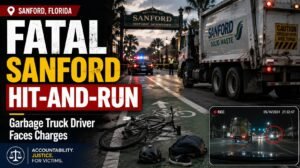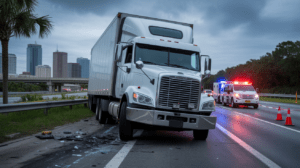

You know, we share the road with massive commercial trucks every single day, but there’s a specific kind of collision that is just uniquely catastrophic. And honestly, not a lot of people really understand it. So today, we’re diving into the hidden danger of underwrite accidents. We’re going to break down what they are, exactly why they happen, and what can be done after one of these terrible events.
Learn more: Tampa Underride Truck Accident Lawyer
Alright, here’s our roadmap. We’ll kick things off by defining what makes these crashes so incredibly devastating. Then, we’ll get into the four main causes, explore the really profound human cost for survivors, cover a victim’s legal rights, and wrap up with the essential steps you’d need to take after a crash. So, first things first, what is an underride accident?
And what makes it so different, so much more dangerous than other crashes you might see on the highway? To put it simply, it’s when a car doesn’t just bump into the back or side of a big rig. No, It actually slides underneath the trailer. And the physics of that collision, well, that’s what makes it so unbelievably dangerous.
Okay. Think about this for a second. Your car is packed with safety features, right? You got bumpers, crumple zones, airbags, all designed to absorb the impact of a crash with another car.
But in an underwrite accident, all of that is rendered useless. The truck trailer completely bypasses those protections, and the point of impact becomes the windshield, right at the level of the people inside.
So, the big question is, how does something this horrific even happen? Well, it’s almost never just one thing. It’s usually a whole chain of failures, and what’s really frustrating is that so many of them are preventable. Let’s break down the four main causes.
The first, and honestly the most common link in that chain, is simple human error. But what’s so important to understand here is that it’s not always about just one person’s mistake. It can involve the truck driver, other drivers, or sometimes a combination of both. So, on the truck driver’s side, you see things like fatigue from being on the road for way too long, or maybe they’re distracted by a phone and their reaction time just But hey, passenger car drivers have a role to play too. Following a huge truck too closely, totally misjudging how long it takes that thing to stop, or trying to make a risky pass, it just goes to show, out on the highway, everyone has to be vigilant. It’s a shared responsibility.
Alright, let’s talk about the truck itself, because even if a driver makes a mistake, the truck is supposed to have equipment to stop a tragedy from happening. But that’s often not the case. Now, federal law says trucks have to have these guards on the back. But a lot of the time they’re damaged, they’re poorly maintained, or they’re just too weak to do any good.
But the really big gap in the rules? It’s the sides of the trailers. There’s often no requirement for side guards at all, which leaves this massive unprotected danger zone for any car nearby. This next one is almost shockingly simple.
Sometimes drivers just can’t see the truck in time. You’d think a giant metal box would be hard to miss, right? Well, not always, especially at night or in really bad weather. I mean, a fifty three foot trailer can practically become invisible if its reflective tape is all worn out or if its side marker lights are busted.
Even something as small as headlights being aimed wrong can create a glare that just blinds other drivers. These are the kinds of little details, these seemingly minor failures, that can lead to an absolute catastrophe. You know, all these equipment problems we’ve been talking about, they all point to a fourth and final cause. A systematic failure of maintenance.
And that responsibility? It often falls not on the driver, but on the company that owns the truck. Now this is so important because it shows the difference between one person’s bad decision and a company’s bad policy. A driver might be distracted by their phone, sure, but the company might be skipping required brake inspections or putting off repairs to safety guards or just flat out ignoring federal maintenance rules to save a buck.
That points to a culture where profits are being put way ahead of people’s safety. So when these failures all line up and an underride accident happens, the consequences are just devastating and they last a lifetime. Let’s take a moment to look at the profound human cost for the victims and their families.
Because the impact hits the passenger cabin directly, the injuries are, well, catastrophic. We are talking about severe traumatic brain injuries that can change someone’s personality forever. Permanent disabilities like spinal cord damage or amputations. And then there’s the deep psychological trauma, PTSD, constant anxiety, and this terrible survivor’s guilt if other people in the car didn’t make it.
To really get a sense of the scale here, just look at this number: over three hundred million dollars That is the amount that’s been secured in compensation for victims in these kinds of cases.
And this isn’t just about money. Not at all. It’s a number that represents the immense, lifelong cost of this negligence. The cost of medical care, of lost futures, of just unimaginable suffering.
Now facing that kind of devastation, it is so important to remember that victims are not powerless. There are specific legal rights in place designed to protect them and help them start to rebuild their lives. Let s break it down to three fundamental rights. First, the right to get the medical care you need, right away and for the long term, without worrying about the cost.
Second, the right to have experienced legal experts on your side who know how to deal with the trucking industry, and finally, the right to pursue fair compensation for everything that was taken medical bills, lost income, and the pain and suffering involved. Okay, so knowing your rights is one thing, but acting on them is another. Let’s walk through the critical first steps to take right after an underwrite accident. These are things that can protect both your health and your legal claim.
There are three absolutely critical steps: one. Get medical help immediately. Some serious injuries are not obvious right away. Two.
If you are physically able to, document everything at the scene. Photos, videos, witness information, it’s all invaluable. And three, and this is so important, contact legal representation quickly. In these kinds of cases, evidence can vanish fast, and acting right away is essential to protecting your rights.
When you really look at it, these accidents expose this deep conflict between the pressure to make a profit and the need for public safety. And it leaves all of us with a really critical question to think about: When profit is put before safety, who is ultimately responsible for protecting the rest of us out there on the road?