
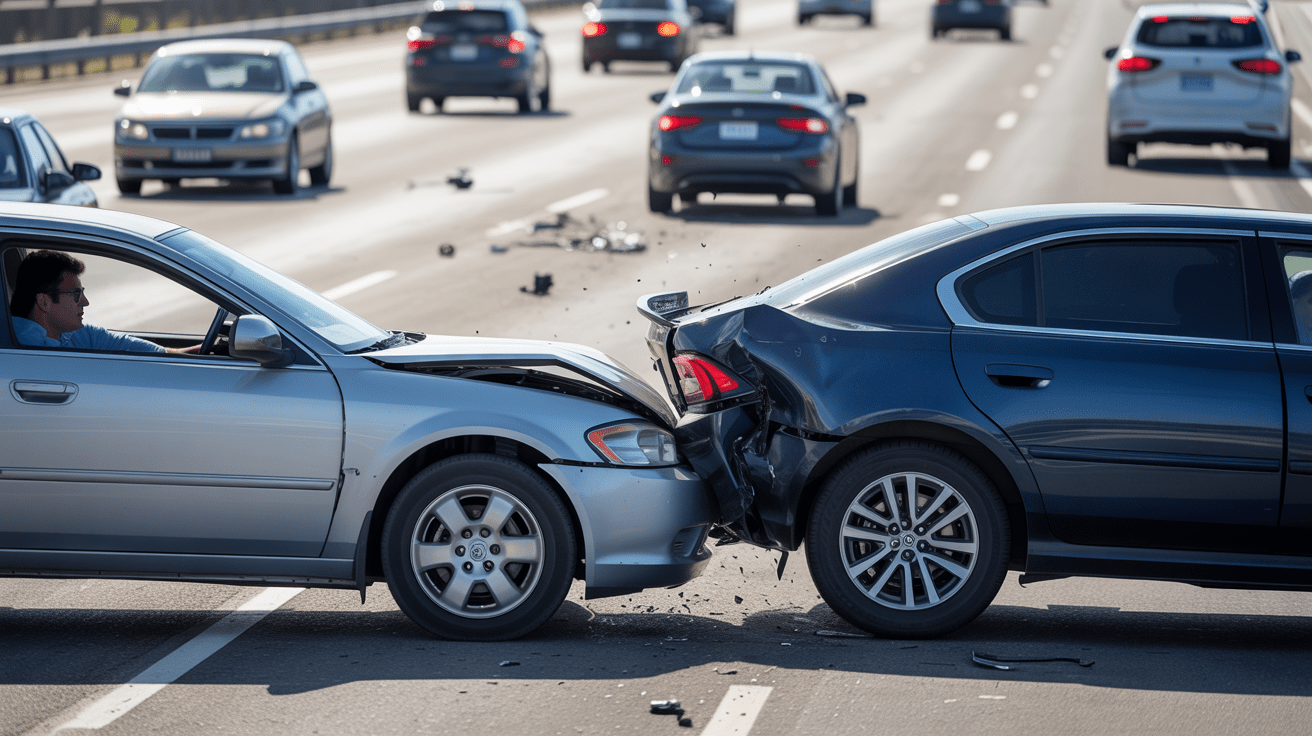
Okay. Let’s talk about something that happens way too often on Tampa’s roads, the dreaded lane change accident. Today, we’re gonna walk through exactly what you need to know if it ever happens to you, from why they happened in the first place to the critical steps you have to take to protect yourself.
Learn More: Tampa Lane Change Accident Injury Lawyer
You know that feeling, that sound of crunching metal, the sudden jolt. It’s just a moment of pure chaos, and your mind is racing. Our goal here is to cut through all that confusion and give you a really clear step by step guide for what to do in those first few minutes, hours, and days. So let’s dive in.
First things first, you gotta ask why do these accidents seem to happen so frequently? Well, turns out most of them come down to just a few key and totally preventable driver mistakes that get even more dangerous on Tampa’s uniquely busy roads. And, you know, the causes aren’t some kind of complex mystery. We’re talking about the absolute basics of driving.
Somebody not checking their blind spot, failing to use a turn signal, a driver looking at their phone instead of the road, or someone weaving through traffic like they’re in a movie. These are fundamental failures of driving safely. And this is what really makes Tampa, well, Tampa. It’s not just about one person’s mistake.
The reality is the constant traffic jams on I two seventy five and those big differences in speed where one lane is crawling and the next is flying by, that whole environment just amps up the risk, turning one small error into a really serious collision.
Okay. So the worst has happened. What you do in the first twenty four hours is absolutely critical. I mean it. We’re gonna cover the three most important things you need to do right away to protect your health and just as importantly, any potential legal claim you might have.
All right, here it is, your essential checklist. Super simple. Number one, document everything. Take pictures, get witness info, make a note of the road conditions.
Number two, go see a doctor, even if you feel totally fine. And number three, talk to a lawyer so you can understand what your options are. I really want to focus on that second step for a second because it is so, so important. After a crash, adrenaline is pumping through your body and it can completely hide serious injuries.
Getting a medical checkup right away does two huge things. One, it protects your health and two, it creates an official paper trail that links your injuries directly to that accident. That becomes crucial down the road.
So after you’ve dealt with the immediate chaos at the scene, you kind of enter a new phase, navigating the legal world. And the absolute first step is just understanding your rights so you don’t get taken advantage of when you’re already in a tough spot.
Listen, under Florida law, you have these fundamental rights as a victim. You have the right to file a claim, to demand payment for all your damages, to make sure evidence is saved, and to get a lawyer. And here’s a big one. You have the right to just say no to a lowball offer from an insurance company.
Now here’s a key legal idea you should know about. It’s called comparative negligence. A lot of people think, oh, if I was even one percent at fault, I can’t get anything. That’s just not true in Florida.
You can still recover money for your damages. Your final award is just reduced by whatever percentage of fault you’re assigned. And all of this, it all builds toward the main goal of a claim, which is compensation. And let’s be clear, this isn’t about hitting the lottery.
It’s about being made whole again, recovering all the losses, both the obvious and the hidden ones that you’ve suffered. So when we say compensation, it’s really a broad term. It, of course, covers the things you’d expect, like your doctor’s bills and your car repairs, but it also includes the income you lost because you couldn’t work, the cost of any future therapy or rehab, and importantly, it includes money for the actual physical pain and emotional suffering you went through. And that pain and suffering part is a much bigger deal than a lot of people think.
This quote here really hits the nail on the head. The invisible injuries, the anxiety, the trauma, the fear of driving again, those can be just as devastating as the physical ones. And sometimes they can last a lifetime.
Of course, to get any of this compensation, you first have to prove the other driver was actually at fault. And a strong case is always built with hard evidence. We’re talking about things like video from a traffic cam or a dashcam, what witnesses saw, and even having experts analyze the dent patterns and skid marks to scientifically reconstruct what happened. Okay, we’ve arrived at what might be the single most important piece of information in this whole thing.
There is a hard, non negotiable deadline for taking legal action. If you miss this deadline, it’s over. You lose your right to compensation forever, no matter how strong your case is. And the number you have to burn into your brain is four.
You get four years from the date of the accident to file a personal injury lawsuit in Florida. It’s called the statute of limitations and believe me there are very, very few exceptions to this rule. Now four years might sound like an eternity, right? But this timeline shows you how fast it can just evaporate Between getting medical treatment, collecting all the evidence, and going back and forth with insurance companies, that deadline can sneak up on you way faster than you think.
You have to act promptly. So there you have it. The common causes, the immediate steps to take, your rights as a victim, and that critical ticking clock. The goal here is to empower you, to give you the knowledge you need in a situation that can make you feel completely powerless.
The real key is just being prepared to protect yourself.

