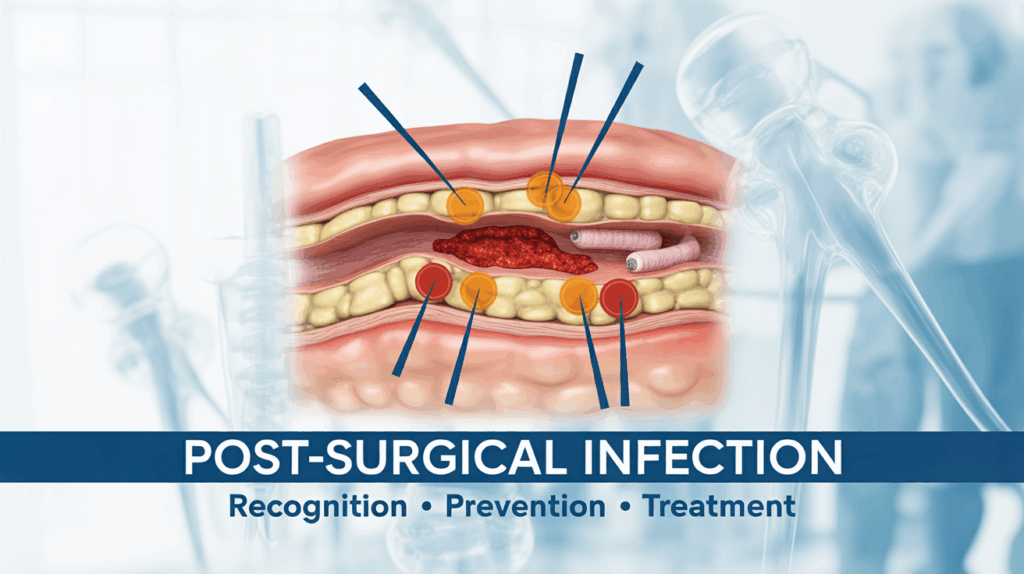
You know, whenever you go in for surgery, you’re filled with hope, right? Hope for getting better, for feeling relief, just for a better life. But what happens when that hope gets completely derailed by something you never saw coming? Like a post surgical infection?
Learn More: Florida Post-surgical Infection Injury Lawyer
So today we’re going pull back the curtain on this unseen risk and really dig into what happens when the healing process takes a dangerous turn.
And that’s really the core question, isn’t it? You put all your trust in a medical team to fix a problem. So what do you do when the very process that was supposed to help you actually creates a new and sometimes even scarier problem? It’s a terrifying thought and it’s exactly what we’re going to explore. Okay. So where do these infections even come from?
Here’s something you have to understand. A lot of the time this isn’t just bad luck. It often boils down to preventable errors, lapses in care that just shouldn’t happen, and they can have absolutely life changing consequences for a patient.
All right, let’s break it down. We’re looking at four main ways things can go wrong. Each of these is a critical point in the surgical process where there’s just no room for error. A single slip up in any one of these areas can throw the door wide open for a really dangerous infection.
I mean it sounds like a total nightmare but believe me it happens. If the very tools the surgeon is using aren’t perfectly one hundred percent sterile they can basically inject dangerous germs right into your body when you are at your most vulnerable. This isn’t just a simple mistake. It’s a breakdown of a hospital’s most basic promise to keep you safe.
Now what’s wild is how tiny little things can lead to massive problems. We’re talking about a glove with a pinhole sized hair you can’t even see, someone accidentally brushing up against a sterile sheet. Heck, even just too many people walking in and out of the operating room can be enough to introduce bacteria right into an open wound. Think of this one like a really important window of opportunity.
These antibiotics are given before surgery and they’re meant to act like a shield when the risk of infection is at its absolute peak. But you know, if they’re given too early or too late or if the dose is wrong, that shield is basically gone. It leaves a patient completely exposed.
And this, this is where things can get really serious. A standard infection is bad enough for sure, but a hospital acquired superbug like MRSA? That’s a whole different beast. These are bacteria that have literally evolved to fight off our best drugs, turning what should be a treatable problem into a long drawn out life altering battle. When these show up, it’s a huge red flag about that hospital safety protocols.
So let’s say an infection happens because of one of these screw ups. How do you actually prove it in a legal sense? This is where we shift gears from the OR to the law. See, it’s not enough to just have a bad outcome. In Florida, you have to build a case on four specific pillars to prove it was medical negligence.
All right, pillar number one, duty of care. This is the foundation of everything. The second a doctor agrees to treat you, a duty of care is created. You can think of it like a professional promise. The doctor, the nurses, the hospital, they are all legally on the hook to give you a specific recognized standard of care.
Now remember those preventable errors we just went over? This is where they become legally important. A breach is when a provider’s actions or inaction fall below that promised standard. Using dirty instruments, breaking the sterile field, those aren’t just oopsies. They’re a clear breach of that duty you’re owed as a patient.
Okay, this one, causation, can be the trickiest part of the puzzle. You have to draw a direct line, connect the dots from the provider’s mistake straight to your injury. This is where evidence like lab tests that identify the exact bacteria or a clear timeline of when your symptoms started becomes absolutely vital. You have to show that the infection wouldn’t have happened but for that specific screw up.
And finally, pillar four: damages. There has to be real tangible harm. And we’re not just talking about the infection itself, we’re talking about the real world consequences, the mountain of new medical bills, the money you lost because you couldn’t work, and of course, the very real physical pain and emotional trauma this whole thing caused.
So understanding the problem is one thing, but if you’re actually in this situation, you need to know what to do right now. So let’s talk about the immediate practical steps you can take to protect both your health and your legal rights.
When you’re in a crisis like this, you have to focus. There are three things that need your attention immediately. Number one, and this is the most important, get medical help. Your health is everything.
Number two, start documenting everything. Become your own best investigator. And number three, talk to a lawyer. Because you need to understand your options, and the clock is already ticking.
And listen, this isn’t just about building a legal case. This is about you taking back some control over your own healthcare. Taking daily photos helps your new doctor see how the infection is progressing. Keeping a journal helps you give them an accurate timeline. Every single piece of paper you save, every note you take creates a solid record of what you’ve been through. It’s priceless for both your medical team and any legal review down the road.
So if a legal claim is successful, what’s the goal? You’ll hear the term compensation, but the real idea behind it is about making you whole. It means trying to provide the resources to cover everything you’ve lost and everything you’re going to need to try and get your life back on track.
And making you whole is way, way more than just paying for the first hospital bill. It has to cover future medical care, like physical therapy or maybe even more surgeries. It has to account for the income you lost and maybe even your ability to earn a living in the future. And just as important, it has to recognize the human cost, the very real pain, suffering, and emotional toll of the whole experience.
And that’s really the key thing to remember. It’s about the whole picture. A good outcome doesn’t just look backward at the bills you’ve already paid. It looks forward to make sure you have what you need for the road ahead.
But, and this is so, so important, all of this is on a strict deadline. In Florida, you generally have just two years from the time you discover the injury to file a medical negligence claim. If you miss that two year window, your right to seek justice is just gone. That’s why moving quickly is absolutely critical. Now I know that just thinking about all this stuff can bring up a ton of questions and worries. So let’s quickly tackle a couple of the most common concerns people have that might stop them from even asking for help.
This is the big one. This is the question we hear all the time. You remember signing that giant stack of papers before your surgery and you’re pretty sure one of them mentioned infection as a risk. So does that mean you signed away your rights?
Let me be crystal clear. Yes, you can still pursue a claim. That consent form is you acknowledging the known risks of a procedure when everything is done correctly. It is not a get out of jail free card for a hospital to use unsterile tools.
It’s not a permission slip for your surgeon to be careless. You never ever consent to negligence. And it’s so important to remember what’s really at stake here. A serious infection isn’t just a bump in the road.
For so many people, it means a lifetime of chronic pain. It can mean permanent scarring or losing the ability to move the way you used to. It often leads to more surgeries and it puts an unbelievable amount of emotional and financial strain on an entire family. So let’s end with this thought.
Holding a hospital or a doctor accountable for a preventable mistake, it’s about more than just one person’s case. It forces everyone to take a hard look at their systems and fix what’s broken. It leads to better protocols that protect the next patient and the one after that. So when you demand accountability, you’re not just fighting for yourself.
You’re turning a personal crisis into a catalyst for safer healthcare for all of us.