
The Law Offices of Anidjar and Levine evaluates whether a hazardous floor or surface condition caused an injury and which property owner or other party may be responsible. Florida claims may depend on the visitor’s status, evidence of the hazard, and whether the responsible party knew or should have known about it. Photos, witness accounts, incident reports, and medical records can help assess liability and losses. A Tampa Personal Injury Lawyer can explain your legal rights, the evidence, and how counsel may support your claim.
Main Takeaways
- A Tampa slip-and-fall lawyer can assess the hazard, your injuries, and which property owner or other party may be responsible.
- Florida claims may require evidence that a dangerous surface existed, the responsible party knew or should have known, and reasonable care was lacking.
- Photograph the hazard, report the fall, collect witness details, and keep incident reports and medical records.
- Seek prompt medical care, follow treatment instructions, and document symptoms, expenses, missed work, and daily limitations.
- Before giving a recorded statement or signing insurer documents, consider legal guidance and keep copies of all communications.


How We Can Help With Your Tampa Slip & Fall Floor & Surface Injury Claim
A Tampa slip and fall lawyer can help an injured person assess a floor or surface injury claim, identify who may be responsible, and preserve evidence that could support recovery. Counsel can review available records, organize photographs and witness accounts, and explain practical options in clear terms. This support allows an injured person to make informed decisions while focusing on medical care and daily responsibilities.
Property owner communication may involve directing inquiries through appropriate channels, requesting relevant records, and documenting responses. Careful communication can reduce confusion and help preserve a reliable account of events. A lawyer can also coordinate with insurers and other parties without making unsupported statements about the claim.
Claim strategy planning considers the person’s documented losses, available evidence, and goals for resolving the matter. Counsel can identify needed information, track important deadlines, and evaluate settlement discussions as they arise. The approach should remain responsive to the client’s circumstances and emphasize fair treatment, accountability, and a clear path toward resolution.
OUR CONSULTATIONSARE FREE
START YOUR FREE CASE REVIEW

Understanding Tampa Slip & Fall Floor & Surface Injury Cases
When a person is injured in a Tampa slip and fall, the circumstances of the fall and the condition of the floor or surface help determine whether a property-related claim may be available. A careful review considers where the incident occurred, what the person encountered, and how the injury developed. Floor surface types can affect how evidence is interpreted, since tile, concrete, carpet, and other materials may respond differently to contact, footwear, or movement. The surface’s condition at the time of the fall is also relevant to understanding the event.
Slip patterns, including the direction and location of a person’s movement, may help clarify how the fall happened. Medical records, photographs, witness accounts, and incident reports can provide useful context when considered collectively. A claim generally requires evidence connecting an unsafe property condition to the injury and establishing the responsible party’s legal duty. Each case depends on its specific facts, and prompt documentation can help preserve information needed for a fair assessment.
Common Causes of Tampa Slip & Fall Floor & Surface
Slip-and-fall incidents commonly result from wet or slippery floors, uneven walking surfaces, and loose mats or carpets that create unexpected hazards. Poorly maintained stairs can also increase fall risk when steps or handrails are damaged or unstable. Identifying these conditions helps clarify how poor property maintenance can contribute to injury.
Wet or Slippery Floors
Wet or slippery floors can create serious fall hazards in Tampa homes, businesses, and public spaces. Rainwater tracked through entrances, spills, leaking equipment, freshly mopped areas, and condensation can reduce traction without warning. Restaurants, grocery stores, medical facilities, and apartment buildings may face added risks when floors are frequently cleaned or exposed to moisture. Property owners and operators can help protect visitors by promptly addressing spills, maintaining drainage and equipment, and placing Wet Floor Signage where hazards remain. Signs should be visible and positioned to guide people around affected areas, not merely placed nearby. Choosing slip-resistant flooring for locations prone to moisture can also improve traction. Regular inspections and clear cleaning procedures help identify hazards before someone falls. These preventive measures help keep spaces safer for employees, customers, residents, and other visitors.
Uneven Walking Surfaces
Uneven walking surfaces can cause visitors to trip or lose their balance in Tampa homes, businesses, and public spaces. Common hazards include cracked pavement, raised concrete, damaged tile, and worn or irregular flooring. Floor height differences between rooms or materials can create unexpected edges, especially in low light or when elevation changes are hard to see. Outside, sidewalk elevation changes can result from tree roots, shifting soil, poor maintenance, or construction work. These conditions may interfere with safe access for customers, residents, and other visitors, including people using mobility aids. Property owners and managers can reduce risks by inspecting walkways, promptly repairing defects, and posting clear warnings when hazards cannot be corrected immediately. Such precautions support safer environments and help prevent avoidable injuries.
Loose Mats and Carpets
Loose mats and carpets can shift, curl, or bunch underfoot, creating tripping hazards in Tampa homes, businesses, and public spaces. Entrances, hallways, and service areas are especially vulnerable when floor coverings are placed where people walk regularly. Curling carpet edges can catch a shoe or mobility aid, while mat backing failure may let a rug slide across tile or polished flooring. Spills, cleaning products, worn materials, and frequent foot traffic can worsen these conditions. Property owners and managers can help protect visitors by selecting suitable mats, securing edges, inspecting coverings, and promptly replacing damaged items. Clear walking routes and routine checks are particularly important in locations serving older adults, children, and people with disabilities. When a fall occurs, photographs and incident details may help document the hazard and its condition.
Poorly Maintained Stairs
Poorly maintained stairs can create serious fall hazards in Tampa homes, businesses, and public buildings. Worn or uneven steps, loose boards, damaged nosings, and slick surfaces can cause someone to lose their footing. Inadequate lighting may conceal these defects, while clutter can obstruct a safe path. Stair tread depth should remain consistent because unexpected changes in step dimensions can disrupt a person’s balance. Secure handrails at an appropriate handrail height can provide needed support, but loose, missing, or poorly positioned rails may fail to prevent a fall. Property owners and managers can reduce risks through regular inspections, prompt repairs, adequate lighting, and clear stairways. When a fall occurs, photographs, witness accounts, and maintenance records may help establish the hazard’s condition and whether reasonable steps were taken to address it.
Don’t Wait. Call Our Florida Personal Injury Lawyers Now!


Legal Rights of Tampa Slip & Fall Floor & Surface Injury Victims
When a hazardous floor or surface causes an injury, victims in Tampa may have the right to seek compensation from the party responsible for maintaining the property. Florida law generally requires property owners or other responsible parties to use reasonable care to protect lawful visitors. Visitor status and property ownership may affect which duties apply and who may be held accountable.
Tampa property owners must use reasonable care to protect lawful visitors from hazardous floors and surfaces.
An injured person may pursue payment for documented losses, subject to evidence and applicable legal rules.
Potential damages can include:
- Medical bills, from emergency treatment to ongoing rehabilitation.
- Lost income and reduced earning capacity after an injury.
- Physical pain, limitations, and effects on daily responsibilities.
A claim may require showing that a responsible party knew or should have known about a dangerous condition and failed to address it or provide adequate warning. Photographs, incident reports, witness accounts, and medical records can help establish the circumstances and extent of harm. Prompt legal guidance may help preserve evidence, identify responsible parties, and clarify available options. Each case depends on its specific facts.
Why Do Tampa Slip & Fall Floor & Surface Injuries Happen?
Tampa slip and fall injuries often occur when property conditions make walking surfaces unsafe and those hazards are not promptly corrected or clearly marked. Spilled liquids, tracked-in rainwater, food debris, and cleaning residue can reduce traction in stores, offices, and public buildings. Uneven pavement, loose tiles, torn carpeting, and damaged floorboards may also catch a person’s foot or disrupt balance. These conditions can arise from routine wear, inadequate maintenance, or work that leaves surfaces obstructed.
Flooring material risks vary by location and use. Highly polished stone or tile may become slick when wet, while worn mats and carpets can shift underfoot. Environmental design factors, including poor lighting, abrupt changes in floor height, narrow walkways, and inadequate drainage, may make hazards harder to see or avoid. Property owners and managers who serve the public have a responsibility to maintain reasonably safe premises and address foreseeable dangers. When maintenance systems or warnings are insufficient, preventable falls can cause serious injuries.
What Should You Do After a Tampa Slip & Fall Floor & Surface Injury?
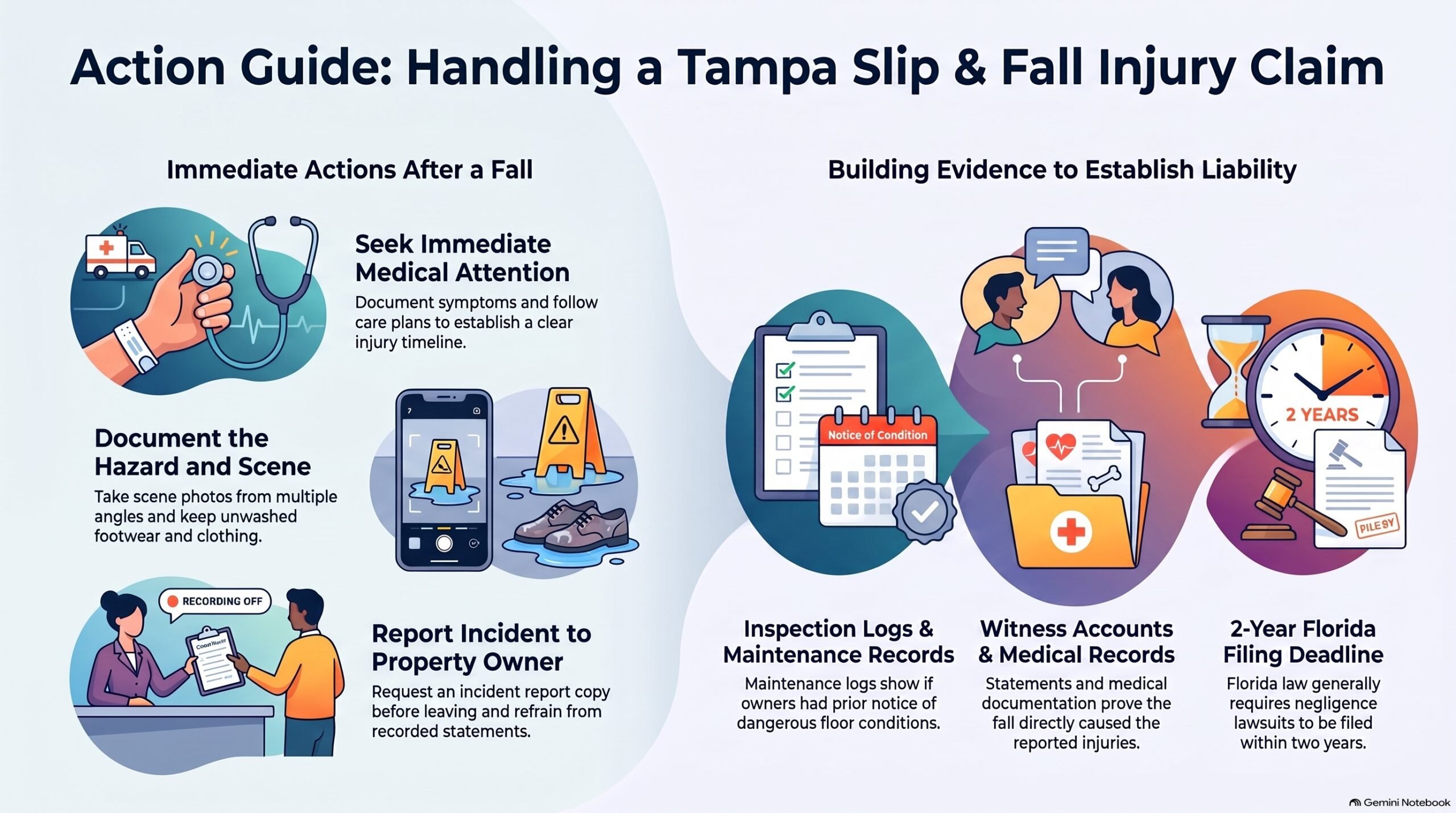
After a Tampa slip and fall, the injured person should seek medical care promptly, even if the injury initially appears minor. They should document the hazard with photographs and preserve relevant details, such as the location and time of the fall. Reporting the incident to the property owner or manager can also create an official record.
Seek Medical Care
Prompt medical care is essential after a slip and fall, even if the injury initially appears minor. A qualified healthcare provider can assess visible injuries and identify conditions that may not become apparent until hours or days later. This evaluation supports timely treatment and helps reduce the risk of complications. For severe pain, heavy bleeding, loss of consciousness, or suspected head, neck, or spinal injury, emergency services should be contacted. For less serious concerns, a physician or urgent care clinic can determine appropriate care. The injured person should describe how the fall occurred and report all symptoms, including even mild discomfort. Following medical instructions and arranging recommended follow-up appointments are important steps in recovery. Careful symptom monitoring can help identify changes that require prompt reassessment and support informed treatment decisions.
Document the Hazard
Once immediate medical needs have been addressed, documenting the floor or surface hazard can help preserve information about how the fall occurred. If the injured person can do so safely, photographs or video can show the area from several angles, including the walking path and nearby surroundings. Surface condition documentation may capture liquid, debris, uneven flooring, loose mats, poor lighting, or missing warnings. Images should include both close views of the hazard and wider views that establish its location. Preserving hazard evidence can also involve keeping the shoes and clothing worn during the fall, without cleaning or altering them. A brief written account can note the date, time, exact location, weather, and any changes observed afterward. These details may help clarify conditions while respecting others’ safety and needs.
Report the Incident
When it is safe, the injured person should promptly report the fall to the property owner, manager, or another responsible employee. Timely incident notification gives those responsible an opportunity to address the hazard and may help prevent another person from being hurt. The injured person should describe where and when the fall occurred, the surface condition, and any visible injuries. If witnesses were present, they can also provide their names and contact details.
The person should ask whether the property has an incident form and request a copy of any written report. Before signing, the injured person should review the report for accuracy and avoid guessing about uncertain details. Keeping a personal record of the report’s date, recipient, and contents can support clear communication with medical providers and others assisting with recovery.
Don’t Wait. Call Our Florida Personal Injury Lawyers Now!
Critical Evidence in a Tampa Slip & Fall Floor & Surface Injury Case
Evidence can help establish how a fall occurred, whether a hazardous condition was present, and the extent of the resulting injuries. Relevant materials may include scene photographs, inspection records, witness accounts, and medical documentation.
Important examples include:
- A photograph showing a wet floor, uneven surface, or missing warning sign
- An inspection log documenting when the area was last checked
- A witness statement alongside medical records describing the injury and treatment received
Incident Scene Photos
Photographs taken soon after a slip and fall can preserve scene details that may change or disappear before an investigation begins. Clear images can show the floor’s condition, the location of a spill or obstruction, nearby warning signs, and the surrounding layout. Multiple Camera angles help establish the hazard’s position and how it relates to the person’s path. Wide views provide context, while close images capture relevant surface details. Photo timestamps may help establish when images were taken, but retain the original files to preserve available metadata. If it is safe to do so, the injured person or a witness can photograph the area before it is cleaned or altered. Images should be accurate and unedited, supporting a fair assessment of what occurred and helping those responsible respond with care and accountability.
Hazard Inspection Records
Hazard inspection records can show whether a property owner or staff member identified and addressed a dangerous floor or surface condition before a fall. These documents may include inspection logs, cleaning schedules, repair requests, and maintenance records. Their dates and entries can help establish when a hazard was discovered, what action followed, and whether the response was timely. Missing entries or repeated reports about the same condition may also raise questions about the property’s inspection practices.
A careful review can preserve details that might otherwise be overlooked and clarify how the premises were managed. Records may be held by a business, property manager, contractor, or other responsible party, so identifying relevant sources promptly can matter. For people seeking to protect others from preventable injuries, these materials can support a clearer account of safety practices and needed improvements.
Witness Statements
When a slip and fall occurs, witnesses may provide an independent account of the floor or surface condition and the events surrounding the injury. Their observations can help establish whether a hazard was visible, how long it may have been present, and whether staff or others took action before the fall. Witness credibility depends on factors such as the person’s opportunity to observe, consistency, and independence from the parties involved. Promptly recording each witness’s name and contact information can help preserve useful evidence. Statement timing also matters because memories may fade or become less precise over time. A respectful, neutral interview can clarify what the witness saw without suggesting answers. These accounts may assist a careful evaluation of responsibility and support efforts to address unsafe conditions for others.
Medical Documentation
Medical documentation can provide compelling evidence in a Tampa slip and fall case by connecting the reported fall to specific injuries and treatment needs. Prompt evaluation may help establish when symptoms began and whether they are consistent with the incident. Records can also show how an injury affected mobility, work, or daily responsibilities.
Provider treatment notes may describe examination findings, diagnoses, referrals, and recommended follow-up care. A medication history can identify prescriptions started or changed after the fall, while helping distinguish new treatment from preexisting conditions. Imaging reports, therapy records, and discharge instructions may further document the course of care.
Accurate, complete records can help reviewers evaluate the nature and extent of harm. Individuals should preserve relevant documents and share them with their legal representative, while avoiding assumptions about what any single record proves.
Long-Term Effects of Tampa Slip & Fall Floor & Surface Injuries
Slip and fall injuries may cause chronic pain and reduced mobility that persist long after the initial accident. Some victims also experience lasting nerve damage, which can interfere with daily activities and require ongoing care. These physical effects may contribute to emotional distress and create substantial financial strain through treatment costs and lost income.
Chronic Pain and Mobility
A fall on a hard or uneven surface can cause injuries that continue to affect a person’s mobility long after the initial bruising or swelling subsides. Persistent pain may follow fractures, joint injuries, or damage to muscles and connective tissue. These symptoms can make walking, standing, climbing stairs, or completing routine tasks difficult. Reduced activity may also weaken strength and endurance, further limiting independence.
A care plan may include physical therapy, prescribed medication, and other pain management options tailored to the injury. Some people benefit from mobility aids, such as a cane or walker, while recovering or adapting to lasting limitations. Consistent medical follow-up can help track recovery and adjust treatment. For those assisting an injured person, practical support and respect for that person’s choices can help preserve dignity and daily function.
Lasting Nerve Damage
Persistent mobility problems may sometimes reflect lasting nerve damage rather than pain alone. A fall can compress, stretch, or injure nerves, disrupting signals between the brain and affected areas. Resulting neuropathy symptoms may include numbness, tingling, burning sensations, unusual sensitivity, or weakness in a limb. These effects can interfere with balance, coordination, and the ability to perform routine tasks safely.
Recovery depends on the type and severity of the injury. Some nerves repair gradually through nerve regeneration, while significant damage may leave persistent sensory or motor limitations. Medical evaluation can help identify the affected nerves, document functional changes, and guide appropriate treatment, such as medication or rehabilitation. Consistent follow-up is important because symptoms may evolve over time. Clear records of diagnoses and limitations can also help explain the injury’s lasting physical consequences.
Emotional and Financial Strain
When floor or surface injuries lead to lasting pain, reduced mobility, or ongoing treatment, their effects may extend beyond physical recovery. Missed work, reduced earning capacity, and continuing medical expenses can place sustained pressure on a household. Caregivers may also need to adjust work schedules or take on additional responsibilities, making Household Budgeting more difficult. These changes can affect access to transportation, routine services, and other necessities. Persistent pain and dependence on others may contribute to Relationship Stress, particularly when family members disagree about care or financial priorities. Clear communication and practical support can help households manage these pressures while recovery continues. Keeping records of treatment costs, lost income, and daily limitations can clarify the injury’s broader impact and help you make informed decisions about available resources and legal options.
Proving Liability in Tampa Slip & Fall Floor & Surface Injury Cases
Establishing liability in a Tampa slip and fall case requires evidence that a property owner or responsible party failed to use reasonable care and that the failure caused the injury. The injured person generally must show that a hazardous floor or surface existed and that the responsible party knew, or reasonably should have known, about it.
Prior hazard notice may be established through reports, employee observations, maintenance records, or earlier complaints. Constructive knowledge may be supported by evidence that a dangerous condition remained long enough for reasonable inspections to identify and address it. Photographs, incident reports, witness statements, and prompt medical records can help document the condition, its duration, and the resulting harm.
The property’s inspection and cleaning practices may also clarify whether reasonable precautions were taken. Liability depends on the specific facts, including whether the hazard was visible, whether warnings were provided, and whether corrective action was feasible. Careful evidence preservation can support a fair assessment and help protect the injured person’s rights.
Dealing With Insurance Companies After a Tampa Slip & Fall Floor & Surface Injury
After a Tampa slip and fall, an insurance adjuster may contact the injured person to gather information and evaluate the claim. Adjuster communication should remain accurate, calm, and limited to facts the person can confirm. The injured individual may be asked about the incident, the floor or surface condition, injuries, and medical care. Before giving a recorded statement or signing documents, the person can seek legal guidance to understand how the information may be used.
Insurers may request photographs, incident reports, witness details, or treatment records. Keeping copies of communications and submitted materials can help prevent misunderstandings. The injured person should avoid guessing about events or minimizing symptoms, and should promptly correct factual errors.
Coverage disputes may arise over policy terms, responsibility for the premises, or whether particular losses are covered. A lawyer can review relevant documents, explain the insurer’s position, and communicate on the person’s behalf. Careful, respectful communication helps protect the injured individual’s interests while allowing the insurer to assess available information.
What to Expect During a Tampa Slip & Fall Floor & Surface Injury Claim Process
A Tampa slip and fall claim typically begins with an evaluation of the incident, injuries, and available legal options. The process then involves gathering evidence to establish how the fall occurred and document its consequences, followed by negotiations over potential compensation. If the parties do not reach a settlement, the claim may proceed to trial preparation.
Initial Case Evaluation
During an initial case evaluation, a Tampa slip and fall lawyer reviews how the floor or surface condition caused the injury and whether the property owner may be legally responsible. The Initial consultation gives the injured person an opportunity to describe the incident, explain its effects, and ask questions about available legal options. The lawyer may discuss the duty the property owner owed, whether it was breached, and how the injury has affected the person’s daily activities and ability to work. A case review also considers potential damages, such as medical expenses, lost income, and pain and suffering. The lawyer can explain possible timelines, fees, and next steps without promising a particular outcome. This discussion helps determine whether pursuing a claim may support recovery and accountability.
Evidence Collection
Careful evidence collection can help establish how a floor or surface hazard caused an injury and whether the property owner knew or should have known about the condition. The process may begin with photographs of the area, including spills, uneven flooring, poor lighting, warning signs, and nearby conditions. Witness names and contact details can help preserve independent accounts of what occurred. Medical records, incident reports, and receipts may document the injury, its timing, and related expenses.
Evidence preservation is important because hazards may be repaired and records can be lost. A lawyer may request surveillance footage promptly, since businesses often retain recordings for limited periods. Inspection and maintenance logs may show when the property was checked and whether staff knew about a dangerous condition. Collecting these materials can support a clear, accurate account and help those responsible assess the claim fairly.
Settlement Negotiations
Settlement negotiations typically begin after the insurer reviews the evidence, medical records, and documented losses related to the slip and fall. The insurer may present an Opening offer that reflects its assessment of liability, treatment, and financial impact. That figure may not account for ongoing care, lost income, or other supported damages, so review carefully before responding. A counteroffer strategy can address gaps in the insurer’s evaluation by citing records, expenses, and relevant facts about the hazardous floor or surface. Negotiations may involve several exchanges as each side considers the available documentation and potential resolution. A claimant’s representative can clearly communicate the position, seek fair compensation, and help the injured person understand the proposed terms. Before acceptance, review any settlement for its scope and effect, including whether it resolves future claims arising from the incident.
Trial Preparation
If settlement negotiations do not resolve a Tampa slip and fall claim, trial preparation focuses on organizing evidence and presenting a clear account of how the floor or surface hazard caused the injury. Counsel may review incident reports, photographs, maintenance records, medical documentation, and witness statements to establish what happened and how the injury affected the claimant. Preparation can also include depositions, expert assessments, and practice answering questions under oath. These steps help guarantee the evidence is accurate, relevant, and presented respectfully. Jury selection considers potential jurors’ ability to evaluate the facts fairly. A sound courtroom strategy then explains the property owner’s responsibilities, the hazard, and the resulting harm in a clear sequence. Throughout trial, counsel presents evidence, questions witnesses, and responds to opposing arguments while keeping the claimant’s account focused and credible.
Compensation for Tampa Slip & Fall Floor & Surface Injury Damages
Compensation for a Tampa slip and fall injury may cover medical expenses, lost income, reduced future earning capacity, and pain and suffering. The amount depends on the injury’s effects, the available evidence, and the circumstances surrounding the fall. A careful assessment can help guarantee that the injured person’s needs are accurately presented.
Recoverable medical expenses may include emergency treatment, physician visits, rehabilitation, medication, and necessary medical equipment. Future care needs may also be considered when an injury requires continuing treatment or support. Healthcare provider records can document these needs and link them to the incident.
Lost income may reflect wages missed during recovery, while reduced future earning capacity may apply when lasting limitations affect a person’s ability to work. Documentation from employers and qualified professionals can help establish these losses. Compensation may also account for physical discomfort, emotional strain, and disruption to daily activities. Each claim requires an individualized review to address the injured person’s losses and support a fair resolution.
Economic vs Non-Economic Damages in Tampa Slip & Fall Floor & Surface Cases
In Tampa slip and fall cases, economic damages may include medical expenses and lost income, while non-economic damages address pain, suffering, and other personal effects of an injury. This distinction clarifies the types of compensation an injured person may seek. Proving these losses typically requires relevant records and evidence connecting them to the fall.
Economic Damages
A Tampa slip and fall claim may include economic damages, which are measurable financial losses caused by the injury. These losses can include reasonable medical expenses, such as emergency care, follow-up appointments, medication, rehabilitation, and anticipated treatment supported by evidence. Documentation helps show how each expense relates to the fall and whether it is necessary. A claimant may also seek compensation for wages lost during recovery and reduced future income if the injury limits the ability to work. Lost earning capacity may be assessed through employment records, medical opinions, and other relevant evidence. When an injury prevents a person from completing routine tasks, the value of household services may also be considered, including the reasonable cost of help with cleaning, cooking, or necessary errands. Accurate records support a careful assessment of these financial losses.
Non-Economic Damages
Beyond documented financial losses, a Tampa slip and fall claim may include non-economic damages for the injury’s effects on daily life. These damages address harms that do not have a direct price, unlike medical bills or lost income. They may include physical pain, mobility limitations, and disruption to ordinary routines or relationships. Emotional Distress may arise when an injury causes persistent anxiety, fear of falling, or changes in a person’s sense of security. Loss of Enjoyment may reflect an inability to take part in hobbies, family activities, or community service that previously brought purpose and connection. The effects vary with each person’s circumstances and injury. Non-economic damages recognize that recovery involves more than financial costs, and that lasting physical and emotional consequences can affect a person’s independence and ability to contribute to daily life.
Proving Your Losses
Proving losses in a Tampa slip and fall case requires evidence that connects the floor or surface hazard to both the injury and its consequences. Medical records, treatment bills, and provider opinions can document the diagnosis, care required, and likely future needs. Pay stubs, tax returns, and employer statements may establish Lost income and reduced earning capacity. Receipts and reliable estimates can support costs for transportation, medication, and necessary home assistance. Evidence of household services may show the value of tasks the injured person can no longer perform, such as cleaning or childcare. Non-economic losses, including pain, emotional distress, and reduced enjoyment of daily activities, require clear testimony and consistent supporting records. Organized documentation helps distinguish financial losses from personal harm and gives decision-makers a sound basis to assess fair compensation.
Don’t Wait. Call Our Florida Personal Injury Lawyers Now!
When a Tampa Slip & Fall Floor & Surface Injury Case Goes to Trial vs Settlement
Whether a Tampa slip and fall case settles or proceeds to trial depends on the strength of the evidence, the extent of the injuries, and the parties’ willingness to resolve disputed issues. A settlement may provide a more predictable outcome and avoid the time, expense, and uncertainty of a courtroom proceeding. Negotiations can account for medical expenses, lost income, ongoing care, and the practical effects of the injury. A resolution may also spare witnesses and injured people from the demands of testifying.
Trial may be considered when the parties disagree about responsibility, the value of the losses, or whether an offer fairly addresses the harm. The process allows each side to present evidence and question witnesses. Courtroom testimony can help jurors evaluate how the incident occurred and how it affected the injured person. After hearing the case, the jury deliberates and reaches a verdict. The choice between settlement and trial depends on case-specific circumstances and informed evaluation.
Florida Laws That May Affect Your Tampa Slip & Fall Floor & Surface Case
Florida law sets the standards for determining responsibility and compensation in a Tampa slip and fall case involving an unsafe floor or surface. Property owners generally must use reasonable care to maintain their premises and address hazards, such as spills, uneven pavement, or loose flooring. The circumstances matter, including whether the owner knew or should have known of the danger and failed to correct it or provide adequate warning.
Relevant evidence may include:
- A slick grocery aisle where a spill remained without a warning sign.
- A cracked walkway that catches a visitor’s foot near a building entrance.
- A loose tile beside a service counter, documented in photographs after a fall.
Florida building codes may help identify applicable safety requirements, although a code violation alone does not establish liability. Under comparative negligence, an injured person’s compensation may be reduced by the share of fault assigned to that person. This framework considers conduct on both sides while supporting fair accountability and safer spaces for everyone who uses the property.
The Statute of Limitations for Tampa Slip & Fall Floor & Surface Injury Cases
A person injured by an unsafe floor or surface in Tampa generally must file a negligence lawsuit within the deadline set by Florida law. For most negligence claims arising from incidents on or after March 24, 2023, Florida allows two years from the date of injury to file suit. Claims involving earlier incidents may be subject to a different limitations period, so the accident date can materially affect the applicable deadline.
Missing the filing deadline can prevent an injured person from pursuing compensation in court, even when the evidence supports the claim. Certain circumstances may alter how time is counted or pause the limitations period. These Deadline exceptions are fact-specific and may apply, for example, when the injured person is a minor, or the defendant cannot be located. Different rules may govern claims against government entities, including advance notice requirements.
Accurate claim filing dates matter because deadlines depend on the facts and applicable law. Prompt attention helps preserve a person’s opportunity to seek accountability and support recovery.
How a Tampa Slip & Fall Floor & Surface Lawyer Can Help You
Meeting a filing deadline is only one part of pursuing a Tampa slip and fall claim; building a well-supported case also requires careful investigation and legal analysis. A lawyer can assess how a floor or surface hazard contributed to the fall, identify responsible parties, and organize evidence that supports a claim. This work may include examining incident reports, maintenance records, photographs, and witness accounts.
A focused investigation can help clarify what happened and protect the interests of people affected by unsafe property conditions.
Essential steps may include:
- Reviewing images of a wet aisle, uneven tile, or obstructed walkway to document the hazard.
- Comparing inspection logs with the reported time of the fall to assess whether reasonable safety measures were taken.
- Gathering witness statements and medical records to link the incident to the resulting injuries.
Consultation preparation helps a person present relevant facts and questions clearly. Through consistent attorney communication, the lawyer can explain case developments, discuss available evidence, and outline options without promising a particular outcome.
When to Contact a Tampa Slip & Fall Floor & Surface Lawyer
After a slip and fall on a hazardous floor or surface, contacting a Tampa slip and fall lawyer promptly can help preserve evidence and clarify available legal options. Early consultation may matter because surveillance footage, incident reports, and witness recollections can become harder to obtain over time. A lawyer can explain which records may be relevant and how to request them while details remain available.
Prompt legal advice can also help an injured person understand deadlines that may apply to a claim. Florida law generally sets a time limit for filing negligence actions, and specific circumstances can affect how that period is calculated. Waiting until symptoms worsen or expenses accumulate may complicate decisions about documentation and communication with insurers.
A person may seek a consultation once immediate medical needs have been addressed, even if the full extent of an injury is not yet known. Timely guidance can support informed choices while allowing the injured person to focus on recovery and responsibilities to others.
Why You Need an Experienced Tampa Slip & Fall Floor & Surface Lawyer
When a fall involves a dangerous floor or surface, an experienced Tampa slip and fall lawyer can help assess whether the property owner may be legally responsible. These cases often hinge on details that are easy to overlook, including how long a hazard existed, whether staff knew about it, and whether reasonable steps were taken to address it. A lawyer with Premises liability experience can identify relevant evidence, such as inspection records, incident reports, photographs, and witness accounts, while helping preserve information before it is lost.
Familiarity with local court procedures can also help counsel understand applicable rules and present the claim effectively. This knowledge may support clear communication with insurers and other parties, allowing injured people to focus on medical care and recovery. A careful legal assessment can clarify possible options, deadlines, and challenges without promising a particular result. By examining the circumstances and applicable law, experienced counsel can help determine whether pursuing accountability may serve the injured person and promote safer conditions for others.
How to Choose the Right Tampa Slip & Fall Floor & Surface Lawyer for Your Case
Choosing the right Tampa slip and fall lawyer requires more than reviewing advertisements or comparing fee arrangements. A careful selection process can help an injured person find counsel prepared to protect their interests and pursue a fair resolution.
Assess attorney credentials alongside experience with premises liability claims involving unsafe floors, spills, uneven surfaces, and inadequate warnings. The lawyer should understand how evidence is preserved, how responsibility is established, and how medical records and other losses may support a claim. Relevant experience can help counsel identify practical next steps without promising a particular outcome.
Communication style also matters. A lawyer should explain procedures clearly, respond within reasonable timeframes, and provide realistic updates as the case develops. A prospective client may ask who will handle the matter, how questions are addressed, and what information is needed. Attention to these factors can help an injured person choose representation that is capable, responsive, and focused on achieving accountability.
About The Law Offices of Anidjar & Levine
The Law Offices of Anidjar & Levine represents injured people, including those pursuing claims after slip-and-fall accidents in Tampa.
The firm handles injury matters by reviewing the circumstances, identifying potentially responsible parties, and explaining available legal options.
For a floor or surface accident, this work may include reviewing incident reports, photographs, witness accounts, and medical records.
Each case depends on its facts, and no particular result can be guaranteed.
The firm’s history provides context for its approach to client representation.
Its attorneys work to help people understand the claims process and make informed decisions while pursuing compensation permitted by law.
Clear communication can help clients address treatment needs, financial concerns, and insurer requests.
Community involvement is also part of the firm’s public presence.
By engaging with local organizations and service efforts, the firm can support people beyond the courtroom.
This background may help prospective clients assess whether the firm’s experience and priorities align with their needs.
Frequently Asked Questions
Can I File a Claim if I Fell on a Floor Marked With a Warning Sign?
A person may still file a claim after falling near a warning sign, but recovery depends on the circumstances. The sign’s warning sign placement, visibility, and wording may affect whether the hazard was adequately disclosed. A claim may be stronger if the sign was obscured, poorly positioned, or failed to identify the danger, or if the property owner neglected reasonable safety measures. Evidence and applicable law determine whether the owner may be held responsible.
What if I Slipped on a Floor in a Friend’s Home?
A person who slips on a floor in a friend’s home may have a claim if the homeowner knew, or reasonably should have known, about a hazardous condition and failed to address it or provide adequate warning. Homeowner liability depends on the circumstances, including the visitor’s purpose and how foreseeable the danger was. Document guest injuries promptly, including photographs, witness details, and medical records. A qualified attorney can assess the evidence and applicable law.
Can I Pursue a Claim if I Was Partially Responsible for My Fall?
Yes, an injured person may pursue a claim even if they were partly responsible for a fall. Under Comparative Negligence rules, compensation may be reduced according to the claimant’s share of responsibility, and eligibility depends on applicable state law and the evidence. Shared Fault does not automatically eliminate recovery. A careful review of the hazard, notice, conduct, and resulting injuries can clarify potential rights and help the injured person make informed decisions.
Does a Landlord Have Different Responsibilities Than a Store Owner?
Yes. Landlords and store owners generally have different legal responsibilities, shaped by who controls the area and applicable state law. Landlord maintenance duties may cover shared spaces, building systems, and hazards the landlord knows about or should discover. Store owners typically must inspect and address unsafe conditions where customers are invited. Tenant injury claims may depend on lease terms, notice, control, and the circumstances of the fall. A qualified attorney can assess responsibility and deadlines.
Can I Recover Damages if My Fall Happened at Work?
A worker may recover damages after a workplace fall through Workers’ compensation benefits, which generally cover medical care and a portion of lost wages without requiring proof of fault. If a property owner, contractor, or equipment manufacturer contributed to the hazard, the worker may also pursue third-party liability claims. These claims can seek compensation beyond workers’ compensation, including for pain and suffering, subject to applicable deadlines and evidence requirements.
—————————
A serious fall on a floor or surface can create lasting medical, financial, and personal challenges.
Tampa injury victims may benefit from understanding their legal rights, preserving evidence, and seeking prompt guidance from a qualified attorney.
The Law Offices of Anidjar and Levine can review the circumstances, explain available options, and pursue a claim when negligence contributed to the injury.
A Tampa Personal Injury Lawyer can help evaluate the case and support an informed path forward.
Each case depends on its facts, so timely action can help protect evidence.