

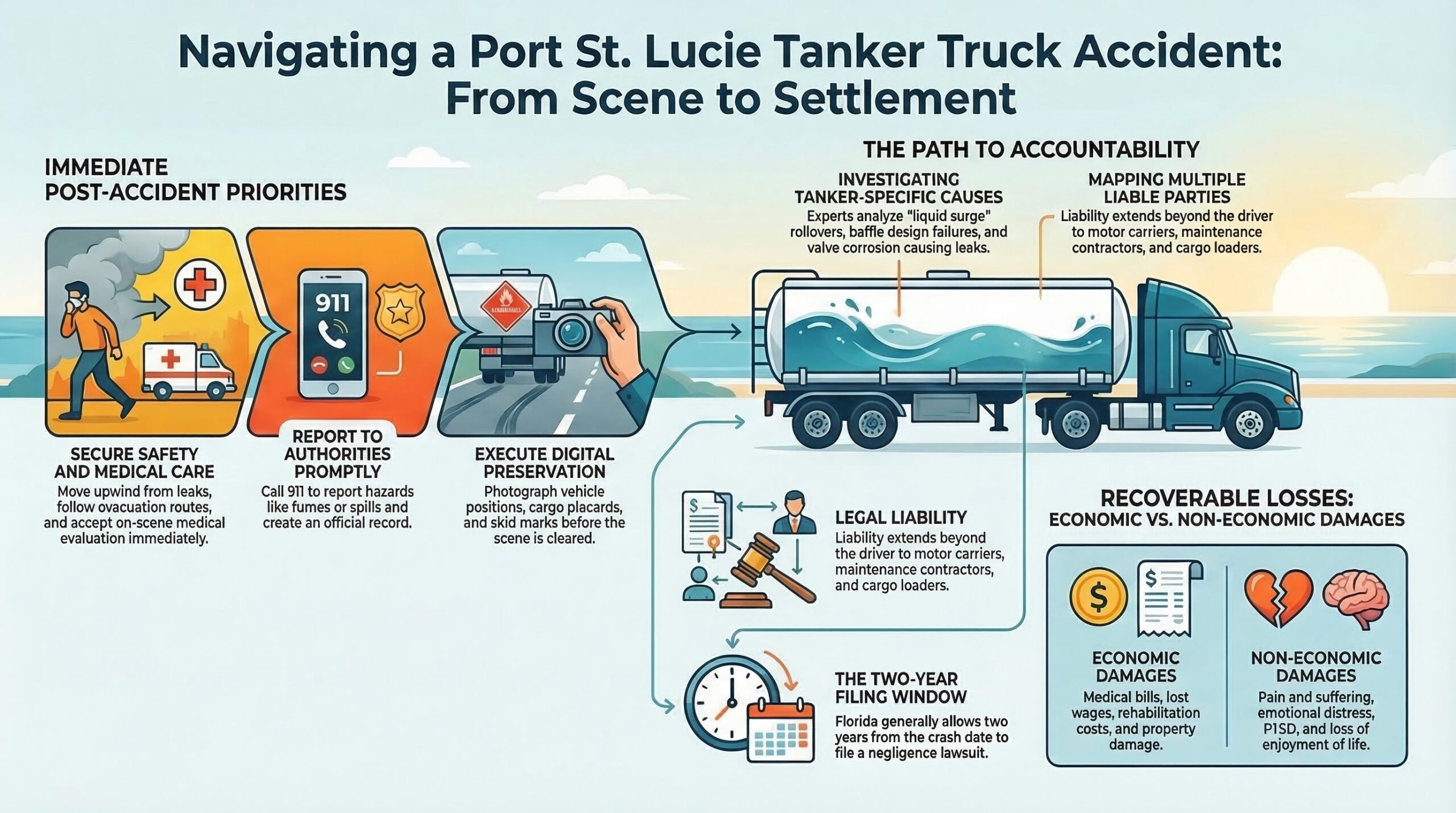
The Law Offices of Anidjar and Levine helps Port St. Lucie tanker truck accident victims act quickly to protect their health and their claim, from preserving photos, witness contacts, and damaged items to requesting 911 audio, surveillance video, and driver electronic logs.
We investigate every liable party, including the driver, motor carrier, maintenance contractors, and cargo handlers, then document medical care, lost income, and long-term needs.
We handle insurer communications and pursue full compensation. Continue to see critical steps and timing, or visit our Port St. Lucie Truck Accident Lawyer page.
Main Takeaways
- A Port St. Lucie tanker truck accident lawyer helps protect your health and rights by guiding immediate safety, medical care, and accurate 911 reporting.
- They preserve critical evidence fast, including photos, witness contacts, crash reports, ELD data, driver logs, maintenance records, and surveillance video.
- They investigate liability across drivers, motor carriers, owners, loaders, brokers, and maintenance contractors using hiring, training, inspection, and compliance records.
- They identify tanker-specific causes like fatigue, distraction, improper loading, liquid surge rollovers, speeding, and valve or hose failures leading to spills or fires.
- They handle insurers and damages documentation to pursue medical costs, lost wages, future care, pain and suffering, and property losses while managing deadlines and litigation.
How We Can Help With Your Port St. Lucie Tanker Truck Accident Claim
Although tanker truck crashes may appear straightforward at the scene, liability and damage issues often become more complicated once evidence, insurance coverage, and federal safety rules come into play.
We step in early to preserve records, coordinate inspections, and document your injuries so your claim reflects the full impact on your health, work, and family life.
We act quickly to preserve evidence, coordinate inspections, and document injuries—so your claim reflects the full impact on your life.
We handle insurer communications, calculate present and future losses, and prepare a demand package that’s organized, supported, and difficult to dismiss.
If negotiations stall, we’re ready to escalate through formal dispute steps while keeping you informed and involved.
To reduce stress and improve access, we offer Virtual Consultations and Multilingual Support, so you can get guidance without added barriers.
Throughout the process, we treat you with respect, respond promptly, and focus on practical solutions that help you move forward with stability and dignity.
Understanding Port St. Lucie Tanker Truck Accident Cases
Because tanker trucks haul hazardous or high-volume liquids, these crashes in Port St. Lucie often lead to complex injury and property damage claims. We help you understand how spill risk, cargo surge, and purpose-built equipment can amplify harm, even at lower speeds.
These cases typically involve multiple responsible parties, including carriers, owners, maintenance contractors, brokers, and insurers, so we must map relationships and preserve evidence quickly. We also assess how emergency response, cleanup actions, and roadway closures affect your losses and documentation needs.


We ground our approach in Local Statistics to evaluate trends in serious injury, crash locations, and reporting patterns, and then compare them with similar Case Studies to anticipate defenses and strengthen your position. We guide you through medical proof, wage verification, and future care planning, and we coordinate with investigators and experts when appropriate.
Our goal is accountability, and meaningful recovery for your family and community.
Common Causes of Port St. Lucie Tanker Truck Accident
We often see Port St. Lucie tanker truck crashes stem from driver fatigue and distraction, which can reduce reaction time and impair judgment.
We also encounter improper loading and liquid sloshing, as well as equipment failures and leaks, each of which can destabilize a tanker or create hazardous roadway conditions.
We’ll explain how speeding and unsafe turns amplify these risks, and what the evidence typically shows when these factors cause a serious collision.
Driver Fatigue And Distraction
Far too many tanker truck crashes in Port St. Lucie trace back to driver fatigue and distraction, and we’ve seen how quickly a routine route can become a public safety crisis.
Long shifts, irregular sleep, and pressure to meet delivery windows can dull reaction time and impair judgment, especially in stop-and-go traffic and construction zones.
Distraction compounds the risk, including phone use, in-cab screens, eating, or even momentary attention lapses during lane changes and turns.
We encourage carriers to adopt safeguards that protect everyone, such as wearable monitors that flag drowsiness and app alerts that prompt timely breaks.
When a crash occurs, we help you identify log violations, device activity, and supervision failures, so accountability supports safer roads for our neighbors.
Improper Loading And Sloshing
Improper loading and liquid sloshing also play a major role in Port St. Lucie tanker truck crashes, and we take these issues seriously because they put neighbors and first responders at risk.
When a tanker is filled unevenly or filled to a partial level that allows the load to surge, the shifting weight can push a driver past safe limits during braking, turns, or lane changes.
We often review loading records, fill percentages, and route conditions to see whether the carrier followed sound procedures.
We also examine how baffle design and tank geometry affected stability, since poorly controlled movement inside the tank can amplify rollover forces. By identifying preventable loading choices, we can help you pursue accountability and protect others.
Equipment Failure And Leaks
OUR CONSULTATIONSARE FREE
START YOUR FREE CASE REVIEW

Although drivers and roadway conditions often draw the most attention after a wreck, equipment failure and leaks frequently trigger Port St. Lucie tanker truck accidents. When valves, hoses, and fittings aren’t inspected or replaced on schedule, small defects can escalate into sudden releases of fuel, chemicals, or other cargo.
We often see valve corrosion that prevents a proper seal, allowing product to escape under pressure and create slick surfaces or harmful vapors. Gasket deterioration can also undermine connections at manways and discharge lines, leading to drips that become dangerous spills.
If you’re injured, we’ll help identify maintenance gaps, secure inspection records, and work with qualified experts to trace the leak to its true source, so accountability supports safety and recovery.
Speeding And Unsafe Turns
Speeding frequently plays a central role in Port St. Lucie tanker truck crashes because it reduces a driver’s time to judge traffic, load movement, and stopping distance.
When a tanker enters an intersection too fast, limited intersection visibility can hide smaller vehicles or pedestrians, and even clear road signage may be noticed too late to prevent impact.
Unsafe turns add another layer of danger, since a high center of gravity and shifting liquid cargo can push the trailer wide or cause a rollover.
We focus on serving injured neighbors by determining whether a driver exceeded posted speeds, misjudged a turn radius, or failed to yield. When you seek accountability, we can gather evidence showing how speed and turning choices caused harm.
Legal Rights of Port St. Lucie Tanker Truck Accident Victims
How do you protect your interests after a tanker truck crash in Port St. Lucie while still honoring your commitment to help others?
We start by asserting your legal rights firmly and respectfully, so accountability supports safer roads for everyone.
We assert your legal rights firmly and respectfully—because accountability after a crash helps make roads safer for everyone.
You may seek compensation for medical care, lost income, pain and suffering, property damage, and future limitations tied to your injuries.
Florida law also recognizes that every victim is entitled to equal access to justice, regardless of immigration status, and we can press for privacy protections when sensitive personal information is involved.
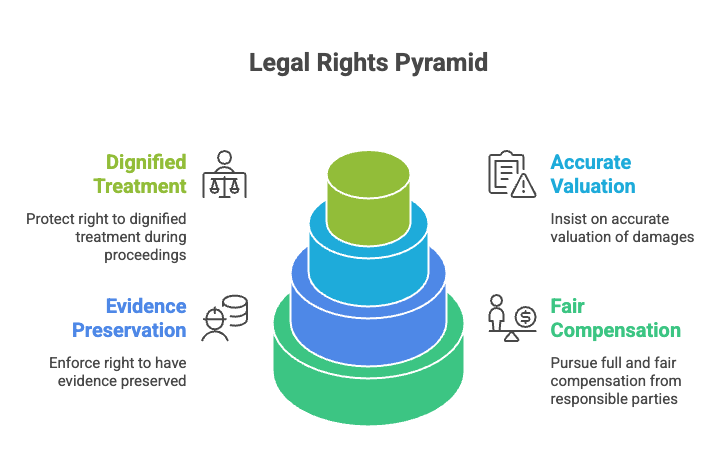
- We pursue your right to full and fair compensation from all responsible parties.
- We enforce your right to have evidence preserved, including logs, maintenance records, and cargo data.
- We insist on your right to an accurate valuation of damages, including long-term care needs.
- We protect your right to dignified treatment during insurance and legal proceedings.
Steps to Take After a Port St. Lucie Tanker Truck Accident
After a Port St. Lucie tanker truck accident, we’ll want you to prioritize safety and get medical care immediately, even if injuries seem minor at first.
Next, we’ll advise you to report the crash promptly to law enforcement and your insurer, ensuring the basic facts are accurately recorded.
Finally, we’ll guide you in preserving evidence and documentation, including photos, witness information, medical records, and any trucking-related details that can support your claim.
Ensure Safety And Medical Care
Because tanker truck crashes can involve fire, toxic cargo, or secondary impacts, we should treat safety and medical care as the first priorities at the scene.
We should move to a safe location upwind, watch for leaking fluids or vapor, and follow posted evacuation routes if officials or drivers direct us.
If we’re able, we should help others relocate calmly, especially children, older adults, and anyone with limited mobility, without placing ourselves at risk.
We should check for injuries, apply basic first aid, and keep injured people still unless danger requires moving them.
We should accept on-scene medical evaluation even when symptoms seem minor, since burns and chemical exposure can worsen.
Later, we should support family preparedness by documenting medications, allergies, and symptoms for follow-up care.
Report The Accident Promptly
Once we’ve secured the scene as much as we can and received medical attention, we should report the tanker truck accident promptly to make certain emergency resources respond appropriately, and an official record begins right away.
We can call 911, clearly state our location, describe hazards such as leaking fuel or fumes, and follow the dispatcher’s instructions to protect nearby drivers and first responders.
If traffic is backing up, we should request traffic alerts so authorities can reroute vehicles and reduce secondary collisions.
When officers arrive, we’ll provide accurate, concise information, and we’ll avoid speculation while ensuring everyone who needs help is identified.
If the media appear, we should respect press protocol and direct questions to law enforcement.
Prompt reporting supports community safety, accountability, and efficient coordination among emergency services.
Preserve Evidence And Documentation
Preserving evidence and documentation can shape the outcome of a Port St. Lucie tanker truck accident claim, and we’ll guide you to protect what matters.
If you’re able, photograph vehicle positions, damage, skid marks, road conditions, cargo placards, and visible injuries.
Collect names, badge numbers, and contact details for witnesses, and request a copy number for the crash report.
We recommend Digital Preservation by saving original files, backing them up, and avoiding edits that could raise questions about authenticity.
Keep damaged clothing and personal items, and don’t repair your vehicle until it’s inspected.
Create a Document Inventory with medical records, invoices, prescriptions, mileage logs, employer letters, and insurer communications.
With careful recordkeeping, we can serve your recovery well.
How a Port St. Lucie Tanker Truck Accident Lawyer Can Help You
Take control of the aftermath of a tanker truck crash by bringing in a Port St. Lucie tanker truck accident lawyer who can stabilize your next steps and protect your time.
We coordinate with responders, insurers, and carriers, then turn your documentation into a clear claim narrative.
We also practice fee transparency so you can plan responsibly, and we support community outreach because serving neighbors includes honest guidance, not pressure.
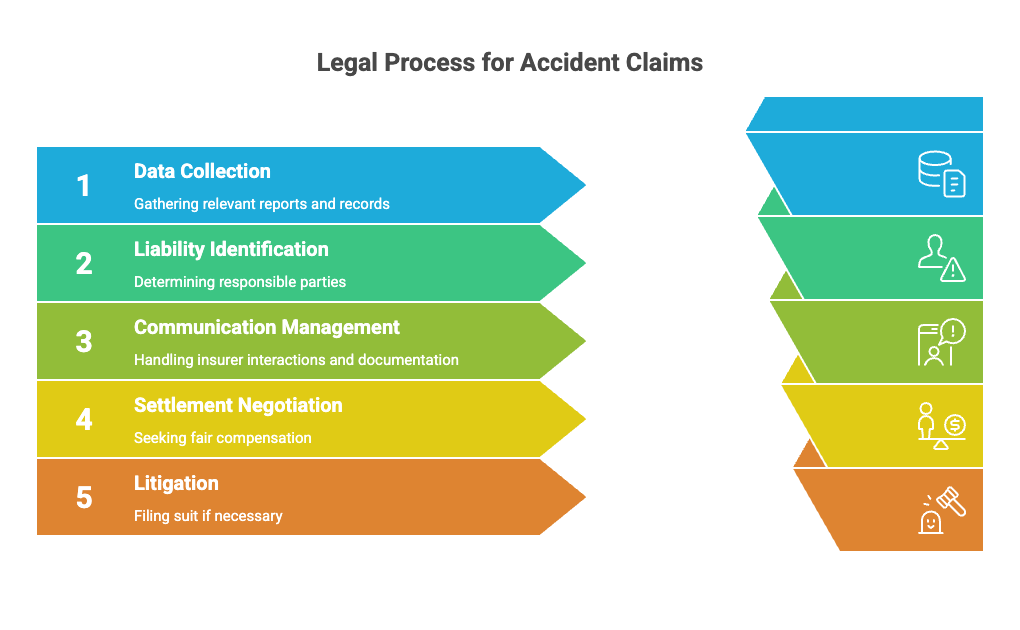
- We secure crash reports, electronic logging data, and maintenance records through prompt legal requests.
- We identify liable parties, including drivers, motor carriers, contractors, and product handlers, without speculation.
- We handle insurer communications, prevent recorded-statement traps, and document damages with verifiable evidence.
- We negotiate for a fair settlement and, if needed, file suit and manage deadlines and discovery.
With our direction, you can focus on recovery and caring for others while we manage the case.
Long-Term Effects of Port St. Lucie Tanker Truck Accident Injuries
After a Port St. Lucie tanker truck crash, we often see injuries that don’t end when the initial treatment does, and you shouldn’t have to manage the consequences alone.


We’ll address how chronic pain and disability can limit work and daily function. We’ll also cover how traumatic brain injuries can affect memory, focus, and long-term independence, and how emotional trauma and PTSD can disrupt sleep, relationships, and overall stability.
Chronic Pain And Disability
Endurance becomes a defining challenge for many people injured in a Port St. Lucie tanker truck crash, because chronic pain can persist long after bones and tissue appear recovered.
When pain cycles through flare-ups, it can limit sleep, concentration, and the ability to consistently serve family, coworkers, and neighbors.
Disability may manifest as reduced mobility, loss of grip strength, or restricted range of motion, and daily tasks may require careful pacing.
We help you document symptoms, treatment history, and work limitations so insurers can’t minimize what you’re carrying.
Treatment plans may include medication management, structured physical therapy, Alternative therapies, and home modifications.
When independence decreases, Assistive devices such as braces, walkers, or ergonomic supports can protect function and prevent setbacks while recovery continues.
Traumatic Brain Injury Impacts
Although many tanker truck injury claims focus on visible fractures and soft-tissue damage, a traumatic brain injury (TBI) can reshape a person’s life in quieter, long-term ways that insurers often try to discount.
You may notice reduced concentration, slower processing speed, or persistent headaches that complicate daily responsibilities and community service.
TBIs can disrupt Sensory Processing, making light, noise, or busy environments difficult to tolerate, even when scans appear “normal.”
Many survivors also face Sleep Disturbances, including insomnia or fragmented rest, which can worsen cognition and prolong recovery.
These limitations may interfere with safe driving, job performance, and consistent caregiving for others.
We’ll document medical findings, therapy plans, and functional setbacks, then connect them to future care costs, lost earning capacity, and necessary accommodations.
Emotional Trauma And PTSD
When a tanker truck crash turns routine travel into a sudden, violent event, emotional trauma can linger long after physical injuries start to recover. You may notice intrusive memories, sleep disruption, hypervigilance, or avoidance of driving routes, and these symptoms can signal PTSD that requires prompt attention.
As we serve our families, patients, and neighbors, we also must care for our own mental health, because untreated trauma can erode judgment, relationships, and work performance.
We encourage structured coping strategies, such as counseling, peer support, and consistent routines, to rebuild a sense of control. We also recommend mindfulness techniques, including guided breathing and grounding exercises, to reduce panic responses and improve focus.
When symptoms persist, we help you document impacts and pursue accountable compensation.
Proving Liability in Port St. Lucie Tanker Truck Accident Car Accident Cases
To secure full compensation after a Port St. Lucie tanker truck crash, we must prove who caused the collision and how their choices created harm. We do this by gathering evidence quickly, then connecting it to clear legal duties that protect the public we all serve.
We review the police report, scene measurements, photographs, and debris patterns, and we obtain dashcam, nearby surveillance, and electronic logging device data.
We analyze driver conduct, including speed, fatigue, distraction, and compliance with hours-of-service rules, and we evaluate whether the load shifted or leaked due to poor securement.
We also examine inspection, maintenance, hiring, and training records to identify company negligence.
Under Respondeat superior, an employer can be responsible for a driver’s on-duty acts.
We also address Comparative fault, anticipating arguments that you shared blame, and we present objective proof to limit any reduction in recovery.
Dealing With Insurance Companies After a Port St. Lucie Tanker Truck Accident
After a Port St. Lucie tanker truck accident, we’ll help you handle insurance adjusters with clarity and discipline, so you can focus on recovery and supporting those who rely on you.
We recommend notifying your insurer promptly, limiting statements to basic facts, and declining recorded interviews until we’re prepared.
We’ll also remind you to avoid quick settlement offers that undervalue medical needs, lost income, and future care.
When dealing with the trucking company’s insurer, we’ll insist on written communication and preserve evidence requests, since delays and shifting explanations can signal Bad Faith tactics.
We’ll review every authorization form, because broad releases may expose unrelated history and distract from the real harm.
We’ll also discuss Premium Impact concerns with your own carrier, including how certain claims or policy changes may affect future costs.
Our role is to keep the process respectful, organized, and firmly centered on your well-being.
What to Expect During a Port St. Lucie Tanker Truck Accident Claim Process
We’ll guide you through what the tanker truck accident claim process typically looks like, starting with filing the claim correctly and meeting every applicable deadline.
Next, we’ll gather and preserve evidence through a focused investigation, then handle negotiations with insurers to press for full and fair compensation.
Finally, we’ll prepare you for the settlement or trial timeline so you know what to expect at each stage and can make informed decisions throughout the case.
Claim Filing And Deadlines
Because tanker truck collisions often trigger overlapping insurance coverage and strict procedural rules, the claim process in Port St. Lucie depends on timely filing and disciplined follow-through.
We’ll help you identify every notice requirement, including insurer reporting, medical payment requests, and potential claims against multiple parties.
Florida’s statutes of limitation and shorter contractual deadlines can bar recovery if missed, so we use Document organization to track forms, correspondence, and filing receipts. We also set Calendar reminders for demand letters, proof-of-loss submissions, and court dates, keeping your case moving without last-minute pressure.
You can expect clear milestones: initial claim submission, insurer acknowledgment, ongoing status checks, and, when needed, formal litigation filings. Our goal is simple, protect your rights so you can focus on serving your family and community.
Evidence Gathering And Investigation
While insurers move quickly to shape the narrative of a tanker truck crash, we focus on securing and preserving the evidence that proves fault and damages before it disappears.
We promptly visit the scene when possible, document roadway conditions, debris patterns, and sight lines, and request 911 audio, body cam, and nearby surveillance video.
We coordinate drone footage to capture scale, vehicle positions, and any spill or fire impacts before cleanup alters the area.
We also issue preservation letters for driver logs, electronic data, maintenance records, and cargo and loading documents.
Through careful witness interviews, we identify what each person saw, clarify timelines, and locate additional sources of proof.
We then organize the findings into a clear case file that supports your recovery and strengthens accountability for all involved.
Negotiations With Insurers
How do insurer negotiations actually unfold after a Port St. Lucie tanker truck crash?
We begin by presenting a clear demand package that ties liability to your injuries, treatment needs, and documented losses.
We then manage all insurer contacts, so you can focus on recovery and caring for others who depend on you.
Next, we set firm Communication Protocols that require written offers, itemized explanations, and timely responses, thereby reducing misstatements and pressure tactics.
As adjusters counter, we apply Settlement Strategies grounded in comparable verdicts, policy limits, medical projections, and the unique risks of hazardous cargo operations.
We also address liens and subrogation early, because unresolved payback claims can undermine net recovery.
Throughout, we keep you informed, recommend options, and never let the insurer define the value of your harm.
Settlement Or Trial Timeline
When should you expect a Port St. Lucie tanker truck accident claim to resolve? Settlement often occurs within months, but complicated injuries, disputed fault, or large policies can extend the timeline.
We begin by finalizing medical documentation, calculating future care needs, and presenting a demand that reflects your full losses and your commitment to protecting others from unsafe conduct.
If negotiations stall, we file suit and prepare for discovery, depositions, and expert review.
Court Processing varies by docket, yet we keep you informed of deadlines, mediation dates, and trial settings.
Many cases still settle before trial, once the evidence is tested.
If a verdict follows, we advise you on post-trial motions and the Appeal Timeline, so you can plan with confidence and continued service-minded focus.
Compensation for Port St. Lucie Tanker Truck Accident Damages
Because tanker truck crashes often cause extensive harm, we focus on securing compensation that fully reflects the damages you’ve suffered in Port St. Lucie.
We start by documenting medical care, future treatment needs, lost income, and reduced earning capacity, then we tie each item to reliable records and expert support.
We document medical care, future treatment needs, and lost income—then support every loss with reliable records and expert analysis.
We also pursue reimbursement for out-of-pocket costs, necessary home or vehicle modifications, and the full impact of time away from serving your family and community.
When insurers resist, we build a clear liability narrative using crash reports, electronic data, maintenance logs, and safety violations to demand a fair resolution.
If a lump-sum result isn’t the best fit, we’ll discuss Structured settlements that provide stable payments and protect long-term planning.
We’ll also address Tax implications so the final structure aligns with your goals and avoids preventable setbacks.
Economic vs Non-Economic Damages in Port St. Lucie Tanker Truck Accident Cases
In Port St. Lucie tanker truck accident cases, we’ll help you separate economic damages, such as medical bills, lost wages, and future care costs, from non-economic damages like pain and suffering, emotional distress, and loss of enjoyment of life.
We’ll also explain how we calculate each category’s value using records, expert opinions, and credible testimony that directly links the harm to the crash.
When we build the evidence this way, we strengthen your demand and position you for a fair outcome.
Defining Economic Damages
Financial clarity matters after a Port St. Lucie tanker truck crash, especially when we’re measuring economic damages. These losses have a concrete dollar value, and we can document them with records rather than opinions.
We help you gather medical bills, rehabilitation costs, prescription expenses, mileage to treatment, and any future care projections tied to the collision. We also quantify lost wages, reduced earning capacity, and employment benefits you missed while serving your family and community.
Property damage, replacement services, and other out-of-pocket costs may also qualify when they flow directly from the wreck. Because settlements can carry tax implications, we coordinate with financial professionals when needed.
We also track statutory caps and case-specific limits so your claim stays accurate and defensible.
Understanding Non-Economic Damages
How do we measure harm after a Port St. Lucie tanker truck crash when losses don’t come with receipts?
Non-economic damages address the human impact, including pain, emotional distress, loss of enjoyment of life, disability, disfigurement, and strain on family relationships.
While economic damages track bills and wages, these harms reflect what you endure day to day and what your loved ones must carry alongside you.
We approach this work with service in mind, so we listen carefully and communicate your experience with disciplined Narrative Strategies that respect your dignity.
We also consider Comparative Jurisdictions, since courts and communities may frame similar injuries differently. This broader view helps us describe the full scope of your suffering with accuracy and care.
Proving Damages Value
Non-economic damages give voice to what you’ve lived through, yet a successful claim still requires us to assign a defensible dollar value to both measurable losses and personal harm.
We prove economic damages by gathering medical bills, wage records, repair estimates, and future care plans, then tying them to the crash through clear documentation and expert support.
When losses extend beyond today’s invoices, we may use forensic accounting to quantify reduced earning capacity, business interruption, and long-term household services.
For non-economic damages, we present consistent medical notes, counseling records, and testimony that shows how pain, limitations, and loss of enjoyment affect daily life.
We apply valuation models that reflect severity, duration, and prognosis, so you can pursue accountability while remaining focused on recovery and serving your family and community.
When a Port St. Lucie Tanker Truck Accident Case Goes to Trial vs Settlement
Although most Port St. Lucie tanker truck accident claims resolve through settlement, we prepare every case as if it will be tried. Settlement often serves you by delivering faster funds for medical care and family stability, while reducing stress and preserving case confidentiality.
Most Port St. Lucie tanker truck accident claims settle, but we prepare every case for trial to protect your recovery.
It also allows us to control risk, because a negotiated result avoids the uncertainty of jury dynamics and shifting courtroom perceptions.
We recommend a trial when the insurer refuses to value the harm fairly, disputes fault despite strong evidence, or delays in a way that endangers your recovery. At trial, we present testimony, records, and expert analysis to seek full accountability, and we ask a jury to assign responsibility and damages.
Trials can produce higher awards, yet they require time, public proceedings, and strict compliance with court rules. Throughout either path, we keep you informed, align decisions with your goals, and pursue outcomes that honor your well-being and service to others.
The Statute of Limitations for Port St. Lucie Tanker Truck Accident Cases
Trial or settlement strategy only matters if we preserve your right to bring the claim in the first place, and that depends on Florida’s statute of limitations.
In most tanker truck injury cases, Florida generally allows two years from the date of the crash to file a negligence lawsuit, and missing that deadline can bar recovery entirely.
Because our goal is to serve you and protect those who depend on you, we treat time as an essential piece of case planning, not an afterthought.
Some cases involve the discovery rule, which may delay the start of the clock when an injury or its cause couldn’t reasonably have been discovered immediately.
Other matters may qualify for tolling exceptions, such as when a liable party can’t be located, a defendant is absent from the state, or a claimant faces a legal disability.
Even then, deadlines stay strict, so we document dates carefully and act with urgency.
When to Contact a Port St. Lucie Tanker Truck Accident Lawyer After a Port St. Lucie Tanker Truck Accident
Because time-sensitive evidence can disappear within days of a tanker truck crash, we recommend contacting a Port St. Lucie tanker truck accident lawyer as soon as your immediate medical needs are addressed.
Early contact helps us request preservation of driver logs, inspection records, dispatch communications, and any available video before it’s overwritten or lost.
It also lets us coordinate timely photographs, witness statements, and documentation of your injuries and expenses, so your account remains accurate and consistent.
You should also reach out if an insurer calls, if you receive settlement paperwork, or if you face pressure to give a recorded statement. We’ll advise you on safe, service-minded communication that protects everyone involved. Avoid posting details on social media, since insurers may use it to challenge your claim.
If you receive media inquiries, direct them to counsel, so public statements don’t create misunderstandings or harm your recovery.
Why You Need an Experienced Port St. Lucie Tanker Truck Accident Lawyer
When a tanker truck crash upends your life, we need more than a standard injury approach to protect your claim and position it for full recovery.
Tanker cases often involve hazardous materials, federal regulations, and multiple responsible parties, so we act quickly to preserve driver logs, maintenance records, loading documents, and electronic data.
We coordinate with qualified experts to explain how the collision happened and why your injuries warrant full compensation, including future care and lost earning capacity.
We also anticipate aggressive insurance tactics and respond with evidence-driven demands, not assumptions.
Our Client communication keeps you informed, so you can focus on recovery while still serving your family and community.
We practice Fee transparency from the start, so you understand costs and expectations without added stress.
With experience, we negotiate from a position of strength and, when necessary, prepare the case for trial.
How to Choose the Right Port St. Lucie Tanker Truck Accident Lawyer for Your Case
Choosing the right Port St. Lucie tanker truck accident lawyer starts with aligning the attorney’s approach with your goals and values.
We should look for proven experience with tanker cases, including hazardous cargo issues, commercial insurance layers, and crash reconstruction.
Ask how they investigate, preserve evidence, and handle deadlines, because early action protects the people you serve and the resources your family needs.
We also need to evaluate the communication style.
Choose a lawyer who provides clear updates, returns calls promptly, and explains options so we can make responsible decisions.
Request examples of how they’ve guided clients through medical coordination, property losses, and settlement negotiations without creating confusion.
Finally, insist on fee transparency.
We should understand, in writing, the contingency terms, case costs, and when expenses are deducted.
A strong lawyer will welcome these questions, set expectations, and focus on accountability, dignity, and results.
About The Law Offices of Anidjar & Levine
The Law Offices of Anidjar & Levine focus on guiding injured people through high-stakes commercial truck claims, including tanker truck crashes in and around Port St. Lucie.
We take on intricate investigations, coordinate with qualified experts, and pursue accountability from drivers, carriers, and insurers.
You can expect steady communication, prompt action, and a plan built around your medical needs and long-term stability.
We’re driven by service because serious injuries affect families, workplaces, and the broader community.
Our team helps you document losses, manage deadlines, and prepare for litigation when fair settlement efforts fall short.
We also invest time in Community Outreach, supporting local initiatives that strengthen safety and recovery resources.
Our Firm Awards reflect consistent client-focused representation, disciplined case preparation, and professional integrity.
If you want a legal team that treats your case as a responsibility to both you and the community, we’re prepared to help.
Frequently Asked Questions
Can I Recover Damages if I Was Partly at Fault?
Yes, we can often recover damages even if you were partly at fault.
Under comparative negligence rules, your compensation typically decreases by your proportionate fault, rather than being eliminated entirely.
We’ll help document how the other party’s conduct contributed to the harm, using evidence, witness statements, and expert analysis when needed.
If you aim to serve others by acting responsibly, we’ll guide you through a fair resolution.
What if the Tanker Carried Hazardous Materials and Caused Contamination?
If the tanker carried hazardous materials and caused contamination, we can pursue expanded damages for health risks, property loss, and community impact.
We’ll document exposure pathways, cleanup costs, and long-term monitoring associated with environmental remediation.
We can also assess whether Regulatory penalties apply and how they support negligence or safety violations.
We’ll coordinate with qualified experts, quickly preserve evidence, and seek remedies that protect your neighbors while advancing your claim.
Can Family Members File a Claim After a Fatal Tanker Truck Crash?
Yes, family members can file a claim after a fatal tanker truck crash, typically through a Wrongful death action brought by the estate’s representative.
We’ll help you identify eligible survivors, document losses, and pursue accountability from all responsible parties.
We can also seek reimbursement for Funeral expenses and related final costs, while building a clear record of financial and emotional support the decedent provided.
Acting promptly protects evidence and deadlines.
Will My Immigration Status Affect My Ability to Pursue Compensation?
Your immigration status usually won’t prevent you from pursuing compensation, and we can often protect your rights while focusing on your recovery.
We’ll assess Settlement eligibility based on the facts of the crash, your losses, and the responsible parties’ insurance, not your documentation.
We also address Deportation risk by limiting unnecessary disclosures, coordinating carefully with counsel when needed, and keeping communications disciplined and confidential throughout the process.
Can I Sue the Company That Loaded or Maintained the Tanker?
Yes, we can sue the company that loaded or maintained the tanker if their conduct contributed to the crash.
We’ll investigate improper loading, inspection failures, and maintenance lapses that made the vehicle unsafe.
We can pursue claims against multiple parties, not just the driver, and we’ll gather records, logs, and expert opinions to prove causation and damages.
If you want to protect others, accountability can drive safer practices.
—————————
If you’ve been injured in a Port St. Lucie tanker truck crash, The Law Offices of Anidjar and Levine is prepared to protect your interests and pursue full compensation.
We’ll investigate the cause, identify every liable party, preserve crucial evidence, and handle insurers so you’re not pressured into an unfair settlement.
Acting quickly matters because records can disappear and deadlines apply.
Learn more about your options by speaking with a Port St. Lucie Truck Accident Lawyer and move your claim forward with disciplined, experienced advocacy.

