

The Law Offices of Anidjar and Levine, an Ocala rideshare accidents lawyer, investigates fault, driver status, app records, vehicle damage, medical evidence, and available insurance policies. Coverage may involve the driver, rideshare company, another motorist, a vehicle owner, or a negligent maintenance or roadway entity.Legal guidance can help preserve evidence, communicate with insurers, document injuries and financial losses, and pursue compensation through negotiation or litigation. Learn more from an Ocala Personal Injury Lawyer about claim procedures, liability issues, evidence requirements, and selecting appropriate legal representation.
Main Takeaways
- An Ocala rideshare accident lawyer can investigate liability involving rideshare drivers, other motorists, vehicle owners, maintenance providers, and unsafe roads.
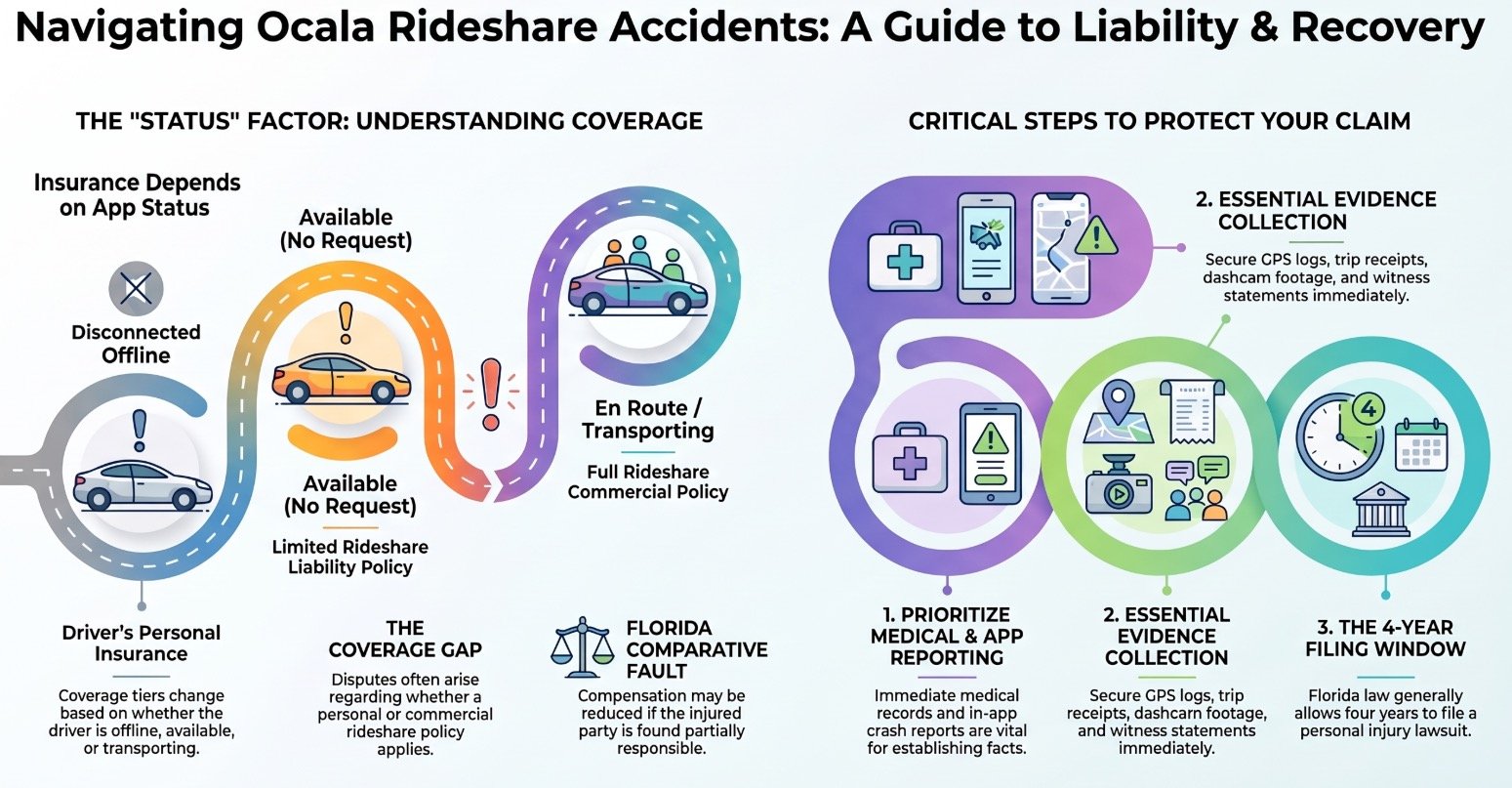
- Insurance coverage may depend on whether the driver was offline, available, en route, or transporting a passenger.
- App records, police reports, photographs, witnesses, vehicle damage, and traffic footage can help establish fault and driver status.
- Medical records, treatment documentation, lost-income evidence, and projected expenses can support injury and long-term damages claims.
- Prompt reporting, medical evaluation, evidence preservation, and careful insurer communication can help protect your claim from premature settlement.
How We Can Help With Your Ocala Rideshare Accidents Injury Claim
An Ocala rideshare accident claim can involve multiple insurance policies, disputed liability, and complex questions regarding the driver’s status at the time of the collision. Legal counsel can help an injured person identify applicable coverage, preserve evidence, and communicate with insurers while protecting the claim from premature settlement decisions. Careful review may reveal Insurance coverage pitfalls, including gaps between personal, rideshare, and commercial policies or disputes concerning whether the driver was available, en route, or transporting a passenger.
A legal team can also organize medical records, employment documentation, repair estimates, and other materials needed to present damages clearly. Counsel may investigate the collision, consult qualified professionals when appropriate, and address insurer requests without shifting unnecessary burdens onto the injured individual. Attention to court filing deadlines is crucial because missed limitations periods can prevent otherwise valid claims from proceeding. By managing procedural requirements and explaining options, a lawyer can help clients pursue accountability while staying focused on recovery and the needs of those who depend on them.
Understanding Ocala Rideshare Accidents Injury Cases


Understanding Ocala rideshare accident injury cases requires examining how the driver’s status, insurance coverage, and available evidence affect potential liability. A driver may be offline, available for requests, traveling to a passenger, or actively transporting one. Each status can influence which policy applies and whether personal, rideshare, or supplemental coverage must respond.
OUR CONSULTATIONSARE FREE
START YOUR FREE CASE REVIEW

A careful evaluation considers the collision report, medical records, application data, vehicle photographs, witness accounts, and communications with insurers. These materials may clarify disputed facts and document the injury’s connection to the incident. Negligent vehicle maintenance can create separate questions involving the driver, vehicle owner, maintenance provider, or other responsible parties. Similarly, ride acceptance disputes may affect coverage determinations when parties disagree about whether a trip had begun.
A claim should account for treatment needs, lost income, transportation limitations, and long-term effects. Objective documentation helps present the injured person’s circumstances accurately while supporting a fair resolution through negotiation or litigation.
Don’t Wait. Call Our Florida Personal Injury Lawyers Now!
Common Causes of Ocala Rideshare Accidents
Common causes of Ocala rideshare accidents include distracted driving, speeding, reckless maneuvers, and impaired driving. Poor road conditions, such as potholes, inadequate lighting, or unclear lane markings, may also contribute to collisions. Identifying the cause is critical when evaluating liability and the potential legal remedies available to injured parties.
Distracted Driving


Although rideshare drivers are expected to stay focused on traffic, distracted driving remains a major cause of collisions in Ocala. Texting violations can divert a driver’s eyes and hands from the roadway, even when messages appear brief. Phone distraction also includes navigation adjustments, accepting trip requests, reviewing passenger information, or handling calls while the vehicle is moving. These activities reduce awareness of traffic signals, pedestrians, cyclists, and changing road conditions. Passenger conversations, eating, drinking, and reaching for items may create additional hazards. When a rideshare driver is distracted, passengers and other road users can face preventable injuries. Documenting phone use, witness observations, vehicle data, and police findings may help clarify responsibility. Legal guidance can help injured individuals preserve evidence and pursue appropriate support.
Speeding And Reckless Driving
When rideshare drivers exceed posted speed limits or drive aggressively, they reduce the time available to respond to traffic, pedestrians, and unexpected road conditions. Speeding can increase collision force, lengthen stopping distances, and worsen injuries in a crash. Reckless maneuvers, including abrupt lane changes, tailgating, and unsafe passing, may create serious hazards for passengers, motorists, cyclists, and pedestrians. Intersection safety risks are especially significant because excessive speed can prevent drivers from yielding, recognizing signals, or avoiding vehicles entering from another direction. Traffic camera evidence, vehicle data, witness accounts, and rideshare records may help establish the driver’s conduct before an incident. When such behavior causes harm, injured individuals may need assistance identifying responsible parties, preserving evidence, and pursuing compensation for medical care, lost income, and other legally recognized losses.
Impaired Driving
Impaired driving is another significant cause of Ocala rideshare accidents, particularly when a driver operates a vehicle after consuming alcohol, prescription medication, illegal drugs, or other substances that affect judgment and coordination. Such impairment can slow reactions, distort perception, and increase the likelihood of collisions involving passengers, pedestrians, and other motorists. Establishing liability may require proving fault details through toxicology results, police reports, witness accounts, vehicle data, and rideshare records. Investigators may also examine how app negligence, including inadequate screening or monitoring, contributed to the incident. Preserving distracted aftermath evidence remains important when phone use, delayed reporting, or inconsistent statements complicate the investigation. Victims can face insurance coverage disputes because personal policies, commercial policies, and platform coverage may apply differently. Prompt legal guidance helps protect injured individuals and clarify available compensation.
Poor Road Conditions
Poor road conditions can contribute substantially to Ocala rideshare accidents by reducing vehicle control and limiting a driver’s ability to respond to hazards. Potholes, uneven pavement, inadequate drainage, faded markings, and unlit construction areas may increase stopping distances or cause sudden swerving. Heavy rain can worsen these dangers by producing standing water and obscuring roadway defects. Determining responsibility often requires examining maintenance records, warning signs, weather conditions, vehicle data, and driver conduct. Rider negligence, such as distracting the driver or interfering with vehicle operation, may complicate liability disputes, although roadway agencies, contractors, or other parties could also share fault. When injuries are fatal, surviving relatives may pursue a wrongful death claim and survivor compensation. Careful investigation can help protect affected riders, families, and communities seeking accountability after a crash.
Legal Rights of Ocala Rideshare Accidents Injury Victims
Ocala rideshare accident injury victims may be able to seek compensation for medical expenses, lost income, pain and suffering, and other losses caused by another party’s negligence. Depending on the circumstances, potential sources of recovery may include the rideshare driver’s insurance, the company’s applicable policy, or another responsible party’s coverage.
Victims can protect their interests by:
- Obtaining prompt medical evaluation and following recommended treatment
- Preserving dashcam footage, photographs, records, and witness information
- Reporting the collision accurately without speculating about fault
- Consulting a qualified attorney before accepting an insurance settlement
Florida law may impose deadlines and specific requirements for injury claims, making timely action important. Evidence should demonstrate liability, the extent of injuries, and resulting financial harm. An attorney may investigate available insurance, communicate with insurers, and pursue fair compensation through negotiation or litigation. When a collision causes a death, eligible relatives may also consider wrongful death claims for documented losses and other legally recognized damages. Each case requires an individualized assessment because coverage and remedies can differ substantially.
Why Do Ocala Rideshare Accidents Injuries Happen?
Rideshare accident injuries often occur when drivers, passengers, or other motorists engage in unsafe conduct amid heavy traffic. Common causes include distracted driving, speeding, impaired operation, fatigue, and abrupt lane changes while traversing Ocala’s roads. Rideshare drivers may focus on applications, accept trip requests, or search for unfamiliar destinations, reducing attention to surrounding vehicles and pedestrians. Traffic signal violations can cause high-impact collisions at intersections, especially when a driver runs a red light or fails to yield during a turn. Poor weather, congested roadways, inadequate visibility, and confusing construction patterns can further increase collision risks. Motorcycle-involved accidents may result in especially serious injuries because riders have limited physical protection and can be difficult to detect in blind spots. Passenger conduct, unsafe vehicle conditions, and negligent maintenance may also contribute. These circumstances can affect riders, drivers, bicyclists, and pedestrians, creating intricate injury patterns that require careful evaluation by those committed to protecting affected individuals.
What Should You Do After an Ocala Rideshare Accident Injury?
After a rideshare injury, the injured person should seek immediate medical care, even when symptoms initially appear minor. Report the accident promptly to law enforcement and the rideshare company, and provide accurate details. Also gather and preserve vital evidence, including photographs, witness information, medical records, and trip details.
Seek Immediate Medical Care
Seek prompt medical attention after any injury in a rideshare collision, even if symptoms initially seem minor. An Emergency medical evaluation can identify conditions that may not be immediately apparent, including concussion, internal bleeding, or soft-tissue damage. A qualified clinician can assess symptoms, provide appropriate treatment, and explain warning signs requiring further care. Delayed treatment may allow an injury to worsen and can complicate recovery. Medical records also establish when symptoms began, what examinations occurred, and which recommendations were provided. Patients should follow discharge instructions, attend recommended appointments, and promptly report new or worsening symptoms. They should preserve bills, prescriptions, imaging results, and other treatment documentation to document injury severity. Family, friends, or caregivers can provide compassionate support with transportation, communication, and compliance with medical guidance during recovery.
Report The Accident
When a rideshare collision causes an injury, report the incident promptly to law enforcement and the rideshare company’s designated reporting channel. A police report can document the reported circumstances, identify involved parties, and support timely assistance for anyone requiring care. The passenger, driver, or other injured person should provide accurate information without speculating about fault. The rideshare platform should also receive notice through its approved process, including App crash reporting when available. Prompt communication helps preserve access to insurance procedures and customer support resources. Witness statement collection may help authorities and the company understand what occurred, but individuals should avoid pressuring witnesses or altering their accounts. If injuries prevent immediate reporting, a trusted representative may notify the appropriate parties as soon as practicable.
Gather Critical Evidence
Although memories and physical conditions may change quickly, an injured person should preserve important evidence from the Ocala rideshare accident as soon as reasonably possible. Photographs should document vehicle damage, road conditions, visible injuries, traffic signs, and the surrounding area. Witness statements can preserve observations that may later clarify how the collision occurred, particularly when accounts differ. The injured person should retain rideshare receipts, trip details, driver information, medical records, and email correspondence with the company, insurers, or other parties. A qualified professional may arrange a vehicle inspection before repairs alter relevant evidence. The injured person should also obtain the crash report and monitor the police investigation, while avoiding speculation about fault. Prompt evidence preservation supports fair evaluation and helps protect the interests of everyone affected, including passengers, drivers, and bystanders.
Critical Evidence in an Ocala Rideshare Accident Injury Case
Establishing liability in an Ocala rideshare accident injury case often depends on preserving and evaluating several forms of evidence.
- Rideshare app records
- Driver background evidence
- Accident scene documentation
- Medical treatment records
Together, these materials can clarify the trip’s circumstances, identify potential negligence, and connect the accident to documented injuries.
Rideshare App Records
Rideshare app records can provide critical evidence in an Ocala rideshare accident injury case by documenting the trip’s timing, route, driver activity, and passenger status. These records may show when a driver accepted a ride, began traveling, arrived at a pickup location, and ended the trip. They can also identify whether a passenger was logged into the vehicle’s active ride, helping establish the relationship between the parties and the transportation service.
Attorneys may seek app data through preservation requests, subpoenas, or formal discovery. Relevant information can include electronic timestamps, GPS history, dispatch communications, payment records, and trip-status changes. Preserving this evidence supports driver accountability and may clarify disputed facts, including location, duration, and trip progression. Prompt action is important because digital records may be retained for limited periods.
Driver Background Evidence
Driver background evidence may help determine whether a rideshare driver’s conduct, qualifications, or history contributed to an accident injury case in Ocala. Relevant records can include license status, training materials, vehicle eligibility documents, insurance information, and prior driving violations. A driver’s screening history may show whether the rideshare company followed its stated driver screening procedures before approving the account. Rideshare policies may also identify requirements concerning criminal records, age, licensing, vehicle maintenance, or continued eligibility. Records of prior complaints, suspensions, or reported safety concerns could provide context when evaluating negligent hiring, retention, or supervision claims. Attorneys may seek these materials through formal requests, subpoenas, or applicable discovery procedures. Reviewing such evidence helps clarify responsibilities and supports fair treatment for injured passengers, motorists, pedestrians, and families seeking accountability.
Accident Scene Documentation
Accident scene documentation can connect the driver’s conduct and surrounding conditions to the injuries sustained in an Ocala rideshare accident. Photographs should preserve vehicle positions, roadway damage, traffic signals, lighting, weather, and visible hazards before conditions change. Dashcam recordings, rideshare application data, and nearby security footage may clarify speed, route, braking, and timing. Witness statements can provide independent accounts of lane movements, distractions, impacts, and events immediately preceding the collision. Investigators may also examine vehicle damage, restraint systems, tires, and mechanical components. In appropriate cases, a vehicle teardown can identify defects or explain how damage patterns correspond with the reported impact. A detailed scene record helps attorneys, insurers, and other responsible parties evaluate liability objectively while preserving information that might otherwise be lost, altered, or overlooked during the claim process.
Medical Treatment Records
When injuries arise from an Ocala rideshare collision, medical treatment records provide essential evidence of the nature, timing, and progression of the claimed harm. Records from emergency departments, physicians, doctors, therapists, and pharmacies can establish diagnoses, prescribed care, symptoms, and recovery limitations. Consistent documentation may connect an injury to the crash while identifying preexisting conditions or later complications that require careful evaluation. Treatment records also help demonstrate financial losses through itemized bills and projected medical needs. Prompt medical attention and accurate symptom descriptions strengthen the reliability of this evidence. Although eyewitness accounts and property damage documentation remain important, medical records directly address the collision’s personal consequences. Complete records, referrals, test results, and billing statements allow attorneys and insurers to evaluate responsibility and damages fairly.
Long-Term Effects of Ocala Rideshare Accident Injuries
Long-term injuries from Ocala rideshare accidents may cause chronic pain and discomfort that interfere with mobility, work, and daily activities. Victims may also experience emotional and psychological effects, including anxiety, depression, or trauma-related symptoms. Ongoing medical treatment and related financial challenges can create lasting burdens that require careful evaluation and appropriate compensation.
Chronic Pain and Discomfort
Persistent pain is a common long-term consequence of injuries sustained in Ocala rideshare accidents, particularly when trauma affects the spine, joints, nerves, or soft tissues. Symptoms may include stiffness, burning sensations, limited mobility, and recurring pain that interferes with work, household responsibilities, and caregiving. Some injured individuals require continuing physical therapy, medication, injections, or corrective procedures. Accurate medical documentation helps establish the connection between the accident and ongoing limitations while supporting necessary treatment decisions. Patients may also face Medical billing disputes when insurers question the necessity of care or the extent of impairment. When chronic symptoms prevent consistent employment, medical evidence can be important in pursuing long-term disability benefits. A qualified legal professional can help organize records, address disputed claims, and protect access to appropriate compensation and services.
Emotional and Psychological Effects
Rideshare accident injuries can produce lasting emotional and psychological effects, including anxiety, depression, sleep disturbances, and post-traumatic stress symptoms. These conditions may affect concentration, relationships, confidence, and the ability to resume ordinary activities. Some individuals experience post-traumatic anxiety when traveling by vehicle, entering intersections, or recalling the collision. Others may develop depression, irritability, emotional withdrawal, or persistent fear that another accident will occur. Symptoms can emerge immediately or appear weeks or months later, especially when physical recovery has been difficult. Trauma counseling may help individuals process distressing memories, develop coping strategies, and regain a sense of safety. Supportive family members, healthcare professionals, and community advocates can encourage treatment without judgment. Prompt attention to psychological symptoms can support recovery and help prevent temporary distress from becoming a more persistent condition.
Ongoing Medical and Financial Challenges
Medical and financial challenges may continue long after the initial treatment for an Ocala rideshare accident. Injured individuals may require follow-up appointments, rehabilitation, medications, or future procedures, creating obligations that are difficult to predict. Ongoing symptoms can also limit work capacity, resulting in lost wages and reduced household stability. Insurance disputes may arise when carriers question liability, the extent of injuries, or the necessity of continued care. Careful expense documentation, including medical bills, receipts, mileage records, and employment information, can help establish the financial impact. In some cases, bill negotiation may reduce immediate pressure while a claim is evaluated. A qualified legal representative can help organize evidence, communicate with insurers, and pursue compensation that accounts for both current needs and reasonably anticipated long-term consequences.
Don’t Wait. Call Our Florida Personal Injury Lawyers Now!
Proving Liability in Ocala Rideshare Accident Injury Cases
Establishing liability in an Ocala rideshare accident requires evidence showing how the collision occurred, which party acted negligently, and whether the driver was logged into a rideshare platform or transporting a passenger at the time. Fault Identification may involve police reports, roadway photographs, vehicle damage, witness statements, traffic-camera footage, and testimony from accident reconstruction professionals. Medical records can connect the collision to reported injuries, while employment and platform records may clarify the driver’s status during the trip.
App Accountability also requires examining electronic trip data, driver communications, timestamps, location history, and passenger records. These materials can help establish whether the driver accepted a request, traveled toward a pickup, or carried a passenger when the crash occurred. Other potentially responsible parties may include another motorist, a vehicle owner, a maintenance provider, or an entity responsible for unsafe road conditions. Preserving evidence promptly supports accurate fact-finding and helps protect injured individuals seeking accountability through lawful proceedings. Witness cooperation and consistent documentation can further strengthen a carefully developed liability claim.
Dealing With Insurance Companies After a Ocala Rideshare Accident Injury
After an Ocala rideshare accident injury, handle insurance communications carefully because coverage may depend on the driver’s status within the rideshare app and the circumstances of the collision. An injured person should provide accurate information and avoid recorded statements or settlement discussions until they understand their available protections. Claim investigation may involve the rideshare company, the driver’s insurer, and other carriers, each seeking facts that could affect responsibility or benefits.
Prompt evidence preservation supports a fair review. Retain medical records, photographs, witness information, trip details, vehicle damage, and application records securely. Written communications can show what each insurer requested and represented. If a carrier disputes responsibility, app dispute resolution procedures may apply to disagreements involving trip records or platform activity. Coverage denial responses should address the stated reasons with supporting documentation and, when appropriate, professional legal assistance. Clear, respectful communication helps protect an injured person’s interests, supports informed decisions, and preserves access to available remedies.
What to Expect During an Ocala Rideshare Accident Injury Claim Process
An Ocala rideshare accident injury claim typically begins with promptly reporting the accident and reviewing the insurance coverage that may apply. The process then involves gathering evidence, documenting medical treatment, and evaluating the full extent of the injuries and losses. Depending on the circumstances, the claim may conclude through settlement negotiations or proceed to trial.
Reporting the Accident
Promptly reporting a rideshare accident to law enforcement and the appropriate insurance providers creates an official record and helps preserve evidence relevant to a personal injury claim. Officers may document statements, roadway conditions, vehicle positions, and apparent injuries, while witnesses can provide contact information before leaving. Injured individuals should follow emergency medical steps, including requesting immediate evaluation when symptoms appear or worsen. A passenger or driver should preserve app details, such as trip receipts, driver identification, route information, and in-app messages, without altering or deleting records. Photographs of vehicles, visible injuries, traffic controls, and surrounding conditions may further support an accurate account. Each person involved should provide factual information and avoid speculation. Timely, organized reporting assists attorneys and community advocates serving injured individuals responsibly throughout the claim process.
Insurance Coverage Review
The information gathered through accident reporting provides a foundation for reviewing the insurance coverage that may apply to a rideshare injury claim. This review typically identifies the driver’s personal policy, the rideshare company’s commercial coverage, and any applicable uninsured coverage. Coverage can depend on whether the driver was offline, available for a request, traveling to a passenger, or transporting that passenger when the collision occurred. Policy limits determine the maximum amount an insurer may pay, while driver liability considerations help establish which policy should respond first. Insurers may investigate competing accounts and may issue a claim denial if they contend that coverage does not apply or responsibility is uncertain. A careful review helps clarify available protections and supports fair treatment for injured individuals and their families throughout the claims process.
Evidence and Medical Records
When evaluating a rideshare injury claim, evidence and medical records help establish how the collision occurred, the injuries sustained, and the losses that followed. Investigators may review photographs, vehicle damage, crash reports, witness statements, app records, and available video footage. Medical documentation should identify diagnoses, treatment plans, prognosis, and any connection between the collision and reported conditions. Records of bills, missed work, transportation needs, and continuing care support a careful Damages Calculation. In a Wrongful Death matter, records may also document funeral expenses, lost financial support, and the decedent’s medical care. During the Claim Process, organized evidence helps clarify disputed facts and helps the parties evaluate responsibility. Prompt collection matters because a Statute Deadline may limit the time available to preserve evidence and pursue legal remedies.
Settlement or Trial Process
Although many Ocala rideshare injury claims resolve through negotiation, some proceed to litigation when liability or damages remain disputed. During Payout Negotiation, representatives assess medical expenses, lost income, future care, pain, and available insurance coverage before presenting or responding to a demand. Evidence Preservation remains crucial throughout this stage. Helpful materials may include crash reports, photographs, witness information, medical records, rideshare data, driver communications, and proof of vehicle activity. If negotiations fail, you may file a complaint, followed by discovery, depositions, expert evaluations, and potentially mediation. At trial, each side presents evidence and arguments concerning fault and compensation, while a judge or jury determines the outcome. The process can be lengthy, but careful preparation helps protect the injured person’s interests and supports a fair resolution for everyone affected.
Compensation for Ocala Rideshare Accident Injury Damages
Injured rideshare passengers, drivers, and other individuals may be entitled to compensation for losses caused by an Ocala rideshare accident. Available recovery may depend on the parties involved, insurance coverage, evidence of negligence, and the severity of the harm. Potential compensation can address medical needs, rehabilitation, lost earning capacity, property damage, and other legally recognized losses, without classifying them here by damage category.
Insurance companies may evaluate liability, policy limits, driver status, and whether the rideshare application was active when the collision occurred. A careful investigation can preserve electronic records, witness accounts, vehicle data, and photographs that support a claim. Comparative fault considerations may affect the amount recovered if an injured person contributed to the accident. In cases involving intentional misconduct or exceptionally reckless behavior, Punitive damages may be available, although they are not awarded in every claim. Timely legal guidance can help protect filing deadlines, communicate with insurers, and pursue fair compensation while prioritizing the injured person’s recovery and dignity.
Economic vs. Non-Economic Damages in Ocala Rideshare Accident Cases
Economic damages in Ocala rideshare accident cases may include medical expenses, lost income, property damage, and other measurable financial losses. Non-economic damages address less tangible harm, such as pain and suffering, emotional distress, and diminished quality of life. Calculating total compensation requires evaluating both categories alongside the accident’s documented impact on the injured person.
Economic Damages Explained
Following a rideshare accident in Ocala, economic damages compensate an injured person for measurable financial losses caused by the collision. Recoverable amounts may include emergency treatment, hospital bills, medication, rehabilitation, and anticipated medical care. Lost wages, reduced earning capacity, transportation expenses, property damage, and necessary household assistance may also qualify with reliable documentation. Liability disputes can complicate recovery, particularly when multiple drivers, rideshare companies, or insurers share responsibility. Under Florida comparative fault, compensation may be reduced according to the injured person’s percentage of responsibility. Evidence preservation, including medical records, pay statements, receipts, photographs, and crash reports, helps establish the amount claimed. Insurance claim denials do not necessarily end a valid claim, but they require careful review of policy language, coverage limits, and supporting evidence before further action.
Non-Economic Damages Overview
While economic damages address documented financial losses, non-economic damages compensate for the personal effects of a rideshare collision that cannot be measured through bills or receipts. These damages may include physical pain, emotional distress, anxiety, reduced enjoyment of life, inconvenience, and lasting limitations caused by injuries. Someone who can no longer fully participate in family, community, or service activities may experience meaningful losses even without additional financial documentation. Evidence can include medical observations, personal testimony, statements from relatives, and accounts from coworkers or community members. Rideshare insurance coverage may affect which insurer evaluates the claim, while liability facts remain important. During settlement negotiation strategies, representatives may present these personal consequences clearly and respectfully, helping decision-makers recognize the collision’s broader human impact without treating suffering as merely a financial transaction.
Calculating Total Compensation
Accurately calculating total compensation in an Ocala rideshare accident requires evaluating both economic and non-economic damages as separate but related components of the claim. Economic damages may include emergency treatment, ongoing medical care, rehabilitation, lost income, reduced earning capacity, property damage, and necessary transportation costs. Documentation such as invoices, pay records, medical reports, and repair estimates helps establish these losses. Non-economic damages address pain, emotional distress, diminished quality of life, disfigurement, and loss of companionship. Their value depends on the injury’s severity, duration, and impact on daily living. Rideshare insurance limits may affect available recovery, particularly when multiple policies overlap. If an insurer disputes responsibility or undervalues damages, claim denial appeals may require additional evidence and careful policy analysis. A thorough assessment promotes fair compensation and informed service to injured individuals.
Don’t Wait. Call Our Florida Personal Injury Lawyers Now!
When an Ocala Rideshare Accident Injury Case Goes to Trial vs. Settlement
Most Ocala rideshare accident injury cases are resolved through settlement, but a trial may become necessary when the parties cannot agree on liability or fair compensation. During negotiations, each side reviews medical records, income documentation, witness accounts, and other Liability evidence to assess the claim’s strength. A settlement can provide compensation sooner, reduce uncertainty, and spare an injured person the demands of courtroom proceedings. However, accepting an offer may limit recovery when insurers undervalue lasting injuries, rehabilitation needs, or diminished earning capacity.
A trial lets both sides present evidence, question witnesses, and ask a judge or jury for a decision. The process can take longer and carries greater uncertainty, but it may be appropriate when factual disputes remain substantial or settlement discussions have failed. Florida comparative negligence may affect the amount ultimately recovered if the injured person is found partly responsible. Legal counsel can evaluate the evidence, explain realistic outcomes, and help determine whether resolution through settlement or trial best serves the injured person’s needs.
Florida Laws That May Affect Your Ocala Rideshare Accidents Case
Florida law can substantially affect how an Ocala rideshare accident claim is evaluated, such as which insurance policy applies, how fault is assigned, and what damages may be recoverable. Several legal principles may shape the investigation and guide efforts to protect injured passengers, drivers, and other community members.
- Negligent hiring claims may arise when a company failed to reasonably screen or supervise a driver.
- Employer liability depends on the driver’s relationship with the rideshare company and the circumstances of the collision.
- Florida comparative fault can reduce compensation when an injured person is assigned some responsibility.
- Damages limitations may restrict certain recoveries, particularly in claims involving governmental entities or specific statutory protections.
Florida’s insurance requirements may provide different coverage levels depending on whether the driver was offline, available for a ride, or transporting a passenger. Evidence such as app records, vehicle data, witness statements, and medical documentation can clarify coverage and responsibility. A thorough legal review helps ensure that claims are presented accurately and that affected individuals receive informed, service-focused guidance throughout the process.
The Statute of Limitations for Ocala Rideshare Accident Injury Cases
Because strict filing deadlines may bar otherwise valid claims, the statute of limitations is a critical consideration in Ocala rideshare accident injury cases. Florida law generally allows four years to file a personal injury lawsuit, although exceptions may shorten or extend that period. Claims involving wrongful death, government entities, minors, or specific insurance issues can follow different deadlines. The applicable period may also depend on when the injury was discovered and who is legally responsible.
Prompt Insurance deadlines awareness is equally important because an insurer’s notice or proof-of-loss requirement may arise well before a lawsuit deadline. Missing either requirement can weaken access to compensation for medical care, lost income, rehabilitation, and other damages. Preserving records and collecting witness statements soon after a collision can help maintain accurate evidence while memories remain reliable. Because deadline calculations are fact-specific, injured individuals and families should obtain timely information about applicable filing periods and avoid assuming that settlement discussions automatically pause the statute.
How an Ocala Rideshare Accidents Lawyer Can Help You
Meeting filing deadlines is only one part of protecting a rideshare accident claim. An Ocala rideshare accidents lawyer can organize the legal and practical work required to support an injured person while treating all parties with professionalism and respect.
Assistance may include:
- Explaining Insurance claim deadlines and communicating with insurers
- Coordinating evidence preservation, including vehicle data, photographs, and witness information
- Obtaining access to medical records and organizing documentation of treatment
- Evaluating available coverage, damages, and settlement proposals
Counsel can also clarify how driver status, app activity, and applicable insurance policies may affect responsibility and compensation. By reviewing police reports, medical documentation, employment records, and other relevant materials, the lawyer can identify inconsistencies and present a coherent claim. Communicating with adjusters can reduce confusion and prevent unsupported statements from harming the matter. The lawyer can further explain legal options in plain language, allowing the injured person and family to make informed decisions. This structured support promotes accountability and helps preserve resources for recovery, household needs, and continued care.
When to Contact an Ocala Rideshare Accidents Lawyer
An injured person should contact an Ocala rideshare accidents lawyer as soon as possible after a collision, particularly when the circumstances involve serious injuries, disputed fault, or multiple insurance policies. Early guidance can help preserve important evidence before vehicle data, surveillance footage, witness recollections, or app records become difficult to obtain.
Legal assistance may also be appropriate when medical treatment continues, income has been interrupted, or an insurer requests a recorded statement or settlement decision. A lawyer can help organize documentation of damages, including medical expenses, lost wages, transportation costs, and other accident-related losses.
Prompt attention helps preserve medical records, which may clarify the nature, duration, and financial impact of injuries. It can also help identify whether the driver was logged into a rideshare application, transporting a passenger, or awaiting a request when the crash occurred.
Individuals should seek advice before signing releases, accepting payment, or making statements that could affect an injury claim. Families may also contact counsel when an injured person cannot manage these responsibilities.
Why You Need an Experienced Ocala Rideshare Accidents Lawyer
Experienced legal counsel can be vital in a rideshare accident because these claims may involve multiple insurers, changing coverage conditions, and disputes over the driver’s status in the application. An experienced Ocala rideshare accidents lawyer can identify applicable policies, preserve evidence, and determine which parties may bear responsibility. This review helps protect an injured person from premature settlements or unsupported denials while promoting a fair resolution.
A disciplined Negotiation strategy can address medical expenses, lost income, property damage, and future care needs using documented evidence rather than speculation. When negotiations fail, effective court preparation becomes important. Counsel can organize records, interview witnesses, consult qualified professionals, and present a coherent account of liability and damages. Such preparation supports clients who may be focused on recovery or serving their families and communities. Experienced representation also helps ensure communications follow legal requirements, deadlines are met, and opposing parties are held accountable through proper procedures. This guidance can provide stability during a complicated claims process and safeguard the injured person’s opportunity to obtain meaningful compensation.
How to Choose the Right Ocala Rideshare Accidents Lawyer for Your Case
Selecting the right Ocala rideshare accidents lawyer requires careful consideration of the attorney’s experience with app-based transportation claims, insurance coverage disputes, and Florida personal injury law. A qualified attorney should understand how coverage may differ based on whether a driver was offline, available for a request, or transporting a passenger. Reviewing case results, professional credentials, and experience with comparable injuries can help an injured person assess legal competence.
Client communication is another important consideration. The lawyer should explain the claim process, potential challenges, and requested documentation in language the client can understand. Prompt responses and regular updates support informed decisions during a stressful period. Prospective clients should also ask about availability and who will handle daily questions.
Fees transparency deserves equal attention. A written agreement should clearly describe contingency percentages, case expenses, and circumstances that could create additional charges. Carefully comparing attorneys can help you find representation aligned with your needs, values, and recovery goals.
About The Law Offices of Anidjar & Levine
When a rideshare accident creates questions about liability, insurance coverage, or compensation, The Law Offices of Anidjar & Levine provides legal representation focused on protecting injured clients’ rights. Its attorneys evaluate collision evidence, medical records, insurance policies, and witness accounts to clarify each client’s legal options. The firm assists people seeking accountability after crashes involving rideshare vehicles, passengers, pedestrians, cyclists, and other motorists. Its approach may include investigating Rideshare liability, identifying applicable coverage, communicating with insurers, and pursuing compensation for medical expenses, lost income, property damage, and other documented losses. Because Florida comparative negligence can affect recovery when multiple parties share responsibility, careful analysis remains important. The firm’s legal team presents organized claims while keeping clients informed throughout the process. Individuals who value service to others may find the firm’s client-centered representation relevant, as it helps injured community members pursue fair treatment and make informed decisions after a serious accident.

Frequently Asked Questions
Can I Sue Uber or Lyft if I Was Injured as a Rideshare Passenger?
A passenger may sue Uber or Lyft after an injury, but liability depends on the crash’s cause, driver status, and available insurance. Claims may target the driver, the rideshare company, or both when evidence supports negligent platform liability. Passenger insurance claims can involve the company’s commercial policy, the driver’s coverage, and the passenger’s insurer. Medical records, trip details, witness statements, and prompt legal evaluation help determine responsible parties, deadlines, and potential compensation.
Are Rideshare Accidents Covered Differently When Traveling Across State Lines?
Rideshare accidents crossing state lines may be covered differently because insurance requirements, liability rules, filing deadlines, and damages standards vary by jurisdiction. State Law Differences can affect whether the driver’s personal policy, the rideshare company’s coverage, or both apply during each trip phase. Choice of Venue may also influence where a claim is filed. An injured passenger should promptly preserve evidence and consult qualified counsel familiar with each potentially applicable state’s law.
What Happens if My Rideshare Driver Was Transporting Multiple Passengers?
When a rideshare driver transports multiple passengers, each injured person may pursue compensation for medical expenses, lost income, and other damages. Multiple Victims Liability can involve the driver’s insurance, the rideshare company’s coverage, and available policy limits, which may need to be divided among claimants. Shared Fare Claims can raise questions about each passenger’s status and damages. An attorney can coordinate claims, protect fairness, and assess coverage.
Can I Recover Damages if I Was Injured Entering or Exiting a Rideshare Vehicle?
Yes, an injured passenger may recover damages after being hurt while entering or exiting a rideshare vehicle, depending on the circumstances and available insurance coverage. A claim may involve driver negligence, such as stopping in an unsafe location, failing to assist when appropriate, or opening a door into traffic. Premises liability may apply when hazardous pavement, inadequate lighting, or other property defects caused the injury. Evidence, medical records, and witness accounts can help establish responsibility.
Does Rideshare Insurance Cover Accidents Involving Uninsured or Underinsured Drivers?
Rideshare insurance may cover injuries caused by uninsured or underinsured drivers, but protection depends on the driver’s status, policy terms, and applicable state law. Uninsured coverage generally applies when the at-fault motorist has no liability insurance, while underinsured limits may apply when available coverage cannot fully compensate the injured person. Coverage can differ depending on whether the driver is available, transporting a passenger, or completing a trip. A careful policy review is important before pursuing compensation.
—————————
Ocala rideshare accident victims may face complex liability issues involving drivers, rideshare companies, insurers, and other parties. Understanding available coverage, documenting injuries, and pursuing compensation within Florida’s deadlines can significantly affect a claim’s outcome. An experienced Ocala rideshare accidents lawyer can assess the evidence, identify liable parties, and manage negotiations or litigation on the victim’s behalf. The Law Offices of Anidjar and Levine provide informed guidance to help protect legal rights and pursue fair compensation after a rideshare collision. Learn more from an Ocala Personal Injury Lawyer.


