

A Marco Island property claims lawyer can review disputed insurance coverage, explain policy terms and deadlines, and help document damage or injury losses. Property claims may involve hurricane damage, flooding, leaks, fires, or injuries caused by unsafe premises. Photographs, medical records, repair estimates, maintenance logs, and witness accounts can help establish what happened and support a claim. The Law Offices of Anidjar and Levine may communicate with insurers and assess available options. For injury-related matters, learn more about a Marco Island Personal Injury Lawyer. The following sections explain common claims, legal rights, and how counsel may assist.
Main Takeaways
- A Marco Island property claims lawyer can review your policy, explain coverage, and identify documentation needed to support your claim.
- Property claims may involve hurricane, wind, flood, plumbing, roof, mold, fire, or smoke damage.
- Photographs, repair estimates, invoices, damaged-property records, and proof of ownership can help document losses.
- A lawyer can communicate with insurers, address disputed policy terms, and assess delays or inadequate investigations.
- Preserve original evidence, report water damage promptly, and take reasonable steps to prevent further damage.
How We Can Help With Your Marco Island Property Claims Injury Claim
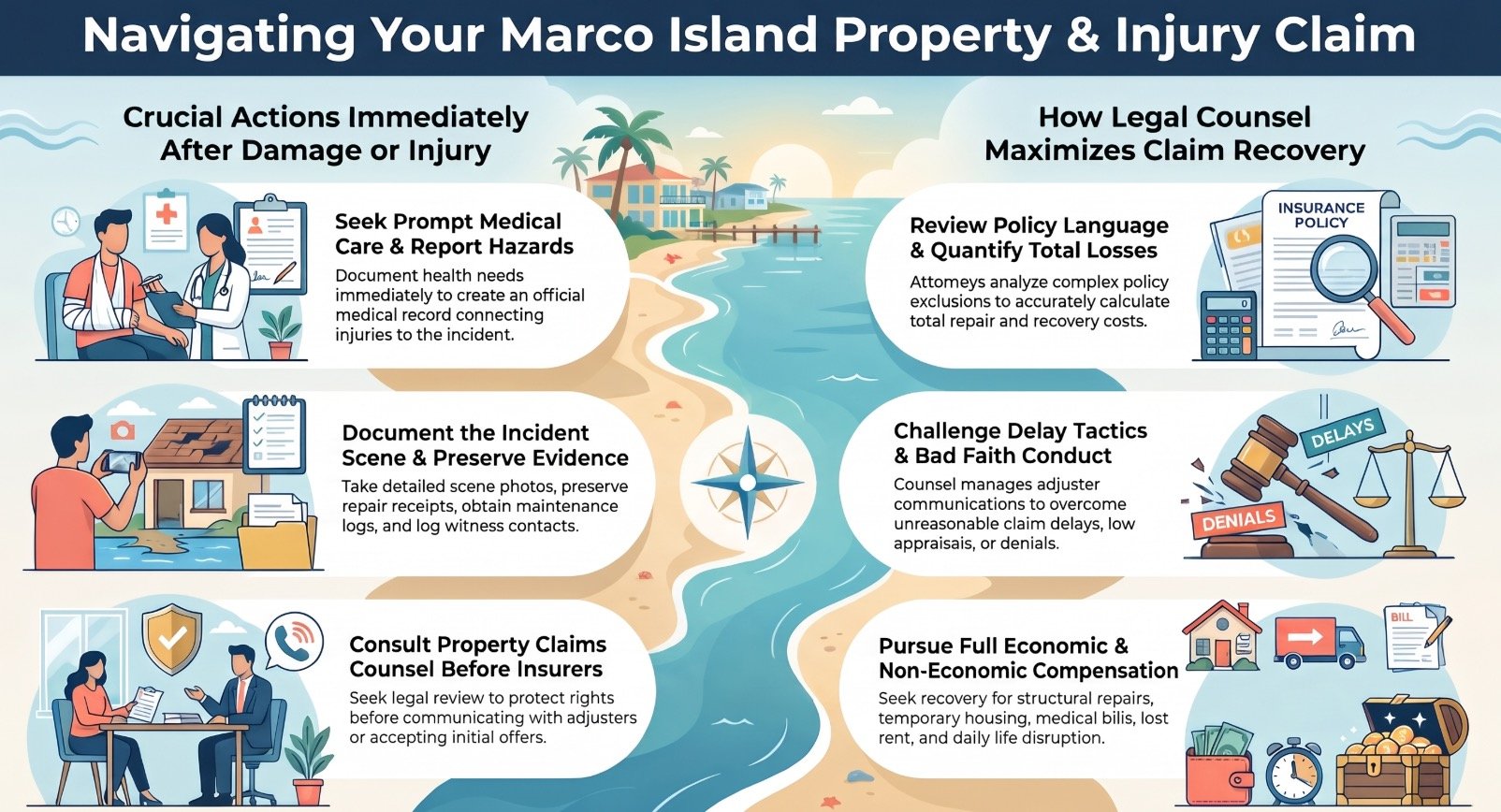
When a property-related injury occurs, a Marco Island property claims lawyer can help an injured person understand available legal options and pursue compensation. Counsel can review the insurance policy, explain relevant coverage, and identify documents needed to support a claim. This guidance may help an injured person make informed decisions while managing medical needs and other practical concerns.
A lawyer can also gather records, communicate with the insurer, and present evidence of the incident and resulting losses. These steps can reduce avoidable delays and ensure important information is clearly documented. When policy interpretation challenges arise, counsel can assess the disputed language and explain how it may affect the claim. If the insurer engages in bad-faith tactics, such as unreasonable delays or inadequate investigation, a lawyer can evaluate the insurer’s conduct and advise on appropriate responses.
Don’t Wait. Call Our Florida Personal Injury Lawyers Now!
Understanding Marco Island Property Claims Injury Cases


Marco Island property claims injury cases arise when a person is hurt because of a condition or event connected to real property, such as a fall on unsafe premises or damage that creates a physical hazard. These matters require careful review of how the injury occurred, who controlled the property, and whether a legal duty was owed to the injured person. The circumstances may affect Claim eligibility, including the available evidence, the relationship between the parties, and applicable deadlines. Insurance coverage can also shape the process. Policy interpretation helps clarify which losses may be covered, what exclusions apply, and what notice or documentation the insurer requires. A thorough assessment considers medical records, incident reports, photographs, witness accounts, and relevant policy language. Clear, accurate information can help decision-makers evaluate responsibility and potential compensation. For individuals seeking to support an injured person, understanding these issues can promote informed choices and a fair, orderly review of the claim.
Common Causes of Marco Island Property Claims
OUR CONSULTATIONSARE FREE
START YOUR FREE CASE REVIEW

Marco Island property claims commonly arise from hurricane and wind damage, as well as flooding and storm surge that affect buildings and personal belongings. Water leaks can lead to mold growth, creating additional damage that may require separate assessment. Fire and smoke damage also cause significant property losses and can raise questions about insurance coverage and claim documentation.
Hurricane and Wind Damage
Hurricanes and severe windstorms can damage Marco Island properties through roof failures, broken windows, fallen trees, and wind-driven rain. Roof uplift may loosen shingles, tear away roofing materials, or compromise structural connections, allowing further damage inside a building. Debris impact can puncture roofs, break windows, and damage exterior walls, while falling trees may affect roofs, fences, and vehicles. Wind-driven rain entering through storm-created openings can harm ceilings, insulation, flooring, and personal property. The extent of covered damage depends on the policy language, applicable exclusions, and evidence documenting the storm’s effects. Property owners may benefit from promptly photographing visible damage, taking reasonable steps to prevent additional harm, and keeping records of repairs and expenses. Clear documentation can help insurers assess claims and support timely, fair consideration for affected households and businesses.
Flooding and Storm Surge


When heavy rainfall, coastal flooding, or storm surge hits Marco Island, water can enter homes and businesses and damage foundations, walls, flooring, electrical systems, and personal property. Tidal flooding may occur during high tides, while storm surge can push seawater inland with little warning. The depth and reach of damage depend on factors such as property elevation, drainage, and the storm’s intensity. Surge elevation records and flood maps may help establish expected water levels, but actual conditions can differ from projections. After an event, property owners may document visible damage, preserve receipts, and review policy terms and exclusions. Insurers may dispute whether losses resulted from flooding, wind, or another covered cause. Careful records and timely professional guidance can help property owners pursue fair claim reviews and protect the interests of their households and communities.
Water Leaks and Mold
Water leaks and mold can cause significant property damage on Marco Island, often developing from plumbing failures, roof defects, appliance malfunctions, or moisture intrusion. Even a small, concealed leak can weaken building materials and create conditions for mold growth. Prompt Leak detection helps identify the source, limit further damage, and preserve evidence needed to evaluate a property claim.
Insurers may review the leak’s cause, the timing of discovery, maintenance records, and the steps taken to prevent further harm. Property owners can support a thorough assessment by documenting affected areas, retaining repair records, and reporting damage promptly. Professional Mold remediation may be necessary to address contamination and protect occupants, while repairs restore damaged structures. Clear documentation and timely action can help property owners pursue fair consideration of covered losses and maintain safe, functional homes.
Fire and Smoke Damage
Fire and smoke damage can result from electrical faults, cooking accidents, appliance failures, or lightning strikes, causing harm beyond the area where flames are visible. Smoke can travel through vents and wall cavities, leaving soot on surfaces and affecting indoor air quality. Heat may also damage structural materials, wiring, and personal belongings, even in rooms untouched by fire.
A Fire origin investigation can help establish how the incident began and identify evidence relevant to a property claim. Photographs, repair estimates, and records of damaged contents can support a clear account of losses. Prompt smoke-odor remediation may reduce lingering odors and prevent residue from becoming harder to remove. Property owners who document damage and seek qualified assessments can better protect their households and provide insurers with accurate information for evaluating necessary repairs and recovery needs.
Legal Rights of Marco Island Property Claims Injury Victims
Property owners and businesses in Marco Island have a legal duty to take reasonable steps to maintain safe premises and address hazards they know about or should discover through proper inspections. When unsafe conditions cause injury, affected visitors, workers, or customers may have rights to seek compensation under Florida law. The circumstances and available evidence determine whether a property owner or another party may be responsible.
Marco Island property owners must take reasonable steps to address hazards, and injured visitors, workers, or customers may have legal options.
In general, an injured person may be entitled to:
- Request payment for reasonable medical expenses and related treatment.
- Seek compensation for lost income and reduced ability to work.
- Pursue damages for pain, suffering, and other documented losses.
- Consult a qualified attorney about deadlines, evidence, and legal options.
Prompt medical care and careful recordkeeping can help protect a claim. Photographs, incident reports, witness details, and correspondence may support an accurate assessment. Property insurance may affect payment, but Coverage exclusions and appraisal disputes generally concern policy benefits rather than injury liability. Legal guidance can help clarify which claims apply and how to pursue them fairly.
Why Do Marco Island Property Claims Injuries Happen?
Injuries on Marco Island properties often occur when hazards aren’t identified, repaired, or clearly marked in a timely manner. Common causes include wet floors, uneven walkways, loose railings, inadequate lighting, and damaged stairs. These conditions can affect residents, visitors, workers, and others who rely on property owners to keep premises safe.
The island’s coastal environment can accelerate deterioration. Salt air, heavy rain, humidity, and storms may corrode metal, weaken building materials, and create slippery surfaces. Properties that aren’t maintained to appropriate Coastal construction standards face added risks, especially when repairs don’t account for local weather exposure.
Inconsistent property inspection schedules can also allow minor defects to become serious hazards. A loose handrail or cracked pavement may remain unnoticed until someone is injured. In some cases, unsafe conditions arise during construction, renovation, or routine maintenance when work areas aren’t secured, or warnings are insufficient. Clear maintenance procedures and timely hazard response help protect people across residential, commercial, and public properties.
What Should You Do After a Marco Island Property Claims Injury?
After a property-related injury, the injured person should seek prompt medical care and follow the provider’s recommendations. Document the incident by photographing the scene, preserving relevant records, and noting witness information. Once immediate needs are addressed, consulting a lawyer can help clarify potential claims and next steps.
Seek Medical Care
Prompt medical evaluation is essential when someone is injured on another party’s property in Marco Island, even if symptoms seem minor at first. A qualified clinician can assess the injury, identify conditions that may worsen over time, and recommend appropriate treatment. For severe pain, heavy bleeding, head trauma, difficulty breathing, or loss of consciousness, emergency services should be contacted without delay. For less urgent concerns, Urgent care may provide timely assessment when a primary care provider is unavailable. Following medical advice supports recovery and helps prevent avoidable complications. The injured person should describe symptoms accurately, including when they began and whether they change. Symptom tracking can help clinicians evaluate progress and adjust care. Keeping follow-up appointments and retaining treatment instructions can support consistent care and a clearer understanding of recovery needs.
Document the Incident
When circumstances permit, the injured person should document the incident as soon as possible, while details remain clear. Photographs or videos can show the hazard, surrounding area, visible injuries, and any damage to personal property. Images should capture both close details and the broader setting, including lighting or warning signs. The injured person may also record the date, time, location, and witness names, then preserve relevant messages, receipts, and incident reports.
A Claim diary can help organize symptoms, treatment visits, missed activities, and communications about the event. Entries should be factual and dated so the record reflects how the injury affects daily responsibilities. For property damage, repair estimates, invoices, and proof of ownership can help establish the extent of loss. Original files and copies should be stored securely and kept in their existing form.
Contact a Lawyer
A property claim can involve disputed facts, insurance requirements, and deadlines that affect the injured person’s options. Contacting a lawyer promptly can help preserve evidence, clarify reporting duties, and prevent avoidable errors in communications with insurers. The injured person should provide an accurate account of the incident, share available records, and identify any witnesses or treatment received. An Initial consultation allows counsel to review the circumstances, explain potential legal options, and outline the information needed to assess a claim. When selecting an attorney, the person may consider the lawyer’s experience with property-related injury claims, communication style, and fee arrangement. A careful choice can support a fair process while helping the injured person stay focused on recovery and responsibilities to family, coworkers, and others who may depend on them.
Don’t Wait. Call Our Florida Personal Injury Lawyers Now!
Critical Evidence in a Marco Island Property Claims Injury Case
Evidence can help establish how an injury occurred, the losses involved, and whether a property owner knew of a hazardous condition.
Relevant materials may include:
- Incident scene photos
- Medical records
- Witness statements
- Property maintenance logs
Incident Scene Photos
Photographs of the incident scene can preserve details that may change or disappear before a property claim is investigated. Images may show a wet floor, uneven walkway, damaged railing, poor lighting, or an obstruction that contributed to an injury. Clear photographs from several angles can document the condition and its surroundings without assigning blame prematurely.
Photo timestamps may help establish when images were taken and how soon the scene was recorded. Metadata preservation can retain information about the original files, including capture dates and device details. Copies should be stored securely, and original image files should not be edited or compressed when possible. A responsible property owner or witness may also photograph warning signs, nearby hazards, and relevant maintenance conditions. These records can support a careful, fair review of the claim.
Medical Records
Medical records can establish the nature and extent of injuries after an incident on another person’s property in Marco Island. They may document symptoms, diagnoses, treatment plans, and changes in a person’s condition over time. Prompt medical attention can support recovery while creating a clear record of care. Records may also help connect an injury to the reported incident and show how it affected daily activities.
Organizing medical records is important when presenting a property claim. Relevant documents can include emergency department notes, imaging results, physician evaluations, prescriptions, and rehabilitation records. Consistent provider coordination can help ensure records are complete and that treating professionals understand the injury history. A lawyer can review these materials for gaps or inconsistencies and explain how they relate to the claim. Accurate documentation supports fair evaluation and responsible resolution.
Witness Statements
Witness statements can clarify how an injury occurred on another person’s property in Marco Island and what conditions were present at the time. People who saw the incident or its immediate aftermath may describe the sequence of events, the injured person’s actions, and any visible hazards. Their accounts can help establish details that photographs or medical records may not capture.
Witness credibility depends on factors such as a person’s opportunity to observe, consistency, and relationship to those involved. A careful review can identify differences between accounts without assuming that every inconsistency indicates dishonesty. Statement timing also matters because memories may fade, and details can change as witnesses discuss the event with others. Prompt, respectful interviews may preserve accurate recollections. Collecting these accounts supports a fair assessment, helps those affected pursue appropriate assistance, and protects the integrity of the claim.
Property Maintenance Logs
Property maintenance logs can show whether an owner or manager knew about a hazardous condition and what steps they took to address it. In a Marco Island injury claim, these records may help establish whether someone reported, inspected, or left a dangerous condition unresolved before an incident. Inspection schedules can show how often staff checked walkways, stairways, pools, and other shared areas. Gaps in scheduled inspections may raise questions about whether reasonable safety practices were followed.
Repair documentation can identify reported defects, assigned work, completed repairs, and delays. Comparing these entries with incident reports, photographs, and witness accounts may clarify how long a hazard existed and whether corrective action was adequate. Complete, dated records help injured people and their representatives assess the facts fairly and determine whether the property’s maintenance practices met applicable responsibilities.
Long-Term Effects of Marco Island Property Claims Injuries
Property claim injuries may have lasting effects, including chronic pain and reduced mobility that interfere with daily activities. Some individuals also experience persistent emotional distress, such as anxiety or sleep disruption. Ongoing treatment and rehabilitation can create ongoing medical expenses that should be considered when evaluating an injury’s full impact.
Chronic Pain and Mobility
When an injury on another person’s property causes lasting damage, chronic pain and reduced mobility can affect a person’s ability to work, manage daily tasks, and maintain independence. These effects may continue after initial treatment, requiring ongoing medical care, physical therapy, medication, or adjustments to daily routines. Chronic pain management may involve coordinated care from physicians and rehabilitation professionals, who can assess symptoms and recommend appropriate treatment. Mobility limitations can make walking, standing, lifting, or using stairs difficult, sometimes requiring assistive devices or help from others. In a property claim, treatment records, functional restrictions, and related expenses can help document the injury’s long-term impact. A careful assessment may also consider how the injury affects employment, household responsibilities, and access to community activities, supporting a more complete evaluation of resulting damages.
Lasting Emotional Distress
Beyond physical symptoms, an injury sustained on another person’s property can lead to lasting emotional distress, including anxiety, depression, or fear of returning to similar settings. These effects may disrupt sleep, concentration, relationships, and a person’s confidence in everyday environments. Some individuals avoid places that resemble the incident location, limiting work, recreation, or community involvement. Recognizing these changes is important, particularly when the injured person continues to meet family or professional responsibilities while coping with distress. Trauma counseling can help individuals process the event and develop practical recovery strategies. Anxiety management techniques may also support a gradual return to ordinary activities. Family members, colleagues, and community organizations can offer respectful support without minimizing the person’s experience. Documented emotional effects may be relevant when evaluating the broader consequences of a property injury claim.
Ongoing Medical Expenses
Ongoing medical expenses can become a major concern after a property injury, especially when recovery requires ongoing treatment or monitoring. Injuries may require follow-up visits, medication, physical therapy, assistive devices, or additional procedures long after the initial emergency has passed. These costs can affect a person’s ability to meet ordinary household needs and maintain consistent care.
When evaluating a property claim, treatment records and medical projections can clarify the likely duration and cost of ongoing care. Qualified providers may describe expected recovery, possible complications, and the need for future treatment. Such information can support a more complete assessment of damages and help prevent long-term needs from being overlooked. Careful documentation of bills, recommendations, and changes in condition also helps ensure claim discussions reflect the injury’s ongoing effects and support fair consideration.
Proving Liability in Marco Island Property Claims Injury Cases
Proving liability in a Marco Island property injury claim requires evidence that the property owner or another responsible party failed to use reasonable care and that this failure caused the injury. The Duty of Care depends on the relationship between the parties and the circumstances of the property. Owners, managers, and occupants may need to inspect for hazards, address unsafe conditions, or provide appropriate warnings.
Negligence Standards require showing that a responsible party knew or reasonably should have known about a dangerous condition and did not take reasonable steps to correct it. Evidence may include photographs, maintenance records, inspection logs, incident reports, and statements from witnesses. Medical documentation can help connect the hazard to the injury, while records of prior complaints may show that the condition was foreseeable.
A careful investigation can preserve relevant evidence and clarify each party’s role. Establishing these facts supports fair accountability and helps injured people pursue appropriate remedies without overstating what the evidence proves.
Dealing With Insurance Companies After a Marco Island Property Claims Injury
Once evidence identifies how a property hazard caused an injury, communication with insurers becomes an important part of pursuing a claim. Insurers may request statements, photographs, medical records, and other materials to evaluate responsibility and losses. A claimant should provide accurate information and avoid guessing about disputed details or making statements that could be read as accepting blame.
Adjuster communications can shape how an insurer understands the incident. Keeping copies of correspondence, recording call dates, and responding carefully to reasonable requests can help preserve a clear account. An injured person may also direct questions about legal rights or settlement offers to counsel before responding.
Coverage disputes may arise when an insurer questions whether a policy applies, challenges the cause of the injury, or disputes the value of documented losses. We can review policy language and supporting evidence to address those concerns. Clear, respectful communication keeps the focus on the facts and the injured person’s needs while allowing the insurer to assess the claim fairly.
What to Expect During a Marco Island Property Claims Injury Claim Process
A Marco Island property injury claim typically begins with an initial review of the facts, coverage, and potential damages. The process then involves collecting evidence, negotiating a settlement, and, if necessary, preparing the case for trial. The sequence and duration of these steps depend on the claim’s circumstances and the parties’ positions.
Initial Claim Review
During the initial review of a Marco Island property injury claim, the insurer or legal representative examines how the incident occurred, the available evidence, and the reported injuries. This assessment helps determine whether the claim falls within the relevant policy and what issues require further attention.
Coverage verification confirms the policy was active on the incident date and identifies applicable limits, exclusions, and conditions. Through policy interpretation, the reviewer considers how the contract applies to the reported circumstances and whether the property owner or another party may have responsibilities under its terms. The injured person’s account and available medical information may also be considered to understand the nature and claimed effects of the injury.
A thorough review helps all parties identify the claim’s scope, meet procedural requirements, and support a fair response. It does not establish liability or guarantee payment.
Evidence Collection
Evidence collection helps establish how a Marco Island property injury occurred and what losses may have resulted. Photographs of the hazard, surrounding area, and visible injuries can document conditions before they change. Witness names and contact details may help preserve independent accounts, while incident reports can record when and where the event occurred. Evidence preservation is especially important if repairs, cleanup, or routine maintenance could alter the scene. Medical records, treatment notes, and receipts may help connect the injury to its effects and document related expenses. The injured person may also be asked to provide a recorded account or respond to questions. Careful adjuster correspondence can clarify requests, deadlines, and information submitted to the insurer. Organized records help the claim reviewer assess the available facts and identify any information still needed for a thorough review.
Settlement Negotiations
Once the available evidence and losses have been reviewed, settlement negotiations may begin with the insurer’s evaluation of the claim. The insurer may request supporting records, question the extent of property damage or injuries, and present an initial offer. A claimant can assess that offer against documented repair costs, medical expenses, lost income, and other eligible losses. A sound Negotiation strategy relies on accurate records, a clear account of the incident, and a reasoned response to disputed points. Settlement timelines vary based on the claim’s complexity, the insurer’s review, and how quickly you provide requested information. Careful communication can help keep discussions focused and reduce avoidable delays. Review any proposed agreement’s terms and scope before acceptance, since a signed release may limit future recovery for the same claim.
Trial Preparation
If settlement negotiations do not resolve a property claim, the case may proceed toward trial, where preparation focuses on presenting the facts and supporting the claimed losses. Counsel reviews contracts, photographs, repair estimates, inspection records, and witness statements to identify disputed issues and organize admissible evidence. The claimant may need to explain the property’s condition, the damage, and its financial consequences clearly and consistently. Expert witnesses can assess repair costs, causation, or diminished value when specialized knowledge is needed. A courtroom strategy should address likely defenses, establish a coherent timeline, and present evidence the judge and jury can evaluate. Jury selection gives both sides an opportunity to identify potential conflicts or biases. Careful preparation helps ensure the claim is presented accurately and respectfully throughout the trial.
Compensation for Marco Island Property Claims Injury Damages
Compensation for injury damages in a Marco Island property claim may cover reasonable medical expenses, lost income, and other losses caused by unsafe conditions on the property. The available recovery depends on the evidence, the nature of the hazard, and the connection between the condition and the injury. Records such as treatment notes, photographs, incident reports, and witness statements can help establish the extent of harm and support a fair claim.
Property losses may also arise when an incident damages belongings or other covered items. Replacement costs can reflect the expense of restoring or replacing property, subject to policy terms and applicable proof requirements. When an insurer’s valuation differs from documented losses, appraisal disputes may require careful review of estimates and supporting records. A lawyer can assess the claim, explain relevant deadlines, and communicate with insurers on the claimant’s behalf. Clear documentation can help protect the claimant’s interests while supporting a resolution that recognizes the full effects of the incident.
Economic vs Non-Economic Damages in Marco Island Property Claims Cases
Property claims may involve economic losses, such as repair costs and temporary housing expenses, as well as non-economic harm, including disruption to daily life. The distinction between these damages can affect the compensation sought. Claimants generally need reliable documentation and other evidence to establish the nature and value of each loss.
Economic Losses
Marco Island property claims may include economic losses, measurable financial costs such as repair expenses, temporary housing, and damaged belongings. Additional losses may include debris removal, emergency mitigation, and fees for inspections or professional assessments. Owners who cannot use a rental property may seek compensation for lost rent, supported by lease records, payment histories, and evidence of the property’s condition before the damage. A local business forced to close or reduce operations may document business interruption through sales records, payroll information, and relevant expense statements. These records help show how the damage affected income and necessary spending. Claimants can preserve invoices, receipts, photographs, and repair estimates to support the amounts requested. Careful documentation enables insurers and decision-makers to evaluate financial impacts and helps property owners pursue a fair resolution while restoring homes and services for the community.
Non-Economic Harm
While economic damages reflect measurable financial costs, non-economic harm concerns the personal effects of property damage, such as disruption, loss of use, and diminished enjoyment of a home. These effects may arise when damage interrupts ordinary routines, limits access to important rooms, or prevents residents from using their property as intended. Emotional suffering can also accompany uncertainty, displacement, and the strain of living amid repairs. In Marco Island property claims, non-economic losses differ from expenses such as repair bills because they describe impacts on daily life rather than direct financial outlays. Diminished enjoyment may affect a household’s ability to relax, gather, or welcome others into the home. Recognizing these personal consequences helps present a fuller account of how property damage affects residents and their well-being, beyond the measurable costs of restoration.
Proving Damages
To support a property claim, the claimant must show both the extent of the damage and the losses it caused. Evidence may include photographs, inspection reports, receipts, and repair estimates that document the condition of the property and the cost of restoring it. Damage valuation should account for covered repairs, replacement costs, and any applicable limits or depreciation under the policy. Economic damages may also include reasonable temporary housing expenses or other documented costs caused by the loss. Non-economic harm, such as disruption to daily life or distress, may be harder to quantify and is not recoverable in every property claim. Clear records help insurers and decision-makers assess each category fairly. A well-supported claim enables a claimant to pursue an accurate resolution while preserving resources for the household and community.
Don’t Wait. Call Our Florida Personal Injury Lawyers Now!
When a Marco Island Property Claims Injury Case Goes to Trial vs Settlement
When a property injury claim cannot be resolved through negotiations, the injured person may need to decide whether to proceed to trial or accept a settlement. Each option involves different considerations, including the time required, the uncertainty of the outcome, and the demands placed on the injured person and those supporting them.
A settlement can provide compensation without a trial, allowing the parties to conclude the dispute privately and avoid the demands of continued litigation. However, the proposed amount may not reflect the injured person’s documented losses or future needs. A trial gives both sides a chance to present evidence to a judge or jury, but it can require preparation, courtroom testimony, and careful review of the facts. Jury deliberations may result in a decision that differs from either party’s expectations.
A lawyer can explain the practical risks and potential benefits of each path, assess whether an offer is reasonable, and prepare the case for trial if necessary. The decision should reflect the injured person’s circumstances and priorities.
Florida Laws That May Affect Your Marco Island Property Claims Case
Florida law can shape nearly every stage of a Marco Island property injury claim, from proving liability to calculating damages and meeting filing deadlines. Rules may differ depending on whether a claim involves a negligent property owner, an insurer, or damage to a home.
Understanding the applicable requirements can help claimants pursue fair outcomes while protecting others from similar harm.
- Premises liability generally requires evidence that a dangerous condition caused injury and that the responsible party knew or should have known about it.
- Comparative fault rules may reduce compensation when an injured person shares responsibility for an incident.
- A Florida property insurance appraisal may resolve disagreements about the amount of covered property damage, but it does not necessarily decide coverage disputes.
- Policyholder notice deadlines and policy conditions can affect insurance claims, so prompt reporting and careful recordkeeping are important.
Evidence such as photographs, incident reports, repair estimates, and witness accounts can clarify disputed facts. Legal guidance can help identify relevant duties, preserve documentation, and assess available remedies without overlooking obligations to affected people.
The Statute of Limitations for Marco Island Property Claims Injury Cases
In Florida, the deadline to file a property injury lawsuit depends on the claim’s legal basis and when the injury occurred. For many negligence claims involving unsafe property conditions, the general filing period is two years from the injury date. Different deadlines may apply when a claim involves a government entity, a written contract, or another legal theory. Missing the applicable deadline can prevent an injured person from obtaining compensation, even when the evidence supports the claim.
Deadline Exceptions may affect when the filing period begins or ends. For example, an injury that could not reasonably be discovered immediately may raise questions about the discovery rule. Claim Tolling may also pause a deadline in limited circumstances, such as when the injured person is a minor or legally incapacitated. These rules depend on specific facts and statutory requirements. Prompt attention to dates, records, and the claim’s legal basis helps protect a person’s ability to seek accountability and support those affected by unsafe conditions.
How a Marco Island Property Claims Lawyer Can Help You
A Marco Island property claims lawyer can help an injured person assess potential legal options and protect a claim after an accident. The lawyer can explain how insurance terms apply, identify relevant evidence, and organize records that support a clear account of the loss. This guidance can help claimants pursue fair treatment while respecting others involved.
A lawyer may assist by:
- Conducting a Policy Review to clarify limits, exclusions, duties, and available benefits.
- Examining property damage, photographs, repair estimates, and other records for accuracy.
- Addressing Coverage Disputes by evaluating insurer explanations and presenting supporting documentation.
- Communicating with insurers and coordinating claim materials to reduce misunderstandings.
Legal counsel can also assess whether proposed settlements reflect documented losses and explain the implications of accepting an offer. When a claim involves multiple parties or substantial damage, organized representation can keep discussions focused on evidence and policy language. The lawyer’s role is to provide informed guidance, preserve the claimant’s interests, and support a fair, orderly resolution.
When to Contact a Marco Island Property Claims Lawyer
When should a property owner contact a Marco Island property claims lawyer? Contact may be appropriate soon after discovering damage, particularly when a storm, fire, water leak, or other event threatens a home or business. Early guidance can help owners understand immediate reporting duties and preserve information while conditions are still clear.
Owners may also consult a lawyer if an insurer delays its response, requests additional records, disputes the cause or extent of damage, or offers a settlement that seems inconsistent with repair estimates. Policy deadlines can affect notice, proof-of-loss submissions, and other steps, so owners should review their policy and avoid waiting until a deadline is near. Prompt attention is especially important when damage affects tenants, employees, customers, or neighbors who depend on safe, usable property.
Owners can organize claim documentation, including photographs, invoices, inspection reports, and insurer correspondence, before seeking advice. A timely consultation can clarify your options and help protect your ability to address the loss responsibly.
Why You Need an Experienced Marco Island Property Claims Lawyer
Because property claims can involve detailed policy language, disputed damage assessments, and strict procedural requirements, an experienced Marco Island property claims lawyer can help an owner evaluate the insurer’s position and identify appropriate next steps. This guidance can be valuable when a home or business has suffered storm, water, fire, or other covered damage, and timely decisions affect recovery.
A lawyer can review policy terms, explain potential Policy Exclusions, and assess whether the insurer’s interpretation aligns with the available evidence. The lawyer may also organize repair records, inspection findings, photographs, and communications to clarify the scope and cause of loss. When estimates differ, counsel can explain the appraisal process and address Appraisal Disputes within the policy’s framework.
Experienced representation can help property owners meet notice and documentation requirements, respond to requests, and challenge unsupported reductions or denials. By bringing careful analysis and steady advocacy to a stressful process, counsel can help owners pursue a fair resolution and focus on restoring their property and supporting those who depend on it.
How to Choose the Right Marco Island Property Claims Lawyer for Your Case
Choosing the right Marco Island property claims lawyer requires more than comparing credentials; property owners should assess each lawyer’s experience with insurance disputes, familiarity with Florida property claims, and ability to explain a clear strategy. A lawyer should be prepared to review policy language, document damage, and identify deadlines that may affect a claim. Clear communication matters, especially when property owners balance repairs with concerns for family members, tenants, or neighbors who depend on a safe building.
Before deciding, clients can verify an Attorney’s Credentials, including Florida licensure and relevant claims experience. They may ask who will handle routine questions, how the lawyer will provide updates, and what evidence the lawyer needs. A written Fee Structure should explain the billing method, potential costs, and any payment obligations if the matter does not succeed. Comparing these details helps property owners select counsel whose approach, availability, and terms fit the case. Careful evaluation supports informed decisions and responsible advocacy throughout the claims process.
About The Law Offices of Anidjar & Levine
The Law Offices of Anidjar & Levine represents Florida property owners in disputes involving insurance claims and property damage. The firm helps clients address denied, delayed, or underpaid claims and pursue compensation for covered losses. For Marco Island residents, property damage may disrupt housing, work, and family responsibilities, making clear guidance important during the claims process.
Firm History reflects the firm’s development in serving people facing legal and insurance challenges across Florida. Its attorneys handle property-related matters with close attention to policy terms, claim documentation, and communication with insurers. The firm’s approach is intended to help clients understand their options and make informed decisions about next steps.
Client Values include responsive communication, careful preparation, and respect for each client’s circumstances. These principles support a service-oriented practice focused on practical assistance rather than promises of a particular outcome. By explaining procedures and addressing questions, the firm seeks to reduce uncertainty for property owners working to restore their homes and move forward after a loss.
Frequently Asked Questions
Can I File a Property Insurance Claim for Damage to a Vacation Rental?
A property owner can generally file an insurance claim for damage to a vacation rental, subject to the policy’s terms, exclusions, and reporting deadlines. Vacation Rental Coverage may differ from standard homeowners protection, particularly when the property is rented to guests. The owner should document the damage, prevent further loss, and promptly notify the insurer. If the property becomes unusable, Rental Income Loss benefits may apply when included in the policy. Review coverage carefully before accepting a settlement.
Does Homeowners Insurance Cover Mold Caused by a Sudden Pipe Leak?
Homeowners insurance may cover mold caused by a sudden, accidental pipe leak, provided the policy covers the water damage and the homeowner takes prompt steps to limit further harm. Sudden Pipe Leak Mold Coverage depends on policy language, exclusions, and reporting requirements. Mold Remediation Limits may cap payment for testing, cleanup, or repairs. A qualified professional can document the leak, assess affected areas, and help the homeowner understand available coverage and required next steps.
Can I Challenge an Insurer’s Appraisal of My Property Damage?
Yes, a policyholder can challenge an insurer’s property damage appraisal, although the available options depend on the policy’s appraisal clause and applicable law. The policyholder may review the process for procedural errors, submit independent damage estimates, and question whether the award addresses covered losses. Appraisal award disputes may require legal review, particularly when the insurer disputes coverage or the appraisers exceed their authority. Promptly preserving records and meeting policy deadlines can protect the policyholder’s position.
Will Filing a Property Claim Affect My Future Insurance Premiums?
Filing a property claim can affect future insurance premiums, but it doesn’t automatically increase them. Insurers may consider the claim’s type, severity, frequency, and applicable state rules when setting rates or renewing coverage. Claim reporting requirements may also apply even when an owner does not seek payment, so policy terms should be reviewed before deciding whether to report damage. Accurate documentation and prompt, truthful communication help protect the insured’s interests and support fair handling.
Can I Recover Temporary Housing Costs While My Home Is Being Repaired?
A homeowner may recover temporary housing costs through Additional Living Expenses coverage when a covered loss makes the residence uninhabitable. The policy may reimburse reasonable temporary accommodation expenses, such as lodging and certain increased meal costs, subject to coverage limits, deductibles, and documentation requirements. The homeowner should review the policy, keep receipts, and promptly notify the insurer. Coverage depends on the cause of damage, the policy’s terms, and the insurer’s assessment of necessary repairs.
—————————
Property damage claims on Marco Island can involve complex insurance terms, disputed liability, and deadlines that may affect recovery. A qualified lawyer can review your policy, assess the evidence, communicate with insurers, and explain your legal options. The Law Offices of Anidjar and Levine represents property owners seeking guidance after a covered loss. Prompt action can help preserve records and support a well-documented claim. Learn more about a Marco Island Personal Injury Lawyer. Each case’s outcome depends on its specific facts and applicable law.

