

A Miami surgical error injury lawyer helps you protect your claim by securing complete medical records, operative reports, and hospital policies, then coordinating qualified medical reviewers to identify standard-of-care breaches and causation. With Law Offices of Anidjar and Levine, you’ll get guidance on documenting symptoms, preserving evidence, and meeting Florida’s strict malpractice deadlines, including the two-year discovery rule and four-year outer limit.
Your attorney can calculate damages, explain contingency fees upfront, and advocate through negotiation or trial, and you can learn more by visiting our Miami Medical Malpractice Lawyer page.
Main Takeaways
- A Miami surgical error injury lawyer reviews whether the surgical team breached the accepted standard of care and caused preventable harm.
- They secure complete medical records, operative reports, anesthesia logs, and hospital policies before evidence is lost or altered.
- They coordinate qualified medical experts to identify errors, explain causation, and support damage calculations.
- They meet Florida deadlines, typically two years from discovery and a four-year outer limit, by filing required notices and court pleadings.
- They clarify contingency fees and costs upfront, communicate consistently, and pursue settlement or trial for medical bills, lost income, and future care.


How We Can Help With Your Miami Surgical Error Injury Claim
Take control of your Miami surgical error injury claim by letting our team handle the legal and evidentiary work that often decides the outcome.
You’ll focus on recovering while you serve your family and community, and you’ll know your rights are protected at every step.
You can rely on us to gather records, preserve essential documentation, and coordinate with qualified medical reviewers to clarify what supportable damages may be pursued.
You’ll receive a clear fee structure up front, so you can make decisions with confidence and without added financial strain.
You’ll also get a practical case timeline that outlines important milestones, expected decision points, and what we need from you to keep progress steady.
If insurers or opposing counsel pressure you, you won’t face them alone; you’ll have disciplined advocacy that stays respectful, organized, and fully prepared for negotiation or litigation.
OUR CONSULTATIONSARE FREE
START YOUR FREE CASE REVIEW

Understanding Miami Surgical Error Injury Cases
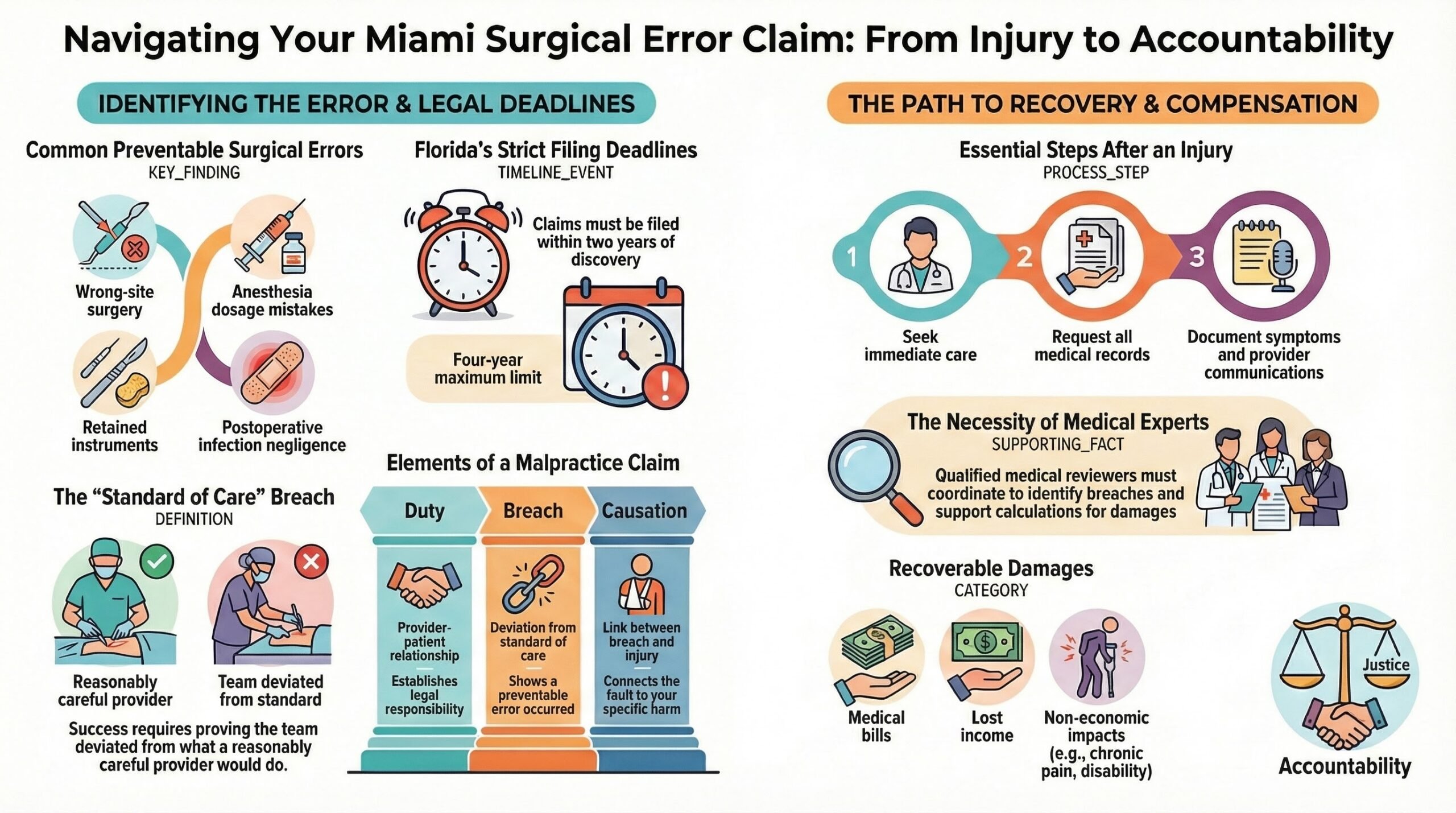
Although every procedure carries inherent risk, a Miami surgical error injury case centers on whether a preventable mistake occurred due to the surgical team’s failure to meet the accepted standard of care.
You’ll typically evaluate what happened before, during, and after surgery, and whether your harm was avoidable through reasonable, careful practice.
You also consider whether you received informed consent, meaning you were told material risks, benefits, and alternatives in a way you could understand.
When consent was incomplete or misleading, it may strengthen your claim, alongside proof of negligence and damages.
Effective patient advocacy focuses on protecting future patients while seeking fair accountability.
| Essential element | What you show | Why it matters |
|---|---|---|
| Duty | Provider-patient relationship | Establishes responsibility |
| Breach | Deviation from the standard of care | Shows preventable error |
| Causation | Link between breach and injury | Connects fault to harm |


Common Causes of Miami Surgical Error Injuries
You can suffer serious harm when a surgical team operates on the wrong site or the wrong patient, miscalculates anesthesia dosage, or leaves a sponge or instrument inside your body.
You can also face avoidable complications when postoperative infection prevention is mishandled, whether through poor sterile practices, delayed diagnosis, or improper wound care.
You should understand how these common failures arise, as each can shape which evidence matters and how responsibility is established.
Wrong-Site Or Wrong-Patient
Misidentifying a patient or operating on the wrong body part can turn a routine procedure into a life-altering injury, and it remains one of the most preventable forms of surgical error in Miami hospitals and surgical centers.
You can reduce risk by confirming identity, procedure, and site at every handoff, and by supporting team dynamics that invite any staff member to speak up without hesitation.
Clear labeling, consistent chart review, and attention to surgical ergonomics also limit distraction and side confusion during positioning and prep.
| Risk point | What you should expect | Why it matters |
|---|---|---|
| Intake | Two identifiers verified | Prevents wrong-patient |
| Marking | The surgeon marks the site with you | Prevents wrong-site |
| Timeout | Whole team confirms plan | Catches mismatches |
Anesthesia Dosage Mistakes
When anesthesia dosing goes wrong, even a well-planned operation can shift into a preventable emergency within minutes.
You may face an overdose that suppresses breathing and blood pressure, or an underdose that leaves you aware, in pain, and at risk of sudden movement during crucial steps.
These errors often begin with misreading weight, incomplete medication histories, or confusing syringe labels, and they worsen when patient monitoring is inconsistent.
An equipment malfunction, such as a faulty pump or miscalibrated vaporizer, can deliver the wrong concentration without warning.
If you serve patients, you know vigilance protects dignity and life.
You can reduce harm by verifying calculations, confirming allergies, and ensuring clear communication at every handoff and dose adjustment.
Retained Surgical Instruments
Although surgical teams rely on standardized counts and checklists, retained surgical instruments still occur and often cause severe, avoidable harm.
When a sponge, clamp, or guidewire is left behind, you may face pain, obstruction, bleeding, and repeat surgery, even though the risk is preventable with disciplined practice.
Breakdowns often start when staff changes occur mid-procedure, when emergencies compress time, or when documentation is rushed, and assumptions replace verification.
Strong Count protocols require clear role assignments, audible confirmations, and reconciliation before closure, not after symptoms appear.
You also benefit when the facility uses Detection technology, such as radiofrequency-tagged sponges or intraoperative imaging, to confirm removal.
If this happened to you, act quickly to preserve records and protect others from repeat errors.
Postoperative Infection Negligence
Because a postoperative infection can escalate quickly from localized redness to systemic illness, surgical teams must follow strict sterile technique and timely aftercare rather than rely on routine assumptions.
When they rush pre-op skin prep, skip hand hygiene, or reuse contaminated tools, you’re left to bear the consequences.
You also face harm when staff dismiss early warning signs, delay in cultures, or fail to monitor drains and dressings carefully.
Proper follow-up requires attention to wound microbiology, including appropriate sampling and documentation, so treatment targets the true source.
It also requires antibiotic stewardship to prevent clinicians from prescribing ineffective drugs, creating resistance, or masking symptoms while the infection spreads.
If this standard is ignored, you can seek accountability and protect others from avoidable injury, too.
Legal Rights of Miami Surgical Error Injury Victims
- Right to accountability: You can pursue claims against surgeons, hospitals, or other providers whose actions fell below accepted standards.
- Right to full compensation: You can demand payment for current and future losses tied to the injury, including rehabilitation and long-term care.
- Right to challenge unfair denials: If insurers or defendants dispute liability, you can use the civil court system.
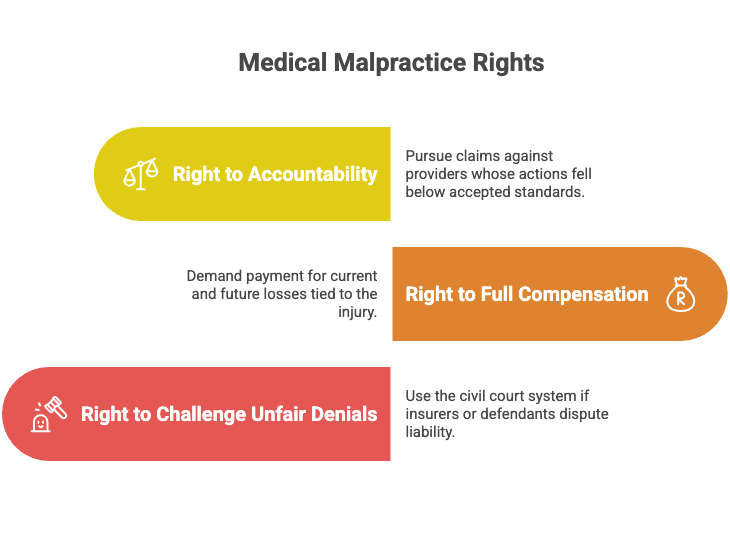
and, when needed, the appeals process to seek review and correction.
Steps to Take After a Miami Surgical Error Injury
After a Miami surgical error injury, you should seek immediate medical care to protect your health and create a clear treatment record.
You should document the surgical error promptly by requesting copies of your medical records, saving discharge instructions, and noting symptoms, dates, and provider communications.
You should also consult a Miami attorney as soon as possible, because early legal guidance helps preserve evidence, meet filing deadlines, and protect your position before insurers or hospitals respond.
Seek Immediate Medical Care
When you suspect a surgical error in Miami, you should seek immediate medical care to protect your health and prevent complications from worsening.
Call 911 if you have severe pain, heavy bleeding, fever, confusion, or trouble breathing, and request Emergency Transportation when you can’t safely travel.
If symptoms feel urgent but stable, go to an emergency room or urgent care for prompt evaluation, and follow all treatment instructions without delay.
Bring a trusted person who can advocate for you and help you stay focused on your care.
Practice Symptom Tracking by noting when each symptom began, how it changes, and what worsens or relieves it, so clinicians can act quickly.
Your timely action supports recovery, safeguards your family, and preserves your ability to continue serving others.
Document The Surgical Error
Even if you feel overwhelmed, you should start documenting the suspected surgical error as soon as you can, because accurate records can clarify what happened and support your medical care and any future claim.
Write down symptoms, new limitations, and every follow-up instruction, and note who provided it and when.
Request copies of discharge papers, operative reports, medication lists, imaging results, and billing statements, then store them in one secure folder.
Take Photo Evidence of visible injuries, incision changes, medical devices, and prescriptions, using clear dates and consistent angles.
Create a simple journal that supports Timeline Reconstruction, listing appointments, calls, and notable events in order.
If family members assist you, ask them to record their observations objectively so your account remains reliable and service-oriented.
Consult A Miami Attorney
Solid documentation gives you a clear record of what changed and when, but you’ll also want legal guidance to protect your options and avoid missteps that can weaken a claim.
Consult a Miami attorney promptly so you can provide stability for your family and community while pursuing accountability.
You’ll review deadlines, request records, and align your medical timeline with legal standards.
Ask about the Fee Structure, including costs, contingency terms, and what expenses you might advance.
Evaluate experience through Client Testimonials, then confirm who will manage communications and negotiations.
| Focus | What you do | Why it matters |
|---|---|---|
| Timing | Schedule promptly | Preserve rights |
| Proof | Share records | Build clarity |
| Costs | Confirm Fee Structure | Avoid surprises |
| Trust | Review Client Testimonials | Gauge reliability |
| Plan | Set next steps | Reduce risk |
How a Miami Surgical Error Injury Lawyer Can Help You
How do you protect your rights after a surgical mistake disrupts your health and finances?
You work with a Miami surgical error injury lawyer who acts quickly, documents what happened, and treats your case as a service to your family and community.
Through consistent Client Communication, you’ll understand each step, deadlines, and options, so you can make informed decisions without added confusion.
With Multilingual Support, you can share details accurately and make certain nothing important is lost in translation.
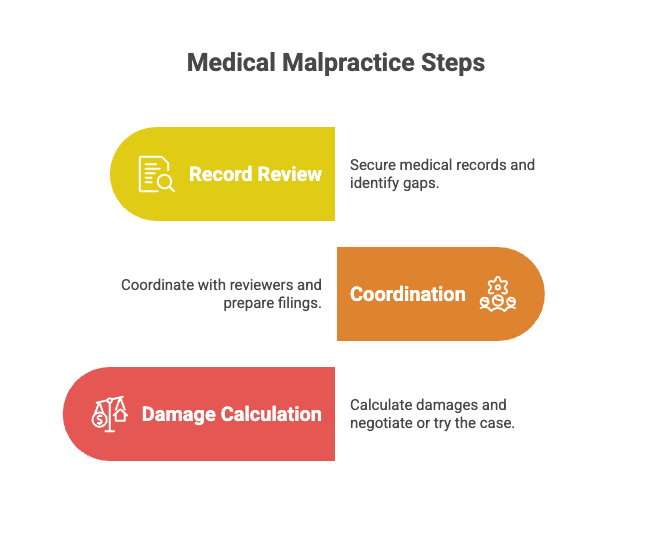
Your lawyer can help by focusing on three core tasks:
- Securing medical records, operative reports, and hospital policies, then identifying gaps or inconsistencies.
- Coordinating with qualified medical reviewers and preparing the required notices and filings on time.
- Calculating damages such as added medical costs, lost income, and out-of-pocket expenses, then negotiating firmly or trying the case.
You’ll gain structure, advocacy, and a clear path forward.
Long-Term Effects of Miami Surgical Error Injuries
When you suffer a surgical error injury in Miami, you may face chronic pain and lasting disability that limits your work, mobility, and independence.
You often need ongoing medical treatment, including follow-up procedures, rehabilitation, and long-term medication management that increases your time and costs.
You also can’t ignore the emotional and financial strain, as lost income, mounting bills, and persistent stress may affect your family and long-term stability.
Chronic Pain And Disability
Although many surgical error injuries in Miami show immediate symptoms, the most disruptive consequences often surface over time through chronic pain and lasting disability.
You may find that ordinary tasks, such as lifting groceries, driving, or standing at community events, become difficult, limiting how you serve your family and others who rely on you.
Persistent pain can narrow your focus, reduce stamina, and trigger Sleep Disturbances that erode judgment, patience, and emotional steadiness.
When mobility or strength declines, you may rely on Assistive Technology, such as braces, walkers, or adaptive devices, to remain independent and present for those you support.
Disability can also restrict work capacity and volunteer roles, forcing you to reassess routines, boundaries, and goals.
Document how limitations affect daily function, relationships, and dignity over months and years.
Ongoing Medical Treatment Needs
Managing ongoing medical treatment after a Miami surgical error can reshape your schedule, finances, and long-term health outlook.
You may need repeated evaluations, medication management, wound care, or revision procedures, and you’ll often coordinate several specialty providers to prevent complications and protect function.
Physical or occupational therapy can become routine, requiring consistent attendance and careful tracking of progress between visits.
If mobility or safety changes, you may also arrange home modifications, such as grab bars, ramps, or adaptive bathing equipment, so you can continue serving your family and community with greater independence.
Many providers now offer telehealth follow-ups, which help you maintain continuity of care, share symptoms promptly, and adjust treatment plans without unnecessary travel.
Keep organized records, follow instructions closely, and advocate firmly for timely referrals.
Emotional And Financial Strain
Ongoing treatment after a Miami surgical error doesn’t just affect your medical calendar; it can also place lasting pressure on your emotional stability and financial security.
You may carry persistent anxiety, disrupted sleep, or guilt about the burden on loved ones, even as you try to stay available to serve others.
At the same time, reduced work capacity, added travel costs, and ongoing prescriptions can erode savings and strain household planning.
You can protect your well-being by using practical coping strategies, including structured routines, counseling, and stress management that fit your faith or mission.
You should also lean on support networks, such as family, peer groups, and community leaders, to share tasks, coordinate care, and reduce isolation.
Careful documentation helps clarify losses and next steps.
Proving Liability in Miami Surgical Error Medical Malpractice Injury Cases
When a surgery in Miami goes wrong, proving liability requires more than showing you suffered a bad outcome; it requires evidence that the surgical team violated the accepted medical standard of care and caused a preventable injury.
A bad surgical outcome isn’t enough; liability depends on proving a standard-of-care breach caused a preventable injury.
You must connect what happened in the operating room to what a reasonably careful provider would’ve done under similar circumstances, and you must show the deviation mattered.
You strengthen your claim by collecting complete records, including operative reports, anesthesia logs, nursing notes, imaging, and follow-up documentation.
Expert testimony then explains the standard of care and identifies specific errors, such as wrong-site procedures, retained instruments, improper monitoring, or delayed treatment of complications.
You also need Causation evidence that links the breach to your injury, not to an underlying condition or unavoidable risk. Timelines, lab trends, and comparative imaging often clarify that link.
Compensation for Miami Surgical Error Damages
Establishing liability sets the foundation, but your case’s value ultimately turns on the full scope of harm the surgical error caused.
You can pursue compensation that restores stability for you and those who depend on your service, while also encouraging safer care for future patients.
Damages often include economic losses and non-economic harm, and, in rare, egregious cases, Punitive Damages may apply.
You’ll also need to account for Insurance Caps and policy limits that can restrict practical recovery even when losses are significant.
Document everything, link each loss to the error, and present the clearest story of need and accountability.
| Damage Category | What It Covers | Proof You’ll Need |
|---|---|---|
| Medical costs | Revision surgery, rehab, meds | Bills, treatment plans |
| Lost income | Wages, reduced capacity | Pay stubs, employer letters |
| Pain and impact | Daily function, suffering | Journals, expert opinions |
The Statute of Limitations for Miami Surgical Error Injury Cases
Although a surgical error may take time to fully surface, Florida’s statute of limitations sets a firm deadline for filing a Miami surgical error injury lawsuit, and you can lose your right to recover if you wait too long.
In most medical negligence matters, you must act within two years of when you knew, or should’ve known, about the injury and its likely connection to treatment.
You should also know there’s a four-year outer limit in many cases, measured from the date of the incident, even if you discover harm later.
Limited exceptions may apply, such as fraud, concealment, or situations involving minors, and the law’s tolling rules can pause or extend time in narrowly defined circumstances.
Because filing deadlines can turn on medical records, informed consent forms, and when symptoms became reasonably discoverable, you’ll want to document dates carefully and request records promptly.
Why You Need an Experienced Miami Surgical Error Injury Lawyer
Florida’s filing deadlines can close quickly, so you can’t afford missteps that cost time or evidence.
When a surgical error changes your life, you need counsel who moves with purpose, preserves records, and secures witness statements before they disappear.
An experienced Miami surgical error injury lawyer coordinates prompt medical review, identifies where standards of care were breached, and frames your story in a way insurers can’t dismiss.
An experienced Miami surgical error injury lawyer coordinates medical review, pinpoints breached standards of care, and presents your case that insurers can’t dismiss.
You also benefit from disciplined risk assessment, because you must understand liability strengths, potential defenses, and realistic damages before you commit resources.
Your lawyer can calculate future care needs, lost earning capacity, and non-economic harm, then demand accountability without overreaching.
In negotiations and, if necessary, litigation, seasoned advocacy strengthens legal credibility, making your claim harder to undervalue.
With steady guidance, you can focus on recovery and supporting your family, while your case advances efficiently and ethically, with documented facts and clear objectives throughout.
How to Choose the Right Miami Surgical Error Injury Lawyer for Your Case
How do you separate a truly capable Miami surgical error injury lawyer from a firm that simply advertises well?
You start by verifying focused experience with surgical error claims, not just general injury work, and you ask for examples of comparable outcomes and courtroom readiness.
You also confirm that the lawyer can work with qualified medical experts and can explain intricate records in plain terms.
Next, insist on fee transparency.
You should receive a clear, written explanation of contingency terms, litigation costs, and who pays what if the case doesn’t succeed.
Set communication expectations early, including how often you’ll receive updates, who’ll answer your questions, and how quickly calls will be returned.
Finally, assess character and purpose: you want counsel who respects patients, values accountability, and approaches your case as service, not a transaction.
Choose the lawyer who listens carefully, sets realistic goals, and documents every promise in writing.
About the Law Offices of Anidjar and Levine
Accountability matters when a surgical mistake upends your health and your finances, and you shouldn’t have to guess whether your legal team has the resources to take a hospital or insurer head-on.
At the Law Offices of Anidjar and Levine, you’re supported by a team that prepares each case as if it will be tried, and you’ll see steady, responsive communication from intake through resolution.
You benefit from the Firm History of handling complicated injury claims across Florida, building disciplined processes for investigation, expert review, and evidence preservation.
You won’t be treated like a file number; you’ll get practical guidance on medical records, timelines, and next steps, so you can focus on recovery and helping your family.
Through Community Involvement, the firm also demonstrates a service mindset by supporting local causes and people in need.
When you’re ready to act, you’ll receive a clear plan and committed advocacy.
Frequently Asked Questions
How Much Does a Miami Surgical Error Injury Lawyer Cost Upfront?
Upfront, you’ll often pay little to nothing, because many firms use contingency rates instead of hourly billing.
If a lawyer requires retainer fees, you’ll typically cover initial case review costs, records retrieval, and expert screening, and then the retainer may apply toward later work.
You should request a written fee agreement, confirm the contingency percentage, and ask which expenses you must advance, since serving clients responsibly demands full cost transparency.
Will My Case Require a Medical Expert Witness to Proceed?
Your case will likely require a medical expert witness if the issues involve professional judgment, causation, or damages.
You must meet negligence standards by showing a breach of accepted care, and an expert often explains what competent practitioners would’ve done.
You’ll also use witness selection to match the specialty, credentials, and communication skills to your facts.
If the error is obvious, you might proceed without one, but you still risk challenges.
Can I Sue a Hospital for a Surgeon’s Mistake in Miami?
Yes, you can sue a hospital for a surgeon’s mistake in Miami when the facts support hospital responsibility.
You may rely on vicarious liability if the surgeon acted as the hospital’s employee or apparent agent.
You can also allege corporate negligence if the hospital failed to credential, supervise, staff, or maintain safe systems of care.
You’ll serve patients best by preserving records, documenting harms, and meeting Florida’s presuit requirements.
What if I Signed a Consent Form Before the Surgery?
Signing a consent form doesn’t automatically bar your claim, because it must reflect true informed consent.
You can still pursue action if the surgeon failed to disclose material risks, alternatives, or likely outcomes, or if care fell below the standard during the procedure.
You may also assert consent revocation if you withdrew permission before surgery and they proceeded anyway.
You serve others best by preserving records and promptly requesting the full chart.
How Long Do Surgical Malpractice Cases in Miami Typically Take to Resolve?
In Miami, you’ll typically see surgical malpractice cases resolve in 12–36 months, though some finish sooner through settlement.
You’ll spend several months in the investigation phase, where records, experts, and timelines shape your position and protect patients from repeat harm.
If the case proceeds, motions and discovery add time, and trial duration can range from days to weeks.
You can help by responding promptly and documenting impacts clearly.
—————————
If you’ve suffered harm from a surgical error in Miami, you can’t afford delay or uncertainty.
You should document your injuries, preserve records, and avoid statements that could undermine your claim.
You’re entitled to pursue compensation, but strict deadlines and medical malpractice rules can limit your options.
With Law Offices of Anidjar and Levine, you can investigate what happened, identify liable parties, and negotiate or litigate from a position of strength with a Miami Medical Malpractice Lawyer.
You have a right to clear guidance and decisive action now.

