

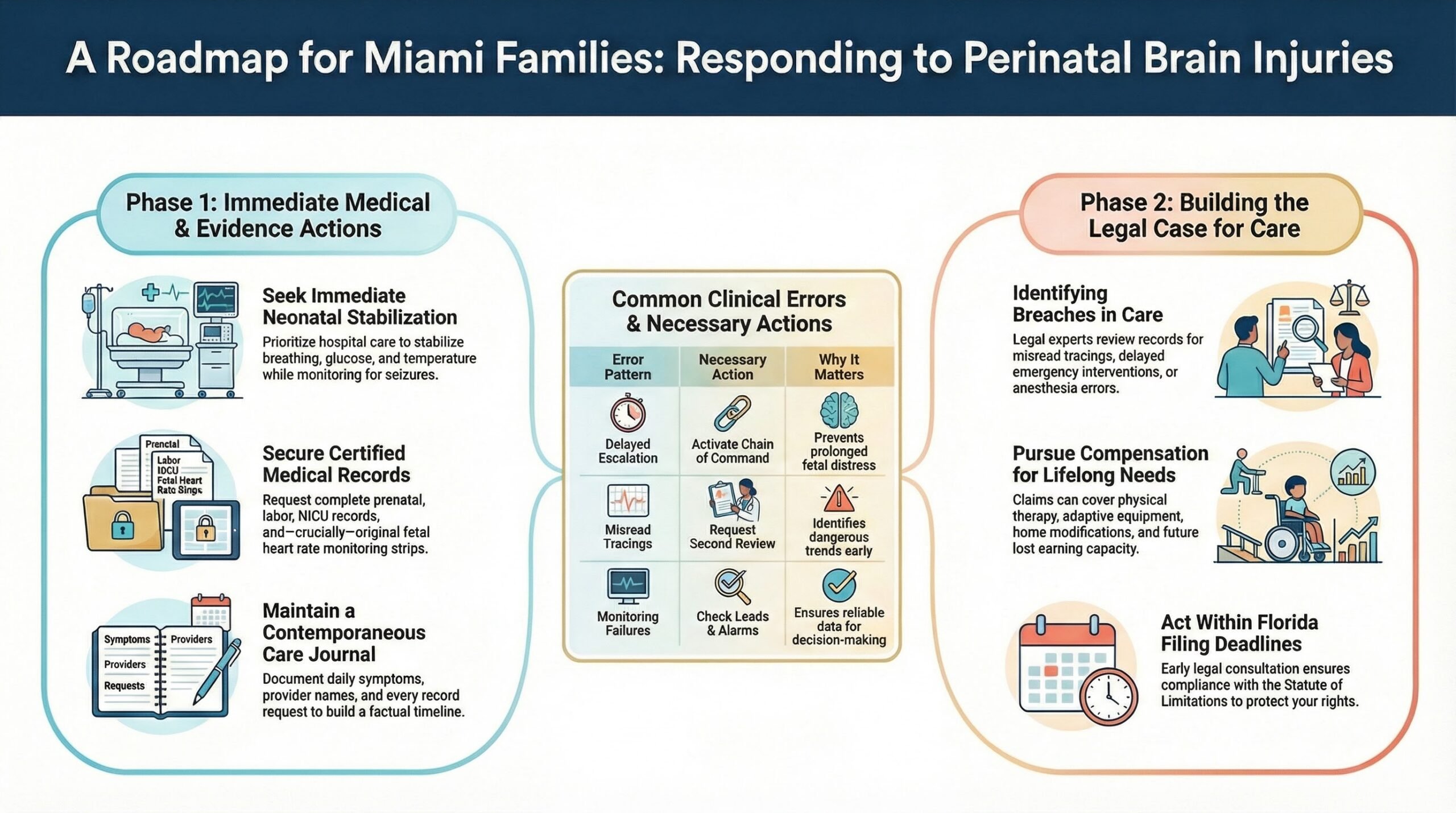
If you suspect a birth-related brain injury in Miami, you should get immediate neonatal care, then preserve evidence by requesting complete prenatal, labor, NICU, and pediatric records, including fetal monitoring strips and medication logs.
The Law Offices of Anidjar and Levine can help build a medical timeline, retain qualified experts to review tracings and imaging, and prove where care fell below accepted standards.
You can pursue compensation for therapy, equipment, and lifelong needs, but deadlines apply—learn more by speaking with a Miami Medical Malpractice Lawyer.
Main Takeaways
- Seek immediate neonatal hospital care; stabilize breathing, glucose, temperature, and circulation, and monitor for seizures or abnormal muscle tone.
- Request complete certified records: prenatal, labor-and-delivery, NICU, fetal monitoring strips, medication logs, imaging, and clinician notes.
- Keep a dated symptom-and-care journal and log every record request, call, and appointment to preserve evidence and timelines.
- A Miami perinatal brain injury lawyer can coordinate expert reviews to identify standard-of-care breaches and connect delays or errors to brain injury.
- Act quickly on Florida filing deadlines; early legal consultation helps protect claims for lifelong therapies, equipment, home modifications, and pain and suffering.
How We Can Help With Your Miami Perinatal Brain Injury Claim
How do you move forward when a preventable perinatal brain injury has changed your child’s life? You focus on immediate stability, then you secure experienced legal guidance that respects your family’s mission to care well for others. You merit a team that listens closely, explains options clearly, and takes the administrative burden off your shoulders.
You can rely on us to promptly investigate records, preserve essential evidence, and coordinate qualified medical reviews. You’ll receive practical case planning, including a clear outline of damages that may support therapies, assistive care, and long-term needs.
If language barriers complicate appointments or paperwork, we’ll arrange translation services so you can participate fully and make informed decisions. You’ll also get help connecting to community resources that support families, caregivers, and early intervention efforts.
Throughout the claim, you’ll stay informed with direct updates, firm deadlines, and professional advocacy in every communication.
Understanding Miami Perinatal Brain Injury Cases


Although every birth injury case turns on its own medical facts, Miami perinatal brain injury claims usually focus on whether avoidable lapses in prenatal, labor-and-delivery, or immediate newborn care deprived your baby’s brain of oxygen or adequate blood flow.
You’ll typically evaluate medical records on a timeline, comparing what was documented with the accepted standards at each point in time.
To understand your case, you may rely on expert review of fetal monitoring, imaging, and lab results, along with Neonatal Screening that may reveal early neurologic concerns.
You’ll also consider how clinicians communicated, escalated concerns, and documented decision-making, since those details often determine whether an error was preventable and whether it caused harm.
Statistical Trends can help you frame expectations about outcomes and resource needs, but your claim still depends on proof of duty, breach, causation, and damages.
When you pursue accountability, you honor your child and support safer care for other families.

Common Causes of Miami Perinatal Brain Injuries
When you assess common causes of Miami perinatal brain injuries, you’ll often see preventable breakdowns during labor and delivery, including improper monitoring and mismanaged complications.
You should also consider oxygen deprivation during birth and maternal infection complications, both of which can escalate quickly when warning signs aren’t addressed.
If emergency intervention is delayed, you may find that a narrow window for treatment closes, and the resulting harm becomes more severe.
Labor And Delivery Errors
OUR CONSULTATIONSARE FREE
START YOUR FREE CASE REVIEW

Because labor and delivery move quickly and leave little margin for misjudgment, preventable errors during this stage can cause or worsen perinatal brain injuries in Miami. If you serve families in the delivery room, you’ll protect infants by insisting on clear communication, timely escalation, and disciplined adherence to protocols.
Anesthesia errors can depress maternal blood pressure or delay urgent decisions, while monitoring failures can hide deterioration until harm occurs. You can reduce risk by verifying orders, documenting changes, and calling for senior support when progress stalls or warning signs persist. When systems fail, accountability helps your community improve.
| Error pattern | What you can do | Why it matters |
|---|---|---|
| Delayed escalation | Activate chain of command | Prevents prolonged distress |
| Misread tracings | Request second review | Catches trends early |
| Anesthesia errors | Confirm dose, readiness | Avoids instability |
| Monitoring failures | Check leads, alarms | Ensures reliable data |
Oxygen Deprivation During Birth
As labor progresses, your team must protect the baby’s oxygen supply with vigilant monitoring and decisive intervention, since even brief interruptions can trigger hypoxic-ischemic injury.
You serve families best when you recognize warning signs early and act without delay.
You should track fetal heart rate patterns, maternal blood pressure, and uterine contraction strength, because prolonged decelerations or excessive contractions can reduce placental blood flow.
When concerns arise, you must correct reversible causes, reposition the mother, provide oxygen as indicated, manage hypotension, and expedite delivery if recovery doesn’t occur.
Oxygen deprivation initiates cellular mechanisms that damage vulnerable brain regions, including energy failure, excitotoxicity, and inflammation.
After birth, timely evaluation helps guide care, and imaging biomarkers on ultrasound or MRI can support the care team’s diagnosis, timing, and prognosis.
Maternal Infection Complications
Although many birth-related brain injuries stem from oxygen deprivation, maternal infections can trigger the same cascade of inflammation and reduced placental function that puts a newborn’s brain at risk.
When you serve expecting families, you should recognize how chorioamnionitis, Group B strep, urinary tract infections, and viral illnesses can raise fetal inflammatory markers and increase vulnerability to bleeding or ischemic injury.
You also need to factor in vertical transmission, as pathogens may pass to the baby before or during delivery, thereby intensifying systemic stress. Timely screening, clear documentation of symptoms, and appropriate cultures help guide treatment choices and reduce uncertainty.
Yet antibiotic resistance can limit standard therapies, making careful selection and monitoring critical. By prioritizing prevention and coordinated prenatal care, you help protect developing brains and uphold patient trust.
Delayed Emergency Intervention
When an obstetric emergency emerges, every minute of inaction can deepen fetal distress and increase the likelihood of hypoxic-ischemic injury or intracranial bleeding.
You serve families best when you recognize warning signs early, escalate concerns, and insist on rapid evaluation rather than “wait and see” reassurances.
Delayed emergency intervention often begins with crowded units, unclear triage protocols, or slow communication between nurses, physicians, and anesthesia.
If fetal monitoring shows persistent decelerations, maternal hemorrhage, shoulder dystocia, or cord prolapse, you should press for an immediate bedside decision, timely operative delivery, and neonatal resuscitation readiness.
Outside the hospital, ambulance delays can extend the hypoxic window, especially when dispatch information is incomplete or transfer coordination fails.
You reduce risk by documenting timelines, confirming handoffs, and advocating for accountable response times.

Legal Rights of Miami Perinatal Brain Injury Victims
Because a perinatal brain injury can alter your child’s future in profound ways, Miami families have specific legal rights that can hold medical providers accountable for preventable harm.
You can pursue a medical negligence claim when care falls below accepted standards, and you may recover damages that fund lifelong support while reinforcing safer practices for other families.
When care falls below accepted standards, a negligence claim can secure lifelong support and encourage safer practices for other families.
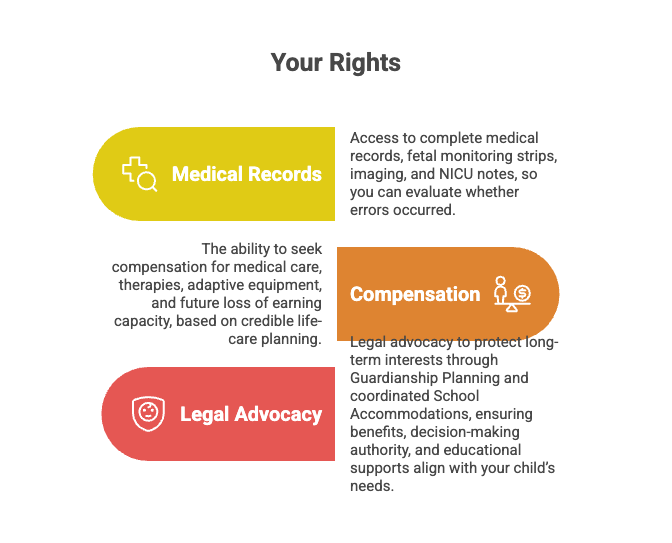
Your rights commonly include:
- Access to complete medical records, fetal monitoring strips, imaging, and NICU notes, so you can evaluate whether errors occurred.
- The ability to seek compensation for medical care, therapies, adaptive equipment, and future loss of earning capacity, based on credible life-care planning.
- Legal advocacy to protect long-term interests through Guardianship Planning and coordinated School Accommodations, ensuring benefits, decision-making authority, and educational supports align with your child’s needs.
You don’t have to carry this burden alone; a qualified attorney can assert these rights with discipline and respect for everyone affected.
Steps to Take After a Miami Perinatal Brain Injury
After a Miami perinatal brain injury, you should seek an immediate medical evaluation to clarify your child’s condition and secure appropriate treatment.
You’ll also want to preserve all medical records and related evidence, including discharge summaries, fetal monitoring strips, imaging, and provider communications, because these documents can become central to any claim.
Once you’ve stabilized care and organized records, you should consult Miami injury counsel so you can protect deadlines, evaluate liability, and plan next steps.
Seek Immediate Medical Evaluation
Even if your baby’s symptoms seem mild, you should seek immediate medical evaluation, since early assessment can uncover complications that aren’t obvious in the first hours or days.
Go to a hospital with neonatal capabilities, or request urgent transfer, so clinicians can initiate rapid triage and stabilize breathing, blood sugar, temperature, and circulation.
Ask the care team to complete appropriate neonatal screening, including neurologic checks and monitoring for seizures, feeding difficulty, or abnormal muscle tone.
If imaging or blood tests are recommended, obtain consent promptly, as timing can influence treatment options.
Stay present, communicate any observed changes, and ensure the team addresses pain control and safe sleep practices.
Preserve Medical Records Evidence
Prompt medical evaluation helps protect your baby’s health, and you should also protect the evidence that explains what happened and when.
Request complete copies of prenatal, labor-and-delivery, NICU, and pediatric records, including fetal monitoring strips, medication logs, imaging, and physician notes.
Ask the hospital for certified copies when available, and record the date, contact, and method for each request.
Create a secure system for file organization, labeling items by provider and timeline so you can quickly identify gaps or inconsistencies.
Keep originals intact, store backups in encrypted digital form, and limit sharing to necessary caregivers to maintain privacy compliance.
Document your baby’s symptoms, appointments, and care needs in a dated journal, because contemporaneous notes can clarify progression and support coordinated, service-minded advocacy.
Consult Miami Injury Counsel
When you reach out to Miami injury counsel early, you can lock in time-sensitive timelines, protect pivotal evidence, and avoid missteps that insurers and hospital risk teams may later exploit.
You’ll gain clear guidance on what to say, what to sign, and what to decline, so your focus stays on your child’s needs and long-term care.
Ask about fee transparency at the outset, including contingency terms, case costs, and how medical experts are funded.
Bring your preserved records, a symptom timeline, and names of every provider involved, so counsel can assess breaches in care and causation.
Prioritize prompt appointment scheduling, because early review can trigger preservation letters, witness outreach, and statutory notice steps.
You serve best by acting decisively and staying organized.
How a Miami Perinatal Brain Injury Lawyer Can Help You
Because perinatal brain injuries often involve complex medical records and strict legal deadlines, a Miami perinatal brain injury lawyer can give you the structure and leverage you need to pursue answers and compensation.
You’ll gain a disciplined plan for gathering records, consulting qualified clinicians, and identifying where care may have fallen below accepted standards, so you can advocate for your child and support the caregivers who stand beside you.
Your lawyer can also handle insurers and hospital counsel, allowing you to focus on service, stability, and informed decision-making.
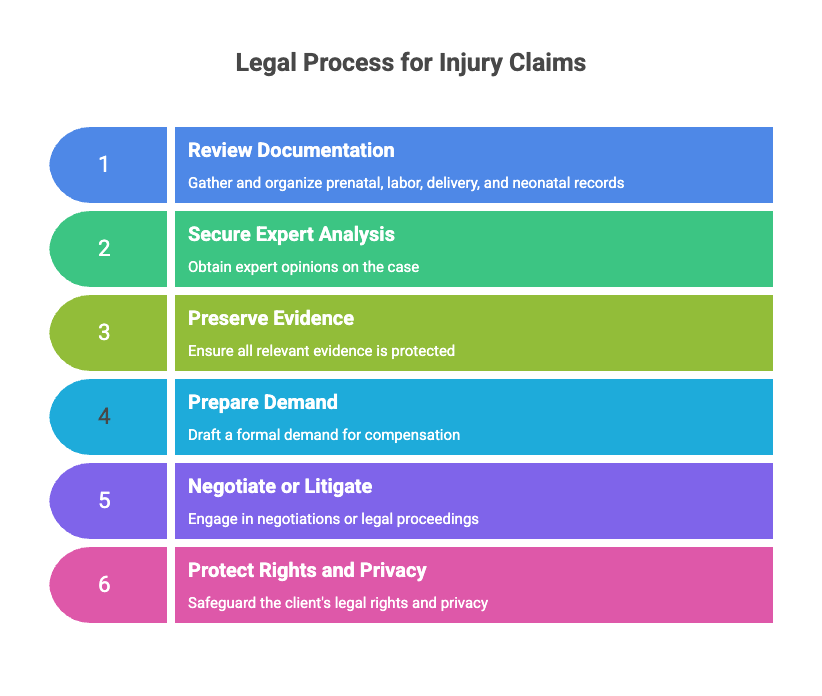
- Review prenatal, labor, delivery, and neonatal documentation to build a coherent timeline
- Secure expert analysis, preserve evidence, and prepare a demand or formal filing
- Negotiate or litigate for fair recovery while protecting your rights and privacy
You won’t have to finance the case upfront, since many firms use contingency fees.
You should also receive clear case updates, so you remain an active, steady partner throughout the process.
Long-Term Effects of Miami Perinatal Brain Injuries
When your child suffers a perinatal brain injury in Miami, you may face long-term effects that extend well beyond the newborn period and shape daily life for years.
You can see cognitive and learning challenges that affect speech, attention, and school performance, along with motor and mobility limitations that influence coordination, strength, and independence.
You may also manage behavioral and emotional impacts, including difficulty with self-regulation, anxiety, or social functioning, which can affect both home routines and future opportunities.
Cognitive And Learning Challenges
| Need | Helpful support |
|---|---|
| Attention and memory | Structured cues, repetition |
| Reading and writing | Assistive Technology tools |
Motor And Mobility Limitations
Motor impairments can reshape everyday life after a Miami perinatal brain injury, limiting how you move, balance, and coordinate even routine tasks.
You may notice delayed milestones, muscle tightness, poor trunk control, or uneven strength that affects sitting, crawling, and walking.
Early, consistent therapy can protect function and support your capacity to serve others with steadier endurance and safer movement.
Your care team may recommend Gait Training to build stride symmetry, improve foot placement, and reduce fall risk through structured practice and cueing.
When daily activities remain difficult, Adaptive Equipment, such as braces, walkers, or seating supports, can improve alignment and conserve energy without replacing skill development.
Track fatigue, pain, and mobility barriers, then share clear observations so clinicians can adjust goals and document long-term needs.
Behavioral And Emotional Impacts


Physical progress doesn’t always capture the full impact of a Miami perinatal brain injury, because changes in behavior and emotional regulation can shape your child’s daily functioning just as strongly. You may notice irritability, impulsivity, or sudden mood swings that disrupt routines at home, at school, and in community activities.
When your child struggles to interpret cues, frustration can escalate into outbursts, and you may see Social Withdrawal that limits friendships and learning opportunities. Some children develop Attachment Disorders, making trust, comfort, and consistent bonding difficult, even in a stable, caring home.
You can serve your child best by tracking patterns, coordinating with behavioral therapists and educators, and using structured, predictable responses. Early, coordinated support can protect your family’s dignity, strengthen relationships, and improve long-term independence.
Proving Liability in Miami Perinatal Brain Medical Malpractice Injury Cases
How do you prove that a preventable perinatal brain injury in Miami resulted from medical negligence rather than an unavoidable complication?
You build liability by anchoring every claim to objective records, accepted obstetric standards, and a clear timeline of care.
You’ll begin with prenatal and labor documentation, fetal monitoring strips, medication logs, and delivery notes, then compare them to hospital protocols and professional guidelines to identify Policy Violations.
Next, you’ll use qualified experts to explain how competent providers should’ve responded to warning signs such as nonreassuring tracings, prolonged labor, shoulder dystocia, or delayed escalation to operative delivery.
Through Causation Mapping, you connect each missed opportunity, delay, or improper intervention to a foreseeable chain of oxygen deprivation or trauma, and then to the specific neurological findings on imaging and neonatal exams.
You’ll also address alternative causes directly, demonstrating why they don’t fit the clinical sequence.
In doing so, you serve truth and accountability.
Compensation for Miami Perinatal Brain Damages
Because a perinatal brain injury often creates lifelong needs, compensation in a Miami claim must account for the full financial impact of the harm, not just the immediate hospital bills.
You should document projected medical care, therapy, assistive technology, home modifications, and transportation, so your child can access consistent support and dignified opportunities.
You can also pursue damages for pain, suffering, and lost earning capacity, while recognizing the toll on your family’s daily life and service to your child.
You’ll often evaluate Payout structures, including lump-sum payments and structured settlements that deliver steady income for long-term care.
You should also consider Tax implications, since certain awards may be non-taxable, while investment gains or specific allocations can change the outcome.
The Statute of Limitations for Miami Perinatal Brain Injury Cases
While your child’s diagnosis may unfold over months or even years, Florida’s statute of limitations can still set a firm deadline for filing a Miami perinatal brain injury lawsuit.
You should treat filing deadlines as urgent planning points, because missing them can prevent any court review, no matter how serious the harm.
In many cases involving medical negligence, the timeline starts when you knew, or reasonably should’ve known, that an injury may relate to care during pregnancy, labor, delivery, or newborn treatment.
You can serve your child best by gathering records early and tracking important dates, including discharge summaries, imaging, and developmental evaluations.
Florida law may recognize tolling exceptions in limited circumstances, such as when crucial facts were concealed or when other legally defined conditions pause the clock.
Because tolling is narrow and fact-specific, you should document delays, communications, and discovery of new information promptly, and remain attentive to every statutory notice requirement.
Why You Need an Experienced Miami Perinatal Brain Injury Lawyer
Even if you suspect your child’s injury traces back to pregnancy, labor, delivery, or newborn care, you still need an experienced Miami perinatal brain injury lawyer to turn that suspicion into a viable claim.
You’re facing intricate medical records, shifting timelines, and providers who may close ranks, so you can’t rely on assumptions or informal opinions. An experienced lawyer coordinates medical review, identifies preventable errors, and connects them to the harm through credible evidence.
You also need someone who can calculate lifetime care needs, then pursue damages that support treatment, therapies, and stability for your child. When insurers minimize responsibility, trial experience matters because it strengthens negotiations and prepares your case for court if necessary.
You merit family advocacy that respects your goals and protects your child’s future, while letting you focus on caregiving and community support. This guidance turns concern into accountable action.
How to Choose the Right Miami Perinatal Brain Injury Lawyer for Your Case
How do you separate a qualified Miami perinatal brain injury lawyer from one who simply markets the practice area?
You look for proven focus in birth injury litigation, a record of handling intricate medical evidence, and a clear plan to protect your child’s future.
Ask who’ll review fetal monitoring strips, neonatal records, and imaging, and whether the lawyer works with respected medical experts.
You should also evaluate Fee Transparency from the first conversation.
Request a written explanation of contingency fees, case costs, and how liens or reimbursements may affect recovery.
Next, assess your communication style: your family needs steady guidance, not sporadic updates.
Ask how often you’ll receive status reports, who returns calls, and what happens when urgent questions arise.
Finally, confirm the lawyer can act with purpose and compassion, aligning legal strategy with your goal of securing lifelong care and accountability for harm.
About the Law Offices of Anidjar and Levine
Choosing the right lawyer also means choosing a firm with the staffing, resources, and trial readiness to handle complicated perinatal brain injury claims. At the Law Offices of Anidjar and Levine, you’re supported by a team that approaches each case with disciplined preparation, careful case management, and a clear commitment to accountability.
Choosing the right lawyer means choosing a trial-ready team with the resources and disciplined preparation to manage complex perinatal brain injury cases.
You’ll work with attorneys who communicate consistently, coordinate expert reviews, and build evidence that can withstand aggressive defense tactics.
You also benefit from a firm culture shaped by firm history and a steady focus on client service. You can expect practical guidance on medical records, timelines, and the costs families often face, so you’re positioned to make informed decisions.
Beyond the courtroom, the firm’s community involvement reflects a service-minded approach that aligns with your desire to protect others. When you choose Anidjar and Levine, you’re not just hiring counsel, you’re partnering with advocates prepared to pursue meaningful results.

Frequently Asked Questions
What Medical Records Should I Request From the Hospital for My Child’s Case?
You should request complete prenatal, labor, delivery, and neonatal records, including Delivery Records, fetal monitoring strips, and all operative reports.
Ask for Medication Logs showing dosing times for induction agents, anesthesia, antibiotics, and newborn medications.
Obtain nursing notes, physician progress notes, consults, lab results, imaging, cord blood gases, APGAR scores, resuscitation records, NICU flowsheets, discharge summaries, and any incident reports.
Keep copies organized so you can advocate effectively for your child’s needs.
Can I Pursue a Claim if I Signed Hospital Consent Forms During Delivery?
Yes, you can still pursue a claim even if you signed consent forms during delivery.
You’ll assess Consent Validity by reviewing what you were told, when you signed, and whether risks and alternatives were clearly explained.
If pressure, confusion, or urgent circumstances affected your choice, you may argue Signature Coercion or lack of informed consent.
You should request the full consent packet, nursing notes, and timing logs to support accountability.
How Are Medical Experts Selected to Review Perinatal Brain Injury Evidence?
You select medical experts by matching their specialty to the injury timeline, then you confirm they’ve handled comparable neonatal and obstetric cases.
You require credential verification through board status, publications, and prior testimony, and you perform conflict checks for ties to the hospital, insurers, or opposing counsel.
You also review their methodology, ensuring they apply accepted standards for imaging, fetal monitoring, and records, and you prioritize clear communication with educators.
Will Filing a Lawsuit Affect My Child’s Access to Future Medical Care?
Filing a lawsuit typically won’t block your child’s future medical care, and you can still seek needed treatment.
You should maintain respectful Provider Relationships, as clinicians must generally adhere to ethical duties regardless of a claim.
Your Insurance Coverage may continue as scheduled, though you’ll want to document benefits, authorizations, and any out-of-pocket costs carefully.
You can ask your care team for clear care plans, and keep communication focused on your child’s well-being.
Are There Local Miami Support Services for Families of Brain-Injured Infants?
Yes, you can find local Miami services that support families of brain-injured infants, and you should start with hospital social work teams for vetted referrals.
You can join Support Groups through UM Health, Nicklaus Children’s, and local nonprofits, where you’ll share resources and coordinated caregiving strategies.
You can also access Therapy Centers offering early intervention, PT, OT, and speech services, often with family training and respite guidance.
Call 211 for local listings.
—————————
If you’re facing a suspected perinatal brain injury in Miami, you can’t afford delays or uncertainty.
You should secure medical records, document symptoms, and protect your child’s future by getting legal guidance promptly.
The Law Offices of Anidjar and Levine can evaluate liability, consult qualified experts, and pursue compensation for long-term care, therapy, and related losses.
You can also learn more by speaking with a Miami Medical Malpractice Lawyer.
When you choose the right counsel, you strengthen your position, meet deadlines, and demand accountability from negligent providers.

