

The Law Offices of Anidjar and Levine, a Lakeland car accident impaired and distracted driving lawyer, investigates how alcohol, drugs, texting, passenger distractions, or other unsafe conduct contributed to a collision. The firm preserves police reports, witness accounts, medical records, vehicle evidence, and digital data, manages insurer communications, and pursues compensation for treatment, lost income, property damage, pain, and other recognized losses. Legal guidance may also address comparative fault and litigation preparation. For additional information about claims, evidence, rights, and available legal support, visit the Lakeland Personal Injury Lawyer page.
Main Takeaways
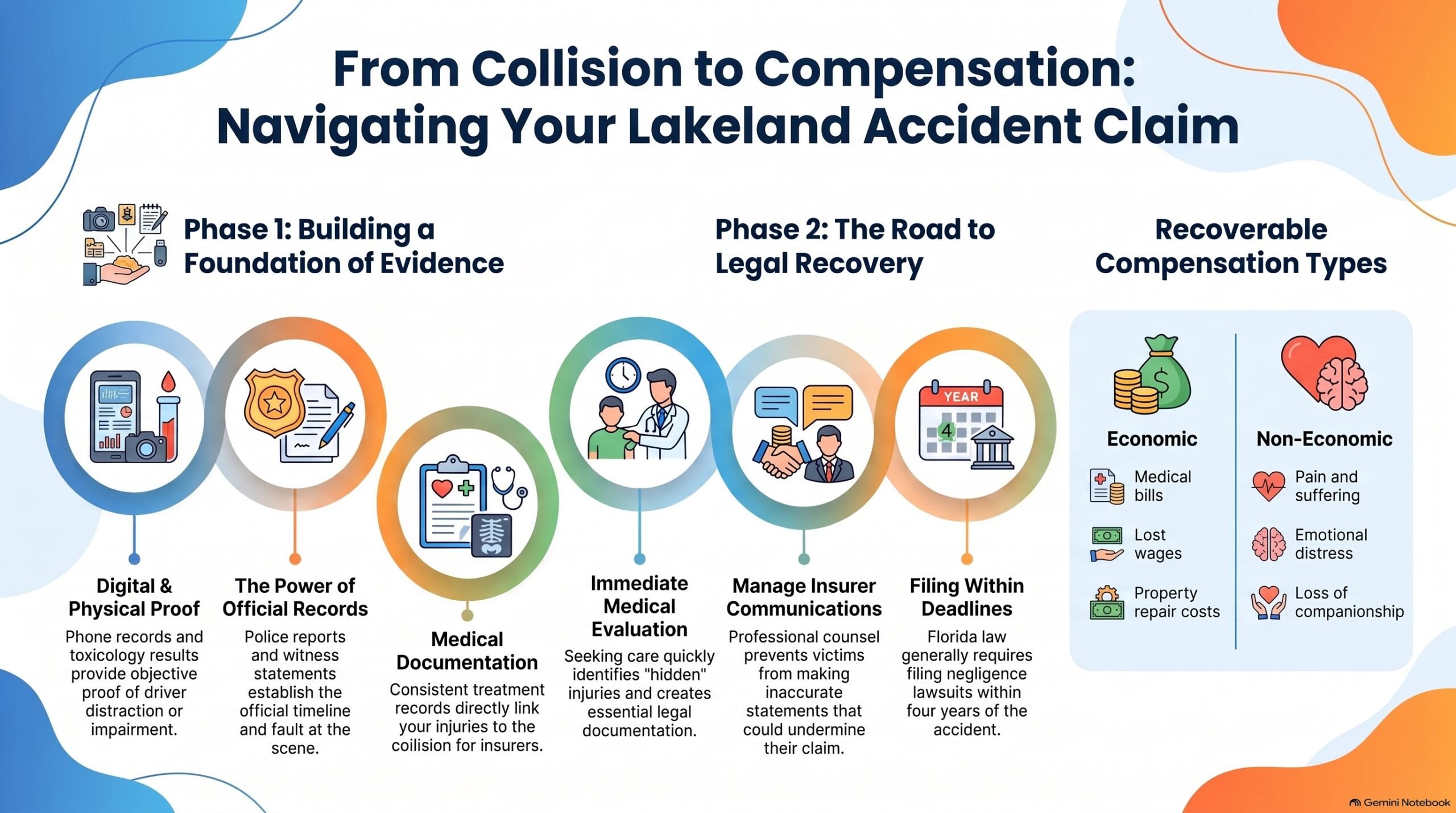
- A Lakeland impaired-and-distracted-driving lawyer investigates police reports, witness accounts, vehicle damage, surveillance footage, and phone records to establish fault.
- Evidence may include toxicology results, breath tests, officer observations, field sobriety performance, and documentation of testing procedures.
- Medical evaluations and consistent treatment records help connect crash injuries to the collision and support compensation for related losses.
- Potential damages may include emergency care, rehabilitation, lost income, reduced earning capacity, pain, suffering, and property damage.
- An attorney manages insurers, protects against inaccurate statements, negotiates settlements, and prepares claims for litigation when necessary.


How We Can Help With Your Lakeland Car Accident Impaired & Distracted Driving Injury Claim
When a Lakeland car accident involves impaired or distracted driving, an attorney can help an injured person pursue compensation while protecting the integrity of the claim. Counsel can organize medical records, collision reports, witness accounts, photographs, and other evidence that may clarify responsibility and document the client’s losses. The legal team can also manage communications with insurers, reducing the risk that an injured person makes an inaccurate statement or accepts an inadequate offer before the full impact is understood.
Depending on the circumstances, representation may include Insurance dispute options such as challenging a coverage position, addressing liability arguments, or seeking review of an undervalued claim. Attorneys can provide settlement strategy planning based on documented expenses, anticipated treatment, lost income, and other legally recognized damages. They may negotiate with responsible parties and insurers while keeping the client informed about meaningful developments. If resolution efforts do not produce a fair result, counsel can prepare the claim for litigation and continue advocating for the injured person’s interests.
OUR CONSULTATIONSARE FREE
START YOUR FREE CASE REVIEW

Understanding Lakeland Car Accident Impaired & Distracted Driving Injury Cases
Understanding a Lakeland car accident involving impaired or distracted driving requires examining how the conduct contributed to the collision and the resulting injuries. A case generally involves evidence, medical documentation, insurance communications, and an assessment of legal responsibility. Fault determination factors may include witness accounts, vehicle damage, roadway conditions, available recordings, police findings, and whether the driver violated a traffic or safety law. The injured person’s own actions may also be reviewed when comparative fault applies.
Medical evaluation is important because some conditions develop gradually, and consistent treatment records can connect injuries to the crash. Damages may include emergency care, ongoing rehabilitation, lost income, reduced earning capacity, property damage, and other documented losses. The Insurance claim timeline often begins with reporting the collision and gathering evidence, then proceeds through investigation, medical updates, negotiations, and potential litigation. Careful case preparation helps protect the injured person’s interests while supporting a fair resolution and informed decisions throughout the process.
Common Causes of Lakeland Car Accident Impaired & Distracted Driving
Common causes of impaired and distracted driving crashes in Lakeland include drunk driving, texting while driving, and operating a vehicle under the influence of drugs. Distracted passengers may also divert a driver’s attention, reducing awareness of traffic conditions and delaying necessary reactions. These behaviors can substantially increase the risk of collisions and serious injuries.
Drunk Driving
Drunk driving is a significant cause of car accidents in Lakeland, as alcohol impairs judgment, coordination, reaction time, and the ability to evaluate traffic conditions accurately. Impaired motorists may speed, disregard signals, drift across lanes, or fail to respond to hazards, increasing the likelihood of severe injuries. After a suspected alcohol-related collision, prompt investigation can help clarify what occurred and identify responsible parties. Relevant evidence may include police reports, toxicology results, vehicle damage, surveillance footage, and medical records. Evidence preservation is important because physical conditions and available documentation can change quickly. Witness statements may provide independent accounts of the driver’s behavior, road conditions, and events leading to impact. Attorneys serving injured individuals can help protect these materials, communicate with insurers, and pursue compensation for medical expenses, lost income, and other damages.
Texting While Driving
Texting while driving diverts a motorist’s visual, manual, and mental attention from the roadway, substantially increasing the risk of a collision. A driver who reads or composes a message may miss traffic signals, pedestrians, changing road conditions, or vehicles entering a lane. Even brief distracted texting can cause a motorist to travel significant distances without properly monitoring surrounding traffic. Safe driving tips include silencing notifications, placing the phone out of reach, and stopping in a lawful, safe location before sending or reading a message. Passengers can also assist by handling communications when appropriate. These precautions protect occupants, bicyclists, pedestrians, and other motorists from preventable harm. When a collision follows phone-related distraction, injured individuals may benefit from documenting available evidence and seeking guidance regarding their legal rights and recovery options.
Drug-Impaired Driving
Drug-impaired driving occurs when a motorist operates a vehicle after using substances that reduce alertness, judgment, coordination, or reaction time. Impairment may involve illegal drugs, prescription medications, over-the-counter products, or combinations that intensify sedating effects. Unlike alcohol, drug concentrations do not always establish a predictable level of impairment, making investigation and proof more challenging. Officers may evaluate driving behavior, physical indicators, field sobriety performance, and toxicology results. Medication impairment standards can depend on warnings, dosage, medical directions, and whether the driver reasonably understood potential effects. Eyewitness testimony issues may arise when witnesses describe unusual conduct without recognizing medication-related symptoms or accurately recalling events. A careful legal review can examine testing procedures, medical records, crash evidence, and witness credibility while supporting injured individuals seeking accountability and appropriate compensation.
Distracted Passengers
Although passengers are not operating the vehicle, their conduct can create distractions that contribute to car accidents in Lakeland. Passenger distraction may involve loud conversations, arguments, unexpected movements, or attempts to show the driver something while traffic conditions require attention. Children, pets, and unsecured belongings can also demand immediate responses, increasing the likelihood of sudden braking, drifting, or missed hazards. Passengers can help promote safety by keeping voices controlled, avoiding unnecessary interactions, and allowing the driver to concentrate on the roadway. They should also encourage proper seatbelt usage for every occupant, including themselves, before the vehicle moves. A passenger who notices impaired or dangerously distracted driving may provide a safer alternative, such as requesting a stop or contacting assistance. These supportive actions can protect occupants and other road users.
Don’t Wait. Call Our Florida Personal Injury Lawyers Now!


Legal Rights of Lakeland Car Accident Impaired & Distracted Driving Injury Victims
When an impaired or distracted driver causes a crash, injured Lakeland victims may have the right to seek compensation for medical expenses, lost income, property damage, pain and suffering, and other legally recognized losses.
Florida law may also permit recovery from multiple responsible parties, depending on the evidence and applicable insurance coverage.
- Victims may pursue an insurance claim while protecting their legal interests.
- A clear Insurance claim timeline helps track reporting deadlines, negotiations, and potential litigation.
- A medical documentation checklist can organize diagnoses, treatment records, bills, prescriptions, and future-care recommendations.
- Legal representatives may communicate with insurers, preserve evidence, assess damages, and pursue a fair resolution.
Victims generally should avoid recorded statements, premature settlements, or public posts that could undermine a claim. Prompt medical attention and careful recordkeeping support both health and legal recovery. A qualified Lakeland attorney can explain rights, evaluate liability, and help injured individuals and their families pursue accountability while focusing on recovery and serving their communities. Legal deadlines may restrict available remedies, making timely consultation especially important.
Why Do Lakeland Car Accident Impaired & Distracted Driving Injuries Happen?
Understanding why these crashes occur helps clarify how impaired or distracted driving supports a negligence claim. Alcohol, drugs, fatigue, and certain medications can reduce judgment, coordination, reaction time, and awareness. A driver may misjudge distances, drift across lanes, miss signals, or fail to yield, resulting in preventable collisions. Distraction produces similar dangers when motorists text, adjust navigation, eat, reach for objects, or focus on passengers rather than traffic.
Common road hazards, including sudden congestion, construction zones, poorly marked lanes, and changing weather, demand constant attention. Impairment or distraction limits a driver’s ability to recognize and respond to those conditions safely. Evening driving risks may increase because darkness reduces visibility and fatigue can weaken concentration, while impaired drivers may be more likely to drive at night. Injuries can result when negligent conduct combines with speed, unsafe lane changes, rear-end collisions, or failure to watch for pedestrians and cyclists. These circumstances may help establish how a driver’s conduct contributed to another person’s harm.
What Should You Do After a Lakeland Car Accident Involving Impaired & Distracted Driving?
After an impaired or distracted-driving crash, the injured person should seek immediate medical care, even when symptoms initially appear minor. Accident details should be documented carefully, including photographs, witness information, police records, and medical documentation. Contacting a Lakeland car accident lawyer can help protect legal rights and support an informed injury claim.
Seek Immediate Medical Care
Prompt medical evaluation should be a priority following a Lakeland car accident involving suspected impaired or distracted driving. A qualified healthcare professional can identify injuries that may not be immediately apparent, including concussion symptoms, internal trauma, or soft-tissue damage. Timely treatment also creates an accurate medical record connecting symptoms to the collision and helps reduce the risk of complications. The injured individual should follow discharge instructions carefully, attend all follow-up appointments, and maintain a symptom log that records pain, dizziness, headaches, mobility changes, and emotional effects. Medical providers should be told about every symptom, even if it appears minor. Rather than attempting to preserve crash proof or collect eyewitnesses personally while injured, the individual should prioritize safety and treatment; a trusted representative or attorney can address those matters appropriately.
Document The Accident
When it is safe to do so, the injured person or a designated representative should document the Lakeland collision as thoroughly as possible. Aftermath documentation may include photographs of vehicle positions, road conditions, traffic signals, visible injuries, property damage, and surrounding hazards. A written record should preserve collision details, including the time, location, weather, sequence of events, and any statements made by involved drivers. Witness statements should be obtained with names and contact information, without pressuring anyone to characterize fault. The representative should request the responding officer’s report number and record relevant agency information. Insurance notification should be made promptly, using accurate, limited facts and avoiding speculation about responsibility. Medical records, receipts, towing information, and repair estimates should also be organized securely for future reference.
Contact A Lakeland Lawyer
A Lakeland attorney should be contacted as soon as practical if an impaired or distracted driver may have caused the collision and resulting injuries. Early legal consultation can help an injured person understand available protections, deadlines, and appropriate next steps while medical treatment continues. An attorney may coordinate the preservation of evidence, including photographs, vehicle data, surveillance footage, witness information, toxicology records, and communications that could clarify how the crash occurred. Counsel can also communicate with insurers to help prevent premature statements or settlement decisions that fail to account for future medical needs, lost income, and related harm. Prompt representation supports an orderly investigation and allows the injured person to focus on recovery. When assistance from family, medical providers, or community advocates is needed, counsel can help coordinate those efforts responsibly.
Don’t Wait. Call Our Florida Personal Injury Lawyers Now!
Critical Evidence in a Lakeland Car Accident Impaired & Distracted Driving Injury Case
Establishing liability in a Lakeland impaired or distracted driving injury case often depends on timely, reliable evidence from multiple sources.
Important evidence may include:
- Police accident reports
- Toxicology and impairment tests
- Phone and digital records
- Witness statements and medical evidence
Together, these materials can help clarify what occurred, identify responsible conduct, and document the injuries and resulting losses.
Police Accident Reports
Police accident reports can provide important evidence in a Lakeland impaired or distracted driving injury case by documenting the collision’s circumstances, the parties involved, roadway conditions, and the investigating officer’s initial observations. The report may identify apparent traffic violations, statements from drivers or witnesses, vehicle positions, and visible damage. Although it is not conclusive proof, this record can help establish incident timelines and direct further investigation. Attorneys may compare the report with dashcam footage, photographs, medical records, and witness accounts to assess whether the evidence consistently describes the crash. Promptly obtaining the report can also help preserve details that may become difficult to verify later. A careful review may reveal omissions or inaccuracies that require clarification through supplemental records, scene evidence, or testimony from witnesses and responding officers, thereby supporting injured individuals’ pursuit of accountability.
Toxicology And Impairment Tests
Toxicology results and other impairment tests may provide significant evidence when a Lakeland car accident involves suspected alcohol or drug use. Breath, blood, or urine testing can help indicate whether alcohol, prescription medication, or controlled substances were present, although collection procedures, timing, calibration, and laboratory methods may affect interpretation. Breathalyzer accuracy depends on proper maintenance, administration, and compliance with testing protocols; a reported reading thus requires careful evaluation rather than automatic acceptance. Officers may also document Field sobriety clues, including balance, coordination, speech, attention, and responses to instructions. These observations can support or challenge impairment allegations, but medical conditions, fatigue, stress, and injuries may produce similar signs. Attorneys can review testing records, chain-of-custody documentation, video, and expert analysis to assess the reliability of the evidence and explain how it may serve injured individuals and their families.
Phone And Digital Records
Phone and digital records can provide crucial evidence in a Lakeland car accident involving suspected impaired or distracted driving. Call log evidence may show whether a driver was placing or receiving calls around the time of the collision. Text-message timestamps, keyboard activity, and device-use records may help establish whether attention was directed away from traffic. App location history can indicate a phone’s movement, timing, and approximate position before and after impact. Navigation data may also reveal route changes, stops, or active applications. Attorneys may request relevant records through lawful preservation letters, subpoenas, or discovery, while respecting privacy protections and evidentiary requirements. Because digital information can be deleted, altered, or automatically overwritten, prompt preservation is important. A careful review can help clarify disputed events and support an injured person’s pursuit of accountability and fair compensation.
Witness And Medical Evidence
Witness accounts and medical evidence can establish how an impaired or distracted driver’s conduct affected a Lakeland collision and the resulting injuries. Independent witnesses may describe lane departures, delayed reactions, erratic speed, phone use, or signs of intoxication observed before impact. Their statements should be collected promptly while memories are still reliable and compared with police reports, the crime scene, and available video footage. Medical records document the injuries, treatment, prognosis, and limitations attributed to the crash. Emergency personnel, physicians, therapists, and other providers may explain whether symptoms are consistent with the collision and how recovery may affect daily responsibilities. Photographs, diagnostic imaging, and testimony concerning prior health can clarify causation. Careful preservation of this evidence helps a legal team present an accurate account and pursue appropriate support for the injured person.
Long-Term Effects of Lakeland Car Accident Impaired & Distracted Driving Injuries
Impaired or distracted driving injuries may produce lasting consequences that extend well beyond the initial recovery period. Chronic physical pain, emotional trauma, and related limitations can affect a person’s daily activities, relationships, and overall quality of life. Ongoing medical needs and reduced earning capacity may also create substantial long-term financial strain.
Chronic Physical Pain
Chronic physical pain is a common long-term consequence of injuries sustained in Lakeland car accidents involving impaired or distracted drivers. Fractures, spinal damage, nerve injuries, and soft-tissue trauma may continue causing discomfort after initial wounds appear recovered. Persistent pain can restrict movement, interfere with sleep, and limit a person’s ability to work, provide care, or complete daily responsibilities. Diagnosis and treatment often require coordinated evaluations by physicians, imaging experts, pain professionals, and physical therapists. Medical records documenting symptoms, prescribed medications, therapy, and functional limitations can help clarify the injury’s continuing effects. Rehabilitation planning should address measurable goals, appropriate exercises, workplace restrictions, and necessary assistive services. Ongoing treatment may also involve carefully monitored medication, injections, or other interventions designed to improve function while reducing unnecessary risks for each patient.
Emotional Trauma
Emotional trauma can develop after a Lakeland car accident involving an impaired or distracted driver, particularly when the collision causes serious injuries, sudden disability, or fear for personal safety. Survivors may experience anxiety, depression, nightmares, irritability, or avoidance of driving and busy roads. These symptoms can interfere with relationships, employment, sleep, and daily independence, even after physical wounds recover. Family members may also struggle while supporting an injured person through emotional recovery. Prompt mental health support can help identify trauma-related symptoms and establish appropriate care. Trauma therapy, including evidence-based counseling, may assist with processing frightening memories and rebuilding confidence. When a collision causes death or permanent loss, grief counseling can provide structured guidance. Attorneys and caregivers can encourage treatment, document emotional harm, and connect survivors with compassionate professional resources.
Long-Term Financial Strain
Long-term financial strain can follow a Lakeland car accident involving an impaired or distracted driver when injuries require continuing medical care, rehabilitation, medications, or assistive services. These expenses may continue after insurance payments end, particularly when complications limit independence or require home modifications. Budgeting after accidents can help households identify recurring costs, preserve vital resources, and plan for changing medical needs. Reduced earning capacity may create additional pressure if an injured person cannot return to the same occupation or schedule. Documentation of employer lost wages, treatment expenses, travel costs, and caregiving services may help establish the financial consequences of an injury. Families may also need to evaluate debt, insurance coverage, and public benefits. Legal guidance can assist with judging potential compensation for past and future economic losses.
Proving Liability in Lakeland Car Accident Impaired & Distracted Driving Injury Cases
When a Lakeland car accident involves suspected impaired or distracted driving, the injured party must establish that the driver’s conduct breached a legal duty of care and caused the resulting injuries and losses. Evidence may include police reports, witness statements, traffic-camera footage, vehicle data, cellphone records, and toxicology results. Photographs documenting vehicle positions, roadway conditions, visible damage, and injuries can help connect the driver’s actions to the collision. Scene Safety should remain the top priority, as securing medical assistance and preventing further harm take precedence over collecting information. Afterward, Evidence Preservation becomes critical. Promptly retaining photographs, surveillance footage, electronic records, medical documentation, and repair estimates may prevent important facts from disappearing. Testimony from accident reconstruction professionals, medical providers, and other qualified witnesses can clarify how the impact occurred and whether impairment or distraction contributed. A careful investigation should distinguish proven facts from assumptions while documenting every injury, expense, and functional limitation attributable to the crash.
Dealing With Insurance Companies After a Lakeland Car Accident Impaired & Distracted Driving Injury
Insurance companies may begin evaluating a Lakeland car accident claim soon after the collision, often before the injured person understands the full extent of the injuries or available damages. Adjusters may seek recorded statements, medical authorizations, and settlement discussions while focusing on minimizing payment. An injured person should provide accurate information while avoiding speculation, broad statements, or anything that could be interpreted as admitting fault.
Counsel can help request records, review policy language, and identify coverage issues involving the impaired or distracted driver. If an insurer asserts Denied coverage, insufficient evidence, or comparative fault, the basis should be examined carefully rather than accepted without review. Counsel may also demand preservation of surveillance footage, phone data, vehicle information, toxicology results, and other evidence that could disappear or be altered. A documented claim timeline helps organize treatment, communications, expenses, and missed work. These steps support fair evaluation and protect the injured person’s interests while negotiations remain ongoing.
What to Expect During a Lakeland Car Accident Impaired & Distracted Driving Injury Claim Process
The claim process typically begins with an initial case evaluation to assess liability, injuries, and potential damages. Evidence is then collected, followed by negotiations with the insurance company to pursue appropriate compensation. If negotiations fail, the matter may proceed to courtroom resolution, where the available evidence and applicable law guide the outcome.
Initial Case Evaluation
An initial case evaluation typically establishes whether an impaired or distracted driving accident claim has a viable legal and factual foundation. A legal professional reviews the reported collision, injuries, medical treatment, available insurance, and circumstances suggesting alcohol, drug, phone, or other driver impairment. The discussion generally considers potential liability, comparative fault, damages, and practical barriers without guaranteeing a particular result. Insurance claim timing receives careful attention because notice requirements, limitation periods, and insurer communications can affect available remedies. The injured person may also receive guidance on evidence preservation, including protecting relevant records and avoiding statements that could be misinterpreted. The evaluation may identify immediate needs, explain expected procedures, and determine whether representation would serve the person’s interests. Clear, respectful communication helps ensure informed decisions throughout the claim process.
Evidence Collection Process
When a Lakeland car accident involves suspected impaired or distracted driving, the evidence-collection process begins by identifying and preserving information that may establish how the collision occurred. Investigators may document vehicle damage, roadway conditions, traffic signals, lighting, and visible injuries through photographs, measurements, and scene diagrams. Witness statements can clarify driver behavior, timing, and the sequence of events. Police reports, citations, toxicology records, and medical documentation may provide additional factual support. Digital forensics can examine available phone records, application activity, vehicle data, or surveillance footage, subject to lawful access and applicable privacy requirements. Evidence preservation is critical because videos, electronic records, and physical conditions may change or disappear. Attorneys may issue preservation requests, consult qualified experts, and organize materials systematically to support an accurate, service-focused injury claim.
Insurance Negotiations
Insurance negotiations in a Lakeland impaired or distracted driving injury claim typically begin after the available evidence and medical records establish the extent of the collision’s impact. The insurer may review police reports, witness statements, treatment records, lost-wage documentation, and evidence of impairment or distraction. A representative may request recorded statements or propose an early settlement before the claimant understands the injury’s full consequences. A carefully developed settlement demand strategy presents liability, damages, future medical needs, and the claimant’s continuing limitations. Policy limits negotiation may become important when injuries are serious and available coverage could restrict recovery. Communications should remain accurate, organized, and professional, while avoiding unsupported accusations or premature admissions. An informed legal representative can evaluate offers, address disputed valuation, and pursue fair compensation without overlooking the claimant’s long-term welfare.
Courtroom Claim Resolution
Although many impaired or distracted driving claims resolve through negotiation, courtroom resolution may become necessary when liability, damages, or available insurance coverage remains disputed. During litigation, the claimant’s legal team typically files pleadings, exchanges evidence, interviews witnesses, and consults medical or accident-reconstruction professionals. A focused trial strategy addresses cellphone records, police reports, toxicology results, traffic violations, and testimony concerning the collision. The court may evaluate whether the driver breached a duty of care and whether that conduct caused the claimant’s injuries. Evidence also supports a damages calculation involving medical expenses, lost income, rehabilitation, property loss, and potential future needs. At trial, each side presents opening statements, witnesses, exhibits, and closing arguments. The judge or jury then determines liability and compensation, subject to applicable Florida law.
Compensation for Lakeland Car Accident Impaired & Distracted Driving Injury Damages
Victims of impaired or distracted driving crashes in Lakeland may be entitled to compensation for medical expenses, lost income, property damage, and pain and suffering caused by another driver’s negligence. A careful claim evaluation considers the collision evidence, police reports, witness accounts, medical records, and documentation showing how the injuries affected daily responsibilities. An attorney may also identify available insurance coverage options, including the at-fault driver’s liability policy, uninsured or underinsured motorist coverage, and applicable household policies. Comparative negligence can affect recovery if an insurer or opposing party alleges that the injured person contributed to the crash. Florida’s rules and the circumstances of each case determine whether any reduction applies. Prompt communication with medical providers and preservation of photographs, bills, employment records, and electronic evidence can support an accurate demand. Legal counsel may negotiate with insurers or pursue litigation when settlement efforts fail to provide adequate compensation for the client’s losses.
Economic vs Non-Economic Damages in Lakeland Car Accident Impaired & Distracted Driving Cases
In Lakeland impaired or distracted driving cases, economic damages may cover measurable losses such as medical expenses, lost wages, and property damage. Non-economic damages address less readily quantified harm, including pain, emotional distress, and diminished quality of life. Proving accident losses generally requires organized records, medical documentation, employment evidence, and other reliable support.
Economic Damages
Economic damages compensate an injured person for measurable financial losses resulting from an impaired or distracted-driving crash in Lakeland. These losses commonly include emergency treatment, hospitalization, physician visits, prescription medication, rehabilitation, and other medical expenses supported by invoices and records. If injuries require ongoing care, projected treatment costs may also be considered when supported by qualified evidence. Lost wages can reflect time missed from work, while reduced future earning capacity may apply when lasting impairments limit employment opportunities. Property-related losses may include vehicle repair costs, towing, storage, rental transportation, or the vehicle’s diminished value. A careful claim should document each expense, connect it to the collision, and distinguish necessary costs from unrelated charges. Counsel may assist by gathering records, consulting appropriate professionals, and presenting a complete, supportable calculation for the injured person’s benefit.
Non-Economic Damages
Non-economic damages address the personal effects of an impaired or distracted-driving collision that do not have a fixed invoice or readily measurable market value. They may include pain and suffering, emotional distress, mental anguish, diminished enjoyment of life, disfigurement, and loss of companionship. These damages recognize how an injury can disrupt relationships, independence, confidence, and daily routines, even when financial losses are separately calculated. In Lakeland cases, the seriousness of the harm and the defendant’s conduct may influence the value assigned to these losses. Liability defenses may challenge whether the collision caused particular personal effects or argue that another circumstance contributed to them. Additionally, comparative negligence can reduce a recovery when the injured person is found partly responsible. A careful evaluation helps preserve dignity while seeking fair compensation for enduring consequences.
Proving Accident Losses
Proving accident losses in a Lakeland impaired or distracted-driving case requires evidence that connects each claimed harm to the collision and establishes its value. Economic damages may include emergency treatment, continuing medical care, rehabilitation, prescription costs, property repairs, lost wages, and reduced future earning capacity. Bills, employment records, expert opinions, and medical documentation support a reliable damages calculation. Non-economic damages address pain, emotional distress, disability, disfigurement, loss of enjoyment, and disruption of family relationships. Unlike financial expenses, these losses require testimony, treatment records, and evidence describing how the injuries changed daily life. Evidence preservation should begin promptly, including photographs, vehicle data, surveillance footage, phone records, witness information, and communications with insurers. Careful documentation helps distinguish accident-related losses from prior conditions and presents a complete, supportable claim.
Don’t Wait. Call Our Florida Personal Injury Lawyers Now!
When a Lakeland Car Accident Impaired & Distracted Driving Injury Case Goes to Trial vs Settlement
When a Lakeland car accident injury claim involves suspected impaired or distracted driving, the decision to settle or proceed to trial depends on the strength of the evidence, the extent of the injuries, and the parties’ willingness to accept risk. A settlement can provide earlier compensation, reduce uncertainty, and help an injured person focus on recovery and family responsibilities. Trial may be appropriate when liability, medical needs, or future losses remain seriously disputed, or when an insurer’s offer does not reflect the documented harm.
Counsel typically evaluates witness accounts, crash evidence, medical records, and the reliability of opposing arguments before recommending a course of action. Comparative fault issues may affect the expected recovery and require careful preparation. Trial strategy planning includes organizing exhibits, preparing testimony, identifying credible experts, and anticipating challenges to causation or damages. Although litigation can produce a decisive judgment, it also involves delay, expense, and an uncertain result. A case-specific assessment supports a responsible decision that protects the injured person’s interests.
Florida Laws That May Affect Your Lakeland Car Accident Impaired & Distracted Driving Case
Florida laws governing impaired and distracted driving may affect liability, available damages, and the deadlines for pursuing a Lakeland car accident claim. Understanding these rules helps injured people, families, and community advocates protect evidence and support fair outcomes.
Florida impaired- and distracted-driving laws can shape liability, damages, deadlines, and the evidence needed to pursue a Lakeland car accident claim.
- DUI standards: Florida prohibits driving with an unlawful blood-alcohol concentration or while impaired by alcohol, drugs, or both. Florida DUI penalties may include fines, license suspension, treatment, and incarceration, while related convictions can support civil negligence arguments.
- Distracted driving offenses: Florida’s texting-while-driving law generally prohibits manually typing or sending messages while operating a vehicle. Additional restrictions may apply in school and work zones, and other distractions can still demonstrate careless driving.
- Comparative fault: A court may reduce compensation when an injured claimant contributed to the collision. Evidence concerning speed, signaling, seat belts, and roadway conduct can hence matter.
- Evidence and damages: Police reports, toxicology results, phone records, witness statements, medical documentation, and income records may clarify responsibility and losses. Legal professionals can help preserve relevant materials and coordinate assistance for affected individuals.
The Statute of Limitations for Lakeland Car Accident Impaired & Distracted Driving Injury Cases
Beyond establishing liability and documenting damages, an injured person must act within Florida’s statute of limitations to preserve a Lakeland car accident claim. In many personal injury cases, Florida law generally allows four years from the crash date to file a negligence lawsuit. Wrongful-death claims commonly have a two-year statute of limitations, while claims against governmental entities may require earlier notice and shorter filing periods. Circumstances involving minors, delayed discovery, or a defendant’s absence can affect the calculation, but exceptions are limited and fact specific.
The deadline applies regardless of whether the other driver faces criminal charges, admits impairment, or raises DUI defenses. A criminal prosecution does not automatically extend the civil filing period, and the burden of proof differs between proceedings. Missing the applicable deadline may result in dismissal, preventing recovery for medical care, lost income, pain, or future needs. Prompt preservation of records and careful evaluation of deadlines can protect an injured person’s opportunity to pursue accountability and support loved ones.
How a Lakeland Car Accident Impaired & Distracted Driving Lawyer Can Help You
A Lakeland car accident impaired- and distracted-driving lawyer can investigate the collision, identify all responsible parties, and develop a claim supported by reliable evidence. The lawyer may assist by:
A Lakeland lawyer can investigate impaired or distracted driving crashes and build a claim supported by reliable evidence.
- Preserving Crash Scene Evidence: Photographs, vehicle data, surveillance footage, witness accounts, and police records can clarify how impairment or distraction contributed to the collision.
- Analyzing Liability: The lawyer can assess driver conduct, employer responsibility, vehicle ownership, roadway conditions, and other factors that may support accountability.
- Coordinating Medical Record Review: Medical professionals and legal staff can examine diagnoses, treatment plans, prognosis, and related expenses to document the injury’s effects.
- Managing Claim Communications: The lawyer can communicate with insurers, organize supporting materials, calculate economic and noneconomic losses, and pursue a resolution reflecting the client’s needs.
This assistance allows injured individuals and their families to focus on recovery while a qualified advocate protects their interests. It also helps present a clear, organized claim that serves the broader goal of obtaining fair treatment after preventable harm.
When to Contact a Lakeland Car Accident Impaired & Distracted Driving Lawyer
Prompt legal guidance is often important after a collision involving suspected impairment or distracted driving, particularly when injuries, disputed facts, or significant property damage are involved. A Lakeland car accident impaired- and distracted-driving lawyer may be contacted as soon as practicable, even before an insurance statement is provided. Early consultation can help identify deadlines, protect evidence preservation, and clarify which records may support the claim.
Legal assistance is especially appropriate when symptoms develop after the crash, medical treatment continues, or the responsible driver denies using a phone, driving under the influence, or violating traffic laws. It may also be necessary when insurers minimize losses, requests for compensation are delayed, or liability remains contested.
A lawyer can review photographs, witness information, vehicle data, medical documentation, and the police report. Prompt review may reveal errors in the police report or missing details that affect the account of events. Early action also helps preserve relevant materials while memories remain reliable and evidence is available.
Why You Need an Experienced Lakeland Car Accident Impaired & Distracted Driving Lawyer
Experienced legal representation can be particularly valuable when a collision involves suspected impairment or distracted driving. These cases may require careful evaluation of changing accounts, incomplete records, and disputed responsibility. An experienced Lakeland attorney can coordinate Evidence preservation, including vehicle inspections, photographs, witness statements, phone records, and available surveillance before relevant information disappears.
Legal counsel can also assess whether police documentation accurately reflects field observations, testing procedures, citations, and statements made at the scene. Impairment standards may differ depending on the substance, testing method, and available evidence, making precise analysis important. In addition, an attorney can review insurance coverage, identify potentially responsible parties, and address attempts to minimize or deny a valid claim.
How to Choose the Right Lakeland Car Accident Impaired & Distracted Driving Lawyer for Your Case
Selecting the right Lakeland car accident impaired and distracted driving lawyer requires evaluating qualifications that extend beyond general personal injury experience. A suitable attorney should understand Florida traffic laws, impairment evidence, distracted driving patterns, and the medical consequences of serious collisions.
Choosing a qualified Lakeland lawyer requires knowledge of Florida traffic laws, impairment evidence, distracted driving, and serious collision injuries.
During consultations, prospective clients should ask how the lawyer approaches Case investigation, including reviewing crash reports, interviewing witnesses, examining phone records, and consulting qualified experts. Effective evidence preservation is equally important because surveillance footage, vehicle data, and electronic communications may disappear or become difficult to obtain.
Attorney communication should be clear, respectful, and responsive. A lawyer serving injured people responsibly explains legal options, potential challenges, fees, and realistic case timelines without making unsupported promises. Regular client updates help individuals understand significant developments and participate in informed decisions.
The right representative also demonstrates organized preparation, compassion for affected families, and willingness to coordinate with medical providers when appropriate. Comparing experience, investigative methods, communication practices, and client support can help identify counsel prepared to pursue accountability and fair compensation.
About The Law Offices of Anidjar & Levine
The Law Offices of Anidjar & Levine represents individuals and families affected by serious motor vehicle collisions, including crashes involving impaired or distracted drivers.
The firm’s work centers on helping injured people understand their legal options and pursue accountability when negligence causes harm.
Its attorneys evaluate collision circumstances, identify potentially responsible parties, and develop a Legal strategy overview tailored to the client’s injuries, financial losses, and long-term needs.
This process may include reviewing police reports, medical records, witness accounts, roadway conditions, and available vehicle or phone data.
Careful evidence handling is important in impaired- and distracted-driving claims.
The firm may work to preserve relevant records, assess testing procedures, and examine whether vital evidence supports liability.
Attorneys also communicate with insurers and opposing counsel while protecting the client’s interests throughout negotiations or litigation.
Frequently Asked Questions
Can I Still Pursue a Claim if the Impaired Driver Was Never Criminally Charged?
Yes, a person may still pursue a civil claim even when an impaired driver faced no criminal charges. No Charges, still sue, because criminal prosecution requires proof beyond a reasonable doubt, while Civil Liability generally depends on proving negligence by a preponderance of the evidence. Prompt collection of evidence, including medical records, witness statements, photographs, surveillance, and toxicology information, can support the claim. A qualified attorney can assess deadlines, liability, damages, and available insurance coverage.
What Happens if the At-Fault Driver Was Uninsured or Underinsured?
If the at-fault driver was uninsured or underinsured, the injured person may pursue compensation through personal insurance benefits, including Uninsured coverage or Underinsured Motorist coverage. Uninsured coverage can apply when no liability policy exists, while underinsured limits may help when available insurance cannot cover documented losses. The claimant should promptly review policy terms, report the collision, preserve medical and financial records, and obtain guidance before accepting settlement funds or waiving potential rights.
Can Passengers Injured by a Distracted Driver File Separate Claims?
Yes. Each injured passenger may generally file a separate claim against the distracted driver, because injuries, medical expenses, lost income, and long-term needs differ. The Passengers claim timeline depends on treatment, insurance investigation, and applicable filing deadlines. Shared fault considerations may affect recovery if a passenger’s conduct contributed to the injury, although merely accepting a ride typically does not establish fault. Coordinating claims can help protect each person’s distinct interests and compensation.
Will My Immigration Status Affect My Lakeland Car Accident Claim?
A person’s immigration status generally should not prevent filing a Lakeland car accident claim or pursuing compensation for injuries caused by another driver. The claim typically depends on evidence of fault, medical treatment, damages, and applicable insurance coverage, not citizenship. Legal counsel can protect privacy while addressing immigration documentation concerns. Attorneys should also explain language barrier impacts, arrange qualified interpretation, and ensure the injured person understands decisions, deadlines, and available legal remedies fully.
Can I Recover Damages if I Was Injured in a Rideshare Vehicle?
An injured rideshare passenger may recover damages, depending on who caused the collision and which insurance policies apply. Liability Coverage may come from the rideshare company, the driver’s personal insurer, or another responsible motorist’s policy. Insurance Claims should document medical treatment, lost income, vehicle circumstances, and applicable coverage periods. Immigration status generally does not determine eligibility. A qualified attorney can evaluate fault, preserve evidence, and pursue compensation while protecting the injured person’s interests.
—————————
Impaired and distracted driving collisions can cause serious injuries, financial losses, and lasting disruption for Lakeland families.
Victims may have grounds to pursue compensation for medical expenses, lost income, property damage, and pain and suffering when another driver’s negligence contributed to the crash.
The Law Offices of Anidjar and Levine can investigate the circumstances, identify responsible parties, and protect an injured person’s legal interests.
Prompt consultation with an experienced Lakeland Personal Injury Lawyer may help preserve evidence and support a strong claim.

