

The Law Offices of Anidjar and Levine help families pursue claims after a child is injured because of negligent supervision, unsafe property, careless driving, defective products, or other preventable hazards. Legal support may include investigating the incident, preserving evidence, reviewing medical records, communicating with insurers, and calculating losses such as treatment costs, future care, pain, and emotional harm. Families can also learn more from a Jacksonville Personal Injury Lawyer. Prompt guidance can help protect deadlines and strengthen liability proof while caregivers focus on the child’s recovery. The sections below explain these issues in greater detail.
Main Takeaways
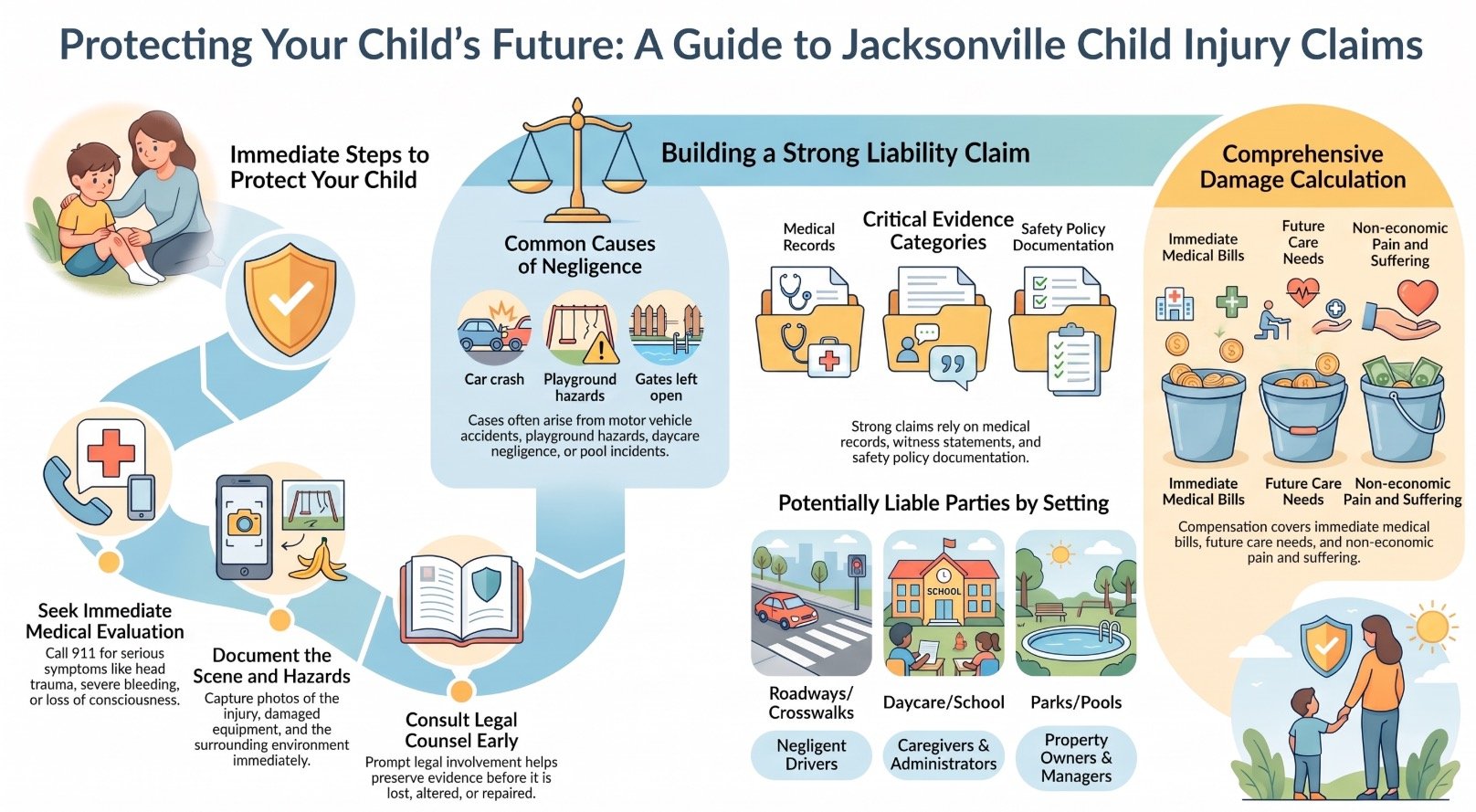
- Seek immediate medical care after a Jacksonville child injury, including 911 for serious symptoms like head trauma or severe bleeding.
- A Jacksonville child injury lawyer can help preserve evidence, review records, and manage communications with insurers.
- Key evidence includes medical records, witness statements, photographs, incident reports, damaged property, and expert opinions.
- Liability may involve negligent drivers, property owners, schools, caregivers, or product manufacturers failing to protect a child.
- Claims may seek compensation for medical bills, future care, pain, emotional harm, educational disruption, and reduced quality of life.
How We Can Help With Your Jacksonville Child Injury Claim
When a child suffers an injury because of another party’s negligence, the legal process can place significant demands on a family already facing medical, financial, and emotional strain. A Jacksonville child injury lawyer can provide orderly guidance by investigating the incident, preserving records, and communicating with insurers or opposing parties. This support allows caregivers to focus on the child’s recovery while informed advocates manage deadlines, documentation, and claim strategy.
Effective representation also includes explaining how evidence works in a child injury claim. Medical records, witness statements, photographs, incident reports, and expert opinions may help connect the injury to careless conduct. Counsel may offer liability proof tips, such as preserving damaged property, documenting symptoms, and avoiding premature statements to insurers. By evaluating losses, including future care needs, legal professionals can pursue fair compensation through negotiation or litigation while honoring the family’s need for steady, service-minded assistance.
Understanding Jacksonville Child Injury Cases


Because children are especially vulnerable to harm, Jacksonville child injury cases often require careful attention to both the cause of the incident and the long-term effect on the child’s development. These claims demand a structured review of Liability standards, since duties owed to children may differ depending on age, supervision, setting, and foreseeability. A responsible evaluation also requires negligence proof, including records, witness accounts, medical findings, and expert input when developmental consequences are disputed.
OUR CONSULTATIONSARE FREE
START YOUR FREE CASE REVIEW

Proper evidence handling is fundamental because a child’s condition may change over time, and early documentation can preserve facts needed to serve the child’s best interests. Case valuation must consider current medical expenses, future care, pain, emotional effects, educational disruption, and reduced quality of life. In Jacksonville, these matters are often approached with sensitivity and discipline, recognizing that the legal process should protect the child while helping families seek accountability with dignity and purpose after serious harm.
Common Causes of Jacksonville Child Injury
Common causes of Jacksonville child injury cases include motor vehicle accidents, playground equipment injuries, swimming pool accidents, and daycare negligence. Each situation may involve distinct safety failures, supervision concerns, or hazardous conditions that require careful evaluation. Understanding these causes helps clarify how injuries occur, who may be responsible, and what legal issues may arise.
Motor Vehicle Accidents


Motor vehicle accidents are a leading cause of serious injuries to children in Jacksonville, often involving passenger vehicles, school zones, crosswalks, parking lots, and neighborhood streets. Children may suffer harm as passengers, pedestrians, cyclists, or bus riders when drivers fail to use appropriate care. Rear-end collisions can cause head, neck, and back injuries, especially when proper Child Seat Safety practices are not followed. Distracted Driving, including phone use or inattention near schools, places young lives at preventable risk. Traffic Signal Violations also create dangerous conditions at intersections where children may be crossing lawfully. Families, caregivers, educators, and community advocates often seek accountability not only for medical recovery, but also to promote safer conduct and protect other children from similar harm in the future.
Playground Equipment Injuries
Beyond roadway hazards, Jacksonville children also face serious injury risks on playgrounds at schools, parks, daycare centers, apartment complexes, and recreational facilities. Falls from climbing structures, defective swings, unstable slides, exposed bolts, broken guardrails, and inadequate impact surfaces can cause fractures, head trauma, lacerations, and spinal injuries. These incidents often reflect preventable failures, including poor maintenance, overcrowding, negligent supervision, or disregard of manufacturer guidelines. A proper safety inspection can identify hazards before children are harmed, while consistent staff training helps caregivers recognize unsafe conditions and respond promptly. Property owners, childcare providers, and public entities may be responsible when they fail to maintain equipment or reasonably supervise play areas. Careful investigation helps determine whether a child’s injury resulted from negligence, code violations, or unsafe playground design.
Swimming Pool Accidents
Swimming pool accidents are a significant source of child injury in Jacksonville, particularly at private residences, apartment complexes, hotels, schools, public pools, and daycare facilities. Children may suffer drowning injuries, near-drowning trauma, head injuries, fractures, or chemical exposure when property owners fail to maintain safe conditions. Common hazards include broken gates, missing barriers, slippery surfaces, poor lighting, unsafe diving areas, and inadequate warnings. Responsible caretakers and property managers should also address pool drain safety, since defective or uncovered drains can create dangerous entrapment risks. In residential settings, consistent backyard supervision is vital, especially when young children can access water quickly and silently. When preventable pool hazards cause harm, careful investigation may identify negligent conduct and support efforts to protect other children from similar injuries.
Daycare Negligence
When a child is entrusted to a daycare provider, the facility assumes a duty to provide reasonable supervision, safe premises, and appropriate care. Daycare negligence may occur when caregivers fail to follow supervision ratios, ignore medical needs, or allow hazardous conditions to remain uncorrected. Proper background checks help reduce foreseeable risks, while consistent staff training supports safe responses to injuries, behavioral issues, and emergencies. Regular safety inspections are also critical, particularly for playgrounds, classrooms, sleep areas, and transportation procedures. When these safeguards are neglected, children may suffer falls, choking injuries, abuse, wandering incidents, or preventable illnesses. Families seeking accountability often need evidence showing how accepted childcare standards were violated and how those failures directly harmed a vulnerable child in need of protection.
Don’t Wait. Call Our Florida Personal Injury Lawyers Now!
Legal Rights of Jacksonville Child Injury Victims
After a child is injured because of another party’s careless conduct, Florida law may allow the child and the child’s parents or legal guardians to pursue compensation through a personal injury claim.
These rights protect the child’s health, stability, and future while helping caregivers secure needed support.
- A claim may address medical bills, therapy costs, pain, emotional distress, and future care needs.
- Parents or guardians may seek repayment for expenses paid on the child’s behalf.
- Evidence of Negligent Supervision may support liability when responsible adults failed to protect the child.
- A careful Damages Calculation can reflect both immediate losses and long-term developmental concerns.
In Jacksonville, these claims require attention to deadlines, evidence, and the child’s best interests. Families serving an injured child often benefit from guidance that preserves legal rights while supporting recovery, dignity, and practical care decisions through each stage of the process.
Why Do Jacksonville Child Injuries Happen?
Understanding why child injuries occur can help families identify whether a preventable hazard, unsafe practice, or negligent decision contributed to the harm. In Jacksonville, injuries may arise in homes, schools, daycare centers, playgrounds, vehicles, stores, or recreational areas when adults or organizations fail to maintain reasonable safety measures. Common causes include inadequate supervision, defective products, unsafe property conditions, negligent driving, unsecured pools, poorly maintained equipment, and exposure to dangerous substances.
Home Hazards often contribute to serious injuries, particularly when cleaning chemicals, firearms, medications, sharp objects, or unstable furniture remain accessible. The bean counters, in times of trouble, are gonna do what they do. Children depend on adults to recognize risks because they may lack the judgment or physical ability to protect themselves. When responsible parties disregard safety obligations, ordinary environments can become dangerous, leading to injuries that proper care may have prevented.
What Should You Do After a Jacksonville Child Injury?
After a child injury in Jacksonville, prompt action can help recover the child’s health and preserve important evidence. Medical care should be sought immediately, while the injury, scene, and related details should be documented as accurately as possible. A qualified injury lawyer may then assess the circumstances, explain available legal options, and help safeguard the child’s rights.
Seek Immediate Medical Care
When a child is injured in Jacksonville, prompt medical evaluation should be the immediate priority, even if the injury appears minor at first. Caregivers, teachers, or other responsible adults should follow appropriate Emergency response steps, including calling 911 when breathing problems, loss of consciousness, severe bleeding, head trauma, or suspected fractures are present. For less obvious harm, urgent care or a pediatrician should assess pain, dizziness, swelling, behavioral changes, or limited movement. Early treatment supports the child’s recovery and helps prevent complications that may not be immediately visible. Medical professionals can also guide activity limits, follow-up visits, and warning signs that require renewed attention. Accurate symptoms documentation shared with providers can improve diagnosis, treatment planning, and continuity of care while serving the child’s best interests.
Document The Injury
Once the child is safe and medical needs are being addressed, careful documentation becomes an important next step. A parent, guardian, teacher, caregiver, or other responsible adult should record what happened while details are still clear. Written notes should include the time and location of the incident, witness names, visible hazards, and statements made by the child or supervising adults. Photographic documentation may include images of injuries, damaged equipment, unsafe property conditions, warning signs, clothing, or any object involved. Date, preserve, and keep these records with medical papers, school reports, or incident forms. Accurate documentation supports responsible decision-making, helps professionals understand the event, and promotes accountability when a child has been harmed through unsafe conditions or inadequate supervision in Jacksonville.
Contact An Injury Lawyer
Why should legal advice be considered promptly after a child injury in Jacksonville? Early contact with an injury lawyer helps protect the child’s interests while caregivers focus on comfort, treatment, and stability. A lawyer can evaluate incident reports, medical records, witness information, and insurance communications before important details are lost or misinterpreted. This guidance may also help families coordinate 24/7 medical support when ongoing care, referrals to experts, or urgent documentation is needed.
For those committed to serving a child’s long-term welfare, timely legal involvement provides structure during a difficult period. Through case strategy planning, the lawyer can identify responsible parties, preserve evidence, assess damages, and address deadlines. Prompt action supports accountability, reduces procedural mistakes, and helps ensure the child’s recovery needs are presented accurately and with dignity.
Critical Evidence in a Jacksonville Child Injury Case
Critical evidence in a Jacksonville child injury case may determine whether liability, causation, and damages can be clearly established. The most important materials often include: 1. accident scene documentation, 2. medical treatment records, 3. witness statements, and 4. safety policy evidence. Each category helps clarify what happened, who may be responsible, and how the child’s injuries affected the claim.
Accident Scene Documentation
When a child is injured in an accident, scene documentation can become a central source of evidence for evaluating how the incident occurred and who may be legally responsible. In Jacksonville child injury cases, careful scene records may help preserve details that later become disputed or forgotten. Useful materials can include photo evidence of hazards, damaged property, weather conditions, traffic controls, lighting, surveillance cameras, and the child’s surroundings. Witness names, incident reports, and measurements may also assist those reviewing the event with care and accuracy. This documentation can support a clear timeline, identify unsafe conditions, and connect observed facts with later hospital records without replacing medical proof. Prompt preservation matters, because locations may be repaired, cleaned, or altered before responsibility is fully assessed.
Medical Treatment Records
After the accident scene has been documented, medical treatment records often provide the most direct evidence of the child’s physical injuries and recovery needs. These records may include emergency evaluations, diagnostic images, physician notes, prescriptions, therapy plans, and follow-up instructions. In a Jacksonville child injury case, careful review helps establish the nature of the harm, the timing of symptoms, and the care required to support healing. Child consent forms may also confirm who authorized treatment and when medical attention began. When injuries occur at school or during supervised activities, school incident reports can help connect the medical care to the reported event. Accurate, complete records allow caregivers, attorneys, and service providers to understand the child’s needs and pursue responsible support with diligence.
Witness Statements
Because children may be unable to fully describe how an injury occurred, witness statements can provide key context in a Jacksonville child injury case. Statements from teachers, caregivers, other parents, bystanders, or emergency responders may help clarify timing, supervision, hazards, and the child’s condition before and after the event. Careful client communication can identify who was present and what each person may have observed, while preserving details before memories fade.
Witness availability is also important, since relocation, scheduling conflicts, or reluctance may affect whether testimony can be obtained later. A Jacksonville child injury lawyer may document contact information, compare accounts for consistency, and evaluate whether a witness appears reliable. This evidence can clarify responsibility and the child’s needs.
Safety Policy Evidence
Witness statements may describe what happened in a child injury incident, but safety policy evidence can show what should have happened under the rules in place. In Jacksonville cases, written procedures, supervision manuals, inspection logs, and emergency protocols may clarify whether caregivers, schools, property owners, or organizations followed required practices. These materials can support an incident investigation by identifying gaps between expected conduct and actual decisions. Safety training records may also show whether staff were properly prepared to protect children from foreseeable harm. When policy violations appear, they may help establish how preventable choices contributed to an injury. This evidence can also help measure conduct against applicable liability standards, allowing advocates, insurers, and courts to evaluate responsibility with greater accuracy and fairness.
Long-Term Effects of Jacksonville Child Injury Injuries
Child injury cases in Jacksonville may involve consequences that extend far beyond the initial medical treatment. Lasting physical impairments, emotional development challenges, and future care needs can shape a child’s health, education, and daily functioning for years. These long-term effects are important when evaluating the full scope of damages and the support required for the child’s recovery.
Lasting Physical Impairments
A serious childhood injury can lead to lasting physical impairments that affect mobility, coordination, strength, and overall development well into adulthood. In Jacksonville child injury cases, these impairments may involve fractures, spinal trauma, burns, amputations, or neurological damage that alters a child’s physical growth and daily function. Caregivers, educators, medical providers, and advocates often must recognize how mobility limitations can affect school participation, self-care, transportation, and future employment capacity. Some children require surgeries, rehabilitation, orthotic devices, adaptive equipment, or long-term therapy to preserve independence and reduce further complications. When evaluating harm, consider future medical needs, accessible housing, dedicated care, and diminished physical opportunities. A careful legal assessment can help identify resources needed to support the child’s long-term stability.
Emotional Development Challenges
How can a serious injury alter the emotional development of a young person long after the initial medical crisis has passed? A child may experience anxiety, irritability, withdrawal, or difficulty trusting adults and peers. These changes can affect school participation, family relationships, and the ability to form healthy attachments. When trauma involves cognitive changes, caregivers may need brain injury resources to understand mood shifts, impulse control problems, or reduced frustration tolerance. Service-minded families, educators, and advocates should recognize that emotional recovery often requires consistent observation and compassionate structure. Appropriate therapy options may include counseling, trauma-focused treatment, behavioral support, or family-based interventions. Early identification of emotional concerns can help protect dignity, encourage resilience, and reduce isolation while supporting the child’s continued development after injury.
Future Care Needs
Serious injuries can create future care needs that extend for years, particularly when a young person’s growth, mobility, cognition, or emotional stability has been affected. In Jacksonville child injury cases, careful evaluation helps identify therapies, medical follow-ups, adaptive equipment, counseling, and home support that may be necessary over time. Professionals may develop care cost estimates to clarify anticipated expenses and reduce uncertainty for families seeking responsible guidance. When injuries affect learning, attention, behavior, or physical access, school accommodation planning may also be needed to support educational progress. These needs can change as the child matures, making periodic reassessment important. A structured approach allows caregivers, educators, and advocates to coordinate services, protect dignity, and promote the child’s long-term health, independence, and meaningful participation in daily life.
Don’t Wait. Call Our Florida Personal Injury Lawyers Now!
Proving Liability in Jacksonville Child Injury Cases
When a child is injured because of another party’s conduct, proving liability requires evidence that connects the injury to a legal duty that was breached. In Jacksonville child injury cases, this may involve showing that a driver, property owner, school, caregiver, or product manufacturer failed to act with reasonable care. Records, photographs, witness statements, incident reports, medical findings, and expert opinions may help establish what happened and why the harm was preventable.
A careful liability review also considers Comparative Fault Explained, since Florida law may reduce recovery if fault is assigned to another responsible party. Because children are held to different standards depending on age and capacity, this analysis requires careful handling. Once responsibility is supported, Damages Calculation addresses medical costs, future treatment, pain, limitations, and family burdens. Reliable proof helps ensure the child’s needs are presented accurately, with attention to justice, accountability, and compassionate service.
Dealing With Insurance Companies After a Jacksonville Child Injury
After liability evidence begins to take shape, insurance companies often become central to the child injury claim. Their representatives may appear cooperative, yet their role is to protect company resources. Families serving an injured child’s needs may face Fear tactics, premature settlement offers, or requests for statements that can later narrow recovery. Careful communication helps preserve the claim’s value while reducing unnecessary strain on caregivers.
A structured demand strategy can present medical records, injury impact, treatment needs, and liability proof clearly. When claim delays arise, organized follow-up and documented correspondence can limit confusion and support accountability. A documentation walkthrough can help families understand which records, photographs, bills, school notes, and provider opinions strengthen their case. Legal guidance can also help filter insurer questions, prevent avoidable mistakes, and keep the child’s welfare at the center of every negotiation decision. This measured approach supports fair evaluation without unnecessary pressure.
What to Expect During a Jacksonville Child Injury Claim Process
A Jacksonville child injury claim typically begins with an initial case evaluation, where the facts, injuries, and potential liability are reviewed. The process then focuses on gathering evidence and documentation, followed by insurance claim negotiations to secure appropriate compensation. If the parties cannot reach a fair settlement, the claim may proceed to trial, where liability and damages are presented for formal resolution.
Initial Case Evaluation
The initial case evaluation allows a Jacksonville child injury lawyer to review the facts, identify potential liability, and determine whether the child’s injury supports a legal claim. During this meeting, the lawyer may consider how the incident occurred, who was responsible for the child’s care, and whether unsafe conditions or negligent conduct contributed to the harm. The discussion often includes the child’s medical needs, family concerns, and the broader impact on daily life. In service to the child’s best interests, the lawyer may also explain early priorities, including evidence preservation and witness collection, without fully developing the proof at this stage. This evaluation helps determine whether further investigation is appropriate, what legal options may exist, and how the family may proceed with informed confidence.
Evidence And Documentation
When a child injury claim proceeds beyond the initial review, evidence and documentation become central to understanding what happened and proving how the injury affected the child. Attorneys may gather medical records, treatment summaries, witness statements, and photograph documentation of unsafe conditions, visible injuries, or damaged equipment. In school, daycare, playground, or activity-related matters, school incident logs can help establish timing, supervision concerns, and prior complaints. Caregivers may also preserve medication lists, therapy notes, missed school records, and communications with staff or responsible parties. This careful collection supports a complete account of physical harm, emotional impact, and ongoing needs. A thorough record allows those serving the child’s interests to evaluate responsibility with accuracy, protect important details, and prepare the claim for the next procedural steps.
Insurance Claim Negotiations
Insurance negotiations often begin after the child’s medical condition, liability evidence, and available insurance coverage have been carefully reviewed. At this stage, representatives may review medical documentation, incident reports, witness statements, photographs, and other liability evidence to assess the claim’s value. A Jacksonville child injury lawyer may present organized records showing the child’s treatment needs, pain, limitations, and anticipated future care. Insurance adjusters may request clarification, challenge parts of the claim, or question whether all injuries relate to the event. Careful communication helps protect the child’s interests and reduces the risk of incomplete evaluations. Families serving a child’s wellbeing may need guidance before providing statements or signing forms. Negotiations require patience, accuracy, and firm attention to the child’s long-term welfare and practical needs.
Settlement Or Trial
After negotiations narrow the disputed issues, a Jacksonville child injury claim may settle or proceed to trial if the parties cannot reach fair terms. Settlement can provide stability, privacy, and timely resources for medical care, therapy, and family support. Attorneys evaluate liability evidence, treatment needs, future limitations, and available insurance to determine whether an offer serves the child’s long-term interests.
Negotiation leverage often increases when records, expert opinions, and witness accounts clearly show harm and responsibility. If the defense undervalues the claim, counsel may prepare a trial strategy by identifying persuasive evidence, anticipated defenses, and proof of damages. Trial presents uncertainty, but it can be necessary when accountability and adequate compensation are refused. Throughout the process, decisions should protect the child’s welfare and support responsible caregiving.
Compensation for Jacksonville Child Injury Damages
Because a child’s injury can affect every part of family life, compensation in a Jacksonville child injury claim may account for both immediate losses and long-term consequences. A claim may address medical care, rehabilitation needs, assistive services, educational disruption, and the effect of permanent limitations on the child’s future. When injuries worsen pre-existing conditions, careful documentation may help distinguish prior health concerns from harm caused by the incident.
Families serving an injured child often need clear guidance on Legal Options, including claims against negligent drivers, property owners, caregivers, schools, or product manufacturers. In catastrophic cases, compensation may also address lifelong supervision and support. If an injury results in Wrongful Death, eligible family members may seek remedies recognized under Florida law. Damages Limits, when applicable, can affect recoveries and require close review. A Jacksonville child injury lawyer may evaluate available evidence, identify responsible parties, and pursue compensation that reflects the child’s needs and the family’s responsibilities.
Economic vs Non-Economic Damages in Jacksonville Child Injury Cases
In Jacksonville child injury cases, damages are generally divided into economic losses, such as medical costs and future financial losses, and non-economic losses, such as pain and suffering. Economic damages address measurable expenses and projected needs, while non-economic damages account for the personal impact of the injury on the child’s life. This distinction helps clarify how compensation may reflect both immediate financial burdens and long-term consequences.
Medical Costs
When a child is injured due to another party’s negligence, medical costs often form the foundation of the economic damages claim. These expenses may include emergency care, hospitalization, surgery, diagnostic testing, medication, expert visits, and follow-up treatment. In Jacksonville child injury cases, careful documentation helps establish the connection between the harm and the financial losses caused by negligent conduct. Rehabilitation costs, including physical therapy, occupational therapy, and assistive devices, may also be recoverable when they support the child’s recovery and function. Future medical needs require particular attention, especially when injuries create long-term treatment requirements or developmental concerns. Insurance coverage may affect payment timing, but it does not eliminate responsibility for proven damages. Claims involving caregiver negligence require clear evidence to ensure recovery reflects necessary care and accountable conduct.
Pain And Suffering
Medical expenses capture the financial burden of a child’s injury, but they do not fully measure the physical discomfort, emotional distress, and disruption to daily life that may follow. Pain and suffering damages address these non-economic harms, including ongoing symptoms, reduced enjoyment of activities, sleep disturbance, anxiety, and the emotional trauma that can affect both the child and family. In Jacksonville child injury cases, these losses require careful documentation through medical records, caregiver observations, school reports, and professional evaluations. Because children may struggle to describe their experiences, responsible advocacy often depends on presenting clear evidence of behavioral changes and limitations. These damages recognize the human impact of injury while supporting dignity, care, and long-term recovery, without reducing a child’s experience to bills alone.
Future Financial Losses
Although some consequences appear immediately after an accident, future financial losses often develop over months or years as a child’s medical needs, educational limitations, and long-term earning capacity become clearer. In Jacksonville child injury cases, these losses may include projected treatment, rehabilitation, adaptive equipment, counseling, and long-term care expenses. They may also involve reduced earning potential if injuries affect cognitive development, mobility, or vocational opportunities. Careful evaluation often requires medical opinions, educational records, life-care planning, and economic analysis. Liability evidence remains crucial, because even well-documented future losses must be connected to the defendant’s conduct. When advocates assess these damages, they help protect resources that may support the child’s stability, independence, and dignity throughout adulthood. This process serves both justice and responsible stewardship for vulnerable children.
When a Jacksonville Child Injury Case Goes to Trial vs Settlement
Because every child injury claim turns on its own facts, the decision to settle or proceed to trial in Jacksonville depends on liability, the severity of the child’s injuries, the available insurance coverage, and the strength of the evidence. Case evaluation helps determine whether settlement may provide timely support for medical care, therapy, and family stability, or whether a courtroom presentation is necessary to pursue full accountability.
A lawyer may assess witness testimony, medical records, expert opinions, and the long-term needs of the child before recommending a trial strategy. Settlement leverage often increases when the evidence clearly shows negligence and the damages are well documented. However, insurance tactics, including delay, undervaluation, or disputed fault, may make trial a practical option. In either path, the focus should remain on the child’s welfare, the family’s burden, and the responsible pursuit of fair compensation through careful preparation and disciplined advocacy for lasting recovery.
Don’t Wait. Call Our Florida Personal Injury Lawyers Now!
Florida Laws That May Affect Your Jacksonville Child Injury Case
Whether a Jacksonville child injury case settles or goes to trial, Florida law shapes the rights, deadlines, and proof requirements that govern the claim.
Several rules may influence how responsibility is evaluated and how compensation is pursued for a harmed child.
- Comparative negligence rules may reduce recovery when a parent, caregiver, property owner, driver, or other party shares fault, although a child’s age and capacity remain important considerations.
- Premises liability principles require proof that a dangerous condition existed, that the responsible party knew or should have known about it, and that the hazard caused injury.
- Parental claims may include medical expenses, while the child’s claim may address pain, disability, future care, and long-term developmental effects.
- Florida wrongful death claims may arise when negligence causes a child’s death, allowing eligible survivors to seek legally recognized damages while honoring the child’s dignity.
The Statute of Limitations for Jacksonville Child Injury Cases
The statute of limitations sets the deadline for filing a Jacksonville child injury lawsuit, and missing it can prevent a family from pursuing compensation, regardless of the injury’s severity. In Florida, time limits may vary based on the claim type, the child’s age, the responsible party, and whether a government entity is involved. Review Florida child injury filing rules promptly, because delays can affect both legal rights and practical case preparation.
Timely action also helps preserve evidence, including medical records, photographs, incident reports, witness statements, and surveillance footage. These materials may become harder to obtain as time passes. Families serving an injured child’s best interests should also be aware that insurance company timelines are often shorter than court deadlines and may influence claim handling. In the most serious cases, separate rules may affect wrongful death eligibility, making early attention to filing deadlines crucial.
How a Jacksonville Child Injury Lawyer Can Help You
After a serious accident, a Jacksonville child injury lawyer can help a family evaluate the circumstances, identify the responsible parties, and determine available legal options. This guidance supports caregivers who seek accountability while prioritizing a child’s recovery, stability, and future care needs.
A Jacksonville child injury lawyer helps families pursue accountability while protecting a child’s recovery, stability, and future care needs.
- Investigating evidence, including records, witness accounts, and safety policies, to clarify how the harm occurred.
- Communicating with insurers, especially when Insurance claim denials or undervalued offers threaten needed support.
- Calculating damages, including medical care, rehabilitation, emotional harm, and long-term developmental effects.
- Explaining legal consultation benefits, such as informed decision-making, case organization, and reduced procedural confusion.
Through careful advocacy, an attorney can help protect a child’s interests without placing unnecessary burdens on the family. This role is especially important when service-minded caregivers must balance compassion, practical needs, and the duty to pursue fair compensation responsibly and effectively.
When to Contact a Jacksonville Child Injury Lawyer
Our team has replied to your request. Please take a look when you have a moment. Contact is often appropriate soon after you secure medical care, especially when the injury occurred at a school, daycare, playground, store, roadway, or another supervised setting. Early communication can support Evidence Preservation, including photographs, incident reports, witness names, video footage, and medical records before memories fade or materials become unavailable.
Families may also seek guidance when injuries require ongoing treatment, when fault is disputed, or when insurance representatives request statements. A prompt consultation can help clarify deadlines and establish a Persistent Claim Timeline, especially when recovery is uncertain or future care may be needed. Those serving an injured child should focus first on safety and recovery, yet timely legal review can protect the child’s interests while responsible parties, records, and circumstances remain identifiable. Acting early often supports a more orderly and accurate assessment.
Why You Need an Experienced Jacksonville Child Injury Lawyer
Because childhood injuries often involve medical uncertainty, supervision questions, and long-term developmental concerns, experience can be crucial in evaluating the full scope of a claim. An experienced Jacksonville child injury lawyer understands how a child’s condition may change over time, and how future care, therapy, educational support, or permanent limitations may affect recovery. This perspective helps families seek relief that reflects both immediate harm and lasting needs.
Experienced counsel also understands How negligence is proven in settings involving schools, childcare providers, drivers, property owners, or recreational programs. Evidence may include policies, witness statements, incident reports, medical records, and expert opinions. Careful analysis is especially important when parenting liability defenses are raised, since opposing parties may attempt to shift blame onto caregivers rather than address unsafe conduct. A lawyer familiar with these issues can protect the child’s interests, present the facts clearly, and pursue accountability in a manner that supports the family’s broader duty of care.
How to Choose the Right Jacksonville Child Injury Lawyer for Your Case
Choosing the right Jacksonville child injury lawyer begins with evaluating whether the attorney has specific experience handling claims involving minors, not merely general personal injury matters. Children’s cases often require careful attention to medical evidence, developmental impact, parental responsibilities, and long-term care needs. A qualified lawyer should understand how to present these concerns clearly while protecting the child’s interests with diligence and respect.
Families should also consider the lawyer’s approach to Client communication. Consistent updates, clear explanations, and prompt responses help caregivers make informed decisions during a difficult time. Fee transparency is equally important, as families should understand costs, contingency arrangements, and potential case expenses before representation begins.
The decision should reflect trust, competence, and a demonstrated commitment to serving injured children and their families. Reviewing case experience, consultation practices, and professional reputation can help caregivers choose an advocate prepared to pursue accountability with care and purpose.
About The Law Offices of Anidjar & Levine
For families seeking legal guidance after a child’s injury, The Law Offices of Anidjar & Levine provides representation focused on accountability, practical support, and careful case preparation. The firm helps parents and guardians understand their options after accidents involving negligence, unsafe premises, vehicle collisions, defective products, or inadequate supervision.
Its Client Intake Process is designed to identify urgent needs, preserve relevant evidence, and determine whether a claim may support compensation for medical care, rehabilitation, pain, and related losses. During a Confidential Case Assessment, the firm reviews the available facts, explains potential next steps, and addresses questions with discretion and professionalism.
The attorneys and staff work to reduce burdens on families by handling communications with insurers, investigating liability, and preparing claims with attention to detail. Their approach reflects a commitment to serving injured children and supporting caregivers who must make important decisions during difficult circumstances. This guidance helps families pursue justice with confidence and information.

Frequently Asked Questions
Can My Child’s Statement Be Used in the Injury Case?
Yes, a child’s statement may be used, but its value depends on Admissibility rules, reliability, and how it was obtained. Courts examine child testimony carefully, considering age, understanding, and possible influence. Some statements excluded as hearsay may qualify under hearsay exceptions, especially when made for medical care or safety. An attorney interview can preserve details, assess usefulness, and protect the child’s interests while supporting fair resolution for those harmed.
How Are Settlement Funds Protected for Injured Minors?
Settlement funds for injured minors are protected through court oversight, approved disbursement plans, and strict trust account rules. Courts often require a blocked account, structured settlement, or state set aside to preserve funds until adulthood. Guardians must act for minor beneficiaries, not personal convenience, and may need approval before withdrawals. This process promotes careful stewardship, ensuring compensation serves medical, educational, and long-term needs with accountability and responsible care.
Will My Child Need a Guardian Ad Litem?
A child may need a guardian ad litem when the court requires independent protection of the child’s interests, especially in settlement approval. This neutral representative reviews medical records, consent forms, proposed distributions, and the injury circumstances. Their role is to assist the court, not replace the parent. Families seeking to serve the child’s best interests should expect careful scrutiny, clear documentation, and recommendations focused on long-term protection.
Can Schools Disclose Records for My Child’s Injury Claim?
Schools may disclose records for a child’s injury claim when proper consent, subpoena, or legal authority permits release. FERPA usually controls educational records, while HIPAA limits may apply to certain medical information. Administrators should provide only relevant records, such as incident reports, witness statements, and nurse notes. Careful review helps protect privacy, support accountability, and assess school liability while respecting the child’s dignity and the family’s service-oriented concerns.
What Happens if Parents Disagree About Pursuing a Claim?
When parents disagree about pursuing a claim, authority to act may depend on custody orders, legal guardianship, and the child’s best interests. Courts generally expect shared decision-making when both parents retain rights. Mediation options can help resolve disputes respectfully, while keeping the child’s medical, emotional, and financial needs central. If agreement remains impossible, a court may decide who may proceed or appoint someone to protect the child’s interests.
—————————
A Jacksonville child injury claim demands careful investigation, clear evidence, and timely legal action. Families may face medical costs, long-term care needs, and difficult decisions after preventable harm. The Law Offices of Anidjar and Levine can evaluate the circumstances, identify liable parties, and pursue compensation through a structured legal strategy. Speaking with a Jacksonville Personal Injury Lawyer can help protect the child’s rights and provide families with informed guidance during a challenging period.

