

Law Offices of Anidjar and Levine helps victims strengthen claims by identifying federal safety violations involving hours-of-service, maintenance, cargo securement, and driver qualification rules. Our Gainesville Truck Accident Lawyer team moves quickly to preserve logbooks, black box data, inspection reports, dispatch records, and witness statements before they disappear.
Then we connect those violations to your injuries, handle insurers and trucking companies, and pursue full compensation from every liable party. Continue below to see how these cases are investigated, valued, and proved.
Main Takeaways
- A Gainesville truck accident federal regulations lawyer identifies FMCSA violations involving hours of service, maintenance, cargo securement, driver qualifications, and inspection duties.
- They preserve critical evidence such as logbooks, black box data, maintenance files, dispatch records, surveillance footage, and witness statements before it disappears.
- They investigate whether fatigue, overloaded cargo, poor maintenance, or company pressure caused the crash and link violations to the collision.
- They organize medical records, crash evidence, and expert analysis to prove damages, future care needs, and the impact of regulatory noncompliance.
- They handle insurers and trucking companies, protect deadlines and evidence, and pursue fair compensation while you focus on recovery.


How We Can Help With Your Gainesville Truck Accident Federal Regulations Injury Claim
When a truck accident involves violations of federal safety regulations, we can help by identifying the rules that may apply, preserving vital evidence, and building a claim that reflects the full extent of your losses.
We act promptly to secure driver logs, inspection records, electronic data, and witness statements before crucial proof disappears. Our work is grounded in service because strong advocacy protects you and supports those who depend on your recovery.
We also organize medical documentation to connect your injuries, treatment needs, and future care with the collision’s impact on your life. By presenting a clear record of damages, we strengthen your position during negotiations and prepare your case for litigation if necessary.
We evaluate insurance coverage, calculate financial and nonfinancial losses, and develop a settlement strategy that aligns with your goals. Throughout the process, we communicate clearly, answer questions directly, and work to relieve burdens so you can focus on mending and serving others.
OUR CONSULTATIONSARE FREE
START YOUR FREE CASE REVIEW

Understanding Gainesville Truck Accident Federal Regulations Injury Cases
Because federal trucking rules set clear standards for driver conduct, vehicle maintenance, cargo securement, and hours of service, understanding how those rules apply is often central to a Gainesville truck accident injury case. We examine whether a carrier, driver, shipper, or maintenance provider met each applicable duty and documented compliance with Federal requirements throughout the trip.
We also review records that can show what happened before and after a collision, including driver logs, inspection reports, electronic data, training materials, and dispatch communications. Cargo inspections may reveal whether loading practices followed required procedures and whether warning signs were overlooked.
When we identify gaps between the rules and the conduct at issue, we can better explain how those failures affected your injuries and your recovery. Our role is to help you understand the regulatory framework, preserve important evidence, and present a clear account that supports accountability, protects your rights, and serves the broader safety of our Gainesville community.
Common Causes of Gainesville Truck Accidents: Federal Regulations, Injuries
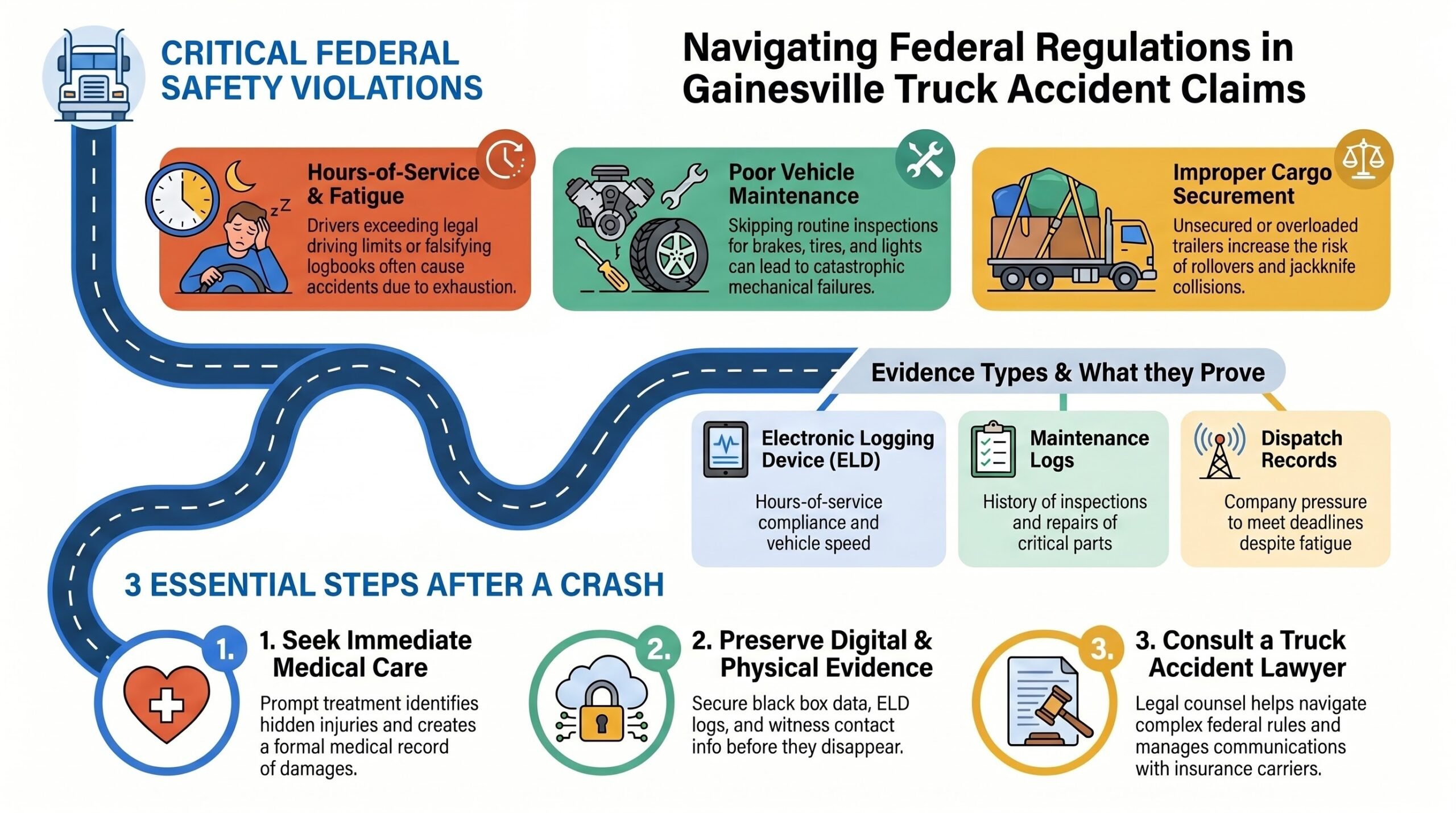
We often find that truck accident injuries in Gainesville stem from preventable violations of federal regulations that place everyone on the road at risk. As we discuss these cases with you, we focus on driver fatigue violations, hours-of-service noncompliance, overloaded or improper cargo, and poor vehicle maintenance as leading causes of serious harm. When carriers or drivers ignore these safety rules, we can identify how those failures contributed to the crash and your injuries.
Driver Fatigue Violations
Although federal hours-of-service rules are designed to reduce driver exhaustion behind the wheel, fatigue-related violations remain a leading cause of serious Gainesville truck accidents. When drivers exceed legal limits, skip required breaks, or falsify logbooks, they place everyone on the road at risk. We often see that drowsy driving impairs judgment, slow reaction time, and increases the likelihood of devastating collisions.
We also recognize that untreated sleep disorders, irregular schedules, and pressure to meet delivery deadlines can worsen fatigue. In serving injured people and their families, we examine electronic logging data, dispatch records, and company practices to determine whether violations contributed to the crash.
That careful review helps us identify responsible parties and pursue accountability. By understanding how fatigue develops, you can better protect your community and support safer trucking practices throughout Gainesville every day.
Overloaded Or Improper Cargo
Improperly loaded or overloaded cargo can quickly turn a commercial truck into a serious hazard on Gainesville roads. When carriers ignore federal loading rules, overweight cargo can shift during braking, cornering, or sudden moves, making rollovers and jackknife collisions far more likely.
We often see how unsecured loads threaten not only the truck driver but also families, workers, and nearby neighbors. Cargo that spills, slides, or exceeds lawful limits can reduce vehicle stability, increase stopping distance, and place extreme stress on safe operation.
As we help injured people and those who care for them, we recognize these violations are preventable through proper loading practices, weight distribution, and securement procedures. Holding negligent parties accountable helps protect our community and supports safer service on the roads we all share every day.
Poor Vehicle Maintenance
Federal safety violations don’t end with cargo securement, because poor vehicle maintenance also places large trucks in a dangerous condition before they ever reach Gainesville roads. When fleets skip routine inspections, worn brakes, damaged tires, broken lights, and steering defects can remain hidden until a serious collision occurs. We understand these failures threaten not only drivers, but also families, workers, and neighbors who rely on safe roads each day.
We also see maintenance problems develop through neglect of corrosion prevention, fluid leaks, and replacement schedules for pivotal parts. Federal rules require carriers to inspect, repair, and document vehicle conditions, because preventable defects can quickly become life-altering hazards. When a trucking company ignores those duties, we work to show how that disregard endangers the public and directly contributes to a preventable injury or a fatal loss.
Hours-Of-Service Noncompliance
When truck drivers exceed hours-of-service limits or falsify their logs, fatigue can impair judgment, slow reaction time, and turn an ordinary traffic condition into a serious crash in Gainesville. We help you understand how federal rules protect every person sharing the road. These limits exist to prevent exhausted driving, yet some carriers pressure drivers to keep moving despite clear risks.
We investigate whether violations contributed to a collision by reviewing electronic data, conducting logbook audits, and comparing dispatch records, fuel receipts, and delivery schedules. We also examine whether untreated fatigue disorders played a role, including evidence from sleep studies when appropriate.
By identifying hours-of-service noncompliance, we work to hold negligent drivers and trucking companies accountable, strengthen your claim, and support safer practices that serve our Gainesville community through meaningful, lasting change.


Legal Rights of Gainesville Truck Accident Federal Regulations Injury Victims
Accountability shapes the legal rights of Gainesville truck accident victims, especially where federal safety regulations may have been ignored. When trucking companies, drivers, or maintenance providers disregard Regulatory compliance, we can pursue claims that seek justice, financial recovery, and safer conduct on our roads. Our legal system recognizes that injured people merit fair treatment when preventable violations cause harm.
Through focused Victim advocacy, we help protect both individual dignity and the broader public good.
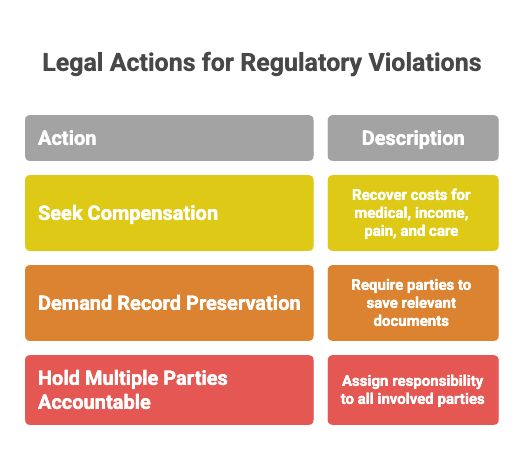
- We may seek compensation for medical costs, lost income, pain, and long-term care needs resulting from violations of federal regulations.
- We can demand that liable parties preserve records, including logbooks, inspection reports, and electronic data that reveal misconduct.
- We may hold multiple parties accountable, from carriers to contractors, when their decisions place others at risk.
Steps to Take After a Gainesville Truck Accident: Federal Regulations Injury
After a Gainesville truck accident, we should first urge you to seek immediate medical care, because prompt treatment protects both your health and the record of your injuries. We should also help you preserve crash evidence, including photographs, witness information, and trucking records, before crucial proof is lost. From there, we should advise you to contact a truck lawyer so we can assess potential federal regulation violations and protect your claim from the outset.
Seek Immediate Medical Care
Seeking prompt medical care should be one of the first steps we take following a Gainesville truck accident injury, even if the symptoms seem minor at the scene. A timely, urgent assessment can identify hidden injuries, protect our health, and create a clear path toward recovery.
When we seek treatment right away, we give medical professionals the opportunity to evaluate pain, internal trauma, and delayed symptoms before conditions worsen. We should follow all recommendations carefully, take prescribed medications as directed, and attend follow-up appointments so that providers can monitor recovery and adjust care as needed.
By acting promptly, we not only support our own recovery but also remain better equipped to continue serving our families, coworkers, and communities with strength, stability, and a responsible commitment to long-term well-being and daily function.
Preserve Crash Evidence
Prompt medical treatment also helps us identify and preserve the evidence that may later show how a Gainesville truck accident occurred and whether federal safety regulations were violated. We should save photographs of vehicle damage, skid marks, road conditions, debris, and visible injuries as soon as possible.
We should also keep discharge papers, prescriptions, repair estimates, and receipts in one place. If available, we should note nearby cameras, including dash cams, store surveillance cameras, and traffic cameras, before the recordings disappear. We can write down what we remember while details remain fresh, including the truck’s markings, trailer number, and time of day.
Witness interviews matter as well, so we should collect names and contact information for anyone who saw the crash. Careful preservation allows us to serve truth, accountability, and recovery well.
Contact A Truck Lawyer
Because truck accident claims often involve federal safety rules, multiple insurance carriers, and quickly changing evidence, we should contact a Gainesville truck accident lawyer as soon as possible. Early legal guidance helps us protect records, identify liable parties, and prevent costly mistakes when adjusters request statements or quick releases.
When we seek counsel promptly, we place ourselves in a stronger position to serve our family and community through responsible action. A lawyer can coordinate investigators, review driver logs, inspect maintenance files, and address related concerns, including medical malpractice issues that may affect recovery.
Counsel also manages settlement negotiations with insurers and corporate defendants, so we can focus on recuperation and supporting others. By acting without delay, we preserve essential evidence, meet deadlines, and pursue fair compensation with discipline, integrity, and informed guidance.
How a Gainesville Truck Accident Federal Regulations Lawyer Can Help You
When a truck crash raises questions about federal safety rules, we can help you identify the regulations that apply, preserve vital evidence, and build a clear claim around the violations that contributed to your injuries.
Our work focuses on Regulatory compliance and Client advocacy, so you understand both the legal standards and the practical steps forward.
- We investigate driver logs, maintenance records, black box data, inspection reports, and company policies to determine whether federal rules were ignored.
- We connect those violations to the collision through organized evidence, expert review, and careful claim preparation that supports accountability.
- We handle insurer and carrier communications, protect your rights, and pursue results that reflect the losses you have already sustained.
Long-Term Effects of Gainesville Truck Accident Federal Regulations Injuries
We often see that truck accident injuries can affect you long after the initial crash, sometimes resulting in lasting physical disabilities that change your mobility, independence, and daily function. We also recognize that these injuries may cause emotional and cognitive trauma, including anxiety, depression, memory problems, and other challenges that disrupt your recovery.
Beyond your health, we understand the financial and lifestyle impact can be substantial, affecting your ability to work, manage expenses, and maintain the life you had before the accident.
Lasting Physical Disabilities
Living with a permanent impairment after a Gainesville truck accident can alter nearly every part of a person’s daily life, from mobility and self-care to employment and long-term independence. We often see lasting physical disabilities limit strength, balance, coordination, and endurance, making routine tasks harder and requiring ongoing medical support. Chronic pain may further restrict activity, interfere with sleep, and complicate rehabilitation.
You may also need Mobility aids, home modifications, or personal assistance to remain safe and functional. We recognize that these changes can affect your ability to work, care for family members, and serve others. When federal safety violations contribute to catastrophic injuries, we help document the full scope of those physical losses so you can pursue resources for treatment, adaptive equipment, and future care needs.
Emotional And Cognitive Trauma
Because trauma after a Gainesville truck accident often extends beyond visible injuries, emotional and cognitive harm can disrupt a person’s stability, judgment, and daily functioning for years. We often see survivors struggle with anxiety, intrusive memories, depression, emotional numbness, and sudden irritability, even when physical wounds appear to mend.
We also recognize how cognitive fog can undermine concentration, memory, communication, and decision-making. These changes may strain relationships, limit a person’s ability to care for others, and weaken confidence in routine tasks. When trauma remains untreated, sleep disturbance, hypervigilance, and fear of travel may become deeply rooted patterns.
We encourage readers to view these symptoms with seriousness and compassion. By documenting emotional and cognitive trauma carefully, we can better demonstrate the full extent of harm and support a more thorough recuperation.
Financial And Lifestyle Impact
Uncertainty often becomes one of the most enduring consequences of a Gainesville truck accident, especially when serious injuries interrupt a person’s income, independence, and long-term plans. We often see families facing Income loss from missed work, reduced earning capacity, and mounting medical expenses that continue long after the initial recovery period.
We also understand how Lifestyle adjustments can reshape daily life. You may need ongoing treatment, home modifications, transportation assistance, or help with routine responsibilities. These changes can affect your ability to care for others, support your household, and participate in your community as you once did.
By identifying the full financial and practical impact of these injuries, we can pursue compensation that reflects both current burdens and future needs, while helping you protect stability, dignity, and purpose.
Proving Liability in Gainesville Truck Accident Federal Regulations Injury Cases
Establishing liability in a Gainesville truck accident case requires more than showing that a collision occurred; we must link the driver, carrier, or another responsible party to a specific breach of federal safety regulations and the resulting injuries. We investigate driver logs, maintenance records, inspection reports, black box data, cargo documents, and hiring practices to identify violations.
We also prove how those violations caused harm. Hours-of-service breaches, faulty brakes, overloaded trailers, or negligent supervision can show a clear chain of fault when supported by expert testimony. We may also address regulatory preemption issues when federal rules affect how state law claims proceed. By organizing records, witness statements, photographs, and crash reconstruction findings, we build a credible account that serves both truth and accountability.
Our goal is to help you pursue justice in a way that protects your recovery and promotes safer conduct on Gainesville roads for every family, volunteer, and neighbor we serve daily.
Dealing With Insurance Companies After a Gainesville Truck Accident: Federal Regulations Injury
Once we identify the regulatory violations and parties responsible for a Gainesville truck accident, we must also address the insurance companies that often move quickly to limit their exposure. We help you respond carefully, because early statements, broad medical releases, and rushed offers can undermine the full value of a claim and reduce resources your family may need to serve others well.
Our role is to create a disciplined documentation strategy that supports the truth of what happened and the real impact on your life. We organize records, preserve communications, track expenses, and present losses clearly, so insurers cannot easily minimize harm. We also manage settlement negotiations from a position of preparation rather than pressure.
That means we evaluate policy language, compare damages to available coverage, and challenge tactics that shift blame or dispute medical care. With a steady, informed approach, we protect your interests while keeping the focus on accountability, stability, and service to those who depend on you.
What to Expect During a Gainesville Truck Accident: Federal Regulations, Injury Claim Process
As we guide you through a federal regulations injury claim for a Gainesville truck accident, we begin with an initial claim investigation and a careful review of the facts. We then assess whether federal rule violations contributed to the crash, while building the evidence needed to establish liability with clarity and precision. From there, we help you determine whether the claim is likely to be resolved through settlement or require litigation.
Initial Claim Investigation
Because the first stage of a Gainesville truck accident federal-regulations injury claim shapes the strength of the entire case, we begin with a focused investigation into the crash, the parties involved, and the records that may establish liability. We gather photographs, police reports, medical records, and electronic data, then preserve evidence before it disappears.
We also coordinate accident reconstruction when the scene, vehicle damage, or roadway conditions require technical analysis. Through witness interviews, we clarify timelines, identify inconsistencies, and strengthen the factual foundation of your claim.
Our goal is to build a reliable record that helps insurers, opposing counsel, and, if necessary, the court understand what happened. By acting promptly and methodically, we protect your interests and position your case for a more informed, effective recovery process ahead.
Federal Rule Violations
After we secure the basic evidence, we examine whether any federal trucking rules were broken and how those violations affected the collision. We review driver qualification standards, hours-of-service limits, inspection duties, cargo securement requirements, and maintenance obligations in light of current FMCSA updates.
We also assess how the carrier’s compliance systems operated in practice, because patterns of neglect can reveal serious safety failures. If a trip crossed state lines, we evaluate how federal authority applies and whether Jurisdiction disputes may affect where the claim proceeds.
Our role is to guide you clearly through these regulatory questions so we can protect injured people and support accountability. By identifying violations early, we help position your claim for informed decisions, stronger advocacy, and a process that serves both your recovery and the broader public good.
Evidence And Liability
When a truck crash claim begins, we focus on the evidence that shows how the collision occurred, who had control over the relevant decisions, and whether multiple parties share legal responsibility. We gather driver logs, inspection records, black box data, dashcam footage, maintenance files, and witness statements. These materials help us identify whether the driver, carrier, cargo loader, maintenance contractor, or another company failed to meet federal safety duties.
We also examine hiring practices, supervision, training, route planning, and hours-of-service compliance. By connecting documents with physical evidence and expert analysis, we build a clear account of fault. This careful approach matters because strong evidence helps us serve injured people well, protect their interests, and hold every responsible party accountable under the law. We keep you informed at each stage.
Settlement Or Litigation
Strong evidence shapes what comes next in a Gainesville truck accident claim, whether the case resolves through settlement or proceeds to litigation. We evaluate damages, federal violations, and insurance positions, then advise you on realistic Settlement Timelines and likely outcomes. When insurers negotiate in good faith, we pursue fair resolution efficiently, because prompt compensation can help families recover and continue serving their communities.
If negotiations stall or fault remains disputed, we prepare for court with the same discipline we bring to settlement talks. We use focused Mediation Strategies to narrow issues, test arguments, and encourage meaningful offers before trial. If litigation becomes necessary, we manage discovery, motions, expert testimony, and trial preparation with care. Throughout the process, we keep you informed, protect your interests, and pursue accountability under applicable federal trucking regulations.
Compensation for Gainesville Truck Accident Federal Regulations Injury Damages
Georgia follows a modified comparative negligence rule, O.C.G.A. § 51-1-40, under which a plaintiff may recover all economic losses “which are the direct and immediate consequence of the injury” in a motor vehicle collision. Recoverable items include medical bills, rehabilitation costs, lost wages, diminished earning capacity, property damage, and pain and suffering related to the bodily injury.
A plaintiff may also seek damages for aggravation of preexisting conditions if the wreck made those conditions worse. Non-economic damages such as pain and suffering or loss of enjoyment of life are not compensable in ordinary negligence, and punitive damages are generally unavailable in these Gainesville truck accident cases unless specifically authorized by statute. Punitive damages in Georgia are barred absent willful misconduct, maliciousness, fraud, wantonness, or conscious indifference. There is no cap on damages in ordinary motor vehicle cases here.
Compensation can also be reduced if the plaintiff failed to wear a seat belt, while intoxication, distraction, speeding, or otherwise violating traffic laws contributed to the incident, because such comparative negligence may proportionally diminish a monetary award. Seat belt nonuse and DUI are typical defenses. If the plaintiff was partly at fault, any award may be reduced by the percentage of negligence attributed to them.
Economic vs Non-Economic Damages in Gainesville Truck Accident Federal Regulations Cases
We can separate truck accident damages into economic losses, such as medical bills, lost income, and other measurable financial costs, and non-economic losses, such as pain, suffering, and diminished quality of life. As we explain these categories, we’ll show you how each affects the full value of a Gainesville truck accident claim. We’ll also address how federal trucking regulations can influence liability, evidence, and the damages you may recover.
Economic Damages Explained
Because truck accident claims often involve substantial financial loss, we begin by separating economic damages from non-economic damages in clear, practical terms. Economic damages cover the measurable costs a collision creates, and we help you document each one carefully so your claim reflects the full financial impact.
These losses often include Medical expenses for emergency care, hospitalization, rehabilitation, medication, and ongoing treatment. We also calculate Lost wages when injuries keep you from working, along with Future earning losses if your long-term ability to earn has changed. Property loss may include repair or replacement of your vehicle and other damaged belongings.
In federal-regulation truck accident cases, strong records matter. We work to gather bills, employment data, repair estimates, and expert opinions, so you can pursue accountability and protect your family’s financial stability.
Non-Economic Losses Overview
Accountability also requires attention to losses that don’t arrive as bills or pay stubs. When a truck crash harms your body and peace of mind, we must consider the damages that affect daily living, relationships, and dignity. These losses often include physical pain, emotional distress, trauma, disfigurement, and the loss of enjoyment in ordinary activities.
As we evaluate non-economic damages, we focus on how the injury changed your quality of life, not just your finances. We gather medical observations, personal accounts, and testimony from people who know your routines and service to others.
This evidence supports a fair pain valuation and shows how limitations affect caregiving, community involvement, and independence. By presenting these harms clearly, we help pursue accountability that respects the full human impact of a serious truck collision.
Federal Rules Impact
Although federal trucking rules don’t create a separate damages category, they often shape how strongly we can prove both economic and non-economic losses after a Gainesville truck accident. When carriers ignore hours-of-service limits, maintenance duties, or driver wellness standards, we can use those violations to connect the crash to your medical bills, lost income, and future care needs.
The same evidence can also strengthen claims for pain, suffering, emotional distress, and loss of enjoyment of life. We review logbooks, inspection records, training files, and regulatory updates to determine whether the company failed its duty to protect others on the road. By grounding damages in clear federal standards, we help you present a more persuasive claim and pursue accountability that serves both your recovery and the safety of the community.
When a Gainesville Truck Accident Federal Regulations Injury Case Goes to Trial vs Settlement
When a Gainesville truck accident case involves disputed federal safety violations, conflicting medical evidence, or significant damages, we may need to prepare for trial rather than accept a settlement that fails to reflect the full value of the claim. Our Trial strategy begins with evidence, expert testimony, and a clear account of how regulatory failures harmed you and those who depend on your care.
At the same time, we evaluate Settlement psychology, because insurers often test resolve before offering fair compensation. We compare the certainty of a negotiated result against the potential value of a verdict, always keeping your medical needs, lost income, and future burdens in focus. If the defense refuses accountability, a trial can create the pressure needed to present the truth fully and seek justice through a jury.
If a settlement serves your best interests and supports your ability to care for others, we will recommend it with confidence and proceed with disciplined, informed advocacy throughout.
The Statute of Limitations for Gainesville Truck Accident Federal Regulations Injury Cases
Because filing deadlines can determine whether you can pursue compensation at all, we review the statute of limitations early in every Gainesville truck accident case involving federal safety regulations. In Florida, most injury claims must be filed within a set period, and missing that window can prevent recovery, regardless of how strong the underlying facts may be.
We also examine how federal rule violations, crash reports, driver logs, and maintenance records fit within those statute deadlines. While federal trucking regulations help establish safety standards, they do not usually extend the time allowed to file suit. Still, some filing exceptions may apply, depending on the injured person’s age, incapacity, delayed discovery of certain harms, or the involvement of a governmental entity.
We work carefully to identify the correct deadline, preserve evidence before it disappears, and protect your ability to seek damages that can support your family, your recovery, and the broader good that comes from holding negligent parties accountable.
When to Contact a Gainesville Truck Accident Federal Regulations Lawyer
If you suspect that a truck driver, carrier, or maintenance provider may have violated federal safety rules, we recommend contacting a Gainesville truck accident federal regulations lawyer as soon as possible after the crash. Early action helps protect evidence, supports witness outreach, and preserves records that may show hours-of-service violations, inspection failures, or improper cargo practices.
We also encourage you to reach out when injuries appear delayed, insurers request statements, or the company controls key documents. Prompt legal guidance can help organize your medical timeline, identify issues under federal rules, and ensure that important notices are sent before logbooks, electronic data, and maintenance files are changed or disappear.
If a loved one cannot call, we can help family members take respectful, practical steps that protect the injured person’s interests. By acting quickly, we place ourselves in the best position to serve others well, gather reliable information, and move forward with clarity, diligence, and care during a difficult season.
Why You Need an Experienced Gainesville Truck Accident Federal Regulations Lawyer
Although many injury claims turn on familiar negligence principles, truck accident cases often depend on a precise understanding of federal safety regulations, industry practices, and the records that prove a violation occurred.
We help you see why Experienced counsel matters when a collision involves commercial carriers, drivers, brokers, maintenance providers, and insurers. These cases often require prompt access to driver logs, black box data, inspection reports, hiring files, and cargo records before evidence disappears.
We also know how Regulatory nuances can shape liability, including hours-of-service limits, maintenance duties, drug and alcohol testing rules, and loading requirements. When violations connect directly to a crash, they can strengthen your claim and clarify responsibility.
How to Choose the Right Gainesville Truck Accident Federal Regulations Lawyer for Your Case
Once you understand why federal regulations matter in a truck accident claim, the next step is choosing a lawyer who can apply those rules effectively to the facts of your case. We should look for proven experience with trucking litigation, including hours-of-service violations, maintenance failures, cargo issues, and electronic logging device evidence. A lawyer’s record should show careful investigation, strong negotiation, and readiness for trial when insurers refuse fair payment.
We also benefit from choosing counsel who understands Gainesville and can use Local resources to strengthen the claim. That may include accident reconstruction experts, medical providers, and investigators who are familiar with regional roads, carriers, and court procedures. Client testimonials can help us evaluate communication, professionalism, and follow-through, especially during stressful periods.
We should ask how the lawyer will keep us informed, what strategy is best for our case, and whether they have successfully handled similar claims. The right choice serves both accountability and recovery for everyone involved.
About The Law Offices of Anidjar & Levine
Turn to The Law Offices of Anidjar & Levine when we need a firm that approaches Gainesville truck accident cases with a clear command of federal safety regulations and the practical demands of serious injury litigation.
We serve injured people and families with diligence, respect, and a commitment to results that support recovery and stability.
Our firm’s history reflects steady growth built on responsive client service and disciplined advocacy.
We recognize how trucking companies, insurers, and their investigators work, and we prepare each claim with that reality in mind.
Through accessible attorney profiles, you can review our team’s experience, focus areas, and professional backgrounds before you decide how to move forward.
We also emphasize communication, because informed clients can make confident choices during difficult periods.
When we represent you, we pursue accountability with careful investigation, strategic case development, and attention to the regulations that often shape liability.
That approach helps us protect your interests and advance your claim with purpose.
Frequently Asked Questions
Can Federal Truck Regulations Affect Claims Involving Out-Of-State Trucking Companies?
Yes, federal truck regulations can materially affect claims involving out-of-state trucking companies. We evaluate how Interstate jurisdiction shapes where you may file, which courts can hear the dispute, and how evidence is preserved. We also assess choice-of-law issues because different states may apply different liability and damages rules. By understanding these federal standards, we help you pursue accountability, protect your rights, and serve your interests effectively across state lines.
What Evidence Comes From a Truck’s Electronic Logging Device?
We use a truck’s electronic logging device to uncover crucial evidence, including driver logs, route history, hours of service, vehicle movement, speed, and rest periods. These records help you see whether a driver complied with federal safety rules or falsified required entries. We also compare ELD data with dispatch records, fuel receipts, and GPS information, because that broader review often reveals inconsistencies that strengthen a claim and support accountability.
Do Federal Cargo Securement Rules Apply to All Commercial Trucks?
Yes, federal cargo securement rules apply to most commercial trucks in interstate commerce, but they don’t cover every situation. We must consider cargo exceptions, vehicle type, and whether focused equipment changes the standard. If a truck carries specific commodities or operates under limited exemptions, different rules may apply. We can help you assess the load, the carrier, and the applicable regulations, so you can better protect others and respond effectively.
Can Truck Maintenance Records Reveal Violations of Federal Safety Regulations?
Yes, we can often use maintenance logs and repair invoices to uncover violations of federal safety regulations. These records may show skipped inspections, delayed repairs, recurring mechanical defects, or service patterns that place others at risk. When we review them carefully, we help you determine whether a carrier neglected required maintenance or failed to correct known issues. That evidence can clarify responsibility and support efforts to protect those harmed.
Are Owner-Operators Subject to the Same Federal Trucking Rules?
Yes, we can tell you that an owner-operator is generally subject to the same federal trucking rules as larger carriers. Limited exemptions may apply, but they don’t remove core safety duties. When an owner-operator works as an independent contractor, compliance obligations still matter. We help you carefully examine records, contracts, and operations because violations can affect liability and reveal whether all responsible parties have met federal requirements.
—————————
If you’ve been injured in a Gainesville truck accident involving federal regulation violations, Law Offices of Anidjar and Levine is prepared to protect your rights and pursue the compensation you merit.
We understand how these cases are built, what evidence matters, and how carriers and insurers respond.
By acting quickly and strategically, we can help strengthen your claim and reduce costly mistakes.
Contact our Gainesville Truck Accident Lawyer team to discuss your case and learn how we can help you move forward.

