The Law Offices of Anidjar and Levine help Gainesville I-75 car accident victims protect their injury claims while they focus on medical care and recovery. Our team preserves evidence, handles insurance communications, tracks deadlines, organizes medical records, and evaluates losses, including medical bills, lost income, pain and suffering, and reduced earning capacity. We also identify responsible drivers, companies, insurers, or other parties.
Prompt legal guidance from a Gainesville Car Accident Lawyer can protect your rights after a serious crash, and the sections below explain how these claims work.
Main Takeaways
- A Gainesville I-75 car accident injury lawyer can protect your claim while you focus on medical care and recovery.
- Prompt medical treatment helps identify injuries and create records that connect your condition to the crash.
- Evidence such as crash reports, photos, witness statements, and camera footage can strengthen your injury claim.
- A lawyer can handle insurance paperwork, deadlines, communications, and insurer tactics aimed at reducing compensation.
- Compensation may include medical bills, lost income, chronic pain, emotional trauma, and reduced mobility.


How We Can Help With Your Gainesville I-75 Car Accident Injury Claim
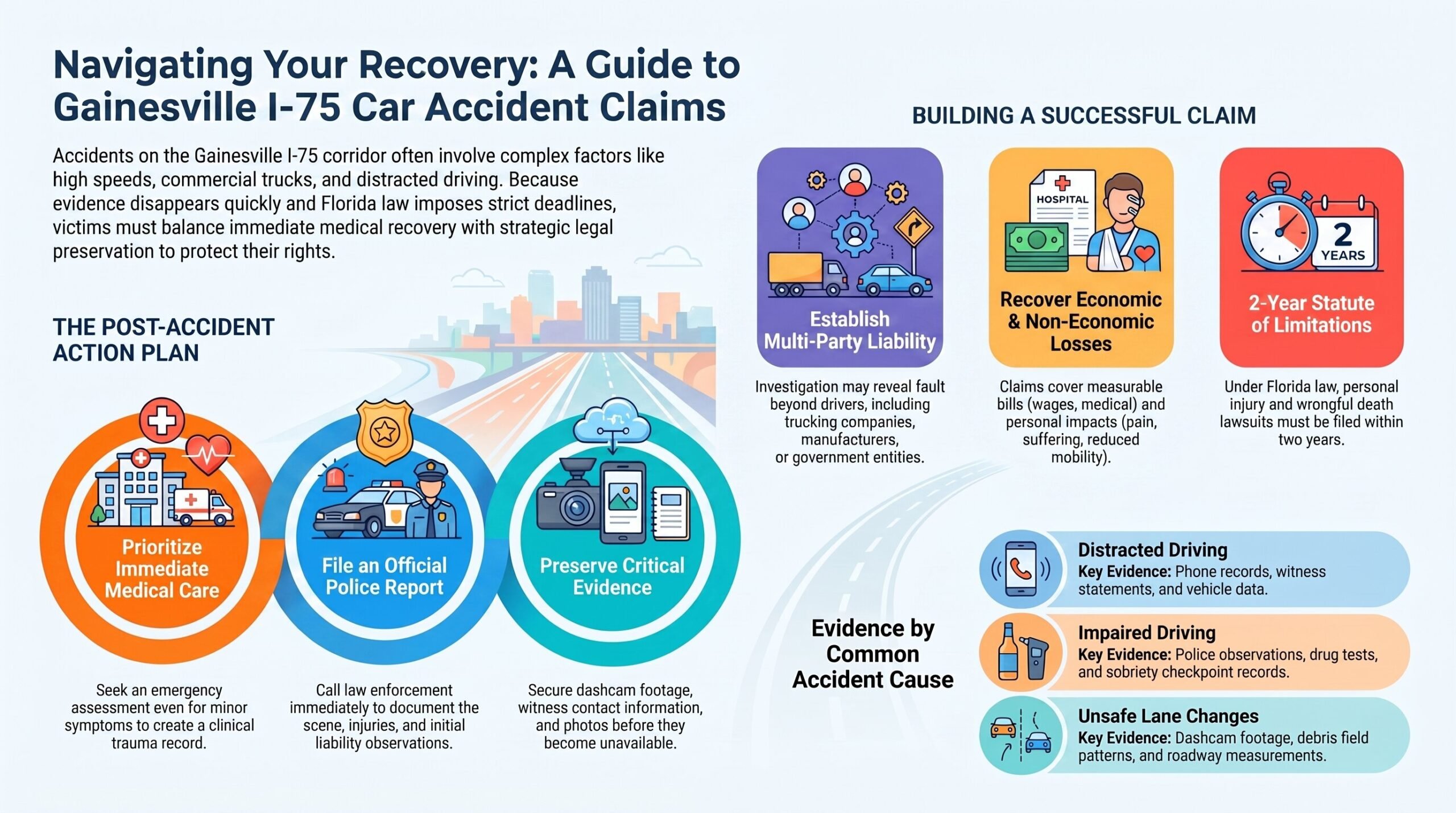
After an I-75 crash in Gainesville, we can take immediate steps to protect your claim while you focus on medical care and recovery. We coordinate with you, your family, and your providers, so urgent needs don’t get lost in confusion. We handle Insurance paperwork, track deadlines, organize medical records, and communicate with insurers on your behalf.
We also prioritize Evidence preservation. We can request crash reports, locate witnesses, secure photographs, review vehicle damage, and seek available traffic or surveillance footage. These actions help prevent important information from disappearing before your claim is fully developed.
Our role is to serve you with diligence and respect. We prepare your claim with careful attention, evaluate losses, and respond to insurer tactics that may reduce fair compensation. When you’re committed to recovery and caring for others, we work to carry the legal burden with steady, informed advocacy.
OUR CONSULTATIONSARE FREE
START YOUR FREE CASE REVIEW

Understanding Gainesville I-75 Car Accident Injury Cases
Understanding an I-75 car accident injury case in Gainesville starts with identifying how the crash happened, who may be legally responsible, and how the injuries affect your daily life. We look at the full impact on your health, work, family responsibilities, and ability to serve the people who depend on you.
These cases often involve multiple records, including crash reports, medical documentation, insurance communications, and vehicle damage information. Evidence preservation is essential because important details can disappear quickly after a collision. We work to secure available records, photographs, video footage, and other materials that help explain what occurred.
We also conduct witness interviews to understand what others saw and how their observations may support your claim. By organizing the facts carefully, we help you pursue accountability with purpose and discipline. Our goal is to protect your rights while helping you move forward with stability, dignity, and confidence.
Common Causes of Gainesville I-75 Car Accident
We often see Gainesville I-75 car accidents caused by distracted driving, speeding and aggression, impaired driving, and unsafe lane changes. When we review your crash, we look closely at how these behaviors may have contributed to the collision and your injuries. By understanding these common causes, we can better explain your legal options and the evidence needed to support your claim.
Distracted Driving
On I-75 through Gainesville, distracted driving can turn routine traffic into a serious collision within seconds. We often see how a texting distraction, a navigation check, or a brief glance away from the roadway can prevent drivers from noticing slowing traffic, merging vehicles, or emergency responders. When attention shifts from driving, even momentarily, distance closes quickly, and families, workers, and public servants may suffer preventable harm.
We help you identify evidence of distracted driving, including phone records, witness statements, dash-camera footage, and vehicle data, when available. These details can show whether a driver failed to act responsibly. By carefully building the claim, we work to protect your rights, support your recovery, and promote accountability that helps keep Gainesville travelers safer.
Speeding And Aggression
Speeding and aggressive driving magnify the danger of every decision a motorist makes on I-75 through Gainesville. We see how one driver’s impatience can endanger families, commuters, students, and responders who share the roadway. Excessive speed reduces reaction time, increases stopping distance, and turns minor errors into severe collisions. Aggressive driving patterns, such as tailgating, unsafe lane changes, and blocking merging vehicles, create unpredictable conditions that responsible drivers cannot always avoid.
Road rage escalations add another layer of risk when anger replaces judgment. We encourage you to recognize these hazards, avoid engagement, and protect those around you by maintaining space and staying steady. When reckless conduct causes harm, we help injured people identify evidence, establish fault, and pursue accountability under Florida law.
Impaired Driving
Impaired driving creates a serious threat on I-75 through Gainesville because alcohol, drugs, and certain medications weaken the skills drivers need to operate safely at highway speeds. We acknowledge that even brief delays in reaction time can cause devastating harm, especially when traffic moves quickly, and conditions change without warning.
Alcohol impairment may reduce judgment, coordination, vision, and braking response, placing you, your passengers, and other families at risk. Sobriety checkpoints can deter unsafe driving, but they cannot prevent every impaired motorist from entering the interstate. When we review an accident, we look for signs of intoxication, drug use, fatigue related to substances, and police observations. By identifying impairment early, we help protect your rights and pursue accountability for losses caused by preventable decisions.
Unsafe Lane Changes
When drivers move between lanes without checking blind spots, signaling, or leaving enough space, they can trigger serious crashes on I-75 through Gainesville. We often see unsafe lane changes force nearby motorists to brake suddenly, swerve, or strike barriers while trying to protect others on the road. These choices may cause lane blockage collisions, especially when heavy traffic leaves little room for correction.
We look for evidence showing how the crash happened, including witness accounts, vehicle damage, roadway evidence, and hidden driver cameras that may record careless lane changes. If you were hurt because another driver changed lanes irresponsibly, we can help you pursue accountability. By acting promptly, we preserve evidence, identify responsible parties, and work to support your recovery with skill, care, and focused representation.


Legal Rights of Gainesville I-75 Car Accident Injury Victims
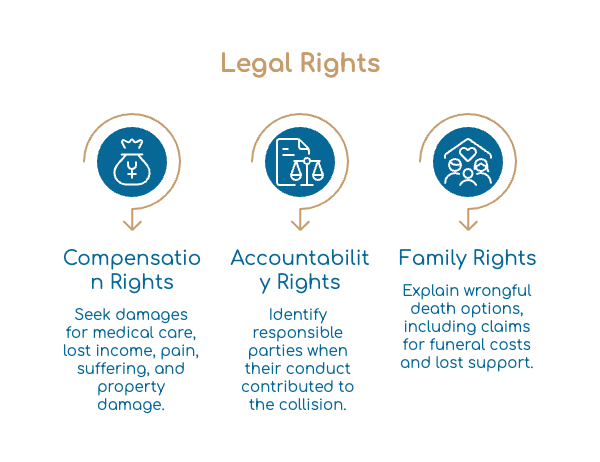
After an I-75 crash in Gainesville, injured victims have the right to pursue compensation from the parties whose negligence caused their losses.
We help you understand those rights so you can protect your well-being, support your family, and continue serving others with stability.
- Compensation rights: You may seek damages for medical care, lost income, reduced earning ability, pain, suffering, and property damage, including losses tied to Pothole impacts.
- Accountability rights: We can identify responsible drivers, companies, vehicle owners, insurers, or government entities when evidence shows their conduct contributed to the collision.
- Family rights: If a loved one died, we can explain Wrongful death options, including claims for funeral costs, lost support, and the value of companionship.
You should not face insurers alone. We can preserve evidence, calculate damages, manage deadlines, and pursue a result that reflects your full losses.
Why Do Gainesville I-75 Car Accident Injuries Happen?
Knowing your legal rights is only part of protecting your claim; we also need to understand why the I-75 crash happened and who caused it. On Gainesville’s busy interstate corridor, injuries often result from preventable choices, including speeding, distracted driving, unsafe lane changes, tailgating, impaired driving, and fatigued commercial operators. We also look beyond the drivers when serving your interests, because responsibility may extend to trucking companies, vehicle owners, parts manufacturers, or public agencies.
Neglected vehicle maintenance can cause tire blowouts, brake failures, directional control issues, and lighting defects that can turn ordinary traffic into a serious collision. Poor road signage may also create confusion near exits, construction zones, or merging lanes, especially when traffic moves quickly.
Weather, congestion, and heavy truck traffic can worsen these hazards, but they don’t excuse careless conduct. By identifying every contributing factor, we can help determine accountability and pursue the support your recovery requires.
What Should You Do After a Gainesville I-75 Car Accident Injury?
After a Gainesville I-75 car accident injury, we need to help you take immediate steps that protect your health and your legal rights. We recommend that you prioritize medical attention, report the crash, and avoid actions that could weaken your claim. By acting promptly and carefully, we can help you preserve evidence, document your injuries, and pursue the compensation you’re owed.
Prioritize Medical Attention
If you’re hurt in a crash on I-75 in Gainesville, your first priority should be getting medical care as soon as possible. We encourage you to accept help from paramedics, visit the hospital, or schedule prompt follow-up care, even when injuries seem minor. An Emergency room assessment can identify concussions, internal injuries, fractures, and soft tissue damage that may not appear immediately.
We also want you to protect your health through careful observation. Document symptom progression by noting pain levels, dizziness, headaches, numbness, mobility limits, and emotional changes over the following days. Share these details with your medical providers, and follow their treatment plan closely. By caring for yourself first, you place yourself in the best position to recover, support your family, and continue serving others responsibly.
Report The Crash
Once you’ve addressed immediate medical needs, report the I-75 crash to law enforcement as soon as you can. We call police immediately when anyone is injured, vehicles block traffic, or safety risks remain. A prompt report helps officers manage the scene, direct emergency response, and create an official record of what occurred. We should provide clear, truthful information, including the location, visible injuries, and any hazards affecting other drivers.
When officers arrive, we cooperate respectfully and answer questions within our knowledge. If pain develops or symptoms seem uncertain, we request medical assessment from responders, because some injuries appear gradually. Reporting also supports community safety by helping authorities identify dangerous conditions, impaired driving, or roadway obstructions. Stay present unless emergency care requires departure.
Protect Your Claim
While the crash scene may feel overwhelming, we protect your claim by preserving evidence, limiting unnecessary statements, and documenting what happened as accurately as possible. We encourage you to seek medical care, follow treatment instructions, and keep every record related to your injuries and expenses. Evidence preservation can include photographs, witness names, dash camera footage, vehicle damage, and the official crash report.
We also advise you not to give recorded statements or sign broad releases before understanding your rights. Insurance negotiation often begins quickly, and adjusters may look for gaps, inconsistencies, or comments that reduce the value of your claim. When we guide you early, we help you serve your family’s needs, protect your recovery, and pursue fair compensation with purpose and care after an I-75 collision.
Critical Evidence in a Gainesville I-75 Car Accident Injury Case
We help you identify and preserve the evidence that can prove fault, establish damages, and strengthen your Gainesville I-75 car accident injury claim. Essential evidence may include: 1. police crash reports, 2. traffic camera footage and witness statements, 3. medical treatment records. We’ll use these materials to build a clear, well-supported case against the at-fault party.
Police Crash Reports
After a collision on I-75 in Gainesville, the police crash report often becomes one of the first important records in an injury claim. We review it carefully because it may identify drivers, vehicles, witnesses, road conditions, and the officer’s initial conclusions. This report can help us serve you by organizing facts early, preserving vital details, and guiding further investigation with purpose and care.
We also compare the report with medical records, photographs, insurance statements, and Traffic citation records. When appropriate, we examine Officer liability analysis, including noted violations, contributing causes, and documented observations. While the report doesn’t decide your case, it can strongly influence negotiations and claim strategy. We act promptly to obtain, evaluate, and address any inaccuracies that could affect your recovery.
Traffic Camera Footage
Because I-75 crashes can happen in seconds, traffic camera footage may provide critical visual evidence that no written report can fully capture. We look for footage that may show vehicle speeds, lane changes, braking patterns, traffic flow, roadway conditions, and the timing of impact. This information can help you protect the truth while serving an injured person’s need for accountability.
We act quickly because many camera systems overwrite recordings within days, or even hours. Through careful Accident scene protocol and focused evidence-preservation strategies, we identify potential camera sources, request preservation, and coordinate with agencies or private entities that may control the footage. When secured promptly, video can clarify disputed facts, support expert analysis, and strengthen your claim with objective proof that speaks clearly for you.
Witness Statements
Witness accounts can fill essential gaps when an I-75 crash involves conflicting reports, limited camera footage, or rapidly changing traffic conditions. We speak with witnesses promptly, before memories fade, and we focus on details that help establish speed, lane position, braking, weather, and driver behavior. Through careful collection of Witness timelines, we compare each account with crash reports, scene evidence, and available phone records when distraction may be at issue.
We also prioritize identity verification, confirming names, contact information, location at the scene, and the basis for each observation. When you’re trying to serve your family and community after a serious collision, accuracy matters. We help protect your claim by avoiding statements that distort facts, pressure witnesses, or create unnecessary confusion for insurers.
Medical Treatment Records
Strong witness accounts help explain how an I-75 collision occurred, but medical treatment records show how the crash changed your health, daily function, and future needs. We use medical records to connect injuries to the collision, document pain progression, and show whether you followed recommended care. Emergency room notes, imaging results, physician reports, therapy records, prescriptions, and chronic care updates help us present the full impact of your injuries accurately and respectfully.
Treatment documentation also helps counter claims that your condition is unrelated, exaggerated, or caused by a prior issue. When we gather and organize these records, we strengthen your claim and help insurers, judges, or jurors understand what service, support, and recovery require. Clear records make your losses measurable, credible, and harder to dismiss.
Long-Term Effects of Gainesville I-75 Car Accident Injuries
We recognize that Gainesville I-75 car accident injuries can affect your life long after the initial medical treatment ends. You may face chronic pain conditions, reduced mobility, or emotional trauma that limits your work, daily routines, and overall stability. We consider these long-term effects carefully because they often play a pivotal role in the value and direction of your injury claim.
Chronic Pain Conditions
After a serious crash on I-75 in Gainesville, chronic pain can become one of the most disruptive long-term effects of an injury. Acknowledge how persistent neck, back, nerve, or joint pain can interfere with your work, caregiving, and community responsibilities. When pain persists beyond the expected healing period, careful medical evaluation is important.
We help you recognize the Impact of Chronic Pain on daily functioning, emotional strain, sleep, and treatment needs. Consistent records, expert opinions, therapy notes, and medication histories can show how the condition developed and why it remains significant. Strong Disability Documentation may also support claims involving lost income, reduced earning capacity, or future care. By building a clear record, we work to protect your recovery and your ability to keep serving those who depend on you.
Reduced Mobility
Persistent pain often leads to another serious long-term problem: reduced mobility that limits how you move, work, and care for others. After an I-75 crash in Gainesville, injuries to the spine, hips, knees, or shoulders can make walking, lifting, driving, or standing difficult. We help you evaluate how these limitations affect daily service to family, employers, and community responsibilities.
Reduced mobility often requires Rehabilitation planning, including therapy, medical equipment, and coordinated follow-up care. You may also need handicap accommodations at home, work, or in your vehicle to preserve independence and safety. We consider these needs when building an injury claim, because long-term movement restrictions can increase medical costs, reduce earning capacity, and change household roles. Careful documentation helps protect your future.
Emotional Trauma Effects
Although physical injuries may be easier to see, emotional trauma can shape daily life long after a Gainesville I-75 car accident. We often see survivors struggle with fear of driving, sleep disruption, anxiety, depression, and sudden distress when traffic sounds or roadway memories return. These Emotional effects may also affect work, caregiving, relationships, and the ability to serve others with steadiness and patience.
We encourage you to treat emotional harm as real injury, not weakness. When grief, loss, coping trauma, or persistent fear interferes with daily responsibilities, prompt care matters. Counseling, medical documentation, family support, and consistent follow-up can help establish the connection between the crash and your suffering. We help protect your claim by identifying these long-term consequences and pursuing compensation that reflects their serious impact.
Proving Liability in Gainesville I-75 Car Accident Injury Cases
When a crash happens on I-75 in Gainesville, proving liability requires more than showing that the collision caused serious injuries. We must identify who acted carelessly, how that conduct caused harm, and which evidence supports your claim. That often means reviewing crash reports, witness accounts, photographs, traffic camera footage, vehicle damage, medical records, and, when needed, accident reconstruction findings.
Florida liability standards focus on negligence, including speeding, distracted driving, unsafe lane changes, impaired driving, tailgating, or failure to adjust to weather and traffic conditions. We also consider whether multiple parties share fault, such as another driver, a trucking company, or a vehicle owner.
Comparative negligence can affect compensation if anyone claims you contributed to the crash. We work to present a clear, accurate account that protects your interests and honors the truth. By carefully building evidence, we help you pursue accountability while supporting your recovery with dignity.
Dealing With Insurance Companies After a Gainesville I-75 Car Accident Injury
After we identify fault and gather evidence, the insurance process often becomes the next major challenge in a Gainesville I-75 car accident injury claim. Insurers may sound cooperative, but their goal is to limit what they pay. We help you recognize insurance tactics, including quick settlement offers, recorded statement requests, and questions designed to shift blame or minimize injuries.
We also protect the people who depend on you, because a premature agreement can affect medical care, lost income, and household stability. Our settlement strategy focuses on documenting the full impact of the crash before meaningful negotiations begin. We review policy limits, medical records, wage losses, and future needs, then present your claim with accuracy and purpose.
You should not have to manage adjusters while recovering. We handle communications, challenge unfair evaluations, and work to secure compensation that reflects your losses, so you can focus on recovery and helping those who rely on you.
What to Expect During a Gainesville I-75 Car Accident Injury Claim Process
We help you understand each stage of a Gainesville I-75 car accident injury claim, beginning with immediate medical evaluation and careful crash evidence collection. We then prepare for insurance claim negotiations by documenting your losses, addressing liability issues, and responding to insurer tactics. If a fair settlement isn’t possible, we’re ready to pursue litigation to protect your rights and seek appropriate compensation.
Immediate Medical Evaluation
Before an injury claim can move forward, we need to understand the full extent of the crash-related harm, and that starts with a prompt medical evaluation. We encourage you to seek care immediately, even when symptoms seem manageable, because some injuries develop gradually. Medical providers assess visible wounds, neurological concerns, mobility limits, and internal complications that may affect progress.
Trauma documentation creates a clear clinical record linking your condition to the collision, which helps protect both your health and your claim. We also focus on pain management, ensuring you receive appropriate treatment while providers monitor progress. By following medical advice, attending appointments, and reporting new symptoms, you help establish an accurate picture of your needs, allowing us to pursue accountability with diligence and respect for your recovery.
Crash Evidence Collection
As your medical condition becomes clearer, crash evidence collection helps us identify how the I-75 collision occurred and who may be legally responsible. We work promptly to protect facts before they fade, disappear, or become harder to verify. Accident scene documentation may include photographs, roadway measurements, vehicle positions, skid marks, debris fields, weather conditions, and traffic control details.
We also seek witness information, law enforcement reports, vehicle damage records, and, when relevant, available commercial carrier materials. Digital evidence preservation is equally important, especially for dashcam footage, surveillance video, event data recorders, cell phone records, and electronic logging information. By carefully gathering and organizing this evidence, we help build a reliable account of the crash, support your recovery goals, and promote accountability for unsafe conduct in Gainesville’s I-75 corridor.
Insurance Claim Negotiations
Once the evidence begins to show how the I-75 crash happened and how your injuries have affected you, insurance claim negotiations can begin from a stronger position. We present the insurer with organized evidence, including medical records, wage-loss information, crash reports, and documentation of your daily limitations. This helps support the valuation of your claim and shows the full extent of what you’ve endured.
We also address Liability disputes when insurers question fault, minimize injuries, or argue that another driver caused the collision. Our role is to respond with facts, preserve your credibility, and keep the process focused on accountability. As we negotiate, we keep you informed, explain each offer, and help you weigh whether it reflects your losses and your long-term needs.
Settlement Or Litigation
If negotiations don’t produce a fair resolution, we evaluate whether filing a lawsuit is the appropriate next step. We explain your options clearly, so you can make informed decisions while continuing to focus on recovery, family, work, and service to others.
Litigation does not always mean trial, but it creates structure, deadlines, and accountability. We use evidence gathered during the claim to strengthen insurance negotiations, while preparing each case as if a jury may hear it. That balanced approach protects your position and encourages serious settlement discussions.
If trial becomes necessary, we develop a trial strategy that clearly presents liability, medical harm, lost income, and future needs. Our goal remains consistent: pursue fair compensation while guiding you through each stage with discipline, preparation, and respect.
Compensation for Gainesville I-75 Car Accident Injury Damages
After a serious collision on I-75 in Gainesville, compensation can help injured people address the financial and personal losses caused by another driver’s negligence. We seek recovery that supports your treatment, protects your household, and honors the disruption you’ve endured while you focus on recovery and serving those who depend on you.
We evaluate every available source of payment, including the at-fault driver’s insurance, your personal injury protection benefits, and uninsured motorist coverage when the responsible driver lacks adequate insurance. We also review policy limits, liability evidence, medical documentation, and the long-term effect of your injuries before making a demand.
When a crash causes a fatality, we also explain Wrongful death eligibility with care and precision. Surviving family members may have rights to pursue compensation through the proper legal representative. We guide you through each step, preserve crucial evidence, and work to secure a result that reflects accountability.
Economic vs Non-Economic Damages in Gainesville I-75 Car Accident Cases
We evaluate damages in Gainesville I-75 car accidents by separating economic losses, such as medical bills and lost wages, from non-economic losses, such as pain, suffering, and emotional distress. We’ll help you understand how each category affects the value of your claim, and why both can be critical to full compensation. We also focus on proving these damages with clear evidence, because insurers often challenge losses that aren’t well documented.
Economic Damage Examples
In an I-75 car accident case, economic damages cover the measurable financial losses tied to the crash. We look at medical bills, ambulance charges, hospital care, surgery, rehabilitation, prescription costs, and future treatment needs. We also document lost wages, reduced earning capacity, and the cost of replacement services when you can’t perform necessary household tasks.
For those who serve families, patients, clients, or communities, these losses can affect both personal stability and professional responsibility. Medical coverage disputes may arise when insurers question treatment, coding, or payment responsibility, so we gather records and billing proof. A long-term disability evaluation may also support claims involving permanent work restrictions. We calculate these losses carefully, using clear evidence to pursue fair financial recovery.
Non-Economic Damage Examples
Although economic losses show what the crash cost on paper, non-economic damages address how an I-75 car accident changes your daily life, health, and personal well-being. We consider these harms because service, family duties, and community involvement often suffer after serious injuries. Your Pain threshold may shift, leaving routine movement difficult and rest incomplete.
Emotional distress can affect patience, sleep, trust, and the ability to support those who depend on you. Disability impacts may limit independence, caregiving, work identity, mobility, or participation in meaningful activities. Some injuries also require long-term therapy, not only to improve function, but to help you recover from lasting changes. We recognize that these losses are deeply personal, and they warrant careful attention when evaluating the full human cost of a crash.
Proving Accident Damages
Proving accident damages requires clear evidence that connects the I-75 crash to each loss you’re claiming. We help you organize medical bills, wage records, repair estimates, and receipts to establish economic damages with precision. We also document pain, emotional distress, reduced mobility, and loss of daily function to support non-economic damages.
Because you may be focused on recovery and caring for others, we manage evidence preservation early. This can include crash reports, photos, video, witness statements, and vehicle data. Strong liability documentation helps show who caused the collision and why your losses should be compensated. We also work with treating providers and other professionals when needed, so your claim reflects the full impact of the crash. Careful proof strengthens negotiations and prepares us for litigation.
When a Gainesville I-75 Car Accident Injury Case Goes to Trial vs Settlement
When a Gainesville I-75 car accident injury case reaches the point of negotiation or litigation, the decision to settle or proceed to trial depends on the strength of the evidence, the severity of the injuries, and the insurer’s willingness to make a fair offer. We evaluate each factor with care, because your recovery can affect your ability to continue serving your family, workplace, and community.
Settlement often provides faster resolution, reduced expense, and greater control over the outcome. Strong damage valuation and organized medical proof can increase settlement leverage, encouraging the insurer to resolve the claim fairly. However, if the offer doesn’t reflect the harm suffered, we prepare for trial.
Trial strategy includes presenting witness testimony, expert opinions, and clear evidence of losses. Jury selection also matters, because jurors must understand the full impact of the crash. We guide you through both paths and pursue the result that best protects your future.
Florida Laws That May Affect Your Gainesville I-75 Car Accident Case
A strong settlement position or trial strategy must account for Florida law governing fault, insurance coverage, deadlines, and available compensation after an I-75 crash in Gainesville. We evaluate these rules carefully, so your claim reflects the truth of what happened and the full scope of your losses.
- Comparative negligence: Florida may reduce compensation if evidence shows you share responsibility. We work to limit unfair blame and protect your recovery.
- Florida fault apportionment: Multiple drivers, trucking companies, vehicle owners, or maintenance providers may share liability. We identify each responsible party, which can increase available insurance sources.
- No-fault insurance requirements: Personal Injury Protection benefits may apply first, but serious injuries can support a claim against the at-fault party for additional damages.
When we serve injured people, we focus on careful review of the evidence, honest guidance, and disciplined advocacy that honor your needs and strengthen your case.
The Statute of Limitations for Gainesville I-75 Car Accident Injury Cases
Because Florida imposes strict filing deadlines, the statute of limitations can directly affect your ability to recover compensation after an I-75 car accident in Gainesville. We appreciate that injured people often focus first on getting better, supporting family members, and serving others who depend on them. However, delay can place a valid claim at risk.
In most Florida negligence cases, you must file a personal injury lawsuit within two years of the crash. Wrongful death claims generally must also be filed within two years, measured from the date of death. These deadlines can pass quickly while medical treatment, insurance communications, and vehicle repairs continue.
Timely action also helps preserve evidence of damages, including medical records, wage documentation, photographs, repair estimates, and witness information. When evidence disappears, proving the full impact of your injuries becomes harder. We encourage prompt attention to these deadlines so your rights remain protected while you focus on recovery and responsibilities.
How a Gainesville I-75 Car Accident Injury Lawyer Can Help You
After an I-75 crash in Gainesville, we can help you manage the legal, medical, and insurance issues that often become difficult to handle alone. We focus on protecting your claim while you focus on recovery and continuing to support those who depend on you.
- We coordinate evidence preservation, including crash reports, vehicle damage records, witness information, medical documentation, and available roadway or camera evidence.
- We evaluate your losses, connect the facts to Florida injury law, and communicate with insurers so your words aren’t used unfairly against you.
- We apply Negotiation tactics designed to pursue fair compensation for medical bills, lost income, pain, and long-term limitations, while preparing each claim as if litigation may become necessary.
When to Contact a Gainesville I-75 Car Accident Injury Lawyer
When you’ve been injured in an I-75 crash near Gainesville, you should contact a car accident injury lawyer as soon as your immediate medical needs are under control. We understand your first responsibility is health, safety, and caring for those who depend on you. Once doctors evaluate your injuries, legal guidance can help protect your ability to serve your family and community.
Early contact matters because important information can disappear quickly. Preserving witness statements, crash scene details, vehicle damage records, and medical documentation often becomes harder with each passing day. We can also help you organize records related to Emergency medical costs, missed work, follow-up treatment, and communications from insurers.
You should reach out promptly if injuries are serious, fault is disputed, multiple vehicles were involved, or an insurance adjuster contacts you. Acting early does not mean rushing a claim; it means protecting your rights while you focus on recovery.
Why You Need an Experienced Gainesville I-75 Car Accident Injury Lawyer
An experienced Gainesville I-75 car accident injury lawyer can identify the legal, medical, and insurance issues that often shape the outcome of your claim. We recognize how quickly a highway crash can disrupt your ability to work, care for family, and serve others in your community.
We investigate fault, preserve evidence, review medical records, and address insurer tactics before they weaken your position. When injuries are severe, we connect the full impact of your losses to the compensation you pursue, including future care, lost income, and reduced quality of life. In fatal crashes, we also help families understand Wrongful Death Claims with dignity and care.
Experience matters because insurers measure risk. A well-prepared case creates Negotiation Leverage, allowing us to demand fair treatment rather than accept a rushed settlement. We guide you through each stage, protect your rights, and keep your claim focused on recovery.
How to Choose the Right Gainesville I-75 Car Accident Injury Lawyer for Your Case
For an I-75 crash claim, choosing the right lawyer starts with proof of focused experience, clear communication, and a practical plan for your recovery. We should look for counsel who understands interstate collisions, commercial carriers, local courts, medical evidence, and insurance tactics. You’ll want a lawyer who listens carefully, respects your priorities, and explains how each decision can protect your health, family, and ability to serve others.
Ask whether Fee consultation options are available, what costs you may face, and how the firm handles payment if your claim succeeds. We also recommend asking for case timelines to be explained, including investigation, treatment, negotiations, filing suit, and trial preparation.
A strong lawyer will preserve evidence quickly, communicate consistently, and prepare every claim as if litigation may become necessary. Choose someone who gives direct answers, sets realistic expectations, and treats your recovery as the central measure of success.
About The Law Offices of Anidjar & Levine
The Law Offices of Anidjar & Levine brings the focused guidance many injured people seek after a serious I-75 crash in Gainesville.
We help you understand your rights, protect your claim, and pursue compensation with careful attention to your needs.
Our team values service, communication, and accountability, because recovery often depends on practical support as well as legal action.
We begin with a clear Client Intake Process, listening to your account, reviewing available evidence, and identifying urgent concerns, such as medical care needs, insurance calls, and lost income.
We then explain the legal path ahead, so you can make informed decisions without unnecessary confusion.
We also discuss Fee Structure Options early, including contingency fee arrangements when appropriate, so you know how costs may be handled.
When you work with us, we take on the legal burdens, coordinate claim details, and remain available as your case moves forward after the collision.
Frequently Asked Questions
Can Out-Of-State Drivers File Gainesville I-75 Accident Claims in Florida?
Yes, out-of-state drivers can file Gainesville I-75 accident claims in Florida when the crash occurred here. We guide you through out-of-state jurisdiction issues, Florida liability rules, and the insurance claim process with care and precision. You’ll typically report the collision, preserve evidence, seek medical evaluation, and communicate with insurers. We help protect your rights while serving your recovery and your family’s practical needs.
Do I Need a Police Report for an I-75 Crash?
Yes, you generally need a police report for an I-75 crash, especially if there are injuries, significant damage, or disputed fault. We use it to confirm crucial facts, support insurance documentation, and help protect your claim. You should also gather Witness statements, photographs, medical records, and driver information. When we serve you after a collision, we focus on preserving evidence, clarifying responsibility, and strengthening your path toward fair recovery.
Can Weather Conditions Affect My Gainesville I-75 Accident Claim?
Yes, weather conditions can affect your claim by complicating the assessment of fault and damages. We examine hidden visibility, road flooding, and reduced traction because these factors create evidentiary challenges for you and those you serve. Insurers may argue the weather, not a negligent driver, caused the crash. We counter that with evidence of causation, including reports, photos, witness statements, traffic data, and expert analysis showing unsafe choices under known conditions.
What if My Rental Car Was Involved in the Accident?
If your rental car was involved, we’ll identify every available policy and protect you from reporting the crash. Rental car coverage may come from the rental agreement, your personal auto policy, a credit card benefit, or the at-fault driver. We’ll build an insurance claim strategy that preserves evidence, addresses liability, and prevents insurers from shifting blame, so you can focus on caring for those who depend on you.
Are Commercial Trucks Treated Differently in I-75 Accident Claims?
Yes, commercial trucks are treated differently in I-75 accident claims. We evaluate stricter Liability Standards because carriers, drivers, maintenance vendors, and cargo loaders may share responsibility. We also review Truck Coverage, which often includes higher policy limits and layered insurance. You’ll need prompt evidence preservation, including logs, inspection records, and electronic data. We help you protect your claim while serving injured people with disciplined, thorough advocacy.
—————————
If you were injured in an I-75 crash in Gainesville, The Law Offices of Anidjar and Levine can help you protect your rights and pursue the compensation you qualify for.
Our team can investigate the accident, handle insurance negotiations, and build a claim that reflects your medical costs, lost income, and other damages.
You don’t have to manage this process alone.
Contact us today for a free consultation with a Gainesville Car Accident Lawyer.