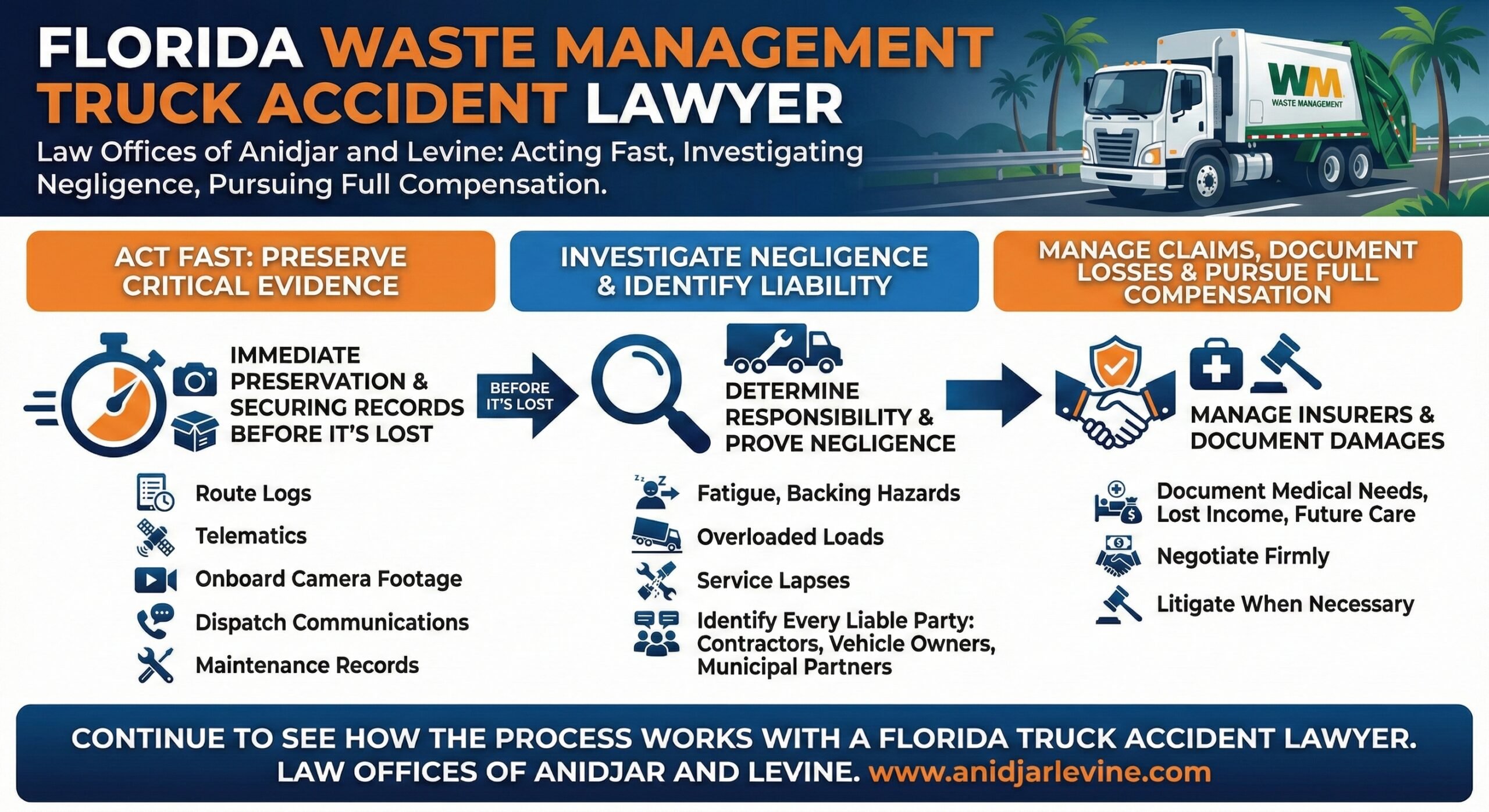
The Law Offices of Anidjar and Levine handles Florida waste management truck accident claims by moving fast to preserve route logs, telematics, onboard camera footage, dispatch communications, and maintenance records before they’re lost.
We investigate fatigue, backing hazards, overloaded loads, and service lapses, and identify all liable parties, including contractors, vehicle owners, and municipal partners.
We document medical needs, lost income, and future care, then negotiate firmly and litigate when necessary.
Continue to see how the process works with a Florida Truck Accident Lawyer.
Key Takeaways
- A Florida waste management truck accident lawyer preserves route logs, telematics, maintenance records, and onboard video before critical evidence is lost.
- They investigate driver fatigue, distraction, unsafe backing/turning, overloaded loads, and maintenance failures common in garbage-truck crashes.
- They identify all liable parties, including the driver, hauling company, contractors, loaders, vehicle owners, and potentially municipal partners.
- They document full damages with medical records, proof of wages, and expert testimony to value future care and long-term life impacts.
- They handle insurers, set firm deadlines, negotiate aggressively, and prepare for trial if a fair settlement is not offered.
How We Can Help With Your Florida Waste Management Truck Accident Claim
If you were injured in a Florida waste management truck accident, we can step in quickly to protect your claim and start building a clear, evidence-based case.
We’ll secure essential records, preserve vehicle and route data, and coordinate prompt medical documentation so your recovery stays the priority.
We’ll handle insurer calls and paperwork, set firm timelines, and keep you informed so you can make confident decisions.
We’ll calculate your losses with care, including future treatment needs and time away from service to your family and community.
When needed, we’ll bring in qualified professionals to strengthen damage support and present your story with accuracy and respect.
Beyond your case, we remain committed to Community outreach that promotes safer streets and to policy reform that encourages responsible operations.
Throughout, we’ll advocate with disciplined preparation, steady communication, and a service-first mindset.
Understanding Florida Waste Management Truck Accident Cases
Because waste management truck crashes often involve commercial fleets, specialized equipment, and strict operating schedules, we approach these cases as more than routine traffic collisions.
We help you understand how liability, coverage, and evidence typically differ when a public-facing service vehicle is involved, and how those differences can affect the value and timing of a claim.
We examine the relationships among the driver, the hauling company, contractors, and any municipal partners, then identify which policies and legal duties apply.
We secure and interpret records, including route logs, maintenance histories, telematics data, onboard camera footage, and dispatch communications, preserving them before they’re lost.
We also document your injuries and losses with clear medical and employment support, so your claim reflects the full impact on your life and family.
Because many fleets support community outreach and waste diversion goals, we pursue accountability that promotes safer operations for everyone.
Common Causes of Florida Waste Management Truck Accidents
When we evaluate Florida waste management truck accidents, we often see a small set of recurring causes that put drivers and the public at risk. We’ll explain how driver fatigue and distraction, improper vehicle maintenance, and unsafe backing and turning can quickly lead to serious collisions in tight residential and commercial areas.
We’ll also address how overloaded or unsecured loads increase stopping distance and rollover risk, and why these failures frequently point to preventable safety breakdowns.
Driver Fatigue And Distraction
Although waste management routes may look routine, driver fatigue and distraction remain two of the most frequent and dangerous causes of these truck crashes in Florida. Long shifts, early starts, and tight pickup schedules can lead to drowsy driving, which slows reaction time and increases the chance of missed hazards in neighborhoods and on busy highways.
We’ve seen how even brief lapses can turn a controlled stop into a serious collision.
Distraction adds another layer of risk, especially when drivers rely on phones, tablets, or onboard systems. This electronic distraction can divert attention from pedestrians, cyclists, and sudden traffic changes.
When we advocate for injured people, we focus on whether the driver had adequate rest, adhered to company policies, and remained focused on the road.
Improper Vehicle Maintenance
Fatigue and distraction can set the stage for a crash, but poor upkeep can turn a manageable mistake into a catastrophic failure.


When a waste management truck operates on long routes, neglected brakes, tires, lights, and steering components can fail without warning, placing the public and workers at risk. We often see fleets skip preventive inspections, delay repairs, or rely on incomplete service records to save time.
Over weeks of heat, rain, and salt air, component corrosion can weaken essential connections and reduce stopping power.
OUR CONSULTATIONSARE FREE
START YOUR FREE CASE REVIEW

If you’re trying to protect your community, insist on maintenance schedules that match the truck’s workload, verify that defects are corrected promptly, and document every service. We’ll help you identify how maintenance lapses contributed to the collision and who must answer.
Unsafe Backing And Turning
Misjudging a blind spot during a reverse or wide turn can place a waste management truck directly into a driver’s lane, a pedestrian path, or a cyclist’s right of way.
These vehicles have large blind spots, and even careful motorists may disappear from mirrors in seconds. When a driver backs into a driveway, alley, or jobsite without a clear spotter or adequate checks, collisions can occur with little warning.
Wide right turns also create hazards when the truck swings left, then cuts back, trapping nearby cars or cyclists. Sudden braking during these maneuvers can contribute to load shifts, which may change vehicle balance and increase off-tracking.
We help you document the turning path, sightlines, and timing to pursue accountability.
Overloaded Or Unsecured Loads
When waste haulers cut corners on load limits or securement, the risks can add up quickly on Florida roads. An overloaded truck needs more distance to stop, strains brakes and tires, and becomes harder to control during sudden lane changes.
If crews skip proper tarps, latches, or netting, debris containment fails, and loose material can strike windshields, force evasive actions, or create road hazards for drivers, cyclists, and pedestrians.
Unsecured loads also invite load shifting, especially on ramps, on uneven pavement, and at sharp turns near transfer stations and landfills. That movement can tip a truck, push it into adjacent lanes, or trigger a rollover.
If you’re hurt, we’ll investigate weights, securement practices, and inspection records to pursue accountability and safer service.
Legal Rights of Florida Waste Management Truck Accident Victims
Although a waste management truck crash can leave victims feeling overwhelmed, Florida law provides clear rights to seek compensation and hold every responsible party accountable.
We can seek damages for medical care, lost income, pain and suffering, and future needs, while insisting that insurers, contractors, and municipal entities answer for negligent choices.
Our work is rooted in Victim advocacy because serving others means restoring stability with dignity and fairness, not pressure or delay.
We also confront Compensation myths, including the claim that quick settlements are “standard” or that partial fault ends a case.
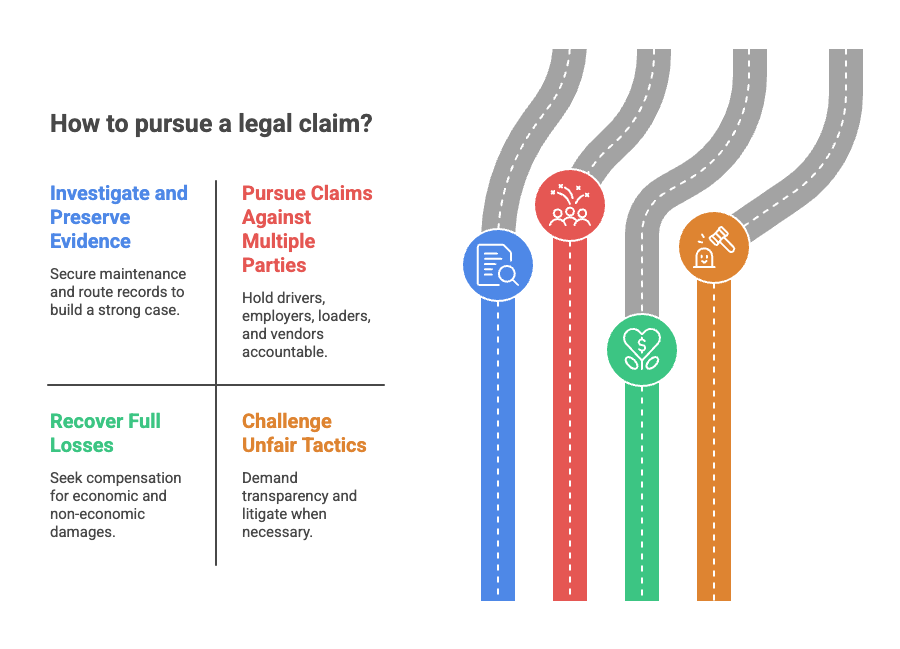
- We’re entitled to investigate and preserve evidence, including maintenance and route records.
- We can pursue claims against drivers, employers, loaders, and third-party vendors.
- We may recover full economic losses and documented non-economic harms.
- We can challenge unfair tactics, demand transparency, and litigate when necessary.
Steps to Take After a Florida Waste Management Truck Accident
After a Florida waste management truck accident, we’ll start by helping you secure the scene, move to a safe location if possible, and call 911 so law enforcement and medical responders can document what happened.
We’ll then guide you to document the crash scene and your injuries with photos, witness information, and clear notes, because early details often shape the outcome of a claim.
Finally, we’ll help you notify the proper insurers and coordinate with counsel promptly, so your statements stay consistent and your rights remain protected.
Ensure Safety And Call 911
If the crash scene still poses a threat, we need to put safety first by moving ourselves and any passengers to a secure location, away from traffic, leaking fluids, or unstable debris.
If anyone can’t move, we should stay nearby without entering danger and keep others from approaching the truck or roadway.
Next, we should call 911 immediately and give clear information about the location, injuries, hazards, and whether the waste truck blocks lanes or leaks.
Prompt Emergency response protects lives and helps prevent secondary collisions.
While we wait, we can provide calm Bystander assistance by checking on people who are safe to reach, offering reassurance, and following dispatch instructions.
We shouldn’t attempt traffic control in active lanes or handle spilled materials.
When responders arrive, we should cooperate, answer questions, and prioritize medical evaluation for everyone involved.
Document Scene And Injuries
Once we’re in a safe position and emergency help is on the way, we should begin documenting the scene and our injuries with the goal of preserving accurate, time-sensitive evidence.
We can use our phone for photo documentation of vehicle positions, skid marks, debris, traffic controls, weather, and any visible damage to the waste management truck and other cars. We should capture wide shots for context, then close-ups, and record the time and location.
Next, we should document injuries promptly, including bruising, bleeding, torn clothing, and any assistive devices provided, while avoiding unnecessary movement that could worsen harm.
If bystanders are willing, we should respectfully request witness statements, noting names, contact details, and what they observed. This careful record supports truthful accountability and informed care.
Notify Insurers And Counsel
We should follow up promptly by notifying the appropriate insurers and engaging counsel, as early communication can shape how a waste management truck claim is investigated and valued.
We’ll contact our own auto carrier first and complete timely policy notification, even if liability appears clear.
Next, we’ll identify the truck’s insurer and any third-party administrators, then provide only vital facts while preserving our right to supplement later.
We shouldn’t give recorded statements or sign broad medical authorizations until counsel reviews them.
By involving an attorney early, we can help secure logbooks, maintenance records, and onboard data before they’re lost.
Counsel can also coordinate medical billing issues and protect liens, allowing us to focus on recovery and service to our family.
Early guidance strengthens settlement negotiation and reduces avoidable disputes later.
How a Florida Waste Management Truck Accident Lawyer Can Help You


Take control of the claim early by working with a Florida waste management truck accident lawyer who knows how these cases unfold and what evidence matters most. We’ll step in quickly, protect your voice, and handle insurers so you can focus on helping your family and community stay steady.
Through consistent client communication, we keep you informed on timelines, decisions, and risks, and we build a settlement strategy that reflects the full scope of your losses.
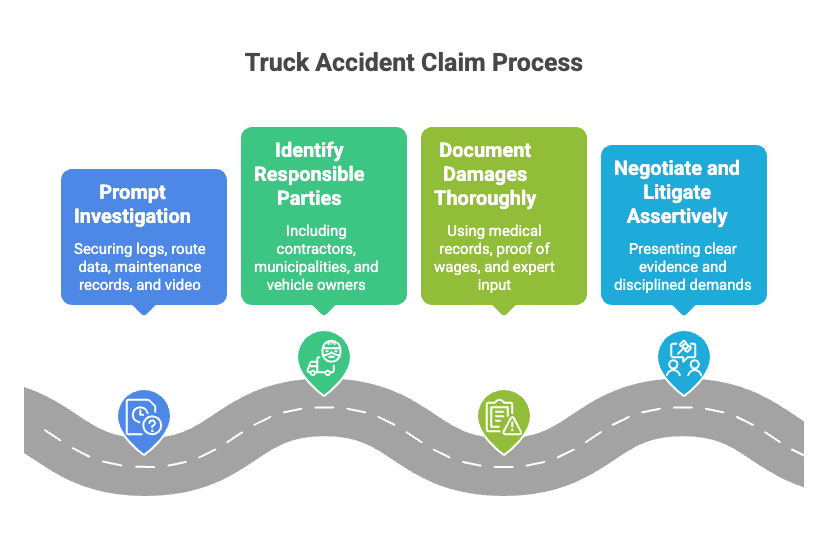
- We investigate promptly, preserving logs, route data, maintenance records, and video before it disappears.
- We identify all responsible parties, including contractors, municipalities, and vehicle owners, not just the driver.
- We document damages thoroughly, using medical records, proof of wages, and expert input as needed.
- We negotiate and, if required, litigate assertively, presenting clear evidence and disciplined demands.
We’ll guide every step with professionalism, discretion, and purpose.
Long Term Effects of Florida Waste Management Truck Accident Injuries
After a Florida waste management truck accident, we often see injuries that don’t resolve quickly, and you may face chronic pain, reduced mobility, and lasting disability that disrupts daily life.
We also recognize that traumatic injuries can create cognitive and emotional impacts, including memory problems, anxiety, and depression, which can affect work performance and relationships.
As we move forward, we’ll explain how ongoing medical care, rehabilitation needs, and lost income can produce serious long-term financial burdens, making early documentation and careful planning crucial.
Chronic Pain And Disability
Living with chronic pain or a lasting disability is one of the most serious long-term consequences of a Florida waste management truck accident, because these injuries can persist long after initial treatment ends.
When mobility, strength, or range of motion changes, everyday tasks can become difficult, and many people also face chronic fatigue that limits their ability to work and serve others. We help you document how pain affects function, including flare-ups, medication needs, and the cost of ongoing care.
A comprehensive plan often includes physical therapy, assistive devices, and coordinated pain management, so you can focus on stability rather than constant crisis. We’ll also pursue compensation for lost earning capacity and future medical needs, and we’ll work with qualified professionals to support your claim.
Cognitive And Emotional Impacts
Although many injuries from a Florida waste management truck accident appear physical, the cognitive and emotional effects can create the most disruptive long-term barriers to recovery. When the brain is injured, you may notice slowed processing, reduced attention, and memory loss that interferes with work, school, and daily responsibilities.
We also see communication changes, including word-finding difficulty and poor organization, which can strain relationships and limit your ability to serve others reliably.
Emotionally, trauma can trigger anxiety, depression, irritability, and emotional numbing, which makes it harder to connect with family, faith communities, and volunteer commitments. Sleep disruption and heightened startle responses may follow, even when you want to move forward.
We encourage careful documentation of these symptoms, and we help you present them clearly and credibly in your case.
Ongoing Medical And Financial Burdens
When serious injuries require ongoing treatment, the medical demands often extend far beyond the initial hospital stay and reshape a family’s budget for years. We often see clients facing repeat surgeries, rehabilitation, home health support, and prescription management, each adding new appointments and new bills.
These ongoing expenses can force difficult choices about housing, transportation, and caregiving responsibilities, especially when income drops due to missed work or reduced capacity. We also recognize the emotional toll of constant pain, disrupted routines, and the strain of coordinating care for a loved one.
When you serve others, you still merit stability and dignity, and we’ll help you document costs, project future needs, and pursue compensation that reflects long-term realities for your family.
Proving Liability in Florida Waste Management Truck Accident Cases
Because waste management truck crashes often involve multiple parties and layers of regulation, we can’t prove liability by relying on assumptions or a single police report.
We work with you to identify every responsible actor, including the driver, the hauling company, maintenance contractors, and any third-party loader or broker involved in the route.
Our first priority is evidence preservation, so we send prompt notices, secure vehicle data, request dispatch records, and obtain onboard camera footage before it disappears.
Next, we evaluate regulatory compliance under Florida and federal rules, focusing on driver qualifications, hours-of-service, inspection and maintenance logs, load securement, and route policies. We also review training materials, prior incident history, and internal safety audits to see whether unsafe practices were tolerated.
When needed, we coordinate with qualified experts to interpret mechanical failures, stopping distances, and scene dynamics. By building a documented timeline, we help you pursue accountability with clarity and integrity.
Compensation for Florida Waste Management Truck Accident Damages
After a Florida waste management truck crash, we focus on securing compensation that reflects the full scope of your losses rather than a quick figure based on early estimates.
We document medical bills, future treatment needs, rehabilitation, and prescription costs, and link them to the collision through thorough records and provider input.
We also pursue lost income, reduced earning capacity, property damage, and the daily impact of pain, limitations, and disrupted routines.
When a family is forced to shoulder new responsibilities, we address the value of that added burden with clear, credible evidence.
During insurance negotiation, we present a complete demand package, challenge low valuations, and anticipate common defenses tied to preexisting conditions or comparative fault.
We manage settlement timing with your recovery in mind, balancing the need for thorough documentation against the risks of delay.
Our goal is a resolution that supports your healing and your ability to serve others.
The Statute of Limitations for Florida Waste Management Truck Accident Cases
Although the days immediately following a waste management truck crash often focus on medical care and vehicle repairs, Florida’s statute of limitations starts running right away, and it can determine whether we’re able to pursue compensation at all.
In most negligence-based injury cases, Florida generally provides two years to file suit, and wrongful death claims also commonly follow a two-year deadline, measured from the date of death. If we miss the deadline, courts often dismiss the case regardless of its merits, leaving families without meaningful recourse.
We should also account for Statute nuances that affect when the clock begins and how it’s calculated, such as delayed discovery in limited circumstances, or claims involving governmental entities and required presuit notices. In rare situations, Toll extensions may pause the period, for example, when a defendant can’t be located or a claimant is legally incapacitated. Acting early helps us preserve evidence and serve the community responsibly.
Why You Need an Experienced Florida Waste Management Truck Accident Lawyer
When a waste management truck collision upends our lives, we need more than basic legal help; we need counsel that understands the industry, the regulations, and the tactics these cases trigger.
An experienced Florida waste management truck accident lawyer knows how to investigate quickly, preserve onboard data, and secure witness statements before they disappear. We also understand how routing pressure, tight schedules, and poor workload management can contribute to unsafe driving, skipped inspections, or improper loading.
These cases often turn on regulatory compliance, including federal and state rules for commercial vehicles, maintenance, driver qualifications, and hours of service. We use that framework to identify violations, connect them to the crash, and present a clear narrative that insurers can’t dismiss.
Our role is to pursue compensation while honoring the service-minded values of accountability and community safety, so our recovery helps both our family and the public we care for.
How to Choose the Right Florida Waste Management Truck Accident Lawyer for Your Case
Finding the right Florida waste management truck accident lawyer can determine whether strong evidence becomes real leverage or gets lost in the insurer’s paperwork. We should look for counsel who promptly preserves driver logs, route data, maintenance records, and onboard camera footage, then coordinates qualified experts when needed. We also want a lawyer who communicates clearly, treats everyone with dignity, and keeps our shared goal in focus: restoring safety and stability for those harmed.
We can start with client interviews and ask specific questions about similar truck cases, courtroom readiness, and how they handle aggressive insurers. We should review fee structures in writing, confirm what costs may arise, and make certain we grasp when payment is owed. We’ll also evaluate responsiveness, whether we’ll speak with the attorney directly, and how updates are delivered. When a lawyer’s process is disciplined and transparent, we can serve our families and communities with confidence.
About the Law Offices of Anidjar and Levine
Turn to the Law Offices of Anidjar and Levine for focused representation after a Florida waste management truck crash, because we build cases around disciplined investigation and clear client communication.
After a Florida waste management truck crash, we deliver focused representation through disciplined investigation and clear client communication.
We listen closely, outline next steps, and take prompt action to preserve evidence, identify responsible parties, and document the full scope of your losses.
You’ll receive regular updates and direct access to a team that treats your matter with urgency and care.
We prepare every claim as if it will be tried, drawing on case analysis, strategic negotiation, and a thorough understanding of Florida trucking and insurance practices.
While we pursue fair compensation, we also remain committed to service beyond the courtroom through community outreach and pro bono initiatives.
If you value accountability and meaningful support, we’ll work alongside you, protect your time and energy, and carry the legal burden so you can focus on recovery and helping others.
Frequently Asked Questions
What if the Waste Management Truck Were Operated by a Subcontractor?
If the waste management truck was operated by a subcontractor, we can still pursue a claim by establishing third-party liability and documenting Contractor negligence. We’ll examine the subcontractor’s training, hiring, supervision, maintenance records, and compliance with safety rules.
We can also evaluate whether the contracting company retained control, imposed unsafe schedules, or failed to monitor performance. In collaboration, we’ll identify all responsible parties so you can pursue fair, service-minded accountability.
Can I Sue if I Was Injured While Working as a Waste Collector?
Yes, we can often pursue a claim if you were injured while working as a waste collector, but the path depends on your employment status and the cause of injury.
In many cases, workers’ compensation provides primary benefits and limits lawsuits against your employer. Still, we may sue a negligent third party, such as a driver or contractor.
If collective bargaining applies, we’ll also review grievance and reporting rules.
How Are Black Box and GPS Records Obtained From Garbage Trucks?
We obtain black boxes from garbage trucks and GPS records by sending preservation letters, then issue subpoenas or court orders to ensure prompt data retrieval.
We also request downloads from the fleet vendor or manufacturer, with qualified technicians imaging the modules and documenting every step.
To protect you and those you serve, we maintain a strict legal chain of custody, verify timestamps, and compare records with route logs and dispatch communications.
What if the Truck Accident Involved Hazardous Waste or Chemical Exposure?
If the crash involved hazardous waste or chemical exposure, we’ll prioritize safety and documentation while you focus on care.
We’ll request chemical containment records, spill response logs, and chain-of-custody details from the carrier and site operators.
We’ll also coordinate exposure testing through qualified medical and industrial hygiene providers, preserving samples and timelines.
We’ll notify appropriate agencies, secure scene evidence promptly, and assess long-term health risks and community impact for all affected.
Do These Cases Usually Settle, or Will I Likely Go to Trial?
Most of these cases settle, but we can’t promise it, because settlement likelihood depends on liability strength, damages documentation, and insurer posture.
We prepare every claim as if it’s going to trial, which often encourages fair resolution and protects the people you serve.
Crucial trial factors include disputed fault, contested medical causation, hazardous exposure proof, regulatory violations, and the defendant’s willingness to risk a jury verdict.
Conclusion
If you’ve been hurt in a Florida waste management truck accident, Law Offices of Anidjar and Levine is prepared to protect your rights and pursue the compensation you need to move forward.
We’ll investigate the crash, preserve vital evidence, identify all liable parties, and address insurer tactics that can reduce your claim.
Because deadlines and procedural rules can limit recovery, we’ll act promptly and keep you informed at every stage.
Contact us to discuss your case and your options, or learn more from our Florida Truck Accident Lawyer page.