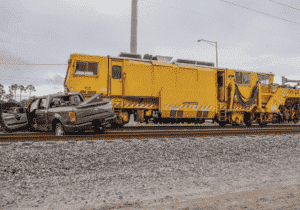
After a truck accident in Jacksonville, you may be able to sue both the driver and the trucking company for your injuries. Liability often depends on how the crash happened and whether the driver was working within the scope of their employment at the time. Our legal team can determine who is responsible and help you pursue compensation from every liable party.
In many cases, both the driver and the trucking company share responsibility under Florida’s vicarious liability laws. A Jacksonville truck accident lawyer can also investigate whether the trucking company failed to properly train or supervise its drivers, enforce safety regulations, or maintain its vehicles. Understanding who can be held accountable is the first step toward building a strong case and recovering the full value of your losses.
When You May Be Able to Hold Both the Driver and the Truck Company Liable
If a truck driver’s negligence caused the accident, you can likely hold them liable for your injuries. In this situation, you will likely also be able to sue the trucking company.
This is due to a legal concept called vicarious liability, which allows injured people to hold employers liable for the actions their employees take within the scope of their employment. Here are a few examples in which a trucking company would be liable for its driver’s negligence:
- A truck driver en route to a delivery is texting while driving down I-95. They crash into your car and cause you to suffer a traumatic brain injury. The employer would share liability because the driver was texting while on the job.
- A driver trying to make up time on a delivery fails to take their legally mandated break. They fall asleep at the wheel and crash into your car, causing you to suffer a traumatic amputation and spinal cord injury. The employer would be liable for the driver’s failure to obey trucking regulations.
However, vicarious liability is not the only time a trucking company can share responsibility for your injuries. Trucking companies can also be directly liable for accidents. This occurs when the employer does or fails to do something that results in an accident and injuries. Examples of situations that could leave a trucking company directly liable include:
- A trucking company pressures its employees to violate hours of service rules and operate their rigs past what is legally allowable.
- A trucking company does not perform a background check and hires an employee with a history of reckless driving.
- A trucking company does not train its drivers.
- A trucking company does not fire a driver arrested for driving under the influence.
- A trucking company does not adequately maintain its fleet.


How Do I Hold Both the Driver and the Trucking Company Liable?
As stated above, the trucking company may be liable if its driver is. In this case, we would need to prove that the driver behaved negligently. This involves demonstrating the following:
- The driver owed you a duty of care to operate their rig safely.
- They failed to do so by speeding, tailgating, driving while intoxicated, or driving while fatigued.
- Their failure to drive safely caused your accident. For example, you were legally proceeding through an intersection. A fatigued driver ran the light and crashed into your vehicle. You sustained catastrophic injuries in the crash.
- You suffered damages, such as medical bills, lost wages, and pain and suffering.
To hold a trucking company directly liable, we need to establish that it failed in its duty to you, such as by hiring or retaining a reckless driver, pressuring a driver to violate safety regulations, or failing to adequately maintain its fleet.
What Evidence Do We Need to Hold the Truck Driver and Trucking Company Liable?
In both of these cases, we will need evidence to support our side of the story. The evidence we need will depend on the specifics of the case, but could include:
- Data from the truck’s black box or electronic data recorder
- Dashcam footage
- The accident report from the Jacksonville Sheriff’s Office
- Eyewitness testimony
- Photos and videos
- Personnel records
- Results from drug and alcohol tests
- Hours of service logs
- Maintenance records
Getting this evidence can be difficult, as the trucking company controls most of it. However, our team knows how to navigate this. As soon as we can, we’ll send the trucking company a spoliation letter. This letter requires the company to preserve and hand over the evidence we need to build our case.
It’s important that you get in touch with us quickly after your accident so we can send this letter out before any evidence is lost or destroyed.
How Long Do I Have to Sue the Truck Driver or Trucking Company?
Florida law limits how long injured parties have to file lawsuits against those who hurt them. Per Florida Statutes § 95.11, you have two years to file a personal injury lawsuit. If you fail to file before the time expires, you risk recovering nothing. You can still negotiate with the insurance company, but without the leverage of a lawsuit, you’ll likely need to accept much less than you deserve.
If you contact our team early enough, we can manage deadlines on your behalf and ensure your lawsuit is filed before the two-year period is up.


Do I Need a Lawyer to Sue Both the Truck Driver and the Trucking Company?
You don’t need a lawyer to sue the truck driver and/or the trucking company. However, if you choose to file a claim or lawsuit on your own, you’ll have to handle every aspect of your case. You may need to:
- Investigate the crash, which can include gathering police reports, witness statements, photos, and black box data from the truck
- Collect and preserve evidence, which involves sending letters to the trucking company to prevent them from destroying records like maintenance logs, driver histories, or hours-of-service logs
- Prove liability by researching Florida laws on negligence and vicarious liability and showing how the driver or trucking company caused the crash
- Deal with insurance companies, which involves filing claims, negotiating settlements, and pushing back when insurers try to minimize or deny your injuries
- Document your damages by organizing medical bills, lost wages, repair costs, and pain and suffering to support your claim’s value
- File legal paperwork, including preparing and submitting court documents, meeting strict filing deadlines, and responding to motions from defense lawyers
- Prepare for trial (if needed), which includes gathering expert witnesses, exchanging evidence, representing yourself in court against experienced corporate attorneys, and funding the entire process out of pocket
Unsure Who’s Liable for Your Jacksonville Truck Crash? Call Us Now for Answers
Evidence in truck accident cases can disappear fast; logbooks can be altered, black box data can be erased, and witnesses’ memories can fade. The sooner you act, the stronger your case can be.
Our Jacksonville truck accident lawyers move quickly to preserve evidence, identify every liable party, and demand the compensation you need for your medical bills, lost wages, and pain and suffering.
Call us today for your free consultation. Don’t let the trucking company get a head start; let Anidjar & Levine fight for you while you focus on recovering.