

If a storm has damaged your Deltona property, The Law Offices of Anidjar and Levine can help you understand your insurance claim and assess whether the insurer’s decision reflects the documented damage and your policy. We’ll review coverage, deadlines, repair estimates, and claim communications, while helping you organize photographs, receipts, and other evidence. Take reasonable steps to prevent further damage and avoid unsafe repairs. If your claim is delayed, reduced, or denied, the sections below explain what to evaluate and how legal support may help. Learn more about our Deltona Personal Injury Lawyer services.
Main Takeaways
- A Deltona storm-damage lawyer can review your policy, coverage limits, exclusions, and claim deadlines.
- Document roof, siding, interior, and belongings damage with dated photos, videos, estimates, and receipts.
- Report the loss promptly, request written explanations for reduced or denied claims, and keep records of communications with the insurer.
- Compare repair estimates with the insurer’s assessment to identify overlooked damage or disputed costs.
- Legal support can help organize evidence, communicate with the insurer, and address coverage or valuation disputes.


How We Can Help With Your Deltona Property Claim Storm & Weather Damage Injury Claim
When a storm damages your Deltona property, we can help you understand your insurance policy, document your losses, and pursue the benefits you’re entitled to receive. We’ll review your policy and explain coverage limits, deadlines, and Policy exclusions that may affect your claim. Our team can organize photographs, repair estimates, receipts, and other records to present a clear account of the damage and its cost.
We’ll communicate with your insurer, respond to requests for information, and challenge claim decisions that don’t reflect the evidence or policy terms. If the insurer undervalues repairs, delays payment, or disputes responsibility, we can explain your options and advocate for fair treatment. We can also address contractor disputes when disagreements over repair work or estimates complicate your claim, helping you assess the documentation and next steps.
Throughout the process, we’ll keep you informed, answer your questions, and handle the details with care. Our goal is to protect your interests so you can focus on restoring your property and supporting those who depend on you.
OUR CONSULTATIONSARE FREE
START YOUR FREE CASE REVIEW

Understanding Deltona Property Claim Storm & Weather Damage Injury Cases
Understanding a Deltona property claim after storm or weather damage starts with identifying what caused the loss and how your policy addresses it. We can help you review the policy, document the damage, and understand the insurer’s decision. Clear records, including photographs, repair estimates, and relevant communications, can help establish the scope and value of your claim.
Coverage depends on the policy’s terms, limits, and conditions. Policy exclusions may affect whether certain losses qualify, while disputes can arise over the amount needed for repairs or the insurer’s assessment of the damage. We can explain these issues and help you respond with accurate information and supporting evidence.
When the parties disagree about the value of covered damage, appraisal disputes may require a separate process under the policy. We’ll help you understand available options and important deadlines before you decide how to proceed. By approaching your claim carefully, we can protect your interests and support a fair resolution, allowing you to focus on your family and community.
Common Causes of Deltona Property Claim Storm & Weather Damage
We see Deltona property damage arise from hurricanes and tropical storms, which can bring destructive winds and intense rainfall. Wind events, tornadoes, hail, and heavy rain can damage roofs, windows, and other parts of a home. Flooding and storm surge can also cause extensive losses, so we’ll explain how these hazards may affect a property claim.
Hurricane and Tropical Storms
Hurricanes and tropical storms can cause extensive property damage in Deltona through powerful winds, wind-driven rain, and falling trees or debris. Heavy rainfall may overwhelm drainage systems, flood yards, and allow water to enter homes through roofs, windows, or doors. Storm surge is less common inland, but rising waterways and runoff can still threaten properties. Damage may affect structures, personal belongings, and vital systems, disrupting daily life for residents who depend on safe, stable housing.
Hurricane preparedness helps us reduce risks by securing outdoor items, protecting openings, and documenting property conditions before a storm arrives. Tropical storm tracking also gives us time to follow official alerts and make informed decisions. After the storm, we can help you identify damage, preserve records, and understand your policy’s notice and documentation requirements. Prompt, careful action can support a fair claim and help restore the property for everyone who relies on it.
Wind and Tornado Damage
Beyond hurricane conditions, strong winds and tornadoes can damage Deltona properties during severe thunderstorms and other weather events. Powerful gusts may lift shingles, break windows, damage siding, or bring trees and debris down onto homes. Tornadoes can form quickly when shifting wind patterns create a rotating storm, leaving residents little time to protect their property. Even without a direct tornado strike, nearby winds can weaken roofs, fences, and exterior structures. We encourage you to document visible damage promptly, take reasonable steps to prevent further loss, and avoid unsafe areas. Wind mitigation measures, such as reinforced roof connections and impact-resistant openings, may reduce vulnerability before storms arrive. If your insurer questions the cause or extent of damage, we can help you understand the claim process and pursue a fair review.
Hail and Heavy Rain
When hail and heavy rain move through Deltona, they can cause damage that isn’t always immediately visible. Hailstone formation begins when water droplets freeze in storm clouds, and larger stones can crack roof tiles, dent metal panels, or damage siding. Even smaller hail may weaken roofing materials, leaving vulnerabilities that become apparent later. Heavy rain can expose worn seals around windows, doors, and roof penetrations. The rainfall intensity may also overwhelm gutters, allowing water to collect against exterior surfaces and enter through existing openings. After a storm, we can help you document visible damage, preserve repair records, and review your policy’s requirements. A careful inspection may identify concerns before they worsen. By addressing evidence promptly, we can support a clear, well-organized claim and help protect the property and people who depend on it.
Flooding and Storm Surge
Flooding and storm surge can damage Deltona properties by pushing water into buildings, saturating walls and flooring, and compromising electrical systems. Heavy rainfall, overflowing waterways, and drainage failures may cause flooding even far from the coast. Storm surge barriers can reduce exposure in some locations, but they cannot prevent every loss, especially when water rises quickly or overwhelms protective measures.
We can help you document damage promptly and understand the steps involved in presenting a property claim. When it’s safe, photograph affected rooms and belongings, keep receipts for emergency repairs, and save communications with your insurer. Floodwater contamination may introduce sewage, chemicals, or other hazards, so avoid contact and arrange qualified cleanup. We’ll help you identify relevant policy terms, organize supporting records, and seek a fair review while you focus on protecting your household and serving your community.
Don’t Wait. Call Our Florida Personal Injury Lawyers Now!


Legal Rights of Deltona Property Claim Storm & Weather Damage Injury Victims
Storm and severe weather damage can give Deltona property owners important legal rights under their insurance policies and Florida law. We can help you understand those rights and protect the people who depend on your property. Your policy may require prompt notice, reasonable cooperation, and steps to prevent further damage. Keep records, follow applicable deadlines, and carefully review any insurer decision. Policy exclusions may limit coverage, but an insurer must apply policy language and Florida law to the facts.
You may have appraisal rights when you and your insurer disagree about the amount of a covered loss, subject to policy terms.
- Report damage promptly and keep records of claim correspondence.
- Photograph affected areas and keep repair receipts.
- Request written explanations for claim denials or reductions.
- Review deadlines before signing releases or accepting payment.
- Seek qualified guidance when coverage or valuation remains disputed.
Why Do Deltona Property Claim Storm & Weather Damage Injuries Happen?
Severe weather can damage roofs, windows, and drainage systems, leaving Deltona property owners to manage complicated insurance claims. These losses often begin when strong winds lift shingles, hail punctures roofing materials, or heavy rain overwhelms gutters and drainage. Roof vulnerability increases when materials have aged, installation was poor, or earlier damage went unrepaired. In these conditions, a storm can turn a minor weakness into significant interior water damage.
Property maintenance also affects how a building withstands severe weather. Clogged gutters, loose flashing, cracked seals, and neglected trees can allow water or debris to cause further harm. We recognize that owners who care for their homes and serve their families or communities may still face damage beyond their control. Storms can strike suddenly, and even well-maintained properties may suffer losses.
Understanding these causes helps us assess why damage occurred and whether an insurer’s decision reflects the property’s actual condition. Accurate evaluations distinguish storm-related damage from ordinary wear and tear.
What Should You Do After a Deltona Property Claim Storm & Weather Damage Injury?
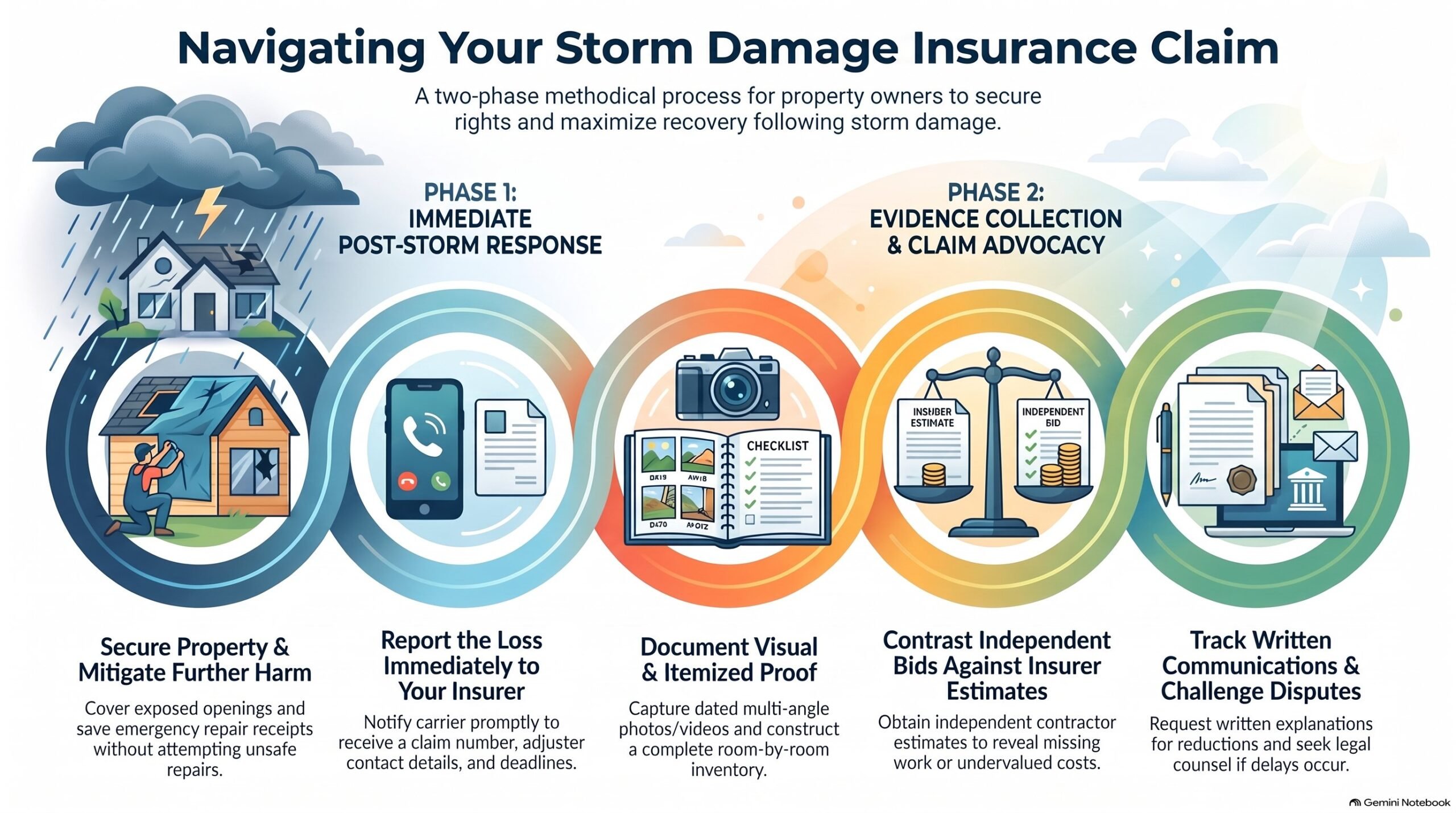
After storm or weather damage, we should document affected areas with clear photographs and keep records of related expenses. Take reasonable steps to prevent further loss, save receipts, and avoid permanent repairs until the damage is assessed. Then contact your insurer promptly and provide accurate details about the damage.
Document the Damage
When it’s safe, document storm and weather damage before making temporary repairs or removing damaged property. We can help you create a clear record that supports your claim and helps insurers assess the loss accurately. Photograph and video each affected area from several angles, capturing close-ups of damaged materials and wider views that show their location. Include the date and preserve original files. Prepare a room-by-room inventory describing damage to walls, ceilings, floors, fixtures, and belongings. Create a personal property catalog listing each affected item, its age, condition, estimated value, and available purchase records. Keep receipts and written estimates in one place, and note when and how you discovered each problem. If others rely on your property or assistance, organized evidence can help resolve the claim fairly and efficiently.
Prevent Further Loss
To prevent further loss after storm or weather damage, take reasonable steps to protect your Deltona property once it’s safe to do so. We can help limit additional harm by moving people away from unstable structures, downed power lines, and standing water. If conditions permit, cover broken windows and secure exposed openings with sturdy materials, but don’t climb onto a damaged roof or enter unsafe areas. Arrange temporary roof tarping through qualified professionals when needed, and keep receipts for emergency repairs and supplies. When safe, remove wet belongings from affected areas, and use fans or dehumidifiers to reduce moisture and discourage mold. Emergency supply kits can help us support household members and neighbors with basic needs while services remain disrupted. Follow local safety guidance, and avoid repairs beyond your training or equipment.
Contact Your Insurer
Once everyone is safe and immediate hazards are addressed, contact your insurer promptly to report the storm damage and ask how to begin a claim. We can help you prepare by noting when the event occurred, describing visible damage, and listing any temporary repairs or expenses. Ask for your claim number, the adjuster’s contact information, and instructions for documenting losses. Keep copies of messages, receipts, photographs, and any records you provide. Request a Policy review so we can identify relevant limits, deductibles, exclusions, and deadlines. Make a clear coverage inquiry about damaged structures, personal property, and additional living expenses, if applicable. We should answer questions accurately, but avoid guessing about causes or agreeing to a final settlement before reviewing the insurer’s findings. Prompt, organized communication can support a fair assessment and help protect our household’s recovery.
Critical Evidence in a Deltona Property Claim Storm & Weather Damage Injury Case
Strong evidence can help us establish how the storm damaged your property and support your claim. We recommend preserving records promptly, since conditions and details may change during repairs.
Essential evidence may include:
- Dated photographs and videos of storm damage
- Local weather reports for the date of the storm
- Detailed repair estimates and invoices
- Statements and contact details from witnesses
- Insurance correspondence and claim records
Storm Damage Photographs
Photographs taken soon after a storm can help document damage before repairs, cleanup, or changing weather alters the evidence. We encourage you to photograph each affected area from several angles, including wide views that show the property and close-ups that reveal specific damage. Capture damaged roofs, ceilings, windows, flooring, belongings, and any visible water intrusion. Include an object for scale when it helps show the size of a crack or opening, but don’t disturb unsafe areas to get a better image.
Preserve original files whenever possible. Photo metadata may record when and where an image was taken, helping establish its context. Avoid editing originals; make separate copies if you need to mark details. Use clear Image organization, such as dated folders labeled by room or damage type, so we can locate relevant photographs and present them accurately to support your claim and meet your needs.
Weather Reports
Along with photographs of the damage, weather reports can help establish the conditions your property faced during a storm. We can compare official records with the timing and location of the reported damage to build a clearer account of what happened. The National Weather Service may provide information about rainfall, wind speeds, hail, and severe weather alerts affecting Deltona. Radar archives can also show a storm’s path and intensity over time, helping us assess whether conditions were consistent with your account.
These records may support your claim by connecting documented weather events to the damage you observed. We can help identify relevant sources and preserve records before they become harder to obtain. Accurate, timely evidence can help insurers and others understand the event’s impact and evaluate your claim fairly. It also helps you advocate for your household and community.
Repair Estimates
How much will repairs cost, and what work is necessary to restore your property? Detailed repair estimates can show the damage’s scope and support the amount you’re seeking from your insurer. A complete estimate should identify affected areas, describe necessary repairs, list materials and labor, and explain projected costs. Photographs, invoices, and inspection findings can help connect each proposed repair to storm damage.
We can compare contractor bids with the insurer’s estimate to identify missing work, pricing gaps, or overlooked damage. An independent review of the estimate may clarify whether the proposed scope reflects local costs and applicable building requirements. Keep revised estimates and supporting records as repairs progress, since new damage may become visible after work begins. Clear documentation helps us present a well-supported claim and pursue a fair resolution without diverting resources from your family or community.
Witness Statements
When storm damage causes an injury on your property, witness statements can help establish what happened and when. We can help you identify people who saw the hazardous condition, observed the weather’s effects, or witnessed the injury. Their accounts may clarify when damage appeared, whether anyone reported it, and what steps followed. Neighbor accounts can be especially useful when nearby residents saw the storm or noticed a dangerous condition before you did. Ask witnesses to record their observations promptly, in their own words, and include dates, times, and contact details. Avoid coaching them or suggesting facts, since accurate, independent accounts carry more weight. In some cases, sworn affidavits may preserve testimony formally. We can organize these statements with photographs, repair estimates, and other records to support a clear, credible claim.
Long-Term Effects of Deltona Property Claim Storm & Weather Damage Injuries
Storm and weather-related injuries can affect your health and daily life long after the immediate damage occurs. We’ll explain how chronic pain and lasting mobility issues may limit your activities and require ongoing care. We’ll also address emotional distress, which can persist even after physical injuries begin to recover.
Chronic Pain
Chronic pain can persist long after a storm or other weather event causes an injury at a Deltona property. You may continue to experience aching, burning, or tenderness even after the initial injury has recovered. These symptoms can disrupt sleep, concentration, and your ability to meet responsibilities at work or home. We encourage you to seek medical care and clearly describe your symptoms, including when they began and how they affect daily life. Your provider can assess the cause, recommend pain treatment options, and adjust care as needed. Consistent chronic pain management may include medication, therapy, or other approaches suited to your condition. Keep records of appointments, treatment recommendations, and related expenses. We can help you understand how documentation may support a property claim for injury-related losses.
Lasting Mobility Issues
Persistent pain can also limit your ability to walk, stand, climb stairs, or handle routine tasks after a weather-related injury at a Deltona property. If mobility problems continue, you may need help getting to appointments, caring for family members, or meeting responsibilities to others. We can help you document how these limitations affect daily activities and identify the support your recovery may require. Depending on your needs, Accessible home modifications, such as grab bars or ramps, can reduce barriers and improve safety. Adaptive mobility equipment, including a cane, walker, or wheelchair, may also help you move more independently. Keep records of medical recommendations, equipment costs, and home modifications. These details can clarify the injury’s long-term impact and support a property claim seeking compensation for reasonable, documented needs.
Emotional Distress
After a weather-related injury at a Deltona property, emotional distress can continue long after the physical wounds begin to mend. You may experience anxiety, sleep disruption, or fear of returning to the site, affecting work, relationships, and daily responsibilities. We encourage you to seek qualified mental health care and discuss symptoms with your medical providers. Anxiety management strategies, including counseling and structured coping plans, can help you regain stability. Family counseling may also support loved ones as they adjust to changes in your needs and routines. Keep records of treatment, symptoms, and related expenses, since this information may help document the injury’s lasting effects. When we pursue a property claim, we can include emotional harm where supported by evidence, while respecting your privacy and focusing on recovery and the people who depend on you.
Don’t Wait. Call Our Florida Personal Injury Lawyers Now!
Proving Liability in Deltona Property Claim Storm & Weather Damage Injury Cases
To prove liability in a Deltona storm or weather damage claim, we must show that the responsible party failed to meet a legal duty and that this failure caused the loss. We’ll examine who controlled the property, what precautions were reasonable, and whether someone or an organization ignored a known risk. Negligence Standards help guide this review, but the evidence must connect the specific failure to the damage or injury.
Photographs, maintenance records, inspection reports, witness accounts, and qualified assessments can help establish what happened. We’ll also consider whether the storm alone caused the loss or whether unsafe conditions, delayed repairs, or inadequate preparation contributed. When serving others, we should document damage promptly, preserve relevant records, and, when possible, avoid disturbing important evidence.
The Duty to Mitigate requires reasonable steps to limit further harm, such as protecting exposed areas from additional rain. We’ll assess those actions fairly and explain how the facts support responsibility, causation, and the losses claimed. Each case depends on its evidence and applicable law.
Dealing With Insurance Companies After a Deltona Property Claim Storm & Weather Damage Injury
Once we’ve documented the cause and extent of storm damage, we can address the insurer’s review with a clear record of the loss. We can help you communicate accurately and consistently and keep copies of letters, emails, estimates, and receipts. Prompt communication with the policyholder can reduce misunderstandings and show that you’re cooperating while protecting your interests. We’ll encourage you to answer questions truthfully, avoid guessing about details, and request clarification when an insurer’s request is unclear.
We can also help you recognize adjuster tactics that may minimize a loss, such as relying on incomplete inspections or attributing storm damage to wear and tear without adequate support. You don’t have to accept an unsupported explanation or sign a release before understanding its effect. We can compare the insurer’s position with available evidence and explain your options in plain language. By responding carefully and maintaining a professional tone, we can help you pursue fair treatment while preserving resources needed to repair your property and serve your family or community.
What to Expect During a Deltona Property Claim Storm & Weather Damage Injury Claim Process
We’ll begin by reporting the storm damage promptly and documenting your losses with photographs, receipts, and repair estimates. The insurer will investigate the claim, which may include reviewing records and inspecting the property. We’ll explain the steps toward resolution and help you assess any settlement offer.
Reporting the Damage
After a storm or other severe weather damages your Deltona property, report the loss to your insurer promptly and document what happened. Prompt reporting helps us protect your ability to pursue coverage and gives the insurer an opportunity to begin its review. Contact your agent or the claims department through an accepted channel, and provide the policyholder’s name, property address, date of loss, and a clear description of the event and apparent damage. Ask for a claim number, the assigned adjuster’s contact information, and instructions for next steps. Keep communication factual and avoid guessing about causes or repair costs. Review your policy and any notices from the insurer, then use deadline tracking to record required forms, inspection appointments, and response dates. Meeting these deadlines helps us support a timely, orderly claim review.
Documenting Your Losses
To support a Deltona storm damage claim, we should document each loss with clear, dated evidence. Photograph damaged rooms and belongings before cleanup, and take additional pictures as repairs progress. Keep receipts for emergency supplies, repair work, and other reasonable storm-related expenses. A detailed Personal property inventory should list each damaged or missing item, its approximate purchase date, condition, and replacement cost. Include receipts, warranties, or account records when available, but don’t delay documenting items if those records are unavailable. If you must leave home, keep records of temporary housing, including lodging receipts, meal costs, and transportation expenses. Store copies of photographs, lists, and receipts in a secure digital folder. We can help you organize these materials so your account of the losses remains clear and complete.
Insurer Investigation
Once you’ve documented your losses, the insurer will investigate the storm damage and assess whether your policy covers the claim. We can help you understand what to expect as the insurer reviews the evidence and gathers information about the cause and extent of the damage. An Independent adjuster may inspect your property, photograph affected areas, and ask questions about when the damage occurred. We should provide accurate answers and point out damage that may not be immediately visible. Depending on the circumstances, the insurer may request an engineering assessment to determine whether storm conditions caused specific structural problems. We can keep copies of inspection notices and reports, and note any areas the adjuster did not examine. Clear communication helps guarantee the investigation considers the full scope of your documented losses.
Claim Resolution Steps
When the insurer completes its investigation, we can review its coverage decision and explain the next steps. We’ll compare the decision with your policy, damage estimates, photographs, repair records, and other supporting evidence. If the insurer accepts the claim, we’ll assess whether its proposed payment reasonably addresses covered losses and applicable limits.
If the insurer undervalues or denies your claim, we can identify disputed issues and present additional documentation. Claim negotiation may involve written demands, supporting evidence, and discussions with the adjuster. We’ll keep you informed and help you weigh available options without promising a particular outcome.
Before you accept an offer, we’ll conduct a settlement review, explain its terms, and clarify what rights you may release. Our goal is to help you make an informed decision and pursue a fair resolution while protecting your interests.
Compensation for Deltona Property Claim Storm & Weather Damage Injury Damages
Storm and weather damage may entitle Deltona property owners to compensation for covered losses, but the amount depends on the policy, the damage, and the evidence supporting the claim. We can help you identify applicable coverage and document repair and replacement costs, as well as other eligible expenses.
A claim may include reasonable costs to repair or rebuild damaged structures, subject to policy limits, deductibles, exclusions, and applicable conditions. Coverage may also extend to damaged belongings. Careful personal property valuation can support a fair assessment, using purchase records, photographs, receipts, and comparable replacement prices where available.
If covered damage makes your home temporarily uninhabitable, Additional Living Expenses may help cover necessary costs such as lodging and meals, within the policy’s terms and limits. Keep receipts and records so we can connect those expenses to the displacement.
We’ll review the insurer’s estimate against the documented loss and policy language. Clear, organized evidence helps us advocate for compensation that reflects covered damage and supports your household’s recovery.
Economic vs. Non-Economic Damages in Deltona Property Claim Storm & Weather Damage Cases
We’ll distinguish economic losses, such as repair costs and damaged belongings, from non-economic harm, including disruption and loss of use. Both types of damages may matter when a storm or weather event affects your property. We’ll explain how you can document and prove each category.
Economic Property Losses
Property damage claims after severe weather can involve more than the cost of repairing a home or replacing belongings. We can help you identify the documented financial losses that storms may cause and present them clearly to an insurer. These economic damages may include temporary housing, debris removal, emergency repairs, and the cost of restoring damaged structures to their prior condition. If a storm forces your business to close, Business interruption losses may include lost profits and necessary ongoing expenses, supported by reliable records. Property owners who can’t rent damaged units may also seek lost rental income for the period the property remains uninhabitable. Keep invoices, estimates, leases, tax records, and proof of payments. We can review this evidence with you, assess applicable policy terms, and pursue compensation for covered losses.
Non-Economic Harm
Although invoices and financial records help establish economic losses, a storm-related property claim may also affect your peace of mind and daily life. You may experience stress when damage disrupts routines, limits access to rooms, or leaves you uncertain about your home’s safety. These effects differ from repair costs and other measurable financial losses. We can help you understand how non-economic harm may relate to your claim, but coverage and available remedies depend on your policy and circumstances. For some households, displacement can strain relationships and interrupt caregiving responsibilities. The loss of enjoyment of your home may also matter, particularly when storm damage prevents you from gathering with family or serving your community as usual. If distress becomes difficult to manage, Grief counseling or other professional support may help you cope during recovery.
Proving Both Damage Types
To support both economic and non-economic damages in a Deltona storm or weather damage claim, we’ll need evidence that connects each claimed loss to the covered event. For economic losses, we can gather repair estimates, contractor invoices, receipts, photographs, and records of additional living expenses. These documents help show the scope and cost of property damage. To establish non-economic harm, we can keep a clear account of disrupted routines, stress, and effects on family responsibilities, supported by relevant medical or counseling records when available. We should also document the timeline and explain how the damage affected our ability to care for others. Insurers may raise Coverage exclusions or depreciation disputes, so we can compare policy terms, estimates, and payment calculations. Organized, consistent evidence helps us respond to disputes and present a credible claim.
When a Deltona Property Claim Storm & Weather Damage Injury Case Goes to Trial vs Settlement
When a storm or severe weather damages your Deltona property, we’ll assess the evidence, the insurer’s position, and the potential recovery before advising whether settlement or trial makes sense. We’ll explain your options clearly so you can make an informed decision while keeping your family, employees, tenants, or neighbors in mind.
Settlement negotiations may resolve a claim sooner and reduce the uncertainty, expense, and demands of a courtroom dispute. We’ll carefully review proposed terms, compare them with documented repair costs and other supported losses, and help you evaluate whether the offer meets your needs. You decide whether to accept; we’ll provide candid guidance.
If negotiations don’t produce a fair result, trial may offer a way to present your evidence to a judge or jury. We’ll explain the process and undertake trial preparation, including organizing records, preparing witnesses, and developing a clear account of the damage. Side by side, we’ll weigh the practical risks and responsibilities of each path before proceeding.
Florida Laws That May Affect Your Deltona Property Claim Storm & Weather Damage Case
Florida law sets deadlines and procedures that can affect how we pursue a storm or weather damage claim for your Deltona property. We’ll review your policy, document the loss, and follow applicable notice and proof-of-loss requirements. Clear records help us present your claim accurately and support a fair resolution.
Several rules and policy terms may shape what your insurer must cover:
- Florida policy exclusions may limit coverage for specific causes or types of damage.
- Hurricane deductibles can differ from standard deductibles and may apply when policy conditions are met.
- Your policy may require prompt notice, reasonable steps to prevent further damage, and cooperation with the insurer’s investigation.
- Insurers must handle claims under Florida’s insurance laws, including requirements for fair investigation and communication.
- Repair estimates, photographs, receipts, and professional assessments can help establish the extent and cause of covered damage.
We’ll explain how these provisions apply to your circumstances and help you understand your options. By addressing requirements carefully, we can protect your interests while keeping the process focused on restoring your property and serving your family’s needs.
Don’t Wait. Call Our Florida Personal Injury Lawyers Now!
The Statute of Limitations for Deltona Property Claim Storm & Weather Damage Injury Cases
Meeting your policy’s notice and documentation requirements is only part of protecting a Deltona storm damage claim; legal deadlines may also limit how long you have to bring a lawsuit. Florida law sets time limits for property insurance lawsuits, and the applicable period can depend on the claim and when the loss occurred. Missing a deadline may prevent you from seeking payment in court, even when storm damage is substantial. We should distinguish these legal limits from Policy deadlines in your insurance contract, which may require prompt notice, proof of loss, or other steps. An appraisal clause may help resolve disagreements about the amount of damage, but it doesn’t necessarily extend a lawsuit deadline or replace required policy procedures. Keep records of the storm date, insurer communications, inspections, and repair estimates. If you’re helping protect a household, business, or community property, tracking each deadline can preserve options and support timely decisions. Confirm the rules that apply to your circumstances.
How a Deltona Property Claim Storm & Weather Damage Lawyer Can Help You
A Deltona property claim storm and weather damage lawyer can help you assess your policy, organize evidence, and respond to an insurer’s decision. We’ll explain how policy interpretation affects your claim and examine coverage exclusions that may limit payment. Our goal is to help you pursue a fair resolution while protecting your household’s resources.
A Deltona storm damage lawyer can review your policy, organize evidence, and help you respond to the insurer’s decision.
We can support your claim by:
- Reviewing policy terms, endorsements, limits, and deductibles.
- Organizing photographs, repair estimates, receipts, and inspection records.
- Comparing the insurer’s damage assessment with available evidence.
- Preparing clear, documented responses to claim questions or disputes.
- Explaining settlement options and the practical effects of each choice.
We’ll communicate with the insurer on your behalf and help you understand what the process requires. When the carrier disputes the cause or extent of damage, we can assess the supporting evidence and identify issues that need a response. We can also coordinate with qualified professionals to clarify damage findings. Throughout the matter, we’ll keep your interests central and provide straightforward guidance, so you can make informed decisions and focus on the people who depend on you.
When to Contact a Deltona Property Claim Storm & Weather Damage Lawyer
Contact a Deltona property claim storm and weather damage lawyer as soon as the insurer delays, disputes the cause or extent of damage, or offers less than the evidence supports. Early guidance can help us protect your interests while you focus on restoring a safe home and supporting those who depend on you.
Consider an Attorney consultation if the insurer requests extensive documentation, questions your account, or asks you to accept a settlement before repairs are fully assessed. We can review your policy, claim correspondence, photographs, repair estimates, and other records. Keep copies of every communication and note important dates, including inspections and payment decisions.
Don’t wait until a disagreement becomes urgent. Insurance policies and Florida law may impose claim deadlines, and missing one could affect your options. Contact counsel promptly after discovering storm damage, especially if the insurer has denied the claim or stopped responding. We can help you understand the next steps and act within applicable time limits.
Why You Need an Experienced Deltona Property Claim Storm & Weather Damage Lawyer
When a storm damage claim becomes disputed, an experienced Deltona property claim lawyer can help us assess the insurer’s position and identify what evidence may support your case. We can explain how policy terms apply to roof, water, wind, or other storm-related damage, so you understand the issues affecting your recovery.
A careful Policy review and sound coverage interpretation can reveal whether the insurer has overlooked relevant provisions, misread exclusions, or undervalued necessary repairs. We can help organize photographs, repair estimates, inspection findings, and other records to present a clear account of the loss. If the insurer’s decision doesn’t reflect the available evidence or policy language, we can explain practical steps to challenge it and protect your interests.
How to Choose the Right Deltona Property Claim Storm & Weather Damage Lawyer for Your Case
Choosing the right Deltona property claim storm and weather damage lawyer starts with finding counsel who understands Florida insurance policies, storm-related losses, and the evidence insurers rely on to evaluate claims. When selecting an attorney, look for experience handling property claims involving wind, rain, and other severe weather. Ask how the lawyer investigates damage, documents losses, and responds when an insurer disputes coverage or the value of repairs.
We can also assess whether counsel communicates clearly and treats our concerns with respect. A lawyer should explain the process, likely challenges, and the information we’ll need to provide. This matters when we’re trying to restore a home and protect the people who depend on us.
Before hiring, we should review Fee structures and confirm how costs, expenses, and payment obligations work. Request a written agreement and ask questions about anything unclear. Careful comparison helps us choose representation that fits our claim, priorities, and need for dependable guidance.
About The Law Offices of Anidjar & Levine
The Law Offices of Anidjar & Levine represents Florida property owners pursuing insurance claims after storm and weather damage.
We help you address disputes involving denied, delayed, or underpaid claims and explain the steps available under your policy.
When severe weather affects your home, you may be balancing repairs, family needs, and uncertainty about coverage.
We work to make the legal process clearer while pursuing a fair resolution.
Our firm’s history reflects a commitment to representing people facing difficult circumstances.
We bring that service-focused approach to property insurance matters, listening to your concerns and reviewing the facts of your claim.
Our attorneys can assess policy language, insurer decisions, and supporting documentation, then discuss practical options with you.
Attorney recognition may offer useful context when evaluating legal counsel, but experience and communication matter as well.
We’ll explain how we can assist, keep you informed about your case, and treat your concerns with care. Our goal is to help you pursue the benefits your policy provides.

Frequently Asked Questions
Does Homeowners Insurance Cover Temporary Housing After Storm Damage in Deltona?
Yes, homeowners insurance may cover temporary housing after storm damage in Deltona when covered damage makes your home uninhabitable. We can help you review your policy’s Additional Living Expenses coverage, which may pay reasonable costs above your normal living expenses, including Hotel Reimbursement. Coverage limits, deductibles, and documentation requirements vary by policy. Keep receipts, follow your insurer’s instructions, and confirm that your displacement qualifies before committing to extended lodging expenses.
Can I Choose My Own Contractor to Repair Storm Damage?
Yes, you can generally choose your own contractor to repair storm damage, but your policy and claim terms may affect the process. We recommend reviewing your insurer’s requirements before authorizing work, and obtaining written contractor estimates that clearly describe necessary repairs and costs. Compare qualifications, licensing, and repair warranties, not price alone. Keep receipts, photos, and communications, and coordinate with your insurer so the work supports your claim and helps protect your household.
What if My Storm Damage Is Discovered Months After the Weather Event?
If you discover storm damage months after the weather event, document it promptly and notify your insurer as soon as possible. Delayed Damage Discovery can complicate proof of cause, so take dated photographs, preserve repair records, and arrange a qualified inspection. Claim Filing Deadlines vary by policy and applicable law, and waiting may affect coverage. We can review your policy, assess available evidence, and help you pursue a timely, well-supported claim while serving your community.
Can I File a Claim if My Roof Was Damaged by Wind-Driven Rain?
Yes, you may file a claim if wind-driven rain damaged your roof, but coverage depends on your policy and the cause of the damage. We can help you review your Roof Coverage, document the affected areas, and report the loss promptly. Insurers may examine whether wind created an opening that allowed rain inside, or whether wear, maintenance issues, or exclusions apply. Preserve photos, repair records, and communications to support a fair assessment.
Will Filing a Storm Damage Claim Affect My Future Insurance Premiums?
Filing a storm damage claim can affect your future insurance premiums, but an increase isn’t automatic. We can help you review your policy, assess the damage, and understand how your insurer may consider your claims history, repair costs, and local loss trends. Before filing, compare your deductible with the estimated repair expense and ask your insurer how the claim could affect renewal terms. We’ll help you make an informed decision while protecting your property and coverage.
—————————
Storm damage can leave you facing costly repairs, disputed coverage, and uncertainty about what to do next.
We can review your policy, assess the insurer’s decision, and help you pursue the benefits you’re owed under its terms.
Keep records of the damage, communications, and expenses, and contact us before important deadlines pass.
At The Law Offices of Anidjar and Levine, we’ll explain your options and work to protect your interests throughout the property claim process.
Learn more about a Deltona Personal Injury Lawyer.

