

If a property loss or unsafe condition has harmed you in Deltona, The Law Offices of Anidjar and Levine can review your records, identify potentially responsible parties, and explain your legal options . For an injury claim, we’ll assess how the hazard arose, whether reasonable care could have prevented it, and how it affected your health, work, and daily life. We can also review your insurance policy and document your losses. Learn more from a Deltona Personal Injury Lawyer. Below, we explain common claims, evidence, and when legal guidance may help protect your interests.
Main Takeaways
- A Deltona property claims lawyer can review your records, photographs, incident reports, and insurance policy to assess your options.
- Property injury claims may involve unsafe walkways, spills, poor lighting, broken pavement, or other hazards.
- Liability depends on whether a responsible party failed to use reasonable care and whether that failure caused the injury.
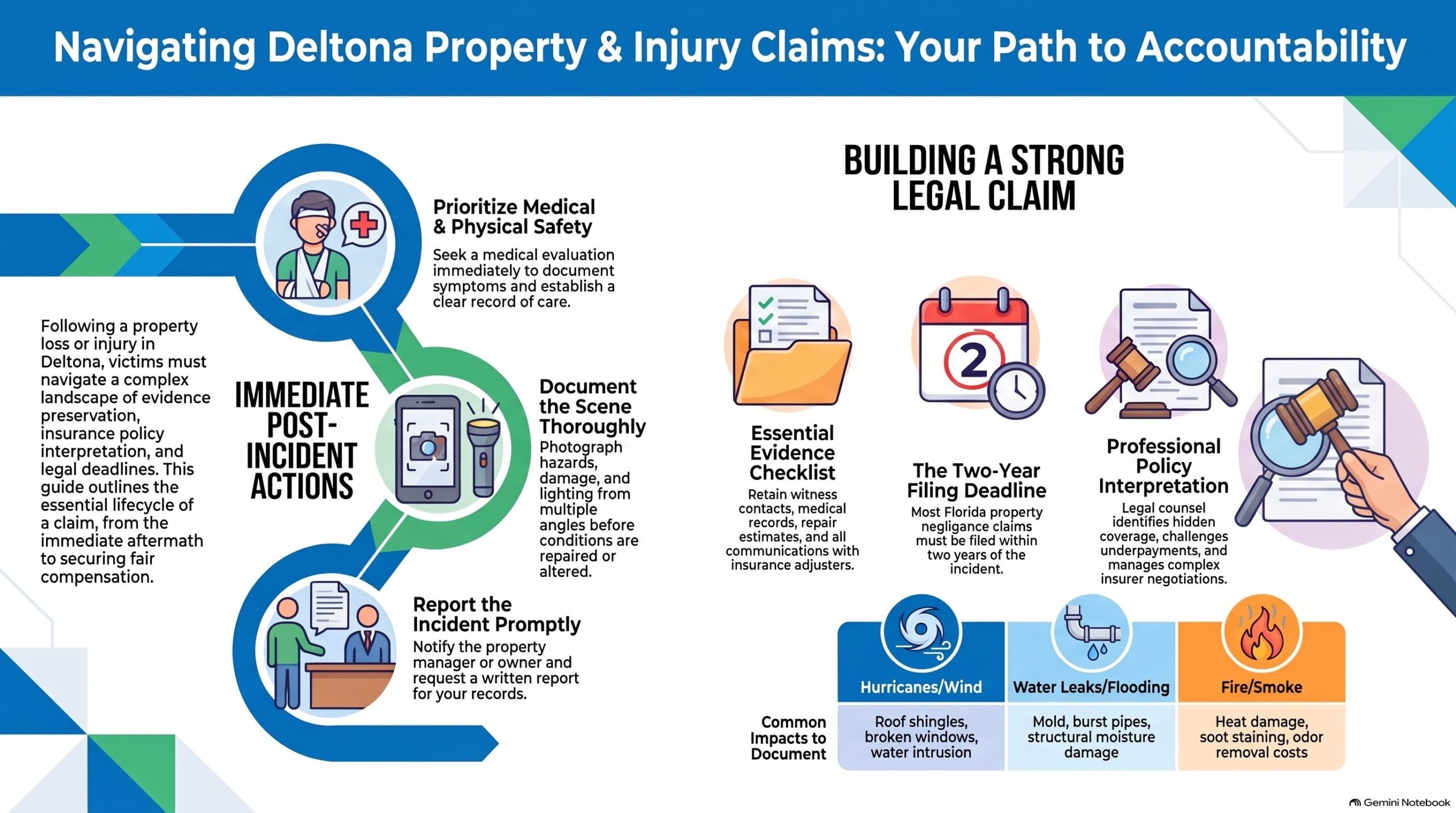
- After an injury or property loss, report it promptly, seek medical care when needed, and document the scene and damage.
- Preserve photos, witness details, medical records, repair estimates, receipts, and insurer communications to support your claim.


How We Can Help With Your Deltona Property Claims Injury Claim
When a dangerous property condition causes an injury in Deltona, we can help you pursue a claim against the responsible party. We’ll listen carefully, explain your options, and help you focus on recovery while we handle the legal work.
We begin by evaluating Claim Eligibility and identifying who may be responsible for the condition. We’ll review available records, photographs, incident reports, and other evidence to understand how the injury occurred. Our team can also communicate with property owners, insurers, and their representatives on your behalf.
A thorough Coverage Review helps us identify applicable insurance policies and potential sources of compensation. We’ll examine relevant policy terms, address questions about coverage, and seek a fair resolution based on the documented harm. Throughout the process, we’ll keep you informed and explain important decisions in clear language.
If you’re committed to serving your family and community, we’ll work to protect your interests and pursue accountability without adding unnecessary burdens. We’ll provide steady guidance at each stage.
OUR CONSULTATIONSARE FREE
START YOUR FREE CASE REVIEW

Understanding Deltona Property Claims Injury Cases
Understanding a Deltona property injury case starts with identifying the dangerous condition, how it caused harm, and who had responsibility for addressing it. We’ll help you organize the facts, preserve relevant records, and explain how the injury has affected your health, work, and daily responsibilities. A clear account supports a fair review and helps us assess the available legal options.
Claim eligibility depends on the circumstances, the responsible party’s duties, and the evidence connecting the condition to your injury. We’ll examine whether reasonable steps could have prevented the harm and whether the property owner or another party failed to take those steps. You don’t need to determine fault alone; we can evaluate the details with you.
Insurance coverage may also shape the claim. Through careful policy interpretation, we’ll review applicable terms, notice requirements, exclusions, and limits. We’ll explain what those provisions mean in practical terms and identify questions that need answers. Our goal is to guide you through the process while helping protect your interests and pursue appropriate compensation.
Common Causes of Deltona Property Claims
When we review Deltona property claims, we often find that damage stems from hurricanes and strong winds, water leaks, or flooding. Fires and smoke can also cause substantial losses, while theft and vandalism may damage property or result in missing belongings. We’ll explain how these common causes can affect a claim and what evidence may help support it.
Hurricane and Wind Damage
Hurricanes and severe windstorms can damage Deltona homes by tearing off shingles, breaking windows, and allowing rain to enter through compromised roofs or walls. These forces may also loosen siding, damage exterior structures, and send debris into a property. When you inspect storm damage, document affected areas with clear photographs and keep records of repairs, expenses, and insurer communications. We can help you understand policy requirements, organize supporting evidence, and respond to disputes about the cause or extent of damage. Prompt reporting matters because insurers often impose deadlines for notice and proof of loss. For future protection, consider wind-resistant roofing and careful hurricane shutter selection suited to your home. By taking practical steps and seeking informed guidance, we can help you protect your household and pursue fair treatment after a storm.
Water Leaks and Flooding
Water leaks and flooding can cause extensive damage to Deltona properties, whether they result from burst pipes, appliance failures, roof openings, or rising water. A Pipe leak behind a wall or beneath a floor may go unnoticed until moisture damages building materials and personal belongings. A sewer backup can introduce contaminated water, creating health concerns and requiring careful cleanup. We can help you understand how the source and extent of the damage may affect your property claim. Document affected areas, protect people from unsafe conditions, and report the loss promptly to your insurer. Keep receipts for reasonable repairs and temporary measures, and avoid discarding damaged items before documenting them. When coverage or the insurer’s assessment is unclear, we can review the policy, explain your options, and help you pursue a fair resolution.
Fire and Smoke Damage
Fire can damage a Deltona property through flames, heat, and smoke, even if it starts in a single room. Electrical faults, cooking accidents, heating equipment, and candles can all ignite fires that spread quickly. Smoke may travel through vents and settle on walls, furnishings, and belongings far from the flames. Heat and firefighting water can also harm building materials, while soot may stain surfaces and affect indoor air quality.
We can help you document the damage, preserve records, and understand the steps involved in presenting a property insurance claim. Prompt Smoke residue cleanup can limit further harm, but avoid discarding damaged items before documenting them. Professional fire odor removal may be necessary when smoke has penetrated porous materials. We’ll help you assess the loss and pursue the coverage your policy provides.
Theft and Vandalism
When theft or vandalism damages a Deltona property, the loss may involve more than missing belongings or broken windows. Stolen personal belongings can disrupt daily routines and create unexpected replacement costs, while vandalized outdoor structures may affect safety, privacy, and the property’s value. We can help you understand how your insurance policy addresses these losses and what documentation may support a claim. Report the incident to law enforcement promptly, then photograph the damage and prepare an inventory of missing or damaged items. Keep receipts, repair estimates, and records of communications with your insurer. Policies may impose deadlines or limit coverage for certain property, so review them carefully. We can help you assess whether the insurer’s decision reflects the policy terms and the evidence you’ve provided, while seeking a fair resolution that supports your household and community.


Legal Rights of Deltona Property Claims Injury Victims
If unsafe property conditions in Deltona cause an injury, Florida law may give you the right to seek compensation from the responsible party. We can help you understand Florida premises rights and determine whether a property owner or another party failed to meet a legal duty. These rights can apply to visitors, customers, tenants, and others lawfully on a property. Property access protections may also shape the duties owed to you.
After an injury, we can help you take practical steps to protect your claim and support a fair resolution:
- Get medical care promptly and follow your provider’s instructions.
- Record the location, date, and circumstances of the incident.
- Preserve photographs, messages, receipts, and other relevant records.
- Consult a lawyer before accepting a settlement or signing a release.
You may seek compensation for eligible losses, including medical expenses, lost income, and pain. We’ll assess the available evidence, explain deadlines, and communicate with insurers while you focus on recovery and serving those who depend on you.
Don’t Wait. Call Our Florida Personal Injury Lawyers Now!
Why Do Property Claims Injuries Happen in Deltona?
Property-related injuries in Deltona often result from hazards that owners or managers could have identified and addressed. When those responsible for a property overlook maintenance, visitors, tenants, and workers may face preventable risks. Unsafe Structures, including loose railings, damaged stairs, cracked walkways, or unstable balconies, can cause falls and serious harm. These conditions may develop gradually, but owners should inspect buildings and arrange repairs before someone gets hurt.
Poor Lighting can also conceal hazards in hallways, parking areas, stairwells, and entrances. A person who can’t see an uneven surface or obstacle may stumble, fall, or collide with another object. Spills, clutter, broken pavement, and missing warning signs create additional dangers when staff fail to monitor shared spaces or respond promptly to known problems.
Understanding why these injuries happen helps us recognize the importance of responsible property care. When owners take reasonable steps to identify hazards, maintain safe conditions, and address reported concerns, they can better protect everyone who relies on the property.
What Should You Do After a Deltona Property Claims Injury?
After a property injury in Deltona, we recommend seeking medical care promptly, even if your symptoms seem minor. We can help you document the scene with photographs, witness details, and injury records. You should also report the incident to the property owner or manager and keep a copy of the report.
Seek Medical Care
Prompt medical care should be your priority after an injury on someone else’s property in Deltona. We can protect your health by encouraging you to seek prompt assessment, even when symptoms seem minor or delayed. An Emergency evaluation can identify conditions that require immediate treatment, while a timely visit to your doctor can establish a clear record of your symptoms and care. Describe how the injury happened, explain every symptom, and follow the provider’s instructions. If your condition changes or worsens, contact a medical professional without delay.
Your provider may recommend testing, treatment, or a referral to a medical expert based on your needs. Attend follow-up appointments and ask questions when instructions are unclear. Consistent care supports your recovery and helps us understand the injury’s effects. Put your health first; seeking care promptly serves both you and those who depend on you.
Document The Scene
Document the scene as soon as it’s safe, while conditions and details remain clear. We can preserve useful evidence without putting ourselves or anyone else at risk. Photograph the area from several angles, including the hazard, nearby warning signs, lighting, and anything that may have contributed to the injury. Include wide views for context and close-ups for important details. Scene preservation also means leaving objects undisturbed when possible; if someone must move them to prevent further harm, note their original positions. Create a simple damage mapping record by sketching the layout and marking where the incident occurred, where relevant objects stood, and any visible damage. Write down what we observed while it’s fresh in our minds, and keep original images and notes secure. These steps may help clarify what happened and support others seeking a fair resolution.
Report The Incident
Once we’ve documented the scene, we should report the incident promptly to the property owner, manager, or responsible business representative. Provide a clear account of what happened, where the injury occurred, and when we noticed it. Ask that they create a written report, then request a copy or the report number for our records. Confirm the representative’s name and contact details, along with any available Emergency contacts for follow-up. Keep our account factual and consistent; avoid guessing about causes or accepting blame before we comprehend the circumstances. Record the incident timeline, including when we reported it and whom we spoke with. If staff witnessed the event, ask them to preserve relevant information and share their names. Prompt reporting supports accurate records and helps responsible parties address hazards that could injure others.
Critical Evidence in a Deltona Property Claims Injury Case
We can strengthen your Deltona property injury claim by preserving evidence that documents the hazard, identifies witnesses, and connects your injuries to the incident.
- Photograph the incident scene; 2. collect witnesses’ contact information; 3. retain medical treatment records; and 4. request hazard inspection reports.
We’ll review these materials to assess how clearly they support your account and the property owner’s responsibility.
Incident Scene Photos
Because hazards can be repaired or removed soon after an injury, incident scene photos may provide vital evidence in a Deltona property claim. We can help you document the conditions that contributed to your fall or other injury, including spills, uneven flooring, poor lighting, and missing warning signs. Take wide shots to show the location and closer images to capture specific details. Photograph the area from several angles, and include objects that help establish scale when appropriate. Preserve original files, since Photo metadata may record when and where images were taken. Avoid editing or adding filters, which could raise questions about accuracy. Prompt image preservation matters because conditions can change quickly. By documenting the scene carefully, we can support a fair review of your claim and help protect your ability to seek accountability.
Witness Contact Information
Witnesses can provide an independent account of the conditions that caused an injury and what happened afterward. We should collect each person’s full name, reliable phone number, email address, and a brief description of what they observed. Accurate Witness identity helps us distinguish firsthand accounts from information repeated by others and follow up while memories remain clear. Ask witnesses for consent to share their contact details with our legal team, and explain that we’ll use their information to investigate the incident. Record when and where each person was present, what they noticed, and whether they saw events before or after the injury. Keep notes factual and avoid suggesting answers. If someone is reluctant to speak, respect that choice. Prompt, careful documentation can preserve useful evidence and support a fair review of your property claim.
Medical Treatment Records
When a property injury requires medical care, treatment records can help establish the nature of your injuries, the care you received, and how your condition changed over time. We can organize these documents into a clear Treatment chronology, showing when you sought care, what providers observed, and how they recommended addressing your symptoms. Consistent records may help connect your reported limitations to the incident and explain the need for follow-up visits, therapy, or medication. We’ll also review provider statements for accurate descriptions of your condition and treatment plan. Tell each provider about your symptoms and relevant changes, and follow recommended care when possible. If you miss an appointment or treatment, document the reason. Complete records help us present your experience responsibly and support a fair assessment of your claim while respecting the professionals who cared for you.
Hazard Inspection Reports
Hazard inspection reports can provide a time-stamped account of how a property owner or manager identified and addressed a dangerous condition. When we review this evidence, we look for inspection dates, reported hazards, photographs, repair requests, and records showing when staff took action. These inspection report contents may help establish whether the responsible party knew about a danger before your injury and responded reasonably.
We also assess inspector qualifications and whether the inspection followed appropriate procedures. A report may be incomplete, inaccurate, or inconsistent with maintenance records and witness accounts. We can compare these materials to determine what the property’s representatives knew and whether they ignored warning signs. By preserving relevant reports promptly, we help protect your ability to seek accountability and support a claim that reflects the harm you experienced.
Don’t Wait. Call Our Florida Personal Injury Lawyers Now!
Long-Term Effects of Deltona Property Claims Injuries
A property injury can leave you with physical limitations that persist long after initial treatment ends. You may also face ongoing emotional distress, which can affect daily routines and relationships. We’ll explain how these lasting effects can create financial strain through continuing care costs and reduced earning capacity.
Lasting Physical Limitations
Although some injuries from unsafe property conditions recover quickly, others can leave lasting physical limitations that affect mobility, work, and daily activities. A serious fall or other premises-related injury may damage joints, nerves, or the spine, making routine tasks difficult long after initial treatment ends. We can help you document how these changes affect your ability to serve your family, workplace, and community. Medical records, treatment plans, and professional assessments can show the need for ongoing care and support. If you face Permanent mobility limits, evidence of assistive devices, home modifications, or reduced work capacity may help explain your needs. Records of chronic pain management can also establish continuing treatment costs. By connecting these effects to the property hazard, we can present a clear account of your long-term physical losses.
Ongoing Emotional Distress
How can an injury on someone else’s property affect you long after your physical wounds begin to recover? You may experience anxiety, low mood, disrupted sleep, or fear of returning to the place where you were hurt. These reactions can strain relationships and make everyday responsibilities harder, even when others can’t see what you’re facing.
We can encourage you to seek support from a qualified mental health professional and discuss persistent symptoms with your healthcare provider. Coping strategies, such as counseling, steady routines, and support from trusted people, may help you regain a sense of safety. Emotional resilience doesn’t mean ignoring distress; it means responding to it with appropriate care and patience. If emotional effects follow your injury, documenting symptoms and treatment can help clarify how the incident has changed your life.
Long-Term Financial Strain
The financial effects of a property injury can continue long after your physical wounds begin to recover. Lost income, medical bills, and ongoing treatment costs can place sustained pressure on your household. Disruption to your household budget may force you to postpone necessary expenses or reduce support for family members and community commitments. If recovery limits your ability to work, these losses can persist even after the immediate claim is resolved.
You may also draw from savings to cover care, transportation, or daily needs. Over time, retirement savings depletion can threaten your future security and narrow your choices. We can help you document these financial consequences, including projected treatment needs and reduced earning capacity, when pursuing a property claim. A clear record can support a fair assessment of damages and help protect your household’s long-term stability.
Proving Liability in Deltona Property Claims Injury Cases
To prove liability in a Deltona property injury case, we must show that a property owner or another responsible party failed to use reasonable care and that this failure caused your injuries. Premises liability standards guide this analysis, but the specific duty depends on why you were on the property and the circumstances of the hazard.
We’ll investigate how the dangerous condition arose, how long it existed, and whether the responsible party knew or reasonably should have known about it. Evidence may include photographs, incident reports, maintenance records, inspection logs, witness accounts, and surveillance footage. We’ll also review medical documentation to connect the incident to your injuries and establish their impact.
Proving property owner negligence requires more than showing that you were hurt. We must demonstrate a breach of duty and a direct link between that breach and your harm. By carefully preserving evidence and evaluating each fact, we can present a clear account of what happened, pursue accountability, and protect your ability to focus on recovery.
Dealing With Insurance Companies After a Deltona Property Claims Injury
After a property injury in Deltona, an insurance adjuster may contact you to discuss what happened and evaluate your claim. We can help you approach these conversations carefully, protect your interests, and preserve your ability to seek fair compensation. Be accurate when describing the incident, but don’t guess about details or minimize your injuries. If you need time to review a question or document, say so before responding.
Insurer communications may include requests for statements, records, photographs, or forms. We can help you understand what’s being requested and identify information that may be sensitive or incomplete. Before signing a release or accepting a payment, consider how it could affect your rights and future needs.
Policy interpretation can also shape how the company assesses coverage, exclusions, and payment limits. We can review the relevant language and explain how it may apply to your circumstances. By responding thoughtfully and keeping organized records, we can support a clear, responsible discussion with the insurer while you focus on your recovery and the people who depend on you.
What to Expect During a Deltona Property Claims Injury Claim Process
We’ll begin by evaluating your claim, the property damage, and any injuries to identify the issues that may affect your recovery. We’ll then gather relevant evidence and negotiate with the insurer toward a fair resolution. If negotiations don’t resolve the dispute, we’ll explain whether litigation may be necessary and guide you through the next steps.
Initial Claim Assessment
When you contact us about a property injury claim in Deltona, we’ll begin by evaluating how the incident happened, the injuries you sustained, and who may be responsible. We’ll discuss how the injury has affected your daily life and what care you may need, so we can understand your priorities and the support you’re seeking. Our initial assessment also includes a Coverage review and policy interpretation to identify potentially applicable insurance and relevant terms. We’ll explain how those provisions may affect your options and address questions about the claims process. Because property injury claims can involve several parties or policies, we’ll consider the circumstances carefully before advising you on next steps. Our goal is to provide clear guidance, protect your interests, and help you pursue a fair resolution while you focus on your recovery and responsibilities.
Evidence Collection
Strong evidence can help establish how a property injury occurred and who may be responsible. We’ll help you document the hazard, the surrounding area, and any changes made after your injury. Take photographs promptly, gather witness names and contact details, and keep clothing, receipts, medical records, and other relevant items. Evidence preservation matters because conditions can change quickly when a property owner repairs or cleans the site.
We’ll also request records that may clarify what happened, such as incident reports, inspection logs, maintenance records, and available surveillance footage. During adjuster communications, we’ll help you provide accurate information while protecting your claim from incomplete or misleading accounts. Keep call notes and save written messages. By organizing reliable evidence, we can present a clearer account of your injury and support a fair review of your claim.
Negotiation and Resolution
After we organize the evidence, we can assess the claim’s value and begin settlement discussions with the insurer. We’ll review documented losses, repair estimates, medical expenses, and any continuing effects to develop a reasonable demand. Our Settlement strategy should reflect the evidence, applicable coverage, and your priorities, while leaving room to evaluate the insurer’s response. We’ll explain each offer, identify what it may exclude, and help you compare it with the claim’s documented value. You can ask questions before deciding whether to accept, reject, or counter an offer. If direct discussions stall, mediation options may provide a structured setting for both sides to work toward resolution with a neutral facilitator. Throughout negotiations, we’ll keep you informed, protect your interests, and pursue a fair outcome that supports your recovery and responsibilities.
Litigation if Necessary
If negotiations and mediation don’t resolve your property claim, we may recommend filing a lawsuit to pursue the compensation supported by the evidence. Litigation follows court rules and deadlines, and we’ll explain each step so you can make informed decisions. We’ll gather records, consult qualified experts when appropriate, and prepare you for questions about the damage, repairs, and financial losses. Trial preparation includes organizing evidence, identifying witnesses, and developing a clear account of how the loss affected your property and responsibilities. Our courtroom strategy will focus on presenting reliable evidence and responding to the insurer’s arguments. Although many cases settle before trial, we’ll prepare thoroughly in case a judge or jury must decide the outcome. Throughout the process, we’ll keep you informed and protect your interests.
Compensation for Deltona Property Claims Injury Damages
When a property-related injury disrupts your life, compensation may cover medical expenses, lost income, and other documented losses. We can help you identify the damages connected to the incident and present clear records supporting your request. This may include treatment bills, receipts for necessary services, wage documentation, and evidence of how the injury affects your daily responsibilities.
A careful claim valuation considers the available evidence and applicable coverage. Through policy interpretation, we assess relevant terms, exclusions, and limits so you can understand what the insurer may owe. We also review whether the property owner or another responsible party may bear liability, then organize the facts to support a fair resolution.
You shouldn’t have to manage every detail alone. We’ll communicate with insurers, address requests for information, and explain each step in straightforward terms. By pursuing compensation supported by reliable documentation, we help protect your interests and preserve resources you may need during recovery and as you continue serving your family and community.
Economic vs Non-Economic Damages in Deltona Property Claims Cases
In Deltona property claims cases, we distinguish economic losses, such as repair costs and lost income, from non-economic harm, including pain and emotional distress. We’ll explain how each type of damage is assessed and supported by evidence. Comparing them helps us identify the full scope of compensation you may seek.
Economic Losses
Property damage can create measurable financial losses and personal disruption, but these forms of harm aren’t treated the same in a claim. Economic losses are costs we can document with invoices, estimates, receipts, and financial records. If a covered event damages your home or business, we can help identify reasonable repair or replacement expenses and organize evidence supporting the amount claimed.
Losses may extend beyond physical repairs. Business interruption can reduce revenue while damaged premises remain unusable, and property owners may lose rental income when tenants cannot occupy a damaged unit. You’ll need records showing prior earnings, vacancy periods, repair timelines, and related expenses to substantiate these losses. We can review your policy, assess available documentation, and help present a clear accounting to the insurer. Careful records can support a fair evaluation of the financial impact.
Non-Economic Harm
Beyond repair bills and lost income, property damage can cause stress, disruption, and loss of use that are harder to measure. When a damaged home or business disrupts daily routines, we recognize the impact may extend beyond physical repairs. You may experience emotional anguish, uncertainty, or a diminished sense of comfort, stability, or purpose in a place that once provided them. These effects matter when you file a property claim, especially when the disruption affects family responsibilities, community service, or your ability to welcome others. We’ll listen carefully, document how the damage has changed your daily life, and explain what evidence may support your account. Not every policy covers these losses, and recovery depends on the facts and policy terms. We can help you assess available options and pursue a fair resolution.
Comparing Damage Types
A clear property claim distinguishes economic damages from non-economic harm, since each category serves a different purpose. Economic damages cover measurable financial losses caused by covered property damage. We can document repair estimates, replacement costs, temporary housing expenses, and lost income with invoices, receipts, and other records. Structural damage may require professional assessments, while contents damage calls for an itemized inventory and proof of value. These details help insurers assess what it will cost to restore your property and support those who depend on you.
Non-economic harm addresses personal effects that lack a direct price, such as stress, disruption, or loss of comfort. These effects can be difficult to establish, and coverage may depend on the policy and applicable law. We can help you separate each category, preserve supporting evidence, and present a clear, accurate claim.
When a Deltona Property Claims Injury Case Goes to Trial vs. Settlement
When settlement negotiations don’t produce a fair resolution, a Deltona property injury claim may proceed to trial, where a judge or jury evaluates the evidence and determines liability and damages. We’ll help you understand what to expect and prepare to present a clear account of how the incident affected your health, work, and daily responsibilities.
Before trial, both sides may continue discussing settlement. An agreement can provide compensation without the uncertainty, time, and public process of a courtroom, but you shouldn’t accept an offer that fails to address your documented losses. We’ll review the proposal with you and explain the practical trade-offs.
If the case proceeds, jury selection helps establish an impartial panel. During trial, we present records, witnesses, and courtroom testimony to support your claim, while the other side may challenge that evidence. You’ll have the opportunity to describe your experience and answer questions. We’ll guide you through each stage, protect your interests, and keep your goals in focus as the judge or jury considers the case.
Don’t Wait. Call Our Florida Personal Injury Lawyers Now!
Florida Laws That May Affect Your Deltona Property Claims Case
The outcome of a Deltona property injury claim may depend on Florida laws governing premises liability, comparative fault, and the time allowed to file suit.
These rules shape how we investigate hazards, assess responsibility, and pursue fair compensation while protecting the people who rely on you.
- Premises liability: We must show the property owner owed a duty of care, breached it, and caused your injury. Evidence may include inspection records, photographs, and witness accounts.
- Comparative fault: Florida’s modified comparative negligence rule may reduce recovery if you share responsibility. If your fault exceeds 50 percent, you generally can’t recover damages.
- Insurance requirements: Policyholder notice deadlines may affect coverage. We promptly review policy language and notice records, since delayed reporting can create disputes.
- Claim valuation: Appraisal clause disputes may arise over property damage estimates. We examine the policy and supporting evaluations to clarify the process and challenge unsupported figures.
The Statute of Limitations for Deltona Property Claims Injury Cases
Because filing deadlines can determine whether an injury claim proceeds, we identify the applicable limitation period and calculate it based on the relevant facts. For many Florida negligence claims involving injuries on property, you generally must file suit within two years of the incident. A separate deadline may apply to claims against government entities, which can require advance notice and compliance with specific procedures. Missing a Filing deadline may prevent you from seeking compensation, even when the property owner’s conduct caused serious harm.
The date an injury occurred may not resolve every case. We consider when you discovered the injury, whether the injured person is a minor, and whether another legal rule affects the time available. Limitations exceptions can pause or alter a deadline in limited circumstances, but you shouldn’t assume an exception applies without confirming the facts and current law.
Acting promptly helps preserve records and witness accounts while you assess your options. We encourage you to verify the applicable deadline early, especially when your claim involves public property or uncertain dates.
How a Deltona Property Claims Lawyer Can Help You
A Deltona property claims lawyer can investigate the incident, identify potentially responsible parties, and explain the legal options available under Florida law. We can help you pursue a fair resolution while keeping your family, employees, or community members informed and supported.
Our work may include:
- Evidence review: We gather photographs, repair records, inspection reports, and witness accounts to establish what happened and document the loss.
- Policy Interpretation: We examine relevant policy language, explain coverage provisions and exclusions, and identify questions that may affect your claim.
- Claim Preparation: We organize supporting documents, calculate documented losses, and present a clear claim to the insurer.
- Insurer communication: We respond to requests, address disputes about liability or value, and negotiate based on the available evidence.
We can also explain settlement terms and outline potential next steps if negotiations do not resolve the dispute. With careful guidance, you can make informed decisions and focus on those who depend on you, rather than managing every claim detail alone.
When to Contact a Deltona Property Claims Lawyer
When an insurer delays, disputes, or underpays your property claim, contacting a Deltona property claims lawyer early can help us assess your options and protect important evidence. We can review the insurer’s communications, explain what information may support your position, and help you decide on practical next steps.
Consider reaching out when the company requests additional records, questions the cause or extent of damage, or offers less than you believe the loss warrants. Prompt advice can help us organize Claim Documentation, such as photographs, repair estimates, receipts, and written correspondence, before details become harder to verify. Keep copies of every submission and note when you sent it.
We should also review Policy Deadlines promptly. Your policy may require notice, forms, examinations, or other actions within specified periods. Missing a deadline could affect your ability to pursue benefits. If you’re unsure what a request means or how to respond, contact us before taking action, so we can clarify the issue and help you protect your interests.
Why You Need an Experienced Deltona Property Claims Lawyer
An experienced Deltona property claims lawyer can help us evaluate the insurer’s decisions, interpret policy terms, and identify steps to support your claim. When property damage disrupts your home or business, you need clear guidance to protect your interests and plan for recovery. A lawyer can review the policy, damage records, repair estimates, and insurer communications to assess whether the claim has been handled fairly.
Policy interpretation matters because exclusions, limits, and deadlines can affect what the insurer must pay. We can help you understand these provisions and respond when the insurer’s position appears inconsistent with the policy or evidence. In coverage disputes, a lawyer can organize supporting documentation, explain your position, and communicate with the insurer on your behalf. This focused advocacy may help resolve disagreements and keep the process moving.
How to Choose the Right Deltona Property Claims Lawyer for Your Case
Choosing the right Deltona property claims lawyer can shape how effectively we challenge a disputed or underpaid claim. We should begin Lawyer Selection by identifying attorneys who regularly handle property insurance disputes in Florida and understand the deadlines, policy terms, and evidence these cases require. Relevant Case Experience matters because a lawyer familiar with similar losses can recognize gaps in an insurer’s investigation and explain practical options.
We can ask how the attorney would assess our claim, what documents they need, and how they communicate updates. Clear answers help us understand the proposed approach and our role in supporting it. We should also discuss fees, potential costs, and whether the firm can pursue negotiation or litigation when appropriate. A careful review of the engagement agreement can prevent confusion later.
Our choice should reflect more than advertising or promises of a particular result. By comparing qualifications, communication, and case strategy, we can select counsel prepared to protect our interests and help us move forward responsibly.
About The Law Offices of Anidjar & Levine
The Law Offices of Anidjar & Levine represents people dealing with property insurance disputes in Deltona and throughout Florida.
We help homeowners understand their options when an insurer delays, underpays, or denies a claim.
Our team clarifies the claims process, reviews relevant documents, and pursues a fair resolution based on the available evidence.
Our Firm’s history reflects a commitment to serving people facing difficult legal and financial challenges.
We recognize that property damage can disrupt a household and place pressure on families who need clear guidance.
We listen to your concerns, explain the steps involved, and keep you informed as your matter progresses.
When you evaluate attorney credentials, consider each lawyer’s experience, professional background, and approach to client communication.
We bring legal knowledge and practical attention to property insurance disputes, while tailoring our work to the facts of each claim.
We aim to provide focused representation and help you make informed decisions about your next steps.
Frequently Asked Questions
Can I File a Property Insurance Claim if I No Longer Own the Damaged Property?
Yes, you may be able to file after selling or transferring damaged property, but your Policy Rights and the Ownership Transfer terms control. We’ll help you determine Who May File by reviewing the policy, sale documents, and when the damage occurred. Some rights may pass to the buyer, while others remain with you. We’ll also verify Claim Filing Deadlines and recommend prompt notice to the insurer to protect any valid claim.
Does Filing a Property Claim Affect My Future Insurance Premiums?
Filing a property claim can affect your future premiums, but an increase isn’t automatic. We recommend reviewing your policy and asking your insurer how claim history may influence renewal pricing, since outcomes vary by carrier, state, claim type, and prior losses. Even when damage seems minor, compare potential repair costs with your deductible before filing. Accurate documentation and prompt reporting can help us present your claim clearly and protect your interests while serving your household responsibly.
Can I Reopen a Property Insurance Claim After It Has Been Closed?
Yes, we may be able to help you pursue reopening a Closed Claim, but approval depends on your policy, the reason for closure, and the claim’s status. Insurers may reconsider a claim when new evidence emerges, or repairs reveal covered damage that wasn’t apparent earlier. Claim Reopening Deadlines vary by policy and state law, so act promptly. We can review your documents, explain your options, and help you present accurate information to support a fair outcome.
What Happens if My Mortgage Lender Is Listed on the Insurance Payment?
If your mortgage lender is listed on the insurance payment, it may need to endorse the check before funds can be used. We recommend contacting the lender promptly to learn its claim check endorsement process and required documents. A Mortgagee endorsement allows the payment to be negotiated, but the lender may hold or release funds in stages as repairs progress. We can help you understand the requirements and coordinate with your insurer and lender.
Can I Make a Claim for Damage Discovered After Repairs Begin?
Yes, you can report damage discovered after repairs begin, but notify your insurer promptly before completing work that could conceal the affected areas. We recommend taking dated photographs, preserving damaged materials when practical, and requesting an inspection. Submit Supplemental damage documentation, including contractor findings and cost estimates, and explain any revisions to the repair scope. Your policy’s notice requirements and deadlines may apply, so we can help you review the terms and communicate clearly with your insurer.
—————————
If a property claim in Deltona has left you injured, a Deltona Personal Injury Lawyer will review what happened, explain your legal options, and help protect your right to pursue compensation.
Evidence and deadlines can affect your case, so it’s important to act promptly.
At The Law Offices of Anidjar and Levine, we work to investigate the circumstances, address insurer challenges, and guide you through each step.
Contact us to discuss your situation and learn how we may help.

