

If a storm has damaged your Cape Coral property, The Law Offices of Anidjar and Levine can help you document the loss, review your insurance policy, and understand your options if the
insurer disputes the cause, scope, or value of repairs. Coverage depends on your policy and the evidence supporting your claim, so keep records, report damage promptly, and take reasonable steps to prevent further harm. Learn more about a Cape Coral Personal Injury Lawyer and how legal support may help protect your interests.
Main Takeaways
- A Cape Coral storm-damage lawyer can review your policy, claim evidence, and the insurer’s decision.
- Coverage depends on policy terms, the cause of damage, and evidence—not flood-zone maps alone.
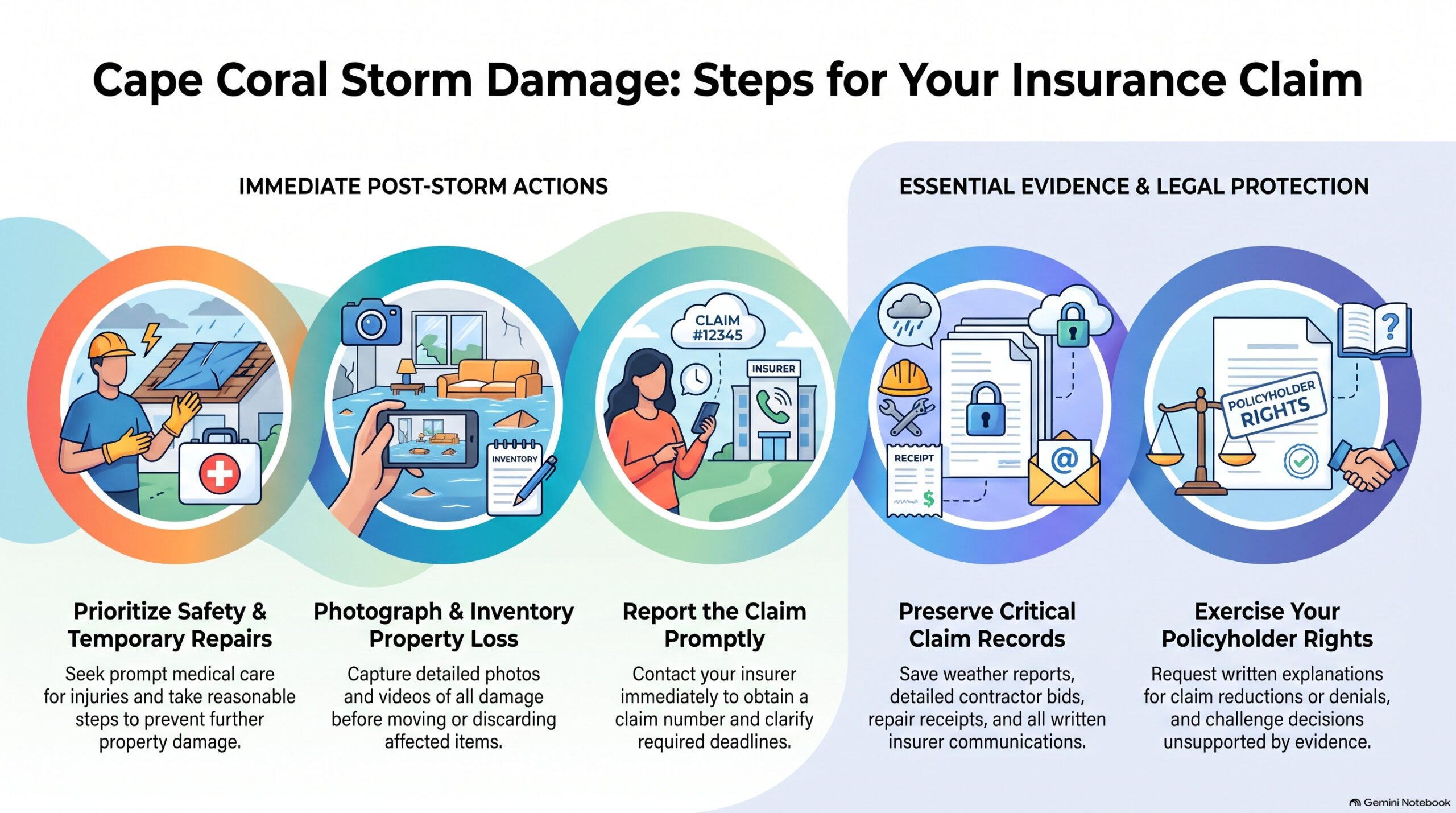
- Photograph damage, save receipts and communications, and keep contractor estimates and repair records.
- Report the loss promptly, protect the property from further damage, and document temporary repairs.
- Ask for written reasons for reduced or denied payments; a lawyer can explain appeal options and potential remedies.


How We Can Help With Your Cape Coral Property Claim Storm & Weather Damage Injury Claim
When a storm or severe weather damages your Cape Coral property, we can help you pursue a claim and address disputes with your insurer. We’ll listen to your concerns, review your policy, and explain the steps you can take to protect your interests. Our goal is to help you obtain a fair evaluation while reducing the burden on you and your family.
We can help document damage, organize records, and communicate with the insurance company. If urgent work is needed to limit further harm, we can arrange emergency board-up services and document the property’s condition. We can also coordinate contractors, review repair estimates, and address disagreements over the scope or cost of necessary work.
Throughout the process, we’ll keep you informed and respond to your questions. You don’t have to manage every insurer request alone. We’ll work to resolve obstacles efficiently, so you can focus on your household, employees, or community while we pursue the claim.
OUR CONSULTATIONSARE FREE
START YOUR FREE CASE REVIEW

Understanding Cape Coral Property Claim Storm & Weather Damage Injury Cases
Understanding a Cape Coral storm or weather damage claim starts with identifying what your insurance policy covers and how the damage occurred. We’ll review your declarations, coverage limits, deductibles, and deadlines to clarify your responsibilities and the insurer’s obligations. Storm claim eligibility depends on the policy language, the type of loss, and whether the evidence supports a covered event. We can help you understand what documentation may support your claim, including photographs, repair estimates, receipts, and records of communications with your insurer.
Policy endorsement exclusions may limit or change coverage, so we’ll examine endorsements alongside the main policy rather than relying on general descriptions. If the insurer disputes the cause, scope, or value of damage, we’ll help you assess its explanation and identify questions to raise. Clear, timely communication can protect your interests and support a fair review. By understanding the process, you can make informed decisions while keeping your household and community’s needs in view.
Common Causes of Cape Coral Property Claim Storm & Weather Damage
We often see Cape Coral property claims arise from hurricane-force winds that damage roofs and siding. Flooding and storm surge can also cause extensive water damage, while hail and falling debris may harm structures and belongings. We’ll explain how these common hazards can affect your property and support a storm damage claim.
Hurricane-Force Winds
Hurricane-force winds can damage a Cape Coral property even when a storm doesn’t make direct landfall. Powerful gusts create structural pressure as air pushes against exterior surfaces and enters openings. Wind uplift can also pull on a building, while sudden pressure changes can affect its stability. These forces can shift framing, loosen connections, or cause damage that isn’t immediately visible. Nearby trees, signs, and other debris may become airborne, strike buildings, and create openings that let wind and rain inside. We encourage property owners to document conditions promptly and take reasonable steps to protect people from further harm. When you report a claim, describe the storm’s effects accurately and preserve relevant photographs, repair records, and communications. A careful assessment can help identify the cause and extent of wind-related damage.
Roof and Siding Damage
When severe weather strikes Cape Coral, wind-driven rain, flying debris, and falling branches can damage roofs and siding. Even minor damage can expose your home to further harm. Roof shingle failure can occur when strong gusts lift, crack, or tear shingles, leaving the underlying structure vulnerable. Hail and debris may also puncture roofing or damage flashing around vents and chimneys. Siding panels can detach when wind pulls them from their fasteners or debris breaks their surfaces. We encourage you to document visible damage promptly and arrange a qualified inspection. Keep photographs, repair estimates, and related records to support your claim. We can help you understand policy requirements, communicate with the insurer, and pursue fair consideration of covered roof and siding repairs.
Flooding and Storm Surge
Flooding and storm surge can cause extensive property damage in Cape Coral, especially when heavy rain, rising waterways, or coastal storms overwhelm drainage systems and protective barriers. These events may push water into homes, damage electrical systems, and destroy personal belongings. Storm surge mechanics involve wind and low pressure driving seawater inland, where canals and low-lying areas can intensify flooding. Even properties outside designated high-risk areas may face water intrusion after severe weather.
We can help you document damage, review policy language, and understand which coverage may apply. Flood zone mapping can provide useful context, but it doesn’t determine coverage on its own or guarantee a property will stay dry. We’ll work to clarify deadlines, identify needed evidence, and pursue a fair claim so you can focus on protecting your household and supporting those who depend on you.
Hail and Falling Debris
Hail and wind-driven debris can damage Cape Coral roofs, siding, windows, and outdoor structures, even when a storm passes quickly. Hail may crack tiles, dent metal panels, loosen shingles, or break seals around skylights. Wind can carry branches, roof materials, and other objects into a building, creating openings that allow rain inside.
We can help you document the damage carefully. Hail impact patterns may show where stones struck and whether marks align with the reported storm. Debris trajectory, including the direction and location of fallen branches or displaced materials, can also help explain how damage occurred. Photograph affected areas before repairs, save damaged items when practical, and keep receipts for emergency work. We can review inspection records and policy terms with you to present a clear, well-supported property claim and respond to the insurer’s questions.
Don’t Wait. Call Our Florida Personal Injury Lawyers Now!


Legal Rights of Cape Coral Property Claim Storm & Weather Damage Injury Victims
Storms and severe weather can damage your property, disrupt your life, and leave you facing a complicated insurance claim. We can help you understand your Policyholder rights and take practical steps to seek fair treatment. Your policy and Florida law govern what your insurer must do, so review the terms and keep records of every communication, estimate, and repair expense.
You can protect your interests by taking these steps:
- Report the damage promptly and provide accurate information about what happened.
- Photograph affected areas and preserve receipts, inspection reports, and relevant correspondence.
- Read your policy’s coverage, deadlines, duties, and appeal procedures before responding to the insurer.
- Request written reasons for claim denials or reduced payments, and challenge decisions you believe conflict with the policy or evidence.
We can help you organize documentation, communicate with the insurer, and evaluate available options. If the dispute remains unresolved, a qualified attorney can explain your legal remedies and help you pursue the benefits you’re owed.
Why Do Cape Coral Property Claims for Storm & Weather Damage Happen?
Understanding why storm and weather damage occurs can help us identify the evidence needed to support a property claim. In Cape Coral, hurricanes, tropical storms, heavy rain, and strong winds can expose weaknesses in roofs, windows, siding, and drainage systems. Flying debris may break openings, while wind-driven rain can enter and damage walls, ceilings, and personal belongings. Flooding may also result when rainfall overwhelms drainage or water levels rise.
Damage often reflects several contributing factors. Aging materials, poor installation, deferred maintenance, and inadequate storm-resistant construction can make a property more vulnerable. Even well-maintained buildings may suffer when severe weather exceeds their design limits. Seasonal preparedness, including property upkeep and appropriate protective measures, can reduce some risks, but it cannot prevent every loss.
By understanding these causes, we can better explain how a storm affected a home or business and why the resulting damage matters. Clear, accurate information helps property owners pursue fair treatment while protecting their families, employees, and communities.
What Should You Do After a Cape Coral Property Claim Storm & Weather Damage Injury?
After a storm-related injury, seek medical care promptly, even if symptoms seem minor, and follow your provider’s recommendations. Document property damage with clear photographs, dated notes, and records of repairs or expenses. Once you address immediate needs, contact your insurer to report the loss and ask about the claims process.
Seek Medical Care
If you’re injured during a storm or while dealing with property damage in Cape Coral, seek medical care promptly, even if your symptoms seem minor. Some injuries, including head trauma and soft-tissue damage, may not become apparent immediately. Call 911 for severe pain, difficulty breathing, heavy bleeding, confusion, or other urgent symptoms. Otherwise, contact a healthcare provider or visit an Emergency room when appropriate. Explain how the storm or property-related incident occurred and describe every symptom, even if it seems unrelated. Follow the clinician’s treatment instructions and arrange any recommended medical follow-up. Keep appointments and ask questions if your condition changes or you don’t understand the guidance. Prompt, consistent care supports your recovery, helps us protect your well-being, and allows medical professionals to identify concerns early and recommend suitable treatment.
Document the Damage
How can you protect your property claim while keeping safety first? Once the area is safe to enter, we can document storm damage clearly without putting ourselves or others at risk. Photograph and video affected rooms, exterior surfaces, and damaged belongings before moving or discarding anything. Capture wide views and close-ups, and note each image’s date and location. Inventory belongings by listing damaged items, their approximate age, purchase price, and condition. Keep receipts or other records that help establish their value. Preserve samples, such as pieces of damaged flooring, roofing, or furnishings, when removal is necessary and safe. Label and store them securely. We should also document temporary repairs and retain related receipts. These organized records can help others understand the loss and support an accurate assessment.
Contact Your Insurer
Once the property is safe and we’ve documented the damage, contact your insurer promptly to report the loss and ask what steps to take next. Provide accurate details about the storm, affected areas, and any urgent repairs, and avoid guessing the cause or full cost. Ask which forms, photos, receipts, and estimates the insurer requires, and confirm all claim deadlines so we don’t risk losing coverage due to delays. Keep a record of every call and message, including dates, names, and instructions. Clear communication with the adjuster helps us understand inspections, answer questions, and address requests without confusion. We can share supporting documents promptly and request written confirmation of important guidance. If the insurer disputes damage or delays a decision, we should review the policy and consider seeking qualified legal advice before accepting a settlement.
Don’t Wait. Call Our Florida Personal Injury Lawyers Now!
Critical Evidence in a Cape Coral Property Claim Storm & Weather Damage Injury Case
We can strengthen your storm damage claim by preserving evidence that documents the loss and supports its cause.
Gather these essential records as soon as you can:
- Photographs of storm damage
- Weather reports and alerts
- Repair estimates and receipts
- Witness statements and related records
Storm Damage Photographs
Clear photographs can preserve details that may disappear as repairs begin or weather conditions change. We can document damaged roofing, broken windows, water intrusion, fallen trees, and affected belongings from several angles. Include wide views showing each area’s location and close-ups revealing specific damage. If it’s safe, photograph the property before cleanup, then take additional images as repairs progress. Don’t enter unstable areas or delay urgent work to gather evidence; protect people first and keep receipts for emergency repairs. Photo metadata may record when and where an image was captured, so preserve original files and avoid editing them. Use clear image organization by labeling folders with dates and locations, and keep a separate backup. We can help you share a focused record with insurers and professionals evaluating your claim.
Weather Reports and Alerts
How severe was the weather when the damage occurred? We can use official weather reports to establish the conditions affecting your Cape Coral property and support a clear timeline of the loss. Records from the National Weather Service, local authorities, and reputable weather services may document wind speeds, rainfall, flooding, lightning, or storm warnings near your home or business.
We should also preserve alerts you received, including text messages, emails, and app notifications. These records can show when officials issued warnings and whether conditions changed before the damage appeared. Careful forecast interpretation helps us distinguish predicted conditions from observed weather, an important difference when insurers question the cause or timing of damage. By reviewing these sources collectively, we can present reliable evidence and help you pursue a fair claim while serving your family and community.
Repair Estimates and Receipts
When storm or weather damage requires repairs, estimates and receipts can help show the scope of the loss and the costs you’ve incurred. We can help you organize these records so an insurer can assess your claim accurately and understand the work needed to restore your property. Obtain detailed Contractor bids that identify damaged areas, proposed repairs, materials, labor, and projected costs. If you receive multiple bids, keep each version and note any differences in scope. Save invoices, receipts, contracts, and proof of payment as repairs proceed. Careful payment tracking can link each expense to the completed work and help distinguish repair costs from unrelated purchases. We should also preserve records of temporary protective measures, such as tarps, when they address storm damage. Clear documentation supports a fair review and helps us advocate for the resources needed to restore your property.
Witness Statements and Records
Witness statements and contemporaneous records can help establish how the storm damage occurred, when you discovered it, and how it affected your property. We can help you identify people who saw the storm, noticed damage soon afterward, or observed changes to your home. Their specific, consistent accounts may support your timeline and clarify conditions before and after the event. Witness credibility matters, so we should record each person’s contact information, observations, and the dates they made them. Preserve photographs, text messages, maintenance logs, inspection notes, and communications with your insurer or contractors. These records can document how damage progressed and your efforts to protect the property and help others affected by the storm. When appropriate, sworn affidavits may preserve firsthand accounts. We can organize this evidence and compare it with repair estimates and receipts.
Long-Term Effects of Cape Coral Property Claim Storm & Weather Damage Injuries
Storm- and weather-related injuries can affect your health and daily life long after the immediate damage. We’ll examine how chronic pain and reduced mobility may limit your ability to work, care for yourself, or enjoy routine activities. We’ll also explain how lasting emotional effects can shape your recovery and why documenting these consequences matters in a property claim.
Chronic Pain
Chronic pain can persist long after a storm-related injury appears to have recovered, affecting mobility, sleep, work, and daily activities. When you’re focused on caring for family, neighbors, or others in your community, ongoing pain may also make those responsibilities harder to manage. We can help you understand how persistent symptoms may relate to injuries sustained during a storm or while addressing property damage.
Pain flare-ups can occur unpredictably, even when an injury initially seemed minor. Sleep disruption may follow, leaving you fatigued and less able to concentrate or complete routine tasks. Keep a record of symptoms, treatment, missed work, and changes in your daily responsibilities. These details can help document the lasting effects of your injury. Seek medical guidance and follow your provider’s recommendations. If an insurer disputes the extent of your losses, we can explain your options and help you pursue fair consideration of your claim.
Reduced Mobility
Reduced mobility can persist after storm-related injuries, making it harder to walk, climb stairs, drive, or manage routine tasks. When these limits affect your independence, we can help you understand how the injury may shape your daily needs and property claim. You may need physical therapy, assistive equipment, transportation, or home modifications. Access to mobility aids can be crucial, especially when damaged entrances, uneven paths, or narrow doorways prevent safe movement. Accessible housing may also require ramps, handrails, widened passages, or a temporary place to stay while repairs proceed. Keep records of medical recommendations, expenses, and how your limitations affect routine activities. We can review whether your claim accounts for these needs and help you pursue support that protects your safety, dignity, and ability to serve others.
Lasting Emotional Effects
Even after physical injuries recover, a storm-related event can leave lasting emotional effects, including anxiety, sleep problems, or distress when severe weather returns. We may also experience post-trauma anxiety, which can make routine decisions feel difficult and interfere with work, caregiving, or community service. These reactions merit attention, not dismissal as temporary stress.
Emotional harm can affect everyone in a household. Family strain may grow when relatives disagree about repairs, finances, or how to respond to another storm. We can support loved ones by communicating openly, sharing responsibilities, and seeking qualified mental health care when symptoms persist. If a storm injury or property loss has disrupted your stability, document its effects and discuss them with appropriate professionals. A clear record helps us explain how the event changed daily life and identify the support you need for recovery.
Proving Liability in Cape Coral Property Claim Storm & Weather Damage Injury Cases
After a storm damages your Cape Coral property, proving liability requires more than showing that the loss occurred. We must identify who controlled the property and what actions or omissions contributed to your injury. A property owner or manager may have a Duty of Care to address hazards and take reasonable steps to protect visitors. Under Premises Liability principles, responsibility may arise when someone knew, or should have known, about a dangerous condition and failed to correct it or provide an adequate warning.
Evidence can clarify how the hazard developed and whether reasonable precautions were taken. We may examine photographs, repair records, inspection logs, maintenance schedules, weather reports, and witness accounts. For example, neglected drainage, unsecured materials, or delayed repairs could help explain why a storm-related condition caused harm. We also assess whether the injury resulted from that condition and document its effects through medical records and other reliable evidence. By organizing these facts, we can present a clear account of responsibility and support your effort to protect your household and community.
Dealing With Insurance Companies After a Cape Coral Property Claim Storm & Weather Damage Injury
How should you handle an insurer’s questions after storm damage injures you on someone else’s property? We recommend answering truthfully and carefully, while keeping your focus on recovery and the people who depend on you. Give accurate basic facts, but don’t guess about the cause, severity, or long-term effects of your injuries. Ask for unclear questions in writing, and review any statement before you provide it. Keep copies of messages, medical records, photographs, and expenses related to the incident.
An insurer may seek a quick settlement before you understand your injuries or future care needs. Don’t sign a release or accept payment without considering what it covers. We can help you assess the offer, explain your options, and negotiate your claim with evidence and care. Watch for bad-faith tactics, such as unreasonable delays or pressure to minimize your losses. If communications become difficult, we can respond on your behalf, protect your interests, and help you pursue fair treatment while you focus on recovery and serving others.
What to Expect During a Cape Coral Property Claim Storm & Weather Damage Injury Claim Process
We’ll start by promptly reporting the storm damage and documenting your property losses with clear records and photographs. Next, we’ll review your insurance coverage to understand what’s covered, the limits, and any requirements. From there, we’ll work toward resolving your claim based on the evidence and policy terms.
Reporting Storm Damage
Promptly reporting storm damage to your insurer can help protect your Cape Coral property claim and create a clear record of when the loss occurred. Contact the insurer as soon as it’s safe, using the policy’s claims number or online reporting system. Provide the date of the storm, the property address, and a concise account of the damage you’ve noticed. Ask for a claim number, the adjuster’s contact information, and instructions for next steps. If immediate hazards threaten residents or neighbors, contact local emergency services before addressing the claim. We can arrange temporary protection, such as covering a damaged opening, to reduce further harm, while keeping receipts for reasonable costs. Follow the insurer’s guidance, respond promptly to requests, and avoid permanent repairs before the adjuster evaluates the property.
Documenting Property Loss
A clear record of storm-related damage can help support your Cape Coral property claim and clarify the extent of your loss. We can guide you in photographing each affected area before cleanup, including roofs, walls, flooring, and personal belongings. Capture wide views and close details, and note when and where you took each image. Keep damaged materials when it’s safe and practical, and avoid discarding items before documenting them.
Create a dated list of damaged or missing property, with descriptions, approximate ages, and available purchase records. This inventory preservation can help show the scope of your loss and reduce disputes over what the storm affected. Save receipts for emergency repairs, cleanup, and Temporary housing, and record related dates and expenses. We can help organize these materials so your account remains clear, consistent, and useful throughout the claim process.
Reviewing Insurance Coverage
How your policy addresses storm damage can shape the entire claim, so we’ll review its coverage limits, exclusions, deductibles, and notice requirements with you. We’ll examine the declarations page and relevant policy provisions to identify which structures, belongings, and types of damage may be covered. We’ll also explain how Policy exclusions, including provisions for flooding or gradual deterioration, could affect your situation. If your home serves as a place of care or support for others, understanding these terms can help you make informed decisions while protecting everyone who depends on it. We’ll compare the policy language with the damage records you’ve gathered and note any questions that require clarification. Our review helps you understand your rights and responsibilities before you communicate further with the insurer, without assuming that every loss is covered.
Resolving Your Claim
Once we understand the policy and available damage records, we can help you respond to the insurer and evaluate your next steps in your Cape Coral storm damage claim. We’ll compare the insurer’s estimate with documented repairs, identify disputed items, and explain what evidence may support your position. During negotiations, we can present a clear demand, answer questions, and seek a fair resolution while keeping you informed. If the insurer makes an offer, we’ll review its terms and explain your settlement options, including whether the payment covers the covered damage and falls within applicable policy limits. You can decide how to proceed after understanding the potential benefits and risks. If negotiations don’t resolve the dispute, we’ll discuss available procedures and help you consider appropriate next steps, always focused on protecting your property and interests.
Compensation for Cape Coral Property Claim Storm & Weather Damage Injury Damages
When storm or weather damage affects your Cape Coral property, the compensation available depends on your insurance policy, the cause and extent of the loss, and the evidence supporting your claim. We can help you identify covered losses and present a clear, well-supported request to your insurer.
Depending on your policy, compensation may include reasonable repair or rebuilding costs, temporary measures to protect the property, and expenses for additional living arrangements when your home becomes uninhabitable. You may also seek payment for damaged personal belongings, subject to applicable limits, exclusions, and documentation requirements. If a storm makes a rental property unusable, you may recover lost rental income when the policy provides that coverage and records support the amount claimed.
We’ll review estimates, photographs, receipts, inventories, and communications with the insurer to assess whether its offer accounts for your documented loss. Keep records and avoid discarding damaged items before documenting them. Our goal is to help you pursue fair compensation and restore a safe, functional property.
Economic vs. Non-Economic Damages in Cape Coral Property Claim Storm & Weather Damage Cases
When we assess a storm damage claim, we distinguish economic losses from non-economic harm. Economic damages may include repair or replacement costs and additional living expenses while your home is uninhabitable. We can also evaluate whether the circumstances support a claim for emotional distress damages.
Repair and Replacement Costs
Storm and weather damage can leave Cape Coral property owners facing substantial repair or replacement costs, but an insurance claim may not cover every loss. We can help you assess the damage, document affected materials, and compare the insurer’s estimate with realistic repair needs. We can obtain detailed contractor bids that identify labor, materials, code requirements, and necessary work. If your policy pays actual cash value first, you may be eligible for depreciation recovery after you complete covered repairs and submit the required proof. We’ll review policy terms, deadlines, and payment calculations so you understand what the insurer owes and what evidence remains necessary. Keep invoices, photographs, inspection reports, and communications organized. Accurate documentation can support a fair claim, help you restore your property safely, and let you focus on protecting your family and community.
Additional Living Expenses
If covered storm damage makes your Cape Coral home uninhabitable, your policy may provide additional living expenses (ALE) for necessary costs above your normal household spending, such as temporary lodging, meals, and laundry. We can help you identify eligible expenses and document how displacement changes your household budget. Temporary housing may include a hotel or rental home, while meal expenses may qualify when you can’t use your kitchen. Keep receipts, invoices, and records showing the dates and reasons for each cost. ALE is an economic damage, not compensation for inconvenience or emotional harm. Coverage limits, waiting periods, and policy terms can affect payment, so we should carefully review your declarations and applicable provisions. By presenting an organized, accurate claim, we can help insurers assess necessary costs fairly and support your family’s return to safe housing.
Emotional Distress Damages
Although property damage can cause significant stress, emotional distress generally isn’t a covered economic loss under a standard homeowners policy. Policies typically address measurable financial losses, such as repair costs, damaged belongings, and qualifying additional living expenses. Emotional suffering and mental anguish may be real consequences of a storm, but they usually aren’t paid as separate benefits under property coverage.
We can help you distinguish covered economic damages from non-economic harm and assess what your policy actually promises. In limited circumstances, a separate legal claim may permit recovery for emotional distress, depending on the facts and applicable law. That possibility doesn’t guarantee compensation, and ordinary claim disputes don’t automatically support such damages. Keep records of the loss, related expenses, and communications with your insurer. By carefully reviewing the policy and evidence, we can help you pursue available benefits while treating your concerns with respect.
Don’t Wait. Call Our Florida Personal Injury Lawyers Now!
When a Cape Coral Property Claim Storm & Weather Damage Injury Case Goes to Trial vs Settlement
When a storm or other weather event damages your Cape Coral property, the decision to settle or take your claim to trial depends on the evidence, the insurer’s offer, and the extent of your losses. We’ll review repair estimates, photographs, inspection findings, and records of additional expenses to assess whether an offer reflects the damage. Settlement Negotiations may resolve your claim sooner and reduce the uncertainty, expense, and demands of trial. However, accepting an inadequate amount could leave you responsible for costs the insurer should have covered.
If the insurer disputes responsibility or refuses a fair resolution, we may prepare to present your case in court. Our Jury Verdict Strategy would organize the evidence, clearly explain your losses, and show how the dispute affected your household. We’ll discuss the possible benefits and risks of each path with you, then help you make an informed decision. Throughout the process, we’ll pursue a resolution that supports your recovery and protects your ability to move forward.
Florida Laws That May Affect Your Cape Coral Property Claim Storm & Weather Damage Case
Florida law sets deadlines and procedures that can shape how we pursue a storm or weather damage claim in Cape Coral. Understanding these rules helps us protect your interests while keeping the process focused on restoring your property and supporting those who depend on you.
- Policy terms: We review your policy’s coverage, exclusions, deductibles, and notice requirements to identify what protection may apply to wind, rain, or flooding.
- Claim handling: Florida’s claim-handling regulations set standards for insurers’ responses and investigations. We document communications and preserve evidence so we can give your claim careful consideration.
- Policyholder protections: Florida policyholder protections may provide remedies when an insurer mishandles a claim. We assess the facts and explain available options without assuming that every dispute qualifies.
- Proof of loss: Your insurer may require forms, records, photographs, or repair estimates. We help organize accurate information and respond to reasonable requests, reducing avoidable delays and supporting a complete evaluation.
Because each policy and loss differs, we review the governing provisions and current requirements before recommending next steps.
The Statute of Limitations for Cape Coral Property Claim Storm & Weather Damage Injury Cases
Beyond policy terms and claim procedures, filing deadlines can affect your right to pursue a storm or weather damage claim in Cape Coral. Florida law sets time limits for property insurance lawsuits, and those limits may depend on the loss date, policy terms, and applicable statutes. Missing a deadline can prevent you from seeking compensation in court, even when damage is substantial.
Deadline calculation requires care because different rules may apply to filing a lawsuit, submitting a claim, or providing required documentation. Your policy may also impose notice periods that require you to report damage promptly after you discover it. These contractual requirements can be shorter than the time allowed to bring a lawsuit, so meeting one deadline doesn’t necessarily satisfy another.
We encourage you to preserve records and note important dates as soon as a storm affects your property. Acting promptly helps protect your options and supports the broader effort to restore homes and serve our Cape Coral community. Check current law and your policy carefully.
How a Cape Coral Property Claim Storm & Weather Damage Lawyer Can Help You
A Cape Coral property claim storm and weather damage lawyer can help you assess your options, document the loss, and address disputes with your insurer. We work to protect your interests while helping you restore your property and keep you able to serve your family and community.
Our support may include:
A storm damage lawyer can clarify your coverage, help document your loss, and address disputes with your insurer.
- We review your policy and explain coverage, exclusions, deadlines, and duties in clear terms. Careful policy interpretation can clarify what benefits may apply to your storm damage.
- We help organize photographs, repair estimates, receipts, and other records so your claim presents a well-supported account of the loss.
- We communicate with the insurer, respond to requests, and challenge decisions that don’t reflect the available evidence or policy terms.
- We assess whether Claim appraisal may help resolve a disagreement over the amount of damage. We can explain the process and help you prepare relevant information.
With informed guidance, you can make decisions based on the facts and pursue a fair resolution without losing sight of your responsibilities.
When to Contact a Cape Coral Property Claim Storm & Weather Damage Lawyer
Contact a Cape Coral property claim storm and weather damage lawyer when your insurer delays, disputes the extent of damage, or offers less than the evidence supports. We can also help you assess your options if the company requests repeated documentation, questions the cause of loss, or denies part of a claim. Don’t wait until a deadline is near; policy terms and Florida law may set time limits for taking action.
Early legal consultation can help us review your policy, claim correspondence, inspection findings, repair estimates, and photographs while records remain accessible. We can explain what information may support your position and identify questions to raise with the insurer. If you’re managing repairs or trying to protect your household, timely guidance can help you make informed decisions without losing sight of those who depend on you.
Ask about attorney fee structures during an initial discussion, including how fees and case costs are handled. Clear terms let us plan next steps with confidence.
Why You Need an Experienced Cape Coral Property Claim Storm & Weather Damage Lawyer
Why does experience matter when a storm damages your property? An experienced Cape Coral property claim storm and weather damage lawyer can help you understand the policy, document losses, and respond to an insurer’s decision with evidence. After severe weather, you may be managing repairs, protecting your family, or helping neighbors recover. We can ease the claim process so you can focus on those responsibilities.
Policy interpretation matters because coverage depends on the wording, facts, and applicable requirements. We can examine how the insurer applies your policy and whether its explanation fits the damage and supporting records. We can also assess Coverage exclusions, which may limit payment, and clarify whether the insurer has relied on them properly.
When an insurer undervalues or denies a claim, we can organize estimates, inspection findings, photographs, and correspondence to explain the loss. We can address disputed issues directly, preserve important deadlines, and pursue the benefits your policy provides, helping you move toward recovery with greater confidence.
How to Choose the Right Cape Coral Property Claim Storm & Weather Damage Lawyer for Your Case
Choosing the right Cape Coral property claim storm and weather damage lawyer means evaluating who can address your specific dispute with careful preparation and clear communication. Start by identifying the issues in your claim, such as disputed damage estimates, delayed payments, or a denial. Then ask how a lawyer would investigate the loss, review the policy terms, and organize supporting evidence.
Consider Attorney credentials, including experience with property insurance disputes and familiarity with storm-related claims in Florida. We should also ask about the lawyer’s approach to negotiations and, if needed, litigation. A clear explanation of possible steps and practical limits helps us make an informed decision.
Pay attention to communication style. We expect timely updates, direct answers, and clear explanations. During an initial consultation, we can assess whether the lawyer listens carefully and treats our concerns with respect. By comparing relevant experience, preparation, and responsiveness, we can choose counsel suited to protecting our property claim and pursuing a fair resolution.
About The Law Offices of Anidjar & Levine
When a storm or other weather event damages your property, the Law Offices of Anidjar & Levine can help you understand your options for pursuing an insurance claim.
We work with Cape Coral property owners who need clear information and dependable legal support after severe weather disrupts their homes or businesses.
Our firm helps clients assess claim issues, organize relevant records, and address disputes with insurers.
We explain the process, discuss potential next steps, and keep you informed as your matter proceeds.
Every claim depends on its facts, policy terms, and available evidence, so we focus on understanding your circumstances before advising you.
Our Firm’s history reflects a commitment to representing people facing difficult legal challenges.
We also value community involvement and the opportunity to serve individuals and families throughout Florida.
When you contact us, we’ll listen to your concerns and explain how we may assist.
Our goal is to provide attentive guidance while you work to protect your property and pursue a fair resolution.
Frequently Asked Questions
Does Homeowners Insurance Cover Flood Damage From a Cape Coral Storm?
Homeowners insurance generally doesn’t cover flood damage from a Cape Coral storm, including rising water or storm surge. We recommend reviewing your policy for Flood insurance exclusions and confirming whether you carry separate flood insurance, since coverage terms and limits vary. Standard policies may cover wind damage, but they often exclude water entering from outside. We can help you identify the source of damage, document losses, and understand your options for seeking coverage.
Can I File a Claim for Hurricane Damage if My Policy Has a Windstorm Deductible?
Yes, we can help you file a hurricane damage claim even when your policy includes a Windstorm Deductible. That deductible generally affects how much you must pay toward covered wind damage before insurance contributes; it doesn’t automatically prevent a claim. We’ll review your policy, assess the damage, and document losses to evaluate Hurricane Claim Eligibility. Report damage promptly, preserve receipts, and follow your insurer’s instructions while we help protect your interests.
What Should I Do if My Home Is Uninhabitable After a Storm?
If your home is uninhabitable after a storm, leave promptly, contact your insurer to report the damage, and ask about temporary housing options under your policy. We can help you document unsafe conditions, request an inspection, and understand your coverage before you authorize major repairs. Keep receipts, photographs, contractor estimates, and all communications as documentation for emergency expenses. If hazards threaten others, notify local authorities and avoid entering the property until officials confirm it’s safe.
Can I Hire a Public Adjuster to Inspect My Storm Damage?
Yes, we can hire a public adjuster to inspect storm damage and help document losses for an insurance claim. Before hiring one, we should verify the adjuster’s credentials, confirm they are licensed in Florida, and review the fee agreement. During the inspection, we should request detailed Inspection documentation, including photographs, damage descriptions, and repair estimates. We should also coordinate with our insurer and keep copies of all reports and communications for our records.
How Can I Protect My Property From Further Damage While My Claim Is Pending?
We can help you limit additional damage by taking reasonable, safe steps while your claim is pending. Arrange Temporary roof repairs, such as secure tarping, and address broken windows or openings to keep out rain. Use moisture-prevention measures, including removing standing water and promptly drying affected areas, to reduce mold risk. Photograph conditions before and after repairs, save receipts, and notify your insurer before major work, unless immediate action is necessary for safety.
—————————
If a storm or severe weather has damaged your Cape Coral property, we can help you understand your insurance rights and pursue the benefits your policy provides.
Document the damage, preserve relevant records, and avoid accepting a settlement before you understand its scope.
Our attorneys can review your claim, address disputes with the insurer, and explain your legal options.
Contact The Law Offices of Anidjar and Levine to discuss your circumstances and determine a practical path forward.
Learn more about our Cape Coral Personal Injury Lawyer services.