

The Law Offices of Anidjar and Levine help Cape Coral car accident victims investigate crashes involving hazards such as potholes, flooding, faded markings, or unsafe construction zones. Our team can review available evidence, identify potentially responsible parties, communicate with insurers, and explain claim options without pressure. Depending on the circumstances, compensation may include medical expenses, lost income, and pain and suffering, subject to Florida law and comparative fault. Promptly documenting injuries, expenses, and roadway conditions can support a claim. Learn more from a Cape Coral Personal Injury Lawyer. Below, we explain essential steps and considerations.
Main Takeaways
- A Cape Coral road-conditions lawyer can review how hazards such as potholes, flooding, or unclear signs contributed to a crash.
- An investigation may examine crash reports, photos, witness accounts, medical records, and roadway maintenance or design concerns.
- Potentially responsible parties may include government agencies, contractors, drivers, or others, depending on the evidence.
- Injured people may seek compensation for supported medical expenses, lost income, and pain and suffering; comparative fault may reduce recovery.
- Preserve evidence, document injuries and expenses, keep insurer communications, and review deadlines and settlement offers before accepting.


How We Can Help With Your Cape Coral Car Accident Road & Highway Conditions Injury Claim
When hazardous road or highway conditions contribute to a Cape Coral car accident, we can investigate how those conditions and everyone’s actions led to your injuries. We’ll listen carefully to your account, review available records, and identify practical steps to protect your interests while you focus on recovery. Our team can communicate with insurers, organize documentation, and explain what information may support your compensation claim. We’ll also assess Claim eligibility by considering the circumstances of the crash, the harm you suffered, and applicable legal requirements. A legal consultation gives you a chance to ask questions, understand your options, and make informed decisions without pressure. We’ll keep you updated, respond to your concerns, and treat your experience with respect. If you’re seeking accountability after a preventable collision, we can help you pursue a clear, well-supported claim and work toward a fair resolution. We’re committed to providing attentive guidance throughout the process and helping you move forward with confidence.
OUR CONSULTATIONSARE FREE
START YOUR FREE CASE REVIEW

Understanding Cape Coral Car Accident Road & Highway Conditions Injury Cases
Road and highway conditions can contribute to a Cape Coral car accident by affecting visibility, traction, or a driver’s ability to respond safely. When a roadway issue may have played a role, we help you understand how the available evidence relates to your injuries and potential claim.
These cases require more than identifying vehicle damage. We examine photographs, reports, witness accounts, medical records, and other relevant information to clarify what happened and how the incident affected your health, work, and daily responsibilities. Crash reconstruction may help explain vehicle movement and the sequence of events. A roadway engineering review can assess whether the roadway’s design or maintenance warrants closer attention.
We also consider how insurers may evaluate responsibility and losses, keeping your needs at the center. By organizing reliable evidence and explaining your options, we can help you make informed decisions and pursue fair compensation. If you’re recovering from an injury, we’ll work to address your concerns with care, diligence, and respect.
Common Causes of Cape Coral Car Accident Road & Highway Conditions
When we assess Cape Coral crashes, we consider how potholes and road damage can cause drivers to lose control. Poor drainage and flooding, inadequate signage, and construction zone hazards can also create dangerous conditions. We’ll explain how these roadway issues contribute to collisions and may affect your claim.
Potholes and Road Damage
How can a pothole turn an ordinary drive into a serious collision risk? A driver who swerves suddenly to avoid damaged pavement may strike another vehicle, lose control, or endanger a cyclist. Potholes can also damage tires, wheels, and suspension systems, making a vehicle harder to handle. In Cape Coral, heat, heavy traffic, and repeated wear can contribute to Asphalt deterioration and pavement buckling. These defects may appear gradually or worsen quickly, leaving drivers little time to respond. We can help you understand how road damage may have contributed to a crash and what evidence can clarify responsibility. Photographs, witness accounts, repair records, and prior complaint reports may help establish when a hazard existed and whether anyone took appropriate action. Prompt investigation can preserve important details and help keep roads safer for everyone.
Poor Drainage and Flooding
After heavy rain, poor drainage can leave standing water on Cape Coral roads and reduce a driver’s ability to see and control a vehicle. Floodwater depth can be difficult to judge, especially at night or when water covers familiar pavement. Drivers who enter deep water may lose traction, stall, or hydroplane, putting passengers and nearby road users at risk. We encourage you to slow down, avoid flooded areas when possible, and never drive through water if you can’t safely assess its depth.
Blocked, damaged, or insufficient drainage infrastructure may allow water to collect where drivers least expect it. When flooding contributes to a crash, we can help you examine road conditions, maintenance records, and other evidence to understand what happened. Prompt documentation can support accountability and help protect others from similar hazards.
Inadequate Road Signage
Unclear, missing, or obstructed road signs can leave Cape Coral drivers without the information they need to travel safely. A concealed stop sign, faded speed limit, or absent warning may prevent someone from responding in time. When we serve injured drivers and their families, we help examine whether inadequate signage contributed to a collision and whether responsible parties failed to address a known hazard.
Sign Visibility and Sign Placement both matter. Signs should be easy to see, positioned where drivers can react, and maintained so their messages remain legible. Trees, vegetation, weathering, or poor lighting can reduce visibility, while confusing placement may lead drivers to miss turns or misunderstand right-of-way rules. We can review photographs, incident reports, and roadway conditions to understand what happened. Clear evidence helps establish the facts and supports a fair assessment of available legal options.
Construction Zone Hazards
Construction zones can create sudden hazards when lane shifts, uneven pavement, temporary barriers, or missing warnings leave drivers with little time to react. In Cape Coral, Lane closure confusion may cause motorists to brake abruptly, merge unsafely, or enter a lane reserved for opposing traffic. Uneven temporary pavement can destabilize a vehicle, particularly when drivers encounter abrupt drop-offs, loose gravel, or poorly marked changes. Reduced sightlines and narrow travel paths may also leave less room to avoid workers, equipment, or stopped vehicles. We encourage you to slow down, follow posted directions, and leave extra space between vehicles. When a crash occurs, we can review work-zone layouts, warning signs, maintenance records, and witness accounts to identify contributing factors and help protect injured people and their families.
Don’t Wait. Call Our Florida Personal Injury Lawyers Now!


Legal Rights of Cape Coral Car Accident Road & Highway Conditions Injury Victims
When unsafe road or highway conditions contribute to a crash in Cape Coral, injured victims may have the right to seek compensation from the party responsible for creating or failing to address the hazard. We can help you understand your Right to Sue and identify the evidence needed to support a claim. Depending on the circumstances, a responsible government agency, contractor, or other party may face liability. Florida law also applies Comparative Fault, so your compensation may be reduced if your actions contributed to the crash.
Unsafe road conditions may create a claim, but comparative fault can reduce your compensation.
You may recover losses supported by evidence, including medical expenses, lost income, and pain and suffering.
We can help you protect your interests by:
- Documenting injuries, expenses, and relevant records.
- Preserving photographs, reports, and witness accounts.
- Reviewing deadlines and identifying potentially liable parties.
Prompt legal guidance can help you meet filing requirements and present a clear claim. By asserting your rights, you can focus on recovery while seeking fair accountability.
Why Do Cape Coral Car Accident Road & Highway Condition Injuries Happen?
Road and highway condition injuries in Cape Coral often happen when hazards such as potholes, uneven pavement, poor drainage, inadequate lighting, or missing signs make it difficult for drivers to respond safely. These conditions can cause a vehicle to swerve, lose traction, or strike another road user. Standing water may conceal pavement damage, while faded lane markings can create uncertainty at intersections and construction zones.
Driver distraction and speeding behavior can make these hazards more dangerous. A driver who looks away from the road may not see a damaged surface or warning sign in time. Excessive speed reduces the time to brake or steer around an obstruction, increasing the risk of collision and serious injury.
Road conditions may also deteriorate when maintenance, inspection, or warning measures fall short. We recognize that safer roads protect drivers, passengers, cyclists, and pedestrians who rely on them every day. Understanding how hazards and driver decisions interact helps communities identify risks and support accountability for those affected.
What Should You Do After a Cape Coral Car Accident Involving Road & Highway Conditions?
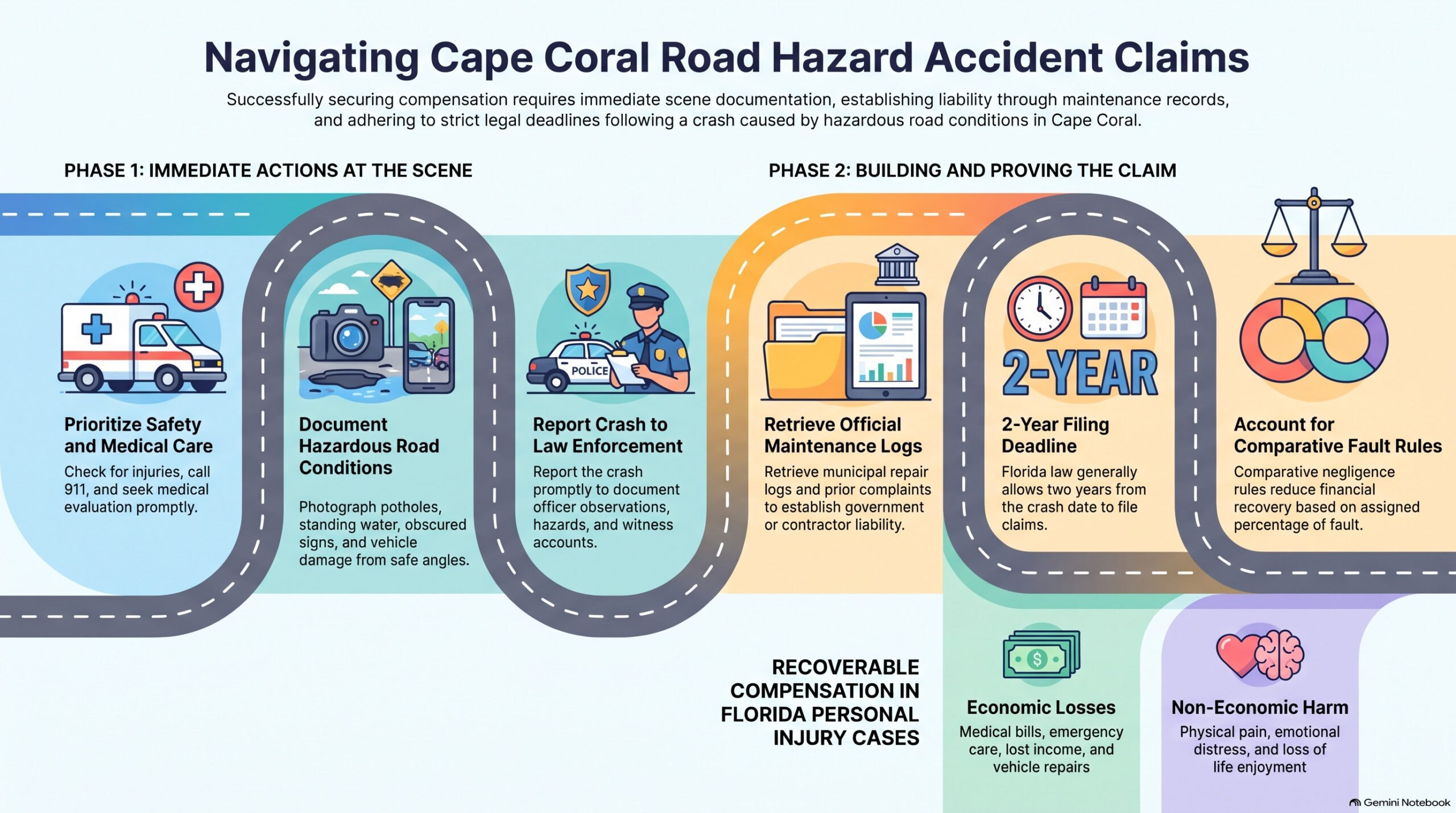
After a road-condition-related crash, first check yourself and others for injuries, and call 911 if anyone needs medical help. If it’s safe, document hazards such as standing water, damaged pavement, or obstructed signs with photographs and notes. We should also report the crash to law enforcement and provide an accurate account of what happened.
Check for Injuries
Your safety comes first, so check yourself and others for injuries as soon as the vehicles stop. If you can move safely, look for anyone who appears hurt, confused, or unable to respond. Check for injuries without moving someone who may have a head, neck, or back injury, unless there’s an immediate danger, such as fire. Ask bystanders to help, but don’t put yourself or others at risk in traffic. Call emergency services promptly if anyone is injured, trapped, unconscious, or in distress. Tell the dispatcher your location, how many people are involved, and any visible injuries. Follow the dispatcher’s instructions and provide reasonable assistance within your ability while waiting for responders. Even if symptoms seem minor, seek medical evaluation; some injuries may not be immediately apparent.
Document Road Conditions
Once everyone’s safety has been addressed, document the road and highway conditions that may have contributed to the crash. We can help protect others by recording what we observe while details remain clear. From a safe location, photograph potholes, uneven pavement, standing water, debris, damaged signs, obscured markings, and nearby lighting. Capture wide views and close-ups, noting the date, time, weather, and exact location. Don’t enter traffic or disturb evidence to get a better image. If witnesses saw the hazard or its duration, ask for their names and contact information, but don’t pressure them. Preserve original photos and videos, and write down what you remember before conditions change. These records may help establish whether a roadway problem played a role. An attorney can seek maintenance logs and inspection schedules through appropriate legal channels.
Report the Crash
If anyone is injured or the crash involves a road hazard, report it promptly to law enforcement, even if the vehicles can be moved. A police report can document the scene, identify witnesses, and record hazards such as standing water, obscured signs, or damaged pavement. Give officers accurate information, and explain how the road conditions may have contributed without guessing or assigning blame. Request the report number and ask how to obtain a copy.
We can help preserve a clear incident timeline by noting when the collision occurred, when you contacted authorities, and what officers observed. Photograph the scene only when it’s safe, and provide those images to investigators. Share relevant witness details and Emergency contacts with responding personnel. If someone needs medical care, prioritize treatment and keep records of visits and recommendations. Prompt reporting supports a careful investigation and helps protect everyone affected.
Don’t Wait. Call Our Florida Personal Injury Lawyers Now!
Critical Evidence in a Cape Coral Car Accident Road & Highway Conditions Injury Case
To establish how road or highway conditions contributed to your crash, we’ll focus on three categories of evidence:
- Photos of the roadway and hazard-reporting records can document the dangerous condition and whether officials knew about it.
- Vehicle damage, witness statements, and expert accounts can help connect that condition to the collision and your injuries.
Roadway Condition Photos
Roadway photos can preserve important evidence after a Cape Coral car accident, especially when a hazard may have contributed to the crash. If you can do so safely, we encourage you to document the scene before conditions change. Capture the hazard from several angles, along with nearby signs, lane markings, lighting, and the surrounding roadway. Include wide views that show where the condition sits in relation to the crash, then take closer images that reveal its details. Don’t enter traffic or put yourself or others at risk to get a photograph. Preserve original files, since Photo metadata may help establish when and where images were taken. We can also assess image authentication and whether the photographs accurately represent the scene. These records may help us explain what happened and support your effort to protect others.
Hazard Reporting Records
When a roadway hazard may have contributed to a crash, hazard reporting records can show who knew about the condition and when. We can seek reports from drivers, residents, businesses, and public agencies that describe the hazard before the collision. Public records may include complaints, inspection findings, work orders, and communications about the location. Maintenance logs can show when crews inspected the roadway, what repairs they performed, and whether they documented an unresolved problem. We’ll compare these records with the crash timeline and applicable maintenance responsibilities to assess whether officials or contractors had a reasonable opportunity to respond. You can help by sharing names, dates, or report numbers you know. Promptly preserving these materials may support a fair investigation and help protect others from similar roadway dangers.
Vehicle Damage Evidence
Vehicle damage can reveal how a collision unfolded and whether a road or highway condition contributed to it. We can help you preserve photographs of each vehicle, close-ups of impact points, and images showing the roadway, debris, or standing water nearby. These records may document how a pothole, uneven pavement, or another hazard affected vehicle movement and the resulting impact. Keep damaged parts when practical, and avoid authorizing repairs until you’ve thoroughly photographed and inspected the damage. Repair estimates, invoices, and parts records can establish the cost of restoring your vehicle. They may also help show diminished value if the car is worth less after repairs. By organizing this evidence, we can present a clearer account of your losses and support a fair claim while keeping attention on safer roads for everyone.
Witness And Expert Accounts
What can witnesses and experts reveal about a crash caused by unsafe road conditions? Witnesses may describe a missing warning sign, standing water, poor lighting, or how traffic moved before impact. We can help you identify people who saw the roadway and preserve their accounts promptly while details are still clear. Eyewitness credibility may depend on visibility, distance, attention, and consistency, so we’ll assess each statement carefully rather than assume it proves fault.
Expert testimony can explain how a road defect or maintenance failure contributed to the collision. A qualified engineer may inspect the site, review photographs and records, and compare conditions with applicable safety standards. Accident reconstruction professionals can also analyze vehicle damage, measurements, and witness accounts. Collectively, these sources may clarify what happened and support a fair evaluation of responsibility and your injuries.
Long-Term Effects of Cape Coral Car Accident Road & Highway Conditions Injuries
Road and highway conditions can contribute to injuries that continue affecting you long after a Cape Coral crash. We’ll examine how chronic pain and lasting mobility limitations may disrupt daily activities and independence. We’ll also consider the emotional and financial strain these injuries can place on you and your family.
Chronic Pain
When a Cape Coral car accident injures muscles, joints, nerves, or the spine, the resulting pain may continue long after the initial treatment ends. Chronic pain can affect concentration, mood, and a person’s ability to meet work and family responsibilities. We encourage you to report ongoing symptoms to your healthcare provider, even when they seem manageable. Consistent documentation helps your care team track changes and adjust treatment. Pain management may include medication, physical therapy, counseling, or other approaches chosen to meet your needs. Your provider can explain the benefits and risks of each option and coordinate care when several experts are involved. Sleep disruption can intensify pain and make daily demands harder to handle. By following medical guidance and keeping records, we can better understand how persistent symptoms affect your life and recovery.
Lasting Mobility Limitations
Persistent pain can also limit mobility after a Cape Coral car accident, particularly when injuries affect the spine, joints, muscles, or nerves. You may find it harder to walk, climb stairs, lift objects, or complete daily tasks. We can help you understand how these limitations affect your independence and what evidence may document your needs. Adapting assistive devices, such as selecting a cane, walker, or wheelchair, may support safer movement and help you stay involved in family and community life. Accessible home modifications, including grab bars, ramps, and widened doorways, can reduce barriers and help you move through your home more safely. Your recovery plan may involve medical professionals who assess your function and recommend practical changes. We can explain how documented mobility limitations may relate to your accident claim.
Emotional and Financial Strain
Long-term injuries from Cape Coral car accidents can create emotional and financial strain that extends well beyond medical treatment. As you adjust to pain, reduced mobility, or changes in daily routines, stress and uncertainty may affect your well-being. We encourage you to seek support from trusted people and qualified professionals rather than face these challenges alone.
Lost income, ongoing care, and transportation costs can disrupt your household budget, especially when recovery limits your ability to work. These pressures may also strain family relationships as loved ones take on caregiving duties and household responsibilities. Open communication can help your family set realistic expectations and make decisions together. We can help you document how the crash has affected your finances, health, and family life, so we can carefully consider those lasting losses when pursuing compensation.
Proving Liability in Cape Coral Car Accident Road & Highway Conditions Injury Cases
Proving liability in a Cape Coral crash caused by unsafe road or highway conditions requires evidence that identifies the hazard, shows who had a duty to address it, and connects that failure to the collision and resulting injuries. We begin by documenting the scene, including photographs, measurements, road signs, lighting, and weather conditions. Witness accounts, crash reports, vehicle damage, and medical records can help establish how the hazard contributed to the impact and your injuries.
We also investigate who controlled the roadway and what notice that party had of the danger. Governmental liability may depend on whether a public agency knew, or reasonably should have known, about a hazardous condition and failed to respond appropriately. We compare the agency’s actions with applicable roadway maintenance standards and review inspection records, repair logs, and prior complaints.
Dealing With Insurance Companies After a Cape Coral Car Accident Road & Highway Conditions Injury
After a crash caused by unsafe road or highway conditions, insurers may question how the hazard contributed to the collision and your injuries. We can help you communicate carefully, protect your interests, and preserve the evidence needed to explain what happened.
You don’t have to provide Recorded Statements to another driver’s insurer before understanding the request and its potential consequences. We can help you respond accurately, avoid speculation, and keep discussions focused on the facts. Share relevant information honestly, but don’t guess about your injuries, the road defect, or events you can’t recall. Keep copies of correspondence and note whom you speak with and when.
An insurer may present Settlement Offers before you know the full effect of your injuries or the costs of treatment. We can review the terms with you and explain what accepting may mean, including whether it resolves your claim. By approaching these conversations thoughtfully, we can help you seek fair treatment while maintaining the resources and support you need to care for yourself and others.
What to Expect During a Cape Coral Car Accident Road & Highway Conditions Injury Claim Process
We’ll start with an initial case review to assess how road or highway conditions may have contributed to your injuries and identify what needs investigation. Next, we’ll gather relevant evidence and negotiate with insurers, using documented facts to support your claim. We’ll explain your options as the case progresses toward resolution and seek compensation for your losses.
Initial Case Review
During an initial case review, we examine how road or highway conditions may have contributed to your Cape Coral car accident and injuries. We’ll listen to your account, clarify your concerns, and discuss how the crash has affected your health, work, and daily responsibilities. This case assessment helps us understand the circumstances and identify legal questions that may shape your claim. We’ll conduct a liability review to consider whether a dangerous condition or a party’s failure to address it may have played a role. We’ll also explain the claims process, discuss potential challenges, and outline what information we’ll need to evaluate your options. Our goal is to give you a clear, candid assessment so you can make informed decisions while focusing on your recovery and the people who depend on you.
Evidence Collection
Because road and highway conditions can change quickly, we’ll gather evidence promptly to document what may have contributed to your Cape Coral crash. We may photograph the roadway, signs, lighting, debris, drainage, and vehicle damage before conditions change or repairs begin. We’ll also seek available traffic-camera footage, incident reports, maintenance records, and witness accounts. Preserving evidence matters because clear, timely records can help explain how a hazard affected your safety and others’. We’ll identify relevant sources and request that important materials be retained. When we collect physical or digital evidence, we’ll use chain documentation to record where it came from, who handled it, and when it changed hands. You can support this process by sharing photos, contact details, and documents you already have, while avoiding changes to original files.
Claim Negotiations
How do we approach settlement discussions after a Cape Coral crash involving road or highway conditions? We begin by reviewing the available evidence, identifying the parties involved, and evaluating how the roadway condition may have contributed to the collision. We then explain the claim’s strengths and challenges so you can make informed decisions.
Our Settlement strategy accounts for documented losses, liability disputes, and the insurer’s position. We present a clear, supported demand and respond to questions with relevant records and facts. Through measured negotiation tactics, we challenge unsupported arguments, address gaps in the insurer’s evaluation, and keep discussions focused on your circumstances. We’ll keep you updated on material developments, explain proposed terms, and discuss the practical implications. Throughout negotiations, we work to protect your interests while treating everyone involved with professionalism and respect.
Resolution And Compensation
Once settlement discussions conclude, we review the proposed terms and explain how they address your documented losses and any disputed issues. We’ll help you assess whether compensation covers medical expenses, lost income, future care, and how your injuries affect daily life. Settlement timelines vary based on insurer responses, medical progress, and the intricacy of liability questions involving road or highway conditions. We’ll keep you informed about each step and explain any release you’re asked to sign before you accept payment. If a lump sum doesn’t suit your needs, we can discuss whether structured payouts may provide payments over time. After you approve the resolution, we’ll confirm the distribution of funds, address outstanding liens or expenses, and make sure you understand what the agreement closes. Our guidance supports an informed decision and helps protect your interests.
Compensation for Cape Coral Car Accident Road & Highway Conditions Injury Damages
When unsafe road or highway conditions contribute to a Cape Coral car accident, injured people may seek compensation for losses caused by the crash. We can help you identify the harm the collision caused and determine which parties may be responsible, such as a driver, contractor, or government entity. Available compensation may address emergency treatment, rehabilitation, medication, and Future medical care when injuries require ongoing support. It may also account for lost wages and diminished earning capacity if your injuries limit your ability to work or return to your previous role. We may also consider property damage, including repair or replacement of your vehicle. We’ll gather medical records, employment information, repair estimates, and evidence about the hazardous condition to support your claim. Because deadlines and notice requirements can apply, we encourage you to seek guidance promptly. A careful review helps us present the full effect of your injuries and pursue a resolution that supports your recovery and future needs.
Economic vs Non-Economic Damages in Cape Coral Car Accident Road & Highway Conditions Cases
We’ll distinguish economic losses, such as medical bills and lost income, from non-economic harm, including pain and reduced quality of life. In road and highway condition cases, the crash circumstances may affect which losses you can claim. We’ll also explain how records, expert opinions, and other evidence can help prove your damages.
Economic Losses
How much a Cape Coral car accident costs depends not only on immediate bills but also on losses that continue as you recover. Economic losses are measurable financial effects of a crash, and documenting them can help us present a clear claim. Medical expenses may include emergency care, hospital treatment, medication, rehabilitation, and future services your providers recommend. Keep invoices, receipts, and insurance statements so we can connect these costs to the collision.
Lost wages may reflect income you missed while unable to work. If injuries limit your hours, duties, or ability to return to your former occupation, reduced earning capacity may also affect your financial future. We can review pay records, employer statements, tax documents, and professional assessments to support these losses. Strong evidence helps us seek compensation that covers both current expenses and reasonably anticipated financial needs.
Non-Economic Harm
Financial records can show medical bills and lost income, but they don’t capture every effect of a Cape Coral car accident. Non-economic harm includes the physical pain, emotional distress, and lasting changes that disrupt your daily life. We recognize that injuries may prevent you from caring for family, serving your community, or taking part in activities that once mattered to you. Loss of enjoyment can affect hobbies, relationships, and ordinary routines, even when those effects don’t appear on a bill. Persistent pain or anxiety may also contribute to Damaged relationships, as family members adjust to new responsibilities and pressures. These harms differ from economic losses, which involve measurable financial costs. By recognizing both categories, we can help you understand the full range of losses an accident may cause and the compensation that may be available.
Proving Damages
When a road or highway condition contributes to a Cape Coral car accident, proving damages requires clear evidence of both financial losses and personal harm. We can document economic damages with medical bills, rehabilitation costs, lost income, and receipts for necessary expenses. Pay records and employer statements help establish missed work, while future care projections from qualified providers can show anticipated treatment costs. Medical record consistency also matters: records should connect the crash to your injuries and reflect your symptoms and treatment over time.
Non-economic damages address pain, emotional distress, reduced mobility, and limits on daily activities or relationships. We can support these claims with treatment notes, personal accounts, and statements from people who have observed the changes. By organizing reliable evidence, we help present the full impact of the collision and pursue compensation that reflects your needs.
Don’t Wait. Call Our Florida Personal Injury Lawyers Now!
When a Cape Coral Car Accident Road & Highway Conditions Injury Case Goes to Trial vs. Settlement
If a road defect, poor signage, or unsafe highway design contributed to your crash, we’ll assess whether the evidence supports resolving your claim through settlement or taking it to trial. We’ll consider the strength of the records, witness accounts, and expert findings, along with your medical needs and the responsible parties’ willingness to negotiate. A settlement may provide a more predictable resolution and avoid the time and stress of court. We’ll explain any offer clearly so you can weigh its value against your losses and future needs.
If negotiations don’t produce a fair result, we may recommend presenting your case to a jury. Trial requires preparation, including courtroom testimony and a clear explanation of how unsafe conditions contributed to your injuries. Jury deliberations can lead to a decision, but no outcome is guaranteed. We’ll discuss the risks, costs, and likely timelines with you, then support an informed choice focused on securing resources for your recovery and protecting your family’s well-being.
Florida Laws That May Affect Your Cape Coral Car Accident Road & Highway Conditions Case
Florida law can affect who’s responsible for a crash involving unsafe roads or highway conditions and how much compensation you may recover. We can help you understand the rules that may apply and identify the parties whose decisions contributed to your injuries.
These issues may include:
- Government responsibility: A public agency may be liable when negligent maintenance, design, or warning practices create a dangerous roadway. However, sovereign immunity can limit claims against government entities, subject to specific legal exceptions and requirements.
- Shared fault: Under Florida’s comparative negligence law, your compensation may be reduced by your share of responsibility. In some cases, if you are found more than 50 percent at fault, you may be barred from recovering damages.
- Evidence and liability: Records, photographs, witness accounts, and expert analysis can help establish what made the road unsafe and who knew, or should have known, about the hazard.
We’ll carefully assess the facts, explain how these rules may affect your claim, and help you pursue accountability while protecting your right to seek fair compensation.
The Statute of Limitations for Cape Coral Car Accident Road & Highway Conditions Injury Cases
How much time do you have to file a road-condition injury claim after a Cape Coral car accident? In most Florida cases, you generally have two years from the crash date to file a negligence lawsuit for bodily injury. Missing that deadline can prevent you from pursuing compensation, even when a dangerous road condition contributed to the collision.
Deadline Calculation can depend on the claim’s facts and the parties involved. If a government agency may be responsible for a roadway hazard, special notice requirements and shorter deadlines may apply before you can bring suit. These Government Claims rules can be complicated, and failing to provide timely notice may bar recovery. The deadline may also differ if a crash causes death or involves other exceptional circumstances.
We encourage you to preserve records and promptly identify the relevant dates. Acting within the required time protects your ability to seek accountability and supports the safety of others who use Cape Coral roads. If you’re unsure, confirm the deadline with a qualified Florida attorney.
How a Cape Coral Car Accident Road & Highway Conditions Lawyer Can Help You
Meeting the filing deadline is only one part of pursuing a road-condition injury claim after a Cape Coral car accident. We can help you investigate how a roadway hazard contributed to the crash and identify the parties responsible for maintaining public safety.
Our work may include:
- Gathering photographs, crash reports, witness accounts, and repair records to document the hazard and its effects.
- Reviewing Local roadway planning, municipal maintenance policies, inspection logs, and prior complaints to assess whether officials or contractors knew about the danger.
- Coordinating with qualified experts to evaluate road design, visibility, drainage, or maintenance failures and explain how they contributed to your injuries.
We can also organize medical and financial records, calculate documented losses, and present a clear claim to insurers or other responsible parties. Throughout the process, we’ll explain your options and help you make informed decisions. By seeking accountability, you may also help make roads safer for neighbors, families, and other Cape Coral residents who rely on these routes every day.
When to Contact a Cape Coral Car Accident Road & Highway Conditions Lawyer
Contact a Cape Coral car accident road and highway conditions lawyer as soon as you can after a crash involving a dangerous roadway. Prompt legal advice can help us preserve records and identify the people or agencies responsible for maintaining the road. If you’re injured, facing medical expenses, or unsure how to respond to an insurer, don’t wait until every detail is clear before seeking guidance.
Consultation timing matters because road conditions can change quickly. Crews may repair hazards, weather may alter the scene, and surveillance footage or other records may be routinely erased. We can discuss what information to save, such as photographs, witness names, and medical records, while you focus on your recovery and family.
You can contact us even if you’re still receiving treatment or haven’t determined the full extent of your losses. If a loved one was hurt, reaching out promptly can also help your family understand the next steps and protect their ability to pursue a claim.
Why You Need an Experienced Cape Coral Car Accident Road & Highway Conditions Lawyer
An experienced Cape Coral car accident road and highway conditions lawyer can help determine whether a dangerous roadway contributed to your crash and identify who may be responsible. We can investigate hazards such as poor drainage, faded markings, obstructed signs, or unsafe construction zones. By preserving photographs, maintenance records, and witness accounts, we work to establish how conditions affected your safety and the harm you suffered.
Attorney experience matters when a claim involves complicated evidence and multiple potentially responsible parties. We can assess whether a driver, contractor, property owner, or government entity may have failed to meet a duty of care. Local knowledge also helps us understand Cape Coral roads, traffic patterns, and the procedures that may apply to claims involving public agencies.
When you seek accountability, we can explain your options and pursue a fair result while you focus on recovery. Our work can help protect your interests and encourage safer roads for everyone in the community.
How to Choose the Right Cape Coral Car Accident Road & Highway Conditions Lawyer for Your Case
Choosing the right Cape Coral car accident road and highway conditions lawyer starts with finding someone who can investigate roadway hazards and explain who may be legally responsible. Ask about experience handling crashes involving unsafe road design, poor maintenance, missing signs, or construction hazards. Relevant case experience can help us assess evidence, identify potentially responsible parties, and understand the deadlines that may apply.
Review Attorney Credentials, including licensing, disciplinary history, and familiarity with Florida injury claims. Ask how the lawyer would investigate your collision, preserve photographs and records, and coordinate with qualified experts when needed. Clear answers can help us judge whether the proposed approach fits our circumstances.
Pay attention to Client Communication. We should know who will respond to questions, how often we’ll receive updates, and how important decisions will be explained. Discuss fees and costs in writing before signing an agreement. A careful selection process helps us make informed choices while seeking accountability and fair compensation for those affected by unsafe roads. Don’t rely on promises of a particular result; ask for a candid assessment of strengths and uncertainties.
About The Law Offices of Anidjar & Levine
When a car accident raises questions about liability or insurance, The Law Offices of Anidjar & Levine can help us understand the legal options available.
We work with people facing difficult consequences, including medical expenses, missed work, and uncertainty about what comes next.
Our role is to listen, explain the process, and help you make informed decisions about a potential claim.
Attorney background matters when a case involves road design, construction zones, traffic signals, or other roadway conditions.
We review the evidence, assess how the crash occurred, and identify parties who may be responsible.
Our attorneys can also communicate with insurers and pursue compensation when the facts and law support a claim.
Our firm values include service, preparation, and clear communication.
We recognize that seeking legal help can feel like another burden after a collision, so we aim to provide practical guidance and attentive support.
If you contact us, we can discuss your circumstances and explain possible next steps without promising a particular outcome.
Frequently Asked Questions
Can I Recover Damages if a Road Defect Contributed to My Cape Coral Crash?
Yes, you may recover damages if a road defect contributed to your Cape Coral crash, but liability depends on the evidence and who controlled or maintained the roadway. We can help you preserve Road defect evidence, such as photographs, repair records, and witness statements, and identify responsible parties. Under comparative negligence rules, your compensation may be reduced if your actions also contributed. We’ll assess deadlines and explain your options for pursuing a claim.
Who Maintains the Road Where My Accident Occurred?
The responsible agency depends on who owns the road. We can identify the owner by checking the location and road classification: the City of Cape Coral, Lee County, or the Florida Department of Transportation may maintain it. Private roads may be owned by an association or property owner. We can request maintenance records, inspection reports, and repair notices to clarify responsibility and determine whether the responsible party knew, or should have known, about a hazardous defect.
Can I File a Claim if Poor Weather Made the Road Hazardous?
Yes, we may be able to help you file a claim if hazardous weather contributed to your crash. Weather-related liability depends on whether another party failed to take reasonable steps, such as maintaining drainage or addressing known road defects. Rain alone doesn’t establish fault. We’ll review the evidence, including forecasts, road conditions, and driver conduct. Following Rainfall Driving Precautions can reduce risk, but it doesn’t automatically prevent you from seeking compensation.
What Happens if a Defective Traffic Signal Contributed to My Accident?
If a defective traffic signal contributed to your accident, we can investigate whether the responsible agency, contractor, or another party failed to maintain or operate it safely. We’ll seek Signal malfunction evidence, such as repair logs, inspection reports, and witness accounts, and request intersection timing records before they’re lost. These records may clarify how the signal operated and whether its condition contributed to the collision. We can assess your potential claim and explain your options.
Can Road Construction Companies Be Held Responsible for Unsafe Work Zones?
Yes, road construction companies can be held responsible when work zone negligence creates a foreseeable hazard and contributes to a crash. We can examine whether the contractor followed safety standards, installed clear warnings, maintained barriers, and properly coordinated traffic changes. Contractor liability depends on the evidence and applicable law, and other parties may share responsibility. If you were injured, we can help preserve records, identify responsible parties, and assess your options for seeking compensation.
—————————
If a road or highway condition contributed to your Cape Coral car accident, we can help you understand your legal options and pursue compensation for your injuries and losses.
Prompt action can preserve evidence, clarify responsibility, and protect your claim under Florida law.
At The Law Offices of Anidjar and Levine, we investigate the circumstances, communicate with insurers, and guide you through each step.
Contact a Cape Coral Personal Injury Lawyer to discuss your case and learn how we can help you move forward with informed legal support.

