

The Law Offices of Anidjar and Levine help determine whether a property owner, contractor, government entity, insurer, or another party may be responsible for harm caused by flooding, falling debris, unsafe premises, or electrical hazards.
Legal support may include preserving weather records, photographs, witness statements, medical documentation, and evidence of property damage while addressing insurance deadlines and inadequate offers.
Prompt consultation with a Boynton Beach Personal Injury Lawyer can help protect potential claims for medical expenses, lost income, and other losses.
Further information explains the available legal options and case requirements.
Main Takeaways
- A Boynton Beach storm injury lawyer can investigate property owners, contractors, government entities, insurers, or others potentially responsible for your injuries.
- Preserve photographs, videos, weather reports, witness statements, medical records, repair documents, and communications with insurers.
- Seek prompt medical care and document emergency treatment, follow-up visits, imaging, rehabilitation, symptoms, and related expenses.
- Insurance policies may impose notice, proof-of-loss, examination, claim-decision, and release requirements that can affect recovery.
- Consult an attorney promptly because Florida filing deadlines and premature settlements may limit your ability to pursue compensation.


How We Can Help With Your Boynton Beach Storm & Weather Injury Claim
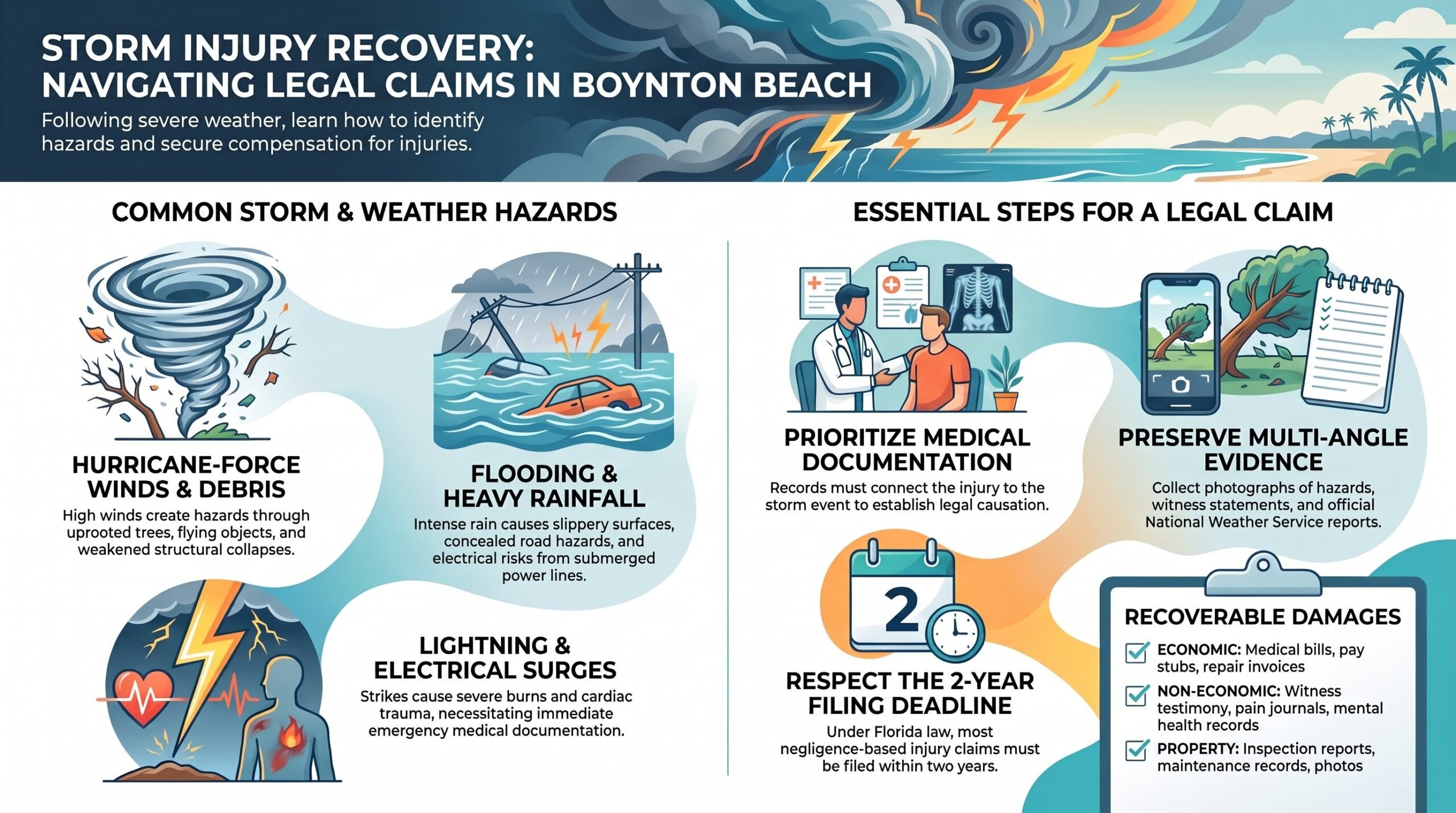
After a storm or severe weather event, an experienced Boynton Beach storm and weather injury lawyer can help an injured person identify responsible parties, preserve critical evidence, and pursue compensation for medical expenses, lost income, property damage, and other legally recoverable losses. The legal team can explain available options, evaluate deadlines, and organize a claim based on documented facts rather than assumptions. Evidence preservation may include photographs, inspection reports, damaged property, maintenance records, and communications with property owners or insurers. Counsel can also request medical records that connect injuries to the event and demonstrate the necessity of treatment.
When insurance disputes arise, an attorney can review policy language, challenge inadequate offers, and communicate with adjusters on the claimant’s behalf. Witness protection measures may help preserve statements from people who observed hazardous conditions, the incident, or its immediate consequences. Through careful preparation and respectful guidance, the firm supports injured individuals while seeking fair accountability and compensation. It also coordinates claim documentation and negotiations.
OUR CONSULTATIONSARE FREE
START YOUR FREE CASE REVIEW

Understanding Boynton Beach Storm & Weather Injury Cases
Storm and weather injury cases in Boynton Beach may involve dangerous conditions created by hurricanes, tropical storms, flooding, high winds, lightning, or inadequate property maintenance. These claims generally require showing that a person suffered harm and that another party may bear legal responsibility under the circumstances. Responsibility can depend on property ownership, maintenance duties, warnings, emergency conditions, and applicable insurance provisions.
Medical documentation is important because treatment records, diagnostic findings, and physician opinions can connect an injury to the event and establish its seriousness. Witness statements, photographs, incident reports, and repair records may also help clarify what occurred. Insurance questions can be particularly intricate when policies contain exclusions, deductibles, deadlines, or hurricane coverage provisions. A careful review may identify whether compensation is available for medical expenses, lost income, rehabilitation, and other losses. Individuals affected by severe weather often benefit from prompt legal guidance to preserve evidence, meet required deadlines, and communicate accurately with insurers, while recovery and community support remain priorities.
Common Causes of Boynton Beach Storm & Weather
Boynton Beach storm and weather incidents commonly result from hurricane-force winds, heavy rainfall, lightning strikes, and flooded roadways. These conditions can damage property, obstruct travel, and create serious risks for pedestrians, drivers, and residents. Understanding each cause helps clarify how injuries may occur and which circumstances may support a legal claim.
Hurricane-Force Winds
When hurricane-force winds reach Boynton Beach, they can cause severe property damage and create dangerous conditions for residents, motorists, workers, and visitors. Strong gusts may uproot trees, break windows, dislodge roofing materials, and propel unsecured objects into people or vehicles. Damaged utility poles and power lines can create electrocution hazards, while weakened structures may collapse without warning. Businesses, property owners, and public agencies should secure vulnerable equipment, maintain safe premises, and provide timely warnings when dangerous conditions develop.
Residents should avoid downed lines, damaged buildings, and areas containing unstable debris. Lightning safety awareness remains important during severe storms, particularly for outdoor workers and emergency personnel assisting affected communities. Once conditions improve, storm-damage documentation, including photographs, witness information, and repair records, may help establish the cause and extent of any resulting injuries.
Heavy Rainfall
Heavy rainfall in Boynton Beach can quickly create hazardous conditions even when wind damage is limited. Intense precipitation may overwhelm drainage systems, flood roads, damage foundations, and cause ceilings or roofs to leak. Standing water can also create slip hazards, contaminate living areas, and worsen existing structural problems. Property owners, tenants, and visitors may face injuries when water accumulates in parking areas, walkways, stairwells, or commercial interiors.
Prompt assistance can help affected individuals obtain medical care, identify responsible parties, and preserve important evidence. Documenting property damage with photographs, videos, repair estimates, and written descriptions may support an insurance or injury claim. Reporting storm incidents to property managers, municipal authorities, and insurers creates a timely record of dangerous conditions. Witness information and weather records may further clarify how the rainfall contributed to the event.
Lightning Strikes
Lightning strikes during Boynton Beach storms can cause severe injuries, fires, electrical surges, and sudden property damage, even when the strike occurs away from the affected person or structure. Victims may experience burns, cardiac complications, neurological symptoms, hearing loss, or trauma caused by falling materials. Prompt Emergency response can preserve safety, stabilize injuries, and document hazardous conditions before repairs alter evidence.
Medical treatment timelines should be recorded carefully, including ambulance care, hospital evaluations, expert referrals, and follow-up appointments. Photographs, witness accounts, repair estimates, utility reports, and insurance documentation may help establish the event’s effects and support a claim. Residents can reduce risks by following lightning safety tips, staying indoors during warnings, avoiding plumbing and electrical equipment, and delaying outdoor activities until officials confirm conditions are safe.
Flooded Roadways
Flooded roadways are a frequent consequence of Boynton Beach storms, particularly when intense rainfall overwhelms drainage systems, canals, and low-lying intersections. Standing water can conceal potholes, debris, and damaged pavement, creating dangerous conditions for drivers, bicyclists, and pedestrians. Vehicles may lose traction or become disabled, leaving occupants exposed to additional hazards and delaying emergency response. Traffic signal failures can occur when flooding damages electrical equipment, increasing the risk of collisions at busy intersections.
Drivers who attempt to cross submerged areas may encounter rapidly moving water, while pedestrians may fall or suffer other injuries on obscured walkways. Power line hazards also require immediate attention because downed electrical lines may energize floodwater. Property owners, municipalities, and motorists may each have responsibilities regarding warnings, maintenance, and safe conduct. An experienced attorney can help injured individuals evaluate available legal remedies.
Don’t Wait. Call Our Florida Personal Injury Lawyers Now!


Legal Rights of Boynton Beach Storm & Weather Injury Victims
When severe weather causes injury in Boynton Beach, victims may have legal rights to seek compensation for medical expenses, lost income, property damage, and other losses. Potential claims may involve negligent property owners, contractors, governmental entities, insurers, or other responsible parties, depending on the circumstances and applicable law.
Victims and those assisting them should consider:
- Reporting the incident promptly and obtaining appropriate medical evaluation, while documenting symptoms, treatment, and work limitations.
- Taking evidence preservation steps, including photographs, witness information, weather reports, damaged property, medical records, and relevant communications.
- Reviewing Insurance timeline issues carefully, because notice requirements, proof-of-loss deadlines, examinations, and claim decisions can affect available remedies.
A qualified attorney may assess liability, identify all potentially responsible parties, communicate with insurers, and pursue a fair settlement or litigation when warranted. Legal representatives can also help protect vulnerable individuals from premature releases and ensure that claims are supported by reliable evidence. Prompt consultation is generally advisable because filing deadlines may limit recovery. Local counsel familiar with Boynton Beach conditions can provide informed guidance while serving each victim’s interests.
Why Do Boynton Beach Storm & Weather Injuries Happen?
Storm and weather injuries in Boynton Beach often result from a combination of hazardous conditions and preventable failures to maintain safe premises. Notable Weather Patterns, including hurricanes, tropical storms, intense rainfall, high winds, and lightning, can cause flooding, falling debris, slippery surfaces, and dangerous visibility. Property owners, employers, and public agencies may contribute to injuries by ignoring warnings, delaying repairs, or failing to remove storm-related hazards.
Insufficient Safety Precautions can also increase risks around homes, businesses, construction areas, and public walkways. Unsecured equipment, blocked drainage, damaged roofs, and inadequate lighting may expose visitors, workers, and residents to avoidable harm. Electrical Hazard Training is particularly important because downed lines, wet electrical systems, and damaged generators can cause severe shocks or fires. In addition, motorists and transportation operators should follow Vehicle Safety Tips during severe weather, including reducing speed, maintaining visibility, and avoiding flooded roads. These failures and conditions commonly explain why storm-related injuries occur in Boynton Beach.
What Should You Do After a Boynton Beach Storm & Weather Injury?
After a Boynton Beach storm and weather injury, the individual should seek immediate medical care, even if symptoms initially appear minor. Photographs, witness information, and records of storm-related hazards should be preserved to document the circumstances. The injured person should also contact a personal injury lawyer to evaluate potential claims and advise on protecting legal rights.
Seek Immediate Medical Care
Prompt medical attention is very important for anyone injured during severe weather in Boynton Beach, even if symptoms initially appear minor. A qualified medical professional can identify hidden injuries, provide appropriate treatment, and create records that explain the condition and its connection to the incident. Individuals should call emergency services for life-threatening symptoms, avoid unnecessary movement after suspected spinal or head trauma, and follow dispatchers’ instructions.
When circumstances permit, basic First aid steps may include controlling bleeding with clean pressure, covering wounds, and keeping the injured person warm until help arrives. After treatment, patients should follow the prescribed care plan, attend recommended appointments, and promptly report any worsening symptoms. A trusted representative can help verify insurance coverage and explain available resources, allowing injured individuals to focus on recovery and support their families.
Document Storm-Related Hazards
When conditions are safe, injured individuals should document storm-related hazards as soon as reasonably possible, provided doing so does not interfere with medical treatment or create additional risks. Photographs and videos should show dangerous conditions from multiple angles, including fallen trees, standing water, damaged structures, exposed wiring, blocked walkways, and inadequate lighting. The date, time, location, and weather conditions should be recorded, and details should remain clear. Witness names and contact information may also help preserve an accurate account of what occurred. Individuals should avoid moving debris or entering unstable areas merely to obtain better evidence. Maintaining copies of photographs, messages, incident reports, and related records can support later review. Storm safety checklists and emergency preparedness plans may help identify hazards that require careful documentation without compromising personal safety.
Contact a Personal Injury Lawyer
Preserving photographs, witness information, and other records can help clarify how a Boynton Beach storm or weather injury occurred, but determining legal responsibility often requires a broader review of the facts. A personal injury lawyer can evaluate whether unsafe property conditions, inadequate warnings, negligent maintenance, or other conduct contributed to the incident. Counsel may also identify responsible parties, preserve relevant evidence, communicate with insurers, and explain deadlines that could affect a claim.
Prompt consultation can help an injured person understand available remedies while reducing the risk of statements or settlements that undermine recovery. A lawyer may also coordinate medical documentation and assess damages, including treatment costs, lost income, and continuing needs. Although Neighborhood safety planning and Emergency preparedness tips may reduce future risks, they do not replace legal guidance after an injury.
Critical Evidence in a Boynton Beach Storm & Weather Injury Case
Establishing a Boynton Beach storm and weather injury claim requires organized evidence showing the event, resulting harm, and related losses.
Important materials commonly include:
- Weather reports and injury documentation;
- Witness statements; and
- Property damage records.
Together, these records can help clarify liability, substantiate the injury, and support the full value of the claim.
Weather Reports
How severe were the conditions at the time of a storm-related injury? Official weather reports can help answer that question with objective, time-specific information. Records from the National Weather Service, local emergency management agencies, and reputable meteorological services may show rainfall totals, wind speeds, lightning activity, flooding, tornado warnings, or other hazardous conditions. Weather alerts can establish when authorities warned the public and whether dangerous conditions were foreseeable. Storm tracking data may also identify the storm’s path, timing, intensity, and proximity to the location at issue. These materials can assist in evaluating whether a property owner, employer, event organizer, or other responsible party should have recognized a developing risk and taken reasonable precautions. Preserving original reports, timestamps, maps, and related advisories helps maintain their reliability for review.
Injury Documentation
Medical records provide direct evidence of the injuries sustained in a storm-related incident and the subsequent treatment. Emergency room records can document the initial condition, reported symptoms, diagnostic tests, prescribed medications, and medical recommendations. Follow-up notes, imaging results, expert evaluations, and rehabilitation records may demonstrate how injuries developed or affected daily activities over time. Preserving complete copies helps connect the incident with necessary care and supports an accurate assessment of damages.
Photographs of visible injuries, damaged medical devices, and treatment-related limitations can further supplement clinical documentation when properly dated and maintained. Insurance adjuster statements should also be preserved, particularly when they acknowledge reported injuries, discuss requested records, or describe the claim’s evaluation. Organized documentation enables legal professionals to serve injured individuals efficiently while reducing disputes concerning causation, severity, and continuing medical needs.
Witness Statements
When a storm-related incident occurs, witness statements can provide independent evidence about what happened and how the injury developed. Witness roles may include bystanders, coworkers, emergency responders, or individuals who observed conditions before, during, or after the event. Their accounts can clarify the sequence of events, identify hazards, describe warning efforts, and confirm the apparent impact on the injured person. Promptly identifying witnesses is important because memories can change, contact information may become outdated, and relevant details can fade.
Documenting testimony should preserve each person’s exact observations, including the date, time, location, weather conditions, and statements made at the scene. A written or recorded account should distinguish firsthand knowledge from assumptions. Consistent witness evidence can help attorneys evaluate responsibility and present an accurate, service-oriented account of the injury.
Property Damage Records
Property damage records can provide crucial evidence in a Boynton Beach storm-related injury case by documenting the dangerous conditions that contributed to the incident. Photographs, repair invoices, inspection reports, and insurance claims may show collapsed structures, broken railings, flooding, fallen trees, or inadequate maintenance. These materials can help establish when damage occurred, whether a property owner received notice, and whether reasonable corrective measures were taken.
Records created before and after a storm may also reveal failures in storm safety planning or emergency preparedness. Preserving original files, timestamps, contractor communications, and governmental inspection documents can strengthen the reliability of this evidence. A careful review may connect the documented hazard to the injury, clarify disputed facts, and support a fair evaluation of responsibility, losses, and needed assistance.
Long-Term Effects of Boynton Beach Storm & Weather Injuries
Long-term Boynton Beach storm and weather injuries may result in chronic pain conditions that affect mobility, work, and daily activities. Emotional health challenges, including anxiety, depression, or trauma-related symptoms, may also develop after a severe event. These lasting effects can require ongoing medical care and create significant expenses for injured individuals and their families.
Chronic Pain Conditions
Chronic pain can develop after a Boynton Beach storm or weather-related injury, particularly when damage to the muscles, joints, nerves, or spine does not fully resolve during the initial recovery period. Persistent symptoms may include stiffness, burning sensations, reduced mobility, and pain that interferes with work, sleep, or routine activities. A person experiencing these conditions may require continuing treatment, physical therapy, expert evaluations, injections, or other interventions.
Medication management should remain under qualified medical supervision, especially when prescriptions continue for an extended period or produce limiting side effects. Detailed medical records can help establish the timeline of documentation, including the injury date, reported symptoms, diagnostic findings, treatment recommendations, and changes in functional capacity. A Boynton Beach storm and weather injury lawyer may review this evidence when determining available compensation for ongoing care.
Emotional Health Challenges
Emotional health challenges may arise after a Boynton Beach storm or weather-related injury, particularly when physical limitations, financial strain, displacement, or prolonged uncertainty continue beyond the initial event. Survivors may experience anxiety, depression, sleep disruption, irritability, or trauma-related reactions that affect relationships, employment, and daily decision-making. These effects can persist even after visible injuries improve, especially when the event involved danger, loss, or repeated exposure to severe weather.
Early recognition may help individuals obtain appropriate counseling, psychiatric evaluation, or community-based trauma support. Trusted relatives, caregivers, and service organizations can encourage healthy coping strategies, including structured routines, social connection, relaxation techniques, and adherence to professional recommendations. Documenting emotional symptoms and their impact may also help clarify the injury’s broader consequences when seeking legal guidance. Families should respond with patience, respect, and consistent support.
Ongoing Medical Expenses
Medical care may continue well after a Boynton Beach storm or weather-related injury appears to stabilize, creating expenses that affect a survivor’s financial security and recovery. Ongoing treatment may include consultative visits, rehabilitation, prescription medications, diagnostic testing, mobility equipment, and future procedures. These costs can become substantial when injuries cause permanent limitations or require repeated care. Medical documentation should identify the diagnosis, treatment plan, prognosis, and expected future needs.
This information may help establish the relationship between the storm-related event and continuing expenses. Insurance documentation, including claim forms, payment records, denials, and policy communications, should also be preserved carefully. A qualified attorney can review available coverage, investigate responsible parties, and assess recoverable damages. Careful organization enables families, advocates, and legal professionals to support informed decisions while protecting the survivor’s long-term interests and access to necessary care.
Don’t Wait. Call Our Florida Personal Injury Lawyers Now!
Proving Liability in Boynton Beach Storm & Weather Injury Cases
Proving liability in a Boynton Beach storm and weather injury case requires identifying the party responsible for creating or failing to address a dangerous condition and establishing that the failure caused the injury. Potentially responsible parties may include property owners, businesses, contractors, government entities, or others whose maintenance decisions contributed to harm. Evidence can include photographs, weather records, surveillance footage, inspection reports, witness statements, and medical documentation connecting the condition to the injury.
A claimant generally must show that the responsible party knew or reasonably should have known about the hazard and had a reasonable opportunity to correct or warn about it. Defendants may raise Comparative negligence defenses, arguing that the injured person failed to use appropriate care. Questions about policy exclusions, notice requirements, and available limits can also create insurance coverage disputes. Careful investigation preserves evidence and clarifies each party’s role, helping the injured person pursue accountability while supporting a fair resolution for all affected parties.
Dealing With Insurance Companies After a Boynton Beach Storm & Weather Injury
After a Boynton Beach storm and weather injury, dealing with insurance companies requires careful communication and a clear understanding of available coverage. An injured policyholder should review the policy, identify applicable medical payment, property, or liability provisions, and avoid statements that could be interpreted as admissions. Policyholder rights may include timely claim handling, access to relevant policy information, and fair evaluation of documented losses. Claim timelines can vary depending on policy language, insurer procedures, and Florida requirements, so deadlines should be confirmed promptly. Evidence preservation remains necessary.
Medical records, photographs, repair estimates, weather reports, witness information, and correspondence can support the claim and clarify how the injury occurred. Communications with adjusters should remain factual, organized, and limited to requested information. Before accepting compensation, the policyholder should carefully examine settlement documents, including releases that may waive future claims. Assistance from a qualified attorney can help protect coverage rights, address disputes, and promote a fair resolution without unnecessary confrontation or delay.
What to Expect During a Boynton Beach Storm & Weather Injury Claim Process
A Boynton Beach storm and weather injury claim generally begins with an initial case evaluation to assess liability, damages, and available legal remedies. The process then involves collecting relevant evidence, communicating with insurers, and negotiating a claim based on documented losses. If negotiations do not produce a fair resolution, the matter may proceed to settlement discussions or litigation.
Initial Case Evaluation
When a storm or severe weather event causes an injury in Boynton Beach, the initial case evaluation determines whether the claim has a viable legal and factual foundation. An attorney typically reviews the circumstances of the incident, the location, the nature of the injury, and potential parties who may bear responsibility. The evaluation may consider property conditions, warnings, maintenance duties, insurance coverage, and applicable deadlines without making premature conclusions.
Medical documentation helps clarify the diagnosis, treatment, prognosis, and the connection between the event and the claimed harm. Counsel may also explain evidence preservation, including the importance of retaining records and avoiding statements that could affect credibility. The injured person can expect questions about losses, recovery, and practical needs. A careful evaluation supports informed decisions and helps direct the claim toward an appropriate, service-focused resolution.
Evidence Collection Process
Effective evidence collection begins by documenting how the storm or severe weather event occurred and how it caused the reported injury in Boynton Beach. The injured person should preserve photographs or video of hazardous conditions, damaged property, visible injuries, and the surrounding location, when safely possible. Medical records, treatment instructions, receipts, and employment records can establish the injury’s consequences. Witness names and statements may clarify what occurred before, during, and after the incident.
Weather alerts, official reports, maintenance records, and storm incident details can help establish timing and conditions. Insurance documentation, including policies, claim forms, correspondence, and recorded statements, should be retained in an organized file. A legal professional may also request surveillance footage, inspection materials, and other relevant records before they are lost or altered.
Insurance Claim Negotiations
Insurance claim negotiations typically begin after the insurer reviews the incident report, available evidence, medical documentation, and policy provisions related to the Boynton Beach storm or weather injury. The adjuster may request recorded statements, authorizations, receipts, photographs, and information about prior conditions. Claimants should provide accurate, organized materials while preserving copies of every communication. Counsel may help clarify coverage, evaluate disputed facts, and respond to requests without allowing relevant deadlines to lapse.
Property damage timelines can affect inspections, temporary repairs, mitigation expenses, and required notices, so prompt documentation is important. Policyholders should also remain alert to Disaster relief scams, including unsolicited offers for assistance or demands for fees before services are provided. Throughout negotiations, careful communication and complete records support a fair review while protecting the claimant’s interests.
Settlement Or Litigation
How a claim proceeds depends on the strength of the evidence, the applicable policy or liability law, and the parties’ willingness to resolve the dispute. After reviewing medical records, photographs, weather data, witness statements, and insurance communications, counsel may develop a negotiation strategy designed to secure fair compensation without unnecessary delay. A settlement can address medical expenses, lost income, property-related losses, pain, and future needs, subject to documented proof and policy limits.
If negotiations fail, the injured party may file a lawsuit. Litigation involves pleadings, discovery, depositions, expert testimony, motions, and potentially trial. Trial readiness remains important even when settlement discussions continue because thorough preparation can strengthen the claim’s position. A court ultimately evaluates liability, causation, damages, and available coverage. Throughout the process, careful guidance helps protect the injured person’s interests and supports informed decisions.
Compensation for Boynton Beach Storm & Weather Injury Damages
When severe storms cause physical injuries or property damage in Boynton Beach, affected individuals may be entitled to seek compensation from responsible parties or applicable insurance policies. Potential recovery may address reasonable medical treatment, necessary repairs, damaged personal belongings, and other losses supported by evidence. Liability can depend on hazardous property conditions, negligent maintenance, inadequate warnings, utility-related conduct, or failures involving commercial premises.
A careful claim begins with prompt documentation. Photographs, medical records, repair estimates, witness information, weather reports, and communications with insurers can help establish what occurred and who may be responsible. Insurance claim deadlines vary by policy and circumstance, so a claimant should review notice requirements and submit information without unnecessary delay. Emergency response procedures may also affect available evidence, particularly when public agencies, landlords, or businesses documented storm conditions. A qualified Boynton Beach storm and weather injury lawyer can assess coverage, identify responsible parties, communicate with insurers, and help protect a claimant’s legal rights while pursuing a fair resolution.
Economic vs Non-Economic Damages in Boynton Beach Storm & Weather Cases
Boynton Beach storm and weather cases may involve economic damages, including medical expenses, lost wages, property losses, and future financial costs. Non-economic damages address less tangible harm, such as pain, emotional distress, and diminished quality of life, which require careful valuation. Proving these losses generally depends on medical records, financial documentation, repair estimates, witness testimony, and other reliable evidence.
Economic Damage Categories
Storm and weather injury claims in Boynton Beach may involve both economic and non-economic damages, each serving a distinct purpose in calculating compensation. Economic damages represent measurable financial losses caused by an injury. Categories may include emergency treatment, hospitalization, medication, rehabilitation, medical equipment, and anticipated future care. Property damage, transportation costs for appointments, household assistance, and other necessary out-of-pocket expenses may also qualify, provided they are supported by reliable evidence.
Lost income can include wages already missed, reduced earning capacity, and employment benefits affected by recovery. Pay stubs, tax records, employer verification, work schedules, and documentation of lost wages can support this portion of the claim. An economic damages calculation generally compares documented losses with reasonably expected future expenses, helping ensure that injured individuals receive practical support for recovery and ongoing needs.
Non-Economic Harm Valuation
Although non-economic losses do not have fixed prices, they may represent a substantial part of compensation in Boynton Beach storm and weather injury cases. These damages address the human consequences of an injury rather than medical bills or lost income. Pain and suffering may include physical discomfort, reduced mobility, sleep disruption, and limitations on ordinary activities. Emotional distress can involve fear, anxiety, grief, frustration, or diminished enjoyment of life after a severe storm event.
Courts may also consider mental health impacts, including symptoms that interfere with relationships, work, or independence. The individual’s age, recovery outlook, injury severity, and disruption to daily life can influence valuation. Compensation may recognize trauma recovery needs and the ongoing burden on the injured person and their supportive family members, promoting accountability and humane service.
Proving Weather Injury Losses
When a person is injured by severe weather or storm-related property hazards, proving financial and personal losses requires organized evidence that links the event to the claimed harm. Economic damages may include emergency treatment, ongoing medical care, prescription costs, lost wages, reduced earning capacity, and necessary property-related expenses. Receipts, employment records, invoices, and medical records can establish these measurable losses.
Non-economic damages address pain, emotional distress, inconvenience, disfigurement, and diminished enjoyment of life. Although these losses lack fixed prices, consistent testimony, treatment notes, photographs, and witness observations may demonstrate their effect. Damages evidence should also connect the injury to negligent maintenance, unsafe conditions, or inadequate warnings, rather than merely to the storm itself. A careful chronology, preserved communications, and qualified professional opinions can help present a complete, credible account of losses for those seeking fair recovery.
When a Boynton Beach Storm & Weather Injury Case Goes to Trial vs Settlement
A Boynton Beach storm and weather injury case may proceed to trial when the parties cannot agree on liability, damages, or the value of a fair settlement. Settlement is often preferred because it can provide compensation sooner, reduce litigation costs, and spare injured individuals from the uncertainty of courtroom proceedings. Negotiations may continue through mediation, with counsel presenting medical records, wage information, repair estimates, and other evidence supporting the claimed losses.
Trial becomes more likely when insurers dispute causation, question the severity of injuries, or make an offer that does not reasonably address documented harm. Comparative negligence disputes may require a fact-finder to evaluate each party’s conduct. Expert witness testimony can clarify weather conditions, property hazards, medical consequences, or the relationship between the incident and claimed losses. A judge or jury then determines responsibility and damages after reviewing the evidence. Careful preparation allows the legal team to serve the injured person’s interests while preserving a practical opportunity for resolution before trial.
Don’t Wait. Call Our Florida Personal Injury Lawyers Now!
Florida Laws That May Affect Your Boynton Beach Storm & Weather Case
Florida laws governing negligence, premises liability, insurance claims, and comparative fault may substantially affect a Boynton Beach storm and weather injury case. These rules help determine whether a property owner, contractor, insurer, or another party may be responsible for unsafe conditions created or worsened by severe weather.
- Premises liability principles may require reasonable inspection, maintenance, warnings, and prompt correction of hazards such as fallen debris, standing water, or damaged structures.
- Comparative negligence rules may reduce an injured person’s recovery if that person’s conduct contributed to the incident, making evidence about warnings, footwear, visibility, and decisions especially important.
- Insurance law may control notice requirements, policy interpretation, claim investigations, exclusions, and disputes involving wind, flood, or storm-related damage.
Statute deadlines and other procedural requirements can influence claim preparation, although they should be evaluated separately from the case’s substantive legal issues. Medical records, photographs, witness accounts, weather data, and repair documentation may help clarify responsibility. Legal guidance can assist individuals serving injured neighbors and families by preserving evidence and presenting claims accurately.
The Statute of Limitations for Boynton Beach Storm & Weather Injury Cases
Timely action is essential in Boynton Beach storm- and weather-related injury cases because Florida law sets deadlines for filing personal injury claims. Under Florida’s current rules, most negligence-based injury claims must be filed within two years of the incident. Claims involving wrongful death, government entities, or specific insurance policies may be subject to different requirements and shorter notice periods. Missing an applicable statute of limitations can permanently bar recovery, even when the injuries and losses are substantial.
The deadline may be affected by the date an injury was discovered, the injured person’s age, or legally recognized circumstances that pause the limitations period. Comparative Fault can also influence the amount recoverable if multiple parties contributed to the harm, but it generally does not extend filing deadlines. Separate Insurance Deadlines may require prompt notice, documentation, and cooperation after a storm-related event. Because deadlines depend on facts, claimants should promptly preserve records and seek reliable legal information, allowing potential claims to be evaluated without unnecessary delay.
How a Boynton Beach Storm & Weather Injury Lawyer Can Help You
When storm-related injuries disrupt a person’s health, employment, and financial stability, a Boynton Beach storm and weather injury lawyer can provide structured guidance throughout the legal process.
The lawyer’s role may include:
- Evaluating whether negligent property maintenance, unsafe cleanup, or inadequate Weather safety measures contributed to the injury.
- Coordinating evidence from emergency services, witnesses, photographs, incident reports, and medical records to clarify what occurred and how the harm developed.
- Communicating with insurance adjusters, reviewing applicable coverage, and presenting a well-supported claim for reasonable compensation.
Legal counsel can also explain procedural requirements, preserve relevant evidence, and identify responsible parties when several individuals or entities may share accountability. By organizing the facts and protecting the injured person’s interests, the lawyer allows family members, caregivers, and community supporters to focus on recovery and practical assistance. The lawyer may further consult medical professionals and other qualified professionals when expert analysis is necessary to establish causation, future needs, or the full financial impact of the injury.
When to Contact a Boynton Beach Storm & Weather Injury Lawyer
A Boynton Beach storm and weather injury lawyer should be contacted as soon as practical after an incident, particularly when the injury involves disputed responsibility, significant medical treatment, or missed work. Early guidance can help preserve photographs, weather reports, witness information, medical records, and other evidence before conditions change or memories fade.
Legal assistance may also be appropriate when an insurer requests a statement, offers a quick settlement, or issues a Claim denial. A lawyer can review communications, identify deadlines, and explain how liability and damages may be evaluated under Florida law. Prompt consultation supports an effective evidence strategy, especially when unsafe property conditions, negligent maintenance, emergency response, or storm-related hazards contributed to the injury.
A lawyer can further discuss potential compensation, required documentation, and the expected settlement timeline. Individuals should seek assistance before signing releases or accepting payment, because those actions may affect future claims. Timely advice allows injured community members to protect their rights while focusing on medical recovery and serving others.
Why You Need an Experienced Boynton Beach Storm & Weather Injury Lawyer
Experienced Boynton Beach storm and weather injury lawyers provide focused guidance when liability, insurance coverage, and the full extent of an injury are certain. Their experience helps injured residents understand available remedies while protecting the interests of families, workers, and others who depend on timely support.
Severe weather claims may involve unsafe property conditions, inadequate warnings, negligent maintenance, or complicated causation questions. Counsel can coordinate medical documentation, evaluate applicable policies, and apply effective Insurance negotiation tactics without allowing premature settlements to undermine future care. Lawyers also direct evidence preservation steps, including photographing hazards, securing incident reports, identifying witnesses, and obtaining relevant weather records before information disappears.
Professional representation can reduce administrative burdens and assist in ensuring that responsible parties are evaluated fairly. It also supports accurate damage calculations involving treatment, lost income, rehabilitation, and continuing limitations. By addressing procedural deadlines and insurer disputes, an experienced lawyer helps injured individuals pursue accountability while remaining focused on recovery and serving those who rely on them.
How to Choose the Right Boynton Beach Storm & Weather Injury Lawyer for Your Case
Selecting the right Boynton Beach storm and weather injury lawyer requires careful evaluation of the attorney’s experience, communication practices, and ability to handle complex liability issues. Choosing the right lawyer begins with reviewing experience in premises liability, construction incidents, insurance disputes, and injuries involving fallen trees, flooding, or dangerous conditions.
A qualified attorney should explain potential claims clearly, identify responsible parties, and describe how evidence will be gathered and preserved. Important evidence may include photographs, weather records, maintenance reports, witness accounts, medical documentation, and applicable safety regulations. Prospective clients should also ask who will manage the case, how updates will be provided, and what timelines may affect the claim.
A Free case evaluation can help an injured person understand available legal options without making an immediate commitment. During that discussion, the attorney may assess liability, damages, insurance coverage, and possible obstacles. Selecting counsel who demonstrates preparation, responsiveness, and respect for the client’s circumstances can support a more organized and informed pursuit of compensation.
About The Law Offices of Anidjar & Levine
The Law Offices of Anidjar & Levine represent individuals pursuing compensation after storm and weather-related injuries in Boynton Beach and throughout South Florida.
The firm assists clients who face injuries, property-related losses, and insurance complications following hurricanes, severe rainfall, flooding, lightning, or other hazardous conditions.
Its legal team evaluates available evidence, identifies potentially responsible parties, and explains options for seeking recovery.
Storm damage documentation may include photographs, repair estimates, medical records, witness statements, weather reports, and communications with insurers.
Organized evidence can help establish the circumstances of an incident and the resulting losses.
When an insurance company delays, undervalues, or rejects a legitimate claim, the firm may assist with Insurance denial appeals and related negotiations or litigation.
Attorneys work to protect clients’ interests while handling communications and procedural requirements.
The firm’s approach is centered on careful case preparation, clear guidance, and responsive representation for individuals and families seeking accountability after severe weather events.
Each matter receives an assessment based on its facts, applicable law, and available evidence.
Frequently Asked Questions
Can I Pursue a Storm Injury Claim if I Was Partially Responsible?
A person may pursue a storm injury claim even when partly responsible, depending on applicable state law and the facts. Comparative negligence may reduce compensation according to that person’s share of fault. However, negligence limits can bar recovery when responsibility reaches a statutory threshold in some jurisdictions. Evidence concerning hazardous conditions, warnings, property maintenance, and emergency decisions is important. An attorney can assess liability, preserve records, and explain deadlines before the injured person proceeds.
Are Storm-Related Injuries Covered by Homeowners or Renters Insurance?
Storm-related injuries may be covered by homeowners’ or renters’ insurance, but coverage depends on the policy, cause of loss, and resulting damages. These policies often address certain accidents on the premises, while exclusions may apply to flooding, neglect, or uncovered hazards. Storm insurance, endorsements, or separate flood policies may provide additional protection. Coverage limits, deductibles, and liability provisions should be reviewed carefully. A qualified professional can assess available benefits and claim procedures.
Can Undocumented Immigrants File Boynton Beach Storm Injury Claims?
Undocumented immigrants can generally file Boynton Beach storm injury claims because Florida personal injury protections do not ordinarily depend on immigration status. Courts focus on liability, injuries, damages, and whether applicable filing requirements were satisfied. Legal status may raise concerns about privacy or employment-related evidence, but it does not automatically bar recovery. A qualified attorney can explain available remedies, protect client confidentiality, and coordinate medical documentation while avoiding unnecessary disclosure of immigration information.
What Happens if a Storm Injury Victim Dies Before Resolving Their Case?
If a storm injury victim dies before resolving the case, the personal representative may continue or initiate eligible claims through the estate, while certain survivors may pursue wrongful-death damages. The settlement timeline often changes because the court must approve representation, identify beneficiaries, and address medical liens, expenses, and evidence. Counsel should promptly preserve records and notify insurers. Delayed payments, inadequate investigations, or unfair denials may support a bad faith insurance claim.
Can Family Members Recover Damages After a Storm-Related Wrongful Death?
Family members may recover damages after a storm-related wrongful death when negligence, unsafe conditions, or another legally responsible act caused the fatal injury. Eligible survivors can typically pursue medical and funeral expenses, lost financial support, loss of companionship, and other losses recognized by state law. A survivor’s legal rights depend on the relationship, estate status, and filing deadlines. A qualified attorney can evaluate evidence, identify responsible parties, and protect wrongful death damages through proper proceedings.
—————————
Storm and weather injuries in Boynton Beach can lead to significant medical, financial, and legal challenges.
Victims may have rights when negligent property maintenance, unsafe premises, or inadequate warnings contributed to their injuries.
Seeking prompt medical care, preserving documentation, and obtaining legal guidance can help protect a potential claim.
An experienced Boynton Beach storm and weather injury lawyer can evaluate liability, address insurance concerns, and pursue appropriate compensation.
The Law Offices of Anidjar and Levine can help injured individuals understand their options and next steps.
Learn more from a Boynton Beach Personal Injury Lawyer.

