

The Law Offices of Anidjar and Levine help Boynton Beach property owners interpret insurance coverage, document storm-related losses, and pursue appropriate payment after hurricanes, wind, flooding, hail, lightning, or roof leaks. A lawyer may review exclusions, deductibles, notice requirements, and valuation disputes; organize photographs, inspections, estimates, receipts, and communications; and address delays or incomplete evaluations. Professional guidance can also support causation evidence, mitigation efforts, mold concerns, and injury-related issues. For assistance with injury claims, visit the Boynton Beach Personal Injury Lawyer. The following information explains available legal assistance and important claim considerations.
Main Takeaways
- A Boynton Beach storm damage lawyer evaluates coverage, exclusions, deductibles, and policy requirements for hurricane, wind, hail, lightning, and water losses.
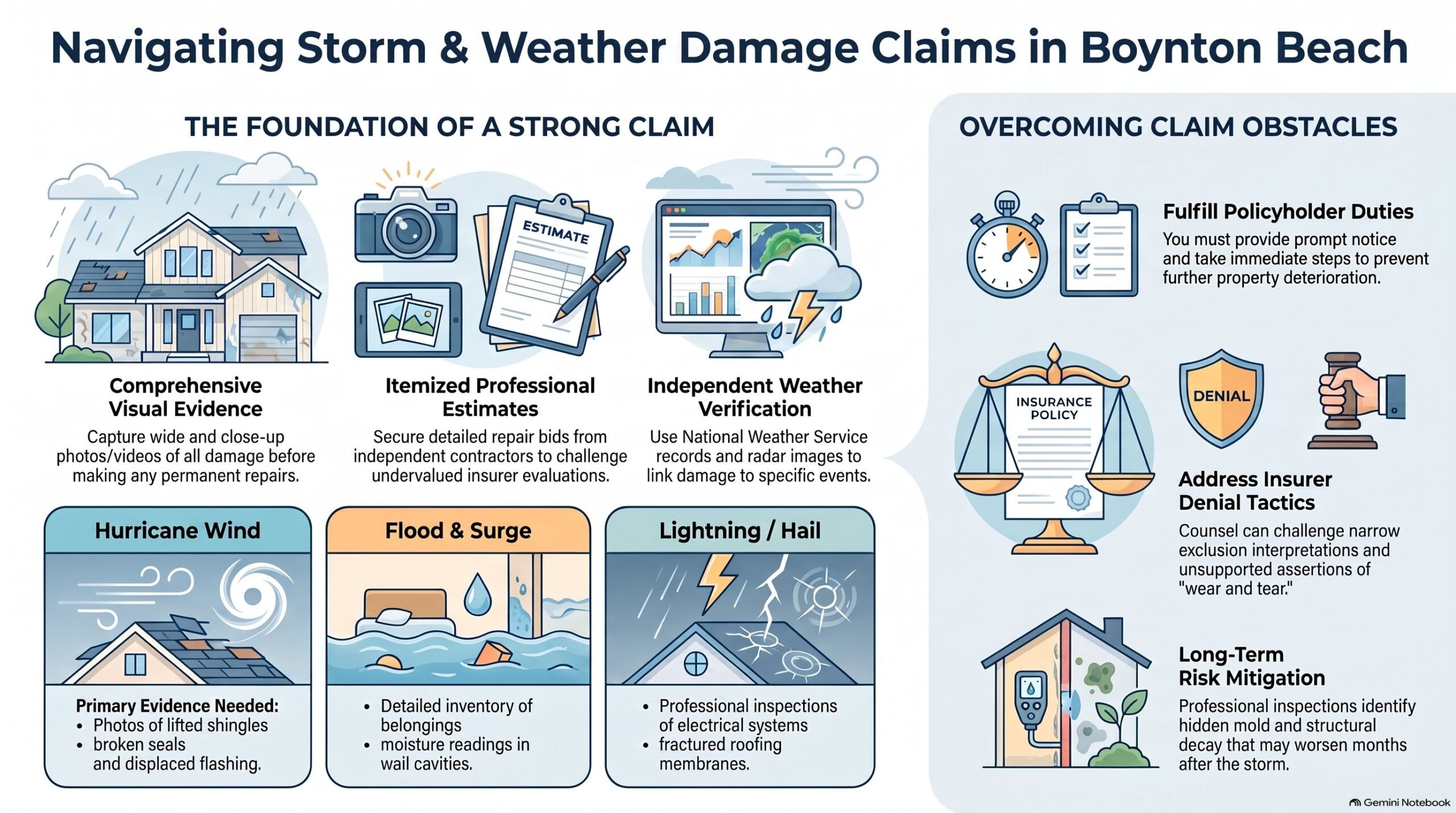
- Counsel organizes photographs, videos, inspection reports, receipts, estimates, and communications to document damage and connect it to the weather event.
- Lawyers address delayed inspections, incomplete insurer evaluations, claim denials, requests for additional information, and missed deadlines.
- Independent contractors and qualified inspectors can prepare itemized estimates that identify necessary repairs, mitigation, code upgrades, and labor and material costs.
- Legal representation supports negotiations or litigation when insurers undervalue covered damage or dispute causation, scope, or repair costs.


How We Can Help With Your Boynton Beach Property Claim Storm & Weather Damage Injury Claim
When a severe storm damages a home or business, a Boynton Beach property claim storm and weather damage lawyer can evaluate the loss, interpret the insurance policy, and pursue the benefits the policyholder may be entitled to receive. Counsel may inspect available records, organize photographs, repair estimates, invoices, and communications, and identify information needed to support the claim. Through careful claim documentation prep, the legal team can present a clear account of the damage, its cause, and the costs associated with restoring the property.
A lawyer may also communicate with insurers, adjusters, contractors, and other involved parties on the policyholder’s behalf. This assistance can help address delays, incomplete evaluations, or requests for additional information while preserving important deadlines. In Insurance coverage disputes, counsel can analyze exclusions, limitations, valuation provisions, and applicable obligations under the policy. The objective is to pursue a fair resolution through informed negotiation or, when appropriate, formal legal action, while allowing the policyholder to focus on protecting the property and serving affected occupants.
OUR CONSULTATIONSARE FREE
START YOUR FREE CASE REVIEW

Understanding Boynton Beach Property Claim Storm & Weather Damage Injury Cases
Storm and weather-damage cases generally involve disputes over whether an insurance policy covers the reported loss, the extent of the damage, and the amount needed for proper repairs. Understanding these cases requires careful attention to policy language, exclusions, deductibles, and required notice procedures. The insured’s Homeowner duties may include protecting the property from additional harm, providing prompt notice, cooperating with inspections, and submitting requested documentation.
Strong record preservation can help establish the property’s condition before and after the event. Photographs, videos, receipts, communications, and repair records may clarify disputed facts. Independent contractor estimates can provide useful comparisons when an insurer’s valuation appears incomplete or insufficient, provided they accurately identify necessary work and avoid unsupported assumptions. A well-organized claim timeline can show when damage was discovered, reported, inspected, evaluated, and addressed. Legal professionals serving affected property owners can review these materials, explain available options, and help promote a fair, well-supported resolution while maintaining clear communication throughout the process.
Common Causes of Boynton Beach Property Claim Storm & Weather Damage
Boynton Beach properties may sustain storm-related losses from hurricane winds, roof leaks, flooding, and storm surge. Lightning strikes and hail can also damage roofing, electrical systems, windows, and other structural components. Identifying the specific cause and documenting the resulting damage are important when evaluating a property insurance claim.
Hurricane Wind Damage
Hurricane winds can cause substantial property damage by tearing away shingles, puncturing roofing materials, breaking windows, and allowing rain to penetrate the building envelope. Powerful gusts may also dislodge siding, damage exterior doors, topple trees, and compromise fences, screens, and other structures. The severity often depends on wind speed, construction quality, maintenance history, and nearby exposure. A timely Wind assessment can document visible impacts, identify affected building components, and distinguish hurricane forces from preexisting conditions. Photographs, repair estimates, weather data, and inspection findings may help establish the scope and timing of the loss. When an insurer questions coverage, causation, or repair costs, an insurance dispute may develop. Property owners can benefit from organized records and qualified professional guidance while pursuing a fair evaluation of hurricane-related damage.
Roof Leaks
Roof leaks are a common source of property damage in Boynton Beach after severe weather, often occurring when wind lifts shingles, punctures roofing membranes, dislodges flashing, or drives rain beneath weakened roof components. Even a minor opening can allow moisture to damage insulation, ceilings, drywall, framing, and electrical systems. Detecting hidden leaks promptly is critical because stains may appear far from the actual entry point, while deterioration can continue between storms. Property owners should photograph visible damage, preserve damaged materials when safe to do so, and arrange for qualified evaluations before making permanent repairs. An insurance inspection should document the roof’s condition, identify storm-related causes, and distinguish recent damage from ordinary wear. Clear records, repair estimates, and maintenance history can help support a complete claim and assist those serving affected policyholders.
Flooding And Storm Surge
When heavy rainfall, rising waterways, or coastal storm surge enters a property, the resulting flooding can damage foundations, flooring, drywall, electrical systems, and personal belongings within a short period. In Boynton Beach, inadequate drainage, blocked culverts, tidal conditions, and inadequate elevation may increase this risk. Property owners can help prevent basement flooding with sump pumps, backflow valves, sealed openings, elevated utilities, and regular drainage inspections. Wind surge mitigation, including storm shutters, reinforced doors, and properly secured exterior equipment, may also reduce openings that allow water intrusion. After an event, occupants should prioritize safety, avoid energized areas, document visible damage, and notify insurers promptly. A detailed inventory, photographs, repair estimates, and receipts can help establish the scope of loss. Legal guidance may assist when coverage, causation, or valuation becomes disputed.
Lightning And Hail Damage
Lightning strikes and hailstorms can cause significant property damage in Boynton Beach, affecting roofing materials, siding, windows, electrical systems, appliances, and interior finishes. Lightning strike effects may include fires, power surges, damaged wiring, and concealed structural harm that becomes apparent only after an inspection. Hail can fracture shingles, dent metal surfaces, break skylights, and compromise protective membranes, allowing moisture to enter the property. A thorough hail impact assessment should document the size, distribution, and severity of visible damage and identify any related interior conditions. Photographs, repair estimates, weather data, and maintenance records can help establish the loss and support a complete insurance submission. Property owners and their representatives should preserve damaged materials, prevent further deterioration, and seek qualified assistance when evaluating coverage, causation, and necessary repairs.
Don’t Wait. Call Our Florida Personal Injury Lawyers Now!


Legal Rights of Boynton Beach Property Claim Storm & Weather Damage Injury Victims
Property owners in Boynton Beach may have legal rights when storms or severe weather damage their homes, businesses, or other insured structures. An insurance policy may require the insurer to investigate promptly, communicate reasonably, and pay covered losses in accordance with its terms.
Affected individuals can protect those rights by documenting the conditions, preserving damaged materials when safe to do so, and reporting losses within applicable deadlines.
- Policyholders may request written explanations of coverage decisions, estimates, exclusions, and reasons for claim denials.
- They may review whether Insurance adjuster tactics, inadequate inspections, or unsupported causation findings affected the evaluation.
- They may challenge unfair handling through internal appeals, regulatory complaints, mediation, appraisal, or litigation when appropriate.
Legal rights depend on policy language, evidence, statutory requirements, and the timing of notice. A qualified property-claim attorney can examine records, identify disputed coverage issues, communicate with insurers, and help pursue benefits without compromising safety or recovery. Prompt guidance may also preserve evidence and prevent avoidable procedural errors.
Why Do Boynton Beach Property Claim Storm & Weather Damage Injuries Happen?
Storm- and severe-weather injuries in Boynton Beach often result from hazardous conditions caused by wind, flooding, lightning, falling debris, and structural damage. These dangers can affect residents, visitors, workers, and emergency personnel when buildings, trees, utility systems, or exterior features fail during a storm.
Inadequate Storm preparation may leave roofs, windows, drainage systems, and electrical components unable to withstand predictable weather conditions. Delayed maintenance can worsen those weaknesses, allowing leaks, collapses, electrical exposure, or unstable surfaces to cause injuries. Floodwater may conceal holes, displaced materials, contaminated substances, or energized equipment, increasing risks for anyone entering affected areas.
Injuries may also result from negligent repairs or unsuitable temporary measures after earlier damage. Poor contractor selection can lead to incomplete inspections, improper installation, or failure to follow building and safety requirements. Property owners, managers, and contractors may accordingly contribute to dangerous conditions through neglect, defective work, or insufficient warnings. Understanding these causes helps communities promote safer properties and responsible service.
What Should You Do After a Boynton Beach Property Claim Storm & Weather Damage Injury?
After a storm-related property injury, the affected individual should first ensure immediate safety and obtain medical attention when necessary. The individual should then capture visible damage with photographs, videos, repair estimates, and written observations while preserving relevant records. Timely contact with the insurer can initiate the claim process, although all communications and settlement offers should be reviewed carefully.
Ensure Immediate Safety
Ensure immediate safety by moving injured individuals away from unstable structures, exposed electrical wiring, rising water, shattered glass, and other hazards created by severe weather. A responsible person should assess whether evacuation is necessary without entering areas that may collapse or contain contaminated floodwater. Emergency services should be contacted promptly for serious bleeding, breathing problems, unconsciousness, suspected fractures, or other urgent conditions. Individuals should avoid downed power lines, gas odors, and damaged utilities and leave those hazards to qualified responders. If safe, basic first aid may be provided while awaiting assistance, but rescuers should not create additional danger. Storm safety planning can help households identify shelters, medical needs, and transportation options before emergencies occur. Updated emergency contact lists should remain accessible, including relatives, healthcare providers, utility companies, and local authorities.
Document Storm Damage
Thorough documentation should begin as soon as the property can be safely inspected, because photographs, videos, and written observations can preserve evidence of the damage and its connection to the weather event. A Storm photo checklist can help residents capture wide views of each affected area and close-up images of broken materials, water intrusion, fallen trees, and damaged personal property. Images should include identifying details and, when possible, be preserved in their original form. Written notes should record the date, approximate time, weather conditions, and measures taken to prevent additional harm. Receipts for temporary repairs, cleanup, lodging, or replacement items should be retained. An Insurance estimate timeline should also be maintained to document when inspections, estimates, and repair proposals are received. Organized records can assist those serving affected households and evaluating property losses.
Contact Your Insurer
Once the damage has been documented, the property owner should promptly notify the insurer through the policy’s designated claims channel. The notice should identify the property, describe the storm event, and provide the date the damage was discovered. A clear account helps establish claim timelines and reduces avoidable administrative delays. The owner should retain photographs, repair estimates, receipts, weather reports, and all correspondence as part of careful evidence preservation. Temporary repairs may be necessary to prevent further harm, but permanent work should generally wait until the insurer has inspected the property, when practical. Policyholders should avoid speculation and provide accurate, consistent information. If the insurer issues a denial or coverage disputes arise, a qualified property claims lawyer can review the policy, communications, and supporting records, and then help protect the owner’s rights.
Critical Evidence in a Boynton Beach Property Claim Storm & Weather Damage Injury Case
A strong Boynton Beach storm-damage claim typically depends on organized evidence that connects the weather event to the property’s condition and losses.
Critical materials include:
- Storm damage documentation and weather condition records;
- Property inspection reports; and
- Repair cost estimates supported by qualified professionals.
Together, these records can help establish the cause, scope, and reasonable repair value of the damage.
Storm Damage Documentation
When storm damage occurs, prompt and accurate documentation can become key evidence in a Boynton Beach property claim. Property owners should photograph every affected area before making permanent repairs, including roof surfaces, walls, ceilings, flooring, windows, and personal belongings. Photos of interior conditions can reveal staining, displacement, and deterioration that may later be concealed. A dated record of moisture tracking, including where water traveled and when conditions changed, can help connect visible damage to the reported loss. Contractor notes should describe observed conditions, temporary measures, recommended repairs, and materials involved without overstating conclusions. Detailed evidence of wind impact, such as lifted shingles, broken screens, or damaged exterior fixtures, may further clarify the claimed damage. Organized documentation can assist insurers, professionals, and those serving affected property owners.
Weather Condition Records
Weather condition records can provide vital evidence in a Boynton Beach property claim involving storm-related damage. Reports from a nearby Weather station may document wind speed, gusts, barometric pressure, temperature, hail, lightning, and the timing of severe conditions. Rainfall totals can help establish whether intense precipitation or flooding corresponded with the reported loss. Official records from the National Weather Service, municipal agencies, airports, and reputable private providers may strengthen a claim by offering independently generated information. Time-stamped radar images, storm advisories, and emergency alerts can further clarify the event’s duration and severity. Preserving these materials promptly helps attorneys, insurers, and other professionals evaluate causation and coverage. Such evidence may also help distinguish storm-related damage from ordinary wear and tear, supporting a fair and properly documented resolution for affected property owners.
Property Inspection Reports
Property inspection reports can establish the nature, location, and probable cause of storm-related damage in a Boynton Beach property claim. A qualified inspector may document roof openings, displaced materials, water intrusion, staining, mold indicators, and structural concerns through written findings and photographs. These observations help distinguish recent storm impacts from preexisting deterioration, maintenance issues, or unrelated defects. Detailed Storm documentation should identify inspection dates, weather conditions, affected areas, and any limitations on the examiner’s conclusions. Reports should be preserved with correspondence, photographs, videos, and promptly submitted notices. Consistent records can also clarify whether inspections occurred within applicable insurance timelines and whether the insurer received sufficient information to evaluate the claim. Objective reporting supports fair treatment of policyholders and helps decision-makers assess coverage based on observable conditions rather than unsupported assumptions.
Repair Cost Estimates
Accurate repair cost estimates provide important evidence in a Boynton Beach storm and weather damage property claim by translating documented damage into the financial resources required for restoration. A qualified contractor should inspect affected roofing, walls, flooring, electrical components, and personal property, then prepare an itemized estimate supported by photographs, measurements, material prices, and labor charges. Multiple estimates may clarify reasonable market costs and expose omissions in an insurer’s valuation. When an estimate reflects necessary repairs, code upgrades, and related mitigation measures, it can help prevent an insurance claim denial due to incomplete documentation. Clear records also support the resolution of estimate disputes by allowing representatives to compare scope, causation, and pricing. Promptly obtaining and preserving these estimates helps property owners present accurate information and assists those serving claimants in pursuing fair benefits.
Don’t Wait. Call Our Florida Personal Injury Lawyers Now!
Long-Term Effects of Boynton Beach Property Claim Storm & Weather Damage Injuries
Long-term storm damage may worsen as structural defects spread, weakening roofs, walls, foundations, and other vital components. Persistent moisture can promote mold growth and create health and habitability risks, particularly when affected areas remain unrepaired. Delayed insurance claims may further increase repair costs, complicate evidence collection, and limit available coverage arguments.
Structural Damage Progression
When storm and weather damage is not promptly identified and repaired, minor defects can develop into progressive structural deterioration. Wind-lifted shingles, displaced flashing, and compromised roof decking may permit continued degradation of supporting materials. Over time, weakened connections, sagging surfaces, cracked masonry, and shifting frames can expand the scope and cost of necessary repairs. Property owners who serve their families, tenants, or communities should promptly arrange qualified inspections and carefully document each condition. Evidence preservation can establish when the damage appeared, how it progressed, and whether reasonable mitigation was undertaken. Roof inspection reports, photographs, repair estimates, and contractor communications may help clarify the property’s condition and support an insurance claim. Early professional evaluation can protect occupants, preserve repair options, and provide insurers with reliable information for fair claim assessment.
Mold And Moisture Risks
Storm-related water intrusion can create concealed mold and moisture conditions that worsen long after visible damage appears resolved. Damp insulation, wall cavities, flooring, and roofing materials may retain water, allowing mold growth behind surfaces that appear dry. These conditions can produce persistent odors, respiratory irritation, and deterioration of building components, particularly in Boynton Beach’s warm, humid climate. Property owners serving families, tenants, or customers should arrange prompt inspections after storms, including moisture readings in concealed areas. Humidity monitoring can identify elevated indoor levels before visible mold develops, while Preventive ventilation helps remove trapped moisture from attics, crawl spaces, bathrooms, and enclosed rooms. Professional remediation may be necessary when contamination extends beyond surface materials. Documented inspections, photographs, and repair findings can clarify the property’s condition and support responsible restoration efforts.
Delayed Claim Consequences
Although some storm and weather damage may appear minor at first, delaying a property claim can lead to significant long-term consequences for Boynton Beach property owners. Unaddressed roof leaks, structural weaknesses, and persistent moisture may worsen over time, increasing repair costs and creating hazardous living conditions. Insurers also impose Insurance timelines that require prompt notice, documentation, and cooperation. Missing a deadline can limit available benefits or contribute to claim denial, even when covered damage occurred. Delays may additionally compromise evidence, as damaged materials deteriorate, temporary repairs alter conditions, or weather events obscure the original cause. A timely inspection, thorough photographs, repair records, and written communication can help preserve the owner’s position. Prompt professional guidance may support fair treatment, protect household safety, and assist affected owners in meeting policy requirements while pursuing appropriate recovery.
Proving Liability in Boynton Beach Property Claim Storm & Weather Damage Injury Cases
Establishing liability in a Boynton Beach storm and weather damage property claim requires clear evidence connecting the covered event to the specific losses reported. Photographs, videos, repair estimates, inspection records, weather reports, and maintenance documentation can help establish the property’s condition before and after the storm. A timely professional inspection may identify whether wind, hail, flooding, or another covered peril caused the damage, rather than wear, construction defects, or inadequate upkeep.
Witness statements can further clarify when damage appeared and how the event affected the premises. In intricate matters, expert testimony from engineers, roofers, contractors, or meteorologists may explain causation, the scope of repairs, and the reasonableness of claimed costs. Records should remain organized and preserved because missing or inconsistent evidence can weaken a legitimate claim.
Comparative negligence may be relevant if an owner’s conduct allegedly contributed to the loss, such as by ignoring known maintenance issues. Careful factual analysis helps distinguish responsibility fairly and supports accurate resolution for affected property owners and their communities.
Dealing With Insurance Companies After a Boynton Beach Property Claim Storm & Weather Damage Injury
Once the cause and scope of property damage have been documented, the claim must be presented carefully to the insurer. A complete submission should include photographs, repair estimates, receipts, weather records, and a clear description of affected areas. Policyholders should preserve damaged materials when safe to do so and maintain copies of all communications.
A policy coverage review can clarify deductibles, exclusions, deadlines, and obligations concerning temporary repairs. An experienced Boynton Beach property claim storm and weather damage lawyer may help identify applicable provisions and organize supporting evidence without overstating the loss. Insurers may employ Claim denial tactics, including narrow interpretations of exclusions, requests for repeated documentation, or assertions that inadequate maintenance caused the damage. Prompt, factual responses can help protect the policyholder’s position.
Statements to adjusters should remain accurate and limited to documented facts. The policyholder should avoid signing releases or accepting payment before understanding whether the proposed amount addresses all covered damage. Professional guidance can support fair treatment while preserving available rights under the policy and Florida law.
What to Expect During a Boynton Beach Property Claim Storm & Weather Damage Injury Claim Process
A Boynton Beach storm and weather damage claim typically begins with promptly reporting the damage and preserving detailed records of affected property. The claimant may need photographs, repair estimates, receipts, and other evidence to support the documented losses during the insurance review. Coverage negotiations may follow, and unresolved disputes can require formal appraisal, mediation, or legal action.
Reporting Storm Damage
Promptly reporting storm damage is an essential first step in a Boynton Beach property claim because delays can complicate coverage decisions and allow conditions to worsen. After confirming immediate safety, the property owner should notify the insurer through the required channel, usually a claims telephone line, online portal, or designated representative. Safety planning should come first, including evacuation decisions, emergency repairs, and precautions against electrical, structural, or water-related hazards. The report should state when the storm occurred, identify the general type of damage, and explain whether the premises remain habitable. Claimants should request a claim number, adjuster contact information, and instructions for preserving relevant conditions. A documentation checklist can help organize communications and deadlines without replacing professional guidance. Timely, accurate reporting allows all involved parties to respond efficiently and protect affected occupants.
Documenting Property Losses
Thorough documentation gives a Boynton Beach property claim a reliable factual foundation and helps distinguish covered storm damage from unrelated conditions. The property owner should photograph and video each affected area before repairs or cleanup alter its appearance. Images should show both close-up details and wider views that establish location and scope. Written notes can record the storm’s date, observed conditions, time of discovery, and steps taken to prevent further harm. Receipts, contractor estimates, repair invoices, purchase records, and temporary-living expenses may help establish the claimed value. A room-by-room inventory should identify damaged belongings, approximate ages, original costs, and replacement needs. Preserving damaged materials, when safe and practical, can support evidence of damage. Organized records assist insurance negotiation later, while consistent descriptions reduce confusion and promote fair claim evaluation.
Negotiating Insurance Coverage
When negotiating insurance coverage, the policyholder should compare the insurer’s position with the policy’s specific terms, deductibles, exclusions, and coverage limits. A careful review of the policy language helps identify what storm or weather damage may qualify, which documentation supports the request, and whether deadlines or notice requirements apply. An exclusions analysis can clarify how wind, water intrusion, flooding, mold, or maintenance conditions affect available benefits. The policyholder may provide repair estimates, photographs, receipts, expert findings, and a concise explanation connecting the observed damage to the covered event. Communications should remain organized, factual, and respectful, allowing the insurer to evaluate the claim efficiently. Professional assistance may help interpret unfamiliar provisions, prepare a complete submission, and protect the policyholder’s interests while seeking coverage consistent with the contract’s terms.
Resolving Claim Disputes
If an insurer disputes a Boynton Beach property claim involving storm or weather damage, the policyholder should first identify the precise basis for the disagreement and compare it with the policy’s coverage provisions. A review may reveal Policy coverage gaps, exclusions, deductibles, or disputes over whether wind, flooding, or another cause caused the loss. The policyholder should document the timeline of damages, beginning with weather reports and continuing through inspections, repairs, and communications with the insurer. Evidence preservation is crucial; photographs, invoices, contractor opinions, damaged materials, and temporary repair records may establish causation and the reasonable value of the claim. A dispute resolution strategy may include a detailed written response, appraisal, mediation, regulatory assistance, or litigation. Prompt legal guidance can help protect deadlines, clarify available remedies, and support fair treatment throughout the process.
Compensation for Boynton Beach Property Claim Storm & Weather Damage Injury Damages
Storm and weather damage can cause substantial property losses and related personal injuries, leaving Boynton Beach claimants to pursue compensation for covered repairs, temporary housing, lost use, medical expenses, and other documented damages. A careful review of the policy, incident records, and available evidence helps identify damages that may be presented to an insurer. Weather documentation, including photographs, official reports, inspection findings, and dated communications, can support the claim’s connection to the covered event. Repair estimates should be obtained from qualified professionals and updated as hidden damage becomes apparent. Mold prevention measures, including prompt drying, sanitation, and professional evaluation, may help limit additional losses and demonstrate reasonable mitigation. During claim negotiation, organized invoices, medical records, receipts, and proof of temporary living costs can clarify the requested payment. Claimants may benefit from guidance that protects their interests while supporting fair treatment of affected households, businesses, and communities. Prompt reporting and consistent documentation can also reduce avoidable disputes over coverage, causation, and the scope of necessary work.
Economic vs Non-Economic Damages in Boynton Beach Property Claim Storm & Weather Damage Cases
Economic damages may include documented repair costs, temporary housing, debris removal, and other financial losses caused by storm or weather damage. Non-economic losses can involve diminished use, disruption, and related impacts that may not have a straightforward market value. Calculating total compensation requires evaluating both categories, reviewing supporting evidence, and considering applicable policy terms and legal standards.
Economic Damage Categories
When a covered storm or weather event damages property, the resulting claim may include both economic and non-economic damages, although insurance policies generally focus on measurable financial losses. Economic damage categories commonly include reasonable repair or replacement costs for roofs, walls, flooring, windows, plumbing, electrical systems, and personal property. Additional covered losses may include debris removal, emergency mitigation, temporary security, water extraction, mold prevention, and increased utility expenses resulting from restoration work. If the premises cannot be used, policy provisions may also provide for temporary lodging, lost rental income, or business interruption, subject to applicable limits and exclusions. A detailed documentation checklist can organize photographs, invoices, estimates, receipts, inventories, and proof of payment. This evidence assists adjusters, policyholders, and professionals evaluating insurance claim disputes and determining the value of covered losses.
Non-Economic Losses
Beyond documented repair costs and other measurable financial losses, a Boynton Beach property claim may involve non-economic harm arising from the disruption caused by storm or weather damage. Residents may experience anxiety, loss of security, and emotional distress when a home becomes unsafe, inaccessible, or markedly altered. Although property insurance primarily addresses covered physical losses, the personal impact of displacement and prolonged uncertainty can be important when communicating with an insurer or evaluating available legal remedies. Pain and suffering may describe the discomfort, inconvenience, and psychological strain connected with storm-related conditions, particularly when damage affects daily routines or family stability. A careful claim review should distinguish these experiences from repair expenses and identify whether applicable law, policy language, or related claims permit recovery for non-economic harm in the circumstances presented.
Calculating Total Compensation
A total compensation assessment in a Boynton Beach property claim should separate measurable economic damages from any legally recoverable non-economic harm. Economic losses may include roof repairs, interior restoration, debris removal, emergency services, temporary housing, lost rental income, and damaged personal property. Documentation such as invoices, estimates, photographs, receipts, and proof of displacement helps establish value and causation. A careful wind damage valuation should distinguish covered storm damage from wear, maintenance issues, or excluded causes. Non-economic damages are generally more limited in property disputes and may depend on applicable law, policy terms, and documented effects on household use or well-being. An effective Insurance negotiation strategy presents a complete, organized calculation, addresses depreciation and deductibles, and identifies disputed items. Professional guidance can help claimants pursue a fair, supportable settlement while responsibly serving affected families.
Don’t Wait. Call Our Florida Personal Injury Lawyers Now!
When a Boynton Beach Property Claim Storm & Weather Damage Injury Case Goes to Trial vs Settlement
Whether a storm- and weather-damage property claim proceeds to trial or is resolved through settlement depends on the strength of the evidence, the extent of the loss, and the positions taken by the insurer and policyholder. Early evidence preservation strategies can include photographing conditions, securing repair records, documenting communications, and obtaining qualified assessments before conditions change.
Settlement may provide a faster, more predictable resolution while reducing litigation costs and uncertainty. Effective settlement negotiation tactics rely on organized documentation, credible damage estimates, and a clear explanation of coverage and claimed losses. A policyholder may accept an offer when it fairly reflects the property’s repair or replacement needs.
Trial becomes more likely when coverage, causation, valuation, or responsibility remains disputed. Counsel may present witnesses, expert opinions, photographs, invoices, and other records to establish the claim. Although trial can produce a favorable judgment, it requires preparation, time, and tolerance for an uncertain outcome. Serving the policyholder’s interests requires a careful comparison of both paths.
Florida Laws That May Affect Your Boynton Beach Property Claim Storm & Weather Damage Case
Florida laws can materially affect how a Boynton Beach storm and weather damage property claim is evaluated, presented, and resolved. State requirements, policy language, and evidence standards may shape the parties’ responsibilities while encouraging fair treatment for affected property owners.
- Policy interpretation: Florida courts may examine coverage provisions, deductibles, conditions, and Insurance coverage exclusions when determining whether wind, rain, flooding, or resulting damage is covered.
- Claim conduct: Insurers generally must investigate claims promptly, communicate decisions, and handle covered losses in good faith. Property owners should provide requested records, photographs, estimates, and other reliable evidence.
- Filing procedures: Policy terms and Florida regulations can influence the timeline for filing a claim, notice requirements, proof-of-loss submissions, inspections, and communications with the carrier.
Because legal duties can vary depending on the policy and the circumstances of the damage, careful documentation supports accurate evaluation and constructive resolution. Counsel serving affected residents may review coverage, identify procedural concerns, and explain available remedies without promising a particular result. Professional guidance can also help preserve organized evidence and promote informed decisions throughout the claim process.
The Statute of Limitations for Boynton Beach Property Claim Storm & Weather Damage Injury Cases
Time limits can determine whether a Boynton Beach property owner may pursue a storm or weather damage claim in court after an insurer disputes, delays, or denies coverage. Florida law establishes claim-filing deadlines that may bar litigation if a lawsuit is not brought within the applicable period. The controlling deadline may depend on the policy language, the loss date, the type of damage, and whether statutory exceptions apply. An insurance policy review may identify contractual notice requirements, proof-of-loss provisions, appraisal conditions, and suit-limitation clauses that affect the claim’s timing. Separate rules may govern residential and commercial property policies, while changes in legislation can alter deadlines for particular losses. Property owners should preserve photographs, repair records, correspondence, estimates, and payment documentation as soon as damage occurs. Prompt attention supports accurate evaluation and helps protect available remedies. Because missing a deadline can bar otherwise valid relief, careful calendar tracking and timely legal assessment serve the interests of owners, families, tenants, and communities relying on fair claim resolution.
How a Boynton Beach Property Claim Storm & Weather Damage Lawyer Can Help You
After a storm or severe weather event, a Boynton Beach property claim storm and weather damage lawyer can help property owners evaluate coverage, document losses, and address disputes with an insurer. The lawyer may support policyholders by:
A Boynton Beach storm damage lawyer helps property owners evaluate coverage, document losses, and pursue fair resolutions to insurance claims.
- Reviewing declarations, exclusions, deductibles, endorsements, and deadlines to clarify available benefits.
- Organizing photographs, repair estimates, receipts, engineering opinions, and other evidence connecting damage to the covered event.
- Applying Negotiation strategies to present a well-supported demand and challenge underpayments, delays, or improper claim denials.
For landlords, counsel can also explain responsibilities related to tenant communications, temporary accommodations, habitability concerns, and coordination with property managers. This guidance helps preserve relationships while separating insurance obligations from duties imposed by leases or law. A lawyer may communicate with adjusters, contractors, and consultants so the property owner can focus on protecting occupants and restoring safe conditions. By providing structured oversight, the attorney promotes fair treatment, accurate valuation, and responsible claim administration. These services can benefit owners who seek to serve tenants, families, employees, or community members during a difficult recovery period without sacrificing legitimate financial protections.
When to Contact a Boynton Beach Property Claim Storm & Weather Damage Lawyer
Prompt consultation with a Boynton Beach property claim storm and weather damage lawyer may be appropriate when an insurer delays an investigation, offers an inadequate payment, or questions whether the loss is covered. Early guidance can help a policyholder understand reporting deadlines, requested documents, and communications that may affect the claim.
A lawyer may also be contacted when hurricanes, flooding, high winds, or related weather events cause extensive damage to structures or personal property. Timely advice supports the preservation of evidence, including photographs, repair estimates, damaged materials, receipts, inspection reports, and records of temporary protection measures. Such documentation can clarify the property’s condition and the scope of the loss.
Legal assistance may become especially important after a partial denial, unexplained adjustment, repeated requests for information, or disagreement over repair costs. Counsel can review the policy, identify disputed issues, and develop negotiation strategies based on the available evidence. Prompt action can help preserve relevant records and support a fair, orderly claims process for affected property owners and their families.
Why You Need an Experienced Boynton Beach Property Claim Storm & Weather Damage Lawyer
An experienced Boynton Beach property claim storm and weather damage lawyer can provide informed guidance when coverage, causation, or the value of a loss becomes disputed. Storm claims often involve policy exclusions, deductibles, deadlines, and competing explanations regarding whether damage resulted from wind, flooding, neglect, or another covered event. An attorney can conduct a thorough Policy Coverage Review, identify applicable protections, and explain obligations that may affect recovery.
Strong Claim Documentation is equally important. Photographs, repair estimates, inspection findings, receipts, weather records, and correspondence can help establish the property’s condition, the timing of damage, and the financial impact. A lawyer can organize this evidence and present a coherent claim to the insurer while responding to requests for information.
Experienced legal assistance also helps protect policyholders from premature settlements or unsupported denials. By addressing disputes carefully, counsel can support fair treatment and preserve resources needed to restore homes, businesses, and community-serving facilities after severe weather events.
How to Choose the Right Boynton Beach Property Claim Storm & Weather Damage Lawyer for Your Case
Selecting the right Boynton Beach property claim storm and weather damage lawyer requires careful consideration of the attorney’s experience with insurance disputes, policy interpretation, and property-loss investigations. A Client criteria checklist can help compare credentials, relevant practice areas, case preparation methods, and professional standing. Local case experience may indicate familiarity with regional weather patterns, building practices, courts, and insurance procedures, although no outcome can be guaranteed.
Communication style matters when a claimant must provide records, describe damage, and make informed decisions under pressure. Prospective clients should determine how promptly the lawyer responds, who will handle routine questions, and whether significant developments will be explained clearly. Fee transparency considerations also warrant careful review. The engagement agreement should identify billing arrangements, potential case expenses, responsibility for expert evaluations, and any conditions affecting payment. A lawyer who provides realistic assessments, protects the claimant’s interests, and treats affected property owners with respect can help ensure a more organized and informed claims process.
About The Law Offices of Anidjar & Levine
The Law Offices of Anidjar & Levine represents individuals and property owners pursuing insurance claims involving storm and weather-related damage in Boynton Beach and throughout Florida.
The firm assists clients seeking fair treatment after hurricanes, windstorms, flooding, hail, and other covered events affect homes or commercial properties.
Its attorneys review policy language, investigate damage, and help organize Weather Damage Documentation, including photographs, repair estimates, inspection reports, and records of temporary expenses.
This preparation can clarify the scope of loss and establish a stronger basis for negotiations.
The firm also evaluates Insurance Claim Errors, such as delayed investigations, unsupported denials, undervalued repairs, or improper policy interpretations.
When disputes cannot be resolved through direct communication, legal counsel may pursue additional remedies available under Florida law.
The firm’s approach emphasizes careful case preparation, clear communication, and responsible advocacy.
Property owners may benefit from consulting counsel before signing releases or accepting claim payments that may not fully reflect the extent of the damage.
Frequently Asked Questions
Does Homeowners Insurance Cover Flood Damage From Storm Surge in Boynton Beach?
Homeowners insurance generally does not cover flood damage from storm surge in Boynton Beach. Flood insurance is typically required, subject to its own policy limits, waiting periods, and exclusions. Coverage may differ for wind damage, while hurricane exclusions or separate deductibles can affect related claims. Documentation tips include photographing damage, preserving receipts, obtaining repair estimates, and reporting losses promptly. A qualified professional can review policy language and help identify available coverage.
Can I Make Temporary Repairs Before an Insurance Adjuster Inspects My Property?
Yes, policyholders may make temporary repairs before an adjuster arrives, particularly when Emergency Mitigation is necessary to prevent further damage or protect occupants. They should avoid permanent repairs, preserve damaged materials when safe to do so, and photograph or record the conditions before and after the work. Insurance Documentation should include receipts, contractor details, photographs, videos, and written descriptions. The insurer should be notified promptly, and nonemergency work should await inspection whenever possible.
What Should I Do if My Mortgage Company Receives Part of My Claim Payment?
The policyholder should promptly contact the mortgage company, request a written payment notice, and ask how the funds will be held or released. Mortgage escrow procedures may require inspections, contractor documentation, or staged disbursements before repairs proceed. The policyholder should confirm settlement timing with both the insurer and lender, preserve all correspondence, and determine whether a lender endorsement is required. Professional assistance may help resolve delays and protect claim rights.
Are Damaged Trees, Landscaping, and Debris Removal Covered After a Storm?
Damaged trees, landscaping, and debris removal may be covered after a storm, but coverage depends on the policy’s limits, cause-of-loss provisions, and applicable storm-related exclusions. Insurers may pay to remove fallen trees that block access or damage insured structures, while cosmetic landscaping losses often receive limited coverage. The policyholder should photograph conditions, preserve receipts, avoid unnecessary disposal, and provide proof of ownership when requesting reimbursement. Coverage disputes warrant prompt professional review.
Can I File a Claim for Mold That Develops After Weather-Related Water Damage?
A policyholder may file a claim for mold that develops after weather-related water damage, particularly when the underlying event is covered, and the mold resulted directly from it. Coverage depends on policy exclusions, limits, notice requirements, and Insurance Guidelines. The policyholder should promptly notify the insurer, prevent additional damage, preserve damaged materials, and obtain professional assessments. Detailed photographs, repair records, moisture readings, and Documented Exposure can support causation and necessary remediation expenses.
—————————
Storm and weather damage can leave Boynton Beach property owners facing substantial repair costs, disputed coverage, and difficult negotiations with insurers.
The Law Offices of Anidjar and Levine helps clients evaluate policy rights, document losses, and pursue appropriate compensation through informed legal action.
Prompt consultation may protect essential evidence and prevent avoidable delays.
Property owners should seek experienced guidance before accepting a settlement or making statements that could affect the outcome.
Learn more from a Boynton Beach Personal Injury Lawyer.

