



Law Offices of Anidjar and Levine handle Fort Myers truck accident claims by using federal trucking regulations to pinpoint safety violations and prove liability under Florida law.
We move fast to preserve vital evidence, including ELD data, driver logs, maintenance and inspection records, dispatch messages, cargo documents, GPS pings, and onboard video before it’s lost.
We also coordinate medical documentation and experts to connect those failures to your injuries and damages.
Keep going to see essential steps and deadlines, or learn more from our Fort Myers Truck Accident Lawyer page.



Main Takeaways
- A Fort Myers truck-accident lawyer can use FMCSR violations to prove negligence and link unsafe conduct directly to the crash.
- Rapid evidence preservation is critical, including ELD logs, dispatch messages, GPS pings, and onboard camera footage before overwrites occur.
- Strong cases collect maintenance, inspection, and repair records to uncover out-of-service conditions, brake defects, and neglected safety programs.
- Cargo and loading proof—bills of lading, scale tickets, and securement evidence—can establish liability for shifting loads or overweight violations.
- An experienced attorney coordinates experts and chain-of-custody documentation to make federal-regulation breaches understandable and admissible in Florida courts.
How We Can Help With Your Fort Myers Truck Accident Federal Regulations Claim
Act quickly after a Fort Myers truck crash, and we can build a federal regulations claim that targets the safety violations most insurers try to downplay.
Act fast after a Fort Myers truck crash to build a federal regulations claim that insurers try to minimize.
We’ll preserve evidence before it disappears, request crucial records, and identify the responsible parties across the carrier’s operation so your claim reflects the full scope of harm.
We’ll guide you with disciplined client communication, prompt returns of calls, clear explanations of each step, and preparation for decisions that affect your recovery.
Our case strategy focuses on proving breaches through reliable documentation, coordinated expert review, and persuasive presentation that anticipates defense arguments.
We’ll calculate damages carefully, including medical care, lost income, and future needs, and we’ll pursue settlement only when it matches the claim’s proven value.
If negotiations stall, we’ll move forward decisively and keep you informed, so you can focus on mending while we serve your best interests with steady advocacy.
Understanding Fort Myers Truck Accident Federal Regulations Cases
Because federal trucking rules shape how commercial drivers and carriers must operate, a Fort Myers truck accident case often turns on whether those standards were followed in the hours, days, and months leading up to the crash.
We help you understand how federal regulations interact with Florida negligence principles, and why documentation matters when a collision involves a commercial vehicle.
These cases commonly require a close review of driver qualification files, maintenance records, dispatch communications, and electronic logging data.
We also track Regulatory evolution, since updates to safety rules can affect what a carrier should have done at the time of the incident.
From there, we focus on Liability allocation by identifying each party’s role, including the driver, motor carrier, shipper, or maintenance provider, and connecting specific compliance failures to the harm you’ve suffered.
When we explain the process clearly, you’re better positioned to make informed decisions, protect your family, and pursue a result that serves the broader interest of roadway safety.


Common Causes of Fort Myers Truck Accident Federal Regulations
When we evaluate Fort Myers truck crashes that involve federal regulations, we often see a few recurring causes that put motorists at unnecessary risk.
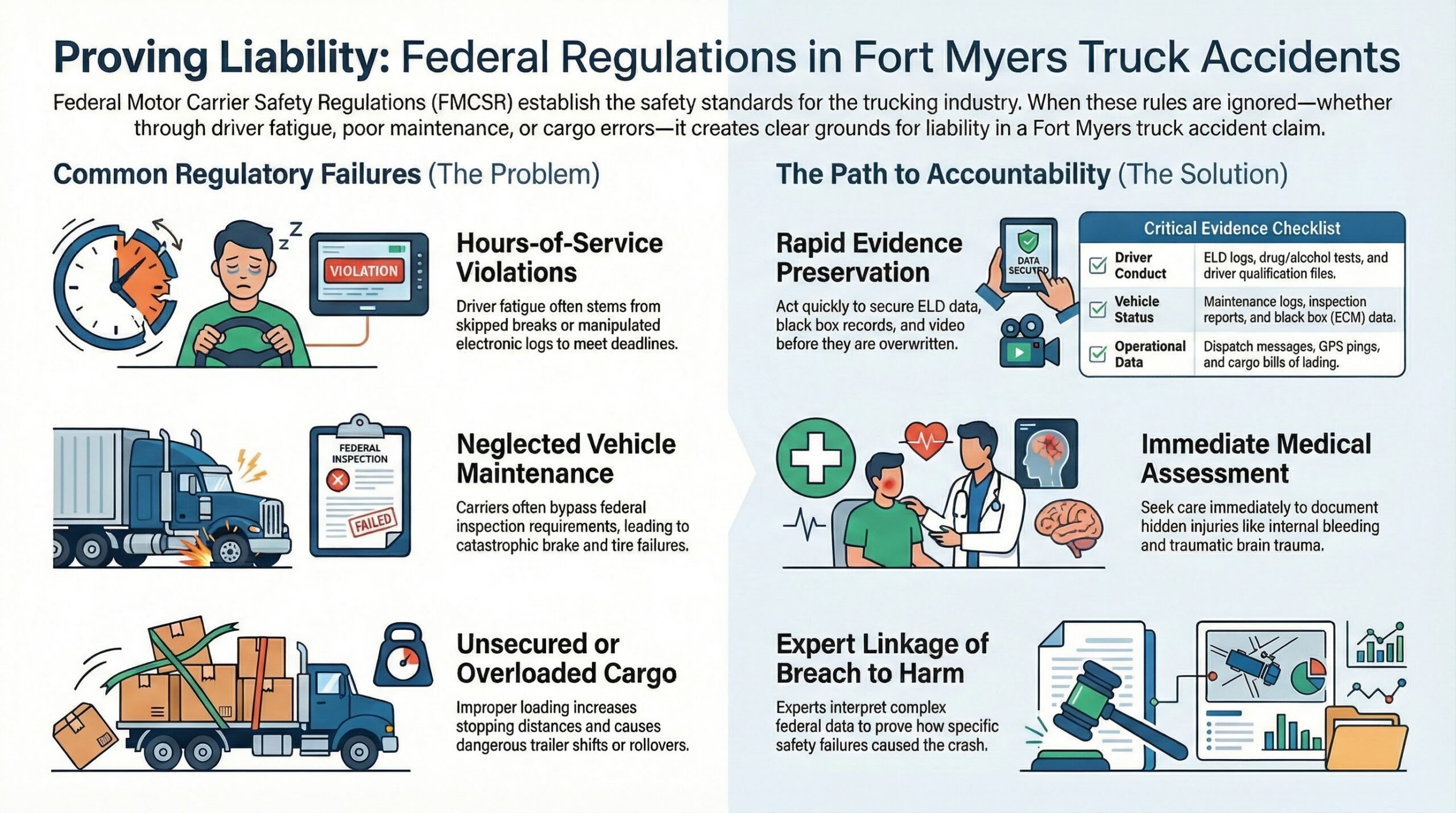
We’ll address hours-of-service violations, improper truck maintenance, overloaded or unsecured cargo, and distracted or impaired driving, each of which can trigger preventable failures on the road.
As we review these issues, we’ll explain how the underlying conduct can violate safety rules and shape liability in your claim.
Hours-Of-Service Violations
Although federal hours-of-service rules set clear limits on driving time and required rest, violations still play a major role in serious Fort Myers truck accidents.
When carriers pressure schedules or drivers push beyond legal limits, reaction time drops and judgment slips, placing everyone at risk.
We often see driver fatigue masked by skipped breaks, split sleep periods, or running “one more load” to meet a deadline. Some cases also involve timekeeping fraud, such as altered paper logs, manipulated electronic entries, or dispatch practices that encourage inaccurate reporting.
We help you identify these patterns through log reviews, fuel receipts, GPS data, and witness statements.
By holding negligent parties accountable, we protect the public and reinforce safety standards that serve every family on our roads.
Improper Truck Maintenance
Neglected maintenance can turn a routine haul through Fort Myers into a catastrophic truck crash within seconds.
When brakes fade, tires fail, or handling parts wear out, a driver may have no safe option to protect nearby families.
Federal rules require carriers to keep vehicles in safe condition, and that duty includes timely repairs and preventive inspections that identify defects before they endanger the public.
We help you look beyond excuses and pinpoint where a maintenance program broke down, whether the issue involves skipped service intervals, ignored warning signs, or rushed shop work.
We also demand complete maintenance documentation, including inspection reports, repair orders, and post-repair road tests.
With these records, we can hold responsible parties accountable and pursue a safer outcome for our community.
Overloaded Or Unsecured Cargo
Overloaded or unsecured cargo too often turns a manageable trip through Fort Myers into a violent, fast-moving wreck.
When Cargo weight exceeds legal limits, stopping distances increase, tires overheat, and braking systems strain, leaving little margin for error in routine traffic.
When loads aren’t properly tied down or balanced, a Load shift can push a trailer sideways, trigger a rollover, or spill debris into adjacent lanes.
Federal cargo securement rules require proper distribution, rated tie-downs, and regular inspection during transit, yet shortcuts still occur under schedule pressure.
If you’ve been hurt, we’ll help you pursue accountability by gathering scale tickets, bills of lading, inspection logs, and securement evidence, so your claim reflects the full impact on your life and family.
Distracted Or Impaired Driving
When a truck driver’s attention drifts to a phone, dispatch screen, or in-cab system, a routine trip through Fort Myers can turn into a high-impact collision in seconds.
Even brief eyes-off-road moments, including checking a mobile device, can prevent a driver from seeing slowed traffic, pedestrians, or lane changes until it’s too late.
Distraction isn’t only visual; cognitive distraction occurs when the mind is elsewhere, such as during stressful calls, complicated routing, or fatigue-driven daydreaming.
Impairment adds another layer of danger, whether from alcohol, drugs, or misused prescription medication that dulls reaction time and judgment.
We help you serve your family and community by pressing for records, logs, and witness accounts that reveal what the driver was doing, and whether safety rules were ignored.
Legal Rights of Fort Myers Truck Accident Federal Regulations Victims
Although a truck crash can feel like a local incident, federal safety rules often control what happens on the road and what we can prove afterward.
When those rules are violated, we can pursue your right to compensation and accountability, while keeping your dignity and recovery at the center of every decision.
Our role is service-driven, combining Victim advocacy with disciplined Settlement negotiation to protect you from unfair blame and low offers.
Your legal rights often include the ability to demand evidence and damages tied to regulatory failures, such as:
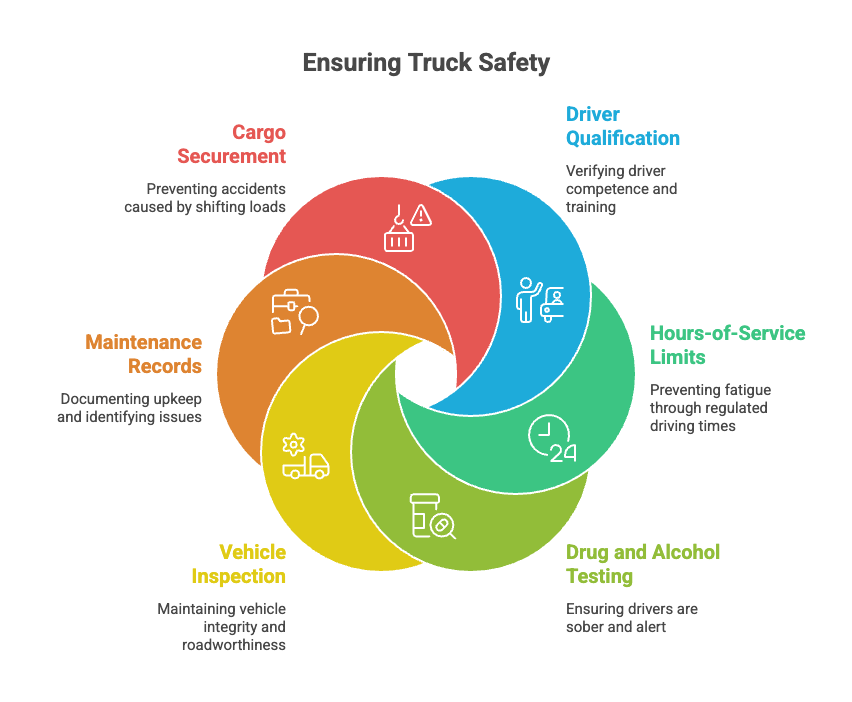
- Driver qualification, hours-of-service limits, and drug or alcohol testing compliance
- Vehicle inspection, repair, and maintenance records, including out-of-service violations
- Cargo securement and loading practices that contribute to instability or jackknifing
We can also seek payment for medical costs, lost income, future care, and pain and suffering, and, when warranted, pursue punitive damages to deter repeat misconduct.


Steps to Take After a Fort Myers Truck Accident: Federal Regulations
After a Fort Myers truck accident involving federal regulations, we should act quickly and methodically to protect your health and your claim.
We’ll start by ensuring you seek medical care immediately, then help you document the scene and secure key evidence, such as photos, witness details, and vehicle information.
We’ll also make certain the crash is properly reported and that vital records are preserved, including medical documentation, police reports, and any carrier or driver logs that may apply.
Seek Medical Care Immediately
Seeking medical care immediately protects your health and also bolsters any future truck accident claim we may need to pursue.
Even when you feel steady, adrenaline can conceal head trauma, internal bleeding, and spinal strain, so we should prioritize an immediate assessment at an emergency room, urgent care, or with your primary physician.
Tell the provider every symptom, however minor, and describe how the collision occurred, so the evaluation is complete and accurate.
If treatment is recommended, we should follow it carefully, since gaps can worsen injuries and complicate recovery.
We also encourage follow-up scheduling for imaging, therapy, or consultant visits, and we’ll help you coordinate care while you focus on recovery.
By acting quickly, we protect you and strengthen our ability to serve others responsibly.
Document Scene And Evidence
At the scene, we should document everything we can as soon as it’s safe, because early evidence often determines what we can prove under federal trucking regulations and Florida law.
We can take clear photos of vehicle positions, damage patterns, skid marks, road hazards, and traffic signs, and we should note weather, lighting, and lane conditions.
We should also capture the truck’s DOT number, company markings, trailer ID, and any visible cargo issues, since these details can connect the crash to regulated operations.
For video preservation, we can record a slow, continuous walk-through that shows distances and angles, and we can look for nearby cameras without confronting anyone.
Finally, we can request contact information and conduct brief witness interviews, focusing on what they saw and heard.
Report And Preserve Records
Clear photos and witness details help, but we also need an accurate paper trail that ties the crash to the truck’s regulated operation.
We should report the collision promptly to law enforcement and our insurer, then request the crash report number and the responding agency’s records process.
Next, we’ll send written preservation notices to the carrier and any brokers, demanding the retention of driver logs, ELD data, dispatch messages, bills of lading, maintenance files, drug and alcohol testing records, and training records.
We also ask for onboard camera footage and GPS pings before they’re overwritten.
To protect the chain of custody, we’ll document who handled each item, when it changed hands, and where it was stored.
If needed, we’ll arrange secure downloads and certified copies quickly.
How a Fort Myers Truck Accident Federal Regulations Lawyer Can Help You
When a trucking company’s safety practices fall under federal oversight, we can use the Federal Motor Carrier Safety Regulations to identify exactly where compliance failed and how that failure contributed to your crash.
We align those findings with Florida liability standards, then build a focused case strategy that prioritizes accountability and practical recovery.
From the start, we protect evidence and serve others by moving quickly, respectfully, and with clear client communication, so you can make informed decisions without added strain.
- We obtain driver logs, ELD data, inspection reports, maintenance files, and dispatch records, then compare them to FMCSR requirements.
- We coordinate qualified experts to interpret hours-of-service, loading, and equipment rules, and explain causation in plain terms.
- We address insurer tactics, preserve your right to full compensation, and prepare each claim as if it will be tried.
We keep timelines, next steps, and settlement options transparent, and we remain accessible throughout the process.
Long-Term Effects of Fort Myers Truck Accident Federal Regulations Injuries
We’ll explain how injuries tied to truck crashes involving federal regulation issues can create lasting consequences that extend well beyond the initial treatment period.
We often see chronic pain and disability that restrict work and daily activities, as well as traumatic brain injuries that can alter cognition, mood, and long-term independence.
We’ll also address the emotional and financial strain these outcomes place on you and your family, including ongoing medical care, reduced earning capacity, and the pressure of managing life around persistent limitations.
Chronic Pain And Disability
Living with chronic pain after a Fort Myers truck accident can quietly reshape every part of a person’s work, mobility, and independence, long after the initial injuries have been treated.
When pain persists, routine tasks may require frequent breaks, modified duties, or assistive devices, and we often see how this affects a family’s stability and a survivor’s confidence.
Chronic fatigue can limit endurance, disrupt sleep, and reduce the ability to serve others at home, in faith communities, or at work.
Sensory loss, including numbness or reduced coordination, can create safety risks and restrict driving, lifting, or even basic self-care.
We’ll help you document these long-term limitations through consistent medical records, functional evaluations, and careful planning, so the full impact is clearly presented and addressed fairly.
Traumatic Brain Injury Impacts
Although a traumatic brain injury may not show obvious outward signs after a Fort Myers truck accident, it can alter memory, concentration, mood regulation, and impulse control for months or years, affecting a person’s capacity to work, manage finances, and maintain stable relationships.
We encourage you to document symptoms early, follow neurologic recommendations, and treat recovery as a structured process rather than a waiting period.
When trucking safety rules are violated, the force involved can worsen diffuse brain trauma, leading to persistent headaches, slowed processing, sleep disruption, and sensitivity to light or noise.
We can help you coordinate care, including cognitive rehabilitation that targets attention, planning, and communication skills.
We also recommend caregiver support so families can learn safe routines, track changes, and reinforce therapy goals consistently.
Emotional And Financial Strain
When federal trucking regulations get ignored, and a serious crash follows, the long-term harm often extends beyond medical charts into a family’s emotional stability and financial security.
We often see you managing grief, anxiety, and constant scheduling demands while trying to keep life steady for children, aging parents, and coworkers who depend on you.
Over time, that pressure can harden into emotional burnout, especially when recovery is uncertain and progress comes slowly.
At the same time, missed work, reduced hours, and ongoing care costs can create financial insecurity, even for families that planned responsibly.
We help you document wage loss, future earning limits, and necessary services, so compensation reflects the real, lasting strain. Together, we can pursue accountability while protecting your capacity to serve others.
Proving Liability in Fort Myers Truck Accident Federal Regulations Cases
Because federal trucking rules impose specific duties on drivers and carriers, we can often prove liability in Fort Myers truck accident cases by showing a clear violation of those regulations and linking it to the crash.
Federal trucking rules create clear duties—so proving liability often comes down to showing a violation and linking it to the crash.
We begin by quickly securing records, including driver logs, ELD data, inspection reports, maintenance files, dispatch messages, and cargo documents, so nothing disappears.
Then we build an evidentiary chain that traces each document to the responsible party and confirms authenticity.
When needed, we retain an expert witness to explain FMCSA standards, driver qualification requirements, and safe-loading practices in clear terms.
We also use forensic reconstruction to map speeds, braking, impact angles, and sight lines, aligning physical evidence with electronic data.
Finally, we perform causation analysis, connecting the regulatory breach, such as hours-of-service fatigue or poor maintenance, to the precise events that harmed you.
This approach helps us serve your family and our community with integrity.
Compensation for Fort Myers Truck Accident Federal Regulations Damages
Proving a federal safety violation sets the foundation, and the next step focuses on converting that proof into full compensation for the losses you’ve suffered in a Fort Myers truck crash.
We’ll document medical costs, future treatment, lost income, reduced earning capacity, property damage, and the day-to-day impact of pain, limitations, and trauma.
Because service matters, we also account for how your injuries affect your ability to care for family, work faithfully, and support your community.
We’ll present clear evidence from records, experts, and crash data, then drive settlement negotiations from a position of strength.
If the carrier resists, we’ll use targeted demands and disciplined valuation to avoid undervaluing long-term needs.
In cases involving reckless conduct, such as falsified logs or extreme hours-of-service violations, we may pursue Punitive damages to promote safety and deter future harm.
Our goal is complete, dignified recovery, aligned with accountability and public protection.
The Statute of Limitations for Fort Myers Truck Accident Federal Regulations Cases
Although federal trucking regulations often shape fault and liability, Florida’s statute of limitations still controls how long we’ve to file a Fort Myers truck accident lawsuit, and missing that deadline can bar recovery no matter how strong the evidence is.
In most injury cases, Florida law generally allows two years from the crash date, and wrongful death claims typically follow the same two-year window, so we should treat filing deadlines as urgent from day one.
Because truck cases often involve multiple companies, electronic logging data, and out-of-state carriers, time can slip away as we gather records and confirm which parties controlled safety decisions.
Limited exceptions may extend time, including discovery tolling when pivotal facts couldn’t reasonably have been known earlier, or when a defendant can’t be located or properly served.
These exceptions are narrow and heavily contested, so we shouldn’t rely on them. Acting promptly protects your ability to serve your family’s needs and seek accountability.
Why You Need an Experienced Fort Myers Truck Accident Federal Regulations Lawyer
When a truck crash turns on federal safety rules, we need counsel who knows how to use those regulations to build liability and preserve vital evidence before it disappears.
In Fort Myers, these cases often hinge on records carriers’ control, including driver logs, onboard data, maintenance files, and dispatch communications that can be lost or overwritten quickly.
An experienced lawyer acts early, issues preservation demands, and seeks court orders when necessary, so the truth remains available for our community.
Federal compliance is rarely straightforward, and violations can involve hours-of-service limits, inspection duties, drug and alcohol testing, or cargo securement standards.
We also rely on disciplined accident reconstruction to connect those failures to the crash, using scene measurements, vehicle dynamics, ECM data, and expert analysis.
With that foundation, we can pursue full compensation, protect families facing long recoveries, and encourage safer practices that serve others on Florida roads.
How to Choose the Right Fort Myers Truck Accident Federal Regulations Lawyer for Your Case
Choose counsel with the same care we’d use to evaluate any vital safety issue, because a truck crash case tied to federal rules can rise or fall on early decisions.
We should look for a lawyer who can explain FMCSA compliance, logbook requirements, maintenance duties, and cargo securement standards in plain terms, then connect those duties to the facts of our collision.
During Client interviews, we can ask how the firm quickly preserves evidence, requests electronic logging data, and identifies responsible parties beyond the driver, including carriers and contractors.
We should also request examples of prior federal-regulation disputes, and confirm who’ll manage day-to-day communication.
Review Fee structures closely, ensuring we grasp contingency percentages, litigation costs, and how expenses are handled if recovery is limited.
Finally, we should choose counsel who treats our case as service, prioritizing safety, accountability, and respectful support while pursuing fair compensation.
About the Law Offices of Anidjar and Levine
After we’ve identified the qualities that matter in a federal-regulations truck crash case, we also need to understand what a firm actually does once we sign on.
At the Law Offices of Anidjar and Levine, we take on the day-to-day legal burden so you can focus on recovery and supporting the people who depend on you.
We investigate promptly, preserve driver logs and electronic data, review maintenance and inspection records, and align every claim with applicable federal trucking rules.
We communicate directly with insurers and defense counsel, prepare demand packages grounded in evidence, and, if needed, file suit and move the case through discovery and trial.
Throughout the process, we keep you informed with clear timelines and practical guidance.
Our firm values emphasize service, accountability, and respectful advocacy.
We invite you to review client testimonials, because they reflect how we treat people, not only how we argue cases.
Frequently Asked Questions
Can I Sue a Truck Manufacturer for Defective Parts in My Accident?
Yes, we can help you sue a truck manufacturer if defective parts contributed to your accident.
We’ll evaluate product liability theories, including design, manufacturing, or warning defects, and we can also pursue warranty claims tied to safety promises or fitness-for-use.
To serve others responsibly, we’ll gather inspection records, recall notices, expert analysis, and crash data, then connect the defect to your injuries and losses. We’ll act promptly.
Do Federal Trucking Rules Apply to Intrastate Florida Deliveries?
Yes, federal trucking rules can apply to intrastate Florida deliveries when carriers operate in interstate commerce or adopt federal standards.
Florida often incorporates FMCSA regulations for safety, but intrastate carriers may claim interstate exemptions for specific operations.
Still, state preemption can limit Florida from weakening federal protections where federal authority controls.
We’ll review the route, cargo, and carrier status, so you can protect others by enforcing the proper safety duties.
How Do I Obtain the Truck’s Black Box (ECM) Data?
We obtain the truck’s black box (ECM) data by promptly sending a preservation letter to the carrier and then requesting production via written demand or subpoena.
We’ll ask specifically for event data and any related logs, manuals, and technician notes.
Next, we coordinate a qualified expert to follow the manufacturer’s download procedure, document the chain of custody, and create verified copies.
Act quickly, as systems may be overwritten or altered.
Will My Immigration Status Affect My Ability to File a Claim?
Your immigration status generally won’t prevent you from filing a claim, and claim eligibility typically depends on the facts, damages, and liability.
We still evaluate immigration implications carefully, because they may affect documentation, confidentiality concerns, or strategic timing.
We’ll focus on protecting you while pursuing accountability, and we won’t let status-based intimidation deter service to our community.
We can also coordinate with trusted immigration counsel when needed.
Can I Recover Damages if I Was Partly at Fault for the Crash?
Yes, you can often recover damages even if you were partly at fault.
Under comparative negligence rules, your compensation may be reduced by your percentage of responsibility, yet it isn’t automatically barred.
We’ll assess shared liability by gathering crash reports, witness statements, and medical records, then presenting a clear allocation of fault.
If your share stays within legal limits, we can pursue a fair recovery that supports your ability to serve others.
—————————
Federal trucking regulations often determine who’s liable after a serious crash, and the Law Offices of Anidjar and Levine understand how to use those rules to strengthen your claim.
We’ll review driver logs, maintenance records, cargo documentation, and safety compliance to identify violations and prove causation.
If you’ve been injured in Fort Myers, we’ll act quickly to preserve evidence, calculate full damages, and meet every filing deadline.
Contact a Fort Myers Truck Accident Lawyer to discuss your options and pursue the outcome you are entitled to.


We Can Help.