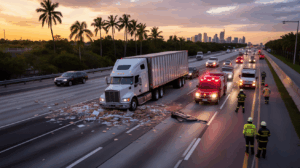
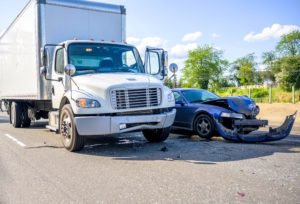
Law Offices of Anidjar and Levine handle Florida rear-end truck accident claims by acting quickly to preserve black-box data, driver logs, and onboard video before it disappears, then building a trial-ready case for liability and damages.
We investigate beyond the “rear driver is always at fault” assumption, checking hours-of-service compliance, maintenance records, cargo issues, and roadway conditions.
We also identify every responsible party, manage insurer communications, and track medical and wage losses. Continue for crucial steps and deadlines, or visit our Florida Truck Accident Lawyer page for more information.
Key Takeaways
- Rear-end truck crashes in Florida often involve disputed liability, so a lawyer must investigate beyond the “rear driver is always at fault” assumption.
- An experienced truck accident lawyer promptly preserves black-box data, electronic logs, onboard video, and maintenance records before they are lost.
- Effective counsel identifies all liable parties—driver, motor carrier, maintenance vendors, and cargo handlers—to maximize available insurance coverage.
- Your lawyer should prove violations of federal and Florida safety rules using crash dynamics, inspections, witnesses, 911 calls, and expert reconstruction.
- Choose a trial-ready attorney who communicates clearly, explains contingency fees and costs, and anticipates defenses like sudden stop or comparative fault.



How We Can Help With Your Florida Rear-End Truck Accident Claim
Although rear-end truck crashes may look straightforward at first, it’s clear these claims often involve disputed liability, complicated insurance issues, and evidence that can disappear quickly.
We step in early to protect you and the people who depend on you, gathering records, securing video, and coordinating inspections before pivotal details are lost.
We handle all communications with insurers and trucking representatives, so you can focus on recovery and serving your family and community.
We document your injuries, track wage loss, and present a clear damages picture that supports firm settlement negotiation, not rushed compromise.
If a medical lien arises, we review it carefully, verify charges, and pursue reductions where appropriate to help preserve your net recovery.
We also prepare every claim as if it will be tried, which strengthens our leverage and keeps the process disciplined.
Throughout, we provide timely updates and straightforward guidance you can rely on when decisions matter most.
OUR CONSULTATIONSARE FREE
START YOUR FREE CASE REVIEW

Understanding Florida Rear-End Truck Accident Cases
Strong early case work puts us in a position to explain what really drives these claims, because Florida rear-end truck accidents rarely follow the simple “rear driver is always at fault” storyline.
We look beyond the point of impact and focus on duty, foreseeability, and how a commercial vehicle’s size changes risk for everyone on the road.
We help you understand how insurers and carriers evaluate liability, including whether federal and state safety rules were followed and whether the crash dynamics align with the statements provided.
Injuries may be compounded by truck underride, so we assess vehicle damage patterns, ride height, and guard equipment, then connect those facts to your medical course.
We also review loading records and weight tickets to determine whether cargo shifts have altered stability or braking performance, which can affect how fault is allocated.
By grounding the claim in verifiable evidence, we can pursue fair outcomes that honor service to others.

Common Causes of Florida Rear-End Truck Accidents
Rear-end truck crashes in Florida often stem from a small set of recurring factors, and we’ll help you recognize how they play out in real claims.
We frequently see driver distraction and fatigue, along with speeding and tailgating, reduce reaction time and eliminate safe stopping distance.
We also examine brake failure and poor maintenance, as well as weather and road conditions that can magnify stopping problems and trigger chain-reaction collisions.
Driver Distraction And Fatigue
Losing focus for even a few seconds can turn a routine drive into a severe crash, and distraction and fatigue remain leading contributors to Florida truck collisions.
When a truck driver glances at a phone, adjusts a device, or scans paperwork, inattentive driving can delay braking and closing-distance judgment, leaving little time to react to slowing traffic.
Fatigue creates similar danger, especially on long routes and overnight hauls. Even brief micro sleeps can cause a rig to drift, miss brake lights, or fail to notice a stopped vehicle until impact is unavoidable.
We encourage you to document signs of distraction or exhaustion, such as logbook irregularities, dash-camera footage, and witness observations.
By pursuing accountability, we help protect the public and support safer practices for everyone on Florida roads.
Speeding And Tailgating
Excessive speed and aggressive following distance combine to erase the safety margin a truck driver needs to stop in time.
When traffic slows on Florida highways, a small misjudgment can become a violent rear-end impact, especially when a truck closes on smaller vehicles without room to react.
Speeding also increases the speed differential, which magnifies crash forces and reduces the time available for evasive decisions.
Tailgating is more than impatience; it’s a measurable failure to manage risk in the service of everyone sharing the road.
We help you show how unsafe following distance, tight delivery pressures, and poor lane discipline can lead directly to a preventable collision.
By identifying the conduct and the timeline, we work to protect your recovery and promote safer commercial driving practices statewide.
Brake Failure And Maintenance
Tracing a truck’s stopping power back to its brakes often reveals why a preventable crash happened.
When pads wear thin, air lines leak, or drums overheat, a driver may press the pedal and still roll forward into the vehicle ahead.
We help you focus on what should’ve been found and fixed, because responsible fleets protect everyone they share the road with.
In many cases, poor inspection routines, delayed repairs, or ignored warning signs create predictable failure.
We request maintenance records to verify service intervals, prior complaints, and parts replaced, then compare them to manufacturer standards.
We also assess whether brake upgrades were required due to load demands or prior safety notices.
When a company cuts corners, we work to hold it accountable and to support safer practices for others.
Weather And Road Conditions
In Florida’s shifting weather and varied road surfaces, rear-end truck crashes often happen when traction drops and stopping distances stretch beyond what a driver anticipates.
Sudden downpours, standing water, and oil-slick pavement reduce grip, and a fully loaded trailer may slide even under careful braking.
We also see Sun glare at sunrise and sunset, which can conceal slowing traffic until it’s too late to respond safely.
Roadway defects compound the risk, since Pothole hazards can jolt a truck, shift cargo, or trigger a brief loss of control that delays braking.
When these conditions contribute to a collision, we work with you to document weather reports, roadway maintenance records, and scene evidence, ensuring accountability and supporting safety for everyone on the road.


Legal Rights of Florida Rear-End Truck Accident Victims
Although a rear-end truck crash may seem straightforward, Florida law grants victims specific rights that can shape what they can recover and how they should pursue a claim.
You have the right to seek accountability from all responsible parties, including the driver, motor carrier, maintenance provider, or shipper, when their choices contributed to the impact.
Florida’s comparative fault rules may reduce compensation if blame is shared, but they don’t erase valid claims when evidence supports negligence.
Your legal rights often focus on Financial recovery for losses that affect your ability to serve your family and community, such as medical expenses, lost income, and reduced earning capacity.
When a collision causes fatal injuries, surviving families may pursue Wrongful death damages under Florida law.
- Emergency care, follow-up treatment, and future medical needs
- Vehicle damage, out-of-pocket costs, and wage disruption
- Pain, suffering, and loss of companionship in fatal cases

Steps to Take After a Florida Rear-End Truck Accident
After a Florida rear-end truck accident, we’ll take immediate, practical steps to protect your health and your claim.
We’ll first focus on ensuring safety and calling 911, then document the scene and preserve crucial evidence before it disappears.
Finally, we’ll notify your insurer promptly and connect you with a lawyer, so your statement and next moves support, rather than undermine, your case.
Ensure Safety And Call 911
Start by getting everyone out of harm’s way, because a rear-end truck crash can trigger secondary impacts, fuel leaks, or debris hazards within minutes.
If you can move, we’ll guide you to a safer spot off the roadway, turn on hazard lights, and keep a clear distance from the truck and any spilled fluids.
We should check for injuries quickly, but we won’t move anyone with possible neck or back trauma unless immediate danger requires it.
Next, we follow emergency protocol by calling 911 and providing the exact location, direction of travel, and any hazards, such as fire risk or blocked lanes.
During 911 reporting, we’ll request medical help and law enforcement, then remain calm, listen, and follow the dispatcher’s instructions until help arrives.
Document Scene And Evidence
Next, we’ll lock in the evidence while the scene is still fresh, because vehicle positions can change quickly and crucial details may disappear once traffic clears.
If it’s safe, we’ll take wide and close photos of all vehicles, license plates, company markings, skid marks, debris fields, and the full roadway context, including signals and lighting.
We’ll record the time, weather, and any visible cargo or spill concerns to protect others nearby.
We’ll also capture driver statements only as direct quotes, without debate, and note any admissions or unusual behavior.
For chain preservation, we’ll keep originals, avoid editing images, and save files with timestamps.
Finally, we’ll build a witness catalog with names, contact details, and brief observations to ensure their accounts remain reliable later.
Notify Insurer And Lawyer
With the photos secured and witness information organized, we’ll move quickly to notifications, because early reporting helps protect both our health and our legal position.
We should notify our auto insurer promptly, provide only basic facts, and avoid recorded statements until counsel advises, since careless wording can be used to reduce benefits.
We’ll also contact a Florida rear-end truck accident lawyer quickly, so we can preserve evidence, identify all responsible parties, and prevent the trucking company’s insurer from controlling the narrative.
Our lawyer can manage communications, request logs and video, and guide medical documentation that supports damages.
Early legal involvement also strengthens policy negotiation, clarifies claim timelines, and helps us serve our families and community by pursuing fair compensation without unnecessary conflict.
How a Florida Rear-End Truck Accident Lawyer Can Help You
Although rear-end truck collisions may look straightforward at first glance, it’s clear they often involve layered liability issues, overlapping insurance coverage, and evidence that can disappear quickly.
Rear-end truck collisions can seem simple, but liability and insurance overlap—and critical evidence can vanish fast.
When we represent you, we move promptly to protect your rights and the well-being of everyone who depends on you, while keeping your focus on practical recovery steps and responsible decisions.
We build a clear accident timeline and use it to guide case strategy and settlement negotiations with insurers and defense counsel.
We also coordinate communications so you aren’t pressured into statements that could be taken out of context.
Our work commonly includes:
- Securing electronic logs, camera footage, maintenance records, and dispatch data
- Interviewing witnesses, preserving scene evidence, and retaining qualified experts
- Calculating losses, preparing demand packages, and, if needed, filing suit

If fair terms are offered, we recommend acceptance; if not, we prepare for trial with discipline.
Long-Term Effects of Florida Rear-End Truck Accident Injuries
After a rear-end truck crash, we may face injuries that don’t end when the initial treatment ends, and you may still feel their impact months or years later.
We’ll discuss how chronic pain and reduced mobility can limit daily function, and how brain and spine complications may create lasting medical needs and work restrictions.
We’ll also address psychological trauma and the recovery process, since anxiety, sleep disruption, and post-crash stress can affect your health, relationships, and long-term stability.
Chronic Pain And Mobility
Rear-end truck crashes frequently leave people managing chronic pain that lingers well beyond the initial treatment period, and it can steadily limit how we move and function day to day.
When pain persists, we often compensate with a guarded posture and reduced activity, which can deepen Chronic stiffness and weaken supporting muscles over time.
You may notice difficulty bending, lifting, walking distances, or completing household and volunteer responsibilities that once felt routine.
We encourage consistent follow-up care, practical home modifications, and pacing strategies that protect your independence without isolating you from service to others.
In some cases, Mobility aids such as canes, walkers, or braces help reduce strain and prevent setbacks, especially during flare-ups.
We can also document these limitations carefully, so your long-term needs remain visible in any claim.
Brain And Spine Complications
When a truck strikes from behind, the sudden acceleration and violent rebound can injure the brain and spine in ways that don’t fully surface during the first rounds of treatment.
We often see delayed headaches, dizziness, memory lapses, or light sensitivity that signal the need for structured concussion management, not guesswork or premature return to work.
Even a “mild” brain injury can disrupt daily function and service to others for months.
Spinal harm can also progress, with disc damage, nerve compression, or instability emerging after swelling settles.
We encourage careful imaging review, consistent follow-up, and timely referrals to enable providers to pursue spinal stabilization when indicated.
By documenting symptoms, appointments, and work limits, we help you protect your health and support a clear, responsible claim pathway.
Psychological Trauma And Recovery
Physical recovery doesn’t always track with how a person feels mentally, and many clients notice emotional and cognitive strain long after the initial medical visits end.
After a rear-end truck collision, anxiety, irritability, sleep disruption, and concentration problems may persist, affecting work, family roles, and community service commitments.
We encourage you to treat these symptoms as legitimate injuries, not personal weaknesses, and to seek timely screening from qualified clinicians.
Effective PTSD recovery often combines trauma-informed counseling, consistent follow-up, and practical coping strategies such as structured routines, paced exposure, breathing techniques, and supportive peer or faith-based networks.
We also document psychological impacts carefully, because insurers frequently minimize them, and accurate records help align treatment, accommodations, and compensation.
With steady care and advocacy, you can regain stability and continue serving others with confidence.
Proving Liability in Florida Rear-End Truck Accident Cases
Although liability may seem obvious after a truck hits a vehicle from behind, we still have to prove it with clear evidence that meets Florida’s negligence standards.
We do that by documenting the scene, securing witness statements, and preserving dashcam footage, 911 calls, and time-stamped photos before crucial details disappear.
We also obtain the truck’s electronic logging data, event data recorder downloads, and inspection records to confirm speed, braking, and driver hours.
Next, we compare the driver’s conduct to reasonable care and to regulatory compliance requirements, including maintenance, load securement, and required inspections.
When mechanical failure is involved, we evaluate product liability issues, such as defective brakes, tires, or underride guards, and identify all parties responsible for design, manufacture, or repair.
Throughout the process, we keep you informed because serving you well means building a case that’s accurate, organized, and ready for scrutiny.
Compensation for Florida Rear-End Truck Accident Damages
Accountability in a rear-end truck crash includes securing full compensation that reflects the real scope of your losses, not just the visible damage to your vehicle.
We help you document every category of harm so you can regain stability and continue caring for those who rely on you.
Compensation commonly includes economic losses such as medical bills, rehabilitation, prescriptions, mileage to appointments, lost wages, reduced earning capacity, and the cost to repair or replace your vehicle.
We also pursue non-economic damages for pain, emotional distress, and diminished enjoyment of life when injuries disrupt daily service at home, work, or in the community.
When a trucking company’s conduct shows reckless disregard, such as forcing unsafe hours or ignoring maintenance, we may seek punitive damages to hold decision-makers accountable and deter repeat harm.
We gather records, consult qualified experts, and present a clear damages narrative that supports a fair resolution or trial-ready case.
The Statute of Limitations for Florida Rear-End Truck Accident Cases
Because the clock starts running soon after a rear-end truck crash, we move quickly to confirm which Florida filing deadline applies and to preserve the evidence you’ll need to enforce your rights.
In most truck collision cases, you generally have two years from the date of the crash to file a negligence lawsuit, and missing that window can bar recovery regardless of fault.
When a crash results in a wrongful death, a separate two-year limit may control, measured from the date of death.
These filing deadlines also guide early decisions, such as requesting records, identifying responsible parties, and documenting ongoing medical care.
Still, certain tolling exceptions may pause or extend the time, including when a defendant can’t be located for service, or when another legally recognized barrier prevents timely filing.
Because these rules are fact-specific, we encourage you to act promptly so we can maintain focus on accountability and service to your family.
Why You Need an Experienced Florida Rear-End Truck Accident Lawyer
When a rear-end truck crash disrupts your life, we need more than a basic insurance claim to protect your rights and your recovery.
Truck collisions involve layered responsibilities, including the driver, the motor carrier, maintenance vendors, and cargo handlers, and insurers often move quickly to shape the narrative.
With Attorney proficiency, we can secure essential evidence before it disappears, including electronic logging data, onboard camera footage, inspection records, and post-crash drug- and alcohol-testing results.
We also identify safety violations and policy breaches that may expand available coverage, while keeping your medical documentation aligned with what the claim must prove.
An experienced lawyer builds a disciplined Case strategy that connects liability, causation, and damages, and anticipates defenses such as sudden stop allegations or comparative fault.
We negotiate from a position of strength, and when needed, we prepare the case as if it will be tried, so you can pursue a result that supports your family and service to others.
How to Choose the Right Florida Rear-End Truck Accident Lawyer for Your Case
The outcome of a rear-end truck accident claim often depends on the lawyer we choose and how that lawyer positions the case from day one.
We should look for counsel who regularly handles truck collisions, understands federal and Florida regulations, and can explain how they’ll preserve evidence such as driver logs, black-box data, and maintenance records.
We also need steady client communication, including clear timelines, prompt updates, and a defined point of contact, so we can make informed decisions while focusing on recovery and supporting those who rely on us.
We should ask how the lawyer evaluates liability, anticipates defense tactics, and coordinates with experts when needed.
Finally, we must confirm the fee structures in writing, including contingency terms, case costs, and the terms for non-recovery.
When we make wise choices, we protect our interests and strengthen our ability to serve our families and community.
About the Law Offices of Anidjar and Levine
Although every rear-end truck crash presents unique facts and challenges, we approach these cases with a consistent focus on preparation, accountability, and client support at the Law Offices of Anidjar and Levine.
We listen closely, explain your options clearly, and build a plan that aligns with your goals and the people who depend on you.
Our firm’s history reflects a steady record of work on behalf of injured Floridians, and we bring that perspective to each investigation, demand, and negotiation.
We review crash reports, vehicle data, and carrier records, then pursue responsible parties with purpose and discipline.
When insurers delay or minimize harm, we respond with organized evidence and firm advocacy.
You’ll find many client testimonials that describe responsive communication and practical guidance, because we believe service means being available and consistent.
If litigation becomes necessary, we’ll prepare thoroughly and present your story with care, always aiming for a result that restores stability.

Frequently Asked Questions
Can I Still Recover if I Was Partially at Fault in Florida?
Yes, you can still recover in Florida if you were partially at fault, provided your share of fault doesn’t bar recovery under current law.
We evaluate your case using comparative negligence, which reduces your damages by your percentage of responsibility.
We also account for settlement offsets, so prior payments or co-defendant settlements are credited properly.
We’ll gather evidence, document losses, and advocate for a fair outcome that supports those you serve.
Will My Health Insurance Lien Reduce My Rear-End Truck Accident Settlement?
Yes, your health insurance lien can reduce your rear-end truck accident settlement, because it may require repayment from your recovery.
We’ll review medical liens and subrogation claims to confirm whether they’re valid, correctly calculated, and limited by policy terms or Florida law.
We can often negotiate reductions, especially when your settlement must also cover future care, lost income, and your commitment to support others through responsible recovery efforts.
How Are Commercial Truck Black Box Records Preserved and Accessed?
We preserve and access commercial truck black box records by acting quickly and documenting each step.
We send a spoliation letter demanding data preservation, then seek a court order if the carrier won’t cooperate.
We follow manufacturer and fleet retrieval procedures, using qualified technicians to image the module and verify the chain of custody.
We obtain relevant logs, maintenance files, and telematics data to serve others with accurate accountability and truth.
What if the Trucking Company’s Insurer Contacts Me for a Recorded Statement?
If the trucking company’s insurer contacts you for a recorded statement, we recommend you decline and keep the conversation limited to basic contact information.
We should avoid recordings because insurers may frame questions to minimize liability or shift blame.
We can serve others best by protecting the truth and preserving your ability to recover fair compensation.
Before speaking further, consult an attorney, then let counsel handle all communications and documentation.
Can I Sue for Diminished Value of My Vehicle After a Rear-End Truck Crash?
Yes, we can pursue compensation for diminished value after a rear-end truck crash, even if repairs look complete.
We document vehicle depreciation through records, repair invoices, and a qualified expert, then follow the insurer’s appraisal procedure when required.
We also include diminished value in settlement negotiations, so you’re not left serving others while absorbing a hidden loss.
We’ll evaluate liability, policy limits, and deadlines before filing suit if needed.
————————–
When a rear-end truck collision disrupts your life, Law Offices of Anidjar and Levine is prepared to protect your rights and pursue the recovery you merit.
We’ll evaluate the crash, preserve crucial evidence, and identify every liable party, including the driver, carrier, and maintenance providers.
We also handle insurance communications, calculate full damages, and present a strong claim grounded in Florida law.
If negotiations fail, we’re ready to litigate and advocate for you at every stage—learn more from our Florida Truck Accident Lawyer page.