

The Law Offices of Anidjar and Levine can review anesthesia records to assess whether a provider’s conduct may have caused an injury. Possible concerns include medication errors, inadequate monitoring, airway problems, or delayed responses to warning signs. An adverse outcome alone does not establish negligence; a claim generally requires evidence that care fell below the applicable standard and caused measurable harm. Counsel can explain Florida procedures, deadlines, evidence needs, and potential compensation. Learn more from a Miami Personal Injury Lawyer.The following information outlines primary causes, legal considerations, and steps for evaluating a claim.
Main Takeaways
- A Miami medical malpractice lawyer can assess whether an anesthesia injury may support a claim; an adverse outcome alone does not establish negligence.
- Review may examine medication errors, inadequate monitoring, airway management, medical history, informed consent, and the facility’s procedures.
- Seek prompt medical care for concerning symptoms, and call 911 for breathing difficulty, chest pain, fainting, severe confusion, or rapidly worsening symptoms.
- Preserve medical records, bills, discharge instructions, test results, and a dated timeline of symptoms, treatment, and effects on daily life.
- Ask counsel about anesthesia-claim experience, Florida malpractice procedures, deadlines, potential next steps, and fee arrangements during a consultation.


How We Can Help With Your Miami Medical Malpractice Anesthesia Errors Injury Claim
A Miami medical malpractice attorney can help patients injured by anesthesia errors evaluate their legal options and pursue compensation. A law firm may begin by listening carefully to the patient’s concerns and identifying practical priorities, including access to ongoing care and financial stability. This service-focused approach helps guarantee that each decision reflects the client’s needs.
Legal Guidance can clarify available options, explain important deadlines, and outline what participation in a claim may involve. Counsel can also communicate with insurers and other parties, helping clients avoid unnecessary pressure while they focus on recovery. When appropriate, the attorney may coordinate with qualified professionals to assess the claim and organize relevant records.
A tailored Claim Strategy can account for the client’s circumstances, goals, and available evidence. The legal team may prepare documents, track expenses, and pursue a resolution through negotiation or litigation. Throughout the process, clear updates and considered advice can help clients make informed choices and seek fair support for the effects of their injury.
OUR CONSULTATIONSARE FREE
START YOUR FREE CASE REVIEW

Understanding Miami Medical Malpractice Anesthesia Errors Injury Cases
When anesthesia errors cause serious harm, understanding how these injury cases are evaluated can help clarify the legal issues involved. A claim generally examines whether the anesthesia professional or facility met the accepted standard of care and whether a departure from that standard caused injury. The review may consider medical records, monitoring data, informed consent documents, and testimony from qualified experts.
The nature and extent of harm are also important. Injuries may include neurological damage, respiratory complications, or psychological effects associated with Anesthesia awareness. Evidence must connect the harm to the care provided, rather than to an unrelated condition or an inherent risk that was properly managed.
A careful evaluation may also address medication interactions, patient history, and the timing of treatment, without assuming that an adverse outcome alone proves negligence. For individuals and families seeking accountability, a clear, evidence-based assessment can help identify relevant questions, preserve important records, and explain available legal options.
Common Causes of Miami Medical Malpractice Anesthesia Errors
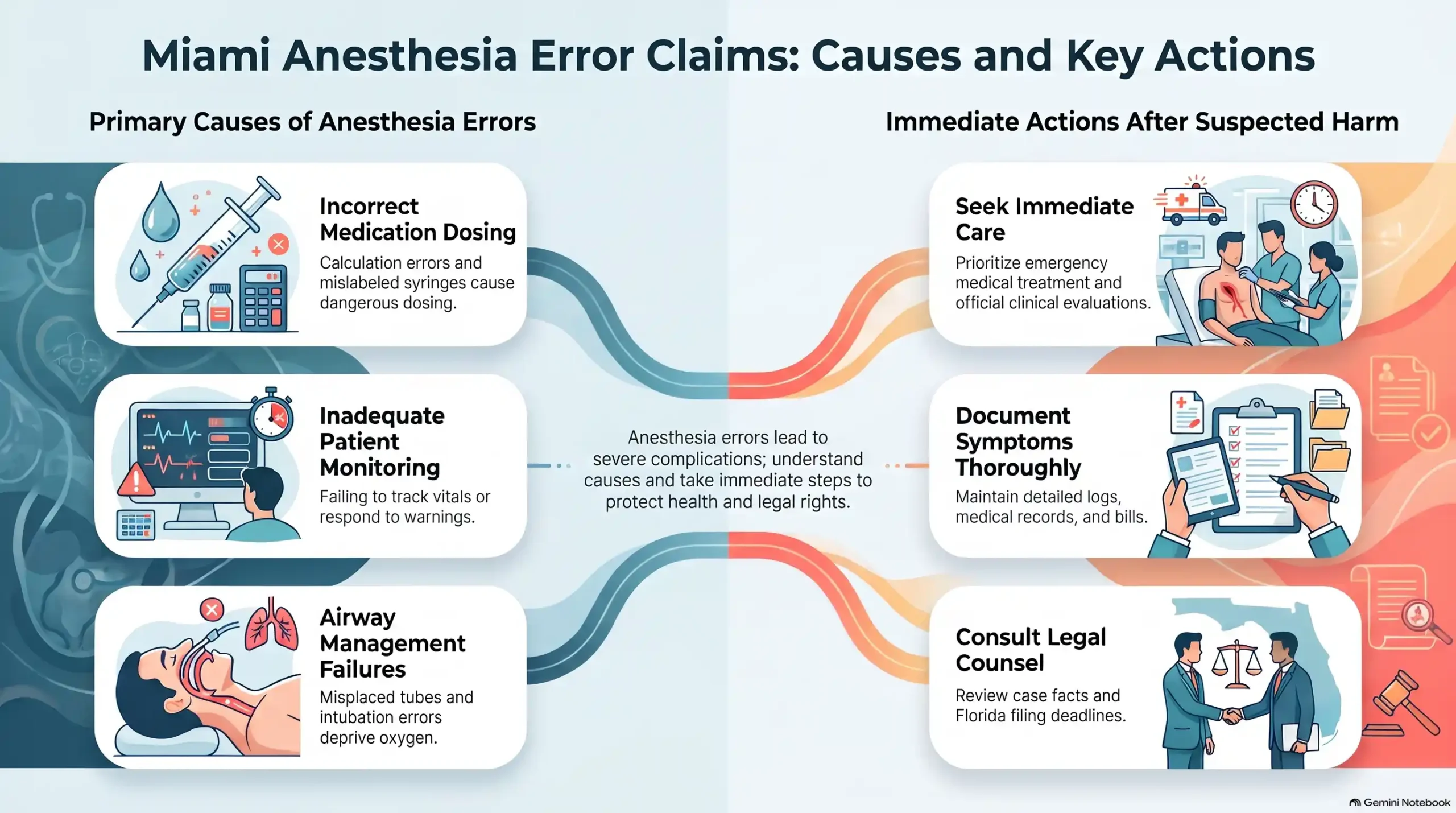
Common causes of anesthesia errors include incorrect dosage and inadequate monitoring, which may prevent clinicians from recognizing dangerous changes in a patient’s condition. Errors can also arise when providers fail to review relevant medical history or make mistakes in managing the airway. These issues may occur separately or jointly, increasing the risk of serious injury during or after a procedure.
Anesthesia Dosage Errors
Anesthesia dosage errors occur when a patient receives too much or too little medication, or when a drug is administered at the wrong time or by the wrong route. These mistakes may result from inaccurate weight-based calculations, confusion between similar medications, unclear orders, or errors when preparing and labeling syringes. Medication calculation requires careful attention to the patient’s weight, age, health conditions, and the drug’s concentration. Providers must also follow established dosage protocols and verify orders before administration. A dose that is excessive may suppress breathing, lower blood pressure, or cause other serious complications. An insufficient dose may fail to provide adequate anesthesia or pain control. Hospitals and anesthesia professionals can reduce preventable errors through clear communication, standardized procedures, and careful medication handling throughout preparation and administration.
Inadequate Patient Monitoring
How closely a patient is monitored during anesthesia can affect how quickly a complication is detected and treated. Anesthesia teams are responsible for observing essential signs and responding to changes throughout a procedure. Continuous tracking of essential signs can help identify falling oxygen levels, abnormal heart rhythms, or changes in blood pressure before they become more serious. Monitoring also includes evaluating breathing and the patient’s response to anesthesia. Capnography waveform interpretation can reveal ventilation changes that may not be apparent from other measurements alone. If equipment is not used correctly, alarms are overlooked, or warning signs are not addressed promptly, a patient may face preventable harm. Careful observation and timely intervention support safer treatment. Inadequate monitoring may raise questions about whether appropriate standards were followed and whether earlier action could have reduced injury.
Failure to Review Medical History
Before administering anesthesia, clinicians must review a patient’s medical history to identify conditions, medications, allergies, and prior reactions that could affect care. This review helps the care team select an appropriate anesthetic plan and reduce preventable risks. Preoperative medication reconciliation is crucial because prescription drugs, over-the-counter products, and supplements may interact with anesthetic agents or influence dosing. Clinicians should also assess relevant chronic illnesses, prior procedures, and any history of complications during anesthesia. Verifying allergy history helps identify substances that may trigger serious reactions and supports timely precautions. When records are incomplete or conflicting, the team should seek clarification from the patient, caregivers, or other providers before proceeding. A failure to gather and consider this information can expose patients to avoidable harm and undermine the standard of attentive, responsible care.
Airway Management Mistakes
A careful review of medical history helps inform airway planning, but errors can still occur when clinicians fail to assess or manage a patient’s breathing needs during a procedure. Airway management requires appropriate equipment, skilled personnel, and ongoing monitoring. Difficult Intubation may arise from a patient’s anatomy or an unexpected change in condition. Clinicians must recognize challenges promptly and use suitable techniques rather than persist with unsafe attempts. Esophageal Intubation, in which a breathing tube enters the esophagus instead of the windpipe, can prevent oxygen from reaching the lungs. Failure to confirm tube placement or respond to falling oxygen levels may cause serious injury, including brain damage. Anesthesia teams are expected to monitor breathing and act without delay. When preventable airway errors cause harm, a review may examine whether accepted standards of care were followed.
Don’t Wait. Call Our Florida Personal Injury Lawyers Now!


Legal Rights of Miami Medical Malpractice Anesthesia Errors Injury Victims
When anesthesia errors in Miami cause injury, patients may have the right to seek compensation if a medical provider’s negligence contributed to the harm. Florida law generally requires proof that the provider failed to meet the applicable standard of care and that the failure caused measurable injury. Each claim depends on its facts, medical records, and review by a qualified professional.
Potential legal rights may include:
- Requesting copies of medical records and billing statements.
- Seeking compensation for medical expenses and related losses.
- Pursuing damages for lost income or reduced earning capacity.
- Seeking recovery for pain, disability, or diminished quality of life.
- Consulting counsel about deadlines and required claim procedures.
Patient advocacy can help individuals understand available options and communicate concerns while preserving important documentation. Informed consent also matters: patients may question whether material risks and alternatives were adequately explained. A qualified attorney can assess whether the evidence supports a claim and explain the process without promising a particular outcome. Prompt guidance may help protect rights and support accountability while respecting the patient’s needs and recovery.
Why Do Miami Medical Malpractice Anesthesia Errors Happen?
Why do anesthesia-related injuries occur in Miami medical settings? These injuries may result from preventable failures before, during, or after a procedure. Anesthesia requires careful review of a patient’s medical history, current medications, allergies, and prior reactions. When those details are overlooked, the selected medication or dose may create serious risks.
Errors can also arise from inadequate monitoring or delayed responses to changes in breathing, heart rate, blood pressure, or oxygen levels. Equipment problems, incorrect drug administration, and insufficient staffing may further compromise patient safety. Surgical team coordination is vital because clinicians must share accurate information and respond promptly as conditions change. Communication breakdowns can leave warning signs unrecognized or delay necessary intervention.
Anesthesia technology safeguards, including alarms and monitoring systems, can help identify developing complications, but they do not replace attentive clinical judgment. Proper training, clear protocols, equipment checks, and consistent observation reduce preventable hazards. When these protections fail, patients may experience lasting harm despite the medical team’s duty to provide careful, coordinated care.
What Should You Do After a Miami Medical Malpractice Anesthesia Error Injury?
After a suspected anesthesia injury, the patient should seek immediate medical care to address urgent complications and obtain an accurate assessment. They should document symptoms, treatment, and relevant medical records while events are fresh. Consulting a medical malpractice lawyer can help determine whether the care fell below accepted standards and what legal options may be available.
Seek Immediate Medical Care
Following a suspected anesthesia error, prompt medical evaluation should take priority, even if symptoms seem mild or begin to improve. A qualified clinician can assess possible complications, identify changes that may not be obvious, and recommend appropriate care. Emergency symptoms such as difficulty breathing, chest pain, severe confusion, fainting, weakness, or a rapidly worsening condition require an immediate call to 911 or a visit to the nearest emergency department. The injured person should not drive if impaired; another responsible adult or emergency responders can provide transportation.
For less severe but concerning symptoms, contacting the treating physician or another medical professional promptly can help determine whether urgent treatment is needed. Clear, timely communication about the procedure, medications, and symptoms supports safer decisions and may help prevent further harm. Medical care should remain the first priority.
Document Your Injury
Once immediate medical needs are addressed, careful documentation can help create a clear record of the suspected anesthesia error and its effects. The patient or a trusted support person can begin a Symptom Journal, noting each symptom, when it began, how severe it is, and whether it changes. Records should also identify medications, follow-up visits, and effects on daily activities, work, or caregiving responsibilities. A Recovery Timeline can organize central events, including the procedure, discharge, onset of concerns, and subsequent treatment. Keep copies of discharge instructions, prescriptions, test results, and relevant communications side by side in a secure file. Photographs may help document visible changes, when appropriate. These records can support continuity of care and help providers understand the patient’s experience. Documentation should remain factual, dated, and updated as recovery progresses.
Consult a Malpractice Lawyer
When an anesthesia-related injury raises questions about the care provided, a Miami medical malpractice lawyer can assess whether the available facts may support a legal claim. A lawyer can review medical records, explain relevant deadlines, and identify what further documentation may be needed. The patient or family should ask about lawyer qualifications, including experience with anesthesia-related claims and familiarity with Florida malpractice procedures. A Free consultation may provide an opportunity to discuss the circumstances, potential next steps, and the fee arrangement without an initial charge. The lawyer can also explain that a claim generally requires evidence connecting a provider’s conduct to the injury; an adverse outcome alone does not establish negligence. Prompt legal guidance can help preserve evidence and clarify options, allowing affected individuals to make informed decisions while focusing on recovery and support for others.
Don’t Wait. Call Our Florida Personal Injury Lawyers Now!
Critical Evidence in a Miami Medical Malpractice Anesthesia Errors Injury Case
Evidence in an anesthesia injury case can help establish what occurred, whether care met accepted standards, and how the injury affected the patient.
Essential materials may include:
- Anesthesia records and medication logs
- Monitoring data, including oxygen levels and vital signs
- Expert testimony on the standard of care and alleged errors
- Medical records documenting the injury and treatment
- Photographs, bills, and other records showing ongoing effects
Anesthesia Records
Anesthesia records can reveal how a patient was assessed, monitored, and treated before, during, and after a procedure. These documents may include the preoperative evaluation, medication orders, consent forms, anesthesia plan, and recovery notes. Collectively, they can help clarify what information clinicians had, which decisions they made, and whether care followed accepted procedures. A careful review may identify missing entries, inconsistent timelines, or unexplained treatment changes. Record retention practices matter because records may be needed to understand an injury and assess the care provided. Electronic audit trails can show when entries were created or changed, helping distinguish contemporaneous documentation from later additions. Preserving these materials can support a fair, evidence-based review and help patients and families seeking answers. Their contents should be considered alongside other relevant case evidence.
Monitoring Data
Monitoring data can provide a time-based account of a patient’s condition and the clinical team’s response during anesthesia care. Records may include oxygen saturation, heart rate, blood pressure, respiratory measurements, and capnography, along with alarms and device settings. These details can help establish when a change occurred, how long it continued, and whether staff responded. Careful interpretation of monitoring data considers the readings alongside the anesthesia record, medication administration, and relevant clinical events. A displayed value may not always reflect the patient’s true condition, so waveform artifact analysis can help distinguish a genuine physiological change from movement, sensor displacement, or equipment interference. Missing intervals, delayed entries, or inconsistent values may also warrant review. Collectively, these records can clarify the sequence of care and identify questions about timely recognition and response.
Expert Testimony
When monitoring records raise questions about the timing or adequacy of a response, qualified expert testimony can help explain their clinical significance. In a Miami anesthesia malpractice case, an appropriate expert may assess whether the care team followed accepted standards for administering anesthesia, observing the patient, and responding to warning signs. Expert qualifications matter because the witness must have relevant training and experience to address the medical issues at hand. The testimony can clarify how a documented decision or delay relates to recognized clinical practice, while distinguishing established facts from professional opinion. Challenges to testimony may arise over a witness’s background, methods, or interpretation of the record. Careful preparation and clear explanations help the court evaluate competing views. This evidence supports a fair assessment of professional conduct and the responsibilities owed to patients.
Injury Documentation
Accurate injury documentation helps establish the nature, extent, and timing of harm after a suspected anesthesia error. Medical records, discharge instructions, test results, and follow-up notes can show how symptoms developed and what treatment was required. Patients or caregivers should request copies promptly and keep them organized by date.
A Symptom Journal can record pain, breathing difficulties, confusion, weakness, sleep changes, and effects on daily activities. Entries should include dates, duration, severity, and any medication or care received. Photographic Evidence may document visible injuries, such as bruising or swelling, when images are dated and preserved without alteration.
Consistent records help clinicians provide appropriate care and allow qualified reviewers to assess the reported harm. Documentation should remain factual and distinguish personal observations from medical conclusions. Preserving these materials can support a careful, fair review of a potential claim.
Long-Term Effects of Miami Medical Malpractice Anesthesia Errors Injuries
Anesthesia errors may cause lasting changes in cognition and memory, affecting a person’s ability to concentrate, recall information, or manage daily tasks. Some patients also experience nerve damage and chronic pain that can limit mobility and interfere with work or routine activities. Emotional and psychological effects, including anxiety, depression, or trauma-related symptoms, may persist alongside physical injuries.
Cognitive and Memory Changes
After anesthesia, persistent problems with memory, attention, or clear thinking may signal a serious complication, particularly if they follow an error in medication, monitoring, or oxygen management. Postoperative confusion that continues beyond the expected recovery period warrants careful medical assessment. Some patients experience memory impairment, difficulty concentrating, slowed reasoning, or trouble completing familiar tasks. These changes can disrupt work, relationships, and independent living, while also making it harder to communicate needs and support others.
Clinicians may review anesthesia records, oxygen levels, medications, and symptom timing to identify possible causes and guide treatment. Prompt evaluation can help distinguish temporary effects from lasting cognitive injury and establish appropriate support. When a preventable anesthesia error is suspected, records and expert review may clarify whether care fell below accepted standards and whether that failure contributed to the patient’s cognitive changes.
Nerve Damage and Chronic Pain
Cognitive changes are not the only lasting effects that may follow an anesthesia complication; some patients develop nerve damage or chronic pain. These conditions may arise from pressure on a nerve during surgery, positioning injuries, or complications involving anesthesia administration. Peripheral neuropathy can cause numbness, tingling, weakness, or burning sensations that interfere with movement and routine tasks. In some cases, persistent pain may be associated with intricate regional pain syndrome, which can involve heightened sensitivity, swelling, and changes in skin temperature or color. The effects may limit a patient’s ability to work, care for family members, or participate in daily activities. Medical evaluation can help identify the cause and guide treatment. When anesthesia errors are suspected, records and expert review may clarify whether preventable conduct contributed to lasting nerve injury or pain.
Emotional and Psychological Effects
Some patients experience lasting emotional and psychological effects following a serious anesthesia complication, particularly when the event involves loss of consciousness, awareness during surgery, or a prolonged recovery. They may develop post-trauma anxiety, recurring distressing memories, sleep problems, or fear of future medical care. These reactions can affect relationships, employment, and the ability to manage daily responsibilities. Some patients also experience depression, reduced confidence, or a persistent sense of vulnerability after an unexpected medical crisis. Emotional recovery may require counseling, support from trusted people, and coordinated care from qualified health professionals. Recognizing these effects is important because psychological harm can persist even after physical injuries improve. When a complication resulted from negligent care, clear documentation of symptoms and treatment may help explain the full extent of its impact on the patient.
Proving Liability in Miami Medical Malpractice Anesthesia Errors Injury Cases
Proving liability in a Miami anesthesia malpractice case requires evidence that a healthcare provider failed to meet the accepted standard of care and that the failure caused a patient’s injury. Establishing the Standard of Care often involves reviewing medical records and consulting qualified professionals who can explain what a reasonably careful anesthesia provider would have done under similar circumstances.
Evidence may include anesthesia charts, medication records, monitoring data, and notes documenting the patient’s condition before, during, and after a procedure. These materials can help identify errors such as improper dosing, inadequate monitoring, delayed responses to warning signs, or failures to communicate important risks.
A Causation Analysis examines whether the provider’s conduct directly contributed to the harm, rather than an underlying condition or an unrelated event. Medical experts may assess how the injury developed and whether timely, appropriate care could have prevented it. Clear documentation and careful expert review help establish accountability and support patients seeking answers after preventable anesthesia-related injuries.
Dealing With Insurance Companies After a Miami Medical Malpractice Anesthesia Error Injury
After an anesthesia-related injury, communications with insurers can affect how a potential Miami medical malpractice claim is evaluated. Insurers may request records, statements, or authorizations while evaluating responsibility and the extent of harm. Careful, accurate communication can help protect the injured person’s interests and preserve information relevant to a fair review.
Insurance adjuster tactics may include seeking recorded statements, requesting broad access to medical records, or presenting an early settlement offer before the full effects of an injury are known. A person should avoid guessing about events or signing documents without understanding their scope. Medical records, billing documents, and written communications should be organized and retained.
Policy coverage disputes may arise over which policy applies, whether particular conduct is covered, or how coverage limits affect available compensation. These issues can be difficult to evaluate without reviewing policy language and the circumstances of the injury. Qualified legal guidance can help families respond thoughtfully, protect their rights, and focus on the injured person’s care and recovery.
What to Expect During a Miami Medical Malpractice Anesthesia Errors Injury Claim Process
An anesthesia injury claim typically begins with an initial case evaluation to assess the circumstances and potential legal issues. Medical records are then reviewed to determine whether the care met applicable standards, followed by the formal claim-filing process. The case may conclude through settlement or proceed to trial, depending on the evidence and the parties’ positions.
Initial Case Evaluation
The initial case evaluation determines whether an anesthesia-related injury may support a medical malpractice claim and what evidence is needed to assess it. During this stage, an attorney may ask about the procedure, the injury, its effects, and the care received before and after anesthesia. Evaluation criteria may include whether a provider’s conduct fell below accepted standards, whether that conduct plausibly caused harm, and whether the resulting losses are significant enough to pursue a claim. This claim screening also considers deadlines, potential responsible parties, and the practical resources required for further investigation. The injured person or family may be asked to describe important events and identify available information. A preliminary assessment does not establish fault or guarantee recovery; it helps determine whether a more detailed investigation is warranted and how the claim may proceed.
Medical Record Review
Once a claim warrants further investigation, medical record review helps clarify how anesthesia was administered and whether the care may have contributed to an injury. A qualified reviewer may examine preoperative assessments, anesthesia charts, medication records, monitoring data, recovery notes, and relevant communications. These materials can help establish the sequence of events, identify changes in the patient’s condition, and show how staff responded. Reviewers may compare documentation with applicable standards of care, while recognizing that a record alone may not explain every clinical decision. Record retention practices can affect which materials remain available, so preserving existing records is important. Any chart amendments should be reviewed for their timing, authorship, and stated reason, without assuming that a correction proves wrongdoing. Careful analysis can identify missing information and guide further evaluation.
Claim Filing Process
Before a Miami anesthesia-related medical malpractice claim is filed, the injured patient or an authorized representative typically works with counsel to assess the available records, identify potentially responsible parties, and determine whether the evidence supports proceeding. The next steps may include obtaining additional medical documentation, consulting qualified experts, and evaluating how the anesthesia care may have contributed to the injury. Counsel can explain filing deadlines, which may depend on the circumstances and applicable Florida law, and identify required notices or pre-suit procedures. Timely attention helps preserve the opportunity to seek accountability and protect the patient’s interests. Claim paperwork may include authorizations, supporting records, and formal notices submitted to the appropriate parties. Each document should be reviewed for accuracy and completeness. The filing process can vary, so careful preparation supports a clear, organized presentation of the claim.
Settlement Or Trial
After the claim is filed and the required pre-suit steps are addressed, the parties may pursue settlement or prepare for trial. Settlement discussions may begin when the evidence clarifies how the anesthesia error occurred, the resulting injuries, and the care required. Settlement Factors can include medical expenses, lost income, future treatment needs, and the strength of expert opinions. A proposed resolution should account for both current losses and reasonably supported future harm. If negotiations do not produce an acceptable agreement, the case may proceed to court. Trial Strategy involves presenting medical records, expert testimony, and other evidence to explain the provider’s conduct and its consequences. The injured patient may also testify about daily limitations. Along either path, careful preparation helps ensure the claim is evaluated fairly and supports informed decisions.
Compensation for Miami Medical Malpractice Anesthesia Errors Injury Damages
Compensation for anesthesia malpractice injuries in Miami may cover medical expenses, lost income, reduced future earning capacity, and pain and suffering when negligent care causes harm. A claim may address costs tied to emergency treatment, hospitalization, corrective procedures, rehabilitation, medication, and necessary follow-up care. Documentation helps connect these expenses to the anesthesia error and establish the extent of the injury.
Lost wages may be recoverable when complications prevent a patient from working during treatment or recovery. If lasting impairment limits the ability to perform prior duties or pursue a career, diminished earning capacity may also be considered. The assessment can account for the patient’s work history, expected career path, and medical restrictions.
An injury may also affect daily activities, independence, and relationships with family or community. Compensation for pain and suffering may reflect these personal consequences, including physical discomfort and emotional distress. The available recovery depends on the evidence, the nature of the harm, and applicable Florida law. Careful evaluation can help ensure the claim reflects the full impact of negligent care.
Economic vs Non-Economic Damages in Miami Medical Malpractice Anesthesia Error Cases
In Miami anesthesia error cases, economic damages may include medical expenses, lost income, and other measurable financial losses. Non-economic damages address harm such as pain, emotional distress, and reduced quality of life. Establishing either category generally requires evidence linking the losses to the alleged malpractice and documenting their extent.
Economic Damages
When anesthesia errors cause injury, economic damages address the measurable financial losses linked to the harm, while non-economic damages concern losses such as pain, disability, and reduced quality of life. In a Miami malpractice claim, economic damages may include medical bills for emergency treatment, hospitalization, corrective procedures, rehabilitation, and medication. Records and receipts can help document these costs and connect them to the alleged negligence. Lost income may also be recoverable when an injury prevents a patient from working or reduces earning capacity. Future expenses can include continuing care, assistive equipment, and anticipated treatment needs supported by medical evidence. Careful accounting helps show the financial impact of an anesthesia injury and supports a compensation claim. A lawyer may review employment, billing, and healthcare records to assess documented losses and identify expenses requiring further evaluation.
Non-Economic Damages
Beyond measurable financial losses, non-economic damages address the personal effects of an anesthesia injury, including physical pain, emotional distress, disability, and reduced quality of life. Unlike economic damages, which cover financial costs such as treatment and lost income, these damages concern the human impact that cannot be readily measured in dollars. A patient may experience ongoing discomfort, anxiety about future medical care, or painful memories connected to an anesthesia complication. An injury may also limit family participation, community service, or other activities that once brought purpose and connection. This lost enjoyment can affect relationships and daily routines long after immediate treatment ends. In Miami malpractice cases, non-economic damages may recognize these consequences when negligence caused harm. Their availability and amount depend on the circumstances and applicable law.
Proving Your Losses
Proving losses in a Miami anesthesia malpractice case requires evidence that connects the injury to specific financial costs and personal harm. Economic damages may include hospital bills, rehabilitation costs, medication, and Lost wages caused by missed work or reduced earning capacity. Records such as invoices, pay statements, tax returns, and employer documentation can help establish these amounts. Future expenses may cover ongoing treatment, assistive devices, or long-term care. Medical opinions and life-care assessments can explain why these needs are likely and estimate their cost.
Non-economic damages address harm that lacks a direct price, including pain, emotional distress, disability, and reduced enjoyment of daily activities. Personal accounts, treatment notes, and testimony from family or caregivers may help describe these effects. Clear, consistent evidence allows a court or insurer to evaluate the full impact of the anesthesia injury.
Don’t Wait. Call Our Florida Personal Injury Lawyers Now!
When a Miami Medical Malpractice Anesthesia Errors Injury Case Goes to Trial vs Settlement
A Miami anesthesia malpractice claim may resolve through settlement or proceed to trial, depending on the evidence, the extent of the injury, and the parties’ willingness to accept the risks of litigation. Settlement can provide a defined resolution without the uncertainty, delay, and public proceedings associated with a trial. Negotiations may address compensation for documented losses and future needs, while allowing the parties to avoid a jury’s decision. Any proposed agreement requires careful review to assess whether its terms reasonably reflect the injury’s consequences.
If settlement is not reached, a trial allows each side to present evidence and question witnesses. Courtroom testimony from medical professionals may help explain anesthesia decisions, monitoring, and the resulting harm in terms jurors can evaluate. The injured person’s account may also clarify how the injury affects daily life and the ability to serve others. After considering the evidence and instructions, the jury deliberates and returns a verdict. The outcome may differ from either party’s expectations, so trial preparation and settlement evaluation remain important throughout the case.
Florida Laws That May Affect Your Miami Medical Malpractice Anesthesia Errors Case
When an anesthesia error causes harm in Miami, Florida’s medical malpractice laws can shape how a claim is investigated, filed, and resolved. These rules establish provider duties and procedures for evaluating alleged negligence. Understanding them can help injured patients and families pursue accountability while supporting safer care for others.
Florida malpractice laws guide how anesthesia error claims in Miami are investigated, filed, and resolved.
- Florida presuit requirements generally call for investigation and notice to prospective defendants before a lawsuit is filed.
- Medical records and qualified expert review may help determine whether anesthesia care fell below the accepted professional standard.
- Florida’s comparative negligence rules can reduce recoverable damages if an injured person is found partly responsible.
- Providers may raise defenses concerning causation, informed consent, or whether the care met applicable standards.
- Damage limits and other statutory provisions may affect available compensation, depending on the claim and governing law.
Each case turns on its facts, including the procedure, monitoring, medication decisions, and resulting harm. Careful legal and medical review can clarify which rules apply and what evidence is needed. A qualified attorney can explain the process and help preserve a clear account of events.
The Statute of Limitations for Miami Medical Malpractice Anesthesia Errors Injury Cases
How long a patient has to pursue a medical malpractice claim can depend on when the injury occurred and when it was discovered. In Florida, medical negligence claims generally must be filed within two years after the patient knew, or reasonably should have known, that an injury may have resulted from malpractice. A separate four-year limit generally runs from the date of the incident, regardless of when the harm became apparent. These deadlines can affect patients injured by anesthesia errors, including medication mistakes, inadequate monitoring, or complications during recovery.
Deadline exceptions may apply in limited circumstances, such as when a provider concealed the negligence or when a child was injured. Florida law also imposes a seven-year outer limit in most cases, subject to statutory exceptions. Before filing suit, claimants must complete a pre-suit investigation and provide notice to the potential defendant, which can affect timing. Filing extensions are not automatic, so prompt attention to applicable deadlines helps preserve the opportunity to seek accountability and support safer care for others.
How a Miami Medical Malpractice Anesthesia Errors Lawyer Can Help You
After a suspected anesthesia error, a Miami medical malpractice lawyer can assess whether the care fell below accepted medical standards and caused preventable harm. The lawyer can organize records, consult qualified medical professionals, and explain how the evidence relates to the patient’s injuries. This work may help an injured person pursue accountability while supporting safer care for others.
A focused review may include:
- Examining anesthesia records, medication charts, monitoring data, and operative notes.
- Assessing whether preoperative risk assessment identified relevant conditions, allergies, or medication concerns.
- Clarifying Anesthesia team roles and whether responsibilities were carried out appropriately.
- Consulting experts to evaluate airway management, drug dosing, monitoring, and response to complications.
- Documenting medical costs, continuing care needs, lost income, and other legally recognized losses.
The lawyer can also manage communications with insurers, prepare required filings, and present evidence through negotiation or litigation. Each case depends on its medical facts and applicable law. A careful, evidence-based approach can help families seek fair compensation and encourage practices that protect future patients.
When to Contact a Miami Medical Malpractice Anesthesia Errors Lawyer
Prompt legal guidance may help preserve evidence and clarify whether an anesthesia-related injury warrants further investigation. Contact may be appropriate when a patient experiences unexpected complications during or after anesthesia, including breathing problems, prolonged unconsciousness, nerve damage, or cognitive changes. A family member may also seek information when the patient cannot communicate or requires ongoing care.
Recognizing Warning Signs means noting when symptoms appear, how they change, and whether providers explain them clearly. Medical records, discharge instructions, and a timeline of events can help organize questions. A consultation may be useful before records are lost or memories fade, particularly when treatment has been delayed, or the cause of an injury remains uncertain. Seeking guidance does not presume negligence; it can help determine whether further review is warranted.
Choosing Counsel involves identifying a lawyer who handles anesthesia-related malpractice matters in Florida and can explain relevant deadlines and next steps. Prompt contact allows the patient or family to make informed decisions while focusing on recovery and continued care.
Why You Need an Experienced Miami Medical Malpractice Anesthesia Errors Lawyer
Because anesthesia injuries can involve complicated medical decisions and technical evidence, an experienced Miami medical malpractice lawyer can help determine whether a provider’s conduct fell below accepted standards of care. An attorney familiar with these cases can review medical records, consult qualified experts, and assess how the injury relates to the care provided. This work may clarify whether monitoring, medication administration, airway management, or responses to complications met professional requirements.
Anesthesia credential verification may help establish whether the clinicians involved had appropriate qualifications and privileges. Reviewing operating room communication can also reveal whether essential information was shared clearly among the surgical and anesthesia teams. These details may be important when evaluating how an adverse event developed.
Experienced counsel can organize complicated evidence and explain how it supports a claim, while keeping the patient’s needs central. A careful legal review may help injured people and their families understand available options and pursue accountability when preventable errors have caused harm.
How to Choose the Right Miami Medical Malpractice Anesthesia Errors Lawyer for Your Case
Choosing the right Miami medical malpractice anesthesia errors lawyer requires more than reviewing a firm’s general experience with injury claims. A careful evaluation should focus on whether the lawyer has handled cases involving anesthesia care, surgical complications, and preventable patient harm. Relevant experience helps counsel assess medical records, consult qualified experts, and identify whether accepted standards of care may have been breached.
Prospective clients can review an attorney’s credentials, including licensing, trial experience, and professional standing, and ask how similar claims were investigated and resolved. Clear client communication also matters. The lawyer should explain the process, likely challenges, fees, and case developments in terms the client can understand, while responding to questions promptly.
A suitable representative should treat the patient’s circumstances with respect and pursue accountability without promising a particular result. Comparing several lawyers can help families make an informed choice. Before signing an agreement, clients should understand who will handle the claim and what information or cooperation will be required.
About The Law Offices of Anidjar & Levine
The Law Offices of Anidjar & Levine represents people injured through negligence, including patients affected by anesthesia errors.
The firm handles injury claims and helps clients understand available legal options, the steps involved in pursuing compensation, and the documentation needed to evaluate a case.
For patients and families, this guidance can provide a clearer path through a difficult process while they focus on care and recovery.
Firm history provides context for the firm’s approach to representing injured people.
Its attorneys investigate claims, review relevant medical records, consult qualified professionals when appropriate, and communicate case developments to clients.
In anesthesia matters, careful review may help clarify whether a provider’s conduct fell below accepted standards and contributed to harm.
Community involvement also reflects the firm’s connection to the people it serves.
By supporting local initiatives and remaining accessible to individuals seeking assistance, the firm demonstrates a service-oriented commitment.
Each case is assessed on its facts, and outcomes depend on the evidence and applicable law.

Frequently Asked Questions
Can an Anesthesia Error Occur Even When a Patient Follows All Preoperative Instructions?
Yes. An anesthesia error can occur even when a patient follows every preoperative instruction. Errors may result from incorrect dosing, inadequate monitoring, equipment problems, or failures to review preoperative medication interactions and undisclosed health conditions. Patients can support safe care by providing complete health and medication information, while clinical teams remain responsible for evaluating risks and administering anesthesia appropriately. When harm occurs, a qualified medical professional can help determine whether care met accepted standards.
What Is the Difference Between General, Regional, and Local Anesthesia?
General anesthesia causes unconsciousness and typically prevents awareness during surgery. Regional anesthesia numbs a larger area, often through nerve blocks near specific nerves or the spinal cord, while the patient may remain awake or receive sedation. Local anesthesia numbs a small, targeted area, such as skin around a minor procedure. The methods differ in coverage, sedation depth, and monitoring needs, so clinicians select an approach based on the procedure and patient’s health.
Can Anesthesia Awareness Occur While a Patient Is Under General Anesthesia?
Yes, anesthesia awareness can occur during general anesthesia, although it is uncommon. A patient may retain memories of sounds, pressure, or other sensations while temporarily unable to move or communicate. Signs of anesthesia awareness may include later recalling events from surgery or experiencing distressing memories afterward. Anesthesia teams use awareness prevention measures, including careful medication dosing and monitoring, to reduce risk. Patients with concerns should discuss prior experiences and individual risk factors before surgery.
Are Children and Older Adults at Higher Risk of Anesthesia Complications?
Children and older adults may face higher risks of anesthesia complications, although age alone does not determine an individual’s safety. Children require careful pediatric dosing because weight, development, and medical conditions affect how anesthetic medicines work. Older adults may be more sensitive to these medicines and more likely to have chronic illnesses or slower recovery. Anesthesia professionals assess each patient’s health, medications, and procedure, then adjust monitoring and care to reduce age-related risks.
Can Anesthesia Complications Cause Problems That Appear Days After Surgery?
Yes, anesthesia-related complications can become apparent days after surgery, although delayed symptoms may also arise from the procedure or other medical conditions. Delayed nerve damage can cause persistent numbness, tingling, weakness, or pain, while postoperative cognitive changes may include confusion, memory difficulty, or reduced attention. These symptoms warrant prompt medical assessment, particularly when they worsen or interfere with daily activities. Timely evaluation can help identify the cause and guide appropriate treatment.
—————————
Anesthesia errors can cause serious, lasting harm.
Determining whether negligence occurred requires a careful review of medical records, treatment decisions, and applicable standards of care.
Injured patients may have legal options to seek compensation for medical expenses, lost income, and other documented losses.
The Law Offices of Anidjar and Levine can assess the circumstances, explain potential next steps, and help protect a claim.
Prompt legal guidance may help preserve important evidence and clarify the path forward for affected patients and families.
Learn more from a Miami Personal Injury Lawyer.

