A Hialeah rideshare accident lawyer can investigate which parties may be responsible, including a driver, another motorist, an employer, or an entity responsible for unsafe road conditions. Responsibility depends on the evidence and applicable law; a police report alone does not decide fault. Hialeah Personal Injury Lawyer: The Law Offices of Anidjar and Levine can also assess insurance coverage, preserve app records and other evidence, and explain potential claims for medical expenses, lost income, and other recognized losses. The following information outlines important factors that may affect these cases.
Main Takeaways
- A Hialeah rideshare accident lawyer can assess who may be responsible, including the rideshare driver, another motorist, an employer, or a road-maintenance entity.
- Fault depends on the crash evidence and Florida law; a police report can help but does not decide legal responsibility.
- App records may show whether the rideshare driver was offline, awaiting a request, heading to a pickup, or carrying a passenger.
- Florida comparative negligence may reduce compensation based on an injured person’s share of fault; partial responsibility does not automatically bar recovery.
- Preserve photos, witness details, trip communications, medical records, and bills; a lawyer can help review evidence, insurance coverage, and deadlines.
How We Can Help With Your Hialeah Rideshare Accident At-Fault Parties Injury Claim
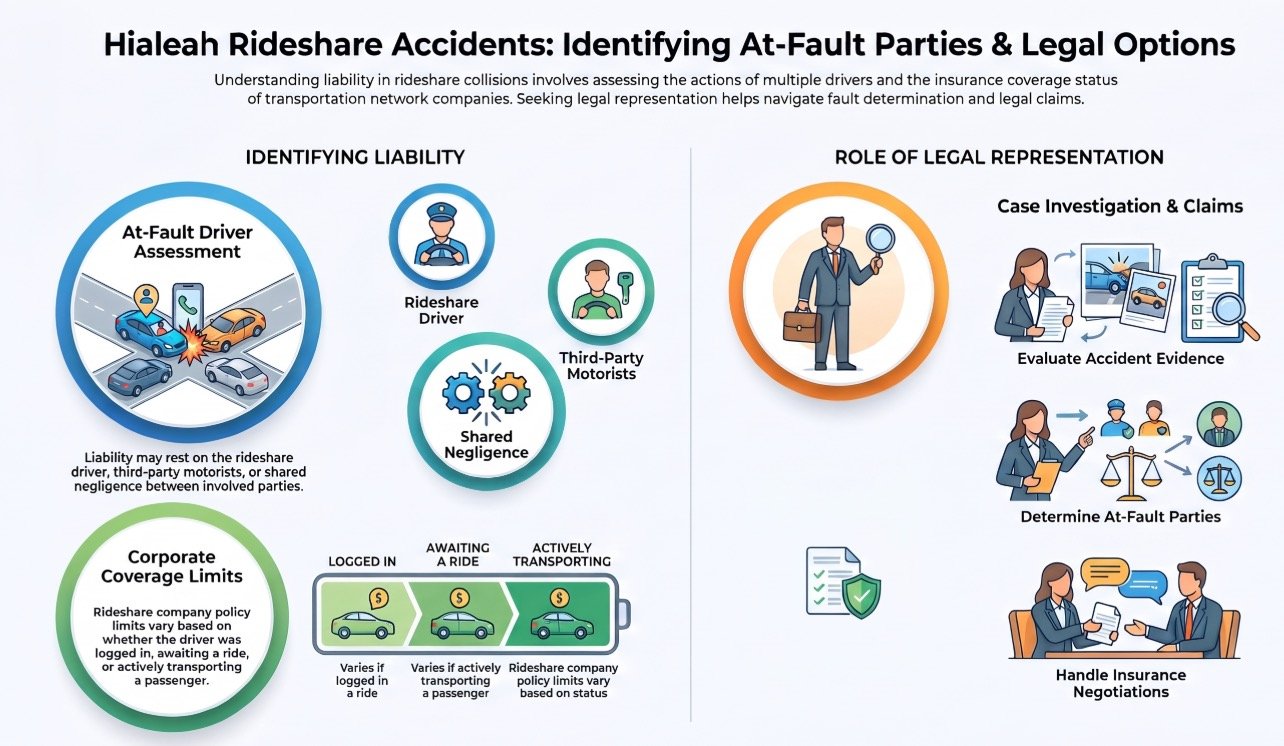
A Hialeah rideshare accident claim may involve several potentially responsible parties, including the rideshare driver, another motorist, or a company whose actions contributed to the collision. When injuries disrupt a person’s health, work, or ability to support family and community, legal guidance can help clarify available options. An attorney can review the circumstances, explain Claim eligibility, and identify information needed to evaluate a potential case. This process may include organizing medical records, documenting financial losses, and preserving relevant communications or other evidence. The attorney can also communicate with insurers, respond to requests, and help ensure that deadlines and procedural requirements are met. An attorney consultation gives an injured person an opportunity to ask questions and understand the legal process before deciding how to proceed. With informed support, claimants can focus on recovery and their responsibilities while pursuing a fair resolution. Each matter requires an individual review, and no outcome can be guaranteed. The goal is clear guidance and responsible advocacy.
Understanding Hialeah Rideshare Accident At-Fault Parties Injury Cases
When a rideshare collision in Hialeah causes injuries, determining who may be legally responsible depends on how the crash occurred and the parties’ roles. Potentially responsible parties may include a rideshare driver, another motorist, an employer, or a company, depending on the evidence and applicable law. Establishing responsibility requires examining the circumstances, identifying each party’s conduct, and connecting that conduct to the injuries and losses. This careful review supports a fair process for injured people and helps protect others who may face similar harm.


Rideshare insurance tiers can affect which policy applies. Coverage may depend on whether the driver was offline, waiting for a request, or transporting a passenger. These distinctions can shape available compensation but do not establish fault on their own. Comparative negligence rules may also affect recovery if an injured person shares responsibility for the collision. Evidence such as trip records, insurance documents, and witness accounts can clarify the parties’ roles. A thorough assessment helps make certain claims are evaluated accurately and responsibly.
Don’t Wait. Call Our Florida Personal Injury Lawyers Now!
Common Causes of Hialeah Rideshare Accident At-Fault Parties
OUR CONSULTATIONSARE FREE
START YOUR FREE CASE REVIEW

Rideshare accidents in Hialeah may result from distracted driving, speeding, reckless actions, or impaired driving. Unsafe passenger pickups can also create hazards when drivers stop or pull into traffic without adequate care. Identifying the cause helps clarify which parties may bear responsibility for resulting injuries.
Distracted Driving
Distracted driving is a common cause of Hialeah rideshare accidents, particularly when drivers use navigation apps, respond to ride requests, or communicate with passengers while driving. These tasks divert attention from traffic conditions and reduce a driver’s ability to notice pedestrians, cyclists, and other road users. Phone notification risks include alerts that prompt drivers to glance at a screen or reach for a device, even briefly. Dashboard distraction dangers may arise when drivers adjust navigation settings, review trip details, or operate vehicle controls instead of focusing on the road. Rideshare drivers have a responsibility to protect passengers and others sharing the roadway. When distraction contributes to a collision, evidence such as app records, phone activity, and witness accounts may help clarify how the incident occurred and identify responsible parties.
Speeding And Reckless Driving


Beyond distraction, speeding and reckless driving can also cause serious Hialeah rideshare accidents. Drivers who exceed posted limits may have less time to respond to traffic, pedestrians, or sudden changes in road conditions. Speed Thresholds vary with roadway design, weather, and surrounding activity, so a speed that seems manageable may still be unsafe. Rideshare drivers have a duty to operate with reasonable care and protect passengers as well as others sharing the road. Reckless Actions, including abrupt lane changes, unsafe passing, and tailgating, can increase collision risks and make injuries more severe. When a crash occurs, investigators may review vehicle data, witness accounts, roadway evidence, and available video to determine how speed or driving choices contributed. Establishing responsibility can help injured people pursue appropriate compensation and support their recovery.
Impaired Driving
When a rideshare driver operates under the influence of alcohol or drugs, impaired judgment and slower reaction times can put passengers and other road users at serious risk. Alcohol may affect coordination, attention, and the ability to judge distance, increasing the likelihood of a collision. Signs of alcohol impairment can include slurred speech, poor balance, or the odor of alcohol, although no single observation proves impairment. Drugs, including prescription medications, may also interfere with alertness and safe vehicle control. After a crash, drug impairment testing and other evidence may help clarify whether a substance contributed to the driver’s conduct. Investigators may review test results, witness accounts, and available records. Identifying impairment can help establish responsibility and support injured people seeking appropriate care and compensation.
Unsafe Passenger Pickups
Unsafe passenger pickups can contribute to rideshare crashes when a driver stops in a travel lane, blocks a crosswalk, or pulls over where visibility is limited. These choices may force other motorists to brake or change lanes suddenly, while pedestrians and cyclists face less room to move safely. Curbside positioning matters because a vehicle waiting near an intersection, driveway, or bus stop can obstruct sightlines and create conflicts. Pickup zone design can reduce these risks by providing clear, accessible areas away from moving traffic and pedestrian crossings. When designated zones are absent or poorly marked, drivers may make rushed decisions based on passenger location or traffic conditions. Investigators may examine the driver’s conduct, roadway layout, signage, and applicable rules to determine whether unsafe stopping contributed to a collision and resulting injuries.
Legal Rights of Hialeah Rideshare Accident At-Fault Parties Injury Victims
In Hialeah rideshare accidents, injured people may have legal rights even when they are found partly responsible for the collision. Florida’s comparative negligence rules may reduce compensation according to an injured person’s share of fault, but partial responsibility does not automatically bar recovery. The available claim depends on the evidence, the parties involved, and applicable insurance coverage.
Passenger rights may include seeking payment for reasonable medical expenses, lost income, and other legally recognized losses. Rideshare accountability can involve a driver, another motorist, or an insurer, depending on the circumstances. A careful review can help clarify which parties may owe duties and whether coverage applies.
Injured people may benefit from preserving records and obtaining qualified legal guidance. These steps can support a fair assessment while protecting the ability to assist others affected by the crash.
- Keep medical records, bills, and proof of missed work.
- Preserve trip details, messages, and relevant photographs.
- Avoid assuming that shared fault eliminates every claim.
- Review insurance and filing deadlines promptly.
Why Do Hialeah Rideshare Accident At-Fault Parties Injuries Happen?
Rideshare accident injuries in Hialeah often result from driver errors, hazardous road conditions, or other motorists’ actions. Traffic congestion can prompt abrupt lane changes, sudden stops, and unsafe turns, particularly when drivers are focused on locating passengers or following navigation instructions. These choices may leave nearby motorists, cyclists, and pedestrians with little time to react.
Poor visibility during heavy rain, at night, or near poorly lit intersections can make it harder to identify hazards and judge distances. Wet pavement and standing water may also reduce tire traction, increasing the likelihood that a vehicle will skid or fail to stop in time. Distracted driving, speeding, fatigue, and failure to yield can further contribute to collisions involving rideshare vehicles.
Some crashes arise from multiple contributing factors rather than a single mistake. Understanding how driver conduct, road conditions, and surrounding traffic interact can help explain why injuries occur and support efforts to promote safer travel for everyone in the community.
What Should You Do After a Hialeah Rideshare Accident At-Fault Party Injury?
After a Hialeah rideshare accident, injured individuals should seek prompt medical care, even if their symptoms appear minor. They should report the collision to law enforcement and the rideshare company to ensure the details are documented. Preserving photos, witness information, medical records, and trip details can help clarify how the crash occurred and support a later claim.
Seek Medical Care
Anyone injured in a Hialeah rideshare accident should seek medical care promptly, even if symptoms seem minor or appear later. Some injuries, including concussions and internal trauma, may not become apparent immediately. A timely evaluation can identify concerns and help prevent complications. If symptoms are severe, worsening, or potentially life-threatening, the injured person should go to an Emergency room or call emergency services. For less urgent concerns, a prompt appointment with a physician can establish an appropriate care plan. The clinician may recommend imaging, treatment, follow-up visits, or a specialist referral based on the examination. Following medical instructions and attending scheduled appointments supports recovery and creates a clear record of the care received. Keeping copies of treatment instructions and bills can also help the injured person and those assisting with recovery.
Report The Accident
When a person is injured in a Hialeah rideshare accident, the crash should be reported promptly to law enforcement and the rideshare company. A timely report helps ensure that appropriate responders are notified and that the incident is formally documented. If anyone needs urgent assistance, notify an Emergency contact as soon as practical, and request emergency services for serious injuries.
Before making calls, the injured person or a responsible companion should consider scene safety. They should move away from traffic or other immediate hazards only when it is safe to do so, and avoid actions that could worsen an injury. Contact the rideshare company through its designated reporting channel, providing accurate basic details about the trip and collision. Clear, prompt reporting helps protect those involved and supports an orderly response.
Preserve Evidence
Preserve evidence as soon as it is safe to do so, since details from a Hialeah rideshare accident may become difficult to verify over time. The injured person should photograph vehicle damage, road conditions, traffic signals, visible injuries, and the surrounding area. Record names and contact details for witnesses, the rideshare driver, and other involved parties. The person should retain medical records, repair estimates, receipts, and copies of the police report.
Evidence preservation also includes keeping relevant app records, trip confirmations, messages, and receipts. Screenshots may help, but original files and devices should remain unchanged when possible. Digital forensics can sometimes recover or authenticate electronic information, including app data or vehicle records. A lawyer may send preservation requests to the rideshare company and other parties, helping prevent important material from being lost, altered, or routinely deleted.
Don’t Wait. Call Our Florida Personal Injury Lawyers Now!
Critical Evidence in a Hialeah Rideshare Accident At-Fault Parties Injury Case
Reliable evidence can help establish how a Hialeah rideshare accident occurred, who may be responsible, and the extent of resulting injuries. Preserve records promptly, as app data and witness accounts may become harder to obtain over time.
Crucial evidence may include:
- Police accident reports documenting the scene and initial findings
- Rideshare app records showing trip details and driver status
- Witness statements describing the collision
- Medical documentation linking injuries to the accident
Police Accident Reports
A police accident report can provide an important early record of a Hialeah rideshare collision, including the parties involved, witness statements, and the responding officer’s observations. It may also document the location, time, road conditions, and any citations issued. Although the report can help identify potential at-fault parties, it is not a final determination of legal responsibility. Its details should be reviewed alongside other reliable evidence and accounts from those affected.
Report access procedures vary, and involved individuals may need to request a copy from the responding agency. Prompt review can help reveal missing information or factual errors. If a report contains an inaccuracy, you may request amendments through the appropriate department, though approval is not guaranteed. Careful documentation supports a fair assessment and helps protect the interests of injured people and others seeking accountability.
Rideshare App Records
Rideshare app records can help establish what happened before, during, and after a Hialeah collision. These records may show whether a driver was logged into the platform, accepted a ride request, or was transporting a passenger when the crash occurred. App Data can also document timestamps, route details, driver status, and communications related to the trip. Trip Logs may help clarify whether the driver was waiting for a request, traveling to a pickup location, or completing a ride. Such distinctions can affect which parties or insurance policies may be responsible for resulting injuries. Promptly preserving relevant electronic records can reduce the risk that important information becomes unavailable. A careful review may help injured people pursue accountability and seek support for medical needs and other losses.
Witness Statements
Beyond app records, witness statements can help clarify how a Hialeah rideshare collision occurred and who may be at fault. Independent observers may describe vehicle speed, traffic signals, lane changes, driver actions, or events immediately before impact. Their accounts can help identify whether a rideshare driver, another motorist, or multiple parties contributed to the collision. Witness credibility depends on factors such as the person’s vantage point, attention, neutrality, and ability to recall details. Investigators may compare statements with photographs, roadway conditions, and other available evidence. Statement inconsistencies do not automatically make an account unreliable, but they may require careful review to distinguish ordinary memory differences from material conflicts. Promptly identifying witnesses and preserving accurate contact information can support a fair assessment and help those affected pursue accountability while respecting everyone involved.
Medical Documentation
When injuries follow a Hialeah rideshare collision, medical documentation can help establish their nature, severity, and connection to the crash. Records from emergency departments, physicians, therapists, and other providers may describe symptoms, examination findings, diagnoses, and recommended care. Consistent treatment timelines can show when symptoms began, how they developed, and whether the injured person followed medical advice. Gaps in care may prompt questions, so records should accurately explain any delays or changes in treatment. Provider credentials and clear notes can also help demonstrate that evaluations and opinions came from qualified professionals. Prescriptions, imaging results, referrals, and billing statements may further document the scope and cost of care. With appropriate authorization, organized records can help insurers, attorneys, and decision-makers evaluate the injury claim and identify the support needed for recovery.
Long-Term Effects of Hialeah Rideshare Accident At-Fault Parties Injuries
Injuries caused by an at-fault party in a Hialeah rideshare accident may lead to chronic pain, lasting disability, or limitations on daily activities. Some individuals also experience persistent emotional trauma that affects their well-being and relationships. These long-term effects can require ongoing medical care and create substantial expenses over time.
Chronic Pain and Disability
Chronic pain and lasting disability can develop after a Hialeah rideshare collision, even when the initial injuries appear manageable. Ongoing neck, back, or joint pain may limit a person’s ability to work, travel, or complete routine tasks. Some injuries require continued medical evaluation, physical therapy, medication, or other Pain management strategies. When mobility or strength remains impaired, a person may need assistive devices or disability accommodations at work and in public settings. These changes can affect independence and increase the time and cost required for daily responsibilities. Accurate medical records can help document symptoms, treatment, functional limits, and future care needs. A qualified provider can assess the condition and recommend appropriate support. Understanding the long-term effects can help injured people and their caregivers plan practical assistance and pursue informed decisions about recovery and resources.
Lasting Emotional Trauma
The effects of a Hialeah rideshare accident may extend beyond physical pain and disability, leaving lasting emotional trauma. Survivors may experience anxiety, sleep disruption, irritability, or fear of traveling in vehicles. Some develop post-traumatic stress, including intrusive memories and heightened alertness that interfere with work, relationships, and daily responsibilities. These effects can also place strain on family members and others who depend on the injured person.
Emotional distress may persist even after visible injuries improve, and each person’s response can differ. Support from qualified mental health professionals may help survivors pursue emotional recovery and regain a sense of safety. Family, friends, and community members can offer practical assistance while respecting the survivor’s needs and pace. When emotional symptoms affect daily functioning, documenting their impact and seeking appropriate care can help clarify the harm caused by the collision.
Ongoing Medical Expenses
When a Hialeah rideshare accident causes lasting injuries, medical care may continue long after the initial treatment ends. Ongoing expenses can include specialist visits, prescription medications, physical therapy, assistive devices, and follow-up procedures. Some injured people also require home modifications or help with daily activities while they recover or manage permanent limitations.
Reliable estimates of these costs can help show how an injury may affect a person’s future needs. Future treatment should be assessed using medical opinions, documented symptoms, and the expected course of recovery. Expense forecasting may account for recurring care, possible complications, and changes in treatment needs over time. Clear records of appointments, bills, and provider recommendations can support a careful evaluation of damages. This information helps responsible parties understand the lasting financial consequences of an accident.
Proving Liability in Hialeah Rideshare Accident At-Fault Parties Injury Cases
Establishing liability in a Hialeah rideshare accident requires evidence showing how the crash occurred and which parties contributed to it. Investigators may review police reports, photographs, vehicle damage, roadway conditions, and witness accounts to reconstruct the collision. Rideshare app records can help establish whether a driver was transporting a passenger or traveling to a pickup when the crash occurred. These details may identify responsible parties, including a rideshare driver, another motorist, or an entity responsible for unsafe road conditions.
Medical records and expert analysis can connect the injuries to the collision and clarify their effects. A careful review also considers whether any person’s conduct contributed to the crash. Under Florida’s comparative negligence rules, fault may be assigned among multiple parties, and liability apportionment can affect the damages each party owes. Accurate evidence helps ensure responsibility is assessed fairly. This process supports injured people and their families while promoting accountability and safer conduct on Hialeah roads.
Dealing With Insurance Companies After a Hialeah Rideshare Accident At-Fault Parties Injury
After a Hialeah rideshare accident, insurance coverage may depend on the driver’s status in the rideshare app and the parties’ respective roles in causing the crash. A driver transporting a passenger may have access to different coverage than one waiting for a ride request. Other involved drivers may also have separate policies, making it important to identify each insurer and understand what coverage applies.
Insurance representatives may request statements, documents, or authorization to review records. Injured people can respond carefully and provide accurate information without speculating about fault or minimizing their losses. Before accepting a payment or signing a release, they should understand whether it addresses all claims and whether other responsible parties may remain.
Policy Limits can restrict the amount available under a policy, even when injuries are substantial. An insurer may also assert Reservation Rights while investigating whether coverage applies. Clear, organized communication helps protect the injured person’s interests and supports a fair assessment of responsibility, while keeping the focus on medical needs and recovery.
What to Expect During a Hialeah Rideshare Accident At-Fault Parties Injury Claim Process
A Hialeah rideshare injury claim typically begins by identifying the parties who may be legally responsible, including the driver and, depending on the circumstances, other parties. The injured person then files a claim and gathers evidence such as crash reports, medical records, and rideshare documentation. Once the evidence is reviewed, the parties may negotiate a settlement, though unresolved disputes can require further legal action.
Identifying At-Fault Parties
Identifying every potentially responsible party is a crucial step in a Hialeah rideshare accident injury claim. The investigation may examine the rideshare driver’s conduct, the actions of other motorists, and whether a vehicle defect contributed to the collision. Vehicle ownership can help clarify who controlled the car and whether an owner may bear responsibility for allowing an unsafe vehicle on the road. Records may also reveal negligent maintenance, such as ignored brake problems or worn tires. The rideshare company’s role may depend on the driver’s status, applicable policies, and the circumstances of the trip. Witness accounts, crash reports, photographs, and available trip information can help establish how the incident occurred. Careful identification of all potentially liable parties supports a fair assessment of responsibility and helps protect injured people seeking accountability.
Filing The Injury Claim
Once the potentially responsible parties have been assessed, the injured person can begin the claim process by notifying the appropriate insurer and documenting the losses connected to the crash. The insurer may request a statement and details about the incident, but the claimant should understand the implications before providing recorded responses or accepting a settlement. Claim filing deadlines depend on the circumstances and applicable Florida law, so prompt action can help preserve the right to seek compensation. A claim may address medical expenses, lost income, and other legally recognized losses. If the insurer disputes responsibility or offers inadequate payment, the injured person may submit a formal demand. Key points in a demand letter generally include a clear account of the claim, the compensation sought, and a response deadline. Careful communication can support a fair resolution while protecting the claimant’s interests.
Gathering Evidence And Records
As the claim develops, organized evidence can help establish how the Hialeah rideshare crash occurred, who may be responsible, and how the injuries affected the claimant. Evidence preservation may include securing photographs, witness contact details, vehicle damage images, and available rideshare app information. Prompt action can matter because video footage, electronic trip data, and other records may be deleted or overwritten under routine retention policies. Records requests can seek police reports, medical charts, billing statements, employment records, and relevant driver or company documents. These materials can clarify the sequence of events, identify potential sources of responsibility, and document treatment and financial effects. A careful recordkeeping process also helps ensure information is reviewed consistently and shared accurately. Claimants may benefit from keeping copies of correspondence and noting when they obtained each item.
Negotiating A Settlement
Settlement negotiations in a Hialeah rideshare accident claim generally begin after the available evidence and injury records provide a clearer picture of fault, damages, and applicable insurance coverage. The injured person’s representative may present a demand letter outlining the incident, documented losses, and requested compensation. A sound Demand letter strategy connects each claimed expense and injury to supporting records while accounting for future treatment needs and disputed responsibility.
The rideshare company’s insurer or another responsible carrier may accept the demand, reject it, or propose a lower amount. Negotiations can involve requests for additional documentation and careful review of policy limits. If discussions stall, mediation may provide a structured opportunity to resolve disagreements with a neutral facilitator. Mediation preparation includes organizing evidence, evaluating settlement options, and identifying priorities. Any agreement should clearly address payment terms and release obligations.
Don’t Wait. Call Our Florida Personal Injury Lawyers Now!
Compensation for Hialeah Rideshare Accident At-Fault Parties Injury Damages
When a rideshare driver causes a crash, injured people may seek compensation from the driver, the rideshare company’s applicable insurance coverage, or other responsible parties. The available recovery depends on the facts, the driver’s status in the rideshare app, and the insurance policies that apply.
Compensation may address reasonable medical expenses, including treatment, rehabilitation, and necessary follow-up care. An injured person may also seek payment for Lost income when injuries prevent work, as well as costs related to vehicle damage. Records such as medical bills, repair estimates, wage statements, and crash reports can help establish the losses connected to the collision.
A claim may involve several insurers, each examining responsibility and the scope of coverage. Prompt investigation can help preserve evidence and identify all parties whose conduct contributed to the crash. Legal guidance may help injured people organize documentation, communicate with insurers, and pursue a fair resolution while they focus on recovery and meeting family or community responsibilities.
Economic vs Non-Economic Damages in Hialeah Rideshare Accident At-Fault Parties Cases
In Hialeah rideshare accident cases, damages may include economic losses such as medical expenses, lost income, and future care costs. Non-economic damages may address pain, emotional distress, and how injuries affect daily life. Establishing these claims requires evidence that documents the losses and connects them to the at-fault party’s conduct.
Economic Losses
Economic losses in a Hialeah rideshare accident case are the measurable financial costs caused by the crash, such as medical bills, lost income, and property damage. These expenses may include emergency treatment, follow-up care, medication, rehabilitation, and necessary medical equipment. Repair or replacement costs for a damaged vehicle and other personal property may also be considered. Lost wages can reflect income missed during recovery, supported by employer records, pay statements, or tax documents. If injuries limit a person’s ability to return to the same work or earn at the prior level, diminished earning capacity may be relevant. Future treatment costs and projected income losses may require professional estimates. Careful documentation helps clarify the financial impact and supports a fair assessment, allowing injured people to seek recovery without shifting those costs to their families or community.
Non-Economic Harm
Beyond medical bills and lost income, a Hialeah rideshare accident may cause non-economic harm, including physical pain, emotional distress, loss of enjoyment of daily activities, and disruption to personal relationships. These effects can persist even when treatment ends, influencing a person’s comfort, independence, and ability to participate in community life. Loss of Enjoyment may involve giving up hobbies, family routines, or volunteer activities that once brought purpose and connection. Emotional distress may include anxiety, sleep disruption, or reduced confidence when traveling. Damaged Relationships can arise when injuries limit shared responsibilities or strain communication with loved ones. Unlike economic losses, these harms do not have a direct price tag, yet they represent meaningful consequences of an accident. Recognizing them supports a fuller understanding of how an injury affects a person’s life and service to others.
Proving Damages
A damages claim in a Hialeah rideshare accident must be supported by evidence showing both the losses suffered and their connection to the crash. Economic damages include medical bills, rehabilitation costs, lost wages, and reduced earning capacity. Receipts, employment records, tax documents, and provider statements can help establish these amounts. Damage valuation also considers future losses, such as ongoing treatment or diminished ability to work, which may require expert analysis and reliable projections.
Non-economic damages address harm without a precise price, including pain, emotional distress, and loss of normal activities. Medical records, consistent treatment notes, and testimony from the injured person and those familiar with daily life may help explain these effects. A clear, organized record allows insurers, attorneys, and decision-makers to assess the claim fairly and distinguish documented losses from unsupported estimates.
When a Hialeah Rideshare Accident At-Fault Parties Injury Case Goes to Trial vs Settlement
Whether a Hialeah rideshare injury case settles or proceeds to trial depends on the strength of the evidence, the extent of the injuries, and the parties’ willingness to resolve disputed issues. Settlement can provide a defined resolution without the uncertainty and time involved in a trial. Negotiations may address compensation for documented losses and future needs, while allowing the injured person to avoid public proceedings. Any proposed agreement should be reviewed carefully before acceptance, since it may end the claim.
If the parties cannot agree on responsibility or the value of the harm, a court may decide the dispute. Trial preparation includes organizing records, identifying witnesses, and developing a clear account of how the collision affected the injured person. Courtroom testimony may come from the claimant, witnesses, and qualified professionals. A judge or jury then evaluates the evidence and determines the outcome. The choice between settlement and trial depends on case-specific circumstances, informed advice, and the injured person’s priorities. Both paths require careful consideration of the evidence and likely consequences.
Florida Laws That May Affect Your Hialeah Rideshare Accident At-Fault Parties Case
Florida law can affect who is responsible for a Hialeah rideshare accident and what compensation may be available. Florida’s no-fault system generally requires injured people to seek initial medical benefits through their own personal injury protection coverage, regardless of fault. PIP thresholds may limit when an injured person can pursue pain-and-suffering damages against another party. Serious injuries may meet the legal standard for stepping outside that system.
Responsibility can involve a rideshare driver, another motorist, or, in some circumstances, the rideshare company. Insurance coverage may depend on whether the driver was offline, awaiting a ride request, or transporting a passenger. Evidence about the driver’s app status and the crash circumstances can help identify applicable coverage.
- Comparative negligence can reduce damages when an injured person shares fault.
- Multiple parties may bear responsibility for the same collision.
- Rideshare insurance coverage can vary by trip stage.
- Medical records and crash evidence can support a claim.
These rules help clarify available options and support informed decisions while injured people focus on recovery and their communities.
The Statute of Limitations for Hialeah Rideshare Accident At-Fault Parties Injury Cases
Beyond identifying potentially responsible parties and applicable insurance, an injured person must also account for the deadline for filing a lawsuit. Florida law generally gives an injured person two years from the date of a negligence-based accident to file a personal injury lawsuit. Missing that deadline can prevent recovery, regardless of the seriousness of the injuries or the number of parties involved.
Deadline calculation may depend on when the crash occurred and the nature of the claim. A rideshare collision can involve a driver, another motorist, or a company, but identifying multiple potential defendants does not automatically extend the filing period. Separate deadlines may apply to claims against government entities, which can require earlier notice.
Tolling exceptions may pause or alter a deadline in limited circumstances, such as when an injured person is a minor or legally incapacitated. These rules are fact-specific, and exceptions should not be assumed. Timely filing preserves the opportunity to seek accountability and support those affected by preventable harm.
How a Hialeah Rideshare Accident At-Fault Parties Lawyer Can Help You
When a rideshare crash causes serious injuries, an attorney can help identify potentially liable parties, preserve evidence, and evaluate which insurance policies may apply. A lawyer may examine driver conduct, vehicle ownership, rideshare company records, and roadway conditions to determine how each factor contributed. This Case evaluation can clarify available claims and guide a Legal strategy focused on accountability and fair compensation.
A case evaluation can clarify liable parties, available insurance coverage, and legal strategies for pursuing fair compensation after a serious rideshare crash.
Counsel may coordinate with investigators and medical providers, organize documentation, and communicate with insurers so injured people can focus on recovery and family responsibilities. The process can also help protect others by establishing facts that encourage safer practices.
A lawyer may assist by:
- Securing trip data, app records, witness accounts, and relevant video.
- Reviewing coverage provisions and identifying responsible insurers.
- Evaluating medical costs, lost income, and anticipated care needs.
- Presenting evidence and negotiating or litigating claims when appropriate.
When to Contact a Hialeah Rideshare Accident At-Fault Parties Lawyer
Prompt legal guidance may be important after a Hialeah rideshare accident, particularly when injuries are serious, fault is disputed, or insurance coverage is unclear. A consultation can also be appropriate when a passenger, driver, pedestrian, or another person is unsure of the next steps. Early Consultation Timing matters because evidence, such as photographs, witness details, trip records, and medical documentation, may become harder to obtain as time passes.
A lawyer can review the circumstances, explain potential deadlines, and identify which parties or insurers may be involved. People who were hurt while assisting others, including those who offered help at the scene, should document what occurred and seek medical attention before discussing detailed claims with insurers. They should preserve relevant communications and avoid guessing about fault.
Representation Eligibility depends on the facts, the person’s role in the crash, and applicable law. A prompt discussion can clarify whether legal representation is available and what information may be needed. Contacting counsel does not require a person to proceed with a claim.
Why You Need an Experienced Hialeah Rideshare Accident At-Fault Parties Lawyer
Because rideshare crashes may involve several drivers, corporate entities, and insurance policies, an experienced Hialeah rideshare accident lawyer can help identify the potentially responsible parties and evaluate how coverage applies. This work can protect an injured person’s ability to seek fair compensation while allowing that person to focus on recovery and family responsibilities.
A lawyer familiar with rideshare claims can preserve relevant records, review trip data, and assess whether a driver, another motorist, or a company may be responsible. Local Experience can also help counsel understand Hialeah roads, local procedures, and practical issues that may affect a claim. This knowledge supports clear communication with insurers and helps prevent important evidence or deadlines from being overlooked.
Legal representation may be available through a Contingency Fee arrangement, under which payment is generally tied to a recovery, subject to the agreement’s terms. By organizing complicated facts and explaining available options, counsel can help clients make informed decisions and pursue accountability without losing sight of their broader needs.
How to Choose the Right Hialeah Rideshare Accident At-Fault Parties Lawyer for Your Case
Choosing the right Hialeah rideshare accident lawyer requires more than comparing advertisements or promises of results. A careful review can help an injured person select counsel prepared to protect their interests and pursue a fair resolution.
The lawyer’s experience with rideshare collisions matters because these claims may involve a driver, a transportation company, insurers, and other responsible parties. Prospective clients can ask how the attorney investigates fault, preserves app and trip records, and communicates case developments. Attorney credentials, including Florida licensure and relevant litigation experience, should be verified through reliable sources.
A clear fee structure is also important. The lawyer should explain how fees and case expenses are handled, when payment may be due, and what happens if the claim does not succeed. A written agreement can help prevent misunderstandings.
During an initial consultation, the person can assess whether the lawyer listens carefully, answers questions directly, and handles the claim diligently. These qualities support informed decisions and responsible representation.
About The Law Offices of Anidjar & Levine
The Law Offices of Anidjar & Levine represents people injured in accidents, including collisions involving rideshare vehicles in Hialeah. The firm helps clients seek accountability and compensation after a crash, recognizing that each case involves distinct circumstances and needs. Its work includes investigating potential liability, communicating with insurers, and explaining available legal options.
Firm history can help prospective clients understand a practice’s background and its approach to representing injured people. The firm was established in Florida and handles personal injury matters, including claims arising from motor vehicle accidents. Its attorneys may assess whether a rideshare driver, another motorist, a company, or multiple parties could bear responsibility, depending on the evidence and applicable law.
Attorney credentials, experience, and case-specific preparation are relevant considerations when selecting counsel. The firm describes its lawyers’ professional backgrounds and legal services through its public materials. Individuals can review that information and ask direct questions about representation, fees, and communication. This process can help clients make informed decisions while pursuing a fair resolution.
Frequently Asked Questions
Can I Recover Compensation if I Was a Passenger in a Rideshare Vehicle?
Yes, an injured rideshare passenger may recover compensation when another party’s negligence caused the collision. Passenger injury compensation may cover medical expenses, lost income, and pain and suffering, depending on the evidence and applicable insurance coverage. Rideshare passenger rights include seeking payment through a responsible driver’s policy or, in some cases, the rideshare company’s insurance. Liability and available coverage depend on the circumstances, including the driver’s app status and the facts of the crash.
Does Rideshare Insurance Cover Accidents During a Driver’s Personal Use?
Rideshare insurance generally does not cover accidents that occur while a driver is using the vehicle for personal purposes and is not logged into the rideshare app. In that situation, the driver’s personal auto policy may apply, subject to its coverage terms and Driver Policy Limits. Personal Use Coverage varies by policy, and some insurers restrict coverage for vehicles used commercially. Injured people should confirm the driver’s status and available insurance promptly.
Can I File a Claim if the Rideshare Driver Was Uninsured?
Yes, an injured passenger may be able to file a claim even if the rideshare driver was uninsured. Florida uninsured motorist coverage may provide compensation when an at-fault driver lacks insurance, depending on the injured person’s policy and applicable terms. Personal injury protection benefits may also cover certain medical expenses and lost wages, regardless of fault. The available options depend on the accident circumstances, insurance policies, and timely reporting requirements. A careful review can clarify next steps.
What Happens if Multiple Vehicles Contributed to the Rideshare Crash?
When multiple vehicles contribute to a rideshare crash, responsibility may be shared among several drivers rather than assigned to one person. Investigators examine each driver’s actions, vehicle damage, witness accounts, and available video to determine how the collision unfolded. In chain reaction collisions, comparative fault rules may affect each party’s share of liability and potential recovery. Injured people may pursue claims against responsible drivers or applicable insurance policies, depending on the evidence.
Can I Pursue a Claim if a Rideshare Vehicle’s Mechanical Defect Caused the Accident?
You may be able to pursue a claim if a rideshare vehicle’s mechanical defect caused the accident. Potentially responsible parties can include the vehicle manufacturer, parts supplier, rideshare driver, or maintenance provider, depending on how the defect arose. Product liability may apply when a defective design, manufacturing flaw, or inadequate warning contributed to the crash. Maintenance records, inspection reports, and repair histories can help establish responsibility and support an injured person’s claim for compensation.
—————————
Determining who caused a Hialeah rideshare accident may require reviewing the crash, the driver’s app status, and available insurance coverage. Injured people may have claims involving a rideshare driver, another motorist, or multiple parties. Prompt legal guidance can help preserve evidence, identify responsible parties, and assess potential compensation under Florida law. The Law Offices of Anidjar and Levine can review the circumstances and explain available options. Learn more from a Hialeah Personal Injury Lawyer to make informed decisions about your next steps.