

The Law Offices of Anidjar and Levine can review crash evidence, medical records, insurance communications, and documented losses to assess a potential spine, back, or neck injury claim after a Fort Lauderdale car accident.These injuries may cause delayed symptoms, lasting pain, reduced mobility, or nerve problems, so prompt medical evaluation and organized treatment records are important. A lawyer can explain your legal options, key deadlines, and potential recovery for expenses and lost income. Learn more from a Fort Lauderdale Personal Injury Lawyer.
Main Takeaways
- A Fort Lauderdale car accident lawyer can review evidence, explain claim options, and assess whether another driver’s negligence caused your spine, back, or neck injury.
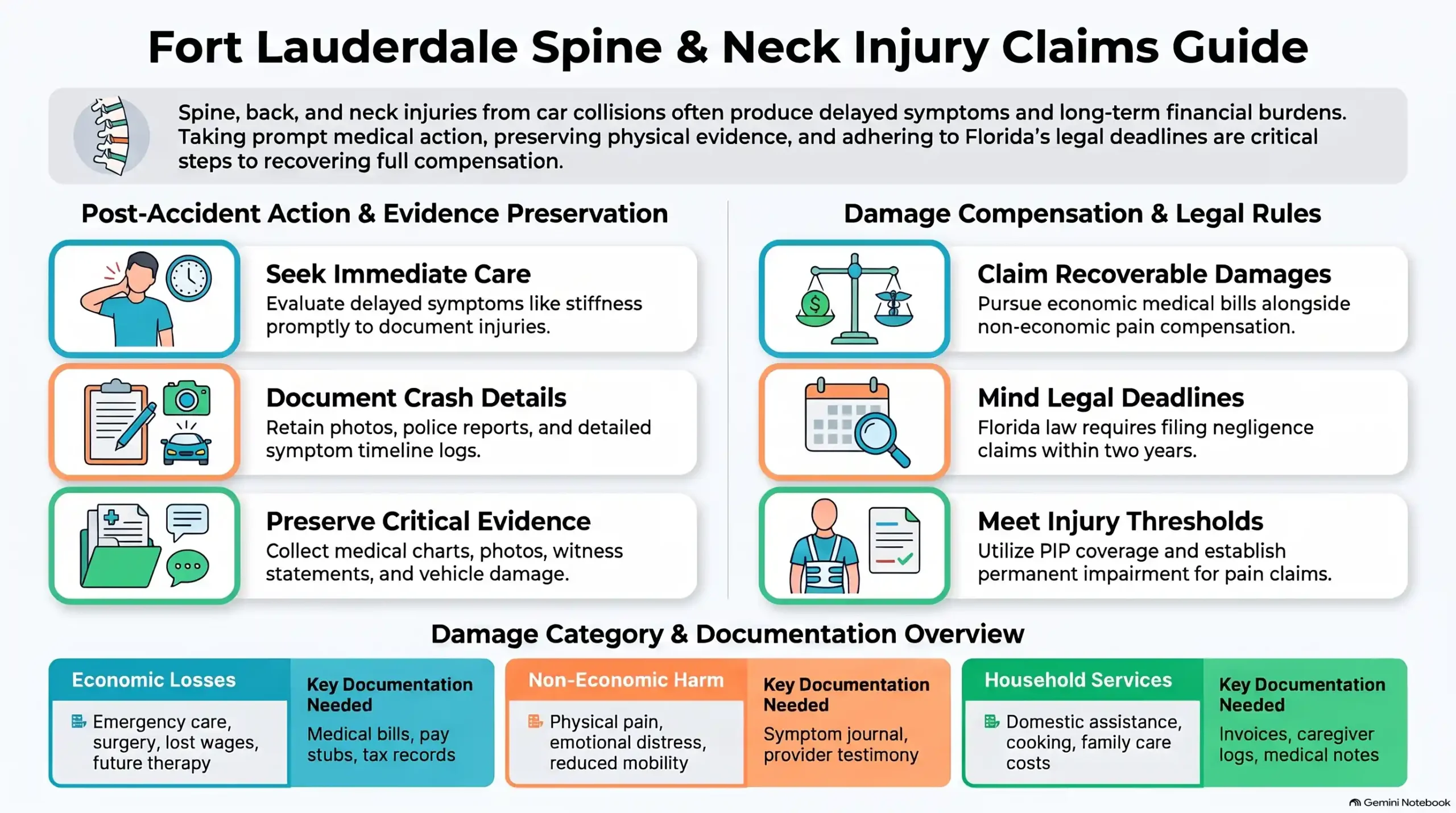
- Seek prompt medical evaluation; symptoms such as stiffness, numbness, tingling, or weakness may appear hours or days after a crash.
- Keep medical records, bills, imaging results, employment information, and insurance correspondence to document treatment, lost income, and other losses.
- Police reports, photographs, witness statements, video, and vehicle damage may help establish how the collision occurred and support liability.
- During a consultation, a lawyer can explain deadlines, insurance procedures, potential recovery, fees, and next steps.


How We Can Help With Your Fort Lauderdale Car Accident Spine, Back & Neck Injury Claim
Spine, back, and neck injuries from a car accident can require extensive treatment and may limit a person’s ability to work or manage daily activities. A Fort Lauderdale attorney can help an injured person understand available legal support while keeping the focus on recovery and practical needs.
The process may begin with a careful Claim evaluation. Counsel can review accident records, medical documentation, insurance communications, and reported losses to identify relevant issues and explain potential next steps. Clear guidance can help clients make informed decisions without adding unnecessary pressure during a difficult period.
Treatment coordination can also help keep a claim organized. With appropriate authorization, an attorney’s office can communicate with medical providers, track treatment records, and help confirm that documentation reflects the injury’s effects. This support can reduce administrative burdens and let the client prioritize care.
Throughout the matter, the legal team can provide timely updates, answer questions, and treat each client with respect. Its role is to provide dependable support and pursue a resolution based on the available evidence.
OUR CONSULTATIONSARE FREE
START YOUR FREE CASE REVIEW

Understanding Fort Lauderdale Car Accident Spine, Back & Neck Injury Cases
When a collision causes a spine, back, or neck injury, the effects may not be immediately apparent or limited to the initial pain. Some people develop stiffness, reduced mobility, numbness, tingling, or weakness hours or days later. These Spinal injury symptoms can interfere with everyday tasks and may indicate damage that requires prompt medical attention. A timely evaluation helps identify concerns and supports appropriate care.
Diagnosis generally begins with a medical history and physical examination. A clinician may assess movement, sensation, strength, and reflexes, then recommend Diagnostic imaging when needed to examine bones and soft tissues. Imaging results, treatment records, and follow-up evaluations can help clarify the injury’s nature and progression.
For a claim, organized documentation can connect reported symptoms, medical findings, and care received. Records should accurately describe changes in condition and limitations without overstating them. Understanding how these injuries are assessed can help injured people make informed decisions, communicate clearly with providers, and ensure their needs are fairly considered.
Common Causes of Fort Lauderdale Car Accident Spine, Back & Neck
Spine, back, and neck injuries in Fort Lauderdale car accidents can result from several preventable driving behaviors. Distracted driving, speeding, reckless driving actions, and impaired driving may increase crash severity, while rear-end collisions can subject occupants to sudden forces. Understanding these common causes can help clarify how such injuries occur and what factors may be relevant to a claim.
Distracted Driving
Distracted driving is a common cause of Fort Lauderdale car accidents that result in spine, back, and neck injuries. When drivers take their eyes off the road, they may miss changing traffic conditions or fail to respond to hazards in time. Texting while driving is especially dangerous because it combines visual, manual, and cognitive distraction. A driver reading or sending a message may miss a stopped vehicle or a nearby pedestrian crossing.
Other activities can also interfere with safe driving. Dashboard distractions, such as adjusting navigation, climate controls, or entertainment settings, can draw attention away from surrounding traffic. Even brief lapses may lead to a collision that forces occupants’ bodies to move suddenly, potentially injuring the spine, back, or neck. Preventing distractions helps protect drivers, passengers, and others who share Fort Lauderdale roads.
Speeding and Reckless Driving
Speeding and reckless driving can turn a Fort Lauderdale collision into a forceful impact that causes serious spine, back, and neck injuries. Higher speeds reduce response time and increase the force transferred to occupants in a collision. Even when a driver remains below posted Speed Thresholds, conditions such as traffic, weather, and road design may make that speed unsafe. Reckless Actions, including abrupt lane changes, unsafe passing, and disregarding traffic signals, can also create sudden impacts that place substantial strain on the body. These actions may lead to injuries ranging from painful sprains to fractures or damage involving spinal discs and nerves. Identifying how speed or dangerous conduct contributed to a crash can help clarify responsibility and support injured people seeking medical care and fair compensation.
Rear-End Collisions
When a vehicle strikes another from behind, the sudden force can jolt occupants and strain the neck, back, and spine. These collisions can happen when a driver follows too closely, fails to notice traffic slowing down, or gets distracted by road conditions. Even at lower speeds, the impact can cause occupants to move abruptly before the vehicle’s safety systems fully limit their motion. Injury severity may depend on factors such as impact direction, vehicle size, and occupant position. Proper Headrest positioning can help reduce excessive neck movement, while seatback recline may affect how the body responds to impact. After a rear-end collision, prompt medical assessment can identify injuries that are not immediately apparent. Accurate documentation also helps clarify the event’s effects and supports informed decisions about care and recovery.
Impaired Driving
Impaired driving can disrupt a driver’s judgment, coordination, and ability to respond to changing traffic conditions. Alcohol impairment may slow reaction time, weaken attention, and affect decisions about speed or following distance. Drugs, including some prescription medications, can also reduce alertness or interfere with safe vehicle control. These effects increase the risk of collisions that may force occupants’ heads, necks, and backs to move suddenly, causing painful injuries.
In Fort Lauderdale, impaired driving can endanger passengers, pedestrians, and other motorists who have no control over another driver’s choices. DUI enforcement helps deter dangerous conduct and identify drivers who may be unable to operate a vehicle safely. After a crash, prompt medical assessment can document spinal, back, or neck symptoms and guide treatment. Careful investigation may clarify how impairment contributed and support informed decisions about recovery and accountability.
Don’t Wait. Call Our Florida Personal Injury Lawyers Now!


Legal Rights of Fort Lauderdale Car Accident Spine, Back & Neck Injury Victims
Fort Lauderdale car accident victims with spine, back, or neck injuries may have the right to seek compensation from a party whose negligence caused the crash. Florida law may permit recovery for documented medical expenses, lost income, reduced earning capacity, and other legally recognized losses. The available remedies depend on the facts, applicable insurance coverage, and deadlines.
Victims and their families can help protect these rights by taking the following steps:
- Preserve medical records, bills, employment information, and relevant correspondence.
- Review insurance policies and report claims promptly, while avoiding unsupported statements about fault or injury.
- Request Insurance appeals when a health or disability claim is denied, following the plan’s procedures and deadlines.
- Seek disability accommodations at work or in public services when limitations affect access or participation.
A qualified attorney can explain potential claims, assess evidence, and communicate with insurers. Timely guidance may help injured people pursue fair treatment, support their families, and maintain access to necessary care.
Why Do Fort Lauderdale Car Accident Spine, Back & Neck Injuries Happen?
Understanding how these injuries occur can help explain why a crash may cause lasting physical limitations. During a collision, a vehicle can stop abruptly while occupants continue moving, placing sudden forces on the neck, back, and spine. The head may snap forward and backward, straining muscles and ligaments or damaging discs. A side impact can twist the torso, while a rear-end collision may compress or extend the spinal column.
Spinal anatomy helps explain why even a brief impact can affect movement and comfort. Vertebrae, discs, nerves, and surrounding soft tissues work jointly to support the body and transmit signals. Excessive force can disrupt these structures, causing symptoms that range from stiffness to radiating pain or weakness.
Seatbelt biomechanics also influence injury patterns. A properly positioned belt restrains the torso, but force concentrated across the chest or pelvis can contribute to injury. Airbags, vehicle intrusion, occupant position, and collision speed may further affect how forces reach the body. Damage may not be immediately apparent.
What Should You Do After a Fort Lauderdale Car Accident Spine, Back & Neck Injury?
After a Fort Lauderdale car accident involving a spine, back, or neck injury, prompt medical care can identify injuries and guide treatment. The injured person should document the crash, symptoms, and related expenses while preserving relevant records. Consulting a qualified lawyer may help clarify legal options and protect the person’s interests.
Seek Medical Care
Because spinal, back, and neck injuries may not cause immediate or severe pain, anyone involved in a Fort Lauderdale car accident should seek prompt medical evaluation, even if symptoms seem minor. A physician can assess potential injuries, recommend appropriate testing, and identify conditions that may worsen without timely care. Emergency symptoms, including weakness, numbness, severe pain, difficulty walking, or loss of bladder or bowel control, require immediate emergency attention. In serious situations, do not move the injured person unless staying put poses danger; emergency responders can provide safe assistance. Medical professionals can explain treatment options based on the diagnosis, which may include medication, physical therapy, expert care, or other interventions. Following clinical instructions and attending recommended appointments supports recovery and helps protect the person’s long-term health.
Document the Accident
When it is safe, documenting the accident can preserve important evidence about how the collision occurred and the injuries that followed. The injured person may photograph vehicle positions, visible damage, road conditions, traffic signs, and any apparent hazards, provided doing so does not delay medical care or create further risk. You can also record names and contact details for witnesses while memories remain fresh. Request a police report and keep its identifying information for later reference. Create an incident timeline noting the collision, symptoms, medical visits, and changes in condition. Keep copies of discharge instructions, prescriptions, receipts, and relevant messages in one place. Accurate, dated records can help clarify events and support consistent communication with medical providers and insurers.
Contact a Lawyer
A Fort Lauderdale car accident lawyer can help an injured person understand legal options after a collision involving spine, back, or neck injuries. Prompt legal guidance can help preserve key evidence and clarify deadlines for pursuing a claim. An injured person can share medical records, photographs, witness details, and insurance communications so counsel can assess the circumstances and identify practical next steps.
A Free consultation may let the person ask questions about fees, potential recovery, and the claims process before deciding whether to proceed. It is also helpful to ask about attorney availability, including who will handle the case and how they’ll provide updates. While the attorney reviews the case, the injured person should follow medical advice and avoid statements that could misrepresent the injury. Counsel can communicate with insurers and pursue a fair resolution while the person focuses on treatment and recovery.
Don’t Wait. Call Our Florida Personal Injury Lawyers Now!
Critical Evidence in a Fort Lauderdale Car Accident Spine, Back & Neck Injury Case
A spine, back, or neck injury claim may depend on evidence that documents both the collision and its medical consequences.
Crucial evidence commonly includes:
- Medical records describing diagnoses, treatment, and prognosis.
- Accident scene photographs showing road conditions, vehicle positions, and visible hazards.
- Witness statements recounting how the collision occurred.
- Vehicle damage evidence that may help explain the impact and its severity.
Medical Records
Medical records are indispensable evidence in a Fort Lauderdale car accident case involving spine, back, or neck injuries because they document the diagnosis, treatment, and progression of the condition. These records may include emergency department notes, imaging results, physician evaluations, therapy plans, and medication histories. Collectively, they help show when symptoms began, how providers assessed them, and whether care continued as recommended. A complete record can also clarify prior conditions and distinguish them from collision-related injuries.
An injured person may submit a record request to each relevant provider and retain copies of bills and treatment documents. Review records for missing pages or factual errors. If a chart correction is needed, the patient can ask the provider to amend the entry through its established process. Accurate documentation supports a fair claim evaluation and helps others understand the medical needs involved.
Accident Scene Photos
While medical records document the diagnosis and course of treatment, photographs can preserve what the crash scene looked like before vehicles or debris were moved. Images may show vehicle damage, roadway conditions, traffic controls, skid marks, and the positions of involved cars. These details can help explain how the collision occurred and whether the impact may have contributed to back, neck, or spinal injuries. Clear camera angles, including wide views and close-ups, can provide useful context without altering the scene. Photo metadata, such as timestamps and location information, may help establish when and where images were taken. Preserve photographs in their original form, and store copies securely. A careful record of visible conditions can help legal professionals evaluate the claim and present evidence responsibly to support fair compensation.
Witness Statements
When a collision raises questions about how it occurred, witness statements can provide an independent account. People who saw the crash may describe traffic signals, vehicle movements, road conditions, or actions taken immediately afterward. Their observations can help clarify how the impact happened and whether a driver’s conduct contributed to a neck, back, or spinal injury.
Witness credibility depends on factors such as the person’s opportunity to observe, consistency, and neutrality. A detailed account isn’t necessarily reliable if the witness had an obstructed view or relied on assumptions. Statement timing also matters. Promptly recorded recollections may preserve details that can fade, while later accounts may require careful review. Investigators may document contact information and ask open questions without suggesting answers. Respectful, accurate collection helps preserve useful evidence and supports a fair evaluation of the injured person’s claim.
Vehicle Damage Evidence
Beyond witness accounts, physical damage to the vehicles can help explain how a collision occurred and the forces involved. Photographs taken soon after a crash may document impact points, crushed panels, broken glass, and damage to safety systems. These details can help establish the direction and severity of an impact, although visible damage alone cannot determine the extent of a person’s injuries. Vehicle repair estimates and inspection records may clarify which components were affected and whether repairs addressed hidden structural problems. When appropriate, qualified professionals can compare vehicle condition, scene measurements, and crash reconstruction data to assess how the collision unfolded. This evidence may support a careful review of reported spine, back, or neck symptoms. Promptly preserving vehicles and records can support a fair evaluation and help those affected pursue appropriate care and accountability.
Long-Term Effects of Fort Lauderdale Car Accident Spine, Back & Neck Injuries
Spine, back, and neck injuries from a Fort Lauderdale car accident may cause effects that persist long after initial treatment. Chronic pain and reduced mobility can interfere with daily activities, work, and independence. Lasting nerve damage may also lead to numbness, weakness, or other ongoing symptoms.
Chronic Pain
Chronic pain can develop after a Fort Lauderdale car accident, even when initial spine, back, or neck injuries appear manageable. Symptoms may persist for months or longer, affecting sleep, concentration, and a person’s ability to meet daily responsibilities. Some injuries cause recurring discomfort that changes in intensity, while others produce steady pain requiring ongoing medical attention. A qualified provider can assess the source of symptoms and recommend appropriate pain management, which may include medication, therapeutic care, or other individualized treatment. Accurate records of symptoms, appointments, and related expenses can help clarify the injury’s long-term effects. Chronic discomfort may also place strain on relationships and emotional well-being. Support from health professionals and loved ones can strengthen emotional resilience as individuals adjust to continuing care and pursue recovery. Each person’s experience and treatment needs differ.
Reduced Mobility
When spine, back, or neck injuries do not fully recover, reduced mobility may become a lasting effect of a Fort Lauderdale car accident. Stiffness, limited range of motion, or difficulty bearing weight can make routine activities more challenging. A person may need help with bathing, dressing, household tasks, or transportation, which can affect independence and family responsibilities. Rehabilitation may help preserve strength and flexibility, while clinicians can recommend adaptive equipment suited to individual needs. Home modifications, such as grab bars, ramps, or rearranged living spaces, may improve safety and access. These adjustments can help injured people participate more fully in daily life and maintain meaningful connections with others. The extent of mobility loss depends on the injury and recovery, so ongoing medical evaluation can guide practical support and future care planning.
Lasting Nerve Damage
Reduced mobility may accompany lasting nerve damage after a Fort Lauderdale car accident, particularly when an injury affects the spine, back, or neck. Impact may compress, stretch, or damage nerves, disrupting communication between the brain and body. Resulting neuropathic symptoms can include persistent pain, numbness, tingling, weakness, or heightened sensitivity. These effects may interfere with walking, handling daily tasks, or caring for and supporting others.
Recovery depends on the injury’s location and severity. Some nerves recover gradually through nerve regeneration, while severe damage may cause lasting impairment. Medical evaluation can identify affected nerves and guide treatment, which may include medication, physical therapy, or specialized care. Ongoing symptoms warrant follow-up because changes in sensation or strength can indicate complications. Documenting symptoms and treatment may help clarify the injury’s long-term consequences.
Proving Liability in Fort Lauderdale Car Accident Spine, Back & Neck Injury Cases
Proving liability in a Fort Lauderdale car accident case involving spine, back, or neck injuries requires evidence that another party’s negligence caused the collision and resulting harm. Investigators may review police reports, photographs, vehicle damage, witness statements, and available video to determine how the crash happened. Traffic signal records can help determine whether a driver ignored a light, while roadway maintenance logs may reveal whether a hazardous condition contributed to the collision. Evidence of speeding, distraction, unsafe turns, or failure to yield may also support a negligence claim.
Medical documentation helps connect the impact to the injured person’s condition. Treatment records, imaging results, and physician assessments can show when symptoms began and how the injury affects daily activities. Prompt evaluation is important because some spinal and soft-tissue injuries develop or worsen over time. A careful review of the physical evidence and medical history can clarify responsibility and the extent of harm. This process supports accountability and helps injured people pursue appropriate remedies.
Dealing With Insurance Companies After a Fort Lauderdale Car Accident Spine, Back & Neck Injury
After a Fort Lauderdale car accident, insurance companies may contact people with spine, back, or neck injuries to gather information and assess a claim. Their representatives may request medical details, accident descriptions, or access to records. Injured individuals can respond carefully and keep communications factual, recognizing that early symptoms may change as treatment continues.
Recorded statements can create risks when pain, medication, or incomplete medical evaluations affect a person’s recollection. Before agreeing to provide one, an injured person may seek guidance from a qualified attorney. Any discussion should avoid speculation and clearly distinguish known facts from unanswered questions.
Insurers may also ask for broad medical authorizations or offer an early settlement. A person should understand what records would be disclosed and whether an offer accounts for ongoing care, lost income, and other documented effects. Reviewing available policy limits can help clarify potential coverage, but limits do not establish the full value of an injury. Careful, respectful communication can protect the person’s interests while allowing insurers to evaluate relevant information.
What to Expect During a Fort Lauderdale Car Accident Spine, Back & Neck Injury Claim Process
A Fort Lauderdale spine, back, or neck injury claim typically begins with a medical evaluation, followed by consistent treatment and careful documentation of symptoms, expenses, and related losses. After the evidence is assembled, the injured person or their attorney presents a claim and negotiates with the insurer. The process may conclude with a settlement or proceed to a lawsuit if the parties cannot reach an acceptable resolution.
Initial Medical Evaluation
When should a person seek an initial medical evaluation after a Fort Lauderdale car accident? Seek one as soon as possible, even if the pain seems minor or delayed. A prompt assessment can identify injuries that may worsen without proper care and establish a recovery-focused treatment plan. Emergency symptoms, including severe pain, weakness, numbness, or difficulty breathing, require immediate attention.
During the evaluation, a clinician reviews the circumstances of the collision, symptoms, and relevant medical history, then examines the spine, back, and neck. Depending on the findings, Diagnostic imaging may help assess suspected fractures or other internal injuries. The clinician may refer you to specialists for further evaluation or treatment. Following medical guidance helps injured people receive suitable care and supports a safer recovery. A qualified professional can explain the next steps and address concerns about appropriate treatment options.
Documenting Your Injuries
Accurate injury documentation is essential to a Fort Lauderdale car accident claim involving spine, back, or neck injuries. Medical records should identify diagnoses, reported symptoms, examination findings, and recommended care. Consistent documentation helps clarify how the collision affected daily activities and supports a clear account of the recovery process.
A symptom journal can record pain levels, stiffness, numbness, mobility limits, sleep disruption, and changes in routine. Entries should include dates and specific examples, such as difficulty lifting objects or completing household responsibilities. This information may help treating providers assess progress and adjust care when appropriate.
A treatment timeline should list appointments, referrals, prescribed therapies, medications, and missed visits with explanations. Organize copies of test results, discharge instructions, and receipts with these records. Accurate, timely documentation helps the injured person and care team communicate clearly and maintain a reliable record of the injury.
Insurance Claim Negotiations
Once medical treatment and injury documentation are underway, insurance negotiations may begin as the claim develops. For someone with spine, back, or neck injuries, the process may involve reviewing medical records, treatment costs, lost income, and how symptoms affect daily responsibilities. An insurer may request additional information or question whether particular care relates to the collision. A careful response should rely on accurate records and consistent communication rather than speculation.
A demand letter strategy typically involves presenting documented losses and explaining how the injuries have affected the claimant’s life. Counsel may assess the insurer’s response, clarify disputed facts, and provide supporting evidence when appropriate. Mediation preparation can include organizing records, identifying central issues, and evaluating negotiation positions. These steps keep discussions focused, support informed decisions, and keep the injured person’s needs in mind.
Settlement or Lawsuit
A Fort Lauderdale car accident claim involving spine, back, or neck injuries may resolve through a negotiated settlement or proceed to a lawsuit if the parties cannot agree. A settlement may provide compensation without trial, but an injured person should understand the proposed terms and consider future treatment needs before accepting. Settlement timelines vary based on medical recovery, available evidence, and insurer responses. If negotiations fail, filing a lawsuit lets the court decide liability and damages. Litigation can require discovery, depositions, and expert testimony, extending the process and increasing lawsuit costs. Careful evaluation of each option can help claimants pursue fair compensation while preserving resources for recovery and maintaining the ability to meet family and community responsibilities.
Compensation for Fort Lauderdale Car Accident Spine, Back & Neck Injury Damages
Spine, back, and neck injuries from a Fort Lauderdale car accident can require extensive treatment and disrupt a person’s ability to work and manage daily activities. Compensation may address the practical consequences of these injuries and support recovery. Depending on the circumstances, an injured person may seek payment for emergency care, diagnostic testing, surgery, medication, physical therapy, and future treatment recommended by medical professionals.
A claim may also include Lost wages when an injury prevents someone from working or limits their hours. If lasting symptoms affect future employment, evidence may help establish reduced earning capacity. Household services may be relevant when pain or restricted movement makes routine tasks, such as cleaning, cooking, or caring for family members, difficult to perform. Documentation can include medical records, treatment plans, wage information, and accounts of assistance required at home.
A careful assessment links these losses to the collision and considers how long they are expected to last. Clear supporting evidence can show the full impact of an injury and the resources needed for ongoing care.
Economic vs Non-Economic Damages in Fort Lauderdale Car Accident Spine, Back & Neck Cases
Economic damages may include medical expenses, lost income, and future costs tied to spine, back, or neck injuries. Non-economic damages address harms such as pain, reduced mobility, and diminished quality of life. Establishing either category typically requires supporting evidence, including medical records, wage documentation, and other relevant proof.
Economic Losses
When a Fort Lauderdale car accident causes a spine, back, or neck injury, economic losses include the measurable financial costs tied to the harm. These may include emergency care, diagnostic imaging, surgery, medication, rehabilitation, and follow-up appointments. Records, invoices, and payment statements can help document expenses already incurred. A claim may also account for reasonably expected future treatment when medical evidence supports the need and estimated cost.
You may recover lost wages when an injury prevents you from working during recovery. If lasting limitations affect the ability to perform a job or earn at the former level, diminished earning capacity may also be considered. Employment records, wage statements, tax documents, and professional assessments can help establish these losses. Careful documentation helps an injured person and their legal representatives evaluate financial needs and pursue evidence-supported compensation.
Non-Economic Harm
Beyond measurable financial costs, a Fort Lauderdale car accident claim involving a spine, back, or neck injury may include non-economic damages for harm that does not have a direct price. These damages can reflect physical pain, emotional distress, and the disruption an injury brings to ordinary routines. Persistent discomfort may limit movement, interfere with sleep, or make once-familiar responsibilities difficult to manage. A person may also enjoy family activities, community service, hobbies, or other meaningful parts of life less. Unlike medical bills or lost wages, these losses do not have a fixed dollar amount, yet they can substantially affect well-being and relationships. In a spine, back, or neck injury case, non-economic harm is considered alongside economic losses to describe the collision’s broader personal impact.
Proving Damages
Proving damages in a Fort Lauderdale car accident case requires evidence linking the collision to the claimed losses. Economic damages may include medical bills, rehabilitation costs, lost income, and reduced earning capacity resulting from spine, back, or neck injuries. Damage documentation such as treatment records, invoices, wage statements, and repair estimates can help establish the amount and cause of these losses. Consistent medical care also supports the link between the crash and reported symptoms.
Future expenses may require opinions from treating providers or qualified experts who can explain anticipated care, recovery needs, or lasting limitations. Non-economic damages address pain, emotional distress, and reduced ability to participate in daily activities. Although these losses lack a fixed price, detailed testimony and supporting records can help show their effects. Clear, organized evidence enables a fair assessment of the full impact.
Don’t Wait. Call Our Florida Personal Injury Lawyers Now!
When a Fort Lauderdale Car Accident Spine, Back & Neck Injury Case Goes to Trial vs Settlement
Whether a Fort Lauderdale car accident spine, back, or neck injury case settles or proceeds to trial often depends on the strength of the evidence, the extent of the injuries, and the parties’ willingness to resolve the dispute. Settlement can provide a defined outcome without the uncertainty, time, and expense of a courtroom proceeding. It may also allow injured people to focus on treatment and daily responsibilities while avoiding prolonged litigation.
When negotiations do not produce an acceptable resolution, trial may offer an opportunity to present evidence to a jury. The decision requires careful assessment of medical records, expert opinions, future care needs, and witness credibility. Jury verdict considerations include how clearly the evidence explains the injury’s effects and whether the requested compensation is supported. A trial preparation timeline may involve witness preparation, document review, and coordination with treating providers. Counsel can explain the risks and practical demands of each path, helping clients make informed decisions while preserving their ability to pursue fair compensation.
Florida Laws That May Affect Your Fort Lauderdale Car Accident Spine, Back & Neck Case
Florida law can affect how a Fort Lauderdale car accident spine, back, or neck injury claim is evaluated and pursued. Several rules may shape available benefits, responsibility, and the evidence needed to support a claim. Understanding them can help injured people make informed decisions while preserving resources for their families and communities.
- PIP coverage rules: Florida’s no-fault system generally requires drivers to seek initial medical benefits through personal injury protection coverage. Timely medical care and accurate records can help establish the connection between a collision and spinal symptoms.
- Comparative negligence standard: A claimant’s share of responsibility may reduce recoverable damages. Evidence about driving conduct and crash circumstances can consequently affect how fault is assessed.
- Serious injury threshold: A pain-and-suffering claim generally requires proof of a qualifying injury, such as significant or permanent impairment. Medical evaluations and consistent treatment records may be important.
- Insurance requirements: Coverage limits and policy terms influence potential payment sources. Reviewing applicable policies can clarify options and support practical recovery planning.
The Statute of Limitations for Fort Lauderdale Car Accident Spine, Back & Neck Injury Cases
Because filing deadlines can determine whether a claim may proceed, people with spine, back, or neck injuries from a Fort Lauderdale car accident should identify the applicable statute of limitations promptly. Under Florida law, many negligence claims generally must be filed within two years of the accident. Missing the Filing deadline may prevent an injured person from pursuing compensation, regardless of the injury’s seriousness or the need for continued care.
Some circumstances can affect when the time limit begins or whether it is paused. The Discovery rule may apply in limited situations when an injury or its cause was not reasonably apparent at first, but it does not automatically extend every deadline. Separate time limits may also apply to claims involving government entities, minors, or other specific circumstances.
Because spinal and soft-tissue symptoms can emerge or worsen over time, prompt attention to dates and records can help preserve an accurate account. Timely filing supports fair consideration of the injured person’s needs and responsibilities.
How a Fort Lauderdale Car Accident Spine, Back & Neck Lawyer Can Help You
After a Fort Lauderdale car accident, a lawyer can help an injured person understand the legal process and protect a potential claim. For people balancing recovery with family and community responsibilities, legal guidance can clarify options and reduce avoidable burdens. An Attorney Consultation may help identify relevant evidence, explain insurance procedures, and outline the steps to pursue compensation. A lawyer may also coordinate communications so that the injured person can focus on medical care and daily obligations.
A lawyer can clarify your options after a Fort Lauderdale car accident, helping you focus on recovery and daily responsibilities.
A lawyer’s assistance may include:
- Reviewing accident reports, photographs, medical records, and other evidence to assess how the collision occurred.
- Organizing documentation of spine, back, or neck injuries, treatment, expenses, and effects on work or routine activities.
- Communicating with insurers and responding to requests while protecting the client’s interests.
- Developing a Case Strategy based on the available evidence, applicable law, and the person’s documented losses.
This support helps present a clear, organized claim and allows the injured person to make informed decisions throughout the process.
When to Contact a Fort Lauderdale Car Accident Spine, Back & Neck Lawyer
When should an injured person contact a Fort Lauderdale car accident spine, back, and neck lawyer? Contact may be appropriate soon after a collision, especially when pain, numbness, limited movement, or other symptoms appear. Some injuries develop gradually, so a person should seek medical assessment promptly and avoid waiting for symptoms to worsen before learning about legal options.
Early consultation can help preserve relevant records, identify key deadlines, and clarify what information you may need to document the crash and resulting harm. It can also help an injured person communicate with insurers while continuing to prioritize treatment and recovery. A lawyer may explain the process without requiring the person to decide immediately whether to pursue a claim.
Attorney selection should be considered carefully. The injured person can ask about experience with collision-related spine, back, and neck claims, communication practices, fees, and the steps involved in representation. Timely guidance can support informed choices while the person focuses on health and family responsibilities.
Why You Need an Experienced Fort Lauderdale Car Accident Spine, Back & Neck Lawyer
An experienced Fort Lauderdale car accident spine, back, and neck lawyer can help an injured person handle the legal and insurance issues that may arise alongside medical care. These injuries can require ongoing treatment, and their effects may not be clear immediately. A lawyer can organize medical records, document how the collision affected daily activities, and communicate with insurers while the injured person focuses on recovery.
Attorney experience matters when evaluating liability, assessing available evidence, and explaining how a spinal, back, or neck injury may affect future needs. An informed case strategy can account for treatment costs, lost income, and other documented losses rather than relying only on early estimates. Counsel can also help preserve evidence, meet legal deadlines, and address disputes about an injury’s cause or severity. This support may reduce avoidable stress for injured people and their families, allowing them to make informed decisions while pursuing fair compensation through the appropriate legal process.
How to Choose the Right Fort Lauderdale Car Accident Spine, Back & Neck Lawyer for Your Case
Choosing the right Fort Lauderdale car accident spine, back, and neck lawyer requires careful consideration of the attorney’s experience, communication, and approach to injury claims. Careful selection can help an injured person pursue fair compensation while keeping focus on treatment and recovery.
Review Attorney Credentials, including Florida licensure, relevant case experience, and familiarity with spinal, back, and neck injuries. The lawyer should understand how medical records, treatment plans, and expert opinions may support a claim. Clear communication also matters. A prospective client should receive direct answers, realistic explanations of possible outcomes, and timely updates about case progress.
Before signing an agreement, the injured person should ask about the Fee Structure, including whether payment depends on a recovery and which costs may be deducted. The representation agreement should explain these terms in writing. A lawyer’s willingness to listen, respect the client’s priorities, and handle the claim diligently can help determine whether the professional relationship is suitable for the case.
About The Law Offices of Anidjar & Levine
The Law Offices of Anidjar & Levine represents people injured in car accidents in Fort Lauderdale and across Florida.
The firm helps clients with spine, back, and neck injuries that may require ongoing treatment and affect daily responsibilities.
Its attorneys handle injury claims and communicate with insurers, helping clients understand available options while they focus on recovery.
The firm’s history reflects a practice built around representing injured people and pursuing compensation for negligence-related losses.
The firm’s work includes gathering records, reviewing accident evidence, and presenting claims based on each client’s circumstances.
When attorneys cannot resolve a matter through negotiation, they may pursue it in court.
The firm’s attorney values include attentive service, clear communication, and respect for each person’s needs.
These principles can matter to clients balancing medical appointments, work concerns, and family obligations after a collision.
By guiding clients through the legal process, the firm aims to reduce uncertainty and help injured individuals make informed decisions about their claims.

Frequently Asked Questions
Can a Car Accident Worsen a Pre-Existing Back or Neck Condition?
Yes, a car accident can worsen a pre-existing back or neck condition by increasing pain, limiting movement, or causing new symptoms. The extent of the change depends on the prior condition and the forces involved. Medical records documenting symptoms before and after the collision can provide evidence of aggravation. Prompt evaluation and continuity of treatment help clarify how the injury affected the person, support appropriate care, and reduce the risk of further complications.
What if Spine Pain Appears Days After a Fort Lauderdale Car Accident?
Spine pain that appears days after a Fort Lauderdale car accident should be taken seriously, even if the person initially felt well. Some injuries develop gradually as inflammation increases or underlying damage becomes more apparent. Prompt medical assessment can support an accurate spinal injury diagnosis and help guide treatment. Delayed symptom documentation should include when pain began, its location, severity, and changes, along with medical visits and related expenses, preserving a clear record for appropriate care and claims.
Can Passengers File Claims for Spine, Back, or Neck Injuries?
Passengers can file claims for spine, back, or neck injuries caused by a collision, even when they were not driving. Passenger Injury Claims may seek compensation from an at-fault driver’s insurance, and other coverage may apply depending on the circumstances. Shared-fault rules can affect recovery if a passenger’s conduct contributed to the injury. Prompt medical evaluation, accurate records, and timely legal guidance can help protect a claim and support a fair assessment of losses.
Are Rideshare Passengers Covered After a Crash Causes a Spinal Injury?
Rideshare passengers may have access to insurance coverage after a crash causes a spinal injury, but available benefits depend on the driver’s status, fault, and applicable policy terms. Uber passenger injury coverage may apply during a trip, while Lyft spinal injury claims require a review of the circumstances and insurance limits. Prompt medical care, careful documentation, and timely reporting can help protect passengers’ interests and support any valid claim.
Can I Pursue a Claim if I Was Injured in a Hit-And-Run Crash?
An injured person may pursue compensation after a hit-and-run crash, even when the driver remains unidentified. Hit-and-run insurance options may include uninsured motorist coverage, depending on the policy and applicable requirements. Promptly reporting the collision, seeking medical care, and preserving photographs, witness details, and nearby camera footage can strengthen evidence against an unidentified driver. A qualified attorney can review available coverage, investigate liability, and help protect the injured person’s rights while supporting responsible recovery.
—————————
Spine, back, and neck injuries after a Fort Lauderdale car accident may require ongoing care and affect a person’s ability to work and manage daily responsibilities.
Prompt medical attention and careful documentation can help establish the nature and impact of these injuries.
An experienced attorney can review the evidence, explain your legal options, and pursue compensation based on your claim.
The Law Offices of Anidjar and Levine can assess your situation and guide you through the claims process.
Learn more from a Fort Lauderdale Personal Injury Lawyer.

