

The Law Offices of Anidjar and Levine can investigate liability, preserve evidence, and manage communications with insurers after a car accident. Florida’s no-fault system generally requires injured people to seek initial benefits through personal injury protection, while additional damages may be available when legal requirements are met. Compensation may include documented medical expenses, lost income, and property damage, depending on coverage and evidence. Because deadlines, comparative fault, and injury severity can affect a claim, the Fort Lauderdale Personal Injury Lawyer page explains essential steps, rights, and legal considerations.
Main Takeaways
- A Fort Lauderdale car accident lawyer can investigate the crash, gather evidence, and explain your legal options.
- Florida’s no-fault system generally requires eligible injured people to seek initial benefits through personal injury protection (PIP).
- Compensation beyond PIP may be available when injuries meet the legal threshold, and another party is responsible.
- Potential claims may include documented medical expenses, lost income, property damage, and other legally recognized damages.
- Preserve medical, wage, insurance, and crash records; eligibility and compensation depend on evidence, coverage, and fault.
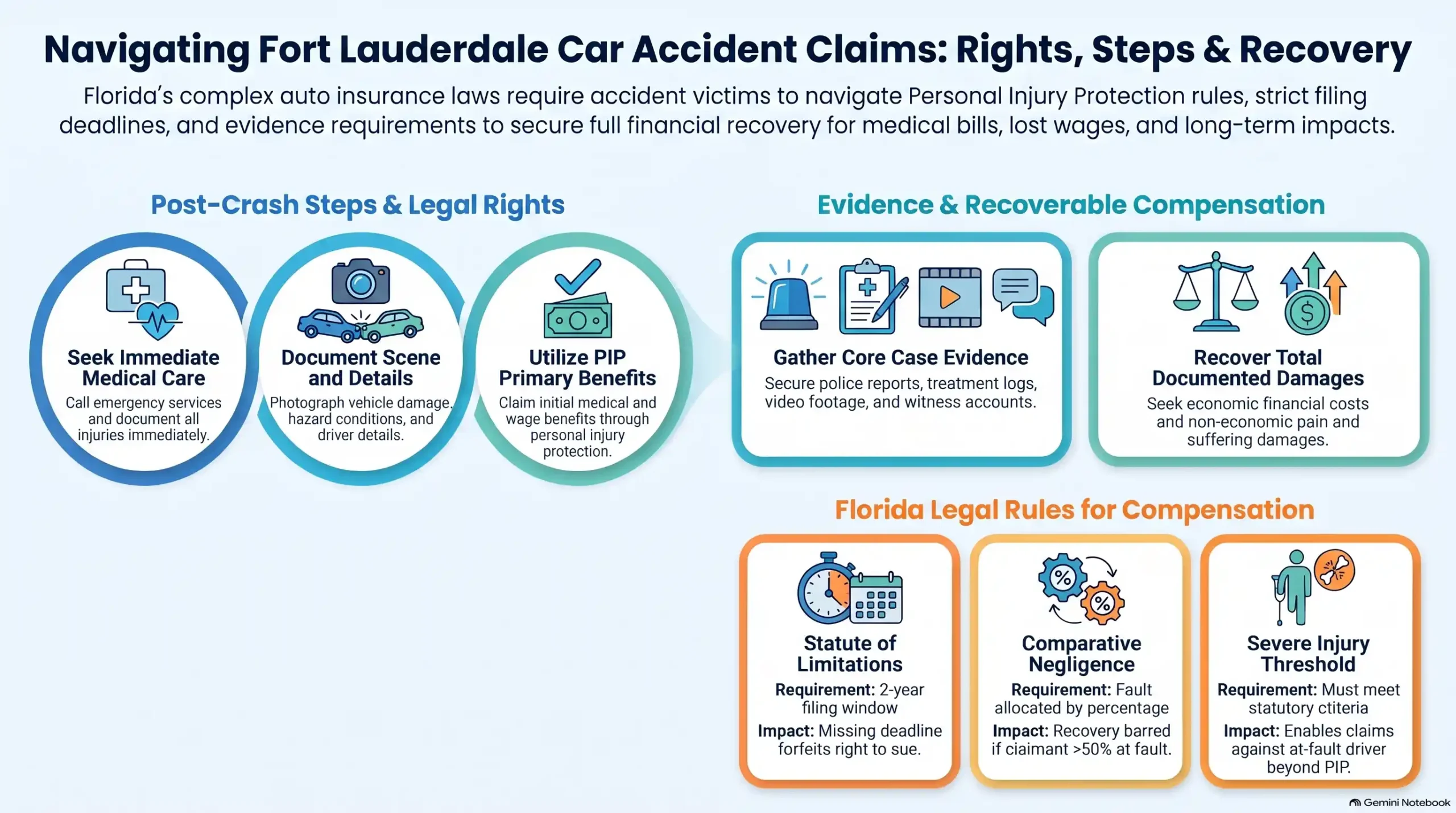


How We Can Help With Your Fort Lauderdale Car Accident Claims & Compensation Injury Claim
A Fort Lauderdale car accident lawyer can guide injured people through each stage of an injury claim, from investigating the collision and documenting losses to negotiating with insurers or pursuing a lawsuit. Local guidance can help clients understand available options, meet key deadlines, and communicate effectively with the parties involved. Counsel may collect police reports, witness statements, photographs, and other records to clarify how the crash occurred. This organized approach can reduce uncertainty for people already managing medical appointments and daily responsibilities.
Personalized legal support also allows a lawyer to address each client’s circumstances, priorities, and practical concerns. An attorney can explain options clearly, answer questions, and provide updates as the matter progresses. When appropriate, counsel may coordinate with medical providers and other professionals to obtain relevant information while respecting the client’s needs. By handling legal communications and preparing the claim carefully, a lawyer can help injured people focus on recovery and make informed decisions about the next steps in their case.
OUR CONSULTATIONSARE FREE
START YOUR FREE CASE REVIEW

Understanding Fort Lauderdale Car Accident Claims & Compensation Injury Cases
Understanding a Fort Lauderdale car accident injury case begins with identifying how Florida law applies to fault, insurance coverage, and recoverable losses. Florida’s no-fault system generally requires injured people to seek initial benefits through personal injury protection coverage, subject to policy limits and statutory requirements. When injuries meet the applicable legal threshold, an injured person may pursue additional damages from an at-fault party.
Claim eligibility depends on the available evidence, insurance terms, and the nature and extent of the injuries. Medical records, wage documentation, and other reliable records can help establish the connection between the collision and claimed losses. A careful review also helps identify which benefits may apply and whether further legal action is available.
Compensation timelines vary based on treatment, insurer review, liability disputes, and case complexity. Some claims resolve after medical needs and losses are sufficiently documented; others require negotiation or litigation. Timely reporting, consistent records, and informed decisions can support a fair process and preserve resources for recovery and continued service to family and community.
Common Causes of Fort Lauderdale Car Accident Claims & Compensation
Fort Lauderdale car accidents commonly result from distracted driving, speeding, and other reckless behavior that reduces a driver’s ability to respond safely. Impaired driving and failure to yield can also cause collisions, particularly at intersections and during turns. Identifying the cause helps clarify how liability and compensation may be assessed.
Distracted Driving
When a driver’s attention shifts from the road, even briefly, the risk of a serious collision increases. Distracted driving can involve visual, manual, or cognitive distractions, each of which may prevent a driver from noticing changing traffic conditions. Phone distraction is a frequent concern, whether a driver is reading messages, making calls, or interacting with applications. Other common distractions include adjusting navigation systems, eating, reaching for objects, and engaging with passengers. These actions can reduce Driver attention and delay a driver’s response to hazards, putting passengers, pedestrians, and other motorists at risk. In Fort Lauderdale, evidence such as phone records, witness accounts, and vehicle data may help establish whether distraction contributed to a crash. A careful investigation can clarify responsibility and help injured people seek fair compensation for their losses.
Speeding and Reckless Driving
How quickly a driver travels can turn a routine traffic situation into a serious collision. In Fort Lauderdale, exceeding the posted Speed Limit reduces the time available to respond to traffic signals, pedestrians, and sudden changes in road conditions. Higher speeds can also increase impact force, making injuries and property damage more severe.
Reckless Actions, including unsafe lane changes, tailgating, and aggressive passing, can place other road users at risk. These actions may cause drivers nearby to brake suddenly or swerve, creating additional hazards. When a collision occurs, evidence such as witness accounts, photographs, and vehicle damage may help establish how speed or unsafe conduct contributed. A careful review can clarify liability and support an injured person’s effort to seek compensation for medical expenses, lost income, and other documented losses.
Impaired Driving
Impaired driving can make a collision more likely because alcohol, drugs, and some medications may affect a driver’s judgment, coordination, and reaction time. Blood alcohol concentration may provide evidence of alcohol use, while toxicology results and other records can help establish possible drug impairment. However, investigators may also need to carefully review a driver’s condition and the circumstances of a crash. Investigators may examine police reports, witness accounts, medical records, and available video to understand what occurred. These materials can help identify whether impairment contributed to the collision and document resulting harm. Drivers who choose not to drive while impaired protect passengers, pedestrians, and other road users. When an impaired driver causes injuries, affected individuals may seek compensation for medical expenses, lost income, and other losses, subject to the evidence and applicable law.
Failure to Yield
Failure to yield occurs when a driver does not give another road user the right of way required by traffic laws or the circumstances. In Fort Lauderdale, these collisions often happen when drivers turn left across oncoming traffic, enter busy intersections without checking for approaching vehicles, or merge without leaving enough space. Pedestrians and cyclists may also be endangered when motorists fail to yield at marked crossings or driveways. Right-of-way rules establish who should proceed, while intersection protocols guide drivers through stop signs, traffic signals, and uncontrolled crossings. Disregarding these requirements can cause serious injuries and complicate efforts to determine responsibility after a crash. A careful investigation may review signal timing, witness accounts, vehicle damage, and available video. Establishing how the collision occurred can support an injured person’s compensation claim and help protect others.
Don’t Wait. Call Our Florida Personal Injury Lawyers Now!


Legal Rights of Fort Lauderdale Car Accident Claims & Compensation Injury Victims
Fort Lauderdale car accident victims may be able to pursue compensation when another party’s negligence causes injury or financial loss. Florida law allows eligible claimants to seek payment for documented medical expenses, lost income, property damage, and other legally recognized losses. The available recovery depends on the facts, insurance coverage, and applicable deadlines.
Victims can protect their interests by preserving records and reviewing relevant policies.
Important rights may include:
- Requesting compensation from an at-fault driver’s insurer for covered losses, while providing accurate supporting documentation.
- Seeking benefits under applicable personal injury protection coverage, which may help pay certain medical costs and lost wages regardless of fault.
- Checking whether uninsured motorist coverage may apply when an at-fault driver lacks sufficient insurance, and whether a policy provides rental reimbursement.
A person may also consult a qualified attorney to understand claim options, communicate with insurers, and assess settlement terms. Timely action can help preserve evidence and ensure injured people receive fair consideration while they focus on recovery and family responsibilities.
Why Do Car Accident Injuries Happen in Fort Lauderdale?
Why do car accident injuries occur in Fort Lauderdale? Crashes often result from a combination of driver decisions, traffic conditions, and roadway hazards. Speeding, distracted driving, impairment, and failure to yield can reduce a driver’s ability to respond safely. Heavy traffic and sudden stops on busy routes can also increase collision risk, especially when drivers follow too closely or change lanes without enough care.
Environmental and infrastructure factors can also contribute. Rain can make roads slippery and reduce visibility, while poor lighting or inadequate signage can make hazards harder to see. Roadway design, including confusing intersections, limited sightlines, or insufficient pedestrian protections, can affect how safely motorists and other road users travel. Vehicle defects, such as faulty brakes or tire failures, may also cause a driver to lose control or prevent a vehicle from stopping in time.
Understanding these causes helps identify how preventable conduct or conditions may have contributed to an injury.
What Should You Do After a Fort Lauderdale Car Accident Injury?
After a Fort Lauderdale car accident, injured individuals should first check themselves and others for injuries and seek medical attention when needed. Document the crash by recording relevant details, photographing the scene, and gathering witness information. Consulting a car accident attorney can help clarify available legal options and protect a potential compensation claim.
Check for Injuries
Check for injuries immediately, but do not move anyone who may have a serious injury unless remaining at the scene presents an immediate danger. A calm assessment helps protect everyone involved while you arrange emergency assistance. Look for Emergency warning signs, including difficulty breathing, heavy bleeding, loss of consciousness, confusion, severe pain, or weakness. Call 911 promptly if any person appears seriously hurt, and follow the dispatcher’s instructions. Keep injured individuals still and warm, and do not give them food, drink, or medication unless a qualified professional directs otherwise. Pediatric injury concerns require particular care because children may not clearly describe pain or recognize symptoms. Medical professionals should assess a child even when injuries are not immediately apparent. Do not assume anyone is unharmed solely because they can walk or speak.
Document the Crash
When it is safe, document the crash to preserve important details for insurance and injury claims. Begin scene documentation with photographs or video of vehicle positions, road conditions, traffic signs, signals, and visible hazards. Images of each vehicle should show damage from several angles, including close views and wider shots that establish location. A careful damage assessment can help record the apparent severity of the collision, but it should not replace a professional inspection. The driver should note the time, weather, address, direction of travel, and events leading up to the crash while details remain clear. You may also record names and contact information for witnesses, along with the other driver’s insurance and vehicle information. A calm, accurate account can clarify what happened and support fair handling of any resulting claims.
Contact an Attorney
A Fort Lauderdale car accident attorney can help an injured person understand legal options, preserve evidence, and respond to insurer communications. After receiving medical care and documenting the crash, the injured person may contact counsel to discuss the circumstances and potential next steps. Prompt advice can help protect records, identify deadlines, and reduce the risk of statements that could complicate a claim. A Free consultation may allow the person to explain the incident, ask questions, and learn how fees are handled before deciding whether to proceed. The attorney can also describe expected responsibilities and possible outcomes without promising a particular result. When comparing firms, the injured person should consider relevant experience, communication practices, and attorney availability. Clear, timely guidance can support a fair process and help the person focus on recovery and community responsibilities.
Don’t Wait. Call Our Florida Personal Injury Lawyers Now!
Critical Evidence in a Fort Lauderdale Car Accident Claims & Compensation Injury Case
Evidence can help establish how a Fort Lauderdale collision occurred, the injuries sustained, and the losses claimed. Preserve relevant records and firsthand accounts promptly, as details may become harder to verify over time.
Crucial evidence may include:
- Police accident reports documenting the scene and involved parties
- Medical records showing treatment, diagnoses, and injury progression
- Photographs, videos, and witness statements that may clarify events and conditions at the scene
Police Accident Reports
How can a police accident report affect a Fort Lauderdale car accident claim? It can document the crash location, date, involved parties, vehicle details, witness information, and the responding officer’s observations. Insurers may review these details when evaluating how the collision occurred and evaluating a claim, but the report does not determine fault or guarantee compensation. Its accuracy and completeness consequently matter.
The law enforcement agency that investigated the collision may provide access to the report, subject to applicable procedures. A claimant should review the report for errors, missing facts, or unclear descriptions and consider correction requests when information is inaccurate. Supporting documentation may help explain a requested change, although an officer or agency decides whether to amend the record. Careful review can preserve reliable evidence and support a fair, orderly claims process.
Medical Treatment Records
While a police accident report records the circumstances observed at the scene, medical treatment records document the injuries and care that follow. These records can help establish how an injury developed, when treatment began, and whether care continued as recommended. Treatment timelines may connect symptoms to the collision and identify gaps that require explanation. Provider notes can describe reported pain, examination findings, diagnoses, prescribed treatment, and changes in a patient’s condition. Emergency department records, physician evaluations, therapy notes, imaging reports, and billing statements may each contribute relevant details. Consistent documentation can support a medical expenses claim and help assess the injury’s effects on daily activities. To protect an injured person’s interests, preserving complete records and authorizing appropriate access can help insurers, attorneys, and medical professionals evaluate the claim fairly.
Photographs And Videos
Photographs and videos can preserve details of a Fort Lauderdale car accident that may change or disappear soon after the collision. Prompt scene photography can document vehicle damage, road conditions, traffic signals, skid marks, debris, and vehicle positions. These images may help clarify how the crash occurred and support an accurate assessment of resulting losses. Dashcam footage can provide a continuous view of the moments before, during, and after impact, while nearby business or traffic cameras may capture additional details. When safe, injured people or others at the scene can record images from several angles without disturbing evidence or entering traffic. Original files should be preserved with their dates and metadata intact. A lawyer can review available photographs and videos, identify gaps, and use relevant material to support a fair claim.
Witness Statements
Witness statements can provide an independent account of a Fort Lauderdale car accident, particularly when drivers describe the collision differently. A witness may explain what occurred before impact, identify traffic signals, or describe road and weather conditions. These observations can help clarify disputed details and support a fair assessment of responsibility.
Witness credibility depends on factors such as the person’s opportunity to observe, consistency, and possible relationship to those involved. Investigators may compare an account with photographs, videos, vehicle damage, and other evidence. Statement timing also matters. Accounts collected soon after a crash may preserve details before memory fades, but investigators should review each statement carefully for accuracy.
People who stop to help can share contact information and provide a factual account without speculation. Their observations may help injured people pursue compensation and support a more reliable resolution.
Long-Term Effects of Fort Lauderdale Car Accident Claims & Compensation Injuries
Car accident injuries may have lasting effects that continue well beyond initial treatment. Chronic pain and mobility limitations can interfere with daily activities, work, and independence. Some individuals also experience emotional or cognitive changes that require ongoing care and may affect their quality of life.
Chronic Pain
Chronic pain can develop after a Fort Lauderdale car accident, even when initial injuries appear minor or improve with early treatment. Lingering discomfort may arise from soft-tissue damage, nerve irritation, or other injuries that require ongoing evaluation. Symptoms can fluctuate, interfere with sleep, and affect concentration or emotional well-being. Prompt medical follow-up can help identify causes and guide appropriate Pain management, which may include medication, therapy, or other clinician-directed care. Keeping records of treatment, symptoms, and related expenses can help establish how the condition affects daily life and support an accurate injury claim. Chronic symptoms may also require periodic reassessment as their severity or treatment needs change. A careful legal review can clarify available compensation and help injured people pursue care resources while protecting their ability to serve family and community.
Lasting Mobility Limitations
Lasting mobility limitations can follow a Fort Lauderdale car accident when injuries affect the spine, joints, nerves, or muscles. Reduced strength, balance, or range of motion may make walking, climbing stairs, driving, and completing household tasks difficult. Some people require ongoing rehabilitation, mobility aids, or changes to their daily routines to maintain independence and participate in community life.
The practical consequences may extend beyond medical care. Adaptive equipment, such as wheelchairs, walkers, or transfer devices, can support safer movement and personal care. A person may also need accessible housing, including ramps, wider doorways, or modified bathrooms. These changes can be costly and require careful planning. Documented medical evaluations, treatment recommendations, and assessments of daily needs can help establish the extent of long-term limitations when a claim seeks compensation for related expenses and losses.
Emotional and Cognitive Effects
Emotional and cognitive effects may persist after a Fort Lauderdale car accident, even when visible injuries have recovered. Post-traumatic stress can involve intrusive memories, heightened alertness, anxiety, or avoidance of driving and other reminders. These reactions may disrupt sleep, relationships, work, and a person’s ability to serve family or community responsibilities. A concussion or other head injury may also affect attention, memory, processing speed, and decision-making. Cognitive fatigue can make routine tasks unusually demanding and reduce stamina throughout the day. Symptoms may fluctuate, and their impact can be difficult to recognize without careful assessment. Medical evaluation and consistent documentation can help clarify the connection between the collision and ongoing difficulties. Treatment may include counseling, rehabilitation, or other professional support. A complete injury claim should account for these lasting effects and related care needs.
Proving Liability in Fort Lauderdale Car Accident Claims & Compensation Injury Cases
Proving liability in a Fort Lauderdale car accident claim requires evidence showing that another party acted negligently and that this conduct caused the collision and resulting injuries. Negligence standards generally require proof of a duty of care, a breach of that duty, causation, and actual harm. Drivers may breach their duties by speeding, ignoring traffic signals, following too closely, or driving while distracted. Evidence can include crash-scene photographs, vehicle damage, witness accounts, traffic-camera footage, police reports, and medical records. These materials help establish how the collision occurred and connect the injuries to the event. In some cases, testimony from accident reconstruction or medical professionals may clarify disputed facts. Florida’s comparative fault rules may reduce compensation when an injured person shares responsibility for a crash. Carefully reviewing each party’s actions can help determine how fault should be allocated. Clear, well-supported findings promote accountability and help injured people pursue appropriate recovery while protecting the claim’s accuracy.
Dealing With Insurance Companies After a Fort Lauderdale Car Accident Claims & Compensation Injury
After a Fort Lauderdale car accident, insurance companies may contact injured people to gather information and evaluate a claim. Their representatives may request statements, medical details, or access to records. Injured people can respond truthfully while limiting discussion to confirmed facts and avoiding guesses about fault or future recovery. They should not minimize symptoms, even when injuries seem manageable at first.
Recorded conversations require particular care. A representative may ask to record a statement, but the injured person can seek legal guidance before agreeing or answering detailed questions. Written communications and copies of submitted documents should be retained. Carefully review any request to sign a release or accept payment, since its terms may affect your options.
Some adjuster tactics include pressing for quick answers, suggesting that an injury is unrelated, or presenting an early offer before treatment is complete. A measured response helps protect accurate information and supports fair consideration. Legal counsel can explain your rights and communicate with insurers while you focus on recovery and family responsibilities.
What to Expect During a Fort Lauderdale Car Accident Claims & Compensation Injury Claim Process
A Fort Lauderdale car accident claim typically begins with an initial case review to assess liability, losses, and available evidence. Medical documentation helps establish the extent of injuries and supports the compensation sought during settlement negotiations. The process concludes when the claim is resolved through an agreed settlement or, when necessary, further legal proceedings.
Initial Case Review
What happens during an initial case review? The attorney listens to the injured person’s account and asks focused questions about the collision, the parties involved, and the steps taken afterward. This discussion clarifies the client’s concerns, identifies potential legal issues, and determines whether the firm can provide meaningful assistance. Conflict screening checks whether the attorney’s existing or former client relationships could prevent representation. Attorney-client confidentiality protects information shared to seek legal advice, subject to applicable law and professional rules. The attorney may also explain the claims process, possible deadlines, and the responsibilities involved in pursuing compensation. Based on the information available, the attorney assesses whether further investigation is warranted and outlines practical next steps. No outcome can be guaranteed, and the client decides whether to proceed.
Medical Documentation
When an injured person pursues a Fort Lauderdale car accident claim, medical documentation helps establish the nature, timing, and extent of the reported injuries. Records may include emergency department notes, diagnostic imaging, physician assessments, prescriptions, and therapy reports. A clear treatment chronology connects the collision to symptoms, evaluations, and recommended care, while also identifying gaps that may require explanation. Provider coordination can help gather complete records from hospitals, clinics, and medical professionals, subject to appropriate authorizations. Consistent documentation lets claim reviewers assess the person’s actual medical experience rather than assumptions. Injured people should report symptoms accurately, attend scheduled appointments, and follow clinical instructions. If care is delayed or changes, record the reason. Organized, accurate records support a fair assessment of injury-related needs and help those assisting claimants understand the evidence.
Settlement Negotiations
Once the injured person’s medical condition and claim evidence are sufficiently understood, settlement negotiations may begin with the at-fault driver’s insurer. The parties assess liability, documented losses, and the claim’s likely value. A demand strategy should clearly explain how the collision caused harm, supported by medical records, wage information, and other relevant evidence. The insurer may respond with questions or a counteroffer, and negotiations can proceed through several exchanges. Careful review helps prevent pressure from pushing you into an unsupported position. When direct discussions stall, mediation tactics can provide a structured way to address disagreements with a neutral third party. Throughout this stage, the injured person’s representative can explain proposals and risks in plain terms while keeping the focus on fair treatment and the crash’s documented impact.
Claim Resolution
After the claimant accepts the settlement terms, the claim moves toward resolution through written release documents and payment processing. The release generally confirms the agreed compensation and ends the claimant’s right to pursue further recovery for the covered accident. Before signing, the claimant should review its terms carefully and confirm that the payment amount and scope match the agreement. Release timing can vary because insurers may require signed documents and additional processing before issuing funds. The settlement proceeds may also need to address medical liens or reimbursement claims held by health insurers, providers, or government programs. Lien resolution helps determine how much to pay those parties and what balance remains for the claimant. Clear records and timely communication can reduce delays. Once obligations are confirmed, funds are distributed, and the claim is closed.
Compensation for Fort Lauderdale Car Accident Claims & Compensation Injury Damages
Compensation in a Fort Lauderdale car accident claim may cover both financial losses and the personal effects of an injury. A claim may seek payment for reasonable medical care, including emergency treatment, rehabilitation, medication, and future services supported by medical evidence. Records and professional assessments help establish the injury’s effects and the care required.
A person may also pursue Lost income when injuries prevent work during recovery. If the injury limits future employment or reduces the ability to earn at the prior level, diminished earning capacity may be considered. Documentation from employers, medical providers, and qualified financial professionals can help explain these losses. Depending on the evidence and circumstances, compensation may address physical pain, emotional strain, and disruption to daily activities. These effects can also influence family responsibilities and a person’s ability to contribute to the community. Each claim requires an individualized review of liability, injury severity, treatment, and supporting records. Careful evaluation helps confirm the requested amount reflects the injury’s documented consequences.
Economic vs Non-Economic Damages in Fort Lauderdale Car Accident Claims & Compensation Cases
Car accident compensation may include economic damages, such as medical expenses and lost income, as well as non-economic damages for pain and reduced quality of life. These categories reflect different effects of an injury and are assessed using distinct forms of evidence. Establishing a claim’s value therefore requires clear documentation of financial losses and credible support for the personal harm suffered.
Economic Damages
In Fort Lauderdale car accident claims, economic damages represent measurable financial losses caused by an injury, including medical expenses, lost income, and future care costs. These losses may include emergency treatment, hospital stays, rehabilitation, prescription medication, and necessary medical equipment. Claimants can also seek compensation for Lost wages when injuries prevent them from working during recovery. If an injury limits future employment or reduces a person’s ability to earn at the same level, diminished earning capacity may be considered. Documentation helps establish the amount and connection of each claimed expense to the collision. Relevant records may include bills, pay statements, tax documents, and opinions from medical or vocational professionals. Careful accounting can support a fair assessment of financial needs and help injured people maintain stability while they recover.
Non-Economic Damages
Beyond documented financial losses, Fort Lauderdale car accident claims may include non-economic damages for the personal effects of an injury. These damages address harm without a direct price, including physical pain, emotional distress, and a reduced ability to participate in everyday activities. An injured person may experience sleep disruption, anxiety, or lasting discomfort that affects family relationships and daily responsibilities. A serious injury can also limit hobbies, community involvement, or time spent supporting others. Courts may consider this loss of enjoyment of life when evaluating the overall impact of a collision. Unlike medical bills or lost wages, non-economic damages are not calculated from a specific invoice. They recognize the human consequences of an accident and account for how an injury changes a person’s well-being and quality of life.
Proving Your Losses
Establishing the value of a Fort Lauderdale car accident claim requires evidence of both financial losses and personal harm. Economic damages include measurable costs such as medical bills, rehabilitation expenses, vehicle repairs, and lost earnings. Income documentation, including pay records, tax returns, and employer statements, can help verify missed work and reduced earning capacity. Receipts and invoices may also support expenses for transportation, medication, or household services needed during recovery.
Non-economic damages address harms that lack a fixed price, including pain, emotional distress, and loss of enjoyment of daily activities. Medical records, treatment histories, and consistent accounts of how injuries affect routine responsibilities can help substantiate these effects. Clear, organized evidence allows insurers and courts to assess the full impact of a collision. Accurate records also help guarantee that compensation reflects documented needs and supports recovery.
Don’t Wait. Call Our Florida Personal Injury Lawyers Now!
When a Fort Lauderdale Car Accident Claims & Compensation Injury Case Goes to Trial vs. Settlement
A Fort Lauderdale car accident injury claim may be resolved through settlement or proceed to trial, depending on the evidence, the parties’ positions, and the willingness to reach an agreement. A settlement can provide compensation without a courtroom decision, often allowing both sides to avoid the time, expense, and uncertainty of litigation. Before accepting an offer, an injured person may consider whether it addresses documented losses and future needs.
If negotiations do not produce an acceptable agreement, the case may proceed to trial. Each side presents evidence and arguments, and a judge or jury evaluates the dispute. The process may include witness testimony, cross-examination, and jury deliberations before a verdict is reached. A trial can take longer and may result in an outcome that differs from expectations.
Legal counsel can explain the likely steps, assess the strengths and risks of available options, and support informed decisions. After a verdict, trial appeals may extend the process, making careful preparation important.
Florida Laws That May Affect Your Fort Lauderdale Car Accident Claims & Compensation Case
Florida law can shape how a Fort Lauderdale car accident claim is evaluated, including who may be held responsible, what compensation may be available, and how long an injured person has to take legal action. These rules help establish a fair process while supporting people who depend on others for care, transportation, or household responsibilities.
- Comparative negligence: Florida generally reduces a claimant’s damages according to their share of fault. A person found more than 50 percent responsible may be barred from recovering damages, subject to statutory exceptions.
- PIP requirements: Most Florida vehicle owners must carry personal injury protection coverage. PIP typically pays a portion of medical expenses and lost income, regardless of fault, subject to policy limits and treatment rules.
- Serious injuries and damages: A person may pursue a claim against an at-fault driver for damages beyond PIP when the injury meets Florida’s legal threshold. Evidence of losses and responsibility can affect recovery.
These provisions may influence negotiations, insurance decisions, and the support available to injured people and their families.
The Statute of Limitations for Fort Lauderdale Car Accident Claims & Compensation Injury Cases
How long an injured person has to pursue compensation after a Fort Lauderdale car accident depends on the type of claim and the circumstances involved. Under Florida law, many negligence-based injury claims must be filed within two years of the accident. Claims for vehicle damage generally have a longer period, but deadlines can change, so confirm the applicable rule promptly.
Missing a filing deadline may prevent recovery, regardless of the seriousness of the injuries or the value of the losses. Certain Deadline exceptions may apply, including situations involving a minor, a legally incapacitated person, or a defendant who cannot be located. These circumstances do not automatically pause the clock, and their legal effect depends on specific facts.
Courts do not routinely grant filing extensions, and parties should not assume negotiations or ongoing medical care stop the limitations period. Prompt attention to the applicable deadline helps preserve a person’s ability to seek compensation and support others who depend on that recovery.
How a Fort Lauderdale Car Accident Claims & Compensation Lawyer Can Help You
After identifying the applicable filing deadline, an injured person may benefit from legal guidance to protect a Fort Lauderdale car accident claim. A lawyer can investigate the collision, organize records, and assess potential losses, including medical costs, lost income, and future care needs. This work may help an injured person pursue fair compensation while focusing on recovery and family responsibilities.
A lawyer can investigate a Fort Lauderdale crash, organize records, and assess losses to help protect a claim and support recovery.
A lawyer may also:
- Gather crash reports, witness accounts, photographs, and other evidence to clarify how the collision occurred.
- Review insurance coverage and handle negotiations, explaining proposed settlements and their possible consequences.
- Coordinate attorney-client communication with medical providers and other relevant parties, subject to the client’s authorization.
Contingency fee arrangements may allow a client to retain counsel without paying attorney fees upfront; the agreement should explain how fees and case expenses are handled. Legal guidance can also help confirm that compensation requests are supported by reliable documentation. Each claim depends on its evidence, applicable law, and the injured person’s circumstances, so outcomes cannot be guaranteed. A lawyer’s role includes providing clear information and responsibly pursuing the client’s interests.
When to Contact a Fort Lauderdale Car Accident Claims & Compensation Lawyer
Contacting a Fort Lauderdale car accident claims and compensation lawyer soon after a collision can help preserve evidence and clarify the steps needed to protect a claim. An early consultation may help even if injuries appear minor, since symptoms and treatment needs can change over time. A prompt discussion can also help the injured person understand what records to keep and how to communicate accurately with insurers.
Claim timing matters because Florida law sets deadlines for filing injury claims, and specific circumstances may affect those limits. Waiting too long can make it harder to locate witnesses, obtain relevant records, or document vehicle damage. A lawyer can explain applicable deadlines and identify immediate steps without pressuring the injured person to decide quickly. Those supporting an injured family member may help gather paperwork and arrange a consultation, while allowing the person to focus on medical care. Seeking guidance soon after a crash can provide a clearer path for addressing the claim responsibly.
Why You Need an Experienced Fort Lauderdale Car Accident Claims & Compensation Lawyer
An experienced Fort Lauderdale car accident claims and compensation lawyer can assess liability, organize evidence, and address disputes that may affect a claim’s value. This guidance can help injured people pursue fair treatment while protecting their ability to meet medical, financial, and family responsibilities.
Attorney Experience matters when a claim involves conflicting accounts, serious injuries, or questions about available insurance coverage. A knowledgeable lawyer can review crash reports, medical records, witness statements, and other relevant materials to identify gaps and explain how evidence may support the claim. The lawyer can also communicate with insurers, respond to requests, and help prevent avoidable errors.
A sound Case Strategy reflects the collision circumstances and the injured person’s documented losses. It may include coordinating records, evaluating settlement proposals, and preparing for further legal action when negotiations do not produce a reasonable result. By managing these demands, counsel can give clients more time to focus on recovery and the people who depend on them.
How to Choose the Right Fort Lauderdale Car Accident Claims & Compensation Lawyer for Your Case
Choosing the right Fort Lauderdale car accident claims and compensation lawyer requires more than reviewing credentials; injured people should consider the lawyer’s experience with similar cases, communication practices, and approach to evaluating evidence and losses. A lawyer familiar with comparable collisions may better identify relevant records, assess liability, and explain how injuries affect daily responsibilities and future needs. These qualities matter when someone seeks fair compensation while protecting family members and meeting ongoing obligations.
During an initial consultation, prospective clients can ask how the lawyer will handle the claim, who will provide updates, and how quickly questions are typically answered. Clear client communication helps people make informed decisions throughout a demanding process. Lawyers should also explain fee structures in writing, including any potential costs and how payment is calculated. Comparing these details can help an injured person select counsel whose experience, accessibility, and approach align with the case and the client’s practical needs.
About The Law Offices of Anidjar & Levine
The Law Offices of Anidjar & Levine represents people injured in car accidents in Fort Lauderdale and throughout Florida.
The firm assists clients with insurance claims, compensation demands, and legal disputes arising from collisions.
Its attorneys explain options, investigate accident circumstances, and communicate with insurers on a client’s behalf.
When negotiations do not produce a fair resolution, the firm can pursue a claim through litigation.
Firm history reflects a practice focused on representing injured people and their families.
The firm’s work includes cases involving serious injuries, disputed liability, and financial losses that affect a person’s ability to work or manage daily responsibilities.
Each matter requires careful attention to evidence, deadlines, and the client’s individual circumstances.
Community involvement also shapes the firm’s public presence in Florida.
Through outreach and service initiatives, the firm supports local communities beyond its legal work.
For prospective clients, these commitments provide context when evaluating the firm’s experience, approach, and role in serving people after an accident.
Frequently Asked Questions
Can I Pursue Compensation if I Was a Passenger in the Accident?
Yes, an injured passenger may pursue compensation for medical expenses, lost income, and other covered losses. Passenger Rights generally allow a claim against one or more responsible drivers, depending on the evidence and available insurance. Shared Fault between drivers does not automatically prevent recovery, though it may affect how responsibility and payment are allocated. Prompt medical care, accident documentation, and timely legal guidance can help protect a passenger’s interests and clarify available options.
What Happens if the At-Fault Driver Has No Insurance?
If the at-fault driver has no insurance, an injured person may seek payment through available coverage rather than rely on that driver’s policy. Uninsured motorist coverage can help pay for injuries, subject to policy terms and limits. Personal injury protection may cover initial medical expenses and certain lost wages, regardless of fault. A passenger should promptly notify relevant insurers, preserve records, and review coverage options with a qualified professional to protect potential claims.
Can I File a Claim if the Accident Involved a Rental Car?
Yes, an injured person may file a claim after an accident involving a rental car. Available coverage depends on who caused the collision, the driver’s personal auto policy, the rental company’s insurance, and any Rental Insurance You purchased. Rental Agreements may also affect responsibility for vehicle damage, but do not automatically determine injury claims. Promptly preserving the agreement, insurance documents, police report, and medical records can help clarify coverage and protect the injured person’s interests.
Will My Car Accident Claim Affect My Immigration Status?
Filing a car accident claim generally does not affect a person’s immigration status because seeking compensation for injuries is a civil matter. However, immigration consequences may arise from separate circumstances, such as criminal charges connected to the collision or inaccurate statements in official records. Visa considerations can vary by status and individual facts. Anyone with immigration concerns should consult a qualified immigration attorney before making decisions, preserve relevant accident records, and communicate truthfully.
Can Family Members Bring a Claim After a Fatal Car Accident?
Yes. Eligible family members may bring a Wrongful death claim after a fatal car accident, subject to state law and filing deadlines. The personal representative of the deceased person’s estate generally files on behalf of qualifying survivors. Recoverable survivor damages may include lost financial support, funeral expenses, and loss of companionship. Eligibility and available compensation depend on the family relationship, evidence of fault, and the specific circumstances of the collision. A prompt legal review can clarify rights.
—————————
A Fort Lauderdale car accident can create lasting financial and personal challenges, but injured individuals may have legal options for pursuing compensation.
Prompt medical care, careful documentation, and timely legal guidance can help protect a claim and clarify available remedies.
The Law Offices of Anidjar and Levine helps accident victims evaluate their cases and resolve insurance disputes.
Learn more from a Fort Lauderdale Personal Injury Lawyer.
Each claim depends on its specific facts, and an experienced lawyer can explain the steps involved and potential outcomes.

