
A Port St. Lucie workers’ compensation accident lawyer can help an injured employee understand how a workplace hazard, unsafe practice, defective equipment, or inadequate training may have contributed to an injury. The Law Offices of Anidjar and Levine can explain Florida reporting deadlines, help organize medical records and witness accounts, and address insurer questions or disputes. Eligible workers may seek authorized medical care and partial wage-loss benefits, depending on claim requirements and work restrictions. For help with an injury claim, contact a Port St. Lucie Personal Injury Lawyer.
Main Takeaways
- A Port St. Lucie workers’ compensation lawyer can assess whether a workplace accident or occupational condition qualifies for benefits under Florida law.
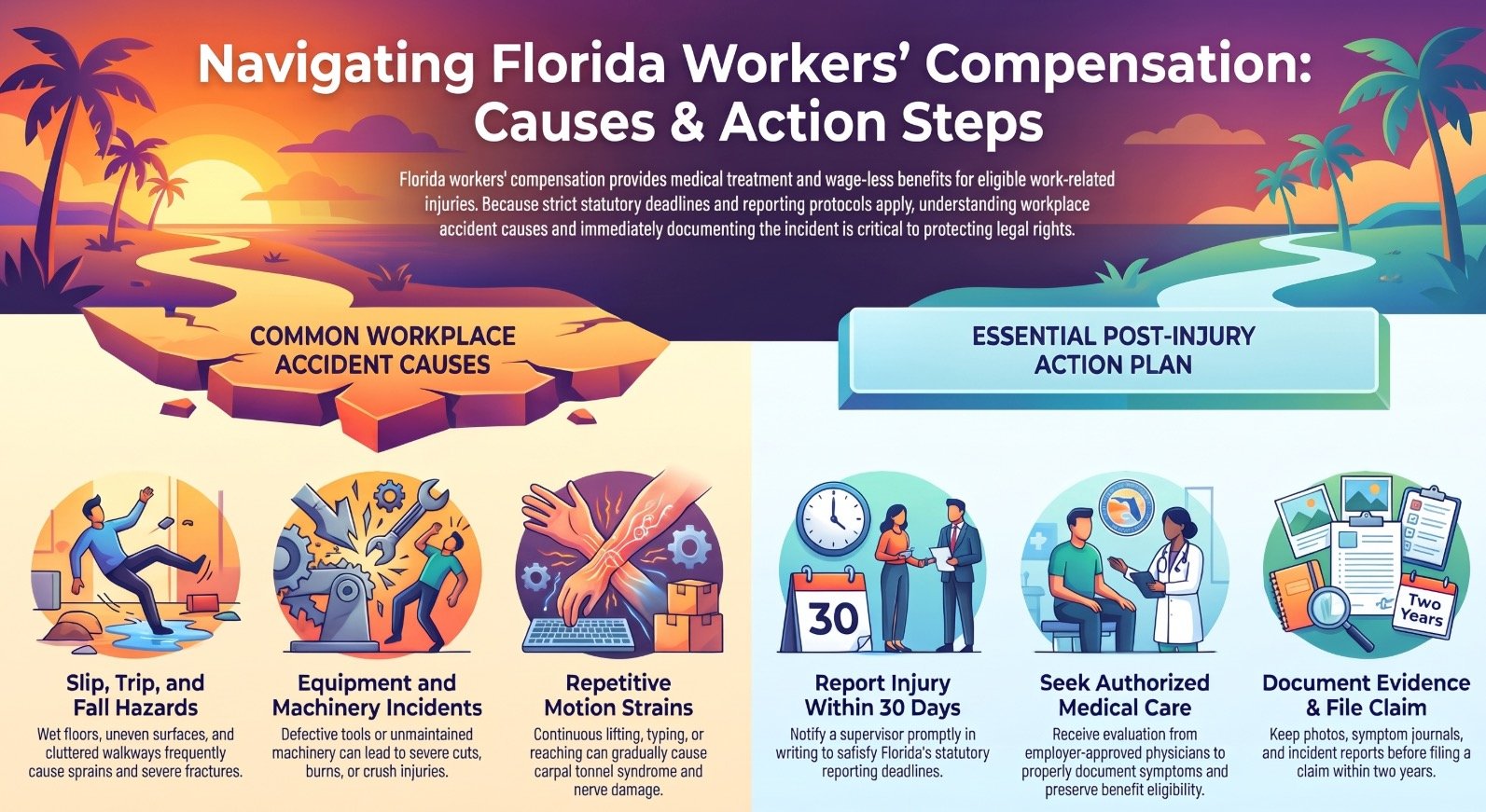
- Common accident causes include unsafe floors, defective equipment, inadequate training, vehicle collisions, and hazardous work practices.
- Report injuries promptly—generally within 30 days—and keep copies of incident reports, notices, and insurer communications.
- Medical records, witness accounts, photographs, and work records can help establish how employment contributed to an injury.
- A lawyer can explain claim denials, authorized medical care, wage-loss benefits, and options if an insurer disputes the claim.
How We Can Help With Your Port St. Lucie Workers Comp Accident Causes Injury Claim
When a workplace accident causes an injury, a Port St. Lucie workers’ compensation lawyer can help an employee understand available benefits and take practical steps to pursue a claim. Legal counsel may explain filing requirements, review insurer communications, and organize medical records and other relevant documents. This support can help workers make informed decisions while they focus on treatment and recovery.
A lawyer can also assess whether benefits have been delayed, reduced, or denied and communicate with the insurer to address disputes. When necessary, counsel may prepare evidence and represent the employee in proceedings. The process can include clarifying how medical restrictions affect job duties and coordinating return-to-work planning with appropriate providers and workplace representatives.


Effective representation also recognizes the role of Employer safety culture in supporting injured workers. A careful, service-oriented approach can encourage clear communication and respectful treatment while protecting the employee’s interests. Each claim depends on its facts, medical evidence, and applicable requirements, so timely guidance can help preserve important options.
Don’t Wait. Call Our Florida Personal Injury Lawyers Now!
Understanding Port St. Lucie Workers’ Comp Accident Causes Injury Cases
OUR CONSULTATIONSARE FREE
START YOUR FREE CASE REVIEW

How an accident occurs can shape the evidence and benefits relevant to a Port St. Lucie workers’ compensation claim. These cases examine the connection between job duties, workplace conditions, and an employee’s injury or illness. Medical records, incident reports, witness accounts, and employment documents may help clarify when symptoms began and whether work contributed to them. Florida industry patterns can provide context for evaluating job-related risks, but each claim depends on its specific facts and supporting evidence.
Not every work-related condition results from a single event. An occupational disease may develop gradually through repeated exposure or ongoing job duties, making the timeline and medical assessment especially important. Workers who serve the community in demanding roles may need care while facing uncertainty about income and recovery. A careful review can help identify which benefits may apply, including medical treatment and wage replacement, subject to Florida law. Understanding the circumstances of an injury supports informed decisions and helps ensure relevant details are presented accurately throughout the claims process.
Common Causes of Port St. Lucie Workers Comp Accident Causes


Workplace injuries in Port St. Lucie may result from slip-and-fall hazards, repetitive motions, or unsafe equipment. Vehicle collisions during work travel can also cause serious harm. Identifying the source of an accident helps clarify how it occurred and what workers’ compensation issues may arise.
Slip and Fall Hazards
Slip and fall hazards are a common cause of workplace injuries in Port St. Lucie. Employees serving customers, patients, and the public may encounter wet entryways, spilled liquids, uneven flooring, or cluttered walkways during routine duties. These conditions can lead to sprains, fractures, and other injuries that interfere with a worker’s ability to continue providing vital services.
Employers can reduce risks by promptly cleaning spills, keeping paths clear, and placing wet floor signage where hazards remain during cleanup. Regular stairway maintenance also helps address loose handrails, damaged steps, and inadequate lighting before someone is hurt. Workers who identify unsafe conditions should report them through established workplace procedures. When a fall occurs, timely medical evaluation and accurate incident documentation can help clarify the injury and support a workers’ compensation claim under applicable Florida law.
Repetitive Motion Injuries
Unlike a sudden fall, a repetitive motion injury may develop gradually as an employee performs the same physical tasks over extended periods. In Port St. Lucie, workers in healthcare, food service, and other public-serving roles may repeatedly lift, grip, type, or reach throughout a shift. Without adequate recovery time, these actions can strain muscles, nerves, and tendons. Carpal tunnel syndrome may develop when repeated wrist movements press on a nerve, causing pain, tingling, or weakness in the hand. Tendon inflammation can also develop through repeated use, limiting movement and making routine duties difficult. Employers may reduce risk through task rotation, appropriate breaks, and training on safe work practices. Employees who notice persistent symptoms can report them promptly and seek medical evaluation, helping document the condition and determine suitable treatment and workplace adjustments.
Equipment-Related Accidents
When machinery or tools are defective, poorly maintained, or used without adequate training, equipment-related accidents can cause serious injuries to Port St. Lucie workers. Common incidents include cuts, crush injuries, burns, and amputations caused by exposed moving parts, unexpected equipment startup, or tool failure. Employers can reduce these risks through effective Machine guarding, routine equipment maintenance, and clear procedures for inspecting and operating workplace equipment. Workers should receive instruction suited to their assigned tasks and access to protective equipment where hazards remain. When a machine malfunctions or a safety device is missing, employees should report the problem and avoid using the equipment until it is addressed. Prompt attention can protect workers and support safe, reliable service. An employee injured in an equipment-related incident may have questions about reporting the injury and pursuing workers’ compensation benefits.
Workplace Vehicle Collisions
Beyond machinery hazards, workplace vehicle collisions can also seriously injure Port St. Lucie workers. Employees may be struck by forklifts, delivery trucks, or other vehicles while loading materials, crossing work areas, or performing roadside duties. Common causes include distracted driving, speeding, unsafe backing, inadequate training, and failure to follow traffic controls. Poor roadway visibility can make it difficult for operators to detect pedestrians, obstacles, or changing conditions, particularly in busy yards and poorly lit areas. Defective brakes, worn tires, and neglected inspections may also contribute when vehicle maintenance is insufficient. Employers can reduce risk with clear pedestrian routes, marked crossings, operator training, regular inspections, and proper lighting. When a collision occurs, workers’ compensation may cover eligible medical care and wage benefits, subject to Florida law and claim requirements.
Legal Rights of Port St. Lucie Workers Comp Accident Causes Injury Victims
Port St. Lucie workers injured in workplace vehicle collisions may have important rights under Florida’s workers’ compensation system. Eligible employees can seek medical care and wage-loss benefits for qualifying injuries, subject to reporting deadlines and claim requirements. Prompt notice to the employer and accurate documentation can help preserve access to benefits. A worker may also consult an attorney to understand a denial, dispute, or settlement offer.
Port St. Lucie workers injured in workplace vehicle collisions may qualify for medical care and wage-loss benefits under Florida law.
Key protections and considerations include:
- Medical benefits: The insurer generally selects authorized providers, and treatment should follow claim procedures.
- Wage-loss benefits: Partial wage replacement may be available when an authorized doctor restricts work or the injury prevents employment.
- Retaliation protections: Florida law prohibits certain adverse actions for pursuing workers’ compensation benefits. Workers may ask counsel about their rights if they face pressure or dismissal.
A person’s independent contractor status may affect eligibility, but the label alone does not determine legal classification. A thorough review of the working relationship can clarify options and support fair treatment while the injured worker focuses on recovery and future service.
Why Do Port St. Lucie Workers Comp Accident Causes Injuries Happen?
Understanding workers’ compensation rights also requires examining how workplace injuries occur. In Port St. Lucie, accidents may result from unsafe conditions, inadequate training, defective equipment, or work practices that expose employees to preventable hazards. Construction sites, warehouses, healthcare facilities, and service workplaces each present risks that can affect workers while they perform duties for the public and their communities.
Slips, trips, and falls often occur when floors are wet, walkways are obstructed, or lighting is poor. Lifting and repetitive tasks may strain muscles and joints, especially when employees lack suitable equipment or sufficient assistance. Machinery can cause serious harm when guards are missing or maintenance is neglected. Heat stress is another concern for employees working outdoors or in hot indoor environments, particularly when rest and hydration are limited. Chemical exposure may injure workers if substances are stored, handled, or ventilated improperly. These causes often involve conditions employers can identify and address through training, maintenance, protective equipment, and consistent safety procedures.
What Should You Do After a Port St. Lucie Workers’ Comp Accident Causes Injury?
After a workplace injury in Port St. Lucie, the employee should promptly report the accident to the employer and follow the company’s reporting procedures. Seeking medical care without delay helps address the injury and creates a record of treatment. The employee should also document the incident, symptoms, and related communications for future reference.
Report the Accident
When a workplace injury occurs, prompt reporting is essential to protect an employee’s access to workers’ compensation benefits. The injured worker should provide Supervisor notification as soon as practicable, even if the injury appears minor or develops over time. Notice should identify when, where, and how the incident occurred, along with the affected body parts. If the worker cannot report personally, a trusted representative may assist, but the worker should confirm that the employer received the information.
Florida law generally requires an employee to report a work-related injury within 30 days after it occurs or within 30 days after the worker knows the condition may be work-related. These reporting deadlines can affect eligibility for benefits, so written notice and a copy for personal records are prudent. Accurate, timely reporting also helps employers investigate hazards and protect coworkers.
Seek Medical Care
Prompt medical care can protect an injured worker’s health and create a clear record of the work-related condition. After a workplace accident in Port St. Lucie, the employee should promptly tell a supervisor about any pain or symptoms and request guidance on authorized treatment. For severe injuries, such as heavy bleeding, breathing difficulty, or suspected fractures, emergency treatment should take priority; calling 911 may be appropriate. Less urgent conditions may require evaluation at an authorized clinic or Urgent care facility, depending on the employer’s procedures and the workers’ compensation carrier’s requirements. A medical professional can assess the injury, recommend treatment, and explain whether the employee should remain off work or follow restrictions. The worker should describe how the accident occurred and identify all symptoms, even minor or delayed ones.
Document Your Injury
A clear record can help establish how a workplace injury occurred and how it affects the employee. After receiving medical care, the injured worker should document relevant details as soon as practical. The record may include the date, time, location, task performed, equipment involved, and witness names. A factual account can help supervisors, medical providers, and claims personnel understand the circumstances without speculation.
Photo Documentation may preserve visible injuries, unsafe conditions, damaged equipment, or the surrounding work area, provided it can be obtained safely and lawfully. Images should be dated when possible and stored securely. A Symptom Journal can track pain, mobility changes, treatment, medication effects, and missed work over time. Entries should remain accurate and consistent. Retain copies of incident reports, medical instructions, and related communications for future reference.
Critical Evidence in a Port St. Lucie Workers’ Comp Accident Causes Injury Case
Evidence can help establish how a workplace accident occurred, what conditions contributed to it, and the extent of the resulting injury. Gather relevant records promptly, as details may become harder to verify over time.
Crucial evidence may include:
- Incident reports and witness statements
- Medical records documenting the injury and treatment
- Workplace safety logs showing hazards or prior incidents
Incident Reports
When a workplace accident causes an injury in Port St. Lucie, an incident report can preserve crucial details about how the event occurred and what conditions contributed to it. The report may identify the date, time, location, equipment involved, and actions taken after the injury. Accurate documentation can help clarify the sequence of events and support a careful review of potential workplace hazards.
Incident Timelines matter because prompt, consistent records can show when the injury was reported, when medical care was sought, and when corrective steps followed. Workers and employers should review reports for accuracy and address omissions through appropriate procedures. Report Retention is also important; preserve copies with related workplace and claim records. A complete, accessible report can assist claim reviewers and support efforts to resolve the matter fairly.
Witness Statements
Although incident reports document an employer’s account of a workplace accident, witness statements can provide independent details about how an injury occurred. Coworkers or other people present may describe the task underway, equipment involved, safety conditions, and events immediately before or after the accident. Their observations can clarify disputed accounts and help determine whether workplace procedures were followed.
Witness credibility depends on factors such as opportunity to observe, impartiality, and the ability to recall events accurately. Statement consistency also matters: details that remain stable across interviews may strengthen an account, while differences can require careful evaluation. Investigators may compare statements with the incident report and other available evidence to understand the circumstances. Investigators should ask witnesses to describe what they personally observed, rather than repeat assumptions or secondhand information. Clear, timely documentation can preserve useful details and support a fair assessment of the injury claim.
Medical Records
Witness accounts may clarify how a workplace accident occurred, while medical records document the injury and its effects. Treatment notes, diagnostic reports, prescriptions, and work restrictions can help establish when symptoms began and how the condition affected an employee’s ability to work. Consistent documentation may also connect the reported accident to the need for care and support.
Employees should review records for accuracy and promptly raise errors with the provider. A requested record amendment should follow the provider’s established process; disputed information may require a written statement or other clarification. Share records only with appropriate parties and handle them with appropriate privacy safeguards. Careful documentation can help decision-makers understand an injured worker’s needs, support fair benefit determinations, and guide a safe return to work when medically appropriate.
Workplace Safety Logs
Workplace safety logs can provide important evidence about the conditions surrounding an accident that causes injury in Port St. Lucie. These records may document equipment inspections, reported hazards, employee training, and corrective actions taken before or after an incident. When a worker is injured, dated entries can help clarify whether a known risk existed and whether the employer took reasonable steps to address it. Missing or altered records may also raise questions about workplace procedures and the reliability of an employer’s account.
Log Retention policies and Audit Schedules can affect whether relevant documents remain available for review. Prompt preservation of logs, inspection reports, and related communications may support a fair assessment of the claim. A careful review can help identify safety failures, establish the sequence of events, and provide useful evidence while the injured worker pursues benefits.
Don’t Wait. Call Our Florida Personal Injury Lawyers Now!
Long-Term Effects of Port St. Lucie Workers Comp Accident Causes Injuries
A workplace injury may cause effects that continue long after initial treatment ends. Workers may experience chronic pain, lasting mobility limitations, or emotional distress that interferes with daily activities and employment. The extent and duration of these effects can depend on the injury and the recovery process.
Chronic Pain
When a workplace injury causes persistent pain, the effects may continue long after the initial treatment ends. Chronic pain can interfere with sleep, concentration, and a worker’s ability to maintain reliable attendance. These effects may also affect family responsibilities and the capacity to support coworkers or serve the broader community. A consistent treatment plan can help address symptoms and preserve quality of life. Chronic pain management may involve medical evaluations, prescribed therapies, and practical adjustments to daily routines. Workers may benefit from tracking pain flare triggers, such as repetitive tasks, stress, or inadequate rest, and sharing those observations with their providers. Accurate records of symptoms, appointments, and work-related limitations may help clarify the injury’s ongoing impact. In workers’ compensation matters, documentation can support consideration of continuing care and related benefits.
Lasting Mobility Limitations
Lasting mobility limitations can remain after a workplace injury has recovered enough for a worker to resume some daily activities. Damage to the back, joints, nerves, or limbs may restrict walking, standing, lifting, or using stairs. These restrictions can affect a person’s ability to perform job duties and manage routine tasks without assistance. Recovery may require ongoing rehabilitation, medical evaluations, and workplace changes. Some workers benefit from adaptive equipment, such as braces, mobility aids, or modified tools, while others may need accessible housing to move safely around their homes. The extent of these needs depends on the injury and its lasting effects. Workers’ compensation benefits may address authorized treatment and certain related costs. Accurate medical records can help document functional limits and support decisions about suitable accommodations and future care.
Emotional Distress
Emotional distress can persist long after a workplace injury, particularly when pain, reduced independence, or uncertainty about returning to work disrupts daily life. Emotional trauma may develop after a sudden accident, especially when an injured worker witnessed harm to colleagues or feared serious consequences. Ongoing treatment, financial pressure, and changes in family responsibilities can also affect mood, sleep, and concentration. Some workers experience workplace anxiety when considering a return to the same setting, equipment, or duties associated with the injury. These effects may interfere with relationships, recovery, and the ability to serve others at work or in the community. Persistent symptoms merit attention alongside physical limitations. Medical professionals can assess emotional health and recommend appropriate care. Workers’ compensation claims may include benefits for authorized psychological treatment when medical evidence and applicable rules support it.
Proving Liability in Port St. Lucie Workers Comp Accident Causes Injury Cases
To prove a work-related injury in Port St. Lucie, you must show evidence connecting the employee’s condition to job duties or a workplace accident. Medical records, incident reports, witness statements, and safety documentation can help establish when and how an injury occurred. Prompt reporting and consistent symptom descriptions may also support a reliable account of the event.
Florida workers’ compensation generally does not require proof that an employer acted negligently. Instead, the employee must satisfy applicable Causation Standards by showing that employment contributed to the injury or need for treatment. Medical opinions can clarify whether work activities caused, aggravated, or accelerated a condition, particularly when other health factors are involved.
Employer Defenses may include disputes about whether the injury arose from employment, whether notice was timely, or whether medical evidence supports the claimed connection. Accurate records and a clear timeline can help address those issues. Careful evaluation of the evidence supports fair decisions and helps injured workers pursue the benefits they need to recover and return to serving their communities.
Dealing With Insurance Companies After a Port St. Lucie Workers Comp Accident Causes Injury
After a workplace injury in Port St. Lucie, an injured employee may need to communicate with the employer’s workers’ compensation insurer while managing medical care and recovery. Clear, accurate communication can help prevent misunderstandings about the accident, symptoms, or work restrictions. The employee should report relevant facts consistently and keep copies of messages, forms, and other correspondence.
Adjuster communication may include questions about how the injury occurred, when symptoms began, and which medical providers have treated the worker. Responses should remain factual and limited to what the employee knows. Before signing documents or providing recorded statements, the worker should understand the request and consider obtaining legal guidance, particularly if questions are unclear or the injury’s effects are still developing. No one should guess, minimize symptoms, or speculate about responsibility.
A Port St. Lucie workers’ compensation attorney can explain communication rights, review insurer requests, and help protect accurate information. Thoughtful, respectful exchanges support a fair assessment while allowing injured workers to focus on recovery and serving their families and communities.
What to Expect During a Port St. Lucie Workers Comp Accident Causes Injury Claim Process
A workers’ compensation claim generally begins when the employee reports the workplace accident and files the required claim documents. The injured worker may then undergo a medical evaluation and receive treatment through authorized providers. The insurer reviews the accident details and medical records before deciding how to resolve the claim.
Reporting The Accident
When a workplace accident causes an injury, prompt reporting helps establish when and how it occurred and allows the employer to begin the workers’ compensation process. The injured worker should notify a supervisor as soon as practicable, even when the injury initially appears minor. Supervisor notification should include the date, time, location, and a factual description of the incident, along with any known witnesses. If the worker cannot report personally, a representative may communicate the information when appropriate. Written notice helps preserve an accurate record, and the worker should keep a copy. Florida law sets reporting deadlines, so delays may affect access to benefits. A worker should explain any delay and keep records of communications. Reporting the accident does not require assigning blame; it helps the employer respond and document the event.
Filing The Claim
Once an employer receives notice of a workplace injury, the workers’ compensation claim process begins with reporting the incident to the insurance carrier. The employer generally submits an injury report, while the injured worker may need to complete required claim forms and provide accurate details about the date, location, and circumstances of the accident. Claim filing deadlines can affect eligibility for benefits, so prompt submission and careful recordkeeping are important. The carrier reviews the information and may request additional documentation before deciding whether to accept or deny the claim. Workers should retain copies of forms, correspondence, and any notices received. If information is missing or the worker disputes a decision, they may seek guidance from an attorney or the Florida Division of Workers’ Compensation. Clear, timely communication helps protect the claim and supports a fair process.
Medical Evaluation And Treatment
After reporting a claim, medical evaluation and treatment help document the injury and guide recovery. The worker generally receives care from a provider authorized under Florida’s workers’ compensation system. At the initial visit, the provider reviews symptoms, examines the affected area, and records findings that may connect the condition to the workplace accident. The worker should describe symptoms accurately, follow medical instructions, and attend scheduled appointments. Treatment may include medication, therapy, diagnostic testing, or physician referrals, depending on the injury and clinical recommendations. Treatment authorization delays can interrupt care, so document and communicate requests and responses promptly. In some cases, Independent medical exams may be scheduled to assess the worker’s condition. Continued medical records help track progress, restrictions, and recovery needs while care proceeds under the authorized treatment plan.
Claim Review And Resolution
How does a workers’ compensation claim move toward resolution? After medical evaluation and treatment, the insurer reviews the reported accident, medical records, wage information, and other evidence to determine whether benefits are owed. This Claim Review may address the injury’s connection to work, the need for continued care, and eligibility for wage replacement. The worker may be asked to provide documents or attend an examination, so timely cooperation can help prevent avoidable delays.
If the parties disagree about coverage, treatment, or benefit calculations, the claim may require Dispute Resolution through the Florida workers’ compensation system. Available steps can include mediation, hearings, or further review, depending on the issue. A clear record of communications and expenses can support an accurate decision. Resolution may involve approved benefits, a negotiated settlement, or a formal ruling that defines each party’s obligations.
Don’t Wait. Call Our Florida Personal Injury Lawyers Now!
Compensation for Port St. Lucie Workers Comp Accident Causes Injury Damages
When a workplace accident in Port St. Lucie causes an injury, workers’ compensation may provide benefits that support recovery and a safe return to employment. The available compensation depends on the medical evidence, the worker’s ability to perform job duties, and applicable Florida law.
Authorized medical care may include treatment, medication, and services needed to address the covered injury. Wage replacement benefits may be available when the worker cannot earn regular pay during recovery or can return only with reduced earnings. The amount and duration depend on the worker’s circumstances and statutory requirements.
If an injury prevents a return to the former position, vocational rehabilitation may help the worker prepare for suitable employment through counseling, training, or job placement assistance. Permanent impairment may also qualify for additional benefits when medical findings support it. Employers and insurers must assess claims based on documented restrictions and treatment needs. Careful records and timely reporting can help clarify eligibility and support a fair resolution for injured workers.
Economic vs. Non-Economic Damages in Port St. Lucie Workers’ Comp Accident Causes Cases
Economic damages may include medical expenses and lost wages resulting from a workplace injury. Non-economic damages, such as pain and emotional distress, are generally treated differently under Florida workers’ compensation law. Because workers’ compensation benefits limit the types of recovery available, understanding these distinctions is important when evaluating a claim.
Economic Damages
In Port St. Lucie, economic damages in a workers’ compensation case refer to measurable financial losses caused by a work-related injury. They may include medical expenses for authorized treatment, prescription costs, rehabilitation, and other covered care. Wage benefits can cover lost wages when an employee cannot work during recovery, while reduced earning capacity may apply if lasting restrictions limit the employee’s ability to earn at the previous level. Documentation is central to evaluating these losses. Pay records, medical reports, work restrictions, and treatment bills can help establish the nature and extent of the financial impact. Workers’ compensation benefits follow statutory rules, so not every expense or claimed loss is automatically payable. Careful review of the evidence can clarify which economic losses may qualify and support an accurate benefits determination.
Non-Economic Damages
Although a work injury may cause pain, emotional distress, or lasting limitations, Florida workers’ compensation generally does not provide separate benefits for non-economic damages. These damages describe personal effects rather than measurable financial losses, such as medical expenses or missed wages. Pain and suffering may include physical discomfort, anxiety, or sleep disruption associated with an accident or recovery. Loss of enjoyment can arise when an injury prevents a worker from participating in family activities, community service, or other meaningful routines. Although these effects can substantially change a person’s daily life, workers’ compensation benefits generally focus on authorized medical care and wage-related support. A clear distinction between economic and non-economic losses helps injured workers understand what the system may address and identify questions that may require individualized legal guidance.
Workers’ Compensation Limits
When a workplace injury occurs in Port St. Lucie, workers’ compensation may cover defined economic losses, including medical care and a portion of lost earnings. Florida law generally calculates wage replacement and may apply eligibility rules, payment limits, and time restrictions. These benefits can help injured employees maintain financial stability while they receive treatment and plan a safe return to work.
However, the system does not generally compensate non-economic harm, such as pain, emotional distress, or reduced enjoyment of life. Benefit caps and statutory limits can also restrict the amount or duration of certain payments. Because compensation depends on the injury, medical evidence, and applicable rules, workers should understand which losses qualify and what documentation is required. Careful review can help employees and their families make informed decisions while protecting access to vital benefits.
When a Port St. Lucie Workers Comp Accident Causes Injury Case Goes to Trial vs Settlement
A Port St. Lucie workers’ compensation injury case may settle or proceed to trial when the parties cannot agree. Settlement negotiations can provide a more predictable path, allowing an injured worker and the insurer to address disputed benefits without waiting for a hearing. Review any proposed agreement carefully so the worker understands its terms, payment structure, and effect on unresolved claims.
A trial may be necessary when evidence or the value of benefits remains contested. The judge reviews the record, hears testimony, and issues a decision based on the information presented. Trial preparation may include organizing medical records, employment documents, witness statements, and other evidence relevant to the injury and its consequences. Careful preparation helps present the worker’s circumstances clearly and supports a fair evaluation.
The choice between settlement and trial depends on the facts, available evidence, and the worker’s needs. Legal guidance can help assess risks, explain options, and keep the focus on securing appropriate support.
Florida Laws That May Affect Your Port St. Lucie Workers Comp Accident Causes Case
Florida laws governing workers’ compensation claims shape the choice between settlement and trial. These rules determine which benefits may be available and when an injured worker may pursue compensation from another responsible party. Understanding the applicable framework can help workers and their families make informed decisions while preserving their ability to support coworkers and dependents.
- The Florida workers’ compensation exclusivity rule generally makes workers’ compensation the primary remedy against an employer for a covered workplace injury, even when an accident resulted from negligence.
- Benefits may include medical care and partial wage replacement, subject to statutory requirements and the facts of the claim.
- Third-party liability exceptions may allow a separate claim against a negligent driver, equipment manufacturer, or contractor that is not the employer. Such claims may involve damages unavailable through workers’ compensation, while benefit liens and allocation rules can affect recovery.
Because overlapping claims can raise intricate questions about fault, benefits, and responsibility, legal review can clarify available options. Each case depends on its evidence and circumstances.
The Statute of Limitations for Port St. Lucie Workers Comp Accident Causes Injury Cases
Although Florida law imposes deadlines on workers’ compensation claims, the applicable time limit depends on the claim type and the steps already taken. An injured worker generally must report a workplace injury to the employer within 30 days after it occurs or becomes apparent. Prompt reporting creates a record and helps preserve access to benefits, including medical care and wage replacement.
A claim for benefits generally must be filed within two years of the accident. If the employer or its insurer has provided benefits, a worker may have one year from the last payment of compensation or authorized medical treatment to seek additional benefits. These Notice deadlines can be affected by whether care was authorized, payments were made, or the injury’s connection to work was recognized.
Certain filing exceptions may apply, including circumstances involving delayed discovery or an employer’s failure to provide required notice. Because deadlines are fact-specific, accurate records of reporting, treatment, and payments are important for workers and those supporting them.
How a Port St. Lucie Workers Comp Accident Causes Lawyer Can Help You
Meeting reporting and filing deadlines can help preserve a workers’ compensation claim, but managing the process may still require legal support. A Port St. Lucie workers’ compensation lawyer can explain applicable procedures, organize records, and communicate with the insurer about disputed benefits. This guidance can help an injured worker focus on recovery while maintaining responsibilities to family, coworkers, and community.
Legal assistance may include:
- Reviewing accident reports, medical records, and witness statements to clarify how the injury occurred and whether evidence supports the claim.
- Addressing denied or delayed benefits, preparing appeal materials, and explaining available options under Florida workers’ compensation law.
- Evaluating return-to-work restrictions, vocational rehabilitation services, and concerns about Employer retaliation after an injury is reported.
Counsel can also help ensure medical limitations are accurately presented and that proposed work duties align with treating providers’ recommendations. When a claim involves complex causes or conflicting accounts, a careful review may identify gaps that require further documentation. The lawyer’s role is to provide informed, practical support throughout the claims process.
When to Contact a Port St. Lucie Workers Comp Accident Causes Lawyer
When a workplace injury leads to delayed medical care, disputed facts, or uncertainty about benefit eligibility, early legal guidance may help protect the claim. A worker may want to contact a lawyer soon after an accident if an employer questions how it happened, a report contains inaccurate details, or an insurer delays or denies benefits. Prompt advice can also be useful when symptoms emerge later, medical treatment is interrupted, or the worker is asked to provide statements or sign documents.
Early legal consultation can clarify reporting deadlines, available benefits, and practical steps to preserve relevant records. This can help an injured employee focus on recovery while maintaining accurate information for the claim. Workers who serve the public or support critical operations may be especially concerned about returning safely and meeting responsibilities without worsening an injury.
Before choosing counsel, a worker can ask about experience with compensation claims and attorney fee structures, including how fees are calculated and when payment is due. Clear answers help set informed expectations.
Why You Need an Experienced Port St. Lucie Workers Comp Accident Causes Lawyer
An experienced Port St. Lucie workers’ compensation accident causes lawyer can help injured employees understand how workplace conditions, equipment failures, or unsafe procedures may have contributed to an injury. Establishing the cause can affect whether an insurer accepts a claim and which benefits may be available. A lawyer can organize relevant records, assess incident reports, and clarify how medical findings relate to the reported event.
Attorney Experience matters when insurers question the circumstances of an accident or dispute the connection between work and an injury. Familiarity with claim procedures helps counsel identify missing information, explain deadlines, and respond to challenges with evidence rather than assumptions. This support can reduce confusion for workers who are focused on recovery and maintaining responsibilities to their families and communities.
Local Knowledge also helps counsel understand regional workplaces, industries, and relevant Florida requirements. By explaining options in clear terms, an attorney can help an injured worker make informed decisions while pursuing fair treatment and benefits under the workers’ compensation system.
How to Choose the Right Port St. Lucie Workers Comp Accident Causes Lawyer for Your Case
Choosing the right Port St. Lucie workers’ compensation lawyer requires careful attention to experience, communication, and case-specific knowledge. A suitable attorney should understand how workplace accidents occur, how insurers evaluate claims, and what evidence can support an injured worker’s request for benefits. The lawyer should also explain the process clearly, including deadlines, medical documentation, and possible disputes, so the worker can make informed decisions.
Review Attorney Credentials, including Florida licensure, relevant workers’ compensation experience, and disciplinary history. A record of handling similar injuries or accident causes may indicate whether counsel can address the issues presented. During an initial consultation, the worker can ask who will manage the case, how updates are provided, and what steps may follow if benefits are denied or delayed.
The Fee Structure should be explained in writing, including how fees are calculated and whether costs may arise. Comparing these details helps workers choose representation that fits their needs while preserving time and energy for recovery and service to others.
About The Law Offices of Anidjar & Levine
For workers comparing legal representation, the background and approach of The Law Offices of Anidjar & Levine may help clarify what to expect from the firm. Its practice includes workers’ compensation matters, where employees may need guidance after a workplace injury or disputed claim. The firm’s public materials describe a broader personal injury practice and provide information about its attorneys, services, and client resources. Workers can review those details to understand the firm’s experience and the types of cases it handles.
Firm history and attorney values are relevant considerations for people seeking counsel while also balancing responsibilities to coworkers, families, and employers. The firm presents client communication and case support as central parts of its work. Prospective clients may ask how updates are provided, who will handle their matter, and what steps may follow. They can also discuss fees, timelines, and available options directly with the firm. This information can help injured workers assess whether its approach fits their needs and circumstances.

Frequently Asked Questions
Can I Choose My Own Doctor for a Port St. Lucie Workplace Injury?
In most cases, a Port St. Lucie worker cannot choose a treating doctor independently for a workplace injury. Florida workers’ compensation generally requires treatment from Employer Authorized Physicians, selected or approved by the employer or its insurance carrier. A worker may request a one-time change of physician under applicable rules. Emergency Medical Treatment is different: urgent care should not be delayed, and the worker should promptly notify the employer and follow instructions for continuing authorized care.
Can I Receive Workers’ Compensation if I Was Injured While Working Remotely?
Yes, an employee may receive workers’ compensation for Remote Work Injuries when the injury arises from job duties and occurs within the course of employment. Home Office Accidents are not automatically covered; the circumstances, work activity, and connection to the employer’s business matter. Promptly reporting the incident, seeking authorized medical care, and preserving relevant records can support a claim. A qualified workers’ compensation attorney can assess disputed facts and explain available rights.
Are Workplace Injuries During Employer-Sponsored Events Covered by Workers’ Compensation?
Workplace injuries at employer-sponsored events may qualify for workers’ compensation when the employee’s participation benefits the employer or falls within assigned duties. Employer event coverage depends on the event’s purpose, whether attendance was required or encouraged, and the circumstances of the injury. Work-related activities may include serving clients, representing the organization, or completing assigned tasks. Voluntary social activities may not qualify, so the injured employee should promptly report the incident and seek legal guidance.
Can Undocumented Workers Qualify for Florida Workers’ Compensation Benefits?
Yes. Florida workers’ compensation generally covers eligible employees regardless of immigration status, and an undocumented worker may qualify for medical care and wage-loss benefits after a work-related injury. Eligibility depends on the employment relationship and circumstances of the accident, not citizenship alone. Reporting an injury to your employer promptly is important; the worker should also seek medical attention and follow required procedures. An attorney or qualified advocate can explain available protections and address reporting concerns.
What Happens to My Workers’ Compensation Benefits if I Return to Work Part-Time?
Returning to part-time work may reduce, but not automatically end, workers’ compensation benefits. If an injured employee earns less than the pre-injury wage because of medical restrictions, Temporary Partial Disability benefits may provide Wage Replacement for part of the difference, subject to Florida law and eligibility requirements. The employee should report earnings accurately, follow authorized medical restrictions, and provide requested documentation. Benefit amounts depend on wages, work capacity, and the insurer’s calculations.
—————————
A workplace accident can affect an employee’s health, income, and ability to return to work. Understanding how the injury occurred and reporting it promptly can help protect access to workers’ compensation benefits. If a claim is delayed, disputed, or denied, legal guidance may clarify available options and deadlines. The Law Offices of Anidjar and Levine can review the circumstances, explain the claims process, and help injured workers pursue evidence-supported benefits. Learn more from a Port St. Lucie Personal Injury Lawyer.