The Law Offices of Anidjar and Levine investigates whether fatigue, distraction, speeding, unsafe following distance, or another driving choice contributed to a Tampa truck accident and resulting injuries. The review may include crash reports, witness accounts, vehicle data, electronic logs, and medical records. Florida law may allow injured people to seek compensation for documented losses when negligence caused harm, though outcomes depend on the evidence and circumstances. Learn more from a Tampa Personal Injury Lawyer. The following sections explain potential claims, evidence, and steps after a crash.
Main Takeaways
- A Tampa truck accident lawyer can investigate whether distraction, fatigue, speeding, tailgating, unsafe lane changes, or impairment contributed to the crash.
- Evidence may include police reports, photographs, witness accounts, vehicle data, electronic logs, and records of injuries and financial losses.
- Liability depends on evidence showing that a driver or another responsible party acted negligently and contributed to the collision and resulting harm.
- A lawyer can help preserve trucking company records, assess potential claims, communicate with insurers, and explain applicable deadlines and options.
- Ask prospective counsel about commercial truck case experience, communication practices, and availability; a free consultation can help you decide whether to retain them.


How We Can Help With Your Tampa Truck Accident Driver Behavior Injury Claim
When a truck driver’s conduct causes a collision, identifying the behavior that led to the crash is essential to establishing a claim. A legal team can help an injured person understand their options and take practical steps to pursue compensation. This support may include reviewing collision records, communicating with insurers, and organizing documentation related to medical care, lost income, and other effects of the incident.
An attorney can also assess Claim eligibility by reviewing the circumstances of the crash and the available evidence. That assessment helps clarify potential legal issues without promising a particular outcome. With legal guidance, the injured person can get explanations of deadlines, required records, and the claim evaluation process.
Careful, responsive assistance can reduce uncertainty during a difficult period. A lawyer may handle routine communications and provide updates, allowing the injured person to focus on recovery and family responsibilities. Each matter requires an individualized review, and decisions should reflect the person’s needs, circumstances, and informed preferences.
OUR CONSULTATIONSARE FREE
START YOUR FREE CASE REVIEW

Understanding Tampa Truck Accident Driver Behavior Injury Cases
Understanding a Tampa truck accident driver behavior injury case begins with examining how the driver’s actions contributed to the collision and resulting harm. A careful review considers the sequence of events, the vehicles’ movements, and the conditions surrounding the impact. Crash dynamics can clarify how the collision occurred and whether the evidence supports a connection between the driver’s conduct and the reported injuries.
Investigators may assess vehicle damage, scene photographs, witness accounts, electronic records, and medical documentation. They may also consider roadway design, visibility, traffic controls, and other conditions that shaped what the driver could observe or do. These details help distinguish established facts from assumptions and identify questions requiring further investigation.
For injured people and their supporters, a clear, evidence-based understanding can guide informed decisions and preserve an accurate account of the event. A thorough assessment also helps explain the extent of harm, address disputed interpretations, and present the circumstances with care and respect for everyone affected.
Common Causes of Tampa Truck Accident Driver Behavior
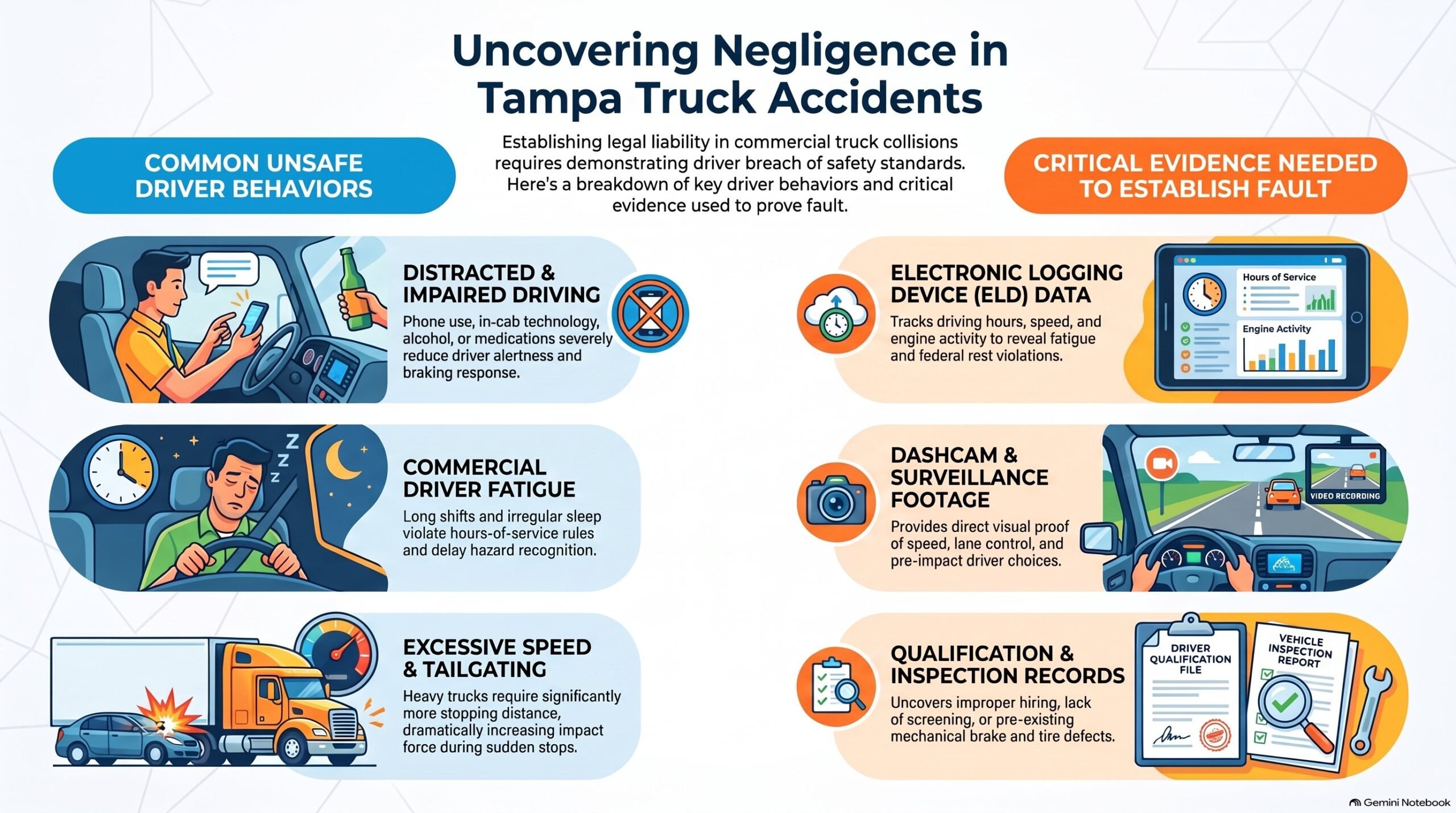
Truck accidents in Tampa may result from driver behaviors that reduce attention, judgment, or control behind the wheel. Common causes include distracted driving, fatigue, speeding, tailgating, and impairment from alcohol or drugs. Identifying these contributing factors can help clarify how a collision occurred and who may be responsible.
Distracted Truck Driving
Distracted truck driving occurs when a commercial driver’s attention shifts away from the road, even briefly, increasing the risk of a serious collision. Phone notification distractions can prompt a driver to glance at a screen, read a message, or respond while the vehicle is moving. Even a short visual or manual interruption can delay braking, impair lane control, or prevent a timely response to changing traffic conditions.
In-cab technology distractions may include navigation systems, dispatch devices, electronic logs, and other equipment requiring driver input. Although these tools support commercial operations, improper use while driving can divert attention from surrounding vehicles and roadway hazards. Employers and drivers share responsibility for establishing safe practices, including setting routes before travel and stopping in a secure location when device use is necessary. Identifying distraction as a contributing factor can help clarify how a crash occurred and support efforts to protect injured people.
Driver Fatigue
When a commercial driver is fatigued, reduced alertness and slower reaction times can make it harder to maintain lane position, judge distances, or respond promptly to hazards. Long shifts, insufficient sleep, irregular schedules, and overnight work can contribute to fatigue among truck drivers. A driver’s Circadian Rhythm naturally affects alertness, often making sustained attention more difficult during nighttime hours. These conditions may impair judgment and increase collision risk, putting other motorists and road users in danger.
Federal hours-of-service rules limit driving time and require rest periods, but compliance alone may not prevent every fatigue-related incident. Employers may use scheduling practices and Fatigue Detection tools to identify warning signs and support safer operations. After a crash, records involving work hours, rest breaks, and company policies may help clarify whether fatigue contributed to the driver’s conduct and resulting harm.
Speeding and Tailgating
Beyond fatigue, excessive speed and inadequate following distance are common risky driver behaviors in Tampa truck accidents. A commercial truck requires more distance to stop than a passenger vehicle, especially when fully loaded or on wet pavement. When a driver follows too closely, they may not have enough time to react to sudden braking, traffic congestion, or a roadway hazard. Speeding further reduces reaction time and increases collision force. A posted limit may establish a speed threshold, but drivers must also adjust their speed to traffic, weather, visibility, and road conditions. These precautions help protect motorists, pedestrians, and other road users. Investigators may review vehicle data, witness accounts, and roadway evidence to determine whether speed or tailgating contributed to a crash and resulting injuries.
Impaired Driving
Impaired driving can place truck drivers and other road users at serious risk, particularly when alcohol, illegal drugs, or misused prescription medications affect judgment and coordination. Reduced alertness in a commercial driver may delay braking, weaken hazard recognition, and make it harder to maintain lane position. Alcohol impairment can also affect balance, reaction time, and decision-making, even when a driver does not appear visibly intoxicated.
Medication interactions require careful attention because some prescriptions and over-the-counter products can cause drowsiness or combine with other substances to intensify impairment. Drivers are responsible for understanding medication warnings and following medical guidance before operating a commercial vehicle. Employers may also have duties to enforce safety policies and respond to signs of impairment. When impaired driving contributes to a Tampa truck crash, identifying its cause can help clarify responsibility and support injured people seeking accountability.
Don’t Wait. Call Our Florida Personal Injury Lawyers Now!


Legal Rights of Tampa Truck Accident Driver Behavior Injury Victims
Tampa truck accident victims injured by unsafe driver behavior may have the right to seek compensation from the driver and other parties whose negligence contributed to the crash. Florida law may permit injured people to pursue damages for medical expenses, lost income, reduced earning capacity, and pain and suffering. Each claim depends on the evidence, applicable deadlines, and the circumstances of the collision.
A careful legal review can help protect victims’ interests while supporting fair accountability.
Potential rights and remedies may include:
- Requesting compensation for documented losses and future care needs.
- Seeking records and evidence relevant to liability and damages.
- Challenging an insurer’s unfair handling of a valid claim, including possible Insurance bad faith.
- Pursuing a wrongful death claim through eligible surviving family members when a crash is fatal.
Victims may also have duties, such as providing accurate information and observing filing deadlines. Legal guidance can clarify available options, preserve important evidence, and help families make informed decisions while they focus on recovery and supporting one another.
Why Do Tampa Truck Accident Driver Behavior Injuries Happen?
Truck accident injuries caused by driver behavior often occur when a commercial driver’s unsafe choices reduce the time or space needed to avoid a collision. Speeding, distracted driving, fatigue, and impaired judgment can prevent a driver from recognizing danger or responding in time. Following too closely and making unsafe lane changes may also place nearby motorists, passengers, and pedestrians at risk.
Roadway hazards can increase the consequences of these decisions. Rain, standing water, construction zones, limited visibility, and congested traffic demand careful attention and controlled driving. When a truck driver fails to adjust speed or maintain a safe distance, a minor hazard can become a serious crash. The vehicle’s size and weight can generate substantial Impact forces, increasing the likelihood of severe harm to people in smaller vehicles.
These injuries are not always caused by one isolated mistake. A combination of unsafe conduct, difficult conditions, and delayed reactions may contribute to a collision, affecting families and communities that depend on safe roads.
What Should You Do After a Tampa Truck Accident Caused by Driver Behavior?
After a Tampa truck accident, injured individuals should seek prompt medical care, even if their symptoms initially appear minor. They should document the scene, preserve relevant evidence, and record details about the crash and any observed driver behavior. Contacting a truck accident lawyer can help them understand their legal options and protect important evidence.
Seek Medical Care
Prompt medical evaluation is vital after a Tampa truck accident, even when injuries appear minor or symptoms have not yet developed. A qualified healthcare provider can identify hidden trauma, assess symptoms, and recommend treatment suited to the injured person’s needs. Timely care supports recovery and helps prevent manageable conditions from worsening. It also creates a clear medical record of reported symptoms, examination findings, and prescribed care, which may assist those coordinating support for the injured person.
The patient should describe all discomfort and relevant collision details to the provider, then follow the treatment plan carefully. Follow-up scheduling helps ensure that symptom changes receive appropriate attention and that recovery is monitored. When additional evaluation is needed, Clinician Referrals can connect the patient with clinicians equipped to address specific injuries. Prompt, consistent care prioritizes health and supports informed decisions throughout recovery.
Document the Scene
When it is safe, documenting the scene can preserve details that may clarify how driver behavior contributed to a Tampa truck accident. A person able to do so can Photograph Roadway conditions, vehicle positions, skid marks, traffic signals, and visible damage from several angles. Take images without entering traffic or disturbing evidence. It may also help to Record Weather conditions, lighting, visibility, and any rain or standing water that could have affected driving. Note names and contact information for witnesses, along with brief accounts of what they observed. If visible from a safe location, record the truck’s company name, license plate, and identifying numbers. These details can assist those evaluating the event and may support accurate, fair decisions about responsibility and community safety.
Contact a Truck Accident Lawyer
A Tampa truck accident involving suspected driver misconduct may raise questions about liability, insurance coverage, and the evidence needed to support an injury claim. After seeking medical care and preserving available records, an injured person may contact a truck accident lawyer to understand possible next steps. Counsel can review crash reports, medical documentation, witness accounts, and information about the driver’s conduct, while explaining relevant deadlines and potential sources of compensation. Prompt legal guidance may help preserve evidence, particularly when trucking company records or vehicle data could be important. A Free consultation can provide an opportunity to discuss the circumstances, ask questions, and learn whether representation may be appropriate. Before choosing counsel, the injured person may ask about experience with commercial vehicle cases, communication practices, and attorney availability throughout the claim.
Don’t Wait. Call Our Florida Personal Injury Lawyers Now!
Critical Evidence in a Tampa Truck Accident Driver Behavior Injury Case
Evidence in a Tampa truck accident case can help establish whether driver conduct contributed to the collision and resulting injuries.
Essential records and findings may include:
- Driver qualification records
- Electronic logging data
- Dashcam and surveillance footage
- Post-crash inspection findings
Driver Qualification Records
Driver Qualification Records can help determine whether a truck driver was fit and legally qualified to operate a commercial vehicle before a crash. These files may include an employment application, driving history, medical examiner’s certificate, road test results, and records of required training. Reviewing them can reveal whether a carrier checked relevant qualifications, identified safety concerns, or allowed a driver to operate despite disqualifying information. Record retention practices matter because missing or incomplete documents may limit the ability to assess what the carrier knew and when it knew it. Qualification audits can help identify gaps in screening and compliance procedures. In an injury case, carefully reviewing these records may clarify whether driver behavior reflected an individual decision or a broader failure to select and supervise qualified drivers, informing a fair evaluation of responsibility.
Electronic Logging Data
Electronic logging device (ELD) data can help show whether a truck driver’s hours, speed, and vehicle use contributed to a Tampa crash. These records may identify driving time, rest periods, engine activity, and changes in duty status. Compared with dispatch instructions, fuel receipts, maintenance records, and other evidence, ELD data may show whether a driver exceeded federal limits or operated the truck while fatigued.
Investigators may also examine logbook discrepancies, including missing entries or differences between recorded duty status and vehicle activity. Such inconsistencies can help clarify whether a driver or carrier complied with safety requirements. Because electronic records may be overwritten or lost, prompt attention to ELD data retention is important. A preservation request can help protect relevant information while the injured person’s representatives assess how driving behavior may have affected the collision and resulting harm.
Dashcam and Surveillance Footage
When a truck collision occurs in Tampa, dashcam and nearby surveillance footage may provide a direct record of the driver’s actions before impact. Video may show lane changes, speed, following distance, signal use, or signs of distraction. It can also help clarify how traffic conditions developed and whether the driver had time to respond. Because many systems overwrite recordings quickly, Camera Preservation should be addressed promptly by requesting footage from the trucking company, nearby businesses, property owners, or public agencies. Secure the original files and relevant time ranges, not just short clips. Footage Authentication can help establish that a recording is complete, accurate, and tied to the crash’s location and time. Careful review may support a fair assessment of responsibility and help injured people pursue appropriate remedies.
Post-Crash Inspection Findings
After a Tampa truck crash, post-crash inspection findings can help show whether the driver’s actions or the vehicle’s condition contributed to the collision. Qualified inspectors may examine braking systems, tires, steering components, lighting, and electronic control modules before repairs or disposal alter the evidence. Brake component wear, uneven damage, or signs of overheating may indicate inadequate maintenance or a mechanical problem that affected stopping ability. Frame deformation can reveal the direction and force of impact, while comparison with vehicle damage may help reconstruct how the collision occurred. Inspection records can also identify defects that existed before the crash and distinguish them from impact-related damage. Preserving the truck and documenting each finding supports a careful investigation, helps clarify responsibility, and can assist injured people seeking accountability and resources for recovery.
Long-Term Effects of Tampa Truck Accident Driver Behavior Injuries
Truck accident injuries caused by driver behavior can lead to chronic pain that persists long after initial treatment ends. Lasting mobility limitations may affect a person’s ability to work, manage daily tasks, and maintain independence. Some individuals also experience emotional or cognitive effects, including anxiety, memory difficulties, or trouble concentrating.
Chronic Pain
Chronic pain can persist long after a Tampa truck accident, even when fractures and other visible injuries have recovered. Damage to nerves, muscles, or soft tissue may cause ongoing discomfort that affects concentration, mood, and daily responsibilities. Symptoms can fluctuate, making it difficult to predict when pain will interfere with work or family duties. Sleep disruption may further reduce energy and make ordinary demands harder to manage. A medical professional can assess the source of persistent symptoms and recommend appropriate Pain management, which may include medication, therapy, or other supervised care. Consistent documentation of symptoms, treatment, and related expenses can help clarify the injury’s continuing effects. When driver behavior contributed to the collision, injured people may also seek legal guidance to understand available options and protect their ability to obtain needed support.
Lasting Mobility Limitations
Lasting mobility limitations can develop when a Tampa truck accident causes serious damage to the spine, joints, nerves, or muscles. Injured people may have difficulty walking, standing, lifting, or completing routine tasks without assistance. The extent of these restrictions depends on the injuries and recovery progress, which may require ongoing rehabilitation and medical care.
When mobility changes are permanent, daily environments may need to be adjusted. Accessible housing can include ramps, wider doorways, and modified bathrooms that support safer movement. Adaptive transportation, such as vehicle modifications or tailored transit services, may help individuals reach medical appointments, work, and community activities. Family members, caregivers, and service providers can coordinate practical support while respecting each person’s independence. Documented limitations and related expenses may also be relevant when evaluating the long-term consequences of a truck accident.
Emotional and Cognitive Effects
After a Tampa truck accident, emotional and cognitive effects may continue even after physical injuries begin to recover. Emotional Trauma can include anxiety, depression, sleep disruption, or distress when traveling near large vehicles. These responses may interfere with work, family responsibilities, and a person’s ability to support others. Cognitive Changes, such as difficulty concentrating, memory problems, or slower decision-making, may also persist after a head injury or other trauma. Their effects can complicate daily tasks and make independent living more challenging. Qualified health professionals can evaluate and identify symptoms and guide appropriate treatment, including counseling or cognitive rehabilitation. Medical records documenting these concerns may also clarify how driver behavior contributed to lasting harm. With informed support, injured people can pursue recovery while maintaining meaningful connections and responsibilities within their communities.
Proving Liability in Tampa Truck Accident Driver Behavior Injury Cases
Proving liability in a Tampa truck accident involving driver behavior requires evidence that the driver’s actions fell below the standard of reasonable care and contributed to the collision and resulting injuries. Relevant conduct may include speeding, distraction, fatigue, unsafe lane changes, or failure to obey traffic signals. Establishing what occurred requires careful review of available evidence rather than assumptions about fault.
Witness Testimony can clarify what the driver did before impact, how traffic conditions developed, and whether the truck appeared to be traveling unsafely. Investigators may also examine police reports, photographs, vehicle damage, electronic data, and records documenting the injured person’s losses. Accident Reconstruction can help explain vehicle movements, impact points, and timing, providing a clearer account of how the collision unfolded.
A thorough investigation also considers whether the driver’s conduct was a substantial cause of the harm. Promptly preserving evidence and documenting injuries can support an accurate assessment while helping injured people pursue accountability and protect their ability to recover.
Dealing With Insurance Companies After a Tampa Truck Accident Driver Behavior Injury
Insurance companies may contact an injured person soon after a Tampa truck accident to request statements, records, or a settlement discussion. Their representatives may seek details before the person understands the full extent of the injuries or losses. A careful response can protect the injured person’s interests while preserving accurate information for those evaluating the claim.
Before providing a recorded statement or signing a release, the injured person may benefit from reviewing the request with a qualified attorney. Counsel can explain which information is relevant, help organize medical and employment records, and communicate with insurers on the person’s behalf. This support can also reduce pressure to accept an early offer that does not account for continuing care, lost income, or other documented harm.
Understanding the Claim timeline helps set realistic expectations, while awareness of Settlement tactics can help identify requests that may limit recovery. Clear, respectful communication and complete records can support fair consideration without unnecessary conflict. Each decision should reflect the person’s documented needs and circumstances.
What to Expect During a Tampa Truck Accident Driver Behavior Injury Claim Process
A Tampa truck accident driver behavior injury claim typically begins with an initial review of the circumstances, reported injuries, and available insurance coverage. Evidence collection may then document driver conduct, the collision, and resulting losses to support settlement negotiations. If the parties reach an agreement, the claim can be resolved through a settlement; otherwise, further legal action may be considered.
Initial Claim Review
During the initial claim review, the legal team examines how the truck driver’s conduct may have contributed to the collision and injury. The review usually begins with an initial consultation, where the injured person can describe the crash, resulting harm, and immediate concerns. The legal team may ask about the driver’s actions, such as speeding, distraction, fatigue, or failure to follow traffic rules. It also considers whether the available facts support a legally viable claim and whether deadlines or other requirements may affect eligibility. The team can explain potential next steps, answer questions, and clarify what information may be needed to assess the matter further. This early review helps the injured person make informed decisions while allowing counsel to identify issues that could affect the claim’s direction. It does not determine the outcome.
Evidence Collection
Once a claim moves beyond its initial review, evidence collection helps clarify how the truck driver’s conduct may have contributed to the crash and resulting injuries. Evidence preservation may include securing photographs, vehicle damage records, police reports, and available video before materials are lost or altered. Investigators may examine driver logs, electronic data, maintenance records, and company policies to assess fatigue, distraction, speeding, or other conduct. Witness interviews can help establish what occurred before, during, and after the collision. Medical records and expert assessments may document the injuries and connect them to the crash. The injured person may be asked to provide documents, answer questions, and attend evaluations. Careful collection supports a reliable account of events and helps protect the interests of those affected as the claim moves through review.
Settlement Negotiations
With evidence gathered, settlement negotiations can begin as the parties assess liability, injuries, and potential losses from the truck accident. The injured person’s representative may present medical records, wage information, and evidence of driver conduct to support a demand. The trucking company or insurer may respond with questions, a counteroffer, or a dispute about responsibility or damages. Each side evaluates the strengths and limits of the available evidence while considering the injured person’s needs and the interests of affected family members. A mediation strategy may help parties address disagreements with a neutral facilitator and explore practical terms. Settlement timing can depend on treatment progress, record availability, and the complexity of liability issues. Careful communication and documented offers help keep discussions focused, informed, and respectful throughout the negotiation process.
Claim Resolution
When settlement discussions conclude, a Tampa truck accident injury claim may be resolved through a signed agreement or proceed to litigation if the parties cannot reach acceptable terms. A settlement typically requires written terms describing compensation and any release of further claims. Before signing, the injured person should understand how the agreement affects medical expenses, lost income, and future recovery needs. Settlement timelines vary according to injury severity, evidence gathering, insurer responses, and negotiations. Mediation options may help the parties address disputed facts with a neutral facilitator, though participation does not guarantee resolution. If litigation follows, the court process may involve discovery, hearings, and trial, which can extend the time before a decision. Throughout either path, accurate records and timely communication can support a fair outcome and help protect the injured person’s ability to focus on recovery and responsibilities to others.
Compensation for Tampa Truck Accident Driver Behavior Injury Damages
Compensation for injuries caused by negligent truck driver behavior may cover medical expenses, lost income, reduced future earning capacity, and pain and suffering. A claim may also account for rehabilitation, assistive equipment, and necessary home or vehicle modifications when injuries affect daily life. The amount depends on the evidence, the severity of harm, and how the injuries are expected to affect the person over time.
Records from treating providers, employment documentation, and assessments of future care needs can help establish the losses. A Tampa truck accident lawyer may coordinate with medical professionals and financial experts to present a clear account of the injured person’s needs. This process can support a resolution that recognizes both immediate concerns and long-term stability.
Address medical lien resolution before funds are distributed, since providers or insurers may have reimbursement rights. Structured settlements may provide scheduled payments when ongoing support is appropriate. Careful planning can help preserve resources and support recovery, family responsibilities, and continued community participation.
Economic vs Non-Economic Damages in Tampa Truck Accident Driver Behavior Cases
Economic damages may include medical expenses, lost income, and other documented financial losses resulting from a truck crash. Non-economic damages address harms such as pain, emotional distress, and reduced quality of life, which are assessed differently from direct costs. Establishing that a driver’s negligent behavior caused the collision is central to supporting a claim for either type of damages.
Economic Losses
Which losses can be measured in dollars after a truck crash caused by driver behavior? Economic losses include documented financial costs tied directly to the collision. They may cover emergency care, hospital treatment, medication, rehabilitation, and reasonably necessary future medical services. Repair or replacement costs for a damaged vehicle and other personal property may also qualify. When injuries prevent someone from working, Lost wages can reflect income missed during recovery. If lasting limitations affect the ability to perform a job or earn at the former level, reduced earning capacity may be considered. Records such as pay statements, tax returns, medical bills, repair estimates, and expert assessments can help establish these amounts. A careful accounting supports fair compensation and helps injured people and their families address practical needs while pursuing recovery and stability after a serious crash.
Non-Economic Harm
Beyond bills and lost income, a truck crash caused by driver behavior can bring substantial non-economic harm. These damages address personal losses that do not come with a direct price tag, including physical pain, emotional distress, and reduced quality of life. After a serious collision, a person may experience lasting fear, sleep disruption, or difficulty returning to ordinary activities. Loss of Enjoyment can reflect an inability to pursue hobbies, family routines, or community service that once mattered to the injured person. Strained Relationships may also develop when pain, stress, or changed responsibilities affect interactions with relatives and friends. Unlike medical expenses or missed wages, these harms are not measured by invoices. Their significance depends on how the injury affects the person’s daily life, independence, and connections with others.
Proving Driver Negligence
When a truck driver’s conduct contributes to a collision, proving negligence requires evidence linking that conduct to the crash and resulting injuries. Negligence Standards generally require showing that the driver owed a duty of care, breached it, and caused measurable harm. Breach Analysis may examine speeding, distraction, fatigue, impaired driving, or violations of safety rules. Investigators may review crash reports, electronic logging data, vehicle records, witness accounts, and available video to establish what occurred.
This evidence also helps distinguish economic losses from non-economic harm. Economic damages may include medical expenses, lost income, and future care costs, supported by bills and employment records. Non-economic damages may address pain, emotional distress, and reduced quality of life. Careful documentation helps confirm that claims reflect the injured person’s needs and support fair accountability for conduct that endangered others.
Don’t Wait. Call Our Florida Personal Injury Lawyers Now!
When a Tampa Truck Accident Driver Behavior Injury Case Goes to Trial vs. Settlement
A Tampa truck accident driver behavior injury case may settle through negotiation or proceed to trial, depending on the strength of the evidence, the parties’ positions, and the potential value of the claim. Settlement discussions may resolve disagreements about responsibility and compensation without a courtroom decision. When evaluating an offer, the parties may compare documented losses, medical assessments, witness accounts, and evidence of the driver’s conduct. A settlement can provide a defined resolution, but it requires agreement on its terms.
If negotiations do not produce an acceptable outcome, the case may proceed to trial. Each side presents evidence and examines witnesses, allowing jurors to assess credibility and determine what the evidence supports. Trial testimony may include accounts from the injured person, witnesses, and qualified professionals. After closing arguments, the jury deliberates to reach a verdict and, where appropriate, award damages. Trial can require additional time and preparation, and its result is uncertain. The choice between settlement and trial depends on case-specific facts and informed evaluation of available options.
Florida Laws That May Affect Your Tampa Truck Accident Driver Behavior Case
Florida laws governing truck crashes, driver conduct, and injury claims shape the choice between settlement and trial. These rules help determine responsibility and the evidence needed to support a claim. A careful review can also protect injured people and their families as they seek fair treatment.
Key legal considerations may include:
- Florida comparative fault: A claimant’s share of responsibility may reduce recoverable damages under the applicable rules.
- Negligence standards: Evidence of speeding, distraction, fatigue, or unsafe lane changes may help establish whether a driver failed to use reasonable care.
- Trucking regulations: Federal and state requirements concerning driver hours, vehicle inspections, and cargo securement may inform whether safety duties were breached.
- Employer responsibility: A carrier may be liable when a driver acts within the scope of employment, depending on the facts and governing law.
Medical records, crash reports, electronic logs, and witness accounts can clarify how these laws apply. Legal analysis should consider each person affected and avoid assumptions until evidence is reviewed.
The Statute of Limitations for Tampa Truck Accident Driver Behavior Injury Cases
How long an injured person has to file a Tampa truck accident lawsuit depends on Florida’s limitation period and the circumstances of the claim. For many negligence cases, Florida law generally allows two years from the date of the crash to bring an action. Missing that deadline may prevent recovery, even when unsafe driving caused serious harm.
The filing deadline can depend on when the injury occurred, the parties involved, and whether the claim involves a government entity. Special notice requirements may apply to claims against public agencies, and those deadlines can arrive sooner than the ordinary filing limit. A case involving a death may also follow a separate statutory period.
Deadline extension exceptions are limited and fact-specific. For example, certain circumstances involving a defendant’s absence or a claimant’s legal disability may affect how time is counted. These rules do not automatically pause every case, and the applicable period can be disputed. Prompt attention to dates preserves the opportunity to seek accountability and support those affected by negligent conduct.
How a Tampa Truck Accident Driver Behavior Lawyer Can Help You
When a truck driver’s conduct contributes to a crash, a Tampa truck accident driver behavior lawyer can investigate the circumstances, identify potentially responsible parties, and explain the injured person’s legal options. The lawyer may examine driving records, dispatch communications, vehicle data, and witness accounts to determine whether fatigue, distraction, speeding, or inadequate training played a role. Evidence can also clarify whether a trucking company, maintenance provider, or another party shares responsibility.
A careful investigation may help preserve important records and accurately present the effects of the collision. Counsel can assess available insurance coverage, including Commercial fleet policies, and consider whether carrier safety incentives influenced company practices. This work can support a claim focused on accountability and fair compensation.
A lawyer may assist by:
- Collecting and organizing crash evidence
- Reviewing driver and carrier safety records
- Identifying responsible parties and applicable coverage
- Communicating with insurers and opposing counsel
This guidance can help injured people pursue a claim while allowing them to focus on recovery and family responsibilities.
When to Contact a Tampa Truck Accident Driver Behavior Lawyer
Prompt legal guidance can help preserve evidence and clarify available options after a truck crash. You may contact a Tampa truck accident driver behavior lawyer as soon as you address immediate medical needs, especially if suspected fatigue, distraction, speeding, or other unsafe actions may have contributed. Early warning signs can include conflicting accounts, pressure to provide a recorded statement, or uncertainty about how to document injuries and losses.
Consultation timing matters because vehicle records, electronic data, witness recollections, and roadway evidence may become harder to obtain over time. A prompt discussion can clarify which information to preserve and what steps may be appropriate under Florida law. It can also help an injured person understand deadlines without assuming the outcome of a claim.
Those assisting an injured family member may seek guidance on that person’s behalf, while respecting medical needs and privacy. When serious injuries or disputed facts are involved, timely legal advice can support informed decisions.
Why You Need an Experienced Tampa Truck Accident Driver Behavior Lawyer
Because truck accident claims often involve complicated evidence and multiple responsible parties, an experienced Tampa truck accident driver behavior lawyer can help identify relevant issues and protect an injured person’s legal interests. Driver conduct may involve fatigue, distraction, speeding, or safety violations, and establishing what happened can require careful review of records, witness accounts, and electronic data. An attorney familiar with these matters can preserve evidence, assess how the conduct contributed to the collision, and identify potentially responsible parties, including a carrier or other entity.
Effective case preparation also helps clarify the injuries, financial losses, and legal questions that may affect a claim. Counsel can coordinate with qualified experts, organize supporting documentation, and address disputes about fault or damages. This work may allow an injured person and their family to focus on recovery while the claim receives informed attention. Thoughtful Attorney selection matters because experience with truck cases can support accurate evaluation, responsible advocacy, and a fair pursuit of available compensation.
How to Choose the Right Tampa Truck Accident Driver Behavior Lawyer for Your Case
Choosing the right Tampa truck accident driver behavior lawyer requires more than confirming that an attorney handles injury claims. A careful review helps identify counsel prepared to examine how fatigue, distraction, speeding, or other conduct may have contributed to a collision. Attorney experience with commercial vehicle cases can indicate familiarity with driver records, company policies, and evidence preservation. Prospective clients can ask how the lawyer investigates behavior, identifies responsible parties, and addresses disputes over fault.
Communication style also matters. A lawyer should explain the process in clear terms, respond within reasonable timeframes, and provide realistic updates without promising results. This approach allows injured people and their families to make informed decisions while managing recovery and other responsibilities. It can also support those who want accountability and safer practices for everyone sharing the road. Before choosing representation, individuals can compare relevant experience, case strategies, availability, and fee arrangements, then select counsel whose approach fits their needs and priorities.
About The Law Offices of Anidjar & Levine
The Law Offices of Anidjar & Levine represents people injured in truck accidents, including cases involving driver conduct such as fatigue, distraction, or speeding.
The firm assists clients seeking accountability and financial recovery after collisions disrupt their health, work, and family responsibilities.
Its attorneys review available evidence, explain legal options, and communicate with clients as claims progress.
The firm’s history reflects a practice focused on representing injured people and addressing the consequences of serious accidents.
In truck cases, the firm may examine driver records, company policies, vehicle data, and other evidence relevant to unsafe conduct.
Each matter depends on its facts, and no particular outcome can be guaranteed.
Community involvement is also part of the firm’s public presence.
Its outreach and charitable efforts support local organizations and people facing hardship.
For individuals who value service to others, these efforts offer context about the firm beyond its legal work.
Prospective clients can discuss their circumstances directly with the firm and assess whether its approach meets their needs.

Frequently Asked Questions
Can I Pursue a Claim if I Was a Passenger in the Truck?
A passenger injured in a truck crash may pursue a passenger injury claim, even when riding in the truck involved. Potential recovery may depend on who caused the collision, the passenger’s relationship to the driver, and applicable insurance coverage. Third-party liability may apply if another driver, trucking company, vehicle owner, or maintenance provider contributed to the crash. Prompt medical care and preserving records can support a careful review of available legal options.
What if the Truck Driver Was an Independent Contractor?
A truck driver’s independent contractor status does not automatically prevent an injured person from pursuing a claim against the company. Liability may depend on the independent contractor classification, the driver’s conduct, and evidence of company control, such as rules governing routes, schedules, or safety procedures. Other factors may include negligent hiring or maintenance. Because these issues depend on the facts and applicable law, a careful review of contracts, records, and accident evidence can clarify potential responsibility.
Can a Trucking Company Be Liable for Negligent Driver Hiring?
A trucking company may be liable for negligent hiring if it failed to use reasonable care when selecting a driver and that failure contributed to a crash. Evidence of inadequate screening may include ignoring a poor safety record, invalid credentials, or disqualifying violations. Liability depends on the facts, including what the company knew and the driver’s conduct. A careful review of hiring records, safety checks, and applicable law can help clarify responsibility and support those harmed.
Will My Immigration Status Affect My Ability to File a Claim?
A person’s immigration status generally does not prevent them from filing a personal injury claim after a truck accident. Immigration Status Protections may limit disclosure of status in civil proceedings, although applicable rules and exceptions vary by jurisdiction. Claim Filing Rights depend on proving liability, injury, and damages, not on citizenship alone. An injured person should promptly seek advice from a qualified attorney, preserve relevant evidence, and avoid making assumptions about eligibility based solely on status.
Can I Recover Damages if I Was Injured While Working?
Yes, an injured worker may recover damages, depending on the circumstances. Workers’ compensation generally provides medical care and wage benefits for job-related injuries, regardless of fault. If another person or company caused the injury, the worker may also pursue third-party claims for losses not covered by those benefits, including pain and suffering. An attorney can assess available evidence, deadlines, and potential effects on benefits to help protect the worker’s rights.
—————————
Truck accident cases involving driver behavior require careful investigation, timely evidence preservation, and a clear understanding of Florida law.
Injured people may have options for pursuing compensation, but liability and damages depend on the facts of each crash.
A Tampa Personal Injury Lawyer from The Law Offices of Anidjar and Levine can review a claim, explain available legal steps, and address questions about the process.
Prompt legal guidance may help protect important evidence and support an informed decision about how to proceed after a serious collision.