
The Law Offices of Anidjar and Levine can assess whether an unsafe surface, stairway, railing, or other structural hazard contributed to an injury. The review may consider property duties, notice of the danger, medical records, witness accounts, photographs, and maintenance history. Prompt medical care and careful preservation of evidence can help clarify the claim. Insurance communications and deadlines also require attention. A Tampa Personal Injury Lawyer can explain legal options, evidence, and next steps after a fall.
Main Takeaways
- A Tampa walkway and structures lawyer can assess potential liability, evidence, injuries, deadlines, and available legal options.
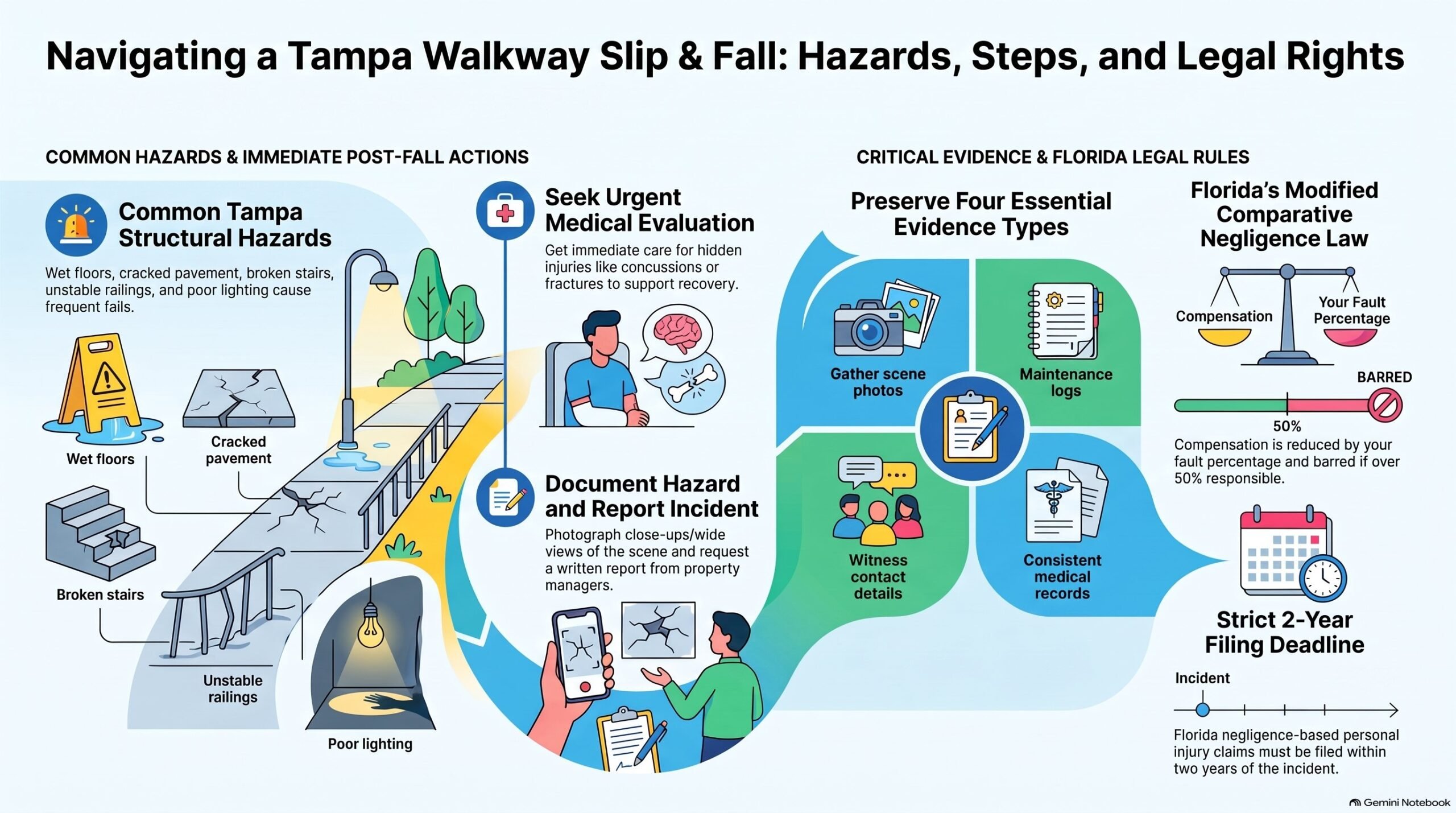
- Common hazards include wet floors, uneven pavement, broken stairs, unstable railings, poor lighting, and concealed elevation changes.
- Property owners generally must take reasonable steps to maintain safe premises, address known hazards, or provide adequate warnings.
- Seek prompt medical care, report the fall, and preserve photographs, witness details, incident reports, and maintenance records.
- A lawyer can help organize a claim, communicate with insurers, evaluate losses, and explain timelines and potential defenses.


How We Can Help With Your Tampa Slip & Fall Walkways & Structures Injury Claim
A Tampa slip and fall lawyer can help injured people pursue compensation when unsafe walkways or structures cause a fall. Legal support can ease the burden on people focused on medical care, recovery, and family responsibilities. Counsel can review the available information, explain potential options, and help determine practical next steps without promising a particular result.
A lawyer may organize records, handle communications with insurers, and prepare claim documents for review. Clear Client Communication helps clients understand requests, decisions, and developments as the matter progresses. Counsel can also identify information needed to evaluate losses and respond to questions about the process.
Each matter follows its own Claim Timeline, shaped by the circumstances and the steps required to assess and resolve the claim. A lawyer can provide updates, explain delays, and help clients make informed choices. This guidance allows injured people to focus on recovery while their representative manages legal responsibilities with care, diligence, and respect.
OUR CONSULTATIONSARE FREE
START YOUR FREE CASE REVIEW

Understanding Tampa Slip & Fall Walkways & Structures Injury Cases
When a fall occurs on an unsafe walkway or structure, the circumstances surrounding the hazard can shape how an injury claim is evaluated. In Tampa, these cases generally examine whether a property owner or responsible party failed to take reasonable steps to protect lawful visitors. Premises liability provides the legal framework for evaluating that responsibility, while applicable duty standards may depend on the visitor’s status and the property’s use.
An injured person’s claim may require evidence showing that a dangerous condition existed, that the responsible party knew or should have known about it, and that the condition contributed to the fall. Medical records, photographs, incident reports, and witness accounts can help establish the sequence of events and the resulting harm. The evaluation may also consider whether the injured person acted reasonably under the circumstances. These cases are fact-specific, and careful review can help clarify responsibility, support fair compensation, and inform decisions that protect others from preventable injuries.
Common Causes of Tampa Slip & Fall Walkways & Structures
Slip and fall hazards in Tampa walkways and structures often arise from wet or slippery surfaces and uneven paths. Broken stairs or railings can also create dangerous conditions, particularly where repairs or warnings are inadequate. Poor lighting and limited visibility may further prevent visitors from identifying and avoiding these hazards.
Wet or Slippery Surfaces
Wet or slippery surfaces commonly cause falls on Tampa walkways and inside commercial properties. Rain tracked through entrances, leaking equipment, spilled beverages, and recently cleaned floors can reduce traction and create hazards for visitors. Florida’s frequent storms may leave outdoor paths slick, while humidity can slow drying in covered areas. Property owners and managers can help protect customers, employees, and other guests by promptly addressing spills, placing visible warning signs, and maintaining suitable drainage. Regular inspections are especially important near entrances, restrooms, food-service areas, and pools, where moisture commonly accumulates. Slip-resistant coatings may improve traction on surfaces exposed to recurring moisture. Appropriate Waterproof footwear can also support safer movement for workers, though it does not replace proper maintenance. Documented cleaning procedures and timely repairs can reduce preventable risks for everyone using the property.
Uneven Walkways
Uneven walkways can create fall hazards even when their surfaces are dry and clean. Cracked pavement, raised concrete, and abrupt changes in elevation may catch a pedestrian’s foot or disrupt balance. These conditions can develop as materials age, tree roots shift pavement, or poor installation leaves gaps and uneven joints. In Tampa, heat, heavy rain, and ground movement may contribute to deterioration over time.
Property owners and managers should inspect paths used by residents, customers, visitors, and service providers. Prompt repairs, clear warnings, and temporary barriers can reduce exposure while hazards are addressed. When an unsafe walkway remains unrepaired or unmarked, a person who falls may suffer injuries that affect daily activities and require medical care. Evidence of the condition and its maintenance history can help clarify how the incident occurred.
Broken Stairs and Railings
Broken stairs and damaged railings can make routine movement through a property hazardous. Loose treads, cracked steps, uneven risers, and deteriorated materials may cause someone to lose their balance or fall. Property owners and managers who serve residents, visitors, and customers should schedule timely inspections and repairs, especially in high-traffic areas. Stairway code violations, such as inconsistent step dimensions or missing handrails, may increase the risk of injury and indicate inadequate maintenance. Railing design defects can also create danger when rails are unstable, poorly secured, or difficult to grip. A safe stairway requires sound construction, reliable support, and prompt attention to reported problems. When a fall occurs, the condition of the stairs or railing, inspection records, and repair history may help clarify how the hazard developed.
Poor Lighting and Visibility
Poor lighting can make walkways, stairs, and other shared areas difficult to navigate, even when their surfaces are otherwise well maintained. In Tampa, inadequate illumination may prevent visitors from seeing changes in elevation, loose flooring, wet areas, or obstacles placed along a route. Dim stairwells can conceal uneven steps and make it harder to judge where each step begins or ends. Obscured pathways near entrances, parking areas, and common spaces may also increase the risk of a fall, particularly when shadows or burned-out fixtures limit visibility.
Property owners and managers are generally expected to maintain reasonably safe conditions for people using their premises. That responsibility may include inspecting lighting, replacing failed bulbs, and addressing fixtures that do not adequately illuminate walking areas. When poor visibility contributes to an injury, the circumstances and maintenance history may help establish whether reasonable care was provided.
Don’t Wait. Call Our Florida Personal Injury Lawyers Now!


Legal Rights of Tampa Slip & Fall Walkways & Structures Injury Victims
When a walkway or structure creates an unreasonable hazard, an injured person in Tampa may have the right to seek compensation from the party responsible for maintaining or controlling the property. Premises liability rights may apply when a property owner or operator fails to use reasonable care and that failure contributes to an injury. Each claim depends on its facts, applicable law, and available evidence.
An injured person may consider these steps:
- Obtain prompt medical care and keep records of treatment, expenses, and the injury’s effects.
- Preserve photographs, incident reports, witness details, and other information relevant to the condition and the event.
- Consult a qualified attorney to assess responsibility, deadlines, damages, and potential defenses.
Under comparative negligence rules, compensation may be reduced if the injured person is found partly responsible. Fault allocation can affect recovery, but it does not automatically eliminate a claim. Careful evaluation can help injured people understand their options and pursue fair treatment while protecting their ability to support themselves and their families.
Don’t Wait. Call Our Florida Personal Injury Lawyers Now!
Why Do Tampa Slip & Fall Walkways & Structures Injuries Happen?
Why do walkway and structural hazards cause so many slip-and-fall injuries in Tampa? Heavy rain, humidity, and frequent storms can leave walkways wet, slick, or covered with debris. Water may collect near entrances, while algae and mildew can make outdoor surfaces dangerously slippery. Uneven pavement, loose tiles, cracked steps, and deteriorating handrails also create risks, particularly where visitors must move through crowded or poorly lit areas.
Some hazards develop gradually through wear and inadequate maintenance. Others arise suddenly when spills, leaks, or storm damage go unaddressed. Property owners generally have a duty to maintain reasonably safe premises and correct known hazards or provide adequate warnings. Building code standards may also govern features such as stairways, ramps, guardrails, and walking surfaces. When inspection, repair, drainage, or lighting is neglected, a preventable condition can expose residents, workers, and visitors to serious harm. Understanding these contributing factors helps communities recognize why consistent maintenance and accessible, safe structures matter to everyone who uses them.
What Should You Do After a Tampa Slip & Fall on Walkways & Structures?
After a Tampa slip and fall involving a walkway or structure, the injured person should seek prompt medical care, even if symptoms initially seem minor. They should document the hazard with photographs and note relevant details, such as the location and conditions. They should also report the incident to the property owner or manager and retain a copy of any written report.
Seek Medical Care
Prompt medical care is essential after a slip-and-fall injury on a Tampa walkway or within a building, even if symptoms initially seem minor. A person who has fallen should seek an Urgent evaluation for pain, swelling, dizziness, head impact, or difficulty moving. Some injuries, including fractures and concussions, may not be immediately apparent, and delaying assessment can allow complications to worsen. A physician can examine the affected areas, recommend appropriate tests, and provide injury-specific treatment instructions. The patient should describe how the fall occurred and report all symptoms, including changes that develop later. Following medical advice and attending scheduled appointments supports recovery and helps prevent additional harm. If needed, the treating provider can arrange a referral to a consultant for focused care, rehabilitation, or further assessment.
Document the Hazard
Clear documentation can help establish what caused a slip-and-fall injury on a Tampa walkway or within a building. If it is safe, the injured person or a companion can photograph the exact area where the fall occurred. Images should show the hazard from several distances, including hazard close-ups that reveal details such as pooled liquid, uneven pavement, loose flooring, or missing handrails. Wider views can provide context by showing nearby entrances, lighting, and the route through the space. A timestamped video may capture changing conditions, such as water spreading or a temporary obstruction being moved. The record should remain accurate and unaltered. Notes can identify the date, time, location, weather, and visible conditions, while preserving original files and backups for later review.
Report the Incident
Once immediate medical needs are addressed, the injured person should report the fall to the property owner, manager, or an employee as soon as practical. Prompt Incident notification gives the responsible party an opportunity to document what occurred and address any continuing hazard that could endanger others. The injured person should describe the location, time, and circumstances of the fall, while avoiding guesses about its cause or statements that minimize the injury. If possible, the person should request a written report and ask how to obtain a copy. Before signing, review the report for accuracy, and note any corrections. The injured person may also record the name and position of the person receiving the report, along with the date and time of notification. These steps can preserve useful information and support a clear account of the incident.
Critical Evidence in a Tampa Slip & Fall Walkways & Structures Injury Case
Evidence can help establish how a walkway hazard arose, whether it was addressed, and how the fall caused injury.
Essential materials include:
- Photographs of the incident scene and hazardous condition.
- Maintenance and inspection records, along with witness statements.
- Medical documentation describing the injuries and treatment.
Incident Scene Photographs
Photographs taken soon after a slip-and-fall incident can preserve details that may change or disappear before the scene is inspected. Images can document the walkway’s surface, lighting, visible hazards, and the surrounding structure, helping clarify the conditions a person encountered. Where safe and practical, photographs should show both the broader area and close views of the specific condition. Camera angles can show the hazard’s location relative to entrances, stairs, handrails, or other features, while avoiding misleading perspective. Timestamp verification can help establish when images were captured and support an accurate sequence of events. Clear, unaltered images from multiple viewpoints may assist those evaluating the incident and the injured person’s account. Gather photographs respectfully, without disturbing the scene or compromising anyone’s privacy.
Maintenance And Inspection Records
Maintenance and inspection records can help establish how a walkway or structure was monitored before a slip-and-fall incident. These documents may show whether property staff followed inspection schedules, identified hazards, and addressed unsafe conditions within a reasonable time. Repair logs can indicate when maintenance was requested, what work was completed, and whether a reported problem remained unresolved. Records may also reveal gaps in inspections or repeated repairs in the same location, which can help clarify whether a hazard was predictable. Relevant materials can include checklists, work orders, maintenance policies, and communications about repairs. Their accuracy and timing matter, since incomplete or altered entries may limit their reliability. Preserving these records promptly can support a fair assessment of the property’s maintenance practices and the steps taken to protect visitors and other members of the public.
Witness Statements
When a walkway or structure contributes to a fall, witness statements can help clarify how the incident occurred and what conditions were present beforehand. Bystanders, employees, or other visitors may describe a loose handrail, uneven surface, poor lighting, or an obstruction they observed. Their accounts can also establish whether the condition existed before the fall and whether anyone reported it.
Witness recollection is often most useful when recorded promptly, while details remain clear. A careful account should distinguish what a person directly saw from what they learned later. Statement credibility may depend on consistency, opportunity to observe, and any relationship to the property owner or injured person. Independent witnesses can provide valuable perspective, while differences between accounts may require further review. Preserving names and contact information helps ensure relevant witnesses can be reached as the claim proceeds.
Medical Documentation
Medical documentation can establish the nature and extent of injuries sustained in a Tampa slip-and-fall involving a walkway or structure. Records from emergency departments, physicians, and therapists may connect reported symptoms to the incident and show how injuries affected daily activities. A clear Treatment timeline can identify when care began, which evaluations occurred, and whether symptoms changed or persisted. Prompt, consistent treatment may also help explain the seriousness of an injury, while gaps in care may require clarification.
Provider coordination can support complete and accurate records when several professionals participate in treatment. Preserve and review medical notes, imaging results, prescriptions, and referrals for consistency. These materials may help clarify the diagnosis, recommended care, and anticipated recovery. Organized documentation can help legal professionals evaluate damages and present evidence responsibly while protecting the injured person’s privacy and dignity.
Long-Term Effects of Tampa Slip & Fall Walkways & Structures Injuries
Slip-and-fall injuries involving walkways or structures can have lasting effects beyond the initial recovery period. Some injured individuals experience chronic pain or reduced mobility that interferes with daily activities and work. Emotional distress may also persist, particularly when ongoing symptoms limit independence or quality of life.
Chronic Pain
Chronic pain can persist long after a Tampa slip-and-fall injury appears to have recovered, limiting mobility, disrupting sleep, and interfering with work or daily activities. Ongoing discomfort may stem from damaged joints, soft tissues, or nerves, and its intensity can change over time. Pain flare patterns may follow particular activities, weather changes, or periods of stress, making symptoms difficult to predict. Keeping a record of symptoms, treatments, and daily limitations can help healthcare providers assess the condition and adjust care. Chronic pain management may involve medication, physical therapy, counseling, or other clinician-directed approaches, depending on the injury and individual needs. For people who care for others, persistent pain can also affect household responsibilities and caregiving duties. Consistent medical follow-up can support treatment decisions and document lasting effects.
Reduced Mobility
When a Tampa slip-and-fall injury affects the joints, bones, or soft tissues, reduced mobility may continue after the initial injury has recovered. Stiffness, weakness, limited range of motion, or balance problems can make walking, standing, and using stairs difficult. These limitations may interfere with work, household responsibilities, and community participation, particularly when buildings lack accessible routes.
A person with lasting mobility restrictions may need physical therapy, home modifications, or assistive devices. Accessible mobility aids in public spaces, including clear pathways, ramps, and properly maintained handrails, can support safer movement. Adaptive transportation may also be necessary when driving or using standard transit is no longer practical. Long-term care plans often address these needs alongside ongoing medical evaluations. Documenting mobility changes and related expenses can help clarify the practical effects of a fall injury.
Emotional Distress
After a Tampa fall caused by unsafe walkways or structures, emotional distress may persist long after physical injuries begin to recover. Anxiety After Falls can develop when an injured person fears another accident, avoids public spaces, or feels uncertain about returning to work and daily responsibilities. These reactions may affect relationships and limit participation in community activities, including efforts to support others.
Sleep Disruption is another possible consequence. Pain, worry, or recurring memories of the fall may make it difficult to rest, which can interfere with concentration and slow recovery. Persistent emotional symptoms merit attention alongside physical injuries. A qualified health professional can assess these effects and recommend appropriate care. Treatment records, symptoms, and changes in daily life may also help document the injury’s broader impact when pursuing a claim.
Proving Liability in Tampa Slip & Fall Walkways & Structures Injury Cases
Proving liability in a Tampa slip and fall case involving a walkway or structure requires evidence that a dangerous condition caused the injury and that the responsible party failed to address it with reasonable care. Evidence may include photographs, incident reports, maintenance records, witness accounts, and measurements documenting the hazard. These details can help establish how long the condition existed and whether reasonable inspections or repairs could have prevented the fall.
Notice to the property owner is often central to the claim. A responsible party may have known about the hazard through complaints or inspections, or the condition may have existed long enough that reasonable care would have revealed it. Records showing prior repairs or recurring problems may also clarify what the owner knew.
Code compliance can provide useful context when evaluating stairs, ramps, railings, or walking surfaces. A violation may support an argument that the structure was unsafe, though it does not alone establish liability. Clear evidence helps identify responsibility and supports accountability, promoting safer spaces for the community.
Dealing With Insurance Companies After a Tampa Slip & Fall Walkways & Structures Injury
Insurance companies may contact an injured person soon after a Tampa walkway or structural fall to gather information and assess the claim. Their representatives may request details about the incident, injuries, medical care, and any prior conditions. A clear, accurate account can help protect the injured person’s interests while allowing the insurer to evaluate the reported facts.
Before answering questions, the injured person may benefit from understanding the purpose and scope of the request. Recorded calls can preserve statements that may later be compared with medical records or other evidence, so answers should remain factual and avoid speculation. If a question is unclear, you may request clarification.
An insurer may also present claim releases or other documents. Signing a release could limit the ability to seek further compensation, particularly before the full effects of an injury are known. Careful review is prudent before accepting payment or signing paperwork. A lawyer can explain the document’s terms and help make certain communications remain accurate, respectful, and focused on resolving the claim fairly.
What to Expect During a Tampa Slip & Fall Walkways & Structures Injury Claim Process
A Tampa slip and fall claim typically begins with an initial case review to assess the circumstances, potential liability, and available evidence. Evidence collection supports the claim, after which negotiations may lead to a settlement. If the parties cannot reach an agreement, filing a lawsuit may be the next step.
Initial Case Review
During an initial case review, a Tampa slip and fall lawyer examines how the walkway or structure became hazardous, when the incident occurred, and what evidence may establish responsibility. The lawyer also considers whether the property owner or another party had a duty to maintain the area and whether a failure to meet that duty may have contributed to the injury.
Case eligibility depends on the circumstances, applicable deadlines, the nature of the harm, and the available facts. The review may clarify potential legal issues without promising a particular outcome. For consultation preparation, an injured person can be ready to describe the incident, the location, any known hazards, and resulting limitations. The lawyer may ask focused questions to understand the claim’s scope and identify next steps. This discussion helps determine whether further legal assistance may serve the injured person’s interests.
Evidence Collection
What evidence can clarify how a walkway or structure contributed to a fall? Photographs of the area may document uneven surfaces, loose railings, poor lighting, or other hazards before conditions change. Medical records can connect reported injuries to the incident, while witness accounts may describe what happened and identify relevant safety concerns.
Evidence preservation is important because repairs, cleaning, or routine maintenance can alter the scene. A lawyer may request maintenance logs, inspection records, incident reports, and surveillance footage from the property owner. Such materials can help establish when a hazard arose, whether it was reported, and what steps were taken in response. The injured person should retain clothing and footwear worn during the fall and avoid altering related records. Prompt, organized collection can support a clear account of the event and help determine what information remains available.
Negotiations And Settlement
Once the available evidence has been reviewed, settlement negotiations may begin with the property owner or its insurer. The injured person’s representative typically presents a demand outlining how the fall occurred, why the property condition may establish responsibility, and how the injury affected the person’s health, work, and daily activities. A sound Demand strategy accounts for documented medical expenses, lost income, anticipated care, and other supported losses, while recognizing that the insurer may dispute liability or the value of the claim. Negotiations can involve written offers, counteroffers, and requests for additional records. If direct discussions stall, mediation may provide a structured setting where a neutral facilitator helps both sides. Mediation preparation includes organizing evidence, evaluating settlement options, and identifying priorities. Review any proposed agreement carefully before acceptance and document it in writing.
Filing A Lawsuit
If settlement negotiations do not resolve a Tampa slip and fall claim, the injured person may consider filing a lawsuit. The process generally begins with Complaint drafting, which identifies the parties, explains the alleged unsafe condition, and states the legal basis for seeking compensation. A lawyer may review incident reports, medical records, photographs, and witness accounts to support the allegations and make sure the filing meets applicable requirements.
After the court files the complaint, the defendant receives notice and may respond. The parties then exchange relevant information through discovery, which can include written questions, document requests, and depositions. This stage helps clarify disputed facts and assess the strength of the evidence. Settlement discussions may continue while the case proceeds. If no agreement is reached, the matter may be decided at trial, where evidence and testimony are presented to the court.
Compensation for Tampa Slip & Fall Walkways & Structures Injury Damages
Compensation for injuries caused by unsafe walkways or structures in Tampa may include medical expenses, lost income, reduced future earning capacity, and pain and suffering. Medical expense recovery may cover reasonable costs for emergency treatment, hospital care, medication, rehabilitation, and follow-up appointments. Records and professional assessments can help establish how the incident caused the injuries and what care remains necessary.
Lost income compensation may address wages missed during recovery, along with documented reductions in future earning capacity when injuries limit a person’s ability to work. A claim may also cover pain, physical limitations, and how injuries affect daily activities and relationships. The available compensation depends on the evidence, the nature and duration of the harm, and the circumstances of the fall.
For people injured while assisting others or carrying out community responsibilities, careful documentation can help present the full impact of the incident. A Tampa premises liability attorney can review records, explain potential damages, and pursue compensation supported by the facts.
Economic vs Non-Economic Damages in Tampa Slip & Fall Walkways & Structures Cases
In Tampa slip-and-fall cases involving walkways or structures, economic damages may include medical expenses, lost income, and other documented financial losses. Non-economic damages address harm such as pain, emotional distress, and reduced quality of life. Establishing either category generally requires evidence linking the losses to the incident and supporting their extent.
Economic Losses
A slip and fall on a Tampa walkway or structure can lead to both economic and non-economic losses, depending on the injuries and their effects. Economic losses are measurable financial costs tied to the incident and its consequences. They may include ambulance services, emergency care, hospital stays, medication, rehabilitation, and future treatment supported by medical evidence. An injured person may also seek compensation for Lost wages when recovery prevents work or reduces hours. If lasting limitations restrict the ability to perform previous duties or pursue comparable employment, diminished earning capacity may be considered. Receipts, pay records, tax documents, medical opinions, and employment information can help establish these losses. Careful documentation supports a clear assessment of financial needs and helps guarantee that a claim reflects both expenses already incurred and reasonably anticipated costs.
Non-Economic Harm
Beyond measurable expenses, a Tampa slip and fall may cause non-economic harm that affects an injured person’s daily life. These losses concern physical discomfort and personal effects that do not appear on bills or wage statements. Persistent pain may interfere with sleep, concentration, and ordinary routines, while emotional distress can make familiar activities feel difficult. Loss of enjoyment may arise when injuries prevent someone from participating in hobbies, family gatherings, or community service that previously brought purpose and connection. A person may also experience diminished independence when walking, bathing, driving, or completing household tasks requires assistance. The effects can extend beyond the injured individual, placing new demands on relatives and caregivers. In a premises liability claim, non-economic damages recognize these meaningful changes alongside financial losses, without treating personal suffering as a simple calculation.
Proving Damages
Once the effects of a Tampa slip and fall are identified, proving damages requires evidence that connects the injury to specific losses. Economic damages include measurable costs such as emergency care, rehabilitation, medication, lost wages, and reduced earning capacity. Bills, employment records, and medical opinions can help document these losses. Damage valuation may also account for future expenses when continued treatment or assistance is reasonably expected. Non-economic damages address losses without a fixed price, including pain, emotional distress, and limits on daily activities. Consistent medical records and clear testimony can help explain how these effects changed the injured person’s life. In walkway and structure cases, evidence should also link each claimed loss to the fall and resulting injury. Careful documentation supports a fair assessment while helping those affected pursue appropriate recovery.
Don’t Wait. Call Our Florida Personal Injury Lawyers Now!
When a Tampa Slip & Fall Walkways & Structures Injury Case Goes to Trial vs Settlement
When negotiations do not produce a fair resolution, a Tampa slip and fall case involving walkways or structures may proceed to trial. A trial allows each side to present evidence about the incident, the property condition, and the resulting injuries. Witness accounts, photographs, maintenance records, and expert opinions may help explain how the fall occurred and what losses followed. Trial testimony can clarify disputed facts and show how an injury affected the person’s daily responsibilities and ability to serve others.
Settlement offers a different path. The parties may resolve the claim without a courtroom decision, often reducing uncertainty, expense, and delay. Any proposed agreement should be evaluated against documented damages, available evidence, and the risks of continued litigation. If the matter reaches trial, a judge or jury considers the evidence, and a jury determines the verdict. Neither outcome is guaranteed. The choice depends on the claim’s circumstances, the strength of proof, and the injured person’s informed priorities.
Florida Laws That May Affect Your Tampa Slip & Fall Walkways & Structures Case
The decision to settle or proceed to trial is shaped in part by Florida laws governing premises liability and negligence. These rules help determine whether an owner or occupier may be responsible for unsafe walkways, stairs, or other structures. Florida premises liability generally requires evidence that a dangerous condition existed and that the responsible party knew or should have known about it, subject to the visitor’s legal status and circumstances.
Key legal considerations may include:
- The injured person must establish negligence, including a duty of care, a breach, and a connection between that breach and the injury.
- Comparative negligence may reduce recoverable damages when the injured person’s own conduct contributed to the incident. Florida’s modified comparative fault rule can bar recovery if that person is found more than 50 percent responsible.
- Evidence about inspection practices, warnings, repairs, and the condition’s duration may help assess whether reasonable care was exercised.
These principles support fair accountability and informed decisions while maintaining a focus on community safety.
The Statute of Limitations for Tampa Slip & Fall Walkways & Structures Injury Cases
Because Florida law sets strict deadlines for filing injury claims, the time limit can affect whether someone injured on a Tampa walkway or structure can pursue compensation in court. For most negligence-based personal injury claims, Florida generally allows two years from the date the injury occurred to file a lawsuit. This Filing deadline makes prompt attention important, especially when an unsafe walkway, stairway, platform, or other structure caused harm.
Some circumstances may affect how the deadline applies. The discovery rule can matter when an injury or its cause was not reasonably apparent at the time of the incident, although it does not automatically extend the time to sue. Different rules may apply to claims involving government entities, minors, or other legally distinct circumstances. Notice requirements for public-property claims can also impose additional deadlines.
To protect a valid claim, identify the incident date and relevant circumstances promptly. Missing an applicable deadline may prevent recovery in court, regardless of the injury’s seriousness.
How a Tampa Slip & Fall Walkways & Structures Lawyer Can Help You
A Tampa slip and fall lawyer can help an injured person assess a potential claim and take timely steps to protect it. Through a Legal consultation, counsel can explain relevant premises liability principles, review available records, and discuss whether the facts may support claim eligibility. The lawyer’s role can also include organizing evidence and communicating with responsible parties, allowing the injured person to focus on recovery and other responsibilities.
- Evaluate the circumstances: Counsel can examine how a walkway or structure was maintained, identify possible hazards, and consider whether the property owner knew or should have known about a dangerous condition.
- Develop supporting evidence: Photographs, incident reports, witness accounts, and medical records can help clarify how the fall occurred and document its effects.
- Address the claim process: A lawyer can prepare communications, assess documented losses, and explain settlement options or potential litigation.
This guidance can help an injured person pursue accountability while presenting clear, organized information to insurers or a court.
When to Contact a Tampa Slip & Fall Walkways & Structures Lawyer
Prompt legal guidance may be important after a fall on a walkway or near a building structure, particularly when a hazardous condition caused injury, or the property owner’s responsibility is unclear. A Legal Consultation can help an injured person understand relevant deadlines, preserve useful records, and identify practical next steps. Contact may be appropriate soon after medical needs are addressed, especially if the hazard has been repaired, witnesses may be difficult to locate, or an incident report contains disputed details. Photographs, maintenance records, medical documentation, and witness contact information can help clarify what occurred, so preserve them when available.
Attorney Selection is a personal decision that may involve reviewing a lawyer’s experience with premises-related claims, communication practices, and fee terms. A prospective client can ask how updates are provided and what information is needed for an initial review. Seeking guidance does not require a person to make immediate decisions about litigation. Prompt, informed contact may help protect your options while allowing you to focus on recovery and community responsibilities.
Why You Need an Experienced Tampa Slip & Fall Walkways & Structures Lawyer
When a fall involves a walkway defect or building structure, an experienced Tampa slip and fall lawyer can help assess whether the property owner may be legally responsible. Premises liability experience enables counsel to examine how the hazard developed, whether it was visible, and what steps the owner took to inspect, repair, or warn visitors. This review can clarify which facts matter and how they relate to the injured person’s circumstances.
A lawyer can also coordinate the collection and preservation of useful evidence, such as photographs, maintenance records, incident reports, and witness accounts. Strategic case assessment helps identify potential issues involving notice, safety procedures, and the extent of the injuries. These steps can support a fair evaluation of responsibility and losses while reducing the risk that important information is overlooked.
How to Choose the Right Tampa Slip & Fall Walkways & Structures Lawyer for Your Case
Selecting the right Tampa slip and fall lawyer for a walkway or structural hazard case requires careful consideration of the attorney’s relevant experience, investigative approach, and communication practices. A suitable lawyer should understand claims involving uneven pavement, damaged stairs, loose flooring, and other unsafe conditions. This focused experience can help counsel identify responsible parties, preserve evidence, and assess how the hazard contributed to the injury.
Attorney credentials, including licensing, disciplinary history, and relevant case experience, offer useful points for evaluation. Prospective clients may ask how the lawyer investigates property conditions, obtains maintenance records, and works with qualified experts when needed. Clear answers can indicate a thoughtful approach to building a claim.
Communication style also matters. The lawyer should explain legal options, likely timelines, and potential challenges in language clients can understand. A respectful attorney listens carefully and provides reasonable updates, helping injured people make informed choices while pursuing accountability and safer conditions for others. Comparing these factors can help a person select counsel whose methods and professional judgment align with the case’s needs.
About The Law Offices of Anidjar & Levine
For those evaluating legal representation, The Law Offices of Anidjar & Levine handles personal injury matters, including slip-and-fall claims in Tampa.
The firm’s work may involve investigating walkway and structural hazards, reviewing incident records, and identifying parties whose conduct may have contributed to an injury.
Each claim depends on its specific facts, available evidence, and applicable law.
Information about the firm’s history can help prospective clients understand its experience with injury cases and its approach to legal service.
The attorney’s philosophy centers on carefully examining claims, communicating with clients, and pursuing accountability when the evidence supports a legal basis.
This work can help people seeking answers after an unexpected fall while encouraging property owners to address unsafe conditions.
For a Tampa slip-and-fall matter, the firm can assess the circumstances, explain potential options, and outline the steps involved in seeking compensation.
Results depend on the facts and law, and no particular outcome can be guaranteed.
Prospective clients can request an individual case review.
Frequently Asked Questions
Can I Recover Compensation if I Fell on a Walkway at a Friend’s Home?
A person may recover compensation after falling on a friend’s walkway if the homeowner’s negligence caused the hazard and resulting injuries. Homeowner liability may arise when an owner knew, or reasonably should have known, about a dangerous condition and failed to repair it or provide adequate warning. Guest injuries are assessed based on the circumstances, including the visitor’s status and conduct. Medical records, photographs, witness accounts, and prompt legal guidance can help clarify potential claims and available compensation.
What if My Fall Happened on a City-Owned Sidewalk in Tampa?
A person injured on a city-owned sidewalk in Tampa may have a claim against the responsible public entity, but recovery depends on evidence that a dangerous condition caused the fall and the city had actual or constructive notice. City liability rules differ from ordinary premises claims, and notice deadlines can be short. The injured person should document the hazard, seek medical care, and promptly consult counsel to preserve evidence and identify applicable filing requirements.
Can I File a Claim if I Was Wearing Inappropriate Footwear?
Yes, a person may still file a claim after falling while wearing inappropriate footwear. Under Florida’s comparative negligence rules, a court may reduce compensation if the person’s footwear contributed to the fall, but that does not automatically bar recovery. Footwear comparative negligence depends on the circumstances, including the hazard and whether it was reasonably avoidable. Evidence of shoe traction, photographs, witness accounts, and incident reports may help establish how the fall occurred and who bears responsibility.
Does a Property Owner’s Warning Sign Affect My Claim?
A property owner’s warning sign may affect a claim, but it does not automatically prevent recovery. Its significance depends on Warning Sign Placement, whether the sign was visible before the hazard, and whether it gave clear notice of the danger. Hazard Visibility also matters: an obvious condition may support the owner’s position, while a concealed hazard may remain actionable despite a sign. Evidence, including photographs and witness accounts, can help establish whether the warning was adequate.
Can I Pursue a Claim if a Defective Handrail Contributed to My Fall?
A person may pursue a claim if a defective handrail contributed to a fall, provided evidence shows the property owner knew or reasonably should have known about the hazard and failed to address it. Handrail maintenance records, inspection reports, photographs, and witness accounts may help establish responsibility. Building code violations can also be relevant, though they do not automatically prove liability. The injured person’s own conduct may affect recovery under applicable law.
—————————
Unsafe walkways and structures can cause serious injuries, but injured people may have legal options when negligent property maintenance contributed to a fall.
Prompt medical care, careful documentation, and timely legal guidance can help protect a claim.
The Law Offices of Anidjar and Levine can review the circumstances, explain applicable rights, and pursue compensation where the evidence supports it.
A Tampa Personal Injury Lawyer can provide an informed assessment to help determine the appropriate next steps based on the specific facts of the case.