

The Law Offices of Anidjar and Levine can review a homeowner’s policy, assess whether an insurer’s decision follows its terms, and help challenge delayed, undervalued, or denied storm and weather damage claims. A lawyer may organize photographs, repair estimates, weather records, receipts, and inspection reports to support the loss. Prompt notice, careful documentation, and reasonable steps to prevent further damage can strengthen a claim. For related legal assistance, visit our Tampa Personal Injury Lawyer page. The sections below explain coverage issues, evidence, legal options, and when counsel may assist.
Main Takeaways
- A Tampa storm-damage lawyer can review your policy, explain coverage, and assess whether an insurer’s decision follows its terms.
- Legal counsel can help challenge delayed, undervalued, or denied claims with organized evidence and policy-based arguments.
- Document damage with dated photos, repair estimates, receipts, inspection reports, weather records, and insurer correspondence.
- Report damage promptly and take reasonable, safe steps to prevent further harm while following policy requirements.
- Coverage disputes may involve exclusions, limits, deadlines, damage valuation, or disagreements about what caused the loss.


How We Can Help With Your Tampa Property Claim Storm & Weather Damage Injury Claim
A Tampa property claim storm and weather damage lawyer can help property owners respond when an insurer delays, undervalues, or denies a covered loss. The lawyer can review the policy, explain your options, and help you present a clear, well-supported claim. This work can protect resources needed to repair homes, restore businesses, and maintain safe spaces for families, employees, and community members.
Assistance may include organizing photographs, repair estimates, receipts, inspection reports, and insurer correspondence. A lawyer can also assess whether the insurer’s position follows the policy terms and applicable requirements. Paying attention to Claim filing deadlines matters because missed time limits may affect the owner’s ability to seek payment. Careful review of policy exclusions can clarify which losses may be limited or disputed.
When communication with an insurer becomes difficult, counsel can handle inquiries, challenge unsupported conclusions, and pursue a fair resolution. This guidance allows property owners to focus on recovery while ensuring their claim receives informed, diligent attention.
OUR CONSULTATIONSARE FREE
START YOUR FREE CASE REVIEW

Understanding Tampa Property Claim Storm & Weather Damage Injury Cases
Understanding a Tampa storm or weather damage claim begins with identifying the cause and scope of the property loss, then comparing the available evidence with the insurance policy’s coverage terms. A careful review may include photographs, repair estimates, inspection records, and communications with the insurer. These materials help establish what was damaged, when the loss occurred, and whether the requested repairs are supported.
Policy exclusions and coverage limits can affect which repairs an insurer agrees to pay for. The policyholder’s responsibilities, including timely notice and reasonable steps to protect the property from further harm, may also shape the claim. When the insurer and property owner disagree about the amount of covered damage, appraisal disputes can arise under the policy’s procedures. Appraisal may address the value of a loss, but it does not necessarily resolve every coverage question.
A clear, organized claim allows decision-makers to assess the evidence fairly and helps property owners understand their options while seeking a responsible resolution.
Common Causes of Tampa Property Claim Storm & Weather Damage
Tampa property damage claims commonly arise from hurricane winds that tear roofing and damage exterior structures. Heavy rainfall can cause interior water damage, while hail can dent roofs, siding, and other surfaces. Flooding and storm surge can also inundate properties, causing extensive damage to buildings and belongings.
Hurricane Winds
When hurricane-force winds strike Tampa, they can damage roofs, siding, windows, and other parts of a property, allowing rain to enter and cause further harm. Wind uplift may loosen shingles, lift roof edges, or displace covering materials, while roof pressure can strain structural connections and weaken vulnerable areas. Flying debris may break windows, puncture exterior walls, or damage equipment and fencing. Even when a building remains standing, concealed damage to roofing or framing can compromise its stability and require prompt professional assessment. Property owners and managers serving residents, tenants, or customers should document visible damage, take reasonable steps to protect the site, and report losses to their insurer without delay. A careful inspection can help distinguish wind-related damage from preexisting conditions and support an accurate claim evaluation.
Heavy Rainfall
During periods of heavy rainfall, water can overwhelm drainage systems, collect around foundations, or enter properties through damaged roofs, windows, and exterior walls. In Tampa, intense downpours may expose weaknesses in a building’s protection and cause damage to ceilings, insulation, flooring, and personal belongings. When Rainwater drainage is blocked or inadequate, water may pool near the structure, seep into crawl spaces, or erode surrounding soil. Roof seepage can develop where shingles, flashing, or roof coverings have deteriorated, allowing moisture to spread beyond the visible entry point. Prompt inspection and accurate documentation can help property owners identify affected areas and support a clear insurance claim. A careful assessment also helps distinguish storm-related damage from preexisting conditions, giving insurers and claimants reliable information when evaluating necessary repairs and coverage under the policy.
Hail Damage
Hail can damage a property’s roof, siding, windows, and other exterior surfaces, even when the impacts are not immediately visible. Hailstone formation occurs within strong storm clouds, where ice grows as water droplets freeze and circulate through cold air. The resulting stones can vary in size and strike buildings with enough force to bruise shingles, dislodge protective granules, crack tiles, or dent metal panels. Roof vulnerability depends on the roofing material, age, installation quality, and the hail’s size and speed. Damage may weaken the roof’s ability to protect the structure and may require prompt professional inspection. Property owners who document visible impacts, preserve repair records, and report losses promptly can support a fair claim review. Careful assessment also helps identify concealed damage before repairs proceed.
Flooding and Storm Surge
Flooding and storm surge can cause extensive property damage in Tampa, particularly when heavy rainfall, overflowing waterways, or coastal waters enter buildings. Water may damage foundations, electrical systems, flooring, and personal property, while prolonged moisture can contribute to mold growth and structural deterioration. Low-lying neighborhoods and properties near Tampa Bay may face heightened exposure during severe storms.
Coastal flood mapping helps property owners and communities identify areas at risk and support informed decisions about preparation and recovery. Measures such as improved drainage, elevated utilities, and storm surge barriers may reduce damage, although no protection can eliminate every risk. After an event, affected owners should document visible damage, take reasonable steps to prevent further loss, and promptly review their insurance requirements. Clear records and timely communication can help insurers assess covered damage and support a fair, efficient claim process for property owners and the people who depend on their homes and businesses.
Don’t Wait. Call Our Florida Personal Injury Lawyers Now!


Legal Rights of Tampa Property Claim Storm & Weather Damage Injury Victims
When a storm damages a Tampa property, the owner may have legal rights under the insurance policy and Florida law. These Policyholder rights can help residents seek fair treatment while protecting their families, tenants, and neighbors.
The specific protections depend on policy terms, deadlines, and the facts of the loss.
- A policyholder may report damage promptly, provide requested records, and preserve photographs, receipts, and repair estimates.
- The insurer must handle the claim according to applicable law and the policy, including communicating decisions and explaining covered losses.
- If coverage disputes arise, the owner may question a denial or payment, submit supporting evidence, and seek review through available procedures.
- Florida law may provide options for resolving disagreements, including legal counsel or other authorized processes, subject to current requirements.
Careful documentation and timely communication can support an accurate evaluation. Owners should review policy language and applicable deadlines before taking action. Legal guidance may clarify available remedies and help guarantee that claim decisions receive informed, fair consideration.
Why Do Tampa Property Claims for Storm & Weather Damage Happen?
Storm and weather damage claims in Tampa often arise from severe winds, heavy rain, storm surge, lightning, or falling trees, but disputes can develop when the cause or extent of damage is unclear. These events may weaken roofs, break windows, flood interiors, or compromise electrical systems, creating unsafe conditions for residents, workers, and visitors. Damage can also result from inadequate maintenance, such as neglected roof repairs or blocked drainage, which allows ordinary weather to cause greater harm. In some cases, construction defects or contractor negligence leave a property less able to withstand predictable storms. Insurance fraud may further complicate a claim when a party deliberately misstates the origin, timing, or severity of damage. Disagreements can arise when insurers, property owners, and repair professionals interpret evidence differently or distinguish storm damage from preexisting deterioration. Clear documentation and fair evaluation help ensure affected people receive accurate decisions and that resources go to necessary repairs and community safety.
What Should You Do After a Tampa Property Claim for Storm & Weather Damage?
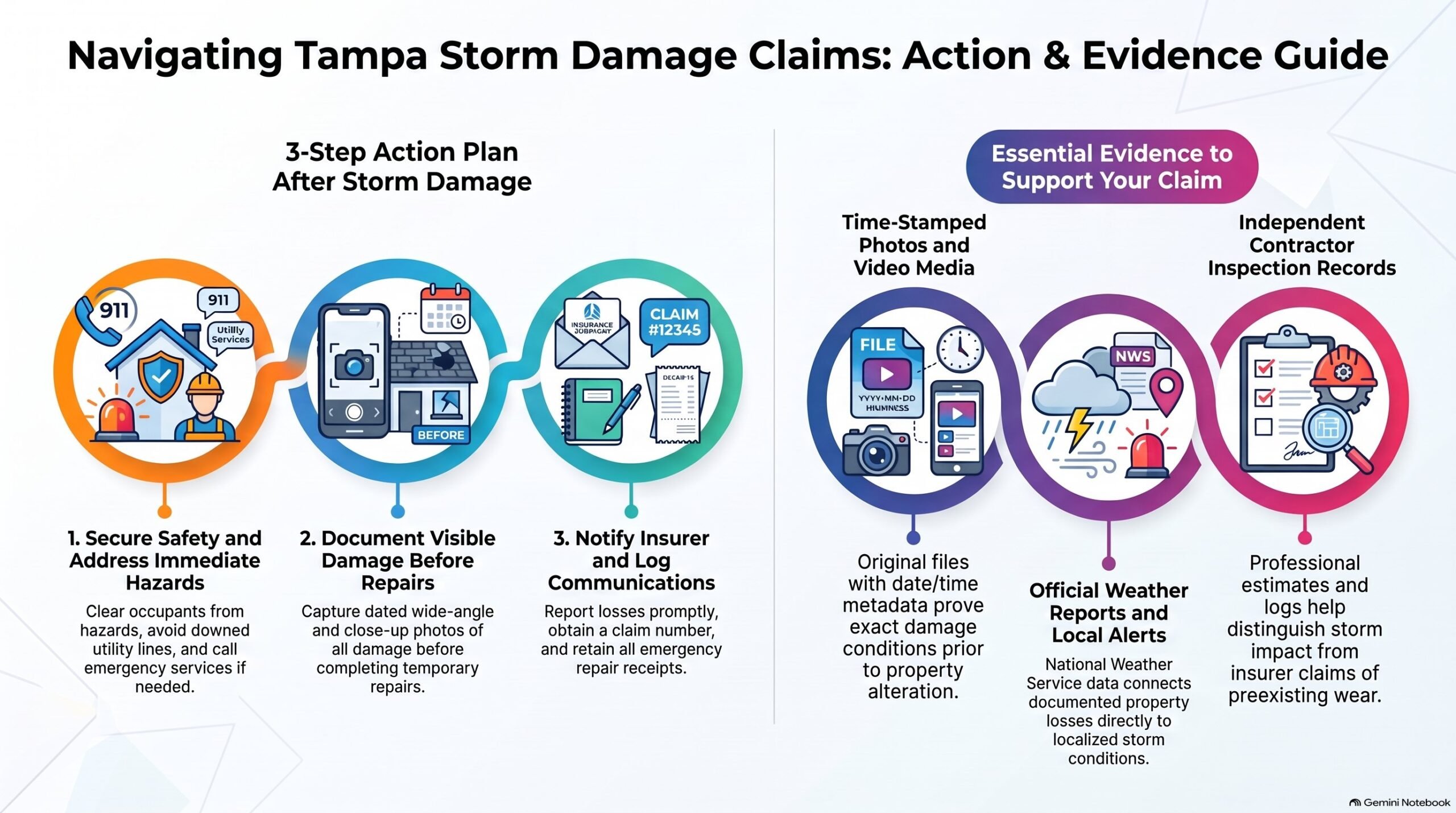
After a storm or weather-related incident, the property owner should first move to a safe location and address any immediate hazards. Once conditions permit, the owner should photograph the damage, record relevant details, and preserve receipts for emergency repairs. The owner should then notify the insurer promptly and follow the policy’s claim-reporting requirements.
Prioritize Immediate Safety
After a storm-related injury, safety should take priority over documenting damage or contacting an insurer. If you are in immediate danger, move to a secure location and call 911 for urgent medical assistance. An injured person should avoid unnecessary movement, especially if a serious head, neck, or back injury is possible, and follow emergency responders’ instructions. Neighbors and family members can help by guiding others away from unstable structures, floodwater, and fallen trees, without entering hazardous areas themselves. Evacuation Planning should account for people with mobility needs, children, older adults, and pets, while identifying safe routes and a designated meeting place. Utility Hazards, including damaged power lines, gas leaks, and standing water near electrical equipment, require maintaining distance and promptly notifying emergency services or utility providers.
Document the Damage
Once everyone is out of immediate danger, carefully document storm damage to establish the condition of the property and support an insurance claim. Before moving or discarding damaged items, photograph and video each affected room, exterior area, and visible hazard from multiple angles. Include close-up images of damage and wider views showing its location. Make a written inventory of damaged structures and Personal Belongings, noting approximate purchase dates, costs, and any available receipts. Record the date and time of each observation, and preserve relevant repair estimates, cleanup invoices, and temporary lodging receipts. If conditions change or emergency repairs are necessary to prevent further harm, document the original damage first when safe, then retain receipts and photographs of the work. Clear records can help others assess losses and support an accurate claim review. Record temporary housing expenses carefully.
Contact Your Insurer
When the property has been documented and immediate hazards are addressed, the policyholder should promptly notify the insurer of the storm damage. The initial report should identify the date of loss, affected areas, and any urgent repairs needed to protect residents or prevent further damage. The policyholder should request a Claim number and record the date, time, and details of the conversation. Clear, consistent communication helps the insurer assess the loss and supports an orderly review.
The insurer may assign an adjuster to inspect the property and evaluate the claim. The policyholder should confirm the adjuster’s contact information, ask how to submit photographs, estimates, and receipts, and keep copies of all materials. Before repairs begin, the policyholder should clarify inspection requirements and applicable deadlines. Prompt, accurate cooperation can help the process proceed while safeguarding the property and those who depend on it.
Don’t Wait. Call Our Florida Personal Injury Lawyers Now!
Critical Evidence in a Tampa Property Claim Storm & Weather Damage Injury Case
A well-supported storm damage claim depends on evidence that documents the loss, conditions, and resulting harm.
Essential records may include:
1. storm damage photographs; 2. weather reports and alerts; 3. repair and inspection records; and 4. witness statements and testimony.
Combined, these materials can help establish the damage’s timing, extent, and cause.
Storm Damage Photographs
Clear photographs can preserve essential evidence of storm damage before repairs, cleanup, or further weather changes alter the property. Images should show the full exterior and interior, then document specific conditions such as roof openings, water intrusion, damaged belongings, and fallen materials. Wide views establish location, while close-ups reveal details; including a scale reference can help convey the size of affected areas. Take photographs safely and without disturbing hazards. Photo metadata, including date and time, may help establish when images were captured, so retain original files. Consistent image organization, using labeled folders or a dated list, can connect each photograph to its location and the observed damage. Clear, accurate documentation can assist property owners, insurers, and professionals reviewing a claim and support a careful, fair assessment of losses.
Weather Reports And Alerts
Photographs document the damage itself, while weather reports and alerts can help establish the conditions surrounding a Tampa property loss. Official records from the National Weather Service may identify rainfall totals, wind speeds, storm paths, and the timing of severe weather. These details can help clarify whether reported damage is consistent with conditions at the property and when those conditions occurred.
Emergency alerts, including warnings issued for a specific area, may also show what risks were communicated and when. Preserving dated alerts, forecast bulletins, and local weather summaries can provide useful context for a claim. This information may help insurers, property owners, and professionals evaluate the event and understand its scope. Accurate weather documentation can support a fair assessment and help those affected pursue a responsible resolution without relying solely on recollection.
Repair And Inspection Records
When storm or weather damage affects a Tampa property, repair and inspection records can help establish the building’s condition and the work performed afterward. These documents may show when damage was identified, which areas were examined, and whether repairs addressed the reported conditions. Dated photographs, inspection reports, estimates, and Contractor invoices can help connect specific work to the property and clarify its scope and cost. Maintenance logs may also document earlier upkeep or recurring concerns, helping distinguish storm-related damage from preexisting conditions. Organized records can support a careful review of a claim and help ensure necessary repairs are considered. Property owners and managers serving tenants, employees, or visitors can preserve copies of relevant documents, note inspection dates, and retain records of completed work for later evaluation.
Witness Statements and Testimony
Witness statements can help establish how storm or weather damage affected a Tampa property and whether unsafe conditions contributed to an injury. Visitors, tenants, employees, and nearby residents may describe when they noticed water intrusion, fallen materials, slippery floors, or other hazards. Their accounts can help clarify how long a dangerous condition existed and whether property managers had an opportunity to address it. Eyewitness credibility depends on factors such as the witness’s vantage point, memory, consistency, and relationship to the parties. Investigators may compare statements with inspection records, photographs, weather reports, and repair documents to identify agreement or discrepancies. When a dispute proceeds to litigation, witnesses may provide sworn testimony about what they observed. Careful, respectful interviews can preserve relevant details and support a fair evaluation of responsibility and the injured person’s needs.
Long-Term Effects of Tampa Property Claim Storm & Weather Damage Injuries
Storm and weather-related injuries may have effects that continue long after the initial incident. Persistent pain and reduced mobility can interfere with routine activities and require ongoing treatment. Lasting emotional effects may also affect a person’s well-being and recovery.
Persistent Pain
Persistent pain can continue long after a storm or severe weather event has passed, particularly when a person sustains injuries during property damage or cleanup. Strains, bruises, or other trauma may cause discomfort that persists beyond the initial recovery period. Pain flare-ups can occur during ordinary activities or after extended periods of exertion, making symptoms difficult to predict. Ongoing discomfort may also disrupt sleep, cause fatigue, and make it hard to concentrate at work or at home. These effects can influence a person’s ability to care for family members, assist neighbors, or resume community responsibilities. Medical evaluation can help identify the source of persistent symptoms and guide appropriate treatment. Appointment records, medications, and reported pain may also help document how an injury affects daily life and support consideration of related losses in a property claim.
Reduced Mobility
When injuries sustained during severe weather or property cleanup do not fully recover, reduced mobility may become a lasting concern. Damage to the legs, back, or joints can limit walking, standing, climbing stairs, or completing routine tasks. These restrictions may affect a person’s ability to work, maintain a home, and assist family members or neighbors after a storm. Appropriate treatment, rehabilitation, and home modifications can help preserve independence and reduce preventable hazards. Mobility Aid Access may be crucial when a person needs a cane, walker, wheelchair, or other support to move safely. Property owners and emergency planners should also consider Accessible Evacuation routes, including clear paths, ramps, and transportation options. Documented mobility limitations may help explain ongoing care needs and the practical effects of an injury.
Lasting Emotional Effects
Lasting emotional effects can follow injuries caused by severe weather or property damage, particularly when pain, disrupted routines, or financial strain continue after the immediate danger has passed. Affected individuals may experience persistent fear, sleep disturbances, irritability, or difficulty concentrating. These responses can interfere with work, family responsibilities, and efforts to support others, even when physical injuries appear to be recovering.
Trauma counseling may help individuals process distressing experiences and develop practical coping strategies. Anxiety management techniques, including structured breathing and guidance from qualified professionals, can also support recovery. When emotional symptoms persist or intensify, a healthcare provider can assess needs and recommend appropriate care. Family members and community supporters can offer assistance while respecting personal boundaries and avoiding pressure to recover on a fixed schedule. Documenting symptoms and treatment may also help explain how an incident has affected daily life and ongoing well-being.
Proving Liability in Tampa Property Claim Storm & Weather Damage Injury Cases
Proving liability in a Tampa storm or weather damage claim requires evidence connecting the property loss to a responsible party’s conduct or failure to meet a legal duty. Negligence standards generally require showing that a party owed a duty of care, breached that duty, and caused measurable harm. For example, a property owner may be responsible when inadequate maintenance, ignored warnings, or unsafe repairs worsen storm-related damage. Evidence may include dated photographs, inspection reports, repair records, weather data, and statements from people who observed the conditions.
Responsibility can also extend beyond the owner. Contractors, maintenance companies, or other entities may have contributed through careless work or failure to address known hazards, raising questions of third-party liability. A careful investigation can identify who controlled the property, what precautions were reasonable, and whether the conduct contributed to the loss. Preserving records and documenting damage promptly can help establish a clear account of events. This process supports fair accountability and helps affected residents pursue remedies while protecting the broader community.
Dealing With Insurance Companies After a Tampa Property Claim Storm & Weather Damage Injury
After documenting the cause and extent of storm-related damage, a property owner may need to address the insurance claim process. Clear, organized communication can help the insurer evaluate the reported loss and understand how it affects the property and those who depend on it. The owner should review the policy, note relevant deadlines, and submit requested records, photographs, repair estimates, and other supporting materials. Copies of all submissions and dated notes of conversations can reduce misunderstandings and preserve an accurate account.
Insurer communications should remain factual and consistent. An adjuster’s assessment may not reflect the full scope of damage, particularly when hidden water intrusion or structural concerns require further inspection. The owner can request explanations for disputed findings and provide additional documentation where appropriate. If the claim is denied, review the written decision and cited policy provisions carefully. A qualified attorney may help assess whether the insurer’s position aligns with the policy and applicable law, while keeping the focus on fair treatment and recovery for affected occupants.
What to Expect During a Tampa Property Claim Storm & Weather Damage Injury Claim Process
A storm or weather damage claim typically begins with an assessment of the property and a review of the insurance policy’s coverage and requirements. The claimant then gathers photographs, repair estimates, and other records to support the claim. If the insurer disputes the loss or offers less than the documented amount, settlement negotiations may follow.
Initial Damage Assessment
When a Tampa property owner reports storm or weather damage, the initial assessment documents the property’s condition and identifies the apparent cause and extent of the loss. A qualified inspector may examine the roof, exterior walls, windows, interior finishes, and visible building systems. Structural assessment can reveal compromised framing, shifting, or other safety concerns that require prompt attention. Moisture mapping helps locate water intrusion and hidden dampness, including behind walls or beneath flooring. Photographs, measurements, and written observations create a clear record of conditions at the time of inspection. The assessment may also identify urgent steps to limit further damage and protect occupants. Careful documentation supports an accurate understanding of the loss and helps property owners communicate the observed conditions to relevant professionals.
Policy Review
A careful policy review clarifies which storm-related losses may be covered and what steps the claim requires. The policyholder or representative should examine the declarations page, insuring agreements, endorsements, and notice requirements. These provisions identify applicable coverage limits, deadlines, and duties after a weather event. Coverage exclusions warrant close attention because separate terms may address flooding, wind, water intrusion, or gradual deterioration differently. The review should also distinguish replacement-cost coverage from actual-cash-value provisions, which can affect payment timing and amount. Deductible calculations may depend on whether the policy sets a fixed amount or a percentage tied to insured property value. A qualified professional can explain unclear language and help the property owner understand available options. This review supports informed decisions and responsible communication with the insurer.
Claim Documentation
Following a storm or severe weather event, thorough documentation helps establish the nature and extent of property damage. The property owner should photograph affected rooms, exterior areas, and damaged belongings before cleanup or repairs, when safe to do so. Images should include dates and clear views that help show the damage’s location and progression. Organize photos by room, date, and damage type to make records easier to review and share with the insurer.
Written records also support a complete claim file. The owner should note when damage occurred, describe observed conditions, and keep copies of insurance communications, inspection reports, repair estimates, and receipts. Expense tracking should include emergency services, temporary lodging, protective materials, and other reasonable costs related to the event. Accurate, timely records help the insurer assess the reported loss and help affected households keep a clear account of their needs.
Settlement Negotiations
Settlement negotiations begin after the insurer reviews the claim, supporting records, and damage estimates. The insurer may accept the documented amount, propose a lower payment, or dispute specific repairs and losses. A property owner can compare each offer with contractor estimates, policy limits, deductibles, and evidence of covered damage before responding. Clear records of temporary repairs, mitigation costs, and damaged belongings may strengthen Negotiation leverage. If the parties disagree, further inspections, written explanations, or revised estimates may help clarify the dispute. Settlement timing can vary with claim intricacy, insurer response practices, and the need for additional documentation. A lawyer may assess whether an offer reflects the policy and available evidence, explain potential options, and communicate with the insurer. Review any agreement carefully before releasing documents or accepting payment.
Compensation for Tampa Property Claim Storm & Weather Damage Injury Damages
Compensation for storm and weather damage to Tampa property depends on the insurance policy, the cause and extent of the loss, and the evidence supporting the claim. Coverage may include reasonable repairs to a home or other insured structure, subject to policy limits, deductibles, exclusions, and applicable conditions. When damage makes a residence unsafe or uninhabitable, additional living expense coverage may help pay for Temporary housing and certain related costs while repairs proceed. The policy may also provide for personal property replacement or repair, depending on the covered loss and the insurer’s valuation method.
A well-supported claim typically includes photographs, repair estimates, receipts, inventories, and records of communications with the insurer. Prompt notice and reasonable steps to prevent further damage can also affect how the claim is handled. The insurer’s payment may be limited by depreciation provisions, replacement-cost requirements, or deadlines for completing repairs. Because policy language and storm circumstances vary, careful review can clarify available benefits and support a fair resolution that helps property owners restore safe, functional homes.
Economic vs Non-Economic Damages in Tampa Property Claim Storm & Weather Damage Cases
Storm and weather damage claims may involve economic losses, such as repair costs, temporary housing, and damaged belongings. Non-economic harm may also arise when property damage disrupts daily life or causes significant distress. Establishing either category requires clear evidence linking the claimed losses to the covered event.
Economic Losses
When a Tampa property suffers storm or weather damage, economic losses generally include measurable financial harm, such as repair costs, temporary housing expenses, and lost rental income. Owners may also incur costs for debris removal, emergency protection, damaged contents, and professional assessments. Receipts, invoices, photographs, and contractor estimates can help document these expenses and connect them to the covered event. For a rental property, reduced or lost rental income may be recoverable when damage makes the premises uninhabitable, subject to policy terms and applicable limits. Business interruption losses may arise when storm damage disrupts operations, requiring records of revenue, expenses, and closure periods. Prompt reporting and careful recordkeeping can help property owners present a clear claim, support accurate valuation, and preserve resources needed to restore safe, functional spaces for tenants, customers, and community members.
Non-Economic Harm
Unlike economic losses, which can be calculated through expenses or lost income, non-economic harm involves personal effects that are harder to measure, such as stress, disruption, and loss of use or enjoyment of a home. After a storm or severe weather event, residents may experience Emotional distress as repairs, displacement, and uncertainty interfere with daily routines. A damaged home can also limit privacy, comfort, and the ability to welcome family or assist neighbors. Loss of enjoyment may arise when familiar spaces are unsafe or unavailable, even if the property remains partly usable. These effects differ from repair bills and temporary housing costs because they concern the human impact of property damage rather than direct financial outlays. In a Tampa property claim, non-economic harm may be relevant when evaluating the broader consequences of covered damage.
Proving Your Damages
A well-supported property claim distinguishes measurable financial losses from personal effects that are more difficult to quantify. Economic damages may include repair costs, temporary housing, debris removal, and damaged belongings. Repair estimates from qualified contractors, invoices, receipts, and photographs can document the scope and cost of storm-related work. A detailed contents inventory, supported by purchase records or comparable replacement prices, helps establish losses to personal property. Records should connect each claimed expense to the covered event and show that requested amounts are reasonable.
Non-economic harm may involve disruption, loss of use, or strain caused by displacement and property damage. Such effects can be harder to value, so contemporaneous notes, communications, and supporting statements may help explain their practical impact. Clear, organized evidence allows insurers and decision-makers to assess both financial losses and personal consequences fairly, while helping claimants advocate responsibly for their households and communities.
Don’t Wait. Call Our Florida Personal Injury Lawyers Now!
When a Tampa Property Claim Storm & Weather Damage Injury Case Goes to Trial vs. Settlement
In Tampa storm and weather damage claims, settlement is often preferable when the insurer and property owner can agree on the cause and value of the loss, but unresolved disputes may require a trial. A negotiated resolution can provide a clearer path to repairs and reduce the time, expense, and uncertainty of litigation. It may also help property owners restore safe conditions for tenants, employees, customers, or neighbors who depend on the property.
When negotiations fail, trial allows each side to present evidence and question witnesses before a judge or jury. Deciding whether to proceed requires a careful assessment of the disputed facts, available documentation, repair estimates, and potential outcomes. Jury Verdict Considerations include how clearly the evidence explains the damage and whether the requested compensation is supported.
Trial Preparation Timeline can involve organizing records, preparing witnesses, and coordinating expert evaluations. Counsel can explain these demands and compare them with settlement options, helping the property owner make an informed choice while prioritizing responsible restoration and the people affected by the loss.
Florida Laws That May Affect Your Tampa Property Claim Storm & Weather Damage Case
Because Florida law sets deadlines and standards for storm-related insurance claims, those rules can shape how a Tampa property owner documents damage, seeks payment, and challenges a denial. Several legal principles may guide the process and support fair treatment of affected households and businesses.
Florida’s storm-claim deadlines and standards can shape how Tampa property owners document damage, seek payment, and challenge denials.
- Florida’s insurance statutes establish claim-handling duties, including requirements for insurers to acknowledge communications, investigate claims, and explain coverage decisions.
- Policy language remains central. Coverage may depend on exclusions, deductibles, notice requirements, and whether wind, flood, or another cause produced the loss.
- Florida matching statutes and related regulations may affect whether repairs must reasonably match undamaged areas, depending on the policy and applicable requirements.
- Policyholder protections may include access to claim records and procedures for disputing an insurer’s decision. Clear photographs, repair estimates, receipts, and timely written communications can help preserve an accurate record.
Because rules and policy terms vary, a careful review can clarify available options and help property owners pursue appropriate recovery while maintaining safe, serviceable homes and workplaces.
The Statute of Limitations for Tampa Property Claim Storm & Weather Damage Injury Cases
Deadlines can be as important as policy terms when Tampa property owners seek payment for storm or weather damage. Florida law sets time limits for filing lawsuits over property insurance disputes, and those limits may depend on the type of claim and the applicable statutory rules. Missing a filing deadline can prevent a court from considering the dispute, even when damage is substantial.
A separate Policy deadline may apply to reporting damage, submitting documents, or completing other steps required by the insurance contract. These requirements are distinct from the statute of limitations, so satisfying one does not necessarily satisfy the other. Policyholders should review the policy promptly and preserve records of when damage occurred and when notice was provided.
An appraisal clause may establish a process for resolving disagreements about the amount of a covered loss, but it does not automatically extend legal filing periods. Because deadlines can change and exceptions may apply, timely attention helps property owners protect their interests and maintain resources for their households and communities.
How a Tampa Property Claim Storm & Weather Damage Lawyer Can Help You
A Tampa property claim storm and weather damage lawyer can help property owners assess coverage, document losses, and address disputes with an insurer. This support can protect household stability and help owners make informed decisions while restoring safe, functional spaces for family members, tenants, or community organizations.
- The lawyer reviews policy terms, exclusions, deductibles, and claim requirements to clarify which losses may qualify for coverage.
- The lawyer helps organize photographs, repair estimates, receipts, and other records that explain the damage and its financial impact.
- The lawyer communicates with the insurer, evaluates claim decisions, and challenges unsupported reductions or denials through appropriate procedures.
- The lawyer may assist with Emergency housing needs and contractor coordination, helping property owners manage temporary arrangements and repair discussions.
When to Contact a Tampa Property Claim Storm & Weather Damage Lawyer
When storm or weather damage threatens a property’s safety or creates uncertainty about insurance coverage, contacting a Tampa property claim lawyer early can help preserve evidence and clarify next steps. An early claim consultation may be useful soon after a hurricane, severe storm, flooding event, or other covered loss, especially when damage is extensive or repairs cannot wait. A lawyer can review policy deadlines and explain what information may support a timely notice to the insurer.
Legal guidance may also be appropriate if the insurer delays its response, requests repeated documentation, disputes the cause or extent of damage, or issues a payment that appears insufficient. Before signing a release or accepting a settlement, the property owner may seek advice on the terms and how it could affect remaining claims. Those responsible for homes, businesses, or community facilities can ask about attorney fee structures and expected costs during an initial discussion. Prompt attention can help protect records and support informed decisions while repairs and recovery proceed.
Why You Need an Experienced Tampa Property Claim Storm & Weather Damage Lawyer
Choosing an experienced Tampa property claim storm and weather damage lawyer can help property owners address disputes with insurers while protecting their interests. Severe weather can cause extensive damage, and the full cost of repairs may not be clear immediately. A lawyer can review policy terms, claim records, inspection findings, and insurer communications to identify issues that may affect payment.
Attorney experience matters when evaluating coverage disputes, delayed decisions, or settlement offers that do not reflect documented losses. Counsel can help organize evidence, explain policy obligations, and communicate with the insurer clearly and promptly. When necessary, a lawyer may challenge an inadequate decision through available legal procedures, while keeping the property owner informed about potential risks and outcomes.
This support can be especially valuable for owners responsible for maintaining safe homes, businesses, or community spaces. By addressing procedural requirements and presenting a well-supported claim, legal counsel can help property owners pursue a fair resolution and focus on restoring their properties.
How to Choose the Right Tampa Property Claim Storm & Weather Damage Lawyer for Your Case
Selecting the right Tampa property claim storm and weather damage lawyer requires careful attention to the attorney’s experience with insurance disputes, familiarity with relevant policy terms, and ability to assess damage documentation. A careful review can help property owners choose representation that fits their needs and protect the resources needed to restore homes or businesses.
Prospective clients should verify lawyer credentials, including licensing, relevant practice experience, and any disciplinary history. They can ask how the attorney evaluates denied, delayed, or underpaid claims and what records, photographs, estimates, and expert assessments may support the case. Clear answers provide insight into the lawyer’s approach and communication practices.
Before deciding, clients should discuss fee structures, including how fees are calculated, whether costs are separate, and when payment is due. Written terms can prevent misunderstandings. The attorney should explain potential outcomes without promising a particular result and identify practical next steps. Comparing several qualified lawyers may help clients make an informed choice while focusing on a fair resolution.
About The Law Offices of Anidjar & Levine
The Law Offices of Anidjar & Levine represents clients in a range of legal matters, including property insurance disputes involving storm and weather damage.
In Tampa, the firm helps policyholders understand their coverage, document losses, and address disagreements with insurers.
Its attorneys review claim records and explain available legal options, helping clients make informed decisions during a demanding process.
Firm history reflects the development of a practice serving individuals and families across Florida.
The firm handles matters involving personal injury, insurance disputes, and other legal concerns, drawing on its experience to assess each client’s circumstances.
For property owners, this includes examining whether an insurer’s response aligns with the policy and the evidence of damage.
Community involvement is also part of the firm’s public presence.
Through service and outreach, the firm supports people facing difficult circumstances and promotes access to legal information.
Its work emphasizes clear communication, careful preparation, and attention to each client’s needs throughout a claim.
Frequently Asked Questions
Does Homeowners Insurance Cover Roof Damage Caused by Hurricanes in Tampa?
Homeowners insurance in Tampa generally covers roof damage caused directly by hurricane winds, subject to policy terms, exclusions, and applicable hurricane deductibles. Coverage for water entering through wind-driven rain may depend on whether the storm first damaged the roof or another opening; gradual leaks, wear, and poor maintenance are commonly excluded. Policyholders should document damage promptly, take reasonable steps to prevent further loss, and review their policy before filing a claim.
Can I File a Claim for Mold Discovered Weeks After a Storm?
You may file a claim when mold is discovered weeks after a storm, but coverage depends on the policy, the cause of the moisture, and compliance with notice requirements. Delayed Mold Discovery does not automatically bar recovery, particularly when storm-related water intrusion caused the growth. The homeowner should promptly document damage, limit further moisture, and notify the insurer. Mold Claim Deadlines vary, so review policy terms and applicable Florida requirements without delay.
What if My Insurer Says the Damage Resulted From Wear and Tear?
If an insurer attributes damage to wear and tear, the policyholder may challenge that conclusion with evidence showing a covered storm caused or worsened the loss. The policy and its Policy Exclusions determine what is covered, while qualified inspections can help distinguish gradual deterioration from sudden damage. The policyholder should preserve damaged materials when safe, obtain repair estimates, and maintain dated Damage Documentation. A written denial may be reviewed by an independent professional or attorney.
Can I Hire a Public Adjuster to Assess My Storm Damage?
Yes, a property owner may hire a public adjuster to independently assess storm damage and assist with an insurance claim. The Damage Assessment Scope should identify affected areas, document visible losses, and, when possible, distinguish storm-related damage from maintenance issues. Before signing, the owner should review Public Adjuster Fees, services, and contract terms, including any cancellation rights. A qualified adjuster can help present evidence, while the insurer retains responsibility for evaluating coverage under the policy.
Should I Make Temporary Repairs Before the Insurance Adjuster Inspects My Property?
Yes, you should generally make temporary repairs to prevent further damage, even before the insurance adjuster inspects the property. Emergency mitigation may include covering a damaged roof or removing standing water, but permanent repairs should wait until the insurer has documented the loss and provided guidance. The policyholder should photograph the conditions, keep receipts, and retain damaged materials when practical. Repair documentation helps establish the damage and costs for the claim.
—————————
A Tampa storm damage claim can involve disputed coverage, incomplete inspections, and strict policy deadlines.
Property owners should document damage, preserve relevant records, and review insurer communications before accepting a settlement or waiving further rights.
The Law Offices of Anidjar and Levine can assess the circumstances, explain available options, and address disputes with an insurer.
Prompt legal guidance may help protect a claim and support a fair evaluation of covered losses.
If related injuries occurred during the storm or recovery process, a Tampa Personal Injury Lawyer may also be able to provide guidance.

