

A Riverview property claims lawyer can help you understand your options after a hazardous condition injures you or a covered event damages your property. The Law Offices of Anidjar and Levine can investigate what happened, identify potentially responsible parties, preserve evidence, review relevant insurance terms, and communicate with insurers. Liability and coverage are separate questions, and each depends on the facts, applicable law, and policy language. Prompt medical care, incident reports, photographs, and organized records can support your claim. Learn more from a Riverview Personal Injury Lawyer. Below, we explain the process and next steps.
Main Takeaways
- A Riverview property claims lawyer can assess whether negligence caused an injury and identify potentially responsible property owners or managers.
- A lawyer can investigate the hazard, gather incident reports and witness accounts, and request maintenance or inspection records.
- Prompt medical care, injury reporting, and photographs can help preserve evidence and document the incident.
- Legal counsel can review insurance policies, communicate with insurers, and explain coverage issues and claim options.
- Depending on the evidence and applicable law, a claim may seek documented medical expenses, lost income, and other losses.
How We Can Help With Your Riverview Property Claims Injury Claim
When a property hazard causes an injury, we can help you understand your options and pursue compensation from the responsible party. We’ll listen carefully, answer your questions, and explain practical steps you can take while focusing on your recovery and responsibilities to others.
Our team can investigate the incident, identify potentially responsible parties, and gather records that support your account. We’ll assess Claim eligibility by examining how the injury occurred, the property owner’s duties, and the available evidence. A careful coverage review can clarify which policies may apply and which limits or exclusions could affect recovery.
We’ll communicate with insurers on your behalf, organize medical and other relevant documentation, and evaluate settlement proposals against your losses. If negotiations don’t produce a fair outcome, we can explain litigation options and guide you through the process. Throughout your claim, we’ll provide clear updates and informed advice so you can decide with confidence and pursue a resolution that reflects your needs.
Don’t Wait. Call Our Florida Personal Injury Lawyers Now!
Understanding Riverview Property Claims Injury Cases


Understanding a Riverview property injury case starts with determining how the hazard arose and who had a duty to address it. We’ll examine the property’s ownership, the visitor’s purpose, and the responsibilities established by law or agreement. These details help us assess whether someone failed to take reasonable steps to protect people on the premises.
OUR CONSULTATIONSARE FREE
START YOUR FREE CASE REVIEW

We’ll also review the available evidence, including incident reports, photographs, witness accounts, and relevant records. Careful Property claim documentation can clarify when the condition appeared, whether it was reported, and how the injury affected your health and daily responsibilities. Promptly preserving this information can support a fair evaluation.
Insurance policies may influence how a claim proceeds, but coverage questions differ from whether another party acted negligently. We can identify potential Riverview coverage disputes, explain the issues in clear terms, and help you understand what information may be needed. Our goal is to pursue accountability while respecting your commitment to serving others and protecting the people who depend on you.
Common Causes of Riverview Property Claims


When we assess Riverview property claims, we often find that storm and wind damage or water and flood losses caused the harm. Fire and smoke can also damage a property, while theft and vandalism may lead to separate claims. We’ll explain how these common causes affect the evidence and coverage involved in your claim.
Storm and Wind Damage
Storms and high winds can damage Riverview homes by tearing off shingles, breaking windows, or allowing rain to enter through compromised roofs and siding. Roof shingle damage may appear minor, yet missing or lifted shingles can expose the structure to further harm. Fallen tree damage can crush roofing, puncture exterior walls, or destroy fences and other property. After severe weather, we recommend documenting visible damage with photographs and keeping receipts for necessary temporary repairs. Avoid climbing damaged roofs or entering unsafe areas; protecting your household and neighbors comes first. Review your insurance policy and report the loss promptly, providing accurate details about what happened. If the insurer disputes the cause or scope of the damage, we can help you understand your options and pursue a fair claim evaluation.
Water and Flood Losses
Water losses can arise from burst pipes, leaking appliances, roof openings, or flooding that overwhelms drainage systems and enters a home. When water damages your property, we can help you identify the source, document affected rooms and belongings, and review your policy’s requirements. Coverage often depends on how the water entered and which policy provisions apply. Standard homeowners insurance may cover sudden plumbing failures, while Flood insurance coverage generally addresses qualifying external flooding. We can help you distinguish these losses and present clear evidence to the insurer.
Take prompt water mitigation steps to limit further damage, such as stopping the flow when safe, moving valuables, and arranging professional drying. Keep receipts, photographs, and repair records. By acting carefully and communicating accurately, we can support a fair claim and help protect the people who rely on your home.
Fire and Smoke Damage
How a fire starts can affect both the damage and the insurance review. Electrical faults, cooking accidents, heating equipment, and unattended candles can ignite a home or business, while lightning may cause sudden structural damage. Even a contained fire can spread smoke through rooms, ventilation systems, and belongings, leaving harmful residue and persistent odors. We can help you document the source, affected areas, emergency expenses, and damaged property before cleanup changes the evidence. Your insurer may need clear records to assess coverage and determine a reasonable repair cost. Smoke odor remediation and soot residue cleanup often require expert work beyond ordinary cleaning. We’ll encourage you to preserve receipts, photographs, and contractor reports, and to follow safety guidance before reentering damaged spaces. Careful preparation can support a fair, thorough claim.
Theft and Vandalism Claims
Theft and vandalism can leave Riverview property owners facing damaged structures, missing belongings, and unexpected repair costs. When a break-in or deliberate damage occurs, we can help you document losses and understand the steps involved in presenting a property insurance claim.
Report the incident to law enforcement promptly and request copies of Police reports. Take clear photographs of damaged doors, windows, and other affected areas before repairs begin, when it’s safe to do so. Prepare a stolen property inventory with descriptions, approximate purchase dates, and available receipts or photographs. This organized evidence can help your insurer assess the loss and may reduce delays.
Review your policy for coverage limits, exclusions, and deadlines. We can help you communicate with the insurer, address disputed valuations, and pursue a fair resolution, so you can focus on restoring a safe property and serving those who depend on you.
Legal Rights of Riverview Property Claims Injury Victims
When an incident at a Riverview property causes an injury, victims may have legal rights to seek compensation from the responsible party.
We can help you understand those rights and take informed steps while protecting your ability to serve your family and community.
- If another party’s negligence caused your injury, you may pursue payment for medical expenses, lost income, and other documented losses.
- Landlord duty standards generally require property owners to take reasonable care of shared areas and address known hazards, subject to the facts and applicable law.
- Trespasser injury rights depend on circumstances, including the property owner’s knowledge and the injured person’s status. A lawyer can assess whether a legal duty applied.
- You can preserve evidence, report the incident, keep treatment records, and consult counsel before accepting a settlement.
Deadlines and insurance requirements may affect your claim. We can review the evidence, explain available options, and communicate with insurers so you can focus on recovery and supporting those who rely on you.
Why Do Riverview Property Claims Injuries Happen?
Why do injuries occur at Riverview properties? They often happen when hazards go unnoticed, remain uncorrected, or result from choices that place visitors at risk. Property owners and managers should keep spaces safe for residents, customers, workers, and community members who rely on them.
Unsafe building design can contribute to falls and other preventable harm. Poorly lit stairways, missing handrails, uneven walkways, and inadequate barriers may make ordinary movement dangerous. A layout that ignores accessibility can also expose people to avoidable hazards.
Neglected maintenance creates further risks. Leaking pipes can leave floors slippery, damaged steps may give way, and broken lighting can hide obstacles. When inspections are delayed or reported problems go unaddressed, a minor defect can become a serious danger.
In busy properties, hazards may also arise from spills, clutter, or unsafe work practices. We can help protect one another by recognizing that responsible upkeep and thoughtful design matter. Understanding these causes shows why preventable property injuries merit careful attention.
What Should You Do After a Riverview Property Claims Injury?
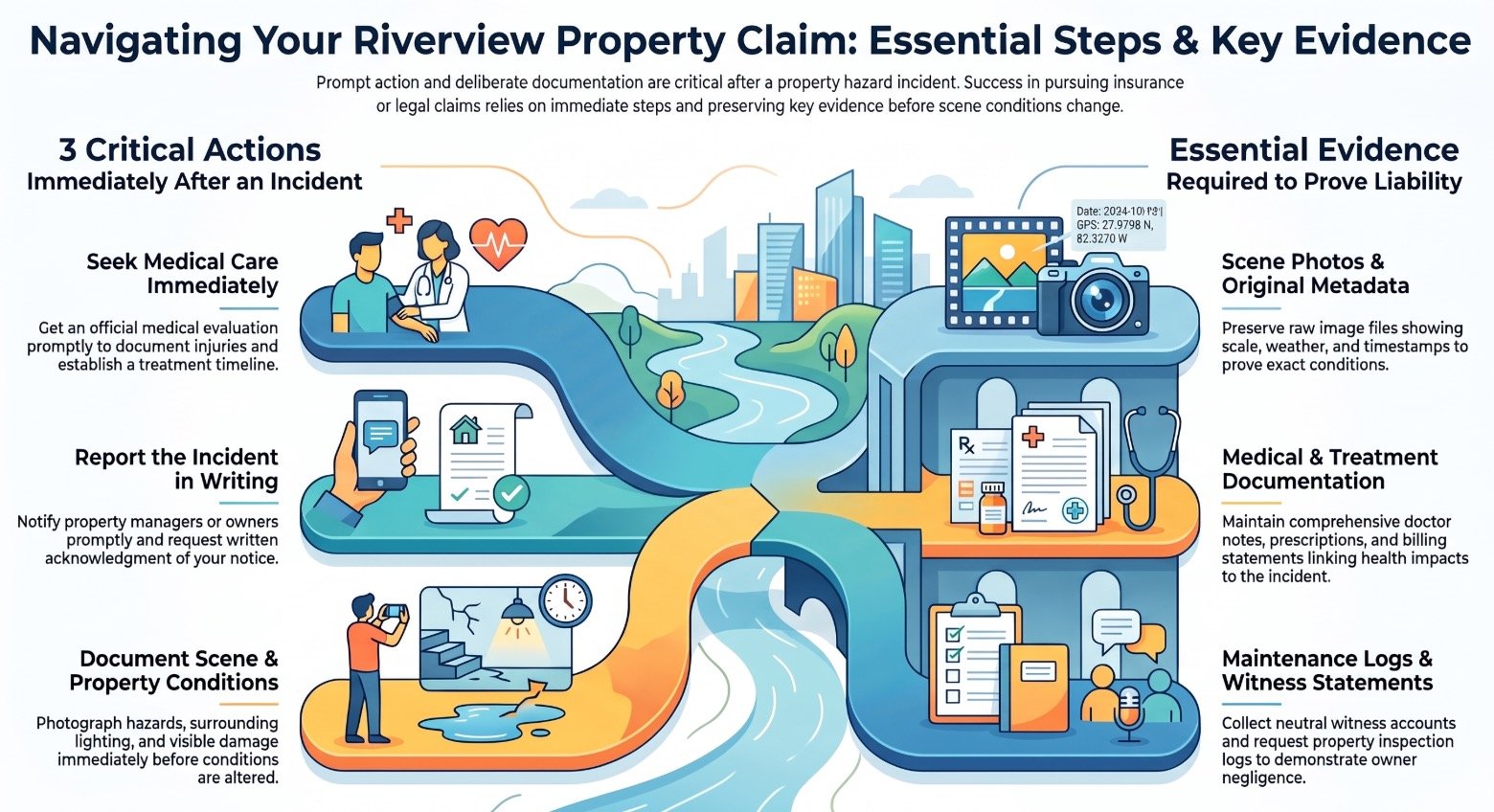
After a Riverview property claims injury, we recommend seeking medical care promptly, even if your symptoms seem minor. Also report the incident to the property owner or manager and request a written record. If it’s safe, document the scene with photographs and note any hazards or witness information.
Seek Medical Care
Seek medical care promptly after a property injury in Riverview, even if your symptoms seem minor. Some injuries worsen over time, and a qualified provider can identify problems that may not be immediately obvious. If you experience severe pain, bleeding, confusion, or difficulty breathing, seek an Urgent Evaluation at an emergency department or call emergency services. Otherwise, arrange an appointment with your doctor as soon as practical and follow the recommended care plan.
Tell your provider how the injury occurred, describe every symptom, and mention any changes since the incident. Accurate information helps guide appropriate treatment and supports your recovery. Keep copies of Treatment Records, prescriptions, test results, and bills, and note follow-up instructions. Organized records help us understand the care you received and assess how the injury has affected your health.
Report the Incident
Report the incident to the property owner, manager, or staff as soon as you can, even if you’ve already sought medical care. Promptly notify property owner representatives, explain when and where the injury occurred, and describe what happened. If you can’t report it yourself, ask a trusted person to contact management on your behalf. A timely report gives the responsible parties an opportunity to respond and may help protect others from encountering the same hazard. Keep your account factual and clear; don’t guess about details you can’t confirm. Request written incident acknowledgment, such as a completed report or confirmation that management received your notice. Ask how to obtain a copy and record the name and role of the person who accepted your report. If management declines, note that response for your records.
Document the Scene
If it’s safe document the scene as soon as possible while conditions remain unchanged. Photograph the hazard, the surrounding area, and any warning signs or barriers from several angles. Include an object for scale when appropriate, but don’t move anything or put yourself at risk. Photo timestamps can help establish when you took the images, so preserve the original files and avoid editing them. Record the weather conditions, lighting, and any changes you observe, since these details may help explain how the incident occurred. Ask witnesses for their names and contact information, and note what they saw in their own words. Keep your account factual and respectful. Thorough documentation helps property owners address hazards and supports a fair review of your claim.
Critical Evidence in a Riverview Property Claims Injury Case
To support your Riverview property injury claim, we’ll focus on four essential forms of evidence: 1. incident scene photos, 2. witness statements, 3. medical records, and 4. hazard documentation. We’ll explain how each can help establish what happened and the extent of your injuries. Collecting these records promptly can preserve details that may otherwise be lost.
Incident Scene Photos
What can a photograph show that a written account may miss? It can preserve the exact condition of a walkway, stair, spill, or other hazard before repairs or cleanup change the scene. When you can do so safely, we recommend photographing the area promptly and from several distances. Include close views of the hazard and wider images that show its location, lighting, and surrounding conditions.
Panoramic scene capture can show how the hazard relates to entrances, signs, and travel paths. Keep original image files, and avoid editing or adding filters. Preserving photo metadata can retain details such as the date, time, and device information, helping document when images were created. These records may help us assess your claim, explain the scene clearly, and support a fair resolution for everyone affected.
Witness Statements
Witness statements can preserve details that may fade or change after an injury at a Riverview property. We can help you identify people who saw the incident, noticed a hazardous condition, or observed what happened immediately afterward. Their accounts may clarify how the property was maintained and whether staff had an opportunity to address a danger.
We’ll seek statements promptly while memories are fresh and record each witness’s contact information and observations. Witness credibility matters, so we’ll consider each person’s opportunity to observe, consistency, and possible bias. We’ll also compare accounts with available scene evidence and other reliable information. Statement inconsistencies don’t automatically undermine a claim; they may reflect different viewpoints or changing recollections. By carefully evaluating what each witness can establish, we can present a fair, accurate account and help you pursue accountability while protecting others from similar harm.
Medical Records
While witness accounts can help explain how an injury occurred, medical records document its effects and the care required. We can use these records to connect an incident to diagnosed injuries, treatment decisions, and changes in your condition. Prompt medical attention also creates a clear timeline and helps clinicians identify needs before symptoms worsen.
Keep appointment summaries, test results, prescriptions, referrals, and billing statements organized. Effective Medical record organization makes it easier to review your care and provide complete information when pursuing a property claim. We should also examine physician treatment notes, which may describe reported symptoms, examination findings, and recommended follow-up.
Consistent care and accurate records can help show the seriousness of an injury and the steps taken toward recovery. We can help you understand which documents may support your claim and address gaps with your providers.
Hazard Documentation
When a hazard causes an injury, clear documentation can help establish what conditions existed and how they contributed to the incident. We can help you preserve photographs or video showing the hazard, surrounding area, lighting, and warning signs before conditions change. Record the date, time, location, and witness names, and describe what you observed without guessing the cause. Hazard identification records may show whether the property owner knew, or should have known, about a dangerous condition. We should also request maintenance logs, inspection reports, and repair records, which may reveal prior complaints or delayed action. Keep copies of messages and incident reports, and avoid altering original files. By organizing this evidence promptly, we can provide a clearer account of what happened and help protect everyone affected.
Don’t Wait. Call Our Florida Personal Injury Lawyers Now!
Long-Term Effects of Riverview Property Claims Injuries
Property claim injuries can affect your health and daily life long after the initial incident. We’ll examine how chronic pain and lasting mobility limits may restrict your activities and require ongoing care. We’ll also consider emotional distress, which can shape your recovery and overall well-being.
Chronic Pain
Chronic pain can persist long after an injury on someone else’s property, affecting your mobility, sleep, work, and daily routines. We can help you understand how ongoing symptoms may shape a property injury claim and what documentation can support your account. Keep records of pain levels, treatment, prescribed medication, and the ways symptoms interfere with responsibilities, including caring for others. Consistent notes can help your medical providers assess your condition and guide Chronic Pain Management. They may also reveal Pain Flare Triggers, such as particular activities, stress, or changes in treatment, which you can discuss with your care team. Follow medical advice and attend recommended appointments, even when symptoms vary. We can review available evidence and explain potential legal options, while you focus on treatment and maintaining meaningful connections with the people who depend on you.
Lasting Mobility Limits
Persistent pain can also limit how far you walk, how long you stand, or whether you can manage stairs and other daily tasks. After a property injury, reduced mobility may affect your ability to work, care for family, volunteer, or serve others in your community. We can help you document these practical limitations, including the need for assistive technology, home modifications, or accessible transportation. Keep records of medical recommendations, mobility aids, missed activities, and the assistance you now require. These details show how an injury has changed your routine and what support you may need over time. When we evaluate a property claim, we consider both current restrictions and likely future needs. Clear evidence can help us pursue compensation that reflects the lasting effects on your independence and daily responsibilities.
Emotional Distress
An injury on someone else’s property can affect more than your physical health; it may also cause lasting anxiety, depression, or fear of returning to similar places. These reactions can disrupt sleep, concentration, relationships, and your ability to resume ordinary responsibilities. We encourage you to seek qualified mental health support when distress persists, just as you would seek care for physical injuries. Emotional coping may include counseling, supportive routines, and practical help from trusted people. Family strain can develop when loved ones take on caregiving duties or face uncertainty about recovery and finances. By documenting symptoms, treatment, and changes in daily life, we can help you explain the full impact of your injury. A property claim may cover emotional harm when evidence links it to the incident.
Proving Liability in Riverview Property Claims Injury Cases
To prove liability in a Riverview property injury claim, we must show that a dangerous condition caused your injury and that the responsible party failed to take reasonable steps to prevent it. Under Premises Liability principles, we examine who controlled the property and what they knew, or reasonably should have known, about the hazard. A property owner or occupier may have a Duty of Care to inspect the premises, address unsafe conditions, or provide adequate warnings.
We’ll help you identify evidence that supports each part of your claim. Photographs, incident reports, maintenance records, witness accounts, and medical documentation can clarify how the hazard developed and how it affected you. We may also consider whether the danger was visible, how long it existed, and whether reasonable inspections would have found it.
Your careful account matters. By preserving relevant details and documenting your injuries, you help us present a clear, evidence-based explanation of responsibility. We’ll focus on facts showing how safer property practices could have prevented your injury.
Dealing With Insurance Companies After a Riverview Property Claims Injury
After a Riverview property injury, insurance companies may contact you to discuss what happened and evaluate your claim. We can help you respond carefully while keeping your recovery and responsibilities in view. An adjuster may seem helpful, but the insurer represents its own interests, not yours. Insurance adjusters may request broad medical records, question how the injury occurred, or push for an early payment before you understand your losses. We should review requests and settlement offers before you agree or sign anything.
Take notes about each conversation, including the adjuster’s name, the date, and any questions asked. Be accurate, and don’t guess when you’re unsure. Risks of a recorded statement include an incomplete answer being taken out of context or being asked about details you can’t yet confirm. You can ask for time to prepare and seek legal guidance before giving a statement. By communicating thoughtfully, we can protect your interests and preserve resources for your family and community.
What to Expect During a Riverview Property Claims Injury Claim Process
We’ll begin by reporting the incident promptly and gathering evidence, such as photographs, witness details, and records of your injuries or property damage. Next, we’ll prepare and file your claim with the insurer, making sure the supporting information is accurate and complete. We’ll then assess the insurer’s response and work toward resolving the claim through negotiation or, when necessary, further legal action.
Reporting The Incident
When an injury occurs on someone else’s property in Riverview, report it promptly to the owner, manager, or another responsible representative. Clear, timely notice helps those responsible address immediate safety concerns and creates an official record of what happened. We encourage you to explain that you were injured, identify the general location, and request the representative’s name and contact information. Prompt notification timelines may vary by property and circumstance, so don’t assume that an informal conversation satisfies every reporting requirement. Ask how to submit written incident reports and obtain a copy or confirmation for your records. Keep your account factual, and avoid guessing about causes or accepting responsibility before you understand the circumstances. If your condition prevents you from reporting, ask a trusted person to notify management as soon as reasonably possible.
Gathering Evidence
Because evidence can change or disappear, we begin gathering it as soon as practical after a property injury. We’ll help you photograph the scene, the hazard, and any visible injuries, while noting when and where each image was taken. We can also identify witnesses and preserve their contact details and recollections before memories fade. Evidence Preservation may include keeping damaged belongings, requesting available surveillance footage, and documenting relevant maintenance records. Don’t repair or discard an item tied to the incident until we’ve discussed how to record its condition. We can obtain Repair Estimates and related invoices to show the reasonable cost of addressing damage. As you focus on your recovery and responsibilities to others, we’ll organize these materials carefully and explain what additional information may help clarify how the injury occurred.
Filing The Claim
Once we’ve organized the available evidence, we can prepare and file your property injury claim with the appropriate insurer or responsible party. We’ll identify the correct recipient, review the required documents, and explain what information the claim must include. Completing the claim form carefully helps us present the incident, resulting injuries, and requested benefits accurately. We’ll also confirm that supporting records are attached and that the submission follows applicable instructions.
Because missed filing dates can affect your rights, we’ll prioritize policy deadline tracking and note any notice or proof-of-loss requirements. We’ll submit the claim through the accepted method and keep confirmation of when it was received. You’ll know what we’ve sent and which records remain outstanding. We’ll handle each step responsibly so you can focus on your recovery and the people who depend on you.
Resolving The Claim
After we file your claim, we’ll track the insurer’s review and explain what to expect at each stage of the resolution process. We’ll gather supporting records, assess the insurer’s findings, and respond to requests for information. If the company disputes responsibility or undervalues your losses, we’ll explain the reasons and discuss practical next steps. During Settlement negotiations, we’ll present evidence of your damages and evaluate each offer against your documented needs. We’ll also consider how the outcome may affect your ability to care for your family and continue serving your community. We won’t recommend accepting an offer until we’ve reviewed its terms with you. If negotiations don’t produce a fair result, we’ll explain available options, including pursuing formal legal action. Throughout claim resolution, we’ll keep you informed and help you make considered decisions.
Compensation for Riverview Property Claims Injury Damages
A property-related injury can create medical expenses, lost income, and lasting effects on daily life. We can help you identify compensation that reflects your injuries and the support you need to recover. Depending on the facts, a claim may cover reasonable treatment costs, lost income while you recuperate, and damage to personal belongings. We’ll document each loss with records, receipts, and other reliable evidence.
If an unsafe property condition also damaged your home or displaced your household, we can assess related property losses. Personal Property Valuation helps establish the value of damaged or destroyed possessions, while Additional Living Expenses may cover necessary costs when you can’t safely remain at home. We’ll review applicable insurance terms and explain what documentation supports these requests.
Our goal is to present a clear, well-supported claim that accounts for your needs without overstating them. By organizing the evidence and communicating with insurers, we can help you pursue fair compensation so you can focus on your family and community.
Economic vs. Non-Economic Damages in Riverview Property Claims Cases
We can distinguish economic losses, such as repair costs and lost income, from non-economic harm, including pain and emotional distress. Each category addresses a different impact of a property-related injury. We’ll compare how these damages are assessed and supported in Riverview claims.
Economic Losses
When property damage disrupts your home or business, economic losses can extend beyond repair costs. We can help you identify the direct financial effects and document them clearly for an insurance claim. Depending on the circumstances, losses may include damaged belongings, necessary cleanup, and the reasonable cost of restoring your property. If you can’t safely remain at home, temporary housing costs may also be recoverable. Property owners who rent out a damaged unit may lose rental income while repairs keep tenants from occupying it. Keep invoices, receipts, lease records, photographs, and communications that support each claimed amount. We can review these records, explain which losses may qualify under your policy, and help you present a well-supported claim. Careful documentation can make it easier to pursue compensation while protecting your ability to serve your family, tenants, or community.
Non-Economic Harm
Beyond repair bills and other measurable costs, property damage can cause non-economic harm, such as stress, disruption, or loss of use and enjoyment of your home. We recognize that these effects can reach beyond the damaged rooms. A prolonged claim or unsafe living conditions may strain routines, limit time with family, and make it harder to support those who depend on you. You may lose enjoyment when you can’t use a cherished space or welcome others into your home as before. Damaged relationships may also follow when household members face uncertainty, crowding, or added responsibilities. We’ll listen carefully as you describe how the loss has affected daily life, then help document those impacts for your claim. Clear records and candid communication can help insurers understand the human consequences of property damage.
Comparing Damage Types
In a Riverview property claim, economic and non-economic damages describe different effects of the same loss. Economic damages cover measurable financial costs, such as repair estimates, replacement expenses, temporary housing, and lost income. Structural damage may require contractors to restore walls, roofing, or foundations, while contents damage can involve replacing furniture, equipment, and personal belongings. We can help you organize receipts, photographs, estimates, and other records to support these losses.
Non-economic damages address hardships that don’t appear on invoices, including stress, disrupted routines, and reduced enjoyment of your home. These effects may be harder to document, but clear notes and consistent accounts can help explain their impact. As you work to protect your household and support those who depend on you, we can distinguish each category and present a complete, well-supported claim.
When a Riverview Property Claims Injury Case Goes to Trial vs. Settlement
A Riverview property injury claim may settle through negotiation or proceed to trial if the parties can’t agree on responsibility or compensation. Settlement lets us resolve a claim without going to trial and asking a judge or jury to decide the outcome. We can present evidence of your injuries, losses, and the property owner’s actions, then assess any offer against your needs and recovery. A settlement can provide greater certainty and avoid the time and demands of a trial, but you’ll need to evaluate its terms carefully.
If negotiations fail, we may present your case in court. You could testify about how the incident occurred and affected your daily life, and witnesses and records may support your account. Both sides can challenge the evidence, and the judge or jury evaluates the facts. The jury may deliberate and return a verdict that awards compensation or rejects the claim. We’ll prepare with care, explain each stage, and help you make informed decisions that support your well-being.
Florida Laws That May Affect Your Riverview Property Claims Case
Florida law can shape how we prove a Riverview property injury claim, what compensation may be available, and how long we have to act. We should identify the applicable rules early to protect your interests while supporting those who depend on you.
- Policy terms: We’ll review coverage, exclusions, notice requirements, and Florida policy deadlines. A missed requirement may complicate a claim, so prompt documentation matters.
- Evidence: We should preserve photographs, repair estimates, receipts, and communications. Clear records can help connect covered damage to the loss and support a fair evaluation.
- Disputes: When the insurer challenges the amount of damage, appraisal procedures may provide a policy-based way to resolve valuation differences. We’ll check whether the policy allows appraisal and what steps it requires.
- Compensation: Florida law and your policy determine which losses may qualify. We can assess repair costs and other documented expenses, while recognizing that coverage limits and exclusions may restrict payment.
Understanding these rules helps us make informed decisions and pursue a claim responsibly.
Don’t Wait. Call Our Florida Personal Injury Lawyers Now!
The Statute of Limitations for Riverview Property Claims Injury Cases
Beyond policy requirements, Florida law deadlines can determine how long we have to file a lawsuit for a property-related injury. Florida generally allows two years to bring a negligence claim for an injury occurring on another person’s property. The deadline may differ for wrongful death claims, claims against a government entity, or claims based on another legal theory, so we shouldn’t assume every case follows the same timetable.
Deadline Calculation depends on the facts, including when the injury occurred and whether a legal exception applies. A delayed discovery rule may affect certain claims, but it doesn’t automatically extend the time to sue. We should preserve records and promptly note important dates, especially when an injury disrupts our ability to serve family, coworkers, or community members.
The Claim Filing Window is not the same as an insurer’s reporting deadline. Missing the lawsuit deadline can prevent us from pursuing compensation in court, even if an insurance claim remains open. We should confirm the applicable limit early and avoid waiting until it’s close.
How a Riverview Property Claims Lawyer Can Help You
When a property-related injury disrupts your routine, a Riverview property claims lawyer can help you assess the evidence, identify responsible parties, and understand the deadlines that apply. We can organize the records and communicate with insurers so you can focus on recovery and the people who depend on you.
Our work may include:
- Evidence assessment: We review incident reports, photographs, witness accounts, and medical records to clarify how the injury occurred.
- Responsibility analysis: We examine maintenance practices, property conditions, and applicable duties to identify parties who may be accountable.
- Policy review: We conduct coverage interpretation to explain relevant policy terms, exclusions, and potential sources of compensation.
- Claim preparation: We document losses, present supporting evidence, and respond to insurer questions with clear, consistent information.
We’ll keep you informed about the claim’s progress and explain available options in understandable terms. By carefully addressing factual and insurance issues, we can help you pursue a fair resolution while saving you time and energy for family, work, and service to others.
When to Contact a Riverview Property Claims Lawyer
Contact a Riverview property claims lawyer promptly if an injury on someone else’s property requires medical care, the cause is disputed, or an insurer questions your account. Early guidance can help us protect your interests while you focus on recovery and the responsibilities that matter to you.
We should also speak when a property owner or insurer denies responsibility, delays a response, or offers a settlement before you understand the full impact of your losses. Keep photographs, incident reports, medical records, and relevant messages, and share them with counsel. These details can help us assess what happened and identify information that may need prompt attention.
A Policy review can clarify coverage, notice requirements, and exclusions that may affect your claim. We can also check claim deadlines, which may arise under a policy or applicable law. Because those time limits differ, don’t assume negotiations pause them. Contact counsel as soon as questions arise so you can make informed decisions and preserve your ability to seek fair compensation.
Why You Need an Experienced Riverview Property Claims Lawyer
An experienced Riverview property claims lawyer can help you assess your claim’s strength, identify supporting evidence, and respond to disputes over liability or coverage. When property damage disrupts your home, business, or ability to serve others, we can explain your options and help you pursue a fair resolution. Careful Policy interpretation matters because insurers may rely on exclusions, deadlines, or coverage limits when evaluating a loss. We can clarify how those terms apply to your circumstances and identify questions that require a documented response.
An effective claim strategy also helps us organize repair estimates, photographs, communications, and other relevant records. We can address information requests, challenge unsupported decisions, and keep the process focused on the losses you can substantiate. If negotiations stall, we can explain available next steps and what each may involve. With informed guidance, you can make decisions based on evidence rather than uncertainty and devote more attention to your family, work, or community responsibilities.
How to Choose the Right Riverview Property Claims Lawyer for Your Case
Choosing the right Riverview property claims lawyer starts with evaluating each attorney’s experience, communication, and approach to cases like yours. Look for a professional who has handled property damage disputes similar to yours and can explain how insurers assess claims. Relevant experience helps us evaluate whether an attorney can identify coverage issues, document losses, and respond to a denied or undervalued claim.
Review Attorney credentials, including licensing and disciplinary history, and ask about the lawyer’s role in your case. We should also consider how clearly the attorney answers questions and whether the proposed strategy reflects our priorities. A lawyer who listens carefully can help us pursue fair compensation while protecting the resources needed to serve our families and communities.
Discuss Fee structures before signing an agreement. Ask how fees are calculated, whether costs are separate, and when payment is due. Compare written terms, confirm what services they cover, and choose counsel whose approach and communication expectations fit your needs.
About The Law Offices of Anidjar & Levine
When property damage disrupts your home or business, the Law Offices of Anidjar & Levine can help you understand your options and the steps involved in pursuing an insurance claim. We work to serve people facing difficult losses by providing clear guidance and responsive support throughout the claims process.
Our firm’s approach centers on listening to your concerns, reviewing available information, and explaining practical next steps. We can help you assess an insurer’s response, organize relevant documents, and understand potential paths forward. Every property claim is different, so we’ll discuss your circumstances rather than rely on assumptions.
When evaluating counsel, you may want to learn about Firm history and attorney credentials, including experience handling insurance disputes and property damage matters. We encourage you to ask questions about our process, communication, and how we’ll address your goals. We’ll explain what we can do, identify issues that may affect your claim, and help you make informed decisions. We remain focused on respectful service and clear communication.
Frequently Asked Questions
Do Property Claims Lawyers Handle Disputes Involving Denied or Underpaid Homeowners Insurance Claims?
Yes, property claims lawyers handle disputes over denied or underpaid homeowners insurance claims. We can review your Insurance policy interpretation, assess whether the insurer applied coverage terms correctly, and identify potential errors in its decision. We also help organize claim documentation, such as photographs, repair estimates, and correspondence, to support your position. When appropriate, we can negotiate with the insurer or pursue legal action, while keeping you informed and focused on securing fair treatment.
Can I Hire a Lawyer if My Property Damage Occurred at a Rental Home?
Yes, you can hire a lawyer if property damage occurred at a rental home. We can help you identify who may be responsible, review your lease and insurance policies, and assess whether tenant liability or landlord coverage applies. If an insurer denies or underpays a valid claim, we can explain your options and help you pursue fair compensation. Promptly document the damage, notify the landlord and insurer, and preserve relevant records for review.
What Types of Property Damage Claims Can a Riverview Lawyer Assist With?
We can assist you with claims involving fire damage, water intrusion repairs, storm impacts, vandalism, or other covered losses to a home or business. We’ll review your policy, document the damage, assess the insurer’s response, and help challenge an inadequate settlement or denial. If the property is a rental, we can also clarify how ownership, lease terms, and coverage affect your claim, so you can pursue a fair resolution and protect those who rely on the property.
Can a Lawyer Help With a Property Claim Involving a Condominium Association?
Yes, we can help you assess a property claim involving a condominium association. We’ll review governing documents, insurance policies, and evidence to identify who must address the damage and pursue recovery. Condominium association maintenance responsibilities may determine whether the association failed to repair or protect common areas. We can also evaluate liability for shared property damage when it affects multiple units, clarify your options, and help you seek a fair resolution while respecting other residents’ interests.
Do Property Claims Lawyers Handle Disputes Over Contractor Repairs or Estimates?
Yes, we can help you address disputes involving contractor workmanship or repair estimates, particularly when they affect an insurance claim. We can review your policy, claim records, estimates, and repair documentation to identify disagreements about covered damage, costs, or the quality of completed work. We can also explain your options, communicate with the insurer, and help you pursue a fair resolution. Our guidance can help you protect your property and serve those who rely on you.
—————————
If unsafe property conditions caused your injury in Riverview, you don’t have to handle the claim alone. We can review what happened, explain your legal options, and help you pursue compensation for your documented losses. Acting promptly can preserve evidence and protect your ability to seek recovery. The Law Offices of Anidjar and Levine can assess your circumstances and discuss practical next steps. Contact us to learn how we may help with your property injury claim, or visit our Riverview Personal Injury Lawyer page.

