A Tampa Personal Injury Lawyer from The Law Offices of Anidjar and Levine can investigate whether alcohol, drugs, fatigue, or device use contributed to a collision. The lawyer may gather crash reports, witness accounts, medical records, and available video or phone evidence, then assess potential claims and insurance coverage. Injured people may seek compensation for medical expenses, lost income, pain, and other documented losses, subject to fault rules, policy limits, and legal deadlines. The sections below explain these issues and available options.
Main Takeaways
- A Tampa car accident lawyer can investigate whether alcohol, drugs, fatigue, or distraction contributed to a crash.
- Evidence may include police reports, witness accounts, toxicology results, phone records, vehicle data, and crash-scene photographs.
- Seek prompt medical care, follow treatment instructions, and preserve records of injuries, expenses, missed work, and daily limitations.
- Eligible claimants may seek compensation for medical costs, lost income, pain and suffering, and property damage; comparative fault may reduce recovery.
- A lawyer can review insurance coverage, including uninsured motorist benefits, explain deadlines, and discuss negotiation or further legal action.


How We Can Help With Your Tampa Car Accident Impaired & Distracted Driving Injury Claim
When impaired or distracted driving causes a crash in Tampa, injured people may face medical expenses, lost income, and uncertainty about their legal options. A legal team can help organize the steps involved in pursuing compensation while allowing clients to focus on recovery and family responsibilities.
Counsel may review available records, communicate with insurers, and identify information needed to support the claim. This assistance can include gathering medical bills, documenting missed work, and tracking how injuries affect daily activities. Clear records help present the impact of a collision accurately and reduce avoidable delays.
Clear records of medical costs, missed work, and daily challenges help accurately show how a collision affects an injured person.
A thoughtful Claim Strategy should reflect the client’s circumstances, documented losses, and objectives. Through Legal Advocacy, counsel can explain options, respond to insurer inquiries, and negotiate for a fair resolution. If negotiations do not produce an acceptable result, the legal team can discuss whether further action is appropriate.
Throughout the process, clients should receive timely updates and practical guidance. This service-centered approach supports informed decisions and helps injured people pursue accountability with care, diligence, and respect.
Understanding Tampa Car Accident Impaired & Distracted Driving Injury Cases
Understanding an impaired or distracted driving injury case begins with identifying how the driver’s conduct contributed to the Tampa collision. A careful review considers the available evidence, the sequence of events, and the connection between the crash and the injuries reported. Relevant records may include police reports, medical documentation, photographs, witness statements, and vehicle data. Each source can help clarify what occurred and whether the driver’s actions played a role.
When the circumstances are disputed, Crash reconstruction may help assess vehicle movement, impact points, and timing. Investigators may also examine roadway design, visibility, traffic controls, and other conditions that could have affected the collision. These details provide context, but they do not replace evidence about the driver’s conduct.
A claim may address medical costs, lost income, future care, and the effects of injury on daily life. A thorough assessment helps ensure decisions reflect the injured person’s needs and support fair accountability. It can also guide clear communication among families, providers, and insurers.
Common Causes of Tampa Car Accident Impaired & Distracted Driving
Common causes of impaired and distracted driving crashes in Tampa include alcohol or drug use, which can reduce judgment, coordination, and reaction time. Phone use can divert a driver’s attention from traffic, while drowsiness may impair alertness and vehicle control. These behaviors create distinct roadway hazards and may contribute to serious collisions.
Alcohol-Impaired Driving
Alcohol-impaired driving is a serious cause of preventable car accidents in Tampa, as alcohol can weaken judgment, slow reaction time, and impair a driver’s ability to control a vehicle. Alcohol risk factors include consuming multiple drinks, drinking quickly, and driving before the body has processed alcohol. Even when a driver feels capable, impairment can affect decisions, lane control, and responses to traffic signals or sudden hazards. These failures can endanger passengers, pedestrians, and other motorists who depend on each driver’s care. DUI prevention requires planning a sober ride before drinking, using a designated driver, or arranging transportation through a taxi or rideshare service. Friends and hosts can also help by discouraging impaired guests from driving and offering safe alternatives. Responsible choices reduce crash risks and protect Tampa’s community.
Drug-Impaired Driving
Drug-impaired driving can cause serious Tampa car accidents by affecting a driver’s judgment, coordination, attention, and reaction time. Prescription drugs may cause drowsiness, dizziness, blurred vision, or slowed responses, even when taken as directed. Some medicines also interact with alcohol or other drugs, increasing impairment. Drivers should review warning labels and consult a health professional about whether a medication makes driving unsafe.
Cannabis can also impair perception, decision-making, and the ability to respond to changing traffic conditions. Cannabis impairment detection may involve officer observations, field evaluations, and testing, but no single measure necessarily establishes how impaired a person was while driving. Evidence may include witness accounts, medical records, toxicology results, and crash circumstances. Careful investigation can help clarify whether drug use contributed to a collision and support those harmed in seeking accountability and appropriate assistance.
Phone Distractions
Phone use can divert a driver’s eyes, hands, and attention from the road, increasing the risk of a Tampa car accident. Reading or sending a text, checking navigation, and answering calls can delay a driver’s response to traffic signals, pedestrians, and sudden hazards. Visual notification overload may also draw attention away from changing road conditions, even when a driver does not intend to interact with a device. Hands-free myths can create a false sense of safety: voice commands and Bluetooth calls may reduce manual handling, but they still require attention and can interfere with sound judgment. Putting devices away and silencing alerts help protect passengers, other motorists, cyclists, and pedestrians. When a phone-related collision causes injury, understanding its circumstances can support accountability and access to appropriate assistance.
Drowsy Driving
Beyond phone-related distractions, fatigue can also impair a driver’s ability to respond safely. Drowsy driving can slow reaction time, reduce attention, and make it harder to judge distance or stay in their lane. These effects may place passengers, pedestrians, and other road users at risk.
Long shifts, overnight work, insufficient sleep, and extended trips can contribute to fatigue. A person’s circadian rhythm may also create periods of reduced alertness, particularly late at night or early in the morning. Certain sleep disorders can further interfere with restorative rest, leaving drivers impaired even when they believe they are prepared to travel.
Drivers should recognize warning signs such as frequent yawning, heavy eyelids, or drifting out of their lane. Stopping to rest or arranging another ride can help protect everyone sharing the road.
Don’t Wait. Call Our Florida Personal Injury Lawyers Now!


Legal Rights of Tampa Car Accident Impaired & Distracted Driving Injury Victims
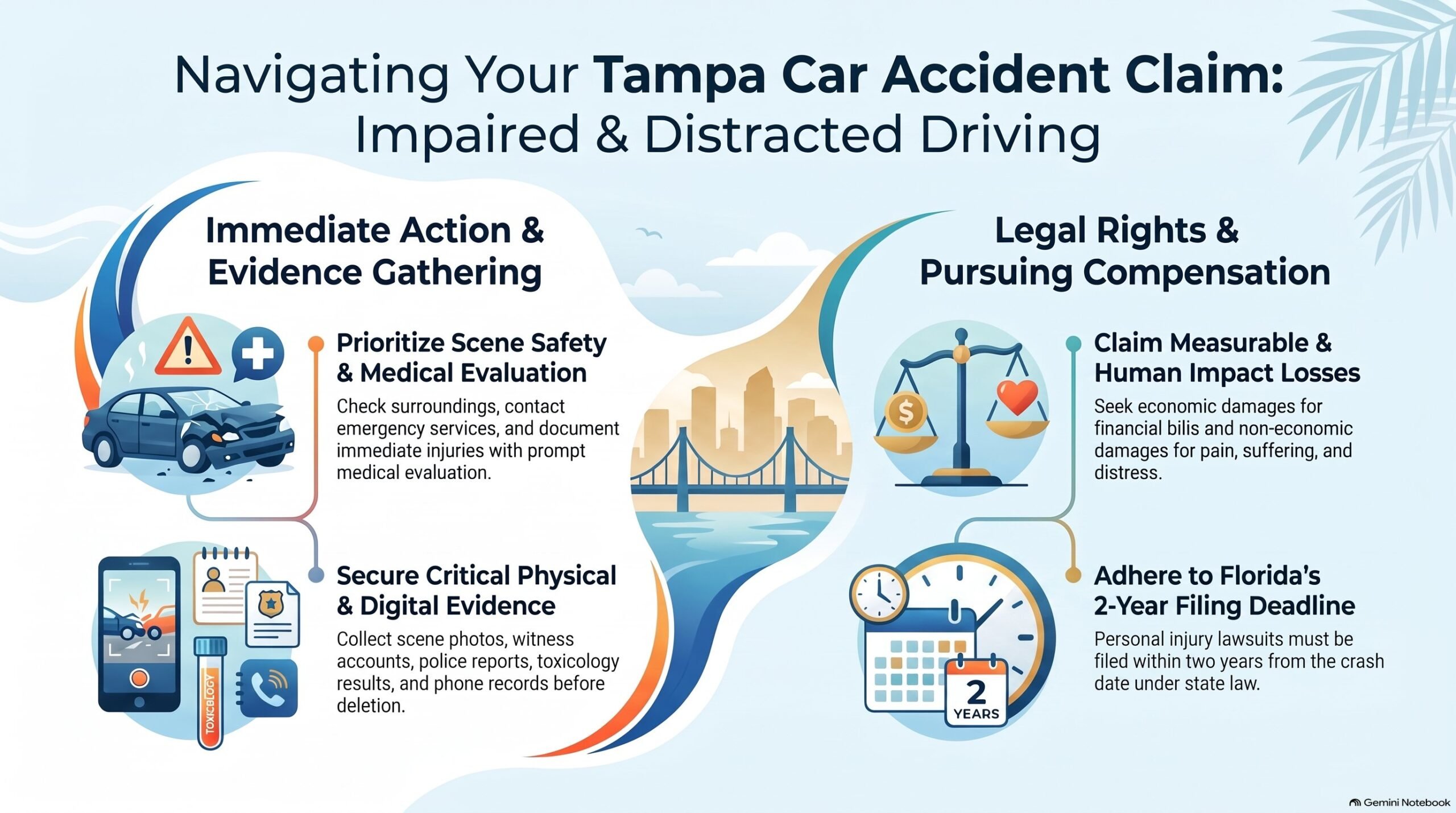
When an impaired or distracted driver causes a crash in Tampa, injured victims may have the right to seek compensation from the responsible party. Florida law allows eligible claimants to pursue damages for losses supported by evidence. A careful claim can protect a victim’s financial stability while helping hold negligent drivers accountable.
Potential compensation may include:
- Medical expenses, including future treatment related to the injuries
- Lost income and reduced earning capacity
- Pain, suffering, and loss of normal activities
- Property damage and other documented costs
Comparative negligence rules may reduce compensation if an injured person shares responsibility for the collision. The amount may depend on the parties’ respective fault. Victims may also review uninsured motorist coverage when the at-fault driver lacks insurance or has insufficient coverage, subject to policy terms. Prompt medical care, preserved records, and timely notice to insurers can support a claim. Each case depends on its facts, available evidence, and applicable deadlines. Legal guidance can help victims understand their options and make informed decisions while they focus on recovery and family responsibilities.
Why Do Tampa Car Accident Impaired & Distracted Driving Injuries Happen?
Understanding the causes of impaired and distracted driving can clarify how preventable choices lead to serious Tampa car accidents. Alcohol, cannabis, prescription medications, and other substances can slow reaction time, weaken judgment, and impair coordination. A driver may misjudge distance, miss a traffic signal, or fail to respond to changing road conditions. Distraction creates similar risks. Texting, adjusting navigation, eating, or interacting with passengers can draw attention away from driving, even for a few seconds.
These behaviors become especially dangerous in busy Tampa traffic, where congestion, intersections, and sudden stops demand sustained attention. Fatigue can further reduce awareness and make impairment more pronounced. Not every contributing factor involves driver conduct: Road design hazards, such as unclear markings or obstructed sightlines, may complicate safe travel. Vehicle safety defects, including faulty brakes or lighting, can also increase crash severity or limit a driver’s ability to avoid impact. Recognizing these interacting causes helps communities support safer roads and protect all travelers.
What Should You Do After an Impaired & Distracted Driving Injury in Tampa?
After an impaired or distracted driving crash in Tampa, those involved should first move to a safe location and contact emergency services when needed. When it is safe, they should document the scene, vehicle damage, and witness information. Prompt medical evaluation is also important, even when injuries are not immediately apparent.
Prioritize Immediate Safety
If a crash involving a suspected impaired or distracted driver occurs in Tampa, immediate safety takes priority over gathering evidence or discussing fault. Those involved should check surroundings for moving traffic, fire, leaking fuel, damaged power lines, or other hazards before leaving a vehicle. If the vehicle can be moved safely and no serious injury is apparent, move to safety at a nearby location away from traffic. Anyone facing immediate danger should leave the area without delay.
Do not move injured people unless staying in place poses a greater risk, since movement may worsen certain injuries. A bystander can call 911, provide the crash location, and describe visible dangers or urgent medical needs. If safe, others can help direct traffic from a protected position, but should avoid entering active lanes. Staying calm and following emergency responders’ instructions can protect everyone at the scene.
Document the Accident
Once the scene is safe and emergency care has been addressed, documenting the crash can help preserve an accurate record of what occurred. If conditions permit, the injured person or a companion can photograph vehicle positions, roadway conditions, traffic signals, skid marks, and visible hazards. Clear damage photographs should show each vehicle from several angles, including close views of dents, broken parts, and other impact evidence. Scene documentation may also include the date, time, location, weather, and a brief account of events while details remain fresh. Names and contact information for witnesses, drivers, and responding officers can help clarify what happened. The person involved should avoid guessing about fault or altering images. Store copies of photographs, notes, and any incident information securely for later reference, and share them with appropriate representatives when requested.
Seek Medical Care
Prompt medical evaluation is important after a Tampa car accident, even when injuries appear minor or symptoms are delayed. A qualified healthcare provider can identify conditions that may not be immediately apparent, such as concussions or soft-tissue injuries, and recommend appropriate treatment. Prompt care also creates a medical record connecting reported symptoms and injuries to the collision.
Injured individuals should describe all symptoms accurately, including changes that develop after the initial examination. They should follow treatment instructions, adhere to medications, and avoid activities their provider advises against. Follow-up appointments allow clinicians to monitor recovery, adjust care, and address new or persistent concerns. Keeping appointment records and treatment documents can help preserve an accurate account of the injury. Timely, consistent care supports the injured person’s recovery and helps ensure others involved understand the seriousness of the harm.
Don’t Wait. Call Our Florida Personal Injury Lawyers Now!
Critical Evidence in a Tampa Car Accident Impaired & Distracted Driving Injury Case
Evidence can help establish whether impairment or distraction contributed to a Tampa car accident and support an injured person’s claim.
Relevant records and testimony may include:
- Police accident reports
- Toxicology test results
- Phone and app records
- Witness statements and video evidence
Together, these materials may clarify how the collision occurred and who may be responsible.
Police Accident Reports
How can a police accident report help establish what happened in a Tampa crash involving suspected impaired or distracted driving? The report may document the officer’s observations, statements from drivers and witnesses, roadway conditions, vehicle damage, and preliminary conclusions about contributing factors. These details can help an injured person and those assisting with the claim identify evidence that needs further review. A report is not a final determination of fault, and errors or omissions may require follow-up. The Report request process generally involves obtaining the document from the agency that investigated the collision, subject to applicable access rules. Anyone who identifies an inaccurate detail can ask the agency about its report correction procedure and provide supporting information. Careful review can preserve relevant facts and help guarantee that the injured person’s account receives fair consideration during the claims process.
Toxicology Test Results
When impairment is suspected after a Tampa crash, toxicology test results may help clarify whether alcohol or drugs affected a driver’s ability to operate a vehicle. Investigators may obtain blood, breath, or urine samples, depending on the circumstances and applicable procedures. These findings can support an account of impairment, but they do not establish fault by themselves. Careful test interpretation considers collection timing, testing methods, reported concentrations, and whether substances may have affected driving at the time of the collision. Toxicology limitations also matter: some tests detect substances or metabolites without showing when they were used or how they affected a person. A qualified review may identify procedural concerns or explain results in context. Accurate evidence handling helps injured people pursue accountability while supporting a fair assessment of each party’s conduct and the harm caused.
Phone And App Records
Beyond toxicology findings, phone and app records may help establish what a driver was doing before a Tampa collision. Carrier records can show call and text activity, data sessions, and timestamps near the crash. They generally do not reveal message content or prove that a driver was actively using a device, so their meaning must be assessed carefully. App metadata may indicate navigation use, screen activity, or interactions with services, depending on what the provider retains and discloses. When preserved promptly through appropriate legal procedures, these records can help clarify whether distraction or impairment-related conduct contributed to a collision. They may also support a careful timeline alongside medical, vehicle, and crash-scene evidence. Because privacy rules and retention periods apply, an attorney can seek relevant records while respecting legal limits and protecting the injured person’s interests.
Witness And Video Evidence
Witness accounts and video footage can help establish what occurred before, during, and after a Tampa crash involving suspected impaired or distracted driving. Independent observers may describe a driver’s lane changes, speed, phone use, or apparent condition, and identify traffic signals and road conditions. Witness credibility depends on factors such as the person’s opportunity to observe, consistency, and distance from the collision. Promptly recording names and contact details can help preserve useful testimony.
Surveillance footage from nearby businesses, homes, traffic cameras, or vehicles may capture events that witnesses did not see. Because recordings can be overwritten or deleted, timely requests are important. Investigators may compare footage with crash reports, physical evidence, and medical records to assess what happened. In combination, reliable testimony and video can clarify disputed facts and support a fair evaluation of an injured person’s claim.
Long-Term Effects of Tampa Car Accident Impaired & Distracted Driving Injuries
Impaired and distracted driving injuries can cause chronic physical pain that persists long after initial treatment ends. Some survivors also experience lasting cognitive changes, including difficulties with memory, concentration, or decision-making. These effects may contribute to emotional hardship and financial strain through ongoing care needs and reduced ability to work.
Chronic Physical Pain
Chronic physical pain can persist long after a Tampa car accident, even when initial injuries appear to have recovered. Impaired or distracted driving collisions may cause lasting damage to the back, neck, joints, or soft tissues. Symptoms can fluctuate, worsen with activity, and interfere with sleep, work, and ordinary responsibilities. Mobility limitations may make it difficult to drive, complete household tasks, or provide practical support to family and community members. Careful evaluation can help identify the source of ongoing symptoms and guide appropriate treatment. Pain management may involve rehabilitation, medication, or other clinician-directed approaches, depending on the injury and the person’s needs. Consistent follow-up is important because untreated pain can restrict daily function over time. Documentation of symptoms and treatment may also help establish the lasting effects of the collision.
Lasting Cognitive Changes
Beyond persistent physical pain, a Tampa car accident may also lead to lasting cognitive changes, particularly when a collision involves impaired or distracted driving. A sudden impact can cause a traumatic brain injury, even when symptoms are not immediately apparent. Some survivors experience Memory impairment, difficulty concentrating, or slower information processing that interferes with daily responsibilities. Others develop executive dysfunction, which may affect planning, judgment, organization, and the ability to complete tasks safely. These changes can make it harder to return to work, manage household duties, or provide reliable support to family and community members. Medical evaluation can identify cognitive concerns and guide appropriate treatment. Keeping records of symptoms, evaluations, and functional limitations may help clarify the injury’s long-term effects and support informed decisions about care and recovery.
Emotional and Financial Strain
The effects of an impaired or distracted driving crash can extend beyond physical and cognitive injuries, creating significant emotional and financial strain for survivors and their families. Persistent pain, anxiety, or depression may affect relationships, employment, and daily responsibilities. Family tension can arise when relatives take on caregiving duties, manage uncertainty, or disagree about treatment and household decisions. These challenges may require lifestyle adjustments, including changes to work schedules, transportation, and home routines.
Medical appointments, rehabilitation, medication, and lost income can place lasting pressure on household finances. Some survivors may need ongoing support or reduced work hours, while caregivers may also experience lost earnings. Careful planning can help families coordinate care, review available benefits, and document expenses. Legal guidance may clarify potential compensation options and help protect resources needed for recovery and continued support.
Proving Liability in Tampa Car Accident Impaired & Distracted Driving Injury Cases
When a crash in Tampa involves suspected impairment or distraction, proving liability requires more than showing careless driving; the evidence must connect that conduct to the collision and resulting injuries. Investigators may examine police reports, witness accounts, photographs, traffic-camera footage, and vehicle data to establish what happened before impact. Toxicology results, field sobriety observations, phone records, and messages may help show whether alcohol, drugs, or device use affected the driver’s attention or judgment. Medical records and expert assessments can link the collision to specific injuries and document their effects. A careful review also considers other contributing factors, including Vehicle defect analysis and roadway design flaws, so responsibility is based on the full circumstances rather than assumption. Preserving evidence promptly can help clarify disputed facts and support a fair assessment of responsibility. This process can serve injured people by establishing an accurate account, recognizing all responsible parties, and providing a sound basis for pursuing accountability under applicable law.
Dealing With Insurance Companies After a Tampa Car Accident Impaired & Distracted Driving Injury
After an impaired or distracted driving crash in Tampa, insurance companies may contact injured people quickly to discuss statements, medical records, or settlement offers. Their representatives may seek information that helps evaluate the claim, but injured people are not required to provide a recorded statement to another driver’s insurer. They can ask what documents are needed and review any release carefully before signing, particularly if it would authorize broad access to private medical information.
A fair assessment should account for documented injuries, treatment needs, lost income, and other losses. Policy Limits may affect the amount available from an at-fault driver’s coverage, so understanding applicable coverage is important before considering an offer. Injured people may consult a qualified attorney to evaluate communications and protect their interests while they focus on recovery and responsibilities to family or community. If an insurer unreasonably delays, misrepresents coverage, or refuses to investigate, those actions may raise bad faith concerns under applicable law.
What to Expect During a Tampa Car Accident Impaired & Distracted Driving Injury Claim Process
A Tampa impaired or distracted driving injury claim typically begins with an initial case review to assess liability, injuries, and potential damages. Evidence collection then supports the claim, while negotiations with insurers address the compensation sought. If the parties cannot reach an acceptable agreement, the case may proceed to trial.
Initial Case Review
What happens during an initial case review after an impaired or distracted driving crash in Tampa? The review gives the injured person an opportunity to describe the collision, resulting harm, and concerns about recovery. During an Initial consultation, an attorney may ask about the crash circumstances, medical treatment to date, missed work, and communications with insurers. This discussion helps clarify the person’s priorities and identify immediate questions without requiring a commitment to pursue a claim.
Case screening considers whether the available facts may support a legal claim, who may be responsible, and what deadlines could apply. The attorney can explain the general claims process, potential challenges, and possible next steps in clear terms. The injured person can also assess whether the attorney’s approach aligns with their needs and goals. No outcome is guaranteed.
Evidence Collection
Once the initial review identifies the questions a claim may need to address, evidence collection begins to clarify how the crash occurred and how it affected the injured person. Investigators may obtain the crash report, photographs, witness statements, and available traffic or surveillance footage. In suspected impaired or distracted driving cases, relevant records may include toxicology results, phone data, and observations documented by responding officers. Medical records and treatment notes help connect the collision to reported injuries and ongoing care. Evidence preservation is important because video, electronic information, and damaged vehicle components may be lost or altered over time. Careful chain documentation records how evidence is gathered, stored, and transferred, supporting its reliability. These steps help establish a clear factual record and recognize the injured person’s needs without disrupting treatment or recovery.
Claim Negotiations
When the available evidence clarifies how an impaired or distracted driver caused a crash and the resulting injuries, claim negotiations can begin with a more complete factual record. The injured person’s representative may present a written demand to the insurer, outlining liability, medical expenses, lost income, and other documented effects. A sound Demand strategy connects each requested amount to reliable records and explains how the injuries affect daily responsibilities, including the ability to care for others. The insurer may review the materials, request additional documentation, or dispute parts of the claim. Negotiation timing can depend on treatment progress, record availability, and the clarity of the evidence. Careful responses help address questions without overstating the facts. Each communication should preserve an accurate account of losses and support informed consideration of the claim.
Settlement Or Trial
After negotiations, an injured person may accept a settlement or continue pursuing the claim through litigation, depending on the available evidence, the extent of the losses, and the insurer’s position. A settlement can provide compensation without the uncertainty and delay of a trial, but its terms should account for medical costs, lost income, and future needs. Settlement timing factors may include ongoing treatment, the availability of records, and whether the full impact of the injuries is known. If the parties cannot agree, the claim may proceed to court, where evidence and testimony are presented to a judge or jury. Jury verdict dynamics include how jurors assess credibility, causation, and damages. A trial can bring accountability, yet its outcome is uncertain. Careful evaluation helps injured people make informed decisions while protecting their ability to support others.
Compensation for Tampa Car Accident Impaired & Distracted Driving Injury Damages
Impaired or distracted driving can cause serious injuries that lead to substantial medical expenses, lost income, and lasting changes to a person’s daily life. Compensation may help an injured person obtain necessary treatment, adapt to new limitations, and maintain stability during recovery. The amount available depends on the evidence, the nature of the injuries, and the circumstances of the crash.
A claim may seek payment for ongoing care, rehabilitation, and support with daily activities when injuries interfere with independence. It may also address lasting impairment, disfigurement, or the loss of a family member. In a wrongful death case, eligible relatives may pursue compensation under Florida law for losses connected to the death.
Punitive damages may be considered when a driver’s conduct shows intentional misconduct or gross negligence, subject to legal requirements and statutory limits. A careful review of crash reports, medical records, witness accounts, and other evidence can help establish responsibility and support a fair claim. Legal guidance can help families seek accountability while protecting their ability to focus on recovery.
Economic vs Non-Economic Damages in Tampa Car Accident Impaired & Distracted Driving Cases
In Tampa impaired and distracted driving cases, economic damages may include medical expenses, lost income, and other measurable financial losses. Non-economic damages address harms such as pain, emotional distress, and reduced quality of life. Establishing either category requires evidence that clearly connects the losses to the crash.
Economic Damages
What financial losses can follow a Tampa crash caused by impaired or distracted driving? Economic damages cover measurable costs and income losses linked to the collision. They may include emergency treatment, hospital care, medication, rehabilitation, and future medical services supported by evidence. Repair or replacement costs for a damaged vehicle and other personal property may also be recoverable.
A person unable to work during recovery may claim Lost wages, documented through pay records, employer statements, or tax documents. If lasting injuries limit the ability to perform prior work or reduce future income, diminished earning capacity may also be considered. These claims often require medical and employment evidence to show how the crash affected work prospects. Careful records help establish the amount and cause of each claimed loss, allowing responsible parties to be held accountable for financial harm.
Non-Economic Damages
Beyond medical bills and lost income, a Tampa crash caused by impaired or distracted driving may lead to non-economic damages for harm that does not have a direct price tag. These damages address personal effects that can alter daily life, relationships, and a person’s sense of well-being. They may include physical pain, emotional distress, anxiety, and limitations that prevent someone from taking part in valued activities. Loss of enjoyment may arise when injuries interfere with hobbies, family responsibilities, or community service that once brought purpose. A person may also experience diminished companionship when injuries strain close relationships or reduce the ability to share ordinary experiences with loved ones. Unlike economic damages, these losses are not measured by bills or wage records. Their recognition reflects the broader human consequences of a preventable collision.
Proving Your Losses
To recover damages after an impaired or distracted driving crash in Tampa, an injured person must support each claimed loss with credible evidence. Economic damages include measurable expenses and income losses, such as medical bills, rehabilitation costs, lost wages, and reduced Future earnings. Pay records, tax returns, medical opinions, and employment assessments can help establish these amounts. A claim may also include the value of household services the injured person can no longer provide, supported by evidence of necessary replacement assistance and its cost.
Non-economic damages address harms without a fixed price, including pain, emotional distress, and reduced enjoyment of daily activities. Medical records, treatment history, and consistent descriptions of limitations may help demonstrate their impact. Careful documentation allows insurers, attorneys, and courts to assess the full consequences of the crash and pursue evidence-based compensation.
Don’t Wait. Call Our Florida Personal Injury Lawyers Now!
When a Tampa Car Accident Impaired & Distracted Driving Injury Case Goes to Trial vs Settlement
When a Tampa car accident involves suspected impaired or distracted driving, the injured person may resolve the claim through settlement or proceed to trial if the parties cannot agree on liability or compensation. A settlement may provide a defined recovery without the uncertainty, expense, and time associated with a trial. Negotiations can address medical costs, lost income, and other documented harm, while allowing both sides to avoid a courtroom decision. Any proposed agreement should be reviewed carefully so the injured person understands what claims it resolves.
If negotiations do not produce an acceptable outcome, a trial may allow each side to present evidence to a judge or jury. Witness accounts, records, and courtroom testimony may help explain how the collision occurred and how it affected the injured person. The jury’s evaluation, including jury deliberation, can determine whether compensation is awarded and in what amount. Trial preparation requires careful organization and clear presentation. The appropriate path depends on the evidence, the disputed issues, and the injured person’s needs.
Florida Laws That May Affect Your Tampa Car Accident Impaired & Distracted Driving Case
Florida laws governing impaired and distracted driving can affect both how a Tampa car accident claim is evaluated and what compensation may be available. These rules help establish driver responsibility and guide how evidence is considered.
A careful review can also identify whether another party contributed to the harm.
- Florida’s impaired-driving laws prohibit operating a vehicle while affected by alcohol or certain drugs. Evidence of impairment may support a negligence claim, but the circumstances and proof remain important.
- Distracted driving laws restrict texting while driving and impose added limits in designated areas. Phone records, witness accounts, and crash evidence may help clarify whether distraction played a role.
- Open Container Restrictions generally prohibit possessing open alcoholic beverages in a vehicle’s passenger area, subject to statutory exceptions. A violation may be relevant evidence but does not, by itself, establish fault.
- Dram Shop Liability may apply when an alcohol provider unlawfully serves a minor or knowingly serves a person habitually addicted to alcohol, and that conduct contributes to injury.
Florida’s comparative-fault rules may reduce recovery when an injured person shares responsibility. Each case depends on its evidence and applicable law.
The Statute of Limitations for Tampa Car Accident Impaired & Distracted Driving Injury Cases
Although impaired or distracted driving may strengthen a Tampa car accident claim, injured people must still file within the applicable statute of limitations. Florida law generally gives an injured person two years from the date of a negligence-based crash to bring a personal injury lawsuit. A separate deadline may apply to wrongful death claims, generally measured from the date of death. Missing these Filing deadlines can prevent recovery, regardless of the seriousness of the injuries or the other driver’s conduct.
Certain circumstances may affect how a deadline is calculated. Tolling exceptions can pause or alter the limitations period in limited situations, such as when a defendant cannot be located, or a claimant is legally incapacitated. These rules are fact-specific, and exceptions should not be assumed to apply. Evidence may also become harder to preserve over time, making timely attention important. Because deadlines depend on the claim and circumstances, injured people and families should confirm the applicable date promptly and avoid relying on general estimates.
How a Tampa Car Accident Impaired & Distracted Driving Lawyer Can Help You
A Tampa car accident lawyer can investigate whether impaired or distracted driving caused a crash and identify the parties who may be legally responsible. Counsel may review police reports, witness accounts, vehicle damage, and available phone or toxicology records to clarify how the collision occurred. This work can help injured people pursue fair compensation while supporting safer roads for the wider community.
A lawyer may also assist by:
- Preserving evidence and documenting injuries, treatment, and related losses.
- Communicating with insurers and evaluating settlement offers against the available evidence.
- Identifying potentially responsible drivers, employers, or other parties.
- Explaining Local legal guidance and providing claim strategy консультаation tailored to the facts.
When appropriate, counsel can organize records, present a clear account of the harm, and address disputes about fault or damages. This support can reduce avoidable confusion for people managing recovery and family responsibilities. A careful legal approach also helps confirm that claims are based on reliable evidence and applicable Florida law, rather than assumptions about the cause of the crash.
When to Contact a Tampa Car Accident Impaired & Distracted Driving Lawyer
Prompt contact with a Tampa car accident impaired and distracted driving lawyer may help preserve evidence before it becomes difficult to obtain. Witnesses may become harder to locate, surveillance recordings can be erased, and vehicle or phone data may be lost. Early attorney consultation can help an injured person understand immediate steps while allowing counsel to review available records and identify important deadlines.
Contact may be appropriate once medical needs are addressed and the person can discuss the collision. A lawyer can explain what information to retain, including photographs, medical records, and communications from insurers. The injured person should avoid guessing about fault or providing detailed recorded statements before understanding their rights.
Questions about cost do not need to delay an initial discussion. Some firms offer contingency fee arrangements, under which fees generally depend on recovery, subject to the agreement’s terms. Timely guidance can also help you make informed decisions that protect your interests while supporting a fair process for everyone affected by the crash.
Why You Need an Experienced Tampa Car Accident Impaired & Distracted Driving Lawyer
When impaired or distracted driving contributes to a crash, an experienced Tampa car accident lawyer can help identify relevant evidence and explain how it may support a claim. Such evidence may include crash reports, witness accounts, phone records, or observations that suggest impairment. Preserving and evaluating these materials can clarify how the collision occurred and who may bear responsibility.
An attorney’s experience can also make complicated insurance and liability issues easier to understand for injured people and their families. A lawyer can review medical records, link injuries to the crash, and organize the information needed to present a well-supported demand. This work may reduce avoidable delays and help clients focus on recovery while their concerns receive careful attention.
A sound case strategy accounts for the specific facts, available evidence, and losses involved. It can guide negotiations with insurers and, when appropriate, preparation for court. By clearly explaining options and risks, counsel can help clients make informed decisions and pursue fair compensation without losing sight of their practical needs.
How to Choose the Right Tampa Car Accident Impaired & Distracted Driving Lawyer for Your Case
Selecting the right Tampa car accident impaired and distracted driving lawyer requires careful attention to the attorney’s relevant experience, communication practices, and approach to case preparation. A prospective client can ask whether the lawyer has handled crashes involving suspected impairment, phone use, or other forms of distraction. Experience with these cases may help counsel identify useful evidence, such as witness accounts, vehicle data, and available police records.
Also review attorney credentials, including Florida licensure, professional standing, and relevant trial experience. A lawyer should explain how the facts may affect liability and what steps may help protect the injured person’s interests. Clear communication expectations are important: clients should understand who will provide updates, how quickly questions are answered, and how major decisions are made.
A careful selection process can include comparing written fee terms and asking direct questions during a consultation. The chosen lawyer should demonstrate respect for the client’s circumstances and a commitment to pursuing accountability through a well-prepared claim.
About The Law Offices of Anidjar & Levine
The Law Offices of Anidjar & Levine represents people injured in car accidents, including crashes involving impaired or distracted driving, and helps clients pursue compensation under Florida law.
The firm’s work includes explaining legal options, investigating collision circumstances, and communicating with insurers on behalf of injured clients.
Its approach helps people understand the process while they focus on medical care and recovery.
The firm’s history provides context for its work across personal injury matters.
The firm was established by attorneys who have represented individuals facing the consequences of serious accidents.
Its attorneys evaluate evidence such as police reports, witness accounts, and medical records to assess potential claims and identify responsible parties.
Attorney credentials and experience can inform a client’s decision about representation, though each case depends on its own facts.
The firm may address damages, including medical expenses, lost income, and other losses recognized by Florida law.
Prospective clients can discuss case details, fees, and communication expectations directly with the firm before deciding whether to proceed.
Frequently Asked Questions
Can I File a Claim if I Was a Passenger in the Impaired Driver’s Vehicle?
Yes, an injured passenger may generally file a claim against the impaired driver, even when that driver owns or operates the vehicle. Passenger Injury Claims may seek compensation for medical costs, lost income, and other damages, subject to available insurance and evidence. Comparative Negligence Rules could reduce recovery if the passenger contributed to the crash or knowingly accepted a specific risk. A lawyer can assess liability, coverage, deadlines, and the passenger’s circumstances.
What Happens if the At-Fault Driver Was Using a Rental or Company Vehicle?
If the at-fault driver used a rental vehicle, compensation may depend on the driver’s insurance, available Rental vehicle coverage, and applicable rental agreements. When a company vehicle was involved, Employer liability may arise if the employee was acting within job duties, though the facts and policy terms matter. An injured person should preserve crash records and promptly review insurance information to identify responsible parties and coverage that may support a claim.
Can a Bar or Restaurant Be Held Responsible for Serving the Impaired Driver?
A bar or restaurant may be held responsible under Florida dram shop liability only in limited circumstances. Florida law generally permits a claim when a business knowingly serves a person under 21 or knowingly serves someone habitually addicted to alcohol. Evidence may include service records, witness accounts, receipts, or surveillance footage documenting overservice. A lawyer can assess whether the facts meet these legal requirements and whether the establishment’s conduct contributed to the resulting injuries.
Will a DUI Conviction Automatically Establish Liability in My Injury Claim?
A DUI conviction does not automatically establish liability in an injury claim. It may provide important evidence that the driver acted negligently, but the injured person must still show that the driver’s conduct caused the crash and resulting harm. Civil negligence is assessed separately from criminal guilt, under different legal standards. A careful review of the conviction, crash evidence, medical records, and applicable law can clarify how strongly the claim is supported.
Can I Pursue a Claim if the At-Fault Driver Was Uninsured?
Yes, an injured person may pursue compensation even when the at-fault driver lacks insurance. The available options depend on the injured person’s policy, the crash circumstances, and applicable law. Uninsured motorist coverage may pay for certain losses, subject to policy limits and requirements. Personal injury protection can help cover medical expenses and, in some cases, lost income regardless of fault. Promptly documenting injuries, expenses, and insurance information can help preserve a potential claim and support those affected.
—————————
Impaired and distracted driving crashes can leave Tampa victims facing serious injuries, financial strain, and difficult legal questions.
A careful investigation can help establish how the collision occurred and identify the parties responsible.
The Law Offices of Anidjar and Levine can review the evidence, explain your legal options, and pursue compensation based on the facts.
Prompt legal guidance from a Tampa Personal Injury Lawyer may also help preserve important records and protect a victim’s rights while an injury claim moves forward.