
The Law Offices of Anidjar and Levine help Melbourne car accident injury victims identify drivers, vehicle owners, employers, manufacturers, or public authorities who may share responsibility. We review police reports, witness accounts, photographs, medical records, and other evidence to assess how the collision occurred and whether anyone’s conduct contributed. A traffic infringement alone doesn’t establish civil liability, and your options depend on the facts and Victorian law. Our Melbourne Personal Injury Lawyer can explain relevant claim pathways, evidence, and deadlines; the sections below outline what to consider.
Main Takeaways
- A Melbourne car accident lawyer can assess which drivers, vehicle owners, employers, manufacturers, or public authorities may share responsibility.
- Police reports, witness accounts, photographs, vehicle damage, medical records, and footage can help establish how the collision occurred.
- A traffic infringement alone does not prove civil liability; evidence must connect a party’s conduct to the crash and resulting harm.
- Lawyers can review evidence, communicate with insurers, explain claim eligibility, and identify missing information or relevant deadlines.
- Seek medical care promptly, preserve records, report the collision when required, and get legal advice before accepting a settlement.


How We Can Help With Your Melbourne Car Accident At-Fault Parties Injury Claim
We help people injured in Melbourne car accidents identify the parties who may be legally responsible and pursue compensation through the appropriate claim process. We’ll listen carefully to what happened, understand how your injuries affect your daily life, and explain the practical steps available to you.
Our team can review relevant records, help you gather supporting documents, and communicate with insurers on your behalf. We’ll assess Claim eligibility based on your circumstances and explain what information may be needed to progress your matter. If you’re supporting others while recovering, we’ll work to make the process clearer and reduce avoidable stress.
With experienced legal representation, you can make informed decisions about your options and deadlines. We’ll provide straightforward advice, keep you updated, and prepare your claim with care. Every case is different, so we’ll tailor our guidance to your needs, pursue a fair outcome, and treat you with respect throughout the process.
OUR CONSULTATIONSARE FREE
START YOUR FREE CASE REVIEW

Understanding Melbourne Car Accident At-Fault Parties Injury Cases
When a Melbourne car accident causes injury, identifying who was at fault requires a careful assessment of how the collision occurred and which parties contributed to it. We examine the available evidence to understand each person’s actions and the circumstances surrounding the impact. Responsibility may involve more than one party, and a driver’s account alone may not establish the full picture.
We can review police reports, witness statements, photographs, medical records, and expert assessments. Depending on the facts, relevant parties may include drivers, vehicle owners, employers, manufacturers, or public authorities. Intersection design and vehicle defects may also require consideration when determining whether another party contributed to the injury.
Our role is to help you understand how the evidence relates to legal responsibility and what further information may be needed. We’ll explain the process clearly, so you can make informed decisions while focusing on your recovery and the people who depend on you. Each case turns on its specific evidence and circumstances.
Don’t Wait. Call Our Florida Personal Injury Lawyers Now!
Common Causes of Melbourne Car Accident At-Fault Parties
When we assess who may be at fault in a Melbourne car accident, we consider the conduct that contributed to the collision. Common causes include distracted driving, speeding or reckless driving, and impairment by alcohol or drugs. We also examine whether a driver failed to obey road rules, such as traffic signals or give-way requirements.
Distracted Driving
Distracted driving can make a motorist liable for a Melbourne car accident if their inattention contributes to a collision. Driver Distraction includes looking at a phone, reading a message, adjusting navigation, eating, or turning to speak with passengers. Even a brief lapse can prevent a driver from noticing traffic conditions or responding in time. Hands-free technology may reduce the need to handle a device, but it doesn’t eliminate cognitive distraction or guarantee safe driving. Drivers must stay focused on the road and follow applicable traffic laws. When a collision occurs, we can help you examine available evidence, such as witness accounts, phone records, and vehicle footage, to assess whether inattention played a role. By establishing responsibility, we can support your efforts to seek fair compensation and protect those affected by the crash.
Speeding and Reckless Driving
Speeding and reckless driving can make a motorist liable for a Melbourne car accident if their conduct causes or contributes to a collision. Drivers who exceed a safe speed have less time to react and may cause more severe injuries when they strike another vehicle or a pedestrian. We can help you assess whether a driver’s speed, unsafe overtaking, tailgating, or disregard for traffic signals contributed to your crash.
Speed Limit Enforcement supports safer roads, but a traffic infringement alone doesn’t automatically establish civil liability. We’ll examine the available evidence, including witness accounts, road conditions, vehicle damage, and official reports, to understand what happened. Reckless Driving Penalties may apply separately under road laws, while a compensation claim focuses on responsibility and loss. By carefully investigating the circumstances, we can help you pursue a fair outcome and protect the interests of those affected.
Alcohol or Drug Impairment
Alcohol or drug impairment can make a driver liable for a Melbourne car accident if it contributes to the collision. Alcohol, illicit substances, and some prescription medicines can reduce a person’s judgment, coordination, and reaction time. When we help you assess a claim, we examine how the impairment affected the driver’s ability to operate the vehicle safely and whether it contributed to your injuries.
Impairment testing, including breath, blood, or drug tests, may provide evidence, but a positive result alone may not establish liability. We also consider police reports, witness accounts, medical records, and other available evidence. In some cases, Dram shop liability may arise if a licensed venue served alcohol to a visibly intoxicated person who later caused harm. We’ll explain which parties may be responsible and help you pursue fair compensation.
Failure to Obey Road Rules
When a driver fails to obey road rules, that conduct may establish fault if it contributes to a Melbourne car accident. We can help you understand how evidence of a breach may support your claim and protect your ability to seek compensation.
Traffic signal violations, such as running a red light, can place other road users in immediate danger. A driver who ignores a signal may be responsible when the violation causes a collision. Similarly, failure to yield at an intersection, pedestrian crossing, or merge point can lead to serious injuries. We’ll examine the circumstances, including witness accounts, police reports, photographs, and available video, to assess what happened. A road rule breach alone doesn’t automatically determine liability; we must also consider whether it caused or contributed to the crash and resulting harm. Our guidance can help you pursue a fair outcome.


Legal Rights of Melbourne Car Accident At-Fault Parties Injury Victims
Even if you caused a car accident in Melbourne, you may still have legal rights if you were injured. We can help you understand your options without overlooking the needs of others involved. Responsibility for a crash doesn’t automatically remove every right to compensation, though the facts and applicable Victorian laws matter.
Causing a crash doesn’t automatically remove your rights to compensation; your options depend on the facts and Victorian law.
You may be able to:
- Seek treatment through the Transport Accident Commission (TAC) scheme, which may cover eligible medical expenses and income support.
- Ask the TAC to assess your claim, even if you contributed to the collision.
- Explore whether Comparative negligence affects any separate claim against another responsible party.
- Review available insurance, including uninsured motorists cover, subject to your policy and the circumstances.
We can help you report the accident, preserve records, meet deadlines, and communicate accurately with insurers. Avoid speculation or withholding relevant information; careful, honest cooperation supports a fair process for everyone. Because eligibility and benefits depend on individual circumstances, we recommend seeking legal advice promptly before deciding on settlement or liability.
Why Do Melbourne Car Accident At-Fault Parties Injuries Happen?
Why do injuries occur in Melbourne crashes when a driver is found at fault? A collision can cause serious harm because of the force involved, the way vehicles interact, and the circumstances surrounding the impact. We can understand these injuries more clearly by considering both driver behavior and other contributing conditions.
Speeding, distraction, fatigue, impairment, and unsafe lane changes can reduce a driver’s ability to respond safely. When a driver makes a poor decision, occupants and other road users may suffer injuries such as fractures, head trauma, or spinal damage. The severity often depends on vehicle speed, impact direction, restraint use, and the person’s position.
However, fault doesn’t always explain every factor that contributed to harm. Roadway design, including visibility, intersections, and surface conditions, may affect how a crash unfolds. Vehicle defects, such as faulty brakes or airbags, can also worsen its consequences. By recognizing these factors, we can better understand the circumstances affecting injured people and their families.
What Should You Do After a Melbourne Car Accident At-Fault Party Injury?
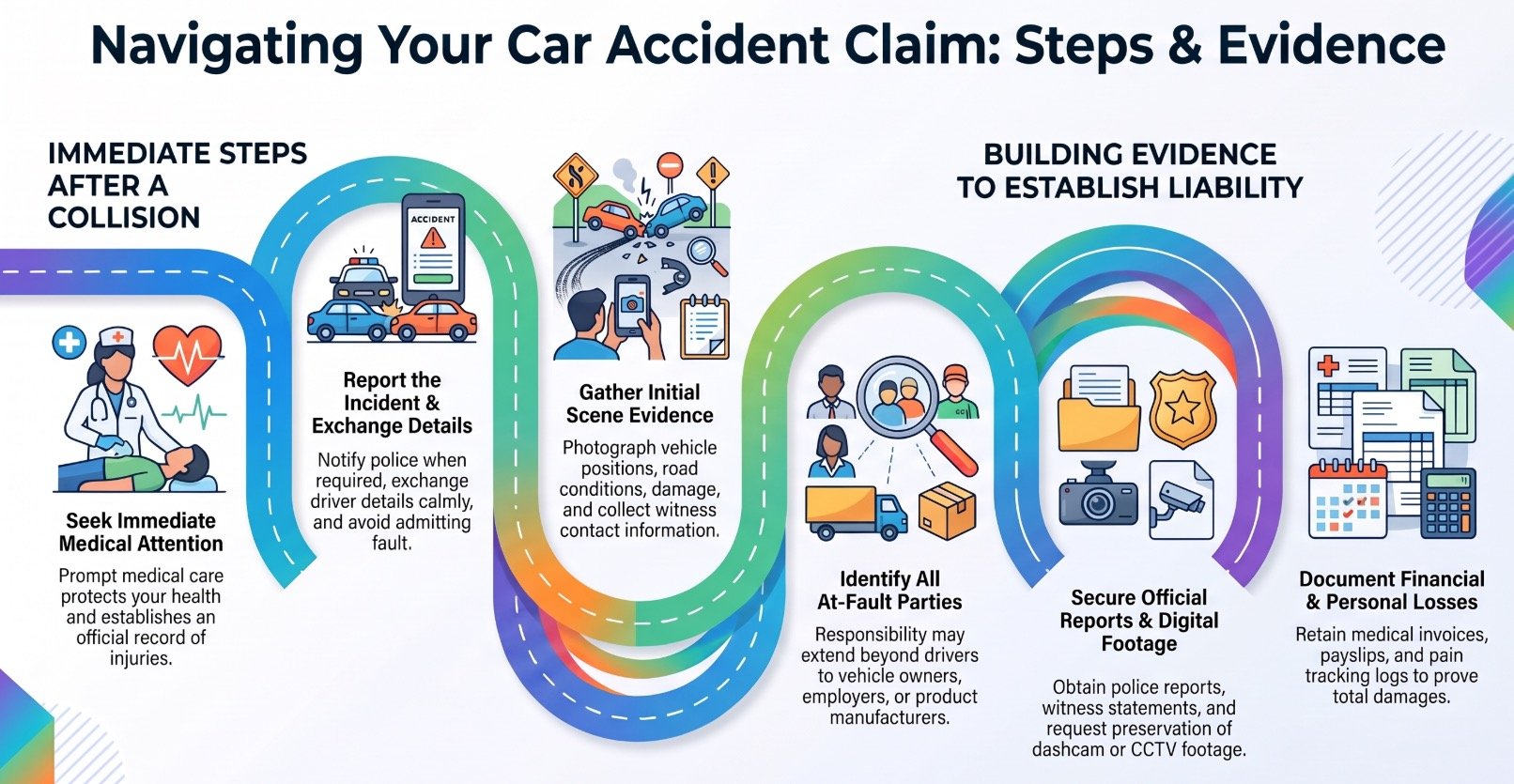
After a Melbourne car accident, we should seek medical attention promptly, even if our injuries seem minor. We must report the accident to the appropriate authorities and keep a record of when and how we did so. We should also gather evidence, including photographs, witness details, and the other driver’s information.
Seek Medical Attention
Seek medical attention as soon as possible after a Melbourne car accident, even if your injuries seem minor or aren’t immediately apparent. Some conditions, including concussion and soft-tissue injuries, may develop or worsen over time. Prompt care helps protect your health and creates a clear medical record of your injuries.
Call emergency services for severe pain, difficulty breathing, heavy bleeding, or loss of consciousness. For less urgent concerns, visit a doctor or an Urgent Care clinic and follow the clinician’s advice. Tell the provider about every symptom, even if it seems unrelated or mild.
Follow prescribed treatment and attend follow-up appointments. Use Symptom Tracking to note when discomfort begins, how it changes, and how it affects daily activities. Accurate records can help your care team assess your recovery and support informed decisions.
Report the Accident
Once everyone is safe and urgent medical needs are addressed, report the Melbourne car accident to Victoria Police when required, including if anyone is injured, a driver fails to stop or provide details, or you suspect a serious offense. Call 000 for emergencies; otherwise, contact police through the appropriate non-emergency channel and follow their instructions. Notify Authorities promptly and provide accurate information to help responders protect everyone involved and meet reporting requirements.
When it’s safe, Exchange Details with the other drivers, including names, contact information, registration numbers, and insurer details. Share your information calmly and respectfully, and don’t argue about who caused the collision or admit fault. If another person can’t communicate, offer reasonable assistance and let police or emergency services manage the situation. Keep your account factual, and ask how to obtain any required report or reference number. These steps support everyone affected and help guarantee the incident is formally recorded.
Gather Evidence
If it’s safe to do so, gather evidence at the scene before vehicles or other details change. Photograph vehicle positions, damage, road conditions, traffic signs, skid marks, and visible injuries. Record the date, time, location, weather, and events while they’re fresh, and collect names and contact details from witnesses. Ask for the other driver’s insurance and registration information without arguing about fault. Preserve relevant Vehicle telematics, such as trip data or braking records, and request dashcam preservation from drivers or nearby businesses before footage is overwritten. Keep original files and avoid editing images or recordings. We should also retain medical reports, repair estimates, receipts, and correspondence. These records can help clarify what happened and support everyone affected, while allowing insurers or legal advisers to assess responsibility based on reliable evidence.
Critical Evidence in a Melbourne Car Accident At-Fault Parties Injury Case
We can assess who caused the crash by reviewing evidence that records what happened and documents your injuries.
Essential materials may include:
- Police reports
- Scene photographs
- Witness statements
- Medical records
We’ll consider how each item supports your account and helps establish liability and the extent of your losses.
Police Reports
Police reports can provide valuable evidence in a Melbourne car accident injury claim by recording details such as the parties involved, witness accounts, and the attending officers’ observations. We can use this information to help establish how the collision occurred and identify people who may share responsibility. However, a report isn’t a final decision about fault, and it may not include every relevant detail. We should check its accuracy against your recollection and other available evidence, and promptly note any errors or missing information. Report accuracy matters because incorrect details could complicate discussions with insurers or other parties. We can also explain how to access records, including how to request a copy through the appropriate police channel. By reviewing the report carefully, we can better understand the evidence and support a fair outcome for everyone affected.
Scene Photographs
Photographs taken at a Melbourne car accident scene can help show vehicle positions, road conditions, damage, and other details relevant to how the collision occurred. When it’s safe, we encourage you to document the scene promptly, before vehicles or debris move and conditions change. Photograph vehicle damage from several angles to reveal impact points and help connect the damage to the collision. Include wider views showing lane markings, traffic signs, signals, skid marks, debris, and nearby hazards. Do not enter traffic or interfere with emergency responders; your safety and others’ needs come first. Preserve original files by avoiding edits, filters, or cropping, and back them up securely. Preserving image metadata, including timestamps and location details, can support the photographs’ authenticity. We can assess relevant images alongside other available evidence.
Witness Statements
Alongside scene photographs, witness statements can help clarify how a Melbourne car accident occurred and who may be at fault. We can help you identify people who saw the collision, including passengers, nearby residents, and local workers. Their accounts may describe vehicle movements, traffic signals, road conditions, and what happened immediately before impact.
Witness credibility matters. We should consider whether each person had a clear view, how soon they reported what they observed, and whether their account remains consistent. Independent witnesses may provide useful evidence, but we should assess every statement carefully and fairly.
Prompt statement preservation can protect important details before memories fade. We can record contact information, request written accounts, and securely keep original notes. By treating witnesses respectfully, we can support a careful, reliable assessment of responsibility.
Medical Records
How can medical records help establish who was at fault in a Melbourne car accident? They can document the injuries you suffered, when symptoms began, and how clinicians linked those injuries to the collision. While records don’t prove fault on their own, they can support or challenge accounts of how the crash occurred.
We can compare treatment timelines with witness statements, police reports, and other evidence to identify inconsistencies or confirm that your injuries followed the accident. Prompt Record requests can help us obtain hospital notes, imaging results, ambulance records, and follow-up reports before relevant information becomes harder to access. These documents may also show how the injuries affect your ability to work, care for others, or manage daily responsibilities. We’ll review them carefully and explain how they may strengthen your claim and support fair compensation.
Don’t Wait. Call Our Florida Personal Injury Lawyers Now!
Long-Term Effects of Melbourne Car Accident At-Fault Parties Injuries
When we assess the long-term effects of a Melbourne car accident, we consider how injuries may cause chronic pain and limit your mobility. These physical challenges can affect your ability to work, manage daily tasks, and maintain independence. We also consider psychological effects, which may persist after physical injuries have recovered.
Chronic Pain
Chronic pain can persist long after a Melbourne car accident, even when visible injuries have recovered. It may arise from damaged nerves, soft tissue injuries, or other trauma, and can affect your ability to work, care for family, and serve your community. Pain can also disrupt sleep, cause fatigue, and make it hard to concentrate, straining daily responsibilities and relationships.
We encourage you to seek medical advice when pain continues or worsens. A clinician can assess its cause and recommend suitable Pain management, which may include medication, therapy, or other approaches. Keep records of symptoms, treatment, and how pain affects your routine. These details can help your healthcare team tailor care and may support a claim related to the accident. We can help you understand your legal options while you focus on recovery.
Reduced Mobility
Reduced mobility can continue long after a Melbourne car accident, limiting your ability to walk, drive, work, or manage daily tasks. Injuries to the spine, joints, or limbs may restrict movement and make ordinary activities difficult. We can help you understand how these lasting limitations affect your independence and your ability to support family, colleagues, and community members.
Your recovery plan may include rehabilitation, home modifications, Mobility aids, or accessible transportation. These practical supports can help you get to medical appointments, return to work, and take on responsibilities that matter to you. If another party’s negligence caused the collision, we can explain how documented mobility restrictions may inform a compensation claim. Keep records of treatment, equipment costs, and changes to your daily routine. Clear evidence helps us assess the long-term impact and pursue appropriate support.
Psychological Effects
Psychological effects can persist after a Melbourne car accident, affecting sleep, concentration, relationships, and confidence in everyday activities. You may experience post-traumatic stress, anxiety, low mood, or sleep disturbances, even after physical injuries begin to recover. These difficulties can make work, family responsibilities, and helping others feel harder to manage. We encourage you to seek support from a qualified health professional if symptoms continue or interfere with daily life. Early assessment can help identify suitable treatment and practical recovery strategies. Keep records of symptoms, appointments, and how the effects influence your routine. If another party’s negligence caused the collision, these impacts may also be relevant when evaluating a compensation claim. We can help you understand the process and consider evidence that reflects both your psychological needs and long-term wellbeing.
Proving Liability in Melbourne Car Accident At-Fault Party Injury Cases
To establish liability after a Melbourne car accident, we must show how another party’s conduct caused the collision and your injuries. We begin by gathering evidence that explains what happened, including police reports, photographs, witness accounts, medical records, and available traffic or dashcam footage. We compare this material with the road rules and the circumstances at the scene to identify who is responsible.
Liability may rest with a driver who acted carelessly, an employer responsible for a worker’s driving, or another party whose actions contributed to the crash. In some cases, Vehicle defect investigations can reveal whether faulty brakes, tires, or other components played a role. We may also examine roadway design liability when unsafe road features or inadequate maintenance contributed to the collision.
Your clear, timely account can help us understand how the crash affected your health and daily responsibilities. We work carefully to preserve relevant evidence and build a supported account of fault, so those responsible can be held accountable for the harm they caused.
Dealing With Insurance Companies After a Melbourne Car Accident At-Fault Party Injury
After a Melbourne car accident, insurers may ask for statements, records, or settlement decisions before you understand the full impact of your injuries. We can help you respond carefully, protect your interests, and preserve your ability to focus on recovery and responsibilities to others. Keep communications factual, courteous, and consistent with available evidence. Before you provide a recorded statement or sign a release, we should review what the insurer requests and explain any potential consequences. Share relevant medical and accident information, but don’t speculate about fault or minimize symptoms that may change over time.
Effective Insurer communication strategies include keeping copies of letters, noting calls, and directing questions through an agreed contact. If an insurer disputes responsibility or refuses payment, we can examine its reasons, compare them with the evidence, and prepare appropriate claim denial responses. Ask for the decision and supporting grounds in writing. We’ll help you address inaccuracies calmly, meet deadlines, and pursue a fair resolution without promising an outcome.
What to Expect During a Melbourne Car Accident At-Fault Parties Injury Claim Process
We’ll begin by explaining how to report the accident and identify the parties who may be at fault. You’ll learn what evidence can support your injury claim and how to preserve it. We’ll also outline the steps involved in negotiating and resolving your claim.
Reporting The Accident
Prompt reporting helps preserve evidence and keeps a Melbourne car accident injury claim on track. If anyone needs urgent medical care or faces immediate danger, we should call 000 and follow the operator’s instructions. We can also notify Victoria Police when the law requires it, including after a collision involving injury or significant property damage. At the scene, we should provide accurate contact and registration information, meet vehicle exchange requirements, and avoid speculation about responsibility. Record the time, location, weather, and visible damage, and take photographs when it’s safe. We should obtain Emergency contact details for witnesses and other involved people, while respecting their privacy. As soon as practical, report the crash to your insurer and keep copies of reports, messages, and related expenses for the claim.
Identifying At-Fault Parties
Accident reports, photographs and witness details can help establish who contributed to a Melbourne collision, but they don’t determine fault on their own. We assess each person’s conduct against the circumstances and applicable road rules, recognizing that responsibility may be shared. A driver who failed to keep a proper lookout, drove too fast for conditions or ignored a traffic signal may have contributed to the crash. We also consider whether another party may bear legal responsibility. Vehicle ownership alone doesn’t make an owner liable, but the owner’s role and any relevant arrangements may matter. An employer may be responsible when a worker causes a collision while performing job duties. We’ll help you understand who may be liable and how that affects your injury claim, while keeping your focus on recovery and supporting those who depend on you.
Gathering Evidence
As we investigate who contributed to the collision, we’ll gather evidence to support your account and assess each party’s conduct. We’ll review police reports, witness statements, photographs, medical records, and vehicle damage to build a clear timeline. Your prompt notes about what happened can also help us identify details that others may overlook. We’ll pursue Digital Footage from nearby businesses, traffic cameras, or vehicle systems, since recordings may be erased or overwritten quickly. Evidence Preservation matters, so we’ll contact relevant custodians and request that useful material be retained. We’ll also compare accounts and records to identify inconsistencies, clarify each person’s role, and understand how your injuries affect daily life. By organizing reliable information, we can present your experience accurately and help protect the interests of everyone affected.
Resolving Your Claim
Once we’ve gathered the evidence, we’ll assess the available claim pathways and explain what to expect at each stage. We’ll identify the responsible parties, review the insurer’s position, and discuss whether negotiation, mediation, or court proceedings best suit your circumstances. You’ll receive clear guidance on the documents, medical information, and decisions needed to support your claim while protecting your recovery and responsibilities to others.
Settlement timelines depend on liability disputes, injury assessment, and how quickly parties provide information. We’ll keep you informed about progress and explain any delays before recommending a settlement. Accepting an offer usually resolves the claim, so we’ll help you carefully consider its terms and future needs.
If negotiation stalls, mediation preparation can help you present your position effectively. We’ll organize essential evidence, clarify your priorities, and explain possible outcomes before you decide how to proceed.
Compensation for Melbourne Car Accident At-Fault Parties Injury Damages
If you caused a car accident in Melbourne, you may still be entitled to compensation for injuries you sustained, depending on the circumstances and applicable insurance rules. We can help you understand whether a claim may cover treatment, rehabilitation, and practical support while you recover. Your eligibility can depend on the accident’s circumstances, the injuries involved, and the relevant insurance scheme, so we’ll assess your situation carefully rather than assume fault ends your options.
Compensation may address reasonable medical expenses and services needed to manage your injuries. If your condition affects your ability to work, wage replacement may help support you during recovery, subject to applicable requirements. Where injuries create ongoing needs, Future care may also be relevant to your claim. We’ll help you gather records and explain how your injuries affect daily responsibilities, including your ability to care for others. Prompt advice can clarify deadlines, evidence requirements, and available pathways, allowing you to make informed decisions and pursue appropriate support with confidence.
Economic vs Non-Economic Damages in Melbourne Car Accident At-Fault Parties Cases
We distinguish economic damages, such as medical expenses and lost income, from non-economic damages, which may include pain and reduced quality of life. To assess your claim, we’ll consider how the crash affected both your finances and your wellbeing. We’ll also explain the records and other evidence that can help prove your losses.
Economic Damages
Economic damages compensate for measurable financial losses caused by a car accident, while non-economic damages address harm such as pain, suffering, and loss of enjoyment of life. When we help you assess economic damages, we focus on documented costs and income losses linked to the collision. These may include medical treatment, rehabilitation, medication, transport to appointments, and reasonable care or support expenses. Lost wages can reflect income you missed while recovering, supported by employment and payroll records. If your injuries affect your ability to work in the future, diminished earning capacity may also be relevant. We can help you gather invoices, medical reports, tax records, and employer statements to present a clear account of your losses. Careful evidence helps guarantee at-fault parties are held accountable for the financial consequences of their actions.
Non-Economic Damages
While economic damages cover measurable financial losses, non-economic damages address the personal effects of a Melbourne car accident, including pain, emotional distress, and reduced enjoyment of life. These losses don’t come with a clear price tag, but they can shape how you feel, work, and connect with others. Pain and suffering may include ongoing discomfort, anxiety, or the strain of adjusting to physical limitations. Loss of enjoyment can reflect activities, relationships, or routines you can no longer pursue as before. We consider how these effects influence your daily life and your ability to care for and support the people who depend on you. Non-economic damages differ from medical bills or lost income because they recognize the human impact of an accident, not just its financial consequences. Each person’s experience is distinct.
Proving Your Losses
To prove your losses in a Melbourne car accident claim, we need clear evidence linking the at-fault party’s conduct to both your financial costs and the personal effects of your injuries. For economic damages, we’ll gather Loss documentation such as invoices, receipts, payslips, repair estimates, and records of treatment or travel costs. These materials help show what you’ve already paid and what income you’ve lost. We’ll also assess future expenses, including ongoing care, rehabilitation, and reduced earning capacity, using medical opinions and financial evidence. Non-economic damages, such as pain, distress, and reduced enjoyment of daily life, require a different approach. We can use clinical records, your account, and statements from people who understand how your injuries affect your responsibilities and relationships. Careful evidence helps us present your experience accurately and seek fair compensation.
Don’t Wait. Call Our Florida Personal Injury Lawyers Now!
When a Melbourne Car Accident At-Fault Parties Injury Case Goes to Trial vs Settlement
Whether a claim settles or proceeds to trial depends on the evidence, the extent of the injuries, and whether the parties can agree on who caused the crash and what compensation is fair. We’ll assess the available records, witness accounts, and medical information to help you understand the strengths and uncertainties of your case.
During settlement negotiations, we present documented losses and explain how the injuries affect your daily responsibilities, work, and ability to support others. A settlement may resolve the dispute sooner and avoid the demands of a courtroom, but you should understand its terms before accepting. We’ll discuss the offer with you and help you weigh it against your needs.
If the parties can’t reach an acceptable agreement, the case may proceed to trial. Trial preparation can include organizing evidence, preparing witnesses, and developing a clear account of the crash and its consequences. A judge or jury then evaluates the evidence and decides disputed issues. We’ll guide you through each stage so you can make informed decisions.
Florida Laws That May Affect Your Melbourne Car Accident At-Fault Parties Case
Florida law can affect who bears responsibility for a Melbourne car accident and how long you have to pursue compensation. We can help you understand how insurance rules and fault standards may shape your claim, so you can focus on recovery and supporting those who depend on you.
- PIP coverage: Florida generally requires drivers to carry personal injury protection insurance. Your PIP coverage may pay certain medical expenses and lost wages after a crash, regardless of fault, subject to policy limits and eligibility requirements.
- Comparative negligence: Florida’s modified comparative negligence rule may reduce your damages if you share responsibility. If you’re found more than 50 percent at fault, you generally can’t recover damages from another party.
- Fault evidence: Police reports, witness accounts, photographs, and medical records can help show how the collision occurred and identify responsible parties.
- Insurance obligations: Drivers must maintain required coverage, while insurers assess claims under policy terms and applicable law.
We can review the circumstances, explain how these rules may apply, and help you pursue a fair resolution while keeping your family’s needs in view.
The Statute of Limitations for Melbourne Car Accident At-Fault Parties Injury Cases
After a Melbourne car accident, strict filing deadlines can affect your right to seek compensation from the parties responsible for your injuries. Florida law generally gives injured people two years from the crash to file a negligence lawsuit. Missing this deadline can prevent you from pursuing compensation, even when another driver’s conduct caused serious harm.
Filing deadlines may differ for claims involving wrongful death, government entities, or other specific circumstances. These cases may have shorter notice requirements or different time limits, so we shouldn’t assume the standard period applies. In limited situations, the date an injury is discovered may also matter.
Some limitation exceptions can pause or extend a deadline, including circumstances involving minors or a defendant’s absence from Florida. However, exceptions are narrow and depend on the facts and applicable law. We encourage you to preserve your ability to seek accountability by treating every deadline as urgent. Prompt attention also supports your family and others who depend on you, while keeping the claim within the required legal timeframe.
How a Melbourne Car Accident At-Fault Parties Lawyer Can Help You
A Melbourne car accident at-fault parties lawyer can investigate the crash, identify everyone who may bear legal responsibility, and build a claim supported by reliable evidence. We can examine police reports, medical records, photographs, and witness accounts to clarify how the collision occurred. Our work can also help protect the interests of people who depend on you and support a fair resolution.
We may assist by:
- Evaluating case eligibility and explaining which compensation options may apply.
- Identifying responsible drivers, employers, vehicle owners, or other parties.
- Gathering evidence and consulting relevant experts to establish liability and losses.
- Communicating with insurers and opposing representatives on your behalf.
With Local legal guidance, we can explain procedures, assess the strength of available evidence, and help you make informed decisions. We’ll also organize documentation of treatment, lost income, and other accident-related expenses, presenting your circumstances clearly. By managing these demanding legal tasks, we help you focus on recovery and the people who rely on your care.
When to Contact a Melbourne Car Accident At-Fault Parties Lawyer
Contact a Melbourne car accident at-fault parties lawyer as soon as practical, especially if you’re injured, liability is disputed, or several people or businesses may have contributed to the crash. Early advice can help us preserve relevant records and identify deadlines that may affect your options. If you’re supporting injured family members or others affected, prompt guidance can also help you coordinate next steps while respecting their needs.
Arrange an Initial consultation once you can safely discuss what happened. Bring any available police reports, photographs, medical documents, repair estimates, and witness contact details. Don’t delay seeking advice because you don’t have all the information; we can explain what may be useful and what to obtain.
Ask about attorney availability and how soon the lawyer can review your circumstances. If symptoms emerge later, an insurer requests a statement, or you receive legal documents, contact a lawyer promptly. Keep copies of communications and avoid guessing about disputed facts. Timely contact helps you make informed decisions without committing before you understand your choices.
Why You Need an Experienced Melbourne Car Accident At-Fault Parties Lawyer
When fault is disputed, or several parties may share responsibility, an experienced Melbourne car accident lawyer can help us assess the evidence and identify the people or businesses whose actions contributed to the crash. We can examine police reports, witness accounts, medical records, and available footage to build a clearer picture of what happened. This matters when a driver, employer, vehicle owner, or another party may have contributed to your injuries.
Attorney experience helps us identify relevant legal duties and understand how liability may be shared. We can also preserve important evidence, meet deadlines, and communicate with insurers without overlooking your recovery needs. A considered legal strategy helps us present your claim clearly and respond to disputes about responsibility or losses.
How to Choose the Right Melbourne Car Accident At-Fault Parties Lawyer for Your Case
Choosing the right Melbourne car accident at-fault parties lawyer starts with evaluating whether they have relevant experience investigating disputed liability and identifying all potentially responsible parties. Ask how they gather evidence, assess witness accounts, and examine whether drivers, employers, vehicle owners, or other entities may share responsibility. Their approach should reflect careful preparation and respect for everyone affected by the collision.
Review Lawyer Credentials, including admission to practice, relevant case experience, and any disciplinary history. We should also ask who will handle our matter and how the lawyer plans to pursue a fair outcome. Clear Client Communication matters: the lawyer should explain legal options, respond within a reasonable time, and keep us informed as the case develops.
During an initial consultation, bring available records and ask direct questions about fees, timelines, and potential challenges. We can compare answers and choose someone who listens carefully, gives realistic guidance, and treats our concerns with professionalism. A considered choice helps us move forward with confidence while focusing on recovery and supporting those who depend on us.
About The Law Offices of Anidjar & Levine
The Law Offices of Anidjar & Levine represents people injured in car accidents and helps them assess who may be legally responsible. When you contact us, we’ll listen to your account, review available evidence, and explain the options that may apply to your circumstances. Our work includes examining how drivers, vehicle owners, employers, or other parties may have contributed to a collision.
Our Firm’s history reflects a commitment to helping injured people pursue accountability and seek compensation under the law. We understand that a serious crash can affect your health, income, and family responsibilities. We’ll approach your concerns with care and provide clear information so you can make informed decisions about your next steps.
Community involvement is also important to us. We value opportunities to support people and organizations in the communities we serve. If you’re considering a claim, we can discuss your questions, identify relevant issues, and help you understand what pursuing a case may involve.
Frequently Asked Questions
Can Multiple Drivers Share Fault for a Melbourne Car Accident?
Yes, multiple drivers can share fault for a Melbourne car accident when each driver’s actions contributed to the collision. Shared driver liability may apply if, for example, one driver speeds while another fails to give way. We can explain how Comparative negligence may affect responsibility and compensation, based on the evidence and applicable law. If you’re supporting someone after a crash, encourage them to document events and seek qualified legal advice promptly.
What Happens if the At-Fault Driver Is Uninsured?
If the at-fault driver is uninsured, we can help you assess your compensation recovery options and identify who may be responsible for your losses. Uninsured motorist coverage may apply, depending on your policy and the circumstances, but it doesn’t automatically cover every expense. In Victoria, you may also seek support through the Transport Accident Commission for eligible accident-related injuries. We can review the available evidence, explain deadlines, and guide you toward appropriate next steps.
Can I File a Claim if I Was a Passenger in the Accident?
Yes, we can help you assess a claim if you were injured as a passenger in a crash. Passenger injury compensation may be available through Victoria’s transport accident scheme, regardless of who caused the accident, subject to eligibility and reporting requirements. We’ll help identify the appropriate claim pathway and explain what evidence you may need. Shared passenger liability can affect some claims, so we’ll review the circumstances before advising you on your options and next steps.
How Are Rideshare Accidents Involving At-Fault Drivers Handled?
When a rideshare driver causes a crash, we assess fault and which insurance policy applies. Uber driver insurance may provide coverage depending on whether the driver was logged into the app, waiting for a request, or carrying a passenger. We can guide you through the rideshare claim process, help gather evidence, and identify responsible parties so you can pursue appropriate compensation while protecting your rights.
Can a Vehicle Owner Be Liable When Someone Else Was Driving?
Yes, you may hold a vehicle owner responsible when someone else was driving, but liability depends on the circumstances and applicable law. We’ll examine whether the owner gave permission, controlled the vehicle, or had a legal duty to prevent its use. Vehicle owner liability may arise through negligent entrustment if the owner knowingly allowed an unsafe or unlicensed driver to drive. We can assess the evidence and explain your options for pursuing fair compensation.
—————————
If you were injured in a Melbourne car accident and another party may be at fault, we can help you understand your options and pursue the compensation available under applicable law. Our Melbourne Personal Injury Lawyer team can review the circumstances, explain relevant deadlines, and guide you through each step of your claim. Contact The Law Offices of Anidjar and Levine to discuss your situation. Early legal guidance may help preserve important evidence and clarify which parties could be responsible for your losses.

