

If an impaired or distracted driver injured you in Deltona, The Law Offices of Anidjar and Levine can assess whether negligence caused the crash and identify potential sources of compensation. We review available evidence, including police reports, witness accounts, phone records, photographs, and medical documentation, while considering how Florida law applies to your circumstances. Prompt medical care and careful preservation of records can support your claim. Learn more about working with a Deltona Personal Injury Lawyer. The sections below explain your rights and practical next steps.
Main Takeaways
- A Deltona impaired- or distracted-driving lawyer can assess potential claims and explain your legal options.
- Evidence may include police reports, witness accounts, photos, video, toxicology results, and phone or app records.
- Preserve dashcam footage, medical records, repair estimates, and other crash-related documents promptly.
- Medical records and expert opinions can help connect crash injuries to the collision and document their effects.
- Seek prompt medical care and consult a lawyer about liability, deadlines, and possible compensation.


How We Can Help With Your Deltona Car Accident Impaired & Distracted Driving Injury Claim
When an impaired or distracted driver causes a crash in Deltona, we can help you pursue compensation for your injuries and related losses. We’ll listen to your concerns, explain your options, and help you make informed decisions at each stage of your claim.
Our team can review available records, identify potentially responsible parties, and assess Claim eligibility based on the facts and applicable law. We’ll gather relevant documentation, communicate with insurers, and organize evidence to support your compensation claim. If questions arise about medical expenses, lost income, or other losses, we’ll help you understand what information may be needed to address them.
With legal representation, you don’t have to manage every demand or deadline alone. We’ll handle claim-related communications, keep you informed, and prepare to pursue a fair resolution through negotiation or, when appropriate, litigation. Our work aims to protect your interests while giving you more time to focus on treatment, family, and recovery. We’ll treat your concerns with care and respect.
OUR CONSULTATIONSARE FREE
START YOUR FREE CASE REVIEW

Understanding Deltona Car Accident Impaired & Distracted Driving Injury Cases
Impaired and distracted driving crashes in Deltona can cause serious injuries and raise complicated questions about fault, evidence, and compensation. We help you understand how Florida law applies to your injury case and what information may support a claim. The focus is on the harm you suffered, the parties who may be responsible, and the financial losses connected to the collision.
To assess a case, we examine available records, witness accounts, photographs, and medical documentation. Crash reconstruction may help clarify how the collision occurred and whether the evidence supports a particular account. We also consider roadway design when it may affect visibility, traffic flow, or the impact of the event. These details can matter when we evaluate responsibility and explain the circumstances to an insurer or court.
We’ll also review your treatment, recovery needs, lost income, and other documented effects. By organizing the evidence and explaining your options, we aim to help you pursue fair compensation while keeping your needs central throughout the process.
Common Causes of Deltona Car Accident Impaired & Distracted Driving
We often see impaired and distracted driving accidents stem from alcohol or drug use, phone distractions, and drowsy driving. Speeding and reckless choices can further reduce a driver’s ability to react and avoid a collision. We’ll explain how these behaviors contribute to crashes and may affect a claim.
Alcohol and Drug Use
Alcohol and drug use can compromise a driver’s judgment, coordination, and reaction time, increasing the risk of a serious crash in Deltona. Alcohol impairment may affect a person’s ability to judge distance, maintain control, and respond safely to changing road conditions. Drug impairment can also interfere with alertness and decision-making, whether it results from illegal substances, prescription medication, or over-the-counter products. Combining alcohol with drugs may intensify these effects. Drivers have a responsibility to avoid getting behind the wheel when substances could make them unsafe. When someone ignores that duty, other road users may suffer serious injuries through no fault of their own. We can help you understand how impairment may have contributed to a collision, identify relevant evidence, and explore options for pursuing accountability and compensation for those harmed.
Phone Distractions
When drivers use phones behind the wheel, even a brief glance can divert their attention from traffic and delay their response to hazards in Deltona. Reading a message, checking directions, or selecting music can pull a driver’s eyes and focus off the road. Notification overload may prompt repeated glances, while composing or answering messages can also occupy a driver’s hands and mind. Hands-free limitations matter, too: voice commands and calls can still distract drivers from changing traffic conditions. We encourage every driver to silence alerts, set navigation before leaving, and pull over safely before handling a phone. When a distracted driver causes a crash, we can help you understand your options and pursue accountability. Taking these steps protects passengers, pedestrians, and everyone sharing Deltona’s roads.
Drowsy Driving
Phone use isn’t the only form of driver inattention that can cause a crash; fatigue can also impair judgment and slow reactions on Deltona roads. Sleep deprivation may make it harder for drivers to notice hazards, stay alert, and respond safely to changing traffic conditions. Circadian rhythms can also affect alertness, particularly overnight and early in the morning, when the body naturally prepares for rest. Long shifts, demanding caregiving responsibilities, illness, or certain medications may contribute to drowsiness behind the wheel. We all share a responsibility to protect others on the road, so drivers should recognize warning signs such as heavy eyelids, repeated yawning, or difficulty remembering recent miles. If you’ve been hurt by a drowsy driver, we can help you understand your options and pursue accountability.
Speeding and Recklessness
Excessive speed and reckless driving can leave Deltona motorists with little time to avoid a collision. When drivers travel too fast for traffic, weather, or road conditions, they may not stop in time or maintain control. Excessive Speed also increases impact force, raising the risk of serious injuries for drivers, passengers, and others nearby.
Reckless Actions, such as weaving between lanes, tailgating, or ignoring traffic signals, can endanger everyone sharing the road. These choices may reflect distraction or impairment, but they can also show a disregard for others’ safety. If a crash has harmed you or someone you care about, we can help you understand what evidence may establish fault, including witness accounts, vehicle data, and police reports. By pursuing accountability, we can help make our roads safer for the Deltona community.
Don’t Wait. Call Our Florida Personal Injury Lawyers Now!


Legal Rights of Deltona Car Accident Impaired & Distracted Driving Injury Victims
Impaired or distracted driving can cause serious crashes in Deltona, but injured victims have legal rights to pursue compensation from those responsible. If you’ve been hurt, we can help you understand your Legal Rights and take informed steps toward recovery. Florida law may allow you to seek payment for medical expenses, lost income, pain, and other losses when another driver’s negligence caused your injuries. Your claim can also support your family’s stability and help you focus on recovery while preserving your ability to serve others.
Key Victim Protections and practical steps include:
- Seek prompt medical care. Follow your provider’s guidance and keep records of treatment and expenses.
- Preserve relevant evidence. Save photos, witness details, and crash-related documents, and avoid giving recorded statements until you understand your options.
- Review deadlines and insurance issues. We can assess potential claims, explain applicable time limits, and communicate with insurers on your behalf.
Each case depends on its facts. We’ll help you evaluate available remedies and pursue a fair resolution with care and diligence.
Why Do Deltona Car Accident Impaired & Distracted Driving Injuries Happen?
When drivers in Deltona look away from the road or drive after using alcohol or drugs, they may fail to notice hazards, react too slowly, or make unsafe decisions. These choices can place you, your passengers, and others sharing the road at risk. A text message, navigation screen, or other distraction can divert a driver’s eyes, hands, or attention from safe driving. Even a brief lapse may prevent the driver from seeing a pedestrian, slowing traffic, or a vehicle entering an intersection.
Alcohol and drugs can affect coordination, concentration, and perception. Impaired judgment may lead a driver to speed, follow too closely, or underestimate danger. Delayed reactions can make it harder to brake or steer in time to avoid a collision. When distraction and impairment occur simultaneously, these effects may compound. We recognize that crashes can cause serious injuries and disrupt families’ lives. Understanding these preventable causes helps our community value attentive, responsible driving and protect everyone on Deltona’s roads.
What Should You Do After a Deltona Car Accident Impaired & Distracted Driver?
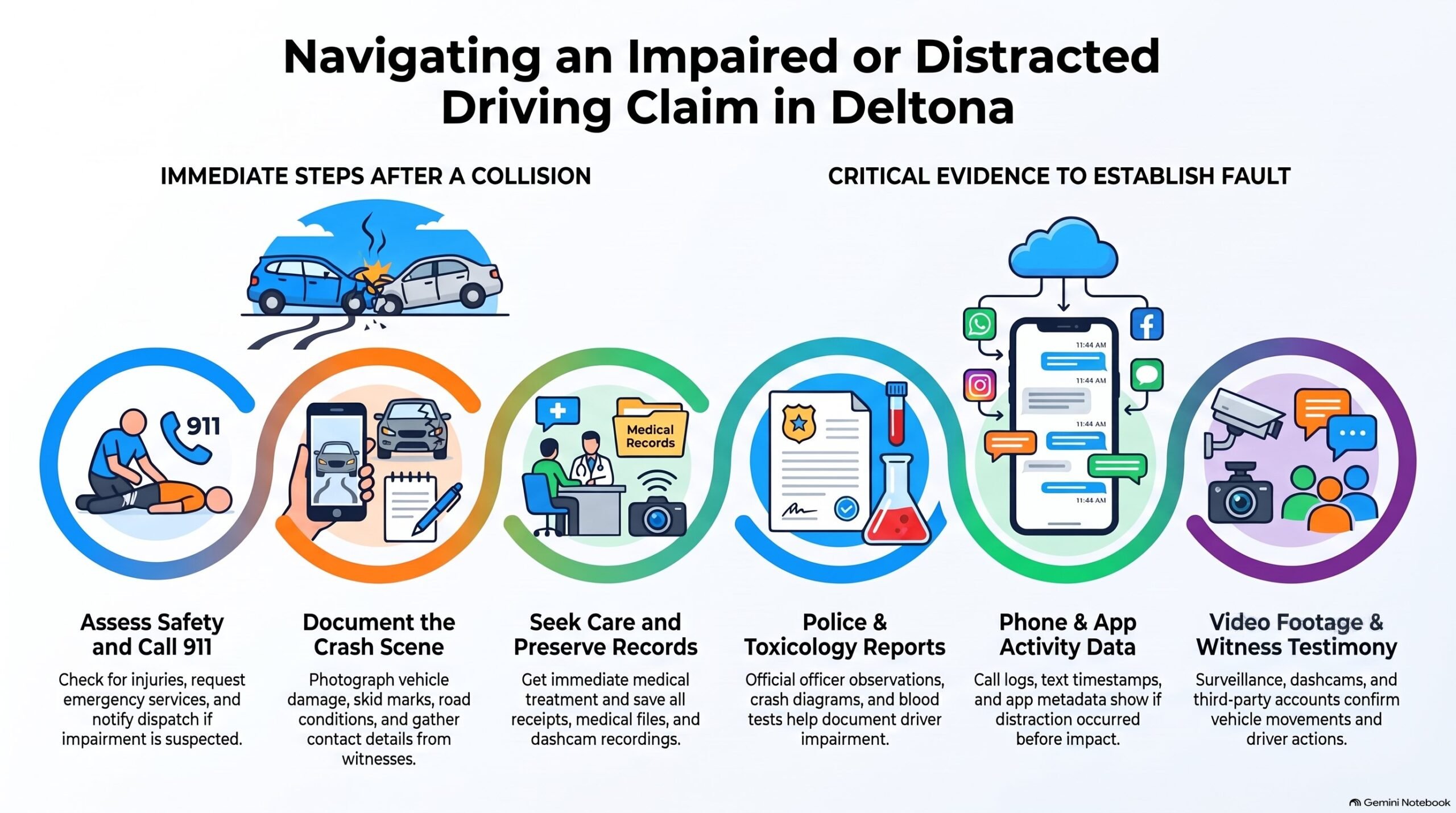
After a Deltona crash involving an impaired or distracted driver, we should first check for injuries and move to a safe location if possible. Call 911 for medical help and make sure law enforcement documents the collision. Once everyone is safe, we can preserve evidence by photographing the scene, collecting witness contact information, and keeping relevant records.
Check for Injuries
First, check yourself and others for injuries, but don’t move anyone with a head, neck, or back injury unless there’s immediate danger. Approach carefully, watch for traffic, and ask each person whether they’re hurt. If someone is unconscious, confused, struggling to breathe, bleeding heavily, or experiencing severe pain, treat these as emergency symptoms. Don’t assume a person is unharmed because they can stand or speak; some injuries may not appear immediately. During your Injury assessment, look for visible wounds, swelling, burns, or signs of shock, and note what each person reports. Offer calm reassurance and help people remain still and warm while you observe them. Avoid giving food, drink, or medication, and don’t attempt treatment beyond your training. Keep others nearby from crowding or disturbing anyone who may be injured.
Call 911
After checking for injuries, call 911 to report the crash and request medical or police assistance. Give Emergency Dispatch the location, the number of vehicles involved, and a clear description of any injuries or immediate hazards. If someone appears seriously hurt, follow the dispatcher’s instructions and avoid moving that person unless danger makes it necessary. Also tell dispatch if a driver may be impaired or distracted, without confronting or accusing anyone at the scene. If traffic or another hazard creates danger, move to a Safe Location when we can do so without risking further injury, and guide others away from harm. Stay on the line until dispatch says we may disconnect. Prompt, accurate information helps responders reach everyone who needs assistance and manage the scene safely.
Preserve Evidence
Preserve evidence at the scene if you can safely do so, especially when impairment or distraction may have contributed to the crash. Photograph vehicle positions, damage, skid marks, traffic signals, road conditions, and visible injuries. Ask witnesses for their names and contact details, but don’t argue with the other driver or assume fault. Share your observations with responding officers and request the report number.
Evidence preservation can help clarify what happened and support a fair review of your claim. Keep medical records, repair estimates, tow receipts, and messages related to the collision. Don’t repair or dispose of your vehicle before discussing a vehicle inspection with your insurer or lawyer; photographs alone may not capture important damage. Save any dashcam footage promptly, since recordings can be overwritten. We can help you organize these materials and protect evidence while you focus on recovery.
Don’t Wait. Call Our Florida Personal Injury Lawyers Now!
Critical Evidence in a Deltona Car Accident Impaired & Distracted Driving Injury Case
We can assess several forms of evidence to help establish whether impairment or distraction contributed to your crash.
Important sources include:
1. police accident reports and toxicology test results; 2. phone and app records; and 3. witness statements and video footage.
Collectively, these records may clarify what happened and support your injury claim.
Police Accident Reports
How can we determine whether impairment or distraction contributed to a Deltona crash? We can start with the police accident report, which records the responding officer’s observations, statements from drivers and witnesses, roadway conditions, and any apparent signs of unsafe behavior. These details may help us understand how the collision occurred, but the report isn’t a final determination of fault.
We can explain the filing process and help you request the report from the appropriate law enforcement agency. Access to the report may depend on the agency’s procedures and the report’s availability. Once we obtain it, we can review the narrative, diagram, citations, and listed witnesses for relevant evidence. If information is missing or inaccurate, we can compare the report with other available records and pursue appropriate follow-up. Careful review helps us protect your interests while supporting a fair process for everyone affected.
Toxicology Test Results
When impairment may have contributed to a Deltona crash, toxicology test results can provide important evidence about whether a driver had alcohol or drugs in their system. A Blood Sample collected after the collision may reveal substances and their concentrations, while Laboratory Analysis can help establish what those findings mean. We’ll review available records, collection times, testing methods, and chain-of-custody documentation to assess whether results are reliable and relevant. Timing matters because a person’s level of impairment may change after a crash, and some substances remain detectable longer than others. We can compare test findings with other evidence, including witness accounts and the police report, to build a clearer picture of events. By carefully evaluating this evidence, we can help you pursue accountability and seek support for your recovery.
Phone And App Records
Phone and app records can help show whether a driver was using a device or interacting with an app near the time of a Deltona crash. We can seek relevant records to determine whether calls, messages, navigation, or other app activity occurred during the trip. Carrier subpoenas may obtain call and text logs, though they generally do not reveal message content. App metadata may show activity times, account use, or device interactions, depending on the provider and what it retains. We’ll work to preserve this evidence promptly because companies may keep records for limited periods. We must obtain these records through lawful procedures and assess them alongside other case evidence. By carefully reviewing them, we can help you understand what may have contributed to the collision and support a fair claim for those affected.
Witness And Video Evidence
What witnesses saw and nearby cameras recorded can help clarify whether impairment or distraction contributed to a Deltona crash. We can identify people who observed the collision, the driver’s conduct beforehand, or signs of impairment afterward. Their prompt, detailed accounts may help preserve facts before memories fade. Witness credibility matters, so we’ll consider each person’s opportunity to observe, consistency, and possible bias.
Surveillance footage from businesses, homes, traffic cameras, or vehicles may show the crash, vehicle movements, or events leading up to impact. We can act quickly to locate recordings because systems may overwrite them within days. When available, footage can support or challenge witness accounts and help establish a reliable timeline. We’ll respectfully seek relevant evidence, protect the privacy of those involved, and use verified information to explain how the collision occurred and support an injured person’s claim.
Long-Term Effects of Deltona Car Accident Impaired & Distracted Driving Injuries
When we assess the long-term effects of an impaired or distracted driving crash, we consider how chronic pain and reduced mobility may limit your daily activities. We also examine cognitive and emotional changes that can affect your work, relationships, and independence. Because recovery may require ongoing treatment, we account for medical expenses that can continue long after the crash.
Chronic Pain and Mobility
After an impaired or distracted driving crash in Deltona, injuries can continue to affect movement long after the initial treatment ends. Chronic pain from fractures, spinal injuries, or damaged joints may make ordinary tasks difficult. You might struggle to stand, walk, lift, or remain seated for extended periods. Mobility limitations can also affect work, caregiving, and your ability to participate in community life. We encourage you to follow your treatment plan and tell your healthcare providers when pain or movement problems persist. They can assess your condition, recommend rehabilitation, and document how the injury affects daily activities. If you’re supporting family or serving others, reduced mobility may change how you contribute, but seeking appropriate care can help protect your health. We can help you understand how lasting physical effects may factor into a claim.
Cognitive and Emotional Changes
Physical injuries aren’t the only lasting effects of an impaired or distracted driving crash in Deltona. A brain injury can affect how we think, remember, and respond to everyday demands. Memory impairment may make it difficult to follow conversations, keep appointments, or complete familiar tasks. These changes can disrupt work, relationships, and our ability to support the people who depend on us.
Emotional dysregulation can also follow a crash, causing sudden mood shifts, irritability, anxiety, or difficulty managing stress. We may notice these changes before the injured person recognizes them, so patience and clear communication matter. Encourage your loved one to seek a professional evaluation when cognitive or emotional symptoms persist. With appropriate support, families can better understand these challenges, adjust expectations, and help the injured person maintain meaningful connections and routines while recovering.
Ongoing Medical Expenses
Ongoing medical expenses can place a lasting burden on people injured in impaired or distracted driving crashes in Deltona. After an initial hospital stay, you may need follow-up appointments, medication, physical therapy, or assistive equipment. Some injuries also require surgery or tailored care years later. We can help you document these costs and consider how they may affect your household over time.
When we assess a claim, we look beyond bills you’ve already received. Future treatment needs should be supported by medical records and, when appropriate, input from qualified health professionals. We also account for medical inflation, which can increase the cost of care over the years. Careful planning helps us present a clearer picture of your long-term needs and pursue compensation that reflects the support you may require.
Proving Liability in Deltona Car Accident Impaired & Distracted Driving Injury Cases
When an impaired or distracted driver causes a crash in Deltona, we must connect the driver’s conduct to the collision and your injuries with reliable evidence. We can examine the crash report, witness statements, photographs, and available video to establish what happened. Records of a driver’s alcohol or drug use, phone activity, and field sobriety testing may help show impairment or distraction. We also review medical records and expert opinions to link the collision to your injuries and document their effects.
Negligence Standards require us to show that the driver failed to use reasonable care and that this failure caused you harm. A traffic violation or evidence of impairment may support that claim, but each case depends on its facts. Comparative Fault may affect recovery if another party argues you contributed to the crash. We can carefully assess the evidence, identify responsible parties, and build a clear account of events. By pursuing accountability, we help protect your interests while respecting the needs of others affected by the collision.
Dealing With Insurance Companies After a Deltona Car Accident Impaired & Distracted Driving Injury
After establishing how impaired or distracted driving caused the crash, we can help you address the insurance claims that follow. We’ll communicate with insurers, organize relevant records, and present clear information about your injuries, expenses, and other losses. Our goal is to protect your interests while helping you focus on recovery and the people who depend on you.
Insurers may request Recorded statements or ask you to sign broad medical authorizations. We can explain what those requests mean and help you avoid responses that could be misunderstood or used to minimize your claim. You shouldn’t guess about details or accept pressure to settle before you understand the extent of your injuries.
Coverage disputes can arise over policy limits, fault, or which policy applies. We’ll review the available coverage, address inaccurate assumptions, and support your position with evidence. If an insurer delays payment or disputes responsibility, we’ll communicate firmly and keep you informed. You deserve careful, respectful guidance as you seek fair compensation while continuing to serve your family and community.
What to Expect During a Deltona Car Accident Impaired & Distracted Driving Injury Claim Process
We’ll begin with an initial case evaluation to assess your injuries, identify potential liability, and determine how impaired or distracted driving may have contributed to the crash. Next, we’ll gather evidence and handle insurance negotiations while keeping you informed about your claim’s strength and progress. We’ll then review your options and work toward a resolution that reflects your losses.
Initial Case Evaluation
An initial case evaluation helps us assess how impaired or distracted driving may have caused your Deltona car accident and injuries. We’ll listen to your account, clarify what happened, and learn how the crash has affected your health, work, and daily responsibilities. This conversation also helps us understand your priorities, including your ability to care for your family and contribute to your community.
During case screening, we’ll review the basic circumstances, identify questions that may affect your options, and explain how Florida law may apply. We’ll discuss the potential viability of your claim without promising a particular outcome. You can ask about the process, likely next steps, and how legal representation may help you pursue fair compensation. We’ll provide clear guidance so you can make informed decisions while focusing on recovery and the people who depend on you.
Evidence Collection
To evaluate an impaired or distracted driving claim, we gather evidence that can help establish how the crash happened and how it affected you. We may visit the scene, photograph vehicle damage, and document road conditions, traffic controls, and visibility. Vehicle debris and skid patterns can help show the point of impact, vehicle movement, and possible braking. We also seek available surveillance footage, dashcam recordings, and photographs taken soon after the collision. Witness accounts may clarify what they observed before and after the crash. When impairment or phone use may have contributed, we work to obtain relevant police records, toxicology findings, and cellphone data through appropriate legal procedures. We’ll collect your medical records and employment information to document your injuries, treatment, and time away from work, while preserving evidence that could otherwise be lost.
Insurance Negotiations
Once we’ve documented your injuries and the evidence of impaired or distracted driving, we can begin negotiating with the at-fault driver’s insurer. We’ll present a clear account of how the crash occurred, the treatment you’ve received, and the ways your injuries affect daily responsibilities, including caring for others. The insurer may question fault, dispute the seriousness of your injuries, or request additional records. We’ll review each request with you and respond using relevant evidence, not speculation. Our Settlement strategy considers documented losses, likely future needs, and available policy limits. We’ll explain the insurer’s position, identify gaps in its evaluation, and communicate your priorities throughout discussions. You shouldn’t have to manage persistent calls or pressure alone; we’ll handle communications and help you make informed decisions while negotiations continue.
Claim Resolution
When negotiations produce an acceptable offer, we’ll review the proposed settlement with you and explain what it covers before you decide whether to accept. We’ll compare the amount with your documented medical expenses, lost income, and other supported losses, while considering future care needs and the impact of your injuries. We’ll also explain the release terms, including which claims you give up by signing, so you can make an informed choice. Settlement timelines vary based on insurer review, outstanding treatment, and required paperwork. If you accept, we’ll coordinate the documents, resolve applicable liens, and confirm the distribution of funds. If the offer doesn’t fairly address your losses, we can discuss continued negotiations or filing a lawsuit. Our goal is to help you pursue accountability while protecting your ability to support yourself and those who depend on you.
Compensation for Deltona Car Accident Impaired & Distracted Driving Injury Damages
If an impaired or distracted driver caused your Deltona crash, you may be able to recover compensation for losses tied to your injuries. We can help you identify the responsible parties, document how the collision affected your life, and pursue a claim that reflects your needs. Compensation may address medical care, rehabilitation, future treatment, lost income, and the ways your injuries limit daily activities. We’ll work with you to gather records, consult appropriate professionals, and present clear evidence to the insurer or court.
Florida law may also allow Punitive Damages when a driver’s conduct shows intentional misconduct or gross negligence. These damages aim to punish particularly serious behavior and discourage similar choices; they aren’t available in every case. If a crash caused a loved one’s death, eligible family members may bring a Wrongful Death claim for losses recognized by law. We’ll explain who may pursue that claim and guide you through each step with care, so you can focus on your family and recovery.
Economic vs Non-Economic Damages in Deltona Car Accident Impaired & Distracted Driving Cases
We can distinguish economic damages, such as medical bills and lost income, from non-economic damages for pain and reduced quality of life. In impaired or distracted driving cases, both categories may reflect the harm you’ve suffered. We’ll explain how to document and prove your losses to support a compensation claim.
Economic Damages
After an impaired or distracted driving crash in Deltona, economic damages cover the measurable financial losses caused by the collision. We can help you identify the costs the crash has created and document them with reliable records. These losses may include emergency care, hospital treatment, medication, rehabilitation, and future medical services recommended by your providers. Keep bills, receipts, insurance statements, and treatment records so we can connect each expense to the collision.
You may also recover lost income if injuries keep you from working. If your ability to earn has changed, diminished earning capacity may account for reduced future earnings. We can review pay records, employer statements, and professional assessments to support these claims. Careful documentation helps us present a clear financial picture and pursue compensation that protects your household and supports your responsibilities to others.
Non-Economic Damages
Financial records can show the economic losses caused by an impaired or distracted driving crash, but they don’t capture every effect of an injury. Non-economic damages address the personal consequences that may change how you experience daily life. They can include Pain and Suffering, such as physical discomfort, emotional distress, and the strain of coping with lasting injuries. They may also include Loss of Enjoyment when an injury keeps you from hobbies, family activities, or community service that once mattered to you. These damages differ from economic losses, such as medical expenses and lost income, because they don’t have a direct price tag. We can help you understand how Florida law treats these personal harms and how they may relate to your claim after a Deltona crash caused by impaired or distracted driving.
Proving Your Losses
To prove your losses after an impaired or distracted driving crash in Deltona, we’ll need evidence that connects the collision to both your financial costs and personal harm. We can organize Loss documentation, including medical bills, prescription receipts, repair estimates, pay records, and proof of missed work. These records help show what the crash has cost you and what expenses may continue. Economic damages cover measurable losses, such as treatment, lost income, and property damage. Non-economic damages address effects that don’t come with a receipt, including pain, emotional distress, and limits on daily activities. We’ll also consider medical evaluations, photographs, and your account of how injuries affect your routines and responsibilities. Careful damage valuation helps support your claim, so you can focus on recovery and the people who depend on you.
Don’t Wait. Call Our Florida Personal Injury Lawyers Now!
When a Deltona Car Accident Impaired & Distracted Driving Injury Case Goes to Trial vs. Settlement
When an impaired or distracted driver causes a crash in Deltona, we’ll assess whether settlement or trial offers the stronger path to a fair recovery. We’ll review the evidence, your injuries, documented losses, and the insurer’s offer before recommending a course. A settlement may resolve your claim sooner and avoid the uncertainty of a courtroom, but you shouldn’t accept less than the case reasonably supports.
If negotiations don’t produce a fair result, we can prepare to present your case at trial. That process may involve witness interviews, expert analysis, and courtroom testimony about how the crash affected your health, work, and daily responsibilities. We’ll help you understand each step and prepare to answer questions clearly.
At trial, a judge or jury evaluates the evidence, and Jury deliberations may determine the outcome. We’ll explain the risks, costs, and potential benefits of each option, then work with you to choose a path that supports your recovery and responsibilities to those who depend on you.
Florida Laws That May Affect Your Deltona Car Accident Impaired & Distracted Driving Case
Florida law can shape how we prove fault and seek compensation after an impaired or distracted driving crash in Deltona. We can review the rules governing driver conduct and how they may support your claim.
These laws also help us explain how a driver’s choices affected you and others who depend on your care.
- Florida’s DUI statutes prohibit driving under the influence of alcohol or certain substances. A conviction may provide evidence of impairment, but we still need to connect the conduct to the crash and your injuries.
- Florida restricts texting while driving and imposes distracted driving penalties. Phone records, witness accounts, and crash evidence may help establish whether distraction contributed to the collision.
- Florida follows a comparative fault system. If you share responsibility, your compensation may be reduced according to your share of fault, so we’ll assess the evidence carefully.
The Statute of Limitations for Deltona Car Accident Impaired & Distracted Driving Injury Cases
Because filing deadlines can determine whether you may pursue compensation, we’ll identify the statute of limitations that applies to your Deltona car accident claim. In Florida, you generally have two years from the crash date to file a personal injury lawsuit. If the accident caused a death, eligible family members generally have two years from the date of death to bring a wrongful death action. Missing the applicable deadline may prevent you from seeking compensation in court, even when impaired or distracted driving caused serious harm.
Deadline Calculation can depend on the claim type and relevant dates, so we should confirm when the period begins and ends. Filing Exceptions may apply in limited circumstances, such as when a defendant leaves Florida, or a legally recognized condition affects the injured person. These rules are fact-specific and shouldn’t be assumed to extend your time. Acting promptly helps protect your options and supports a fair process for everyone affected, including people who depend on you. We should verify the current deadline before it passes.
How a Deltona Car Accident Impaired & Distracted Driving Lawyer Can Help You
After an impaired or distracted driver causes a crash, a Deltona car accident lawyer can help you understand your options and manage the steps involved in pursuing compensation. We can explain how Florida law applies, identify potentially responsible parties, and help you make informed decisions while you focus on recovery and your responsibilities to loved ones.
Our work may include:
- Reviewing crash reports, medical records, witness accounts, and other evidence to assess how impairment or distraction contributed to the collision.
- Developing a Case Strategy that addresses liability, documents your losses, and responds to disputes raised by insurers.
- Communicating with insurance companies, organizing claim materials, and negotiating for compensation supported by the evidence.
During a Legal Consultation, we can discuss your concerns, explain the claims process, and clarify what information may help evaluate your case. We’ll provide practical guidance without promising a particular outcome, so you can consider your choices with a clearer understanding of the issues involved.
When to Contact a Deltona Car Accident Impaired & Distracted Driving Lawyer
If an impaired or distracted driver caused your crash, contact a Deltona car accident lawyer as soon as you can safely do so. An early consultation can help us identify important deadlines, preserve evidence, and organize information while details are still clear. You don’t need to wait until you know the full extent of your injuries or have every document in hand.
Seek urgent medical care first, and follow your provider’s instructions. When you’re able, write down what you remember, save photographs and messages, and keep records of treatment and expenses. Avoid speculating about fault or making detailed statements to an insurer before you understand your options.
Prompt attorney selection gives us time to review your situation and explain practical next steps. We can discuss the crash circumstances, your concerns, and what information may help assess a potential claim. If you’re supporting family members or others who depend on you, timely guidance can help you make informed decisions while protecting your ability to focus on recovery.
Why You Need an Experienced Deltona Car Accident Impaired & Distracted Driving Lawyer
When an impaired or distracted driver causes a crash, an experienced Deltona car accident lawyer can help you address the legal and practical challenges that follow. We can investigate how the collision occurred, identify responsible parties, and preserve evidence that may otherwise disappear. This work can include reviewing police reports, locating witnesses, and examining available phone or vehicle records.
Attorney Experience matters when the other driver or an insurer disputes fault, injury severity, or the value of your losses. We can explain your rights, organize medical and financial documentation, and communicate with insurers so you can focus on recovery and caring for those who depend on you.
A thoughtful Case Strategy also helps us pursue accountability without losing sight of your needs. We can assess the evidence, anticipate likely disputes, and determine whether negotiation or litigation best serves your claim. With informed guidance, you can make decisions based on clear information and seek compensation that reflects the harm caused.
How to Choose the Right Deltona Car Accident Impaired & Distracted Driving Lawyer for Your Case
Choosing the right Deltona car accident lawyer for an impaired or distracted driving case starts with evaluating the attorney’s experience, communication, and approach to investigating claims. Ask whether the lawyer has handled cases involving impaired drivers, phone use, or other forms of distraction, and how they establish responsibility and document losses. Attorney credentials matter, but practical experience with similar claims can also show whether counsel understands the evidence these cases require.
We should also discuss communication expectations before deciding. Ask who will answer questions, how often you’ll receive updates, and what response times you can expect. A lawyer should explain the process clearly, listen carefully to your concerns, and help you make informed decisions without promising a particular outcome.
Consider whether the attorney treats your recovery and responsibilities with respect. When you’re seeking support for yourself or a loved one, choose counsel who investigates thoroughly, explains options honestly, and keeps your interests central throughout the claim.
About The Law Offices of Anidjar & Levine
At the Law Offices of Anidjar & Levine, we represent people injured in Deltona car accidents and work to protect their interests throughout the claims process.
We recognize that a collision caused by impaired or distracted driving can disrupt your health, work, and family responsibilities.
Our role is to help you pursue accountability and seek compensation while you focus on recovery.
Our firm’s history reflects a commitment to representing injured people and helping them maneuver difficult legal matters.
We approach each case with care, attention, and respect for the circumstances that brought you to us.
Your client’s values matter: we listen to your concerns, explain your options, and keep you informed as your claim progresses.
We investigate the crash, gather relevant evidence, and communicate with insurers on your behalf.
When disputes arise, we address them through negotiation or litigation, as appropriate.
Contact our team to discuss your situation and learn how we may assist.
We’ll treat your questions seriously and provide clear, practical guidance.
Frequently Asked Questions
Can I Recover Compensation if I Was a Passenger in an Impaired-Driving Crash?
Yes, you may recover compensation if you were injured as a passenger in an impaired-driving crash. We can help you identify potentially responsible parties, including the driver who caused the collision, and pursue payment for medical costs, lost income, and other losses. Passenger injury compensation may depend on evidence and applicable comparative negligence rules, particularly if your actions contributed to the crash. We’ll explain your options and help protect your interests throughout the claims process.
Does a DUI Conviction Automatically Establish Liability in a Related Injury Claim?
A DUI conviction doesn’t automatically establish liability in a related injury claim. We can use DUI conviction evidence to support your case, but you must still prove that the driver’s conduct caused your injuries and losses under applicable civil liability standards. The conviction may carry significant weight, yet the civil court considers the evidence and legal requirements independently. We’ll help you understand how the criminal outcome may affect your claim and what additional proof you’ll need.
Can a Bar or Restaurant Be Held Responsible for Serving an Impaired Driver?
Yes, a bar or restaurant may be held responsible, but Florida dram shop liability applies only in limited circumstances. We can assess whether the establishment knowingly served someone under 21 or knowingly served a person habitually addicted to alcohol, as Florida law requires. A driver’s impairment alone doesn’t establish liability. We’ll review the evidence, including service records and witness accounts, to determine whether alcohol service negligence contributed to the crash and resulting injuries.
What Happens if the At-Fault Driver Has No Auto Insurance?
If the at-fault driver has no auto insurance, recovering compensation may be difficult, but you still have options. We can review your uninsured motorist coverage, which may help pay for injuries and related losses, subject to your policy’s terms. You may also pursue a claim against the driver personally, though recovery depends on whether they have personal assets or income. We’ll assess available coverage and clearly explain practical next steps.
Can I Pursue a Claim if the Impaired Driver Was Operating a Rideshare Vehicle?
Yes, we can help you pursue a claim if an impaired driver was operating a rideshare vehicle. Available recovery may depend on whether the driver was logged into the app, transporting a passenger, and covered by the company’s rideshare insurance. We’ll examine the crash evidence, app records, and driver screening history to identify responsible parties and applicable coverage. Promptly preserving records and documenting your injuries can strengthen your claim and support fair compensation.
—————————
If an impaired or distracted driver caused your Deltona crash, we can help you understand your options and pursue compensation for your losses.
Our attorneys can investigate the collision, preserve important evidence, and handle communications with insurers while you focus on recovery.
Time limits and evidence requirements may affect your claim, so don’t delay seeking legal guidance.
Contact The Law Offices of Anidjar and Levine to discuss what happened and learn how we can support your next steps.
Visit our Deltona Personal Injury Lawyer page to learn more.

