

The Law Offices of Anidjar and Levine, a Winter Park Personal Injury Lawyer, evaluates whether unsafe outdoor or parking lot conditions—such as ice, standing water, uneven pavement, poor lighting, or debris—caused an injury. The attorney identifies potentially responsible parties, investigates notice and maintenance practices, preserves surveillance footage, and gathers photographs, witness statements, medical records, and incident reports. Claims may involve medical expenses, lost income, rehabilitation, pain and suffering, and comparative negligence issues. Additional guidance explains important evidence, legal deadlines, and steps victims should consider.
Main Takeaways
- A Winter Park slip-and-fall lawyer can identify whether the property owner, manager, contractor, or government entity may be responsible.
- Claims often involve ice, uneven pavement, potholes, poor lighting, standing water, wet surfaces, debris, or inadequate warnings.
- Liability generally requires proving the responsible party knew or reasonably should have known about the dangerous condition.
- Important evidence includes photographs, surveillance footage, incident reports, maintenance records, witness statements, and medical documentation.
- Prompt medical care and legal guidance can help preserve evidence, address comparative negligence, and pursue compensation before deadlines expire.
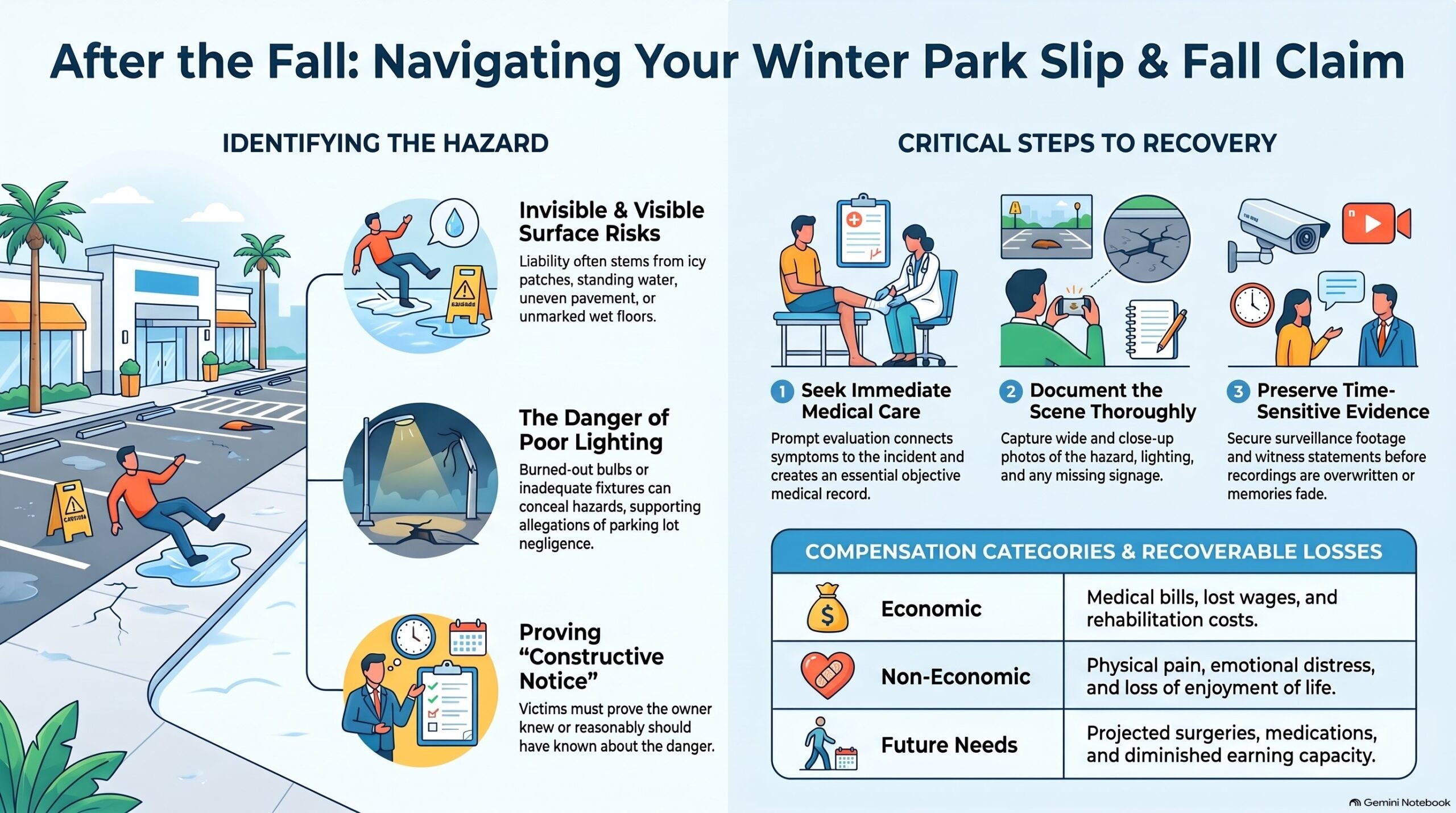


How We Can Help With Your Winter Park Slip & Fall Outdoor & Parking Lot Injury Claim
When a person suffers injuries in a Winter Park outdoor or parking-lot slip-and-fall, determining liability often requires a careful examination of the property’s condition, maintenance practices, and applicable safety standards. Legal professionals can help identify responsible parties, assess whether hazards were created or ignored, and explain available options without making unsupported assumptions about the claim.
Assistance may include documenting injuries, collecting photographs, locating witnesses, and pursuing evidence preservation before surveillance footage, inspection records, or maintenance logs disappear. Counsel can also review Comparative negligence issues, which may affect recovery if the injured person’s conduct is alleged to have contributed to the incident.
Careful insurance communications help protect the claimant from inaccurate statements and premature concessions. Legal representatives may organize medical documentation, calculate losses, and present settlement strategies based on the evidence and long-term consequences. Their role is to provide informed guidance, advocate responsibly, and support a fair resolution while treating the injured individual and all involved parties with professionalism.
OUR CONSULTATIONSARE FREE
START YOUR FREE CASE REVIEW

Understanding Winter Park Slip & Fall Outdoor & Parking Lot Injury Cases
Understanding a Winter Park outdoor or parking lot slip-and-fall injury case begins with examining how the incident occurred, what hazard caused the fall, and which party may have controlled or maintained the property. A careful review may identify the owner, property manager, business operator, contractor, or governmental entity responsible for relevant conditions.
The case generally turns on whether the responsible party knew, or reasonably should have known, about the unsafe condition and failed to respond within a reasonable time. Evidence can include photographs, incident reports, surveillance footage, maintenance records, witness statements, and medical documentation. Snow removal negligence may be relevant when contracted services or property personnel failed to address winter conditions appropriately. Premises safety signage can also affect whether adequate warnings were provided and whether the danger was reasonably apparent.
Each claim requires evaluation of notice, responsibility, comparative fault, injuries, and applicable filing deadlines, helping injured individuals pursue accountability while preserving accurate evidence and fair treatment.
Common Causes of Winter Park Slip & Fall Outdoor & Parking Lot
Common outdoor and parking lot hazards include icy surfaces, uneven pavement, and cracks that can cause a person to lose balance. Poor lighting may conceal dangerous conditions, while unmarked wet-floor hazards can pose unexpected risks near entrances and walkways. Property owners and responsible parties may be held liable when these conditions result from inadequate maintenance, inspection, or warning measures.
Icy Parking Lot Surfaces
Icy parking lot surfaces develop when snow, sleet, or freezing rain accumulates and later refreezes, often creating hazards that are difficult to see. Meltwater from vehicles, roof runoff, or poorly directed drainage can refreeze when temperatures drop, particularly in shaded areas and overnight. Inadequate plowing, delayed salting, and inconsistent monitoring may allow hazardous ice to remain near entrances, walkways, and accessible parking spaces. Property managers and their contractors may reduce risks by implementing a written slippery-ice policy, regularly inspecting surfaces, and documenting corrective actions. When a fall occurs, vendor maintenance records can help establish when treatment was performed and whether reasonable precautions were followed. Such evidence may assist injured individuals and their advocates in evaluating responsibility and pursuing appropriate support.
Uneven Pavement And Cracks
When pavement cracks, heaves, or settles during winter weather, the resulting elevation changes can create tripping hazards in parking lots, sidewalks, and outdoor access routes. Broken surfaces may develop from freezing temperatures, inadequate repairs, tree roots, heavy vehicles, or shifting soil. Property owners and managers may be responsible for inspecting these areas, addressing dangerous defects, and providing appropriate warnings while corrective work is pending. Claims can involve questions about inspection practices, maintenance records, repair timelines, and whether the condition was reasonably foreseeable. Slip signage issues may arise when warnings are missing, poorly positioned, or insufficiently specific. Similarly, uneven drainage disputes can concern water flow that erodes pavement, enlarges cracks, or causes recurring settlement. Careful documentation of the location, measurements, photographs, weather conditions, and reported complaints can assist a thorough evaluation for affected individuals and their families.
Poor Outdoor Lighting
Poor outdoor lighting can prevent pedestrians and drivers from seeing ice, snow, wet pavement, uneven surfaces, or other hazards in parking lots and walkways. Burned-out bulbs, inadequate fixtures, blocked light, and poorly positioned lamps may create dark areas where dangers remain difficult to identify. Property owners, managers, and maintenance companies generally have responsibilities to inspect lighting, replace defective equipment, and address reported problems within a reasonable time. Failure to provide adequate illumination may support allegations of Parking lot negligence when a person is injured after encountering a concealed condition. Businesses leasing portions of a property may also face tenant liability issues if their agreements assign responsibility for exterior lighting or if employees knew about a dangerous deficiency. Prompt reporting, documented inspections, and timely repairs can help protect visitors and promote safer access.
Unmarked Wet Floor Hazards
Unmarked wet floor hazards can develop in outdoor walkways, entry areas, and parking lots when rain, melting snow, vehicle runoff, or routine cleaning leaves surfaces slick without adequate warning. Property owners and managers generally have a responsibility to monitor these areas, address dangerous conditions, and provide timely warnings when removal cannot occur immediately. A missing cone, sign, or barrier may indicate a Failure Notice in the property’s safety practices, particularly when employees knew or reasonably should have known about the moisture. Drainage problems, leaking equipment, and inadequate maintenance can create a Hidden Liability that increases the risk of serious injury. Visitors, employees, and service providers may suffer fractures, head injuries, or other harm after an unexpected fall. Documenting the condition can help clarify responsibility and support fair assistance.
Don’t Wait. Call Our Florida Personal Injury Lawyers Now!


Legal Rights of Winter Park Slip & Fall Outdoor & Parking Lot Injury Victims
Winter Park slip-and-fall victims injured on sidewalks, walkways, or in parking lots may have legal rights if a property owner or manager failed to address a hazardous condition or provide adequate warning. Under Florida law, a property owner’s premises duty may include reasonable inspection, maintenance, correction of known dangers, and appropriate warnings. Victims may seek compensation for medical expenses, lost income, rehabilitation, pain, and other legally recognized losses when negligence caused the injury.
Winter Park slip-and-fall victims may seek compensation when negligent property owners fail to address hazards or provide adequate warnings.
Important considerations may include:
- Evidence showing the condition, location, and time of the incident
- Notice establishing that the owner knew or reasonably should have known about the danger
- Comparative negligence, which may reduce recovery if the victim’s conduct contributed to the accident
An injured person should promptly obtain medical care, preserve photographs and records, identify witnesses, and avoid statements that speculate about fault. A qualified attorney can evaluate liability, communicate with insurers, protect applicable deadlines, and pursue a fair resolution while supporting the victim’s recovery and preserving access to needed resources.
Why Do Winter Park Slip & Fall Outdoor & Parking Lot Injuries Happen?
Outdoor and parking lot slip-and-fall injuries in Winter Park often result from hazardous conditions that property owners or managers failed to identify, correct, or adequately warn about. Weather hazards, including rain, standing water, wet leaves, and reduced visibility, can make walking surfaces unexpectedly dangerous. Uneven pavement, potholes, cracked sidewalks, loose gravel, inadequate lighting, and poorly designed curbs may also create fall risks. In retail settings, spills, debris, merchandise, or recently cleaned floors can cause injuries when employees do not respond promptly. Effective store procedures should require regular inspections, timely cleanup, maintenance, warning signs, and documentation of identified hazards. When those procedures are missing or inconsistently enforced, preventable conditions may remain in areas used by customers, employees, and visitors. Victim documentation can later help establish the nature and duration of a dangerous condition, including photographs, witness accounts, incident reports, and medical records. Such evidence may clarify whether reasonable property-management practices were followed before the incident.
What Should You Do After a Winter Park Slip-and-Fall Outdoor & Parking Lot Injury?
After an outdoor or parking lot injury in Winter Park, the injured person should seek immediate medical care, even if symptoms initially appear minor. The accident scene should be documented with photographs, witness information, and details about the hazardous condition. The property owner or responsible party should also be notified promptly to create a record of the reported hazard.
Seek Immediate Medical Care
Prompt medical attention is vitally important after a slip and fall in Winter Park, whether the incident occurred on a sidewalk, roadway, or parking lot. An injured person should request an Emergency first response when pain, bleeding, loss of consciousness, breathing difficulty, or possible head, neck, or spinal injury appears. A bystander should call for help and avoid moving the person unless immediate danger requires it. Before providing assistance, the bystander should obtain consent when the individual is conscious and able to respond. Professional evaluation remains important even when symptoms initially seem minor because some injuries develop gradually. The injured person should follow medical instructions, attend recommended appointments, and keep records of examinations, diagnoses, treatments, medications, and related expenses. Prompt care supports recovery and creates reliable documentation for future needs.
Document the Accident Scene
A thorough record of the accident scene can preserve important evidence after a Winter Park slip-and-fall on a sidewalk, roadway, or parking lot. If physical condition permits, the injured person or a trusted companion should photograph the precise area from several angles, including uneven pavement, standing water, ice, debris, inadequate lighting, damaged curbs, and nearby signs. Images should show both close details and the broader setting, with location information and timestamps preserved when possible. Names and contact information for witnesses should be collected, along with a factual account of what occurred before memories change. Flushing incident details from memory can weaken later explanations, so notes should be made promptly. The injured person should also maintain medical records and calendars for recording injury progression, treatment, limitations, and related expenses.
Report the Hazard Promptly
When a hazardous condition causes a slip-and-fall in a Winter Park outdoor area or parking lot, the injured person should promptly report it to the property owner, manager, business representative, or responsible maintenance department. The report should identify the location, describe the condition, and state when the incident occurred. A written notice, email, or incident report can create a time-stamped record, while a copy should be retained for personal files. The injured person should avoid making assumptions about fault or minimizing symptoms when communicating with representatives. Prompt reporting allows responsible parties to inspect the area, correct the danger, and preserve relevant evidence that may assist others. It also helps address Customer insurance timelines and supports scene safety planning. Medical care and legal guidance may be appropriate, particularly when injuries or disputed responsibility affect the claim.
Don’t Wait. Call Our Florida Personal Injury Lawyers Now!
Critical Evidence in a Winter Park Slip & Fall Outdoor & Parking Lot Injury Case
Vital evidence can help establish how the hazardous condition caused the Winter Park outdoor or parking lot injury and document its resulting impact.
Important materials may include:
- Photographs of hazardous conditions and surveillance video footage
- Witness statements and reliable contact information
- Medical records and injury documentation
Promptly preserving this evidence can support a clear, fact-based evaluation of the potential claim.
Photographs of Hazardous Conditions
Photographs documenting hazardous conditions can provide compelling evidence in a Winter Park slip-and-fall case, particularly when an injury occurs outdoors or in a parking lot. Images may show standing water, uneven pavement, inadequate lighting, debris, ice, or obstructed walkways as they appeared at the time of the incident. A person taking photographs should capture wide views to establish the location, followed by close-up images showing the condition’s nature and scale. Safety signage, or its absence, should also be recorded without altering the area. Photographs should include identifiable landmarks and, when possible, the date and time. Prompt incident reporting can help connect the images to the event. Careful evidence preservation protects original files and related information. Organized claim documentation can assist an attorney in evaluating notice, responsibility, and the injury’s connection to the hazardous condition.
Surveillance Video Footage
Surveillance video footage may provide objective evidence of the conditions and events surrounding a slip-and-fall in Winter Park in an outdoor area or parking lot. Cameras may show lighting, water, debris, uneven pavement, warning signs, and how long a hazardous condition existed before the incident. Because many systems automatically overwrite recordings, prompt preservation of video footage can be critical. A legal representative may send a preservation request to the property owner, store, security company, or parking operator, identifying relevant cameras, dates, and time ranges. During a store liability investigation, counsel may examine camera placement, maintenance records, incident reports, and retention policies. Footage should be obtained lawfully and reviewed alongside photographs and other physical evidence. Preserving unaltered copies and documenting their sources can help establish the reliability of a claim.
Witness Statements and Contact Information
Witness statements and accurate contact information can provide valuable evidence in a Winter Park slip-and-fall occurring in an outdoor area or parking lot. Individuals who observed the incident, as well as information about nearby conditions, lighting, warning signs, or property maintenance, may offer details that clarify what occurred. Their names, telephone numbers, email addresses, and other legal contact details should be recorded promptly and accurately. A witness’s recollection may change, making early documentation important when establishing timelines for evidence. Claimant cooperation can help identify witnesses, preserve their accounts, and ensure that communications remain organized. Witness statements should distinguish personal observations from assumptions and should include the location, approximate time, and relevant conditions. A qualified legal professional may appropriately contact witnesses, evaluate consistency, and preserve testimony while respecting privacy and applicable procedural requirements.
Medical Records and Injury Documentation
When a person is injured in a Winter Park outdoor or parking-lot slip-and-fall, medical records and injury documentation can establish the nature, timing, and extent of the claimed harm. Prompt evaluation helps connect symptoms to the incident and creates an objective record of complaints, diagnoses, treatment, and restrictions. Records may include emergency reports, imaging results, physician notes, prescriptions, therapy records, and documentation of missed work or necessary assistance. Consistent follow-up is important because gaps in treatment may raise questions about recovery or causation. Photographs of visible injuries, bruising, swelling, or medical devices can supplement clinical evidence. A lawyer may compare these materials with Surveillance video and information developed through witness coordination. Preserving complete records allows an injured person’s needs to be presented accurately and supports fair consideration of liability and compensation.
Long-Term Effects of Winter Park Slip & Fall Outdoor & Parking Lot Injuries
Winter Park outdoor and parking lot slip-and-fall injuries may produce chronic pain, reduced mobility, and lasting disability that affect daily activities and employment. Ongoing medical expenses can include treatment, rehabilitation, medication, assistive devices, and future care. These consequences may also create significant emotional and financial strain for injured individuals and their families.
Chronic Pain and Disability
Although a Winter Park slip and fall may initially appear minor, outdoor and parking lot injuries can develop into chronic pain, reduced mobility, and lasting disability. Nerve damage, joint injuries, spinal conditions, and improperly repaired fractures may limit standing, walking, lifting, or driving. These restrictions can interfere with employment, family responsibilities, and a person’s ability to serve others reliably. Persistent pain management may require coordinated care, activity modification, and strategies for maintaining safe daily functioning. When symptoms remain, workplace accommodations such as adjusted schedules, accessible parking, modified duties, or assistive equipment may help preserve independence. Documentation describing functional limitations can clarify the injury’s continuing impact. A Winter Park slip-and-fall lawyer may evaluate how a lasting impairment affects quality of life, work capacity, and future needs while pursuing appropriate accountability for the harm.
Ongoing Medical Expenses
Ongoing medical expenses may persist long after an outdoor or parking lot slip-and-fall in Winter Park, particularly when injuries require follow-up treatment, prescription medication, rehabilitation, injections, assistive devices, or corrective surgery. These costs can remain necessary even after initial care concludes, especially when chronic pain or disability requires continuing supervision. Medical documentation strategies should include preserving bills, treatment records, medication lists, provider recommendations, and evidence of medically necessary equipment. Consistent documentation helps establish the nature, duration, and reasonableness of ongoing care. A treating professional may also provide opinions regarding future treatment costs, anticipated procedures, and the likely duration of rehabilitation. Legal counsel can review these records and consult qualified medical or financial professionals when evaluating projected expenses. Such preparation supports a complete assessment of long-term medical needs and potential compensation.
Emotional and Financial Strain
A serious outdoor or parking-lot slip-and-fall in Winter Park can create emotional and financial strain that extends well beyond the initial medical treatment. Ongoing pain may limit work, family responsibilities, transportation, and participation in community activities. These restrictions can contribute to emotional distress, including anxiety, frustration, sleep disruption, or diminished confidence when moving through similar environments.
Financial pressure may develop when lost wages coincide with continuing treatment, medication, rehabilitation, and household assistance. Hidden costs can include transportation to appointments, necessary home modifications, reduced future earning capacity, and care provided by relatives or friends. For individuals committed to serving others, these consequences may affect professional duties and personal availability. Careful documentation of symptoms, expenses, missed work, and daily limitations can help clarify the injury’s long-term impact and support informed legal and financial decisions.
Proving Liability in Winter Park Slip & Fall Outdoor & Parking Lot Injury Cases
When a person is injured in a Winter Park outdoor area or parking lot, liability generally depends on proving that the property owner or responsible party knew, or reasonably should have known, about a hazardous condition and failed to address it within a reasonable time. Evidence may include photographs, surveillance footage, inspection records, maintenance logs, incident reports, and testimony from witnesses or employees. The injured person must also connect the dangerous condition to the fall and document resulting injuries through medical records and other reliable information. An attorney may examine whether poor lighting, uneven pavement, standing water, debris, inadequate warnings, or negligent snow and ice removal contributed to the occurrence. Potential negligence defenses may assert that the condition was open and obvious, temporary, or caused by the injured person’s conduct. If an employee created or failed to correct the hazard while working, the employer’s liability may also be relevant. Careful investigation helps clarify responsibility and supports fair accountability for affected individuals.
Dealing With Insurance Companies After a Winter Park Slip & Fall Outdoor & Parking Lot Injury
Insurance companies often begin evaluating a Winter Park outdoor or parking lot slip-and-fall claim soon after receiving notice of the incident. An adjuster may request recorded statements, photographs, medical records, employment information, and details about prior injuries. Injured individuals generally benefit from responding accurately and avoiding speculation, admissions, or statements that minimize their symptoms. A careful review of correspondence and proposed releases can help prevent unintended waivers of important rights.
Key evidence preservation should begin immediately. Photographs of the surface, lighting, warning signs, footwear, weather conditions, and visible injuries may help document what existed at the scene. Incident reports, witness contact information, surveillance requests, medical documentation, and expense records should also be retained.
Understanding Florida insurer tactics is important because early settlement offers may not reflect future treatment, lost income, or the full extent of harm. Legal guidance can help protect communications, evaluate available coverage, and encourage fair treatment while the injured person focuses on recovery and serving household responsibilities.
What to Expect During a Winter Park Slip & Fall Outdoor & Parking Lot Injury Claim Process
A Winter Park slip-and-fall claim typically begins with an initial case evaluation to assess liability, injuries, and available legal remedies. The process then involves gathering evidence, documenting damages, and negotiating with insurers based on the supporting facts. If negotiations are unsuccessful or a fair settlement cannot be reached, the claim may proceed toward formal resolution.
Initial Case Evaluation
During an initial case evaluation, a Winter Park slip-and-fall lawyer reviews the circumstances surrounding an outdoor or parking-lot injury to determine whether another party may be legally responsible. The discussion generally covers where and when the incident occurred, the nature of the alleged hazard, and the resulting medical treatment. The lawyer may ask about employment effects, prior injuries, and communications with property owners or insurers. Insurance timeline questions can clarify reporting deadlines, claim responses, and potential concerns involving recorded statements or settlement offers. The attorney may also explain evidence preservation steps without yet conducting the detailed evidence-gathering process addressed later. This evaluation helps identify potential defendants, applicable legal theories, procedural requirements, and realistic next steps while ensuring the injured person receives informed, service-oriented guidance.
Gathering Evidence
Effective evidence gathering begins with a systematic review of the conditions that led to the outdoor or parking-lot fall and the events that followed. A representative may document surface defects, inadequate lighting, standing water, ice, debris, or missing warnings through photographs, measurements, and witness statements. Weather patrol records can help establish when hazardous conditions were observed and whether reasonable precautions were taken. Maintenance logs may reveal inspection schedules, cleaning efforts, repairs, or recurring problems. Incident reports should be obtained and compared with medical records, testimony, and available security footage. Property policies can clarify responsibilities for inspections, snow or water removal, lighting, and warning signs. Preserving clothing, footwear, and other physical evidence may also assist the evaluation. Prompt, organized collection supports a reliable account for everyone involved.
Negotiating With Insurers
Once evidence has been preserved, insurer negotiations generally focus on liability, the severity of the injuries, and the losses supported by available records. An adjuster may review photographs, incident reports, witness statements, medical documentation, and information concerning the property owner’s duties. The insurer may question whether a hazardous condition existed, whether adequate warnings were provided, or whether the injured person contributed to the incident. Disputes over damages calculations can arise when insurers challenge medical charges, projected treatment costs, lost income, or claimed impacts on daily activities. Policy limits negotiations may become important when serious injuries appear to exceed available coverage. A representative may organize records, respond to requests, and explain how the evidence supports the claim. Throughout this stage, careful communication helps protect accuracy and promotes fair consideration for the injured person.
Resolving Your Claim
A Winter Park slip-and-fall claim typically concludes with a negotiated settlement, an insurer’s denial, or litigation when the parties cannot agree on responsibility and damages. During resolution, the injured person’s representative evaluates medical records, lost income, photographs, witness statements, and evidence of property maintenance. This Evidence documentation supports an Insurance claim strategy designed to establish negligence and calculate fair compensation. The insurer may request additional information, dispute liability, or present a settlement offer. A careful review considers current treatment, future medical needs, pain, functional limitations, and other documented losses before acceptance. If negotiations fail, a lawsuit may require discovery, depositions, expert testimony, mediation, and trial preparation. Throughout the process, counsel communicates significant developments, protects deadlines, and advances the claimant’s interests while seeking a responsible, equitable outcome.
Compensation for Winter Park Slip & Fall Outdoor & Parking Lot Injury Damages
Winter Park slip-and-fall victims may be entitled to compensation for medical expenses, lost income, rehabilitation costs, and other losses resulting from hazardous conditions on outdoor walkways or in parking lots. Recoverable costs may include emergency treatment, diagnostic testing, medication, physical therapy, and necessary pain management. A claim can also address future care when injuries require continued treatment, mobility assistance, or additional medical evaluation.
Documentation is crucial. Victims should preserve photographs of the scene, incident reports, witness information, medical records, receipts, and communications with property owners or insurers. These materials may help establish the condition that caused the fall, the resulting injuries, and the financial consequences.
Compensation may depend on whether a property owner or manager knew, or reasonably should have known, about the hazard and failed to correct or warn of it. A Winter Park slip-and-fall lawyer can investigate maintenance practices, identify responsible parties, and present a claim seeking appropriate recovery while helping injured individuals protect their rights throughout the process.
Economic vs Non-Economic Damages in Winter Park Slip & Fall Outdoor & Parking Lot Cases
Economic damages may include medical expenses, lost income, rehabilitation costs, and other measurable financial losses resulting from a fall at a Winter Park outdoor area or parking lot. Non-economic damages address less tangible harm, including pain, emotional distress, reduced quality of life, and lasting limitations. Proving these losses generally requires organized records, medical documentation, employment evidence, and testimony connecting the damages to the incident.
Economic Damages Explained
When a slip-and-fall occurs in an outdoor area or parking lot, damages generally fall into two categories: economic and non-economic. Economic damages represent measurable financial losses caused by the injury. They may include emergency treatment, hospital bills, medication, rehabilitation, transportation to medical appointments, and necessary assistive equipment. If the injury prevents work, recoverable losses may also include past lost wages, reduced earning capacity, or business income that cannot be replaced. Documentation strengthens these claims, including invoices, pay records, medical statements, and employment records. Comparative fault rules may reduce recovery if the injured person shares responsibility for the incident. Insurance coverage can affect payment, making policy limit negotiation important when available benefits may not cover documented losses. Careful evaluation helps ensure that service providers and families understand the financial consequences and pursue appropriate compensation.
Non-Economic Damages
Beyond documented financial losses, non-economic damages address the personal effects of an outdoor or parking-lot slip-and-fall in Winter Park. These damages may include physical pain, emotional distress, inconvenience, diminished enjoyment of life, and anxiety associated with returning to the location or resuming ordinary activities. They may also reflect lasting limitations that affect family participation, community service, employment satisfaction, or personal independence. The value of such harm depends on the injury’s severity, duration, treatment, and effect on daily living, rather than on a fixed invoice. Video documentation basics can help preserve a clear record of visible conditions and recovery-related limitations, while Insurance claim timelines may influence when information should be organized and submitted. A qualified attorney can evaluate these personal consequences alongside economic losses and pursue a fair, service-oriented resolution.
Proving Slip-Fall Losses
Establishing the full value of a Winter Park outdoor or parking lot slip-and-fall claim requires proof of both economic and non-economic losses. Economic damages may include emergency treatment, ongoing medical care, rehabilitation, prescription costs, lost wages, reduced earning capacity, and necessary household assistance. Pay stubs, invoices, medical records, employment statements, and expert projections can help establish these amounts. Non-economic damages address pain, emotional distress, inconvenience, disfigurement, loss of enjoyment, and diminished quality of life. Testimony from the injured person, family members, and medical professionals may demonstrate how the injury affected daily living. Evidence should also support the Negligence Elements, including proving duty, breach, causation, and damages. Photographs, incident reports, surveillance footage, and witness accounts can link hazardous conditions to the fall and clarify the losses that require compensation.
Don’t Wait. Call Our Florida Personal Injury Lawyers Now!
When a Winter Park Slip & Fall Outdoor & Parking Lot Injury Case Goes to Trial vs. Settlement
A Winter Park slip-and-fall injury case involving outdoor walkways or parking lots may proceed to trial or be resolved through settlement, depending on the available evidence, the parties’ willingness to negotiate, and the extent of the claimant’s damages. Settlement can provide a faster, more predictable resolution while reducing the demands placed on injured individuals and their families. Negotiations typically address medical expenses, lost income, ongoing care, and the strength of liability evidence.
A trial may become necessary when the parties disagree about responsibility, the severity of the injury, or appropriate compensation. Comparative negligence rules may affect the amount recoverable if evidence indicates that the claimant’s conduct contributed to the incident. The trial timeline factors can include discovery, expert evaluations, court availability, motions, and witness preparation. Counsel generally assesses these considerations before recommending a course of action. A measured strategy seeks fair compensation, preserves the claimant’s dignity, and supports informed decisions throughout the process while remaining attentive to the needs of all affected parties.
Florida Laws That May Affect Your Winter Park Slip & Fall Outdoor & Parking Lot Case
Florida premises liability laws may affect how a Winter Park outdoor or parking-lot slip-and-fall claim is investigated, valued, and resolved. Under Florida law, an injured person generally must show that a property owner or manager knew, or should have known, about a dangerous condition and failed to address it or provide adequate warning. Evidence may include inspection records, photographs, surveillance footage, maintenance policies, and witness accounts.
Important issues may include:
- Whether lighting, pavement, drainage, debris, or surface changes created an unreasonable risk.
- Whether the responsible party had actual or constructive notice of the condition.
- Whether comparative negligence reduced damages because the injured person may have failed to use reasonable care.
Parking-lot cases can also involve contractors, commercial tenants, municipalities, or other responsible entities, depending on control and maintenance duties. Applicable safety regulations and local ordinances may support the investigation, although their violation does not automatically establish liability. Careful fact-gathering helps protect an injured person’s interests while supporting fair treatment for all parties.
The Statute of Limitations for Winter Park Slip & Fall Outdoor & Parking Lot Injury Cases
In Florida, a person injured in a Winter Park outdoor or parking-lot slip-and-fall generally must file a premises-liability lawsuit within the applicable statute of limitations. For many negligence claims, Florida law provides a two-year period, although the precise deadline can depend on the incident date, the defendant, and the claim’s legal basis. Missing that deadline may permanently bar recovery, even when an unsafe condition caused serious harm.
Certain circumstances may affect when the clock begins or whether it pauses. Tolling of statute periods may apply in limited circumstances, including specific disability, concealment, or procedural circumstances recognized by law. A claimant should promptly preserve accident reports, photographs, medical records, witness information, and insurance communications because evidence may become unavailable over time.
A Comparative negligence overview is also relevant: Florida generally reduces damages according to an injured person’s percentage of fault, subject to current statutory rules. Because exceptions and deadlines are fact-specific, timely evaluation supports informed decisions and helps protect the interests of injured community members.
How a Winter Park Slip & Fall Outdoor & Parking Lot Lawyer Can Help You
When a Winter Park slip-and-fall occurs outdoors or in a parking lot, legal counsel can evaluate the property owner’s potential liability and develop an evidence-based claim. A lawyer may investigate lighting, pavement conditions, drainage, warning signs, maintenance records, and prior complaints to determine whether a hazardous condition was known or reasonably discoverable.
Legal assistance may include:
- Evidence preservation tips, including photographing conditions, securing surveillance footage, and identifying witnesses.
- Insurance claim strategy guidance designed to present documented losses accurately and address adjuster requests.
- Coordination with medical providers and financial professionals to organize treatment records, wage information, and related damages.
Counsel can also assess comparative-fault allegations, communicate with insurers, and explain available legal remedies in clear terms. This support allows an injured person and family to focus on recovery while the claim is handled carefully. A lawyer may pursue fair compensation for medical expenses, lost income, property damage, pain, and continuing care when supported by reliable documentation.
When to Contact a Winter Park Slip & Fall Outdoor & Parking Lot Lawyer
Prompt legal guidance is often most valuable before an injured person gives a recorded statement, signs an insurance release, or allows important evidence to disappear. A Winter Park slip-and-fall outdoor and parking lot lawyer may be contacted promptly after a fall, particularly when injuries require emergency care, hospitalization, or ongoing treatment. Early consultation can help preserve photographs, surveillance footage, witness accounts, weather records, and maintenance information while they remain available.
Legal assistance may also be appropriate before/after medical evaluations, because statements about symptoms, treatment, and physical limitations can affect a claim. A lawyer can explain practical steps without interfering with necessary healthcare decisions. If an insurer delays payment, requests extensive documentation, minimizes injuries, or issues a denial, insurance denial support may be needed before deadlines pass. Consultation is also prudent when multiple parties, unclear property ownership, dangerous conditions, or potential comparative fault complicate the incident. Timely contact allows an injured person to understand available options and protect important interests.
Why You Need an Experienced Winter Park Slip & Fall Outdoor & Parking Lot Lawyer
An experienced Winter Park slip-and-fall, outdoor, and parking lot lawyer can evaluate the incident, identify potentially responsible parties, and develop a strategy based on the available evidence. Such counsel can determine whether an Ice hazard, inadequate lighting, surface defect, or negligent maintenance contributed to the fall. Early investigation may preserve surveillance footage, inspection records, photographs, witness accounts, and other proof before it disappears or becomes difficult to obtain.
Experienced representation also helps establish how the injury occurred and who owed a duty of care. A lawyer can organize medical documentation, connect treatment to the incident, and assess the full impact of resulting limitations. This preparation may be particularly important when insurers use tactics such as delayed responses, disputed liability, or requests for broad statements to reduce claim value. Skilled legal assistance can protect the injured person’s interests while promoting a fair resolution and supporting responsible advocacy for needed care and accountability.
How to Choose the Right Winter Park Slip & Fall Outdoor & Parking Lot Lawyer for Your Case
Choosing the right Winter Park slip-and-fall outdoor and parking lot lawyer requires careful consideration of experience, resources, and familiarity with premises liability claims. A qualified attorney should provide a thorough Case evaluation, identify potentially responsible parties, and explain how Florida law may affect recovery. The lawyer should also demonstrate a disciplined approach to evidence preservation, including photographs, incident reports, medical records, surveillance footage, and witness information. Clear communication is indispensable, particularly when an injured person or family seeks guidance while managing medical treatment and financial pressure. During consultations, prospective clients should ask how the attorney develops a settlement strategy, assesses damages, and prepares for litigation if negotiations do not produce a fair result. Experience with insurer negotiation is equally important because adjusters may minimize responsibility or undervalue losses. A suitable lawyer should offer realistic assessments, explain fees and timelines, and maintain a service-oriented commitment to protecting the client’s interests throughout the claim.
About The Law Offices of Anidjar & Levine
The Law Offices of Anidjar & Levine provides legal representation for individuals injured in outdoor and parking-lot slip-and-fall incidents in Winter Park and throughout Florida.
The firm evaluates premises liability claims involving hazardous surfaces, inadequate lighting, poor maintenance, and other dangerous conditions.
Its attorneys examine applicable negligence standards to determine whether a property owner, manager, or contractor failed to exercise reasonable care.
The firm also assists clients with evidence preservation, including photographs, surveillance footage, incident reports, medical records, and witness information.
Prompt preservation can help clarify how an injury occurred and identify responsible parties.
When insurers dispute responsibility or minimize damages, the attorneys address insurance defense strategies and pursue compensation supported by documented losses and medical evidence.
The Law Offices of Anidjar & Levine approaches each matter by explaining available legal options, communicating developments, and preparing cases for negotiation or litigation.
Its services are intended to help injured individuals and families seek accountability while steering through the legal process with informed, diligent representation.

Frequently Asked Questions
Can I Pursue a Claim if I Slipped and Fell in a Privately Owned Parking Lot?
A person may pursue a claim after slipping and falling in a privately owned parking lot if hazardous conditions resulted from negligent maintenance or another party’s failure to exercise reasonable care. Under premises liability principles, the injured individual generally must show that the owner or operator knew, or should have known, about the danger and failed to correct or warn of it. Evidence may include photographs, witness statements, medical records, and incident reports.
What Happens if Poor Lighting Contributed to My Winter Park Outdoor Fall?
Poor lighting may support a premises liability claim if it concealed a hazard and the property owner knew, or reasonably should have known, that illumination was inadequate. The injured person generally must show that the condition caused the fall and that reasonable safety measures were not provided. Comparative negligence may reduce recovery if the person failed to exercise appropriate care. Prompt preservation of evidence, including photographs, witness information, surveillance footage, and medical records, is important.
Can Weather Conditions Affect Responsibility for a Parking Lot Slip and Fall?
Weather conditions can affect liability in a parking lot slip-and-fall, but they do not automatically eliminate it. Rain, ice, or debris may create temporary hazards requiring reasonable warnings, removal, or inspection. Main Liability Factors include whether the property owner knew, or should have known, about the danger and responded appropriately. Negligent Maintenance may apply when drainage, lighting, or snow-and-ice procedures are inadequate. Evidence and local conditions remain important.
May I Recover Damages if I Was Not Wearing Appropriate Footwear?
Recovery may still be possible even if a person was not wearing appropriate footwear, although the choice of footwear can affect the claim’s value. Under comparative negligence, damages may be reduced if the person’s conduct contributed to the fall. Footwear liability depends on whether the property owner negligently created or failed to address a dangerous condition, such as ice, debris, or inadequate lighting. Evidence regarding warnings, inspections, weather conditions, and the footwear itself can help determine responsibility.
Can a Landlord Be Responsible for Injuries Occurring in a Tenant’s Parking Area?
A landlord can be responsible for injuries in a tenant’s parking area when premises liability duties include maintaining shared spaces or addressing known hazards. Responsibility depends on control, lease terms, tenant access, and whether the landlord received adequate notice. In regions experiencing winter weather, snow removal obligations may also apply, particularly when the landlord undertook that service or failed to correct dangerous conditions within the required notice period. Evidence and local law remain decisive.
—————————
Outdoor and parking lot slip-and-fall injuries may result from hazardous conditions, inadequate maintenance, or insufficient warnings.
Victims may face medical expenses, lost income, and lasting limitations, making timely legal guidance important.
An experienced Winter Park slip-and-fall lawyer can investigate the incident, preserve evidence, identify responsible parties, and pursue appropriate compensation.
The Law Offices of Anidjar and Levine can evaluate your claim and help you understand your legal options as a Winter Park Personal Injury Lawyer.

