

The Law Offices of Anidjar and Levine helps at-risk victims of Winter Park slip and fall accidents investigate hazardous conditions, preserve evidence, and pursue compensation for medical expenses, lost income, rehabilitation, and lasting impairments. These cases may involve wet floors, uneven surfaces, inadequate lighting, missing handrails, or insufficient warnings. A Winter Park Personal Injury Lawyer may evaluate property ownership, notice, maintenance practices, causation, comparative fault, and filing deadlines. Prompt medical care and careful communication with insurance companies are important. Additional legal guidance can clarify available options and critical next steps.
Main Takeaways
- A Winter Park slip-and-fall lawyer can evaluate whether unsafe conditions, inadequate warnings, or delayed cleanup contributed to your injury.
- At-risk victims may require tailored analysis of age, mobility limitations, medical history, supervision, and rehabilitation needs.
- Common hazards include wet floors, uneven surfaces, inadequate lighting, missing handrails, clutter, ice, and unsecured mats.
- Preserve photographs, witness information, incident reports, surveillance footage, maintenance records, medical documents, and communications.
- Seek prompt medical care and legal advice before giving statements, accepting payment, or allowing applicable claim deadlines to expire.
How We Can Help With Your Winter Park Slip & Fall At-Risk Victims Injury Claim
When a slip and fall injures an at-risk victim in Winter Park, prompt legal guidance can be essential to protecting the individual’s rights and pursuing appropriate compensation. A legal team can begin by listening carefully to the victim, family, or caregiver and documenting the incident before important evidence disappears. Counsel may investigate property conditions, maintenance practices, warning procedures, and whether negligent supervision contributed to the injury. The review can also examine employee misconduct, inadequate training, or failures to respond to known hazards.
Attorneys may request records, preserve photographs, identify witnesses, and evaluate premises security, including lighting, access controls, and property management policies. Surveillance gaps or missing footage may require focused inquiry into preservation practices and responsible parties. The legal team can communicate with insurers, coordinate medical documentation, and assess available recovery without placing additional burdens on the injured person. Throughout the process, representatives can advocate respectfully for at-risk victims while pursuing accountability and a resolution that supports ongoing care.
Understanding Winter Park Slip & Fall At-Risk Victims Injury Cases


A Winter Park slip and fall case involving an at-risk victim requires careful analysis of both the incident and the victim’s specific vulnerabilities. Risk assessment considers the person’s age, health history, mobility limitations, and need for assistance when evaluating injury severity. These factors may affect medical treatment, rehabilitation, and the evidence needed to establish damages.
OUR CONSULTATIONSARE FREE
START YOUR FREE CASE REVIEW

Premises liability principles generally require examination of the property owner’s responsibilities, the victim’s circumstances, and whether unsafe conditions caused the incident. Legal eligibility depends on facts such as ownership, notice, reasonable care, applicable deadlines, and the connection between the condition and the injury. Disability impacts may include reduced independence, additional caregiving needs, interrupted therapy, or long-term changes in daily activities. A careful case review should protect the individual’s dignity while identifying available remedies. Families, caregivers, and advocates can help preserve records, medical documentation, witness information, and other evidence supporting a fair evaluation of the claim.
Don’t Wait. Call Our Florida Personal Injury Lawyers Now!
Common Causes of Winter Park Slip & Fall At-Risk Victims
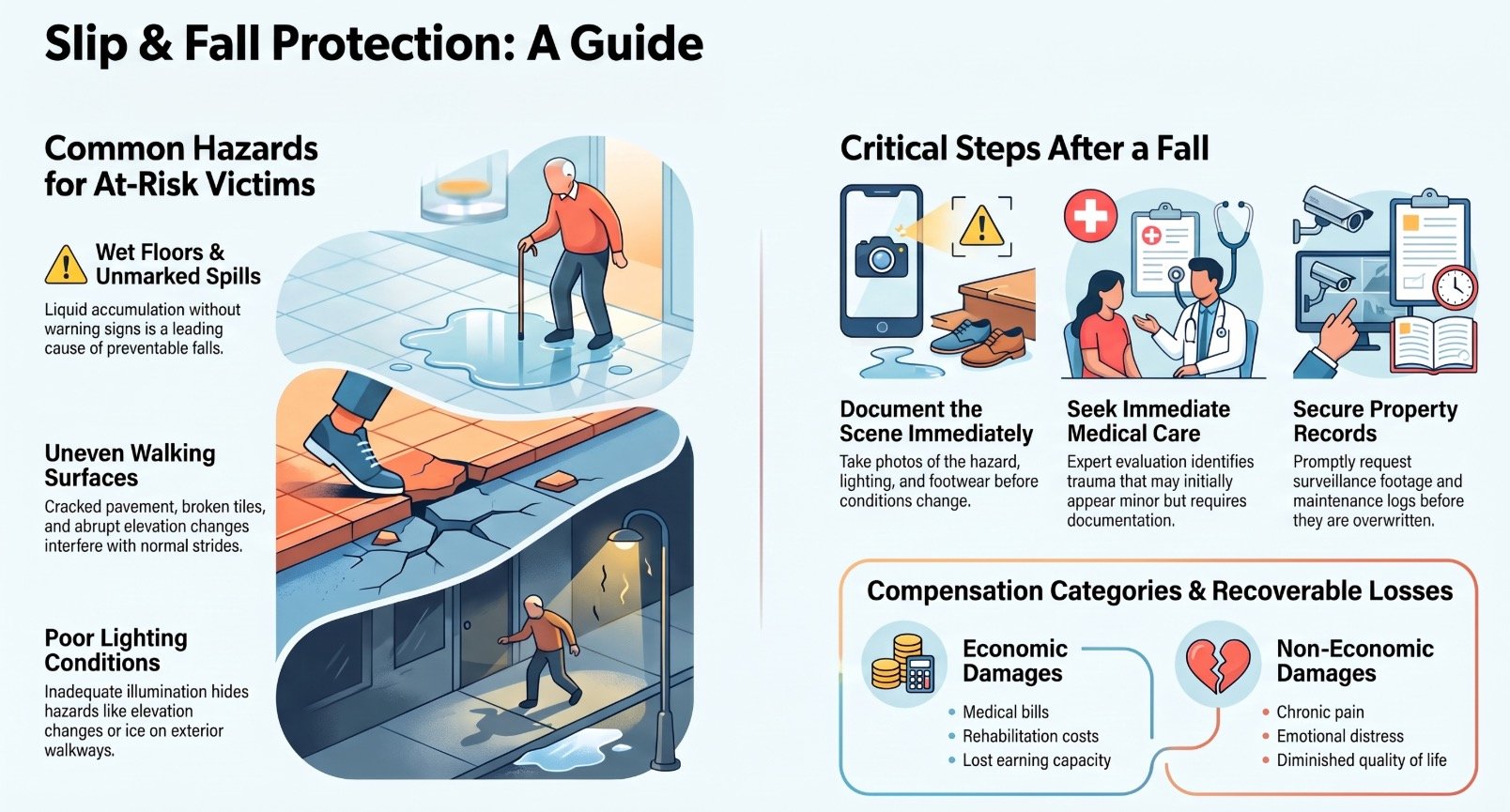
Common causes of slip-and-fall incidents include wet floor hazards, uneven walking surfaces, and poor lighting conditions. Cluttered walkways may also obstruct safe passage and increase the likelihood of a fall. Each condition can create significant risks for individuals who are especially vulnerable to serious injuries.
Wet Floor Hazards


Wet floor hazards are a leading cause of slip-and-fall incidents in Winter Park, particularly when water, cleaning solutions, or other liquids accumulate on walking surfaces without prompt removal or adequate warning. These conditions may arise from leaking equipment, tracked-in rainwater, spilled beverages, or routine maintenance. Businesses should inspect floors, establish timely cleanup procedures, and place visible warning signs while surfaces remain hazardous. Workplace negligence may exist when employees or managers recognize a spill but fail to address it within a reasonable period. Property owners and managers also have landlord duties, including maintaining common areas, responding to reported leaks, and warning residents or visitors about known moisture hazards. Documentation of the location, liquid source, warning measures, and incident timing can help clarify whether reasonable safety practices were followed and whether preventable conditions contributed to an injury.
Uneven Walking Surfaces
Uneven walking surfaces can create serious fall risks in Winter Park when cracked pavement, raised sidewalks, broken tiles, worn flooring, or abrupt changes in elevation interfere with a person’s normal stride. These conditions may result from property deterioration, inadequate inspections, construction defects, or failed sidewalk maintenance. Winter weather can worsen hazards when snow removal policies leave packed snow, ice, or displaced materials across pedestrian routes. Property owners, businesses, and public entities may have responsibilities to identify dangerous conditions, arrange timely repairs, and provide reasonable warnings when immediate correction is not possible. Individuals injured after encountering an unreasonably uneven surface may require medical care, documentation, and assistance evaluating potential liability. A careful review of maintenance records, photographs, witness accounts, and applicable safety standards can help clarify how the hazardous condition developed and whether responsible parties acted appropriately.
Poor Lighting Conditions
Inadequate lighting can make hazards difficult to see, increasing the risk of a slip and fall in Winter Park properties. Dim hallways, burned-out bulbs, and poorly illuminated entrances may prevent visitors from recognizing changes in elevation, wet surfaces, or other dangerous conditions. During colder weather, limited illumination can conceal ice hazards on exterior walkways, stairs, or parking areas. Insufficient street visibility may also make it difficult for pedestrians to identify uneven pavement, curbs, or poorly marked crossings. Property owners, managers, and maintenance personnel must provide reasonably safe lighting and promptly address known deficiencies. When lighting appears inadequate, affected individuals should exercise caution, document the conditions when safe, and report the problem to responsible parties. Such information may help establish how visibility contributed to the incident.
Cluttered Walkways
Cluttered walkways can create serious trip-and-fall hazards when boxes, merchandise, equipment, cords, debris, or other objects obstruct paths used by visitors. In Winter Park properties, these conditions may arise in retail stores, apartment buildings, offices, restaurants, and shared common areas. Property owners and managers generally should inspect walkways, remove unnecessary obstructions, maintain clear exits, and correct hazards within a reasonable time. Landlord negligence may be involved when management knows, or should know, that a passage is blocked but fails to arrange cleanup or provide adequate warnings. Tenant responsibilities may also apply when occupants place personal items, supplies, or equipment in shared paths. Documentation of the obstruction, location, lighting, and reported complaints can help clarify how long the condition existed and which party controlled the area when a visitor was injured.
Legal Rights of Winter Park Slip & Fall At-Risk Victims Injury Victims
When a dangerous condition causes a person to slip and fall on another party’s property, the injured individual may have legal rights to seek compensation for resulting losses. Under premises liability principles, a property owner, occupier, or manager may be responsible when failing to address a foreseeable hazard or provide adequate warnings.
Negligent supervision may also support a claim when inadequate oversight contributes to unsafe conditions.
- An injured person may seek damages for medical expenses, lost income, rehabilitation, and related financial losses.
- Compensation can sometimes include pain, reduced quality of life, and lasting impairment.
- Evidence such as photographs, incident reports, witness accounts, and medical records can help establish liability and damages.
- A victim may consult a qualified attorney before giving statements, accepting payment, or allowing claim deadlines to expire.
Prompt legal guidance can help protect an individual’s rights, preserve evidence, and promote fair treatment while serving the broader goal of accountability for preventable property injuries.
Why Do Winter Park Slip & Fall At-Risk Victims Injuries Happen?
Slip and fall injuries among at-risk victims in Winter Park often occur because property hazards are not identified, corrected, or adequately disclosed. Older adults, children, and individuals with mobility limitations may face increased danger from wet floors, uneven walkways, inadequate lighting, missing handrails, clutter, or poorly maintained surfaces. These conditions can become especially hazardous when businesses fail to conduct reasonable inspections or delay necessary repairs. Weather-related moisture tracked indoors, leaking fixtures, and unsecured mats may also create temporary dangers that employees overlook.
In some cases, inadequate warnings prevent visitors from recognizing a hazard before entering an unsafe area. Property owners and occupiers may also lack procedures for documenting incidents, reporting maintenance concerns, or monitoring recurring risks. Camera evidence can help establish how a condition developed, whether employees noticed it, and how long it remained. Promptly preserving surveillance footage is crucial because recordings may be overwritten, limiting objective evaluation of the circumstances.
What Should You Do After a Winter Park Slip & Fall At-Risk Victims Injury?
After a Winter Park slip and fall, an injured person should seek immediate medical care, even if symptoms seem minor at first. The individual should document the accident scene, including visible hazards, injuries, and witness information, when reasonably possible. The hazard should also be reported promptly to the property owner, manager, or responsible authority, with a record retained of the report.
Seek Immediate Medical Care
Prompt medical evaluation is essential for anyone injured in a Winter Park slip and fall, even if symptoms initially appear minor. A qualified healthcare expert can identify fractures, head trauma, soft-tissue damage, or other conditions that may worsen without treatment. The injured individual should describe the incident accurately, report every symptom, and disclose relevant medical history. Medication documentation should include prescriptions, over-the-counter drugs, dosage changes, and medical instructions to help providers coordinate safe treatment while maintaining an organized health record. Schedule and complete recommended follow-up care, including specialist visits, diagnostic testing, therapy, or reassessments. Patients should follow restrictions concerning activity, work, and mobility, and seek urgent attention if pain, swelling, dizziness, weakness, confusion, or other symptoms intensify. Consistent care supports restoration and demonstrates responsible attention to health.
Document the Accident Scene
When conditions permit, the injured person or a responsible companion should document the Winter Park accident scene before it changes or is cleaned. Photographs should show the entire area, the specific walking surface, lighting, footwear, clothing, and any visible substances, debris, cracks, uneven adjustments, or missing warnings. Images from several angles can provide useful perspective, while a ruler or familiar object may help demonstrate the hazard’s size. The individual should note the date, time, weather, surrounding conditions, and names of people who witnessed the incident. Property managers may later alter conditions, so prompt preservation requests can support a Surveillance footage review before recordings are overwritten. Relevant hazard reporting logs, inspection records, and maintenance documents may also help establish whether the condition was known or previously addressed.
Report the Hazard Promptly
Supplement scene documentation by promptly reporting the hazardous condition to the property owner, manager, business, or other responsible party. The injured individual should report the hazard immediately, preferably in writing, such as by email, incident form, or text message to management. A clear report should identify the location, time, dangerous condition, and resulting injury without speculation or exaggerated conclusions. If possible, the individual should ask staff to inspect and secure the area to protect other visitors from harm. Witness names and contact information should be provided when available. The individual should also preserve incident evidence by retaining copies of communications, incident reports, medical records, and photographs. Prompt notice helps responsible parties respond appropriately and may support later evaluation of liability and damages.
Critical Evidence in a Winter Park Slip & Fall At-Risk Victims Injury Case
Critical evidence can help establish how the Winter Park slip and fall occurred, who may be responsible, and the extent of the resulting injuries.
A careful record of the following materials may support evaluation of an at-risk victim’s injury claim:
- Accident scene photographs
- Witness contact information
- Medical treatment records
- Property maintenance evidence
Accident Scene Photos
Photographs taken immediately after a slip and fall can preserve conditions that may later change or disappear, making them important evidence in an at-risk victim’s injury claim. Images should capture the entire area, the specific hazard, lighting, warning signs, floor surfaces, and surrounding conditions. Several angles and distances can help establish location and scale without altering the scene. A date, time, and location record may strengthen the photographs’ reliability, while original files should be preserved without editing. When injuries or limited mobility prevent the victim from documenting the area, a caregiver or other responsible person may assist promptly and carefully. Counsel can compare images with surveillance footage review and weather condition logs to assess notice, maintenance, and causation. Collect photographs respectfully, preserving dignity and safety throughout the process.
Witness Contact Information
Witness contact information can preserve accounts that help establish how a slip and fall occurred and whether the property owner had notice of a dangerous condition. Names, telephone numbers, email addresses, and brief descriptions of each person’s observations should be recorded promptly. Eyewitness statements may clarify the hazard’s location, appearance, warning signs, lighting, and the property’s response before or after the incident. Contact details also permit later clarification if memories differ or additional facts emerge. People who saw employees, managers, or other visitors discuss the condition may provide important context. If video surveillance exists, witnesses may identify relevant cameras, timeframes, or events not visible in photographs. Preserving these leads supports an orderly investigation and helps protect the interests of injured individuals and the wider community.
Medical Treatment Records
Medical treatment records provide objective documentation of the injuries sustained in a Winter Park slip and fall and the care required afterward. They may include emergency evaluations, diagnostic testing, physician notes, prescriptions, therapy plans, and follow-up assessments. These materials establish diagnoses, treatment timelines, and the seriousness of reported symptoms.
Consistent records can help connect the injuries to the incident, particularly when treatment begins promptly and continues as recommended. They may also describe functional impairment, limitations on work or daily activities, and anticipated recovery needs. Individuals should preserve bills, discharge instructions, imaging reports, and communications from medical providers. Complete records allow legal professionals to evaluate damages and support efforts to obtain appropriate assistance for injured community members. Share treatment information accurately, and identify and explain gaps, delayed visits, or unrelated conditions.
Property Maintenance Evidence
When a property condition contributes to a Winter Park slip and fall, maintenance evidence can help establish whether the responsible party knew or should have known about the hazard. Relevant materials may include inspection logs, cleaning schedules, repair requests, work orders, and employee communications concerning the area. Surveillance footage can show when a spill, obstruction, or unsafe surface appeared and whether staff observed or ignored it. An incident report may document the location, reported circumstances, witnesses, and actions taken after the fall. Prompt photographs can preserve details that routine cleaning or repairs might erase. Weather records, warning-sign placement, and prior complaints may further clarify notice and reasonable safety practices. Preserving these records supports a fair evaluation of responsibility, helps injured individuals pursue appropriate assistance, and encourages safer property management for others.
Don’t Wait. Call Our Florida Personal Injury Lawyers Now!
Long-Term Effects of Winter Park Slip & Fall At-Risk Victims Injuries
Winter Park slip-and-fall injuries may produce lasting consequences, including chronic pain, reduced mobility, and limitations on daily activities. Victims may also experience emotional and mental effects, such as anxiety, depression, or diminished confidence when moving independently. Ongoing medical expenses can include treatment, rehabilitation, medication, assistive devices, and follow-up care.
Chronic Pain and Mobility
Although some injuries from a slip and fall may initially appear minor, persistent pain and reduced mobility can develop over time, particularly in older adults and individuals with preexisting health conditions. Joint damage, fractures, ligament injuries, and nerve complications may interfere with walking, standing, bathing, or completing household tasks. Continued limitations can increase dependence on caregivers and create additional risks, including muscle weakness, balance problems, and subsequent falls. Medical evaluation, consistent treatment, and appropriate rehabilitation may help identify lasting impairments and support safer movement. Documentation of symptoms, care recommendations, and functional restrictions can also clarify the injury’s long-term impact. Property owners and managers can reduce hazards with effective snow-removal plans, prompt maintenance, adequate lighting, and stair-safety tips that address handrails, clear steps, secure surfaces, and visible warnings.
Emotional and Mental Effects
A serious slip and fall can produce lasting emotional and mental effects, particularly for older adults and others already facing mobility or health conditions. Fear of falling again may cause a person to avoid ordinary activities, social contact, or community participation. This withdrawal can contribute to anxiety, depression, sleep disruption, and diminished confidence, especially when independence has been affected. Emotional distress may also make communication with family members, caregivers, and providers more difficult. Post-accident documentation can help preserve observations about mood changes, isolation, and disrupted routines, providing useful context for evaluating the injury’s broader consequences. Insurance claim delays may intensify uncertainty and frustration, placing additional strain on victims and those assisting them. Compassionate support, careful monitoring, and timely advocacy can help protect dignity while addressing these lasting effects.
Ongoing Medical Expenses
Long-term medical expenses may continue well after the initial treatment for injuries sustained in a Winter Park slip and fall. Victims may require follow-up appointments, prescription medication, physical therapy, diagnostic testing, mobility equipment, or corrective procedures. Some injuries also create lasting limitations that demand home assistance, occupational therapy, or future surgery. Accurate documentation of invoices, treatment plans, travel costs, and anticipated care helps establish the financial impact of these needs. An attorney can review medical evidence, consult qualified professionals, and calculate total damages, including reasonably expected expenses. The legal process may also verify liability coverage to identify available insurance benefits and responsible parties. Careful preparation supports a fair claim and helps injured individuals access resources for ongoing treatment, rehabilitation, and daily support without placing unnecessary burdens on their families.
Proving Liability in Winter Park Slip & Fall At-Risk Victims Injury Cases
How can at-risk victims establish liability after a slip-and-fall accident in Winter Park? They generally must show that a property owner or occupier owed a duty of reasonable care, failed to address a dangerous condition, and caused the resulting injuries. Evidence may include photographs of the hazard, incident reports, witness statements, maintenance records, and CCTV video footage. Medical documentation can connect the fall to specific physical limitations, particularly for older adults or individuals with disabilities who may face heightened consequences from an injury.
A claimant may need to demonstrate that the responsible party knew, or reasonably should have known, about the condition. Constructive notice can arise when a hazard existed long enough that routine inspection should have discovered it. Owners may raise comparative negligence defenses, arguing that the injured person failed to observe warnings or acted unreasonably. A careful investigation can test those assertions and preserve evidence before it disappears. Legal guidance may help families and caregivers present an organized, accurate account that supports accountability and community safety.
Dealing With Insurance Companies After a Winter Park Slip & Fall At-Risk Victims Injury
After a Winter Park slip-and-fall injury, at-risk victims and their families may face insurance companies seeking statements, medical records, and other information before the full extent of the harm is known. Representatives should protect the injured person’s interests by communicating carefully and avoiding speculation about fault, recovery, or expenses. Recorded statements can contain inaccuracies or incomplete details, especially when pain, medication, age, or cognitive limitations affect recall. Before responding, a representative may seek guidance regarding what information is appropriate to provide and whether authorization is required for medical records. Monitor insurance timelines without letting adjusters pressure families into premature decisions or inadequate evaluations. Prompt medical attention, consistent follow-up, preservation of incident evidence, and compliance with treatment recommendations support damage mitigation while documenting the injury’s impact. Families supporting vulnerable individuals should keep organized records of correspondence, bills, photographs, and other relevant documents. Clear, respectful communication can help prevent misunderstandings while preserving the victim’s ability to pursue appropriate compensation.
What to Expect During a Winter Park Slip & Fall At-Risk Victims Injury Claim Process
A Winter Park slip and fall claim typically begins with an initial case evaluation to assess liability, injuries, and available legal remedies. The process then involves collecting evidence, communicating with insurers, and negotiating potential compensation based on the documented losses. If negotiations do not produce a fair resolution, the matter may proceed to settlement discussions or trial.
Initial Case Evaluation
During an initial case evaluation, a Winter Park slip and fall lawyer reviews the incident to determine whether the injured person may have a viable premises liability claim. The discussion typically addresses where the fall occurred, the nature of the hazard, resulting injuries, medical treatment, and applicable filing deadlines. The lawyer may explain how property ownership, control, notice, and comparative fault can affect responsibility without promising a particular outcome. The injured person may also receive guidance about communicating with insurers and avoiding statements that could undermine the claim. Questions concerning a Wrongful denial of benefits or liability can be assessed within the broader strategy. Counsel may outline potential settlement timelines, litigation risks, expected expenses, and available support. This evaluation helps individuals make informed decisions while preserving their ability to pursue fair compensation.
Evidence Collection Process
Building on the initial evaluation, the evidence collection process establishes the factual foundation of a Winter Park slip and fall injury claim. The injured person or representative may preserve photographs showing the floor condition, lighting, footwear, and surrounding area. Request surveillance footage promptly because businesses may routinely overwrite recordings. Counsel may help document signage, including warnings that were present, missing, obstructed, or unclear when the incident occurred. Witness statements can clarify timing, hazard location, employee responses, and conditions before and after the fall. Property records may include inspection reports, maintenance schedules, incident reports, and hazard logbooks. Medical records and employment documentation may also connect the event to resulting limitations. Careful preservation helps serving professionals present an accurate account while respecting privacy and evidentiary requirements.
Insurance Company Negotiations
Once a claim is reported, the insurer typically reviews the incident details, available evidence, medical records, and the policyholder’s potential responsibility. Adjusters may contact the injured person, property owner, witnesses, and treating providers to clarify how the fall occurred and whether unsafe conditions were documented. They often assess evidence of negligence, such as photographs, incident reports, inspection records, and testimony about notice of the hazard. They may also request recorded statements, authorizations, and additional documentation. The claimant’s communications should remain accurate, consistent, and limited to relevant facts, since statements can influence the insurer’s evaluation. The insurer reviews medical records and bills to understand diagnoses, treatment, and the relationship between the incident and the claimed injuries. A representative may help organize responses, protect the claimant’s interests, and promote a fair, orderly review.
Settlement Or Trial
After the insurer evaluates the claim, the injured person may pursue a negotiated settlement or continue toward trial if liability or damages remain disputed. Counsel typically reviews Liability proof, including incident reports, photographs, witness accounts, and evidence of unsafe conditions. Medical records, treatment needs, lost income, and long-term effects help determine settlement value. During negotiations, documented losses and credible testimony may provide negotiation leverage, while weaknesses in the opposing party’s position can influence proposed terms. If settlement discussions fail, the case may proceed through discovery, depositions, and pretrial motions. A trial strategy may address property-control issues, comparative fault allegations, and the presentation of medical evidence. The injured person generally makes the final settlement decision after receiving advice regarding risks, costs, timing, and the potential outcomes of trial.
Compensation for Winter Park Slip & Fall At-Risk Victims Injury Damages
Slip-and-fall victims in Winter Park may be entitled to compensation for injury-related damages when a property owner’s negligence contributed to the accident. A careful claim may address medical treatment, rehabilitation, necessary transportation, lost earning capacity, and other documented consequences arising from the injury. The recoverable amount depends on evidence showing the accident’s cause, the severity of the harm, and the property owner’s responsibility under Florida law.
An attorney serving injured community members can investigate hazardous conditions, preserve photographs and surveillance footage, identify witnesses, and collect medical records. This preparation may help prevent Case valuation mistakes, including overlooking continuing treatment or accepting an unsupported estimate of future needs. It may also counter insurer delay tactics, such as repeated requests for documentation or prolonged claim reviews. Prompt communication and organized records can protect the claimant’s position while negotiations proceed. Because deadlines and liability rules may affect recovery, victims should seek legal guidance before providing recorded statements or signing settlement documents that could limit their rights.
Economic vs Non-Economic Damages in Winter Park Slip & Fall At-Risk Victims Cases
Economic damages in Winter Park slip-and-fall cases may include medical expenses, lost income, and other measurable financial losses. Non-economic damages address less tangible harm, such as pain, emotional distress, and diminished quality of life, which require careful assessment. Comparing these categories helps clarify the full scope of an at-risk victim’s potential compensation.
Economic Damages Explained
When a fall occurs because a property owner or occupier failed to address a hazardous condition, the injured person may seek compensation for both economic and non-economic damages. Economic damages represent measurable financial losses connected to the injury. They may include emergency treatment, hospital services, medication, rehabilitation, medical equipment, transportation, and anticipated future care. Income lost during recovery may also qualify, supported by pay records, employer statements, tax documents, or other lost-wage documentation. If the injury limits hours, duties, promotions, or long-term work capacity, evidence may establish a future earning impact. Economic losses should be calculated carefully because incomplete records can obscure the assistance needed for recovery. Attorneys may coordinate with medical professionals, employers, and financial experts to present a clear, reliable accounting of past and anticipated expenses.
Non-Economic Damages Assessed
Beyond documented financial losses, non-economic damages may compensate an injured person for pain, emotional distress, inconvenience, disfigurement, and diminished enjoyment of life. In a Winter Park slip and fall claim, assessment generally considers the injury’s severity, treatment duration, physical limitations, psychological effects, and impact on ordinary activities. Testimony from the injured person, family members, medical professionals, and other witnesses may help establish how the incident changed daily life. Photographs, treatment records, and consistent descriptions can also support a credible evaluation. Comparative fault may reduce an award if the injured person contributed to the incident, depending on applicable law. Damages caps can limit certain non-economic recoveries in particular claims or against specific defendants. A careful assessment promotes fair recognition of suffering while respecting legal standards and evidentiary requirements.
Comparing Damage Categories
A clear comparison of damage categories helps establish the full financial and personal impact of a Winter Park slip and fall injury. Economic damages include medical bills, rehabilitation, prescription expenses, lost wages, reduced earning capacity, and other measurable costs. Comparing medical costs requires reviewing invoices, treatment records, insurance payments, and anticipated care needs to determine the injury’s complete financial effect. Non-economic damages address less tangible consequences, including pain, emotional distress, inconvenience, disability, disfigurement, and diminished enjoyment of life. Comparing pain levels involves considering injury severity, treatment duration, limitations, sleep disruption, and documented changes in daily functioning. A careful assessment considers both categories side by side, because financial losses may continue while personal suffering affects family responsibilities and independence. Evidence from medical professionals, employers, and caregivers can help present these damages accurately and support fair compensation.
Don’t Wait. Call Our Florida Personal Injury Lawyers Now!
When a Winter Park Slip & Fall At-Risk Victims Injury Case Goes to Trial vs Settlement
Although many Winter Park slip and fall injury claims resolve through settlement, some proceed to trial when the parties cannot agree on liability or fair compensation. In a settlement, the injured person and the property owner negotiate a resolution without presenting the dispute to a jury. Attorneys assess medical records, lost income, future needs, and available evidence to develop a reasoned settlement valuation. This approach may offer greater privacy, lower costs, and a more predictable outcome.
A trial requires preparation for discovery, witness testimony, exhibits, and cross-examination. In a premises liability case, the injured person generally must meet the burden of proof by showing that a dangerous condition caused the injury and that the property owner should be responsible. Counsel may develop courtroom strategy around surveillance footage, maintenance records, photographs, and credible testimony. Because trial outcomes remain uncertain, informed guidance helps families evaluate risks, preserve evidence, and pursue a resolution that supports recovery and serves the injured person’s long-term interests.
Florida Laws That May Affect Your Winter Park Slip & Fall At-Risk Victims Case
Florida laws governing premises liability may substantially affect an at-risk victim’s Winter Park slip and fall claim, including the standards for proving negligence and the time available to file a lawsuit.
Core considerations include:
- Premises liability: Property owners or occupiers may owe lawful visitors reasonable care, including addressing dangerous conditions or providing adequate warnings. Evidence may include photographs, incident reports, maintenance records, and witness statements.
- Comparative negligence: A claimant’s recovery may be reduced if the claimant’s conduct contributed to the fall. Accurate medical documentation and objective evidence can help clarify responsibility.
- Sovereign immunity: Claims involving public agencies may face special procedural rules, damage limitations, and pre-suit requirements. Legal guidance can help protect an injured person’s interests.
- Notice requirements: Certain claims require proof that the responsible party knew, or reasonably should have known, about the hazardous condition. Prompt reporting and preservation of evidence may support fair evaluation.
These laws can be especially significant for older adults and people with disabilities, whose injuries may require coordinated medical, family, and community support. Each matter requires individualized legal review.
The Statute of Limitations for Winter Park Slip & Fall At-Risk Victims Injury Cases
Time limits are another significant consideration in a Winter Park slip and fall injury claim, especially when an at-risk victim needs extended medical care or help from family members. Florida law generally sets a limited period to file a negligence lawsuit, and missing that deadline may permanently bar recovery. The applicable period can depend on the accident date, the victim’s legal status, the defendant’s identity, and whether an exception applies. An at-risk victim classification does not automatically suspend or extend the deadline, so caregivers should not assume that age, disability, or medical vulnerability changes the governing rule. Prompt documentation of treatment, incident details, and property conditions can help preserve accurate information while legal standards are evaluated. Insurance carriers may also raise Comparative negligence defenses, arguing that the injured person contributed to the occurrence. Those arguments are among the primary defenses that can affect potential recovery, but they do not replace compliance with filing requirements. Timely legal review helps protect procedural rights.
How a Winter Park Slip & Fall At-Risk Victims Lawyer Can Help You
A Winter Park slip and fall at-risk victims lawyer can coordinate the legal, medical, and evidentiary issues that often arise after a serious premises accident. The lawyer’s role may help families, caregivers, and injured individuals pursue accountability while protecting important information.
- Case evaluation: Counsel can assess property conditions, ownership duties, applicable insurance, and potential defenses.
- Evidence preservation: The lawyer can secure photographs, surveillance footage, incident reports, maintenance records, witness accounts, and physical evidence before they disappear.
- Damages valuation: Counsel can calculate medical expenses, rehabilitation costs, lost income, reduced earning capacity, and other losses supported by documentation.
- Claim management: The lawyer can communicate with insurers, organize records, consult qualified experts, and present a structured demand or lawsuit when appropriate.
This assistance lets at-risk victims focus on recovery while a legal professional handles complex responsibilities.
It also promotes fair treatment for those who may face limited mobility, cognitive challenges, or dependence on others after the accident.
When to Contact a Winter Park Slip & Fall At-Risk Victims Lawyer
Prompt consultation with a Winter Park slip and fall at-risk victims lawyer is advisable when an injury requires emergency care, causes lasting limitations, or may result from unsafe property conditions. Early contact can help preserve important information while memories remain clear and records are available. Individuals should seek guidance after falls involving fractures, head trauma, spinal symptoms, significant pain, or missed work, particularly when property maintenance appears questionable.
Preserve emergency medical documentation, including discharge instructions, diagnostic results, prescriptions, and follow-up recommendations. Photographs of the location, footwear, visible hazards, and injuries may also assist with accurate review. Prepare a witness statement timeline promptly, identifying who observed the incident, what each person reported, and when those conversations occurred. Document notice of the fall to a property owner or manager without altering facts or making speculative admissions. Timely consultation supports organized communication and helps protect an injured person’s ability to address immediate needs and applicable legal deadlines.
Why You Need an Experienced Winter Park Slip & Fall At-Risk Victims Lawyer
When a slip and fall involves significant injuries or disputed property conditions, an experienced Winter Park slip and fall at-risk victims lawyer can provide informed guidance through the claims process. Such counsel can investigate hazards, preserve photographs and records, identify responsible parties, and coordinate evidence supporting the injured person’s account.
Legal experience also helps clarify Comparative negligence basics. If a property owner argues that the victim contributed to the incident, the lawyer can assess whether that allegation is supported and explain how any assigned percentage may affect recovery. A careful evaluation can prevent unsupported conclusions from reducing an otherwise valid claim.
A Damages caps overview is equally important. Potential compensation may involve medical care, lost income, rehabilitation, pain, and future needs, while applicable Florida rules and claim types can influence available recovery. An experienced lawyer can organize documentation, address insurer tactics, and present the claim in a manner that protects the victim’s interests and supports fair treatment throughout the process.
How to Choose the Right Winter Park Slip & Fall At-Risk Victims Lawyer for Your Case
Several factors should guide the selection of a Winter Park slip and fall at-risk victims lawyer, including relevant experience, investigative resources, communication practices, and familiarity with Florida premises liability law. A qualified attorney should explain how they will preserve evidence, locate witnesses, and evaluate liability without promising a particular result.
Prospective clients should ask how the lawyer handles Insurance settlement timelines, medical documentation, and communications with claims adjusters. Strong preparation can improve negotiating leverage while protecting an injured person from pressure to accept inadequate compensation. The lawyer should also identify potential damages, applicable filing deadlines, and obstacles involving notice or comparative fault.
Review lawyer fee structures carefully, including contingency considerations, case expenses, and when fees become payable. Written explanations can prevent misunderstandings. The right advocate listens respectfully, communicates consistently, and shows a practical commitment to serving vulnerable individuals while pursuing a lawful, well-supported claim. References, disciplinary history, and professional credentials may also help inform a responsible decision.
About The Law Offices of Anidjar & Levine
The Law Offices of Anidjar & Levine represents individuals pursuing compensation after injuries caused by hazardous property conditions, including slip-and-fall incidents in Winter Park. The firm assists injured visitors, tenants, customers, and other at-risk victims by examining what occurred and identifying potentially responsible parties.
Its legal team reviews property conditions, maintenance practices, incident reports, witness accounts, medical records, and available surveillance footage. This process helps establish whether an owner, manager, or occupier failed to address a dangerous condition or provide an appropriate warning. Attorneys apply relevant Negligence standards while evaluating notice, foreseeability, and the relationship between the hazard and the injury.
The firm also considers comparative fault, which may affect the amount of compensation available if an injured person is alleged to share responsibility. Through case evaluation, communication with insurers, evidence development, and litigation when appropriate, the offices seek to serve clients with diligence, clarity, and respect while pursuing accountability and fair recovery.

Frequently Asked Questions
Can I File a Claim if I Was Partially Responsible for My Winter Park Fall?
Yes, an injured person may file a claim after a Winter Park fall even when partly responsible. Comparative fault rules may reduce compensation according to the person’s assigned percentage of responsibility, and Florida’s modified comparative negligence standard can bar recovery when that share exceeds the applicable threshold. Evidence for negligence may include photographs, surveillance footage, witness statements, medical records, and incident reports. Prompt legal evaluation can clarify deadlines, liability, and potential recovery.
What if the Property Owner Denies Knowing About the Dangerous Condition?
A property owner’s denial does not end a claim. The injured person generally carries the Burden Proof, requiring evidence that the dangerous condition existed, the owner knew or reasonably should have known about it, and failed to correct or warn visitors. Proving Negligence may involve photographs, surveillance footage, maintenance records, inspection policies, incident reports, witness statements, and medical documentation. Prompt investigation can preserve evidence and clarify whether liability is supportable.
Can Family Members Recover Damages After a Fatal Slip-And-Fall Accident?
Family members may recover damages after a fatal slip-and-fall accident through a wrongful death claim, provided Florida law recognizes their relationship and the evidence establishes liability. Wrongful death damages may include lost financial support, medical and funeral expenses, loss of companionship, and certain emotional losses. Surviving spouse eligibility generally receives priority, while children, parents, or other dependents may qualify under specific circumstances. Legal guidance helps identify eligible beneficiaries and preserve crucial evidence.
Will My Immigration Status Affect My Winter Park Injury Claim?
Immigration status generally does not prevent an injured person from pursuing a Winter Park injury claim. Liability typically depends on establishing negligence and documenting damages, not citizenship. However, statements about employment, medical history, or earnings should remain accurate, because inconsistencies may affect credibility. Individuals facing Deferred Removal Risks should seek coordinated advice from qualified personal-injury and immigration professionals. Preserving medical records, witness accounts, photographs, and Proof of Neglect can strengthen the claim.
Can I Pursue a Claim if My Slip-And-Fall Occurred at a Private Residence?
An injured person may pursue a claim after slipping and falling at a private residence if the property owner or occupier failed to address a reasonably foreseeable hazard. Landlord Liability may arise when a landlord retained control of the dangerous area or ignored required repairs. Negligent Maintenance, inadequate warnings, and unsafe conditions can support negligence claims. Evidence such as photographs, medical records, witness statements, and prior complaints can help establish responsibility and damages.
—————————
At-risk individuals may face serious complications after a Winter Park slip and fall, especially when age, disability, or preexisting medical conditions increase their vulnerability. Establishing liability requires a careful investigation of the hazardous condition, the property owner’s knowledge, and the resulting damages. An experienced Winter Park Personal Injury Lawyer can help protect the victim’s rights, preserve important evidence, and pursue appropriate compensation. The Law Offices of Anidjar and Levine provide knowledgeable guidance throughout the claims process, helping injured individuals and their families make informed legal decisions.

