

The Law Offices of Anidjar and Levine represents Florida property owners in roof and structural damage claims by evaluating policy coverage, storm evidence, inspection reports, repair estimates, and insurer communications to identify covered losses and responsible parties. Counsel may address denials, delayed payments, causation disputes, exclusions, depreciation, and inadequate repairs. When injuries occur, the claim may also involve medical expenses, lost income, pain, and long-term limitations. For related injury claims, a Florida Personal Injury Lawyer can help protect your rights. Prompt legal guidance helps preserve evidence, coordinate experts, and protect applicable deadlines. The following information explains how these claims are evaluated and pursued.
Main Takeaways
- A Florida property claims lawyer reviews your policy, inspection reports, photographs, estimates, and insurer communications to assess roof and structural damage coverage.
- Lawyers challenge denials, delays, depreciation disputes, exclusions, and disagreements over storm causation or the scope of necessary repairs.
- Common sources of damage include hurricanes, wind, hail, lightning, flooding, debris, foundation movement, and defective construction.
- Preserve photographs, videos, damaged materials, contractor reports, and correspondence before repairs alter evidence or obscure causation.
- Claims may involve contractors, landlords, property managers, insurers, and injury compensation, including medical expenses, lost income, and additional living expenses.
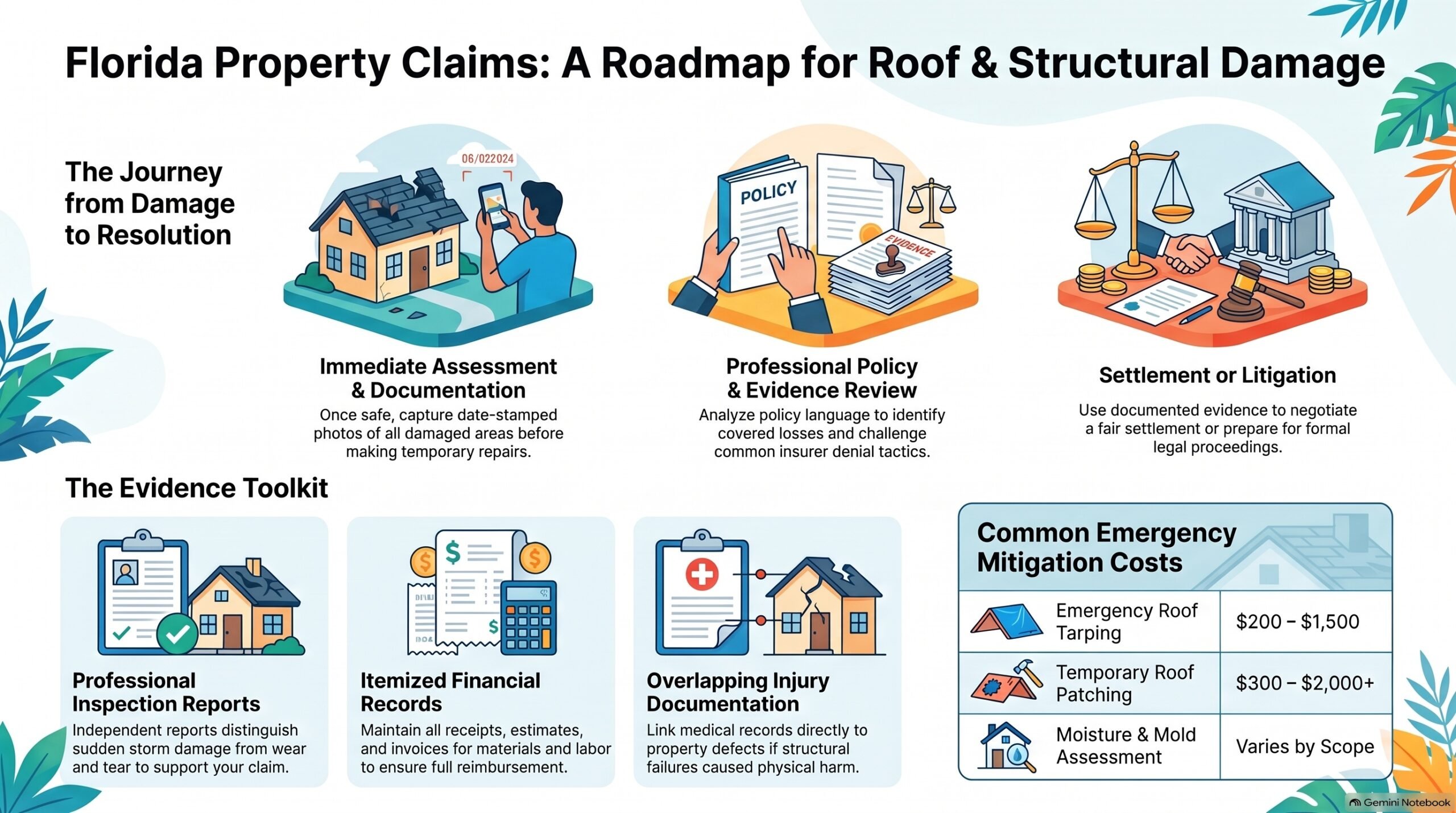


How We Can Help With Your Florida Property Claim Roof & Structural Damage Injury Claim
When a Florida property suffers roof or structural damage, an experienced property claim lawyer can evaluate the loss, identify the responsible insurance coverage, and pursue the compensation necessary for appropriate repairs. The lawyer can review policy language, inspection reports, photographs, contractor estimates, and communications with the insurer to determine whether the claim was properly investigated.
A focused Insurance dispute strategy may address delayed payments, incomplete adjustments, exclusions, depreciation, or disagreements concerning causation and repair scope. Counsel can organize injury claim documentation when a property incident also results in documented physical harm, while maintaining a clear distinction between property losses and personal injuries. The legal team may communicate with adjusters, consult qualified professionals, and present evidence supporting the client’s position. These efforts help property owners, families, and service-oriented organizations protect available resources and restore safe conditions. By managing procedural requirements and settlement discussions, counsel enables affected parties to focus on occupants, operations, and community responsibilities while the claim proceeds diligently.
OUR CONSULTATIONSARE FREE
START YOUR FREE CASE REVIEW

Understanding Florida Property Claim Roof & Structural Damage Injury Cases
Florida property claim roof and structural damage injury cases often involve overlapping issues of insurance, construction, and personal injury that require careful evaluation. These matters may arise when a property condition causes physical harm and generates disputes over repair responsibility and policy benefits. A Coverage denial does not necessarily resolve whether an insurer must investigate, defend, or pay covered losses. The analysis generally considers policy language, claim communications, inspection findings, and the relationship between the reported damage and the injury.
Prompt evidence preservation can protect photographs, videos, contractor reports, damaged materials, and relevant correspondence before repairs alter the condition. Medical documentation should clearly connect diagnosed injuries, treatment, limitations, and anticipated care to the incident, while avoiding unsupported conclusions. Attorneys may coordinate insurance, engineering, and medical evidence so that each issue is presented consistently. Settlement valuation typically reflects repair costs, property use, medical expenses, lost income, pain and suffering, and available coverage, subject to liability and proof. Careful preparation promotes fair outcomes for affected individuals and communities.
Common Causes of Florida Property Claim Roof & Structural Damage
Florida properties may sustain roof and structural damage from hurricanes and high winds, heavy rain and flooding, hail and lightning, or shifting foundations and other structural movement. Each cause can affect different building components, creating distinct issues for property owners and insurers to evaluate. Understanding the source and extent of the damage is necessary when evaluating a Florida property claim.
Hurricane And Wind Damage
Hurricanes and high-wind events can cause extensive roof and structural damage through powerful gusts, wind-driven rain, and flying debris. Gusts may lift shingles, tear membrane roofing, break trusses, and displace exterior materials, while debris can puncture roof surfaces or damage windows, doors, and load-bearing components. Proper documentation should identify the storm’s date, affected areas, visible damage, and necessary emergency repairs. Policyholders may benefit from preserving photographs, contractor estimates, and damaged materials for evaluation. Insurance policy exclusions can affect coverage for certain construction defects, maintenance conditions, or separately insured perils. Coverage denial reasons may include alleged wear and tear, insufficient proof of causation, late notice, or failure to mitigate damage. A qualified professional can review the policy, assess storm-related evidence, and help affected property owners pursue a fair claim.
Heavy Rain And Flooding
When heavy rain overwhelms drainage systems or enters through compromised roofing, it can damage roof assemblies, insulation, ceilings, framing, and other structural components. Floodwater may also migrate beneath flooring, behind walls, and into electrical or mechanical systems, creating hazards that are not immediately visible. Prolonged moisture weakens building materials and can promote mold growth, making prompt drying, inspection, and mold remediation critical. Property owners should document affected areas, preserve photographs, obtain professional evaluations, and report losses in accordance with policy requirements. Coverage may depend on the water source, exclusions, drainage conditions, and whether required maintenance was performed. A Florida property claim lawyer can assess disputed causation, interpret policy language, and help pursue payment for covered water damage, necessary repairs, and related mitigation services while treating affected occupants with care.
Hail And Lightning Impact
Hail can fracture shingles, dent metal components, dislodge protective granules, and damage skylights, windows, and exterior finishes, while lightning may ignite roofing materials or cause electrical surges that affect wiring, appliances, and structural systems. After an event, property owners should arrange prompt inspections, photograph visible damage, preserve damaged materials, and obtain professional repair estimates. A qualified roof contractor can identify concealed punctures, moisture entry, loose flashing, and compromised ventilation that may worsen over time. Electrical systems should be evaluated by licensed professionals before affected equipment is used. Weatherproofing tips include maintaining secure flashing, trimming nearby branches, cleaning drainage paths, and replacing deteriorated sealants. Policyholders should review roof material warranties and insurance terms, since coverage, exclusions, depreciation, and reporting deadlines can vary. Detailed records help representatives serve claimants efficiently and support accurate adjustment decisions.
Foundation And Structural Shifts
Foundation and structural shifts can place substantial stress on a Florida property’s roof, walls, floors, and supporting framework. Soil movement may result from expansive clay, erosion, drainage problems, prolonged drought, or changes in groundwater conditions. As supporting soil settles or expands unevenly, structural cracking can appear in foundations, masonry, ceilings, and exterior finishes. Doors and windows may become difficult to operate, while floors may slope and rooflines may visibly distort. These conditions can worsen gradually, making timely documentation and professional evaluation important for property owners and those assisting them. A qualified inspector can identify contributing conditions, assess related damage, and determine whether roof or structural repairs are connected to a covered event. Photographs, maintenance records, engineering reports, and repair estimates may help clarify the scope of a property claim.
Don’t Wait. Call Our Florida Personal Injury Lawyers Now!


Legal Rights of Florida Property Claim Roof & Structural Damage Injury Victims
Florida property owners and occupants who suffer injuries after roof or structural damage may possess important legal rights, particularly when negligent maintenance, defective construction, inadequate repairs, or an insurer’s improper claim handling contributed to the loss. A qualified attorney can help preserve evidence, evaluate coverage, and pursue compensation for medical expenses, lost income, property damage, and pain and suffering.
Florida injury victims may pursue insurance benefits and compensation when roof or structural damage results from negligence, defective construction, or improper claim handling.
- Victims may seek benefits under applicable insurance policies, including additional living expenses and necessary repair costs. Documentation of damage, communications, and treatment can support a timely claim.
- Individuals may pursue claims against responsible contractors, property managers, landlords, or other parties when legally supportable. Insurance delay tactics should be addressed promptly because deadlines and policy requirements may limit recovery.
- Families may have remedies involving Florida wrongful death when structural conditions cause a fatal injury. Counsel can explain survival actions, wrongful-death damages, and obligations to eligible relatives.
Prompt legal guidance may also protect vulnerable occupants from intimidation, premature settlements, or unsafe relocation decisions while serving their interests.
Why Do Florida Property Claims for Roof & Structural Damage Happen?
Roof and structural damage injuries often occur because a property’s protective systems have deteriorated, were improperly installed, or were not repaired after an earlier loss. In Florida, intense sunlight, hurricanes, tropical storms, wind, and heavy rainfall can accelerate deterioration in shingles, membranes, flashing, framing, and load-bearing components. When these systems fail, falling materials, water intrusion, mold growth, and weakened structures may create dangerous conditions for residents, workers, visitors, and emergency personnel.
Negligent Maintenance is another significant cause. Property owners, managers, contractors, or insurers may overlook visible leaks, postpone necessary repairs, or rely on inadequate inspections. Poor construction, defective materials, and unauthorized alterations can also compromise a building’s integrity. Following a covered event, Insurance Underpayment may prevent complete restoration, leaving damaged areas exposed to additional weather and worsening hazards. These injuries thus may result from both the original peril and failures to prevent, identify, or adequately correct its consequences. Understanding these contributing factors helps service-oriented professionals recognize the broader responsibilities involved in protecting affected individuals and communities.
What Should You Do After a Florida Property Claim Roof & Structural Damage Injury?
After a roof or structural damage injury, the affected individual should seek immediate medical care, even when symptoms initially appear minor. The individual should also document the property damage through photographs, videos, repair records, and other relevant evidence. Contacting a property claims lawyer can help protect legal rights, evaluate insurance issues, and guide the claims process.
Seek Immediate Medical Care
Because roof or structural damage can cause serious, delayed, or worsening injuries, the injured person should obtain prompt medical care, even if symptoms initially appear minor. An emergency medical evaluation can identify conditions that may not be immediately apparent, including concussion, internal trauma, fractures, or respiratory complications. Immediate treatment also helps establish a reliable medical record connecting the injury to the incident. The injured person should accurately describe the event, reported symptoms, prior medical conditions, and any changes noticed afterward. Documenting symptoms can help healthcare providers monitor progression and determine appropriate treatment. Follow-up appointments should be attended as directed, even when discomfort improves. Prescribed restrictions, medications, and rehabilitation recommendations should be followed carefully. If serious symptoms develop, emergency services should be contacted without delay.
Document Roof And Structural Damage
When a Florida property claim involves roof or structural damage, the injured person should document the condition of the property as soon as it is reasonably safe to do so. Storm safety remains the priority; occupants should avoid unstable areas, exposed wiring, standing water, and additional hazards. From a safe location, photographs and videos should document damaged roofing, ceilings, walls, floors, windows, personal property, and any visible water intrusion. Home documentation should include the date, time, affected areas, weather conditions, and a description of what occurred. Preserving related receipts, repair estimates, inspection reports, maintenance records, and communications can help establish the property’s condition and resulting losses. Emergency preparedness supplies, including protective equipment and temporary coverings, should be used carefully and only when they do not create further danger or interfere with evidence preservation.
Contact A Property Claims Lawyer
Once the property’s condition has been documented, consulting a Florida property claims lawyer can help the policyholder evaluate coverage, preserve evidence, and address disputes involving roof or structural damage. Counsel can review the policy, identify notice requirements, and explain whether exclusions, deductibles, or endorsement provisions may affect recovery. Thorough documentation of evidence, including photographs, repair estimates, inspection reports, and communications with the insurer, can support a clear claim record. A lawyer may also recommend qualified engineers or contractors when causation or safety requires independent evaluation. Developing an insurance claim strategy helps organize submissions, respond to adjuster requests, and protect the policyholder from premature repairs or unfavorable statements. Early legal guidance can promote fair treatment while allowing the policyholder to focus on protecting occupants, assisting affected family members, and restoring the property responsibly.
Critical Evidence in a Florida Property Claim Roof & Structural Damage Injury Case
Compelling evidence can establish the extent of roof damage, repair costs, and injuries connected to a Florida property claim.
Essential records should be preserved promptly and organized to demonstrate causation, necessity, and financial losses.
- Photographs and roof inspection reports document conditions and damage.
- Repair estimates and invoices support the claimed restoration expenses.
- Medical and structural records connect injuries, property defects, and required treatment.
Photographs Of Damage
Photographs of roof and structural damage can provide key evidence in a Florida property claim or injury case by documenting the condition of the premises before repairs, weather changes, or further deterioration alter the available proof. Clear images should show affected roofing, ceilings, walls, flooring, framing, personal property, and surrounding areas from multiple distances. Date-stamped photographs can help establish timelines of water intrusion and support mold documentation when growth, staining, or damaged materials appear. During a roof leak inspection, photographs of visible openings, displaced shingles, interior staining, and related conditions may preserve details that later become concealed. Images should also complement moisture mapping by showing the locations of readings and affected areas, without altering the property. Preserving original files, metadata, and organized copies can assist representatives, adjusters, and other professionals serving affected individuals.
Roof Inspection Reports
When a roof or structural condition is disputed, a professional roof inspection report can provide organized evidence of the property’s condition, the location of observed damage, and the likely causes of deterioration. During Evidence Gathering, a qualified inspector may identify Storm Damage, moisture intrusion, displaced materials, or structural concerns. The Roof Inspection should produce a detailed Condition Report supported by Photo Documentation, measurements, and observations made under appropriate safety procedures. Expert Analysis can distinguish sudden damage from long-term wear, while a Structural Assessment may address related framing or support issues. This information assists Claim Preparation by establishing a factual record. A careful Contractor Evaluation can provide additional perspective, and the report gives an Insurance Review a clearer basis for evaluating coverage, causation, and responsibility.
Repair Estimates And Invoices
Repair estimates and invoices create a documented financial record of the work required to address roof or structural damage in a Florida property claim. These documents should identify materials, labor, quantities, unit costs, taxes, and proposed completion dates. Itemized estimates can help establish whether the claimed repairs reasonably correspond to the observed damage and policy obligations. Paid invoices, receipts, canceled checks, and payment confirmations may further demonstrate incurred expenses and support reimbursement requests. Dated documents can also connect repair activity to the storm timeline, particularly when conditions changed after the loss. Clear records may reduce contractor disputes by distinguishing authorized work from later additions, upgrades, or unrelated maintenance. Preservation of original estimates, revised versions, correspondence, and photographs allows a property claim lawyer to evaluate consistency, challenge unsupported charges, and present a credible damages calculation.
Medical And Structural Records
Medical and structural records provide essential evidence when a Florida roof or structural defect contributes to personal injury or property damage. Medical records should identify the date, nature, and severity of each injury, as well as treatment documentation connecting symptoms to the incident. Medical billing, prescriptions, diagnostic images, and provider opinions can help establish the reasonableness and necessity of care. Structural records should include inspection reports, photographs, engineering assessments, maintenance histories, repair estimates, and communications concerning known defects. Taken together, these materials may demonstrate causation, notice, the extent of the damage, and the costs required for restoration and recovery. Accurate, organized records also help preserve evidence before conditions change. A qualified attorney can evaluate whether the documentation supports insurance coverage, liability claims, personal injury damages, or the need for additional investigation under Florida law.
Don’t Wait. Call Our Florida Personal Injury Lawyers Now!
Long-Term Effects of Florida Property Claim Roof & Structural Damage Injuries
Florida property claim roof and structural damage injuries may produce chronic pain and mobility limitations that persist long after the initial incident. Lasting structural damage can affect safety, habitability, and the property’s value, while complicating repairs and insurance claims. These conditions may also create continuing financial and emotional strain for affected property owners and their families.
Chronic Pain And Mobility Issues
When roof collapse, falling debris, or unsafe structural conditions cause serious injury, the resulting pain and mobility limitations may continue long after the immediate danger has been addressed. Chronic back, neck, joint, or nerve pain can restrict walking, lifting, driving, and routine household activities. Some injured individuals require physical therapy, assistive devices, medication, or workplace accommodations, while others may face permanent limitations. A slip-and-fall incident can lead to complications that emerge gradually, making consistent medical documentation important. Premises liability principles may apply when negligent property maintenance, inadequate warnings, or hazardous conditions contributed to the injury. Legal guidance can help affected individuals evaluate medical costs, lost income, rehabilitation needs, and future care requirements. Careful attention to these concerns supports informed decisions and helps injured people obtain resources necessary for recovery and continued service to their families and communities.
Lasting Structural Damage
Structural damage from a roof collapse, falling debris, or prolonged water intrusion can persist after emergency repairs and continue to affect a property’s safety, value, and usability. Hidden deterioration may weaken framing, ceilings, insulation, electrical systems, or foundations, creating risks that surface months after the initial event. Moisture can also promote mold growth and corrosion, while improperly completed repairs may conceal continuing movement or seepage. A qualified inspector can evaluate affected areas, document conditions, and distinguish new damage from preexisting defects. Early identification of roof leaks is particularly important because small openings can lead to extensive concealed deterioration. Insurance documentation should include photographs, inspection reports, repair invoices, maintenance records, and communications with the carrier. Thorough evidence helps establish the scope of damage and supports appropriate corrective work under the applicable policy.
Financial And Emotional Strain
Although roof or structural damage begins as a property problem, its long-term effects can impose substantial financial and emotional strain on affected individuals and families. Insurance payout delays may force property owners to pay for temporary housing, repairs, and protective measures while claims remain unresolved. Emergency roof leaks can worsen interior damage, increase restoration costs, and disrupt work, education, and daily responsibilities. Continued exposure to unsafe conditions may also create family safety concerns, particularly when structural weaknesses, mold, or electrical hazards remain unaddressed. These circumstances commonly contribute to stress and anxiety, sleep disruption, and difficulty making informed decisions under financial pressure. A Florida property claim lawyer can help affected individuals document losses, communicate with insurers, and pursue benefits needed to restore safe, stable living conditions and protect their families’ long-term interests.
Proving Liability in Florida Property Claim Roof & Structural Damage Injury Cases
Proving liability in Florida property-claim cases involving roof or structural damage requires clear evidence connecting the responsible party’s conduct to the resulting loss or injury. A claimant may need photographs, inspection reports, repair estimates, maintenance records, weather data, and witness statements to establish when the damage occurred and what caused it. Expert opinions can help distinguish storm-related deterioration from construction defects, negligent maintenance, or improper repairs. Ownership documents and contracts may also identify duties owed by landlords, contractors, property managers, or other responsible parties. Injury claims require additional proof that a hazardous condition existed, the responsible party knew or should have known about it, and the condition caused the reported harm. Policy language must be examined separately because Insurance policy exclusions and coverage denials may affect recovery without resolving underlying fault. A well-organized evidentiary record enables legal professionals to evaluate responsibility objectively and provide affected individuals with accurate, principled guidance throughout the claims process.
Dealing With Insurance Companies After a Florida Property Claim Roof & Structural Damage Injury
Once proof of liability has been assembled, communication with the insurer becomes a significant part of pursuing a Florida property claim involving roof or structural damage and related injuries. Claimants should provide accurate claim documentation, including photographs, repair estimates, inspection reports, medical records, and statements describing how the dangerous condition caused harm. Policy deadlines require careful attention because late notices, incomplete forms, or missed requests may give an insurer grounds to challenge payment.
An insurer may conduct inspections, request recorded statements, or seek additional information. Responses should remain truthful, consistent, and limited to documented facts. When coverage disputes arise, the policy language, exclusions, endorsements, and applicable Florida law should be reviewed before accepting a position. Insurer delays should be tracked through dated correspondence, call logs, and written follow-ups. A qualified attorney may communicate on the claimant’s behalf, protect available rights, and help ensure that injured individuals receive fair consideration while preserving resources for recovery and repairs.
What to Expect During a Florida Property Claim Roof & Structural Damage Injury Claim Process
A Florida property claim typically begins with an initial damage assessment, followed by filing the insurance claim and documenting the reported losses. The process then includes a structural evidence review, which may involve inspections, photographs, repair estimates, and professional evaluations. Depending on the evidence and insurer’s response, the matter may conclude through settlement negotiations or proceed to litigation.
Initial Damage Assessment
When a Florida property claim involves roof or structural damage, the initial assessment establishes the property’s condition, the apparent cause of the loss, and the scope of necessary repairs. A qualified professional typically examines shingles, flashing, decking, framing, ceilings, walls, insulation, and visible foundation components. Photographs, measurements, moisture readings, and written observations help document existing conditions without disturbing evidence. Particular attention may be given to Hidden leak detection, since water can travel through concealed spaces and produce delayed structural deterioration. The assessment may also identify safety hazards requiring temporary protection and recommend Windproofing tips to reduce further exposure while repairs are considered. Owners should preserve damaged materials, limit unnecessary access, and avoid permanent repairs until the property’s condition has been carefully recorded and evaluated.
Insurance Claim Filing
When filing an insurance claim, a Florida property owner should provide timely notice of roof or structural damage and preserve records supporting the reported loss. The insurer will typically acknowledge the claim, assign an adjuster, and request information concerning the property, policy, date of loss, and claimed repairs. The owner should review communications carefully and respond within stated deadlines while avoiding unsupported statements about causation or value. A policy exclusions review can clarify whether limitations, deductibles, or specific conditions affect coverage. The insurer may approve payment, request additional information, partially deny the claim, or issue a complete denial. When coverage is disputed, claim denial appeals may involve a written explanation, policy analysis, supporting records, mediation, or legal assistance. Prompt, organized communication helps protect the owner’s rights throughout the process.
Structural Evidence Review
Reviewing structural evidence helps establish the extent, cause, and timing of roof or building damage in a Florida property claim. A qualified professional may examine roof coverings, framing, foundations, moisture intrusion, and related interior conditions. Photographs, repair estimates, engineering opinions, maintenance records, and weather reports can help preserve an accurate account of observed conditions. The review may also compare construction details with the applicable Building code and relevant inspection standards. Policyholders should organize Insurance paperwork, contractor communications, prior repair records, and other claim documentation in a consistent file. Clear labeling of photographs and written descriptions can help distinguish new damage from preexisting conditions. Prompt evidence preservation supports fair evaluation and helps professionals identify missing information, inconsistencies, or additional inspections needed to understand the property’s condition.
Settlement Or Litigation
Settlement or litigation may follow the investigation of a Florida roof or structural damage claim, depending on the available evidence, policy provisions, and the parties’ willingness to resolve disputed issues. Settlement discussions typically begin with a demand supported by photographs, inspections, repair estimates, and relevant policy language. Settlement vs. discovery can influence strategy: early resolution may reduce expense, while formal discovery may expose additional evidence, witnesses, and coverage obligations. Negotiation leverage often depends on the strength of documented damage, the insurer’s handling of the claim, and the credibility of expert opinions. If negotiations fail, litigation may involve pleadings, depositions, expert testimony, and trial preparation. Throughout the process, the claimant’s representative evaluates deadlines, preserves evidence, communicates accurately, and seeks a fair outcome that supports necessary repairs and protects the claimant’s interests.
Compensation for Florida Property Claim Roof & Structural Damage Injury Damages
When a Florida property claim involves roof or structural damage, compensation may include the reasonable cost of repairs, replacement of damaged materials, and related losses supported by the policy and available evidence. A careful claim evaluation identifies covered damage, applicable deductibles, policy limits, and required mitigation efforts. It may also address emergency services, debris removal, temporary protection, and reasonable expenses incurred to prevent further deterioration, when coverage permits. Insurance denial handling requires a timely review of the insurer’s explanation, policy language, inspection findings, and claimed exclusions. A qualified representative can help determine whether the decision conflicts with the contract or available evidence and pursue an appropriate response. A strong documentation strategy should preserve photographs, videos, invoices, estimates, maintenance records, communications, and expert reports. These materials help establish the condition before and after the event, the cause of damage, and the necessity of proposed work. Accurate records promote fair treatment and support service to affected property owners.
Economic vs Non-Economic Damages in Florida Property Claim Roof & Structural Damage Cases
Florida roof and structural damage claims may involve economic property losses, including repair costs, replacement expenses, and related financial obligations. Non-economic damage claims can address less tangible effects, such as disruption, loss of use, and diminished enjoyment of the property. Proving the financial impact generally requires organized documentation, professional evaluations, and evidence connecting each loss to the covered damage.
Economic Property Losses
Economic property losses are the measurable financial costs resulting from roof or structural damage, including reasonable repair expenses, necessary mitigation, debris removal, and losses from covered damage that remains unrepaired. A careful loss valuation may include contractor estimates, engineering reports, invoices, temporary protection costs, and documented increases in construction pricing. It may also account for damaged building materials, code-required repairs, and reasonable additional expenses necessary to prevent further deterioration, when the policy provides coverage. Accurate documentation helps establish the amount owed and distinguishes covered damage from maintenance issues or unrelated conditions. A settlement strategy should address policy limits, deductibles, depreciation, causation, and the insurer’s adjustment methods. Counsel serving affected property owners can organize supporting evidence, challenge unsupported exclusions, and pursue payment consistent with the policy’s terms.
Non-Economic Damage Claims
Non-economic damage claims concern losses that are not measured solely by repair invoices or other direct financial costs. In Florida property disputes, these claims may involve diminished use and enjoyment of a home, disruption of household routines, loss of privacy, or substantial distress caused by unsafe roof and structural conditions. Coverage and available remedies depend on the policy language, applicable law, and the facts that establish the insurer’s responsibilities. Causation evidence remains important because it connects the alleged conditions to the claimed interference rather than unrelated circumstances. Documentation may include photographs, inspection findings, occupancy records, and consistent descriptions of the property’s impact on daily life. During settlement negotiations, a careful presentation of these non-economic effects can help clarify the claim’s human consequences while preserving accuracy, fairness, and respect for affected individuals and families.
Proving Financial Impact
Establishing financial impact in a Florida roof or structural damage claim requires separating measurable economic losses from non-economic effects that may be more difficult to quantify. Economic damages can include repair invoices, temporary housing, damaged contents, engineering evaluations, mitigation expenses, and documented lost rental income. Estimates should distinguish covered damage from unrelated maintenance and connect each expense to the insured event. Non-economic effects may involve displacement, disruption of family routines, stress, and loss of use, although policy language and Florida law can limit recovery for these harms. Evidence timeline management helps organize photographs, inspection findings, communications, receipts, and contractor records from discovery through resolution. With reliable documentation, Insurance negotiation strategies can present a complete loss valuation, address disputes promptly, and support fair treatment for policyholders and affected occupants.
When a Florida Property Claim Roof & Structural Damage Injury Case Goes to Trial vs. Settlement
When a Florida property claim involves roof or structural damage and resulting injuries, the decision to pursue settlement or proceed to trial depends on the strength of the evidence, the extent of the losses, and the parties’ willingness to accept risk. Settlement may provide a faster, more predictable resolution, particularly when documentation clearly connects the dangerous condition to the injuries and repair expenses. Settlement timelines vary according to inspections, medical evaluations, negotiations, and insurer responsiveness. Evidence preservation remains critical and includes photographs, repair records, witness statements, medical documentation, and communications with the insurer.
Trial may become appropriate when liability, coverage, causation, or damages remain seriously disputed, or when proposed compensation does not reasonably address the losses. A trial can require greater time, preparation, and financial commitment, while its outcome remains uncertain. Legal counsel can assess the available proof, explain practical risks, and support decisions that protect the injured party’s interests. Careful preparation also helps present the claim clearly and responsibly.
Don’t Wait. Call Our Florida Personal Injury Lawyers Now!
Florida Laws That May Affect Your Florida Property Claim Roof & Structural Damage Case
Florida laws governing insurance coverage, premises liability, building standards, and property damage may greatly affect a roof or structural damage claim involving personal injury.
Their application can influence available benefits, evidence, and responsibility among owners, contractors, insurers, and other parties.
- Policy requirements: Coverage may depend on exclusions, deductibles, proof of loss, cooperation duties, and prompt reporting to the insurer. Policy language should be reviewed carefully before statements or repairs are completed.
- Homeowner obligations: Owners generally must take reasonable steps to prevent additional damage, preserve evidence, provide safe access, and document conditions. Failure to act responsibly may affect coverage or liability.
- Safety and construction rules: Florida building standards and local permitting requirements can help establish whether defective work, code violations, or negligent maintenance contributed to roof failure or structural injury. Inspection records, photographs, invoices, and witness accounts may support a fair evaluation.
Because these laws interact, affected individuals may benefit from organized documentation and qualified legal guidance. Professionals serving injured property owners can help clarify duties, communicate with insurers, and pursue an appropriate resolution while preserving the claimant’s interests.
The Statute of Limitations for Florida Property Claim Roof & Structural Damage Injury Cases
Because filing deadlines can control whether a claim is heard, the statute of limitations is a key consideration in Florida roof and structural damage injury cases. Florida law generally requires property insurance lawsuits to be filed within a specified period after the date of loss, although legislative changes and policy language may affect the applicable deadline. Understanding Insurance Claim Timeframes is important because reporting damage to an insurer and filing a lawsuit are separate obligations, each with potentially different requirements.
Filing Deadline Basics include identifying the loss date, reviewing the insurance policy, and determining whether circumstances could pause, extend, or alter the limitations period. Roof leaks, hidden structural deterioration, and repeated damage may create questions about when the claim accrued. Notice requirements, proof-of-loss provisions, examinations, and appraisal procedures may also influence claim handling without necessarily extending the court deadline. Because missed deadlines can bar recovery, careful recordkeeping and prompt attention to legal requirements help protect policyholders and support responsible service to affected property owners.
How a Florida Property Claim Roof & Structural Damage Lawyer Can Help You
A Florida property claim roof and structural damage lawyer can help a policyholder evaluate coverage, document the loss, and pursue benefits under the applicable insurance policy. The lawyer may also coordinate qualified inspectors, organize repair estimates, and explain how exclusions, endorsements, deductibles, and causation affect a claim.
A Florida property claim lawyer evaluates coverage, documents roof and structural damage, and advocates for benefits under the applicable insurance policy.
- Policy analysis: Counsel reviews the contract, identifies potentially covered damage, and explains the statute and applicable deadlines governing notice, proof, and litigation.
- Evidence development: Photographs, maintenance records, expert opinions, invoices, and engineering findings can establish the scope of the damage and support a well-presented claim.
- Resolution advocacy: Counsel develops a settlement strategy, manages negotiation with the insurer, challenges unsupported valuation decisions, and prepares for formal proceedings when necessary.
This assistance promotes accurate, ethical representation for policyholders and families who depend on fair treatment after property damage. By clarifying responsibilities and preserving reliable evidence, counsel helps clients make informed decisions while protecting policy rights throughout the claim process. The lawyer can also communicate with insurers and opposing representatives, reducing confusion and promoting efficient resolution.
When to Contact a Florida Property Claim Roof & Structural Damage Lawyer
Early legal guidance can be valuable when roof or structural damage threatens the safety, use, or value of a property. A Florida property owner may benefit from an early consultation when an insurer delays inspection, questions coverage, requests extensive statements, or proposes repairs before the full loss is understood. Prompt advice can help preserve policy deadlines and organize communications without interfering with necessary claims cooperation.
Emergency documentation should begin as soon as conditions permit. Photographs, videos, contractor observations, repair receipts, and records of temporary protective measures may clarify the property’s condition before changes occur. If occupants sustain injuries, medical treatment should be sought immediately, with related records retained separately from property documentation.
Legal contact may also be appropriate after a denial, underpayment, repeated requests for information, or disagreement concerning the cause and scope of damage. Awareness of insurance tactics can help property owners recognize potentially significant developments while maintaining accurate records. Early involvement supports orderly decision-making and responsible assistance to those relying on the property.
Why You Need an Experienced Florida Property Claim Roof & Structural Damage Lawyer
When roof or structural damage becomes an insurance dispute, experienced legal guidance can provide the focused analysis needed to protect the property owner’s position. A qualified attorney can evaluate policy language, identify coverage obligations, and distinguish legitimate exclusions from unsupported interpretations. This review helps establish a practical legal strategy based on the facts, policy terms, and available evidence.
Documented damage is central to presenting a persuasive claim. Counsel can help organize photographs, repair estimates, inspection findings, maintenance records, and communications with the insurer to create a clear account of the loss and its consequences. In complex insurance disputes, informed representation can also address issues such as undervaluation, delayed payments, or improper claim handling while preserving the owner’s rights.
Timely action is important because evidence may deteriorate, repair decisions may become urgent, and contractual deadlines can affect available remedies. Experienced counsel can guide communications and settlement efforts while advancing a claim with accuracy, professionalism, and accountability, supporting property owners and communities during difficult recovery periods.
How to Choose the Right Florida Property Claim Roof & Structural Damage Lawyer for Your Case
Choosing the right Florida property claim roof and structural damage lawyer requires careful evaluation of the attorney’s experience, knowledge of insurance law, and track record of handling comparable disputes. A qualified lawyer should understand policy language, coverage exclusions, deadlines, and the documentation needed to present a complete claim.
Prospective clients should assess Client communication practices, including response times, the clarity of explanations of legal options, and the willingness to answer questions clearly. Fee transparency is equally important. The lawyer should explain billing arrangements, potential costs, and any contingency terms before representation begins.
A strong insurance claim strategy should address inspections, repair estimates, insurer communications, negotiation, and litigation when necessary. The attorney should also prioritize evidence protection by preserving photographs, engineering reports, receipts, policy documents, and damaged materials when feasible.
References, professional credentials, and a history of serving policyholders can provide additional insight. Selecting counsel through careful comparison helps property owners support their families, employees, tenants, and communities while pursuing a fair resolution to serious property damage.
About The Law Offices of Anidjar & Levine
The Law Offices of Anidjar & Levine represents individuals and property owners seeking informed guidance after serious roof or structural damage.
The firm evaluates insurance policies, investigates reported losses, and helps clients understand available options when a carrier delays, undervalues, or denies a legitimate claim.
Its attorneys recognize that roof damage can affect safety, habitability, and long-term property value.
They may examine inspection records, photographs, contractor estimates, weather information, and correspondence with insurers to develop a clear factual foundation.
Attention to Roof repair timelines can help identify unreasonable delays and clarify whether temporary measures or permanent work require prompt action.
The firm also assists clients with settlement negotiation strategies designed to address documented repair costs and related losses.
When disputes cannot be resolved through discussion, its legal team may advise clients regarding further claim procedures or litigation.
Through careful communication and case preparation, the firm seeks to support property owners and families pursuing fair treatment while helping them make informed decisions during a difficult recovery.
Frequently Asked Questions
Can I Remain in My Home During Roof and Structural Damage Repairs?
Remaining in the home during roof and structural damage repairs depends on the home’s safety and the scope of work. A qualified inspector, contractor, or local authority should determine whether evacuation is necessary. Residents should follow established safety protocols and avoid restricted areas. Insurance coverage may provide dwelling relocation benefits or temporary housing when conditions are unsafe, or the property is uninhabitable. Documentation, prompt insurer notice, and professional guidance help protect occupants and preserve claim rights.
How Much Do Emergency Roof Tarping and Temporary Repairs Typically Cost?
Emergency roof tarping and temporary repairs commonly cost several hundred to several thousand dollars, depending on roof size, accessibility, damage severity, and local contractor pricing. Emergency tarping may range from $200 to $1,500, while temporary patching can cost $300 to $2,000 or more. An insurance estimate should identify covered work, labor, and material fees. The final cost range may increase when storms create high demand or structural hazards require specialized equipment and immediate protective measures.
Will Filing a Claim Affect My Florida Homeowners Insurance Premiums?
Filing a homeowners insurance claim may affect premiums, but there is no automatic increase in every situation. Insurers typically evaluate claim frequency, loss severity, policy history, and regional risk when determining renewal pricing. A single well-documented claim may have limited impact, while repeated claims can contribute to premium increases or nonrenewal. The policyholder should review coverage terms, report damage promptly, and ask the insurer how the claim could affect future costs before proceeding.
Can I Hire Independent Contractors Instead of Using My Insurer’s Preferred Vendors?
Yes, a homeowner can generally hire an Independent Contractor rather than accept the insurer’s preferred vendors. The contractor should be licensed, insured, and experienced with the relevant repairs. Estimate Comparisons can help identify differences in scope, materials, pricing, and code-related requirements. The homeowner should obtain insurer approval where required, document all communications, and avoid signing assignments or releases without review. Policy terms, deductibles, and coverage limits still control payment.
What Inspections Are Needed to Determine Whether My Home Is Safe?
A qualified inspection should begin with an attic inspection and wind damage evaluation to identify roof movement, compromised coverings, and hidden entry points. Moisture testing can locate damp insulation, framing, or drywall that may support deterioration. A mold assessment determines whether contamination requires containment or remediation. Structural engineering should evaluate visible cracking, settlement, or deflection, while a load-bearing review confirms that walls, beams, and supports remain capable of safely carrying expected loads.
—————————
Florida property owners facing roof or structural damage may encounter substantial repair costs, coverage disputes, and uncertainty about their legal options.
An experienced Florida property claim lawyer can review policy provisions, document the damage, address potential insurer misconduct, and pursue compensation available under the law.
The Law Offices of Anidjar & Levine provide informed guidance throughout the claims process, helping clients protect their interests and make sound decisions after a damaging event affects their home or property.
For related legal assistance, visit our Florida Personal Injury Lawyer page.

